


Product Monograph - Vaxchora
1 INDICATIONS
VAXCHORA® (Cholera Vaccine, Live Attenuated, Oral) is indicated for the active immunization against diarrheal disease caused by Vibrio cholerae serogroup O1 in persons 2 to 64 years of age travelling to cholera-affected countries.
The efficacy of VAXCHORA vaccine has not been evaluated in cholera endemic areas. However, it provides protection to vaccine recipients from areas not endemic for cholera, such as Canada, travelling to areas posing a threat of diarrheal disease caused by cholera. Onset of protection against cholera diarrhea can be expected one week after administration.
VAXCHORA vaccine should be used in accordance with official recommendations, taking into account the epidemiological variability and the risk of contracting diarrheal illness in different geographical areas and in different conditions of travel. VAXCHORA vaccine has not been shown to protect against V. cholerae serogroup O139 or other non-O1 serogroups, which are uncommon causes of disease.
The vaccine should not replace standard preventive hygiene measures. Travellers should take all necessary precautions to avoid contact with or ingestion of potentially contaminated food or water. Rehydration measures must be taken in the event of diarrhea.
1.1 Pediatrics
Pediatrics (< 2 years): The safety and efficacy of VAXCHORA vaccine have not been established in children younger than 2 years of age (see 14 CLINICAL TRIALS).
1.2 Geriatrics
Geriatrics (≥ 65 years of age): No data are available for individuals 65 years of age or older. However, this group can be expected to be at risk of more severe complications of disease if infected by cholera.
2 CONTRAINDICATIONS
Do not use in persons who have a history of severe allergic reaction (e.g., anaphylaxis) to any ingredient of VAXCHORA vaccine or to a previous dose of any cholera vaccine. For a complete listing of the ingredients (see 6 DOSAGE FORMS, STRENGTHS, COMPOSITION AND PACKAGING).
4 DOSAGE AND ADMINISTRATION
4.1 Dosing Considerations
VAXCHORA vaccine is for oral use only.
Reconstitute before use (see 4.3 Reconstitution).
Avoid eating or drinking one hour before and one hour after taking VAXCHORA vaccine.
4.2 Recommended Dose and Dosage Adjustment
Adults and pediatric population 2 years and older
Administer a single oral dose of VAXCHORA vaccine a minimum of 10 days before potential exposure to cholera. For more information see section 4.3 Reconstitution.
VAXCHORA vaccine mimics natural infection, however duration of protection is unknown. The persistence of serum vibriocidal antibody response was assessed in a subset of adolescents 12-17 years of age where seroconversion was observed in 64.5% of participants two years post-vaccination (see 14.3 Immunogenicity). In the adult studies, significant increases in the percentage of anti-O1 lipopolysaccharide (LPS) IgA and IgG memory B cells and anti-cholera toxin IgG memory B cells were seen at 90 and 180 days after vaccination and increase in LPS IgA memory B cells was correlated with lower post cholera challenge stool volumes (see 10.2 Pharmacodynamics).
The safety and effectiveness of revaccination with VAXCHORA vaccine have not been established. The effectiveness of VAXCHORA vaccine has not been established in persons who have pre-existing immunity due to previous exposure to V. cholerae or receipt of any prior cholera vaccine.
4.3 Reconstitution
- 1. Oral Solutions: Remove the carton from the refrigerator (see 11 STORAGE, STABILITY AND DISPOSAL). Remove and identify the 2 sachets: Sachet 1 contains “BUFFER COMPONENT OF VAXCHORA” and is black and white. Sachet 2 contains “ACTIVE COMPONENT OF VAXCHORA” and is blue and white.
- 2. Pour 100 milliliters (mL) of cold or room temperature (5°C-22°C) bottled water (purified, spring or sparkling [carbonated] into a clean cup. Do not use tap/faucet water, or any non-purified bottled water, other beverages, or liquids.
- 3. Use scissors to cut the top off sachet 1. NOTE: If the sachets are reconstituted in the improper order, the vaccine must be discarded (see 11 STORAGE, STABILITY AND DISPOSAL).
- 4. Empty sachet 1 (BUFFER COMPONENT) contents into cup. Effervescence, fizzing or bubbling will occur.
- 5. Using a stirrer, stir until the buffer component completely dissolves. For children ages 2 to 5 years, to reduce the volume they need to drink, discard half of the buffer solution after mixing.
- 6. Use scissors to cut the top of sachet 2 (ACTIVE COMPONENT).
- 7. Empty the contents of sachet 2 into the cup containing the buffer solution.
- 8. Stir for at least 30 seconds. The powder from sachet 2 may not dissolve completely. It will form a slightly cloudy suspension that may contain some white particles. If desired, no more than 4 grams (1 teaspoon) of sucrose (table sugar) or no more than 1 gram (1/4 teaspoon) of stevia sweeteners may be added and stirred into the suspension. DO NOT add other sweeteners or medicinal flavorings as this can reduce the effectiveness of the vaccine.
- 9. Drink the full contents of the cup within 15 minutes of reconstitution. Some residues may remain in the cup and should be discarded.
- 10.
Clean used items and any spills with soap and hot water. If a spill occurs while stirring or drinking or there is residue (powder or liquid left behind from a stirring utensil, cup or other object) on the mixing surface, clean up spilled material or residue preferably with a disposable paper towel/cloth using hot water and soap. Discard the paper towel together with the sachets and any disposable items.
Note: If there is a significant spill, dispose of the vaccine and contact your healthcare professional about acquiring a replacement dose.
- 11. Wash your hands thoroughly with soap and hot water.
See illustration for reconstitution below.
 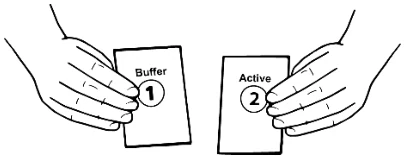 Remove the carton from the refrigerator. Identify the 2 sachets: sachet 1 contains “BUFFER COMPONENT OF VAXCHORA” and sachet 2 contains “ACTIVE COMPONENT OF VAXCHORA”. |  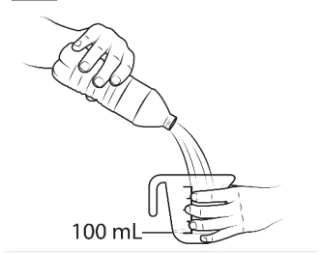 Pour 100 milliliters (mL) of cold or room temperature (5ºC-22ºC) bottled water (purified, spring or sparkling [carbonated]) into a clean cup. Do not use tap/faucet water, or any non purified bottled water, other beverages, or other liquids. |  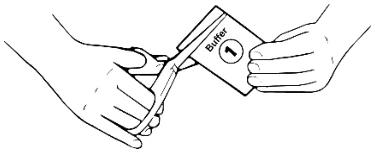 Use scissors to cut the top off sachet 1 (BUFFER COMPONENT). Do not put your fingers into the sachet. |
|---|---|---|
 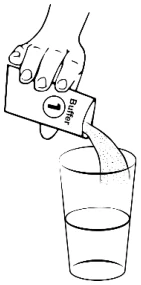 Empty the contents of sachet 1 into the water in the cup. Effervescence, fizzing or bubbling will occur. |  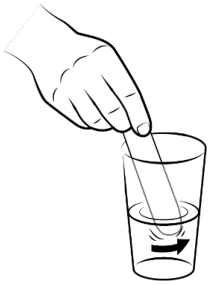 Using a stirrer, stir until the powder completely dissolves. For children ages 2 to 5 years only, pour out and discard half of the buffer solution. |  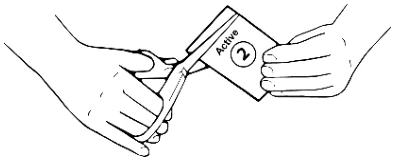 Use scissors to cut the top off sachet 2. Do not put your fingers into the sachet. Wash your hands if you touch the sachet contents, in order to reduce the chance of contamination. |
 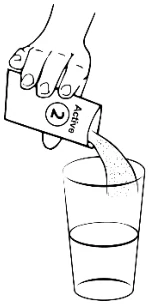 Empty the contents of sachet 2 (ACTIVE COMPONENT) into the cup containing the buffer solution. |  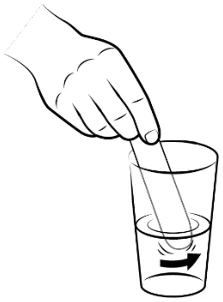 Stir for at least 30 seconds. The powder from sachet 2 may not dissolve completely. It will form a slightly cloudy suspension that may contain some white particles. If desired, no more than 4 g (1 teaspoon) of sucrose (table sugar) or 1 g (¼ teaspoon) stevia sweeteners may be added and stirred into the suspension. |  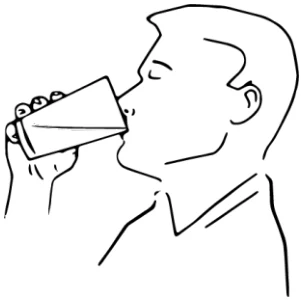 Drink the full contents of the cup within 15 minutes of reconstitution. Some residues may remain in the cup and should be discarded. |
|---|
4.4 Administration
For oral use only.
To protect the vaccine from the acidic environment of the stomach, it needs to be mixed with buffer. For instructions on reconstitution of VAXCHORA vaccine prior to administration see section 4.3 Reconstitution.
Avoid eating or drinking one hour before and one hour after taking VAXCHORA vaccine.
4.5 Missed Dose
Not applicable, as VAXCHORA vaccine is only one dose.
Consumption of less than a half dose may result in decreased protection. If less than half the dose is consumed, contact your healthcare professional about acquiring a replacement dose. Consideration may be given to repeating a full dose of VAXCHORA vaccine within 72 hours.
5 OVERDOSAGE
There have been reports of multiple doses of VAXCHORA vaccine being administered several weeks apart. The adverse reactions reported were comparable to those seen after the recommended dose.
| For management of a suspected drug overdose, contact your regional poison control centre. |
|---|
6 DOSAGE FORMS, STRENGTHS, COMPOSITION AND PACKAGING
Table 1 - Dosage Forms, Strengths, Composition and Packaging
VAXCHORA vaccine is supplied in a carton containing one buffer sachet and one active component sachet (see 4 DOSAGE AND ADMINISTRATION).
The active component, sachet 2 contains 2 g of powder for oral suspension.
The buffer component, sachet 1, contains 4.5 g of effervescent powder.
The active ingredient sachet is made from four-ply multilayer foil containing an outer layer of paper, a layer of low-density polyethylene, a layer of aluminum foil and an inner layer of low-density polyethylene.
The buffer sachet is made from three-ply multilayer foil containing an outer layer of paper, a middle layer of aluminum foil and an inner layer of low-density polyethylene.
To help ensure the traceability of vaccines for immunization record-keeping as well as safety monitoring, it is recommended to record the time and date of administration, brand name and generic name of the vaccine, and the product lot number and expiry date.
7 WARNINGS AND PRECAUTIONS
General
VAXCHORA vaccine does not protect against V. cholerae O139 or other non-O1 serogroups of Vibrio, which are uncommon causes of disease.
Shedding and Transmission
VAXCHORA vaccine may be shed in the stool of recipients for at least 7 days. There is a theoretical risk of transmission of the vaccine strain to non-vaccinated close contacts (e.g., household contacts), see section 10.2 Pharmacodynamics. Use caution when considering whether to administer the vaccine to individuals with immunocompromised close contacts.
| Route of Administration | Dosage Form / Strength/Composition | Non-medicinal Ingredients |
| Oral | Powder for oral suspension containing 4 × 10⁸ to 2 × 10⁹ CFU/dose of recombinant live attenuated V. cholerae vaccine strain CVD 103- HgR | Active component sachet: Ascorbic acid Hydrolyzed casein Lactose Sucrose Buffer sachet: Ascorbic acid Lactose Sodium bicarbonate Sodium carbonate |
Gastrointestinal
In individuals with acute gastroenteritis, vaccination should be postponed until after recovery, because protection against cholera may be diminished. The degree of protection and the effects of vaccination in individuals with chronic gastrointestinal disease are unknown.
Immune
Altered Immunocompetence:
The safety and effectiveness of VAXCHORA vaccine have not been established in immunocompromised persons.
7.1 Special Populations
7.1.1 Pregnant Women
VAXCHORA vaccine is not absorbed systemically following oral administration.
Studies were not conducted in pregnant women. There is very limited experience with VAXCHORA vaccine during pregnancy in clinical trials. VAXCHORA vaccine should be used during pregnancy only if the potential benefits to the mother outweigh the potential risks, including those to the fetus.
7.1.2 Breast-feeding
It is unknown whether VAXCHORA vaccine is excreted in human milk. A risk to the breastfed child cannot be excluded.
7.1.3 Pediatrics
Use of VAXCHORA vaccine is supported by evidence from adequate and well-controlled studies in adults and children 2 years of age and older (see 8 ADVERSE REACTIONS and 14 CLINICAL TRIALS.)
The safety and effectiveness of VAXCHORA vaccine have not been established in children younger than 2 years.
7.1.4 Geriatrics
The safety and effectiveness of VAXCHORA vaccine have not been established in adults 65 years of age or older. However, this group can be expected to be at risk of more severe complications of disease if infected by cholera.
8 ADVERSE REACTIONS
8.1 Adverse Reaction Overview
The safety of VAXCHORA vaccine was evaluated in four randomized, placebo-controlled, multicenter clinical trials in adults (18 through 64 years of age) and one randomized, placebo-controlled, multicenter clinical trial in pediatrics (2 through 17 years of age) (see 14.1 Clinical Trial by Indication).
The most common adverse reactions among vaccine and placebo recipients overall were tiredness, headache, nausea/vomiting, abdominal pain and lack of appetite. Common adverse reactions observed more frequently in VAXCHORA recipients versus placebo recipients included headache (28.9% vs 23.6%) in the adult trials, as well as tiredness (35.7% vs 30.7%), abdominal pain (27.8% vs 18.7%), and lack of appetite (21.4% vs 14.7%) in the pediatric trials. In addition, the adverse reaction of diarrhea was significantly higher for the adult VAXCHORA subjects 3.62% (115/3177) than the placebo group 1.63% (9/553), p=0.0140. For the pediatric study, the incidence of diarrhea was 1.5% (7/468) in vaccine recipients compared to 1.3% (1/75) in placebo recipients. This vaccine-associated diarrhea is typically mild and resolves spontaneously within 2 days in the majority of cases. There were no serious adverse events judged to be related to the administration of vaccine.
8.2 Clinical Trial Adverse Reactions – Adults
Clinical trials are conducted under very specific conditions. The adverse reaction rates observed in the clinical trials, therefore, may not reflect the rates observed in practice and should not be compared to the rates in the clinical trials of another drug. Adverse reaction information from clinical trials may be useful in identifying and approximating rates of adverse drug reactions in real-world use.
The safety of VAXCHORA vaccine was evaluated in four randomized, placebo-controlled, multicenter clinical trials. A total of 3235 adults 18 through 64 years of age received one dose of VAXCHORA vaccine and 562 received placebo (physiologic saline (N=551) or lactose (N=11)]. Overall, the mean age was 32.5 years; 53.8% of trial participants were female; 67.1% were White, 27.3% were Black or African American, 1.8% were Asian, 1.7% were multiracial, 1.3% were other, 0.6% were American Indian or Alaskan Native and 0.3% were Native Hawaiian or Pacific Islander. There were 9.3% Hispanic or Latino participants.
In a pooled analysis of the four clinical studies, 0.6% (20/3235) of VAXCHORA recipients and 0.5% (3/562) of placebo recipients reported a serious adverse event within 6 months post-vaccination. None of these events were considered to be related to vaccination.
Solicited Adverse Reactions
Adults 18 through 45 years of age received VAXCHORA vaccine in a multi-center, double-blind, randomized (8:1), placebo-controlled trial conducted in the United States and Australia (Study 3). The safety analysis set included 2789 VAXCHORA recipients. Solicited adverse reactions were recorded daily for 7 days following vaccination. Table 2 presents the frequency and severity of solicited adverse reactions observed within 7 days following receipt of VAXCHORA vaccine or placebo in Study 3.
Table 2 - Rates of Solicited Adverse Reactions Reported in VAXCHORA Trial Participants 18 to 45 Years of Age During 7 Days Post-Vaccination
| Study 3 | ||||||
|---|---|---|---|---|---|---|
| Adverse Reaction | VAXCHORA (N=2789)* % | Placebo (Saline) (N=350)* % | ||||
| Gastrointestinal disorders | ||||||
| Abdominal Pain | 18.7 | 16.9 | ||||
| Mild | 12.1 | 12.0 | ||||
| Moderate | 6.2 | 5.0 | ||||
| Severe† | 0.4 | 0.0 | ||||
| Diarrhea | 3.9 | 1.2 | ||||
| Study 3 | ||||||
|---|---|---|---|---|---|---|
| Adverse Reaction | VAXCHORA (N=2789)* % | Placebo (Saline) (N=350)* % | ||||
| Mild | 2.4 | 0.9 | ||||
| Moderate | 0.7 | 0.3 | ||||
| Severe† | 0.84 | 0.0 | ||||
| Lack of Appetite | 16.5 | 16.6 | ||||
| Mild | 11.7 | 12.2 | ||||
| Moderate | 4.4 | 4.4 | ||||
| Severe† | 0.3 | 0.0 | ||||
| Nausea/Vomiting | 18.3 | 15.2 | ||||
| Mild | 13.3 | 11.4 | ||||
| Moderate | 4.7 | 3.8 | ||||
| Severe† | 0.3 | 0.0 | ||||
| General disorders | ||||||
| Fever | 0.6 | 1.2 | ||||
| Mild | 0.2 | 0.3 | ||||
| Moderate | 0.3 | 0.9 | ||||
| Severe† | 0.11 | 0.0 | ||||
| Nervous system disorders | ||||||
| Headache | 28.9 | 23.6 | ||||
| Mild | 18.9 | 14.6 | ||||
| Moderate | 9.6 | 8.8 | ||||
| Severe† | 0.5 | 0.3 | ||||
| Tiredness | 31.3 | 27.4 | ||||
| Mild | 18.7 | 16.3 | ||||
| Moderate | 12.0 | 9.9 | ||||
| Severe† | 0.7 | 1.2 | ||||
* N represents number of subjects who completed a memory aid.
† Severe category includes both grade 3 (severe) and grade 4 (potentially life-threatening) adverse events.
Grading scales are defined as follows:
Tiredness, Headache, Abdominal Pain, Nausea, Lack of Appetite: Mild = no interference with activity, Moderate = Some interference with activity, Severe = significant, prevents daily activity, Potentially Life Threatening = emergency room (ER) visit or hospitalization.
Vomiting: Mild = 1-2 episodes/24 hours, Moderate = >2 episodes/24 hours, Severe = requires intravenous hydration, Potentially Life Threatening = ER visit or hospitalization for hypotensive shock.
Diarrhea: Mild = 4 loose stools/24 hours, Moderate = 5 loose stools/24 hours, Severe = ≥6 loose stools /24 hours, Potentially Life Threatening = ER visit or hospitalization.
Fever: Mild = 38.0-38.4°C/100.4-101.1°F, Moderate = 38.5-38.9°C/101.2-102.0°F, Severe = 39.0-40.0°C/102.1-104.0°F, Potentially Life Threatening = >40.0°C/104.0°F.
8.2.1 Clinical Trial Adverse Reactions – Pediatrics
The safety of VAXCHORA vaccine in children was evaluated in one randomized, placebo-controlled, multicenter clinical trial. A total of 468 children 2 through 17 years of age received one dose of VAXCHORA vaccine and 75 received placebo (physiologic saline). The mean age was 9.0 years; 51.6% were male; 59.5% were White, 31.3% were Black, 7.7% were multiracial, 0.9% were Asian, and 0.6% were American Indian/Alaskan Native. There were 8.7% Hispanic or Latino participants.
Solicited Adverse Reactions
Children 2 through 17 years of age received VAXCHORA vaccine in a multi-center, double-blind, randomized (6:1), placebo-controlled trial conducted in the United States (Study 5). The safety analysis set included 468 VAXCHORA recipients. Solicited adverse reactions were recorded daily for 7 days following vaccination. Table 3 presents the frequency and severity of solicited adverse reactions observed within 7 days following receipt of VAXCHORA vaccine or placebo in Study 5. There were no significant differences in solicited adverse reactions between the vaccine and placebo groups.
Table 3 - Rates of Solicited Adverse Reactions Reported in VAXCHORA Pediatric Trial Participants 2 to 17 Years of Age During 7 Days Post-Vaccination
| Study 5 | ||||||
|---|---|---|---|---|---|---|
| Adverse Reaction | VAXCHORA (N=468)* % | Placebo (Saline) (N=75)* % | ||||
| Gastrointestinal disorders | ||||||
| Abdominal Pain | 27.8 | 18.7 | ||||
| Mild | 22.4 | 14.7 | ||||
| Moderate | 5.1 | 4.0 | ||||
| Severe† | 0.2 | 0.0 | ||||
| Diarrhea | 1.5 | 1.3 | ||||
| Mild | 0.9 | 0.0 | ||||
| Moderate | 0.0 | 1.3 | ||||
| Severe† | 0.6 | 0.0 | ||||
| Lack of Appetite | 21.4 | 14.7 | ||||
| Mild | 16.5 | 12.0 | ||||
| Moderate | 4.7 | 2.7 | ||||
| Severe† | 0.2 | 0.0 | ||||
| Nausea | 14.7 | 18.7 | ||||
| Mild | 12.0 | 14.7 | ||||
| Moderate | 2.6 | 4.0 | ||||
| Severeb | 0.2 | 0.0 | ||||
| Vomiting | 3.8 | 4.0 | ||||
| Study 5 | ||||||
|---|---|---|---|---|---|---|
| Adverse Reaction | VAXCHORA (N=468)* % | Placebo (Saline) (N=75)* % | ||||
| Mild | 2.6 | 2.7 | ||||
| Moderate | 1.1 | 1.3 | ||||
| Severeb | 0.2 | 0.0 | ||||
| General disorders | ||||||
| Fever | 2.1 | 2.7 | ||||
| Mild | 0.4 | 0.0 | ||||
| Moderate | 0.4 | 1.3 | ||||
| Severe† | 1.3 | 1.3 | ||||
| Nervous system disorders | ||||||
| Headache | 27.4 | 25.3 | ||||
| Mild | 20.7 | 22.7 | ||||
| Moderate | 6.0 | 2.7 | ||||
| Severe† | 0.6 | 0.0 | ||||
| Tiredness | 35.7 | 30.7 | ||||
| Mild | 24.6 | 22.7 | ||||
| Moderate | 10.7 | 6.7 | ||||
| Severe† | 0.4 | 1.3 | ||||
* N represents number of subjects who completed a memory aid.
† Severe category includes both grade 3 (severe) and grade 4 (potentially life-threatening) adverse events.
Grading scales are the same as footnoted for Table 2.
Overall, VAXCHORA vaccine was well-tolerated in the pediatric population, with a solicited event profile very similar to adults.
8.3 Less common clinical trial adverse reaction
Less common clinical trial adverse events reported in <1% of clinical subjects include:
Gastrointestinal disorders: abdominal tenderness, ulcerative proctitis, rectal haemorrhage, oesophageal burning, gastritis, stomatitis, anal pruritis
Skin and subcutaneous tissue disorders: angioedema
8.4 Abnormal Laboratory Findings: Hematologic, Clinical Chemistry and Other Quantitative Data
No trends between pre-vaccination values on Day 1 and post-vaccination values on Day 7 were observed in the clinical safety laboratory evaluations in the Phase I trial.
8.5 Post-Marketing Adverse Reactions
Additional adverse reactions reported during post-marketing surveillance are listed below:
Gastrointestinal disorders: abdominal discomfort
General disorders: chest pain, chills, feeling hot, malaise, pain
Musculoskeletal and connective tissue disorders: arthralgia, mobility decreased, myalgia, pain in extremity
Nervous system disorders: dizziness
Psychiatric disorders: anxiety
Skin and subcutaneous tissue disorders: hyperhidrosis
9 DRUG INTERACTIONS
9.2 Drug Interactions Overview
Do not administer concomitantly with antibiotics or chloroquine. When VAXCHORA vaccine is taken with Vivotif®, typhoid vaccine Ty21a (gastro-resistant capsules) there should be an interval of 2 hours between the administration of VAXCHORA and Vivotif vaccines.
9.4 Drug-Drug Interactions
The drugs listed in this table are based on either drug interaction case reports or studies, or potential interactions.
Table 4 - Established or Potential Drug-Drug Interactions
| [Proper/Common name] | Source of Evidence | Effect | Clinical comment |
| Vaccines | CT | Data from studies with a similar product indicate that the concomitant administration of oral polio vaccine or yellow fever vaccine did not affect the immune response produced by the cholera vaccine. | |
| Vaccines | T | The effects of concomitant administration of hepatitis A, hepatitis B, Japanese encephalitis, meningococcal, monkeypox, influenza, measles-mumps-rubella, tetanus-diptheria-pertussis, polio, varicella or rabies vaccines in subjects treated with VAXCHORA vaccine have not been studied. | Clinical outcome can not be determined since there is no information available on interaction with other vaccines. |
| [Proper/Common name] | Source of Evidence | Effect | Clinical comment |
| Vivotif | T | The buffer administered with VAXCHORA vaccine may affect the transit of the capsules through the gastrointestinal tract. | There should be an interval of 2 hours between the administration of VAXCHORA vaccine and Vivotif®, typhoid vaccine Ty21a (gastro-resistant capsules). |
| Antibiotics | T | These agents may be active against the vaccine strain and prevent a sufficient degree of multiplication to occur in order to induce a protective immune response. | Avoid concomitant administration of VAXCHORA vaccine with systemic antibiotics. Do not administer VAXCHORA vaccine to patients who have received oral or parenteral antibiotics within 14 days prior to vaccination. Oral or parenteral antibiotics should be avoided for 10 days following vaccination with VAXCHORA vaccine. |
| Antimalaria Prophylaxis - Chloroquine | CT | Data from a study with a similar product indicate that the immune responses to VAXCHORA vaccine may be diminished when it is administered concomitantly with chloroquine. | Administer VAXCHORA vaccine at least 10 days before beginning antimalarial prophylaxis with chloroquine |
Legend: C = Case Study; CT = Clinical Trial; T = Theoretical
9.5 Drug-Food Interactions
The vaccine is acid-labile and is administered with a buffer. Avoid eating and drinking for 1 hour before and 1 hour after taking VAXCHORA vaccine as this may interfere with the protective effect of the buffer (see 4.4 Administration].
9.6 Drug-Herb Interactions
Interactions with herbal products have not been established.
9.7 Drug-Laboratory Test Interactions
Interactions with laboratory tests have not been established.
10 CLINICAL PHARMACOLOGY
10.1 Mechanism of Action
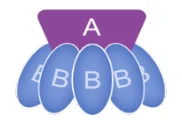
VAXCHORA (Cholera Vaccine, Live Attenuated, Oral) is a live, attenuated bacterial vaccine suspension for oral administration containing the V. cholerae strain CVD 103-HgR. CVD 103-HgR was constructed from the serogroup O1 classical Inaba strain 569B by deleting the catalytic domain sequence of both copies of the ctxA gene, which prevents the synthesis of the toxic subunit A of cholera toxin, thus preventing synthesis of active cholera toxin (CT). This attenuated strain remains able to synthesize the immunogenic non-toxic B subunit of CT (encoded by the ctxB gene). In addition, a marker was inserted into the hemolysin gene locus (hlyA) to enable differentiation of the vaccine strain from wild type V. cholerae O1. CVD 103-HgR elicits local intestinal and serum vibriocidal antibody and memory B cell responses which recognizes native cholera toxin and wild type V. cholerae. Due to the inability of CVD 103-HgR to synthesize active cholera toxin subunit A, diarrheal disease normally associated with V. cholerae infection is absent.
After reconstitution, VAXCHORA vaccine contains 4 x 10⁸ to 2 x 10⁹ colony forming units (CFU) of live attenuated V. cholerae CVD 103-HgR. The resulting suspension should be slightly cloudy and may contain white particulates. The ability of V. cholerae to cause diarrheal disease and to induce a protective immune response is dependent upon colonization of the intestinal tract and secretion of cholera toxin. VAXCHORA vaccine is able to elicit a local intestinal and serum vibriocidal antibody and memory B cell response which recognizes native cholera toxin and wild type V. cholerae. Although VAXCHORA vaccine contains live attenuated cholera bacteria that replicate in the gastrointestinal tract of the recipient, the specific immune mechanisms conferring protection against cholera following receipt of the vaccine have not been determined. However, rises in serum vibriocidal antibody 10 days after administration of VAXCHORA vaccine were associated with protection in a human challenge study (Study 2) (see section 14.3 Immunogenicity).
10.2 Pharmacodynamics
Not applicable
10.3 Pharmacokinetics
Duration of Effect
The duration of protection is unknown. However, persistence of immune response was evaluated in three phase 3 randomized placebo-controlled clinical studies in adults of 18 to 64 years of age (see section 14.1 Clinical Trial by Indication). Geometric mean titers (GMTs) of serum vibriocidal antibodies in vaccinated subjects were significantly higher than the respective GMTs of placebo recipients at 90 and 180 days after immunization in all age groups. Persistence of vibriocidal antibody response was assessed in a subset of adolescents ages 12-17 years in Study 5 where seroconversion was observed in 64.5% of participants two years post-vaccination (see section 14.3 Immunogenicity). In the adult studies, significant increases in the percentage of anti-O1 lipopolysaccharide (LPS) IgA and IgG memory B cells and anti-cholera toxin IgG memory B cells were seen at 90 and 180 days after vaccination and increase in LPS IgA memory B cells was correlated with lower post cholera challenge stool volumes.
The duration of shedding of the vaccine strain is unknown. However, shedding of the vaccine strain was evaluated in the first 7 days post-vaccination in a study of 53 healthy adult vaccine recipients (Study 1). VAXCHORA vaccine was shed in the stools of 11.3% [95% CI 4.3%, 23.0%] of vaccine recipients on any day through 7 days post-vaccination. During the 7 days post-vaccination, the proportion of subjects shedding was highest on day 7 (7.5% [95% CI 2.1%, 18.2%]).
11 STORAGE, STABILITY AND DISPOSAL
Store VAXCHORA buffer component and active component sachets refrigerated at 2°C to 8°C.
Protect from light and moisture.
Sachets should be kept refrigerated but may be used if left at or below 25°C up to 12 hours prior to reconstitution; when out of refrigerated storage, sachets should not be exposed to temperatures above 25°C.
If the integrity of the packet has been compromised, or if the vaccine and/or buffer shows signs of yellowing and clumping, then the vaccine/buffer should be discarded.
The reconstituted vaccine forms a white to off-white cloudy suspension that may contain some white particulates. The dose should be administered within 15 minutes of reconstitution with bottled water (purified, spring or sparkling [carbonated]).
Note: if the sachets are reconstituted in the incorrect order, the vaccine must be discarded (see 4.3 Reconstitution].
Clean all used items and surfaces with soap and hot water. Discard sachets and any disposable item in the garbage (see 4.3 Reconstitution).
12 SPECIAL HANDLING INSTRUCTIONS
Inform vaccine recipients that VAXCHORA vaccine is a live attenuated vaccine and has the potential for transmission of the vaccine strain to close contacts (e.g., household contacts). For at least 14 days following vaccination, VAXCHORA recipients should wash their hands thoroughly after using the bathroom and before preparing or handling food.
PART II: SCIENTIFIC INFORMATION
13 PHARMACEUTICAL INFORMATION
Drug Substance
Proper name: V. cholerae CVD 103-HgR
Chemical name: N/A
Molecular formula and molecular mass: N/A
Structural formula: The CVD 103-HgR strain developed from the V. cholerae classical Inaba O1 strain 569B is characterized by two prominent genetic modifications generated using standard methods and introduced into the chromosomes by a marker exchange technique.
Physicochemical properties: VAXCHORA (Cholera Vaccine, Live Attenuated, Oral) is a live, replication-competent recombinant, attenuated cholera vaccine, comprising the V. cholerae serotype O1 Inaba CVD 103-HgR strain. Attenuation is effected by the deletion of a substantial portion of the catalytic subunit A of the two copies of the cholera enterotoxin gene (ctxA). A mercury resistance marker is inserted within the hemolysin A (hlyA) locus to allow the vaccine strain to be distinguished from the wild-type V. cholerae O1.
Figure 1 - Schematic Representation of CVD 103-HgR Derived from Wild-Type V. Cholerae


Product Characteristics:
The vaccine drug product is formulated as a white to beige powder preparation for oral administration and is stabilized with a mixture of sugars and filled into sachets. The buffer component is formulated by blending together sodium bicarbonate (a gastric acid neutralizer), sodium carbonate (a buffer), ascorbic acid (a buffer and water chlorine neutralizer) and anhydrous lactose (a manufacturing flow aid) and filled into sachets. VAXCHORA® (Cholera Vaccine, Live Attenuated, Oral) consists of one buffer component sachet and one active component sachet packaged into individual single dose cartons for distribution. The reconstituted vaccine is administered orally after reconstitution. After reconstitution, VAXCHORA vaccine contains 4 x 10⁸ to 2 x 10⁹ colony forming units (CFU) of live attenuated V. cholerae CVD 103-HgR. The resulting suspension should be slightly cloudy and may contain white particulates.
O1
Classical
Inaba

Subunit B only
O1
El Tor
Classical
Inaba
Ogawa
Inaba
Ogawa
Cholera Toxin
Wild-type V. cholerae
CVD 103-HgR
14 CLINICAL TRIALS
14.1 Clinical Trial by Indication
Table 5 - Summary of Patient Demographics for Clinical Trials
| Study # | Trial design | Trial Objective | Dosage, route of administration and duration | Study subjects (n) (subjects receiving vaccine/placebo) | Mean age (Range) | Sex |
| 1 | Randomized, double-blind, placebo-controlled | Phase 1 Safety, Immunogenicity, Kinetics (Shedding) | 4.43 x 10⁸ CFU/dose; oral single dose; 8 months | n = 66 vaccine = 55 (vaccine = 55) placebo = 11 (placebo = 11) | 29.9 (21-48) years | M =33 F = 33 |
| 2 | Randomized, double-blind, placebo-controlled | Phase 3 Efficacy (Challenge), Immunogenicity | 5 x 10⁸ CFU/dose; oral single dose; 10.5 months | n = 197 vaccine = 95 (vaccine = 95) placebo = 102 (placebo = 102) | 31.0±7.79 (18-45) years | M = 124 F = 73 |
| 3 | Randomized, double-blind, placebo-controlled | Phase 3 Lot Consistency, Safety, Immunogenicity | 1 x 10⁹ CFU/dose; oral single dose; 9.3 months | n = 3146 vaccine = 2795 (vaccine = 2789) placebo = 351 (placebo = 350) | 29.9±7.76 (18-45) years | M = 1423 F = 1723 |
| 4 | Randomized, double-blind, placebo-controlled | Phase 3 Safety, Immunogenicity, Bridging (older adults) | 1 x 10⁹ CFU/dose; oral single dose; 9.3 months | n = 398 vaccine = 299 (vaccine = 296) placebo = 99 (placebo = 99) | 53.8±5.04 (46-64) years | M = 182 F = 216 |
| 5 | Randomized, double-blind, placebo-controlled | Phase 4 Safety, Immunogenicity, Bridging (Pediatric) | 1 x 10⁹ CFU/dose; oral single dose; 25 months | n = 550 vaccine = 471 (vaccine = 468) placebo = 79 (placebo = 75) | 9.0±4.7 (2-17) years | M = 286 F = 264 |
M=male, F=female
One Phase 1, three Phase 3 (a cholera challenge study demonstrating protective efficacy, a lot-to-lot consistency study, a study in older adults) and one Phase 4 trial in the pediatric population were conducted (Table 5). Each clinical trial used a single oral dose of VAXCHORA vaccine, and all studies were randomized, double-blind, and placebo-controlled. Safety and immunogenicity were assessed in each trial according to predefined Statistical Analysis Plans. Safety follow-up was for 6 months post-vaccination in each trial, and vaccine reactogenicity was solicited using a memory aid for 7 days post-vaccination.
Efficacy against cholera challenge
VAXCHORA efficacy against cholera was demonstrated in a randomized double-blind, saline placebo-controlled V. cholerae challenge study conducted in 197 healthy adult volunteers in the US (Study 2).
The mean age was 31 years (range 18 to 45, 62.9% male, 37.1% female) and a subset of VAXCHORA vaccine or placebo recipients were randomized to be challenged with live V. cholerae at either 10 days post-vaccination (n=68) or 3 months post-vaccination (n=66). Among subjects selected for either challenge cohort, more males were challenged in the vaccine group (76.5%) compared to the placebo group (57.6%). The majority (70.9%) of the challenge population was Black, 25.4% were White, 0.7% were American Indian/Alaskan Native, 0.7% were Asian, and 2.2% were other. There were 3.7% Hispanic or Latino participants. Overall, 56.0% of challenged subjects had blood type O.
Immunogenicity
In addition to study 2, three additional studies evaluated immunogenicity: a large trial in 3146 healthy adults ages 18 to 45 years (mean age 29.9, 45.2% male, 54.8% female) (study 3); a trial in 398 healthy older adults ages 46 to 64 years (mean age 53.8, 45.7% male, 54.3% female) (study 4); and a pediatric trial in healthy subjects ages 2-17 years (study 5) (Table 5).
A vibriocidal antibody assay was used to measure serum levels of neutralizing antibodies against the vaccine strain (classical Inaba). In the challenge study, serum vibriocidal antibody (SVA) seroconversion, defined as a 4-fold rise in titers over baseline at day 10, strongly correlated with protection against cholera diarrhea, and was used as an immunologic bridge between adults 18-45 years of age in the lot consistency trial (study 3), and older adults (study 4) and pediatric subjects (study 5).
Prespecified immunobridging analyses, based on differences in seroconversion rates, were performed to demonstrate non-inferiority. The seroconversion rates in vaccine and placebo recipients from each trial at 10 days post-vaccination, as well as immunobridging results, are summarised in Table 7 and Table 8 (14.3 Immunogenicity).
Study Results
Efficacy against cholera challenge
The efficacy of VAXCHORA vaccine in preventing moderate to severe diarrhea was demonstrated in adults ages 18-45 (study 2) showing that the vaccine protects against a live virulent V. cholerae O1 El Tor Inaba challenge at 10 days and 3 months post-vaccination (Table 6).
Table 6 - Study 2 Diarrheal Volume and Vaccine Efficacy in the Prevention of Moderate to Severe Diarrhea Following Challenge with V. cholerae O1 El Tor Inaba at 10 Days and 3 Months Post-Vaccination (Intent-to-Treat Population)
| Parameter | VAXCHORA 10 day challenge† N=35 | VAXCHORA 3 Month challenge† N=33 | Combined, Placebo* 10 Day or 3 Month Challenge† N=66 |
| Number of Subjects with Moderate or Severe Diarrhea (Attack Rate)‡ | 2 (5.7%) | 4 (12.1%) | 39 (59.1%) |
Vaccine Efficacy %§,¶ [95% CI] | 90.3% [62.7%, 100.0%] | 79.5% [49.9%, 100.0%] | |
Diarrheal Volume (mL) GMV [95% CI] Min, Max | 624.2 [147.2, 2645.9] 154, 18164 | 487.9 [237.3, 1003.5] 22, 9950 | 3495.1 [2651.3, 4607.4] 140, 24374 |
GMV=Geometric Mean Volume; CI=confidence interval; N=number of subjects challenged in each group.
* Combined placebo group comprised of all placebo recipients who were challenged at either 10 days (N=33) or 3 months (N=33) following vaccination.
† Challenge strain was V. cholerae O1 El Tor Inaba N16961.
‡ Moderate or severe diarrhea (≥ 3 liters of diarrhea) within 10 days after challenge.
§ Vaccine Efficacy=[(Attack Rate in Placebo Group – Attack Rate in Vaccine Group)/Attack Rate in Placebo Group] x 100.
¶ Pre-specified criteria for success were that the lower bound of the two-sided 95% confidence interval for vaccine efficacy must be ≥30% in both the 10 Day and 3 Month challenge groups.
In individuals with blood group O only, the protective efficacy against moderate or severe diarrhea was 84.8% in the 10-day challenge group (n=19) and 78.4% in the 3-month challenge group (n=20).
14.2 Comparative Bioavailability Studies
This information is not available for this drug product.
14.3 Immunogenicity
Adults 46 through 64 years were shown to have a non-inferior rate of seroconversion by classical Inaba vibriocidal antibody at 10 days post-vaccination compared to adults 18 through 45 years of age (Table 7).
Table 7 - Vibriocidal Antibody Seroconversion Against Classical Inaba V. cholerae Vaccine Strain at 10 Days Post-Vaccination in Adults
| Study | VAXCHORA Recipients | Placebo Recipients | Difference in Seroconversion Rate Compared to Study 3 in 18-45 years old* | ||
|---|---|---|---|---|---|
| (age in years) | N | Seroconversion† % [95% CI] | N | Seroconversion† % [95% CI] | Percentage [95% CI] |
| Study 3 (18 – 45) | 2687 | 93.5% [92.5%, 94.4%] | 334 | 4.2% [2.3%, 6.9%] | - |
| Study 4 (46 – 64) | 291 | 90.4% [86.4%, 93.5%] | 99 | 0% [0.0%, 3.7%] | −3.1% [−6.7%, 0.4%] |
CI=confidence interval; N= number of subjects with analyzable samples at Day 1 and Day 11.
* Non-inferiority criteria: lower bound of the two-sided 95% confidence interval on the difference in seroconversion rates compared with adults ages 18 to <46 years had to be greater than –10 percentage points and the lower bound of the two-sided 95% confidence interval on the proportion of vaccinees who seroconverted 10 days after vaccination had to be equal to or exceed 70%.
† Seroconversion is defined as the percentages of subjects who had at least a 4-fold rise in vibriocidal antibody titer at 10 days post-vaccination compared to baseline.
In study 2, serum vibriocidal seroconversion (4-fold increase) occurred in 79.8.% of all challenged and unchallenged vaccine recipients and 2% in placebo recipients 7 days post vaccination (p<0.0001). Vibriocidal seroconversion rates at 10 days post vaccination were 90.3% in challenged and unchallenged vaccine recipients and 2% in placebo recipients.
In the three adult studies increases in the percentage of anti-O1 lipopolysaccharide (LPS) IgA and IgG memory B cells and anti-cholera toxin IgG memory B cells were seen at 90 and 180 days after vaccination and increase in LPS IgA memory B cells was correlated with lower post cholera challenge stool volumes. Geometric mean titres (GMTs) of serum vibriocidal antibodies in vaccinated subjects were also higher than the respective GMTs of placebo recipients at 90 and 180 days after immunization in all age groups. The duration of protection is not known.
Children 2 through 17 years were shown to have a non-inferior rate of seroconversion by classical Inaba vibriocidal antibody at 10 days post-vaccination compared to adults 18 through 45 years of age. The pediatric seroconversion results in vaccine and placebo recipients and immunobridging results are shown in Table 8.
Table 8 - Vibriocidal Antibody Seroconversion Against Classical Inaba V. cholerae Vaccine Strain at 10 Days Post-Vaccination in Children aged 2 through 17 Years Compared to Adults 18 through 45 Years of Age
| Study | VAXCHORA Recipients | Placebo Recipients | Difference in Seroconversion Rate Compared to Study 3 in 18-45 year old | ||
|---|---|---|---|---|---|
| (Age in years) | N | Seroconversion* % [95% CI] | N | Seroconversion* % [95% CI] | Percentage [95.0 % CI]† |
| Study 3 (18 – 45) | 2687 | 93.5% [92.5%, 94.4%] | 334 | 4.2% [2.3%, 6.9%] | - |
| Pediatric study 5 (2 – 17) | 399 | 98.5% [96.8%, 99.3%] | 67 | 1.5% [0.3%, 8.0%] | 5.0% [3.0%, 6.3%] |
CI=confidence interval; N= number of subjects with analyzable samples at Day 1 and Day 11 in the immunogenicity evaluable population.
* Seroconversion is defined as the percentages of subjects who had at least a 4-fold rise in vibriocidal antibody titer at 10 days post-vaccination compared to baseline.
† Non-inferiority criterion: lower bound of the two-sided 95.0 % confidence interval on the difference in seroconversion rate (study 5 minus study 3) must be greater than –10 percentage points.
A subset of participants (N=33) received <80% of the vaccine dose (see Table 9). In this subset, overall seroconversion was 75.8%. Seroconversion was 100% for subjects taking 50-80% of the dose (N=7) and 69.2% for subjects taking <50% of the dose (N=26).
Table 9 - Number of Subjects (%) with SVA Seroconversion at Day 10 Post Vaccination Stratified by Portion of Dose Consumed*
| <50% of Dose | ≥50 to <80% of Dose | Total (<80% of Dose) | |
| 2 to 5 years | 11/16 (68.8%) | 6/6 (100%) | 17/22 (77.3%) |
| 6 to 11 years | 6/9 (66.7%) | 1/1 (100%) | 7/10 (70.0%) |
| 12 to 17 years | 1/1 (100%) | 0/0 | 1/1 (100%) |
| All age groups | 18/26 (69.2%) | 7/7 (100%) | 25/33 (75.8%) |
*Among Vaxchora subjects (modified intent-to-treat population) who consumed less than 80% of expected dose
Vibriocidal Antibody Against Classical Ogawa, El Tor Inaba and El Tor Ogawa
V. cholerae serogroup O1 consists of four major subtypes: classical Inaba, classical Ogawa, El Tor Inaba and El Tor Ogawa. Serum vibriocidal antibody against the three types of V. cholerae not contained in the vaccine, namely classical Ogawa, El Tor Inaba and El Tor Ogawa, was also measured in Study 2 and Study 4. The percentages of vaccine recipients who seroconverted against each of the 4 major biotype/serotypes of V. cholerae serogroup O1 at 10 days post-vaccination (71.4% to 91.4%) are shown in Table 10.
Table 10 - Seroconversion Rates 10 Days Post-Vaccination for the Four Major V. cholerae O1 Serogroup Biotypes and Serotypes [Immunogenicity Evaluable Population]
| Cholera Strain | Study 2 (18 – 45 years) VAXCHORA | Study 4 (46 – 64 years) VAXCHORA a | |||||||
|---|---|---|---|---|---|---|---|---|---|
| N | % a [95% CI] | N | % * [95% CI] | ||||||
| Classical Inaba† | 93 | 90.3% [82.4%, 95.5%] | 291 | 90.4% [86.4%, 93.5%] | |||||
| El Tor Inaba | 93 | 91.4% [83.8%, 96.2%] | 290 | 91.0% [87.1%, 94.1%] | |||||
| Classical Ogawa | 93 | 87.1% [78.5%, 93.2%] | 291 | 73.2% [67.7%, 78.2%] | |||||
| El Tor Ogawa | 93 | 89.2% [81.1%, 94.7%] | 290 | 71.4% [65.8%, 76.5%] | |||||
N=number of subjects with measurements at baseline and 10 days post-vaccination. One subject in the younger adults study did not have a Day 11 measurement and was dropped from the analysis; CI=confidence interval.
* Seroconversion is defined as the percentages of subjects who had at least a 4-fold rise in vibriocidal antibody titer at 10 days post-vaccination compared to the titer measured at baseline.
† VAXCHORA vaccine contains the classical Inaba strain of V. cholerae
15 MICROBIOLOGY
No microbiological information is required for this drug product.
16 NON-CLINICAL TOXICOLOGY
No long-term animal studies have been performed to evaluate carcinogenic or mutagenic potential or whether VAXCHORA vaccine affects fertility in males or females.