


Product Monograph - Ella
RECENT MAJOR LABEL CHANGES
| 4 DOSAGE AND ADMINISTRATION, 4.4 Administration | 02/2023 |
|---|---|
| 7 WARNINGS AND PRECAUTIONS, General | 02/2023 |
| 7 WARNINGS AND PRECAUTIONS, Driving and Operating Machinery | 02/2023 |
| 7 WARNINGS AND PRECAUTIONS, Fertility | 02/2023 |
| 7 WARNINGS AND PRECAUTIONS, Hormonal Contraceptives | 02/2023 |
| 7 WARNINGS AND PRECAUTIONS, Sensitivity / Resistance | 02/2023 |
TABLE OF CONTENTS
Sections or subsections that are not applicable at the time of authorization are not listed.
RECENT MAJOR LABEL CHANGES............................................................................................ 2
TABLE OF CONTENTS .............................................................................................................. 2
PART I: HEALTH PROFESSIONAL INFORMATION ..................................................................... 4
1 INDICATIONS .............................................................................................................. 4
1.1 Pediatrics .......................................................................................................... 4
1.2 Geriatrics........................................................................................................... 4
2 CONTRAINDICATIONS ................................................................................................. 4
4 DOSAGE AND ADMINISTRATION................................................................................. 4
4.1 Dosing Considerations ....................................................................................... 4
4.2 Recommended Dose and Dosage Adjustment..................................................... 4
4.4 Administration................................................................................................... 5
5 OVERDOSAGE ............................................................................................................. 5
6 DOSAGE FORMS, STRENGTHS, COMPOSITION AND PACKAGING ................................. 5
7 WARNINGS AND PRECAUTIONS .................................................................................. 5
7.1 Special Populations ............................................................................................ 8
7.1.1 Pregnant Women ......................................................................................... 8
7.1.2 Breast-feeding.............................................................................................. 8
7.1.3 Pediatrics ..................................................................................................... 8
7.1.4 Geriatrics ..................................................................................................... 8
8 ADVERSE REACTIONS .................................................................................................. 8
8.1 Adverse Reaction Overview................................................................................ 8
8.2 Clinical Trial Adverse Reactions .......................................................................... 8
8.3 Less Common Clinical Trial Adverse Reactions .................................................. 10
8.4 Abnormal Laboratory Findings: Hematologic, Clinical Chemistry and Other Quantitative Data ...................................................................................................... 11
8.5 Post-Market Adverse Reactions........................................................................ 11
9 DRUG INTERACTIONS................................................................................................ 11
9.2 Drug Interactions Overview.............................................................................. 11
9.3 Drug-Behavioural Interactions.......................................................................... 11
9.4 Drug-Drug Interactions .................................................................................... 11
9.5 Drug-Food Interactions .................................................................................... 14
9.6 Drug-Herb Interactions .................................................................................... 14
9.7 Drug-Laboratory Test Interactions .................................................................... 14
10 CLINICAL PHARMACOLOGY ....................................................................................... 15
10.1 Mechanism of Action.................................................................................. 15
10.2 Pharmacodynamics .................................................................................... 15
10.3 Pharmacokinetics ....................................................................................... 18
11 STORAGE, STABILITY AND DISPOSAL ......................................................................... 22
12 SPECIAL HANDLING INSTRUCTIONS........................................................................... 22
PART II: SCIENTIFIC INFORMATION ...................................................................................... 23
13 PHARMACEUTICAL INFORMATION............................................................................ 23
14 CLINICAL TRIALS........................................................................................................ 23
14.1 Clinical Trials by Indication.......................................................................... 23
Prevention of Pregnancy ........................................................................................... 23
15 MICROBIOLOGY ........................................................................................................ 28
16 NON-CLINICAL TOXICOLOGY ..................................................................................... 28
PATIENT MEDICATION INFORMATION ................................................................................. 31
PART I: HEALTH PROFESSIONAL INFORMATION
1 INDICATIONS
ella (ulipristal acetate) is indicated for:
- prevention of pregnancy when taken within 120 hours (5 days) of unprotected intercourse or a known or suspected contraceptive failure. ella is not intended for routine use as a contraceptive.
1.1 Pediatrics
Safety and efficacy of ella have been established in women of reproductive age. However, safety and efficacy data of ella are limited in women between 16 years of age and 18 years of age. Safety and efficacy are expected to be the same for postpubertal adolescents less than 18 years and for users 18 years and older. Use of ella before menarche is not indicated.
1.2 Geriatrics
Geriatrics (> 65 years of age): ella has not been studied in this population and is not intended for use in postmenopausal women.
2 CONTRAINDICATIONS
- ella is contraindicated in patients who are hypersensitive to this drug or to any ingredient in the formulation, including any non-medicinal ingredient, or component of the container. For a complete listing, see 6 DOSAGE FORMS, STRENGTHS, COMPOSITION AND PACKAGING.
- ella is contraindicated in women with known or suspected pregnancy. If there is a doubt regarding pregnancy following a previous act of intercourse, especially if there is recent abnormal bleeding, a pregnancy test should be performed before taking ella. See 7.1.1 Pregnant Women
4 DOSAGE AND ADMINISTRATION
4.1 Dosing Considerations
- ella can be taken at any time during the menstrual cycle.
- Renal impairment:
No dose adjustment is necessary.
- Hepatic impairment:
In the absence of specific studies, no alternate dose recommendations for ella can be made. Severe hepatic impairment: In the absence of specific studies, ella is not recommended.
4.2 Recommended Dose and Dosage Adjustment
Instruct patient to take one tablet orally as soon as possible within 5 days (120 hours) after unprotected intercourse or a known or suspected contraceptive failure. If vomiting occurs within 3 hours of ella intake, another tablet should be taken.
- Pediatric population
Health Canada has not authorized an indication for pediatric use.
There is no relevant use of ulipristal acetate for children of prepubertal age in the indication emergency contraception.
4.4 Administration
The tablet is taken orally with or without food.
One tablet to be taken orally as soon as possible, but no later than 120 hours (5 days) after unprotected intercourse or a known or suspected contraceptive failure. See 7 WARNINGS AND PRECAUTIONS, Hormonal contraceptives, 9.4 Drug-Drug Interactions , and 10.2 Pharmacodynamics.
5 OVERDOSAGE
Experience with ulipristal acetate overdose is limited. Single dose up to 200 mg were administered to a limited number of subjects, and no severe or serious adverse reactions were reported. Such high doses were well-tolerated; however, these women had a shortened menstrual cycle (uterine bleeding occurring 2-3 days earlier than would be expected) and in some women, the duration of bleeding was prolonged, although not excessive in amount (spotting). There are no antidotes and further treatment should be symptomatic.
| For management of a suspected drug overdose, contact your regional poison control centre. |
|---|
6 DOSAGE FORMS, STRENGTHS, COMPOSITION AND PACKAGING
Table 1 – Dosage Forms, Strengths, Composition and Packaging
The tablet is a white to marble creamy, round, curved tablet marked with “ella” on both sides.
ella tablet is supplied in a PVC-PE-PVDC-aluminum blister of 1 tablet each in a carton.
7 WARNINGS AND PRECAUTIONS
General
Emergency Contraceptives DO NOT PROTECT against Sexually Transmitted Infections (STIs) including HIV/AIDS.
Emergency contraception does not prevent pregnancy in every case. No data is available on the efficacy of the product for women who have had unprotected intercourse more than 120 hours before intake. In case of doubt, delay of more than 7 days in next menstrual period, abnormal bleeding at the expected date of menses, or symptoms of pregnancy, pregnancy should be excluded by a pregnancy test.
| Route of Administration | Dosage Form / Strength/Composition | Non-medicinal Ingredients |
| oral | Tablet, 30 mg of ulipristal acetate | croscarmellose sodium, lactose monohydrate, magnesium stearate and povidone K-30. |
A follow-up physical or pelvic examination is recommended if there is any doubt concerning the general health or pregnancy status of any woman after taking ella.
After using emergency contraception, it is recommended that subsequent acts of intercourse be protected by a reliable barrier method until the next menstrual period starts.
ella is not intended for routine use as a contraceptive. It has been approved for emergency contraception only. In phase III clinical trials, repeated use in different cycle was allowed however few data are available up to three administrations over a time period of 1 to 12 months.
If a woman is a repeat user of an emergency contraception, other contraceptive options should be discussed with her.
The efficacy of ella in women with a body mass index (BMI) of ≥35 kg/m2 has not been evaluated.
Subgroup analysis of the pooled data by BMI showed that for women with BMI > 30 kg/m2 (16% of all subjects), the observed pregnancy rate was 3.1% (95% CI: 1.7, 5.7), which was not significantly reduced compared to the expected pregnancy rate of 4.5% in the absence of emergency contraception taken within 120 hours after unprotected intercourse.
Driving and Operating Machinery
No studies on the effect on the ability to drive and use machines have been performed.
ella may have minor or moderate influence on the ability to drive or use machines: mild to moderate dizziness is common after ulipristal acetate 30 mg tablet intake; somnolence and blurred vision are uncommon; disturbance in attention has been rarely reported. The patient should be informed not to drive or use machines if they are experiencing such symptoms.
Endocrine and Metabolism
- CYP3A4 Inducers
A CYP3A4 inducer, decreases the plasma concentration of ella significantly. ella should not be administered with CYP3A4 inducers. See 9 DRUG INTERACTIONS and 10.3 Pharmacokinetics .
- Hormonal contraceptives
Pharmacodynamic data show that progestin-containing contraceptives may interfere with the ability of ella to delay ovulation. If a woman wishes to initiate or resume a regular hormonal contraceptive, she can do so, no sooner than 5 days after the intake of ella provided that she uses a reliable barrier method until her next menstrual period. If a woman used ella due to a known or suspected failure of her hormonal contraception refer to the hormonal contraceptive’s prescribing information for instructions on what to do. See 9 DRUG INTERACTIONS.
Because ulipristal acetate binds to the progesterone receptor with high affinity, it may interfere with the action of progestogen-containing medicinal products. Contraceptive action of combined hormonal contraceptives and progestogen-only contraception may be reduced. See 9 DRUG INTERACTIONS.
Hepatic/Biliary/Pancreatic
No studies have been conducted to evaluate the effect of hepatic disease on the disposition of ella.
No alternate dose recommendations for ella can be made.
Severe hepatic impairment: ella is not recommended.
Renal
No studies have been conducted to evaluate the effect of renal disease on the disposition of ella.
No alternate dose recommendations for ella can be made.
Reproductive Health: Female and Male Potential
See 2 CONTRAINDICATIONS and 7.1.1 Pregnant Women
- Fertility
Existing pregnancy: ella is not indicated for termination of an existing pregnancy. If there is a doubt regarding pregnancy following a previous act of intercourse, especially if there is recent abnormal bleeding, a pregnancy test should be performed before taking ella.
Ectopic pregancy: if pregnancy occurs after treatment, the possibility of an ectopic pregnancy should be considered. Ectopic pregnancy may continue, despite the occurrence of uterine bleeding.
A follow-up physical or pelvic examination is recommended if there is any doubt concerning the general health or pregnancy status of any woman after taking ella.
Effects on menstrual cycle: after taking ella, menses sometimes occurs a few days earlier or later than expected. In approximately 7% of women in clinical trials, menstrual periods occurred more than 7 days earlier than expected. In 18.5% of the women a delay of more than 7 days occurred, and in 4% the delay was greater than 20 days.
If there is a delay in the onset of expected menses beyond 1 week, pregnancy testing should be undertaken.
After use of ella, a reliable barrier method of contraception should be used with subsequent acts of intercourse that occur in that same menstrual cycle. If a woman wishes to initiate or resume a regular hormonal contraceptive, she can do so, no sooner than 5 days after the intake of ella provided that she uses a reliable barrier method until her next menstrual period. If a woman used ella due to a known or suspected failure of her hormonal contraception refer to the hormonal contraceptive’s prescribing information for instructions on what to do.
Repeated Use: ella is for occasional use as an emergency contraceptive. It should not replace a regular method of contraception. Repeated use of ella within the same menstrual cycle is not recommended, as safety and efficacy of repeat use within the same cycle has not been evaluated.
- Teratogenic Risk
Although no teratogenic potential has been observed, animal data are insufficient with regard to reproduction toxicity. See 16 NON-CLINICAL TOXICOLOGY.
Sensitivity/Resistance
This medicine contains lactose. Patients with rare hereditary problems of galactose intolerance, total lactase deficiency or glucose-galactose malabsorption should not take this medicine.
This medicine contains less than 1 mmol sodium (23 mg) per tablet, that is to say essentially ‘sodium-free’.
7.1 Special Populations
7.1.1 Pregnant Women
Use of ella is contraindicated in women with known or suspected pregnancy. ella does not interrupt a pregnancy. Pregnancy may occasionally be detected after ella intake.
Limited human data regarding pregnancy exposure to ella do not suggest any safety concern.
7.1.2 Breast-feeding
Ulipristal acetate is present in breast milk after taking ella. The effect on newborn/infants has not been studied. A risk to the breast-fed child cannot be excluded.
After intake of ella, breastfeeding is not recommended for one week. During this time, it is recommended to express and discard the breast milk in order to stimulate lactation.
7.1.3 Pediatrics
Safety and efficacy of ella have been established in women of reproductive age. However, safety and efficacy data of ella are limited in women between 16 years of age and 18 years of age. Safety and efficacy are expected to be the same for postpubertal adolescents less than 18 years and for users 18 years and older. Use of ella before menarche is not indicated.
7.1.4 Geriatrics
ella has not been studied in this population and is not intended for use in postmenopausal women.
8 ADVERSE REACTIONS
8.1 Adverse Reaction Overview
The common adverse reactions (≥ 5%) in the clinical trials for women receiving ella were headache (9%), nausea (9%), abdominal pain (5%) dysmenorrhea (5%), fatigue and dizziness.
8.2 Clinical Trial Adverse Reactions
Clinical trials are conducted under very specific conditions. The adverse reaction rates observed in the clinical trials; therefore, may not reflect the rates observed in practice and should not be compared to the rates in the clinical trials of another drug. Adverse reaction information from clinical trials may be useful in identifying and approximating rates of adverse drug reactions in real-world use.
ella was studied in an open-label multicenter trial (open-label study) and in a comparative, randomized, single-blind, multicenter trial (single-blind comparative study). In these studies, a total of 2,637 (1,533 + 1,104) women in the 30 mg ulipristal acetate groups were included in the safety analysis. The mean age of women who received ulipristal acetate was 24.5 years and the mean body mass index (BMI) was 25.3. The racial demographics of those enrolled were 67% Caucasian, 20% Black or African American, 2% Asian, and 12% other.
Adverse events observed in at least 1% of patients treated with ella are shown in Table 2 .
Table 2 – Treatment-Related Adverse Events Occurring in ≥ 1% of Patients in Clinical Trials
| Open-Label Study | Single-Blind Comparative Study | Pooled Results | |||||||||
Ulipristal acetate 30 mg n = 1533 (%) | Ulipristal acetate 30 mg n = 1104 (%) | Levonorgestrel 1.5 mg n = 1117 (%) | Ulipristal acetate 30 mg n = 2637 (%) | ||||||||
| Gastrointestinal | |||||||||||
| Abdominal discomfort* | 3.4 | 2.7 | 2.8 | 3.0 | |||||||
| Abdominal pain (unspecified) | 6.8 | 3.1 | 4.5 | 5.2 | |||||||
| Nausea | 9.2 | 9.4 | 8.1 | 9.3 | |||||||
| Upper abdominal pain | 2.2 | 1.8 | 2.9 | 2.0 | |||||||
| Vomiting | 1.0 | 1.0 | 0.4 | 1.0 | |||||||
| General disorders and administration site conditions | |||||||||||
| Fatigue | 3.4 | 3.6 | 2.6 | 3.5 | |||||||
| Musculoskeletal and Connective Tissue Disorders | |||||||||||
| Myalgia** | 2.7 | 0.9 | 0.5 | 1.8 | |||||||
| Back pain | 1.0 | 1.3 | 0.6 | 1.1 | |||||||
| Nervous System Disorders | |||||||||||
| Headache | 9.3 | 8.4 | 7.5 | 9.0 | |||||||
| Dizziness | 3.5 | 3.1 | 3.0 | 3.3 | |||||||
| Psychiatric disorders | |||||||||||
| Mood disorders | 1.5 | 0.5 | 0.5 | 1.2 | |||||||
| Reproductive system and breast disorders | |||||||||||
| Breast tenderness | 1.0 | 1.8 | 1.7 | 1.4 | |||||||
| Dysmenorrhea | 4.1 | 7.0 | 8.4 | 5.3 | |||||||
| Open-Label Study | Single-Blind Comparative Study | Pooled Results | |||||||||
Ulipristal acetate 30 mg n = 1533 (%) | Ulipristal acetate 30 mg n = 1104 (%) | Levonorgestrel 1.5 mg n = 1117 (%) | Ulipristal acetate 30 mg n = 2637 (%) | ||||||||
| Pelvic Pain | 2.2 | 0.1 | 0.2 | 1.3 | |||||||
*Includes the following preferred terms: abdominal discomfort, abdominal distension, abdominal rigidity, stomach discomfort, flatulence **Includes the following preferred terms: myalgia, muscle spasm, musculoskeletal chest pain, musculoskeletal discomfort | |||||||||||
In the single-blind comparative study, a similar adverse events profile was observed between the ulipristal acetate and levonorgestrel groups.
Nine percent of women studied reported intermenstrual bleeding after use of ella.
Clinical laboratory testing was performed in 112 subjects, who had both screening and end-of-study clinical laboratory assessments during phase 3 trials. One subject with a normal hepatic panel at screening presented an isolated and moderate increase in ALT (alanine aminotransferase) and in AST (aspartate aminotransferase) (ALT=74, normal limits <55 units/L); (AST=88, normal limits<45 units/L) 12 days after ulipristal acetate intake. No other laboratory abnormality was considered as related to the drug by the investigator. No abnormal liver function results were observed in women exposed to multiple doses of ulipristal acetate in the phase 3 program.
Three subjects with normal values at screening had haemoglobin values slightly below the lower limit of normal at the end of the study.
8.3 Less Common Clinical Trial Adverse Reactions
Ear and labyrinth disorders: vertigo
Eye disorders: abnormal sensation in eye, ocular hyperaemia, photophobia, visual disturbances
Gastrointestinal disorders: diarrhea, dry mouth, dyspepsia
General disorders and administration site conditions: chills, malaise, pyrexia, thirst
Infections and infestations: influenza
Metabolism and nutrition disorder: appetite disorders
Nervous system disorders: disturbance in attention, dysgueusia, migraine, somnolence, syncope, tremor
Psychiatric disorders: anxiety, disorientation, emotional disorder, hyperactivity disorder, insomnia, libido changes, sleep disorders
Reproductive system and breast disorders: dyspareunia, genital pruritus, hot flush, hypomenorrhea, menorrhagia, menstrual disorders, metrorrhagia, premenstrual syndrome, ruptured ovarian cyst, vaginal discharge, vaginitis, vulvovaginal pain
Respiratory, thoracic and mediastinal disorders: dry throat
Skin and subcutaneous tissue disorders: acne, allergic skin lesions, skin reactions, pruritis
8.4 Abnormal Laboratory Findings: Hematologic, Clinical Chemistry and Other Quantitative Data
Not Applicable.
8.5 Post-Market Adverse Reactions
The adverse reactions spontaneously reported in post-marketing were similar in nature and frequency to the safety profile described during the phase III program.
The following adverse reactions have been identified during post-approval use of ella:
Immune system disorders : hypersensitivity reactions, including angioedema, rash, swelling face, urticaria
9 DRUG INTERACTIONS
9.2 Drug Interactions Overview
Not Applicable.
9.3 Drug-Behavioural Interactions
No formal drug-behavioural interaction studies were conducted with ella.
9.4 Drug-Drug Interactions
The drugs listed in this table are based on either drug interaction case reports or studies, or potential interactions due to the expected magnitude and seriousness of the interaction (i.e., those identified as contraindicated).
Table 3- Established or Potential Drug-Drug Interactions
| [Proper/Common name] | Source of Evidence | Effect | Clinical comment |
| Potential for other medicinal products to affect ulipristal acetate | |||
CYP3A4 inducers rifampicin, phenytoin, phenobarbital, carbamazepine, barbiturates, bosentan, felbamate, griseofulvin, oxcarbazepine, topiramate | CT | May reduce plasma concentrations of ulipristal acetate and may result in decreased efficacy. | Concomitant use not recommended. |
| [Proper/Common name] | Source of Evidence | Effect | Clinical comment |
| CYP3A4 inhibitor ritonavir | LT | Can have an inducing effect on CYP3A4 when ritonavir is used for a longer period. Might reduce plasma concentrations of ulipristal acetate. Enzyme induction wears off slowly and effects on the plasma concentrations of ulipristal acetate may occur even if a woman has stopped taking an enzyme inducer within the last 2-3 weeks. | Concomitant use not recommended. |
CYP3A4 inhibitors Itraconazole, ketoconazole | CT | Increase plasma concentrations of ulipristal acetate. See 10.3 Pharmacokinetics. | NA |
| Hormonal contraceptives | CT | Pharmacodynamic data show that progestin-containing contraceptives may interfere with the ability of ella to delay ovulation. | If a woman wishes to initiate or resume hormonal contraception, she can do so, no sooner than 5 days after the intake of ella provided that she uses a reliable barrier method until the next menstrual period. If a woman used ella due to a known or suspected failure of her hormonal contraception refer to the hormonal contraceptive’s prescribing information for instructions on what to do. |
| Medicinal products affecting gastric pH | CT | Administration of ulipristal acetate (10 mg tablet) together with the proton pump inhibitor esomeprazole (20 mg daily for 6 days) resulted in approximately 65% lower mean Cmax, a delayed Tmax (from a median of 0.75 hours to 1.0 hours) and 13% higher mean AUC. The observed changes resemble the changes seen in | NA |
| [Proper/Common name] | Source of Evidence | Effect | Clinical comment |
| the fed state which have been shown not to impact ulipristal acetate 30 mg single dose clinical efficacy for emergency contraception. | |||
| Potential for ulipristal acetate to affect other medicinal products | |||
| Hormonal contraceptives | CT | Because ulipristal acetate binds to the progesterone receptor with high affinity, it may interfere with the action of progestogen-containing medicinal products:
| Concomitant use of ulipristal acetate and emergency contraception containing levonorgestrel is not recommended. |
| Hormonal contraceptives | CT | Pharmacodynamic data show that ella may impact the contraceptive action of an oral contraceptive when initiated the day after ella. | If a woman uses a hormonal method after using ella (whether she initiates a new hormonal contraceptive method, or resumes her usual method), it is recommended that subsequent acts of intercourse be protected by a reliable barrier method until the next menstrual period starts. |
| Cytochrome P450 enzymes | CT | In vitro studies demonstrated that ella does not induce or inhibit the activity of cytochrome P450 enzymes. Thus, administration of ulipristal acetate is unlikely to alter the clearance of medicinal products that are metabolised by these enzymes. | NA |
| [Proper/Common name] | Source of Evidence | Effect | Clinical comment |
| P-glycoprotein (P-gp) substrates | CT | In vitro data indicate that ulipristal may be an inhibitor of P-gp at clinically relevant concentrations. Thus, co-administration of ulipristal acetate and P-gp substrates (e.g., dabigatran etexilate, digoxin) may increase the concentration of P-gp substrates. In vivo data suggest that ulipristal acetate 10 mg does not affect P-gp transporters. However, there was no in vivo drug interaction study between ulipristal acetate 30 mg and P-gp transporters. See 10.3 Pharmacokinetics. | NA |
| BCRP substrates | T (Preclinical data) | Ulipristal acetate is an inhibitor of BCRP (Breast Cancer Resistance Protein) at the intestinal level. The effects of ulipristal acetate on BCRP substrates are unlikely to have clinical consequences. | NA |
| Legend: CT = Clinical Trial; LT _ Literature Data; T = Theoretical | |||
9.5 Drug-Food Interactions
The tablet can be taken with or without food. See 10.3 Pharmacokinetics.
9.6 Drug-Herb Interactions
St. John’s wort/Hypericum perforatum as a CYP3A4 inducer decreases the plasma concentrations of ulipristal acetate, and may decrease its effectiveness. See 9.4 Drug-Drug Interactions.
9.7 Drug-Laboratory Test Interactions
No laboratory test interactions were observed during clinical evaluations.
10 CLINICAL PHARMACOLOGY
10.1 Mechanism of Action
When taken immediately before ovulation is to occur, ella postpones follicular rupture. The likely primary mechanism of action of ulipristal acetate for emergency contraception is therefore inhibition or delay of ovulation.
10.2 Pharmacodynamics
Ulipristal acetate is a selective progesterone receptor modulator with antagonistic and partial agonistic effects at the progesterone receptor. It binds to the human progesterone receptor and prevents progesterone from occupying its receptor.
The pharmacodynamics of ulipristal acetate depends on the timing of administration in the menstrual cycle. Administration in the mid-follicular phase causes inhibition of folliculogenes, reduction of estradiol concentration and a delay in menstrual bleeding by 2 days on average. Administration at the time of the luteinizing hormone peak delays follicular rupture by 5 to 10 days. Dosing in the early luteal phase does not significantly delay endometrial maturation but slightly decreases endometrial thickness. Dosing in mid-luteal phase induces early bleeding and longer menstrual bleeding period at the highest dose (200 mg).
The pharmacological profile of ulipristal acetate has been investigated in a variety of studies, both in vitro and in vivo. These studies have shown it to be a modulator of the progesterone receptor with lesser antagonistic activity at the glucocorticoid receptor. Safety pharmacology studies have not shown any other activities of concern, even at concentrations and doses considerably higher than those required for progesterone receptor antagonism.
Human
Studies HRA2914-511 and HRA2914-576
In this study, 35 women were administered placebo or 30 mg ulipristal acetate in alternate cycles in a cross-over design when the leading follicle reached 18mm, at the presumed time of the LH surge.
In placebo cycles, all dominant follicles had ruptured by 5 days after treatment. In contrast, the dominant follicle persisted for at least 5 days in 20/34 (58.8%) ulipristal acetate cycles. The difference between ulipristal acetate and placebo was highly significant (p < 0.0001). The magnitude of inhibition of follicular rupture differed according to LH status at the time of treatment. When ulipristal acetate was administered before LH surge onset, dominant follicle was still present in 100% (8/8) of cycles at 5 days. When given after the LH surge but prior to the peak, follicular rupture inhibition in the five day period was 78.6% (11/14). In contrast, when ulipristal acetate was given after LH peak level was reached, follicle rupture inhibition was observed only in 1/12 (8.3%) of ulipristal acetate cycles (Table 4).
Table 4: Inhibition of follicular rupture at 5 days after treatment administration, stratified by LH status at time of treatment
Ulipristal acetate n (%) [95% CI] | Placebo n (%) [95% CI] | |||
|---|---|---|---|---|
| Treatment before LH surge onset | 8/8 (100%) [-] | 0/12 (0%) [-] | ||
| Treatment after LH surge onset but before LH peak | 11/14 (78.6%) [49.2-95.3] | 0/6 (0%) [-] | ||
| Treatment after LH peak | 1/12 (8.3%) [0.2-38.5] | 0/16 (0%) [-] | ||
| CI: confidence interval | ||||
Menstrual cycle length (adjusted for baseline cycle duration) was significantly increased after ulipristal acetate treatment compared to placebo (32.7 ± 3.7 and 30.2 ± 4.1 days, respectively, p=0.0024).
The raw data from this study were pooled with two other similar studies conducted by the same investigators comparing various EC regimens, and showed that ulipristal acetate was significantly more effective than levonorgestrel in inhibiting ovulation once the lead follicle had reached 18 mm, a critical time in the cycle when the risk of pregnancy peaks (Brache et al. 2013, online publication in Contraception-HRA2914-576). The results of this analysis suggest that ulipristal acetate is able to delay follicular rupture for at least 5 days in a significantly higher proportion of women than levonorgestrel when given in the late follicular phase, at the time when the LH peak and ovulation are imminent (see Table 5).
Table 5: Proportion of unruptured dominant follicles 5 days after EC intake in the late follicular phase
Placebo n=50 | Levonorgestrel n=48 | Ulipristal acetate n=34 | |||||
|---|---|---|---|---|---|---|---|
| Treatment before LH surge | 0.0% | 25.0% | 100% P<0.005* | ||||
| Treatment after LH surge but before LH peak | 10.0% | 14.3% NS† | 78.6% P<0.005* | ||||
| Treatment after LH peak | 4.2% | 9.1% NS† | 8.3% NS* | ||||
| *compared to levonorgestrel and to placebo. NS: non statistically significant. †: compared to placebo | |||||||
Studies HRA2914-505: mid-follicular single dose administration
In this study, 45 women were given either placebo or ulipristal acetate in a single dose (10, 50 or 100 mg) during the mid-follicular phase when they had a dominant ovarian follicle that was approximately 16 mm.
The treatment effect on the menstrual cycle length was dose-dependent. The 50 and 100mg dose groups had treatment cycles that were on average 4 days longer than the placebo and 10 mg groups (p<0.01). The treatment cycle was lengthened by 1-2 weeks in 30% at 100mg, 27% at 50mg and 9% at 10mg. This increase was due to a 1 week delay in menses observed in only 8 subjects (1 at 10mg, 3 at 50mg, and 4 at 100mg).
Hormonal Contraceptives after ella intake:
In women initiating hormonal contraception (quick-start scenario):
When a combined oral contraceptive pill (COC) containing ethinyl estradiol 30 µg + levonorgestrel 150µg was started the day after ella intake during the follicular phase, ella did not interfere with the COC’s ability to suppress ovarian activity, as assessed by measurement of follicle size via transvaginal ultrasound, combined with serum progesterone and estradiol levels: ovarian activity was suppressed in 61.5% (24/39) of subjects receiving ella plus COC and 62.2% (23/37) of subjects receiving a placebo plus the COC. The incidence of ovulation was similar between the group that received ella plus the COC [33.3% (13/39)] and the group that received a placebo plus the COC [32.4%(12/37)].
The initiation of a desogestrel 75 µg progestin-only pill the day after ella intake during the follicular phase was associated with a higher incidence of ovulation in the six days following ella intake compared to an ella-only treatment group, and a relatively slower onset (3 to 4 days) of thickened cervical mucus compared to a group given desogestrel without prior ella intake (2 days), suggesting an effect of prior use of ella on the ability of desogestrel to inhibit mucus permeability.
When a COC containing ethinyl estradiol 30 µg+ levonorgestrel 150µg was started 2 days after ella intake, ella's ability to delay ovulation, as assessed by transvaginal ultrasound, was reduced: follicular rupture occurred in 9/33 subjects (27%) in less than 5 days, compared to 1/33 subjects after ella alone (3%).
In women resuming combined hormonal contraception (missed pills scenario):
The effects on ovarian activity of delaying versus immediately resuming COCs after ella intake were investigated in 49 women who had been using COCs containing ethinyl estradiol 30 µg + levonorgestrel 150 µg once daily for 21 days followed by 7 days of placebo pills for at least one cycle. All subjects missed three consecutive pills (Days 5-7) during the first week of pills in the subsequent cycle and took ella on the following day (Day 8). These subjects were randomized to resume their COCs either on the same day as ella intake versus five days later. No ovulations with potential risk of pregnancy occurred in either group in the five days following ella intake. However, in the group that waited five days to resume taking COCs, 4/23 (17.4%) women did ovulate later in the cycle (Days 18-26) whereas no ovulations (0/26) occurred in the group that resumed COC intake on the same day as ella intake. Whether similar results can be expected with other COC products containing different progestins or missed active pills during different weeks in a treatment cycle is unknown.
10.3 Pharmacokinetics
Table 6: Pharmacokinetic Parameter Values Following Administration of ella™ (ulipristal acetate) Tablet 30 mg to 20 Healthy Female Volunteers under Fasting Conditions
| Mean (± SD) | |||||||||||
| Cmax (ng/mL) | tmax (h)* | t½ (h) | AUC0-∞ (ng∙hr/mL) | AUC0-t (ng∙hr/mL) | |||||||
| Ulipristal acetate | 176 (89) | 0.9 (0.5-2.0) | 32 (6.3) | 556 (260) | 548 (259) | ||||||
| Monodemethyl-ulipristal acetate | 69 (26) | 1.00 (0.8-2.0) | 27 (6.9) | 246 (59) | 240 (59) | ||||||
Cmax = maximum concentration AUC0-t = area under the drug concentration curve from time 0 to time of last determinable concentration AUC0-∞ = area under the drug concentration curve from time 0 to infinity tmax = time to maximum concentration t1/2 = elimination half-life * Median (range) | |||||||||||
Absorption
Following a single dose administration of ella in 20 women under fasting conditions, maximum plasma concentrations of ulipristal acetate and the active metabolite, monodemethyl-ulipristal acetate, were 176 and 69 ng/ml and were reached at 0.9 and 1 hour, respectively.
Effect of food: Administration of ella together with a high-fat breakfast resulted in approximately 40 - 45% lower mean Cmax, a delayed tmax (from a median of 0.75 hours to 3 hours) and 20 - 25% higher mean AUC0-∞ of ulipristal acetate and monodemethyl-ulipristal acetate compared with administration in the fasting state. These differences are not expected to impair the efficacy or safety of ella to a clinically significant extent; therefore, ella can be taken with or without food.
- Absorption: HRA2914-512 (table 7)
Individual absorption parameters in fasted and fed states for both ulipristal acetate and its main monodimethylated metabolite are summarized in Table 7 below.
Table 7: Summary of ulipristal acetate and 3877A pharmacokinetic parameters
| Parameter | Ulipristal | 3877A | ||
|---|---|---|---|---|
| Fasted | Fed | Fasted | Fed | |
| Cmax (ng/mL) | 173 + 68.5 | 99.2 + 44.3 | 86.5 + 30.0 | 54.0 + 21.9 |
| Tmax (h) | 0.75 (0.50-1.50) | 3.00 (0.50 -5.00) | 0.75 (0.50-1.50) | 3.00 (0.50-5.00) |
| Tlag (h) | 0.00 (0.00-0.00) | 0.00 (0.00-0.50) | 0.00 (0.00-0.00) | 0.00 (0.00-0.50) |
| AUC0-t (h●mcg/mL) | 0.467 + 0.243 | 0.566 + 0.285a | 0.244 + 0.0836 | 0.294 + 0.0934a |
| AUC 0-∞ (h●mcg/mL) | 0.474 + 0.256a | 0.608 + 0.292b | 0.265 + 0.0834c | 0.310 + 0.0912b |
| T1/2 (h) | 37.2 + 7.19 a | 36.0 + 7.78 b | 30.0 + 7.56 c | 28.9 + 6.84b |
| Values are means ± SD, except median (range) for tmax and t1/2 N=18, except aN =17, bN =16, cN =15 | ||||
Distribution
Ulipristal acetate is highly bound (> 94%) to plasma proteins, including high density lipoprotein, alpha-l-acid glycoprotein, and albumin.
Ulipristal acetate is a lipophilic compound and is distributed in breast milk, with a mean daily excretion of 13.35 mcg [0-24 hours], 2.16 mcg [24-48 hours], 1.06 mcg[48-72 hours], 0.58 mcg [72-96 hours], and 0.31 mcg [96-120 hours].
Distribution: HRA2914-427 ( table 8 on protein binding and plasma components binding)
Ulipristal acetate is highly bound in blood and plasma (4.86% to blood cells and 94.09% to plasma proteins), with a free fraction (fu) just above 1%. In plasma, ulipristal acetate is mainly bound to α-acid glycoprotein (AAG), human serum albumin (HSA), high density lipoprotein (HDL) and low density lipoprotein (LDL). The total protein binding remained constant over the concentration range tested despite saturable binding to AAG.
Table 8: Relative binding of ulipristal acetate to blood cells and human plasma proteins
| Test system | Ulipristal acetate, µM (ng/mL) | Simulated blood distribution (%) |
|---|---|---|
| Unbound fraction (fu) | 1.05 | |
| Bound Fraction | 98.95(4.86 + 94.09) | |
| 0.04-22 (19-10500 ng/mL) | 4.86 |
| 0.02-18.1 (9.5-8600 ng/mL) | 94.09 |
| % binding to individual plasma proteins | ∑ 94.09 | |
| -HSA with NEFA (37.31 g/mL) (HSA/NEFA=1.44) | 0.02-18.1 (9.5-8600 ng/mL) | 15.51 |
| -AAG (1 g/L) | 0.02-15.7 (9.5-7500 ng/mL) | 28.99 |
| -GG (11.5 g/L) | 0.02-9.5 (9.5-4500 ng/mL) | 0.43 |
| -VLDL (0.5 g/L) | 0.007-7.3 (3.3-3500 ng/mL) | 0.47 |
| -LDL (3 g/L) | 0.02-20.7 (9.5-9800 ng/mL) | 19.26 |
| -HDL (3.5 g/L) | 0.02-20.6 (9.5-9800 ng/mL) | 29.44 |
Metabolism
Ulipristal acetate is metabolized to mono-demethylated and di-demethylated metabolites. In vitro data indicate that this is predominantly mediated by CYP3A4. The mono-demethylated metabolite is pharmacologically active.
Ulipristal acetate was metabolised to two metabolites in human liver microsomes. No significant metabolism was observed in the absence of β-NADPH, suggesting a role for cytochrome P450 in the metabolism of ulipristal acetate (HRA2914-429). In studies with recombinant human cytochrome P450 isoenzymes, the metabolism of ulipristal acetate was shown to be predominantly mediated by CYP3A4 (HRA2914-430).
Ulipristal acetate is metabolized by N-demethylation to yield the monodemethylated (CDB 3877) and didemethylated (CDB 3963) derivatives. CDB 3877 has a similar hormonal receptor binding profile to ulipristal acetate itself, although less potent, and CDB 3963 is less potent still. In vivo, CDB 3877 was approximately 4-fold less active than ulipristal acetate in the anti-Clauberg test after oral dosing whilst CDB 3963 did not show any activity in the anti-McGinty test (anti-Clauberg and anti-McGinty tests are animal models of anti-progestogenic activity).
Elimination
The terminal half-life of ulipristal acetate in plasma following a single 30 mg dose is estimated to 32.4 ± 6.3 hours.
Drug interactions
CYP3A4 inducers: When a single 30 mg dose of ulipristal acetate was administered following administration of the strong CYP3A4 inducer, rifampin 600 mg once daily for 9 days, Cmax and AUC of ulipristal acetate decreased by 90% and 93% respectively. The Cmax and AUC of monodemethyl-ulipristal acetate decreased by 84% and 90% respectively. See 9.4 Drug-Drug Interactions.
CYP3A4 inhibitors: When a single 10 mg dose of ulipristal acetate was administered following administration of the strong CYP3A4 inhibitor, ketoconazole 400 mg once daily for 7 days, Cmax and AUC of ulipristal acetate increased by 2and 5.9-fold, respectively. While the AUC of monodemethyl-ulipristal acetate increased by 2.4-fold, Cmax of monodemethyl-ulipristal acetate decreased by 47%. There was no in vivo drug-drug interaction study between ulipristal acetate 30 mg and CYP3A4 inhibitors. See 9.4 Drug-Drug Interactions.
P-glycoprotein (P-gp) transporters: When a single 60 mg dose of fexofenadine, a substrate of P-gp glycoprotein, was administered 1.5 hours after the administration of a single 10 mg dose of ulipristal acetate, there was no increase in Cmax or AUC of fexofenadine.
Animal studies
Pharmacodynamics
Administration of ulipristal acetate to rats on the day of proestrous inhibited ovulation at oral doses of 0.5 mg/rat and above. When administered as single 2 mg oral doses, ulipristal acetate was without effect in preventing pregnancy when given on days 0, 1, 2 or 3 post mating but was highly effective when administered on day 4 with slightly less effect on day 5. The post-coital effect could be blocked by coadministration of progesterone. In rabbits, greater activity of single doses was observed on days 5 or 6 post mating than on day 4.
In vitro
Table 9: Binding of ulipristal acetate and its active metabolite CDB 3877 to the progesterone and glucocorticoid receptors
| Compound | rhPR-B | rhPR-A | Rabbit PR | Rabbit GR | |||||||||||||
|---|---|---|---|---|---|---|---|---|---|---|---|---|---|---|---|---|---|
| EC50 | RBA | EC50 | RBA | EC50 | RBA | RC50 | RBA | ||||||||||
| Ulipristal acetate | 7.7±0.5 | 99 | 8.5±10.6 | 101 | 13.6±0.6 | 85 | 15.4±1.3 | 53 | |||||||||
| Monodemtehylated ulipristal acetate | 8.8±0.2 | 78 | 11.6±1.0 | 74 | 11.8±0.9 | 101 | 14.7±0.8 | 55 | |||||||||
| EC50 values in nM; RBA in % relative to values of 100% for progesterone or dexamethasone | |||||||||||||||||
Pharmacokinetics
- Elimination
Investigation in cynomolgus monkeys using radiolabeled ulipristal acetate administered by oral or intravenous routes showed the feces to be the main route of excretion.
Table 10: Excretion of radioactivity following oral and intravenous administration of 5 mg/kg of 14C-ulipristal acetate to cynomolgus monkeys
| Excreta | % of administered dose | |||||
|---|---|---|---|---|---|---|
| Oral dosing | Intravenous dosing | |||||
| Urine | 6.27 | 7.31 | ||||
| Faeces | 44.67 | 66.90 | ||||
| Cage wash | 11.80 | 1.48 | ||||
| Cage debris | 6.96 | 0.82 | ||||
| Carcass | -* | 1.22 | ||||
| Total recovery | 69.71 | 78.42 | ||||
11 STORAGE, STABILITY AND DISPOSAL
Store at 15-25°C. Store in the original packaging to protect from moisture. Keep the blister in the outer carton to protect from light.
Keep out of reach and sight of children.
12 SPECIAL HANDLING INSTRUCTIONS
There are no special handling instructions.
PART II: SCIENTIFIC INFORMATION
13 PHARMACEUTICAL INFORMATION
Drug Substance
Proper name: ulipristal acetate
Chemical name: 19-Norpregna-4,9-diene-3,20-dione, 17-(acetyloxy)-11-[4-(dimethylamino)phenyl]-, (11β)-
Molecular formula and molecular mass: C30H37NO4; 475.6
Structural formula:
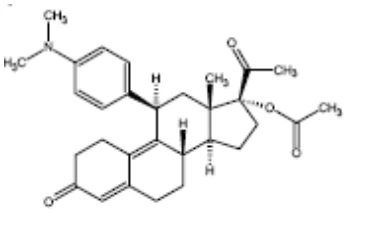
Physicochemical properties: Ulipristal acetate is a white to yellow crystalline powder
14 CLINICAL TRIALS
14.1 Clinical Trials by Indication
Prevention of Pregnancy
Two pivotal multicenter clinical studies evaluated the efficacy and safety of ella. An open-label study provided the primary data to support the efficacy and safety of ulipristal acetate for emergency contraception when taken 48 to 120 hours after unprotected intercourse. A single- blind comparative study provided the primary data to support the efficacy and safety of ulipristal acetate for emergency contraception when taken 0 to 120 hours after unprotected intercourse and supported the indication of ulipristal acetate for emergency contraception when taken up to 120 hours after unprotected intercourse. Women in both studies were required to have a negative pregnancy test prior to receiving emergency contraception. The primary efficacy analyses were performed on subjects less than 36 years who had known pregnancy status after taking study medication.
Table 11: Summary of study designs for clinical trials in prevention of pregnancy
| Open label study | Single blind comparative study | |||||||||
|---|---|---|---|---|---|---|---|---|---|---|
| Design | Open label (study 509) | Randomized single blind comparative (study 513) | ||||||||
| Time window | 48 – 120 h after intercourse | Within 120 h of intercourse | ||||||||
| Study sites | 45 family planning clinics (USA) | 35 family planning clinics (24 USA, 10 UK, 1 Ireland) | ||||||||
| Treatments | Ulipristal acetate 30 mg | Ulipristal acetate 30 mg Levonorgestrel 1.5 mg | ||||||||
| Study schedule | FU visit 5-7 days after expected onset of menses to verify pregnancy status by urine pregnancy testing and return of menses. Additional visit 1 week later as needed to ascertain pregnancy status | |||||||||
| Primary efficacy analysis | Comparison of the observed pregnancy rate to the expected pregnancy rate in the mITT population | |||||||||
| Non-inferiority UPA to LNG | ||||||||||
| Condition of study success | Positive outcome for primary efficacy analysis AND inferiority to clinical interest limit of 4% | |||||||||
| Safety reporting | Adverse events, vaginal bleeding and lab parameters (subset of patients) | Adverse events & vaginal bleeding | ||||||||
Table 12: Summary of patient demographics for clinical trials in prevention of pregnancy
| Open label study | Single blind comparative study | ||||
|---|---|---|---|---|---|
| Ulipristal acetate 30mg 48-120 h N = 1,533 | Ulipristal acetate 30mg 0-120 h N = 1,104 | Levonorgestrel 1.5mg 0-120 h* N = 1,117 | |||
Age (years)
| 24.4 ± 6.1 18-50 446 (29.1%) 611 (39.9%) 258 (16.8%) 119 (7.8%) 99 (6.5%) | 24.5 ± 6.1 16-52 347 (31.4%) 362 (32.8%) 215 (19.5%) 108 (9.8%) 72 (6.5%) | 24.9 ± 6.5 16-55 328 (29.4%) 364 (32.6%) 229 (20.5%) 113 (10.1%) 83 (7.4%) | ||
| Open label study | Single blind comparative study | ||||
|---|---|---|---|---|---|
| Ulipristal acetate 30mg 48-120 h N = 1,533 | Ulipristal acetate 30mg 0-120 h N = 1,104 | Levonorgestrel 1.5mg 0-120 h* N = 1,117 | |||
Race, n (%)
| 921 (60.3%) 328 (21.5%) 279 (18.3%) | 804 (72.8%) 210 (19.0%) 90 (8.2%) | 809 (72.4%) 207 (18.5%) 101 (9.1%) | ||
Body mass index (kg/m2)
| 25.3 ± 6.2 | 25.3 ± 5.9 | 25.2 ± 5.7 | ||
Average menstrual cycle length, days (range) % women with regular periods in the previous year Average bleeding days (% of women with)
| 29.0 (24 – 35) 96.0% 4.7 3.3% 7.1% | 28.7 (24 – 35) 98.6% 4.7 0.8% 2.5% | 28.8 (23 – 40) 98.7% 4.7 1.3% 2.7% | ||
| % women with previous pregnancy | 52.4% | 47.3% | 47.8% | ||
| % couples using male condoms within 3 months prior to inclusion | 71.7% | 82.1% | 83.7% | ||
| % women having used EC in the past | 52.5% | 54.9% | 55.7% | ||
Number of acts of unprotected intercourse prior to enrollment within the treatment cycle (% of women with)
| 0.6% 84.9% 11.2% 2.3% 0.8% 0.2% | 0.1% 89.4% 7.5% 2.1% 0.9% 0.0% | 0.3% 88.5% 9.0% 1.9% 0.4% 0.0% | ||
| Open label study | Single blind comparative study | ||||
|---|---|---|---|---|---|
| Ulipristal acetate 30mg 48-120 h N = 1,533 | Ulipristal acetate 30mg 0-120 h N = 1,104 | Levonorgestrel 1.5mg 0-120 h* N = 1,117 | |||
Time elapsed between intercourse and treatment (% of women enrolled in)
| - - 69.2% 32.9% 13.1% | 33.0% 35.0% 22.0% 7.0% 3.0% | 35.0% 34.0% 20.0% 8.0% 3.0% | ||
| |||||
Open label study (study HRA2914-509)
This study was a multicenter open-label trial conducted in the United States. Healthy women (n=1241) with a mean age of 24 years who requested emergency contraception 48 to 120 hours after unprotected intercourse received a dose of 30 mg ulipristal acetate (ella).
Single-blind comparative study (study HRA2914-513)
This study was a multicenter, single-blind, randomized comparison of the efficacy and safety of 30 mg ulipristal acetate (ella) to levonorgestrel (another form of emergency contraception). Subjects were enrolled at 44 sites in three countries, with the majority (66%) having been enrolled in the United States. Healthy women (n= 1893) with a mean age of 25 years who requested emergency contraception within 120 hours of unprotected intercourse were involved and randomly allocated to receive ella or levonorgestrel 1.5 mg. Table 11 summarizes the main elements of trial design and Table 12 the baseline demographic characteristics for the 2 pivotal phase 3 efficacy and safety trials.
Study Results
Main results from the two phase 3 pivotal trials are summarized in Table 13 and Table 14.
Table 13: – Results of study HRA2914-509 and HRA2914-513 in prevention of pregnancy - Comparison of observed vs. expected pregnancy rates
Open label study mITT population (primary efficacy variable) 0-120 h | Single blind comparative study mITT population 0-72 h | |||||||
|---|---|---|---|---|---|---|---|---|
Ulipristal acetate (n = 1241) | Ulipristal acetate (n=843) | Levonorgestrel (n=851) | ||||||
| Observed pregnancies (n) | 26 | 15 | 22 | |||||
| Expected pregnancy rate (%) | 5.53% | 5.54% | 5.43% | |||||
Observed pregnancy rate (%; 95% CI) | 2.10 (1.41 - 3.10) | 1.78 (1.04 – 2.98) | 2.59 (1.68 – 3.94) | |||||
| Comments: | UL95% CI = 3.10 < 4% < 5.53% Efficacy significantly better than the unacceptable rate (5.53%) and clinical interest limit (4%) | UL95% CI = 2.98 < 4% < 5.54% Better than the unacceptable rate (5.54%) and clinical interest limit (4%) | UL95% CI = 3.94 < 4% < 5.43% Better than the unacceptable rate (5.43%) and close to clinical interest limit (4%) | |||||
Table 14: Pregnancy rates by time from unprotected intercourse to ella treatment
| Time from intercourse to treatment (h) | < 24 | 24-48 | 48-72 | 73-96 | 97-120 | ||||||||||||||||||||||
|---|---|---|---|---|---|---|---|---|---|---|---|---|---|---|---|---|---|---|---|---|---|---|---|---|---|---|---|
| Study | SBCS1 | OLS2 | SBCS | OLS | SBCS | OLS | SBCS | OLS | SBCS | OLS | |||||||||||||||||
| N of subjects included | 312 | 329 | 203 | 693 | 63 | 390 | 34 | 158 | |||||||||||||||||||
| N of observed pregnancies | 5 | 7 | 3 | 16 | 0 | 8 | 0 | 2 | |||||||||||||||||||
| Pregnancy rate (%) | 1.6 | 2.13 | 1.48 | 2.30 | 0.00 | 2.04 | 0.00 | 1.26 | |||||||||||||||||||
| Odds ratio3 (95% CI) | NA | 1.33 (0.42-4.25) | 0.69 (0.18-2.70) | NA | 0.00 | 0.89 (0.38-2.09) | NA | 0.61 (0.13-2.92) | |||||||||||||||||||
| 1 Single blind comparative study 2 Open label study 3 Odds ratio at a given time interval is relative to the previous 24-h time interval. | |||||||||||||||||||||||||||
The results of the two trials were consistent and statistically conclusive: ella significantly decreased the risk of pregnancy after unprotected intercourse, from an estimated expected pregnancy rate of 5.5% to observed pregnancy rates of 2.1% (95%CI [1.41-3.10]) in the open-label study and 1.78% (95%CI [1.04-2.98%]) in the comparative study. The observed pregnancy rate in the levonorgestrel comparator group was 2.59% (95%CI [1.68-3.94]).
Pooled Analysis
Data from the two studies were pooled to provide a total efficacy population of women treated with ulipristal acetate up to 120 hours after UPI. Time Trend analysis for the five 24-hour intervals from 0 to 120 hours between unprotected intercourse and treatment was conducted. There were no significant differences in the observed pregnancy rates across the five time intervals.
Subgroup analysis of the pooled data by BMI showed that for women with BMI > 30 kg/m2 (16% of all subjects), the observed pregnancy rate was 3.1% (95% CI: 1.7, 5.7), which was not significantly reduced compared to the expected pregnancy rate of 4.5% in the absence of emergency contraception taken within 120 hours after unprotected intercourse. In the comparative study, a similar effect was seen for the comparator emergency contraception drug, levonorgestrel 1.5 mg.
15 MICROBIOLOGY
No microbiological information is required for this drug product.
16 NON-CLINICAL TOXICOLOGY
General Toxicology: Non-clinical data reveal no special hazard for humans based on conventional studies of safety pharmacology, repeated dose toxicity, and genotoxicity. Most findings in general and reproductive toxicity studies were related to its mechanism of action as a modulator of progesterone receptors, with antiprogesterone activity observed at exposures similar to therapeutic levels.
Repeated dose toxicity
The chronic toxicity studies comprised exposure to ulipristal acetate by oral administration in rats and monkeys for 6 months. The main findings from these studies are summarized in Table 15.
Table 15: Summary of key findings in the 6-month toxicology studies in rats and monkeys.
| Species | Study Design | Main findings |
|---|---|---|
| Rats | 6 months, 0, 1, 5, 25 mg/kg/d, oral dosing | Mid and high dose levels: increased bodyweight and food consumption; clinical signs: masses in axillary region that proved to be galactoceles cysts; hematological changes : increased white cell, lymphocyte and neutrophils; reduced erythrocyte numbers, haematocrit and haemoglobin; biochemical changes : reduced sodium, chloride; increased globulin, total protein and cholesterol; macroscopic findings increased liver and adrenal weights and decreased ovaries, uterus and thyroid weights; histological changes : adrenal cortical and liver hepatocyte hypertrophy, ovarian follicular cysts and follicular atresia and uterine glandular dilation, pituitary hyperplasia; changes in mammary glands and ovaries also seen at low dose level. |
| Monkeys | 6 months, 0, 1, 5, 25 mg/kg/d, oral dosing | High dose level: Aggressiveness, emesis and watery faeces; decreased lymphocytes counts and increased neutrophiles; decreased alanine transferase and cholesterol, increased adrenal weight and decreased thymus weight, mild hypertrophy of adrenal cortex. Mid and high dose level: interruption of the menstrual cycle decreased lymphocytes and increased segmented neutrophils; cystic dilatation of the endometrial glands, with one high-dose animal showing mild squamous metaplasia. |
Toxicology studies in the rat and monkey did not identify any evidence of overt toxicity following repeated oral administration. The effects of ulipristal acetate were the consequence of disruption of the hypothalamic-pituitary-adrenal axis and reproductive systems which manifested as changes in the pituitary, adrenal and mammary glands as well as in the ovary and uterus, together with increases in serum levels of corticosterone and prolactin. The exception would appear to be the observed effects on the liver – increased weight and hepatocyte hypertrophy – at the high doses in the rat study, but this is likely to be an adaptive response to the increased metabolic load imposed by daily administration of ulipristal acetate. Treatment-related changes were seen at all dose levels in the rat study and it was not possible to determine a NOAEL. In the monkey study the NOAEL was 25 mg/kg/day.
Carcinogenicity: Carcinogenicity studies with ulipristal acetate have not been conducted.
Genotoxicity: Genetoxicity studies have shown no evidence of mutagenic potential.
Reproductive and Developmental Toxicology:
Reproductive studies were conducted in both rats and rabbits, using oral route of administration. The NOELs for development toxicity were 0.1 mg/kg/day and 0.3 mg/kg/day in rats and rabbits, respectively. Doses of 3 and 10 mg/kg/day reduced the pregnancy rate to 20 and 0% in both species. Doses of ~1 mg/kg/day in rabbits and > 0.3mg/kg/day in rats increased post-implantation loss. In utero exposure to any dose of ulipristal acetate during gestation did not lead increases in fetal malformations, skeletal anomalies or other developmental toxicity in surviving fetuses, including the fertility of surviving offspring. Exposure to ulipristal acetate (>2 mg/kg/day) late in gestation in rats lead to fetal loss.
Ulipristal acetate was administered repeatedly to pregnant rats and rabbits during the period of organogenesis. Embryofetal loss was noted in all pregnant rats and in half of the pregnant rabbits following 12 and 13 days of dosing, at daily drug exposures 1/3 and 1/2 the human exposure, respectively, based on body surface area (mg/m2). There were no malformations of the surviving fetuses in these studies. Adverse effects were not observed in the offspring of pregnant rats administered ulipristal acetate during the period of organogenesis through lactation at drug exposures 1/24 the human exposure based on AUC. Administration of ulipristal acetate to pregnant monkeys for 4 days during the first trimester caused pregnancy termination in 2/5 animals at daily drug exposures 3 times the human exposure based on body surface area.
Impairment of Fertility:
Single oral doses of ulipristal acetate prevented ovulation in 50% of rats at 2 times the human exposure based on body surface area (mg/m2). Single doses of ulipristal acetate given on post-coital days 4 or 5 prevented pregnancy in 80-100% of rats and in 50% of rabbits when given on post-coital days 5 or 6 at drug exposures 4 and 12 times the human exposure based on body surface area. Lower doses administered for 4 days to rats and rabbits were also effective at preventing ovulation and pregnancy.