


Patient Medication Information: uses, side effects, how to take - Elyxyb
Serious Warnings and Precautions
ELYXYB can cause serious side effects, including:
See Serious side effects and what to do about them table for more information on these and other serious side effects. Pregnancy:
|
What is ELYXYB used for?
ELYXYB is used in adults for short term treatment of migraine headaches. These migraine headaches may or may not be accompanied by an aura. This is when you see black spots, flashes of light or shimmering spots or stars. ELYXYB should not be used to prevent or reduce the number of headaches you experience. ELYXYB should only be used to treat an actual migraine headache attack.
How does ELYXYB work?
ELYXYB belongs to a group of medicines called non-steroidal anti-inflammatory drugs (NSAIDs). It can reduce the chemicals produced by your body which cause pain and swelling.
What are the ingredients in ELYXYB?
Medicinal ingredients: celecoxib
Non-medicinal ingredients: acesulfame potassium, banana flavor, bubble gum flavor, ethyl alcohol, glycerin, glyceryl monocaprylate, L-menthol, lauroyl polyoxyl-32 glycerides, medium chain triglycerides, monoammonium glycyrrhizinate, peppermint flavor, polyoxyl 35 castor oil, polyoxyl 40 hydrogenated castor oil, propyl gallate, purified water, and sucralose.
ELYXYB comes in the following dosage form:
Oral solution: 120 mg/4.8 mL (25 mg/mL) of celecoxib.
Do not use ELYXYB if:
- you recently had, or are planning to have, heart bypass surgery.
- you have severe, uncontrolled heart failure.
- you have bleeding in the brain.
- you are pregnant and in a later stage of pregnancy (i.e., 28 weeks or later).
- you are currently breastfeeding or planning to breastfeed.
- you are allergic to celecoxib or any of the other ingredients in ELYXYB or its container.
- you have a history of asthma, hives, growths in your nose, sinus swelling or symptoms of an allergic reaction after taking acetylsalicylic acid (ASA) or other NSAIDs.
- you are allergic to a group of medicines known as sulfonamides or “sulfa” drugs.
- you have an active stomach or intestine ulcer.
- you have active bleeding from the stomach or gut.
- you have inflammatory bowel disease (e.g., Crohn’s disease or ulcerative colitis).
- you have severe or active liver disease.
- you have severe or worsening kidney disease.
- you were told by a healthcare professional that you have high levels of potassium in your blood.
- you are under 18 years of age.
To help avoid side effects and ensure proper use, talk to your healthcare professional before you take ELYXYB. Talk about any health conditions or problems you may have, including if you:
- are 65 years of age or older.
- have a condition that makes you physically weak.
- are currently taking any other medicines.
- have high blood pressure, high cholesterol or diabetes.
- have, or have had, heart attacks, chest pain, heart disease, stroke or heart failure.
- have, or have had, temporary vision loss in one or both eyes due to a lack of blood flow to the retina (amaurosis fugax).
- have poor blood flow to your extremities (like your hands and feet).
- smoke or used to smoke.
- drink a lot of alcohol.
- have a stomach infection.
- have liver or kidney problems, urinary problems, are dehydrated or on a salt-restricted diet.
- have a history of ulcer or bleeding from the stomach or gut (small or large intestine).
- have other bleeding or blood problems.
- ever had bleeding in the brain.
- have a family history of allergy to sulfonamide drugs.
- have a family history of allergy to NSAIDs, such as acetylsalicylic acid (ASA), celecoxib, diclofenac, diflunisal, etodolac, fenoprofen, flurbiprofen, ibuprofen, indomethacin, ketoprofen, ketorolac, mefenamic acid, meloxicam, nabumetone, naproxen, oxaprozin, piroxicam, rofecoxib, sulindac, tenoxicam, tiaprofenic acid, tolmetin, or valdecoxib (NOT a complete list).
- have asthma.
- are pregnant, think you might be pregnant or planning on becoming pregnant.
- have immune system problems.
- are known or suspected to metabolize certain medicines very slowly (i.e., CYP2C9 substrates).
Other warnings you should know about:
ELYXYB can cause serious side effects, including:
Blood and bleeding problems:
- ELYXYB can cause blood problems (i.e., low levels of platelets, red or white blood cells), bleeding and prolonged bleeding.
Taking ELYXYB with the following medicines can increase the risk of bleeding:
- Anticoagulants (prevents blood clots), corticosteroids (anti-inflammatory), or antidepressants like selective serotonin reuptake inhibitors (SSRIs).
Serious skin reactions: In rare cases, serious, life-threatening allergic and skin reactions have been reported with some NSAIDs, such as ELYXYB. These skin problems most often happen during the first month of treatment. Tell your healthcare professional immediately if you notice any changes in your skin both during and after treatment.
ELYXYB might cause you to become more sensitive to sunlight. Sunlight or sunlamps may cause sunburn, skin blisters, rash, redness, itching or discolouration, or vision changes. If you have a reaction from the sun, talk to your healthcare professional.
See Serious side effects and what to do about them table for more information on these and other serious side effects.
Overuse of ELYXYB: As with other migraine treatments, using too much ELYXYB can cause daily headaches or make your migraine headaches worse. Ask your healthcare professional if you think this is the case for you. You may need to stop using ELYXYB to correct the problem.
Check-ups and testing: You will have regular visits with your healthcare professional during treatment with ELYXYB. They will:
- Check your blood pressure.
- Check your eyes. ELYXYB can cause blurred or reduced vision.
- Do blood and urine tests to check your liver, kidney and blood health.
Surgery: Tell any doctor, dentist, pharmacist or healthcare professional that you see, that you are taking this medicine. This is especially important if you are planning to have heart surgery.
Driving and using machinery: ELYXYB may cause eye or nervous system problems. This includes tiredness, trouble sleeping, blurred vision, spinning or dizziness (vertigo), hearing problems or depression. Be careful about driving or doing activities that require you to be alert. If you become drowsy, dizzy or light-headed after taking ELYXYB, do NOT drive or operate machinery.
Fertility in women: ELYXYB may affect your fertility. This means that it may be difficult for you to have a child. If you have trouble having a child, you might need to stop taking ELYXYB. Talk to your healthcare professional if you have any questions about this.
Adults (65 years of age or older): Side effects like gastrointestinal problems may happen more often. Your healthcare professional might have you start with a lower dose of ELYXYB. They will monitor your health during and after treatment.
Tell your healthcare professional about all the medicines you take, including any drugs, vitamins, minerals, natural supplements or alternative medicines.
The following may interact with ELYXYB:
- Acetylsalicylic acid (ASA) or other NSAIDs, used to treat pain, fever and inflammation, like celecoxib, diclofenac, ibuprofen, naproxen.
- Antacids, used to treat symptoms of excess stomach acid.
- Omeprazole, used to treat stomach problems.
- Medicines used to treat depression, like citalopram, fluoxetine, paroxetine, sertraline, lithium.
- Medicines used to treat high blood pressure like enalapril, ramipril, candesartan, irbesartan, propranolol, lisinopril, metoprolol.
- Medicines used as blood thinners or to prevent blood clots like warfarin, ASA, clopidogrel.
- Medicines used to move extra fluid and salt out of your body (also known as diuretics), like furosemide, hydrochlorothiazide.
- Medicines used to treat diabetes, like sulfonylureas or other oral hypoglycemics.
- Medicines used to lower the risk of organ rejection, like tacrolimus and cyclosporine.
- Corticosteroids (including glucocorticoids such as prednisone), used to treat inflammation and overactive immune system responses.
- Digoxin, used to treat heart disorders.
- Medicines used to treat seizures, like phenytoin, carbamazepine, barbiturates.
- Methotrexate, used to treat cancer.
- Medicines used to treat bacterial infections, like sulfonamide, rifampicin.
- Oral birth control, used to prevent pregnancy.
- Dextromethorphan, found in some cough medications.
- Fluconazole, used to treat fungal infections.
- Alcohol.
How to take ELYXYB:
Take ELYXYB exactly as your healthcare professional has told you:
- If your healthcare professional has prescribed 120 mg of ELYXYB, take all of the medicine in the bottle as described below in Instructions for use for a full dose (120 mg).
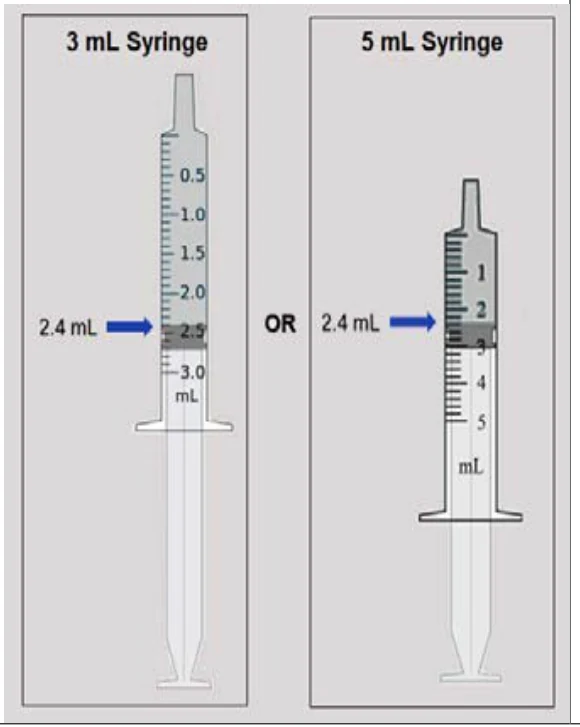
- If your healthcare professional has prescribed 60 mg of ELYXYB, take 2.4 mL of the medicine, as described below in Instructions for use for a half dose (60 mg). You will need a dosing syringe from the pharmacy to give the right amount of medicine. Do not use a household teaspoon to measure ELYXYB.
ELYXYB can be taken with or without food.
Instructions for use for a full dose (120 mg)
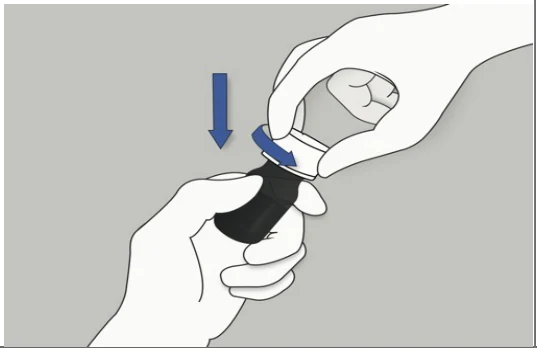 | Step 1: When you need to take ELYXYB, push down the cap and turn it to the left (counterclockwise) to open it. |
|---|
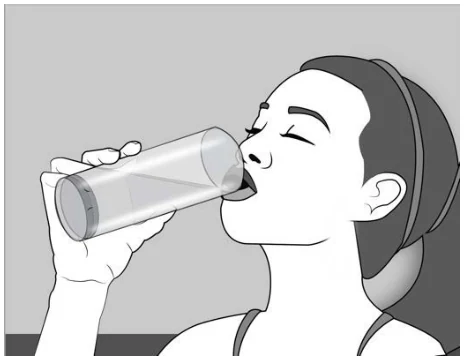
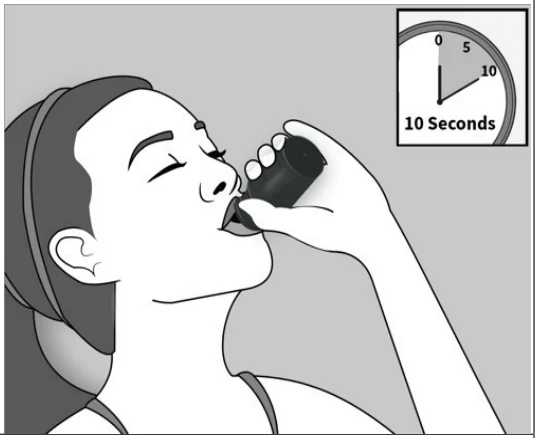 | Step 2: When taking 120 mg of ELYXYB, drink it directly from the bottle. Hold the bottle upside down for 10 seconds to make sure the full amount of medicine is taken. |
|---|---|
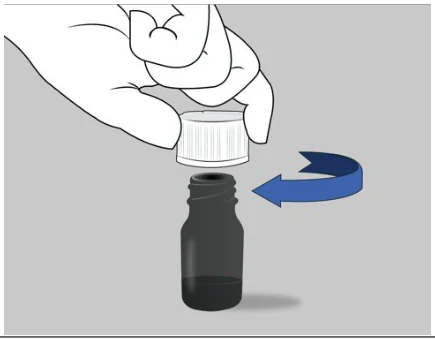
| Step 3: Close the bottle by turning the cap to the right (clockwise) right away after drinking the medicine. | |
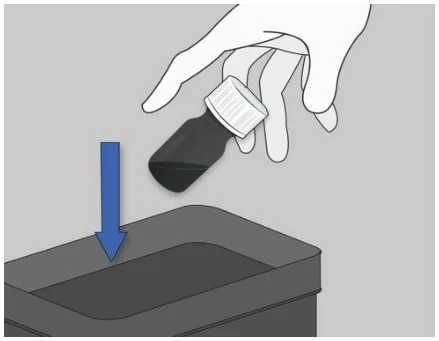
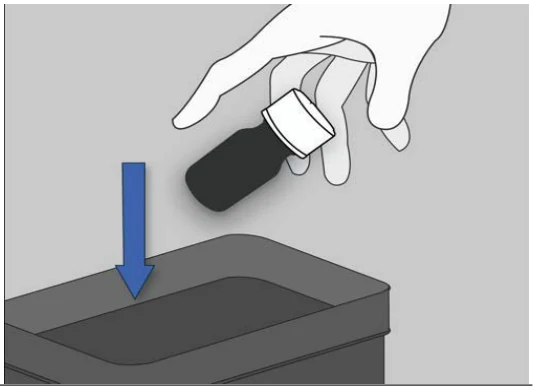 | Step 4: Throw away (discard) the bottle. |
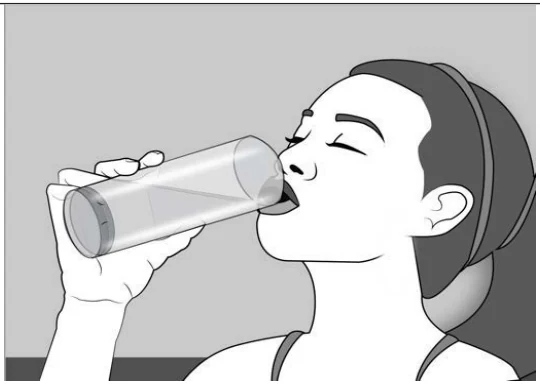
| Step 5: After you take ELYXYB, you may drink up to 8 ounces (240 mL) of water. |
Instructions for use for a half dose (60 mg)
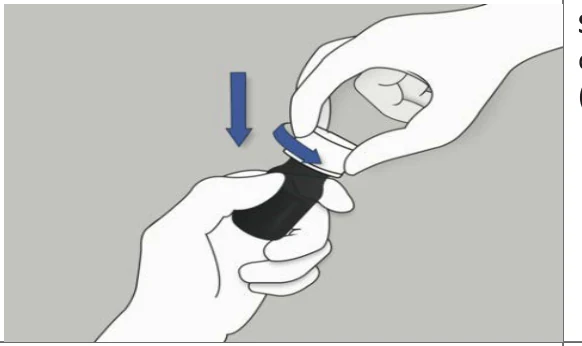
| Step 1: When you need to take ELYXYB, push down the cap and turn it to the left (counterclockwise) to open it. | |
|---|---|
Step 2: Use an oral dosing syringe (3 mL or 5 mL) from your pharmacy to withdraw 2.4 mL of ELYXYB. Insert the syringe through the ELYXYB bottle opening and draw up 2.4 mL of ELYXYB directly from the bottle into the syringe. This 2.4 mL will be your 60 mg dose. Note: Do not use a household teaspoon to measure ELYXYB. |
 |
|---|
 | |
|---|---|
 |
| Step 3: Place the 2.4 mL of the ELYXYB that is in the dosing syringe in your mouth and swallow it right away. | |
|---|---|
Step 4: Close the bottle tightly by turning the cap to the right (clockwise) right away after taking the correct dose of ELYXYB. Note: Do not store the bottle to reuse the remaining medicine. | |
| Step 5: Throw away (discard) the bottle with the unused ELYXYB. | |
| Step 6: After you take ELYXYB, you may drink up to 8 ounces (240 mL) of water. | |
Usual dose:
- The usual adult dose is 120 mg (1 bottle) as needed
- The maximum dose is 120 mg (1 bottle) per day.
- Take ELYXYB for the fewest number of days per month. This is to avoid potential side effects that may affect your heart, blood vessels, stomach or intestines.
- Your healthcare professional may prescribe you a reduced dose depending on your condition.
Overdose:
 | |
|---|---|
 | |
 |
| If you think you, or a person you are caring for, have taken too much ELYXYB, contact a healthcare professional, hospital emergency department, regional poison control centre or Health Canada’s toll-free number, 1-844 POISON-X (1-844-764-7669) immediately, even if there are no signs or symptoms. |
|---|
What are possible side effects from using ELYXYB?
These are not all the possible side effects you may have when taking ELYXYB. If you experience any side effects not listed here, tell your healthcare professional.
Side effects with ELYXYB may include:
- Nausea, vomiting, diarrhea, constipation, stomach upset/abdominal pain, heartburn, indigestion, feeling gassy
- Changes in tastes or loss of taste
- Headache, dizziness, light-headedness
- Feeling of burning/prickliness/numbing
- Confusion, hard to concentrate or think, short-term memory loss, nervousness
- Bruises
- Rash
- Thirst, dry mouth
- Muscle pain
- Mouth sores
- Hair loss
- Increased sweating
- Problems with your period (women)
Serious side effects and what to do about them
| Symptom / effect | Talk to your healthcare professional | Stop taking drug and get immediate medical help | |
|---|---|---|---|
| Only if severe | In all cases | ||
| COMMON | |||
| Gastrointestinal (GI) problems (bleeding, blockage, holes, ulcers or inflammation in your GI tract): blood in vomit, black tarry or bloody stool, dizziness, stomach pain, bloating, loss of appetite, weight loss, nausea, vomiting, constipation or diarrhea, chills or fever | √ | ||
| Hypertension (high blood pressure): fatigue, dizziness or fainting, chest pain | √ | ||
| UNCOMMON | |||
| Anaphylaxis/hypersensitivity (severe allergic reactions): sudden wheeziness and chest pain or | √ | ||
Serious side effects and what to do about them
| Symptom / effect | Talk to your healthcare professional | Stop taking drug and get immediate medical help | |
|---|---|---|---|
| Only if severe | In all cases | ||
| tightness, swelling of eyelids, face, lips, tongue or throat, swelling or anaphylactic reaction/shock | |||
| Aseptic meningitis (inflammation of the protective lining of the brain that is not caused by infection): Headaches, stiff neck, nausea and vomiting, fever or clouding of consciousness | √ | ||
| Blood problems (low white and/or red blood cell or platelet count): feeling tired or weak, pale skin, bruising or bleeding for longer than usual if you hurt yourself, fever, chills | √ | ||
| Congestive heart failure (heart does not pump blood as well as it should): shortness of breath, fatigue and weakness, swelling in ankles, legs and feet, cough, fluid retention, lack of appetite, nausea, rapid or irregular heartbeat, reduced ability to exercise | √ | ||
| Cystitis (bladder infection): increased need to urinate, pain in the pelvis or lower back, frequent urination during the night, cloudy urine that may contain blood, burning or pain urinating | √ | ||
| Depression (sad mood that will not go away): difficulty sleeping or sleeping too much, changes in appetite or weight, reduced sex drive and thoughts of death or suicide | √ | ||
| Kidney disorder/problems (including kidney failure): nausea, vomiting, fever, swelling of extremities, fatigue, thirst, dry skin, irritability, dark urine, increased or decreased urine output, blood in the urine, rash, weight gain (from retaining fluid), | √ | ||
Serious side effects and what to do about them
| Symptom / effect | Talk to your healthcare professional | Stop taking drug and get immediate medical help | |
|---|---|---|---|
| Only if severe | In all cases | ||
| loss of appetite, mental status changes (drowsiness, confusion, coma) | |||
| Liver problems (including hepatitis, liver failure, cholestasis, liver necrosis): yellowing of your skin and eyes (jaundice), right upper stomach area pain or swelling, nausea or vomiting, unusual dark urine, unusual tiredness, fever, light-coloured stool | √ | ||
| Lung problems, asthma: increased shortness of breath, wheezing, difficulty breathing, cough and chest tightness, irregular heartbeat | √ | ||
| Myocardial infarction (heart attack): pressure or squeezing pain between the shoulder blades, in the chest, jaw, left arm or upper abdomen, shortness of breath, dizziness, fatigue, light-headedness, clammy skin, sweating, indigestion, anxiety, feeling faint and possible irregular heartbeat | √ | ||
| Stroke (bleeding or blood clot in the brain): sudden numbness, weakness or tingling of the face, arm, or leg, particularly on one side of the body, sudden headache, blurry vision, difficulty swallowing or speaking, or lethargy, dizziness, fainting, vomiting, trouble understanding, trouble with walking and loss of balance | √ | ||
| Tinnitus (hearing problems): includes ringing, buzzing, clicking or hissing in ears, loss of hearing | √ | ||
| Vertigo (a sense of severe spinning dizziness, lightheadedness) | √ | ||
| RARE | |||
Serious side effects and what to do about them
| Symptom / effect | Talk to your healthcare professional | Stop taking drug and get immediate medical help |
|---|---|---|
| Only if severe | In all cases | |
| Serious skin reactions: fever, severe rash, swollen lymph glands, flu-like feeling, blisters and peeling skin that may start in and around the mouth, nose, eyes and genitals and spread to other areas of the body, swelling of face and/or legs, yellow skin or eyes, shortness of breath, dry cough, chest pain or discomfort, feeling thirsty, urinating less often, less urine or dark urine, hives, red or dry itchy skin, purple or red spots on skin | ||
| √ | ||
If you have a troublesome symptom or side effect that is not listed here or becomes bad enough to interfere with your daily activities, tell your healthcare professional.
Reporting Side Effects
You can report any suspected side effects associated with the use of health products to Health Canada by:
NOTE: Contact your health professional if you need information about how to manage your side effects. The Canada Vigilance Program does not provide medical advice. |
Storage:
- Store between 15°C to 30°C.
- Do not refrigerate or freeze.
- Unused portion should be discarded immediately after use.
- Keep out of reach and sight of children.
If you want more information about ELYXYB:
- Talk to your healthcare professional.
Find the full product monograph that is prepared for healthcare professionals and includes this Patient Medication Information by visiting the Health Canada website:
- -canada/services/drugs-health-products/drug-products/drug-product-database.html); the manufacturer’s website [scilexholding.com], or by calling 1-866-285-9177.