


Product Monograph - Enablex
SUMMARY PRODUCT INFORMATION
| Route of Administration | Dosage form / Strength | Clinically Relevant Nonmedicinal Ingredients |
| Oral | Extended release tablet, 7.5 mg, 15 mg | Dibasic calcium phosphate anhydrous, hypromellose |
INDICATIONS AND CLINICAL USE
ENABLEX (darifenacin) is indicated for the treatment of overactive bladder. Overactive bladder is used to describe a collection of urinary symptoms composed of urgency, with or without urge incontinence, usually with frequency and nocturia, in the absence of proven infection or other obvious pathology.
Geriatrics
>65 Years Of Age
In clinical studies (31.4% of patients were > 65 years of age), the safety and efficacy profile of darifenacin 7.5 mg and 15 mg in patients aged over 65 years are comparable to the younger population and were not affected by age.
>75 Years Of Age
In clinical studies, the safety and efficacy profile of darifenacin 7.5 mg and 15 mg in patients aged over 75 years are comparable to the younger population and were not affected by age. This information is based on 75 patients over 75 years of age, that were included in the four pivotal darifenacin phase III studies (See also PRECAUTIONS).
Pediatrics
The safety and effectiveness of ENABLEX in pediatric patients have not been established.
CONTRAINDICATIONS
ENABLEX (darifenacin) extended release tablets are contraindicated in patients with or at risk of:
- Urinary retention.
- Gastric retention.
- Uncontrolled narrow-angle glaucoma.
- Hypersensitivity to the active substance or to any of the excipients.
WARNINGS AND PRECAUTIONS
Risk of Urinary Retention and Gastrointestinal Obstructive Disorders
ENABLEX (darifenacin) should be administered with caution to patients with
- Clinically significant bladder outflow obstruction
- Risk for urinary retention in patients with or without pre-existence of this condition
- Gastrointestinal obstructive disorders, such as pyloric stenosis,
- Severe constipation (≤2 bowel movements per week) (see CONTRAINDICATIONS)
- Risk of decreased gastrointestinal motility.
As with other antimuscarinics, patients should be instructed to discontinue ENABLEX and seek immediate medical attention if they experience edema of the tongue or laropharynx, or difficulty breathing (see ADVERSE REACTIONS).
Driving and Using Machines
No studies of the effects of ENABLEX on the ability to drive and use machines have been performed. However, ENABLEX may produce dizziness or blurred vision. Patients should not drive vehicles, use machines or perform other tasks which require alertness if they experience these adverse events.
Narrow-Angle Glaucoma
ENABLEX should be used with caution in patients with narrow-angle glaucoma.
Cardiovascular
Caution should be used when prescribing antimuscarinics/anticholinergics to patients with pre-existing cardiac diseases.
Hepatic
There are no special dosing requirements for patients with mild hepatic impairment (Child Pugh A). (For Child Pugh scores, see REFERENCES – References # 1, 2 and 4). The daily dose of ENABLEX (darifenacin) should not exceed 7.5 mg for patients with moderate hepatic impairment (Child Pugh B). ENABLEX has not been studied in patients with severe hepatic impairment (Child Pugh C) and therefore is not recommended for use in this patient population (see CLINICAL PHARMACOLOGY, DOSAGE AND ADMINISTRATION).
Renal
There is insufficient evidence to determine whether a dose reduction is necessary in patients with severe renal failure.
Special Populations
Pregnant Women
There are no studies of ENABLEX in pregnant women. ENABLEX should be used during pregnancy only if the benefit to the mother outweighs the potential risk to the fetus.
Nursing Women
ENABLEX is excreted into the milk of rats. It is not known whether ENABLEX is excreted into human milk and therefore caution should be exercised before ENABLEX is administered to a nursing woman.
Pediatrics
The safety and effectiveness of ENABLEX in pediatric patients have not been established.
Geriatrics
The recommended starting dose for the elderly is 7.5 mg daily. After 2 weeks of starting therapy, patients should be reassessed for efficacy and safety. For those patients who have an acceptable tolerability profile but require greater symptom relief, the dose may be increased to 15 mg daily, based on individual response. (see CLINICAL PHARMACOLOGY, Pharmacokinetics in Special Populations).
In clinical studies, the safety and efficacy profile of darifenacin 7.5 mg and 15 mg in patients aged over 75 years is comparable to the younger population and were not affected by age. This information is based on 75 patients over 75 years of age that were included in the four pivotal darifenacin phase III studies.
ADVERSE REACTIONS
During the clinical development of ENABLEX (darifenacin), a total of 7,271 patients and healthy volunteers have been treated with doses of darifenacin from 3.75 to 60 mg once daily (recommended doses are 7.5 and 15 mg once daily) for up to one year duration of therapy, resulting in more than 2,000 patient-years exposure, for overactive bladder and other indications.
Table 1 lists the adverse events (regardless of causality) reported in 3% or more patients treated with 7.5 or 15 mg ENABLEX Extended Release Tablets in fixed-dose, placebo-controlled Phase III studies.
The majority of adverse events in ENABLEX treated subjects were mild or moderate and mostly occurred during the first two weeks of treatment. The incidence of serious adverse events was similar for 7.5 mg, 15 mg and placebo. The profile of adverse events remained consistent across all populations and dose studied. There is a tendency for adverse reactions, particularly those classified as mild to moderate, to increase with increasing dose.
The most frequently reported adverse events in the pivotal trials were dry mouth and constipation. However as seen in Table 2, the patient discontinuation rates due to these events were low.
Consistent with M3 muscarinic receptor selectivity, the incidence of central nervous system adverse events at all doses was similar to placebo in the population tested (see CLINICAL STUDIES). The incidence of cardiovascular adverse events, such as tachycardia, were less than 1% at all doses and did not increase with dose.
No clinically significant changes in QT interval were observed in clinical trials of volunteers and patients (n= 964 treated, n= 261 placebo) with ENABLEX up to and including doses of 60 mg (4 times the recommended dose).
Table 1 Incidence of adverse events, regardless of causality, reported in ≥2% of patients treated with ENABLEX extended release tablets in fixed-dose, placebo-controlled phase III studies
| Adverse Event | Darifenacin 7.5 mg N = 337 | Darifenacin 15 mg N = 334 | Placebo N = 388 |
| Dry mouth | 68 (20.2%) | 118 (35.3%) | 32 (8.2%) |
| Constipation | 50 (14.8%) | 71 (21.3%) | 24 (6.2%) |
| Dyspepsia | 9 (2.7%) | 28 (8.4%) | 10 (2.6%) |
| Headache | 15 (4.5%) | 17 (5.1%) | 21 (5.4%) |
| Respiratory tract infection | 9 (2.7%) | 17 (5.1%) | 26 (6.7%) |
| Urinary tract infection | 16 (4.7%) | 15 (4.5%) | 10 (2.6%) |
| Abdominal pain | 8 (2.4%) | 13 (3.9%) | 2 (0.5%) |
| Asthenia | 5 (1.5%) | 9 (2.7%) | 5 (1.3%) |
| Flu syndrome | 7 (2.1%) | 7 (2.1%) | 10 (2.6%) |
| Dizziness | 3 (0.9%) | 7 (2.1%) | 5 (1.3%) |
| Dry eyes | 5 (1.5%) | 7 (2.1%) | 2 (0.5%) |
| Back pain | 8 (2.4%) | 5 (1.5%) | 12 (3.1%) |
| Nausea | 9 (2.7%) | 5 (1.5%) | 6 (1.5%) |
| Pharyngitis | 9 (2.7%) | 4 (1.2%) | 9 (2.3%) |
| Diarrhea | 7 (2.1%) | 3 (0.9%) | 7 (1.8%) |
Discontinuations due to any adverse events occurred in 1.2% and 4.5% of 7.5 mg and 15 mg ENABLEX patients treated in fixed-dose placebo controlled trials, respectively and in 1.3% of placebo subjects. There were no discontinuations due to laboratory test abnormalities.
Table 2 Frequency of discontinuations for the most common adverse events
Darifenacin 7.5mg N=337 | Darifenacin 15mg N = 334 | Placebo N = 388 | |
| Dry Mouth | 0 (0.0%) | 3 (0.9%) | 0 (0.0%) |
| Constipation | 2 (0.6%) | 4 (1.2%) | 1 (0.3%) |
Acute urinary retention (AUR) requiring treatment was reported in a total of 16 patients in the ENABLEX phase I-III clinical trials. Of these 16 cases, 7 were reported as serious adverse events, including one patient with detrusor hyperreflexia secondary to a stroke, one patient with benign prostatic hypertrophy (BPH), one patient with irritable bowel syndrome (IBS) and four OAB patients taking darifenacin 30 mg daily. Of the remaining nine cases, none were reported as serious adverse events. Three occurred in OAB patients taking the recommended doses, and two of these required bladder catheterization for 1-2 days.
In addition, the following adverse events were reported, regardless of causality, by less than 2% of ENABLEX patients in either the 7.5 mg or 15 mg once daily darifenacin dose groups in the fixed-dose, placebo-controlled Phase III studies.
General disorders and administration site conditions: pain, face oedema, oedema peripheral, oedema
Vascular disorders: hypertension
Gastrointestinal disorders: vomiting, flatulence, mouth ulceration
Investigations: weight gain, ALT increased, AST increased
Musculoskeletal: arthralgia
Nervous system disorders: insomnia, somnolence; thinking abnormal
Respiratory, thoracic and mediastinal disorders: bronchitis rhinitis; sinusitis; cough increased, nasal dryness, dyspnoea
Subcutaneous tissue disorders: rash, dry skin; pruritus; hyperhidrosis
Special senses: visual impairment; dysgeusia
Renal and urinary disorders: urinary tract disorder, vaginitis, erectile dysfunction, bladder pain, urinary retention
Injury, poisoning, and procedural complication: accidental injury
In one flexible dose titration study (n=395) evaluating the dosing regimen approved for marketing, the overall ADR profile was comparable to that observed in the pooled analysis of three pivotal fixed-dose studies, with the most relevant difference in the very common ADRs. Dry mouth was reported in 18.7% of patients treated with darifenacin and in 8.7% of those treated with placebo. Constipation was reported in 20.9% and 7.9% of patients treated with darifenacin and placebo, respectively. The discontinuation rates due to these ADRs in patients treated with darifenacin were low (dry mouth: 0.7%; constipation: 2.2%).
The incidence of adverse events with the doses of ENABLEX 7.5 mg and 15 mg decreased during the treatment period up to 6 months. A similar trend is also seen for the discontinuation rates.
Abnormal Hematologic and Clinical Chemistry Findings
There was no indication of an increased incidence of laboratory test abnormalities in subjects treated with darifenacin in long term studies.
Post-Market Adverse Drug Reactions
The following adverse drug reactions have been identified based on post-marketing spontaneous reports:
- Generalized hypersensitivity reactions.
Angioedema with or without airway obstruction (see also section WARNINGS AND PRECAUTIONS) have been reported.
Because these reactions are reported voluntarily from a population of uncertain size, it is not always possible to reliably estimate their frequency (frequency unknown).
DRUG INTERACTIONS
Drug-Drug Interactions
Effects of other drugs on darifenacin
Darifenacin metabolism is primarily mediated by the cytrochrome P450 enzymes CYP2D6 and CYP3A4. Therefore, inducers of CYP3A4 or inhibitors of either of these enzymes may alter darifenacin pharmacokinetics.
CYP 2D6 inhibitors: No special dosing requirements are necessary in the presence of CYP 2D6 inhibitors. Darifenacin exposure following 30 mg once daily dosing (twice the maximum recommended therapeutic dose) was 33% higher in the presence of the potent CYP 2D6 inhibitor paroxetine 20 mg.
CYP 3A4 inhibitors: The daily dose of darifenacin should not exceed 7.5 mg when co-administered with potent CYP3A4 inhibitors (e.g. ketoconazole, itraconazole, miconazole, troleandomycin, clarithromycin, nefazodone and ritonavir) (see DOSAGE AND ADMINISTRATION). When the 7.5 mg once-daily dose of darifenacin was given to steady-state and co-administered with the potent CYP 3A4 inhibitor ketoconazole, mean darifenacin exposure was increased 5.3 fold.
No special dosing requirements are necessary in the presence of moderate CYP 3A4 inhibitors. Darifenacin exposure following 30 mg once daily dosing (twice the maximum recommended therapeutic dose) was 34%, 84% and 95% higher in the presence of cimetidine, fluconazole and erythromycin, respectively.
Effects of darifenacin on other drugs
The potential for clinical doses of darifenacin to act as inhibitors of CYP 2D6 or CYP 3A4 substrates was investigated in specific clinical interaction studies.
CYP 2D6 substrates: Caution should be taken when darifenacin is used concomitantly with medications that are predominantly metabolized by CYP 2D6 and which have a narrow therapeutic window, such as flecainide, thioridazine and tricyclic antidepressants.
The mean exposure of imipramine, a CYP 2D6 substrate, was increased 70% in the presence of steady-state darifenacin 30 mg once daily (twice the maximum recommended therapeutic dose). This was accompanied by a 3.6-fold increase in the exposure of desipramine, the active metabolite of imipramine.
CYP 3A4 substrates: Darifenacin (30 mg once daily) had no clinically relevant effect on the exposure of the CYP 3A4 substrate midazolam.
Darifenacin (30 mg once daily) had no effect on the pharmacokinetics of the oral contraceptives levonorgestrel or ethinylestradiol.
Other Drugs:
Warfarin
The effect of warfarin on prothrombin time was not significantly altered when co-administered with darifenacin 30 mg/day (twice the maximum daily recommended dose).
Digoxin
Routine therapeutic drug monitoring for digoxin should be continued. Darifenacin 30 mg qd (twice the maximum dose) co-administered with digoxin at steady-state resulted in a small but potentially clinically significant, 16%, increase in digoxin exposure.
Therapeutic drug monitoring for digoxin should be performed when initiating and ending darifenacin treatment as well as changing the darifenacin dose.
Antimuscarinic agents
The concomitant use of ENABLEX with other antimuscarinic agents may increase the frequency and/or severity of antimuscarinic pharmacological effects such as dry mouth, constipation and blurred vision.
In vitro studies: In vitro human microsomal studies have shown that darifenacin does not inhibit CYP 1A2 or CYP 2C9 up to concentrations of 1·105 nM. In comparison, the average peak unbound concentration of darifenacin at steady state following 15 mg dosing is 0.24 nM.
Effect of food: There is no effect of food on multiple dose pharmacokinetics from extended release tablets.
CYP450 mixed inhibitors
The mean Cmax and AUC of darifenacin following 30 mg once daily at steady state were 42% and 34% higher, respectively, in the presence of cimetidine, a mixed CYP450 enzyme inhibitor.
P-glycoprotein inhibitors
Darifenacin is a substrate of the drug efflux transporter P-glycoproteins. The in vivo effect of P- glycoproteins inhibition on darifenacin exposure has not been studied.
DOSAGE AND ADMINISTRATION
Dosing Considerations
Use in Children
The safety and effectiveness of ENABLEX in pediatric patients with overactive bladder or any other condition have not been investigated.
Use in Elderly
There are no special dosing requirements for the elderly.
Gender
No special dosing requirements are necessary based on gender.
Renal Insufficiency
There are no special dosing requirements for patients with renal impairment.
Hepatic Impairment
There is a risk of increased exposure in this population, however, no dose adjustment is required in patients with mild hepatic impairment (Child Pugh A). For patients with moderate hepatic impairment (Child Pugh B) or when co-administered with potent CYP3A4 inhibitors (e.g. ketoconazole, itraconazole, miconazole, troleandomycin and nefazodone), the daily dose of ENABLEX should not exceed 7.5 mg. ENABLEX is not recommended for use in patients with severe hepatic impairment (Child Pugh C) (see CLINICAL PHARMACOLOGY Special Population Considerations).
Recommended Dose and Dosage Adjustment
The recommended starting dose of ENABLEX (darifenacin) Extended Release Tablets is 7.5 mg once daily. For those patients starting on 7.5 mg daily and requiring greater symptom relief, the dose may be increased to 15 mg daily as early as two weeks after starting therapy, based on individual response.
ENABLEX Extended Release Tablets should be taken once daily. They may be taken with or without food, and should be swallowed whole and not chewed, divided or crushed.
OVERDOSAGE
| For management of a suspected drug overdose, contact your regional Poison Control Centre. |
No cases of overdose were recorded in the ENABLEX (darifenacin) clinical development program that included doses as high as 60 mg daily (4 times the recommended maximum daily dose). Moreover, in a study evaluating the interaction between ketoconazole and daily doses of 30 mg darifenacin, the systemic plasma exposure exceeded the systemic exposure observed after a 60 mg dose by a factor of two, with no reported SAEs. The most commonly reported adverse events were typical of those expected from a drug with anti-muscarinic M3-receptor antagonist activity.”
Overdosage with antimuscarinic agents can potentially result in severe antimuscarinic effects. Treatment should be symptomatic and supportive when necessary. Treatment should be aimed at reversing the antimuscarinic symptoms under careful medical supervision.
ACTION AND CLINICAL PHARMACOLOGY
Mechanism of Action
Darifenacin is a potent muscarinic M3 selective receptor antagonist that exhibits, in vitro, a nine to 59-fold selectivity for the human M3 receptor over human M1, M2 , M4 and M5 receptors. The M3 receptor is the major subtype that modulates urinary bladder muscle contraction.
Darifenacin has a clinically significant effect on bladder function.
Pharmacodynamics
Individuals with full CYP 2D6 activity are referred to as extensive metabolizers (EMs). The estimated mean oral bioavailability of darifenacin in EMs at steady-state is 15% and 19% for 7.5 and 15 mg extended release tablets, respectively.
Pharmacokinetics
Following administration of the extended release tablets maximum plasma levels are reached approximately 7 h after dosing and steady-state plasma levels are achieved by the sixth day of dosing. At steady-state, peak to trough fluctuations in darifenacin concentrations are small (peak to trough fluctuations: 0.87 for 7.5 mg and 0.76 for 15 mg) (Figure 1), thereby maintaining therapeutic plasma levels over the dosing interval. The estimated half-life (t1/2) for the extended release tablet is 12.8 to 18.7 hours.
Figure 1 Steady-State Darifenacin Plasma Concentration Profile from Once Daily Dosing with Extended Release Tablets
0 2 4 6 8 10 12 14 16 18 20 22 24 0 2 4 6 5 3 1 Time post-dose (h) Da ri fe na c i n c on ce nt ra ti on (n g/ m l ) 7.5mg od 15mg od
Absorption
In healthy volunteers, darifenacin is rapidly and completely (>98%) absorbed after oral administration, although oral bioavailability is limited by first pass metabolism (see Metabolism).
Distribution
Darifenacin is a lipophilic base and is 98% bound to plasma proteins (primarily to alpha- 1- acid- glycoprotein). The steady-state volume of distribution (Vss) is estimated to be 163 L. Based on free drug levels in animal cerebrospinal fluid and plasma, darifenacin shows negligible concentrations in the CSF, suggesting low penetration of the blood brain barrier.
Metabolism
Darifenacin is extensively metabolized by the liver following oral dosing. Metabolism is mediated by cytochrome P450 enzymes CYP 2D6 and CYP 3A4. The three main metabolic routes are as follows: (i) monohydroxylation in the dihydrobenzofuran ring; (ii) dihydrobenzofuran ring opening; (iii) N-dealkylation of the pyrrolidine nitrogen.
The initial products of the hydroxylation and N-dealkylation pathways are major circulating metabolites but none contributes significantly to the overall clinical effect of darifenacin. One of the hydroxylated derivatives has some anti-M3 muscarinic receptor activity. This metabolite’s contribution to overall activity is negligible.
Variability in metabolism: A subset of individuals are devoid of CYP 2D6 enzyme activity (i.e. approximately 7% of the Caucasian population). Therefore, the metabolism of darifenacin in these poor metabolizers (PMs) will be principally mediated via CYP 3A4. The darifenacin ratios (poor metabolizers: extensive metabolizers) for Cmax and AUC following darifenacin 15 mg once-daily at steady state were 1.9 and 1.7, respectively.
Population pharmacokinetic analyses of Phase 3 data indicated that on average PMs have 55% higher steady-state exposure than EMs. However, there is considerable overlap between the ranges of exposures seen in EM and PM populations and clinical experience confirms that there are no special dosing requirements for PMs.
Excretion
Following administration of an oral dose of 14C-darifenacin solution to healthy volunteers, approximately 60% of the radioactivity was recovered in the urine and 40% in the feces. Only a small percentage of the excreted dose was unchanged darifenacin (3%). Estimated darifenacin clearance is 40 L/h (11.1 mL/s) for EMs and 32 L/h (8.9 mL/s) for PMs.
Special Populations and Considerations
Pediatrics: The pharmacokinetics of darifenacin have not been studied in the pediatric population.
Geriatrics: In a population pharmacokinetic study, there was a 23% per decade increase in bioavailability of darifenacin in subjects over the age of 65. However, there was considerable overlap between the ranges of exposure seen in younger and older patients, and, in the pivotal trials, no difference in safety and efficacy was observed in the elderly (>65 years of age) as compared to the overall population.
Gender: A population pharmacokinetic analysis of patient data indicated that darifenacin exposure at steady state was 28% lower in males than in females. In pivotal clinical studies, the safety and efficacy profiles of males and females were not found to be significantly different.
Race: The effect of race on the pharmacokinetics of darifenacin has not been characterized.
Hepatic Insufficiency: The daily dose of darifenacin should not exceed 7.5 mg for patients with moderate hepatic impairment (Child Pugh B) (see PRECAUTIONS, DOSAGE AND ADMINISTRATION). There are no special dosing requirements for patients with mild hepatic impairment (Child Pugh A). (See REFERENCES - References # 1, 2 and 5 for Child Pugh score).
Darifenacin pharmacokinetics were investigated in subjects with mild (Child Pugh A) or moderate (Child Pugh B) impairment of hepatic function given darifenacin 15 mg once daily to steady-state. Mild hepatic impairment had no effect on the pharmacokinetics of darifenacin. However, protein binding of darifenacin was affected by moderate hepatic impairment
After adjusting for plasma protein binding, unbound darifenacin exposure was estimated to be 4.7-fold higher in subjects with moderate hepatic impairment than subjects with normal hepatic function.
Subjects with severe hepatic impairment (Child Pugh C) have not been studied, and therefore darifenacin is not recommended for use in these patients (see PRECAUTIONS, DOSAGE AND ADMINISTRATION).
Renal Insufficiency: A study of subjects with varying degrees of renal function [creatinine clearance between 10 and 136 mL/min (0.17 and 2.27 mL/s)] given darifenacin 15 mg once daily to steady-state demonstrated no relationship between renal function and darifenacin clearance. There is insufficient evidence to determine whether a dose reduction is necessary in patients with a greater degree of impairment.
STORAGE AND STABILITY
ENABLEX Extended Release Tablets should be stored between 15 to 30 °C.
DOSAGE FORMS, COMPOSITION AND PACKAGING
ENABLEX is formulated as a once-a-day extended release tablet for oral use containing 7.5 mg or 15 mg of darifenacin as darifenacin hydrobromide.
ENABLEX (darifenacin as darifenacin hydrobromide) 7.5 mg Extended Release Tablets: White coloured, round shaped biconvex, film-coated tablets engraved with “DF” on one side and “7.5” on the other side. The inactive ingredients are colloidal silicon dioxide, dibasic calcium phosphate anhydrous, hypromellose, magnesium stearate, PEG 8000, polyvinyl alcohol, talc and titanium dioxide. HDPE bottle of 100 tablets. PVC/PVDC with aluminum foil blister pack of 7 tablets.
ENABLEX (darifenacin as darifenacin hydrobromide) 15 mg Extended Release Tablets: Orange coloured, round shaped biconvex, film-coated tablets engraved with “DF” on one side and “15” on the other side. The inactive ingredients are colloidal silicon dioxide, dibasic calcium phosphate anhydrous, hypromellose, iron oxide red, iron oxide yellow, magnesium stearate, PEG 8000, polyvinyl alcohol, talc, and titanium dioxide. HDPE bottle of 100 tablets.
PART II SCIENTIFIC INFORMATION
PHARMACEUTICAL INFORMATION
Drug Substance
Common name: darifenacin hydrobromide
Chemical name: (S)- 2-{ 1-[ 2-( 2,3- dihydrobenzofuran- 5- yl) ethyl]- 3- pyrrolidinyl}- 2,2- diphenylacetamide hydrobromide
Molecular Formula: C28H30N2O2 · HBr
Molecular Weight: 507.5
Structural formula: 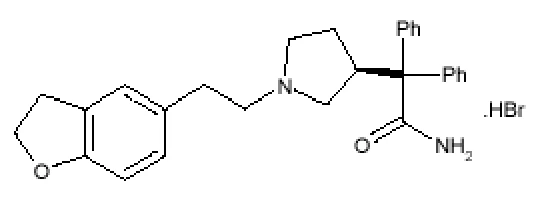
Physiochemical Characteristics
Description: Darifenacin hydrobromide is a white to almost white, crystalline powder.
pKa: 9.20 ± 0.01
Melting Point: 237°C
Solubilities: Soluble in methanol, very slightly soluble in acetone, slightly soluble in water and ethanol, and practically insoluble in hexane.
CLINICAL TRIALS
Study demographics and trial design
The Phase 3 overactive bladder clinical trial program for ENABLEX included 939 patients who were treated with ENABLEX Extended Release Tablets 7.5 mg and 15 mg once daily for up to 12 weeks.
In four randomized, placebo-controlled, multicenter, double-blind, 12-week studies, ENABLEX Extended Release Tablets were evaluated for the treatment of patients with overactive bladder. Overactive bladder is used to describe a collection of urinary symptoms composed of urgency, with or without urge incontinence, usually with frequency and nocturia, in the absence of proven infection or other obvious pathology.
The population studied included OAB patients who were capable of filling out electronic diaries and did not have clinically significant systemic disease. The majority of patients were white (95.6%) and female (82.4%), with a mean age of 57.2 years, range 18 to 89 years (Table 3).
Table 3 Summary of patient demographics for clinical trials in Overactive Bladder
| Study # | Trial design | Dosage, route of administration and duration | Study subjects (N=population treated) | Mean age (Range) | Gender Male/Female n (%) | |
| A137 1041 | international, randomized, double-blind, safety and efficacy trials | 7.5 and 15 mg, oral, od, 12 weeks | 7.5 mg N =229 15mg N =115 Placebo N =164 | 57.5 (19-88) | 7.5 mg n=35/194 (15%/85%) 15mg n =15/100 (13%/87%) Placebo n =26/138 (16%/84%) | |
| A137 1002 | 7.5 and 15 mg, oral, od, 12 weeks | 7.5 mg N =108 15mg N =107 Placebo N =109 | 55 (21-88) | 7.5 mg n=14/94 (13%/875%) 15mg n =15/92 (14%/86%) Placebo n =19/90 (17%/83%) | ||
| A137 1001 | 15 mg, oral, od, 12 weeks | 15mg N =112 Tolterodine N=223 Placebo N =115 | 60 (21-89) | 15mg n =23/89 (21%/79%) Tolterodine n=37/186 (17%83%) Placebo n =12/1030 (10%/90%) | ||
| A137 1047 | 7.5 mg➔15 mg, od, oral, 12 weeks | 7.5 mg ➔15 mg N =268 Placebo N =127 | 58.5 (22-89) | 15mg n =41/227 (15%/85%) Placebo n =21/106 (17%/83%) | ||
31.4% of patients were >65 years of age and 8% were ≥75 years of age. These characteristics were well balanced across treatment groups. Fifty-seven percent of patients had never received prior pharmacotherapy for overactive bladder and the intentional randomization of subjects known to be responsive to, or tolerant of, anti-cholinergic therapy was avoided.
Study results
Table 4 shows the efficacy data from two fixed-dose placebo-controlled studies of 832 patients treated with 7.5 and 15 mg once daily of ENABLEX or placebo for 12 weeks. A significant decrease in symptoms of urge urinary incontinence over and above that already achieved by placebo and training effect of the clinical trials was observed.
Table 4 Difference between ENABLEX (7.5mg, 15 mg) and Placebo for the Week 12 Change from Baseline (Studies 1041 and 1002)
| Study 1041 | Study 1002 | ||||||
| ENABLEX 7.5mg | ENABLEX 15mg | Placebo | ENABLEX 7.5mg | ENABLEX 15mg | Placebo | ||
| No. of Patients Entered | 229 | 115 | 164 | 108 | 107 | 109 | |
| Incontinence Episodes Per Week | |||||||
| Median Baseline | 16.3 | 17.0 | 16.6 | 14.0 | 17.3 | 16.1 | |
| Median Change From Baseline (%) | -9.0 (-68%) | -10.4 (-73%) | -7.6 (-56%) | -8.1 (-69%) | -10.4 (-77%) | -5.9 (-46%) | |
Median Difference To Placebo (95% C.I.) | -1.5 * (-3.0,-0.4) | -2.1 * (-3.5,-0.3) | - | -2.8 * (-4.8,-0.8) | -4.3 * (-6.7,-2.2) | - | |
| Micturitions Per Day [voluntary passing of urine] | |||||||
| Median Baseline | 10.1 | 10.1 | 10.1 | 10.3 | 11.0 | 10.1 | |
| Median Change From Baseline (%) | -1.6 (-16%) | -1.7 (-15%) | -0.8 (-8%) | -1.7 (-17%) | -1.9 (-18%) | -1.1 (-10%) | |
Median Difference To Placebo (95% C.I.) | -0.8 * (-1.2,-0.4) | -0.9 * (-1.4,-0.4) | - | -0.5 (-1.1,0.0) | -0.7 * (-1.4,-0.1) | - | |
| Episodes Of Urgency Per Day | |||||||
| Median Baseline | 7.7 | 8.0 | 8.3 | 8.5 | 8.6 | 8.1 | |
| Median Change From Baseline (%) | -2.0 (-29%) | -2.0 (-29%) | -0.9 (-13%) | -1.8 (-29%) | -2.3 (-27%) | -1.2 (-16%) | |
Median Difference To Placebo (95% C.I.) | -0.9 * (-1.5,-0.4) | -0.9 * (-1.5,-0.3) | - | -0.5 (-1.3,0.3) | -1.1 * (-1.9,-0.2) | - | |
| Volume Of Urine Passed Per Void (ml) | |||||||
| Median Baseline | 160.2 | 151.8 | 162.4 | 161.7 | 157.3 | 162.2 | |
| Median Change From Baseline (%) | 14.9 (9%) | 30.9 (20%) | 7.6 (5%) | 16.8 (10%) | 23.6 (16%) | 7.1 (4%) | |
Median Difference To Placebo (95% C.I.) | 9.1 * (0.4,17.8) | 20.7 * (9.6,32.6) | - | 9.2 (-1.1,18.9) | 16.6 * (6.8,26.7) | - | |
| * Indicates statistically significant difference against placebo (p<0.05, Wilcoxon rank-sum test) | |||||||
As seen in Figure 2 and Figure 3, statistically significant improvement in the number of incontinence episodes per week was observed within the first 2 weeks in patients treated with ENABLEX 7.5 mg and 15 mg once daily compared to placebo. Further, these effects were sustained throughout the 12-week treatment period.
Figure 2 Median Change from Baseline to Weeks 2, 6 and 12 for Number of Incontinence Episodes per Week (Study 1002)
-12 -10 -8 -6 -4 -2 0 W eek 2 W eek 6 W eek 12 Incontinence Episodes Per W eek M e d i a n C h a n g e F r o m B a s e l i n e Placebo Darifenacin 7.5m g * * * Darifenacin 15m g * * * I m p r o v e m e n t * p<0.05 vs Placebo
Figure 3 Median Change from Baseline to Weeks 2, 6 and 12 for Number of Incontinence Episodes per Week (Study 1041)
Incontinence Episodes Per Week Med ian Ch an ge F ro m Baseli n e Impr ovement -12 -10 -8 -6 -4 -2 0 Week 2 Week 6 Week 12 Darifenacin 7.5mg Darifenacin 15mg Placebo * * * * * * * p<0.05 vs Placebo
In a pooled analysis (studies 1001, 1002 and 1041), significant improvements from baseline were also observed for key secondary efficacy endpoints including the number of micturitions per day, the number and severity of urgency episodes, the average volume of urine passed per void, the number of incontinence episodes requiring a change of clothing or pads. In study 1002, a significant decrease in nocturnal awakening due to overactive bladder was demonstrated.
ENABLEX demonstrated sustained efficacy for up to 1 year. In an open-label clinical study of 12 months duration at doses including 7.5 and 15 mg, sustained improvements from baseline were observed in the number of incontinence episodes per week and in other key secondary efficacy endpoints including frequency and number of incontinence episodes, number of micturitions, and average volume of urine passed per void. The adverse event profile in the long term study was consistent with that seen in fixed dose Phase III studies and no previously uncommon adverse events became commonly reported after long term therapy. No new adverse events of concern were detected.
Electrophysiology
The effect of six-day treatment of 15 mg and 75 mg ENABLEX on QT/QTc interval was evaluated in a multiple-dose, double-blind, randomized, placebo- and active-controlled (moxifloxacin 400 mg) parallel-arm design study in 179 healthy adults (44% male, 56% female) aged 18 to 65. Subjects included 18% PMs and 82% EMs. The QT interval was measured over a 24-hour period both pre-dosing and at steady state. The 75 mg ENABLEX dose was chosen because this achieves exposure similar to that observed in CYP2D6 poor metabolizers administered the highest recommended dose (15 mg) of darifenacin in the presence of a potent CYP3A4 inhibitor. At the doses studied, ENABLEX did not result in QT/QTc interval prolongation at any time during the steady state, while moxifloxacin treatment resulted in a mean increase from baseline QTcF of about 7.0 msec when compared to placebo. In this study, darifenacin 15 mg and 75 mg doses demonstrated a mean heart rate change of 3.1 and 1.3 bpm, respectively, when compared to placebo. However, in the phase II/III clinical studies, the change in median HR following treatment with ENABLEX was no different from placebo.
DETAILED PHARMACOLOGY
TOXICOLOGY
Acute Toxicity
Darifenacin hydrobromide was administered by gavage to CD-1 mice and Sprague-Dawley rats as a single dose. In mice, the oral doses of 100 and 200 mg/kg induced mortality (1/10 and 3/4 animals respectively). In rats, no deaths occurred following administration of 100 mg/kg while mortality occurred at 200 mg/kg (2/4). In both species, similar clinical signs were observed at all dose levels. They consisted of mydriasis, partially closed eyes, depression, dyspnea and tremor. After the dose of 200 mg/kg, convulsions preceded the death in mice, and ataxia was noted in rats. Generally, the clinical signs observed in these studies persisted less than 24 hours in both mice and rats, with the exception of mydriasis (24 to 48 hours). No macroscopical lesions were observed at necropsy. At 500 mg/kg, produced hypoactivity, tremors, clonic convulsions and rapid death in all male and female mice (3M, 3F). The dose of 250 mg/kg provoked death (1/3), preceded by clonic convulsions. This dose also provoked hypoactivity, tremors, convulsions, ataxia, ptosis and prostration in some animals.
Darifenacin hydrobromide was administered intraperitoneally to CD-1 mice and Sprague-Dawley rats (5 animals/sex) as a single dose of 50mg/kg. Four supplementary mice (2M, 2F) received a single dose of 100 mg/kg. In mice, no deaths occurred after administration of 50 mg/kg while the dose of 100 mg/kg was lethal (3/4). In rats, the dose of 50 mg/kg induced mortality (1/10). In both species, similar clinical signs were observed. They consisted of mydriasis, partially closed eyes, depression, dyspnea and tremor.
Sub-chronic and chronic toxicity
Rats: Darifenacin hydrobromide was administered by gavage to Sprague-Dawley rats at daily doses of 3, 10 and 50 mg/kg for 1 month (29 to 39 consecutive days) and at daily doses of 3, 10 and 30 mg/kg for 6 months. Plasma levels of darifenacin were detectable at the mid- and high-dose with no substantial differences between males and females. In the 1- and 6-month oral studies in rats, the treatment produced dose-related plasma drug concentrations that were similar in males and females. Mydriasis and chromodacryorrhoea were observed from 3 mg/kg, the latter being associated with hypersecretion/retention of content of the Harderian gland from 10mg/kg. Small decreases in body weight gain occurred from 30 mg/kg. Liver weight increases, with no histopathological findings, were regarded as adaptive responses. During the 6-month study, 1/20 males and 4/20 females died at 30 mg/kg, with no accompanying clinical signs. Pathology findings indicated compaction of the oesophagus with food in some animals. In addition, there was a bacterial overgrowth in the non-glandular stomach of several high-dose animals, probably secondary to the known anticholinergic effects of the compound, i.e. antimuscarinic effects on gastric emptying, gastric acid secretion, gastrointestinal motility and/or drying of the mucous membranes.
Dogs: Darifenacin hydrobromide was administered by gavage at daily doses of 1, 4 and 16 mg/kg for 36 consecutive days and 1, 3 or 10 mg/kg for 6 months, and in capsules at doses of 1, 3 and 6 mg/kg/day for 12 months. In 1- and 6-month oral studies, dogs were exposed to plasma concentrations of darifenacin that increased with dose and that were similar in males and females. Mild clinical signs, occurred from 1 mg/kg (dry mouth, mydriasis, conjunctival redness, regurgitation and emesis), from 3 mg/kg (inhibition of the pupillary reflex), or at 16 mg/kg (difficulty in swallowing, transient absence of faeces). Increases in relative liver weight were noted from 1 mg/kg. In the 6-month study, keratitis was induced at 10 mg/kg and accompanied by a mucopurulent discharge. Doses of 3 and 10 mg/kg for 6 months induced a range of changes due to non-selective effects of muscarinic receptors induced by suprapharmacological doses. At the dose of 1 mg/kg, there were only a few minor findings linked to the known pharmacological properties of the compound. Also in the 6-month study, one high-dose male died with evidence of inhalation pneumonia due to accidental aspiration of vomit and a concurrent severe enteritis and prerenal uremic syndrome. In the 12-month study, the findings were similar to those observed in earlier studies with the addition of increased heart rate at 6 mg/kg. Corneal changes (neovascularisation and opacities etc.) in this study, were limited to the high dose, apart from one mid-dose animal.
Carcinogenicity
Carcinogenicity studies with darifenacin were conducted in mice and rats. No evidence of drug related carcinogenicity was revealed in a 24-month study in mice at dietary doses up to 100 mg/kg/day or approximately 32 times the estimated human free AUC0-24h reached with 15 mg, the maximum recommended human dose (AUC at MRHD) and in a 24-month study in rats at doses up to 15 mg/kg/day or up to approximately 12 times the AUC at MRHD in female rats and approximately 8 times the AUC at MRHD in male rats.
In rats, there was a greater tumor incidence of adrenal cortical adenomas in females at 15mg/kg when compared with one of the control group. The incidence is within the range for cortical adenomas in control animals in the Registry of Industrial toxicology Animal database (RITA). Since this change was not accompanied by a similar trend in adrenal cortical hyperplasia and/or adrenal cortical carcinomas, this variation is not considered to be treatment-related. Overall there were no indications of a carcinogenic potential of darifenacin for humans.
Mutagenicity
Darifenacin hydrobromide was tested for the induction of reverse mutations. No indication of mutagenic activity was detected in four strains of Salmonella typhimurium and in two strains of Escherichia coli. Darifenacin tartrate was not mutagenic the bacterial mutation assays (Ames test) in four Salmonella typhimurium strains. No mutagenetic effects of darifenacin hydrobromide were detected in a mammalian cell gene mutation assay, and no chromosomal aberrations were detected in the mitogen-stimulated, cultured human lymphocyte metaphase assay. Together, these studies demonstrate that darifenacin does not induce microbial gene mutations, mammalian cell gene mutations, or chromosomal aberrations in vitro and does not cause chromosomal aberrations in vivo.
Reproduction and Teratology
There was no evidence for effects on fertility in male or female rats treated at oral doses up to 50 mg/kg/day. Exposures in this study correspond to approximately 78 times the AUC at the maximum recommended human dose. Darifenacin hydrobromide was not teratogenic in rats and rabbits at doses up to 50 and 30 mg/kg/day respectively. At the dose of 50 mg/kg in rats, there was a delay in the ossification of the sacral and caudal vertebrae which was not observed at the lower doses of 3 and 10 mg/kg. Exposure in this study at 50 mg/kg corresponds to approximately 59 times the AUC in humans. In perinatal and postnatal studies in rats, dystocia, increased fetal deaths in utero and toxicity to post-natal development (pup body weight and development land marks) were observed at systemic exposure levels up to 11 times the AUC 0-24h of free plasma concentration at MRHD.
At the dose of 30 mg/kg in rabbits, darifenacin was shown to increase post-implantation loss but not at the lower doses tested (3 and 10 mg/kg). Exposure to unbound drug at 30 mg/kg in this study corresponds to approximately 28 times the AUC at the maximum recommended human dose.
REFERENCES
- 1. Chapple C, Steers W, Norton P, Millard R, Kralidis G, Glavind K, Abrams P. A pooled analysis of three phase III studies to investigate the efficacy, tolerability and safety of darifenacin, a muscarinic M3 selective receptor antagonist, in the treatment of overactive bladder. BJU Int. 2005 May;95(7):993-1001.
- 2. Child CG, Turcotte JG. Surgery and portal hypertension. In: The liver and portal hypertension. Edited by CG Child. Philadelphia: Saunders 1964:50-64.
- 3. Child-Pugh Score. From Wikipedia, the free encyclopedia. http://en.wikipedia.org/wiki/Child-Pugh_score. Accessed August 2005.
- 4. Evans DF, Benson MJ, Williams S, et al. Specific muscarinic M3 receptor blockade selectively inhibits post-prandial contractile frequency in the human small bowel. Gastroenterology 1993;104(4 Part 2):A504.
- 5. Haab F, Stewart L, Dwyer P. Darifenacin, an M3 selective receptor antagonist, is an effective and well-tolerated once-daily treatment for overactive bladder. Eur Urol. 2004 Apr;45(4):420-9
- 6. Hill S, Khullar V. Wyndaele JJ, Lheritier K. Dose response with darifenacin, a novel once-daily M-3 selective receptor antagonist for the treatment of overactive bladder: results of a fixed dose study. International Urogynecology Journal. 2006;17(3):239-247
- 7. Jaup BH, Abrahamsson H, Stockbruegger RW, et al. Effect of selective and non-selective antimuscarinics on rectosigmoid motility and gastrointestinal transit. Scand J Gastroenterol 1985;20(9):1101-9.
- 8. Pugh RNH, Murray-Lyon IM, Dawson JL, Pietroni MC, Williams R. Transection of the esophagus in bleeding oesophageal varices. Br J Surg 1973;60:648-52.
- 9. Serra DB, Affrime MB, Bedigian MP, Greig G, Milosavljev S, Skerjanec A, Wang Y. QT and QTc interval with standard and supratherapeutic doses of darifenacin, a muscarinic M3 selective receptor antagonist for the treatment of overactive bladder.J Clin Pharmacol. 2005 Sep;45(9):1038-47.
- 10. Steers W, Corcos J, Foote J, Kralidis G. An investigation of dose titration with darifenacin, an M3-selective receptor antagonist. BJU Int. 2005 Mar;95(4):580-6.