


Product Monograph - Sanctura XR
SUMMARY PRODUCT INFORMATION
| Route of Administration | Dosage Form/ strength | Clinically Relevant Nonmedicinal Ingredients |
| Oral | Capsule/ 60 mg | None (for a list of all nonmedicinal ingredients, please see Dosage Forms, Composition and Packaging). |
INDICATIONS AND CLINICAL USE
SANCTURA XR® (trospium chloride) is indicated for:
- The treatment of overactive bladder with symptoms of urge or mixed urinary incontinence, urgency, and urinary frequency.
CONTRAINDICATIONS
SANCTURA XR® is contraindicated in patients with urinary retention, gastric retention or uncontrolled narrow-angle glaucoma and in patients who are at risk for these conditions.
SANCTURA XR® is also contraindicated in patients who have demonstrated hypersensitivity to the drug or any of its ingredients. For a complete listing, see “Dosage Forms, Composition and Packaging”.
WARNINGS AND PRECAUTIONS
General
Patients should be informed that anticholinergic agents, such as SANCTURA XR® , may produce clinically significant adverse effects related to anticholinergic pharmacological activity. For example, heat prostration (fever and heat stroke due to decreased sweating) can occur when anticholinergics such as SANCTURA XR® are used in a hot environment. Because anticholinergics such as SANCTURA XR® may also produce dizziness or blurred vision, patients should be advised to exercise caution. Patients should be informed that alcohol may enhance the drowsiness caused by anticholinergic agents.
Angioedema
Angioedema of the face, lips, tongue and/or larynx has been reported with trospium chloride. In one case, angioedema occurred after the first dose of trospium chloride. Angioedema associated with upper airway swelling may be life threatening. If involvement of the tongue, hypopharynx, or larynx occurs, trospium chloride should be promptly discontinued and appropriate therapy and/or measures necessary to ensure a patent airway should be promptly provided.
Gastrointestinal
SANCTURA XR® should be administered with caution to patients with gastrointestinal obstructive disorders because of the risk of gastric retention (see Contraindications). SANCTURA XR® , like other anticholinergic agents, may decrease gastrointestinal motility and should be used with caution in patients with conditions such as ulcerative colitis, intestinal atony and myasthenia gravis.
Ophthalmologic
In patients being treated for narrow-angle glaucoma, SANCTURA XR® should only be used if the potential benefits outweigh the risks, and in that circumstance only with careful monitoring.
Cardiovascular
The effect of 20 mg BID and up to 100 mg BID of an immediate-release formulation of trospium chloride on QT interval was evaluated in a single-blind, randomized, placebo and active (moxifloxacin 400 mg daily) controlled, 5-day parallel trial in 170 male and female healthy volunteer subjects aged 18 to 45 years. The QT interval was measured over a 24-hour period at steady state. Trospium chloride was not associated with an increase in individual corrected (QTcI) or Fridericia corrected (QTcF) QT interval at any time during steady state measurement, while moxifloxacin was associated with a 6.4 msec increase in QTcF.
In this study, asymptomatic, non-specific T-wave inversions were observed more often in subjects receiving trospium chloride than in subjects receiving moxifloxacin or placebo following five days of treatment. The clinical significance of T-wave inversion in this study is unknown. This finding was not observed during routine safety monitoring in overactive bladder patients from 2 placebo-controlled clinical trials in 591 patients treated with 20 mg BID of immediate-release trospium chloride, nor was it observed in 2 placebo-controlled clinical trials in 578 patients treated with SANCTURA XR®.
Also in this study, the immediate-release formulation of trospium chloride was associated with an increase in heart rate that correlated with increasing plasma concentration, with a mean elevation in heart rate compared to placebo of 9 beats per minute for the 20 mg dose and of 18 beats per minute for the 100 mg dose. In the two Phase 3 SANCTURA XR® trials the mean increase in heart rate compared to placebo was approximately 3 beats per minute in both studies.
SANCTURA XR® has not been formally evaluated in patients with conditions such as congestive heart failure, hypokalemia, myocardial infarction etc., which potentiate proarrhythmic risk.
Caution should be used when prescribing antimuscarinics/anticholinergics to patients with pre-existing cardiac diseases.
Central Nervous System Effects
SANCTURA XR® is associated with anticholinergic central nervous system (CNS) effects (see Adverse Reactions). A variety of CNS anticholinergic effects have been reported, including dizziness, confusion, hallucinations and somnolence. Patients should be monitored for signs of anticholinergic CNS effects, particularly after beginning treatment or increasing the dose. Advise patients not to drive or operate heavy machinery until they know how SANCTURA XR® affects them. If a patient experiences anticholinergic CNS effects, dose reduction or drug discontinuation should be considered.
Hepatic/Biliary/ Pancreatic
Caution should be used when administering SANCTURA XR® in patients with moderate to severe hepatic dysfunction or biliary dyskinesia(see “ACTION AND CLINICAL PHARMACOLOGY, Special Populations and Conditions”). There is no experience in patients with severe hepatic dysfunction.
Renal
SANCTURA XR® is not recommended for use in patients with severe renal impairment (creatinine clearance < 0.5 mL/second [< 30 mL/minute]). Trospium chloride is mainly excreted unchanged by the kidneys. For the immediate release formulation an increase in plasma levels has been observed in patients with severe renal impairment and lead to dose adjustment. For the prolonged release formulation an appropriate level of dose adjustment is not known. Therefore, it is recommended not to treat patients with severe renal impairment (see Clinical Pharmacology ). Pharmacokinetics of SANCTURA XR® have not been studied in patients with mild or moderate renal impairment.
SANCTURA XR® should not be administered to patients with clinically significant bladder outflow obstruction because of the risk of urinary retention.
Sexual Function/Reproduction
No evidence of impaired fertility was observed in rats administered doses up to 200 mg/kg/day (about 16 times the expected clinical exposure via AUC). The effect of SANCTURA XR® on sexual function/reproduction in humans has not been studied.
Special Populations
Pregnant Women: Trospium chloride was not teratogenic at statistically significant levels in rats or rabbits at doses up to 200 mg/kg/day (approximately 16 and 32 times the maximum expected clinical dose, respectively). However, in rabbits, one fetus in each of the low, medium and high dose groups (1, 1, and 32 times, respectively) demonstrated multiple malformations, including umbilical hernia and skeletal malformations. At 200 mg/kg/day trospium chloride, maternal toxicity was observed in rats and rabbits. At 20 mg/kg/day in rats and rabbits, no maternal or fetal toxicity was observed (approximately equivalent to the expected clinical dose via AUC). No developmental toxicity was observed in rats up to 200 mg/kg/day. There are no adequate and well-controlled studies in pregnant women. SANCTURA XR® should be used during pregnancy only if the potential benefit justifies the potential risk.
Labour and Delivery: The effect of SANCTURA XR® on labour and delivery is unknown.
Nursing Women: Trospium chloride (2 mg/kg PO and 50 µg/kg IV) was excreted, to a limited extent (<1%), into the milk of lactating rats (primarily parent compound). It is not known whether this drug is excreted into human milk. Because many drugs are excreted into human milk, SANCTURA XR® should be used during lactation only if the potential benefit justifies the potential risk.
Pediatrics: The safety and effectiveness of SANCTURA XR® in pediatric patients have not been established.
Geriatrics (≥ 65 years of age): Of 1165 patients in Phase 3 clinical studies of SANCTURA XR® , 37% (n=428) were ages 65 and over, while 12% (n=143) were ages 75 and over.
In SANCTURA XR® subjects ages 65 and over compared to younger subjects, the following adverse reactions were reported at a higher incidence: dry mouth, constipation, abdominal pain, dyspepsia, urinary tract infection and urinary retention. In subjects ages 75 and over, three reported a fall and in one of them a relationship to the event could not be excluded.
Carcinogenesis and Mutagenesis: Carcinogenicity studies with trospium chloride were conducted in mice and rats for 78 weeks and 104 weeks, respectively, at maximally tolerated doses. No evidence of a carcinogenic effect was found in either mice or rats administered up to 200 mg/kg/day (approximately 1 and 16 times the expected clinical exposure levels, respectively, via AUC).
Trospium chloride was not mutagenic nor genotoxic in tests in vitro in bacteria (Ames test) and mammalian cells (L5178Y mouse lymphoma and CHO cells) or in vivo in the mouse micronucleus test.
No evidence of impaired fertility was observed in rats administered doses up to 200 mg/kg/day (about 16 times the expected clinical exposure via AUC).
ADVERSE REACTIONS
Adverse Drug Reaction Overview
Trospium chloride antagonizes the effect of acetylcholine on cholinergically innervated organs and exhibits parasympatholytic action by reducing smooth muscle tone, such as in the urogenital and gastrointestinal tracts. Adverse events characteristically associated with the use of anticholinergic agents are dry mouth, constipation, urinary retention, dry eyes, blurred vision, tachycardia, increased heart rate, and palpitation. These adverse effects have been investigated for trospium chloride in animal pharmacology studies and were monitored in human clinical trials.
Clinical Trial Adverse Drug Reactions
Because clinical trials are conducted under very specific conditions the adverse reaction rates observed in the clinical trials may not reflect the rates observed in practice and should not be compared to the rates in the clinical trials of another drug. Adverse drug reaction information from clinical trials is useful for identifying drug-related adverse events and for approximating rates.
The data described below reflect exposure to SANCTURA XR® in 578 patients for 12 weeks in two Phase 3 double-blind, placebo controlled trials (n = 1165). These studies included overactive bladder patients of ages 21 to 90 years, of which 86% were female and 85% were Caucasian. Patients received 60 mg daily doses of SANCTURA XR®. Patients in these studies were eligible to continue unblinded treatment with SANCTURA XR® 60 mg for up to one year. From both these controlled trials combined, 769 and 238 patients received treatment with SANCTURA XR® for at least 24 and 52 weeks, respectively.
There were 157 (27.2%) SANCTURA XR® patients and 98 (16.7%) placebo patients who experienced one or more double-blind treatment-emergent adverse events (TEAEs) that were assessed by the investigator as at least possibly related to study medication. The most common TEAEs were dry mouth and constipation which, when reported, commonly occurred early in treatment (often within the first week). In the two Phase 3 studies, constipation, dry mouth, and urinary retention led to discontinuation in 1%, 0.7%, and 0.5% of patients treated with SANCTURA XR® 60 mg daily, respectively. In the placebo group, there were no discontinuations due to dry mouth or urinary retention and one due to constipation.
The incidence of serious adverse events was similar among patients receiving SANCTURA XR® and patients receiving placebo. No treatment-emergent serious adverse events in either treatment group were judged by the investigators as being possibly related to the study medication.
Table 1 lists those treatment emergent adverse events from the trials that were assessed by the investigator as possibly related to study medication, reported in at least 1% of SANCTURA XR® patients, and were more common for the SANCTURA XR® group than for placebo.
Table 1: Incidence of treatment emergent adverse events reported in at least 1% of patients judged by the investigator as at least possibly related to treatment and more common for the SANCTURA XR® group than for placebo
| MedDRA Preferred term | Number of patients (%) | ||||
|---|---|---|---|---|---|
Placebo N = 587 | SANCTURA XR® N = 578 | ||||
| Dry mouth | 22 (3.7) | 62 (10.7) | |||
| Constipation | 9 (1.5) | 49 (8.5) | |||
| Dry eye | 1 (0.2) | 9 (1.6) | |||
| Flatulence | 3 (0.5) | 9 (1.6) | |||
| Nausea | 2 (0.3) | 8 (1.4) | |||
| Abdominal pain | 2 (0.3) | 8 (1.4) | |||
| Dyspepsia | 4 (0.7) | 7 (1.2) | |||
| Urinary tract infection | 5 (0.9) | 7 (1.2) | |||
| Constipation aggravated | 3 (0.5) | 7 (1.2) | |||
| Abdominal distension | 2 (0.3) | 6 (1.0) | |||
| Nasal dryness | 0 (0.0) | 6 (1.0) | |||
Less Common Clinical Trial Adverse Drug Reactions (<1%)
Additional adverse events reported in less than 1% of SANCTURA XR® -treated patients and more common for SANCTURA XR® than placebo, judged by the investigator at least possibly related to treatment were:
Cardiac Disorders: tachycardia, palpitations
Ear and labyrinth Disorders: vertigo
Eye Disorders: vision blurred, eye irritation, eye pruritus
Gastrointestinal Disorders: diarrhoea, gastroesophageal reflux disease, feces hard, loose stools, faecaloma, frequent bowel movements
General Disorders and Administration Site Conditions: fatigue, oedema, mucosal inflammation, sensation of pressure
Infections and infestations: skin bacterial infection
Investigations: blood creatinine phosphokinase increased, body temperature increased, crystal urine present, blood creatinine increased, liver function test abnormal
Metabolism and Nutrition Disorders: decreased appetite, hyperlipidaemia (decreased high-density lipoprotein), fluid retention
Musculoskeletal and connective tissue disorders: back pain, sensation of heaviness
Nervous System Disorders: somnolence, tension headache, balance disorder
Psychiatric Disorders: insomnia
Renal and urinary disorders: urinary retention, dysuria, renal pain, urine flow decreased
Reproductive system and breast disorders: postmenopausal haemorrhage
Respiratory, Thoracic and Mediastinal Disorders: pharyngolaryngeal disorders, pharyngolaryngeal pain, asthma, dry throat, epistaxis
Skin and subcutaneous tissue disorders: rash, dry skin, pruritis, hyperhidrosis
Vascular Disorders: hypertension, flushing, hypotension
Table 2 lists all treatment emergent adverse events for the trials reported in at least 2% of all SANCTURA XR® patients and more common for the SANCTURA XR® group than for placebo without regard to the investigator’s judgment on drug relatedness.
Table 2: Incidence of treatment emergent adverse events reported in at least 2% of patients regardless of reported relationship to treatment and more common for the SANCTURA XR® group than for placebo
| MedDRA Preferred term | Number of patients (%) | |||
|---|---|---|---|---|
Placebo N = 587 | SANCTURA XR® N = 578 | |||
| Dry mouth | 22 (3.7) | 64 (11.1) | ||
| Constipation | 10 (1.7) | 52 ( 9.0) | ||
| Urinary tract infection | 29 (4.9) | 42 (7.3) | ||
| Nasopharyngitis | 10 (1.7) | 17 (2.9) | ||
| Influenza | 9 (1.5) | 13 (2.2) | ||
Additional adverse events reported in less than 2% of SANCTURA XR® -treated patients and twice as frequent for SANCTURA XR® compared to placebo, regardless of reported relationship to treatment were: tachycardia, dry eyes, abdominal pain, dyspepsia, abdominal distension, constipation aggravated, nasal dryness, and rash.
In the open-label treatment phase, the most common TEAEs reported in the 769 patients with at least 6 months exposure to SANCTURA XR® were: constipation, and dry mouth. Urinary tract infection and rash was also reported in several patients, including one of each judged by the investigator to be possibly related to treatment. Several adverse events were reported as severe in the open-label treatment phase, including one urinary tract infection, two urinary retention events, and one aggravated constipation.
Abnormal Hematologic and Clinical Chemistry Findings
Analysis of laboratory data from the SANCTURA XR® clinical studies did not identify any trends to suggest that trospium chloride is associated with any relevant laboratory abnormalities in hematology, clinical chemistry or urinalysis parameters.
Post-Market Adverse Drug Reactions
The following adverse reactions have been identified during European and US postapproval use of trospium chloride 20 mg BID.
Reported events have included: Gastrointestinal – gastritis; Cardiovascular – palpitations, supraventricular tachycardia, chest pain, syncope, “hypertensive crisis”; Immunological – Stevens-Johnson syndrome, anaphylactic reaction, angioedema; Nervous System – dizziness, confusion, vision abnormal, hallucinations, somnolence and delirium; Musculoskeletal – rhabdomyolysis; General – rash.
DRUG INTERACTIONS
Drug-Drug Interactions
Trospium is metabolized by ester hydrolysis and excreted by the kidneys through a combination of tubular secretion and glomerular filtration. Based on in vitro data, no clinically relevant metabolic drug-drug interactions are anticipated with SANCTURA XR®. However, some drugs (e.g. procainamide, morphine, metformin) which are actively secreted by the kidney may interact with SANCTURA XR® by competing for renal tubular secretion.
The concomitant use of SANCTURA XR® with other antimuscarinic agents that produce dry mouth and constipation and other anticholinergic effects may increase the frequency and/or severity of such effects. SANCTURA XR® may potentially alter the absorption of some concomitantly administered drugs due to anticholinergic effects on GI motility.
A drug interaction study was conducted to evaluate the effect of an antacid containing aluminum hydroxide and magnesium carbonate on the PK of SANCTURA XR® (n =11). While the systemic exposure of trospium on average was comparable with and without antacid, 5 individuals demonstrated either an increase or decrease in trospium exposure, in presence of antacid. The clinical relevance of these findings is not known.
Concomitant use of trospium chloride 20mg BID and digoxin did not affect the pharmacokinetics of either drug.
Drug-Food Interactions
Administration of SANCTURA XR® immediately after a high fat-content meal reduced the oral bioavailability of trospium chloride by 35% for AUC(0-Tlast) and by 60% for Cmax. It is therefore recommended that SANCTURA XR® be taken on an empty stomach at least one hour before a meal.
Drug – Alcohol Interactions
Alcohol should not be consumed within 2 hours of SANCTURA XR® administration. In addition, patients should be informed that alcohol may enhance the drowsiness caused by anticholinergic agents.
Drug-Herb Interactions
Interactions with herbal products have not been established.
Drug-Laboratory Test Interactions
Interactions between SANCTURA XR® and laboratory tests have not been studied.
DOSAGE AND ADMINISTRATION
Dosing Considerations
- Patients with severe renal impairment (creatinine clearance < 0.5 mL/second [< 30 mL/minute]) (see WARNINGS AND PRECAUTIONS, Specific Populations, and ACTION AND CLINICAL PHARMACOLOGY ).
- Geriatric patients ≥ 75 years of age (See WARNINGS AND PRECAUTIONS, Special Populations).
Recommended Dose and Dosage Adjustment
The recommended dosage of SANCTURA XR® is one 60 mg capsule daily in the morning.
SANCTURA XR® is not recommended for use in patients with severe renal impairment (creatinine clearance < 0.5 mL/second [< 30 mL/minute]) (see WARNINGS AND PRECAUTIONS, Specific Populations, and ACTION AND CLINICAL PHARMACOLOGY ).
Caution should be used when administering SANCTURA XR® to patients with moderate or severe hepatic impairment.
Caution should be used when administering SANCTURA XR® to patients over the age of 75.
Missed Dose
If a dose is skipped, patients are advised to take their next dose on an empty stomach 1 hour prior to their next meal.
Administration
SANCTURA XR® should be dosed in the morning, with water on an empty stomach, at least one hour before a meal.
OVERDOSAGE
Overdosage with antimuscarinic agents, including SANCTURA XR® , can result in severe antimuscarinic effects. Supportive treatment should be provided according to symptoms. In the event of overdosage, ECG monitoring is recommended.
ACTION AND CLINICAL PHARMACOLOGY
Mechanism of Action
Trospium chloride is an antispasmodic, antimuscarinic agent.
Trospium chloride antagonizes the effect of acetylcholine on muscarinic receptors in cholinergically innervated organs including the bladder. Its parasympatholytic action reduces the tonus of smooth muscle in the bladder.
In vitro receptor binding studies have demonstrated the selectivity of trospium chloride for muscarinic over nicotinic receptors, and similar affinity for the M2 and M3 muscarinic receptor subtypes. M2 and M3 receptors are found in the bladder and may play a role in the pathogenesis of overactive bladder.
Pharmacodynamics
Placebo-controlled studies assessing the impact on urodynamic variables of an immediate-release formulation of trospium chloride were conducted in patients with conditions characterized by involuntary detrusor contractions. The results demonstrated that trospium chloride increases maximum cystometric bladder capacity and volume at first detrusor contraction.
Pharmacokinetics
Absorption: Mean absolute bioavailability of a 20 mg immediate-release dose is 9.6% (range 4.0-16.1%). Following a single 60 mg dose of SANCTURA XR® , peak plasma concentration (Cmax) of 2.0 ng/mL occurred 5.0 hours post dose. By contrast, following a single 20 mg dose of an immediate-release formulation of trospium chloride, Cmax was 2.7 ng/mL.
A summary of mean (± standard deviation) pharmacokinetic parameters for a single dose of 60 mg SANCTURA XR® is provided in Table 3.
For management of a suspected drug overdose, contact your regional Poison Control Centre.
Table 3: Mean (±SD) Pharmacokinetic Parameter Estimates for a Single 60 mg Oral Dose of SANCTURA XR® in Healthy Volunteers
a Tmax expressed as median (range).
b t ½ was determined following multiple (10) doses.
Effect of Food: Administration of SANCTURA XR® immediately after a high (50%) fat-content meal reduced the oral bioavailability of trospium chloride by 35% for AUC(0-Tlast) and by 60% for Cmax. Other pharmacokinetic parameters such as Tmax and t½ were unchanged in the presence of food. Coadministration with antacid had inconsistent effects on the oral bioavailability of SANCTURA XR®. (See DOSAGE AND ADMINISTRATION).
Distribution: Protein binding ranged from 48 to 78%, depending upon the assessment method used, when a range of concentration levels of trospium chloride (0.5-100 µg/L) were incubated in vitro with human serum.
The ratio of 3H-trospium chloride in plasma to whole blood was 1.6:1. This ratio indicates that the majority of 3H- trospium chloride is distributed in plasma.
Trospium chloride is widely distributed, with an apparent volume of distribution >600 L.
Metabolism: The metabolic pathway of trospium in humans has not been fully defined. Of the dose absorbed following oral administration, metabolites account for approximately 40% of the excreted dose. The major metabolic pathway of trospium is hypothesized as ester hydrolysis with subsequent conjugation of benzylic acid to form azoniaspironortropanol with glucuronic acid. Cytochrome P450 does not contribute significantly to the elimination of trospium. Data taken from in vitro studies of human liver microsomes, investigating the inhibitory effect of trospium on seven cytochrome P450 isoenzyme substrates (CYP1A2, 2A6, 2C9, 2C19, 2D6, 2E1, and 3A4), suggest a lack of inhibition at clinically relevant concentrations.
Excretion: The plasma half-life for trospium following oral administration of SANCTURA XR® is approximately 35 hours. After oral administration of an immediate-release formulation of 14C-labeled trospium chloride, a majority of the dose (85.2%) was recovered in feces and a smaller amount (5.8% of the dose) was recovered in urine. Of the radioactivity excreted into the urine, 60% was unchanged trospium.
The mean renal clearance for trospium (29.07 L/hour) is 4-fold higher than average glomerular filtration rate, indicating that active tubular secretion is a major route of
| Treatment | AUC(0-24) (ng•h/mL) | Cmax (ng/mL) | Tmax a (h) | t ½ b (h) |
|---|---|---|---|---|
| SANCTURA XR® 60 mg | 18.0 ± 13.4 | 2.0 ± 1.5 | 5.0 (3.0-7.5) | 36 ± 22 |
elimination. There may be competition for elimination with other compounds that are also renally eliminated (see DRUG INTERACTIONS ).
Special Populations and Conditions
Pediatrics: The pharmacokinetics of SANCTURA XR® were not evaluated in pediatric patients.
Geriatrics: In a phase 3 clinical trial of SANCTURA XR® , the observed plasma trospium concentrations were similar in older (≥ 65 years) and younger (< 65 years) OAB patients.
Gender: Gender differences in pharmacokinetics of SANCTURA XR® have not been formally assessed. Data from healthy subjects suggests lower exposure in males compared to females.
Race: Pharmacokinetic differences due to race have not been studied.
Hepatic Insufficiency: There is no information regarding the effect of severe hepatic impairment on exposure to SANCTURA XR® . Caution should be used when administering SANCTURA XR® to patients with moderate-to-severe hepatic dysfunction. (See WARNINGS AND PRECAUTIONS, Hepatic/Biliary/Pancreatic).
Renal Impairment: Severe renal impairment may significantly alter the disposition of SANCTURA XR® . The pharmacokinetics of SANCTURA XR® in patients with severe renal impairment has not been evaluated.
In a study of an immediate-release formulation of trospium chloride, 4.5-fold and 2-fold increases in mean AUC(0–∞) and Cmax, respectively, were detected in patients with severe renal impairment (creatinine clearance < 0.5 mL/second [< 30 mL/minute]), compared with healthy subjects, along with the appearance of an additional elimination phase with a long half-life (~33 hours vs. 18 hours). Use of SANCTURA XR® is not recommended in patients with severe renal impairment (see DOSAGE AND ADMINISTRATION). The pharmacokinetics of trospium chloride have not been studied in people with mild or moderate renal impairment (CLcr ranging from 0.5-1.3 mL/second [30-80 mL/minute]).
STORAGE AND STABILITY
Store at room temperature (15° to 30°C).
Keep in a safe place out of reach of children.
SPECIAL HANDLING INSTRUCTIONS
None.
DOSAGE FORMS, COMPOSITION AND PACKAGING
Pharmaceutical Form:
Extended release capsules with a white opaque body and orange opaque cap, printed with SAN 60.
Composition:
Each extended release capsule contains 60 mg of trospium chloride.
Each extended release capsule also contains the following inactive ingredients: ammonium hydroxide, ethylcellulose, hypromellose, macrogol/PEG 400, medium chain triglycerides, methacrylic acid copolymer, polysorbate 80, oleic acid, sugar spheres, talc, titanium dioxide, triethyl citrate. Extended release capsule shells are composed of: gelatin, red iron oxide, titanium dioxide and yellow iron oxide.
Nature and contents of the container:
60 mg extended release capsule, 30 count, HDPE bottle; 60 mg extended release capsule, 7 count, blister pack – physician sample only.
PART II: SCIENTIFIC INFORMATION
PHARMACEUTICAL INFORMATION
Drug Substance
Proper name: Trospium chloride
Chemical name:
Spiro[8-azoniabicyclo[3,2,1]octane-8,1'-pyrrolidinium]-3-[(hydroxydiphenyl- acetyl)-oxy]chloride(1α, 3β, 5α)-(9Cl)
Molecular formula and molecular mass:
Molecular formula: C25H30ClNO3 Molecular mass: 427.97
Structural formula:
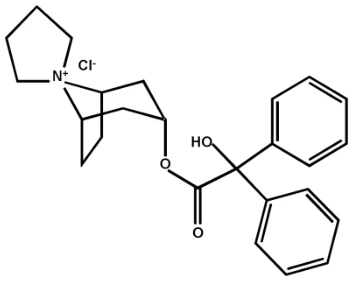
Physicochemical properties: Trospium chloride is a fine, colorless to slightly yellow, crystalline solid.
The compound’s solubility in water is approximately 1 g/2 mL.
n-Octanol/phosphate buffer (pH 7.4) = 0.038.
The molecule is hydrophilic and highly charged.
CLINICAL TRIALS
Study demographics and trial design
SANCTURA XR® was evaluated for the treatment of patients with overactive bladder who had symptoms of urinary frequency, urgency and urge urinary incontinence in two
12-week, randomized, double-blind, placebo-controlled studies. For both studies, entry criteria required the presence of urge incontinence (predominance of urge), at least one incontinence episode per day, and 10 or more micturitions (voids) per day (assessed by 3-day urinary diary). Medical history and data from the baseline urinary diary confirmed the diagnosis. Approximately 88% of the patients enrolled completed the 12-week studies. The mean age was 60 years, and the majority of patients were female (84%) and Caucasian (86%).
The co-primary endpoints in the trials were the mean change from baseline to Week 12 in number of voids/24 hours (reductions in urinary frequency) and the mean change from baseline to Week 12 in number of incontinence episodes/24 hours. Secondary endpoints included mean change from baseline to Week 12 in volume per void.
Table 4- Summary of patient demographics Studies 1 and 2
| Study # | Trial design | Dosage, route of administration and duration | Study subjects (n=number) | Mean age (Range) | Gender |
| Study 1 | Randomized, double-blind, placebo-controlled, parallel group | SANCTURA XR® 60 mg QD (oral) Matching placebo (oral) 12 week double-blind treatment period | 601 randomized; (592 ITT) SANCTURA XR®: n=298 Placebo: n=303 | 60 (21-90) | 91 M/510F |
| Study 2 | Randomized, double-blind, placebo-controlled, parallel group | SANCTURA XR® 60 mg QD (oral) Matching placebo (oral) 12 week double-blind treatment period | 564 randomized (543 ITT) SANCTURA XR®: n= 280 Placebo: n=284 | 60 (21 – 90) | 85M/ 479F |
Study Results
Study 1 included 592 patients in both SANCTURA XR® 60 mg and placebo groups. As illustrated in Table 5 and Figures 1 and 2, SANCTURA XR® demonstrated statistically significantly (p<0.01) greater reductions in the urinary frequency and incontinence episodes, and increases in void volume when compared to placebo starting at Week 1 and maintained through Weeks 4 and 12.
Table 5: Mean (SE) Change from Baseline in Urinary Frequency, Urge Incontinence Episodes and Void Volume in Study 1
| Efficacy Endpoint a | Week | Placebo | SANCTURA XR® | P-Value |
|---|---|---|---|---|
| Urinary frequency / 24 hours | (N = 300) | (N = 292) | ||
| Mean Baseline | 0 | 12.7 (0.2) | 12.8 (0.2) | |
| Mean Change from Baseline | 1 | -1.2 (0.1) | -1.7 (0.1) | 0.0092 |
| 4 | -1.6 (0.2) | -2.4 (0.2) | <0.0001 | |
| 12 | -2.0 (0.2) | -2.8 (0.2) | <0.0001 | |
| Urge incontinence episodes / week | (N = 300) | (N = 292) | ||
| Mean Baseline | 0 | 29.0 (1.3) | 28.8 (1.3) | |
| Mean Change from Baseline | 1 | -8.7 (1.0) | -13.0 (0.9) | 0.0003 |
| 4 | -12.2 (1.1) | -16.5 (1.2) | 0.0054 | |
| 12 | -13.5 (1.1) | -17.3 (1.2) | 0.0024 | |
| Urinary volume / void (mL) | (N = 300) | (N = 290) | ||
| Mean Baseline | 0 | 155.9 (3.0) | 151.0 (2.9) | |
| Mean Change from Baseline | 1 | 12.1 (2.1) | 21.6 (2.8) | 0.0036 |
| 4 | 17.2 (2.5) | 30.0 (3.1) | 0.0007 | |
| 12 | 18.9 (2.8) | 29.8 (3.2) | 0.0039 |
a treatment differences for the change from baseline for placebo versus SANCTURA XR® assessed by rank ANOVA for intent-to-treat population, last observation carried forward (ITT:LOCF) data set
Figure 1: Mean Change from Baseline in Urinary Frequency/24 hours by Visit: Study 1
WEEK OF TREATMENT 0 1 4 12 AVER AGE ( ± SE) C H AN GE -3.5 -3.0 -2.5 -2.0 -1.5 -1.0 -0.5 0.0 PLACEBO (N=300) SANCTURA XR (N=292) p=0.009 p<0.001 p<0.001
Figure 2: Mean Change from Baseline in Incontinence Episodes/Week by Visit: Study 1
WEEK OF TREATMENT 0 1 4 12 AVERAGE ( ±SE) CH ANGE -20 -18 -16 -14 -12 -10 -8 -6 -4 -2 0 PLACEBO (N=300) SANCTURA XR (N=292) p<0.001 p=0.005 p=0.002
Study 2 included 543 patients in both SANCTURA XR® 60 mg and placebo groups and was identical in design to Study 1. As illustrated in Table 6 and Figures 3 and 4, SANCTURA XR® demonstrated statistically significantly (p<0.01) greater reductions in urinary frequency and incontinence episodes, and increases in void volume when compared to placebo at Weeks 4 and 12. However, at Week 1, statistically significant reductions were seen in urinary incontinence episodes and volume void only.
Table 6: Mean (SE) Change from Baseline in Urinary Frequency, Urge Incontinence Episodes and Void Volume in Study 2
| Efficacy Endpoint a | Week | Placebo | SANCTURA XR® | P-Value |
|---|---|---|---|---|
| Urinary frequency / 24 hours | (N = 276) | (N = 267) | ||
| Mean Baseline | 0 | 12.9 (0.2) | 12.8 (0.2) | |
| Mean Change from Baseline | 1 | -1.2 (0.2) | -1.4 (0.2) | 0.0759 |
| 4 | -1.7 (0.2) | -2.3 (0.2) | 0.0047 | |
| 12 | -1.8 (0.2) | -2.5 (0.2) | 0.0009 | |
| Urge incontinence episodes / week | (N = 276) | (N = 267) | ||
| Mean Baseline | 0 | 28.3 (1.4) | 28.2 (1.2) | |
| Mean Change from Baseline | 1 | -7.3 (1.0) | -11.9 (1.0) | <0.0001 |
| 4 | -10.6 (1.1) | -15.8 (1.1) | <0.0001 | |
| 12 | -11.3 (1.2) | -16.4 (1.3) | <0.0001 | |
| Urinary volume / void (mL) | (N = 276) | (N = 266) | ||
| Mean Baseline | 0 | 151.8 (2.8) | 149.6 (2.9) | |
| Mean Change from Baseline | 1 | 11.9 (2.5) | 24.1 (2.4) | <0.0001 |
| 4 | 19.6 (3.1) | 29.3 (3.0) | 0.0020 | |
| 12 | 17.8 (3.3) | 31.5 (3.4) | 0.0014 |
a treatment differences assessed by rank ANOVA for intent-to-treat population, last observation carried forward (ITT:LOCF) data set
Figure 3: Mean Change from Baseline in Urinary Frequency/24 hours by Visit: Study 2
WEEK OF TREATMENT 0 1 4 12 AVER AGE ( ± SE) C H AN GE -3.5 -3.0 -2.5 -2.0 -1.5 -1.0 -0.5 0.0 PLACEBO (N=276) SANCTURA XR (N=267) p=0.076 p=0.005 p<0.001
Figure 4: Mean Change from Baseline in Incontinence Episodes/Week by Visit: Study 2
WEEK OF TREATMENT 1 4 12 0 AVERAGE ( ±SE) CH ANGE -20 -18 -16 -14 -12 -10 -8 -6 -4 -2 0 PLACEBO (N=276) SANCTURA XR (N=267) p<0.001 p<0.001 p<0.001
Following 12 weeks of treatment with SANCTURA XR® or placebo, patients treated with SANCTURA XR® had a higher dry rate (as defined by no reports of urge urinary incontinence (UUI) episodes) than placebo-treated patients (36% and 21%, respectively). Furthermore, those treated with SANCTURA XR® were more likely to be dry than if treated with placebo, regardless of whether the patient’s pre-treatment incontinence was mild or severe.
DETAILED PHARMACOLOGY
ANIMAL
Pharmacodynamics
Intravenous administration of trospium chloride to female rats produced marked inhibition of cholinergic spasms when acetylcholine was dripped onto the exteriorized bladder. Effects of trospium chloride have also been demonstrated on lower urinary tract functions in the dog.
Trospium chloride demonstrates high affinity for muscarinic receptors, with equipotent binding to M2 and M3 receptors (pKi values: 9.2 and 9.3).
Pharmacokinetics
Placental transfer and distribution in milk
Gestating rats were given 50μg/kg 3H-trospium chloride by i.v. injection on the 10th, 16th and 20th day of gestation. Only small amounts of the hydrophilic trospium chloride crossed into the placenta. Trospium chloride concentrations in the placenta were similar to those in blood but lower than in the liver, kidneys and heart. The highest radioactivity concentrations in the fetal organs occurred in the livers.
The transfer of 3H-trospium chloride and its metabolites into the milk of lactating rats after oral and i.v. administration was determined between the 7th and 9th day postpartum. The percentage of i.v. injected trospium chloride activity excreted into the milk within 24 hours was 4.36 x 10⁻². Generally, trospium chloride and azoniaspironortropanol (as the only metabolite) were present. After oral administration, the milk levels never exceeded the blood levels.
HUMAN
Pharmacokinetics
Absorption and bioavailability
Plasma concentrations (ie, AUC and Cmax) with multiple dosing of SANCTURA XR® 60 mg QD were lower compared to the concentrations with multiple dosing of trospium chloride 20 mg BID. Trospium was absorbed slowly with a median Tmax of 4.50 and
5.00 hours following oral doses of trospium chloride 20 mg BID and trospium chloride 60 mg XR QD administered with water under fasted conditions, respectively.
The trospium chloride 60 mg XR QD group had a longer half-life (35.8 hours) than the trospium chloride 20 mg BID group (27.2 hours). This comparison demonstrates that average concentrations can be expected to be lower when patients are treated with SANCTURA XR® 60 mg QD than concentrations observed when treated with trospium chloride 20 mg BID.
The accumulation ratio of trospium with SANCTURA XR® 60 mg QD treatment from the first dose to steady state was approximately 1.4- and 1.5-fold for Cmax and AUC(0-24), respectively. Steady state was reached on Day 8 following dosing of trospium chloride 60 mg XR QD and on Day 9 following the trospium chloride 20 mg BID dose regimen.
Distribution and protein binding
In plasma protein binding studies with human serum, binding rates between the range of approximately 48 – 78% over various concentration ranges were observed. These rates do not suggest any likely interference with other drugs. Competitive plasma protein binding is also unlikely due to low plasma concentration exposure at the therapeutic dose (<10 ng/mL after a single 60 mg SANCTURA XR® dose).
The plasma to whole blood ratio of non-volatile 3H-trospium chloride was 1:6:1 at 0.75 hours post-dose (single i.v. target dose of 1 mg in healthy male subjects). Given that the normal hematocrit is approximately 45% in healthy men, the 1:6:1 ratio translates to a 12% distribution of 3H-trospium chloride in blood cells.
Metabolism and excretion
Trospium chloride has negligible inhibitory effects on seven cytochrome P450 isoenzymes, including CPY3A4 and CYPD26 based on in vitro data.
After oral administration, 60% of the radioactivity excreted in urine was unchanged trospium, demonstrating first pass metabolism. The mean renal clearance rate observed (29.07 L/hour) indicates that trospium is actively secreted into the urine.
Following intravenously administered radio-labelled trospium chloride, more than 90% of the dose was recovered; approximately 70% in urine and 20% in faeces. Greater than 80% of the radioactivity excreted in urine was [3H]-trospium. The major metabolite, azoniaspironortropanol, represented approximately 10% of the excreted dose in urine. In addition, 2 unknown metabolites combined to represent 10% of the excreted dose.
Azoniaspironortropanol had a median Tmax of 5.25 and 6.50 hours following oral dose administration of trospium chloride 20 mg BID and trospium chloride 60 mg XR QD, respectively. The systemic exposure [Cmax, AUC(0-24) and AUC(0-Tlast)] of azoniaspironortropanol with trospium chloride 60 mg XR QD was significantly lower (28 to 58%) when compared with the trospium chloride 20 mg BID dose group. The trospium chloride 60 mg XR QD group had a shorter mean t ½ estimate (12.9 hours) than the trospium chloride 20 mg BID group (15.8 hours).
The reduction in the systemic exposure of azospironortropanol from the trospium chloride 60 mg XR capsule (compared to the trospium chloride 20 mg BID tablet) was relatively proportional to the systemic exposure of the trospium concentration profile, and thus the metabolite concentrations appeared to track relatively well the concentrations of the parent compound (trospium) in the plasma.
TOXICOLOGY
Single-Dose Toxicity:
In mice and rats, oral and i.v. dosing of trospium chloride produced similar effects:
The calculated LD50 for mice is 425 mg/kg oral and 7.5 mg/kg i.v. for males and 365 mg/kg oral and 8.4 mg/kg i.v. for females.
In rats, high oral doses (630 – 1260 mg/kg) produced clinical signs of hyperactivity, tremors, spasms, and tonoclonic convulsions after 10 minutes. After 1 hour, reduced activity was observed. During the first 24 hours of dosing, impaired coordination (males), postural abnormalities, diminished elicitation of reflexes (females), reduction in grip strength and tone of the extremities (females), changes in the colour of the skin and mucous membranes, piloerection (males) and lowered body temperature were observed. Death occurred within 24 hours after dosing. The LD50 calculated for rats is 940 mg/kg for males and 800 mg/kg for females (the maximum recommended daily dosing for humans is 60 mg once daily, extended release formulation). Similar reactions were observed after i.v. administration, with additional effect of cyanosis and bradypnoea. The animals died within 5 minutes after injection. The calculated LD50 is 10.7 mg/kg for males and 12.3 mg/kg for females.
Repeat-Dose Toxicity:
In rats dosed orally with 200 mg/kg trospium chloride for approximately 35 weeks, body weight gain was observed.
In dogs, food consumption and body weight gain were slightly lower after receiving 60 mg/kg for 26 weeks. Mydriasis with photophobia, impaired papillary accommodation, corneal lesions as well as raised mucus production were also observed. One male died of bacterial bronchopneumonia, possibly due to a treatment-related increase of mucus secretion.
Genotoxicity:
Trospium chloride was not genotoxic in a number of in-vitro assays such as the Ames test, mouse lymphoma test and mitotic gene conversion and Chinese hamster ovary assays.
In an in-vivo micronucleus test in rats, trospium chloride did not induce significant levels of micronucleated polychromatic erythrocytes in bone marrow cells following administration of a single oral dose of 400 mg/kg.
Carcinogenicity:
In a 78 week study in mice, body weight gain and intestinal distension similar to that seen in rats, described below, were observed. Increased lung adenomas in males (20 mg/kg) and females (2 mg/kg) were observed. The incidences of proliferative lung lesions were most likely due to chance and not an effect of trospium chloride.
In a 24-month rat study, there was a distinct reduction in body weight gain at a 200 mg/kg dose in males and females and in females only at 20 mg/kg. Bowel distension was observed in all treated groups. Trospium chloride did not increase the overall tumor incidence, and no tumor types were found that are uncommon in the rat strain used.
Reproduction and Developmental Toxicity:
Reproductive Function
In the rat, trospium chloride caused no impairment of male and female fertility in treated parents (F0) or their untreated offspring. Furthermore, the breeding and rearing behaviour and the postnatal development were entirely normal throughout.
Trospium chloride was well tolerated by dams of trospium chloride treated rats and examination of the fetuses revealed no embryotoxic or teratogenic effects.
A test on rabbits showed no compound-specific effects in either dams or fetuses.
In female rats given trospium chloride from the 15th day of gestation until the end of the lactation period, dose-related effects occurring at doses of 2, 20 and 200 mg/kg consisted of rapid and irregular breathing, papillary dilatation and increased excitability. Towards the end of the lactation period, two females died within one hour of dosing (200 mg/kg). Rearing performance of the dams was normal, and only the females given 200 mg/kg gained slightly less body weight in the gestation period than the controls The postnatal development of the offspring was invariably normal.
Local Tolerance:
Good local (gastro-intestinal) tolerance has been shown in various long-term studies.
REFERENCES
- 1. Zinner N, Gittelman M, Harris R, Susset J, Kanelos A, Auerbach S; Trospium Study Group. Trospium chloride improves overactive bladder symptoms: a multicenter phase III trial. J Urol. 2004 Jun; 171 (6 Pt1): 2311-5.
- 2. Beckmann-Knopp S, Rietbrock S, Weyhenmeyer R, et al. Inhibitory effects of trospium chloride on cytochrome P450 enzymes in human liver microsomes. Pharacol Toxciol. 1999; 85: 200-304.
- 3. Pak RW, Petrou SP, Staskin DR. Trospium chloride: quaternary amine with unique pharmacologic properties. Curr Urol Rep. 2003;4:436-40.
- 4. Madersbacher H, Stohrer M, Richter R, Burgdorfer H, Hachen HJ, Murtz G. Trospium chloride versus oxybutynin: a randomized, double-blind, multicentre trial in the treatment of detrusor hyper-reflexia. Br J Urol. 1995 Apr;75(4):452-6.
- 5. Halaska M, Ralph G, Wiedemann A, Primus G, Ballering-Bruhl B, Hofner, Jonas U. Controlled, double-blind, multicentre clinical trial to investigate long-term tolerability and efficacy of trospium chloride in patients with detrusor instability. World J Urol. 2003 May;20(6):392-9.
- 6. Rovner ES. Trospium chloride in the management of overactive bladder. Drugs. 2004;64(21):2433-46.
- 7. Höfner K, Oelke S, Machtens V, Grünewald. Trospium chloride – an effective drug in the treatment of overactive bladder and detrusor hyperflexia. World J Urol (2001) 19:336-343
- 8. Staskin D, Sand P, Zinner N, Dmochowski R; Trospium Study Group. Once daily trospium chloride is effective and well tolerated for the treatment of overactive bladder: results from a multicenter phase III trial. The Journal of Urology 2007 Sep;178(3 Pt 1):978-83; discussion 983-4. Epub 2007 Jul 16.
- 9. Dmochowski RR, Sand PK, Zinner NR, Staskin DR. Trospium 60 mg once daily (QD) for overactive bladder syndrome: results from a placebo-controlled interventional study. Urology 2008 Mar;71 (3):449-54.
- 10. Staskin DR, Oefelein MG, RE: Giacomo Novara, Antonio Galfano, Silvia Secco et al. A Systematic Review and Meta-Analysis of Randomized Controlled Trials …, Eur Urol 2008;54:740-64; Eur Urol 2009;55(5):e84-487.
- 11. Staskin DR, Oefelein MG Re: Christopher R. Chapple, Vik Khullar, Zahava Gabriel et al. The Effects of Antimuscarinic Treatments in Overactive Bladder …, Eur Urol 2008;54:543-62; Eur Urol 2009 ;55(3) :e49-e50.