


Product Monograph - Mictoryl
SUMMARY PRODUCT INFORMATION
| Route of Administration | Dosage Form / Strength | Clinically Relevant Nonmedicinal Ingredients |
| Oral | Modified-release capsules / 30 mg and 45 mg | Lactose monohydrate For a complete listing see Dosage Forms, Composition and Packaging section. |
| Tablets / 5 mg | Lactose monohydrate, glucose monohydrate, sucrose For a complete listing see Dosage Forms, Composition and Packaging section. |
INDICATIONS AND CLINICAL USE
Mictoryl/Mictoryl Pediatric (propiverine hydrochloride) is indicated for symptomatic treatment of urinary incontinence and/or increased urinary frequency and urgency in patients with overactive bladder (OAB).
Adults:
Mictoryl 30 mg and 45 mg is indicated in adults including the geriatric population (>65 years of age).
Pediatric population:
Mictoryl Pediatric 5 mg is indicated for a body weight adjusted dosing in children from the age of 5 years with OAB up to a body weight of 35 kg. In children and adolescents with a body weight over 35 kg, the maximum recommended dose is 30 mg administered in two daily doses.
There is only limited efficacy and safety data on children and adolescents of higher body weight (≥35 kg) receiving daily dose of 30 mg propiverine.
CONTRAINDICATIONS
Mictoryl/Mictoryl Pediatric is contraindicated for patients who have demonstrated hypersensitivity to propiverine hydrochloride or to any ingredients in the formulation. For a complete listing, see DOSAGE FORMS, COMPOSITION AND PACKAGING.
Mictoryl/Mictoryl Pediatric is contraindicated for patients with the following disorders:
- obstruction of the bowel
- significant degree of bladder outflow obstruction where urinary retention may be anticipated
- myasthenia gravis
- intestinal atony
- severe ulcerative colitis
- toxic megacolon
- uncontrolled angle-closure glaucoma
- moderate or severe hepatic impairment
- tachyarrhythmia
rare hereditary problems of galactose intolerance, glucose-galactose malabsorption, or
Lapp lactase deficiency
- children with rare hereditary problems of fructose intolerance or sucrase-isomaltase insufficiency
WARNINGS AND PRECAUTIONS
General
Mictoryl/Mictoryl Pediatric should be administered with caution in patients with:
- autonomic neuropathy
- renal impairment
- mild hepatic impairment
Symptoms of the following diseases may be aggravated following administration of Mictoryl/Mictoryl Pediatric:
- severe congestive heart failure (NYHA IV)
- prostatic enlargement
- hiatus hernia with reflux oesophagitis
- cardiac arrhythmia
- tachycardia
Propiverine may produce drowsiness and blurred vision. This may impair the patient’s ability to exert activities that require mental alertness such as operating a motor vehicle or other machinery, or to exert hazardous work while taking this drug.
Sedative drugs may enhance the drowsiness caused by propiverine.
Cardiovascular
Pollakiuria and nocturia due to congestive heart failure should be ruled out prior to treatment.
A thorough QT interval study has not been performed for propiverine hydrochloride in adult and pediatric patients.
There have been reports of QT interval prolongations with antimuscarinic agents in the same class of drugs of propiverine hydrochloride. Some drugs that cause QT/QTc interval prolongation may increase the risk of rare, but serious ventricular arrhythmia-torsades de pointes. Patients at risk for QT/QTc interval prolongation, such as those with clinically relevant heart failure, long QT syndrome, recent significant hypokalemia or receiving other drugs known to prolong QT/QTc, should be appropriately monitored when treated with propiverine hydrochloride. Patients who develop prolonged QT/QTc or symptoms of possible arrhythmia such as dizziness, palpitations or fainting should be evaluated electrocardiographically and for electrolyte disturbances.
Genitourinary
Pollakiuria and nocturia due to organic bladder diseases (e.g. urinary tract infections, malignancy), should be ruled out prior to treatment.
Hepatic
In patients with mild impairment of hepatic function, caution has to be exercised.
In patients with moderately or severely impaired hepatic function, no studies have been performed to investigate the use of propiverine. Its use is therefore not recommended in these patients.
Hepatic function should be closely monitored and propiverine treatment discontinuation is recommended when liver enzymes and/ or blood bilirubin are increased beyond normal values (see CONTRAINDICATIONS).
Mictoryl Pediatric
Very limited data on liver function tests is available in pediatric population.
Ophthalmologic
Propiverine, like other anticholinergics, induces mydriasis. Therefore, the risk to induce acute angle-closure glaucoma in individuals predisposed with narrow angles of the anterior chamber may be increased. Drugs of this class, including propiverine, have been reported to induce or precipitate acute angle-closure glaucoma.
Renal
Pollakiuria and nocturia due to renal diseases should be ruled out prior to treatment.
In patients with mild or moderate impairment of renal function, caution has to be exercised. In patients with severe renal impairment (creatinine clearance <30 ml/min), the maximum daily dose of propiverine hydrochloride is 30 mg. Therefore, Mictoryl 45 mg modified-release capsules are not recommended in patients with severe renal failure.
Sexual Function/Reproduction
No effects on male and female fertility and reproduction behavior were observed in toxicological studies with rats.
Special Populations
Pregnant Women: No clinical data are available on the use of propiverine in pregnant women. Studies in animals have shown reproductive toxicity (see TOXICOLOGY, Reproduction). The potential risk for humans is unknown.
Propiverine should not be used during pregnancy.
Nursing Women: No clinical data are available on the use of propiverine in breast-feeding women. The drug is secreted into the milk of lactating mammals. A risk to the new-borns cannot be excluded.
Propiverine should not be administered to breast-feeding women.
Pediatrics: The complex process of bladder control develops within the first six years of life. Most children are toilet trained at the age of three years, and continent at the age of five years. Therefore, it is recommended to start not earlier than at the age of 5 years with a medical therapy in children with overactive bladder (OAB).
Treatment of children and adolescents should be administered within the framework of an overall therapeutic approach (“urotherapy” in cases of OAB).
Mictoryl 30 mg and 45 mg modified-release capsules are inappropriate for the administration to neonates, infants, and children with a body weight of less than 35 kg.
ADVERSE REACTIONS
Adverse Drug Reaction Overview
The most common adverse reactions reported in patients treated with propiverine include dry mouth, headache, accommodation disorder, visual impairment, constipation, abdominal pain, dyspepsia and fatigue.
The incidence and severity of adverse drug reaction remained stable or even decreased under long term treatment of up to 12 months.
Clinical Trial Adverse Drug Reactions
Because clinical trials are conducted under very specific conditions the adverse reaction rates observed in the clinical trials may not reflect the rates observed in practice and should not be compared to the rates in the clinical trials of another drug. Adverse drug reaction information from clinical trials is useful for identifying drug-related adverse events and for approximating rates.
Propiverine has been evaluated for safety assessment in 979 adult patients in randomized, placebo- and/or active controlled clinical trials with a daily dose of 30 and 45 mg propiverine hydrochloride (Mictoryl) and in 202 pediatric patients with body weight adjusted doses of about 0.8 mg/kg body weight per day (Mictoryl Pediatric).
In these 9 randomized controlled trials, only one serious adverse event for propiverine 30 mg MR, three for propiverine 5 mg IR and two for the comparator drug propiverine 15 mg IR tid were observed. All events were judged as unlikely related/unrelated to the propiverine treatment.
All adverse drug reactions from clinical trials reported in Table 1 are listed by system organ class and by frequency. Frequency is defined as very common (≥1/10), common (≥1/100 to <1/10), uncommon (≥1/1,000 to <1/100), rare (≥1/10,000 to <1/1,000), very rare (<1/10,000), or not known (cannot be estimated from the available data).
All undesirable effects are transient and recede after a dose reduction or termination of the therapy after maximum 1-4 days.
Table 1 Summary of Adverse Drug Reactions Reported in Clinical Trials with Propiverine
| System Organ Class | Frequency | Adverse reaction |
| Cardiac disorders | Very rare | Palpitation |
| Rare | Tachycardia | |
| Eye disorders | Common | Accommodation disorder, visual impairment |
| Gastrointestinal disorders | Very common | Dry mouth |
| Common | Constipation, abdominal pain, dyspepsia | |
| Uncommon | Nausea, vomiting | |
| General disorders and administration site conditions | Common | Fatigue |
| Immune system disorders | Rare | Hypersensitivity |
| Nervous system disorders | Common | Headache |
| Uncommon | Tremor, dizziness, dysgeusia |
| Psychiatric disorders | Very rare | Restlessness, confusion |
| Renal and urinary disorders | Uncommon | Urinary retention, bladder and urethral symptoms |
| Skin and subcutaneous tissue disorders | Uncommon | Pruritus |
| Rare | Rash | |
| Vascular disorders | Uncommon | Decreased blood pressure with drowsiness, flushing |
During long-term therapy hepatic enzymes should be monitored, because reversible changes of liver enzymes might occur in rare cases.
Pediatric population
In studies conducted in children, the following undesirable effects have been reported in addition: decreased appetite, sleep disorder and disturbance in attention.
In a randomized, double-blind, placebo-controlled parallel-group, multicentre, multinational phase III trial, the safety of propiverine IR 5 mg in children with OAB was assessed for 8 weeks. In this phase III trial, a total of 171 subjects were included in the safety analysis (87 in the propiverine group and 84 in the placebo group) and the safety population consisted of 64 (37.4%) females and 107 (62.6%) males. Mean age was 7.0 years and mean body mass index (BMI) was 16.31 kg/m2.
In this phase III trial, a total of 37 (21.6%) patients experienced at least one TEAE: 20 (23.0%) patients in the propiverine group and 17 (20.2%) patients in the placebo group. Overall, the most commonly reported TEAE by SOC were infections and infestations in 25 (14.6%) patients: 12 (13.8%) patients in the propiverine group and 13 (15.5%) patients in the placebo group; gastrointestinal disorders in 11 (6.4%) patients: 8 (9.2%) patients in the propiverine group and 3 (3.6%) patients in the placebo group; eye disorders in 4 (2.3%) patients, in the propiverine group only; nervous system disorders in 3 (1.8%) patients: 2 (2.3%) patients in the propiverine and 1 (1.2%) in the placebo group. Overall, a total of 15 (8.8%) of the 171 patients experienced one or more drug-related TEAE. The incidence of drug-related TEAEs was higher in the propiverine group (11 [12.6%] patients) than in the placebo group (4 [4.8%] patients). The most common SOCs to have treatment-related TEAEs reported were gastrointestinal disorders: 7 (8.0%) patients in the propiverine group and 1 (1.2%) in the placebo group. One severe TEAE was experienced by one patient in the propiverine group (abdominal pain). Two patients in the propiverine group were terminated prematurely from the trial due to a TEAE. One patient experienced abdominal pain that was severe, and the second patient experienced diarrhoea, dyspepsia and flatulence. Two patients in the propiverine group had clinically relevant changes in urinalysis parameters, which were reported as TEAEs of urinary tract infection, from which the patients recovered.
Post-Market Adverse Drug Reactions
In addition to adverse reactions reported in clinical trials, the following adverse reactions have been reported from worldwide post-authorization experience. Because such reactions are reported voluntarily from a population of uncertain size, it is not always possible to reliably estimate their frequency or establish a causal relationship to drug exposure.
Nervous system disorder: speech disorder
Psychiatric disorder: hallucination
DRUG INTERACTIONS
Overview
Pharmacokinetic interactions are possible with other drugs metabolized by cytochrome P450 3A4 (CYP 3A4). However, a very pronounced increase of concentrations for such drugs is not expected as the effects of propiverine are small compared to classical enzyme inhibitors (e.g. ketoconazole or grapefruit juice). Propiverine may be considered as a weak inhibitor of CYP 3A4.
Pharmacokinetic studies with patients concomitantly receiving potent CYP 3A4 inhibitors such as azole antifungals (e.g. ketoconazole, itraconazole) or macrolide antibiotics (e.g. erythromycin, clarithromycin) have not been performed.
In patients receiving drugs that are potent flavin-containing monooxygenase (FMO) inhibitors such as methimazole in combination with potent CYP 3A4/5 inhibitors treatment should start with the lowest recommended dose. A higher dose may thereafter be administered. However, caution should be exercised and patients should be monitored carefully for side effects.
No drug interaction studies were conducted in pediatric population.
Drug-Drug Interactions
Pharmacokinetics: A clinical drug-drug interaction study has been conducted with propiverine in healthy volunteers.
Pharmacodynamics: The drugs listed in Table 2 are based on potential pharmacodynamics interactions.
Table 2 Potential Drug-Drug Interactions
| Drugs | Reference | Effect | Clinical comment |
| Tricyclic antidepressants (e.g. imipramine) | CS | Increases the effect of Propiverine | synergism |
Tranquilizers (e.g. benzodiazepines) | CT | Increases the effect of Propiverine | synergism |
| Anticholinergics (systemic) | CT | Increases the effect of Propiverine | synergism |
| Amantadine | T | May increase effect of amantadine | synergism |
Neuroleptics (e.g. phenothiazines) | CS | Increases the effect of neuroleptics | synergism |
| Beta-adrenoreceptor agonists (beta-sympathomimetics) | CS | Increased effects of beta-adrenoceptor agonists | functional antagonism |
| Cholinergics | CS | Decreased effects of Propiverine | antagonism |
| Isoniazid | CS | Concomitant use reduces blood pressure in isoniazid treated patients | |
| Metoclopramide | CS | The effect of prokinetics such as metoclopramide may be decreased. | antagonism |
Legend: CS = Case Study; CT = Clinical Trial; T = Theoretical
Drug-Food Interactions
Food-drug interaction was assessed with respect to the two propiverine formulations in a randomized, open, four-way crossover study, indicating that there is no clinically relevant effect of food on the pharmacokinetics of propiverine modified-release capsules (Mictoryl) based on propiverine plasma concentration-time profiles in contrast to a remarkable food effect of propiverine tablets (Mictoryl Pediatric).
Drug-Herb Interactions
Interactions with herbal products have not been established.
Drug-Laboratory Interactions
Interactions with laboratory tests have not been established.
Drug-Lifestyle Interactions
No studies on the effects on the ability to drive and use machines have been performed.
DOSAGE AND ADMINISTRATION
Recommended Dose and Dosage Adjustment
Mictoryl
Adults:
For the treatment of OAB, the recommended dose is one capsule containing 30 mg propiverine hydrochloride once daily. If the dose is well tolerated and clinical effect is not improved adequately, the dose may be increased to 45 mg propiverine hydrochloride.
The maximum recommended daily dose is 45 mg.
The capsules should not be crushed or chewed.
Pediatrics:
Mictoryl 30 mg and 45 mg modified-release capsules should not be used in children.
Elderly:
Generally there is no special dose regimen for the elderly.
Mictoryl Pediatric
For the treatment of OAB in the pediatric population, a standard daily average of 0.8 mg/kg body weight divided in two doses is recommended.
For children weighing less than 35 kg, a body weight adjusted dosing is achievable with Mictoryl Pediatric 5 mg tablets for OAB.
| Body weight (kg) | Number of 5 mg tablets per day | |
| AM | PM | |
| 12 – 16 | 1 | 1 |
| 17 – 22 | 1 | 2 |
| 23 – 28 | 2 | 2 |
| 29 – 34 | 2 | 3 |
| ≥35 | 3 | 3 |
In children or adolescents with a body weight over 35 kg, the maximum recommended dose is 30 mg administered in two daily doses.
Dosing considerations:
Use in renal impairment:
In patients with mild or moderate impairment of renal function, no dose adjustment is required.
In patients with severe renal impairment, the maximum daily dose of propiverine hydrochloride is 30 mg. (see WARNINGS AND PRECAUTIONS, Renal)
Use in hepatic impairment:
In patients with mildly impaired hepatic function, there is no need for dose adjustment. (see WARNINGS AND PRECAUTIONS, Hepatic)
Influence of food:
Mictoryl
There is no clinically relevant effect of food on the pharmacokinetics of propiverine. Accordingly, there is no particular recommendation for the intake of propiverine 30 mg and 45 mg MR in relation to food.
Mictoryl Pediatric
A high fat meal increases the bioavailability of propiverine. Therefore, propiverine 5 mg tablets should be taken at least one hour before meals, especially in patients with renal or mild hepatic impairment. The use in patients with moderate to severe hepatic impairment is contraindicated (see CONTRAINDICATIONS).
Missed Dose:
In the event that a dose is missed, the next dose should be taken as planned. Doses should not be doubled to make up for a missed dose. The prescribed dosing schedule should be continued.
Administration:
Mictoryl and Mictoryl Pediatric are to be taken orally.
Mictoryl capsules are a modified-release formulation and therefore should not be crushed, or chewed.
OVERDOSAGE
Overdose with Mictoryl/Mictoryl Pediatric can potentially result in severe anticholinergic effects characterized by peripheral symptoms and central nervous system disturbances, e.g.:
- severe dry mouth
- bradycardia, possibly leading to tachycardia
- mydriasis and accommodation disorder
- urinary retention, inhibition of intestinal motility
- restlessness, confusion, hallucination, confabulation
- dizziness, nausea, speech disorder, muscular weakness
A 5-year-old boy who ingested 330 mg (12.69 mg/kg body weight) propiverine hydrochloride presented with agitation, hallucination, visual impairment, mydriasis and unsteady gait. The patient was treated with activated charcoal and a benzodiazepine. The boy fully recovered.
For management of a suspected drug overdose, contact your regional Poison Control Centre.
ACTION AND CLINICAL PHARMACOLOGY
Mechanism of Action
Propiverine exhibits anticholinergic and calcium-modulating properties. The efferent connection of the pelvic nerve is inhibited due to anticholinergic action resulting in relaxation of bladder smooth muscle. In addition, propiverine inhibits the calcium influx and modulates the intracellular calcium in urinary bladder smooth muscle cells causing musculotropic spasmolysis.
Pharmacodynamics
In animal models propiverine causes a dose-dependent decrease of the intravesical pressure and an increase in bladder capacity.
The effect is based on the sum of the pharmacological properties of propiverine and three active urinary metabolites as shown in isolated detrusor strips of human and animal origin.
Pharmacokinetics
Propiverine is nearly completely absorbed from the gastrointestinal tract. It undergoes extensive first pass metabolism.
Table 3 summarizes PK data in adult volunteers after single dose application and Table 4 presents data for the pediatric population under steady state conditions.
Table 3 Summary of Pharmacokinetic Parameters in Adult Healthy Volunteers
| Propiverine Dose | Cmax (ng/mL) mean (range) | AUC0-∞ (ng·h/mL) mean (range) | Tmax (h) mean ± SD | t½ (h) mean (range) |
| MR 30 mg sid | 60.6 (41.5, 88.6) | 1378 (903, 2104) | 9.9 ± 2.4 | 14.2 (10.8, 18.6) |
| MR 45 mg sid | 80.0 (41.8, 152.1) | 1909 (1002, 3639) | 9.9 ± 2.4 | 16.3 (13.9, 19.2) |
| IR 2x5 mg sid | 48.5 (30.7, 76.5) | 483 (272, 856) | 1.9 ± 0.7 | 11.4 (7.4, 17.7) |
Table 4 Summary of Pharmacokinetic Parameters after Repeated Dosing of Propiverine IR 5 mg
(5 mg, 10 mg and 15 mg bid) by Body Weight in Children with OAB (P 1157)
| PK Parameter for propiverine | ≤0.3 mg/kg bid (N=10) | >0.3 to ≤0.45 mg/kg bid (N=8) | >0.45 mg/kg bid (N=7) | |
AUC0-8h (ng*h/mL) | Mean (SD) | 323.5 (172.7) | 662.7 (181.9) | 696.8 (235.1) |
AUCτ (ng*h/mL) | Mean (SD) | 409.8 (219.9) | 791.0 (202.9) | 844.5 (278.8) |
Cmax (ng/mL) | Mean (SD) | 68.4 (39.7) | 145.1 (45.1) | 151.0 (48.5) |
| Ctrough (mg/mL) | Mean (SD) | 23.3 (16.6) | 48.4 (14.1) | 52.7 (15.4) |
| Tmax (h) | Median (min, max) | 1.6 (0.9, 3.3) | 1.4 (1.0, 3.0) | 1.5 (0.5, 5.0) |
Absorption
The mean absolute bioavailability of propiverine MR 30 mg is 60.8 ± 17.3% of MR 45 mg is 59.5 ± 23.3% (arithmetic mean value ± SD for AUC0-∞ (po) / AUC0-∞ (iv)) respectively.
Propiverine IR is rapidly absorbed. Cmax of propiverine is reached with mean Tmax values, in general around 2 hours. There is also a very rapid increase of serum concentration of the main metabolite M-5 with Tmax even shorter (1.1 – 1.6 h) than for the parent drug. The mean absolute bioavailability of propiverine IR 5mg is 53.3 % (arithmetic mean value of AUC0-∞ (po) / AUC0-∞ (iv)).
Distribution
After oral administration of Mictoryl, steady state is reached after four to five days at a higher concentration level than after single dose application (Caverage= 71 ng/mL or 61 ng/mL after oral administration of propiverine IR tid).
The volume of distribution was estimated in 21 healthy volunteers after intravenous administration of propiverine to range from 125 to 473 L (mean 279 L) indicating, that a large amount of available propiverine is distributed to peripheral compartments. The binding to plasma proteins is 90 – 95% for propiverine (parent compound) and about 60% for the main metabolite propiverine-N-oxide (M-5).
Metabolism
Propiverine is metabolized by intestinal and hepatic enzymes. The primary metabolic route involves the oxidation of the piperidyl-N and is mediated by CYP 3A4 and flavin-containing monooxygenases (FMO) 1 and 3 and leads to the formation of the much less active main metabolite M-5, the plasma concentration of which greatly exceeds that of the parent substance propiverine. Four metabolites were identified in urine; three of them are pharmacologically active and may contribute to the therapeutic efficacy (M-5, M-6, M-23).
In vitro experiments with rat microsome preparations demonstrated that CYP2B is inhibited by propiverine at drug concentrations [IC50 = 0.5 µM] similar to those found in human plasma during treatment. In vitro there is also a slight inhibition of CYP 3A4 and CYP 2D6 detectable which occurs at concentrations exceeding therapeutic plasma concentrations 10- to 100-fold.
Excretion
Following administration of 30 mg propiverine as oral dose of 14C-propiverine to healthy volunteers, 60% of radioactivity was recovered in urine and 21% was recovered in faeces within 12 days. Less than 1% of an oral dose is excreted unchanged in the urine. Mean total clearance after single dose administration of 30 mg is 371 mL/min (191 – 870 mL/min). In three studies including a total of 37 healthy volunteers mean elimination half-life was 14.1, 20.1 and 22.1 hours, respectively.
Linearity/ non-linearity
Following oral administration of 10 – 45 mg of propiverine MR or 10 – 30 mg propiverine IR, exposure data Cmax and AUC0-∞ increased dose-proportionally, all other PK data are independent of dose.
Special Populations and Conditions
Pediatrics: Up to the recommended dose range, the pharmacokinetic properties (e.g. AUC0-8h, Cmax, Caverage) are dose-proportional. After administration of a twice-daily dose of 0.4 mg/kg body weight, serum levels in children aged 5 to 10 years reach approximately the same values as after administration of the therapeutic dose of 30 mg daily in adults.
Geriatrics: The comparison of trough plasma concentrations during steady state reveals no difference between older patients (60 – 85 years; mean 68) and young healthy subjects. The ratio of parent drug to metabolite remains unchanged in older patients indicating the metabolic conversion of propiverine to its main metabolite, M-5, not to be an age-related or limiting step in the overall excretion.
Race: Comparison of pharmacokinetic data between Caucasian, Japanese and Afro-American volunteers showed no remarkable difference between the rate and extent of absorption between subjects of different ethnic origin.
Hepatic Insufficiency: There were similar steady state pharmacokinetics in 12 patients with mild impairment of liver function due to fatty liver disease as compared to 12 healthy controls. No data are available for moderate and severe hepatic impairment.
No data are available in pediatric population.
Renal Insufficiency: Severe renal impairment does not significantly alter the disposition of propiverine and its main metabolite, M-5, as deduced from a single dose study in 12 patients with creatinine clearance <30 mL/min. No dose adjustment is to be recommended as long as the total daily dose does not exceed 30 mg propiverine hydrochloride. In case that higher dose shall be administered a careful titration of dose is recommended considering anticholinergic effects as a marker for tolerability.
However, in patients with severe renal impairment (creatinine clearance <30 mL/min) the maximum daily dose of propiverine is 30 mg. Mictoryl 45 mg modified-release capsules is not recommended in patients with severe renal failure.
No data are available in pediatric population.
Patients with glaucoma: Intraocular pressure in patients with open-angle glaucoma and in patients with treated (controlled) angle-closure glaucoma is not increased by propiverine treatment at a daily dose of 45 mg for 7 days, as demonstrated in two placebo-controlled studies.
Gender: The pharmacokinetics of propiverine is not significantly influenced by gender.
STORAGE AND STABILITY
Store in original package at room temperature (15 to 30°C).
Keep out of reach of children.
SPECIAL HANDLING INSTRUCTIONS
No special handling instructions are required.
DOSAGE FORMS, COMPOSITION AND PACKAGING
Mictoryl
Mictoryl 30 mg and 45 mg modified-release capsules are available in PVC/PVDC aluminum foil blisters in boxes with 28 capsules.
Each orange and white size 3 capsule contains 30 mg white to off-white propiverine hydrochloride pellets (equivalent to 27.28 mg propiverine).
Each orange size 2 capsule contains 45 mg white to off-white propiverine hydrochloride pellets (equivalent to 40.92 mg propiverine).
Each modified-release capsule contains the following nonmedicinal ingredients: Ammonio methacrylate copolymer type A, ammonio methacrylate copolymer type B, citric acid, gelatin, lactose monohydrate, magnesium stearate, methacrylic acid-methyl methacrylate copolymer (1:1), methacrylic acid-methyl methacrylate copolymer (1:2), povidone, red iron oxide E172, talc, titanium dioxide E171, triethyl citrate, yellow iron oxide E172.
Mictoryl Pediatric
Mictoryl Pediatric 5 mg tablets are available in PVC/aluminum blisters in boxes with 28 tablets.
Each white, lenticular shape tablet contains 5 mg propiverine hydrochloride (equivalent to 4.55 mg propiverine).
Each tablet contains the following nonmedicinal ingredients: Acacia gum, calcium carbonate, cellulose powdered, glucose monohydrate, kaolin heavy, lactose monohydrate, macrogol 6000, magnesium stearate, silica colloidal anhydrous, sucrose, talc, titanium dioxide E171.
PART II: SCIENTIFIC INFORMATION
PHARMACEUTICAL INFORMATION
Drug Substance
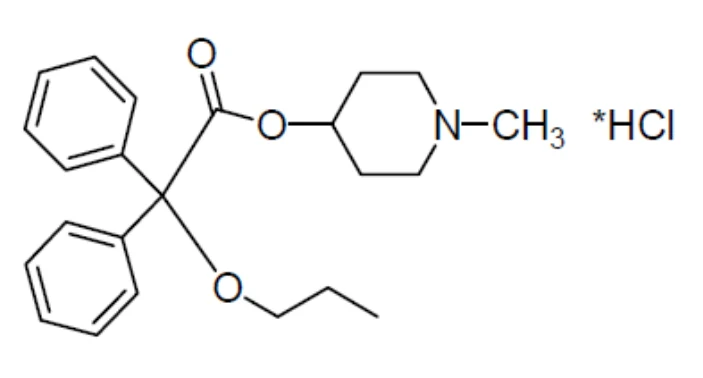
Common name: Propiverine hydrochloride
Chemical name: 2,2-diphenyl-2-(1-propoxy)acetic acid-(1-methylpiperid-4-yl)ester hydrochloride
Molecular formula: C23H30C1NO3
Molecular mass: 403.95
Structural formula:
Physicochemical properties: Propiverine hydrochloride is a white crystalline powder of bitter, burning taste and is soluble in anhydrous ethanol and practically insoluble in acetone. It is freely soluble in acidic medium up to pH 5.8. Propiverine hydrochloride is slightly soluble at pH 6.2 and very slightly soluble from pH 6.6 to 7.2.
CLINICAL TRIALS
Study demographics and trial design
Table 5 Summary of Patient Demographics for Controlled Clinical Trials
| Study # | Trial design | Dosage, route of administration and duration | Study subjects (n = number) | Age range (mean) | Gender M/F (%) |
| Adult population with OAB | |||||
| P 659,1 | Double blind, randomized, placebo and active-controlled, parallel group | Propiverine MR 30 mg sid, Propiverine IR 15 mg bid, Placebo; Oral 4 weeks | Total: 988 MR 30 mg: 391 IR 15 mg: 395 PLA: 202 Patients with OAB | 18-86 MR 30 mg: 55 IR 15 mg: 56 PLA: 57 | MR 30 mg: 11/89 IR 15 mg: 11/89 PLA: 9/91 |
| P 1300 | active-controlled, parallel group | Propiverine MR 30 mg sid, Tolterodine ER 4 mg sid; Oral; 8 weeks | Total: 324 MR 30 mg: 162 TOL 4 mg: 162 Patients with OAB | 20-75 MR 30 mg: 51 TOL 4 mg: 49 | MR 30 mg: 25/75 TOL 4 mg: 24/76 |
| P 281 | Double-blind, randomized, placebo and active-controlled, parallel-group | Propiverine IR 15 mg tid, Oxybutynin IR 5 mg bid, Placebo; Oral; 4 weeks | Total: 366 IR 15 mg: 149 OXY 5 mg: 145 PLA: 72 Patients with urgency/urinary incontinence | IR 15 mg: 49 OXY 5 mg: 50 PLA: 48 | IR 15 mg: 7/93 OXY 5 mg: 8/92 PLA: 6/94 |
| P 269 | Double-blind, randomized, placebo- controlled, parallel group | Propiverine IR 15 mg tid, Placebo; Oral; 4 weeks | Total: 107 IR 15 mg: 54 PLA: 53 Elderly patients with urgency/ urinary incontinence | 60-88 IR 15 mg: 68 PLA: 67 | IR 15 mg: 20/80 PLA: 25/75 |
| P 658 | Double-blind, randomized, active- controlled, parallel group | Propiverine IR 15 mg bid, Tolterodine IR 2 mg bid; Oral; 4 weeks | Total: 202 IR 15 mg: 100 TOL 2 mg: 102 Patients with OAB | 19-82 IR 15 mg: 55 TOL 2 mg: 58 | IR 15 mg: 27/73 TOL 2 mg: 17/83 |
| Adult population with NDO | |||||
| P 99711 | Double blind, randomized, reference | Propiverine MR 45 mg sid; Propiverine IR | Total: 66 MR 45 mg: 33 | 19-70 MR 45 mg: 41 | MR 45 mg: 56/42 |
| Study # | Trial design | Dosage, route of administration and duration | Study subjects (n = number) | Age range (mean) | Gender M/F (%) |
| controlled, parallel group | 15 mg tid; Oral; 3 weeks | IR 15 mg: 33 Patients with NDO | IR 15 mg: 41 | IR 15 mg: 67/33 | |
| P 1320 | active-controlled, cross-over | Propiverine MR 45 mg sid; Propiverine IR 15 mg tid; Oral; 6 weeks | Total: 20 MR 45 mg: 20 IR 15 mg: 20 Patients with NDO | 22-69 MR 45 mg: 47 IR 15 mg: 47 | MR 45 mg: 90/10 IR 15 mg: 90/10 |
| P 691 | Double-blind, randomized, active-controlled, parallel group | Propiverine IR 15 mg tid; Oxybutynin IR 5 mg tid; Oral; 3 weeks | Total: 131 MR 45 mg: 70 IR 15 mg: 61 Patients with NDO | 18-76 MR 45 mg: 39 IR 15 mg: 38 | MR 45 mg: 77/23 IR 15 mg: 74/26 |
| Paediatric population | |||||
| P 1169 | Double blind, randomized, placebo controlled, parallel group | Propiverine IR 5 mg bid (body weight adjusted dose) Placebo; Oral 8 weeks | Total: 171 IR 5 mg: 87 PLA: 84 Patients with OAB | 5-11 IR 5 mg: 7 PLA: 7 | IR 5 mg: 59/41 PLA: 67/33 |
Adult population
Treatment of OAB
The efficacy of propiverine 30 mg MR was evaluated in two randomized, placebo and/or active controlled parallel group, multicentre, clinical trials in adult patients with overactive bladder having symptoms of urinary frequency, urgency and/or urge urinary incontinence. Pertinent placebo and/or active controlled clinical trials conducted with propiverine 15 mg IR also referenced here as they are considered appropriate and relevant to provide a comprehensive summary of human experience with propiverine related to efficacy in adult OAB patients. The non-inferiority of propiverine 30 mg MR to 15 mg IR bid was demonstrated (Table 6).
The inclusion criteria were not directly comparable, but comprised the following main parameters: at least two episodes of urge incontinence within 3 days, urgency episodes during screening, at least 8 to 10 micturitions within 24 hours, symptoms of OAB for at least 3 months. In two clinical trials conducted with the propiverine 15 mg IR product, cystometric parameters were also included: maximum cystometric bladder capacity ≤300 mL, at least one unstable detrusor contraction with a minimum of 10 cmH2O, sensory urge incontinence.
The majority of patients were white, about 86% of OAB patients were females, and the mean age was 54 years.
The primary endpoint in the trials conducted with propiverine 30 mg MR was the change from baseline in the number of incontinence episodes within 24 hours (P 659,1) or change from baseline in the number of micturitions per 24 hours (P 1300). Secondary endpoint included the change from baseline in the number of urge episodes per 24 hours, the change of the voided volume per single micturition [mL], and patient reported outcome parameters (Kings’ Health Questionnaire) as well as investigators and patients assessment of efficacy.
Despite differences in the clinical trial set up and patient population, the efficacy results of propiverine 30 mg MR in OAB patients were similar. The results for the primary and secondary endpoints in the controlled clinical trials conducted in OAB patients with propiverine 30 mg MR are reported in Table 6 and Table 7.
Table 6 Propiverine 30 mg MR; OAB; Mean Change from Baseline to End of Treatment for
Micturition Diary parameters; PP population (P 659,1)
| Visit /Treatment | Propiverine MR 30 mg sid (N=363) | Propiverine IR 15 mg bid (N=360) | Placebo (N=187) | |
| Number of incontinence episodes/24 hours* | ||||
| Baseline | Mean ± SD | 3.4 ± 2.8 | 3.4 ± 2.7 | 3.5 ± 3.7 |
| EoT | 0.9 ± 1.7 | 1.1 ± 2.1 | 1.7 ± 2.8 | |
| Difference EoT-BL | -2.5 ± 2.4 | -2.3 ± 2.2 | -1.8 ± 3.4 | |
| p-value vs placebo | p<0.0001 | p<0.0007 | ||
| Number of micturitions/24 hours** | ||||
| Baseline | Mean ± SD | 12.7 ± 3.4 | 12.8 ± 3.1 | 13.4 ± 4.4 |
| EoT | 9.1 ± 3.1 | 9.1 ± 3.3 | 10.3 ± 3.9 | |
| Difference EoT-BL | -3.6 ± 3.0 | -3.7 ± 2.8 | -3.0 ± 3.6 | |
| p-value vs placebo | p=0.0002 | p=0.0002 | ||
| Number of urge episodes/24 hours** | ||||
| Baseline | Mean ± SD | 6.4 ± 4.1 | 6.1 ± 3.8 | 6.1 ± 4.1 |
| EoT | 3.8 ± 3.3 | 4.1 ± 3.7 | 4.4 ± 4.1 | |
| Difference EoT-BL | -2.9 ± 3.4 | -2.5 ± 3.4 | -1.9 ± 4.0 | |
| p-value vs placebo | p=0.0028 | p=0.1106 | ||
| Voided volume of single micturition [mL]** | ||||
| Baseline | Mean ± SD | 143.6 ± 54.8 | 142.4 ± 52.0 | 144.2 ± 59.4 |
| EoT | 183.7 ± 68.2 | 188.9 ± 79.2 | 173.5 ± 90.0 | |
| Difference EoT-BL | 40.3 ± 51.8 | 46.2 ± 61.4 | 29.8 ± 72.5 | |
| p-value vs placebo | p=0.0667 | p=0.0039 | ||
*Primary endpoint **Secondary endpoints
From an efficacy point of view the trial results allow to conclude that propiverine 30 mg MR once daily is non-inferior to the established propiverine 15 mg IR product administered twice daily and that both products are significantly superior to placebo.
Table 7 Propiverine 30 mg MR; OAB; Mean Change from Baseline to End of Treatment for
Micturition Diary parameters; PP population (P 1300)
| Visit /Treatment | Propiverine MR 30 mg sid (N=148) | Tolterodine ER 4 mg sid (N=139) | p-value between groups | |
| Number of micturitions/24 hours* | ||||
| Baseline | Mean ± SD | 15.2 ± 5.9 | 14.3 ± 5.3 | |
| 2 weeks treatment | 12.2 ± 4.8 | 11.5 ± 4.6 | ||
| 8 weeks treatment (EoT) | 10.5 ± 4.5 | 10.5 ± 4.3 | ||
| Difference 2 weeks-BL | -3.1 ± 3.1 | -2.8 ± 3.4 | 0.3048 | |
| Difference EoT-BL | -4.8 ± 4.1 | -3.9 ± 4.8 | 0.0112 | |
| Number of incontinence episodes/24 hours** | ||||
| Baseline | Mean ± SD | 1.3 ± 3.2 | 0.6 ± 1.5 | |
| 2 weeks treatment | 0.5 ± 2.2 | 0.3 ± 1.1 | ||
| 8 weeks treatment (EoT) | 0.3 ± 1.7 | 0.2 ± 0.9 | ||
| Difference 2 weeks-BL | -0.8 ± 1.9 | -0.3 ± 0.8 | 0.0318 | |
| Difference EoT-BL | -1.0 ± 2.2 | -0.4 ± 1.2 | 0.0338 | |
| Voided volume per single micturition [mL]** | ||||
| Baseline | Mean ± SD | 96.8 ± 42.0 | 105.2 ± 39.4 | |
| 2 weeks treatment | 124.7 ± 57.3 | 134.7 ± 57.7 | ||
| 8 weeks treatment (EoT) | 140.0 ± 61.7 | 149.6 ± 64.5 | ||
| Difference EoT-2 weeks | 27.9 ± 36.6 | 29.5 ± 41.9 | 0.7721 | |
| Difference EoT-BL | 43.2 ± 49.0 | 44.4 ± 55.2 | 0.9167 | |
*Primary endpoint **Secondary endpoints
After 8 weeks of treatment, the mean number of micturitions/24 hours was reduced by 30.2% and 25.7% in the propiverine 30 mg MR and tolterodine 4 ER mg group, respectively. The improvement of all micturition diary parameters after already 2 weeks of treatment demonstrated an early onset of efficacy with further enhancement under prolonged therapy. The statistical analyses showed significant differences between pre- and post-treatment in both groups (p<0.0001). The study demonstrated that propiverine MR 30 mg once daily over 8 weeks in OAB patients is non-inferior compared to the standard dose of tolterodine ER 4 mg with respect to all relevant micturition diary parameters, and the number of incontinence episodes was more effectively reduced with propiverine MR 30 mg (p=0.0338).
Pediatric population
Treatment of OAB
The efficacy of propiverine 5 mg IR in the pediatric population with overactive bladder and urinary incontinence was demonstrated in a randomized, double-blind, placebo-controlled, parallel group multicenter clinical trial in children aged 5 to 10 years. The main criteria for inclusion comprised more than 8 micturitions per 24 hours and at least one incontinence episode within 7 days, exclusion criteria included an age-expected physiological bladder capacity (single
voided volume at high urge to void ≥(age+1)*30 [mL]), nocturnal enuresis, dysfunctional voiding, or neurogenic detrusor overactivity. After a 3-week run-in period where children and parents were informed about the disease pattern and received general life-style advices (urotherapy), children aged 5 to 10 years not responding to these life-style modifications were treated with BW-adjusted doses of propiverine IR 5 mg (17.0-27.9 kg = 10 mg bid (2x IR 5 mg bid); 28.0-45.0 kg = 15 mg bid (3x IR 5 mg bid) or corresponding placebo for 8 weeks. The results for the change from baseline to End of Treatment for primary and secondary endpoints are summarized in Table 8.
The PP population consisted of 41 (32.3%) females and 86 (67.7%) males. The mean age of the PP population was 6.9 years and mean BMI was 16.26 kg/m2.
Table 8 Propiverine 5 mg IR; OAB; Mean Change from Baseline to End of Treatment for
Micturition Diary parameters; PP population (P 1169)
| Visit /Treatment | Propiverine IR 5 mg (0.4 mg/kg BW/bid) (N=64) | Placebo (N=63) | |
| Number of micturitions/24 hours * | |||
| Baseline | Mean ± SD | 9.0 ± 2.3 | 9.4 ± 2.7 |
| EoT | 6.8 ± 1.9 | 8.0 ± 2.5 | |
| Difference EoT-BL | -2.3 ± 2.2 | -1.4 ± 2.3 | |
| Occurrence of incontinence episodes within the last 7 days [N (%)] ** | |||
| Baseline | Yes | 64 (100.0) | 63 (100.0) |
| EoT | No | 21 (32.8) | 9 (14.3) |
| Yes | 43 (67.2) | 54 (85.7) | |
| Number of incontinence episodes within the last 7 days per day ** | |||
| Baseline | Mean ± SD | 2.3 ± 3.0 | 4.0 ± 4.1 |
| EoT | 0.6 ± 1.1 | 2.8 ± 5.0 | |
| Difference EoT-BL | -1.8 ± 3.0 | -1.2 ± 4.7 | |
| Voided volume of single micturition [mL] ** | |||
| Baseline | Mean ± SD | 103.5 ± 37.4 | 97.1 ± 29.4 |
| EoT | 133.8 ± 43.9 | 103.6 ± 31.6 | |
| Difference EoT-BL | 30.4 ± 27.0 | 6.6 ± 23.0 | |
| Response rate based on change of micturition frequency/24 hours [N (%)] ** | |||
| Responder (Decrease ≥1.5 micturitions/24 h) | 43 (67.2) | 27 (42.9) | |
| Non-responder (Decrease <1.5 micturitions/24 h) | 21 (32.8) | 36 (57.1) | |
*Primary endpoint **Secondary endpoints
The 1-sided treatment effect p-value for PP population=0.0009 (for primary endpoint); estimated difference in LS mean=1.055
Comparative Bioavailability Studies
of propiverine 45 mg MR with propiverine 15 mg IR tid. Treatment was administered for 7 days with a washout period of 14 days between treatments.
Twenty-eight healthy volunteers received either propiverine 45 mg MR capsules once daily (Test) or propiverine 15 mg IR tablets tid (Reference).
Table 9 Pharmacokinetic Results for Propiverine 45 mg MR Compared to Propiverine 15 mg IR
(P 506,1)
Propiverine (45 mg as, 1 x 45 mg, o.d. or 1 x 15 mg, t.i.d.) From measured data Geometric Mean Arithmetic Mean (CV %) | ||||||||
| Parameter | Propiverine MR 45 mg o.d. | Propiverine IR 15 mg t.i.d. | % Ratio of Geometric Means | 90% Confidence Interval | ||||
| AUCtau1 [ng·h/mL] | 1711 1892 (51) | 1677 1891(48) | 102 | (87, 119) | ||||
CMAX [ng/mL] | 105 114 (42) | 113 122 (44) | 93 | (81, 108) | ||||
CMIN [ng/mL] | 29 31 (44) | 31 33 (44) | 93 | (82, 105) | ||||
TMAX2 (h) | 7.3 (35) | 4.7 (82) | ||||||
1 AUC0-24 h in steady-state
2 arithmetic mean (%CV)
It can be concluded that propiverine 45 mg MR exhibits comparable bioavailability to the reference drug propiverine 15 mg IR tid with regard to the extent of absorption, and maximum and minimum concentrations attained at steady-state (AUCtau, Cmax and Cmin, respectively).
The MR formulation is also equivalent to the reference with regard to the average steady-state serum concentrations (Cav) reached on the 7th treatment day (71 vs 70 ng/mL).
Absorption of propiverine after administration of propiverine MR is significantly slower than after propiverine IR which results in apparently slower elimination (longer half-life) of the modified release formulation (absorption-controlled elimination).
Cardiac Electrophysiology
A thorough QT interval study has not been performed for propiverine hydrochloride in adult or pediatric patients.
There have been reports of QT interval prolongations with antimuscarinic agents in the same class of drugs of propiverine hydrochloride. Some drugs that cause QT/QTc interval prolongation may increase the risk of rare, but serious ventricular arrhythmia-torsades de pointes. Patients at risk for QT/QTc interval prolongation, such as those with clinically relevant heart failure, long QT syndrome, recent significant hypokalemia or receiving other drugs known to
prolong QT/QTc, should be appropriately monitored when treated with propiverine hydrochloride. Patients who develop prolonged QT/QTc or symptoms of possible arrhythmia such as dizziness, palpitations or fainting should be evaluated electrocardiographically and for electrolyte disturbances.
DETAILED PHARMACOLOGY
Pharmacodynamics
Primary and Secondary Pharmacodynamics
Detrusor function is the pharmacodynamic target when developing drugs for the treatment of overactive bladder. Contractile responses in the urinary bladder in rodent and non-rodent species were amply studied in vitro and in vivo. Receptor binding studies and investigations into the cellular mechanism of action of propiverine including its major human metabolites (M-5, M-6, M-14) were performed as well.
Receptor-binding was shown in different extent to muscarinic, alpha-adrenergic and dopaminergic receptors. Affinity correlates with inhibiting potency resulting in inhibition of cholinergic, alpha-adrenergic or electric field stimulated contractility in urinary bladder muscle. Depending on the specific properties competitive and non-surmounting antagonism was observed.
Propiverine exhibits anticholinergic and calcium-modulating properties. The efferent connection of the pelvic nerve is inhibited due to anticholinergic action resulting in relaxation of bladder smooth muscle. In addition, propiverine inhibits the calcium influx and modulates the intracellular calcium in urinary bladder smooth muscle cells causing musculotropic spasmolysis.
Compared with the pre-treatment baseline, urodynamic measurements in patients demonstrate a decrease of the detrusor pressure and an increase of the bladder capacity. Clinically these effects become manifest in a reduction of the number of incontinence episodes, a decrease of the micturition frequency, and an abatement of urge symptoms.
Safety pharmacology
Effects on the respiratory and cardiovascular system have been investigated. No relevant findings were observed in the respiratory system.
Electrophysiological studies in CHO cells revealed inhibition of hERG-related potassium currents by propiverine and the main metabolite M-5. However, this has no effect on the duration of cardiac action potential. In-vivo studies in conscious adult dogs excluded drug-related QTc prolongation up to doses of 30 mg/kg body weight (more than 30-fold above the given dose in patients).
In a large variety of models using adult rats, mice and rabbits, the effects of propiverine given orally in doses of 10, 20, 50, and 100 mg/kg were assessed. There was no effect of propiverine on convulsions, acetic acid induced writhing (pain model), normal body temperature, and EEG arousal response to photic stimulation. There were no findings of potential clinical concern with respect to the clinical use of the drug in patients including patients of old age. Potential nocuous effects were only observed at exaggerated doses which are unlikely to occur in the clinical situation. In addition, any effects observed were mild and self-limiting.
Propiverine at 8 and 10 mg/kg had no effect on the eye over an observation period of 8 hours in dogs. The comparator drug oxybutynin caused mydriasis at 1 mg/kg up to 4 hours post dosing. The results of this study again confirm the mild anticholinergic effect of propiverine. The eye was not a target organ with respect to systemic anticholinergic effects in difference to the competitor oxybutynin.
Pharmacokinetics
Healthy volunteers
Mictoryl
After oral administration of Mictoryl 30 mg and 45 mg MR, propiverine is absorbed from the gastrointestinal tract with maximal plasma concentrations reached after 9.9 hours (30 mg MR) and 9 to 10 hours (45 mg MR). The mean absolute bioavailability of Mictoryl 30 mg MR is 60.8 ± 17.3% (arithmetic mean value ± SD for AUC0-∞ (po)/AUC0-∞ (iv)) and for Mictoryl 45 mg MR is 59.5 ± 23.3% (arithmetic mean value ± SD for AUC0-∞ (po)/AUC0-∞ (iv)).
Administration of the MR capsule leads to mean Cmax – concentrations of propiverine of about 70 ng/mL reached within 9.5 hours after administration.
Food does not influence the pharmacokinetics of Mictoryl.
Mictoryl Pediatric
After oral administration of propiverine IR 15 mg, propiverine is rapidly absorbed from the gastrointestinal tract with maximal plasma concentrations reached after 2.3 hours. The mean absolute bioavailability of propiverine IR 15 mg is 40.5% (arithmetic mean value of AUC0-∞ (po)/AUC0-∞ (iv)).
The bioavailability of Mictoryl Pediatric is increased after a high-fat meal.
Patients with mild liver impairment
There is no indication for any significant influence of liver impairment on the pharmacokinetics of propiverine and the main metabolite M-5 during multiple dosing.
Patients with moderate to severe liver impairment
No data are available for moderate or severe hepatic impairment.
Patients with severe renal impairment
Severe renal impairment does not significantly alter the disposition of propiverine and its main metabolite, propiverine-N-oxide (M-5), as deduced from a single dose study in 12 patients with creatinine clearance <30 mL/min.
TOXICOLOGY
Single-dose toxicity
A total of 21 single dose non-clinical toxicity studies was performed in adult animals and reported in 13 individual study reports. These studies characterize the acute toxicity of propiverine following oral, subcutaneous, and intravenous administration in mice, rats, rabbits and the dog. In addition, the acute toxicity of the metabolites M-5 and M-6, was characterized in mice. Moreover, toxicity of the impurity and minor animal metabolite M-2 was assessed in mice and rats.
In summary, the oral administration of propiverine was much better tolerated than a parenteral administration of the drug. Following oral exposure, the observed maximum non-lethal dose was about 200 mg/kg in mice, 250 mg/kg in female rats and 500 mg/kg in male rats, 390 mg/kg in the rabbit, and 900 mg/kg in the dog.
Signs and symptoms of intoxication were consistent across species with a remarkable CNS stimulation (convulsion, tremor), mydriasis, adverse effects on the respiratory system (dyspnoea, bradypnoea), and congestion of organs (e.g. liver, lung, and kidney). Apparent causes of death were disturbed blood supply to the lung and bleeding in the kidney and urinary bladder. CNS stimulation and mydriasis are well compatible with an antimuscarinic mechanism of action as part of the pharmacodynamics of propiverine.
M-5 and M-6 were better tolerated than the parent drug.
Propiverine is generally well tolerated and high amounts of the drug are needed to produce signs of acute toxicity. Metabolism is not a source of additional toxicity.
Repeated-dose toxicity
Four pivotal studies were conducted in adult male and female rats and dogs over a period of 13 weeks and one year, respectively. Propiverine was given orally by gavage or as capsules in doses up to 150 mg/kg (adult rats, 13 weeks), 50 mg/kg (adult rats, 52 weeks), 27 mg/kg (adult dogs, 13 weeks), and 9 mg/kg (dogs, 1 year). All studies included a recovery period.
There was no propiverine-related death in these studies. In rats, the liver and kidney were target organs of toxicity. Following one year of exposure the absolute and relative liver weights were increased, midzonal lipid droplets were visible together with a slight hyperplasia of the smooth endoplasmic reticulum. Dilatation of the cisternae and precipitation of large lipid droplets were detected by electron-microscopy. Similar findings were seen in dogs following 13 weeks and one year of exposure. They are indicative of liver enzyme induction. All findings were reversible or improved during the recovery period.
The No Observed Adverse Effect Level (NOAEL) observed in these studies is provided in Table 10.
Table 10 NOAEL (mg/kg) in pivotal repeat dose studies
| Species | Exposure time | NOAEL (mg/kg) |
| male and female rats | 13 weeks | Female: 10 Male: 2 |
| male and female rats | 52 weeks | 5 |
| male and female dogs | 13 weeks | 1 |
| male and female dogs | 1 year | 0.3 |
The maximum dose in adults and children is < 1 mg/kg. The safety margins differ between species and are higher for rats than dogs. The highest safety margin observed is > 10 based on female rats. In the 1-year dog study, the safety margin is < 1 extrapolated to human beings. This finding is in contrast to long-term clinical experience. In addition, pharmacokinetic data showed that following a single oral dose (10 mg/kg), the exposure to systemic levels of propiverine and measurable metabolites is by far higher in the dog in comparison to rats.
Genotoxicity
Propiverine was assessed in vitro (4 studies) and in vivo (4 studies). The genotoxicity of the main metabolites of propiverine (M-5, M-6, and M-14) was assessed as well. Pivotal studies were conducted in compliance with GLP.
In summary, the genotoxicity of propiverine and its main metabolites has been studied with respect to gene mutations in bacteria and mammalian cells in vitro. Propiverine was also studied with respect to chromosomal aberrations in vivo.
No genotoxic potential was observed.
Carcinogenicity
Carcinogenicity studies with propiverine were conducted in mice and rats in accordance with international standard guidelines and in agreement with GLP.
Neoplastic lesions following treatment with propiverine were observed in high dose male mice. The number of hepatocellular adenoma and hepatocellular carcinoma was significantly higher at the top dose compared to control animals. A dose-related increase was not observed. There were no such findings in female mice.
In the rat carcinogenicity study hepatocellular adenoma, kidney adenoma and urinary bladder papilloma has been demonstrated in high dose male rats, while in female animals endometrial stromal polyps were increased at the high dose levels (Table 11).
Table 11 Results of carcinogenicity studies
| Species, strain, number | Dose, route of administration, treatment duration | Results |
mice B6C3F1 200 males, 200 females | 0, 100, 300, 1000 ppm diet, 104 weeks | M/F: 300: body weight gain, fatty liver M: 1000: Hepatocellular adenoma and carcinoma |
rat F344 200 males, 200 females | 0, 100, 300, 1000 ppm diet, 104 weeks | M/F: 300: body weight gain M: 1000: kidney papilloma, hepatocellular adenoma, kidney adenoma F: 1000: Endometrial stromal polyp |
Both the mouse and rat tumours and histopathology findings were considered to be species specific and therefore not of clinical relevance.
Mutagenesis
No evidence of mutagenicity was observed.
Reproduction
Reproduction studies have been conducted in mice, rat and rabbit. The study programme is listed in Table 12 and Table 13.
Table 12 Reprotoxicity study programme
| Study type | Species, strain number, sex | Doses (mg/kg/day) Route Treatment duration | Important findings (dose) | NOAEL (mg/kg/day) |
Segment I Fertility and early embryonic development to implantation | rat / Slc:Sprague-Dawley (SPF) 42 male 63 female | 0/2/10 /50 orally M: 13 weeks F: 3 weeks | M 10, F50; salivation, mydriasis, rale 50: mean fetal weight increased, F150: number of ossification centres increased | General: M (F0): 2 M (F0): 10 Reproduction M,F,litters: 50 |
Segment II Embryo-foetal development | rat / Slc:Sprague-Dawley (SPF) 4 groups: 36 females | 0/2/10 /50 orally F: 11 days | F (P): 10: rale, 50:salivation, mydriasis F1: 10: (ventricular septal defect; dilated renal pelvis) | P: 2 fetuses: 10 offspring: 50 |
rabbit / White New Zealand 4 groups: 15 females | 0/2.4/12/60 orally F: 13 | F (P): 60 mydriasis; spleen enlargement. liver weight decreased, spleen weight increased | P: 12 F1: 60 | |
Segment III Prenatal and postnatal development, including maternal function | rat / Slc:Sprague-Dawley (SPF) 4 groups: 24 females | 0/2/10 /50 orally F: 25 days | 50: salivation, rale mydriasis, 50 survival to day 4 decreased 10: (ventricular septal | 10 |
defect; dilated renal pelvis) 50: time in T-maze decreased |
Table 13 Additional reprotoxicity information (nonGLP)
| Study type | Species, strain number, sex | Doses (mg/kg/day) Route Treatment duration | Important findings (dose) | NOAEL (mg/kg/day) |
Investigation on postnatal development | mouse / BNMF1 4 groups: 22 females | 0, 1, 10, 100 orally G12 to G16 | 100: decreased pup body weight through day 5 p.p., delayed reflex development (hindlimb grasping, negative geotaxis) | 10 |
Effects on Embryofetal Development, 3-period study | rat / Wistar 5 groups: 36 females per period | 0, 0, 2.5, 25, 250 Period I: G3 to G6 Period II: G6 to G14 Period III: G14 to G17 | Period I: 250: less pregnant females, increased postimplantation losses Period II: less pregnant females, increased postimplantation losses, increased fetal anomalies (skelet) Period III: increased postimplantation losses, decreased fetal body weight, increased fetal anomalies (skelet) | 25 |
GXX: Gestation date
Thus, the animal studies show that skeletal retardation in the offspring occurred when the drug was administered orally at high doses to pregnant females.
No effects on male and female fertility and reproduction behavior were observed in toxicological studies with rats.
In pregnant rat, the concentration in the foetus was about twofold the maternal plasma level at peak time. The elimination of radioactivity from the foetus was very rapid. After administration of 14C-labelled propiverine to lactating rats, the concentrations in the milk were about 1.2 - 1.7-fold higher than the plasma levels at any time point investigated. The elimination half-life of milk radioactivity was about 13 hours.
Toxicity in juvenile animals
Two studies were performed in juvenile animals, one in male and female rats after weanling for a period of 6 weeks (P 1110) and the second study in juvenile male and female dogs, about 3 months of age at the beginning of exposure and treatment duration of 13 weeks (P 1178). Daily administration of propiverine did not show adverse effects on growth or development. In dogs, the most pronounced toxicity effect concerned the gastrointestinal tract with more vomiting in the propiverine-exposed animals as compared to controls. This finding seemed to be dose-
dependent. The NOAEL in juvenile rats was 20 mg/kg BW and 1 mg/kg in juvenile dogs. Propiverine was as well tolerated in juvenile animals as in adult animals of the same species.
Local tolerance
Two studies examined the effects of propiverine applied locally to the ocular mucosa of New Zealand rabbits (P 169, P 170). Propiverine as a 5% saline solution had strong irritating abilities whereas 0.1 ml of a 0.01% - 0.1% solution were well tolerated.
Other toxicity studies
The antigenicity of propiverine was examined in guinea pigs and mice (P 168). The heterologous PCA-test showed no evidence of cutaneous anaphylaxis in mice. In guinea pigs there was no evidence of passive or active cutaneous anaphylaxis, active systemic anaphylaxis, or passive haemagglutination. Experiments showed that propiverine did not display antigenicity in guinea pigs nor in mice.
Results of toxicity studies in rodent and non-rodent species did not identify any toxicity that would preclude the use of propiverine in man.
REFERENCES
- 1.
Fuhr U, Jetter A, Tomalik-Scharte D, Kasel D, Harlfinger S
Drug/drug interaction study with propiverine hydrochloride in healthy volunteers, part I, Report, 2002.Aug.22, Institute for Pharmacology, University Köln, Germany; ............................................................................ [P 694]
- 2.
Thomann P, Hafner A, Siegert J, Schnabel F, Gramatté T
Study to investigate food drug interactions for two oral formulations of propiverine hydrochloride (immediate release and extended release formulation), Report, 2001.Oct.15, Quintiles GmbH Freiburg, Germany; ... [P 703]
- 3. Hӧrn H, Propiverine hydrochloride immediate (IR) and extended release (ER): Comparison of efficacy and tolerability in patients with overactive bladder. Report, 2004. Feb.26, PARAXEL International GmbH Berlin, Germany; .................................................................................................................................................. [P 659,1]
- 4. Grälls M, Dose-escalating study of propiverine hydrochloride (Mictonetten) in children suffering from frequency urgency-syndrome and urinary incontinence indicative of detrusor overactivity (overactive bladder), Report, 2006.Dec.08, Quintiles Services AB Uppsala, Sweden; ............................................................. [P 1157]
- 5.
Marschall-Kehrel AD, Schnabel F, Hölscher B, Bailey MT
Propiverine hydrochloride in children suffering from overactive bladder and urinary incontinence: A randomised, double-blind, placebo-controlled, parallel grouped multicenter clinical trial (EudraCT 2004-001243-30), Report, 2007.Apr.13, APOGEPHA Arzneimittel GmbH Dresden, Germany; [P 1169]
- 6.
Siegmund W, Gießmann T, Franke G, Wegner D
Pharmacokinetics of intravenous (15 mg) and oral propiverine hydrochloride (15 mg solution, 10, 15 and 30 mg coated tablets), Report, 2002.Apr.16, Institute of Pharmacology, University Greifswald Greifswald, Germany; ..................................................................................................................................................... [P 730]
efficacy of propiverine hydrochloride extended- release capsule for the treatment of overactive bladder with tolterodine extended-release tablet as active control (PH-ZK-0906, SFDA: 2009L04160), Report, 2011. Aug, Zhaoke Pharmaceutical (Hefei) Co., Ltd; ................................................................................................. [P 1300]
- 8.
Letzel H, Blümner E, Madersbacher H
Efficacy and safety evaluation of propiverine hydrochloride in patients with urge-incontinence Report, 1995.Dec.12, STATICON Medizinische Forschungsgesellschaft mbH Planegg, Germany; ......... [P 281]
- 9. [Double blind, randomised parallel group comparison of propiverine hydrochloride versus placebo in terms of safety, with particular reference to the induction of cardiac arrhythmias, and efficacy in elderly patients with urge symptoms (Urological Expert Report, General Medical Expert Report, Pharmacokinetic Report)] Report, 1995, APOGEPHA Arzneimittel GmbH Dresden, Germany; ........................................................ [P 269]
- 10.
Gregor D, Donath F, Gramatté T, Wortha H-P, Jünemann KP
Efficacy and tolerability of propiverine vs. tolterodine in patients with overactive bladder Report, 2002.Jul.26, AMS Advanced Medical Services GmbH Mannheim, Germany; ............................. [P 658]
- 11. Schirm F. Efficacy and tolerability of propiverine hydrochloride extended release (ER) compared to immediate release (IR) in patients with neurogenic detrusor hyperactivity (EudraCT: 2004-001275-19). Report, 2006.Jul.28, DATAMAP GmbH Freiburg, Germany; ................................................................................ [P 997]
- 12. Efficacy of propiverine hydrochloride extended release (ER) 45 mg in patients with neurogenic detrusor overactivity - an active-controlled single-centre crossover trial (EudraCT 2012-003159-12). Report, 2013; .................................................................................................................................................................. [P 1320]
- 13.
Mürtz G, Schnabel F, Koch R, Kirch W
Efficacy and tolerance of propiverine-hydrochloride (Mictonorm®) in patients with neurogenic bladder. Multicentre trial on the comparison of propiverine-hydrochloride (Mictonorm®) and oxybutynin-hydrochloride (Dridase®), Report, 2001.Dec.10, APOGEPHA Arzneimittel GmbH Dresden, Germany; ........................ [P 691]
- 14.
Siegmund W, Franke G, Weinbrenner A, Westphal K
Multiple dose equivalence study to compare Mictonorm with an extended release formulation of propiverine HCl, Report, 2001.May.23, Institute of Pharmacology, University Greifswald; ..................................... [P 506,1]
- 15.
Haveresch L
A double blind, placebo-controlled, randomized, 2-way crossover study to assess the effect of propiverine on cardiac safety in healthy female subjects, Report, 2002.Aug.09, M.A.R.C.O. - Dr. Wargenau, Institute for Biomedical Statistics Düsseldorf, Germany; ............................................................................................... [P 693]
- 16.
Weimann T
A double blind, placebo-controlled, randomised, 2-way crossover study to assess cardiac safety of propiverine-HCl in male coronary heart disease (CHD) patients, Report, 2003.Nov.24, M.A.R.C.O - Dr. Wargenau, Institute for Biomedical Statistics Düsseldorf, Germany; ........................................................................ [P 751,1]
- 17.
Ohuchida A
[Mutation test of P-4], Report, 1986.Nov.25, Taiho Pharmaceutical Co., Ltd. Tokushima, Japan; .......... [P 1182]
- 18.
Takawale P, Propiverine hydrochloride: Safety study in juvenile rats, Report, 2004.Dec.16, SCANTOX Lille
Skensved, Denmark; ................................................................................................................................ [P 1110]
- 19.
Brodersen TK, Propiverine hydrochloride - A 13-week safety study in juvenile dogs. Oral (capsule)
administration of propiverine, Report, 2007.Apr.12, SCANTOX Lille Skensved, Denmark; ................. [P 1178]
- 20.
Yoshida Y, Test of irritating ability of propiverine hydrochloride (P4) in ocular mucosa of rabbit, Report, 1985,
Security Laboratory, Taiho Pharmaceuticals Co. Ltd. Tokushima, Japan; . ............................................... [P 169]
- 21.
Yamakita O, Test of irritating ability of propiverine hydrochloride (P4) in ocular mucosa of rabbit –
Supplementary test with low concentrations, Report, 1990 Dec.20, Security Institute, Taiho Pharmaceutical Co., Ltd. Tokushima, Japan; ...................................................................................................................... [P 170]
- 22. Kouchi Y, Imamura K, Izumi K, Yoshida R, Antigenicity tests on propiverine hydrochloride in guinea pigs and mice, J Toxicol Sci 1989; 14: 143-151; ..................................................................................................... [P 168]