


Product Monograph - Engerix-B (Glaxosmithkline, 10 mcg, 20 mcg)
Recent Major Label Changes
| Section | Date |
|---|---|
| 4 Dosage and Administration, 4.4 Administration | MAY 2025 |
Table of Contents
Certain sections or subsections that are not applicable at the time of the preparation of the most recent authorized product monograph are not listed.
Recent Major Label Changes .................................................................................................. 2
Table of Contents................................................................................................................... 2
- 1.
Indications .................................................................................................................. 4
1.1 Pediatrics......................................................................................................... 4
1.2 Geriatrics ......................................................................................................... 4
- 2. Contraindications ....................................................................................................... 4
- 4.
Dosage and Administration ........................................................................................ 4
4.1 Dosing Considerations...................................................................................... 4
4.2 Recommended Dose and Dosage Adjustment ................................................... 5
4.4 Administration ................................................................................................. 6
- 5. Overdose .................................................................................................................... 8
- 6. Dosage Forms, Strengths, Composition, and Packaging............................................... 8
- 7.
Warnings and Precautions .......................................................................................... 9
General ....................................................................................................................... 9
Driving and Operating Machinery .............................................................................. 10
Hepatic/Biliary/Pancreatic ......................................................................................... 10
Immune .................................................................................................................... 10
Neurologic ................................................................................................................ 10
Renal ........................................................................................................................ 10
7.1 Special Populations ........................................................................................ 11
7.1.1 Pregnancy .................................................................................................. 11
7.1.2 Breastfeeding............................................................................................. 11
7.1.3 Pediatrics ................................................................................................... 11
7.1.4 Geriatrics ................................................................................................... 11
- 8.
Adverse Reactions .................................................................................................... 11
8.2 Clinical Trial Adverse Reactions ...................................................................... 11
8.3 Less Common Clinical Trial Adverse Reactions ................................................ 12
8.5 Post-Market Adverse Reactions ...................................................................... 13
- 9.
Drug Interactions ...................................................................................................... 14
9.2 Drug Interactions Overview ............................................................................ 14
9.4 Drug-Drug Interactions................................................................................... 14
9.5 Drug-Food Interactions .................................................................................. 14
9.6 Drug-Herb Interactions................................................................................... 14
9.7 Drug-Laboratory Test Interactions .................................................................. 14
- 10.
Clinical Pharmacology ............................................................................................... 14
10.1 Mechanism of Action ..................................................................................... 14
10.4 Immunogenicity ............................................................................................. 15
- 11. Storage, Stability, and Disposal................................................................................. 17
Part 2: Scientific Information ............................................................................................... 18
- 13. Pharmaceutical Information ..................................................................................... 18
Drug Substance .................................................................................................................... 18
- 14.
Clinical Trials............................................................................................................. 19
14.1 Clinical Trials by Indication ............................................................................. 19
Active immunization against hepatitis B ..................................................................... 19
- 15. Microbiology ............................................................................................................ 22
Patient Medication Information........................................................................................... 23
Part 1: Healthcare Professional Information
1. Indications
ENGERIX-B (hepatitis B surface antigen (recombinant)) is indicated for:
- active immunization against hepatitis B virus infection.
The National Advisory Committee of Immunization (NACI) provides additional guidance on the use of hepatitis B vaccines in Canada. Please refer to the Canadian Immunization Guide.
1.1 Pediatrics
Pediatrics (0 – 19 years of age): Based on the data submitted and reviewed by Health Canada, the safety and efficacy of ENGERIX-B in pediatric patients has been established; therefore, Health Canada has authorized an indication for pediatric use (see 14 CLINICAL TRIALS).
1.2 Geriatrics
Geriatrics: Limited data are available to Health Canada (see 7 WARNINGS AND PRECAUTIONS and 14 CLINICAL TRIALS).
2. Contraindications
ENGERIX-B (hepatitis B surface antigen (recombinant)) is contraindicated in patients with known hypersensitivity to any component of the vaccine or having shown signs of hypersensitivity after previous ENGERIX-B administration. For a complete listing of vaccine components, see 6 DOSAGE FORMS, STRENGTHS, COMPOSITION AND PACKAGING.
ENGERIX-B should not be administered to subjects with severe febrile infections as for any vaccine. However, the presence of a minor infection does not contraindicate vaccination.
Human immunodeficiency virus (HIV) infection is not considered as a contraindication for hepatitis B vaccination (see 7 WARNINGS AND PRECAUTIONS).
4. Dosage and Administration
4.1 Dosing Considerations
- ENGERIX-B (hepatitis B surface antigen (recombinant)) should be injected intramuscularly and must not be given intravenously or intradermally.
- ENGERIX-B may be given to pediatric patients, patients with renal insufficiency and to immunocompromised patients as per the dosing recommendations below.
4.2 Recommended Dose and Dosage Adjustment
Table 1 Dosage and Administration
| Vaccination Schedule | Age | Dose/Volume (mcg/mL) | Dosing Schedule (months) | ||||
| 0 | 1 | 2 | 6 | 12 | |||
Standard (3 dose) | ≥20 years of age | 20/1.0 | x | x | x | ||
| Standard | 0 - 19 years of age | 10/0.5 | x | x | x | ||
| Accelerated | ≥ 20 years of age | 20/1.0 | x | x | x | x | |
| 0 - 19 years of age | 10/0.5 | x | x | x | x | ||
| Rapid | ≥ 20 years of age | 20/1.0 | 0,7d, 21d xxx d=days | x | |||
| Alternative | 11 - 15 years of age | 20/1.0 | x | x | |||
The vaccine can be administered at any age from birth onwards.
For optimal protection the recommended Standard schedule for ENGERIX-B (hepatitis B surface antigen (recombinant)) is three doses administered at 0, 1 and 6 months.
For more Accelerated protection a three dose schedule (0, 1, 2 with a booster dose at month 12) results in the development of protective anti-HBs titres by 3 months. The booster dose (at 12 months) is required to maintain prolonged protective anti-HBs titres.
In circumstances in adults, where a very Rapid induction of protection is required, e.g., persons travelling to areas of high endemicity and who commence a course of vaccination against hepatitis B within one month prior to departure, a schedule of three intramuscular injections given at 0, 7 and 21 days may be used. When this schedule is applied, a booster dose should be administered 12 months after the first dose for longer term protection (see 10 CLINICAL PHARMACOLOGY for seroconversion rates).
Primary Immunization
ENGERIX-B can effectively boost anti-HBs responses initially elicited by either plasma-derived or yeast-derived vaccines.
For individuals in whom a primary vaccination schedule has been initiated with a plasma-derived or yeast-derived vaccine, dosing may be continued with ENGERIX-B.
Adults 20 years and over:
A dose of 20 mcg of antigen protein in 1.0 mL suspension is recommended for adults (see Table 1).
Neonates, infants, children and adolescents up to 19 years inclusive:
A dose of 10 mcg of antigen protein in 0.5 mL suspension is recommended for neonates, infants, children and adolescents up to 19 years of age inclusive (see Table 1).
When the pediatric presentation is not available, other presentations may be used for withdrawing the appropriate dose.
Alternative Dosing (Adolescents 11-15 years)
A dose of 20 mcg of antigen protein in 1.0 mL suspension may be administered in subjects from 11 years up to and including 15 years of age according to a 0, 6 months schedule if low compliance is anticipated (see Table 1) (see 10 CLINICAL PHARMACOLOGY).
Patients with renal insufficiency including patients undergoing hemodialysis 16 years of age and above:
The primary immunization schedule for patients with renal insufficiency including patients undergoing hemodialysis is four double doses (2 x 20 mcg) at elected date, 1 month, 2 months and 6 months from the date of the first dose. The immunization schedule should be adapted in order to ensure that the anti-HBs antibody titre remains above the accepted protective level of 10 IU/L.
Patients with renal insufficiency including patients undergoing hemodialysis up to and including 15 years of age:
Patients with renal insufficiency including patients undergoing hemodialysis have a reduced immune response to hepatitis B vaccine. Consideration should be given to serological testing following a complete course of ENGERIX-B. Additional doses of vaccine may need to be considered to ensure a protective anti-HBs level >10 IU/L.
Immunocompromised patients:
A 2.0 mL (2 x 1.0 mL) dose of ENGERIX-B 40 mcg (2 x 20 mcg) is recommended (see 10 CLINICAL PHARMACOLOGY).
Booster Doses
Routine booster vaccinations in immunocompetent persons are not recommended since protection has been shown to last for at least 15 years. Studies of long term protective efficacy, however, will determine whether booster doses of vaccine are ever needed. It is important to recognize that absence of detectable anti-HBs does not mean lack of protection, because immune memory persists. Booster doses in this situation are not indicated.
Immunocompromised persons often respond suboptimally to the vaccine. Subsequent hepatitis B virus (HBV) exposures in these individuals can result in disease or the carrier state. Therefore, booster doses may be necessary in this population. The optimal timing of booster doses for immunocompromised individuals who are at continued risk of HBV exposure is not known and should be based on the severity of the compromised state and annual monitoring for the presence of anti-HBs.
4.4 Administration
Check the expiry date of the vaccine carefully. Do not use vaccine beyond its expiry date.
The vaccine should be inspected visually for any foreign particulate matter and/or coloration prior to administration.
Upon storage, a fine white deposit with a clear colourless layer above may be observed.
The vaccine should be re-suspended before use. When re-suspended, the vaccine will have a uniform hazy white appearance. Discard if the content appears otherwise.
Re-suspension of the vaccine to obtain a uniform hazy white suspension.
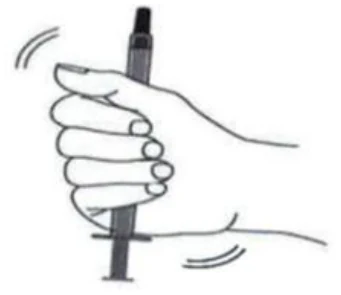
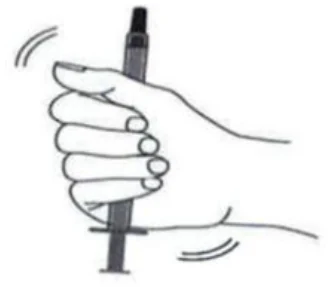
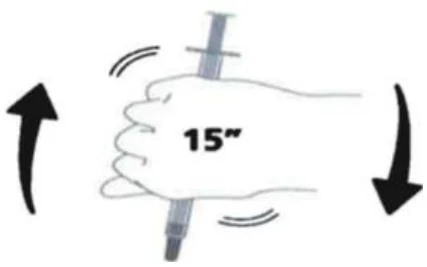
The vaccine can be re-suspended following the steps below (Figure 1):
- 1. Hold the syringe upright in a closed hand.
- 2. Shake the syringe by tipping it upside down and back again.
- 3. Repeat this action vigorously for at least 15 seconds.
- 4.
Inspect the vaccine again:
- a. If the vaccine appears as a uniform hazy white suspension, it is ready to use – the appearance should not be clear.
- b. If the vaccine still does not appear as a uniform hazy white suspension - tip upside down and back again for at least another 15 seconds - then inspect again.
Figure 1. Instructions for Use
- 1.
Grasp the syringe in the palm of the hand shake vigorously by rotating the syringe upside down with a tip over movement, for at least 15 seconds
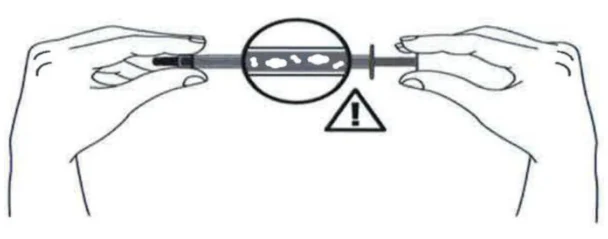
- 2. Inspect the vaccine and if you still observe clouds or white agglomerates, repeat this action for another 15 seconds.
As with other vaccines, the dose of vaccine should be withdrawn under strict aseptic conditions and precautions taken to avoid contamination of the contents.
ENGERIX-B should be injected intramuscularly. In adults the injection should be given in the deltoid region. In neonates and infants, it may be preferable to inject ENGERIX-B in the anterolateral thigh because of the small size of their deltoid muscle. In special circumstances, the vaccine may be administered subcutaneously in patients with severe bleeding tendencies (e.g., hemophiliacs).
ENGERIX-B must not be given intravenously or intradermally.
ENGERIX-B may be administered simultaneously with hepatitis B immunoglobulin (HBIG); however, it must be administered at a separate injection site.
Figure 2. Pre-Filled Syringe Instructions
Hold the syringe by the barrel, not by the plunger. Unscrew the syringe cap by twisting it anticlockwise. | |
|---|---|
To attach the needle, connect the hub to the Luer Lock Adaptor and rotate a quarter turn clockwise until you feel it lock. Do not pull the syringe plunger out of the barrel. If it happens, do not administer the vaccine. |
5. Overdose
Cases of overdose have been reported during post-marketing surveillance. Adverse events reported following overdosage were similar to those reported with normal vaccine administration.
| For the most recent information in the management of a suspected drug overdose, contact your regional poison control centre or Health Canada’s toll-free number, 1-844 POISON-X (1-844-764-7669). |
|---|
- 6. Dosage Forms, Strengths, Composition, and Packaging
To help ensure the traceability of vaccines for patient immunization record-keeping as well as safety
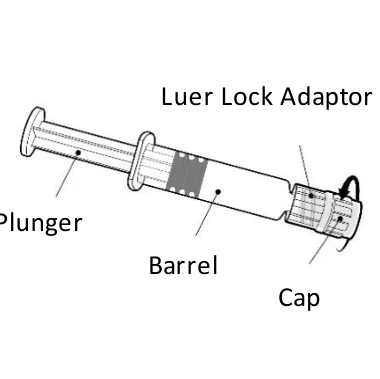 Plunger Barrel Cap Luer Lock Adaptor | |
|---|---|
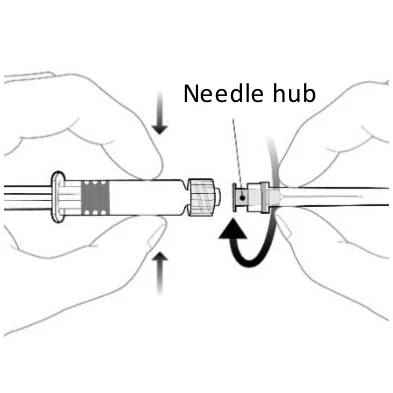 Needle hub |
monitoring, health professionals should record the time and date of administration, quantity of administered dose (if applicable), anatomical site and route of administration, brand name and generic name of the vaccine, the product lot number and expiry date.
Table 2 - Forms, Strengths, Composition and Packaging
ENGERIX-B (hepatitis B surface antigen (recombinant)) is a sterile, non-live, thimerosal free vaccine for intramuscular injection. The vaccine is supplied as a single dose syringe of hepatitis B surface antigen (HBsAg) adsorbed onto Al3+ as aluminium hydroxide, available in a pediatric and adult dose.
The vaccine is a slightly opaque, white, sterile suspension. A slow settling of the white aluminium hydroxide may occur during storage leaving a clear colourless supernatant liquid.
Packaging
0.5 mL single dose prefilled syringes are packaged in a 1 pack carton with a Package Leaflet.
1.0 mL single dose prefilled syringes are packaged in a 1 or 25 pack carton with a Package Leaflet.
7. Warnings and Precautions
General
The vaccine will not protect against infection caused by hepatitis A and non-A non-B hepatitis viruses. As hepatitis D (caused by the delta agent) does not occur in the absence of hepatitis B infection or carrier state, it can be expected that hepatitis D will also be prevented by vaccination with ENGERIX-B.
There is no specific treatment for hepatitis B. Vaccination against hepatitis B is expected in the long term to reduce the overall incidence of both hepatitis B and the chronic complications such as developing chronic liver disease which may lead to cirrhosis or primary hepatocellular carcinoma.
As with all injectable vaccines, appropriate medical treatment and supervision should always be readily available in case of a rare anaphylactic reaction following the administration of the vaccine.
| Route of Administration | Dosage Form / Strength/Composition | Non-medicinal Ingredients |
|---|---|---|
| Intramuscular Injection | Suspensions/20 mcg/mL hepatitis B surface antigen Each 0.5 mL pediatric/ adolescent dose of vaccine contains 10 mcg of hepatitis B surface antigen adsorbed onto 0.25 mg of Al3+ as aluminium hydroxide. Each 1.0 mL adult dose of vaccine contains 20 mcg of hepatitis B surface antigen adsorbed onto 0.5 mg of Al3+ as aluminium hydroxide. | Aluminium (as aluminium hydroxide), disodium phosphate dihydrate, sodium chloride, sodium dihydrogen phosphate dihydrate, and water for injection. The 0.5 mL and 1.0 mL formulations are thimerosal free. |
ENGERIX-B (hepatitis B surface antigen (recombinant)) should not be administered in the gluteal region or intradermally since these routes of administration may result in a lower immune response. Intradermal administration may also result in severe local reactions.
The vaccine must never be administered intravenously.
A new sterile syringe and a new sterile needle should always be used to prevent the transmission from one subject to another of infectious agents, such as the hepatitis B virus, non-A, non-B hepatitis virus or the human immunodeficiency virus (HIV).
Driving and Operating Machinery
Exercise caution when driving or operating a vehicle or potentially dangerous machinery.
Hepatic/Biliary/Pancreatic
Patients with chronic liver disease or hepatitis C carriers should not be precluded from vaccination against hepatitis B. The vaccine could be advised since hepatitis B virus (HBV) infection can be severe in these patients. The HBV vaccination should be considered on a case by case basis by the physician.
Immune
Because hepatitis B has a long incubation period it is possible that there may be latent infection at the time of vaccination. ENGERIX-B may not prevent hepatitis B in such cases.
Patients who develop symptoms suggestive of hypersensitivity after an injection should not receive further injections of ENGERIX-B (see 2 CONTRAINDICATIONS).
The immune response to hepatitis B vaccine is related to a number of factors, including older age, male gender, obesity, smoking habits and route of administration. In subjects who may respond less well to the administration of the hepatitis B vaccine (e.g., more than 40 years of age, individuals with type 2 diabetes, etc.), additional doses may be considered.
Patients with HIV infection should not be precluded from vaccination against hepatitis B. The vaccine could be advised since hepatitis B virus (HBV) infection can be severe in these patients. The HBV vaccination should be considered on a case by case basis by the physician.
In HIV infected patients and persons with an impaired immune system, adequate anti-HBs antibody titers may not be obtained after the primary immunization course and such patients may therefore require administration of additional doses of vaccine (see 4 DOSAGE AND ADMINISTRATION).
Neurologic
Syncope (fainting) can occur following, or even before, any vaccination as a psychogenic response to the needle injection. It is important that procedures are in place to avoid injury from faints.
Renal
In hemodialysis patients, adequate anti-HBs antibody titers may not be obtained after the primary immunization course and such patients may therefore require administration of additional doses of vaccine (see 4 DOSAGE AND ADMINISTRATION).
7.1 Special Populations
7.1.1 Pregnancy
The effect of the antigen (HBsAg) on fetal development is unknown as adequate studies with ENGERIX-B have not been conducted during pregnancy and adequate animal reproduction studies are not available. However, vaccination of a pregnant woman may be considered in order to prevent hepatitis B in high-risk situations.
There is no experience on the extent of exposure during clinical trials.
7.1.2 Breastfeeding
Adequate human data on use during lactation and adequate animal reproduction studies are not available. It is not known whether ENGERIX-B is excreted in human milk. Because many drugs are excreted in human milk, precaution should be exercised.
7.1.3 Pediatrics
The potential risk of apnoea and the need for respiratory monitoring for 48-72 hours should be considered when administering the primary immunization series to very premature infants (born ≤ 28 weeks of gestation) and particularly for those with a previous history of respiratory immaturity. As the benefit of vaccination is high in this group of infants, vaccination should not be withheld or delayed.
Hepatitis B vaccine should be deferred for infants with a birth weight <2,000 g if the mother is documented to be HBsAg negative at the time of the infant’s birth. Vaccination can commence at chronological age 1 month or hospital discharge (for more information, refer to 2024 NACI recommendation “Premature infants of mothers with unknown HBsAg status”).
Infants born weighing <2,000 g to HBsAg positive mothers should receive vaccine and HBIG within 12 hours after birth. Infants born weighing <2,000 g to mothers of unknown HBsAg status should receive vaccine and HBIG within 12 hours after birth if the mother’s HBsAg status cannot be determined within the first 12 hours of life. The birth dose in infants born weighing <2,000 g should not be counted as the first dose in the vaccine series and it should be followed with a full 3-dose standard regimen (total of 4 doses).
7.1.4 Geriatrics
Clinical studies of ENGERIX-B used for licensure did not include sufficient numbers of subjects aged 65 years and older to determine whether they responded differently from younger subjects. However, in a later study it has been shown that a diminished antibody response and seroprotective levels can be expected in persons older than 60 years (see clinical trials, immunogenicity in subjects with Diabetes Mellitus).
8. Adverse Reactions
8.2 Clinical Trial Adverse Reactions
Clinical trials are conducted under very specific conditions. Therefore, the frequencies of adverse reactions observed in the clinical trials may not reflect frequencies observed in clinical practice and should not be compared to frequencies reported in clinical trials of another drug.
The safety profile presented below is based on data from more than 5300 subjects.
Table 3 Safety profile of ENGERIX-B
| AE Frequency | System/Organ Class | Adverse Event (AE) |
|---|---|---|
Very Common: ≥ 10% | General disorders and administration site conditions | pain and redness at the injection site, fatigue |
| Nervous system disorders | headache (with 10 mcg formulation) | |
| Psychiatric disorders | irritability | |
Common: ≥ 1% and < 10% | Gastrointestinal disorders | gastrointestinal symptoms (such as nausea, vomiting, diarrhea, abdominal pain) |
| General disorders and administration site conditions | swelling at the injection site, malaise, injection site reaction (such as induration), fever (≥37.5°C) | |
| Metabolism and nutrition disorders | appetite loss | |
| Nervous system disorders | headache (with 20 mcg formulation), drowsiness | |
Uncommon: ≥ 0.1% and < 1% | General disorders and administration site conditions | Influenza-like illness |
| Musculoskeletal and connective tissue disorders | myalgia | |
| Nervous system disorders | dizziness | |
Rare: ≥ 0.01% and < 0.1% | Blood and lymphatic system disorders | lymphadenopathy |
| Musculoskeletal and connective tissue disorders | arthralgia | |
| Nervous system disorders | paraesthesia | |
| Skin and subcutaneous tissue disorders | rash, pruritus, urticaria |
8.3 Less Common Clinical Trial Adverse Reactions
See above for Less Common Clinical Trials Adverse Reactions.
8.5 Post-Market Adverse Reactions
Because post marketing reporting of adverse events is voluntary and from a population of uncertain size, it is not always possible to reliably estimate the frequency of these reactions or establish a causal relationship to drug exposure. Evaluation and interpretation of these post marketing events is confounded by underlying diagnosis, concomitant medications, preexisting conditions, and inherent limitations of passive surveillance.
The following adverse reactions have been reported with ENGERIX-B (hepatitis B surface antigen (recombinant)).
Table 4 Post-Market Adverse Reactions
| System/Organ Class | Adverse Event |
|---|---|
| Blood and lymphatic system disorder | Thrombocytopenia |
| Hepatic system disorders | Abnormal liver function tests |
| Immune system disorders | Anaphylaxis, allergic reactions including anaphylactoid reactions and mimicking serum sickness |
| Infections and infestations | Meningitis |
| Musculoskeletal and connective tissue disorders | Arthritis, muscular weakness |
| Nervous system disorders | Encephalopathy, encephalitis, neuritis, neuropathy, paralysis, convulsions, hypoaesthesia, multiple sclerosis*, optic neuritis, Guillain-Barre syndrome* |
| Respiratory system disorders | Bronchospasm |
| Skin and subcutaneous tissue disorders | Angioneurotic oedema, lichen planus, erythema multiforme, Stevens-Johnon syndrome |
| Vascular disorders | Hypotension, vasculitis, syncope |
* “A number of studies have demonstrated no link between hepatitis B vaccine and multiple sclerosis, Guillain-Barre syndrome (GBS), ….” (Canadian Immunization Guide 7th Edition 2006).
In a comparative trial in subjects from 11 years up to and including 15 years of age, the incidence of local and general solicited symptoms reported after a two dose regimen of ENGERIX-B 20 mcg was similar overall to that reported after the standard three-dose regimen of ENGERIX-B 10 mcg.
9. Drug Interactions
9.2 Drug Interactions Overview
ENGERIX-B (hepatitis B surface antigen (recombinant)) 10 mcg/0.5mL dose may be administered concomitantly with the Human Papillomavirus vaccine (CERVARIX). Administration of the 10 mcg/0.5mL dose of ENGERIX-B at the same time as CERVARIX has shown no clinically relevant interference in the antibody response to the HPV16/18 antigens in CERVARIX. Anti-hepatitis B geometric mean antibody titers were lower on co-administration of the vaccines but the percentage of subjects reaching anti-HB ≥ 10mIU/ml (seroprotection) was 97.8% for concomitant vaccination with ENGERIX-B, and 100% for ENGERIX-B given alone. The clinical relevance of the reduced antibody titre and the risk of a substantially reduced immune response to hepatitis B if doses of hepatitis B vaccine are missed are not known.
9.4 Drug-Drug Interactions
Interactions with other drugs have not been established.
9.5 Drug-Food Interactions
Interactions with food have not been established.
9.6 Drug-Herb Interactions
Interactions with herbal products have not been established.
9.7 Drug-Laboratory Test Interactions
Interactions with laboratory tests have not been established.
10. Clinical Pharmacology
10.1 Mechanism of Action
Hepatitis B vaccine (recombinant) induces specific humoral antibodies against HBsAg (anti-HBs antibodies). It is generally accepted that an anti-HBs titre greater than 10 IU/L correlates with protection against hepatitis B virus infection. More than 90% of healthy adults, children and neonates developed protective anti-HBs titres one month after completing a primary vaccination schedule of hepatitis B vaccine (recombinant).
Duration of Protection
Routine booster vaccinations in immunocompetent persons are not recommended since protection has been shown to last for at least 15 years (see 4 DOSAGE AND AMINISTRATION, Booster Doses).
10.4 Immunogenicity
Special Populations and Conditions
Pediatrics:
Immunogenicity in Children
The anti-HBs response of children is similar to that of adults.
Immunogenicity in Neonates
In studies, the anti-HBs response of neonates of both carrier and non-carrier mothers to ENGERIX-B has been shown to be similar to that obtained in adults and children with regard to seroconversion rate and anti-HBs titres attained. Preliminary data indicate that administration of hepatitis B immunoglobulin (HBIG) to the neonate at birth does not appear to affect the immune response to ENGERIX-B.
Geriatrics:
Immunogenicity in Older Subjects
Anti-HBs titres tend to be slightly lower in older subjects than in younger subjects. This influence of age is found for both yeast-derived and plasma-derived vaccines.
Hepatic Insufficiency:
Immunogenicity in Subjects with Chronic Hepatitis C
After the completion of the vaccination course, all subjects were seroprotected with respect to hepatitis B (anti-HBs levels ≥ 10 mIU/mL), and GMTs were ≥ 1000 mIU/mL. The immune response of chronic liver disease (CLD) patients was similar to that of ENGERIX-B in healthy subjects.
Renal Insufficiency:
Hemodialysis Patients
The anti-HBs response of patients on chronic hemodialysis is known to be impaired. However, experience from clinical studies shows that two months after 4 double doses, i.e., 40 mcg (at months 0, 1, 2 and 6), 67% of vaccinees developed protective antibody titres. Anti-HBs titres remained relatively low compared to anti-HBs titres in healthy subjects. In a subsequent study conducted in 83 uremic patients, a seroprotection rate of 87% was achieved one month after four double doses of ENGERIX-B, and 79% six months after last vaccine dose.
Immunogenicity in Subjects with Type 2 Diabetes Mellitus
The table below summarizes seroprotection rates from study HBV-323 (i.e., percentages of subjects with anti-HBs antibody concentrations ≥ 10 mIU/mL) in subjects with type 2 diabetes mellitus and control subjects without type 2 diabetes.
Table 5 Seroprotection rates in subjects with type 2 diabetes and control subjects without type 2 diabetes
| Age (Years) | Dosing Schedule (Strength) | Patients with Type II diabetes | Control Subjects | ||||||||||
Seroprotection Rate at Month 7 (%) | 95% CI | Seroprotection Rate at Month 7 (%) | 95% CI | ||||||||||
| 20-39 | 0, 1, 6 months (20 mcg) | 88.5 | 76.6-95.6 | 100 | 86.8-100 | ||||||||
| 40-49 | 81.2 | 71.2-88.8 | 86.4 | 72.6-94.8 | |||||||||
| 50-59 | 83.2 | 75.2-89.4 | 82.3 | 70.5-90.8 | |||||||||
| ≥ 60 | 58.2 | 48.9-67.1 | 70.2 | 56.6-81.6 | |||||||||
Patients with Type II Diabetes = subjects diagnosed with type 2 diabetes within the past five years.
Control Subjects = subjects with no diagnosis or documented history of diabetes.
Other Clinical Studies:
In one study, four of 244 (1.6%) adults (homosexual men) at high risk of contracting hepatitis B virus became infected during the period prior to completion of three doses of ENGERIX-B (20 mcg at 0, 1, 6 months). No additional patients became infected during the 18-month follow-up period after completion of the immunization course.
The anti-HBs response to the recombinant yeast-derived vaccine is at least as high as that obtained by plasma-derived vaccines in patients affected by thalassemia major.
The anti-HBs response to ENGERIX-B in residents of institutions for the developmentally challenged is similar to that observed in the general population.
The anti-HBs response in drug addicts does not differ from the response in the general population.
Immunogenicity with Thimerosal-free Formulation
Study HBV-269 enrolled 652 healthy adults aged 18 to 50 years with a 20 mcg HBsAg/dose, compared the responses elicited one month after the completion of the primary vaccination course (three doses given at 0, 1 and 6 months) by ENGERIX-B vaccine formulated to contain 50 mcg/mL of thiomersal as preservative (referred to as ENGERIX-B) with those induced by preservative-free ENGERIX-B (PF- ENGERIX-B, single dose formulation containing traces of thimerosal from the production process) and by single dose thimerosal-free ENGERIX-B (TF- ENGERIX-B, current formulation manufactured using the thimerosal-free process).
In Study HBV-277, 587 infants were vaccinated with a 10 mcg HBsAg/dose and the responses elicited one month after the completion of the primary vaccination course (three doses given at 0, 1 and 6 months) by TF- ENGERIX-B were compared with that elicited by PF-ENGERIX-B in infants when the first dose was administered during the first two weeks of life.
The immune response to the HBsAg antigen manufactured using the thiomersal-free process was not rendered inferior by the change in process. Seroprotection rates are presented in the table below.
Table 6 Anti-HBs Seroprotection Rates at Month 7, ATP Cohort, Non-inferiority Studies with Monovalent Vaccine: Study HBV-269 in Adults and Study HBV-277 in Infants
| Study | Schedule | Seroprotection Rate (%) | |
|---|---|---|---|
| HBV-269 | HBsAg 20 mcg/dose 0, 1 and 6 months | ENGERIX-B | 94.4 |
| PF-ENGERIX-B | 98.9 | ||
| TF-ENGERIX-B | 96.6 | ||
| HBV-277 | HBsAg 10 mcg/dose 0, 1 and 6 months | PF-ENGERIX-B | 98.1 |
| TF-ENGERIX-B | 96.9 | ||
- 11. Storage, Stability, and Disposal
ENGERIX-B (hepatitis B surface antigen (recombinant)) should be shipped under refrigeration and stored at 2 to 8°C. Do not freeze. Vaccine which has been frozen is no longer potent and should be discarded.
The single dose container does not contain a preservative. The entire contents of a single dose container must be withdrawn and should be used immediately upon withdrawal.
When stored at 2 to 8°C, ENGERIX-B is stable until the expiry date shown on the label.
Stability data indicate that ENGERIX-B is stable at temperatures up to 37°C for 3 days or up to 25°C for 7 days. These data are intended to guide healthcare professionals in case of temporary temperature excursion only.
Store in the original package in order to protect from light.
Keep out of reach and sight of children.
Part 2: Scientific Information
13. Pharmaceutical Information
DRUG SUBSTANCE
Proper name: hepatitis B surface antigen (recombinant)
Product Characteristics
The active ingredient is the hepatitis B surface antigen (HBsAg) produced in yeast cells (Saccharomyces cerevisiae) by recombinant DNA technology. It is adsorbed on aluminium hydroxide, hydrated. The HBsAg expressed in yeast cells is purified by several physicochemical steps. The HBsAg assembles spontaneously, in the absence of chemical treatment, into spherical particles of 20 nm in average diameter containing non-glycosylated HBsAg polypeptides and a lipid matrix consisting mainly of phospholipids. Extensive tests have demonstrated that these particles display the characteristic properties of natural HBsAg. The HBV component is formulated in phosphate buffered saline.
14. Clinical Trials
14.1 Clinical Trials by Indication
Active immunization against hepatitis B
Table 7 Summary of patient demographics for clinical trials studying active immunization against hepatitis B virus infection
| Study # | Trial design | Dosage, route of administration and duration | Study subjects vaccinated (n) | Mean age (Range) | Gender |
| Study # | Trial design | Dosage, route of administration and duration | Study subjects vaccinated (n) | Mean age (Range) | Gender |
| HBV-269 | Phase II, double blind, randomised, active controlled, multicentre study in healthy adults | 3 dose schedule: Group 1: Preservative-free (PF) ENGERIX-B 20 mcg (thiomersal <2 mcg/ml) Group 2: ENGERIX-B (ENG): ENGERIX-B 20 mcg (thiomersal 50 mcg/ml)) Group 3: Thiomersal-free (TF): ENGERIX-B 20 mcg (no thiomersal) 0, 1 and 6 months Follow-up: 18 months | 652 | 30.4 (18-58) years* | Males: 287 Females: 365 |
| HBV-277 | Phase III, double blind, randomised, multicentre study in healthy infants | 3 dose schedule: ENGERIX-B 10 mcg 0, 1 and 6 months | 587 | 6.6 (0-14) years | Males: 307 Females: 280 |
| HBV-280 | Phase III, single-blind, randomized, multicentre study in healthy subjects 11-15 years of age | 2 dose schedule: ENGERIX-B 20 mcg 0, 6 months 3 dose schedule: ENGERIX-B 10 mcg 0, 1, 6 months Follow-up: 66 months | 384 | 12.8 (11-15) years | Male: 191 Female: 193 |
| HBV-234 | Phase IV, open- label, randomized, multicentre study in healthy adults | 3 dose schedule + booster: Group 1: ENGERIX-B 20 mcg 0, 1, 2, 12 months Group 2: ENGERIX-B 20 mcg 0, 14, 28 days and 12 months Group 3: ENGERIX-B 20 mcg 0, 7, 21 days and 12 months | 524 | 27.2 (18-59) years | Males: 190 Females: 333** |
| HBV-323 | Phase IV, open-label, multicenter study with 2:1 ratio of adults with or without type 2 diabetes mellitus | ENGERIX-B 20 mcg: 0, 1, 6 months | 674 | 51.8 (20-82) years | Female: 334 Male: 340 |
*HBV-269 mean age, age range and sex was calculated on the Total Cohort, n = 652. Of the 652 subjects enrolled, age was not known for 3 subjects
**HBV-234 mean age, age range and sex was calculated on the analysis of reactogenicity cohort, n = 524. The total number of Study subjects vaccinated (n = 524) is greater than the number allotted to the Sex category because Sex was not noted for some individuals
Clinical data supports the following four dosing schedules (see 4 DOSAGE AND ADMINISTRATION):
- The 3-dose Standard schedule is 0, 1 and 6 months.
- The 3-dose Accelerated schedule is 0, 1, 2 with a booster dose at 12 months.
- In situations where very rapid protection is required, a Rapid schedule of 0, 7 and 21 days with a booster dose at 12 months may be used.
- The 2-dose Alternative schedule is 0 and 6 months for adolescents 11 to 15 years of age.
Immunogenicity in Healthy Adults and Adolescents
The table below summarizes seroprotection rates (i.e., percentages of subjects with anti-HBs antibody titer ≥ 10 IU/L) obtained in clinical studies (HBV-269, HBV-277, HBV-280 and HBV-234) with the different schedules mentioned in the Dosage and Administration section.
Table 8 Seroprotection Rates
| Vaccination Schedule | Population | Dosing Schedule | Seroprotection Rate |
| Standard | Healthy subjects | 0, 1, 6 months | at month 7: ≥ 96% |
| Accelerated | Healthy subjects | 0, 1, 2 - 12 months | at month 1: 15% at month 3: 89% at month 13: 95.8% |
| Rapid | Healthy Adults | 0, 7, 21 days - 12 months | at day 28: 65.2% at month 2: 76% at month 13: 98.6% |
| Alternative | Healthy subjects from 11 years up to and including 15 years of age | 0, 6 months | at month 2: 11.3% at month 6: 26.4% at month 7: 96.7% |
Females generally seroconverted more quickly than males. As well, anti-HBs titres are higher in females than in males after 3 doses of yeast-derived or plasma-derived vaccine. However, protective anti-HBs titres develop in the same proportion in both sexes.
In a comparative study (HBV-280) performed in adolescents 11 to 15 years of age, onset of seroprotection (SP) was slower with the 2-dose schedule of ENGERIX-B 20 mcg (11.3% at month 2, 26.4% at month 6) compared to the 3-dose schedule of ENGERIX-B 10 mcg (55.8% at month 2, 87.6% at month 6). However, high seroprotection rates were reached one month after primary vaccination course with both schedules (96.7% with the 2-dose vs 98.2% with the 3-dose schedule). Geometric mean titers were 2739 mIU/mL and 7238 mIU/mL for 2-dose and 3-dose schedules respectively. Anti-HBs seroprotection rates observed in long-term follow-up phase of the study are presented in Table 9 below.
Table 9 Anti-HBs seroprotection rates observed at month 30, 42, 54 and 66 in long-term follow-up phase of study HBV-280
| Dosing schedule | Anti-HBs seroprotection rate (%)* | |||||||||||
|---|---|---|---|---|---|---|---|---|---|---|---|---|
| 30 months | 42 months | 54 months | 66 months | |||||||||
| ENGERIX-B 20 mcg | 0, 6 months | 87.1 | 83.7 | 84.4 | 79.5 | |||||||
| ENGERIX-B 10 mcg | 0, 1, 6 months | 96.9 | 92.5 | 94.7 | 91.4 | |||||||
* Percentage of subjects with anti-HBs antibody titer ≥10 IU/L
15. Microbiology
No microbiological information is required for this drug product.