


Product Monograph - Eprex Sterile Solution 40000IU/mL
RECENT MAJOR LABEL CHANGES
| 4 DOSAGE AND ADMINISTRATION, 4.1 Dosing Considerations | XX/2022 |
| 4 DOSAGE AND ADMINISTRATION, 4.4 Administration | XX/2022 |
| 7 WARNINGS AND PRECAUTIONS, Sensitivity/Resistance | 08/2021 |
TABLE OF CONTENTS
Sections or subsections that are not applicable at the time of authorization are not listed .
RECENT MAJOR LABEL CHANGES ..................................................................................... 2
TABLE OF CONTENTS .......................................................................................................... 2
PART I: HEALTH PROFESSIONAL INFORMATION............................................................... 4
1 INDICATIONS.............................................................................................................. 4
1.1 Pediatrics ........................................................................................................... 5
1.2 Geriatrics............................................................................................................ 5
2 CONTRAINDICATIONS ............................................................................................... 5
3 SERIOUS WARNINGS AND PRECAUTIONS BOX...................................................... 6
4 DOSAGE AND ADMINISTRATION .............................................................................. 6
4.1 Dosing Considerations ........................................................................................ 6
4.2 Recommended Dose and Dosage Adjustment .................................................... 7
4.4 Administration................................................................................................... 12
5 OVERDOSAGE ......................................................................................................... 12
6 DOSAGE FORMS, STRENGTHS, COMPOSITION AND PACKAGING ...................... 13
7 WARNINGS AND PRECAUTIONS ............................................................................ 13
7.1 Special Populations .......................................................................................... 21
7.1.1 Pregnant Women .......................................................................................... 21
7.1.2 Breast-feeding ............................................................................................... 21
7.1.3 Pediatrics ...................................................................................................... 22
8 ADVERSE REACTIONS ............................................................................................ 22
8.1 Adverse Reaction Overview .............................................................................. 22
8.2 Clinical Trial Adverse Reactions ........................................................................ 23
8.2.1 Clinical Trial Adverse Reactions - Pediatrics .................................................. 28
8.3 Less Common Clinical Trial Adverse Reactions................................................. 29
8.5 Post-Market Adverse Reactions ........................................................................ 30
9 DRUG INTERACTIONS ............................................................................................. 31
9.4 Drug-Drug Interactions...................................................................................... 31
9.5 Drug-Food Interactions ..................................................................................... 31
9.6 Drug-Herb Interactions...................................................................................... 31
9.7 Drug-Laboratory Test Interactions ..................................................................... 31
10 CLINICAL PHARMACOLOGY ................................................................................... 31
10.1 Mechanism of Action ..................................................................................... 31
10.2 Pharmacodynamics ....................................................................................... 31
10.3 Pharmacokinetics .......................................................................................... 37
11 STORAGE, STABILITY AND DISPOSAL .................................................................. 42
12 SPECIAL HANDLING INSTRUCTIONS ..................................................................... 42
PART II: SCIENTIFIC INFORMATION .................................................................................. 43
13 PHARMACEUTICAL INFORMATION ........................................................................ 43
14 CLINICAL TRIALS .................................................................................................... 43
14.1 Clinical Trials by Indication ............................................................................ 43
CRF ........................................................................................................................... 43
Zidovudine-treated/HIV............................................................................................... 47
Cancer ....................................................................................................................... 47
Surgery ...................................................................................................................... 54
16 NON-CLINICAL TOXICOLOGY ................................................................................. 56
PATIENT MEDICATION INFORMATION .............................................................................. 67
PART I: HEALTH PROFESSIONAL INFORMATION
1 INDICATIONS
EPREX® (epoetin alfa) is indicated to elevate or maintain the red blood cell level (as manifested by the hematocrit or hemoglobin determinations) and to decrease the need for transfusions. Eprex therapy is not intended for patients who require immediate correction of severe anemia. Eprex may obviate the need for maintenance transfusions but is not a substitute for emergency transfusion. Blood pressure should be adequately controlled prior to initiation of Eprex therapy and must be closely monitored and controlled during treatment. Eprex therapy is not indicated for other specific causes of anemia with established treatments such as iron or folate deficiencies, hemolysis or gastrointestinal bleeding which should be managed appropriately.
Eprex is indicated for:
- the treatment of anemia associated with chronic renal failure (CRF), including patients on dialysis (end-stage renal disease) and patients not on dialysis (see 4 DOSAGE AND ADMINISTRATION, CRF PATIENTS).
- the treatment of anemia associated with CRF requiring dialysis in infants and children from 1 month old up to 16 years of age (see 1.1 Pediatrics).
- the treatment of transfusion-dependent anemia related to therapy with zidovudine in HIV-infected patients. Eprex is effective in HIV-infected patients treated with zidovudine, when the endogenous serum erythropoietin level is ≤ 500 mU/mL and when patients are receiving a dose of zidovudine ≤ 4200 mg/week.
the treatment of anemia due to the effect of concomitantly administered chemotherapy based on studies that have shown a reduction in the need for red blood cell (RBC) transfusions in patients with advanced or metastatic, non-myeloid malignancies receiving chemotherapy for a minimum of 2 months. Studies to determine whether Eprex increases mortality or decreases progression-free /recurrence-free survival are ongoing.
- In patients with a long life expectancy, the decision to administer erythropoiesis-stimulating agents (ESAs) should be based on a benefit-risk assessment with the participation of the individual patient. This should take into account the specific clinical context such as (but not limited to) the type of tumor and its stage, the degree of anemia, life expectancy, the environment in which the patient is being treated and known risks of transfusions and ESAs.
- If appropriate, red blood cell transfusion should be the preferred treatment for the management of anemia in patients with a long life expectancy and who are receiving myelosuppressive chemotherapy.
- Eprex is not indicated for use in patients receiving hormonal agents, therapeutic biologic products, or radiotherapy unless receiving concomitant myelosuppressive chemotherapy.
- the treatment of patients who are undergoing major elective surgery (including patients who do not wish to or are not eligible to participate in an autologous blood donation (ABD) program) and have a pretreatment hemoglobin of > 100 to ≤ 130 g/L. Eprex therapy is indicated to reduce allogeneic blood transfusions and hasten erythroid recovery in these patients.
- the facilitation of autologous blood collection within a predeposit program. Eprex may decrease the risk of receiving allogeneic blood transfusions in patients with hemoglobin of 100-130 g/L who are scheduled for major elective surgery and are expected to require more blood than that which can be obtained through autologous blood collection techniques in the absence of Eprex.
1.1 Pediatrics
Pediatrics (1 month -16 years): Based on the data submitted and reviewed by Health Canada, the safety and efficacy of Eprex in pediatric patients has been established; therefore, Health Canada has authorized an indication for pediatric use. Safety and effectiveness in pediatric patients less than 1 month old have not been established (see 7.1.3 Pediatrics and 14 CLINICAL TRIALS, CRF, Pediatric CRF Patients on Dialysis).
1.2 Geriatrics
No data available.
2 CONTRAINDICATIONS
Eprex (epoetin alfa) is contraindicated in patients:
- who develop pure red cell aplasia (PRCA) following treatment with any erythropoiesis regulating hormone (see 7 WARNINGS AND PRECAUTIONS, Immune);
- with uncontrolled hypertension;
- with known hypersensitivity to mammalian cell-derived products or any component of the product; (see 4 DOSAGE FORMS, STRENGTHS, COMPOSITION AND PACKAGING);
- who for any reason cannot receive adequate antithrombotic treatment.
The use of Eprex in patients scheduled for elective surgery and not participating in an autologous blood donation program is contraindicated in patients with severe coronary, peripheral arterial, carotid, or cerebral vascular disease, including patients with recent myocardial infarction or cerebral vascular accident.
Contraindications defined by the guidelines and methods of practice for ABD programs should be respected in patients receiving Eprex.
3 SERIOUS WARNINGS AND PRECAUTIONS BOX
Serious Warnings and Precautions
ALL PATIENTS
CHRONIC RENAL FAILURE PATIENTS
CANCER PATIENTS
|
4 DOSAGE AND ADMINISTRATION
4.1 Dosing Considerations
IMPORTANT: See Product Monograph Part I: 3 SERIOUS WARNINGS AND PRECAUTIONS BOX and 7 WARNINGS AND PRECAUTIONS, Increased Mortality, Serious Adverse Cardiovascular Reactions, Thromboembolic Events and Stroke. Follow the recommended dosage for each indication for Eprex.
Eprex (epoetin alfa) may be given either as an IV or SC injection (see 4.2 Recommended Dose and Dosage Adjustment, CRF PATIENTS).
In order to ensure optimum response to Eprex, adequate iron stores should be assured and iron supplementation should be administered if necessary (see Product Monograph Part I: 7 WARNINGS AND PRECAUTIONS, Monitoring and Laboratory Tests, Iron Evaluation).
Self-Administration and Information for the Patient
In situations where the physician determines that a patient or caregiver can safely and effectively administer Eprex injection subcutaneously, instruction as to the proper dosage and administration should be provided. The first few doses should be administered under supervision. Following the initial laboratory and clinical assessment, all patients, including those deemed capable of self-administration, should be monitored for their response to Eprex, their blood pressure and serum levels as indicated in the Product Monograph Part I: 7 WARNINGS AND PRECAUTIONS section. Patients should be referred to the full PATIENT MEDICATION INFORMATION section. It is not a disclosure of all possible effects. Patients should be informed of the signs and symptoms of allergic drug reaction and advised of appropriate actions.
4.2 Recommended Dose and Dosage Adjustment
CRF PATIENTS
The treatment of anemia in chronic renal failure patients should be individualized. The choice of the treatment modality (iron, erythropoiesis-stimulating agent, blood transfusion) and of the amount of therapeutic product administered should take into consideration the overall condition and treatment plan for the patient (e.g., presence of concomitant conditions, risk factors, plan for renal transplant, etc.) as well as national guidelines. Eprex therapy should only be initiated if hemoglobin is less than 100 g/L.
The recommended dose to initiate therapy of Eprex is 50 to 100 IU/kg three times per week (TIW) for adult patients. The recommended starting dose for pediatric CRF patients on dialysis is 50 IU/kg TIW. The dose of Eprex should be reduced as the hemoglobin approaches 120 g/L or increases by more than 10 g/L in any 2-week period.
The dosage of Eprex should be individualized to achieve and maintain the hemoglobin within the recommended range of 100-115 g/L and not to exceed 120 g/L. If hemoglobin excursions outside the recommended range occur, Eprex dose should be adjusted using the dosing recommendations below.
It should be recognized that subcutaneous (SC) administration of recombinant human proteins may increase the risk of immunogenicity. In patients on hemodialysis, the IV route is recommended.
When used intravenously, Eprex Sterile Solution usually has been administered as a slow IV bolus three times per week. While the administration of Eprex is independent of the dialysis procedure, Eprex solution may be administered into the venous port at the end of the dialysis procedure to obviate the need for additional venous access. Following the change from intravenous to subcutaneous route of administration, the patient should be monitored carefully to ensure that the hemoglobin response is appropriate. Available data suggests that patients with a baseline hemoglobin < 60 g/L may require higher maintenance doses than those with a baseline hemoglobin > 80 g/L. Eprex therapy is not intended for patients who require immediate correction of severe anemia.
During therapy, hematological parameters should be monitored regularly.
Table 1 provides general therapeutic guidelines.
Table 1
| Starting Dose | Reduce Dose When (Starting with 25 IU/kg/dose decrement) | Increase Dose If (Starting with 25 IU/kg/dose increment) | Maintenance Dose | Recommended Hb Range |
Adults: 50-100 IU/kg three times per week IV or SC Pediatric patients: 50 IU/kg three times per week IV or SC |
| Hb does not increase by 10 g/L after 8-12 weeks of therapy, and Hb is below range. | Individually titrate. | 100-115 g/L not to exceed 120 g/L |
Dose Adjustment
Following Eprex therapy, a period of time is required for erythroid progenitors to mature and be released into circulation resulting in an eventual increase in hemoglobin. Additionally, red blood cell survival time affects hemoglobin and may vary due to uremia. As a result, the time required to elicit a clinically significant change in hemoglobin (increase or decrease) following any dose adjustment may be 2-6 weeks.
Dose adjustment should not be made more frequently than once a month, unless clinically indicated. After any dose adjustment, the hemoglobin should be determined weekly for at least 2-6 weeks (see Product Monograph Part I: 7 WARNINGS AND PRECAUTIONS, Monitoring and Laboratory Tests - CRF Patients).
- If the hemoglobin is increasing and approaching 120 g/L, the dose should be decreased by approximately 25 IU/kg three times per week. If the reduced dose does not stop the rise in hemoglobin, or the hemoglobin is 120 g/L doses should be temporarily withheld until the hemoglobin begins to decrease, at which point therapy should be re-initiated at a lower dose.
- At any time, if the hemoglobin increases by more than 10 g/L in a two-week period, the dose should be immediately decreased. After the dose reduction, the hemoglobin should be monitored weekly for 2-6 weeks, and further dose adjustments should be made (see Maintenance Dose).
If a hemoglobin increase of 10 g/L is not achieved after an eight-week period and iron stores are adequate (see Lack or Loss of Response in this section), the dose of Eprex may be
- increased in increments of 25 IU/kg three times per week. Further increases of 25 IU/kg three times per week may be added at 4-6 week intervals until the desired response is attained.
Maintenance Dose The maintenance dose must be individualized for each chronic renal failure patient. If the hemoglobin remains below, or falls below, the recommended range, iron stores should be re-evaluated. If the transferrin saturation is less than 20%, supplemental iron should be administered. If the transferrin saturation is greater than 20%, the dose of Eprex may be increased by 25 IU/kg three times per week. Such dose increases should not be made more frequently than once a month, unless clinically indicated, as the response time of the hemoglobin to a dose increase can be 2-6 weeks. Hemoglobin should be measured for 2-6 weeks following dose increases.
Lack or Loss of Response
Over 95% of patients with chronic renal failure responded with clinically significant increases in hemoglobin; virtually all patients were transfusion-independent within approximately two months of initiation of Eprex therapy.
If a patient fails to respond or maintain a response, other etiologies should be considered and evaluated as clinically indicated (see Product Monograph Part I: 7 WARNINGS AND PRECAUTIONS).
For patients whose hemoglobin does not attain a level within the range of 100 to 120 g/L despite the use of appropriate Eprex dose titrations over a 12-week period:
- do not administer higher Eprex doses and use the lowest dose that will maintain a hemoglobin level sufficient to avoid the need for recurrent RBC transfusions,
- evaluate and treat for other causes of anemia (see Product Monograph Part I: 7 WARNINGS AND PRECAUTIONS, Lack or Loss of Response), and
- thereafter, hemoglobin should continue to be monitored and if responsiveness improves, Eprex dose adjustments should be made as described above; use caution when increasing the dose for patients with lack or loss of response,
- discontinue Eprex if responsiveness does not improve and the patient needs recurrent RBC transfusions.
ZIDOVUDINE-TREATED/HIV-INFECTED PATIENTS
Prior to beginning Eprex therapy, it is recommended that the endogenous serum erythropoietin level be determined (prior to transfusion). Available evidence suggests that patients receiving zidovudine with levels > 500 mU/mL are unlikely to respond to therapy with Eprex unless the dose of zidovudine is reduced or temporarily stopped.
Starting Dose For patients with serum erythropoietin levels ≤ 500 mU/mL, the recommended starting dose of
Eprex is 100 IU/kg as an intravenous or subcutaneous injection three times weekly for eight weeks.
Increase Dose During the dose adjustment phase of therapy, the hemoglobin should be monitored weekly. If the response is not satisfactory in terms of reducing transfusion requirements or increasing hemoglobin after eight weeks of therapy, the dose of Eprex can be increased by 50-100 IU/kg three times per week. Response should be evaluated every 4-8 weeks thereafter and the dose adjusted accordingly by 50-100 IU/kg increments three times per week. If patients have not responded satisfactorily to an Eprex dose of 300 IU/kg three times per week up to month 12 of therapy, further continuation of treatment is not warranted as it is unlikely that they will respond to higher doses of Eprex.
Maintenance Dose After attainment of the desired response (i.e., reduced transfusion requirements or increased hemoglobin), the dose of Eprex should be titrated to maintain the response based on factors such as variations in zidovudine dose and the presence of intercurrent infectious or inflammatory episodes. If the hemoglobin exceeds 120 g/L, the dose should be temporarily withheld until the hemoglobin falls below 120 g/L. Resume dosing at 25% less than the previous dose and titrate the dose to maintain the desired hemoglobin.
Hemoglobin Range Maximum benefit from Eprex therapy appears to occur when the hemoglobin is maintained in the range of 120-130 g/L; however, the hemoglobin for zidovudine-treated/HIV-infected patients should not exceed 120 g/L.
CANCER PATIENTS RECEIVING CHEMOTHERAPY
Eprex should not be initiated at hemoglobin levels ≥ 100 g/L. Eprex administration should be discontinued following completion of a chemotherapy course.
Starting Dose
Two Eprex dosing regimens may be used in adults: 150 IU/kg subcutaneously (SC) three times per week or 40 000 IU subcutaneously once per week.
Dose Adjustment
Three times per week
| Starting dose | 150 IU/kg SC (TIW) |
| Increase dose to 300 IU/kg for four weeks | If the response is not satisfactory i.e., if after four weeks of therapy, no reduction in transfusion requirements or the hemoglobin has not increased by ≥ 10 g/L |
| Reduce Dose by 25% | If the hemoglobin reaches a level needed to avoid transfusions or increases > 10 g/L in any 2 week period |
| Withhold dose | If hemoglobin exceeds a level needed to avoid transfusions or exceeds 120 g/L. Restart dosing at 25% below the previous dose. |
| Discontinue | Discontinue Eprex if after 8 weeks of therapy there is no response as measured by increase hemoglobin levels or decrease need for RBC transfusions. |
Once per week (QW)
| Starting Dose | 40 000 IU SC (QW) |
| Increase dose to 60 000 IU/week for four weeks | If the response is not satisfactory i.e., if after four weeks of therapy, no reduction in transfusion requirements or the hemoglobin has not increased by ≥ 10 g/L |
| Reduce Dose by 25% | If the hemoglobin reaches a level needed to avoid transfusions or increases > 10 g/L in any 2 week period |
| Withhold dose | If hemoglobin exceeds a level needed to avoid transfusions or exceeds 120 g/L. Restart dosing at 25% below the previous dose. |
| Discontinue | Discontinue Eprex if after 8 weeks of therapy there is no response as measured by increase hemoglobin levels or decrease need for RBC transfusions. |
Endogenous Serum Erythropoietin Levels
In patients being treated with cyclic chemotherapy, there does not appear to be a significant relationship between the endogenous serum erythropoietin level and response to Eprex therapy.
Use of Eprex is not recommended in patients with grossly elevated serum erythropoietin levels (e.g., > 200 mU/mL).
SURGERY PATIENTS
Use of Eprex to Reduce Allogeneic Blood Exposure
The recommended dose regimen is 600 IU/kg subcutaneously given once weekly for three weeks (Days -21, -14, and -7) prior to surgery and on the day of surgery.
If the period prior to surgery is less than three weeks, 300 IU/kg subcutaneously may be given as an alternative dosing regimen for 10 consecutive days prior to surgery, on the day of surgery, and for four consecutive days immediately thereafter.
Combined Use of Eprex and ABD
Eprex should be administered twice weekly for three weeks prior to surgery if the presurgical predonation interval permits. At each patient visit, a unit of blood is collected and stored for autologous transfusion if the patient has an acceptable hematocrit or hemoglobin for predonation.
The recommended dosage regimen is 600 IU/kg intravenously twice weekly.
4.4 Administration
NOTE: All strengths of Eprex Pre-filled Syringes now contain a “peelable” label on the barrel of the syringe. The peelable portion of the label should be removed from the syringe barrel and affixed to the patient’s chart. The peelable label will be used to track Lot numbers and use of Eprex Pre-filled syringes.
- 1. Do Not Shake. Shaking may denature the glycoprotein, rendering it biologically inactive.
- 2. Parenteral drug products should be inspected visually for particulate matter and discoloration prior to administration. Do not use any pre-filled syringes exhibiting particulate matter or discoloration.
- 3. Intravenous Injection: Eprex Sterile Solution should be administered over at least one to five minutes, depending on the total dose. While the administration of Eprex is independent of the dialysis procedure, Eprex may be administered into the venous line at the end of the dialysis procedure to obviate the need for additional venous access. A slower injection may be preferable in patients who develop flu-like symptoms.
- 4. Subcutaneous Injection: The maximum volume per injection site should be 1 mL. In case of larger volumes, more than one injection site should be used. The injections should be given in the limbs or the anterior abdominal wall. The patient should always alternate the site for each injection.
- 5. Single-Use Pre-filled Syringe: Contains no preservative. Do not re-use syringe. Each Eprex syringe is for single use only; only one dose of Eprex should be administered from each syringe. Discard unused portions.
- 6. Do not administer by intravenous infusion or mix with other liquids for injection.
- 7. The phosphate-buffered formulation has been found to mitigate injection site discomfort.
5 OVERDOSAGE
The maximum amount of Eprex (epoetin alfa) that can be safely administered in single or multiple doses has not been determined. Doses of up to 1500 IU/kg three times per week for three to four weeks have been administered to adults without any direct toxic effects of Eprex itself. Humans have received Eprex doses as high as 3000 IU/kg in a single day without acute toxic effects.
Eprex therapy can result in polycythemia if the hemoglobin is not carefully monitored and the dose appropriately adjusted. If the recommended range is exceeded, Eprex therapy may be temporarily withheld until the hemoglobin returns to the recommended range; Eprex therapy may then be resumed using a lower dose (see 4 DOSAGE AND ADMINISTRATION). If polycythemia is of concern, phlebotomy may be indicated to decrease the hemoglobin to within acceptable ranges. Supportive care should be provided for hypertensive or convulsive events that may be related to overdosing with Eprex.
| For management of a suspected drug overdose, contact your regional poison control centre. |
6 DOSAGE FORMS, STRENGTHS, COMPOSITION AND PACKAGING
To help ensure the traceability of biologic products, including biosimilars, health professionals should recognize the importance of recording both the brand name and the non-proprietary (active ingredient) name as well as other product-specific identifiers such as the Drug Identification Number (DIN) and the batch/lot number of the product supplied.
| Route of Administration | Dosage Form / Strength/Composition | Non-medicinal Ingredients |
| Intravenous / Subcutaneous | 1000 IU/0.5 mL, 2000 IU/0.5 mL, 3000 IU/0.3 mL, 4000 IU/0.4 mL, 5000 IU/0.5 mL, 6000 IU/0.6 mL, 8 000 IU/0.8 mL, 10 000 IU/mL, 20 000 IU/0.5 mL, 30 000 IU/0.75 mL, 40 000 IU/mL | Glycine, polysorbate 80, sodium chloride, sodium phosphate dibasic dihydrate, sodium phosphate monobasic dihydrate, in water for injection. |
Pre-filled Syringes with PROTECS® needle guard
Pre-filled Syringes contain the active ingredient epoetin alfa and the following inactive ingredients:
Stabilizer: Glycine, polysorbate 80
Other Inactives: Sodium chloride, sodium phosphate dibasic dihydrate, sodium phosphate monobasic dihydrate, water for injection.
The needle cover of the pre-filled syringe contains dry natural rubber (a derivative of latex).
To reduce the risk of accidental needle sticks to users, each pre-filled syringe is equipped with the PROTECS® needle guard that is automatically activated to cover the needle after complete delivery of the syringe content.
For packaging configuration see published price list.
7 WARNINGS AND PRECAUTIONS
Please see 3 SERIOUS WARNINGS AND PRECAUTIONS BOX.
General
In order to improve the traceability of ESAs, the trade name of the administered ESA should be clearly recorded (or stated) in the patient file. Patients should only be switched from one ESA to another under appropriate supervision.
Lack or Loss of Response
Inadequate response to Eprex should prompt an investigation for causative factors. If the patient fails to respond or to maintain a response, the following etiologies should be considered and evaluated:
- 1. Iron deficiency: Virtually all patients will eventually require supplemental iron therapy (see Monitoring and Laboratory Tests, Iron Evaluation);
- 2. Underlying infectious, inflammatory, or malignant processes;
- 3. Occult blood loss;
- 4. Underlying hematologic diseases (i.e., thalassemia, refractory anemia, or other myelodysplastic disorders);
- 5. Vitamin deficiencies: folic acid or vitamin B12;
- 6. Hemolysis;
- 7. Aluminum intoxication;
- 8. Osteitis fibrosa cystica;
- 9. Inflammatory or traumatic episodes;
- 10. Pure Red Cell Aplasia (PRCA).
General – CRF Patients
Hemoglobin levels during treatment with ESAs should not exceed 120 g/L in both men and women. The dose of Eprex should be reduced as the hemoglobin approaches 120 g/L or increases by more than 10 g/L in any 2-week period. Patients with CRF experienced greater risks for death, serious cardiovascular events and stroke when administered ESAs to target hemoglobin levels of 130 g/L and above. Individualize dosing to achieve and maintain hemoglobin levels within the range of 100 to 115 g/L (see 4 DOSAGE AND ADMINISTRATION).
General –Surgery Patients
Combined Use of Eprex and ABD
Warnings and precautions defined by the guidelines and methods of practice for ABD programs should be respected in patients receiving Eprex.
Use of Eprex to Reduce Allogeneic Blood Exposure Thrombotic/Vascular Events
In patients scheduled for major elective orthopedic surgery, thrombotic events can be a risk and this possibility should be carefully weighed against the benefit to be derived from the treatment in this patient group. Patients scheduled for elective surgery should receive adequate antithrombotic prophylaxis as per current standard of care.
An increased incidence of deep vein thrombosis (DVT) was observed in patients receiving Eprex who were undergoing spinal surgery and not receiving prophylactic anticoagulation. Patients should receive adequate antithrombotic prophylaxis in order to reduce the incidence of
DVT (see 14 CLINICAL TRIALS, SURGERY, Use of Eprex to Reduce Allogeneic Blood Exposure).
In a randomized, placebo-controlled study of Eprex in adult patients who were undergoing coronary artery bypass surgery and not participating in an autologous blood donation program, increased mortality was observed (7 deaths in 126 patients randomized to Eprex versus no deaths among 56 patients receiving placebo). Among the seven deaths in the Eprex-treated patients, three were related to intercurrent infectious episodes and four of these deaths occurred during the period of study drug administration. All four deaths were associated with thrombotic events and a causative role for Eprex cannot be excluded.
General – Cancer Patients
In cancer patients receiving chemotherapy, the 2 to 3 week delay between ESA administration and the appearance of erythropoietin-induced red cells should be taken into account when assessing if epoetin alfa therapy is appropriate (in particular for patients at risk of transfusion).
Increased Mortality and/or Increased Risk of Tumour Progression or Recurrence
ESAs, when administered to target a hemoglobin of > 120 g/L, shortened the time to tumour progression in patients with advanced head and neck cancer receiving radiation therapy. ESAs also shortened survival in patients with metastatic breast cancer and in patients with lymphoid malignancy receiving chemotherapy when administered to target a hemoglobin of ≥ 120 g/L.
In addition, ESAs shortened survival in patients with non-small cell lung cancer and in a study enrolling patients with various malignancies who were not receiving chemotherapy or radiotherapy; in these two studies, ESAs were administered to target a hemoglobin level of ≥ 120 g/L.
An increased risk of death was observed in a clinical study when ESAs were administered to target hemoglobin of 120 g/L in patients with active malignant disease not being treated with either chemotherapy or radiation therapy. Eprex is not indicated for use in cancer patients who have anemia that is not associated with chemotherapy (see 14 CLINICAL TRIALS, CANCER, Tumour Progression, Increased Mortality and Thromboembolic Events).
In view of the above, where appropriate red blood cell transfusion should be the preferred treatment for the management of anemia in patients with cancer. The decision to administer ESAs should be based on a benefit-risk assessment with the participation of the individual patient. This should take into account the specific clinical context such as (but not limited to) the type of tumor and its stage, the degree of anemia, life-expectancy, the environment in which the patient is being treated, and known risks of transfusion and ESAs.
Carcinogenesis and Mutagenesis
Long-term carcinogenicity studies have not been carried out. Epoetin alfa does not induce bacterial gene mutation (Ames Test), chromosomal aberrations in mammalian cells, micronuclei in mice, or gene mutation at the HGPRT locus (see 16 NON-CLINICAL TOXICOLOGY).
Cardiovascular
Hypertension
Patients with uncontrolled hypertension should not be treated with Eprex (epoetin alfa). Blood pressure may rise during Eprex therapy, often during the early phase of treatment when the hemoglobin is increasing, especially in CRF patients.
For patients who respond to Eprex therapy with a rapid increase in hemoglobin (e.g., more than 10 g/L in any two-week period), the dose of Eprex should be reduced because of the possible association of excessive rate of rise of hemoglobin with an exacerbation of hypertension.
All patients on Eprex should have hematocrit/hemoglobin levels measured at least once a week until a stable level is achieved and periodically thereafter.
In all patients receiving Eprex, blood pressure should be closely monitored and controlled as necessary. During Eprex therapy, patients should be advised of the importance of compliance with antihypertensive therapy and dietary restrictions.
It may be necessary to initiate or increase antihypertensive treatment during Eprex therapy. If blood pressure cannot be controlled, Eprex should be discontinued until blood pressure control is re-established.
Hypertensive crisis with encephalopathy and seizures, requiring the immediate attention of a physician and intensive medical care have occurred also during Eprex treatment in patients with previously normal or low blood pressure. Particular attention should be paid to the development of unusual headaches (such as, a sudden stabbing migraine-like headache) or an increase in headaches as a possible warning signal (see 8 ADVERSE REACTIONS, Hypertension).
Increased Mortality, Serious Adverse Cardiovascular Reactions, Thromboembolic Events and Stroke
During hemodialysis, patients treated with Eprex may require increased anticoagulation with heparin to prevent clotting of the artificial kidney. Clotting of the vascular access (A-V fistula) has occurred at an annualized rate of about 0.25 events per patient-year on Eprex therapy. Overall, for patients with CRF (whether on dialysis or not), other thrombotic events (e.g., myocardial infarction, cerebrovascular accident, transient ischemic attack) have occurred at an annualized rate of less than 0.04 events per patient-year of Eprex therapy. Patients with pre-existing vascular disease should be monitored closely.
Patients with CRF experienced greater risks for death, serious adverse cardiovascular reactions and stroke when administered ESAs to target hemoglobin levels of 130 g/L and above in clinical studies. No trial has identified a hemoglobin target level, dose or dosing strategy that does not increase these risks. Patients with CRF and an insufficient hemoglobin response to ESA therapy may be at even greater risk for adverse cardiovascular reactions and mortality than other patients. Eprex and other ESAs increased the risks for death and for serious adverse cardiovascular reactions and thromboembolic events in controlled clinical trials of patients with cancer. These reactions included myocardial infarction, stroke, congestive heart failure and an increased risk of serious arterial and venous thromboembolic events including hemodialysis vascular access thrombosis. A rate of hemoglobin rise of >10 g/L over 2 weeks may contribute to these risks (see 14 CLINICAL TRIALS, CRF; CANCER).
CRF patients with hypo-responsiveness to ESAs may be at an increased risk for mortality and adverse cardiovascular reactions. These patients should be evaluated for treatable conditions (see 7 WARNINGS AND PRECAUTIONS: Lack or Loss of Response and 4 DOSAGE AND ADMINISTRATION: CRF PATIENTS). These risks should be carefully weighed against the benefit to be derived from treatment with ESAs, particularly in cancer patients with increased risk factors of thrombotic vascular events (TVEs), such as patients with a prior history of TVEs (e.g. deep venous thrombosis or pulmonary embolism) (see 14 CLINICAL TRIALS and 4 DOSAGE AND ADMINISTRATION, CRF PATIENTS; CANCER PATIENTS RECEIVING CHEMOTHERAPY).
To minimize the risks for death and serious adverse cardiovascular reactions, Eprex and other ESAs should follow the recommended dose for each indication. For CRF patients, individualize dosing to achieve and maintain hemoglobin levels within the recommended range of 100-115 g/L. The hemoglobin concentrations should not exceed 120 g/L; the rate of hemoglobin increase should not exceed 10 g/L in any 2-week period. For patients with cancer, use the lowest dose sufficient to avoid blood transfusions (see 4 DOSAGE AND ADMINISTRATION).
Cardiovascular – Surgery Patients
Rarely, blood pressure may rise in the perioperative period in patients being treated with Eprex. Therefore, blood pressure should be monitored.
Thrombotic/Vascular Events
Independent of Eprex treatment, thrombotic and vascular events may occur in surgical patients with underlying cardiovascular disease following repeated phlebotomy. Therefore, routine volume replacement should be performed in such patients in autologous blood donation programs.
Hematologic
The safety and efficacy of Eprex therapy have not been established in patients with underlying hematologic disease (e.g., sickle cell anemia, myelodysplastic syndromes, or hypercoagulable disorders).
Hepatic/Biliary/Pancreatic
Hepatic Dysfunction
The safety of Eprex has not been established in patients with hepatic dysfunction.
Use in Patients with Known Porphyria: The initial presentation or exacerbation of porphyria has been observed rarely in Eprex -treated patients. Eprex should be used with caution in patients with known porphyria.
Use in Patients with a History of Gout: Increased serum uric acid (and phosphorus) levels have been observed in both normal volunteers and dialysis independent CRF patients treated with Eprex who experienced a rapid rate of rise of hemoglobin. This effect may be related to an increased rate of nucleic acid synthesis in the bone marrow. Consequently, Eprex should be administered with caution to patients with a history of gout.
Immune
Pure Red Cell Aplasia
Cases of pure red cell aplasia (PRCA) and of severe anemia, with or without other cytopenias, associated with neutralizing antibodies to erythropoietin have been reported in patients treated with Eprex. This has been reported in patients receiving Eprex. Any patient who develops a sudden loss of response to Eprex, accompanied by severe anemia and low reticulocyte count should be evaluated for the etiology of loss of effect, including the presence of neutralizing antibodies to erythropoietin. If anti-erythropoietin antibody-associated anemia is suspected, withhold Eprex and other erythropoietic proteins. Contact Janssen Inc. at 1-800-567-3331 to perform assays for binding and neutralizing antibodies. Eprex should be permanently discontinued in patients with antibody-mediated anemia. Patients should not be switched to other erythropoietic proteins as antibodies may cross-react (see 8 ADVERSE REACTIONS).
Monitoring and Laboratory Tests
Hematology All patients receiving Eprex should have hematocrit/hemoglobin levels measured once a week until hematocrit/hemoglobin has been stabilized and measured periodically thereafter (see Monitoring and Laboratory Tests – CRF Patients, Hematology for additional laboratory monitoring in CRF patients).
There may be a moderate dose-dependent rise in the platelet count, within the normal range, during treatment with Eprex. This regresses during the course of continued therapy. In addition, thrombocythemia above the normal range has been reported. The platelet count should be regularly monitored during the first eight weeks of therapy.
Iron Evaluation In most chronic renal failure, cancer, and HIV-infected patients, the serum ferritin concentrations fall concomitantly with the rise in packed cell volume. Therefore, prior to and during Eprex therapy, the patient's iron stores, including transferrin saturation (serum iron divided by iron binding capacity) and serum ferritin, should be evaluated. Transferrin saturation should be at least 20%, and serum ferritin levels should be at least 100 ng/mL. Supplemental iron, e.g., oral elemental iron or intravenous iron, is recommended to increase and maintain transferrin saturation to levels that will adequately support Eprex -stimulated erythropoiesis.
All surgery patients being treated with Eprex should receive adequate iron replacement throughout the course of therapy in order to support erythropoiesis and avoid depletion of iron stores. If possible, iron supplementation should be initiated prior to starting Eprex therapy to achieve adequate iron stores.
Vitamin B12 and Folate Evaluation Prior to starting Eprex therapy, the patient's serum vitamin B12 and serum folate should be assessed. A deficiency in vitamin B12 and/or folate may blunt the response and should be investigated as per standard clinical practice.
Monitoring and Laboratory Tests - CRF Patients
Hematology
Sufficient time should be allowed to determine a patient's responsiveness to a dosage of Eprex before adjusting the dose. The hemoglobin should be determined weekly until it has stabilized in the recommended range and the maintenance dose has been established. After any dose adjustment, the hemoglobin should also be measured weekly for at least 2-6 weeks until it has been determined that the hemoglobin has stabilized in response to the dose change. The hemoglobin should then be monitored at regular intervals.
A complete blood count with differential and platelet count should be performed regularly. During clinical trials, modest increases were seen in platelets and white blood cell counts. While these changes were statistically significant, they were not clinically significant and the values remained within normal ranges.
In order to avoid reaching the recommended hemoglobin range of 100-115 g/L too rapidly, or exceeding 120 g/L, the guidelines for dose and frequency of dose adjustments (see 4 DOSAGE AND ADMINISTRATION) should be followed.
The elevated bleeding time characteristic of CRF decreases toward normal after correction of anemia in patients treated with Eprex. Reduction of bleeding time also occurs after correction of anemia by transfusion.
Biochemistry In patients with CRF, serum chemistry values [including blood urea nitrogen (BUN), uric acid, creatinine, phosphorus, and potassium] should be monitored regularly. During clinical trials in patients on dialysis, modest increases were seen in BUN, creatinine, phosphorus, and potassium. In some CRF patients not on dialysis who were treated with Eprex modest increases in serum uric acid and phosphorus were observed. While changes were statistically significant, the values remained within the ranges normally seen in patients with CRF.
In adult patients with CRF not on dialysis, renal function and fluid and electrolyte balance should be closely monitored, as an improved sense of well-being may obscure the need to initiate dialysis in some patients. In patients with CRF not on dialysis, placebo-controlled studies of the progression of renal dysfunction over periods of greater than one year have not been completed. In shorter-term trials in adult patients with CRF not on dialysis, changes in creatinine and creatinine clearance were not significantly different in patients treated with Eprex, compared with placebo-treated patients. Analysis of the slope of 1/serum creatinine vs. time plots in these patients indicates no significant change in the slope after the initiation of Eprex therapy.
Neurologic
Seizures
Eprex should be used with caution in patients with a history of seizures or medical conditions associated with a predisposition to seizure activity such as CNS infections and brain metastases. Additional close monitoring of all possible risk factors is advisable if the decision is made to use Eprex to treat such patients.
Given the potential for an increased risk of seizures in CRF patients during the first 90 days of therapy, blood pressure and the presence of premonitory neurologic symptoms should be monitored closely, and CRF patients should be cautioned to avoid potentially hazardous activities such as driving or operating heavy machinery during this period.
It is recommended that the dose of Eprex be decreased if the hemoglobin increase exceeds 10 g/L in any two-week period.
The safety and efficacy of Eprex therapy have not been established in patients with a known history of a seizure disorder.
Neurologic – Cancer Patients
Seizures
In a placebo-controlled, double-blind trial utilizing once weekly dosing with Eprex, 1.2% (n = 2/168) of safety-evaluable patients treated with Eprex and 0% (n = 0/165) of placebo-treated patients had seizures. Seizures in the patients treated with weekly Eprex occurred in the context of a significant increase in hemoglobin from baseline values but significant increases in blood pressure were not seen. Both patients may have had other CNS pathology which may have been related to the seizures.
Renal – CRF Patients
Dialysis Management
Therapy with Eprex results in an increase in hemoglobin and a decrease in plasma volume, which could potentially affect dialysis efficiency. In studies to date, the resulting increase in hemoglobin did not appear to adversely affect dialyzer function or the efficiency of high flux hemodialysis. During hemodialysis, chronic renal failure patients treated with Eprex may require increased anticoagulation with heparin to prevent clotting of the artificial kidney.
Shunt thromboses have occurred in hemodialysis patients, especially in those who have a tendency to hypotension or whose arteriovenous fistulae exhibit complications (e.g., stenoses, aneurisms, etc.). Early shunt revision and thrombosis prophylaxis by administration of acetylsalicylic acid, for example, is recommended in these patients.
Chronic renal failure patients who are marginally dialyzed may require adjustments in their dialysis prescription. As with all patients on dialysis, the serum chemistry values [including blood urea nitrogen (BUN), creatinine, phosphorus, and potassium] in patients treated with Eprex should be monitored regularly to assure the adequacy of the dialysis prescription.
Diet
As the hemoglobin increases and patients experience an improved sense of well-being and quality of life, the importance of compliance with dietary and dialysis prescriptions should be reinforced. In particular, hyperkalemia is not uncommon in patients with CRF.
Predialysis Management
Blood pressure and hemoglobin should be monitored in predialysis patients no less frequently than for ESRD patients maintained on dialysis. Renal function and fluid and electrolyte balance should be closely monitored, as an improved sense of well-being may obscure the need to initiate dialysis in some patients.
Based on information to date, the use of Eprex in predialysis patients does not accelerate the rate of progression of renal insufficiency.
Sensitivity/Resistance
The parenteral administration of any biologic product should be attended by appropriate precautions in case allergic or other untoward reactions occur. If an anaphylactoid reaction occurs, Eprex should be immediately discontinued and appropriate therapy initiated.
Hypersensitivity reactions, including cases of rash, urticaria, anaphylactic reaction, and angioneurotic edema have been reported.
The needle cover on the Eprex pre-filled syringe contains dry natural rubber (a derivative of latex), which may cause allergic reactions in individuals sensitive to latex.
Skin
Severe Cutaneous Reactions
Blistering and skin exfoliation reactions including erythema multiforme and Stevens-Johnson Syndrome (SJS)/toxic epidermal necrolysis (TEN), have been reported in a small number of patients treated with Eprex (see 8 ADVERSE REACTIONS, 8.5 Post-Market Adverse Reactions). Discontinue Eprex therapy immediately if a severe cutaneous reaction, such as SJS/TEN, is suspected.
7.1 Special Populations
7.1.1 Pregnant Women
Although Eprex has been shown to have adverse effects in rats when given in doses greater than five times the human dose, it is not known whether it can affect reproduction capacity or cause fetal harm when administered to pregnant women. Eprex should be given to a pregnant woman only if potential benefit justifies the potential risk to the fetus. In some female chronic renal failure patients, menses have resumed following Eprex therapy; the possibility of potential pregnancy should be discussed and the need for contraception evaluated.
7.1.2 Breast-feeding
It is not known whether Eprex is excreted in human milk. Because many drugs are excreted in human milk, caution should be exercised when Eprex is administered to a nursing woman.
In pregnant or lactating surgical patients participating in an autologous blood predonation program, the use of Eprex is not recommended.
7.1.3 Pediatrics
Pediatric Patients on Dialysis Eprex is indicated in infants and children from 1 month old up to 16 years of age for the treatment of anemia associated with CRF requiring dialysis. Safety and effectiveness in pediatric patients less than 1 month old have not been established (see 14 CLINICAL TRIALS, CRF PATIENTS, Pediatric CRF Patients on Dialysis). The safety data from these studies show that there is no increased risk to pediatric CRF patients on dialysis when compared to the safety profile of Eprex in adult CRF patients (see 8 ADVERSE REACTIONS). Published literature provides supportive evidence of the safety and effectiveness of Eprex in pediatric patients on dialysis.
8 ADVERSE REACTIONS
8.1 Adverse Reaction Overview
Hypertension
The most frequent adverse reaction during treatment with Eprex (epoetin alfa) is a dose-dependent increase in blood pressure or aggravation of existing hypertension. This occurred most commonly in chronic renal failure patients (see 7 WARNINGS AND PRECAUTIONS).
Hypertensive crises with encephalopathy and seizures have occurred in isolated patients, including previously normotensive patients.
Thrombotic/Vascular Events
Serious adverse drug reactions include venous and arterial thromboses and embolism (including some with fatal outcomes), such as deep venous thrombosis, arterial thrombosis, pulmonary emboli, aneurysms, retinal thrombosis, clotting of vascular access (A-V fistula) and shunt thrombosis (including dialysis equipment). Additionally, cerebrovascular accidents (including cerebral infarction and cerebral hemorrhage) and transient ischemic attacks have been reported in patients receiving Eprex.
In clinical studies conducted in surgery patients with a pretreatment hemoglobin of > 100 to ≤ 130 g/L (the recommended population) and not participating in an ABD program, the rate of deep venous thrombosis (DVT) was similar among patients treated with Eprex and placebo. However, in patients with a pretreatment hemoglobin of >130 g/L, the rate of DVTs was higher in the group treated with Eprex than in the placebo-treated group, but within the range of that reported in the literature for orthopedic surgery patients (47-74% without anticoagulant therapy and 3-37% with use of anticoagulant therapy).
In a study examining the use of Eprex in 182 patients scheduled for coronary artery bypass graft surgery, 23% of patients treated with Eprex and 29% treated with placebo experienced thrombotic/vascular events. There were four deaths among the patients treated with Eprex that were associated with a thrombotic/vascular event and a causative role of Eprex cannot be excluded.
Influenza-like Illness
Influenza-like illness including headaches, joint pains, myalgia and pyrexia may occur, especially at the start of treatment.
Hypersensitivity Reactions
Hypersensitivity reactions, including cases of rash (including urticaria), angio-edema and anaphylactic reaction have been reported. Seizures
Seizures have been reported in patients treated with Eprex.
8.2 Clinical Trial Adverse Reactions
CRF PATIENTS
Studies analyzed to date indicate that Eprex is generally well tolerated irrespective of the route of administration. The adverse events reported are frequent sequelae of CRF and are not necessarily attributable to Eprex therapy. In double-blind, placebo-controlled studies involving 335 patients with CRF (both predialysis and treated with dialysis), the events reported in greater than 5% of patients treated with Eprex (n=200) during the blinded phase were:
Table 2
| Adverse Events | Eprex (n=200) | Placebo (n=135) |
Hypertension Headache Arthralgias Nausea Edema Fatigue Diarrhea Vomiting Chest Pain Skin Reaction at Administration Site Asthenia Dizziness Clotted Access | 24.0% 16.0% 11.0% 10.5% 9.0% 9.0% 8.5% 8.0% 7.0% 7.0% 7.0% 7.0% 6.8% | 18.5% 11.9% 5.9% 8.9% 10.4% 14.1% 5.9% 5.2% 8.8% 11.9% 11.9% 12.6% 2.3% |
ZIDOVUDINE-TREATED/HIV-INFECTED PATIENTS
Adverse experiences reported in clinical trials with Eprex in zidovudine-treated/HIV-infected patients were consistent with the progression of HIV infection. In double-blind, placebo-controlled studies of 3-month duration involving approximately 300 zidovudine-treated/HIV-infected patients, adverse experiences with an incidence of ≥ 10% in either patients treated with Eprex (n=144) or placebo-treated patients were:
Table 3
| Adverse Experience | Eprex (n=144) | Placebo (n=153) |
Pyrexia Fatigue Headache Cough Diarrhea Rash Congestion, Respiratory Nausea Shortness of Breath Asthenia Skin Reaction at Administration Site Dizziness | 38% 25% 19% 18% 16% 16% 15% 15% 14% 11% 10% 9% | 29% 31% 14% 14% 18% 8% 10% 12% 13% 14% 7% 10% |
There were no statistically significant differences between treatment groups in the incidence of the above events.
Eprex does not appear to potentiate progression of HIV disease as measured by: incidence of opportunistic infections; mortality; serum p24 antigen levels; or HIV replication in infected cell lines in vitro.
CANCER PATIENTS
Adverse experiences reported in clinical trials with Eprex administered thrice weekly in cancer patients were consistent with the underlying disease state. In double-blind, placebo-controlled studies of up to three months duration involving 413 cancer patients, adverse events with an incidence ≥ 10% in either patients treated with Eprex or placebo-treated patients were:
Table 4
| Adverse Experience | Eprex (n=213) | Placebo (n=200) |
Nausea Pyrexia Asthenia Fatigue Vomiting Diarrhea Edema Dizziness Skin Reaction at Administration Site Constipation Shortness of Breath Decreased Appetite Trunk Pain Chills | 23% 22% 17% 15% 15% 15% 14% 10% 10% 10% 8% 8% 8% 7% | 29% 21% 16% 20% 18% 9% 8% 9% 10% 9% 15%* 12% 12% 10% |
*Significantly higher incidence for placebo patients (p=0.030).
There were no statistically significant differences in the percentage of patients treated with Eprex reporting these adverse events compared to the corresponding incidence in placebo-treated patients, except for shortness of breath which occurred at a higher incidence in placebo-treated patients than in patients treated with Eprex.
Thrombotic vascular events can occur in cancer patients as a consequence of their disease, comorbidities, and treatment. An increased incidence of thromboembolic events has been reported in cancer patients receiving ESAs, including Eprex.
In a placebo-controlled, double-blind trial utilizing QW dosing with Eprex for up to 4 months involving 333 safety-evaluable cancer patients, adverse events were reported using the NCI Common Toxicity Criteria. Adverse events with an incidence > 10% in either patients treated with Eprex or placebo-treated patients were as indicated in the table below. The safety profile of Eprex administered QW was similar to placebo; adverse events in both groups appeared consistent with events expected in advanced cancer or associated with cancer treatment.
Table 5
| Percent of Patients in the Weekly Dosing Study Reporting Event | ||
CTC Category Adverse Experience (all grades) | Eprex (n=168) | Placebo (n=165) |
Fatigue Nausea Alopecia Neurosensory Vomiting Diarrhea - no colostomy Anorexia Constipation Dyspnea Pain Anemia | 51% 35% 25% 23% 20% 20% 18% 18% 16% 9% 8% | 52% 30% 29% 23% 16% 22% 19% 22% 22% 11% 13% |
Based on comparable survival data and on the percentage of patients treated with Eprex QW and placebo-treated patients who discontinued therapy due to death (7% vs 5%), disease progression (7% vs 8%), or adverse experiences (1% vs 1%), the clinical outcome in patients treated with Eprex and placebo-treated patients appeared to be similar.
SURGERY PATIENTS
Use of Eprex to Reduce Allogeneic Blood Exposure
Adverse events were combined for all groups treated with Eprex and the placebo-treated groups from four orthopedic surgery studies where subjects received Eprex at a dose of 300 or 100 IU/kg daily, 600 IU/kg weekly, or placebo. Adverse events reported by at least 10% of subjects in any treatment group were:
Table 6: Percent of Patients Reporting Eventa
| Adverse Event | 300b or 100c IU/kg Eprex (Daily) (n=546) | 600d IU/kg Eprex (Weekly) (n=73) | Placebo (n=250) | |||
Pyrexia Skin reaction, injection site Nausea Constipation Vomiting Skin pain Insomnia Headache Pruritus Dizziness Diarrhea Urinary tract infection Edema Arthralgia Urinary retention Confusion Flatulence Anxiety | 45% 42% 37% 34% 17% 17% 14% 13% 12% 10% 9% 8% 8% 8% 7% 5% 4% 3% | 47% 26% 45% 51% 21% 5% 21% 10% 14% 11% 10% 11% 11% 10% 11% 12% 10% 11% | 52% 40% 34% 32% 11% 19% 11% 9% 10% 9% 9% 10% 8% 6% 7% 6% 4% 6% | |||
a All patients participating in orthopedic surgery studies regardless of baseline hemoglobin b 300 IU/kg daily for either 5 or 10 days prior to surgery, on the day of surgery and either 3 or 4 days following surgery (either 9, 14 or 15 daily doses) c 100 IU/kg daily for 10 days prior to surgery, on the day of surgery and 4 days following surgery (15 daily doses) d 600 IU/kg once a week beginning 3 weeks prior to surgery and on the day of surgery (4 weekly doses) | ||||||
Similar proportions of patients treated with Eprex and placebo-treated patients reported each adverse event.
Combined Use of Eprex and ABD
The incidence of adverse events was calculated across five double-blind, placebo-controlled studies and one single-blind study, combining all patients treated with Eprex (n=402), regardless of dose administered, and all placebo patients (n=242). Adverse experiences with an incidence of ≥ 5% in either patients treated with Eprex or placebo-treated patients were:
Table 7
| Event | Eprex (n = 402) | Placebo (n = 242) |
Fatigue Dizziness Nausea Headache Asthenia Diarrhea | 18.41% 12.19% 11.44% 9.20% 5.47% 3.48% | 19.01% 13.64% 9.09% 11.98% 3.72% 7.02% |
In general, there were no notable differences between patients treated with Eprex and placebo-treated patients in the incidence of any adverse event.
8.2.1 Clinical Trial Adverse Reactions - Pediatrics
Pediatric CRF Patients on Dialysis:
Eprex is generally well tolerated in pediatric dialysis patients. The adverse events reported are typical sequelae for patients on dialysis, and relationship to Eprex therapy has not been established. In double-blind clinical studies involving 123 pediatric dialysis patients, only one event, myalgia, occurred with a statistically significant higher frequency in patients treated with Eprex (20%) than in placebo-treated patients (6%), p=0.03. Adverse events reported in greater than 5% of patients treated with Eprex were:
Table 8
| Adverse Events | Eprex (n=59) | Placebo (n=64) |
| Hypertension | 25.4% | 17.2% |
| Vomiting | 22.0% | 21.9% |
| Headache | 22.0% | 29.7% |
| Myalgia | 20.3% | 6.3% |
| Abdominal Pain | 20.3% | 25.0% |
| Access Infection | 20.3% | 12.5% |
| Peritonitis | 16.9% | 14.1% |
| Fever | 13.6% | 15.6% |
| Pruritus | 11.9% | 3.1% |
| Upper Respiratory Infection | 11.9% | 14.1% |
| Hyperkalemia | 11.9% | 10.9% |
| Nausea | 11.9% | 12.5% |
| Pharyngitis | 10.2% | 7.8% |
| Cough | 10.2% | 9.4% |
| Constipation | 10.2% | 6.3% |
| Chest Pain | 10.2% | 3.1% |
| Access Complication | 10.2% | 6.3% |
| Dizziness | 8.5% | 10.9% |
| Convulsions | 8.5% | 6.3% |
| Hypotension | 8.5% | 14.1% |
| Influenza-like Symptoms | 8.5% | 6.3% |
| Access Catheter Clotted | 8.5% | 1.6% |
| Thrombosis Vascular Access | 6.8% | 1.6% |
| Pneumonia | 6.8% | 3.1% |
| Increased Nonprotein Nitrogen | 5.1% | 0.0% |
| Arthralgia | 5.1% | 3.1% |
| Hyperphosphatemia | 5.1% | 1.6% |
| Otitis | 5.1% | 1.6% |
| Malaise | 5.1% | 7.8% |
Adverse events reported at > 5% in pediatric patients (Table 8) that were not previously reported in adult patients include: myalgia, abdominal pain, access infection, peritonitis, fever, pruritus, upper respiratory infection, hyperkalemia, pharyngitis, cough, constipation, access complication, convulsions, hypotension, influenza-like symptoms, thrombosis vascular access, pneumonia, increased nonprotein nitrogen, hyperphosphatemia, otitis, malaise.
8.3 Less Common Clinical Trial Adverse Reactions
The following adverse experiences have been reported at an incidence greater than 1% and less than 5%. No adverse events were reported at an incidence of <1%.
Application Site: injection site reaction
Body as a Whole: rigors, organ transplant rejection, dialysis complication, syncope, incisional pain, hot flushes, fatigue, edema peripheral, edema periorbital, edema circumoral, access pain, access erythema, access edema, access drainage, access cellulitis
Cardiovascular: hypertension aggravated, cardiac failure
CNS/PNS: vertigo, somnolence, paresthesia, migraine, encephalopathy hypertensive
Endocrine Disorders: glucocorticoids increased
Gastrointestinal: hemorrhage GI, increased saliva, gastroenteritis, gastrointestinal disorder, gastritis, flatulence, dyspepsia, diarrhea, anorexia
Hearing/Vestibular: otitis media, earache
Heart Rate/Rhythm: cardiac arrest
Hematologic: thrombocythemia, lymphedema, ecchymosis
Liver and Biliary: infectious hepatitis
Metabolic/Nutrition: hypokalemia, hypocalcemia, hypercalcemia, SGPT increased, hypertriglyceridemia
Musculo-Skeletal: limb pain, back pain, skeletal pain, musculo-skeletal disorder, muscle weakness, arthrosis
Myo/Endo/Pericardial: heart murmur, heart disorder
Psychiatric Disorder: hallucination
Reproductive: vaginitis (female), breast mass (male)
Resistance Mechanism: sepsis, infection, viral infection, fungal infection
Respiratory: wheezing, upper respiratory tract congestion, sinusitis, epistaxis, dyspnea, bronchospasm, atelectasis
Skin and Appendages: rash, dry skin, maculo-papular rash, folliculitis, erythema, cellulitis, acne
Urinary Disorders: uremia, urinary tract infection, albuminuria
Vascular Disorders: superior vena cava syndrome
Vision Disorders: conjunctivitis, abnormal vision
8.5 Post-Market Adverse Reactions
Immune Reactions
In post-marketing reports, very rare cases of pure red cell aplasia (PRCA) have been reported with recombinant erythropoietins including Eprex. Cases have been rarely reported in patients with hepatitis C treated with interferon and ribavirin, when ESAs are used concomitantly. ESAs are not authorized in the management of anemia associated with hepatitis C. Neutralizing antibodies to erythropoietins have been reported in most of these patients (see 7 WARNINGS AND PRECAUTIONS, Immune). Blood & Lymphatic System Disorders:
Cases of erythropoietin Antibody-Mediated Pure Red Cell Aplasia and thrombocythemia have been reported.
Skin and Appendages System Disorders:
Severe cutaneous adverse reactions (SCARs) including Stevens-Johnson syndrome (SJS) and toxic epidermal necrolysis (TEN), which can be life-threatening or fatal, have been reported in association with epoetin treatment (see 7 WARNINGS AND PRECAUTIONS, Skin, Severe Cutaneous Reactions).
9 DRUG INTERACTIONS
9.4 Drug-Drug Interactions
No evidence exists that indicates that treatment with Eprex alters the metabolism of other drugs. Drugs that decrease erythropoiesis may decrease the response to Eprex.
Since cyclosporine is bound by red blood cells, there is potential for a drug interaction. If Eprex is given concomitantly with cyclosporine, blood levels of cyclosporine should be monitored and the dose of cyclosporine adjusted as necessary.
9.5 Drug-Food Interactions
Interactions with food have not been established.
9.6 Drug-Herb Interactions
Interactions with herbal products have not been established.
9.7 Drug-Laboratory Test Interactions
Interactions with laboratory tests have not been established.
10 CLINICAL PHARMACOLOGY
10.1 Mechanism of Action
Erythropoietin (EPO) is a glycoprotein hormone produced primarily by the kidney in response to hypoxia and is the key regulator of RBC production. EPO is involved in all phases of erythroid development, and has its principal effect at the level of erythroid precursors. After EPO binds to its cell surface receptor, it activates signal transduction pathways that interfere with apoptosis and stimulates erythroid cell proliferation. Recombinant human EPO (Epoetin alfa), expressed in Chinese hamster ovary cells, has a 165 amino acid sequence identical to that of human urinary EPO; the 2 are indistinguishable on the basis of functional assays. The apparent molecular weight of erythropoietin is 32000 to 40000 dalton.
10.2 Pharmacodynamics
CRF PATIENTS
Endogenous production of erythropoietin is normally regulated by the level of tissue oxygenation. Hypoxia and anemia generally increase the production of erythropoietin, which in turn stimulates erythropoiesis. In normal subjects, plasma erythropoietin levels range from 0.01 to 0.03 U/mL and increase up to 100 to 1000-fold during hypoxia or anemia. In contrast, in patients with CRF, production of erythropoietin is impaired, and this erythropoietin deficiency is the primary cause of their anemia.
Eprex has been shown to stimulate erythropoiesis in anemic patients with CRF, including both patients on dialysis and those who do not require regular dialysis. The first evidence of a response to Eprex is an increase in the reticulocyte count within
10 days, followed by increases in the red cell count, hemoglobin and hematocrit, usually within 2-6 weeks.
Because several days are required for erythroid progenitors to mature and be released into the circulation, a clinically significant increase in hematocrit is usually not observed in less than 2 weeks and may require up to 6 weeks in some patients. Once the hematocrit reaches the recommended range (30-36%), that level can be sustained by Eprex in the absence of iron deficiency and concurrent illnesses.
The rate of hematocrit increase varies between patients and is dependent upon the dose of Eprex, within a therapeutic range of approximately 50-300 IU/kg three times per week. Other factors affecting the rate and extent of response include availability of iron stores, the baseline hematocrit, and the presence of concurrent medical problems.
ZIDOVUDINE-TREATED/HIV-INFECTED PATIENTS
Response to Eprex in zidovudine-treated/HIV-infected patients is manifested by reduced transfusion requirements and increased hematocrit. Responsiveness to Eprex therapy in HIV-infected patients is dependent upon the endogenous serum erythropoietin levels prior to treatment. Zidovudine-treated/HIV-infected patients with endogenous serum erythropoietin levels ≤ 500 mU/mL respond to Eprex therapy. Patients with endogenous serum erythropoietin levels > 500 mU/mL do not appear to respond to Eprex therapy. It appears likely that endogenous serum erythropoietin levels in HIV-infected patients receiving zidovudine are related to the severity of the zidovudine-induced damage to erythroid precursors in the bone marrow.
CANCER PATIENTS
Anemia in cancer patients may be related to the effect of concomitantly administered chemotherapeutic agents. Eprex administered TIW has been shown to increase hemoglobin and decrease transfusion requirements (after the first month of therapy) in anemic cancer patients. In addition, Eprex administered QW has been shown to increase hemoglobin and decrease transfusion requirements after the first month of therapy (months 2, 3 and 4) in anemic cancer patients.
In a series of clinical trials enrolling 413 anemic cancer patients who received Eprex TIW, 289 of whom were receiving cyclic chemotherapy, approximately 75 percent of the patients had endogenous serum erythropoietin levels ≤150 mU/mL, and approximately 5 percent of patients had endogenous serum erythropoietin levels > 500 mU/mL. In patients who were being treated with cyclic chemotherapeutic regimens, there was not a statistically significant relationship between response to Eprex therapy and the prestudy endogenous serum erythropoietin level; however, treatment of patients with grossly elevated serum erythropoietin levels (e.g., > 200 mU/mL) is not recommended.
In a PK/PD study comparing the 150 IU/kg thrice weekly and 40 000 IU once weekly dosing regimens in healthy subjects (n = 6 per arm) and in anemic cancer subjects (n = 9 per arm), the time profiles of changes in percent reticulocytes, hemoglobin, and total red blood cells were similar between the two dosing regimens in both healthy and anemic cancer subjects. The AUCs of the respective pharmacodynamic parameters were similar between the 150 IU/kg TIW and 40 000 IU QW dosing regimens in healthy subjects and also in anemic cancer subjects, although the extent of increase in hemoglobin and RBC count was slightly lower in anemic cancer subjects than in healthy subjects (in terms of AUC of hemoglobin and RBC over the study period).
ESAs are growth factors that primarily stimulate red cell production. Erythropoietin receptors may be expressed on the surface of a variety of tumour cells.
SURGERY PATIENTS
Use of Eprex to Reduce Allogeneic Blood Exposure
Patients undergoing major elective surgery frequently require transfusion of allogeneic blood, both intraoperatively and postoperatively, resulting from blood loss experienced during and after surgery. In patients with a pretreatment hemoglobin of > 100 to ≤ 130 g/L, Eprex has been shown to decrease the risk of receiving allogeneic transfusions and hasten erythroid recovery (i.e., increased hemoglobin levels, hematocrit levels, and reticulocyte counts).
Combined Use of Eprex and ABD
Eprex has been shown to stimulate red blood cell production in order to augment autologous blood collection, and to limit the decline in hematocrit in adult patients scheduled for major elective surgery who are not expected to predeposit their complete perioperative blood needs. The greatest effects are observed in patients with low hematocrit (≤ 39%).
Hematological Responses
In normal volunteers, Cmax values for 40 000 IU once weekly determined in four-week studies were 6 times and AUC(0-168 h) were 3 times that of the 150 IU/kg thrice weekly dosing regimen. Mean hemoglobin increases are similar with 3.1±0.86 and 3.1±0.84 g/dL for the 150 IU/kg thrice weekly and 40 000 IU once weekly, respectively. The time profiles of changes in hemoglobin and total red blood cells over the one-month study period were similar between the two dosing regimens.
However, statistically significant differences between genders for the AUCHEMO and AUCRBC pharmacodynamic response parameters at 40 000 IU once weekly dosing were noted. Clinical consequences of these differences were not studied as the normal volunteers were not scheduled subject to surgical procedures. When demographic data for the 40 000 IU once weekly and 150 IU/kg TIW. regimens were examined separately, or combined and stratified by gender, a significant difference in weight between males and females was detected in each treatment group. Dosing should be individualized on an IU/kg basis (see 4 DOSAGE AND ADMINISTRATION).
Non-Clinical Pharmacodynamics
Table 9 summarizes the in vitro biological activity of epoetin alfa.
Table 9
| Test System | Species | Concentration Tested | Observations |
|---|---|---|---|
| Iron incorporation into bone marrow cells in culture | Rat | 0.5 - 5.0 IU/mL | Increased 59Fe incorporation into heme in cell cultures treated with epoetin alfa. Dose response curve identical to that of u-HuEPO. |
| Colony forming units (CFU-E) assay | Mouse | 0.075 - 0.75 IU/mL | The number of CFU-E units formed was directly proportional to amount of epoetin alfa |
| Burst forming units (BFU-E) assay | Mouse | 0.1 - 3.0 IU/mL | Epoetin alfa produced dose-dependent increases in the number of BFU-E. |
| BFU-E Assay | Human | 0.5 - 3.0 IU/mL | Epoetin alfa was able to support the growth and differentiation of human erythroid progenitors. |
| Assay for colony stimulating factor (CSF) activity | Mouse | 10 IU/mL | No increase in non-erythroid colony formation with epoetin alfa. |
| Bursting-promoting activity assay | Human | 0.63 and 1.25 IU/mL | No effect of epoetin alfa on the burst promoting activity in human mononuclear cells. |
| Megakaryocyte development assay | Mouse | Up to 3.2 IU/mL | Increased number of megakaryocytes in response to epoetin alfa in mouse bone marrow cell culture. |
| Radioimmunoass ay (RIA) | Rabbit Antisera (U/anti-U) (R/anti-U) (R/anti-R) | Parallel curves suggesting immunological identity of epoetin alfa and u-HuEPO. | |
| Non-pregnant uterus | Rat | 10 - 1000 IU/mL | No significant effect on spontaneous contractions compared to vehicle. |
| Pregnant uterus | Rat | 10 - 1000 IU/mL | No significant difference between drug and vehicle effects on spontaneous or oxytocin-induced contractions. |
| Ileum | Guinea Pig | 10 - 1000 IU/mL | Epoetin alfa occasionally produced ileal contraction at 1000 IU/mL. |
| Trachea | Guinea Pig | 10 - 1000 IU/mL | No effect on the resting tension or response to histamine. |
| Vas deferens | Guinea Pig | 10 - 1000 IU/mL | No effect on the response to exogenous adrenaline. |
| Atria | Guinea Pig | 10 - 1000 IU/mL | No difference between drug and vehicle treatments on contractile force or rate. |
| Blood | Rabbit | 10 - 1000 IU/mL | No increase in hemolysis in blood of rabbits treated in vitro. |
In general pharmacological testing, epoetin alfa is devoid of pharmacological activity up to 1000 IU/mL in in vivo studies on the cardiopulmonary system, isolated smooth muscle and the blood clotting system. In addition, epoetin alfa reacts identically to u-HuEPO in RIAs using a variety of different antisera. Urinary erythropoietin (u-HuEPO) and recombinant epoetin alfa appear indistinguishable from each other in the parameters of biological and immunological reactivity measured by these assay systems. Table 10 summarizes the in vivo biological activity of epoetin alfa.
Table 10
| Test System | Species | Doses Tested | Observations |
|---|---|---|---|
| Exhypoxic Poly-cythemia | Mouse | 1.5 IU/mL | Increased hematopoiesis due to epoetin alfa administration. |
| Hematocrit | Mouse | 50 - 1500 IU/kg i.p. | Increased hematocrit with epoetin alfa administration which was statistically significant at doses equal to or greater than 150 IU/kg. |
| Sub-total Nephrectomy | Rat | 10 IU/day, 5 days/week for 2 weeks, i.m. | Increased hematocrit with epoetin alfa treatment compared to vehicle control. |
| Hematocrit | Dog | 280 or 2800 IU/kg, IV | Dose-related increases in hematocrit, reticulocyte and RBC count with epoetin alfa treatment as compared to vehicle control. |
| r-HuEPO effect on platelet levels | Mouse | 300 - 1200 IU/kg i.p. daily for 5 days | Increased hematocrit with no effect on platelet numbers. Increased megakaryocytes in the spleen. |
| Melphalan - Induced Anemia | Dog | 100 or 300 IU/kg | Melphalan-induced anemia is attenuated by epoetin alfa as evidenced by prevention of decreased RBC and reticulocytes |
| Intestinal Charcoal Meal Propulsion | Mouse | 20 - 2000 IU/kg IV | No significant effect observed. |
| Renal Function | Rat | 20 - 2000 IU/kg IV | No significant effect on urine volume or electrolytes. |
| Blood Coagulation | Rat | 20 - 2000 IU/kg IV | No effect on prothrombin time, activated partial thromboplastin time or recalcification time. |
| Fibrinolysis | Rat | 20 - 2000 IU/kg IV | No significant effect on euglobulin lysis time. |
| Cardiopulmonary | Anesthetized Dog | 20 - 2000 IU/kg IV | No significant alterations observed on blood pressure, heart rate, ECG, blood flow, respiratory rate. |
| Cardiopulmonary | Conscious Dog | 20 - 2000 IU/kg IV | No significant difference in blood pressure, heart rate, ECG between vehicle and drug treatments. |
| CNS | Mouse | 20 - 2000 IU/kg IV | No effect on general behaviour, motor coordination, acetic acid-induced writhing, hexobarbital sleeping time anticonvulsant effect. No statistically significant effect on locomotor activity. Significant decrease in body temperature produced by 2000 IU/kg at 4 hrs. after treatment. |
| CNS | Rat | 20 - 2000 IU/kg IV | No effect on pain threshold, mono- or polysynaptic spinal reflexes, no antipyretic effect. |
| CNS | Rabbit | 20 - 2000 IU/kg IV | No effect on E.E.G. |
In general pharmacological testing, epoetin alfa is devoid of significant pharmacological activity up to 2000 IU/kg in vivo. The only noted pharmacological effect was a decrease in body temperature in mice after the 2000 IU/kg IV dose of epoetin alfa. This dose is in excess of the clinically effective dose (20-500 IU/kg IV) and therefore this finding should pose no problem to the use of epoetin alfa clinically. Therefore, epoetin alfa, as tested in various pharmacological systems, appears to be devoid of significant pharmacological activity which could affect its clinical safety.
10.3 Pharmacokinetics
In healthy subjects, a dose-proportional increase in serum epoetin alfa concentrations was observed after intravenous administration of 150 and 300 IU/kg, 3 times per week. Administration of single doses of 300 to 2400 IU/kg subcutaneous epoetin alfa resulted in a linear relationship between mean Cmax and dose and between mean AUC and dose. An inverse relationship between apparent clearance and dose was noted in healthy subjects. In studies to explore extending the dosing interval (40 000 IU once weekly and 80 000, 100 000, and
120 000 IU biweekly), a linear but non-dose-proportional relationship was observed between mean Cmax and dose, and between mean AUC and dose at steady state.
Intravenously administered Eprex is eliminated at a rate consistent with first order kinetics with a circulating half-life ranging from approximately 4 to 13 hours in adults and 6.2 to 8.7 hours in pediatric patients with CRF. Within the therapeutic dose range, detectable levels of plasma erythropoietin are maintained for at least 24 hours. There is no apparent difference in half-life between adult patients not on dialysis whose serum creatinine levels were greater than 264 μmol/L (3 mg/dL), and adult patients maintained on dialysis. In normal volunteers, the half-life of intravenously administered Eprex Sterile Solution is approximately 20% shorter than the half-life in CRF patients.
After subcutaneous administration of Eprex to patients with CRF and normal patients, peak serum levels are achieved within 5-24 hours after administration and decline slowly thereafter. In comparison with intravenous administration, subcutaneously administered Eprex is more slowly absorbed and results in lower serum levels which are maintained for 48 hours. The estimated AUC0-48 for subcutaneous administration is approximately 15% of the AUC0-48 for the same dose given intravenously.
In normal subjects, there was no significant epoetin alfa accumulation when administered under the clinical trial conditions. After multiple doses, similar blood levels were obtained after initial and subsequent injections in normal subjects. In these subjects, the half-life was estimated to be about 24 hours. The bioavailability of subcutaneous epoetin alfa is approximately 20% of that of the intravenously injected epoetin alfa.
Despite these differences, Eprex exhibits an injection-route independent, dose-related effect on hematological parameters.
In a Phase 1 PK/PD study comparing 150 IU/kg subcutaneous TIW dosing to 40 000 IU subcutaneous QW dosing in healthy subjects, the following parameters were estimated using data corrected for predose endogenous erythropoietin concentration during Week 4: mean Cmax (SD) was 191 (100.1) and 785 (427.3) mIU/mL, respectively; mean (SD) Cmin was 39 (17.9) and
13 (9.5) mIU/mL, respectively, and mean t1/2 was 31.8 and 39.3 hours, respectively, after the 150 IU/kg TIW dosing (n=24) and 40 000 IU QW (n=22) dosing regimens were administered (see Table 11). Bioavailability of epoetin alfa after the 40 000 IU/week dosing regimen relative to the 150 IU/kg thrice weekly dosing regimen, based on AUC comparison, was 176%.
Table 11: Pharmacokinetic Parameters in Healthy Subjects from Study EPO-PHI-370
Cmax (mIU/mL) | Cmin (mIU/mL) | t1/2 (h) | ||
| 150 IU/kg TIW (n=24) | 191 (100.1) | 39 (17.9) | 31.8 | |
| 40000 IU QW (n=22) | 785 (427.3) | 13 (9.5) | 39.3 | |
TIW = three times per week QW = once weekly Data from Study EPO-PHI-370 | ||||
In another Phase 1 PK/PD study, pharmacokinetic parameters were estimated using data corrected for predose endogenous erythropoietin concentration comparing 150 IU/kg TIW and 40 000 IU QW dosing regimens in healthy subjects (n=6 per arm) and anemic cancer subjects (n=9 per arm). The respective mean (SD) parameters for the 150 IU/kg TIW and 40 000 IU QW regimens in healthy subjects were: Cmax 163 (53.6) and 1036 (237.9) mIU/mL; Cmin 29 (10.4) and 9.2 (5.71) mIU/mL; tmax 9.0 (3.29) and 21 (7.1) hours; t1/2 25.2 (6.76) [n=4] and 28.9 (7.98) hours, and CL/F 31.2 (11.48) and 12.6 (3.05) mL/h/kg. The respective mean (SD) parameters for the 150 IU/kg TIW and 40 000 IU QW regimens in the anemic cancer subjects were: Cmax 263 (179.1) and 931 (596.9) mIU/mL; Cmin 54 (41.8) and 34 (32.3) mIU/mL; tmax 8.3 (8.58) and 43 (16.0) hours; t1/2 29.9 (2.43) [n=4] and 22.9 (7.55) [n=7] hours and CL/F 45.8 (58.81) and 11.3 (6.45) mL/h/kg (see Table 12). It appeared that the pharmacokinetics of epoetin alfa in anemic cancer subjects were similar to those in healthy subjects.
Table 12: Pharmacokinetic Parameters in Healthy and Anemic Cancer Subjects from Study PHI 377
Cmax (mIU/mL) | Cminb (mIU/mL) | tmax (h) | t1/2 (h) | CL/F (mL/h/kg) | ||||||
| Healthy Subjects | ||||||||||
| 150 IU/kg TIW (n=6)a | 163 (53.6) | 29 (10.4) | 9.00 (3.29) | 25.2 (6.76) [n=4] | 31.2 (11.48) | |||||
| 40000 IU QW (n=6) | 1036 (237.9) | 9.2 (5.71) | 21.0 (7.10) | 28.9 (7.98) | 12.6 (3.05) | |||||
| Anemic Cancer Subjects | ||||||||||
| 150 IU/kg TIW (n=9)a | 263 (179.1) | 54 (41.8) | 8.3 (8.58) | 29.9 (2.43) [n=4] | 45.8 (58.81) | |||||
| 40000 IU QW (n=9) | 931 (596.9) | 34 (32.3) | 43 (16.0) | 22.9 (7.55) [n=7] | 11.3 (6.45) | |||||
TIW = three times per week QW = once weekly Data from Study PHI 377 | ||||||||||
a “ n” as indicated unless specifically stated b Cmin was estimated by averaging weekly predose serum concentrations during the study | ||||||||||
However, the degree of variability associated with the pharmacokinetic parameters was higher in anemic cancer patients.
Non-Clinical Pharmacokinetics
Absorption:
In the primary studies of the pharmacokinetics and metabolism of exogenously administered epoetin alfa in animals, the intravenous (IV) route was the mode of drug administration. Consequently, the rate and extent of absorption was not a parameter under investigation. However, it has been shown in a uremic rabbit model that 125I-epoetin alfa is almost completely absorbed from the empty peritoneal cavity.
In one multiple dose study in cynomolgus monkeys, enhanced serum levels of epoetin alfa over baseline were found after subcutaneous (SC) administration at 1000 IU/kg, the only SC dose given. Epoetin alfa was absorbed slowly from the injection site, which resulted in a much slower decline in serum epoetin alfa levels than observed after IV administration. These issues and their clinical relevance are examined in the human clinical pharmacology section, where the kinetics of epoetin alfa after administration by IV and SC routes are compared.
Distribution:
In studies in which radiotracer techniques were utilized, tissue concentrations of radioactivity following IV administration of 125I-epoetin alfa to rats were highest in the bone marrow, spleen and kidneys.
Other organ systems in which radioactivity was detected (in addition to the plasma) included the pituitary, lungs, liver and adrenals.
Radioactivity levels in the thyroid increased over time. This was attributed to the uptake of free 125I and was not unexpected since no measures were taken to block uptake into the thyroid gland.
The initial volume of distribution of IV administered 125I-epoetin alfa approximated that of the plasma volume.
The distribution of exogenously administered epoetin alfa was examined in the rat by whole-body autoradiography and monitoring of individual tissue levels.
In the whole-body autoradiography experiments animals were sacrificed at 0.5, 1, 4 and 24 hours post-dose. The highest radioactivity was detected in the bone marrow 30 minutes after treatment. Relatively high radioactivity was also present in the thyroid, blood, renal cortex, spleen, lungs, liver and adrenals. Almost no activity was present in the brain, gastrointestinal tract, muscle or spinal cord. The radioactivity distribution pattern was similar 30 minutes and 1 hour after treatment. Twenty-four hours after treatment, radioactivity decreased to the background level in all tissues other than the thyroid.
These findings were very consistent with measured radioactivity levels in various tissues, with animals being sacrificed at 0.5, 1, 4, 8 and 24 hours. Thirty minutes after treatment, the highest radioactivity was determined in the bone marrow. Radioactivity was also present at high levels in the spleen and kidneys 30 minutes after treatment, followed in descending order by the pituitary, liver and adrenals. Radioactivity in these organs decreased over time in parallel with plasma radioactivity levels. In contrast, radioactivity levels were low in the brain, thymus, skin and mesenteric lymph nodes. No radioactivity was detected in erythrocytes at any time point.
Radioactivity levels in the thyroid increased over the 24-hour study period. This was attributed to the uptake of free 125I and was not unexpected since no measures were taken to block uptake into the thyroid gland.
Since erythropoietin is the primary regulator of erythropoiesis, it is not surprising that labelled epoetin alfa was promptly transferred to the bone marrow.
The initial volume of distribution of IV administered iodinated epoetin alfa approximated that of the plasma volume. Thereafter, the labelled hormone was cleared from the plasma in a biphasic manner. Using labelled albumin as a marker for vascular space, there was insufficient accumulation of 125I-epoetin alfa in the liver, kidney, spleen or bone marrow to account for the initial component of the plasma disappearance curve. This suggests that this component was due to distribution of the hormone between the plasma and the extravascular space from which elimination subsequently occurred.
Metabolism:
The metabolism of both endogenous native and exogenously administered epoetin alfa appears to occur primarily in the liver. Studies in the rat have shown this is due to the fact that desialylated hormone is cleared very efficiently by hepatic galactosyl receptors. Consequently, the bulk of the desialylated hormone is sequestered in the liver where it is rapidly catabolized to smaller, unidentified products which are released back into the plasma and subsequently excreted by the kidney.
Urinary excretion data substantiate the hepatic clearance observations in the rat. Approximately 90% of the administered dose was recovered in the urine but only about 3% of this constituted immunoreactive material.
Endogenous erythropoietin is synthesized as a pro-form that contains a 27 amino acid leader which is processed during secretion. The biologically active hormone has a molecular weight of around 34 000 daltons, is heavily glycosylated and is particularly rich in sialic acid residues. The sialic acid residues of erythropoietin are not required for the expression of biological activity in vitro but are required for its expression in vivo. The hormone's sialic acid residues serve to prevent its premature removal from the circulation. Any reduction of the sialic acid content results in a drastically reduced biological half-life. This is due to the fact that desialylated erythropoietin/epoetin alfa is cleared very efficiently by galactosyl receptors in the liver. These aspects of the metabolism of erythropoietin have been reviewed and the data obtained in rats for epoetin alfa are described below.
On administration of 125I labelled desialylated epoetin alfa to male Sprague-Dawley rats, only 24% of the material was recovered in the plasma as TCA-precipitable radioactivity within 2 minutes after injection and 96% of the hormone was cleared from the plasma with a half-life of 2 minutes. There was a reciprocal increase in hepatic acid-precipitable radioactivity as plasma acid-precipitable radioactivity declined. At the peak organ accumulation, 87% of the acid-precipitable radioactivity was sequestered in the liver.
Following the uptake of radiolabelled protein by the liver, there was a rapid increase in the intracellular radioactivity which was acid-soluble and this was followed by a similar increase in plasma acid-soluble radioactivity after a delay of approximately 14 minutes.
Asialo-orosomucoid, but not orosomucoid yeast mannan or Dextran sulfate 500, inhibited the rapid clearance and hepatic accumulation of desialylated erythropoietin. This suggests that uptake by the liver is regulated in part by hepatocyte galactosyl receptors. Oxidation of the desialylated hormone restored its plasma recovery and clearance to that of epoetin alfa but rendered it biologically inactive. Other determinants which may serve as recognition sites for the metabolism of epoetin alfa are as yet unknown.
Metabolism has also been studied by incubating 125I-epoetin alfa with various rat tissue homogenates at 37°C. Almost 100% of the added radioactivity was recovered from the TCA-precipitable fraction in liver, spleen and muscle at all sampling times (0, 0.5 hr, 1 hr, 2 hr, 4 hr). In the kidneys, however, acid-precipitable radioactivity decreased over time, and the recovery rate was 80.7% four hours after the start of incubation.
The recovery of immunoreactive radioactivity decreased over the course of the experiment in all tissues when incubated at 37oC. Decreases were relatively fast in the kidneys and liver.
The fact that intact hormone and not desialylated epoetin alfa was used in these in vitro studies probably influenced the rate at which epoetin alfa was metabolized. Also, although the in vitro results implicate the kidney as a metabolic organ in the rat, it necessitates that epoetin alfa is accumulated into kidney cells for this organ to have an inactivation role in vivo.
Elimination:
Urinary excretion data for 125I-epoetin alfa substantiated the hepatic clearance observations presented above. The excretion of 125I radioactivity in urine and feces of normal and partially nephrectomized rats has been compared. In normal rats, 86.9% and 5.7% of the dose was excreted into urine and feces, respectively, by 96 hours after treatment. Only 5.6% of the dose was recovered in the TCA-precipitable fraction of the urine and only 2.8% of the total dose was found as immunoreactive radioactivity in the urine. In partially nephrectomized rats, 81.5% and 4.8% of the total dose was excreted into urine and feces, respectively, over the same time frame.
Excretion was slightly delayed compared to normal rats. In urine, acid-precipitable radioactivity accounted for 3.6% and 3.3% of the dose, respectively.
The erythropoietin content of 24-hour urine collections has been assayed in a number of clinical conditions and healthy subjects. Low erythropoietin levels (mean values) were found in polycythemia vera (<10 mU/mL), and anemia associated with uremia (<16 mU/mL) and rheumatoid arthritis (<20 mU/mL). Higher levels were found in association with hypoxic polycythemia and anemia (>75 mU/mL) due to iron deficiency (80 mU/mL), blood loss (>100 mU/mL) and marrow hypoplasia (aplastic anemia; >14 000 mU/mL). Hence, urinary excretion of intact endogenous erythropoietin also appears to contribute minimally to the overall clearance of the hormone in man under normal conditions
Special Populations and Conditions
- Pediatrics: The pharmacokinetic profile of Eprex in children and adolescents appears to be similar to that of adults. Limited data are available in neonates.
- Geriatrics: No data available.
- Sex: No data available.
- Ethnic Origin: No data available.
- Hepatic Insufficiency: The safety of Eprex has not been established in patients with hepatic dysfunction.
- Renal Insufficiency: Based on information to date, the use of Eprex in predialysis patients does not accelerate the rate of progression of renal insufficiency.
11 STORAGE, STABILITY AND DISPOSAL
Store at 2o - 8oC. Protect from exposure to light. Do Not Freeze. Do Not Shake.
When the pre-filled syringe is about to be used, it may be removed from the refrigerator and stored at room temperature (not above 25°C) for one single period of maximum 7 days.
12 SPECIAL HANDLING INSTRUCTIONS
If home use is prescribed, the patient should be thoroughly instructed in the importance of proper disposal and cautioned against the reuse of needles, syringes, or drug product. A puncture-resistant container for the disposal of used syringes and needles should be available to the patient. The full container should be disposed of according to the directions provided by the physician.
PART II: SCIENTIFIC INFORMATION
13 PHARMACEUTICAL INFORMATION
Drug Substance Proper name: EPREX®
Chemical name: epoetin alfa
Molecular formula and molecular mass: Approximately 30,400 daltons when fully glycosylated. (Approximately 18 000 daltons for the peptide chain.)
Structural formula: Peptide chain of 165 amino acids. Sequence identical to that of human urinary erythropoietin.
Physicochemical properties: Bulk product is a clear colourless liquid with a pH of 6.9 ± 0.3 at 23°C ± 5°C consisting of epoetin alfa in buffer.
Product Characteristics
Epoetin alfa is a purified glycoprotein hormone of recombinant DNA origin that stimulates erythropoiesis. It is produced from mammalian Chinese hamster ovary (CHO) cells that have been transfected with the human gene coding for erythropoietin.
EPREX® (epoetin alfa) is formulated as a sterile, colourless liquid for intravenous (IV) or subcutaneous (SC) administration.
14 CLINICAL TRIALS
14.1 Clinical Trials by Indication
CRF
Response to Eprex (epoetin alfa) was consistent across all studies. In the presence of adequate iron stores (see 7 WARNINGS AND PRECAUTIONS, Monitoring and Laboratory Tests, Iron Evaluation), the time to reach the target hematocrit is a function of the baseline hematocrit and the rate of hematocrit rise.
The rate of increase in hematocrit is dependent upon the Eprex dose administered and individual patient variation. In clinical trials at starting doses of 50-150 IU/kg three times per week, patients responded with an average rate of hematocrit rise of:
Table 13: Hematocrit Increase
Starting Dose Three times/week, IV | Hematocrit percentage points/day | Hematocrit percentage points/2 weeks |
50 IU/kg 100 IU/kg 150 IU/kg | 0.11 0.18 0.25 | 1.5 2.5 3.5 |
Over this dose range, approximately 95% of all patients responded with a clinically significant increase in hematocrit. By the end of approximately two months of therapy, virtually all patients were transfusion-independent. Once the target hematocrit was achieved, the maintenance dose was individualized for each patient.
Adult Patients on Dialysis
Thirteen clinical studies were conducted, involving intravenous administration to a total of 1010 anemic patients on dialysis for 986 patient-years of Eprex therapy. In the three largest of these clinical trials, the median maintenance dose necessary to maintain the hematocrit between 30-36% was approximately 75 IU/kg given three times per week. In a U.S. multicentre Phase III study (n=412), approximately 65% of the patients required doses of 100 IU/kg, or less, three times per week to maintain their hematocrit at approximately 35%. Almost 10% of patients required a dose of 25 IU/kg, or less, and approximately 10% required a dose of more than 200 IU/kg three times per week to maintain their hematocrit at this level.
Among the 99 patients treated in the double-blind, placebo-controlled, Canadian multicentre, quality of life study, clinically and statistically (p<0.05) significant improvement was shown in the patients treated with Eprex compared to the placebo group when measuring fatigue, relationships and depression (Kidney Disease Questionnaire), distance walked (Six Minute Walk Test) and time on the Naughton Treadmill test after six months of therapy. Sixty-seven patients from the group treated with Eprex were then enrolled in an open-label extension study where 62 patients maintained their quality of life improvements for an additional 12 months.
Study EPO-CAN-10: A multicentre study was also conducted in 152 patients receiving peritoneal dialysis who self-administered Eprex Sterile Solution subcutaneously for approximately 132.9 patient-years of experience. Patients responded to Eprex administered subcutaneously in a manner similar to patients receiving intravenous administration.
Pediatric CRF Patients on Dialysis
One hundred twenty-eight children from 2 months to 19 years of age with CRF requiring dialysis were enrolled in 4 clinical studies of Eprex.
Study EPO-9002
The largest study (EPO-9002) was a placebo-controlled, randomized trial in 113 children with anemia (hematocrit ≤ 27%) undergoing peritoneal dialysis or hemodialysis. The patient demographics for this study are presented in Table 14. The initial dose of Eprex was 50 IU/kg IV or SC, TIW. The dose of study drug was titrated to achieve either a hematocrit of 30% to 36% or an absolute increase in hematocrit of 6 percentage points over baseline.
Table 14: Patient Demographics for Study EPO-9002
| Variable | Hemodialysis | Peritoneal Dialysis | Total (N=113) | ||||
Eprex (N=24) % | Placebo (N=24) % | Eprex (N=31) % | Placebo (N=34) % | Eprex (N=55) % | Placebo (N=58) % | ||
| Age Group | 0 - < 5 5 - < 15 15 - < 18 | 0.0 54.2 45.8 | 4.2 50.0 45.8 | 16.1 51.6 32.3 | 32.4 55.9 11.8 | 9.1 52.7 38.2 | 20.7 53.4 25.9 |
| Sex | Male Female | 54.2 45.8 | 62.5 37.5 | 64.5 35.5 | 55.9 44.1 | 60.0 40.0 | 58.6 41.4 |
| Race | Caucasian Hispanic Asian Other | 37.5 37.5 25.0 0.0 0.0 | 25.0 41.7 33.3 0.0 0.0 | 35.5 19.4 35.5 6.5 3.2 | 41.2 20.6 38.2 0.0 0.0 | 36.4 27.3 30.9 3.6 1.8 | 34.5 29.3 36.2 0.0 0.0 |
At the end of the initial 12 weeks, a statistically significant rise in mean hematocrit (9.4% vs 0.9%) was observed in the Eprex arm. The proportion of children achieving a hematocrit of 30%, or an increase in hematocrit of 6 percentage points over baseline, at any time during the first 12 weeks was higher in the Eprex arm (96% vs 58%). Within 12 weeks of initiating Eprex therapy, 92.3% of the pediatric patients were transfusion-independent as compared to 71% who received placebo. Among patients who received 36 weeks of Eprex, hemodialysis patients required a higher median maintenance dose (167 IU/kg/week [n=28] vs 76 IU/kg/week [n=36]) and took longer to achieve a hematocrit of 30% to 36% (median time to response 69 days vs 32 days) than patients undergoing peritoneal dialysis. Additional information regarding the number of patients who experienced an increase of 6 or more hematocrit points from baseline, versus attaining a target hematocrit of 30% to 36 % can be found in detail in Table 15.
Table 15: Achievement of a Hematocrit Increase of 6 or More Points Above Baseline in the Study EPO-9002 (First 12 Study Weeks)
| Eprex | Placebo | ||||||||||||||||
Dialysis Type | Age Group (Years) | No. of Patients | No. Achieved | % Achieved | No. of Patients | No. Achieved | % Achieved | ||||||||||
| Hemodialysis | 0 - < 5 5 - < 15 15 - < 18 | 0 13 11 | 0 13 8 | 0.0 100.0 72.7 | 1 11 11 | 0 6 3 | 0.0 54.5 27.3 | ||||||||||
| Subtotal | 24 | 21 | 87.5 | 23 | 9 | 39.1 | |||||||||||
| Peritoneal Dialysis | 0 - < 5 5 - < 15 15 - < 18 | 5 16 10 | 5 16 10 | 100.0 100.0 100.0 | 11 19 4 | 7 13 2 | 63.6 68.4 50.0 | ||||||||||
| Subtotal | 31 | 31 | 100.0 | 34 | 22 | 64.7 | |||||||||||
| All Dialysis Types | 0 - < 5 5 - < 15 15 - < 18 | 5 29 21 | 5 29 18 | 100.0 100.0 85.7 | 12 30 15 | 7 19 5 | 58.3 63.3 33.3 | ||||||||||
| Total | 55 | 52 | 94.5 | 57 | 31 | 54.4 | |||||||||||
CRF Patients Not Requiring Dialysis
Four clinical trials were conducted in patients with CRF not on dialysis involving 181 patients treated with Eprex for approximately 67 patient-years of experience. The average duration of therapy was nearly five months. These patients responded to Eprex therapy in a manner similar to that observed in patients on dialysis. Patients with CRF not on dialysis demonstrated a dose-dependent and sustained increase in hematocrit when Eprex Sterile Solution was administered by either an intravenous or subcutaneous route. Similar rates of rise of hematocrit were noted when Eprex Solution was administered by either route. Moreover, Eprex doses of 75-150 IU/kg per week have been shown to maintain hematocrits of 36-38% for up to six months. Correcting the anemia of progressive renal failure will allow patients to remain active even though their renal function continues to decrease.
Increased Mortality, Serious Adverse Cardiovascular Reactions, Thromboembolic Events and Stroke
Normal Hematocrit Trial (NHT)
A randomized prospective trial of 1265 hemodialysis patients with clinically evident cardiac disease (ischemic heart disease or congestive heart failure) was conducted in which patients were assigned to Eprex treatment targeted to a maintenance hematocrit of either 42 ± 3% or 30 ± 3%.
Increased mortality was observed in 634 patients randomized to a target hematocrit of 42% [221 deaths (35% mortality)] compared to 631 patients targeted to remain at a hematocrit of 30% [185 deaths (29% mortality)]. The reason for increased mortality observed in this study is unknown; however, the incidence of non-fatal myocardial infarctions (3.1% vs. 2.3%), vascular access thrombosis (39% vs. 29%) and all other thrombotic events (22% vs. 18%) was also higher in the group randomized to achieve a hematocrit of 42%.
Study PR00-06014 (CHOIR)
A randomized prospective trial (CHOIR) evaluated 1432 anemic chronic renal failure patients who were not undergoing dialysis. Patients were assigned to Eprex treatment targeting a maintenance hemoglobin concentration of 135 g/L or 113 g/L.
A major adverse cardiovascular reaction (death, myocardial infarction, stroke or hospitalization for congestive heart failure) occurred among 125 (18%) of the 715 patients in the higher hemoglobin group compared to 97 (14%) among the 717 patients in the lower hemoglobin group (hazard ratio [HR] 1.3, 95% CI: 1.0, 1.7, p = 0.03).
TREAT Study
In a randomized, double-blind, placebo-controlled study of 4038 patients, there was an increased risk of stroke when darbepoetin alfa was administered to patients with anemia, type 2 diabetes, and CRF who were not on dialysis. Patients were randomized to darbepoetin alfa treatment targeted to a hemoglobin level of 130 g/L or to placebo. Placebo patients received darbepoetin alfa only if their hemoglobin levels were less than 90 g/L.
A total of 101 patients receiving darbepoetin alfa experienced stroke compared to 53 patients receiving placebo (5% vs. 2.6%; HR 1.92, 95% CI: 1.38, 2.68; p < 0.001).
Zidovudine-treated/HIV
Eprex has been studied in four placebo-controlled trials enrolling 297 anemic (hematocrit < 30%) HIV-infected (AIDS) patients receiving concomitant therapy with zidovudine. In the subgroup of patients (n=89) with prestudy endogenous serum erythropoietin levels ≤ 500 mU/mL, Eprex significantly reduced the mean cumulative number of units of blood transfused per patient by approximately 40%. Among those patients who required transfusions at baseline, 43% of patients treated with Eprex versus 18% of placebo-treated patients were transfusion-independent during the second and third months of therapy. Eprex also resulted in statistically significant increases in hematocrit in comparison to placebo (6.9% vs. 0.6% in placebo group, p=0.0167). When examining the results according to the weekly dose of zidovudine received during Month 3 of therapy, statistically significant effects of Eprex on Month 3 transfusion requirements were limited to patients with endogenous serum erythropoietin levels ≤ 500 mU/mL who were taking ≤ 4200 mg/week of zidovudine. Approximately 17% of the patients with endogenous serum erythropoietin levels ≤ 500 mU/mL receiving Eprex in doses from 100-200 IU/kg three times weekly achieved the target hematocrit of 38% unrelated to transfusion or to a significant reduction in zidovudine dose. In the subgroup of patients whose prestudy endogenous serum erythropoietin levels were > 500 mU/mL, Eprex did not reduce transfusion requirements or increase hematocrit compared to the corresponding responses in placebo-treated patients.
Clinical experience with Eprex administered for more than one year to HIV-infected (AIDS) patients receiving concomitant zidovudine therapy suggests that additional benefit, in terms of raising hematocrit and decreasing transfusion requirements, may be obtained by increasing the Eprex dose in a stepwise fashion above initial dose levels in patients whose prestudy endogenous serum erythropoietin levels are ≤ 500 mU/mL.
Responsiveness to Eprex therapy may be blunted by intercurrent infectious/inflammatory episodes and by an increase in zidovudine dosage. Consequently, the dose of Eprex must be titrated based on these factors to maintain the desired erythropoietic response.
Cancer
Three times per week dosing
Eprex has been studied in a series of placebo-controlled, double-blind trials in a total of 289 anemic cancer patients. Within the group, 157 patients were treated with concomitant non-cisplatin-containing chemotherapy regimens and 132 patients were treated with concomitant cisplatin-containing chemotherapy regimens. Patients were randomized to Eprex doses of 150 IU/kg or placebo subcutaneously three times per week for 12 weeks.
In each of the study populations tested, Eprex therapy was associated with a significantly (p<0.005) greater hematocrit response than in the corresponding placebo-treated patients. In all patients treated with concomitant chemotherapy, transfusion requirements in patients treated with Eprex (1.04 units in Months 2, 3) were reduced by approximately 43 percent compared to transfusion requirements in placebo-treated patients (1.81 units in Months 2, 3) after the first month of therapy.
Comparable intensity of chemotherapy in the Eprex and placebo groups in the chemotherapy trials was demonstrated by a similar area under the neutrophil time curve in patients treated with Eprex and placebo-treated patients, as well as by a similar proportion of patients in groups treated with Eprex and placebo-treated groups whose absolute neutrophil counts fell below 1000 and 500 cells/μL.
In the above studies, the double-blind phase was followed by an open-label phase during which all patients received Eprex. During total Eprex exposure, in each of the studies, a significant improvement (p ≤ 0.05) in hematocrit from baseline to final reported value was observed. In addition, the percentage of patients requiring transfusion declined from 30.9% and 26.2% in the chemotherapy and cisplatin groups, respectively, during the month prior to initiating therapy to 11.5% and 6.1%, respectively, during Month 5 of therapy. The following table details the transfusion rates in the open-label phase from one month prior to therapy through to Month 5 of therapy.
Table 16: Proportion of Patients Transfused During Open-Label Phase
| Period | Chemotherapy | Cisplatin | ||||||
| Na | Percentb Transfused | Na | Percentb Transfused | |||||
| Baseline | ||||||||
| Month 1 | 139 | 30.94 | 103 | 26.21 | ||||
| On-Therapy | ||||||||
Month 1 Month 2 Month 3 Month 4 Month 5 | 139 117 107 78 61 | 25.18 17.09 14.02 12.82 11.48 | 103 85 71 45 33 | 42.72 15.29 15.49 6.67 6.06 | ||||
a Number of patients participating during the interval.
b Percent of patients requiring transfusion during that interval. Available evidence suggests that patients with hematologic and solid cancers respond equivalently to Eprex therapy, and that patients with or without tumour infiltration of the bone marrow respond equivalently to Eprex therapy.
Eprex significantly improved energy level (by 21% relative to placebo), increased daily activities (by 24% relative to placebo) and improved overall quality of life (by 25% relative to placebo), as measured on a 100 mm Visual Analog Scale, in cancer patients whose hematocrit increased at least 6 percentage points from baseline.
Eprex was also studied in a large open label trial of 2030 anemic cancer patients on chemotherapy who were treated with Eprex doses of 150 IU/kg subcutaneously three times a week for up to four months. Functional capacity parameters, i.e., energy level, activity level and overall quality of life, improved significantly (p<0.001) over baseline levels (38%, 32%, 24% improvement, respectively); these improvements correlated (p<0.001) directly with hemoglobin change from baseline. Patients whose hemoglobin increased the most, experienced the greatest improvements in energy level, activity level, and overall quality of life.
Once Weekly Dosing
Study PR98-27-008
Epoetin alfa was also studied in a placebo-controlled, double-blind trial utilizing QW dosing in a total of 344 anemic cancer patients. In this trial, 285 patients were treated with concomitant non cisplatin-containing chemotherapy regimens and 59 patients were treated with concomitant cisplatin-containing chemotherapy regimens. Of those patients treated with non-cisplatin-containing chemotherapy regimens, 79 received carboplatin and 11 received oxaliplatin. Patients were randomized to Eprex 40 000 IU/week or placebo SC for a planned treatment period of 16 weeks. If after 4 weeks of therapy hemoglobin had not increased by > 1 g/dL independent of RBC transfusion or the patients received RBC transfusion during the first 4 weeks of therapy, study drug was to be increased to 60 000 IU/week. 43% of patients in the Eprex group had their dose of study drug increased to 60 000 IU over the entire study.
Results demonstrated that Eprex therapy was associated with a significantly greater hemoglobin response than in the corresponding placebo-treated patients. The mean change from baseline to final hemoglobin value was 2.8 g/dL in patients treated with Eprex and 0.9 g/dL in patients treated with placebo (p < 0.0001) (see Table 17).
Table 17: Hemoglobin (g/dL): Mean Change from Baseline to Last Value
| Eprex (n) | Placebo (n) | |
| Baseline | 9.5 (174) | 9.4 (170) |
| Last Value | 12.2 (166) | 10.3 (164) |
| Mean Change | 2.8 (166) | 0.9 (164) |
In addition, the mean number of units of blood transfused per 100 patient-days on the study was significantly (p < 0.0001) lower in patients treated with Eprex (0.76 units per 100 patient-days on study) than in corresponding placebo-treated patients (1.54 units per 100 patient-days on study). Moreover, the proportion of patients transfused after study day 29 through week 16 (day 112) was significantly (p = 0.0011) lower in the patients treated with Eprex than in the corresponding placebo-treated patients. Estimates of the proportion of patients receiving transfusions over this period, using Kaplan-Meier analysis, indicated transfusion rates of 16% for patients in the Eprex group versus 33% for patients randomized to placebo (see Error! Reference source not found.).
Figure 1: Time to First Transfusion After Day 28 (From Day 29 to End of Treatment) (Intent-to-Treat Population)a
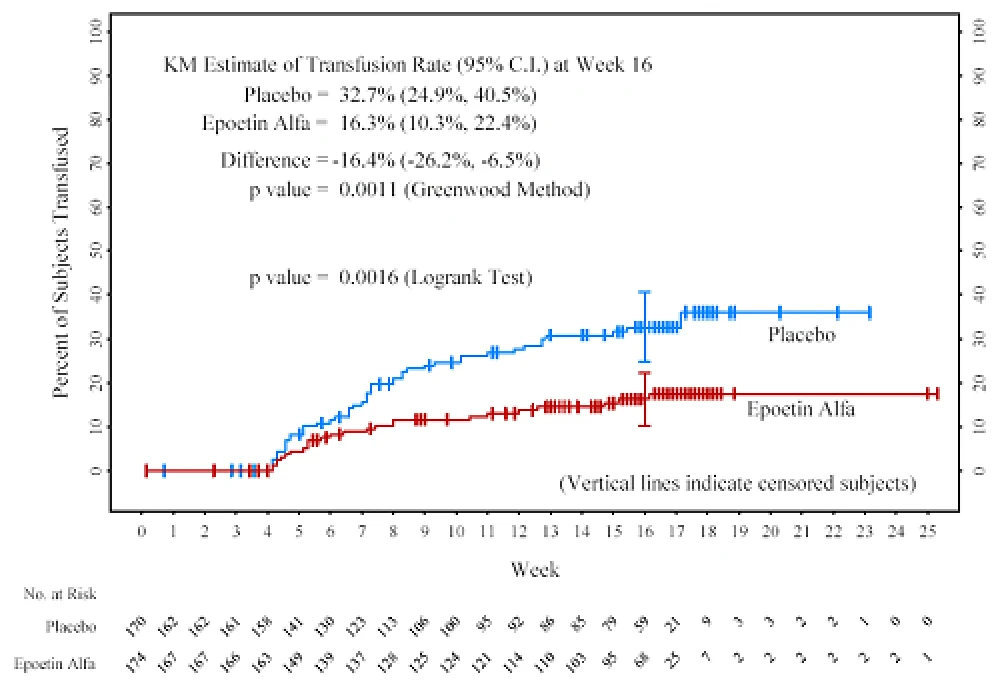
- a. Vertical marks represent subjects whose data was “censored” at that point, i.e., no longer available for analysis because the subjects were off study without transfusion. It should be noted that because this analysis starts after day 28; the horizontal lines are at 0 for the first 4 weeks of treatment. The vertical bars after Week 16 indicate the points at which subjects whose treatment extended beyond 16 weeks discontinued treatment.
Comparable intensity of chemotherapy for patients enrolled in the two study arms was suggested by similarities in mean dose and frequency of administration for the 10 most commonly administered chemotherapy agents, and similarity in the incidence of changes in chemotherapy during the trial in the two arms.
Tumour Progression, Increased Mortality and Thromboembolic Events
Study N93-004: A randomized, placebo-controlled trial was conducted in 224 chemotherapy-naïve, non-anemic patients with small cell lung cancer receiving cisplatin-based combination chemotherapy, to investigate whether the concurrent use of Eprex stimulated tumour growth as assessed by impact on overall response rate. Patients were randomized to receive Eprex 150 units/kg or placebo subcutaneously TIW during chemotherapy. The overall response rates, after 3 cycles of treatment, were 72% and 67%, in the Eprex and placebo arms, respectively. Complete response rates (17% vs. 14%) and median overall survival (10.5 mos vs. 10.4 mos) were similar in the Eprex and placebo arms.
A systematic review of 57 randomized controlled trials (including the BEST and ENHANCE studies) evaluating 9353 patients with cancer compared ESAs plus transfusion with transfusion alone for prophylaxis or treatment of anaemia in cancer patients with or without concurrent antineoplastic therapy. An increased relative risk of thromboembolic events (RR 1.67, 95% CI: 1.35, 2.06, 35 trials and 6769 patients) was observed in ESA-treated patients. An overall survival hazard ratio of 1.08 (95% CI: 0.99, 1.18; 42 trials and 8167 patients) was observed in ESA-treated patients. Use of ESAs for treatment of anaemia in cancer patients on chemotherapy was associated with an overall survival odds ratio of 0.99 (95% CI: 0.72, 1.36). Sub-group analysis of anaemic cancer patients receiving chemotherapy from this systematic review demonstrates an odds ratio of 0.92 (95% CI: 0.78, 1.09) for platinum based chemotherapy and 1.10 (95% CI: 0.96, 1.24) for chemotherapy without platinum.
Studies of ESAs in patients with cancer exploring the effect on survival and/or progression of administrations of exogenous erythropoietin with higher hemoglobin targets beyond the treatment of anemia, and in patients not receiving chemotherapy or radiation therapy, and showing safety signals are presented below.
Study EPO-INT-76 (BEST): A randomized controlled clinical study EPO-INT-76 (referred to as the ‘BEST’ study) evaluated 939 mainly non-anemic women with metastatic breast cancer receiving chemotherapy. Patients received either weekly Eprex or placebo for up to a year. This study was designed to show that survival was superior when Eprex was administered to prevent anemia (maintain hemoglobin levels between 120 and 140 g/L).
The study was terminated prematurely when interim results demonstrated that higher mortality at 4 months (8.7% Eprex vs 3.4% placebo) and a higher rate of fatal thrombotic events (1.1% Eprex vs 0.2% placebo) were observed among patients treated with Eprex. Based on Kaplan-Meier estimates, at the time of study termination, the 12-month survival was lower in the Eprex group than in the placebo group (70% vs 76%, HR 1.37, 95% CI: 1.07,1.75, p = 0.012).
Study EPO-ANE-3010: A randomized, non-inferiority, open-label, multicenter study evaluated the impact of epoetin alfa on progression free survival (PFS) when used to treat anemia in patients receiving first or second line of chemotherapy for metastatic breast cancer. The study was designed to rule out a 15% risk increase in tumor progression or death of epoetin alfa plus standard of care (SOC) as compared with SOC alone. Of the 2098 anemic women randomized into the study, 1048 received SOC that included packed RBC transfusions and 1050 received the SOC plus 40 000 IU epoetin alfa given subcutaneously. Randomization was stratified by line of chemotherapy (first-line or second-line) and HER-2/neu status. Demographic and baseline characteristics were generally well-balanced across the 2 treatment groups. The median age was 52 years, and most subjects were white (67.5%) or Asian (30.5%). Most subjects (56.1%) were postmenopausal at initial disease diagnosis. Overall, 31.1% of subjects were initially diagnosed with Stage IV disease. The extent and location of metastatic disease at baseline was similar across treatment groups. Most subjects (79.4%) were receiving first-line chemotherapy; 20.6% second-line chemotherapy. Baseline hormone receptor positive/HER-2/neu negative status was similar in both groups (epoetin alfa: 42.5%; SOC: 41.2%). Positive HER-2/neu status was reported for 38.8% of the overall population. At the clinical cutoff date, there were 841 (80%) subjects with a PFS event in the epoetin alfa treatment arm compared to 818 (78%) subjects in the SOC arm as per investigator assessment. The median PFS was 7.4 months in each arm (HR 1.09, 95% CI: 0.99, 1.20). The study did not achieve the non-inferiority objective of ruling out a 15% increased risk in PD/death. At clinical cutoff, 1337 deaths were reported. Median overall survival in the epoetin alfa group was 17.2 months compared with 17.4 months in the SOC group (HR 1.06, 95% CI: 0.95, 1.18). At the final analysis, 1653 deaths were reported. Median overall survival in the epoetin alfa plus SOC group was 17.8 months compared with 18.0 months in the SOC alone group (HR 1.07, 95% CI: 0.97, 1.18). The median time to progression (TTP) based on investigator-determined progressive disease (PD) was 7.5 months in the epoetin alfa plus SOC group and 7.5 months in the SOC group (HR 1.099, 95% CI: 0.998, 1.210). The median TTP based on IRC-determined PD was 8.0 months in the epoetin alfa plus SOC group and 8.3 months in the SOC group (HR 1.033, 95% CI: 0.924, 1.156). The proportion of subjects with RBC transfusions was 5.8% (61/1050) for subjects in the epoetin alfa group compared 11.4% (119/1048) for subjects in the SOC group. Thrombotic vascular events occurred in 2.8% (29/1050) of subjects in epoetin alfa versus 1.4% (15/1048) of subjects in the SOC. The higher overall incidence of TVEs in the epoetin alfa group was especially evident for TVEs with notable clinical relevance, including ischemic stroke, pulmonary embolism and acute coronary syndrome.
ENHANCE Study: In another placebo-controlled study using epoetin beta in 351 patients with head and neck cancer (referred to as the ENHANCE study), study drug was administered to maintain the hemoglobin levels of 140 g/L in women and 150 g/L in men. Locoregional progression-free survival was significantly shorter in patients receiving epoetin beta.
DAHANCA 10 Study: In a clinical study (DAHANCA 10) evaluating 522 patients with primary squamous cell carcinoma of the head and neck receiving radiation therapy, patients were randomized to darbepoetin alfa or placebo. A preliminary report demonstrated a 10% increase in locoregional failure rate among darbepoetin alfa-treated patients (p=0.01) in an interim analysis in 484 patients. At the time of study termination, there was a trend toward worse survival in the darbepoetin group (p = 0.08).
Study EPO-CAN-20: In a multicentre, randomized, double-blind placebo-controlled trial (EPO-CAN-20), patients with advanced non-small-cell lung cancer unsuitable for curative therapy were treated with Eprex targeting hemoglobin levels between 120 and 140 g/L or placebo.).
Following an interim analysis of 70 of 300 patients planned, a significant difference in median survival in favour of patients in the placebo group was observed (63 vs 129 days, HR 1.84, p = 0.04).
Study 20010103: A phase III double-blind, randomized, placebo-controlled trial evaluating 989 cancer patients with active malignant disease but not being treated with either chemotherapy or radiation therapy showed no statistically significant reduction in the proportion of patients receiving red blood cell transfusions, and more deaths in the darbepoetin alfa group than in the placebo group (26% vs 20%) at 16 weeks (completion of treatment phase). With a median survival follow-up of 4.3 months, the absolute number of deaths at the end of the study was also higher in the darbepoetin alfa group (49% vs 46%, HR 1.29, 95% CI: 1.08, 1.55).
Randomized, controlled trials with decreased survival and/or decreased locoregional control are summarized in Table 18.
Table 18: Randomized, Controlled Trials with Decreased Survival and/or Decreased Locoregional Control
| Study / Tumor / (n) | Hemoglobi n Target | Achieved Hemoglobin (Median Q1,Q3) | Primary Endpoint | Adverse Outcome for ESA-containing Arm | |||||||
|---|---|---|---|---|---|---|---|---|---|---|---|
| Chemotherapy | |||||||||||
BEST Metastatic breast cancer (n=939) | 120-140 g/L | 129 g/L 122, 133 g/L | 12-month overall survival | Decreased 12-month survival | |||||||
20000161 Lymphoid malignancy (n=344) | 130-150 g/L (M) 130-140 g/L (F) | 110 g/L 98, 121 g/L | Proportion of patients achieving a hemoglobin response | Decreased overall survival | |||||||
PREPARE Early breast cancer (n=733) | 125-130 g/L | 131 g/L 125, 137 g/L | Relapse-free and overall survival | Decreased 3 yr. relapse-free and overall survival | |||||||
GOG 191 Cervical Cancer (n=114) | 120-140 g/L | 127 g/L 121, 133 g/L | Progression-free and overall survival and locoregional control | Decreased 3 yr. progression-free and overall survival and locoregional control | |||||||
| Radiotherapy Alone | |||||||||||
ENHANCE Head and neck cancer (n=351) | ≥150 g/L (M) ≥140 g/L (F) | Not available | Locoregional progression-free survival | Decreased 5-year locoregional progression-free survival Decreased overall survival | |||||||
DAHANCA 10 Head and neck cancer (n=522) | 140-155 g/L | Not available | Locoregional disease control | Decreased locoregional disease control | |||||||
| No Chemotherapy or Radiotherapy | |||||||||||
EPO-CAN-20 Non-small cell lung cancer (n=70) | 120-140 g/L | Not available | Quality of life | Decreased overall survival | |||||||
20010103 Non-myeloid malignancy (n=989) | 120-130 g/L | 106 g/L 94, 118 g/L | RBC transfusions | Decreased overall survival | |||||||
Surgery
Use of Eprex to Reduce Allogeneic Blood Exposure
Study M92-011
Eprex has been studied in a placebo-controlled, double-blind trial enrolling 316 patients scheduled for major elective orthopedic hip or knee surgery who were expected to require ≥ 2 units of blood. Patients were stratified into one of three groups based on their pretreatment hemoglobin [≤ 100 (n=2), >100 to ≤ 130 (n=96), and >130 to ≤ 150 g/L (n=218)] and then randomly assigned to receive Eprex doses of 300 IU/kg, 100 IU/kg or placebo by subcutaneous injection for 10 days before surgery, on the day of surgery, and for four days after surgery.
Treatment with Eprex 300 IU/kg significantly (p=0.024) reduced the risk of allogeneic transfusion in patients with a pretreatment hemoglobin of >100 to ≤ 130 g/L; 16% of Eprex 300 IU/kg, 23% of Eprex 100 IU/kg and 45% of placebo-treated patients were transfused. There was no significant difference in number of patients transfused between Eprex (9% 300 IU/kg, 6% 100 IU/kg) and placebo (13%) in the > 130 to ≤ 150 g/L hemoglobin stratum. In the >100 to ≤ 130 g/L pretreatment stratum, the mean number of units transfused per patient treated with Eprex (0.45 units 300 IU/kg, 0.42 units 100 IU/kg) was less than the mean transfused per placebo-treated patient (1.14 units) (overall p=0.028).
During the pretreatment to presurgery period, for both the > 100 to ≤ 130 g/L and > 130 to ≤ 150 g/L strata, mean increases in hemoglobin (among-group difference, p=0.0001) and hematocrit (among-group difference, p=0.0001) were observed in both groups treated with Eprex, while no changes were observed in the placebo-treated group. In addition, greater mean increases in reticulocyte counts were observed in the groups treated with Eprex compared to the placebo-treated groups (p=0.0001). These increases were maintained postoperatively.
Studies EP89-009 and J89-001
Eprex has also been studied in two additional placebo-controlled trials enrolling patients scheduled to undergo major elective orthopedic surgery. In one study (n=208), patients received either Eprex 300 IU/kg or placebo for 9 or 14 days. In the second study (n=200) patients received either Eprex 300 IU/kg, 100 IU/kg, or placebo for 15 days. Results of analyses comparing the risk of transfusion according to baseline hemoglobin for intent-to-treat patients are as follows:
Table 19: Percent of Patients Who Required Transfusions, Stratified by Baseline Hemoglobin
Baseline Hemoglobin | 300 IU/kg 14/15 Days | 300 IU/kg 9 Days | 100 IU/kg 15 Days | Placebo 14/15 Days |
| Eprex 300 IU/kg or placebo for 9 or 14 days | ||||
| >100 to 130 g/L | (N=25) 32% | (N=18) 61% | - | (N=23) 74% |
| >130 g/L | (N=52) 19% | (N=35) 14% | - | (N=55) 31% |
| Eprex 300 IU/kg, 100 IU/kg or placebo for 15 days | ||||
| >100 to 130 g/L | (N=22) 14% | - | (N=25) 44% | (N=27) 78% |
| >130 g/L | (N=29) 14% | - | (N=37) 11% | (N=39) 36% |
Results from both orthopedic surgery studies indicate that in patients with a baseline hemoglobin level of > 100 to ≤ 130 g/L, the risk that placebo-treated patients will require an allogeneic blood transfusion is two- to three-fold greater than that of patients treated with Eprex.
Study N93-057
Eprex was also studied in an open-label, parallel-group trial enrolling 145 subjects with a pretreatment hemoglobin level of ≥ 100 to ≤ 130 g/L who were scheduled for major orthopedic hip or knee surgery. Subjects were randomly assigned to receive one of two dosing regimens of Eprex (600 IU/kg once weekly for three weeks prior to surgery and on the day of surgery or 300 IU/kg once daily for 10 days prior to surgery, on the day of surgery and for four days after surgery), administered subcutaneously. All subjects received oral iron and appropriate pharmacologic anticoagulation therapy.
From pretreatment to presurgery, the mean increase in hemoglobin in the 600 IU/kg weekly group (14.4 g/L) was greater than observed in the 300 IU/kg daily group (7.3 g/L). The mean increase in absolute reticulocyte count was smaller in the weekly group (0.11 x 10⁶/mm3) compared to the daily group (0.17 x 10⁶/mm3). Mean hemoglobin levels were similar for the two treatment groups throughout the postsurgical period.
The erythropoietic response observed in both treatment groups resulted in similar transfusion rates (16% in the 600 IU/kg weekly group and 20% in the 300 IU/kg daily group). The mean number of units transfused per Eprex -treated subject was approximately 0.3 units in both treatment groups. The transfusion rates were substantially lower than that for placebo-treated patients (45%), and similar to the transfusion rate for the Eprex 300 IU/kg-treated patients (16%) whose baseline hemoglobin was ≥ 100 to ≤ 130 g/L in the first study referenced in this section.
PR97-19-002 (SPINE)
A randomized controlled study (SPINE) in which 681 adult patients not receiving prophylactic anticoagulation and undergoing spinal surgery received either 4 doses of 600 U/kg Eprex (7, 14 and 21 days before surgery and on the date of surgery) and standard of care treatment, or standard of care treatment alone.
Preliminary analysis showed a higher incidence of deep vein thrombosis, determined by either Colour Flow Duplex Imaging or by clinical symptoms in the Eprex group [16 patients (4.7%)] compared to the standard of care group [7 patients (2.1%)]. In addition, 12 patients in the epoetin group and 7 patients in the standard of care group had other thrombotic vascular events.
Combined Use of Eprex and ABD
A double-blind study was conducted in 204 patients scheduled to undergo elective orthopedic surgery with hematocrits ≤ 39% and no underlying anemia due to iron deficiency. On average, patients treated with Eprex 600 IU/kg were able to predeposit significantly more units of blood (4.5 units) than placebo-treated patients (3.0 units) (p<0.001). Also, significantly more patients treated with Eprex (p≤ 0.05) were able to predeposit between 3 to 6 units, inclusively, of autologous blood than the corresponding placebo-treated patients. Virtually all (98%) of the patients treated with Eprex predeposited 3 or more units compared with 69% of placebo-treated patients. While 37% of the placebo patients were able to predeposit 4 or 5 units, 81% of the Eprex patients predeposited 4 or more units. Among the evaluable patients, fewer patients who received Eprex required allogeneic transfusions (19.8%) than patients who received placebo (31.0%).
16 NON-CLINICAL TOXICOLOGY
General Toxicology:
Epoetin alfa has a very low potential for acute toxicity when administered intravenously to rats, mice and dogs, and orally or intramuscularly to rats and mice. There was no mortality or other signs of toxicity when administered at single doses up to 20 000 IU/kg.
Table 20: Acute Toxicity Studies
Strain Species | # Animal Group | Route | Vehicle | Dose Level IU/KG | Lethality | Summary Toxic Signs |
|---|---|---|---|---|---|---|
| Mice | 8/sex | i.v. p.o. i.m. | 0.25%/HSA 0.25%/HSA 0.25%/HSA | 0 (vehicle) 20 000 20 000 20 000 | 0/16 0/16 0/16 0/16 | None None None None |
| Rats | 8/sex | i.v. p.o. i.m. | 0.25%/HSA 0.25%/HSA 0.25%/HSA | 0 (vehicle) 20 000 20 000 20 000 | 0/16 0/16 0/16 0/16 | None None None None |
| Rats | 10/sex | i.v. | 0.25%/HSA | 0 (vehicle) 80 240 800 2400 8000 | 0/20 0/20 0/20 0/20 0/20 0/20 | None None None None None None |
| Dogs | 2 males | i.v. | 0.25%/HSA | 0 (vehicle) 10 000 20 000 | 0/20 0/20 0/20 | None None None |
Most of the changes associated with intravenous (IV) and subcutaneous (SC) multidose studies represent the expected pharmacologic actions of epoetin alfa, as shown in Table 21.
Table 21: Multidose Studies Results
| Key to Abbreviations | |||
|---|---|---|---|
RBC Hct Hgb MCH MCV MCHC APTT | Red blood cells Hematocrit Hemoglobin Mean corpuscular hemoglobin Mean corpuscular volume Mean corpuscular hemoglobin concentration Activated partial thromboplastin time | SGOT LDH CPK A/G Ratio M:E Ratio TL TCHO PL PT | Serum glutamic-oxaloacetic transaminase Lactic acid dehydrogenase Creatinine phosphokinase Albumin/Globulin Ratio Myeloid:Erythrocytes Ratio Total lipids Total cholesterol Phospholipid Prothrombin time |
| Study | Lethality | Toxic Signs | Clinical Path | Gross/Micro |
|---|---|---|---|---|
Rats IV 4 weeks/ 4 week recovery | No drug-related deaths | Reddening of pinnae, and extremities in females at 400 and in both sexes at 2000 IU/kg. Reduced body weight gains and food consumption in males at 2000 IU/kg | Increased RBC, Hct, Hgb, reticulocytes, SGOT, LDH, bilirubin. MCH and MCV at 16, 80 IU/kg in females and 80 IU/kg in males. Decreased MCV, MCHC and MCH at higher doses except MCHC in females in all treated groups. Platelets in most treated groups, glucose, cholesterol and prolongation of APTT and PT. Urine spec. grav. in males at 400, 2000 IU/kg. All changes were partially reversible. | Enlarged spleens. Increased erythropoiesis of bone marrow. Extra-medullary erythropoiesis in spleen and liver. |
Rats IV 13 weeks/ 5 week recovery | 2 rats at 500 IU/kg on Days 85 and 87 | Decreased body weight gains at 500 IU/kg. Dilation of vessels of eyes, reddening of retinas at 100, 500 IU/kg. | Increased RBC, Hct, Hgb, reticulocytes, MCV, MCH, SGOT, CPK, LDH, bilirubin, potassium and phosphorus. Urine occult blood and RBCs in females at 500 IU/kg. Prolongation of APTT. Decreased urine spec. grav. MCHC, platelets, glucose, albumin, total protein, cholesterol and calcium. Everything reversible. | Enlarged spleens, heart, kidneys, adrenals. Erosion of glandular stomach. Increased erythropoiesis in bone marrow. Extra-medullary hematopoiesis. Reversible. |
| Study | Lethality | Toxic Signs | Clinical Path | Gross/Micro |
|---|---|---|---|---|
Rats SC 2 weeks | None | None | Increased RBC, Hct, Hgb, reticulocytes, WBC, MCV, nucleated RBC, bilirubin, total protein, calcium, chloride, sodium, albumin and globulin. Decreased MCH, MCHC, BUN, glucose and cholesterol. Low titer antibodies on day 15 in 4 rats at 200 and 1 rat at 2000 IU/kg. | Enlarged spleens. Erythroid hyperplasia of bone marrow. Extra-medullary hematopoiesis. |
Dogs IV 4 weeks | None | Conjunctival injection and reddening of oral mucosa at 200, 2000 IU/kg. | Increased RBC, Hct, Hgb, reticulocytes, LDH, total protein, triglycerides, potassium, bilirubin and giant platelets. Decreased MCH, MCHC, MCV, glucose at 200, 2000 IU/kg. | Enlarged spleens. Myelofibrosis at 2000 IU/kg. Extramedullary erythropoiesis and megakaryopoiesis. Prostates smaller at 2000 IU/kg. |
| Study | Lethality | Toxic Signs | Clinical Path | Gross/Micro |
|---|---|---|---|---|
Dogs IV 4 weeks | None | Conjunctival injection at 2000 IU/kg. Decreased weight gain, food consumption at 2000 IU/kg. Anaphylactic response on Day 14. | Increased RBC, Hct, Hgb, reticulocytes, LDH, total protein, triglycerides, bilirubin, potassium, cholesterol, CPK, alpha-2 globulin and beta globulin. Prolongation of APTT at 200 IU/kg in males. Decreased MCH in males at 200, 2000 IU/kg, MCHC at 2000 IU/kg in females and males. Glucose and A/G ratios at 200 or 2000 IU/kg. | Enlarged spleens. Extra-medullary erythropoiesis. Decreased lymphocytes in cortex of thymus, partial atrophy of seminiferous tubules at 2000 IU/kg. |
Dogs IV 3x/week/3 weeks 3 week Recovery | None | Red, swollen lips hypoactivity, pale mucous membranes and labored respiration in females at 2800 IU/kg from Day 11 to 17 then decreased. | Increased RBC, Hgb, PCV, MCHC, reticulocytes, total protein, cholesterol, potassium and globulin. Decreased Glucose, A/G ratio, BUN, MCV and M:E ratios. | Enlarged spleens. Extra-medullary hematopoiesis. |
Dogs IV 13 weeks/5 week recovery | None | Emesis, mucous stool. Decreased spontaneous activity. Prostration and tachypnea. Conjunctival injection. Redness of oral mucosa and auricle. Circumoral and circumpalebral swelling. Reversible. | Increased Urine volume, RBC, Hct, Hgb, reticulocytes, LDH, potassium, total protein and urinary occult blood. Prolongation of APTT and prothrombin. Decreased MCV, MCHC, MCH, glucose, albumin, A/G ratio, urine spec. Grav. And erythrocyte sedimentation rates. Reversible except MCV and MCH. | Enlarged spleens, kidneys, myelofibrosis, extramedullary erythropoietin. Reversible except fibrosis. |
| Study | Lethality | Toxic Signs | Clinical Path | Gross/Micro |
|---|---|---|---|---|
Dogs IV 52 weeks | 5 at 100 IU/kg 6 at 5000 IU/kg | Collapse, laboured respiration, salivation, tremors in dogs prior to death. Conjectival hyperemia. Increased water consumption and decreased body weight gain in 500 IU/kg males. | Increased RBC, Hgb, Hct platelet, reticulocyte, urine volume, urine occult blood, SGOT, LDH, BUN, TL, TCHO, PL, CPK at 100, 500 IU/kg. Decreased Glucose | Enlarged spleens, kidneys swollen and increased weight at 100, 500 IU/kg. Extramedullary hematopoiesis and megakaryopoiesis in spleen. Moderate to marked congestion of kidneys associated with glomerular dilation and slight to moderate round-cell infiltration. Dilation and thickening of Bowman's capsule with or without fibrosis. Slight to marked fibrosis of the femoral and sternal marrow cavities at 100, 500 IU/kg. |
Dogs (Neonates) IV 4 weeks/ 4 week recovery | No dose-related deaths. | None | Increased Hct in females. Slight RBC through Day 28. During withdrawal phase, RBC decreased at 500 IU/kg but by Day 55 comparable to controls. | Enlarged spleens. Extra-medullary hematopoiesis. Erythroid hyperplasia of bone marrow. |
| Cynomolgus monkeys IV and SC (at 1000 IU/kg only) 13 week/10 week recovery | 1 at 0 IU/kg 1 at 500 IU/kg 1 at 1000 IU/kg | Reddening of facial skin in females at 100, 500, 1000 IU/kg. Minimal reduction in body weight and food consumption in females at 1000 IU/kg (IV). Dilation of eye vessels at 500, 1000 IU/kg (IV and SC). | Increased RBC, Hgb, PV and reticulocytes. | Necropsy report not included in interim report. |
| Study | Lethality | Toxic Signs | Clinical Path | Gross/Micro |
|---|---|---|---|---|
| Rhesus Monkeys (Adults Neonates) IV 6 week/10 week recovery | None | None | Increased RBC - adults only. Reversible. | Necropsy not performed. |
Carcinogenicity:
The carcinogenic potential of epoetin alfa has not been evaluated.
Reproductive and Developmental Toxicology: There was no indication of teratogenicity in rats or rabbits and no toxicity in F1 and F2 generations at doses up to 500 IU/kg/day administered intravenously for 11 days in rats and 13 days in rabbits. In male and female rats treated intravenously with epoetin alfa, there was a trend for slightly increased fetal wastage at doses of 100 and 500 IU/kg/day. Fertility, teratology and reproductive performance studies are summarized in Table 22 and Table 23.
Table 22: Fertility and Reproductive Performance and Teratology Studies Protocol Summary/Results
| Study | Toxicity | Embryo/Fetal Toxicity | Teratogenicity |
|---|---|---|---|
Segment I Intravenous Fertility and Reproductive Performance in Sprague-Dawley Rats 0 (vehicle), 20, 100, 500 IU/kg/day. Treated animals mated to treated animals | Yes - Lethality in 1 male at 100 IU/kg and 8 males at 500 IU/kg. Mild redness of pinna and limbs, reduced food consumption and body weight gain, gastric erosion at 100, 500 IU/kg Increased weight of heart, lungs, kidneys, spleen and adrenals due to pharmacologic effect of epoetin alfa at 100 and 500 IU/kg. Decrease in thymus weights in males at 500 IU/kg. | Reduced body weights and delays in fetal ossification at 20, 100, 500 IU/kg were associated with reductions in maternal weight gain. Increase in resorptions at 500 IU/kg and placental remnants at 100, 500 IU/kg and dead implantations at 500 IU/kg. | No - No external, visceral or skeletal abnormalities. |
Segment II Intravenous Teratogenicity in Sprague-Dawley rats, 0 (vehicle), 20, 100, 500 IU/kg | No - Increased spleen, liver, left adrenal weights, at 500 IU/kg due to pharmacologic effect epoetin alfa. | Yes - Fetal body weights and delayed ossification at 500 IU/kg. | No - No increase in anomalies. |
| Intravenous Teratogenicity in NZW rabbits, 0 (vehicle), 20, 100, 500 IU/kg | Yes - Slight decrease in body weight and food consumption at 500 IU/kg. | No | No - No increase in anomalies. |
Table 23: Perinatal and Postnatal Studies Protocol Summary/Results
| Study | Maternal/Toxicity | Embryo/Fetal Toxicity | Parturition/Neon atal Growth and Survival |
|---|---|---|---|
Segment III Intravenous Peri- and Postnatal in Slc:SD rats. 0 (Vehicle), 20, 100, 500 IU/kg | Yes Redness of limbs and pinnae. Slight increase in body weight at 100 and 500 IU/kg during lactation. Decrease in food consumption at 500 IU/kg. Increased spleen and lung weights at 100 and 500 IU/kg and dark red spots in stomach and increased heart weight at 500 IU/kg. | Yes Reduced body weights and delayed ossification, appearance of abdominal hair, eyelid opening and decrease in the number of caudal vertebrae (day 22 postpartum) at 500 IU/kg. | All F1, F2 generation normal. |
Genotoxicity:
In a series of mutagenicity studies, epoetin alfa failed to induce bacterial gene mutations (Ames Test), chromosomal aberrations in mammalian cells, gene mutation at the HGPRT locus or micronuclei in mice (see Table 24).
Table 24
| Test Type | Study | Dose Levels | Response |
|---|---|---|---|
| Ames | Escherichia coli (WP2, Hcr-) Salmonella typhimurium (TA1535, TA100, TA1537, TA98) | 312.5, 625, 1250, 5000 IU/plate in presence and absence of S-9 mix. | Negative |
| Chromosomal Aberration | Chinese Hamster Lung Cells | 1136, 2273, 4545 IU/mL in the absence of, and 947, 1894, 3788 IU/mL in the presence of S-9 mix. | Negative |
| in vivo Micro-nucleus | Slc:ddY male Mice | 1.25 x 10⁵, 2.5 x 10⁵, 5 x 10⁵ IU/kg | |
| Gene Mutation at the HGPRT locus | Chinese Hamster Ovary Cells | 625, 1250, 2500, 5000 IU/mL with and without S-9 mix. | Negative |
Special Toxicology:
Results of antigenicity studies indicated weak to strong evidence of antibody formation in rabbits and guinea pigs, but not in mice. The reason for this difference in the mouse is not clear, but anaphylaxis is not anticipated when administered to humans since the test material is of human origin. Seizure threshold potential in mice, water content of brain tissue and electrolyte distribution in rats were unaffected by intraperitoneal doses of epoetin alfa. The results of these and other special studies are summarized in
Table 25.
Table 25: Special Studies
| Key to Abbreviations | |||
|---|---|---|---|
RBC Hct Hgb MCH MCV MCHC APTT | Red blood cells Hematocrit Hemoglobin Mean corpuscular hemoglobin Mean corpuscular volume Mean corpuscular hemoglobin concentration Activated partial thromboplastin time | SGOT LDH CPK A/G Ratio M:E Ratio TL TCHO PL PT | Serum glutamic-oxaloacetic transaminase Lactic acid dehydrogenase Creatinine phosphokinase Albumin/Globulin Ratio Myeloid:Erythrocytes Ratio Total lipids Total cholesterol Phospholipid Prothrombin time |
| Test Type | Study | Dose Levels | Average Response |
|---|---|---|---|
| Seizure Threshold | CF1 mice 20/group ip 3x/week for 3 weeks. Once a week after the third dose, IV infusion with 0.5% metrazole. | 0 (saline), 0 (vehicle + saline), 450 or 1500 IU/kg | No changes in seizure threshold. |
| Electrolyte and Brain Water Distribution | Sprague Dawley Male Rats 15/group i.p. 3x/week for 3 weeks 5/group sacrificed after 3, 6, and 9 doses. | 0 (saline), 0 (vehicle + saline), 450 or 1500 IU/kg. | No effect in electrolyte or water content of brain tissue, plasma or spinal fluid. Increased spleen and liver weight and Hct at 1500 IU/kg. Increased Hct at 450 IU/kg. |
Antigenicity 72-Hr Passive Cutaneous Anaphylaxis (PCA) Test | C3H/He and BALB/C mice 10/group i.p. 1x/week for 2 weeks | 100, 1000 IU/kg animals + 2 mg alum/animal | Only one mouse (C3H/He) in 1000 IU/animal gave positive response. |
| 4-Hr Passive Cutaneous Anaphylaxis (PCA) Test | Hartley Guinea Pigs 5/group, IV 2x/week for 2 weeks 5/group SC 2x/week for 4 weeks. | 100, 1000 IU/kg 14000 IU/kg + Freund's Complete Adjuvant (FCA) | Negative PCA test for 100 and 1000 IU/kg but 50 positive for 14000 IU/kg + FCA. |
| Active Systemic Anaphylaxis test | Hartley Guinea Pigs 5/group IV 2x/week for 2 weeks SC 2x/week for 4 weeks then challenged 27 (100, 1000 IU/kg groups) or 20 (14000 IU/kg + Freund's Complete Adjuvant [FCA] group) later with 50 000 IU/animal. | 100, 1000 IU/kg 14000 IU/kg + FCA | Remarkable anaphylactic reaction at 1000 IU/kg and 14000 IU/kg. |
| Cutaneous Reaction | Hartley Guinea Pigs from PCA test were challenged 19 (100, 1000 IU/kg groups) or 26 (14000 IU/kg + FCA group) days later with intradermal doses of 1000 or 10 000 IU/animal. | 100, 1000 IU/kg 14000 IU/kg + FCA | Positive reaction at 1000 IU/kg and 14000 IU/kg + FCA |
| Antigenicity study Passive Hemagglutination (PHA) + 4-Hr Passive Cutaneous Anaphylaxis (PCA) tests | New Zealand White Female Rabbits; 4/group i.m. and SC 2x/week for 4 weeks i.m. and SC 1x week for 4 weeks | 100, 1000 IU/kg 2000 IU/kg + FCA | Hemagglutinating antibodies were detected in sera of 2000 IU/kg + FCA. Antibodies detected 4-Hr PCA in sera of almost all epoetin alfa-treated rabbits. |
| Test Type | Study | Dose Levels | Average Response |
|---|---|---|---|
| Pyrogenicity Study | New Zealand White Rabbits IV 3/group single dose Pyrogenicity measured by temperature and limulus amoebocyte lysate test. | 0 (saline), 0 (vehicle), 200, 2000, or 20 000 IU/kg Positive control E. coli, LPS. | Negative for both temperature and endotoxin. |
| Primary Eye Irritation | New Zealand White Rabbits 3/group single ocular dose followed by irrigation 6/group single ocular dose no irrigation. | 12,100 U/animal | Classified as non- irritating. |
| Hematologic | Dogs Beagle 3/sex/group, IV administration for 4 weeks then 15 week recovery. | 0 (vehicle), 28, 2800 IU/kg 3x week/4 weeks Group 4 pretreated with 40 mg/kg iron dextran for 2 weeks prior to first dose of epoetin alfa at 2800 IU/kg | No drug-related deaths. Increased RBC, PCV, Hgb, reticulocytes, and platelets. Decreased MCV/MCHC/ MCH, serum glucose and BUN at 2800 IU/kg with and without iron supplement. Low dose only slight increase RBC, PCV, and Hgb. No other dose- related effects. |
Treatment with 1000 IU/kg/day epoetin alfa for 90 days did not cause myelofibrosis in Cynomolgus monkeys. Gastric erosion of the glandular stomach has been observed in the rat and in one high-dose (1000 IU/kg/day) monkey. Kidney changes involving the Bowman's capsule were also observed in dogs after daily injection for a year. Anaphylaxis noted in dogs, rabbits and guinea pigs is thought to be due to a natural reaction to any foreign protein in these animals. Epoetin alfa was not pyrogenic when tested in rabbits.