


Product Monograph - Erelzi
RECENT MAJOR LABEL CHANGES
| None at the time of the most recent authorization. |
|---|
TABLE OF CONTENTS
Sections or subsections that are not applicable at the time of authorization are not listed.
RECENT MAJOR LABEL CHANGES ............................................................................................ 2
TABLE OF CONTENTS .............................................................................................................. 2
PART I: HEALTH PROFESSIONAL INFORMATION ...................................................................... 4
1 INDICATIONS ............................................................................................................... 4
1.1 Pediatrics ................................................................................................................ 4
1.2 Geriatrics ................................................................................................................ 5
2 CONTRAINDICATIONS ................................................................................................. 5
3 SERIOUS WARNINGS AND PRECAUTIONS BOX ............................................................ 5
4 DOSAGE AND ADMINISTRATION ................................................................................. 6
4.1 Dosing Considerations ............................................................................................ 6
4.2 Recommended Dose and Dosage Adjustment ....................................................... 6
4.4 Administration ........................................................................................................ 7
4.5 Missed Dose ........................................................................................................... 7
5 OVERDOSAGE .............................................................................................................. 7
6 DOSAGE FORMS, STRENGTHS, COMPOSITION AND PACKAGING ................................. 7
7 WARNINGS AND PRECAUTIONS .................................................................................. 9
7.1 Special Populations............................................................................................... 15
7.1.1 Pregnant Women ........................................................................................... 15
7.1.2 Breast-feeding ................................................................................................ 16
7.1.3 Pediatrics ........................................................................................................ 16
7.1.4 Geriatrics ........................................................................................................ 16
8 ADVERSE REACTIONS ................................................................................................ 17
8.1 Adverse Reaction Overview .................................................................................. 17
8.2 Clinical Trial Adverse Reactions ............................................................................ 18
8.2.1 Clinical Trial Adverse Reactions – Pediatrics ................................................... 25
8.3 Less Common Clinical Trial Adverse Reactions ..................................................... 26
8.5 Post-Market Adverse Reactions ........................................................................... 27
9 DRUG INTERACTIONS ................................................................................................ 28
9.2 Drug Interactions Overview .................................................................................. 28
9.4 Drug-Drug Interactions ......................................................................................... 28
10 CLINICAL PHARMACOLOGY ....................................................................................... 29
10.1 Mechanism of Action ...................................................................................... 29
10.2 Pharmacodynamics ........................................................................................ 29
10.3 Pharmacokinetics ........................................................................................... 29
11 STORAGE, STABILITY AND DISPOSAL ......................................................................... 30
12 SPECIAL HANDLING INSTRUCTIONS ........................................................................... 31
PART II: SCIENTIFIC INFORMATION ....................................................................................... 32
13 PHARMACEUTICAL INFORMATION ............................................................................ 32
14 COMPARATIVE CLINICAL TRIALS ................................................................................ 32
14.5 Clinical Trials - Reference Biologic Drug .......................................................... 32
15 MICROBIOLOGY ........................................................................................................ 55
16 NON-CLINICAL TOXICOLOGY ..................................................................................... 55
17 SUPPORTING PRODUCT MONOGRAPHS .................................................................... 58
PATIENT MEDICATION INFORMATION - Prefilled Syringe ..................................................... 59
PATIENT MEDICATION INFORMATION - Prefilled SensoReady® Pen ..................................... 69
Erelzi® (etanercept) is a biosimilar to Enbrel® (etanercept). A biosimilar is a biologic drug that was granted authorization based on a demonstration of similarity to a version previously authorized in Canada, known as the reference biologic drug.
PART I: HEALTH PROFESSIONAL INFORMATION
1 INDICATIONS
Erelzi (etanercept) is indicated for:
- Treatment of moderately to severely active rheumatoid arthritis (RA) in adults. Treatment is effective in reducing the signs and symptoms of RA, inducing major clinical response, inhibiting the progression of structural damage, and improving physical function. Erelzi can be initiated in combination with methotrexate (MTX) in adult patients or used alone.
- Reducing signs and symptoms of moderately to severely active polyarticular juvenile idiopathic arthritis (JIA) in patients aged 4 to 17 years who have had an inadequate response to one or more disease-modifying antirheumatic drugs (DMARDs). Efficacy and safety have not been established in children less than 4 years of age.
- Reducing signs and symptoms, inhibiting the progression of structural damage of active arthritis, and improving physical function in adult patients with psoriatic arthritis (PsA). Erelzi can be used in combination with methotrexate in adult patients who do not respond adequately to methotrexate alone.
- Reducing signs and symptoms of active ankylosing spondylitis (AS).
- Treatment of adult patients with chronic moderate to severe plaque psoriasis (PsO) who are candidates for systemic therapy or phototherapy.
- Treatment of pediatric patients ages 4 to 17 years with chronic severe PsO who are candidates for systemic therapy or phototherapy. Data on safety and efficacy are limited in the age group 4 to 6 years.
Improvement may be seen as early as 1 week after initial administration of etanercept in adults, and within 2 weeks in children with JIA and 4 weeks in PsO. Attainment of full effect was usually seen by 3 months in both populations and remained durable thereafter with continued treatment with etanercept. Some patients see continuing improvement after 3 months of treatment with etanercept.
After discontinuation of etanercept, symptoms of arthritis generally returned within a month. Reintroduction of treatment with etanercept in adults after discontinuation of up to 18 months resulted in the same magnitudes of response as patients who received etanercept without interruption of therapy based on results of open-label studies. Reintroduction of etanercept to children with JIA after discontinuation up to 4 months also resulted in a subsequent response to therapy.
Indications have been granted on the basis of similarity between Erelzi and the reference biologic drug, ENBREL®.
1.1 Pediatrics
Efficacy and safety have not been established in children less than 4 years of age.
Erelzi is indicated for treatment of polyarticular juvenile idiopathic arthritis in patients ages 4 to 17 who have had an inadequate response to one or more DMARDs, and in patients ages 4 to 17 with chronic PsO who are candidates for systemic therapy or phototherapy. Data on safety and efficacy in PsO patients are limited in the age group 4 to 6 years (see 7 WARNINGS AND PRECAUTIONS, 7.1 Special Populations, 7.1.3 Pediatrics).
Only pediatric patients weighing 63 kg (138 pounds) or more, who do not require weight-based dosing, can be treated with the Erelzi 50 mg prefilled syringe or the Erelzi 50 mg SensoReady® Pen. Patients weighing less than 63 kg should be accurately dosed on a mg/kg basis with other etanercept products. (See 4 DOSAGE AND ADMINISTRATION).
1.2 Geriatrics
Four hundred and eighty RA patients in clinical studies were age 65 or older. No overall differences in safety or effectiveness were observed between these patients and younger patients.
One hundred thirty-eight patients with PsO in clinical studies were age 65 or older. No overall differences in effectiveness were observed between younger and older patients with psoriasis. Because there is greater sensitivity and predisposition of older individuals to infection, caution should be used in treating the elderly (see 7 WARNINGS AND PRECAUTIONS, 7.1 Special Populations, 7.1.4 Geriatrics).
2 CONTRAINDICATIONS
Erelzi is contraindicated in:
- Patients who are hypersensitive to this drug or to any ingredient in the formulation, including any non-medicinal ingredient, or component of the container. For a complete listing, see 6 DOSAGE FORMS, STRENGTHS, COMPOSITION AND PACKAGING.
- Patients with, or at risk of, sepsis syndrome, such as immunocompromised and HIV+ patients.
3 SERIOUS WARNINGS AND PRECAUTIONS BOX
Serious Warnings and Precautions
Infections
|
|---|
Malignancies
|
|---|
4 DOSAGE AND ADMINISTRATION
4.1 Dosing Considerations
Erelzi (etanercept) is intended for use under the guidance and supervision of a physician who has sufficient knowledge of RA, JIA, PsA, AS, or PsO and who has fully familiarized themselves with the efficacy/safety profile of Erelzi. Patients may self-inject only if their physician determines that it is appropriate and with medical follow-up, as necessary, after proper training in measurement of the correct dose and injection technique.
4.2 Recommended Dose and Dosage Adjustment
General
A 50 mg dose should be given as one subcutaneous (SC) injection. A 50 mg dose can also be given as two 25 mg SC injections.
When administering Erelzi as two 25 mg injections in adults or children, the injections should be given either on the same day once weekly or 3 or 4 days apart.
Adult RA, Psoriatic Arthritis, and Ankylosing Spondylitis Patients
The recommended dose of Erelzi for adult patients with rheumatoid arthritis, psoriatic arthritis, or ankylosing spondylitis is 50 mg per week. Methotrexate, glucocorticoids, salicylates, non-steroidal anti-inflammatory drugs (NSAIDs), or analgesics may be continued during treatment with Erelzi. Based on a study of 50 mg etanercept twice weekly in patients with RA that suggested higher incidence of adverse reactions but similar American College of Rheumatology (ACR) response rates, doses higher than 50 mg per week are not recommended.
Adult Plaque Psoriasis Patients
The recommended starting dose of Erelzi for adult patients is a 50 mg dose given twice weekly (administered 3 or 4 days apart) for 3 months followed by a reduction to a maintenance dose of 50 mg per week. A maintenance dose of 50 mg given twice weekly has also been shown to be efficacious.
Pediatric Patients (Juvenile Idiopathic Arthritis or Plaque Psoriasis)
Erelzi should be administered by, or under the supervision of, a responsible adult.
The recommended dose of Erelzi for pediatric patients ages 4 to 17 years with active polyarticular JIA or PsO is 0.8 mg/kg per week (up to a maximum of 50 mg per week). Only pediatric patients weighing 63 kg (138 pounds) or more, who do not require weight-based dosing, can be treated with the Erelzi 50 mg prefilled syringe or the Erelzi 50 mg SensoReady® Pen. Patients weighing less than 63 kg should be accurately dosed on a mg/kg basis with other etanercept products.
In Juvenile Idiopathic Arthritis, glucocorticoids, nonsteroidal anti-inflammatory drugs (NSAIDs), or analgesics may be continued during treatment with Erelzi.
Concurrent use with methotrexate and higher doses of Erelzi have not been studied in pediatric patients.
4.4 Administration
Preparation of Erelzi Using the Single-use Prefilled Syringe or Single-use Prefilled SensoReady® Pen:
Before injection, allow Erelzi to reach room temperature (approximately 15 to 30 minutes). DO NOT remove the needle cap while allowing the prefilled syringe or SensoReady® Pen to reach room temperature.
Prior to administration, visually inspect the solution for particulate matter and discoloration. The liquid should be clear and colorless to slightly yellowish. You may see visible little particles, which is normal. DO NOT USE if the liquid is cloudy, discolored, or has large lumps, flakes, or colored particles.
Sites for injection include the front of thighs, lower abdomen, but not the area 2 inches around the navel; outer upper arm if caregiver/hcp is giving the injection. Injection sites should be rotated. New injections should be given at least one inch from an old site and never into areas where the skin is tender, bruised, red, or hard.
4.5 Missed Dose
Patients who miss a dose of Erelzi should be advised to inject their dose as soon as they remember, then take the next dose at the regular(ly) scheduled time.
5 OVERDOSAGE
The maximum tolerated dose of etanercept has not been established in humans. Toxicology studies have been performed in monkeys at doses up to 30 times the human dose with no evidence of dose-limiting toxicities. No dose-limiting toxicities have been observed during clinical trials of etanercept. Single IV doses up to 60 mg/m2 have been administered to 32 healthy volunteers (25 males, 7 females) in an endotoxemia study without evidence of dose-limiting toxicities. The highest dose level evaluated in RA patients has been a single IV loading dose of 32 mg/m2 followed by SC doses of 16 mg/m2 (~ 25 mg) administered twice weekly. In one RA trial, one patient mistakenly self-administered 62 mg etanercept SC twice weekly for 3 weeks without experiencing adverse effects.
| For management of a suspected drug overdose, contact your regional poison control centre. |
|---|
6 DOSAGE FORMS, STRENGTHS, COMPOSITION AND PACKAGING
To help ensure the traceability of biologic products, including biosimilars, health professionals should recognise the importance of recording both the brand name and the non-proprietary (active ingredient) name as well as other product-specific identifiers such as the Drug Identification Number (DIN) and the batch/lot number of the product supplied.
Table – Dosage Forms, Strengths, Composition and Packaging
| Route of Administration | Dosage Form / Strength/ Composition | Non-medicinal Ingredients |
| Subcutaneous injection (SC) | Sterile solution for injection/ 50 mg/mL prefilled syringe (25 mg/0.5 mL and 50 mg/1.0 mL) and 50 mg/1.0 mL prefilled autoinjector (all dosage forms have one strength: 50 mg/mL) | Citric acid, L-lysine hydrochloride, sodium chloride, sodium citrate and sucrose. |
Erelzi single-use prefilled syringes with Needle Guard with finger flange are available in 25 mg (0.5 mL of a 50 mg/mL solution of etanercept) and 50 mg (1.0 mL of a 50 mg/mL solution of etanercept) dosage strength.
The Erelzi prefilled syringe/SensoReady® pen has a removable rubber needle cap.
Erelzi Single-use Prefilled SensoReady® Pen is available in 50 mg (1.0 mL of a 50 mg/mL solution of etanercept) dosage strength.
Prefilled syringes and SensoReady® Pens are intended for subcutaneous injection.
The solution of Erelzi is clear and colorless to slightly yellowish, sterile, preservative free, and is formulated at pH 6.3 ± 0.2. There may be small white particles of protein in the solution.
Composition:
| Presentation | Active Ingredient Content | Inactive Ingredients Content |
|---|---|---|
| Etanercept 50 mg prefilled syringe with Needle Guard with finger flange or SensoReady® Pen | 1.0 mL of a 50 mg/mL solution of etanercept | 0.786 mg citric acid 13.52 mg sodium citrate 1.50 mg sodium chloride 10 mg sucrose 4.6 mg lysine |
| Etanercept 25 mg prefilled syringe with Needle Guard with finger flange | 0.5 mL of a 50 mg/mL solution of etanercept | 0.393 mg citric acid 6.76 mg sodium citrate 0.75 mg sodium chloride 5 mg sucrose 2.3 mg lysine |
Erelzi 25 mg and 50 mg single-use prefilled syringes and Erelzi 50 mg single-use prefilled SensoReady® Pen are supplied in cartons containing one, two, four or Multi-Packs of twelve syringes or prefilled pens with 29-gauge, ½ inch needles.
Administration of one 50 mg Erelzi prefilled syringe with Needle Guard or one Erelzi SensoReady® Pen provides a dose equivalent to two 25 mg Erelzi prefilled syringes with Needle Guard with finger flange.
Description
Erelzi (etanercept) is a dimeric fusion protein consisting of the extracellular ligand-binding portion of the human 75 kilodalton (p75) tumour necrosis factor receptor (TNFR) linked to the Fc portion of human immunoglobulin (IgG1). Etanercept is produced by recombinant DNA technology in a Chinese hamster ovary (CHO) mammalian cell expression system. It consists of 934 amino acids and has an apparent molecular weight of approximately 150 kilodaltons.
7 WARNINGS AND PRECAUTIONS
Please see 3 SERIOUS WARNINGS AND PRECAUTIONS BOX.
Serious and Opportunistic Infections
Serious and sometimes fatal infections due to bacterial, mycobacterial, invasive fungal, viral, parasitic (including protozoal), or other opportunistic pathogens have been reported in patients receiving TNF-blocking agents. Tuberculosis, histoplasmosis, aspergillosis, blastomycosis, candidiasis, coccidioidomycosis, legionellosis, listeriosis, and pneumocystosis have been reported (see 8 ADVERSE REACTIONS, 8.3 Less common Trial adverse reactions). Patients have frequently presented with disseminated rather than localized disease. Many of the serious infections have occurred in patients on concomitant immunosuppressive therapy that, in addition to their underlying disease, could predispose them to infections.
Treatment with Erelzi should not be initiated in patients with an active infection, including clinically important localized infections. The risks and benefits of treatment should be considered prior to initiating therapy in patients:
- With chronic or recurrent infection;
- Who have been exposed to tuberculosis;
- With a history of an opportunistic infection;
- Who have resided or traveled in areas of endemic tuberculosis or mycoses, such as histoplasmosis, coccidioidomycosis, or blastomycosis;
- With underlying conditions that may predispose them to infection such as advanced or poorly controlled diabetes.
Cases of reactivation of tuberculosis or new tuberculosis infections have been observed in patients receiving etanercept, including patients who have previously received treatment for latent or active tuberculosis. Patients should be evaluated according to the Canadian Tuberculosis Standards guidelines for tuberculosis risk factors and tested for latent infection prior to initiating Erelzi and during therapy as appropriate. Prescribers are reminded of the risk of false negative tuberculin skin test results, especially in patients who are severely ill or immuno-compromised.
If active tuberculosis is diagnosed, Erelzi therapy should not be initiated. If inactive (‘latent’) tuberculosis is diagnosed, treatment should be started with anti-tuberculosis therapy before the initiation of Erelzi. In this situation, the benefit/risk balance of Erelzi therapy should be very carefully considered. Anti-tuberculosis therapy should also be considered prior to initiation of Erelzi in patients with a past history of latent or active tuberculosis in whom an adequate course of treatment cannot be confirmed, and for patients with a negative test for latent tuberculosis but having risk factors for tuberculosis infection. Consultation with a physician with expertise in the treatment of tuberculosis is recommended to aid in the decision whether initiating anti-tuberculosis therapy is appropriate for an individual patient.
Patients should be monitored for the development of signs and symptoms of infection during and after treatment with Erelzi, including the possible development of tuberculosis in patients who tested negative for latent tuberculosis infection prior to initiating therapy. Tests for latent tuberculosis infection may be falsely negative while on therapy with Erelzi.
Tuberculosis should be strongly considered in patients who develop a new infection during Erelzi treatment, especially in patients who have previously or recently traveled to countries with a high prevalence of tuberculosis, or who have had close contact with a person with active tuberculosis.
Histoplasmosis and other invasive fungal infections are not consistently recognized in patients taking TNF-blockers, including etanercept. This has resulted in delays in appropriate treatment, sometimes resulting in death. For patients who reside or travel in regions where mycoses are endemic, invasive fungal infection should be suspected if they develop a serious systemic illness. Appropriate empiric antifungal therapy may be initiated while a diagnostic workup is being performed. Antigen and antibody testing for histoplasmosis may be negative in some patients with active infection. When feasible, the decision to administer empiric antifungal therapy in these patients should be made in consultation with a physician with expertise in the diagnosis and treatment of invasive fungal infections and taking into account both the risk for severe fungal infection and the risks of antifungal therapy.
Erelzi should be discontinued if a patient develops a serious infection or sepsis. A patient who develops a new infection during treatment with Erelzi should be closely monitored, undergo a prompt and complete diagnostic workup appropriate for an immunocompromised patient, and antimicrobial therapy should be initiated, as appropriate.
In post-marketing studies of patients with juvenile idiopathic arthritis, serious infections have been reported in approximately 3% of patients. Sepsis has also been reported in the post-market setting (0.8%).
General
Parenteral administration of any biologic product should be attended by appropriate precautions in case an allergic or untoward reaction occurs. Allergic reactions associated with administration of etanercept during clinical trials have been reported in < 2% of patients. If any serious allergic or anaphylactic reaction occurs, administration of Erelzi should be discontinued immediately and appropriate therapy initiated.
Concurrent etanercept and anakinra treatment
Serious infections and neutropenia were seen in clinical studies with concurrent use of anakinra and etanercept with no added clinical benefit compared to etanercept alone. Because of the nature of the adverse events seen with combination of etanercept and anakinra therapy, the combination of etanercept and anakinra is not recommended (see 9 DRUG INTERACTIONS).
Concurrent etanercept and abatacept treatment
In clinical studies, concurrent administration of abatacept and etanercept resulted in increased incidences of serious adverse events and did not demonstrate increased clinical benefit. Use of etanercept with abatacept is not recommended (see 9 DRUG INTERACTIONS).
Switching between Biological DMARDS
When switching from one biologic to another, patients should continue to be monitored for signs of infection.
Surgery
There is limited safety experience of surgical procedures in patients treated with etanercept. The half-life of etanercept should be taken into consideration if a surgical procedure is planned. A patient who requires surgery while on Erelzi should be closely monitored for infections, and appropriate actions should be taken.
Granulomatosis with Polyangiitis
In a randomized placebo controlled study of 180 patients with granulomatosis with polyangiitis, the addition of etanercept to standard treatment (including cyclophosphamide, methotrexate, and corticosteroids) was no more efficacious than standard therapy alone. Patients receiving etanercept experienced more non-cutaneous malignancies than patients receiving placebo. The role of etanercept in this finding is uncertain due to imbalances between the two arms of the study including age, disease duration, and use of cyclophosphamide. The use of etanercept in patients with granulomatosis with polyangiitis receiving immunosuppressive agents is not recommended. The use of etanercept in any patients receiving concurrent cyclophosphamide therapy is not recommended.
Carcinogenesis and Mutagenesis
Long-term animal studies have not been conducted to evaluate the carcinogenic potential of etanercept or its effect on fertility. Mutagenesis studies were conducted in vitro and in vivo, and no evidence of mutagenic activity was observed.
Cardiovascular
Two large clinical trials (2048 patients) evaluating the use of etanercept in the treatment of heart failure were terminated early due to lack of efficacy. There was a suggestion of worse heart failure outcomes in patients with moderate to severe congestive heart failure (CHF [NYHA Class III/IV]) receiving etanercept treatment compared to patients receiving placebo in one of the two trials.
There have been post-marketing reports of worsening of CHF, with and without identifiable precipitating factors, in patients taking etanercept. Physicians should exercise caution when using Erelzi in patients who also have CHF, particularly NYHA Class III/IV.
Endocrine and Metabolism
There have been reports of hypoglycemia following initiation of etanercept in patients receiving medication for diabetes, necessitating a reduction in anti-diabetic medication in some of these patients.
Gastrointestinal
There have been reports of Inflammatory Bowel Disease (IBD) in juvenile idiopathic arthritis (JIA) patients receiving etanercept, which is not effective for the treatment of IBD.
During the controlled portions of etanercept trials, across all indications in pediatric and adult patients, the estimated incidence proportion of IBD events in participants on etanercept was 0.37%, a 2-fold increase over the incidence proportion of 0.19% in the placebo or control group.
Hematologic
Rare cases (less than 1 case out of 1000 patients treated) of neutropenia, leukopenia, thrombocytopenia, anemia and pancytopenia (including aplastic anemia), some with fatal outcomes, have been reported in patients treated with etanercept. Cases of pancytopenia occurred as early as two weeks after initiating etanercept therapy. The causal relationship to etanercept therapy remains unclear. While the majority of patients who developed pancytopenia had recent or concurrent exposure to other anti-rheumatic medications known to be associated with myelosuppression (e.g., methotrexate, leflunomide, azathioprine, and cyclophosphamide), some patients had no recent or concurrent exposure to such therapies. Although no high risk group has been identified, caution should be exercised in patients being treated with Erelzi who have a previous history of significant hematologic abnormalities. All patients should be advised to seek immediate medical attention if they develop signs and symptoms suggestive of blood dyscrasias or infection (eg, persistent fever, bruising, bleeding, pallor) while on Erelzi. Discontinuation of Erelzi therapy should be considered in patients with confirmed significant hematologic abnormalities.
Patients treated with anakinra plus etanercept (3/139, 2%) developed neutropenia (ANC < 1 x 10⁹/L). While neutropenic, one of these patients developed cellulitis that resolved with antibiotic therapy.
Hepatic/Biliary/Pancreatic
Hepatitis B Reactivation
Reactivation of hepatitis B in patients who were previously infected with the hepatitis B virus (HBV) and had received concomitant TNF-blocking agents, including very rare cases with etanercept, has been reported. In the majority of cases, patients were also being treated with other immunosuppressive drugs, including methotrexate, azathioprine, and/or corticosteroids. Hepatitis B reactivation is not unique to TNF-blockers and has been reported with other immunosuppressive drugs. Therefore, a direct causal relationship to TNF-blockers has not been established. Patients should be evaluated for prior evidence of HBV infection before initiating TNF-blockers therapy. Those previously infected with HBV should be monitored for signs and symptoms of active HBV infection throughout the course of therapy and for several months following discontinuation of therapy.
Use in Patients with Moderate to Severe Alcoholic Hepatitis
Physicians should use caution when using Erelzi in patients with moderate to severe alcoholic hepatitis. In a study of 48 hospitalized patients treated with etanercept or placebo for moderate to severe alcoholic hepatitis, the mortality rate in patients treated with etanercept was similar to patients treated with placebo at one month but significantly higher after six months. Therefore, the use of Erelzi for the treatment of patients with alcoholic hepatitis is not recommended.
Immune
Immunosuppression and Immunocompetence
The possibility exists for TNF-blocking agents, including etanercept, to affect host defenses against infections and malignancies since TNF mediates inflammation and modulates cellular immune responses. In a study of 49 patients with RA treated with etanercept, there was no evidence of depression of delayed-type hypersensitivity, depression of immunoglobulin levels, or change in enumeration of effector cell populations. The role of etanercept in the development and course of malignancies as well as active and/or chronic infections is not fully understood. The safety and efficacy of etanercept in patients with immunosuppression or chronic infections have not been evaluated.
Immunizations
Live vaccines (including yellow fever, Bacille Calmette-Guerin [BCG], rubella, polio, cholera, typhoid and varicella) should not be given concurrently with etanercept. Patients receiving etanercept may receive concurrent vaccinations, except for live vaccines. No data are available on the secondary transmission of infection by live vaccines in patients receiving etanercept.
No data are available on the effects of vaccination in RA patients receiving etanercept. Most PsA patients receiving etanercept were able to mount effective B-cell immune response to pneumococcal polysaccharide vaccine, but titers in aggregate were moderately lower and fewer patients had two-fold rises in titers compared to patients not receiving etanercept. The clinical significance of this is unknown. In a study of 205 adult patients with PsA, antibody response to polysaccharide pneumococcal vaccine was similar in patients receiving placebo or etanercept for the following antigens: 9V, 14, 18C, 19F and 23F.
It is recommended that pediatric patients, if possible, be brought up to date with all immunizations in agreement with current immunization guidelines prior to initiating Erelzi therapy. Two JIA patients developed varicella infection and signs and symptoms of aseptic meningitis, which resolved without sequelae. Patients with a significant exposure to varicella virus should temporarily discontinue Erelzi therapy and be considered for prophylactic treatment with Varicella Zoster Immune Globulin.
Autoimmunity
Treatment with etanercept may result in the formation of autoantibodies and, rarely, can result in the development of lupus-like syndrome or autoimmune hepatitis, which may resolve following withdrawal of etanercept. If a patient develops symptoms and findings suggestive of a lupus-like syndrome or autoimmune hepatitis following treatment with Erelzi, treatment should be discontinued and the patient should be carefully evaluated.
Malignancies
Lymphomas
In the controlled portions of clinical trials of all the TNF-blocking agents, more cases of lymphoma have been observed among patients receiving the TNF-blocker compared to control patients. In the controlled and open-label portions of clinical trials of etanercept in RA, AS, and PsA patients, the observed rate of lymphoma was 0.10 cases per 100 patient-years. This is 3-fold higher than expected in the general population. Patients with RA or PsO, particularly those with highly active disease and/or chronic exposure to immunosuppressant therapies, may be at a higher risk (up to several fold) for the development of lymphoma.
Post-marketing cases of hepatosplenic T-cell lymphoma (HSTCL), a rare type of T-cell lymphoma that has a very aggressive disease course and is usually fatal, have been reported in patients treated with TNF-blockers. The majority of reported TNF-blocker cases occurred in adolescent and young adult males with Crohn's disease or ulcerative colitis. Almost all of these patients had received treatment with the immunosuppressants azathioprine and/or 6- mercaptopurine concomitantly with a TNF-blocker at or prior to diagnosis.
Leukemia
Cases of acute and chronic leukemia have been reported in association with post-marketing TNF-blocker use in rheumatoid arthritis and other indications. Even in the absence of TNF-blocker therapy, patients with rheumatoid arthritis may be at higher risk (approximately 2-fold) than the general population for the development of leukemia.
During the controlled portions of etanercept trials, 2 cases of leukemia were observed among 5445 (0.06 cases per 100 patient-years) etanercept-treated patients versus 0 among 2890 (0%) control patients (duration of controlled treatment ranged from 3 to 48 months).
Among 15,401 patients treated with etanercept in controlled and open portions of clinical trials representing approximately 23,325 patient-years of therapy, the observed rate of leukemia was 0.03 cases per 100 patient-years (see 8 ADVERSE REACTIONS, 8.2.1 Clinical Trial Adverse Reactions, Malignancies).
Other Malignancies
For malignancies other than lymphoma and non-melanoma skin cancer, there was no difference in exposure-adjusted rates between the etanercept and control arms in the controlled portions of clinical studies for all indications. Analysis of the malignancy rate in combined controlled and uncontrolled portions of studies has demonstrated that types and rates are similar to what is expected in the general population based on the Surveillance, Epidemiology and End Results (SEER) database and suggest no increase in rates over time.
Whether treatment with etanercept might influence the development and course of malignancies in adults is unknown (see 8 ADVERSE REACTIONS, 8.2.1 Clinical Trial Adverse Reactions, Malignancies).
Melanoma and Non-melanoma skin cancer (NMSC)
Melanoma and non-melanoma skin cancer (NMSC) have been reported in patients treated with TNF-blocking agents, including etanercept. In controlled and open portions of clinical trials among 15,401 patients treated with etanercept representing approximately 23,325 patient-years of therapy, the observed rate of melanoma was 0.043 cases per 100 patient-years. In controlled clinical trials of rheumatology (including RA, AS, and PsA) patients, the observed rate of NMSC was 0.41 cases per 100 patient-years in the etanercept-treated patients compared to 0.37 cases per 100 patient-years among control patients. In controlled clinical trials of adult PsO patients, the observed rate of NMSC was 3.54 cases per 100 patient-years in the etanercept-treated patients compared to 1.28 cases per 100 patient-years among control patients (see 8 ADVERSE REACTIONS, 8.2 Clinical Trial Adverse Reactions, Malignancies). Post-marketing cases of Merkel cell carcinoma have been reported very infrequently in patients treated with etanercept.
Risk factors for melanoma or NMSC include cumulative exposure to ultraviolet light, increasing age, male gender, fair complexion, history of acute sunburn or skin cancer, tobacco use, and immunosuppressive agents. Periodic skin examination should be considered for all patients at increased risk for skin cancers.
Pediatric Patients
Malignancies, some fatal, have been reported among children, adolescents and young adults (≤ 22 years of age) who initiated treatment with TNF-blocking agents (initiation of therapy at ≤ 18 years of age), including etanercept. These cases were reported post-marketing and are derived from a variety of sources including registries and spontaneous post-marketing reports. Approximately half the cases were lymphomas, including Hodgkin’s and non-Hodgkin’s lymphoma. Of these cases, hepatosplenic T-cell lymphoma was not reported in patients treated with etanercept. The other cases represented a variety of different malignancies and included rare malignancies usually associated with immunosuppression and malignancies that are not usually observed in children and adolescents. Approximately half of these malignancies occurred in patients being treated for inflammatory bowel disease; approximately one-third of the cases occurred in patients being treated for JIA. The malignancies occurred after a median of 30 months of therapy (range 1 to 84 months). Most of the patients were receiving concomitant immunosuppressants.
In clinical trials of 1154 patients treated with etanercept (representing 2039 patient-years of therapy) no malignancies, including lymphoma or NMSC, have been reported.
Neurologic
Treatment with TNF-blocking agents, including etanercept, has been associated with rare cases of new onset or exacerbation of central nervous system disorders, including demyelinating disorders, some presenting with mental status changes and some associated with permanent disability, and with peripheral nervous system demyelinating disorders. Rare cases of transverse myelitis, optic neuritis, and new onset or exacerbation of seizure disorders have been observed in association with etanercept therapy. Guillain-Barré like syndromes have been reported very rarely in post-marketing experience with etanercept therapy. While no clinical trials have been performed evaluating etanercept therapy in patients with multiple sclerosis, other TNF blocking agents administered to patients with multiple sclerosis have been associated with increases in disease activity. Prescribers should exercise caution in considering the use of Erelzi in patients with pre-existing or recent-onset central or peripheral nervous system demyelinating disorders. Development of new, confirmed central nervous system demyelination in patients on Erelzi warrants consideration of discontinuation of the medication.
7.1 Special Populations
7.1.1 Pregnant Women
Etanercept crosses the placenta and has been detected in the serum of infants born to women treated with etanercept during pregnancy. The clinical impact of this exposure is unknown; however, infants may be at increased risk of infection. Administration of live vaccines to infants for 16 weeks after the mother’s last dose of etanercept is generally not recommended.
Human Data
Available data from observational studies with use of etanercept during pregnancy do not reliably support an association between etanercept and major birth defects.
A prospective cohort pregnancy registry conducted by the Organization of Teratology Information Specialists (OTIS) in the United States (US) and Canada between 2000 and 2012 compared the risk of major birth defects in liveborn infants of women with rheumatic diseases or psoriasis exposed to etanercept in the first trimester. The proportion of major birth defects among liveborn infants in the etanercept-exposed (N=319) and diseased etanercept-unexposed cohorts (N=144) was 9.4% and 3.5%, respectively. No pattern of major or minor birth defects were seen.
A Scandinavian study compared the risk of major birth defects in liveborn infants of women with chronic inflammatory disease (CID) exposed to TNF-blockers during early pregnancy. Women were identified from the Danish (2004-2012) and Swedish (2006-2012) population-based health registers. The proportion of major birth defects among liveborn infants in the etanercept-exposed (N=344) and CID etanercept-unexposed cohorts (N=21,549) was 7.0% and 4.7%, respectively.
Overall, while both the OTIS Registry and Scandinavian study show a higher proportion of birth defects in etanercept-exposed patients compared to diseased etanercept-unexposed patients, these results should be interpreted with caution given the limitations with both studies and no pattern of birth defects were observed.
Animal Data
In embryofetal development studies with etanercept administered during the period of organogenesis to pregnant rats from gestation day (GD) 6 through 20 or pregnant rabbits from GD 6 through 18, there was no evidence of fetal malformations or embryotoxicity in rats or rabbits at respective doses that achieved systemic exposures 48 to 58 times the exposure in patients treated with 50 mg etanercept once weekly (on an AUC basis with maternal subcutaneous doses up to 30 mg/kg/day in rats and 40 mg/kg/day in rabbits). In a peri-and post-natal development study with pregnant rats that received etanercept during organogenesis and the later gestational period from GD 6 through 21, development of pups through postnatal day 4 was unaffected at doses that achieved exposures 48 times the exposure in patients treated with 50 mg etanercept once weekly (on an AUC basis with maternal subcutaneous doses up to 30 mg/kg/day).
7.1.2 Breast-feeding
Limited data from published literature show that etanercept is present in low levels in human milk and minimally absorbed by a breastfed infant. No data are available on the effects of etanercept on the breastfed child or the effects on milk production. The developmental and health benefits of breastfeeding should be considered along with the mother’s clinical need for etanercept and any potential adverse effects on the breastfed child from the drug or from the underlying maternal condition.
7.1.3 Pediatrics
Etanercept is indicated for treatment of polyarticular juvenile idiopathic arthritis in patients aged 4 to 17 who have had an inadequate response to one or more DMARDs, and for treatment of chronic severe PsO in patients ages 4 to 17 who are candidates for systemic therapy or phototherapy. Data on safety and efficacy in PsO patients are limited in the age group 4 to 6 years.
In post-marketing studies with juvenile idiopathic arthritis, serious infections have been reported in approximately 3% of patients. Sepsis has also been reported in the post-market setting (0.8%). The long-term effects of etanercept therapy on skeletal, behavioral, cognitive, sexual and immune maturation and development in children are unknown.
A higher rate of adverse events was noted when juvenile idiopathic arthritis patients in an observational registry received etanercept therapy in combination with methotrexate. As the juvenile idiopathic arthritis patients receiving combination therapy had more severe disease, since they had failed prior therapeutic trials with either etanercept or methotrexate alone, it remains unclear whether the higher event rate is related to therapy or underlying disease severity.
Etanercept has been studied in 69 children with moderately to severely active polyarticular JIA aged 2 to 17 years.
Etanercept has not been studied in children < 2 years of age.
Etanercept has been studied in 211 pediatric patients with moderate to severe PsO aged 4 to 17 in a 48-week placebo controlled study followed by an open-label extension study in 182 of these patients for up to 264 additional weeks. Data on safety and efficacy are limited in the age group 4 to 6 years. Only 12 patients in this age range have been studied.
7.1.4 Geriatrics
Four hundred and eighty clinical study patients in RA were age 65 or older. No overall differences in safety or effectiveness were observed between these patients and younger patients.
One hundred and thirty-eight PsO patients in clinical studies were age 65 or older. No overall differences in effectiveness were observed between younger and older psoriasis patients. In controlled trials of PsO, rates of serious adverse events were seen at a frequency of < 1.5% among etanercept- and placebo-treated patients in the first 3 months of treatment. However, in patients greater than 65 years of age treated with etanercept 50 mg twice weekly, serious adverse events occurred at a higher rate than in younger patients. In long-term open-label trials of PsO serious non-infectious adverse events were infrequent and exposure-adjusted event rates generally remained stable throughout etanercept treatment. Although data for patients aged 65 or greater in the long-term trials are limited, adverse events, including serious adverse events, occurred at a higher frequency for patients treated with 50 mg twice weekly (see 8 ADVERSE REACTIONS, 8.1 Adverse Reaction Overview).
Greater sensitivity of some older individuals cannot be ruled out. Predisposition of older individuals to infection justifies greater caution when treating the elderly.
8 ADVERSE REACTIONS
The adverse drug reaction profiles reported in clinical studies that compared Erelzi to the reference biologic drug were comparable. The description of adverse reactions in this section is based on clinical experience with the reference biologic drug.
8.1 Adverse Reaction Overview
Adverse Reactions in Adult Patients with RA, Psoriatic Arthritis or Ankylosing Spondylitis or Plaque Psoriasis
Etanercept has been studied in 1442 patients with RA who have been followed for over 6 years, including 225 patients who have been followed for more than 10 years. Etanercept has been studied in 169 adult patients with PsA for up to 24 months and in 222 patients with ankylosing spondylitis for up to 48 months and in 1864 adult patients with PsO for up to 36 months. Etanercept has over four million patient-years of post-market exposure.
Among patients with RA treated in placebo-controlled studies, serious adverse events occurred at a frequency of 4% in 349 patients treated with etanercept compared to 5% of 152 placebo-treated patients. In a subsequent study (Study III), serious adverse events occurred at a frequency of 6% in 415 patients treated with etanercept compared to 8% of 217 methotrexate-treated patients. In long-term open-label studies in adults with RA, there were no new or unexpected serious adverse events reported. Among adult patients with PsA, serious adverse events occurred at a frequency of 4% in 101 patients treated with etanercept compared to 4% of 104 placebo-treated patients.
In controlled trials of adult PsO, rates of serious adverse events were seen at a frequency of < 1.5% among etanercept and placebo-treated patients in the first 3 months of treatment. However, in patients greater than 65 years of age treated with etanercept 50 mg twice weekly, serious adverse events occurred at a higher rate than in younger patients.
In long-term open-label trials of adult PsO, serious non-infectious adverse events were infrequent and exposure-adjusted event rates generally remained stable throughout etanercept treatment. Although data for patients aged 65 or greater in the long-term trials are limited, adverse events, including serious adverse events, occurred at a higher frequency for patients treated with 50 mg twice weekly.
Among RA patients in placebo-controlled, active-controlled, and open-label trials of etanercept, infections and malignancies were the most common serious adverse events observed. Other infrequent serious adverse events observed in RA, PsA, AS or PsO clinical trials are listed below by body system:
Cardiovascular: cardiomyopathy, fainting, heart failure, hypertension, hypotension, myocardial infarction, myocardial ischemia, deep vein thrombosis, thrombophlebitis
Digestive: cholecystitis, diarrhea, esophageal ulcer, gastrointestinal hemorrhage, pancreatitis, appendicitis
General: impaired healing, asthenia
Hematologic/Lymphatic: lymphadenopathy, myelodysplastic syndrome, necrotizing granulomatous lymphadenitis
Hepatic: hepatic disorder, hepatic steatosis
Musculoskeletal: bursitis, fistula, fracture nonunion, polymyositis
Nervous: anxiety, cerebral ischemia, convulsion, depression, multiple sclerosis
Respiratory: asthma, dyspnea, pulmonary embolism, sarcoidosis
Skin: worsening psoriasis
Urogenital: membranous glomerulonephropathy, kidney calculus
In a randomized controlled trial in which 51 patients with RA received etanercept 50 mg twice weekly and 25 patients received etanercept 25 mg twice weekly, the following serious adverse events were observed in the 50 mg twice weekly arm: gastrointestinal bleeding, normal pressure hydrocephalus, seizure, and stroke. No serious adverse events were observed in the 25 mg arm.
In controlled trials, the proportion of patients who discontinued treatment due to adverse events was approximately 4% in both the etanercept and placebo treatment groups. The vast majority of these patients were treated with the recommended dose of 25 mg SC twice weekly. In adult PsO studies, etanercept doses studied were 25 mg SC once or twice a week and 50 mg SC once or twice a week. In three randomized, placebo-controlled studies of adult patients with PsO, the safety profile for patients receiving 50 mg twice a week was similar to those receiving 25 mg once or twice weekly, and all were similar to placebo. No cumulative toxicities were observed in long term studies in adult patients with PsO up to 144 weeks and AS up to 192 weeks.
Among patients with RA in placebo-controlled studies, deaths occurred in 10 of 2696 (0.37%) etanercept-treated patients compared to 3 of 1167 (0.26%) placebo-treated patients. In controlled and uncontrolled RA studies there were 58 deaths in 6973 patient treated with at least one dose of etanercept over an exposure period of 11,765 patient-years (exposure-adjusted rate of 0.49). In the long-term open-label RA studies, the rate of death did not increase over time with increasing exposure to etanercept. Among patients with PsO in placebo-controlled studies, deaths occurred in 1 of 1245 (0.08%) etanercept-treated patients compared to 0 of 720 placebo-treated patients. In controlled and uncontrolled PsO studies there were 10 deaths in 4361 patients treated with at least one dose of etanercept over an exposure period of 3966 patient-years (exposure-adjusted rate of 0.25). No deaths were reported in PsA, AS or JIA studies.
8.2 Clinical Trial Adverse Reactions
Clinical trials are conducted under very specific conditions. The adverse reaction rates observed in the clinical trials; therefore, may not reflect the rates observed in practice and should not be compared to the rates in the clinical trials of another drug. Adverse reaction information from clinical trials may be useful in identifying and approximating rates of adverse drug reactions in real-world use.
Adverse reactions reported in at least 1% of all patients who received etanercept in placebo-controlled RA trials (including the combination methotrexate trial) are outlined in Table 1 below. Adverse reactions reported in JIA, adult PsA, AS, and adult PsO trials were similar to those reported in RA clinical trials.
Table 1 Percent of Rheumatoid Arthritis Patients Reporting Adverse Reactions ≥ 1% by Body System and Preferred Term in Controlled Clinical Trialsa
| Placebo-Controlled | Active-Controlled | ||||||||||||||
|---|---|---|---|---|---|---|---|---|---|---|---|---|---|---|---|
| Percent of patients | Percent of patients | ||||||||||||||
BODY SYSTEM Preferred Term | Placebo (N = 152) | Etanercept (N = 349) | Methotrexate (N = 217) | Etanercept (N = 415) | |||||||||||
| Injection Site Reaction | 10 | 37 | 7 | 33 | |||||||||||
| Infectionb | 32 | 35 | 72 | 64 | |||||||||||
| Non-upper respiratory infection c | 31 | 39 | 60 | 51 | |||||||||||
| Upper respiratory infectionc | 16 | 29 | 39 | 31 | |||||||||||
| Other Adverse Events | |||||||||||||||
| Body as a whole | |||||||||||||||
| Headache | 3 | 3 | 13 | 12 | |||||||||||
| Asthenia | 0 | 1 | 7 | 5 | |||||||||||
| Abdominal pain | 1 | 1 | 5 | 4 | |||||||||||
| Injection site hemorrhage | 0 | 0 | 2 | 4 | |||||||||||
| Pain | 1 | 0 | 1 | 1 | |||||||||||
| Mucous membrane disorder | 0 | 1 | 2 | 0 | |||||||||||
| Chills | 0 | 0 | 2 | 0 | |||||||||||
| Face edema | 0 | 0 | 1 | 0 | |||||||||||
| Fever | 0 | 0 | 1 | 0 | |||||||||||
| Cardiovascular System | |||||||||||||||
| Vasodilation | 1 | 1 | 1 | 1 | |||||||||||
| Hypertension | 0 | 0 | 0 | 1 | |||||||||||
| Digestive System | |||||||||||||||
| Nausea | 3 | 2 | 18 | 9 | |||||||||||
| Diarrhea | 1 | 1 | 5 | 7 | |||||||||||
| Dyspepsia | 0 | 0 | 3 | 6 | |||||||||||
| Mouth ulcer | 0 | 1 | 11 | 4 | |||||||||||
| Constipation | 1 | 0 | 3 | 2 | |||||||||||
| Vomiting | 0 | 0 | 4 | 1 | |||||||||||
| Anorexia | 0 | 0 | 2 | 1 | |||||||||||
| Flatulence | 0 | 0 | 2 | 1 | |||||||||||
| Stomatitis aphthous | 0 | 0 | 2 | 1 | |||||||||||
| Dry mouth | 0 | 1 | 0 | 1 | |||||||||||
| Stomatitis | 0 | 0 | 3 | 0 | |||||||||||
| Hemic & Lymphatic System | |||||||||||||||
| Ecchymosis | 1 | 0 | 2 | 2 | |||||||||||
| Metabolic & Nutritional Disorder | |||||||||||||||
| Peripheral edema | 0 | 0 | 1 | 2 | |||||||||||
| Weight increased | 0 | 0 | 1 | 1 | |||||||||||
| Abnormal healing | 0 | 0 | 1 | 0 | |||||||||||
| Musculoskeletal System | |||||||||||||||
| Leg cramps | 0 | 1 | 1 | 0 | |||||||||||
| Placebo-Controlled | Active-Controlled | |||||||||||
|---|---|---|---|---|---|---|---|---|---|---|---|---|
| Percent of patients | Percent of patients | |||||||||||
BODY SYSTEM Preferred Term | Placebo (N = 152) | Etanercept (N = 349) | Methotrexate (N = 217) | Etanercept (N = 415) | ||||||||
| Nervous System | ||||||||||||
| Dizziness | 1 | 3 | 5 | 5 | ||||||||
| Vertigo | 0 | 0 | 0 | 1 | ||||||||
| Respiratory System | ||||||||||||
| Rhinitis | 2 | 2 | 5 | 4 | ||||||||
| Dyspnea | 0 | 0 | 1 | 3 | ||||||||
| Pharyngitis | 0 | 1 | 2 | 2 | ||||||||
| Cough increased | 1 | 1 | 2 | 1 | ||||||||
| Epistaxis | 0 | 0 | 3 | 0 | ||||||||
| Voice alteration | 0 | 0 | 1 | 0 | ||||||||
| Skin & Appendages | ||||||||||||
| Rash | 2 | 3 | 10 | 6 | ||||||||
| Alopecia | 0 | 1 | 11 | 5 | ||||||||
| Pruritus | 1 | 2 | 1 | 2 | ||||||||
| Urticaria | 1 | 0 | 2 | 1 | ||||||||
| Sweat | 0 | 0 | 1 | 1 | ||||||||
| Nail disorder | 0 | 0 | 2 | 0 | ||||||||
| Special Senses | ||||||||||||
| Dry eye | 0 | 0 | 0 | 1 | ||||||||
| Tinnitus | 0 | 0 | 0 | 1 | ||||||||
| Amblyopia | 0 | 0 | 1 | 0 | ||||||||
| a | Includes data from the double-blinded studies in which patients received concurrent MTX therapy. | |||||||||||
| b | Infection (total) includes data from all three placebo-controlled trials. Body system and relationship to study drug was not collected for infections. | |||||||||||
| c | Non-URI and URI include data only from two placebo-controlled trials where infections were collected separately from adverse events (placebo N = 110, Etanercept N = 213). | |||||||||||
| N = Number of patients having received at least 1 dose of study drug | ||||||||||||
| % = n/N*100 | ||||||||||||
Injection Site Reactions
In controlled trials in rheumatologic indications, approximately 37% of patients treated with etanercept developed injection site reactions. In controlled trials in adult patients with PsO, approximately 14% of patients treated with etanercept developed injection site reactions during the first 3 months of treatment. In a long-term PsO study the exposure-adjusted rate of injections site reactions was 12.2 per 100 patient-years for patients treated with etanercept 50 mg twice weekly over 96 weeks compared to 6.1 per 100-patient-years for placebo-treated patients (treated for 12 weeks). All injection site reactions were described as mild to moderate (erythema and/or itching, pain, or swelling). Injection site reactions generally occurred in the first month, if they occurred at all, did not necessitate study drug discontinuation, and subsequently decreased in frequency after the first month. The mean duration was 3 to 5 days. No treatment was given for approximately 90% of injection site reactions, and most of the patients who were given treatment received topical preparations, such as corticosteroids, or oral antihistamines. There have been common occurrences (7%) of redness at a previous injection site when subsequent injections were given; however, no intervention was necessary. In post-marketing experience, there have been reported cases (1.8% of all patients treated) of injection site bleeding and bruising observed in conjunction with etanercept therapy.
Infections
The percent of adult patients reporting infections in controlled studies of etanercept in PsO, RA, PsA and AS is provided in Table 2. The most common type of infection was upper respiratory infection.
Table 2. Percent of Patients Reporting Infections Across Controlled Studies in Psoriasis, Rheumatoid Arthritis, Psoriatic Arthritis and Ankylosing Spondylitis
| Event | ||||
|---|---|---|---|---|
| Total Infections | Non-URI | URI | ||
| Psoriasis | ||||
| Placebo (N=721) | 26% | 17% | 9% | |
| Etanercept (N=1244) | 30% | 21% | 10% | |
| Rheumatoid Arthritis (Placebo-controlled) | ||||
| Placebo (N=152) | 32% | 31% | 16% | |
| Etanercept (N=349) | 35% | 39% | 29%* | |
| Rheumatoid Arthritis (Active-controlled) | ||||
| MTX (N=217) | 72% | 60% | 39% | |
| Etanercept (N=415) | 64% | 51% | 31% | |
| Psoriatic Arthritis | ||||
| Placebo (N=104) | 43% | 20% | 23% | |
| Etanercept (N=101) | 40% | 19% | 21% | |
| Ankylosing Spondylitis | ||||
| Placebo (N=139) | 30% | 20% | 12% | |
| Etanercept (N=138) | 41% | 24% | 20%* | |
URI = Upper Respiratory Infection *Fisher’s exact p-value < 0.05 For dose and regimen of Etanercept in each indication, please refer to Part II Clinical Trials section. | ||||
In placebo-controlled trials in RA, PsA, AS, and PsO no increase in the incidence of serious infections was observed (approximately 1% in both placebo- and Etanercept-treated groups). In all clinical trials in RA, serious infections experienced by patients have included pyelonephritis, bronchitis, septic arthritis, abdominal abscess, cellulitis, osteomyelitis, wound infection, pneumonia, foot abscess, leg ulcer, diarrhea, sinusitis and sepsis. The rate of serious infections has not increased in open-label extension trials and is similar to that observed in controlled trials (Table 3). Serious infections, including sepsis and death, have also been reported during post-marketing use of etanercept. Some have occurred within a few weeks after initiating treatment with etanercept. Many of the patients had underlying conditions (e.g., diabetes, congestive heart failure, history of active or chronic infections) in addition to their RA. Data from a sepsis clinical trial not specifically in patients with RA suggest that etanercept treatment may increase mortality in patients with established sepsis.
Table 3. Serious Infections Over Time
| All Etanercept* (N = 1341) | |||
|---|---|---|---|
| Year | Number of patients | Number of patients with events | Incidence rate |
| 1 | 1341 | 35 | 0.026 |
| 2 | 1113 | 26 | 0.023 |
| 3 | 1006 | 26 | 0.026 |
| 4 | 915 | 25 | 0.027 |
| 5 | 849 | 27 | 0.032 |
6 7 8 9 10 | 769 696 647 608 529 | 22 21 24 16 15 | 0.029 0.030 0.037 0.026 0.028 |
| *Controlled trials and open-label extension studies in RA. | |||
In controlled trials in adult patients with PsA, there were no differences in rates of infection among patients treated for up to 1 year with etanercept and those treated with placebo, and no serious infections occurred in patients treated with etanercept.
In a controlled trial in patients with ankylosing spondylitis, rates of infection were also similar to those observed in the controlled studies of patients with RA or PsA. No increase in the incidence of serious infections was observed in patients treated with etanercept.
In clinical trials in PsO, serious infections experienced by etanercept-treated adult patients have included cellulitis, gastroenteritis, pneumonia, abscess, osteomyelitis, viral meningitis, myositis, fascial infection and septic shock.
In 2 studies in which patients were receiving both etanercept and anakinra for up to 24 weeks, the incidence of serious infections was 7%. The most common infections consisted of bacterial pneumonia (4 cases) and cellulitis (4 cases). One patient with pulmonary fibrosis and pneumonia died due to respiratory failure.
In global etanercept clinical studies of 20,070 patients (28,308 patient-years of therapy), tuberculosis was observed in approximately 0.01% of patients. In 15,438 patients (23,524 patient-years of therapy) from clinical studies in the US and Canada, tuberculosis was observed in approximately 0.007% of patients. These studies include reports of pulmonary and extra-pulmonary tuberculosis (see 7 WARNINGS AND PRECAUTIONS, Serious and Opportunistic Infections).
In 38 etanercept clinical trials and 4 cohort studies in all approved indications representing 27,169 patient-years of exposure (17,696 patients) from the United States and Canada, no histoplasmosis infections were reported among patients treated with etanercept. Data from clinical studies and post-marketing reports suggest that differences may exist in the risk of invasive histoplasmosis infection among TNF-blockers. Nonetheless, post-marketing cases of serious and sometimes fatal fungal infections, including histoplasmosis, have been reported with TNF-blockers, including etanercept (see 7 WARNINGS and PRECAUTIONS, Serious and Opportunistic Infections).
In post-marketing experience infections have been observed with various pathogens including viral, bacterial, mycobacterial, invasive fungal, and parasitic (including protozoal) organisms. Infections, including opportunistic infections (including atypical mycobacterial infection, herpes zoster, aspergillosis, Pneumocystis jiroveci pneumonia, histoplasmosis, candidiasis, coccidioidomycosis, listeriosis and legionellosis), have been reported in patients receiving etanercept alone or in combination with immunosuppressive agents.
Malignancies
Information is available from 10,953 adult patients with 17,123 patient-years and 1154 pediatric patients with 2039 patient-years of experience across 45 etanercept clinical studies.
In an open-label extension study that followed 581 DMARD-refractory RA patients for more than 10 years, the standardized incidence ratio (SIR) for all malignancies with respect to corresponding SEER rate was 1.30 with the 95% confidence interval (CI) of 0.97 to 1.71. In an open-label extension study that followed 468 early active RA patients for up to 9.6 years, the SIR for all malignancies with respect to corresponding SEER rate was 1.39 with the 95% CI of 0.98 to 1.93.
Lymphomas
An increased rate of lymphoma up to several-fold has been reported in the RA patient population, and may be further increased in patients with more severe disease activity.
In the controlled portions of clinical trials of TNF-blocking agents, more cases of lymphoma have been observed among patients receiving a TNF-blocker compared to control patients. During the controlled portions of etanercept trials in adult patients including those with RA, AS and PsA, 2 lymphomas were observed among 3306 etanercept-treated patients versus 0 among 1521 control patients (duration of controlled treatment ranged from 3 to 36 months).
Among 6543 adult rheumatology (RA, PsA and AS) patients treated with etanercept in controlled and uncontrolled portions of clinical trials, representing approximately 12,845 patient-years of therapy, the observed rate of lymphoma was 0.10 cases per 100 patient-years. This was 3-fold higher than the rate of lymphoma expected in the general population based on the SEER database.
In an open-label extension study that followed 581 DMARD-refractory RA patients for more than 10 years, the SIR for lymphomas with respect to corresponding SEER rate was 4.49 with a 95% CI of 1.81 to 9.26. In an open-label extension study that followed 468 early active RA patients for up to 9.6 years, the SIR for lymphomas with respect to corresponding SEER rate was 7.76 with a 95% CI of 3.35 to 15.30.
Among 4410 adult PsO patients treated with etanercept in clinical trials up to 36 months, representing approximately 4278 patient-years of therapy, the observed rate of lymphoma was 0.05 cases per 100 patient-years, which is comparable to the rate in the general population. No cases were observed in etanercept or placebo-treated patients during the controlled portions of these trials.
Leukemia
Cases of acute and chronic leukemia have been reported in association with post-marketing TNF-blocker use in rheumatoid arthritis and other indications. Even in the absence of TNF-blocker therapy, patients with rheumatoid arthritis may be at higher risk (approximately 2-fold) than the general population for the development of leukemia.
During the controlled portions of etanercept trials, 2 cases of leukemia were observed among 5445 (0.06 cases per 100 patient-years) etanercept-treated patients versus 0 among 2890 (0%) control patients (duration of controlled treatment ranged from 3 to 48 months).
Among 15,401 patients treated with etanercept in controlled and open portions of clinical trials representing approximately 23,325 patient-years of therapy, the observed rate of leukemia was 0.03 cases per 100 patient-years.
Other Malignancies
For malignancies other than lymphoma and non-melanoma skin cancer, there was no difference in exposure-adjusted rates between the etanercept and control arms in the controlled portions of clinical studies for all indications. Analysis of the malignancy rate in combined controlled and uncontrolled portions of studies has demonstrated that types and rates are similar to what is expected in the general population based on the SEER database and suggest no increase in rates over time.
Whether treatment with etanercept might influence the development and course of malignancies in adults is unknown.
Melanoma and Non-melanoma skin cancer (NMSC)
Melanoma and non-melanoma skin cancer (NMSC) have been reported in patients treated with TNF-blockers, including etanercept. Among 15,401 patients treated with etanercept in controlled and open portions of clinical trials representing approximately 23,325 patient-years of therapy, the observed rate of melanoma was 0.043 cases per 100 patient-years. Among 3306 adult rheumatology (RA, PsA and AS) patients treated with etanercept in controlled clinical trials, representing approximately 2669 patient-years of therapy, the observed rate of NMSC was 0.41 cases per 100 patient-years vs. 0.37 cases per 100 patient-years among 1521 control patients representing 1077 patient-years. Among 1245 adult PsO patients treated with etanercept in controlled clinical trials, representing approximately 283 patient-years of therapy, the observed rate of NMSC was 3.54 cases per 100 patient-years vs. 1.28 cases per 100 patient-years among 720 control patients representing 156 patient-years.
Among 89 patients with granulomatosis with polyangiitis receiving etanercept in a randomized, placebo-controlled trial, 5 experienced a variety of non-cutaneous solid malignancies compared with none receiving placebo (see 7 WARNINGS AND PRECAUTIONS, Granulomatosis with Polyangiitis).
Autoantibodies
Patients had serum samples tested for autoantibodies at multiple time points. In RA Studies I and II, the percentage of patients evaluated for antinuclear antibodies (ANA) who developed new positive ANA (1:40) was higher in patients treated with etanercept (11%) than in placebo-treated patients (5%). The percentage of patients who developed new positive anti-double-stranded DNA antibodies was also higher by radioimmunoassay (15% of patients treated with etanercept compared to 4% of placebo-treated patients) and by Crithidia luciliae assay (3% of patients treated with etanercept compared to none of placebo-treated patients). The proportion of patients treated with etanercept who developed anticardiolipin antibodies was similarly increased compared to placebo-treated patients. In Study III, no pattern of increased autoantibody development was seen in etanercept patients compared to methotrexate patients.
The impact of long-term treatment with etanercept on the development of autoimmune diseases is unknown. Rare adverse event reports have described patients with rheumatoid factor positive and/or erosive RA who have developed additional autoantibodies in conjunction with rash and other features suggesting a lupus-like syndrome.
Immunogenicity
Adult patients with RA, PsA, AS or PsO were tested at multiple time points for antibodies to etanercept. Non-neutralizing antibodies to the TNF receptor portion or other protein components of the etanercept drug product were detected at least once in sera of approximately 6% of adult patients with RA, PsA, AS or PsO. All antibodies were non-neutralizing. Results from pediatric JIA patients were similar to those seen in adult RA patients treated with etanercept.
In adult long-term PsO studies up to 144 weeks, the percentage of patients testing positive at any time point assessed was 3%-10%. In pediatric PsO studies, approximately 10% of subjects developed antibodies to etanercept by Week 48 and approximately 16% of subjects developed antibodies to etanercept by Week 264. All of these antibodies were non-neutralizing. In all clinical studies with etanercept to date, there has been no apparent correlation of antibody development to clinical response or adverse events. Neutralizing antibodies have not been observed with etanercept.
The data reflect the percentage of patients whose test results were considered positive for antibodies to etanercept in an ELISA assay and are highly dependent on the sensitivity and specificity of the assay. Additionally, the observed incidence of any antibody positivity in an assay is highly dependent on several factors including assay sensitivity and specificity, assay methodology, sample handling, timing of sample collection, concomitant medications, and underlying disease. For these reasons, comparison of the incidence of antibodies to etanercept with incidence of antibodies to other products may be misleading.
Patients with Heart Failure
Two randomized placebo-controlled studies have been performed in patients with CHF. In one study, patients received either etanercept 25 mg twice weekly, 25 mg three times weekly, or placebo. In a second study, patients received either etanercept 25 mg once weekly, 25 mg twice weekly, or placebo. Results of the first study suggested higher mortality in patients treated with etanercept at either schedule compared to placebo. Results of the second study did not corroborate these observations. Analyses did not identify specific factors associated with increased risk of adverse outcomes in heart failure patients treated with etanercept (see 7 WARNINGS AND PRECAUTIONS, Cardiovascular).
Other
In a study with etanercept manufactured by a modified process (see 14 COMPARATIVE CLINICAL TRIALS, 14.4 Clinical Trial-Reference Biologic Drug, Other Studies) major adverse events included the following. Twelve patients (5.4%) experienced 13 serious adverse events. One patient experienced a benign lung neoplasm. One patient (0.4%) experienced a life-threatening non-infectious event (pulmonary embolism) and 14 patients (6.3%) experienced severe non-infectious adverse events. One serious event (urinary tract infection) was considered infectious. One adverse event of hepatic neoplasm malignant (serious) and one squamous cell carcinoma (non-serious) were reported. Overall, the safety profile was comparable to the etanercept manufactured using the previous process.
8.2.1 Clinical Trial Adverse Reactions – Pediatrics
In general, the adverse events in pediatric patients were similar in frequency and type as those seen in adult patients. Differences from adult and other special considerations are discussed in the following paragraphs.
Severe adverse reactions reported in 69 JIA patients aged 4 to 17 years included varicella, gastroenteritis, depression/personality disorder, cutaneous ulcer, esophagitis/gastritis, group A streptococcal septic shock, type I diabetes mellitus, and soft tissue and post-operative wound infection.
Forty-three of 69 (62%) children with JIA experienced an infection while receiving etanercept during the 3 months of the study (part 1 open-label), and the frequency and severity of infections was similar in 58 patients completing 12 months of open-label extension therapy. The types of infections reported in pediatric patients with JIA and PsO were generally mild and consistent with those commonly seen in outpatient pediatric populations.
The following adverse events were reported more commonly in 69 JIA patients receiving 3 months of etanercept compared to the 349 adult RA patients in placebo-controlled trials. These included headache (19% of patients, 1.7 events per patient-year), nausea (9%, 1.0 events per patient-year), abdominal pain (19%, 0.74 events per patient-year), and vomiting (13%, 0.74 events per patient-year).
In open-label clinical studies of children with JIA, adverse events reported in those aged 2 to 4 years were similar to adverse events reported in older children.
In a 48-week clinical study in 211 children aged 4 to 17 years with pediatric PsO, the adverse reactions reported were similar to those seen in previous studies in adults with PsO. Long-term safety profile for up to 264 additional weeks was assessed in an open-label extension study. No new safety signals were identified.
In controlled clinical trials in pediatric PsO, 7% of patients treated with etanercept developed injection site reactions during the first 3 months of treatment. All injection site reactions were described as mild to moderate (erythema, itching, pain, swelling, bleeding, bruising) and generally did not necessitate drug discontinuation.
In post-marketing experience, the following additional serious adverse events have been reported in pediatric JIA patients: abscess with bacteremia, optic neuritis, pancytopenia, neutropenia, leukopenia, thrombocytopenia, anemia, seizures, tuberculous arthritis, urinary tract infection including urosepsis, coagulopathy, cutaneous vasculitis, bronchitis, gastroenteritis and transaminase elevation. Other significant adverse events have included depression. The frequency of these events and their causal relationship to etanercept therapy is unknown.
The long-term effects of etanercept therapy on skeletal, behavioral, cognitive, sexual and immune maturation and development in children are unknown.
A higher rate of adverse events was noted when JIA patients in an observational registry received etanercept therapy in combination with methotrexate. As the juvenile idiopathic arthritis patients receiving combination therapy had more severe disease, since they had failed prior therapeutic trials with either etanercept or methotrexate alone, it remains unclear whether the higher event rate is related to therapy or underlying disease severity.
8.3 Less Common Clinical Trial Adverse Reactions
The following adverse reactions were reported at an incidence of < 1% (occurring in more than 1 patient, with higher frequency than placebo):
Body as a Whole: enlarged abdomen, general edema, hernia, infection, injection site reaction, malaise, overdose, Sjogrens syndrome;
Cardiovascular: cerebrovascular accident, hypotension, myocardial infarction, phlebitis, deep thrombophlebitis;
Gastrointestinal: increased appetite, colitis, dysphagia, glossitis, gum hemorrhage, rectal hemorrhage;
Hemic and Lymphatic System: petechia;
Metabolic and Nutritional Disorders: edema, hypercholesteremia, hyperglycemia;
Musculoskeletal System: arthrosis, bone disorder, fibrosis tendon, bone necrosis;
Nervous System: nervousness, neuropathy; Respiratory System: bronchitis, lung carcinoma, hemoptysis, laryngitis;
Skin and Appendages: skin carcinoma, dermatitis exfoliative, skin hypertrophy, skin discolouration, skin ulcer;
Special Senses: corneal lesion, ear disorder, eye hemorrhage, otitis media;
Urogenital System: cervix disorder, cystitis, dysuria, gynecomastia, uterine hemorrhage, kidney polycystic, cervix neoplasm, polyuria, urine urgency.
8.5 Post-Market Adverse Reactions
Additional adverse events have been identified during post-marketing use of etanercept. Because these events are reported voluntarily from a population of uncertain size, it is not always possible to reliably estimate their frequency or establish a causal relationship to etanercept exposure. These adverse events include, but are not limited to, the following (listed by body system):
| Body as a Whole: | angioedema, fatigue, fever, flu syndrome, generalized pain, weight gain |
|---|---|
| Cardiovascular: | chest pain, vasodilation (flushing), new-onset congestive heart failure |
| Digestive: | altered sense of taste, anorexia, diarrhea, dry mouth, intestinal perforation |
| Gastrointestinal | Inflammatory bowel disease (IBD) |
| Hematologic/Lymphatic: | adenopathy, anemia, aplastic anemia, leukopenia, neutropenia, pancytopenia, thrombocytopenia |
| Hepatobiliary: | autoimmune hepatitis, elevated transaminase, hepatitis B reactivation |
| Immune: | macrophage activation syndrome, systemic vasculitis |
| Musculoskeletal: | joint pain, lupus-like syndrome |
| Neoplasms benign, malignant and unspecified: | Merkel cell carcinoma |
| Nervous: | Paresthesias, stroke, seizures and central nervous system events suggestive of multiple sclerosis or isolated demyelinating conditions such as transverse myelitis or optic neuritis |
| Ocular: | dry eyes, ocular inflammation, scleritis, uveitis |
| Respiratory: | dyspnea, interstitial lung disease, pulmonary disease, worsening of prior lung disorder |
|---|---|
| Skin: | Cutaneous lupus erythematosus, cutaneous vasculitis, including leukocytoclastic vasculitis (with several symptom manifestations), erythema multiforme, Stevens-Johnson syndrome, toxic epidermal necrolysis, pruritus, subcutaneous nodules, urticaria, new or worsening psoriasis (all sub-types including pustular and palmoplantar) |
9 DRUG INTERACTIONS
9.2 Drug Interactions Overview
Specific drug interaction studies have not been conducted with etanercept. Etanercept has not been formally evaluated in combination with other DMARDs such as gold, antimalarials, sulfasalazine, penicillamine, azathioprine, cyclophosphamide, or leflunomide and the benefits and risks of such combinations are unknown.
9.4 Drug-Drug Interactions
Etanercept can be used in combination with methotrexate in adult patients with rheumatoid arthritis or psoriatic arthritis.
No clinically significant pharmacokinetic drug-drug interactions were observed in studies with digoxin and warfarin.
A higher rate of adverse events was noted when juvenile idiopathic arthritis patients in an observational registry received etanercept therapy in combination with methotrexate. As the juvenile idiopathic arthritis patients receiving combination therapy had more severe disease, since they had failed prior therapeutic trials with either etanercept or methotrexate alone, it remains unclear whether the higher event rate is related to therapy or underlying disease severity.
Patients in a clinical study who were on established therapy with sulfasalazine, to which etanercept was added, experienced a statistically significant decrease in mean white blood cell counts in comparison to groups treated with either etanercept or sulfasalazine alone. The significance of this observation is unknown.
Concurrent introduction of etanercept and anakinra therapies has not been associated with increased clinical benefit to patients. In a study in which patients with active RA were treated for up to 24 weeks with concurrent etanercept and anakinra therapy, a 7% rate of serious infections was observed, which was higher than that observed with etanercept alone (0%). Two percent of patients treated concurrently with etanercept and anakinra developed neutropenia (ANC < 1 x 10⁹/L).
In a study of patients with granulomatosis with polyangiitis, the addition of etanercept to standard therapy (including cyclophosphamide) was associated with a higher incidence of non-cutaneous malignancies. Although the role of etanercept in this finding is uncertain, the use of Erelzi in any patients receiving concurrent cyclophosphamide therapy is not recommended.
In clinical studies, concurrent administration of abatacept and etanercept resulted in increased incidences of serious adverse events and did not demonstrate increased clinical benefit. Use of Erelzi with abatacept is not recommended.
10 CLINICAL PHARMACOLOGY
10.1 Mechanism of Action
Erelzi (etanercept) is a dimeric fusion protein consisting of the extracellular ligand-binding portion of the human 75 kilodalton (p75) tumor necrosis factor receptor (TNFR) linked to the Fc portion of human IgG1. It consists of 934 amino acids and has an apparent molecular weight of approximately 150 kilodaltons.
Etanercept binds specifically to soluble and cell surface tumor necrosis factor (TNF) and blocks its interaction with cell surface TNF receptors. Etanercept inactivates TNF without causing in vitro lysis of cells involved in the immune response. TNF is a naturally occurring cytokine, or immune system protein, that is implicated in the development and progression of inflammatory, infectious, and autoimmune diseases. TNF plays an important role in the inflammatory processes of RA, polyarticular JIA, AS and the resulting joint pathology. In addition, TNF plays an important role in the inflammatory process of PsO and resulting skin pathology. Elevated levels of TNF are found in the synovial fluid of RA patients, in both the synovium and psoriatic plaques of patients with PsA and PsO and in serum and synovial tissue of patients with AS. In PsO, infiltration by inflammatory cells including T-cells leads to increased TNF levels in psoriatic lesions, compared with levels in uninvolved skin.
Two distinct receptors for TNF (TNFRs), a 55 kilodalton protein (p55) and a 75 kilodalton protein (p75), exist naturally as monomeric molecules on cell surfaces and in soluble forms. Biological activity of TNF is dependent upon binding to either cell surface TNFR.
Etanercept is a dimeric soluble form of the p75 TNF receptor that can bind to two TNF molecules. This dimeric binding provides substantially greater competitive inhibition of TNF than monomeric soluble receptors.
Much of the joint pathology in RA is mediated by proinflammatory molecules that are linked in a network controlled by TNF.
Etanercept competitively inhibits binding of both TNF α and TNF β (lymphotoxin α [LT α]) to cell surface TNF receptors, rendering TNF biologically inactive. Etanercept does not cause lysis of TNF-producing cells in vitro, in the presence or absence of complement.
10.2 Pharmacodynamics
Etanercept also modulates biological responses that are induced or regulated by TNF, including expression of adhesion molecules responsible for leukocyte migration (ie, E-selectin and to a lesser extent intercellular adhesion molecule-1 [ICAM-1]), serum levels of cytokines (e.g., IL-6, IL-1), and serum levels of matrix metalloproteinase-3 (MMP-3 or stromelysin). Etanercept has been shown to affect several animal models of inflammation, including murine collagen-induced arthritis.
10.3 Pharmacokinetics
After administration of 25 mg etanercept by a single subcutaneous (SC) injection to 25 patients with RA, a mean ± standard deviation half-life of 102 ± 30 hours was observed with a clearance of 160 ± 80 mL/hr. A maximum serum concentration (Cmax) of 1.1 ± 0.6 mcg/mL and time to Cmax of 69 ± 34 hours was observed in these patients following a single 25 mg dose. After 6 months of twice weekly 25 mg doses in these same RA patients, the mean Cmax was 2.4 ± 1.0 mcg/mL (N = 23). Patients exhibited a two- to seven-fold increase in peak serum concentrations and approximately four-fold increase in AUC0-72 hr (range 1 to 17 fold) with repeated dosing. Serum concentrations in patients with RA have not been measured for periods of dosing that exceed 6 months.
In another study, serum concentration profiles at steady state were comparable among patients with RA treated with 50 mg etanercept once weekly and those treated with 25 mg etanercept twice weekly. The mean (± standard deviation) Cmax, Cmin, and partial AUC were 2.4 ± 1.5 mg/L, 1.2 ± 0.7 mg/L, and 297 ± 166 mg•h/L, respectively, for patients treated with 50 mg etanercept once weekly (N = 21); and 2.6 ± 1.2 mg/L, 1.4 ± 0.7 mg/L, and 316 ± 135 mg•h/L for patients treated with 25 mg etanercept twice weekly (N = 16). Serum concentrations in patients with PsO treated with 50 mg etanercept twice weekly were approximately twice that of 25 mg etanercept twice weekly treatment; mean (± SD) of 3.8 ± 1.9 mg/L and 1.9 ± 1.1 mg/L, at 12 weeks respectively.
Special Populations and Conditions
Pediatrics:
Pediatric patients with JIA (ages 4 to 17 years) were administered 0.4 mg/kg of etanercept twice weekly (up to a maximum dose of 50 mg per week) for up to 18 weeks. The average serum concentration after repeated dosing was 2.1 mcg/mL, with a range of 0.7 to 4.3 mcg/mL compared to a serum concentration of 3.1 mcg/mL, with a range of 0.9 to 5.6 mcg/mL in adults. Preliminary data suggests that the clearance of etanercept is reduced slightly in children ages 4 to 8 years. Population pharmacokinetic analyses predict that administration of 0.8 mg/kg of etanercept once weekly in children will result in Cmax 11% higher, and Cmin 20% lower at steady state as compared to administration of 0.4 mg/kg of etanercept twice weekly. The predicted pharmacokinetic differences between the regimens in JIA patients are of the same magnitude as the differences observed between twice weekly and weekly regimens in adult RA patients. Serum concentrations of etanercept in children with JIA aged 2 to 4 were similar to serum concentrations of etanercept in older children with JIA.
Pediatric patients with PsO (ages 4 to 17 years) were administered 0.8 mg/kg of etanercept once weekly (up to a maximum dose of 50 mg per week) for up to 48 weeks. The mean serum steady-state trough concentrations ranged from 1.6 to 2.1 mcg/mL at weeks 12, 24, and 48. These mean concentrations in pediatric patients with PsO were similar to the concentrations observed in patients with JIA and adult patients with PsO.
Concomitant methotrexate does not alter the pharmacokinetics of etanercept in adults. The pharmacokinetics of concomitant methotrexate in children with JIA ages 4 to 17 has not been evaluated.
Sex:
Pharmacokinetic parameters were not different between men and women and did not vary with age in adult patients.
Hepatic Insufficiency:
No formal pharmacokinetic studies have been conducted to examine the effect of hepatic impairment on etanercept disposition or potential interactions with methotrexate.
Renal Insufficiency:
No formal pharmacokinetic studies have been conducted to examine the effect of renal impairment on etanercept disposition or potential interactions with methotrexate.
11 STORAGE, STABILITY AND DISPOSAL
Erelzi Single-use Prefilled Syringe with Needle Guard and Erelzi Single-use Prefilled SensoReady® Pen
Each Erelzi single-use prefilled syringe with Needle Guard (25 mg/0.5 ml and 50 mg/1.0 ml) and Erelzi single-use prefilled SensoReady® Pen (50 mg/1.0 mL) contain 50 mg/mL of etanercept in a single-dose syringe with a 29-gauge, ½-inch needle.
Erelzi should be stored refrigerated at 2°C to 8°C. DO NOT FREEZE. Do not use Erelzi beyond the expiration date stamped on the carton, Syringe or Pen product labels. DO NOT SHAKE. Keep the product in the original carton to protect from light until the time of use.
For convenience, storage of individual syringes or SensoReady® Pens at room temperature between 20°C to 25°C for a maximum single period of 28 days is permissible, with protection from light and sources of heat. Once a syringe or SensoReady® Pen has been stored at room temperature, it should not be placed back into the refrigerator. If not used within 28 days at room temperature, the syringe or SensoReady® Pens should be discarded. Do not store Erelzi in extreme heat or cold. DO NOT FREEZE. Keep in a safe place out of the reach of children.
12 SPECIAL HANDLING INSTRUCTIONS
Information to Patients
Erelzi is provided as a single-use prefilled syringe with a needle guard or a single-use prefilled SensoReady® Pen (autoinjector).
If a patient or caregiver is to administer Erelzi, they should be instructed in injection techniques to ensure the safe administration of Erelzi. The first injection should be performed under the supervision of a qualified health care professional. The patient’s or caregiver’s ability to inject subcutaneously should be assessed. Alcohol swabs and cotton balls or gauze are required for the injections and will need to be obtained separately. A puncture-resistant container for disposal of syringes, and prefilled pens should be used. Patients and caregivers should be instructed in the technique of proper syringe and needle disposal, and be cautioned against reuse of these items.
PART II: SCIENTIFIC INFORMATION
13 PHARMACEUTICAL INFORMATION
Drug Substance
Proper name: Etanercept
Chemical name: Not applicable. Etanercept is not a chemical. Etanercept is a Recombinant human Tumor Necrosis Factor Receptor: Fusion Protein (TNFR:Fc)
Molecular formula and molecular mass: Etanercept consists of 934 amino acids and has an apparent molecular weight of approximately 150 kilodaltons. The specific activity of etanercept is 1.7 x 10⁶ U/mg.
Structural formula:
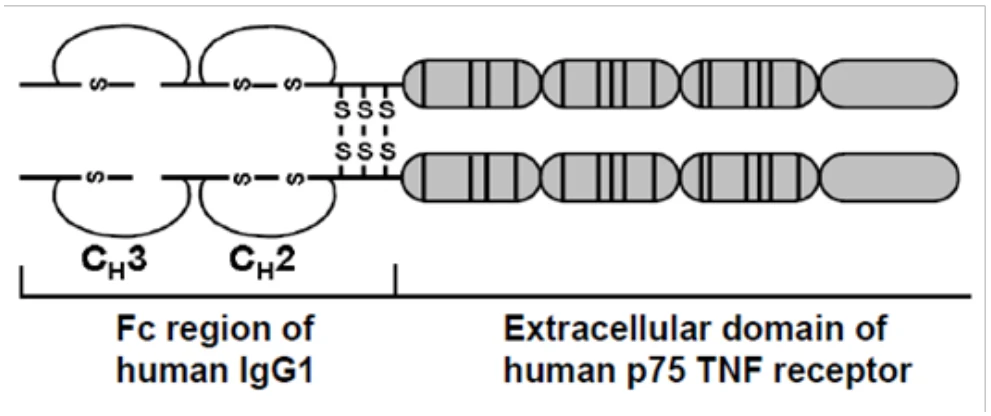
Physicochemical properties: Erelzi is a clear and colorless to slightly yellowish, sterile, preservative free solution, and is formulated at pH 6.3 ± 0.2.
Pharmaceutical standard: Manufacturer’s Standard
Product Characteristics:
Erelzi (etanercept) is a dimeric fusion protein consisting of the extracellular ligand-binding portion of the human p75 tumor necrosis factor receptor (TNFR) linked to the Fc portion of human IgG1 (see illustration above). Etanercept is produced by recombinant DNA technology in a Chinese hamster ovary (CHO) mammalian cell expression system for use as a therapeutic inhibitor of tumor necrosis factor (TNF), a proinflammatory cytokine. Etanercept is composed entirely of human amino acid sequences. The Fc component of etanercept contains the CH2 and CH3 domains but not the CH1 domain of IgG1.
14 COMPARATIVE CLINICAL TRIALS
14.5 Clinical Trials - Reference Biologic Drug
Adult Rheumatoid Arthritis (RA)
Study demographics and trial design
The safety and efficacy of etanercept were assessed in four randomized, double blind, controlled studies and two long-term open-label studies. The results of all trials were expressed in percentage of patients with improvement in RA using American College of Rheumatology (ACR) response criteria.
Table 4: Summary of Patient Demographics for Clinical Trials in Patients with Rheumatoid Arthritis
| Study # | Trial design | Dosage, route of administration and duration | Study patients (n) | Mean age (years) | Gender (% female) |
|---|---|---|---|---|---|
Study I (Morelan d et al, 1999) | Multicenter, double-blind, randomized placebo-controlled study | Etanercept 10 mg or 25 mg, or placebo; SC twice weekly for 6 months Etanercept 10 mg: Etanercept 25 mg: Placebo: | 76 78 80 | 53 53 51 | 84 74 76 |
Study II (Weinbla tt et al, 1999) | Multicenter, double-blind, randomized placebo-controlled study | Etanercept 25 mg, or placebo; SC twice weekly for 6 months Etanercept + MTX: Placebo+MTX: | 59 30 | 48 53 | 90 73 |
Study III (Bathon et al, 2000) | Multicenter, double-blind, randomized active-controlled study | Etanercept 10 mg or 25 mg, or MTX, SC twice weekly for 12 months Etanercept 10 mg: Etanercept 25 mg: MTX: | 208 207 217 | 50 51 49 | 75 74 75 |
Study IV (Klaresko g et al, 2004) | Multicenter, double-blind, randomized active-controlled study | Etanercept 25 mg alone, MTX alone, or Etanercept /MTX for 12 months Etanercept 25 mg alone: MTX alone: Etanercept /MTX: | 223 228 231 | 53 53 53 | 77 79 74 |
| SC = subcutaneous; MTX = methotrexate | |||||
Study I evaluated 234 patients with active RA who were ≥ 18 years old, had failed therapy with at least one but no more than four disease-modifying antirheumatic drugs (DMARDs: eg, hydroxychloroquine, oral or injectable gold, methotrexate (MTX), azathioprine, penicillamine, sulfasalazine), and had ≥ 12 tender joints, ≥ 10 swollen joints, and either erythrocyte sedimentation rate (ESR) ≥ 28 mm/hr, C-reactive protein (CRP) > 2.0 mg/dL, or morning stiffness for ≥ 45 minutes. Doses of 10 mg or 25 mg etanercept or placebo were administered subcutaneously (SC) twice a week for 6 consecutive months. Results from patients receiving 25 mg are presented in Table 5.
Study II evaluated 89 patients with similar inclusion criteria to Study I except that patients in Study II had additionally received MTX for at least 6 months, with a stable dose (12.5 to 25 mg/week) for at least 4 weeks, and they had at least 6 tender or painful joints. Patients in Study II received a dose of 25 mg etanercept or placebo SC twice a week for 6 months in addition to their stable MTX dose.
Study III compared the efficacy of etanercept to MTX in patients with active RA. This study evaluated 632 patients who were ≥ 18 years old with early (< 3 years disease duration) active RA; had never received treatment with MTX; and had ≥ 12 tender joints, ≥10 swollen joints, and either ESR ≥ 28 mm/hr, CRP > 2.0 mg/dL, or morning stiffness for ≥ 45 minutes. Doses of 10 mg or 25 mg etanercept were administered SC twice a week for 12 consecutive months. The study was unblinded after all patients had completed at least 12 months (and a median of 17.3 months) of therapy. Results from patients receiving 25 mg are presented in Table 5. MTX tablets (escalated from 7.5 mg/week to a maximum of 20 mg/week over the first 8 weeks of the trial) or placebo tablets were given one a week on the same day as the injection of placebo or etanercept doses, respectively.
After the conclusion of Study III, patients could continue in a long-term extension study. This multicenter, open-label extension study followed 468 patients (mean age 50 years, 75% female at baseline) from Study III for up to 9.6 years. All patients received open-label 25 mg etanercept SC twice weekly, and were monitored to evaluate the effects of long-term etanercept administration on safety, health-related quality of life, and prevention of disability. Structural damage as measured by radiographic progression and clinical activity were evaluated at the 5 year time point.
Study IV evaluated 682 adult patients with active RA of 6 months to 20 years duration (mean 7 years) who had an inadequate response to at least one DMARD other than MTX. A minority of patients (43%) had previously received MTX for a mean of two years prior to the trial at a mean dose of 12.9 mg. Patients were excluded from this study if MTX had been discontinued for lack of efficacy or for safety considerations.
Patients were randomized to MTX alone (7.5 to 20 mg weekly, median dose 20 mg), etanercept alone (25 mg twice weekly), or the combination of etanercept and MTX initiated concurrently (at the same doses as above). The study evaluated ACR response, Disease Activity Score (DAS), Sharp radiographic score and safety.
Another long-term extension study followed patients with DMARD-refractory RA (defined as less-than-optimal response to ≥ 1 previous DMARD) who had been enrolled from 8 previous etanercept studies. This multicenter, long-term extension study evaluated the effectiveness and safety of more than 10 years of etanercept treatment in 581 patients (mean age 50 years, 80% female at baseline). Drug was administered as 50 mg weekly subcutaneous dose of etanercept as two 25 mg injections on the same day or 3 to 4 days apart. These patients were followed for up to 11.3 years to evaluate the long-term safety of etanercept and improvement in physical function (5-year evaluation)/disability and quality of life.
Study results
The percent of etanercept-treated patients achieving ACR 20, 50, 70 responses was consistent across all 4 trials. The results of Studies I, II and III are summarized in Table 5. The results of Study IV are summarized in Table 7.
Table 5. ACR Responses in Placebo- and Active-Controlled Trials
(Percent of Patients)
| Response | Placebo Controlled | Active Controlled | ||||
|---|---|---|---|---|---|---|
| Study I | Study II | Study III | ||||
Placebo N=80 | etanercepta N= 78 | MTX/Placebo N= 30 | MTX/ etanercepta N= 59 | MTX N= 217 | etanercepta N= 207 | |
| ACR 20 | ||||||
| Week 2 | 1% | 32% | 10% | 47% | NA | NA |
| Month 3 | 23% | 62% b | 33% | 66% b | 56% | 62% |
| Month 6 | 11% | 59% b | 27% | 71% b | 58% | 65% |
| Month 12 | NA | NA | NA | NA | 65% | 72% |
| ACR 50 | ||||||
| Week 2 | 0% | 6% | 0% | 7% | NA | NA |
| Month 3 | 8% | 41% b | 0% | 42% b | 24% | 29% |
| Month 6 | 5% | 40% b | 3% | 39% b | 32% | 40% |
| Month 12 | NA | NA | NA | NA | 43% | 49% |
| ACR 70 | ||||||
| Week 2 | 0% | 1% | 0% | 3% | NA | NA |
| Month 3 | 4% | 15% b | 0% | 15% b | 7% | 13% c |
| Month 6 | 1% | 15% b | 0% | 15% b | 14% | 21% c |
| Month 12 | NA | NA | NA | NA | 22% | 25% |
ACR = American College of Rheumatology response criteria.; MTX = methotrexate; SC = Subcutaneous a 25 mg etanercept SC twice weekly b p < 0.01, etanercept vs. placebo c p < 0.05, etanercept vs. MTX * Study III was conducted in patients who were MTX naive. | ||||||
The time course of ACR 20 response rates for patients receiving placebo or 25 mg etanercept in Studies I and II is summarized in Figure 1. The time course of responses to etanercept in Study III was similar.
Figure 1: Time Course of ACR 20 Responses
 | Placebo, Study I (placebo alone) Placebo, Study II (placebo + MTX) |  | 25 mg etanercept, Study I (etanercept alone) 25 mg etanercept, Study II (etanercept + MTX) |
|---|
Among patients receiving etanercept, the clinical responses generally appeared within 1 to 2 weeks after initiation of therapy and nearly always occurred by 3 months. A dose response was seen in Studies I and III: 25 mg etanercept was more effective than 10 mg (10 mg was not evaluated in Study II). Etanercept was significantly better than placebo in all components of the ACR criteria as well as other measures of RA disease activity not included in the ACR response criteria, such as morning stiffness. Only a small number of patients were treated in the controlled clinical trial (Study II) with the combination of etanercept and MTX (N = 59 for Etanercept/MTX combination; N = 30 for MTX alone) and for a relatively short period of time (6 months).
In Study III, ACR response rates and improvement in all the individual ACR response criteria were maintained through 24 months of etanercept therapy. Over the 2-year study, 23% of etanercept patients achieved a major clinical response, defined as maintenance of an ACR 70 response over a 6-month period.
In the open label extension for Study III, ACR 20, 50 and 70 responses were observed through 5 and 10 years. Of 468 patients, 297 patients continued on etanercept treatment through 5 years.
Of those, 61%, 49% and 30% had ACR 20, ACR 50, and ACR 70 responses, respectively, at 5 years. Of these 297 patients, 168 patients continued on etanercept treatment through 9.6 years, of those, 66%, 46%, and 30% had ACR 20, ACR 50 and ACR 70 responses, respectively, at 9 years.
The results of the components of the ACR response criteria for Study I are shown in Table 6. Similar results were observed for etanercept-treated patients in Studies II and III.
Table 6. Components of ACR Response in Study I
Placebo N= 80 | Etanercepta N= 78 | |||
|---|---|---|---|---|
| Parameter (median) | Baseline | 3 Months | Baseline | 3 Months* |
| Number of tender jointsb | 34.0 | 29.5 | 31.2 | 10.0f |
| Number of swollen jointsc | 24.0 | 22.0 | 23.5 | 12.6f |
| Physician global assessmentd | 7.0 | 6.5 | 7.0 | 3.0f |
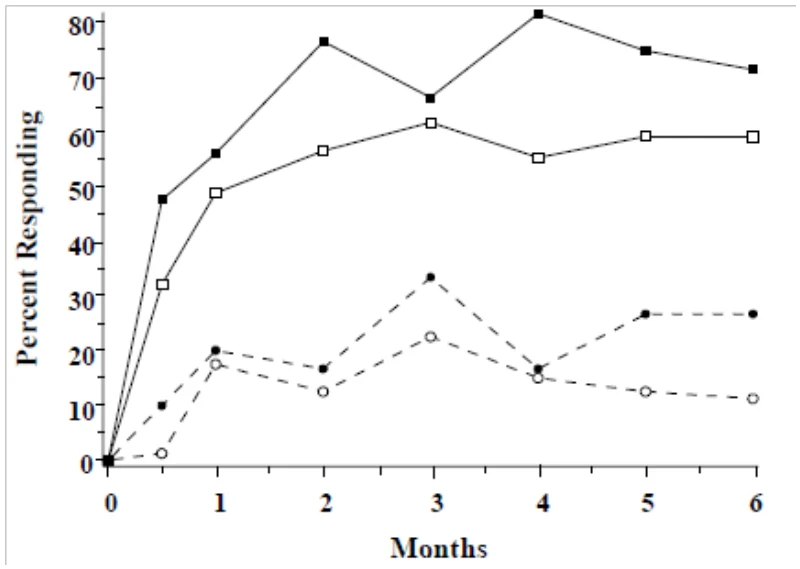 |
|---|
Placebo N= 80 | Etanercepta N= 78 | |||
|---|---|---|---|---|
| Parameter (median) | Baseline | 3 Months | Baseline | 3 Months* |
| Patient global assessmentd | 7.0 | 7.0 | 7.0 | 3.0f |
| Paind | 6.9 | 6.6 | 6.9 | 2.4f |
| Disability indexe | 1.7 | 1.8 | 1.6 | 1.0f |
| ESR (mm/hr) | 31.0 | 32.0 | 28.0 | 15.5f |
| CRP (mg/dL) | 2.8 | 3.9 | 3.5 | 0.9f |
ACR = American College of Rheumatology; CRP = C-reactive protein; ESR = erythrocyte sedimentation rate * Results at 6 months showed similar improvement. a 25 mg etanercept subcutaneous (SC) twice weekly. b Scale 0-71. c Scale 0-68. d Visual analog scale; 0 = best, 10 = worst. e Health assessment questionnaire; 0 = best, 3 = worst; includes eight categories: dressing and grooming, arising, eating, walking, hygiene, reach, grip, and activities. f p < 0.01, etanercept vs. placebo, based on mean percent change from baseline. | ||||
An additional randomized, controlled, double-blind trial evaluated 180 patients with similar criteria to Study I. Doses of 0.25 mg/m2, 2 mg/m2, and 16 mg/m2 etanercept were administered SC twice a week for 3 consecutive months. A dose-dependent increase in the proportion of patients achieving an ACR 20 response was seen, with 75% of patients responding in the highest dose group (16 mg/m2 etanercept).
After discontinuation of etanercept, symptoms of arthritis generally returned within a month. Reintroduction of treatment with etanercept after discontinuations of up to 18 months resulted in the same magnitudes of response as patients who received etanercept without interruption of therapy based on results of open-label studies.
Continued durable responses were also seen for approximately 10 years in a second open-label extension trial with etanercept treatment. Of 581 patients, 365 patients continued on etanercept treatment through 5 years. Of those, 73%, 49%, and 24% had ACR 20, ACR 50 and ACR 70 responses, respectively, at 5 years. Of the 365 patients, 225 patients continued on etanercept treatment through 10 years. Of those, 71%, 52%, and 27% had ACR 20, ACR 50 and ACR 70 responses, respectively, at 10 years. Fifty seven to 83% of patients who initially received concomitant MTX or corticosteroids were able to reduce their doses or discontinue these concomitant therapies while maintaining their clinical response.
In Study IV, patients initiating the combination of etanercept and MTX had significantly higher ACR 20, ACR 50, and ACR 70 responses and improvement for DAS scores at both 6 and 12 months than patients in either of the single therapy groups (Table 7). Twenty-four percent of patients treated with etanercept and MTX concurrently achieved a major clinical response within 12 months.
The percentage of patients who achieved low disease activity (defined as DAS < 2.4) at 12 months was 35%, 39%, and 61% for patients in the MTX alone group, etanercept alone group, and the etanercept/MTX combination group, respectively. Remission (defined as DAS < 1.6) was experienced by 14%, 18%, and 37% of patients administered MTX alone, etanercept alone, and etanercept/MTX combination therapy, respectively.
Table 7 Study IV Clinical Efficacy Results: Comparison of MTX vs. Etanercept vs. Etanercept in Combination with MTX in Patients with Rheumatoid Arthritis of 6 Months to 20 Years Duration (Percent of Patients)
| Endpoint | MTX (N= 228) | Etanercept (N= 223) | Etanercept/MTX (N= 231) |
|---|---|---|---|
| ACR Na | |||
| Month 6 | 12.2 | 14.7b | 18.3d,e |
| Month 12 | 34.4 | 38.0 | 48.1 d,e |
| ACR 20 | |||
| Month 12 | 75% | 76% | 85%c,d |
| ACR 50 | |||
| Month 12 | 43% | 48% | 69%d,e |
| ACR 70 | |||
| Month 12 | 19% | 24% | 43%d,e |
| Major Clinical Responseg | 6% | 10% | 24%f |
| DAS a | |||
| Baseline | 5.5 | 5.7 | 5.5 |
| Month 12 | 3.0 | 3.0 | 2.3 d,e |
ACR = American College of Rheumatology response criteria; DAS = Disease Activity Score; MTX = methotrexate a Values are means. b p < 0.01 for comparisons of Etanercept vs MTX. c p < 0.05 for comparisons of Etanercept /MTX vs Etanercept. d p < 0.01 for comparisons of Etanercept /MTX vs MTX. e p < 0.01 for comparisons of Etanercept /MTX vs Etanercept. f p < 0.001 for comparisons of the Etanercept /MTX vs Etanercept alone or MTX alone. g Major clinical response is achieving an ACR 70 response for a continuous 6 month period. | |||
Physical Function Response
In Studies I, II, and III, physical function and disability were assessed using the Health Assessment Questionnaire (HAQ). Additionally, in Study III, patients were administered the SF-36 Health Survey. In Studies I and II, patients treated with 25 mg etanercept twice weekly showed greater improvement from baseline in the HAQ score beginning in month 1 through month 6 in comparison to placebo (p < 0.001) for the HAQ disability index (HAQ-DI) (where 0 = none and 3 = severe). In Study I, the mean improvement in the HAQ score from baseline to month 6 was 0.6 (from 1.6 to 1.0) for the 25 mg etanercept group and 0 (from 1.7 to 1.7) for the placebo group. In Study II, the mean improvement from baseline to month 6 was 0.7 (from 1.5 to 0.7) for 25 mg etanercept twice weekly. All subdomains of the HAQ in Studies I and III were improved in patients treated with etanercept
In Study III, patients treated with 25 mg etanercept twice weekly showed greater improvement from baseline in SF-36 physical component summary score compared to etanercept 10 mg twice weekly and no worsening in the SF-36 mental component summary score.
In open-label etanercept studies, improvements in physical function and disability measures (HAQ-DI) have been maintained for over 10 years. In the first study in patients with DMARD-refractory RA for a mean of 13 years, the mean baseline HAQ-DI was 1.5 (measured prior to/on the day of the first dose of etanercept treatment in the etanercept-initiating study). At Year 10, the mean HAQ-DI was 1.0, a mean percent improvement of 21. In a second study in patients who had been diagnosed with RA for a mean of 3 years, the mean baseline HAQ-DI was 1.3. At Year 9, the mean HAQ-DI was 0.7, a mean percent improvement of 31.
In Study IV, mean HAQ scores improved from baseline levels of 1.7, 1.7, and 1.8 to 1.1, 1.0, and 0.8 at 12 months in the MTX, etanercept, and etanercept /MTX combination treatment groups, respectively (Combination versus both MTX and etanercept, p < 0.01). Twenty-nine percent of patients in the MTX alone treatment group had an improvement of HAQ of at least one unit versus 40% and 51% in the etanercept alone and the etanercept /MTX combination treatment groups, respectively. Further, 24% of patients in the combination treatment group who registered some disability in HAQ at baseline had improved to a HAQ of 0 (no disability) by month 12.
Radiographic Response
In Study III, structural joint damage was assessed radiographically and expressed as change in total Sharp score (TSS) and its components, the erosion score and joint space narrowing (JSN) score. Radiographs of hands/wrists and forefeet were obtained at baseline, 6 months, 12 months, and 24 months and scored by readers who were unaware of treatment group. The results are shown in Table 8. A significant difference for change in erosion score was observed at 6 months and maintained at 12 months.
Table 8 Mean Radiographic Change Over 6 and 12 Months in Study III
| MTX | 25 mg Etanercept | MTX-Etanercept (95% Confidence Interval*) | P-value | ||
|---|---|---|---|---|---|
| 12 Months | Total Sharp score | 1.59 | 1 | 0.59 (-0.12, 1.30) | 0.11 |
| Erosion score | 1.03 | 0.47 | 0.56 (0.11, 1.00) | 0.002 | |
| JSN score | 0.56 | 0.52 | 0.04 (-0.39, 0.46) | 0.529 | |
| 6 Months | Total Sharp score | 1.06 | 0.57 | 0.49 (0.06, 0.91) | 0.001 |
| Erosion score | 0.68 | 0.3 | 0.38 (0.09, 0.66) | 0.001 | |
| JSN score | 0.38 | 0.27 | 0.11 (-0.14, 0.35) | 0.585 | |
JSN = Joint Space Narrowing; MTX = methotrexate *95% confidence intervals for the differences in change scores between MTX and Etanercept | |||||
Patients continued on the therapy to which they were randomized for the second year of Study III. Seventy-two percent of patients had x-rays obtained at 24 months. Compared to the MTX group, greater inhibition of progression in TSS and erosion score was seen in the 25 mg etanercept group, and in addition, less progression was noted in the JSN score. These differences did not reach statistical significance.
In the open-label extension (fifth year of Study III), patients treated with 25 mg etanercept had continued inhibition of structural damage. Patients originally treated with MTX had further reduction in radiographic progression once they began treatment with etanercept.
In Study IV, significantly less radiographic progression (TSS) was observed with etanercept in combination with MTX compared with etanercept alone or MTX alone at month 12 (Figure 2). In the MTX treatment group 57% of patients experienced no radiographic progression (TSS change ≤ 0.5) at
12 months compared to 68% and 80% in the etanercept alone and the etanercept /MTX combination treatment groups, respectively. Significant regression in TSS (- 0.54) was observed in the etanercept /MTX combination treatment group at 12 months [95% CI, (- 1.00 to –0.07)], indicating the inhibition of structural damage.
Figure 2 Mean Radiographic Change at 12 Months in Study IV
ES = Erosion score; JSN = Joint Space Narrowing; MTX = methotrexate; TSS = Total Sharp score; Pairwise comparison p-values: * p < 0.05 for comparisons of Etanercept vs MTX † p < 0.05 for comparisons of Etanercept/MTX vs MTX ɸ p < 0.05 for comparisons of Etanercept/MTX vs Etanercept |
|---|
Results in Geriatric Patients
A total of 480 geriatric (age ≥ 65 years) RA patients have been studied in clinical trials. Their clinical responses were comparable to responses seen in RA patients < 65 years of age.
Once Weekly Dosing
The safety and efficacy of 50 mg etanercept (two 25 mg SC injections) administered once weekly were evaluated in a double-blind, placebo-controlled study of 420 patients with Active RA. In this study, 53 patients received placebo, 214 patients received 50 mg etanercept once weekly, and 153 patients received 25 mg etanercept twice weekly (72 to 96 hours apart). The safety and efficacy profiles of the two etanercept treatment groups were similar.
Other Studies
An open-label, single-arm study was conducted to assess the safety and immunogenicity of etanercept manufactured by a modified process, administered weekly for up to 24 weeks in 220 RA patients who were etanercept-naïve and not receiving methotrexate therapy. The immunogenicity data are
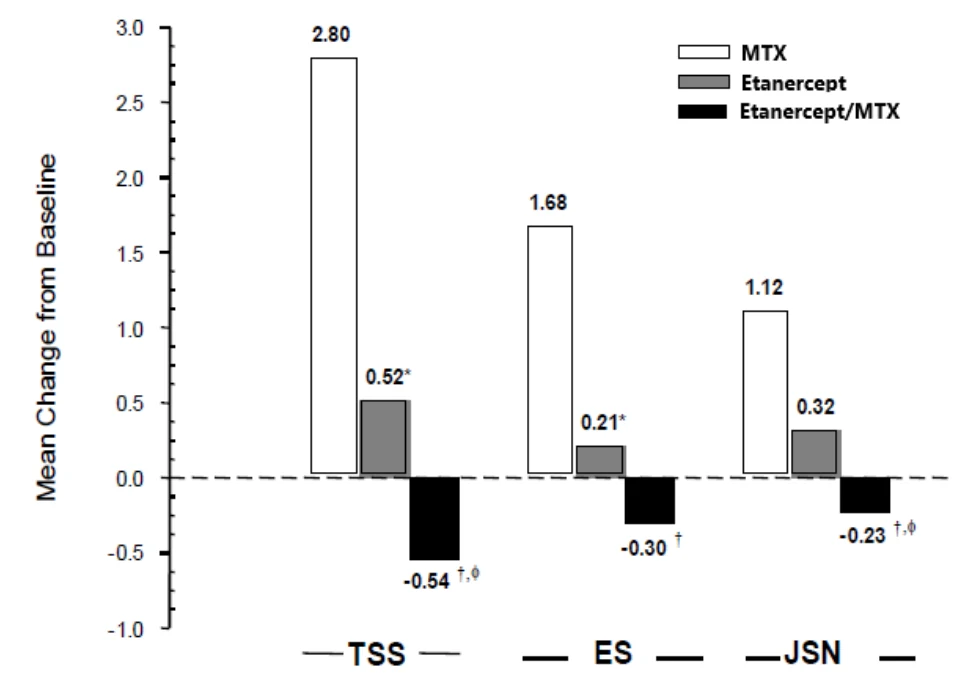 |
|---|
comparable to those observed in other studies with etanercept. Positive binding antibodies were detected in 4.5% of patients at week 12 and 0.5% at week 24. In this study, as in previous studies, no patient tested positive for neutralizing antibodies. Overall, the safety profile (both adverse events and immunogenicity) was comparable to the etanercept manufactured using the previous process (see 8 ADVERSE REACTIONS, 8.2 Clinical Trial Adverse Reactions).
Polyarticular Juvenile Idiopathic Arthritis (JIA)
Study demographics and trial design
The safety and efficacy of etanercept were assessed in a two-part study in 69 children with polyarticular JIA who had a variety of JIA onset types. Patients aged 4 to 17 years with moderately to severely active polyarticular JIA refractory to or intolerant of methotrexate were enrolled; patients remained on a stable dose of a single non-steroidal anti-inflammatory drug and/or prednisone (≤ 0.2 mg/kg/day or 10 mg maximum). In part 1, all patients received 0.4 mg/kg (maximum 25 mg per dose) etanercept SC twice weekly. In part 2, patients with a clinical response at day 90 were randomized to remain on etanercept or receive placebo for four months and assessed for disease flare. Responses were measured using the JIA Definition of Improvement (DOI), defined as a ≥ 30% improvement in at least three of six and ≥ 30% worsening in no more than one of six JIA core set criteria, including active joint count, limitation of motion, physician and patient/parent global assessments, functional assessment, and ESR. Disease flare was defined as a ≥ 30% worsening in three of the six JIA core set criteria and ≥ 30% improvement in not more than one of the six JIA core set criteria and a minimum of two active joints.
Table 9 Summary of Patient Demographics for Clinical Trials in Patients with Juvenile Idiopathic Arthritis
| Study # | Trial design | Dosage, route of administration and duration | Study patient (n) | Mean age (years) | Gender (%female) |
|---|---|---|---|---|---|
Study I (Lovell et al, 2000) | Multicenter, 2 part study in children with polyarticular JIA | Part 1: Etanercept 0.4 mg/kg (maximum 25 mg per dose) SC twice weekly for 90 days Part 2: 0.4 mg/kg (maximum 25 mg per dose) or placebo SC twice weekly until disease flare or 4 months, whichever was earlier | |||
| Etanercept | 25 | 9 | 76 | ||
| Placebo | 26 | 12 | 58 | ||
| SC = subcutaneous; JIA = juvenile idiopathic arthritis | |||||
Study Results
In part 1 of the study, 51 of 69 (74%) patients demonstrated a clinical response and entered part 2. In part 2, 7 of 25 (28%) patients remaining on etanercept experienced a disease flare compared to 21 of 26 (81%) patients receiving placebo (p = 0.0030). From the start of part 2, the median time to flare was ≥ 116 days for patients who received etanercept and 28 days for patients who received placebo. Each component of the JIA core set criteria worsened in the arm that received placebo and remained stable or improved in the arm that continued on etanercept. The data suggested the possibility of a higher flare rate among those patients with a higher baseline ESR. Of patients who demonstrated a clinical response at 90 days and entered part 2 of the study, some of the patients remaining on etanercept continued to improve from month 3 through month 7, while those who received placebo did not improve.
The majority of JIA patients who developed a disease flare in part 2 and were reintroduced to etanercept treatment up to 4 months after discontinuation re-responded to etanercept therapy, in open-label studies. Durable response has been observed for over 4 years in JIA patients.
Studies have not been done in patients with polyarticular JIA to assess the effects of continued etanercept therapy in patients who do not respond within 3 months of initiating etanercept therapy, or to assess the combination of etanercept with methotrexate.
Adult Psoriatic Arthritis (PsA)
Study demographics and trial design
The safety and efficacy of etanercept were assessed in a randomized, double-blind, placebo-controlled study in 205 adult patients with PsA. Patients were between 18 and 70 years of age and had active psoriatic arthritis (≥ 3 swollen joints and ≥ 3 tender joints) in at least one of the following forms: (1) Distal interphalangeal (DIP) involvement; (2) polyarticular arthritis (absence of rheumatoid nodules and presence of psoriasis); (3) arthritis mutilans; (4) asymmetric PsA; or (5) spondylitis-like ankylosis. Patients also had PsO with a qualifying target lesion ≥ 2 cm in diameter. Patients currently on MTX therapy (stable for ≥ 2 months) could continue at a stable dose of ≤ 25 mg/week MTX. Doses of 25 mg etanercept or placebo were administered SC twice a week during the initial 6-month double-blind period of the study. Patients continued to receive blinded therapy in a 6-month maintenance period until all had completed the initial 6-month controlled period. Following this, patients received open-label 25 mg etanercept twice a week in a 48-week extension period.
Table 10 Summary of Patient Demographics for Clinical Trials in Patients with Psoriatic Arthritis
| Study # | Trial design | Dosage, route of administration and duration | Study patients (n) | Mean age (years) | Gender (%female) |
|---|---|---|---|---|---|
Study I (Mease et al, 2004) | Multicenter, randomized, double-blind, placebo-controlled study in adults with PsA | Etanercept 25 mg or placebo SC twice weekly for up to 12 months | |||
| Etanercept: | 101 | 47 | 55 | ||
| Placebo: | 104 | 48 | 43 | ||
| Study I Open-Label Extension (Mease et al, 2006) | Multicenter, open label extension study in adults with PsA | Etanercept 25 mg SC twice weekly in 48-week extension period | 169 | 47.0 | 49 |
| SC = subcutaneous; PsA = Psoriatic Arthritis |
|---|
In the double-blind period of the study, the proportion of patients who discontinued from study was approximately 20% (31% of placebo-treated patients and 8% of etanercept-treated patients). The proportion of patients who discontinued due to adverse events was approximately 1% in both etanercept and placebo groups and the proportion of patients who discontinued due to lack of efficacy was 5% in the etanercept group and 22% in the placebo group.
In the open-label period of the study, the proportion of patients who discontinued from the study was approximately 12%. The proportion of patients who discontinued due to adverse events was approximately 2% and the proportion of patients who discontinued due to lack of efficacy was approximately 2%.
Study Results
The results were expressed as percentages of patients achieving the ACR 20, 50, and 70 response and percentages with improvement in Psoriatic Arthritis Response Criteria (PsARC). Results are summarized in Table 11.
Table 11 Responses of Patients with Psoriatic Arthritis in Placebo-Controlled Trial
| Percent of Patients | ||
|---|---|---|
| Placebo | Etanercepta | |
| Psoriatic Arthritis Response | N = 104 | N = 101 |
| ACR 20 | ||
| Month 1 | 11 | 38b |
| Month 3 | 15 | 59b |
| Month 6 | 13 | 50b |
| ACR 50 | ||
| Month 1 | 2 | 11c |
| Month 3 | 4 | 38b |
| Month 6 | 4 | 37b |
| ACR 70 | ||
| Month 1 | 0 | 1 |
| Month 3 | 0 | 11b |
| Month 6 | 1 | 9c |
| PsARC | ||
| Month 1 | 24 | 56b |
| Month 3 | 31 | 72b |
| Month 6 | 23 | 70b |
| Psoriasis Response | Percent of Patients | |
| PASI (subset of patientsd) | (N = 62) | (N = 66) |
| 50% improvement | ||
| Month 1 | 13 | 18 |
| Percent of Patients | ||
|---|---|---|
| Placebo | Etanercepta | |
| Month 3 | 15 | 36c |
| Month 6 | 18 | 47b |
| 75% improvement | ||
| Month 1 | 2 | 8 |
| Month 3 | 8 | 12 |
| Month 6 | 3 | 23c |
ACR = American College of Rheumatology response criteria; PASI = psoriasis area and severity index; PsARC = psoriatic arthritis response criteria a. 25 mg Etanercept subcutaneous (SC) twice weekly b. p < 0.001, Etanercept vs. placebo c. p < 0.01, Etanercept vs. placebo d. Patients with psoriasis involvement ≥ 3% body surface area | ||
Among adult patients with PsA who received etanercept, clinical responses were noted at the time of the first visit at 4 weeks (25% of patients). The median time to first response was 12 weeks, and 75% of patients achieved a response by 36 weeks. Responses were maintained through the initial 6 months of therapy and the maintenance period. Etanercept was significantly better than placebo in all measures of disease activity (p < 0.001), and responses were similar with and without concomitant MTX therapy.
In the open-label extension period, ACR20/50/70 responses, PsARC responses, and all measures of disease activity were maintained or improved in patients who continued to receive etanercept for up to an additional 48 weeks. Similar improvements were seen for the patients who received placebo in the double-blind period of the study once they began receiving etanercept in the open-label period. By week 48 of the open-label period, 63%, 46%, and 18% of patients achieved or maintained the ACR20, ACR50, and ACR70 response, respectively, and 82% of patients achieved the PsARC response.
In adult PsA patients, the skin lesions of psoriasis were also improved with etanercept, relative to placebo, as measured by percentages of patients achieving improvements in the psoriasis area and severity index (PASI). In the open-label extension period of the study, target lesion clear or almost clear and PASI 50/75/90 were maintained or improved in patients who continued to receive etanercept for up to an additional 48 weeks. Similar improvements were seen for the patients who received placebo in the double-blind period of the study once they began receiving etanercept. At week 48 of the open-label period, 55% of patients achieved or maintained a target lesion assessment of clear or almost clear. In a subset of patients with psoriasis ≥ 3% BSA, 67% had achieved a PASI 50 and 38% achieved a PASI 75 by week 48 of the open-label period. Responses according to the Dermatologists Static Global Assessment of Psoriasis were also maintained through the 48-week open label period.
Radiographic Response
Radiographic progression was also assessed in adult patients with PsA. Radiographs of hands and wrists, including distal interphalangeal joints, were obtained at baseline, 6 months, 12 months, and 24 months. The results are shown in Table 12.
Table 12 Mean Radiographic Change Over 6 and 12 Months in Psoriatic Arthritis
| Placebo | 25 mg Etanercept | p-value | ||||
|---|---|---|---|---|---|---|
| 12 months | Total Sharp score | 1.00 | -0.03 | 0.0001 | ||
| Erosion score | 0.66 | -0.09 | <0.0001 | |||
| JSN score | 0.34 | 0.05 | 0.0438 | |||
| 6 months | Total Sharp score | 0.53 | -0.03 | 0.0006 | ||
| Erosion score | 0.33 | -0.09 | 0.0002 | |||
| JSN score | 0.20 | 0.06 | 0.2033 | |||
| JSN = Joint Space Narrowing | ||||||
Etanercept inhibited progression of structural damage in adult patients with PsA over a 12-month period, while measurable structural progression was observed in the placebo group. The differences between groups were observed as early as 6 months. Inhibition of radiographic progression was maintained in patients who continued on etanercept during the second year. The mean annualized changes from baseline in the Total Sharp Score (TSS) in the continuous etanercept group was -0.28 units at 1 year and -0.38 units at 2 years. Similar inhibition of structural progression was seen for patients who received placebo in the double-blind period once they began receiving etanercept.
Physical Function Response
Quality of life in PsA patients was assessed at every timepoint using the physical function and disability index of the HAQ. Additionally, patients were administered the SF-36 Health Survey. Patients treated with 25 mg etanercept twice weekly showed significantly greater improvement from baseline in the HAQ score at month 3 (mean decrease of 53.5%) and month 6 (mean decrease of 53.6%) in comparison to placebo (mean decrease of 6.3% and 6.4% at month 3 and 6, respectively) (p < 0.001) for the HAQ disability domain (where 0 = none and 3 = severe). At months 3 and 6, patients treated with etanercept showed significantly greater improvement from baseline in SF-36 physical component summary score compared to patients treated with placebo, and no worsening in the SF-36 mental component summary score. Improvements in physical function and disability measures have been maintained for up to 2 years through the open-label portion of the study.
Ankylosing Spondylitis (AS)
Study demographics and trial design
The safety and efficacy of etanercept were assessed in a randomized, double-blind, placebo-controlled study in 277 patients with ankylosing spondylitis. Patients were between 18 and 70 years of age and had active ankylosing spondylitis as defined by the modified New York Criteria for Ankylosing Spondylitis. Patients taking hydroxychloroquine, sulfasalazine, or methotrexate (stable for 4 weeks prior to study start) could continue these drugs at stable doses for the duration of the study. Doses of 25 mg etanercept or placebo were administered SC twice a week for 6 months. Patients who participated in this double-blind study were eligible to enter into an open-label follow-up study where all patients received 25 mg SC twice weekly or 50 mg once weekly for up to 42 months.
Table 13 Summary of Patient Demographics for Clinical Trials in Patients with Ankylosing Spondylitis
| Study # | Trial design | Dosage, route of administration and duration | Study patient (n) | Mean age (years) | Gender (%female) |
|---|---|---|---|---|---|
Study I (Davis et al, 2003) | Multicenter, randomized, double-blind, placebo-controlled study in patients with ankylosing spondylitis | Etanercept 25 mg or placebo SC twice weekly for 6 months | |||
| Etanercept | 138 | 42 | 76 | ||
| Placebo | 139 | 42 | 76 | ||
| SC = subcutaneous; AS = ankylosing spondylitis | |||||
Study Results
The primary measure of efficacy was a 20% improvement in the Assessment in Ankylosing Spondylitis (ASAS) response criteria. Compared to placebo, treatment with etanercept resulted in significant improvements in the ASAS and other measures of disease activity in patients with ankylosing spondylitis (Figure 3 and Table 14).
At 12 weeks, the ASAS 20/50/70 responses were achieved by 60%, 45%, and 29%, respectively, of patients receiving etanercept, compared to 27%, 13%, and 7%, respectively, of patients receiving placebo (p ≤ 0.0001, etanercept vs. placebo). Similar responses were seen at week 24.
Figure 3 ASAS Responses in Ankylosing Spondylitis
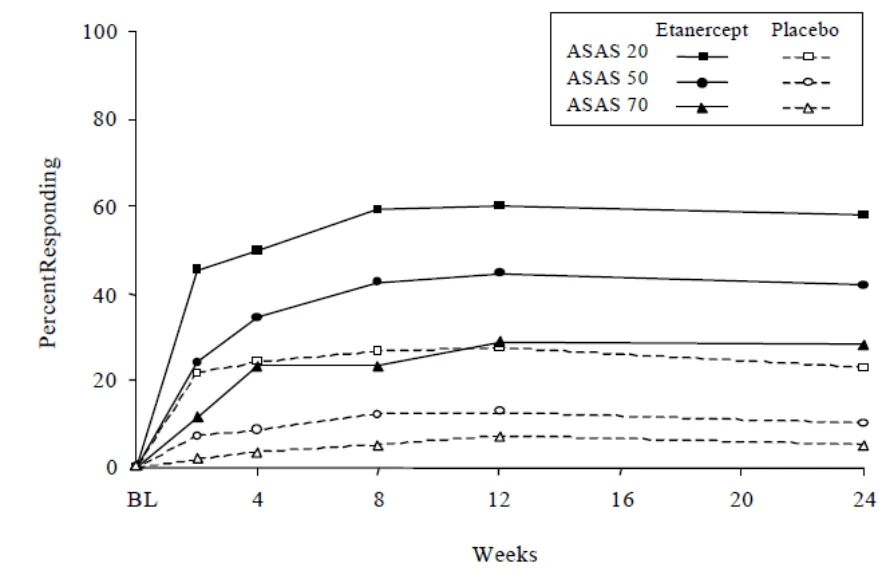
Table 14 Measures of Disease Activity in Ankylosing Spondylitis
Placebo N = 139 | Placebo/ Etanercept Open-label Extension N = 129 | Etanercepta N = 138 | Etanercept Open-label Extension N = 128 | |||
|---|---|---|---|---|---|---|
| Mean values at time points | Baseline | 6 Months | 4 Years | Baseline | 6 Months | 4 Years |
| ASAS response criteria | ||||||
| Patient global assessmentb | 62.9 | 56.3 | 25.9 | 62.9 | 36.0 | 19.7 |
| Nocturnal and back painc | 62.1 | 56.2 | 24.1 | 59.8 | 34.0 | 18.8 |
| BASFId | 56.3 | 54.7 | 31.1 | 51.7 | 36.0 | 22.7 |
| Inflammatione | 64.3 | 56.6 | 26.0 | 61.4 | 33.4 | 19.0 |
| Acute phase reactants | ||||||
| CRP (mg/dL)f | 2.0 | 1.9 | 0.5 | 1.9 | 0.6 | 0.3 |
| ESR (mm/hr)g | 25.4 | 25.9 | - | 25.9 | 11.2 | - |
| Spinal mobility (cm): | ||||||
| Modified Schober’s test | 2.97 | 2.88 | 3.0 | 3.06 | 3.34 | 3.5 |
| Chest expansion | 3.21 | 3.01 | 3.7 | 3.26 | 3.85 | 4.1 |
| Occiput-to-wall measurement | 5.33 | 6.01 | 5.4 | 5.59 | 4.53 | 3.6 |
a. p < 0.0015 for all comparisons between Etanercept and placebo at 6 months. P-values for continuous endpoints were based on percent change from baseline. b. Measured on a VAS scale with 0 = “none” and 100 = “severe.” c. Average of total nocturnal and back pain scores, measured on a VAS scale with 0 = “no pain” and 100 = “most severe pain.” d. Bath Ankylosing Spondylitis Functional Index (BASFI), average of 10 questions. e. Inflammation represented by the average of the last 2 questions on the 6-question Bath Ankylosing Spondylitis Disease Activity Index (BASDAI). f. C-reactive protein (CRP) normal range: 0 – 1.0 mg/dL. g. Erythrocyte sedimentation rate (ESR) normal range: 1–17 mm/hr for men; 1–25 mm/hr for women. | ||||||
Among patients with ankylosing spondylitis who received etanercept, the clinical responses were apparent as early as 2 weeks, reach maximum within the first 2 months on study, and were maintained through 6 months of therapy. Responses were similar in patients who were not receiving concomitant therapies at baseline. The results of this study were similar to those seen in an earlier single-center, randomized, placebo-controlled study of 40 patients with ankylosing spondylitis and a multi-center, randomized, placebo-controlled study of 84 patients with ankylosing spondylitis.
Regardless of treatment group in the initial double-blind study, ASAS 20/50/70, BASDAI, and BASFI responses were maintained or improved in patients treated with etanercept during a 42-month open-label extension study. Although patient-reported outcomes were not collected during the controlled period of the study, patients who had received placebo in controlled period showed rapid improvement in patient-reported outcomes (SF-36 and EQ-5D) with etanercept treatment by week 12 of the open-label study. Improvement in patient-reported outcomes was sustained over 4 years in both the previous placebo and etanercept groups.
Adult Plaque Psoriasis (PsO)
Study demographics and trial design
The safety and efficacy of etanercept were assessed in three randomized, double-blind, placebo controlled studies in adults with chronic stable PsO involving ≥ 10% of the body surface area, a minimum PASI of 10. Patients with guttate, erythrodermic, or pustular psoriasis and patients with severe infections within 4 weeks of screening were excluded from study. No concomitant major anti-psoriatic therapies were allowed during the study. Long-term, open label phases of these three studies were also conducted.
Table 15 Summary of Patient Demographics for Clinical Trials in Patients with Plaque Psoriasis
| Study # | Trial design | Dosage, route of administration and duration | Study patients (n) | Mean age (years) | Gender (% female) |
|---|---|---|---|---|---|
Study I (Leonardi et al, 2003) | Multicenter, double-blind, randomized placebo-controlled study | Etanercept 25 mg, SC once a week or twice a week; 50 mg, SC twice weekly for 6 months; placebo | |||
| Etanercept 25 mg QW: | 160 | 46 | 26 | ||
| Etanercept 25 mg BIW: | 162 | 44 | 33 | ||
| Etanercept 50 mg BIW: | 164 | 45 | 35 | ||
| Placebo: | 166 | 45 | 37 | ||
Study II (Papp et al, 2005) | Multicenter, double-blind, randomized placebo-controlled study | Etanercept 25 mg, 50 mg, or placebo; SC twice weekly for 3 months | |||
| Etanercept 25 mg BIW: | 196 | 45 | 35 | ||
| Etanercept 50 mg BIW: | 194 | 45 | 33 | ||
| Placebo: | 193 | 45 | 36 | ||
Study III (Tyring et al, 2007) | Multicenter, double-blind, randomized placebo- | Etanercept 50 mg, or placebo; SC twice weekly for 12 weeks. |
| Study # | Trial design | Dosage, route of administration and duration | Study patients (n) | Mean age (years) | Gender (% female) |
|---|---|---|---|---|---|
| controlled study | |||||
| Etanercept 50 mg BIW: | 311 | 46 | 35 | ||
| Placebo: | 307 | 46 | 30 | ||
| BIW = twice weekly; QW = once weekly; SC = subcutaneous | |||||
Study I evaluated 652 patients who received etanercept SC at doses of 25 mg SC once a week, 25 mg SC twice a week or 50 mg twice a week for 6 consecutive months. During the first 12 weeks of the double-blind treatment period, patients received placebo or one of the above three etanercept doses. After 12 weeks of treatment, patients in the placebo group began treatment with blinded etanercept (25 mg twice a week); patients in the active treatment groups continued to week 24 on the dose to which they were originally randomized. Patients who achieved PASI improvement of at least 50% at week 24 were discontinued from treatment and observed until relapse during the study drug withdrawal period. Relapse was defined as a loss of at least half of the improvement achieved between baseline and week 24. Upon relapse, patients were retreated with etanercept in a blinded fashion at the dose they had been receiving at week 24.
Study II evaluated 583 patients who received placebo or etanercept SC at doses of 25 mg or 50 mg twice a week for 3 months. After 3 months of randomized blinded treatment, patients in all three arms began receiving open-label etanercept at 25 mg twice weekly for up to 9 additional months.
Study III evaluated 618 patients who received placebo or etanercept SC at a dose of 50 mg twice weekly in a blinded fashion for 12 weeks. After 12 weeks patients in both arms of the study received 50 mg twice weekly in an open-label extension phase for a further 84 weeks (through week 96 open-label period part 1). Beginning at week 97, eligible patients entered open-label period part 2, during which time their dosage was decreased to etanercept 50 mg once weekly. At week 120 or 132, eligible patients who did not maintain protocol-defined clinical efficacy at 50 mg once weekly had the option to dose escalate to etanercept 50 mg twice weekly for the remainder of the study (through week 144).
Clinical Response
The percent of etanercept-treated patients achieving at least a 50%, 75%, or 90% improvement in PASI (PASI 50, 75, and 90 responses, respectively) showed a dose response relationship between doses of 25 mg once a week, 25 mg twice a week and 50 mg twice a week. This dose response was also observed as measured by the Physician Static Global Assessment for clear or almost clear status, and mean percent improvement in PASI. In Studies I, II, and III the primary endpoint was the PASI 75 response at week 12. In Studies I and II, PASI 75 was seen in 3, 14, 34, and 49 percent of patients for placebo, 25 mg once weekly, 25 mg twice weekly and 50 mg twice weekly groups, respectively. In Study I, continued improvement was seen through week 24 in Study I for all doses (Figure 4).
Figure 4 Percent of Patients Achieving a PASI 75 Response in Double-blind and Retreatment Periods of Study I
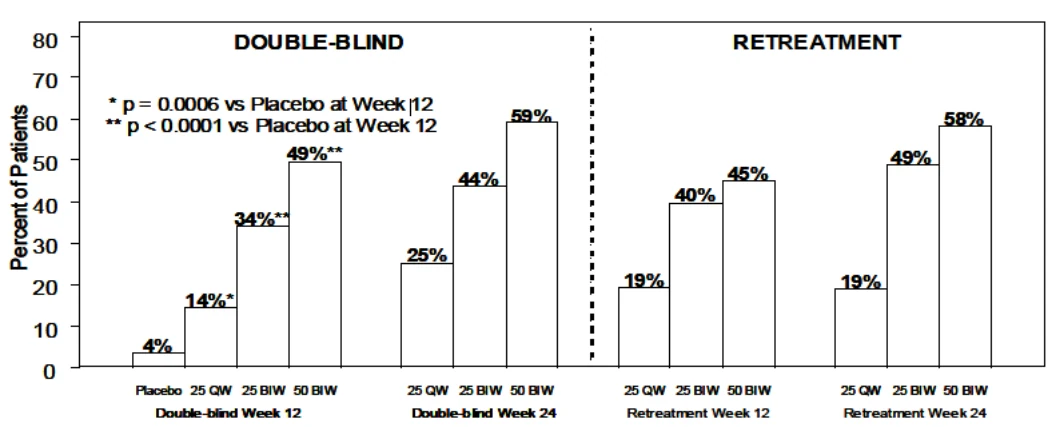
In Study II, maintenance of PASI 75 response was seen between weeks 12 and 24 in patients dosed at 25 mg twice a week who were originally dosed at 50 mg twice a week (Figure 5). PASI 50, 75, 90, mean percent improvement in PASI and Dermatology Life Quality Index (DLQI) responses were maintained in the open-label period for up to 12 months.
Figure 5 Percent of Patients Achieving a PASI 75 Response Over Time in Study II
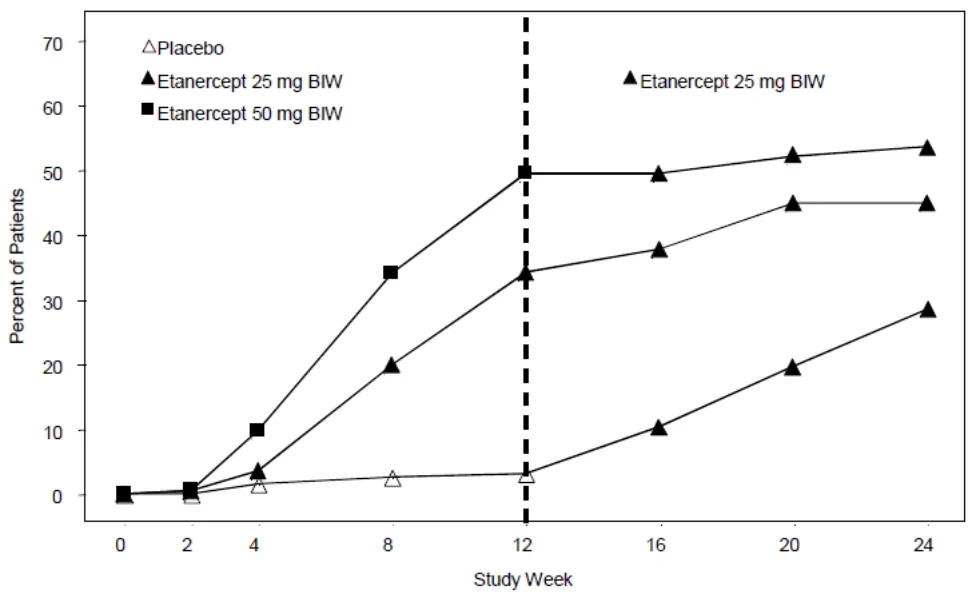
In Study III, PASI 75 was seen in 5 and 47 percent of patients at week 12 for placebo and 50 mg twice weekly groups, respectively.
The mean percent improvement in PASI, and Physician Static Global Assessment were significantly improved compared to placebo by week 2 at doses of 25 mg twice a week and 50 mg twice a week. In Studies I and II combined, 11% and 21% of patients at doses of 25 mg twice a week and 50 mg twice a week, respectively, achieved a high degree of clearing at week 12 as indicated by PASI 90 response. Additionally, continued improvement in PASI 90 was seen through week 24 in Study I, which was achieved by 20% and 30% of patients at doses of 25 mg twice a week and 50 mg twice a week, respectively. In Study III, PASI 90 was achieved at week 96 by 23% of patients at doses of etanercept 50 mg twice weekly. Results from patients receiving placebo or 25 mg or 50 mg twice weekly etanercept from the three studies are summarized in Table 16.
Table 16 Outcomes in Studies I, II and III
| Study I | Study II | Study III | ||||||||||||||||||||||||||||||||||||
|---|---|---|---|---|---|---|---|---|---|---|---|---|---|---|---|---|---|---|---|---|---|---|---|---|---|---|---|---|---|---|---|---|---|---|---|---|---|---|
| Etanercept | Etanercept | Etanercept | ||||||||||||||||||||||||||||||||||||
| 25 mg | 50 mg | 25 mg | 50 mg | 50 mg | Placebo/ | 50 mg BIW/ | ||||||||||||||||||||||||||||||||
| Placebo | BIWª | BIW | Placebo | BIWª | BIW | Placebo | BIW | 50 mg BIW | 50 mg BIW | |||||||||||||||||||||||||||||
| Response | N=166 | N=162 | N=162 | N=164 | N=164 | N=193 | N=196 | N=194 | N=307 | N=311 | N=306 | N=311 | ||||||||||||||||||||||||||
| week 12 | week 12 | week 24 | week 12 | week 24 | week 12 | week 12 | week 12 | week 12 | week 12 | week 96 | week 96 | |||||||||||||||||||||||||||
| PASI 50 - % | 14 | 58** | 70 | 74** | 77 | 9 | 64** | 77** | 14 | 74** | 79 | 83 | ||||||||||||||||||||||||||
| PASI 75 - % | 4 | 34** | 44 | 49** | 59 | 3 | 34** | 49** | 5 | 47** | 52 | 51 | ||||||||||||||||||||||||||
| PASI 90 - % | 1 | 12** | 20 | 22** | 30 | 1 | 11** | 21** | 1 | 21** | 23 | 23 | ||||||||||||||||||||||||||
| Physician static global assessment, clear or almost clear - % (0 or 1 on 0-5 scale) | 5 | 34** | 39 | 49** | 55 | 4 | 39** | 57** | 6 | 49** | 39 | 41 | ||||||||||||||||||||||||||
| Percent improvement from baseline in PASI - mean | 14.0 | 52.6** | 62.1 | 64.2** | 71.1 | 0.2 | 56.8** | 67.5** | 6.9 | 63.2** | 67.5 | 69.8 | ||||||||||||||||||||||||||
| Percent improvement from baseline in DLQI - mean | 10.9 | 50.8** | 59.4 | 61.0** | 73.8 | 6.2 | 65.4** | 70.2** | 22.1 | 69.1** | 68.3 | 67.3 | ||||||||||||||||||||||||||
| Patients static global assessment of psoriasis - median (0-5 scale) | 4.0 | 2.0** | 2.0 | 1.5** | 1.0 | 4.0 | 2.0** | 1.0** | 4.0 | 1.0 | 1.0 | 1.0 | ||||||||||||||||||||||||||
| BIW = twice a week; DLQI = dermatology life quality index; PASI = psoriasis area and severity index | ||||||||||||||||||||||||||||||||||||||
| ** p ≤ 0.0001 compared with placebo at week 12. | ||||||||||||||||||||||||||||||||||||||
| a 25 mg administered twice weekly has been shown to have comparable exposure and efficacy to 50 mg administered once weekly. | ||||||||||||||||||||||||||||||||||||||
In Study III during weeks 13 through 96, of the open-label period etanercept therapy continued to provide clinically meaningful improvements to both patient groups. After initiation of etanercept therapy at week 13, patients who had received placebo through week 12 (placebo/etanercept group) showed improvements similar to those seen in the patients who had received etanercept weeks 1 through 12 in the double-blind portion of the study (etanercept/ etanercept group).
Patient reported outcomes also improved in patients receiving etanercept in Studies I, II and III. Patients receiving each dose of etanercept demonstrated significant improvements at week 12 in the DLQI and all six subscales including symptoms and feelings, daily activities, leisure, work and school, personal relationships, and treatment. After 12 weeks of treatment, a greater proportion of patients on etanercept reported a total DLQI score of 0, indicating that these patients were “not at all” affected by their psoriasis for all six subscales of the DLQI. For Studies I and II, respectively, 24% and 25% for 50 mg twice a week, 12% and 20% for 25 mg twice a week versus 2% and 1% for placebo). For Study III at 12 weeks, the portion of patients with a total DLQI score of 0 was 28% and 43%, for etanercept 50 mg twice weekly and placebo, respectively.
The Patient Static Global Assessment and the mean percent improvement in DLQI was significantly improved compared to placebo by week 2 at doses of 25 mg twice a week and 50 mg twice a week. In addition, the two summary scales of the SF-36 Health Survey obtained in Study II, the physical component summary and the mental component summary, significantly improved at week 12 in patients treated with 25 mg or 50 mg twice a week.
In Study I, 409 patients who achieved PASI improvement of at least 50% at week 24 were entered into a study drug withdrawal and retreatment period as described above. During the study drug withdrawal period, patients had a median time to disease relapse of 3 months. Responses to retreatment with etanercept at weeks 12 and 24 were similar in magnitude to those seen during the initial double-blind portion of the study (Figure 4).
In Study II, 190 patients initially randomized to 50 mg twice a week had their etanercept dose decreased at week 12 from 50 mg twice a week to 25 mg twice a week for an additional 3 months. Of the 91 patients who were PASI 75 responders at week 12, 77% maintained their PASI 75 response at week 24. Of the 23% who were PASI 75 non-responders at week 24, 20% were PASI 50 responders and 3% were PASI 50 non-responders. Additionally, of the 88 patients who were PASI 75 non-responders at week 12, 32% became PASI 75 responders at week 24.
Pediatric Plaque Psoriasis (PsO)
Study demographics and trial design
The safety and efficacy of etanercept were assessed in a 48-week, randomized, double-blind, placebo-controlled study in 211 pediatric patients with moderate to severe PsO. Patients enrolled in the study were aged 4 to 17 years with moderate to severe PsO (as defined by a Static Physician`s Global Assessment (sPGA) score ≥ 3, involving ≥ 10% of the body surface area, and a PASI score ≥ 12) and had a history of receiving phototherapy or systemic therapy, or were inadequately controlled on topical therapy. Patients with guttate, erythrodermic, or pustular psoriasis and patients with severe infections within 4 weeks of screening were excluded. The study consisted of three treatment periods: a 12-week, double-blind, placebo controlled treatment period; a 24-week, open-label treatment period; and a 12-week, randomized double-blind, withdrawal-retreatment period. In the first treatment period, subjects were stratified into two age groups at randomization (4 to 11 years old versus 12 to 17 years old).
Table 17 Summary of Patient Demographics for a Clinical Trial in Pediatric Patients with Plaque Psoriasis
| Study # | Trial design | Dosage, route of administration and duration | Study patients (n) | Mean age (Range) | Gender % female (n) |
|---|---|---|---|---|---|
Study 1 (Paller et al.) | Part 1: Multicenter, double-blind, randomized, placebo-controlled | Etanercept 0.8 mg/kg (up to a maximum of 50 mg per dose) or placebo SC once weekly for 12 weeks | |||
| Etanercept: | 106 | 12.8 (4-17) | 48% (51) | ||
| Placebo: | 105 | 12.6 (4-17) | 50% (52) | ||
Part 2: Multicenter, open-label | Etanercept open-label 0.8 mg/kg (up to a maximum of 50 mg per dose) SC once weekly for 24 weeks | 208 | 12.7 (4-17) | 49% (102) | |
Part 3: Multicenter, double-blind, randomized, withdrawal-retreatment | 12-week withdrawal retreatment period; | ||||
| Etanercept 0.8 mg/kg (up to a maximum of 50 mg per dose) or placebo SC once weekly | 138 | 12.7 (4-17) | 51% (70) | ||
| SC = subcutaneous | |||||
Patients received etanercept 0.8 mg/kg (up to a maximum of 50 mg per dose) or placebo once weekly for the first 12 weeks. At or after week 4 of the 12-week, double-blind, placebo-controlled treatment period, subjects whose psoriasis worsened relative to baseline ( > 50% increase in PASI score, and an absolute increase of at least 4 points compared to baseline) were allowed to enter an escape arm to receive open-label etanercept every week through week 12. After 12 weeks, the patients entered a 24-week open-label treatment period in which all patients received etanercept at the same dose. This was followed by a 12-week withdrawal retreatment period.
Response to treatment was assessed after 12 weeks of therapy and was defined as the proportion of patients who achieved a reduction in PASI score of at least 75% from baseline. The PASI is a composite score that takes to consideration both the fraction of body surface area affected and the nature and severity of psoriasis changes within the affected regions (induration, erythema, and scaling).
Other evaluated outcomes included the proportion of patients who achieved a score of “clear” or “almost clear” by the sPGA and the proportion of patients with a reduction in PASI score of at least 50% and 90% from baseline. The sPGA is a 6-category scale ranging from “5 = severe” to “0 = none” indicating the physician’s overall assessment of the PsO severity focusing on induration, erythema and scaling. Treatment success of “clear” or “almost clear” consisted of none or minimal elevation in plaque, up to faint red colouration in erythema and none or minimal fine scale over <5% of the plaque. Patients who entered the escape arm or who had missing data at week 12 were considered treatment failures. Treatment failures were considered non responders for PASI 75, PASI 50 and PASI 90 responses and the clear/almost clear status of sPGA.
Patients in all treatment groups had a median baseline PASI score of 16.4, and the percentage of patients with baseline sPGA classifications was 65% for moderate, 31% for marked and 3% for severe. Across all treatment groups, the percentage of patients who previously received systemic or phototherapy for PsO was 57%.
Efficacy results are summarised in Table 18.
Table 18 Pediatric Psoriasis Outcomes at 12 Weeks
Placebo (N = 105) | Etanercept 0.8 mg/kg Once Weekly (N = 106) | |
|---|---|---|
| PASI 75, n (%) | 12 (11%) | 60 (57%)a |
| PASI 50, n (%) | 24 (23%) | 79 (75%)a |
| sPGA “clear” or “almost clear”, n (%) | 14 (13%) | 56 (53%)a |
| PASI 90, n (%) | 7 (7%) | 29 (27%)a |
PASI = psoriasis area and severity index; sPGA = static physician`s global assessment a p < 0.0001 compared with placebo p-value is based on two-sided Cochran-Mantel-Haenszel test stratified by age group (4 to 11 years old versus 12 to 17 years old). Overall significance level for primary and secondary endpoints at week 12 is controlled at 0.05 using a sequential testing scheme. | ||
Maintenance of Response
To evaluate maintenance of response, subjects who achieved PASI 75 response at Week 36 were re-randomized to either etanercept or placebo during a 12-week randomized withdrawal period. The maintenance of PASI 75 response was evaluated at Week 48. The proportion of patients who maintained PASI 75 response at Week 48 was numerically higher for subjects treated with etanercept (64%) compared to those treated with placebo (49%).
15 MICROBIOLOGY
No microbiological information is required for this drug product.
16 NON-CLINICAL TOXICOLOGY
The preclinical toxicologic profile of TNFR:Fc was evaluated in monkeys, rats, mice and rabbits. Multidose toxicity studies were conducted in monkeys following repeat administration by intravenous, subcutaneous or oronasal inhalation routes. The incidence and time course of neutralizing antibody formation were characterized in toxicity and reproductive toxicity studies, as well as in special toxicology studies in mice, rats and rabbits.
TNFR:Fc was well tolerated in all species used in preclinical toxicology studies at doses representing large multiples (up to 30x in monkeys, and up to 100x in rats and rabbits) of the maximum human therapeutic dose of 0.5 mg/kg. These doses resulted in systemic exposure levels (based on AUC) that were up to about 30, 45 and 74 times higher than human exposure at the maximum therapeutic dose, in monkeys, rats, and rabbits, respectively.
Multidose Toxicity
No adverse effects were observed in monkeys administered twice-weekly subcutaneous injections of TNFR:Fc at 1, 5 and 15 mg/kg for 28 days. The only potentially treatment-related change was increased adrenal gland weights in female monkeys for the 5 and 15 mg/kg doses (34% and 54% increase in weight, respectively, compared to control). This finding was not considered of toxicologic importance, as adrenal weights for females at 5 and 15 mg/kg were within the facility's historical control range for untreated females. In addition, no macroscopic or microscopic pathologic changes occurred in adrenals, there were no clinical pathologic changes indicative of adrenal function effects, and no changes in adrenal weights were present in males at any dose. Adrenal weights for females receiving a dose of 1 mg/kg were comparable to vehicle control values. Cmax and AUC increased with increasing dose on Days 1 and 22. These increases were dose proportional on Day 1. AUC0-00 at 15 mg/kg on Day 22 was approximately 30 times the anticipated human exposure. Systemic exposure in Cynomolgus monkeys at 1 and 5 mg/kg was reduced at Day 22 compared to Day 1 values. The decrease in Cmax and AUC at 1 and 5 mg/kg is attributed to the formation of polyclonal anti-TNFR:Fc antibodies, which interfere with the quantitative ELISA method used for measurement of TNFR:Fc concentrations and increased antibody-mediated clearance. It is possible that at the higher dose of 15 mg/kg, the antibody response may be saturated or suppressed by the higher levels of TNFR:Fc.
No adverse effects have been reported through Week 14 of an ongoing 26 week study in which monkeys are administered TNFR:Fc by twice-weekly subcutaneous injection at 1, 5 and 15 mg/kg.
No treatment-related effects were observed in monkeys after two weeks of twice-weekly subcutaneous injections of either of two lots of TNFR:Fc produced at two different manufacturing facilities and production scales at 15 mg/kg. There were no toxicokinetic differences and no neutralizing antibodies were detected in monkeys following administration of either lot.
No treatment-related effects occurred in monkeys administered TNFR:Fc at 0.2 or 2.0 mg/kg subcutaneously daily for 20 days. No delayed toxicity was observed in monkeys retained for 14 days following cessation of treatment.
No treatment-related effects occurred in monkeys administered intravenous TNFR:Fc at 1.5 or 15 mg/kg as a single dose, or daily for 3 consecutive days. No delayed toxicity occurred in monkeys retained for 18 days following cessation of treatment.
Injection site reactions were minimal with repeated administration of TNFR:Fc by intravenous or subcutaneous injection.
The only treatment-related effects in monkeys administered 0.15 and 0.70 mg/kg/day TNFR:Fc via daily inhalation for 28 days were specific to this route of administration. Increased lung weight and microscopic perivascular cell infiltration and intra-alveolar histiocytosis were present in lungs at both dose levels. Minor increases in the number of granulocytic cells and myeloid erythroid (M:E) ratio were observed in bone marrow in one female monkey each in both TNFR:Fc-treated groups compared to the control group.
Special Toxicity
Neutralizing antibodies were detected in mice, rats, rabbits and Cynomolgus monkeys after multiple doses of TNFR:Fc administered by intravenous, subcutaneous or oronasal routes. In general, the incidence of both anti-TNFR:Fc and neutralizing antibodies increased with time. Anti-TNFR:Fc antibodies were detected in monkeys after 15 days of twice weekly subcutaneous administration, and were present in almost all animals by 3 to 4 weeks. In monkeys receiving daily subcutaneous injections of TNFR:Fc for 20 days, anti-TNFR:Fc antibodies continued to circulate for at least 14 days after drug administration was discontinued.
Neutralizing antibodies were detected as early as 1 week after the initiation of twice weekly subcutaneous administration of 1 mg/kg TNFR:Fc in mice and rats, and by 10 days in rabbits. After 4 weeks of twice weekly subcutaneous TNFR:Fc, neutralizing antibodies were detected in almost all mice, rats or rabbits administered 1 or 25 mg/kg TNFR:Fc. No neutralizing antibodies were detected in reproductive studies in rats following TNFR:Fc administration to pregnant rats by daily injections at 5 to 50 mg/kg for 12 days or at 3 to 30 mg/kg for up to 15 days. Neutralizing antibodies were detected in pregnant rabbits after 15 days of subcutaneous dosing at 5, 15 and 50 mg/kg. The incidence of neutralizing antibodies was lower and the time to appearance longer in monkeys than in other species.
Following twice weekly subcutaneous TNFR:Fc administration to monkeys, neutralizing antibodies were detected in 1 of 6 monkeys treated with 1 mg/kg TNFR:Fc on Day 26. No neutralizing antibodies were detectable by Day 26 in monkeys administered TNFR:Fc subcutaneously, twice weekly, at 5 or 15 mg/kg. These data support the selection of the monkey as the species of choice in multiple-dose toxicity studies.
The incidence of anti-TNFR:Fc antibodies and neutralizing antibodies appeared to be lower at higher doses of TNFR:Fc. One explanation for this observation is that the antibody ELISA can only detect free anti-TNFR:Fc antibodies ie, those not bound to TNFR:Fc in the serum sample. Only a low antibody incidence will be detected even in the presence of high levels of circulating anti-TNFR:Fc antibodies, if those antibodies are bound to TNFR:Fc. An alternate explanation is that high levels of TNFR:Fc may saturate or suppress the antibody response.
The detection of neutralizing antibodies is also compromised in the presence of circulating antibody-TNFR:Fc complexes. A serum concentration of 100 ng/mL TNFR:Fc is sufficient to negate antibody detection by the neutralizing antibody assays. Neutralizing antibodies were detected in monkeys administered TNFR:Fc via inhalation. The lower TNFR:Fc serum concentrations (< 60 ng/mL) observed in this study, compared to other monkey studies, would not interfere with the detection of neutralizing antibodies.
Reproductive Toxicity
There were no adverse effects of TNFR:Fc on pregnant rats or rabbits or their offspring following daily subcutaneous administration during the period of organogenesis at doses up to 100 times the intended clinical dose. These doses resulted in systemic exposures up to approximately 45 to 74 fold higher in rats and rabbits than human exposure at the maximum therapeutic dose, based on AUC. The rat or rabbit AUC0-24 values were multiplied by 3 to compare daily dosing in rats or rabbits to dosing every 3 days in humans in determining these exposure ratios (rat or rabbit AUC/human AUC).
The pharmacokinetic profile of TNFR:Fc in pregnant animals was similar to that observed in non-pregnant rats and monkeys.
Neutralizing antibodies were detected in the rabbits, but not in the rat, following daily subcutaneous administration of TNFR:Fc during the period of organogenesis.
Mutagenicity
TNFR:Fc is not considered to represent a genotoxic hazard to humans based on the results of bacterial mutagenicity, mouse lymphoma cell mutagenicity, human chromosomal aberrations, and mouse micronucleus assays.
17 SUPPORTING PRODUCT MONOGRAPHS
- 1. PrENBREL®, Subcutaneous Injection, 25mg/mL & 50mg/mL, submission control 245363; Product Monograph, Amgen Canada Inc., MAR 19, 2021.