


Product Monograph - Etcamah
1. Indications
ETCAMAH (camizestrant) is indicated in combination with a CDK4/6 inhibitor (palbociclib, ribociclib, or abemaciclib) for the treatment of adult patients with hormone receptor (HR)-positive, human epidermal growth factor receptor 2 (HER2)-negative, locally advanced or metastatic breast cancer upon detection of Estrogen Receptor 1 mutation (ESR1m) during first-line aromatase inhibitor (AI)-based endocrine therapy.
1.1. Pediatrics
Pediatrics (<18 years of age): No data are available to Health Canada; therefore, Health Canada has not authorized an indication for pediatric use (see 7.1.3 Pediatrics).
1.2. Geriatrics
Geriatrics (≥65 years of age): Evidence from clinical studies suggests no overall differences in safety and efficacy between patients (≥65 years of age) and patients (<65 years of age) who received ETCAMAH (see 7.1.4 Geriatrics).
2. Contraindications
ETCAMAH (camizestrant) is contraindicated in patients who are hypersensitive to this drug or to any ingredient in the formulation, including any non-medicinal ingredient, or component of the container. For a complete listing, see 6 Dosage Forms, Strengths, Composition, and Packaging.
4. Dosage and Administration
4.1. Dosing Considerations
- Patients should be selected for treatment with ETCAMAH based on the presence of an ESR1m in plasma specimens, as determined by a validated circulating tumor DNA (ctDNA) test (see 14 Clinical Trials).
- In pre- or peri-menopausal women and in men, ETCAMAH plus a CDK4/6 inhibitor should be combined with a Luteinizing Hormone-Releasing Hormone (LHRH) agonist, in accordance with current clinical practice standards.
- A pregnancy test should be performed and confirmed as negative prior to initiating treatment. Females of reproductive potential should use effective non-hormonal contraception during treatment with ETCAMAH (see 7 Warnings and Precautions).
- Patients with moderate and severe (Child-Pugh B, C) hepatic impairment should be monitored closely for adverse reactions due to an increased systemic exposure to ETCAMAH, especially when indicated in combination with ribociclib (see 10.3 Pharmacokinetics). Consider reducing the dosing frequency of ETCAMAH 75 mg to every other day in patients with severe hepatic impairment and in patients with moderate and severe hepatic impairments when ETCAMAH is used in combination with ribociclib (see 4.2 Recommended Dose and Dosage Adjustment).
- Patients receiving concomitant treatment with ribociclib should be monitored closely for adverse reactions, as ribociclib may increase ETCAMAH systemic exposure (see 9.2 Drug Interactions Overview).
Camizestrant is a strong inhibitor of CYP2C9 and CYP2C19. Avoid concomitant use of ETCAMAH with sensitive substrates or substrates with narrow therapeutic range of CYP2C9 and/or CYP2C19 during treatment with ETCAMAH and for 2 weeks after the last dose. If an
- alternative drug product cannot be used or concomitant use cannot be avoided, reduce the dose of the CYP2C9 or CYP2C19 substrate in accordance with the respective Product Monograph, as appropriate. (See 9.2 Drug Interactions Overview and 9.4 Drug-Drug Interactions).
- Avoid concomitant use of ETCAMAH with strong CYP3A inducers. Moderate CYP3A inducers may be used with caution (See 9.2 Drug Interactions Overview and 9.4 Drug-Drug Interactions).
4.2. Recommended Dose and Dosage Adjustment
- The recommended dose of ETCAMAH in combination with a CDK4/6 inhibitor is 75 mg once daily.
- The CDK4/6 inhibitor should be continued at the same dose as was used before the detection of the ESR1m. For full dosing instructions of the selected CDK4/6 inhibitor, consult the corresponding Product Monograph.
- Treatment with ETCAMAH should continue as long as clinical benefit is observed or until unacceptable toxicity occurs.
Health Canada has not authorized an indication for pediatric use.
Dosage Adjustment
Treatment with ETCAMAH may be temporarily interrupted and/or discontinued to manage adverse reactions per dose modification guideline provided in Table 1.
Table 1 – Recommended dose modification for ETCAMAH
| NCI CTCAE (v5.0) Toxicity | Details | Action |
|---|---|---|
| NCI CTCAE (v5.0) Toxicity | Details | Action |
| Bradycardiaa | Symptomatic, CTCAE Grade ≥2 | Suspend ETCAMAH dosing until bradycardia resolves to ≤ Grade 1. If a concomitant medication contributing to bradycardia is identified, discontinue or modify its dose until bradycardia resolves to ≤ Grade 1. Monitor the heart rate 7 and 14 days after restarting ETCAMAH. Permanently discontinue ETCAMAH if symptomatic bradycardia persists, or if heart rate is persistently low (below 45 bpm). |
| QT interval prolongation | QTcF > 480 ms or > 500 ms and prolongation from baseline > 60 ms | Suspend ETCAMAH until QTcF returns to ≤ 480 ms and stabilizes. Monitor with ECGs 7 and 14 days after restarting ETCAMAH. Permanently discontinue ETCAMAH if QTcF interval is > 500 ms or if prolongation from baseline is > 60 ms |
| and is associated with Torsade de Pointes or polymorphic ventricular tachycardia, unexplained syncope or signs/symptoms of serious arrhythmia. | ||
| Visual effectsb | CTCAE Grade ≥ 2/limiting instrumental ADLs | If visual symptoms are progressive, persistent, or interfere with instrumental ADLs suspend ETCAMAH treatment until symptoms resolve and refer the patient for an ophthalmological evaluation. Monitor visual effects at the next visit. |
| Other ≥ Grade 3 adverse events assessed as causally related to ETCAMAH | Severe AEs considered to be causally related to ETCAMAH after consideration of possible alternative contributing factors and concomitant medications | Suspend ETCAMAH dosing until resolution of AEs to ≤ Grade 2. Permanently discontinue ETCAMAH if ≥ Grade 3 AEs recur. |
ADL = Activities of daily living; AE = Adverse Event; CTCAE = Common Terminology Criteria for Adverse Events; NCI = National Cancer Institute.
a. Bradycardia: (heart rate < 60 bpm) includes bradycardia and sinus bradycardia.
b. Visual effects include photopsia, vision blurred, visual impairment, diplopia, and photophobia of eye disorders MedDRA SOC, and visual perseveration of nervous system disorders MedDRA SOC.
Refer to the Product Monograph for the co-administered CDK4/6 inhibitor or LHRH agonist for dose modification guidelines in the event of toxicity, and other relevant safety information.
Special populations
Renal impairment
No dose adjustment of ETCAMAH is required for patients with mild or moderate renal impairment. ETCAMAH is not recommended for patients with severe renal impairment (see 10 Clinical Pharmacology).
Hepatic impairment
Consider reducing the dosing frequency of ETCAMAH 75 mg to every other day in patients with severe hepatic impairment (Child-Pugh C) and in patients with moderate and severe hepatic impairment when ETCAMAH is indicated in combination with ribociclib. These patients should be monitored closely (see 10.3 Pharmacokinetics).
The efficacy and safety of ETCAMAH have not been studied in advanced breast cancer patients with moderate and severe hepatic impairment; initiate ETCAMAH treatment in these patients only when the potential benefit outweighs potential risk.
4.4. Administration
ETCAMAH is for oral use.
The tablet should be swallowed whole with water and may be taken with or without food, at approximately the same time each day. ETCAMAH should not be ingested if it is broken, cracked, or otherwise not intact. The tablet should not be chewed, crushed, dissolved, or divided.
4.5. Missed Dose
If a dose of ETCAMAH is missed, it can be taken immediately within 6 hours after the time it is usually taken. After more than 6 hours, the dose should be skipped for that day. If the patient vomits, an additional dose should not be taken. The next dose of ETCAMAH should be taken at the usual time.
5. Overdose
There is limited experience with reported cases of ETCAMAH overdose. In case of suspected overdose, patients should be closely monitored and treated with general symptomatic and supportive measures if necessary.
| For the most recent information in the management of a suspected drug overdose, contact your regional poison control centre or Health Canada’s toll-free number, 1-844 POISON-X (1-844-764-7669). |
|---|
- 6. Dosage Forms, Strengths, Composition, and Packaging
Table 2 – Dosage Forms, Strengths, and Composition
Description ETCAMAH (camizestrant) is a beige, round, bi-convex, film-coated tablet, debossed with ‘CM’ above ‘75’ on one side and plain on the reverse. Approximate diameter: 9 mm.
Packaging
ETCAMAH (camizestrant) is supplied in aluminum blisters containing 28 film-coated tablets: 2 blisters with 14 tablets each.
7. Warnings and Precautions
Cardiovascular
Bradycardia
ETCAMAH causes dose-dependent decrease in heart rate with a maximum decrease observed on day 15 (mean heart rate decrease from baseline of around 14 bpm), which remains stable thereafter. Bradycardia events (including sinus bradycardia) were reported in 10.3% of patients in the ETCAMAH plus a CDK4/6 inhibitor group vs no patients in the AI plus a CDK4/6 inhibitor group. No Grade ≥ 3 events reported. Monitor for bradycardia, particularly in patients receiving
| Route of Administration | Dosage Form/ Strength/Composition | Non-Medicinal Ingredients |
| Oral | Tablet 75 mg camizestrant | Calcium hydrogen phosphate, iron oxide black, iron oxide red, iron oxide yellow, macrogol 3350, magnesium stearate, microcrystalline cellulose, polyvinyl alcohol, sodium starch glycolate (type A), talc, and titanium dioxide. |
concomitant ribociclib, other medications known to cause bradycardia, or those with additional risk factors for bradycardia.
QT interval prolongation
ETCAMAH carries a potential for QT-prolonging effects. AEs of electrocardiogram QT prolonged were reported in 3.9% of patients in the ETCAMAH plus a CDK4/6 inhibitor group and in 1.3% of patients in the AI plus a CDK4/6 inhibitor group. No patients in either treatment group had a QTcF value above 500 ms during treatment. There were 2 patients in the ETCAMAH plus a CDK4/6 inhibitor group with an increase from baseline > 60 ms during the study. One patient (0.6%) in the ETCAMAH plus a CDK4/6 inhibitor group had a non-serious CTCAE Grade 3 AE. This event resolved after the dose of ETCAMAH was interrupted and the dose of the CDK4/6 inhibitor (ribociclib) was reduced. Close monitoring is recommended when ETCAMAH is used in combination with ribociclib or other drugs known to cause QT prolongation (see 9.2 Drug Interactions Overview).
Driving and Operating Machinery
No studies on the effects of ETCAMAH on the ability to drive or operate machinery have been conducted. However, since visual effects have been reported, patients should exercise caution when driving or operating machinery while taking ETCAMAH.
Monitoring and Laboratory Tests
- Conduct periodic, routine heart rate evaluation during standard oncology clinic visit, especially on Day 15 to Day 28 of Cycle 1, when a maximum heart rate decrease is observed.
- Electrocardiogram (ECG) assessment should be performed prior to initiating treatment, during Cycle 1 at approximately Day 15, at the start of new treatment cycle (e.g., Cycle 2) and then periodically every 2 months. Patients with bradycardia (HR <60 bpm) at baseline or who are receiving drugs that prolong the QT interval and/or have a known risk of TdP require close monitoring.
Ophthalmologic
- ETCAMAH causes visual side effects including photopsia, vision blurred, visual impairment, diplopia, photophobia and visual perseveration, which tend to appear within a few weeks after start of treatment. Visual effects were reported in 32.9% patients in the ETCAMAH plus a CDK4/6 inhibitor group and 16.8% in the AI plus a CDK4/6 inhibitor group. Structural ocular disorder AEs were reported at low frequency and at comparable rates across both treatment groups. Patients should be advised to report new or worsening visual symptoms.
Reproductive Health
Contraception: Women of childbearing potential should be advised to avoid becoming pregnant while receiving ETCAMAH. A pregnancy test should be performed and verified as negative on women of childbearing potential prior to initiating treatment and re-testing should be considered throughout treatment.
Advise females of reproductive potential to use effective non-hormonal contraception during treatment with ETCAMAH and for 4 weeks after last dose. Advise male patients with female partners of reproductive potential to use effective contraception during treatment with ETCAMAH and for 1 week after last dose.
- Fertility: Based on findings in animals, ETCAMAH may impair fertility in females and males of reproductive potential. Findings in female animals were reversible. The reversibility of effects on male fertility in animals is unknown (see 16 Non-Clinical Toxicology). The effects of ETCAMAH on fertility were not assessed in humans.
7.1. Special Populations
7.1.1. Pregnancy
Advise pregnant women of the potential risk to a fetus. There are no data from the use of ETCAMAH in pregnant women to inform drug-associated risk. Studies in animals have shown reproductive toxicity (see 16 Non-Clinical Toxicology). Based on its mechanism of action and preclinical data, ETCAMAH may cause fetal harm when administered to a pregnant woman. Embryofetal lethality, dystocia, pup mortality and impaired offspring growth was observed in a rat study where animals were dosed from implantation throughout gestation, parturition and lactation at exposures below the human AUC at the recommended dose (see 16 Non-Clinical Toxicology). ETCAMAH is not recommended during pregnancy and for women of childbearing potential not using contraception.
7.1.2. Breastfeeding
It is unknown whether camizestrant and its metabolites are excreted in human milk. Since a risk to the breastfed child cannot be excluded, patients should be advised to avoid breastfeeding during treatment with ETCAMAH, and for at least one week after the last dose.
7.1.3. Pediatrics
Pediatrics (<18 years of age): No data are available to Health Canada; therefore, Health Canada has not authorized an indication for pediatric use.
7.1.4. Geriatrics
Of the 155 patients who received ETCAMAH in combination with a CDK4/6 inhibitor (palbociclib, ribociclib, or abemaciclib) in the phase III study SERENA-6, 62 patients (39.4%) were ≥65 years of age (see 14 Clinical Trials). No overall differences in efficacy or safety were observed between patients ≥65 years of age and patients <65 years of age who received ETCAMAH plus a CDK4/6 inhibitor.
8. Adverse Reactions
8.1. Adverse Reaction Overview
The safety profile of ETCAMAH in combination with a CDK4/6 inhibitor (palbociclib, ribociclib, or abemaciclib) was evaluated in 155 patients with hormone receptor (HR)-positive, human epidermal growth factor receptor 2 (HER2)-negative, locally advanced or metastatic breast cancer upon detection of ESR1m during first-line AI-based endocrine therapy in the SERENA-6 study (see 14 Clinical Trials). The safety profile of camizestrant in combination with palbociclib, ribociclib, or abemaciclib was consistent with the known safety profile of each drug.
The most commonly reported adverse reactions regardless of causality (in ≥20% of patients) in the ETCAMAH plus a CDK4/6 inhibitor group were neutropenia, neutrophil count decreased, anemia and photopsia.
Adverse reactions with a ≥5% difference between both treatment groups (ETCAMAH plus a
CDK4/6 inhibitor vs AI plus a CDK4/6 inhibitor) were neutropenia (36% vs 26%), neutrophil count decreased (28% vs 23%), photopsia (21% vs 8%), dry eye (13% vs 7%), leukopenia (8% vs 2%), and bradycardia (7% vs 0%).
The most common CTCAE Grade ≥ 3 adverse reactions were hematologic (primarily neutropenia, neutrophil count decreased, white blood cell count decreased, and anaemia). When adjusted for duration of exposure, the incidence rates of haematological toxicities were comparable between treatment groups and consistent with the known safety profiles associated with CDK4/6 inhibitors.
Serious adverse reactions were reported in 1.9% of patients in the ETCAMAH plus a CDK4/6 inhibitor group and 7.7% of patients in the AI plus a CDK4/6 inhibitor group.
The most common adverse reactions leading to dose modifications in the ETCAMAH plus a CDK4/6 inhibitor group compared with the AI plus CDK4/6 inhibitor group included: bradycardia /sinus bradycardia, (6 % vs 0%), neutropenia (3% vs 2%). Other adverse reactions leading to dose modifications (approximately 1 - 2%), included anaemia, pneumonia, photopsia, electrocardiogram QT prolonged, neutrophil count decreased, vision blurred, leukopenia and thrombocytopenia.
The incidence of adverse reactions leading to discontinuation was very low (<3%) and balanced across treatment groups.
8.2. Clinical Trial Adverse Reactions
Clinical trials are conducted under very specific conditions. Therefore, the frequencies of adverse reactions observed in the clinical trials may not reflect frequencies observed in clinical practice and should not be compared to frequencies reported in clinical trials of another drug.
Table 3 lists the incidence of adverse drug reactions from the SERENA-6 study reported in at least ≥5% of patients with hormone receptor (HR)-positive, human epidermal growth factor receptor 2 (HER2)-negative, locally advanced or metastatic breast cancer upon detection of ESR1m during first-line AI-based endocrine therapy. The median duration of exposure to ETCAMAH in combination with a CDK4/6 inhibitor was 15.9 months and to AI in combination with a CDK4/6 inhibitor was 7.36 months.
Table 3 – Adverse Reactions (≥ 5%) in patients treated with ETCAMAH plus a CDK4/6 inhibitor versus AI plus a CDK4/6 inhibitor in SERENA-6 study
| System Organ Class / Preferred Term | ETCAMAH + CDK4/6 inhibitor | AI + CDK4/6 inhibitor | |||||||
|---|---|---|---|---|---|---|---|---|---|
| All grades (%) | Grade ≥3 (%) | All grades (%) | Grade ≥3 (%) | ||||||
| Blood and lymphatic system disorders | |||||||||
| Neutropenia | 33 | 27 | 26 | 17 | |||||
| Anaemia | 23 | 6 | 22 | 8 | |||||
| Leukopenia | 8 | 5 | 2 | 1 | |||||
| Thrombocytopenia | 7 | 2 | 5 | 0 | |||||
| Cardiac disorders | |||||||||
| Bradycardia / Sinus bradycardia | 11 | 0 | 0 | 0 | |||||
| Eye disorders | |||||||||
| Photopsia | 21 | 1 | 8 | 0 | |||||
| Dry eye | 13 | 0 | 7 | 0 | |||||
| Vision Blurred | 8 | 0 | 8 | 0 | |||||
| Vitreous floaters | 9 | 0 | 3 | 0 | |||||
| Gastrointestinal disorders | |||||||||
| Nausea | 11 | 0 | 16 | 1 | |||||
| Diarrhoea | 10 | 0 | 14 | 1 | |||||
| General disorders and administration site conditions | |||||||||
| Fatigue | 16 | 1 | 17 | 1 | |||||
| Asthenia | 8 | 0 | 7 | 0 | |||||
| Investigations | |||||||||
| Neutrophil count decreased | 28 | 23 | 23 | 19 | |||||
| White blood cell count decreased | 10 | 8 | 7 | 1 | |||||
| Aspartate aminotransferase increased | 6 | 0 | 8 | 1 | |||||
| Alanine aminotransferase increased | 5 | 1 | 8 | 0 | |||||
| Musculoskeletal and connective tissue disorders | |||||||||
| Arthralgia | 19 | 0 | 19 | 1 | |||||
| Skin and subcutaneous tissue disorders | |||||||||
| Pruritus | 6 | 0 | 4 | 0 | |||||
| Vascular disorders | |||||||||
| Hot flush | 8 | 0 | 5 | 0 | |||||
Graded according to National Cancer Institute Common Terminology Criteria for Adverse Events (CTCAE), version 5.0.
The table includes adverse events with an onset date or that worsened on or after the date of first dose of study treatment up to and including 28 days following the date of last dose of study treatment and prior to the start of any subsequent cancer therapy.
Patients with multiple occurrences were counted once per SOC and PT regardless of the number of occurrences.
MedDRA Version 28.1
8.3. Less Common Clinical Trial Adverse Reactions
Other clinically relevant adverse reactions reported in less than 5% of patients treated with ETCAMAH in combination with a CDK4/6 inhibitor in the SERENA-6 study were:
Blood and lymphatic system disorders: febrile neutropenia (0.6%)
General disorders and administration site conditions: sudden death (0.6%)
Infections and infestations: pneumonia (3.9%)
Vascular disorders: deep vein thrombosis (2.6%)
8.4. Abnormal Laboratory Findings: Hematologic, Clinical Chemistry, and Other Quantitative Data
Clinical Trial Findings
Table 4 – Laboratory Abnormalities Occurring in ≥10% of Patients Treated with ETCAMAH in SERENA-6
| Laboratory Abnormality | Camizestrant + CDK4/6 inhibitor N=155 | Aromatase inhibitor + CDK4/6 inhibitor N=155 | |||||||
| Any grade (%) | Grade 3 or 4 (%) | Any grade (%) | Grade 3 or 4 (%) | ||||||
| Hematology | |||||||||
| Leukocytes decreased | 94 | 28 | 89 | 23 | |||||
| Neutrophils decreased | 88 | 48 | 83 | 46 | |||||
| Hemoglobin decreased | 77 | 6 | 79 | 10 | |||||
| Lymphocyte decreased | 68 | 12 | 61 | 12 | |||||
| Platelets decreased | 48 | 3 | 39 | 3 | |||||
| Chemistry | |||||||||
| Creatinine increased | 31 | 1 | 40 | 1 | |||||
| Triglycerides increased | 26 | 2 | 20 | 1 | |||||
| Aspartate aminotransferase increased | 29 | 3 | 43 | 1 | |||||
| Corrected calcium decreased | 26 | 0 | 16 | 1 | |||||
| Gamma glutamyl transferase increased | 22 | 3 | 32 | 10 | |||||
| Alanine aminotransferase increased | 19 | 2 | 27 | 0 | |||||
| Albumin decreased | 15 | 0 | 17 | 0 | |||||
| Sodium decreased | 15 | 1 | 13 | 3 | |||||
| Alkaline phosphatase increased | 12 | 1 | 30 | 2 | |||||
Graded according to National Cancer Institute Common Terminology Criteria for Adverse Events (CTCAE), version 5.0.
Includes patients with at least one on-treatment post-baseline result.
9. Drug Interactions
9.2. Drug Interactions Overview
Clinical Studies and modelling approaches
Strong CYP3A inhibitors
Camizestrant is a CYP3A substrate. Co-administration of ETCAMAH with a strong CYP3A inhibitor, e.g. itraconazole and ribociclib (see 9.4 Drug-Drug Interactions), increases ETCAMAH plasma concentrations, which may increase the incidence and severity of adverse reactions of ETCAMAH.
ETCAMAH is indicated for use in combination with CDK4/6 inhibitors, including ribociclib, which is a strong CYP3A inhibitor and QT prolonging drug. Monitor for increased adverse reactions to ETCAMAH.
Strong and moderate CYP3A4 inducers
Co-administration of ETCAMAH with CYP3A inducers decreases camizestrant plasma concentrations, which may decrease the efficacy of ETCAMAH. Avoid concomitant use with strong CYP3A4 inducers. Use of moderate CYP3A4 inducers in combination with ETCAMAH and abemaciclib or palbociclib may be used with caution.
CYP3A substrates
ETCAMAH is a CYP3A inhibitor. Exercise caution with co-administration of ETCAMAH with sensitive CYP3A substrates as the plasma concentrations of these substrates may be increased, which may increase the severity of adverse reactions related to these substrates. The co-administration of CYP3A substrates with a narrow therapeutic index may require dose adjustment of the substrate and should be closely monitored for adverse reactions.
CYP2C9 and CYP2C19 substrates
ETCAMAH is a strong inhibitor of CYP2C9 and CYP2C19. Avoid co-administration of ETCAMAH with sensitive substrates or substrates with narrow therapeutic range of CYP2C9 and/or CYP2C19, which may increase the risk of adverse reactions related to these substrates.
Drug products known to prolong the QT interval
ETCAMAH in combination with ribociclib has been studied clinically. Clinical monitoring and dose modifications with reference to the ribociclib Product Monograph are recommended. Avoid the use of drug products known to prolong the QT interval. Monitor ECGs as clinically indicated if concomitant use cannot be avoided (see 7 Warnings and Precautions).
In vitro studies
CYP 450 Enzymes: Camizestrant is a reversible inhibitor of CYP2B6, and CYP2D6 but does not inhibit CYP1A2, CYP2A6, CYP2C8, and CYP2E1. Camizestrant has a low potential to induce CYP1A2, and CYP2B6.
UGT Enzymes: Camizestrant inhibits UGT1A1 and UGT2B7.
Transporters: Camizestrant is a substrate of P-gp, but not a substrate of BCRP, OATP1B1, or OATP1B3. Camizestrant can inhibit P-gp, BCRP and OATP1B1. Camizestrant does not inhibit OATP1B3, MATE1, MATE-2K, OAT1, OAT3, and OCT2.
9.4. Drug-Drug Interactions
No clinically meaningful drug-drug interactions for palbociclib or abemaciclib in combination with camizestrant were observed. Ribociclib increases 75 mg camizestrant exposure to a similar level to that observed following 150 mg camizestrant exposure.
The drugs listed below are based on either drug interaction case reports or studies, or potential interactions due to the expected magnitude and seriousness of the interaction.
Table 5 – Established or Potential Drug-Drug Interactions (Victim DDI)
| Effect of other drugs on ETCAMAH | |||
| Effect of other drugs on ETCAMAH | |||
| Name of the drug product | Source of evidence | Effect | Clinical comment |
| Name of the drug product | Source of evidence | Effect | Clinical comment |
| Strong CYP3A inducersa | PBPK modelling | Camizestrant Cmax and AUC are predicted to decrease by 0.4-fold and 0.2-fold, respectively, following concomitant administration of rifampicin (strong CYP3A inducer; 600 mg once daily for 17 days). | Avoid co-administration of strong CYP3A inducers, which decreases camizestrant plasma concentrations and may decrease the efficacy of ETCAMAH. |
| Moderate CYP3A inducersb | PBPK modelling | Camizestrant Cmax and AUC are predicted to decrease by 0.5-fold and 0.4-fold, respectively, following concomitant administration of phenobarbital (moderate CYP3A inducer) 100 mg once daily for 17 days. | Camizestrant is a CYP3A substrate. Use caution when moderate CYP3A inducers are administered in combination with ETCAMAH and abemaciclib or palbociclib. |
| Strong CYP3A inhibitorsc | Clinical Trial PopPK | Itraconazole (strong CYP3A inhibitor, 200 mg); increased single 75 mg camizestrant dose Cmax and AUC by 1.37-fold and 1.90-fold respectively. Camizestrant Cmax and AUC increased approximately 2-fold when administered concomitantly with ribociclib (strong CYP3A inhibitor; 400 or 600 mg once daily). | Camizestrant is a CYP3A substrate. Concomitant use with strong CYP3A inhibitors increases camizestrant plasma concentration, which may increase the risk of adverse reactions related to ETCAMAH. ETCAMAH is indicated to be used in combination with CDK4/6 inhibitors, including ribociclib, which is a strong CYP3A inhibitor and can prolong the QT interval. Monitor for increased adverse reactions. |
| Drug Products Known to Prolong the QT Interval | Theoretical | QT interval prolongation may occur when ETCAMAH is co-administered with drug products known to prolong the QT interval. | ETCAMAH in combination with ribociclib has been studied clinically. Clinical monitoring and dose modifications with reference to the approved ribociclib label are recommended. Co-administration of other medicinal products known to prolong the QT interval and/or have a known risk of Torsades de Pointes (e.g., ciprofloxacin and ondansetron) should be avoided. If concomitant use cannot be avoided, monitor ECGs as clinically indicated. |
C=Case Study; CT = Clinical Trial; T = Theoretical; PBPK = Physiologically based pharmacokinetic modeling; PopPK = population-based pharmacokinetic modeling.
a Strong inducers decrease the AUC of sensitive substrates by ≥80%.
b Moderate inducers decrease the AUC of sensitive substrates by ≥50% to <80%.
c Strong inhibitor increases the AUC of sensitive substrates (e.g. midazolam) by ≥5-fold
Table 6 - Established or Potential Drug-Drug Interactions (Perpetrator DDI)
| Effect of ETCAMAH on other drugs | |||
| Effect of ETCAMAH on other drugs | |||
| Name of the drug product | Source of evidence | Effect | Clinical comment |
| Name of the drug product | Source of evidence | Effect | Clinical comment |
| CYP2C9 and/or CYP2C19 substrates | PBPK modelling | CYP2C9 substrates: S-warfarin (sensitivea CYP2C9 substrate: 10 mg dose oral on Day 8) Cmax and AUC are predicted to increase by 1.1-fold and 9.7-fold, respectively, following co-administration with camizestrant. Siponimod (moderatelyb sensitive CYP2C9 substrate; single 0.25 mg dose) Cmax and AUC are predicted to increase by 1.1-fold and 4.7-fold, respectively, following co-administration with camizestrant. CYP2C19 substrates: Omeprazole (sensitive CYP2C19 substrate; single 20 mg dose) Cmax and AUC are predicted to increase by 3.3-fold and 8.5-fold, respectively, following co-administration with camizestrant. Lansoprazole (moderately sensitive CYP2C19 substrate) Cmax and AUC are predicted to increase by 1.5-fold and 4.3-fold, respectively, following co-administration with camizestrant. | Camizestrant is a strong CYP2C9 and CYP2C19 inhibitor. Avoid concomitant use of ETCAMAH with sensitive substrates or substrates with narrow therapeutic range of CYP2C9 or CYP2C19 substrates during treatment with ETCAMAH and for 2 weeks after the last dose. If an alternative drug product cannot be used or concomitant use cannot be avoided, reduce the dose of the CYP2C9 or CYP2C19 substrate in accordance with the respective Product Monograph, as appropriate. |
| CYP3A substrates | Clinical Trial | Camizestrant is a CYP3A inhibitor. Midazolam (sensitive CYP3A substrate; single 1 mg dose) Cmax and AUC increased by 1.52-fold and 1.99-fold, respectively, following co-administration with camizestrant. | ETCAMAH increases exposure of CYP3A substrates which may increase the risk of adverse reaction related to these substrates. Refer to the Product Monograph for CYP3A substrates where minimal increases in the concentration may lead to serious adverse reactions. |
C=Case Study; CT = Clinical Trial; T = Theoretical; PBPK = Physiologically based pharmacokinetic modeling
a AUC of sensitive substrates increase by ≥5-fold.
b AUC of moderately sensitive substrates increase by ≥2 to <5-fold.
9.5. Drug-Food Interactions
ETCAMAH tablets may be administered with or without food (see 10.3 Pharmacokinetics).
9.6. Drug-Herb Interactions
St. John’s Wort may decrease camizestrant plasma concentrations. Use of St. John’s Wort with ETCAMAH is not recommended.
9.7. Drug-Laboratory Test Interactions
Interactions with laboratory tests have not been established.
10. Clinical Pharmacology
10.1. Mechanism of Action
Camizestrant is an estrogen receptor (ER) antagonist. In vitro, camizestrant binds to the ligand binding domain of estrogen receptor alpha (Erα), antagonising the activity of ERα encoded by both wild-type ESR1 and mutated ESR1, and inducing proteasome-dependent degradation of ERα, without agonising ERα.
Camizestrant has demonstrated anti-tumor activity in ER-positive cell lines and patient derived xenograft (PDX) models, including those with wild-type or mutated ESR1. Treatment with camizestrant in combination with a CDK4/6 inhibitor (palbociclib, ribociclib or abemaciclib) demonstrated greater anti-tumor activity than either single agent in ER-positive cell lines and PDX models.
10.2. Pharmacodynamics
Exposure-Response Relationship
The exposure-response relationships for efficacy of ETCAMAH at 75 mg QD in combination with abemaciclib, palbociclib, and ribociclib has been characterized in SERENA-6 and showed that there is no exposure-efficacy relationship between camizestrant exposure and PFS at the 75 mg dose level.
Cardiac electrophysiology
Exposure response analysis of potential QTcI prolongation of daily 75 mg to 300 mg of camizestrant monotherapy was assessed in 30 patients. The predicted drug related mean QTcI prolongation was 2.99 ms (90% CI: (-0.11, 6.09)) at the mean steady state Cmax with an upper bound of 6.09 ms (90% CI) following 75 mg camizestrant daily. At the recommended 75 mg dose of camizestrant, a mean increase in QTcI >10 ms was not observed.
10.3. Pharmacokinetics
Camizestrant pharmacokinetic parameters have been characterized in healthy volunteers and breast cancer patients. The pharmacokinetics of camizestrant 75 mg QD have been characterized in patients by population pharmacokinetic analysis (Table 7). Camizestrant steady state is reached by day 5 following once daily dosing.
Camizestrant AUC and Cmax showed greater than dose-proportional increase over the dose range of 25 mg to 450 mg.
Table 7 - Summary of Camizestrant Steady-State Pharmacokinetic Parameters
Cmax (ng/mL) | Tmax (h) | t½ (h) | AUCtau (ng.h/mL) | CL/F (L/h) | Vss/F (L) | |
| Median | 73.51 | 2.9 | 23 | 1116 | 69.1 | 1888 |
Absorption
Following oral administration, camizestrant median time to maximum plasma concentration (Tmax) is 2 hours to 4 hours after dosing. Camizestrant 75 mg dose oral bioavailability is 43%.
Effect of Food
Similar camizestrant plasma exposures were observed following administration with a high fat meal or fasted overnight. ETCAMAH can be taken either with or without food.
Distribution
Based on population pharmacokinetic analysis, camizestrant is distributed in the tissues with an apparent peripheral volume of distribution of 608 L.
Plasma protein binding of camizestrant was 75% and was not concentration-dependent in vitro. The blood-to-plasma concentration ratio was 0.99.
Metabolism
In vitro data studies suggest that camizestrant is primarily metabolized by CYP3A and UGT1A4. Human metabolites of camizestrant were detected and quantified in pharmacokinetic samples from healthy female volunteers receiving a single oral dose of 75 mg of [14C]-camizestrant. The major drug-related circulating materials were the N-glucuronide conjugate of camizestrant, the N-glucuronide of the acid metabolite and camizestrant, which accounted for 20.1%, 11.2%, and 13.6% of the circulating radioactivity in plasma. No active metabolites have been identified.
Elimination
Following single oral administration of 75 mg [14C]-camizestrant, mean total radioactivity was recovered in feces (14.5% unchanged) indicating fecal excretion was the main route of elimination following oral dosing, with 16.8% of the total radioactivity being recovered from the urine (4.8% unchanged).
Special populations and conditions
Pediatrics
The safety and effectiveness of ETCAMAH have not been established in pediatric patients.
Sex, Ethnic Origin and Weight
Based on population pharmacokinetic analysis (n=756), no clinically significant relationships were identified between model predicted steady state exposure, area under the curve at steady state (AUCss) and the following covariates: baseline age median 61 years (29-89 years), body weight median 69.9 kg (34.2-150 kg), and racial groups (86% White, 8.5% Asian, and 1.3% Black). Population pharmacokinetic analysis showed baseline body weight affected apparent volume of distribution (V2/F), but this was not clinically relevant; it did not significantly impact apparent total body clearance (CL/F) or AUCss. No dose adjustments for ETCAMAH are required based on gender, race, or body weight.
Hepatic Insufficiency
As hepatic elimination is a major route of excretion for camizestrant, hepatic impairment may result in increased plasma camizestrant concentrations.
Based on a clinical pharmacokinetic study in patients following a single 75 mg dose, camizestrant Cmax and AUC0-INF in patients with moderate (Child-Pugh B) hepatic impairment was 2.7-fold and 2.4-fold, respectively, compared to patients with normal hepatic function. Camizestrant Cmax and AUC0-INF in patients with severe (Child-Pugh C) hepatic impairment was 3.1-fold and 3.8-fold, respectively, compared to patients with normal hepatic function.
Physiological based pharmacokinetic (PBPK) modelling of camizestrant at 75 mg as monotherapy predicts that for patients with mild hepatic impairment (Child-Pugh A), the steady state Cmax and AUC is predicted to increase by 1.4-fold and 1.3-fold, respectively, compared to patients with normal hepatic function. For moderate hepatic impairment (Child-Pugh B), Cmax and AUC are predicted to increase by 2.1-fold and 2.0-fold, respectively. In these patients, combination with ribociclib 400 mg increased camizestrant Cmax and AUC by 2.7-fold and 2.8-fold, respectively, compared to patients with normal hepatic function. For severe hepatic impairment (Child-Pugh C), Cmax and AUC are predicted to increase 2.7-fold and 3.2-fold respectively. In these patients, combination with ribociclib 400 mg increased camizestrant Cmax and AUC by 3.4-fold and 4.0-fold, respectively, compared to patients with normal hepatic function.
Renal Insufficiency
There were no clinically significant differences in the pharmacokinetics of camizestrant based on baseline creatinine clearance (CrCl) 30 mL/min to <90 mL/min (mild to moderate; calculated using the Cockcroft-Gault equation).
The effect of CrCl in patients with severe renal impairment (baseline CrCl≥15 mL/min and <30 mL/min) and end-stage renal disease (baseline CrCl <15 mL/min) on camizestrant pharmacokinetics has not been established.
- Storage, Stability, and Disposal
Store between 2°C to 30°C in original package.
Any unused medicinal product or waste material should be disposed of in accordance with local requirements.
Keep out of reach and sight of children
Part 2: Scientific Information
13. Pharmaceutical Information
Drug Substance
Non-proprietary name of the drug substance(s):
Camizestrant
Chemical name:
N-[1-(3-Fluoropropyl)-3-azetidinyl]-6-[(6S,8R)- 8-methyl-7-(2,2,2-trifluoroethyl)-6,7,8,9-tetrahydro-3H-pyrazolo[4,3-f]isoquinolin-6-yl]-3-pyridinamine
Molecular formula and molecular mass:
C24H28F4N6; 476.51 g/mol
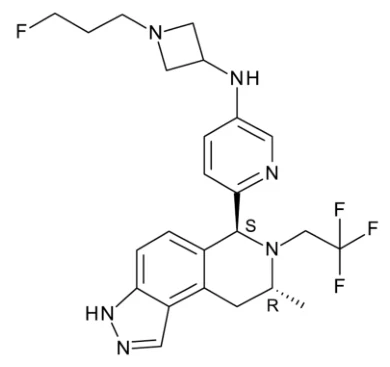
Structural formula:
Physicochemical properties:
Camizestrant is a crystalline powder with a melting point, defined as the onset temperature (differential scanning calorimetry) of approximately 132°C.
Camizestrant has a high aqueous solubility across the physiological pH range.
It is an anhydrous and non-hygroscopic substance with a distribution coefficient (logD) of 2.3 (at pH 7.4) and two measured pKa values of 4.8 and 8.4.
14. Clinical Trials
14.1. Clinical Trials by Indication
HR-positive, HER2-negative Locally Advanced or Metastatic Breast Cancer
Table 8 - Summary of Patient Demographics for Clinical Trials in HR-positive, HER2- negative Locally Advanced or Metastatic Breast Cancer in SERENA-6
| Study # | Study design | Dosage, route of administration and duration | Study subjects (n) | Mean age (range) | Sex |
NCT04964934 (SERENA-6) | Phase III, randomized, double-blind, placebo controlled multi-center, international study | Route of administration: Oral Camizestrant 75 mg oral tablet, once daily consecutively for 28 days per cycle. Aromatase Inhibitors: Anastrozole 1 mg oral tablet or letrozole 2.5 mg oral over- encapsulated tablet, once daily, consecutively for 28 days per cycle. CDK4/6 inhibitors (palbociclib, abemaciclib or ribociclib oral tablets) administered at the same dose as was used prior to the detection of ESR1m. Duration: continue as long as clinical benefit is observed or until unacceptable toxicity occurs. | Camizestrant + CDK4/6 inhibitor: 157 patients AI + CDK4/6 inhibitor: 158 patients | Camizestrant + CDK4/6 inhibitor: 59 years (29-81) AI + CDK4/6 inhibitor: 60 years (35-89) | Camizestrant + CDK4/6 inhibitor: Males: 0 Females: 157 (100%) AI + CDK4/6 inhibitor: Males: 3 (1.9%) Females: 155 (98.1%) |
SERENA-6 was a randomized, double-blind, placebo controlled study conducted in adult pre/peri/post-menopausal females and males with ER-positive, HER2-negative, locally advanced or metastatic breast cancer without evident disease progression. The study was designed to assess the efficacy and safety of switching to ETCAMAH plus a CDK4/6 inhibitor versus continuing with AI (letrozole or anastrozole) plus a CDK4/6 inhibitor once an ESR1m was detected by ctDNA testing. All patients had to have received ≥6 months of AI plus a CDK4/6 inhibitor and could have received one prior line of chemotherapy.
In SERENA-6 patients entered a surveillance period where serial Guardant360 CDx ctDNA tests were conducted (every 2-3 months) to monitor for the emergence of an ESR1m. Upon detection of an ESR1m confirmation of eligibility, patients were randomized 1:1 to receive either ETCAMAH (75 mg once daily) plus a CDK4/6 inhibitor and a placebo of AI (n=157), or AI plus a CDK4/6 inhibitor and placebo of ETCAMAH (n=158). Of all randomized patients, 75.6% received palbociclib, 14.9% received ribociclib, and 9.5% received abemaciclib. CDK4/6 inhibitors were administered at the same dose as was used prior to the detection of ESR1m. Randomization was stratified by disease site (visceral disease versus non-visceral disease), ESR1m detection timing (first test versus subsequent ctDNA tests), time for prior AI plus CDK4/6 inhibitor to randomization (<18 months versus ≥18 months), and type of CDK4/6 inhibitor (palbociclib versus ribociclib versus abemaciclib). Pre/perimenopausal female patients and male patients taking an LHRH agonist continued to receive it as before randomization. Treatment with ETCAMAH continued as long as clinical benefit was observed or until unacceptable toxicity occurred.
The primary endpoint was progression free survival (PFS) assessed by investigator, defined as the time from the date of randomization (ESR1m detection) until the date of objective disease progression according to the Response Evaluation Criteria in Solid Tumors (RECIST) v1.1 or death. The key secondary endpoints were PFS2, defined as the time from randomization to second progression or death (PFS2) and overall survival (OS) defined as the time from randomization until death due to any cause.
Demographic and baseline characteristics were well balanced between groups. The median age was 61.0 years (range 29.0 to 89.0 years). The majority of patients were female (99.0%). Patients were white (63.2%), Asian (23.2%), black (1.9%), or of other races (1.0%), and had an Eastern Cooperative Oncology Group (ECOG) performance status of 0 (65.1%) or 1 (33.0%). In total, 79.4% were postmenopausal women and 20.6% were premenopausal/perimenopausal women or men.
Study Results
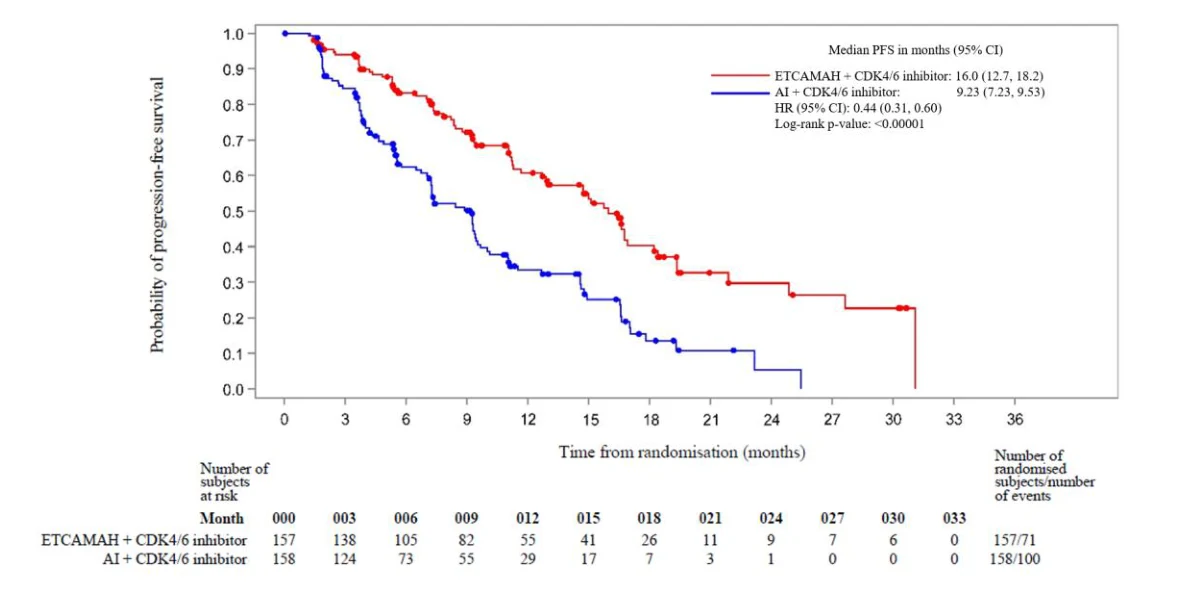
At the PFS interim analysis, SERENA-6 study met its primary endpoint with a median treatment exposure of approximately 10 months in the ETCAMAH plus a CDK4/6 inhibitor group and approximately 6 months in the AI plus a CDK4/6 inhibitor group. This primary analysis demonstrated a statistically significant and clinically meaningful 56% reduction in the risk of disease progression in patients treated with ETCAMAH plus a CDK4/6 inhibitor compared to those treated with AI plus a CDK4/6 inhibitor (see Table 9 and Figure 1). Consistent results in PFS were observed across patient subgroups defined by study stratification factors including the disease site (visceral or non-visceral), ESR1m detection (first or subsequent ctDNA testing), time from initiation of AI plus CDK4/6 inhibitor to randomisation (<18 months or ≥18 months), and the choice of CDK4/6 inhibitor (palbociclib, ribociclib or abemaciclib).
At the final PFS2 analysis, with a median treatment exposure of approximately 16 months in the ETCAMAH plus a CDK4/6 inhibitor group versus approximately 7 months in the AI plus a CDK4/6 inhibitor group, it was demonstrated there was a statistically significant and clinically meaningful 37% reduction in the risk of second disease progression or death following subsequent therapy in patients treated with ETCAMAH plus a CDK4/6 inhibitor compared with those treated with AI plus a CDK4/6 inhibitor (see Table 9).
At the PFS2 analysis, overall survival data were not mature (HR 0.87; 95% CI: 0.57, 1.30; p=0.48777).
Table 9 - Efficacy Results in SERENA-6
Camizestrant + CDK4/6 inhibitor N=155 | AI + CDK4/6 inhibitor N=158 | |||||||||
|---|---|---|---|---|---|---|---|---|---|---|
| Primary Endpoint: Progression Free Survival (PFS)d | ||||||||||
| Number of eventsa (%) | 71 (45.2%) | 100 (63.3%) | ||||||||
| Median monthsb (95% CI) | 16.0 (12.7, 18.2) | 9.2 (7.23, 9.53) | ||||||||
| Hazard ratioc (95% CI) | 0.44 (0.31, 0.60) | |||||||||
| p-value | <0.00001 | |||||||||
| Key secondary endpoint: Second Progression or Death (PFS2)d | ||||||||||
| Number of events (%) | 80 (51%) | 90 (57%) | ||||||||
| Median monthsb (95% CI) | 25.7 (20.4, 30.3) | 19.6 (16.8, 21.0) | ||||||||
| Hazard ratioc (95% CI) | 0.63 (0.46, 0.86) | |||||||||
| p-value | 0.00373 | |||||||||
a Includes progression events that occur within 2 visits of last evaluable assessment.
b The calculation is based on the Kaplan-Meier method.
c A hazard ratio < 1 favours ETCAMAH plus CDK4/6 inhibitor treatment arm.
d Results are based on PFS interim analysis (data-cutoff [DCO]: 28 November 2024) and PFS2 final analysis (DCO: 2 January 2026).
Figure 1 Kaplan Meier Plot of Progression Free Survival by Investigator Assessment in SERENA-6
16. Non-Clinical Toxicology
General toxicology
In repeat-dose toxicology studies in rats up to 6 months duration, camizestrant-related findings in male rats included lower spermatid/sperm counts, atrophy of prostate and seminal vesicle glands, decreased sperm cellularity in the epididymis and tubular dilatation and degeneration/atrophy of the testis at ≥10 mg/kg/day (approximately 2-fold the human exposure at the recommended dose based on AUC), increased sperm abnormalities and lower mating rate at ≥25 mg/kg/day (approximately 6.7-fold the human exposure at the recommended dose based on AUC). These findings indicate an effect on male fertility in rats. Reversibility of male reproductive findings was not assessed. Camizestrant-related findings in female rats included cyst and granulosa cell hyperplasia in the ovaries, hypertrophy/hyperplasia in the mammary glands, and atrophy in oviduct, cervix, uterus, and vagina at doses ≥10 mg/kg/day (approximately 2.3-fold the human exposure at the recommended dose based on AUC), and atrophy of the ovaries at ≥25 mg/kg/day (approximately 11-fold the human exposure at the recommended dose based on AUC). Reversibility was not assessed in the 6-month study.
In repeat-dose toxicology studies in dogs of up to 9 months duration, camizestrant-related findings in female dogs included increased luteal cellularity, luteal and follicular cysts and benign granulosa cell tumours in the ovaries, and atrophy in cervix, uterus, and vagina at doses ≥5 mg/kg/day (approximately 3.5-fold the human exposure at the recommended dose based on AUC). Camizestrant-related findings in the reproductive organs of male dogs included interstitial (Leydig) cell hypertrophy/hyperplasia, seminiferous tubule degeneration/atrophy of the testis, cellular debris in the epididymis at doses ≥5 mg/kg/day (approximately 3.5-fold the human exposure at the recommended dose based on AUC) and interstitial (Leydig) cell adenoma at 10 mg/kg/day in the testis (approximately 13.4-fold the human exposure at the recommended dose based on AUC). Reversibility was not assessed in the 9-month study.
Genotoxicity
Camizestrant was not mutagenic in the in vitro bacterial reverse mutation (Ames) assay. Camizestrant was not genotoxic in an in vitro mouse lymphoma micronucleus assay and an in vivo rat bone marrow micronucleus assay.
Carcinogenicity No long-term animal studies have been performed to evaluate the carcinogenic potential of camizestrant.
Reproductive and developmental toxicology
In a fertility and early embryofetal development study, female rats orally administered camizestrant daily for 2 weeks prior to and during mating and up to gestation day 6 showed camizestrant-related reproductive effects, including estrous cycle disruption, changes in mating behaviour and decreased number of pregnancies at doses ≥0.075 mg/kg/day, and decreased number of corpora lutea, implants and live embryos, increased pre- and post-implantation loss at doses ≥0.001 mg/kg/day. In a recovery phase, female rats administered camizestrant daily at 0.75 mg/kg/day for 3 weeks followed by a 4-week treatment-free period prior to mating, showed reversibility of fertility-related effects. In this study, the maternal exposure in rats was below the human exposure at the recommended clinical dose.
Administration of camizestrant in a modified embryofoetal development study including assessment when dosing from implantation through parturition and into lactation resulted in increased length of gestation, dystocia, impaired offspring survival and growth at doses of ≥0.075 mg/kg/day with maternal exposures lower than those observed at the recommended clinical dose.
Special toxicity - Cardiotoxicity
Functional cardiovascular effects were observed in dogs and demonstrated a dose-related pattern. In the 1-month dog toxicity study, cardiovascular changes showed a delayed onset and returned to pre-study baseline values following a 4-week recovery period.
In the 9-month dog toxicity study, a time and dose-dependent decrease in heart rate and prolongation of QTc interval (QTca) were observed at all dose levels.
These findings indicate that the drug has the potential to affect cardiac electrophysiology and heart rate, supporting the need for appropriate clinical monitoring of cardiovascular parameters, including heart rate and QT interval.