


Product Monograph - Nolvadex-D Tab 20mg
Recent Major Label Changes
| 7 Warnings and Precautions, Monitoring and Laboratory Tests | 2025-11 |
|---|---|
| 7 Warnings and Precautions, Musculoskeletal | 2025-11 |
| 7 Warnings and Precautions, Cardiovascular | 2024-10 |
Table of Contents
Certain sections or subsections that are not applicable at the time of the preparation of the most recent authorized product monograph are not listed.
Recent Major Label Changes ................................................................................................... 2
Table of Contents ...................................................................................................................... 2
Part 1: Healthcare Professional Information ........................................................................... 4
- 1.
Indications .......................................................................................................................... 4
1.1. Pediatrics ..................................................................................................................... 4
- 2. Contraindications .............................................................................................................. 4
- 3. Serious Warnings and Precautions Box .......................................................................... 4
- 4.
Dosage and Administration............................................................................................... 5
4.1. Dosing Considerations ................................................................................................. 5
4.2. Recommended Dose and Dosage Adjustment ............................................................. 5
4.4. Administration .............................................................................................................. 5
4.5. Missed Dose ................................................................................................................ 5
- 5. Overdose ............................................................................................................................ 5
- 6. Dosage Forms, Strengths, Composition, and Packaging ............................................... 5
- 7.
Warnings and Precautions ................................................................................................ 6
General ............................................................................................................................... 6
Carcinogenesis and Genotoxicity ........................................................................................ 6
Cardiovascular .................................................................................................................... 7
Driving and Operating Machinery ........................................................................................ 7
Endocrine and Metabolism ................................................................................................. 7
Hematologic ........................................................................................................................ 7
Hepatic/Biliary/Pancreatic ................................................................................................... 8
Immune .............................................................................................................................. 8
Monitoring and Laboratory Tests ........................................................................................ 8
Musculoskeletal .................................................................................................................. 8
Ophthalmologic ................................................................................................................... 9
Reproductive Health ........................................................................................................... 9
Fertility ................................................................................................................................ 9
7.1. Special Populations ..................................................................................................... 9
7.1.1. Pregnancy ............................................................................................................ 9
7.1.2. Breastfeeding ....................................................................................................... 9
7.1.3. Pediatrics .............................................................................................................. 9
- 8.
Adverse Reactions ............................................................................................................ 9
8.1. Adverse Reaction Overview ......................................................................................... 9
8.2. Clinical Trial Adverse Reactions ..................................................................................10
8.3. Less Common Clinical Trial Adverse Reactions ..........................................................12
8.5. Post-Market Adverse Reactions ..................................................................................14
- 9.
Drug Interactions ............................................................................................................. 14
9.2. Drug Interactions Overview .........................................................................................14
9.3. Drug-Behaviour Interactions .......................................................................................14
9.4. Drug-Drug Interactions ................................................................................................14
9.5. Drug-Food Interactions ...............................................................................................15
9.6. Drug-Herb Interactions ................................................................................................15
9.7. Drug-Laboratory Test Interactions ...............................................................................15
- 10.
Clinical Pharmacology .................................................................................................... 15
10.1. Mechanism of Action .................................................................................................15
10.2. Pharmacodynamics ..................................................................................................15
10.3. Pharmacokinetics ......................................................................................................16
- 11. Storage, Stability, and Disposal ...................................................................................... 16
Part 2: Scientific Information ................................................................................................. 17
- 13. Pharmaceutical Information ............................................................................................ 17
- 14.
Clinical Trials ................................................................................................................... 17
14.1. Clinical Trials by Indication ........................................................................................17
- 16. Non-Clinical Toxicology .................................................................................................. 17
Patient Medication Information .............................................................................................. 22
Part 1: Healthcare Professional Information
1. Indications
NOLVADEX®-D (tamoxifen citrate tablets) is indicated for:
- the adjuvant treatment of early breast cancer in women with estrogen receptor positive tumours.
- the treatment of women with hormone responsive locally advanced/ metastatic breast cancer.
1.1. Pediatrics
Pediatrics (< 18 years of age): No data are available to Health Canada; therefore, Health Canada has not authorized an indication for pediatric use.
2. Contraindications
NOLVADEX-D (tamoxifen citrate tablets) is contraindicated in patients who are hypersensitive to this drug or to any ingredient in the formulation, including any non-medicinal ingredient, or component of the container. For a complete listing, see 6 Dosage Forms, Strengths, Composition, and Packaging.
NOLVADEX-D must not be given during pregnancy. There have been a small number of reports of spontaneous abortions, birth defects and fetal deaths after women have taken NOLVADEX-D, although no causal relationship has been established.
Women should be advised not to become pregnant while taking NOLVADEX-D and for nine months following the cessation of therapy and should use a barrier or other non-hormonal contraceptive methods if sexually active. Pre-menopausal patients must be carefully examined before treatment to exclude the possibility of pregnancy. Women should be informed of the potential risks to the fetus, should they become pregnant while taking NOLVADEX-D or within nine months of cessation of therapy.
When used in the prevention setting (an indication not approved in Canada), NOLVADEX-D is contraindicated in patients with a history of stroke, deep venous thrombosis or pulmonary embolism, and in patients who are at an increased risk of developing endometrial cancer.
3. Serious Warnings and Precautions Box
NOLVADEX-D (tamoxifen citrate tablets) was associated with serious and life-threatening events including uterine malignancies, stroke, pulmonary embolism, and deep vein thrombosis in the NSABP P-1 trial for the prevention of breast cancer. The use of NOLVADEX-D for breast cancer prevention is not an approved indication in Canada. In the NSABP P-1 trial, the relative risk of tamoxifen citrate compared to placebo was 3.1 for endometrial cancer, 4.0 for uterine sarcomas, 1.6 for stroke, 3.0 for pulmonary embolism, and 1.6 for deep vein thrombosis. These events were fatal in some patients. Health care providers should be aware of the possible risks associated with NOLVADEX-D therapy and should discuss them with their patients.
THE BENEFITS OF NOLVADEX-D THERAPY OUTWEIGH THE RISKS IN THE MAJORITY OF WOMEN BEING TREATED ACCORDING TO THE APPROVED CANADIAN INDICATION FOR THE TREATMENT OF BREAST CANCER.
4. Dosage and Administration
4.1. Dosing Considerations
The duration of treatment with NOLVADEX-D (tamoxifen citrate tablets) will depend on the patient's response. The drug should be continued as long as there is a favourable response.
With obvious disease progression, the drug should be discontinued. However, because an occasional patient will have a local disease flare or an increase in bone pain shortly after starting tamoxifen citrate, it is sometimes difficult during the first few weeks of treatment to determine whether the patient's disease is progressing or whether it will stabilize or respond to continued treatment (see 8 Adverse Reactions). There are data to suggest that, if possible, treatment should not be discontinued before a minimum of three to four weeks.
In clinical studies, the median duration of treatment before the onset of a definite objective response has been two months. However, approximately one-quarter of patients who eventually responded were treated for four or more months before a definite objective response was recorded.
4.2. Recommended Dose and Dosage Adjustment
The recommended daily dose of NOLVADEX-D is 20 to 40 mg in a single or two divided doses. The lowest effective dose should be used. In early disease, the recommended duration of therapy is 5 years. The optimal duration of therapy remains to be determined.
Pediatric Use: Health Canada has not authorized an indication for pediatric use.
4.4. Administration
NOLVADEX-D is for oral use only.
4.5. Missed Dose
If a patient misses a dose, they should take the next usual dose as soon as they remember. Do not take two doses at the same time.
5. Overdose
Acute overdosage in humans has not been reported. Possible overdosage effects might include hot flushes, nausea, vomiting, and vaginal bleeding. No specific treatment for overdosage is known and treatment must be symptomatic.
In the case of accidental ingestion by a child, gastric emptying is suggested.
There have been reports in the literature that tamoxifen citrate given at several times the standard dose may be associated with prolongation of the QT interval of the ECG.
For the most recent information in the management of a suspected drug overdose, contact your regional poison control centre or Health Canada’s toll-free number, 1-844 POISON-X (1-844-764-7669).
- 6. Dosage Forms, Strengths, Composition, and Packaging
Table 1 – Dosage Forms, Strengths, and Composition
| Route of | Dosage Form/ | Non-Medicinal Ingredients |
Description
NOLVADEX-D (tamoxifen citrate tablets) 20 mg are off-white to white, octagonal, film coated biconvex tablets containing 30.4 mg tamoxifen citrate equivalent to 20 mg of tamoxifen; they are intagliated with "NOLVADEX D" on one face and plain on the reverse. NOLVADEX-D 20 mg tablets are available in blister packs of 30 tablets.
7. Warnings and Precautions
See 3 Serious Warnings and Precautions Box.
General
NOLVADEX-D (tamoxifen citrate tablets) should be used only for the conditions listed under the 1 Indications section. The use of NOLVADEX-D for breast cancer prevention is not an approved indication in Canada.
Reduced efficacy on tamoxifen citrate has been reported with concomitant usage of some selective serotonin reuptake inhibitor (SSRI) antidepressants (e.g. paroxetine, a known CYP2D6 inhibitor) (see 9 Drug Interactions).
Carcinogenesis and Genotoxicity
An increased incidence of uterine malignancies has been reported in association with tamoxifen citrate treatment. The underlying mechanism is unknown, but may be related to the estrogen-like effect of NOLVADEX-D. Most uterine malignancies seen in association with tamoxifen citrate are classified as adenocarcinoma of the endometrium. However, rare uterine sarcomas, including malignant mixed Mullerian tumours, have also been reported. Uterine sarcoma is generally associated with a higher FIGO stage (III/IV) at diagnosis, poorer prognosis, and shorter survival. Uterine sarcoma has been reported to occur more frequently among long-term users (≥ 2 years) of tamoxifen citrate than non-users.
An increased incidence of endometrial cancer and uterine sarcoma (mostly malignant mixed Mullerian tumours) has been reported in association with tamoxifen citrate treatment. The incidence and pattern of this increase suggest that the underlying mechanism may be related to estrogenic properties of tamoxifen citrate. Any patients receiving NOLVADEX-D or having previously received NOLVADEX-D who report abnormal gynaecological symptoms, especially vaginal bleeding, should be promptly investigated.
Incidence rates for the following events were estimated from a long-term clinical study called the National Surgical Adjuvant Breast and Bowel Project Breast Cancer Prevention (NSABP P-1) Trial. In this trial, high-risk patients were randomized to either tamoxifen citrate therapy or placebo, for the prevention of breast cancer. Uterine malignancies were separated into cases of endometrial adenocarcinomas and uterine sarcomas. The relative risk of tamoxifen citrate compared to placebo was 3.1 for endometrial cancer, 4.0 for uterine sarcomas, 1.6 for stroke, 3.0 for pulmonary embolism, and 1.6 for deep vein thrombosis.
Hepatocellular carcinomas have been reported in a 2 year oncogenicity study in rats receiving
| Administration | Strength/Composition | |
| Oral use | Tablet 20mg | Corn starch, Croscarmellose sodium; Gelatin, Lactose, Macrogol 300, Magnesium stearate, Methylhydroxy propylcellulose, and Titanium dioxide. |
tamoxifen citrate (see 16 Non-Clinical Toxicology). In addition, gonadal tumours have been reported in mice receiving tamoxifen citrate in long-term studies (see 16 Non-Clinical Toxicology). The clinical relevance of these cancer findings has not been established.
A number of second primary tumours, occurring at sites other than the endometrium and the opposite breast, have been reported in clinical trials, following the treatment of breast cancer patients with tamoxifen citrate. No causal link has been established and the clinical significance of these observations remains unclear.
Cardiovascular
An increased risk of stroke has been found to be associated with tamoxifen citrate therapy in high-risk patients being treated for the prevention of breast cancer. The use of NOLVADEX-D for the prevention of breast cancer is not an approved indication in Canada.
At the recommended dose, NOLVADEX-D may prolong the QTc interval on the electrocardiogram (ECG) in patients with underlying risks for QT prolongation and cardiac comorbidities. ECG and electrolyte monitoring are recommended before and during treatment in such patients.
Driving and Operating Machinery
NOLVADEX-D is unlikely to impair the ability of patients to drive or operate machinery. However, fatigue and asthenia have been reported with the use of NOLVADEX-D and caution should be observed when driving or operating machinery while such symptoms persist.
Endocrine and Metabolism
As with other additive hormonal therapy (estrogens and androgens), hypercalcemia has been reported in some breast cancer patients with bone metastases within a few weeks of starting treatment with tamoxifen citrate. Any symptoms suggestive of hypercalcemia should be evaluated promptly. Patients who have metastatic bone disease should have periodic serum calcium determinations during the first few weeks of tamoxifen citrate therapy. If hypercalcemia is present, appropriate measures should be taken and, if severe, NOLVADEX-D should be discontinued.
The first patient follow-up should be done within one month following initiation of treatment. Thereafter, examinations may be performed at one to two-month intervals.
Bone pain, if it should occur, may require the use of analgesics.
Hematologic
NOLVADEX-D should be used cautiously in patients with existing thrombocytopenia or leukopenia. Decreases in platelet counts, usually to 80,000 - 90,000/mm3, infrequently lower, have been observed occasionally during treatment with tamoxifen citrate. However, no hemorrhagic tendency has been reported, and the platelet counts returned to normal levels even though treatment with tamoxifen citrate was continued.
There have been uncommon reports of leucopenia and/or thrombocytopenia, sometimes in association with anemia. Neutropenia, including cases of agranulocytosis, have also been reported on rare occasions. Complete blood counts, including platelet counts, should be obtained periodically.
There is evidence of an increased incidence of thromboembolic events, including deep vein thrombosis and pulmonary embolism, occurring commonly during tamoxifen citrate therapy (see
8 Adverse Reactions). When tamoxifen citrate is co-administered with chemotherapy, there may be a further increase in the incidence of thromboembolic effects (see 9.4. Drug-Drug Interactions). For treatment of breast cancer, the risks and benefits of NOLVADEX-D should be carefully considered in women with a history of thromboembolic events.
As tamoxifen citrate has been associated with increased rates of thromboembolic events, NOLVADEX-D may increase the risk of complications after microvascular breast reconstruction. A retrospective study found that women taking tamoxifen citrate within 28 days of undergoing delayed breast reconstruction had a higher rate of complications (21.5%), including total flap loss (3.9%), compared to women who had not received tamoxifen citrate within 28 days of surgery (15% and 0.4%, respectively). Of the total flap losses, 90% were due to either venous or arterial thrombosis. Consideration should be given to temporarily interrupt NOLVADEX-D before undergoing delayed microvascular breast reconstruction after a careful individual benefit/risk assessment.
When NOLVADEX-D is co-administered with coumarin-type anticoagulants, a significant increase in anticoagulant effect may occur (see 9.4. Drug-Drug Interactions).
Hepatic/Biliary/Pancreatic
Elevations in alanine aminotransferase (ALT), aspartate aminotransferase (AST) and gamma-glutamyl transpeptidase (GGT) levels have been reported commonly during tamoxifen citrate therapy. On occasion, severe liver diseases have occurred from which some patients taking tamoxifen have died. Liver abnormalities reported include fatty liver, cholestasis and hepatitis, liver failure, cirrhosis, and hepatocellular injury (including hepatic necrosis). Occasionally, cases of hepatic cyst and peliosis hepatitis have also been reported (see 8 Adverse Reactions). Monitoring liver function tests during treatment with NOLVADEX-D is recommended.
Immune
Hypersensitivity reactions including rare reports of erythema multiforme, Stevens-Johnson syndrome, toxic epidermal necrolysis, cutaneous vasculitis, bullous pemphigoid and angioedema have been reported (see 8 Adverse Reactions).
In patients with hereditary angioedema, NOLVADEX-D may induce or exacerbate symptoms of angioedema (see 8 Adverse Reactions).
Monitoring and Laboratory Tests
Estrogen and progesterone receptors status should be determined by a laboratory using a validated test.
ECG and electrolyte monitoring are recommended before and during treatment in patients with underlying risks for QT prolongation and cardiac comorbidities.
Monitoring of overall bone health is recommended during treatment of premenopausal women with NOLVADEX-D.
Musculoskeletal
Myalgia has been reported commonly in patients receiving tamoxifen citrate. In these cases, discontinuation of treatment resulted in resolution of symptoms (see 8 Adverse Reactions).
NOLVADEX-D may reduce the bone mineral density in premenopausal women. Premenopausal women taking NOLVADEX-D should be advised regarding measures to maintain bone health.
Ophthalmologic
Cataracts were also reported in the 2-year oncogenicity study in rats, and since then it has been established that treatment with tamoxifen citrate has been associated with an increased incidence of cataracts.
Visual disturbances include retinal crystals, macular edema, keratopathy, and rare reports of corneal changes have occurred. Rare cases of optic neuropathy and optic neuritis have been reported in patients receiving tamoxifen and, in a small number of cases, blindness has occurred (see 8 Adverse Reactions). Patients should be advised to seek medical attention if they experience any visual disturbances.
Reproductive Health
Disturbances of menstrual function, including oligomenorrhea and amenorrhea, have been reported in a proportion of pre-menopausal women receiving tamoxifen citrate for the treatment of breast cancer. Available information indicates that in those women receiving tamoxifen citrate for up to two years for the treatment of early breast cancer who develop disturbances of menstrual function on treatment, a proportion return to normal cyclical bleeding on cessation of therapy.
Fertility
No data are available on the effect of NOLVADEX-D on human fertility.
7.1. Special Populations
7.1.1. Pregnancy
NOLVADEX-D must not be given during pregnancy. There have been a small number of reports of spontaneous abortions, birth defects and fetal deaths after women have taken NOLVADEX-D, although no causal relationship has been established (see 2 Contraindications).
7.1.2. Breastfeeding
It is not known if tamoxifen citrate is excreted in human milk and, therefore, the drug is not recommended during lactation. The decision either to discontinue nursing or discontinue NOLVADEX-D should take into account the importance of the drug to the mother.
7.1.3. Pediatrics
Pediatrics (< 18 years of age): No data are available to Health Canada; therefore, Health Canada has not authorized an indication for pediatric use.
8. Adverse Reactions
8.1. Adverse Reaction Overview
Side effects can be classified as either due to the pharmacological action of the drug, e.g., hot flushes, vaginal discharge, pruritus vulva, or those requiring further investigations, such as vaginal bleeding (to exclude the possibility of endometrial malignancy) and tumour flare (to exclude the possibility of progressive disease). Side effects can also be classified as more general in nature such as gastrointestinal intolerance (including such events as nausea, vomiting, constipation and diarrhea), headache, light-headedness and occasionally fluid retention and alopecia. When such side effects are severe, it may be possible to control them by a simple reduction of dosage (within the recommended dose range) without loss of control of the disease.
8.2. Clinical Trial Adverse Reactions
Clinical trials are conducted under very specific conditions. Therefore, the frequencies of adverse reactions observed in the clinical trials may not reflect frequencies observed in clinical practice and should not be compared to frequencies reported in clinical trials of another drug.
Unless specified, the following frequency categories were calculated from the number of adverse events reported in the control arm of a large phase III study conducted where 3094 postmenopausal women patients with operable breast cancer were treated for 5 years with tamoxifen citrate and where no account was taken of whether the investigator considered it to be related to the study medication.
Table 2 – Adverse Drug Reactions (ADR) seen with Tamoxifen Citrate*
Frequency
System Organ Class (SOC)
ADR
Very common
(≥10%)
Gastrointestinal disorders
- Nausea
General disorder and administrative site conditions
- Fatigue/Asthenia
Metabolism and nutrition
- Fluid retention
Psychiatric Disorders
- Depression
Reproductive system and breast
- Vaginal bleeding
- Vaginal discharge
Skin and subcutaneous tissue
- Skin Rash
Vascular
- Hot flushes
Common
(≥1% and <10%)
Blood and lymphatic system
- Anemia
Eye disorders
- Cataracts
- Retinopathy
Immune system disorders
- Hypersensitivity reactions
Investigations
- Elevated triglycerides
Musculoskeletal and connective tissue
- Leg cramp
- Myalgia
Neoplasms benign, malignant and unspecified
- Uterine fibroids
- Tumour Flarea
Nervous system
- Ischemic cerebrovascular events
Frequency
System Organ Class (SOC)
ADR
- Headache
- Light headedness
- Paresthesia
Reproductive system and breast
- Pruritus vulva
- Endometrial changes (including hyperplasia and polyps)
Skin and subcutaneous tissue
- Alopecia
Gastrointestinal disorders
- Vomiting
- Diarrhea
- Constipation
Hepatobiliary disorders
- Changes in liver enzymes
- Fatty liver
Multiple SOC Terms
- Thromboembolic events (including deep vein thrombosis, microvascular thrombosis and pulmonary embolism)
* Adverse event rates may not apply to premenopausal women or women treated for locally advanced or metastatic disease.
a Exact frequency not known but known to occur at ≤ 0.1% from the ATAC study (A Randomized, Double-Blind Trial Comparing ARIMIDEX to NOLVADEX-D).
Skin rashes and commonly, hypersensitivity reactions have been reported.
Cataracts and retinopathy have been commonly reported in association with the administration of tamoxifen citrate (see 7 Warnings and Precautions).
Paresthesia (tingling, pricking and numbness of skin) has been commonly reported in patients receiving NOLVADEX-D (tamoxifen citrate tablets).
There is evidence of an increased incidence of ischemic cerebrovascular and thromboembolic events, including deep vein thrombosis and pulmonary embolism, occurring commonly during tamoxifen citrate therapy (see 7 Warnings and Precautions). An increased incidence of microvascular thrombosis has also been reported in women treated with tamoxifen citrate undergoing delayed microvascular breast reconstruction (see 7 Warnings and Precautions).
In the prevention setting, treatment with tamoxifen citrate has been associated with an increased risk of stroke (see 7 Warnings and Precautions). When tamoxifen citrate is used in combination with cytotoxic agents, there is an increased risk of thromboembolic events occurring.
Myalgia has been reported commonly in patients receiving tamoxifen citrate. In these cases, discontinuation of treatment resulted in resolution of symptoms. The use of some hormonal agents in breast cancer therapy has been associated with myalgia. Myalgia has been reported in patients receiving NOLVADEX-D in clinical trials. In clinical trials, the incidence of myalgia was similar between patients treated with tamoxifen or an aromatase inhibitor reported to be associated with this event.
Elevations in alanine aminotransferase (ALT), aspartate aminotransferase (AST) and gamma-glutamyl transpeptidase (GGT) levels have been reported commonly during tamoxifen citrate therapy. On occasion, severe liver diseases have occurred from which some patients taking tamoxifen have died. Liver abnormalities reported include fatty liver.
Fatigue and asthenia have been reported very commonly in patients taking NOLVADEX-D.
8.3. Less Common Clinical Trial Adverse Reactions
Table 3 Adverse Drug Reactions (ADR) seen with Tamoxifen Citrate*
Frequency
System Organ Class (SOC)
ADR
Uncommon
(≥ 0.1% and <1%)
Blood and lymphatic system
- Thrombocytopenia
- Leukopenia
- Pancytopenia
Eye disorders
- Visual disturbances
Gastrointestinal disorders
- Pancreatitis
Metabolism and nutrition
- Hypercalcemia (in patients with bony metastases)
Neoplasms benign, malignant and unspecified
- Endometrial cancer
Nervous system
- Dysgeusia
Respiratory, thoracic and mediastinal disorders
- Interstitial pneumonitis
Hepatobiliary disorders
- Cirrhosis of the liver
Rare
(≥ 0.01% and <0.1%)
Blood and lymphatic system disorders
- Neutropeniaa
- Agranulocytosisa
Eye disorders
- Corneal changes
- Optic neuropathya
Neoplasms benign, malignant and unspecified (incl cysts and polyps)
- Uterine Sarcoma (mostly malignant mixed Mullerian tumours)a
Reproductive system and breast disorders
- Vaginal polypsa
- Endometriosisa
- Cystic ovarian swellinga
Nervous system
- Optic neuritis
Frequency
System Organ Class (SOC)
ADR
Hepatobiliary disorders
- Hepatitis
- Cholestasisa
- Hepatic failurea
- Hepatocellular injurya
- Hepatic necrosisa
Skin and subcutaneous tissue
- Angioedema
- Stevens-Johnson syndromea
- Cutaneous vasculitisa
- Bullous pemphigoida
- Erythema multiformea
- Cutaneous lupus erythematosusb
Congenital, familial and genetic disorders
- Porphyria cutanea tardab
* Adverse event rates may not apply to premenopausal women or women treated for locally advanced or metastatic disease.
a Exact frequency not known but known to occur at ≤ 0.1% from the ATAC study (A Randomized, Double-Blind Trial Comparing ARIMIDEX to NOLVADEX-D).
b The event was not observed in other major clinical studies. The frequency has been calculated using the upper limit of the 95% confidence interval for the point estimate (based on 3/X, where X represents the total sample size of 13,357 patients in the major clinical studies). This is calculated as 3/13,357 which equates to a frequency category of ‘rare’.
Rare reports of erythema multiforme, Stevens-Johnson syndrome, cutaneous vasculitis, and bullous pemphigoid, and angioedema, have been reported.
Increased bone and tumour pain and also local disease flare have occurred. These are sometimes associated with a good tumour response. Patients with soft tissue disease may have sudden increases in the size of pre-existing lesions, sometimes associated with marked erythema within and surrounding the lesions, and/or the development of new lesions. When they occur, the bone pain or disease flare are seen shortly after starting tamoxifen citrate and generally subside rapidly. Uncommonly, patients with bony metastases have developed hypercalcemia on initiation of therapy (see 7 Warnings and Precautions).
Visual disturbances include retinal crystals, macular edema, keratopathy, and rare reports of corneal changes. Rare cases of optic neuropathy and optic neuritis have been reported in patients receiving tamoxifen and, in a small number of cases, blindness has occurred.
Dysgeusia (taste loss and perversion) has been uncommonly reported in patients receiving NOLVADEX-D.
Decreases in platelet counts, usually only to 80,000 - 90,000 per cu mm but occasionally lower, have been uncommonly reported in patients taking tamoxifen citrate.
There have been uncommon reports of leucopenia and/or thrombocytopenia, sometimes in association with anemia. Neutropenia, including cases of agranulocytosis, have also been reported on rare occasions (see 7 Warnings and Precautions).
Liver abnormalities reported include cholestasis and hepatitis, liver failure, cirrhosis, and hepatocellular injury (including hepatic necrosis). Occasionally, cases of hepatic cyst and peliosis hepatitis have also been reported.
Uncommon incidences of endometrial cancer and rare instances of uterine sarcoma (mostly malignant mixed Mullerian tumours) have been reported in association with tamoxifen citrate treatment (see 7 Warnings and Precautions).
Infrequent incidence of distaste for food has been observed in patients receiving NOLVADEX-D.
Cutaneous lupus erythematosus and porphyria cutanea tarda have been observed rarely in patients receiving NOLVADEX-D. In these cases, discontinuation of treatment resulted in resolution of symptoms.
8.5. Post-Market Adverse Reactions
The following adverse reactions have been identified during post approval use of
NOLVADEX-D:
Immune: Cases of exacerbation of angioedema in patients with hereditary angioedema
Musculoskeletal: Myalgia
Psychiatric: Depression
Skin and subcutaneous tissue: Toxic epidermal necrolysis
Cases of radiation recall have been reported in patients receiving NOLVADEX-D in the post-marketing setting. The reaction is usually reversible upon temporary cessation of therapy and re-challenge may result in a milder reaction. Treatment with NOLVADEX-D was continued in most cases.
9. Drug Interactions
9.2. Drug Interactions Overview
The known principal pathway for tamoxifen citrate metabolism in humans is demethylation, catalyzed by CYP3A4 enzymes. A pharmacokinetic interaction with the CYP3A4 inducing agent rifampicin, involving a reduction in tamoxifen citrate plasma levels has been reported in the literature. The relevance of this to clinical practice is not known.
Pharmacokinetic interaction with CYP2D6 inhibitors, showing a reduction in plasma level of an active tamoxifen citrate metabolite, 4-hydroxy-N-desmethyltamoxifen (endoxifen), has been reported in the literature. Chronic use of CYP2D6 inhibitors can lead to reduced plasma concentrations of an active metabolite (see 7 Warnings and Precautions).
9.3. Drug-Behaviour Interactions
The interaction of NOLVADEX-D (tamoxifen citrate tablets) with individual behavioural risks (e.g. cigarette smoking, cannabis use, and/or alcohol consumption) has not been studied.
9.4. Drug-Drug Interactions
NOLVADEX-D is a pro-drug requiring metabolic activation by CYP2D6. Low CYP2D6 activity that occurs in patients harbouring certain CYP2D6 alleles (i.e. *4) or from the chronic use of CYP2D6 inhibitors can lead to persistent reductions in plasma concentrations of an active metabolite of tamoxifen citrate (endoxifen). Reduced efficacy on tamoxifen citrate has been reported with concomitant usage of some selective serotonin reuptake inhibitor (SSRI) antidepressants (e.g. paroxetine, a known CYP2D6 inhibitor). Concurrent chronic use of CYP2D6 inhibitors that may affect tamoxifen citrate efficacy should be avoided if possible (see 7 Warnings and Precautions).
The interactions listed below are based on either drug interaction case reports or studies, or potential interactions due to the expected magnitude and seriousness of the interaction (i.e., those identified as contraindicated).
When tamoxifen citrate is used in combination with coumarin-type anticoagulants, a significant increase in anticoagulant effect may occur (see 7 Warnings and Precautions). Where such coadministration exists, careful monitoring of the patient's prothrombin time is recommended.
When tamoxifen citrate is used in combination with cytotoxic agents, there is increased risk of thromboembolic events occurring (see 7 Warnings and Precautions).
The use of tamoxifen citrate in combination with an aromatase inhibitor as adjuvant therapy has not shown improved efficacy compared with tamoxifen citrate alone. Coadministration of anastrozole and tamoxifen citrate in breast cancer patients reduced anastrozole plasma concentration by 27% compared to those achieved with anastrozole alone. However, clinical significance of this reduction is unknown.
9.5. Drug-Food Interactions
Interactions with food have not been established.
9.6. Drug-Herb Interactions
Interactions with herbal products have not been established.
9.7. Drug-Laboratory Test Interactions
Interactions with laboratory tests have not been established.
10. Clinical Pharmacology
10.1. Mechanism of Action
Tamoxifen citrate, the active ingredient, is a non-steroidal agent which has demonstrated potent antiestrogenic properties in animal test systems. The antiestrogenic effects are related to its ability to compete with estrogen for binding sites in target tissues such as breast and uterus. Tamoxifen citrate inhibits the induction of rat mammary carcinoma induced by dimethylbenzanthracene (DMBA) and causes the regression of already established DMBA-induced tumours. In this rat model, tamoxifen citrate appears to exert its antitumour effects by binding to estrogen receptors.
In cytosols derived from human endometrium and human breast and uterine adenocarcinomas, tamoxifen competes with estradiol for estrogen receptor protein.
10.2. Pharmacodynamics
In women with estrogen receptor-positive/unknown breast tumours, adjuvant tamoxifen citrate has been shown to significantly reduce recurrence of the disease and improve 10-year survival, achieving a significantly greater effect with five years treatment than with one or two years treatment. These benefits appear to be largely irrespective of age, menopausal status, tamoxifen citrate dose and additional chemotherapy.
Ranges as large as 0-300 fmol/mg protein have been reported in histologically comparable portions of the same tumour. In addition, the collection, transport and storage of tumour specimens can affect the validity of current estrogen receptor assays.
The apparent discrepancy in correlation between estrogen receptor status and clinical response may also be explained by recent in vitro evidence indicating that not all of the growth inhibiting effects of tamoxifen citrate are mediated through the estrogen receptor. Tamoxifen citrate has been shown to have a low affinity for the androgen receptor and on a binding site distinct from the estrogen receptor. The possibility also exists that tamoxifen citrate interferes with the action of hormonal steroids on cell growth, that it could modulate the action of peptide hormones at their receptors by effects on cell membranes, and that it inhibits prostaglandin synthetase thereby having the potential to limit tumour growth. It is recognized that tamoxifen citrate also displays estrogenic-like effects on several body systems including the endometrium, bone and blood lipids.
10.3. Pharmacokinetics
Metabolism
Preliminary pharmacokinetics in women using radiolabeled tamoxifen citrate have shown that most of the radioactivity is slowly excreted in the feces, with only small amounts appearing in urine. The drug is excreted mainly as conjugates, with unchanged drug and hydroxylated metabolites accounting for 30% of the total. Blood levels of total radioactivity following single oral doses of approximately 0.3 mg/kg reached peak values of 0.06-0.14 µg/mL at 3-7 hours after dosing, with only 20-30% of the drug present as tamoxifen citrate. There was an initial half-life of 7-14 hours with secondary peaks four or more days later. The prolongation of blood levels and fecal excretion is believed to be due to enterohepatic circulation.
- 11. Storage, Stability, and Disposal
NOLVADEX-D (tamoxifen citrate tablets) should be stored at room temperature (15 to 30°C) and protected from light.
Part 2: Scientific Information
13. Pharmaceutical Information
Drug Substance
Non-proprietary name of the drug substance: Tamoxifen citrate
Chemical name: (Z)-2-[4- (1,2- diphenyl-1- butenyl) phenoxy]-N,N-dimethylethanamine 2-hydroxy-1,2,3- propanetricarboxylate (1:1)
Molecular formula and molecular mass:
C32H37NO8
563.62 Daltons
Structural formula:
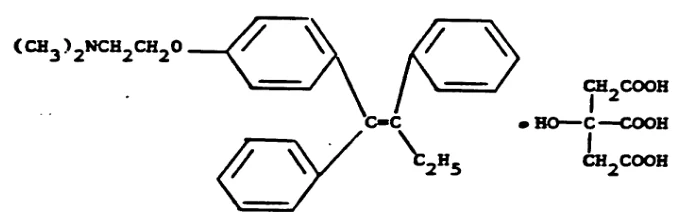
NOLVADEX-D is the trans-isomer of a triphenylethylene derivative.
Physicochemical properties: Tamoxifen citrate is a fine, white, essentially odorless, crystalline powder with a melting range between 142.0 and 144.5°C. It is hygroscopic and photosensitive.
Pharmaceutical Standard: British Pharmacopoeia (BP)
14. Clinical Trials
14.1. Clinical Trials by Indication
The original data on which the indication was approved is not available.
16. Non-Clinical Toxicology
General toxicology
Acute Toxicity
Tamoxifen citrate has a low acute toxicity in all species studied, including mice, rats, rabbits, and marmosets. The acute oral LD50 is greater than 1 g/kg in all species treated.
Multiple Dose Toxicity Studies
Chronic toxicity studies were conducted in rats, dogs and marmosets. In the 3 month rat study, tamoxifen citrate was administered daily at doses of 2, 20, and 100 mg/kg as a mixture containing approximately 10% of the corresponding cis-isomer, an estrogen. The changes induced were reduction in weight of ovaries, testes, seminal vesicles, and ventral prostate when related to body weight. Decreased numbers of corpora lutea and follicular cysts, as well as reduction in uterine size, were noted.
The endometrium of all dosed rats showed a complete absence of glands, the epithelium consisting of a single layer of columnar cells with small areas of flattening and occasional squamous metaplasia. The endometrial stroma was somewhat condensed giving it a more fibrous appearance.
High-dose male rats showed cessation of maturation of spermatozoa. Seminiferous epithelium showed scattered necrotic cells. A similar, but less severe change, was seen in males receiving the intermediate dose. The testes in rats which received a low dose showed reduced numbers of spermatocytes and occasional atrophic tubules.
A few treated rats showed a marginal increase in the height of the thyroid epithelium and all treated rats showed a thin zone of adrenal cortical congestion and edema.
In a 6 month rat study tamoxifen citrate was administered orally at doses of 0.05 mg, 0.8 mg, 2.4 mg, 4.8 mg and 9.6 mg/kg. Changes produced by tamoxifen citrate were observed mainly in rats treated with 2.4, 4.8 and 9.6 mg/kg. The reproductive organs showed severe atrophic changes increasing with dose from 2.4 to 9.6 mg/kg. Serum alkaline phosphatase and sodium levels were raised and alanine aminotransferase, aspartate aminotransferase and albumin levels were lowered.
No significant histological findings were observed in the liver.
In the 3 month dog study, doses of 1, 10, and 50 mg/kg were administered orally. The same cis-trans mixture was used as in the 3 month rat study. The treated males in all groups showed a decrease in weight of the testes and pituitary. The females showed an increase in weight of the uterus. Histological observations were as follows:
The testes were atrophic in all dosed dogs. The seminiferous epithelium in most tubules comprised only a layer of spermatogonia and Sertoli cells. There was a considerable increase in the fibrous stroma around the tubules due to the condensation of the normal interstitial tissue as a result of atrophy. This change was attributed to the "estrogenic" effect of the cis-trans mixture.
The ovaries of the dosed females showed reduced numbers of follicles, cessation of ovulation, and hyperplasia of the germinal epithelium. This last change is an exaggeration of the physiological changes seen in metestrus. These changes were less marked in the dogs receiving the lower doses.
In the uterus of all dosed females, there was squamous metaplasia of the endometrium with severe endometritis. The myometrium showed separation of the muscle bundle by a markedly edematous connective tissue which resulted in an "attenuated" appearance of the muscle. However, it was unlikely that there was an alteration in the total bulk of the muscle.
The livers of three males and one female in the highest dosage group showed bile plugs in the bile canaliculi and pigment in the Kupffer cells. The liver was normal apart from slight thinning of the cell cords. These findings are in keeping with the biochemical observation of raised serum alkaline phosphatase. It should be remembered that the dose in this case is 500 times that required to prevent implantation in the dog. All other organs were within normal limits.
Chronic dosing in the marmoset involved one 6 month study. Tamoxifen citrate was administered orally at doses of 0.8, 4.0 and 8.0 mg/kg. The only treatment related, pathologically significant effect due to dosing was the formation of cystically enlarged follicles in the ovaries of the females treated at 8.0 mg/kg.
Genotoxicity
Tamoxifen citrate was genotoxic in some in vitro tests and in vivo genotoxicity tests in rodents.
Carcinogenicity
In a 2 year carcinogenicity study, rats received 5, 20 and 35 mg/kg tamoxifen citrate by gavage (all of which represent significant multiples of the recommended human dose of 20 - 40 mg/day). Hepatocellular carcinomas were reported at all doses. The incidence of these tumours was greater among rats given 20 or 35 mg/kg/day (69%) than those given 5 mg/kg/day (14%). In addition, there appears to be a dose related increase in cataracts.
The studies comparing tamoxifen citrate with conventional estrogens showed the estrogenic activity of tamoxifen in mice was responsible for gonadal tumours. Chronic studies in mice included an initial 15-month study where the cis-trans mixture described above was administered orally at doses of 5 and 50 mg/kg. This was followed by a 13 month study where the pure cis and trans forms were compared with the cis-trans mixture at a dose of 20 mg/kg and with stilbestrol and ethinyl estradiol. An additional study of 14 months was conducted using a dose of 0.1 mg/kg to investigate the effects of lower doses of the cis, trans, and cis-trans mixture of tamoxifen citrate with stilbestrol and ethinyl estradiol. Interstitial cell tumours of the testes and granulosa cell tumours of the ovary were found and were compound related. After six months of treatment, the mice developed a spinal deformity with kyphosis. The lesion was characterized as elongation of vertebral bodies. In addition, there was increased opacity of long bone due to ossification of the medullary cavity. Some of these can be attributed to estrogenic activity; others were of unknown etiology and did not occur at lower doses.
Mutagenecity
Tamoxifen citrate is not mutagenic in a range of in vitro and in vivo mutagenicity studies.
Reproductive and developmental toxicology
Reproductive toxicology studies in rats, rabbits and monkeys have shown no teratogenic potential.
In rodent models of fetal reproductive tract development, tamoxifen was associated with changes similar to those caused by estradiol, ethynylestradiol, clomiphene and diethylstilboestrol (DES). Although the clinical relevance of these changes is unknown, some of them, especially vaginal adenosis, are similar to those seen in young women who were exposed to DES in utero and who have a 1 in 1000 risk of developing clear-cell carcinoma of the vagina or cervix. Only a small number of pregnant women have been exposed to tamoxifen citrate. Such exposure has not been reported to cause subsequent vaginal adenosis or clear-cell carcinoma of the vagina or cervix in young women exposed in utero to tamoxifen citrate.
Teratogenic studies were conducted in rats and rabbits. Since tamoxifen citrate inhibits implantations, some difficulties were encountered in these studies. Doses in rats ranged from 0.02 to 4.0 mg/kg orally and in rabbits from 0.01 to 2.0 mg/kg (administered in the feed). The only drug-induced abnormality which was detected occurred in rats and consisted of a reversible rib deformity which, under certain conditions, had an incidence as high as 50%. Evidence is presented which suggests that the cause of the deformity is mechanical due to the failure of uterine growth caused by the antiestrogenic property of the compound.
Special toxicology
An additional study of two months duration was conducted in rats where the activity of tamoxifen was compared with that of pure cis-isomer and pure trans-isomer at an oral dose of 20 mg/kg. The reproductive tissue changes were similar to those listed above for all treatment groups, but the adrenal and thyroid lesions were seen only in those rats which received the cis-isomer.
A reversibility test was conducted in female rats using tamoxifen citrate administered orally at doses of 0.5 and 2.0 mg/kg for three months; one-third of the animals were held without drug for an additional three months. Changes similar to those described above were noted in ovaries and uteri after 3-months dosing. These were not present in rats held an additional three months without dosing with tamoxifen citrate.
A reversibility study was conducted in female dogs in which tamoxifen citrate was compared with stilbestrol and clomiphene. Tamoxifen citrate was administered at a dose of 0.1 mg/kg for three months with one animal out of four left untreated for an additional month to test for reversibility.
Squamous metaplasia was not present in the uterus of dogs dosed with tamoxifen citrate. In the myometrium, there was a diminution of collagen with fragmentation of the bundles. The muscle bundles were separated by edema. Withdrawal of tamoxifen citrate produced an effect similar to a mild estrogenic change with increased collagen in thick bundles. The ovaries showed cessation of ovulation and slight hyperplasia of the germinal epithelium.
A series of three tests were conducted to evaluate the ocular toxicity of tamoxifen citrate as compared to compounds which caused ocular lesions and have a similar chemical structure such as clomiphene and triparanol. In the first two tests, female rats were mated and treated with tamoxifen citrate, clomiphene or clomiphene B on day 11 of pregnancy and killed on day 19 or 20. In addition to observations on the uterine and fetal changes, the eyes of the fetuses were examined histologically. In the third experiment, the pregnant females were given clomiphene on day 11 of pregnancy and the fetuses delivered by cesarean section on day 22. They were immediately fostered to control animals and allowed to develop to weaning, when they were killed and examined for cataracts. The results of the first two studies showed no significant increase in embryonic or fetal deaths in any of the treatment groups. Hydramnios was observed in treated rats together with an increase in placental weight and a decrease in uterine weight. Fetal cataracts were observed with clomiphene and clomiphene B, but not with tamoxifen citrate. The incidence of cataracts induced by clomiphene in fostered neonates in the third test was 9.5%.
Antiestrogenic Effect
In those species in which tamoxifen citrate is an estrogen antagonist, this property is manifest in various ways. Thus in spayed rats, vaginal cornification in response to the daily subcutaneous injection of estradiol can be prevented by concomitant oral dosing with tamoxifen citrate and in immature rats the uterotrophic effect of estrogen can be similarly inhibited.
Also in rats, tamoxifen citrate will terminate early pregnancy by preventing implantation of the blastocysts. It is known that, in rats, estrogen secreted by the ovaries on day 4 of pregnancy initiates implantation (on day 5). There is evidence that, at the lowest dose needed to prevent implantation, tamoxifen citrate acts by counteracting this estrogen. In normal female rats having regular estrous cycles, ovulation can be delayed by administration of a single dose of tamoxifen citrate given on or before the day of diestrous. In the rat (and other spontaneously ovulating species), it appears that the ovulatory discharge of luteinizing hormone (LH) from the pituitary is “triggered” by the action of estrogen on the hypothalamus and/or pituitary. The secretion of estrogen from the ovaries reaches a peak before this LH discharge. The inhibitory effect of tamoxifen citrate on ovulation is attributed to interference with the “feedback” action of estrogen at the hypothalamic and/or pituitary level.
In the pig-tailed monkey (M. nemestrina), the activity of tamoxifen citrate as an estrogen antagonist is shown by its effect on the response to estrogen of the perineal region (“sexual skin”). Mature females of this species menstruate regularly at intervals of about 28 days. An edematous swelling of the “sexual skin” develops during the follicular phase of the cycle and subsides more rapidly at about the presumed time of ovulation. The swelling is due to endogenous estrogen and is not seen in the ovariectomized animals unless estrogen is given. In an ovariectomized pig-tail, large daily doses of tamoxifen citrate caused no swelling of the “sexual skin”. On the other hand, the swelling induced by daily injection of estradiol was reduced almost to zero by small (oral) doses of tamoxifen citrate given at the same time.
Although the capacity of tamoxifen citrate (demonstrated in spayed rats and monkeys) to inhibit the response to estrogen suffices to explain its effects, outlined above, in intact animals of these species, the possibility that it may also inhibit the endogenous production of estrogen cannot yet be excluded.
In very large doses, tamoxifen citrate causes a limited increase in uterine weight and incomplete vaginal cornification in spayed rats, indicating that it has some degree of estrogenic activity. In one species, the mouse, it behaves as an estrogen without demonstrable estrogen antagonistic activity at any dose.