


Product Monograph - Etomidate Injection, USP
RECENT MAJOR LABEL CHANGES
| N/A | N/A |
|---|
TABLE OF CONTENTS
Sections or subsections that are not applicable at the time of authorization are not listed.
RECENT MAJOR LABEL CHANGES ............................................................................................. 2
TABLE OF CONTENTS ............................................................................................................... 2
PART I: HEALTH PROFESSIONAL INFORMATION ....................................................................... 4
1 INDICATIONS ................................................................................................................ 4
1.1 Pediatrics (< 18 years) .............................................................................................. 4
1.2 Geriatrics (≥ 65 years of age) ................................................................................... 4
2 CONTRAINDICATIONS .................................................................................................. 4
2.1.1 SERIOUS WARNINGS AND PRECAUTIONS BOX ............................................................. 5
3 DOSAGE AND ADMINISTRATION .................................................................................. 5
3.1 Dosing Considerations ............................................................................................. 5
3.2 Recommended Dose and Dosage Adjustment ......................................................... 5
3.3 Administration ......................................................................................................... 6
3.4 Reconstitution ......................................................................................................... 6
4 OVERDOSAGE ............................................................................................................... 6
5 DOSAGE FORMS, STRENGTHS, COMPOSITION AND PACKAGING .................................. 7
6 WARNINGS AND PRECAUTIONS ................................................................................... 7
6.1 Special Populations .................................................................................................. 9
6.1.1 Pregnant Women ..................................................................................................... 9
6.1.2 Breastfeeding ......................................................................................................... 10
6.1.3 Pediatrics (< 18 years) ............................................................................................ 10
6.1.4 Geriatrics (≥ 65 years of age) ................................................................................. 10
7 ADVERSE REACTIONS ................................................................................................. 10
7.1 Adverse Reaction Overview ................................................................................... 10
7.2 Clinical Trial Adverse Reactions.............................................................................. 10
7.3 Abnormal Laboratory Findings: Hematologic, Clinical Chemistry and Other Quantitative Data .................................................................................................. 14
7.4 Post-Market Adverse Reactions ............................................................................. 14
8 DRUG INTERACTIONS ................................................................................................. 15
8.1 Overview ................................................................................................................ 15
8.2 Drug-Drug Interactions .......................................................................................... 15
8.3 Drug-Food Interactions .......................................................................................... 15
8.4 Drug-Herb Interactions .......................................................................................... 15
8.5 Drug-Laboratory Test Interactions ......................................................................... 15
9 ACTION AND CLINICAL PHARMACOLOGY ................................................................... 15
9.1 Mechanism of Action ............................................................................................. 15
9.2 Pharmacodynamics ................................................................................................ 16
9.3 Pharmacokinetics ................................................................................................... 16
10 STORAGE, STABILITY AND DISPOSAL .......................................................................... 17
11 SPECIAL HANDLING INSTRUCTIONS ............................................................................ 17
PART II: SCIENTIFIC INFORMATION ........................................................................................ 18
12 PHARMACEUTICAL INFORMATION ............................................................................. 18
13 CLINICAL TRIALS ......................................................................................................... 18
13.1 Trial Design and Study Demographics .................................................................... 18
13.2 Study Results ......................................................................................................... 19
14 NON-CLINICAL TOXICOLOGY ...................................................................................... 21
PATIENT MEDICATION INFORMATION ................................................................................... 24
PART I: HEALTH PROFESSIONAL INFORMATION
1 INDICATIONS
Etomidate Injection, USP is indicated for use in health care settings by appropriately trained health care providers in the fields of emergency medicine or anesthesia for:
- The induction of general anesthesia.
- The supplementation of subpotent anesthetic agents during anesthesia for short operative procedures such as dilation and curettage or cervical conization.
1.1 Pediatrics (< 18 years):
Based on the data submitted and reviewed by Health Canada, the safety and efficacy of Etomidate Injection, USP in pediatric patients has not been established; therefore, Health Canada has not authorized an indication for pediatric use.
1.2 Geriatrics (≥ 65 years of age):
Evidence from clinical studies and experience suggests that use in the geriatric population is not associated with differences in safety or effectiveness. Reduced doses of Etomidate Injection, USP should be considered based on the physical condition of the patient (see WARNINGS AND PRECAUTIONS, Special Populations, Geriatrics, and DOSAGE AND ADMINISTRATION, Recommended Dose and Dosage Adjustment).
2 CONTRAINDICATIONS
Etomidate Injection, USP is contraindicated in patients who are hypersensitive to this drug or to any ingredient in the formulation, including any non-medicinal ingredient, or component of the container. For a complete listing, see DOSAGE FORMS, STRENGTHS, COMPOSITION AND PACKAGING.
Etomidate Injection, USP is contraindicated when sedation or general anesthesia are contraindicated.
2.1.1 SERIOUS WARNINGS AND PRECAUTIONS BOX
Serious Warnings and Precautions
Intravenous Etomidate Injection, USP should be administered only by persons trained in the administration of general anesthetics and in the management of complications encountered during the conduct of general anesthesia. ADRENAL SUPPRESSION and use in CRITICALLY ILL Patients Due to the risks of prolonged suppression of endogenous cortisol and aldosterone production from etomidate, Etomidate Injection, USP is not intended for administration by prolonged infusion. Single induction doses of etomidate can lead to transient adrenal insufficiency and decreased serum cortisol levels. Etomidate Injection, USP should be used with caution in critically ill patients, including patients with sepsis, as etomidate has been associated with an increased risk of mortality in some studies in such patients (see also WARNINGS AND PRECAUTIONS; Endocrine and Metabolism and ADVERSE REACTIONS; Post-Market Adverse Reactions). |
|---|
3 DOSAGE AND ADMINISTRATION
3.1 Dosing Considerations
Dosage and rate of administration should be individualized and titrated to the desired effect according to clinically relevant factors including pre-induction and concomitant medications, age, ASA status and level of debilitation of the patient. In heavily premedicated patients, both the induction and maintenance doses should be reduced.
Since Etomidate Injection, USP has no analgesic action, appropriate analgesics should be used in procedures involving painful stimuli.
Convulsions may occur in unpremedicated patients.
3.2 Recommended Dose and Dosage Adjustment
The recommended dose for induction of anesthesia in adult patients is 0.2 mg/kg to 0.4 mg/kg of bodyweight and must be individualized in each case. The usual dosage is 0.3 mg/kg, injected over a period of 30 to 60 seconds. Geriatric patients may require reduced doses.
Do not exceed a total dose of 30 mL.
Smaller increments of intravenous Etomidate Injection, USP may be administered to adult patients during short operative procedures to supplement subpotent anesthetic agents, such as nitrous oxide. The dosage employed under these circumstances, although usually lower than the original induction dose, must be individualized. There are insufficient data to support the use of Etomidate Injection, USP for longer procedures, therefore, such use is not recommended.
The use of intravenous fentanyl and other neuroactive drugs employed during the conduct of anesthesia may alter the Etomidate Injection, USP dosage requirements. Consult the prescribing information for all other such drugs before using.
In patients who have already received neuroleptic, opiate or sedative agents, the dose of Etomidate Injection, USP may need to be reduced and titrated to effect.
Geriatrics (≥ 65 years of age):
Etomidate Injection, USP should be used with caution in geriatric patients, since the potential exists for decreases in cardiac output, which have been reported with doses greater than recommended. A dose of 0.15-0.2 mg/kg of bodyweight should be given and the dose should be further adjusted according to the individual patient response and to clinical effects.
Pediatrics (< 18 years):
Health Canada has not authorized an indication for pediatric use.
3.3 Administration
Etomidate Injection, USP is for intravenous use. Injections of Etomidate Injection, USP should be given slowly (e.g. 10 mL over 30 to 60 seconds).
Etomidate Injection, USP may be diluted with sodium chloride infusion or dextrose infusions but is NOT compatible with sodium lactate infusion (Hartmann’s solution). Combinations with pancuronium bromide may show a very slight opalescence; for this reason, the two should not be mixed together.
Do not use product if solution shows haziness, particulate matter, discolouration, or leakage.
3.4 Reconstitution
No dilution is necessary before use.
4 OVERDOSAGE
Overdosage may occur from too rapid or repeated injections. Too rapid injection may be followed by a fall in blood pressure.
Overdosage is likely to result in prolonged anesthesia with the possibility of respiratory depression, apnea, or respiratory arrest, in which case adequate respiratory support is critical. Hypotension has been observed. Prolonged adrenal suppression may also occur with overdosage. Overdosage may be associated with disorientation and delayed awakening.
Treatment:
In the event of suspected or apparent overdosage, the drug should be discontinued, a patent airway established (intubate, if necessary) or maintained, and oxygen administered with assisted ventilation, if necessary.
General supportive measures and close observation are recommended.
| For management of a suspected drug overdose, contact your regional poison control centre. |
|---|
5 DOSAGE FORMS, STRENGTHS, COMPOSITION AND PACKAGING
Table 1 - Dosage Forms, Strengths, Composition and Packaging
| Route of Administration | Dosage Form / Strength / Composition | Non-medicinal Ingredients |
|---|---|---|
| Intravenous | 2 mg/mL etomidate solution | Propylene glycol 35% v/v and Water for injection |
Etomidate Injection, USP is supplied as a sterile, clear, colourless solution in 10 mL or 20 mL single-use vials in packages of 10 vials.
The vial stopper is not made with natural rubber latex.
6 WARNINGS AND PRECAUTIONS
Please see the SERIOUS WARNINGS AND PRECAUTIONS BOX at the beginning of Part I: Health Professional Information.
General
For use in induction or supplementation of anesthesia for surgical/diagnostic procedures, Etomidate Injection, USP should only be administered by persons trained in the administration of general anesthesia and not involved in the conduct of the surgical/diagnostic procedures. Patients should be continuously monitored and facilities for maintenance of a patent airway, artificial ventilation, and oxygen enrichment and circulatory resuscitation must be immediately available.
Because of the hazards of prolonged suppression of endogenous cortisol and aldosterone production, this formulation is not intended for administration by prolonged infusion (see Endocrine and Metabolism, ADVERSE REACTIONS, Abnormal Laboratory Findings).
Transient venous pain on injection may be observed during the administration of etomidate, especially when it is injected into a small vein. The observation of venous pain does not seem to be associated with a higher incidence of thrombosis or thrombophlebitis at the injection site. This venous pain related to injection may be avoided or decreased by intravenous application of a small dose of suitable opioids, e.g fentanyl, 1 to 2 minutes before induction.
Driving and Operating Machinery
Etomidate Injection, USP has a major influence on the ability to drive and use machines. Even though a patient may regain normal alertness 30 to 60 minutes after awakening, it is recommended that patients do not drive or use machines for at least 24 hours after administration of Etomidate Injection, USP.
Cardiovascular
Hypertension, hypotension, tachycardia, bradycardia and other arrhythmias have occasionally been observed during induction and maintenance of anesthesia.
Induction with Etomidate Injection, USP may be accompanied with a slight and transient drop in blood pressure due to a reduction of the peripheral vascular resistance.
Geriatric patients, in particular those with hypertension, may be at increased risk for development of cardiac depression following Etomidate Injection, USP administration. In frail geriatric patients’ the potential exists for decreases in cardiac output.
Etomidate administration has been studied in patients with low ejection fraction undergoing elective coronary artery bypass graft surgery. In one randomized active controlled trial of 81 patients with ischemic left ventricular dysfunction (Ejection Fraction <40%) undergoing coronary artery bypass graft surgery with American Society of Anesthesiologists (ASA) physical status class II and III, patients were given etomidate at induction and were compared to those receiving ketofol. Both groups had a relative decrease at induction in hemodynamic parameters (HR, BP, MAP) compared to baseline values.
Endocrine and Metabolism
A single induction dose of etomidate has been associated with a reduction in plasma cortisol and aldosterone concentrations (see ADVERSE REACTIONS). For patients undergoing severe stress, particularly those with adrenocortical dysfunction, supplementation with exogenous cortisol should be considered.
Etomidate Injection, USP should be used with extreme caution in patients with underlying cortico-adrenal insufficiency and in patients with critical illness, including those with sepsis, as etomidate has been associated with in increased risk of mortality in some studies in such patients (see Serious Warnings and Precautions Box at the beginning of Part I: Health Professional Information).
Prolonged suppression of endogenous cortisol and aldosterone may occur as a direct consequence of Etomidate Injection, USP when given by continuous infusion or in repeated doses. Use of Etomidate Injection, USP for maintenance of anesthesia should therefore be avoided. In such situations, stimulation of the adrenal gland with adrenocorticotropic hormone (ACTH) is not useful.
Gastrointestinal
Postoperative nausea and vomiting have been reported following induction with etomidate with a large range in reported incidence (10-75%). Patients who received etomidate combined with a benzodiazepine or propofol appeared to have a lower incidence of nausea and vomiting in several small studies.
Hepatic
In patients with liver cirrhosis, the dose of Etomidate Injection, USP should be reduced and titrated to effect.
Neurologic
Spontaneous movements may occur in one or more groups of muscles, particularly when no premedication has been administered. These movements have been ascribed to subcortical disinhibition and are often described as myoclonic movements. They may be largely prevented by the intravenous administration of small doses of fentanyl, with diazepam 1-2 minutes before induction with Etomidate Injection, USP.
In a randomized active controlled trial etomidate was compared to propofol and thiopentone for induction and sedation prior to electroconvulsive therapy. A total of 90 patients were randomized into three groups. Seizure duration was longer with etomidate compared to both thiopentone and propofol (p<0.0001).
Etomidate induction is associated with a transient 20-30% decrease in cerebral blood flow. This reduction in blood flow appears to be uniform in the absence of intracranial space occupying lesions. As with other intravenous induction agents, reduction in cerebral oxygen utilization is roughly proportional to the reduction in cerebral blood flow. In patients with and without intracranial space occupying lesions, etomidate induction is usually followed by a moderate lowering of intracranial pressure, lasting several minutes. All of these studies avoided hypercapnia. Information concerning regional cerebral perfusion in patients with intracranial space occupying lesions is too limited to permit definitive conclusions.
Renal
Etomidate is known to be excreted by the kidney, and the risk of adverse reactions may be greater in patients with impaired renal function. Because geriatric patients may be more likely to have decreased renal function, dose selection should be done carefully and it may be useful to monitor renal function in those with altered creatinine clearance.
Respiratory
When Etomidate Injection, USP is used, resuscitation equipment should be readily available to manage respiratory depression and the possibility of apnea. Hyperventilation, hypoventilation, apnea of short duration (<90 seconds), laryngospasm, hiccup and snoring suggestive of partial upper airway obstruction have been observed in some patients.
Sexual Health
Fertility
There are no data on the effect of etomidate on fertility in humans. Animal studies showed no effects on reproductive function or fertility (see NON-CLINICAL TOXICOLOGY).
6.1 Special Populations
6.1.1 Pregnant Women
There are no adequate and well-controlled studies on the use of etomidate in pregnant women. Animal studies do not indicate direct or indirect harmful effects with respect to reproductive toxicity (see NON-CLINICAL TOXICOLOGY).
In animal studies, an increase in still-born fetuses and decrease of pup survival was noted at all doses tested in a study where pregnant rats received etomidate via IV injection during gestation and throughout lactation (GD 16 through Lactation Day 21).
Etomidate Injection, USP should not be used during pregnancy unless the potential benefits justify the risks to the fetus.
During obstetric anesthesia etomidate crosses the placenta. In animal studies, etomidate is shown to rapidly cross sheep placenta and reach the fetus in high amounts; however, there was no evidence of cumulative effects of the drug in the fetus as fetal etomidate elimination was as rapid as in the dams (see NON-CLINICAL TOXICOLOGY). The Apgar scores of neonates whose mothers received etomidate were comparable to those of neonates born after the use of other hypnotic agents. A transient fall in cortisol levels lasting about 6 hours was observed in neonates after the mothers were given etomidate. The decreased values remained within the normal range.
Published studies in animals demonstrate that the use of anaesthetic agents during the period of rapid brain growth or synaptogenesis results in widespread neuronal and oligodendrocyte cell loss in the developing brain and alterations in synaptic morphology and neurogenesis (see NON-CLINICAL TOXICOLOGY).
6.1.2 Breastfeeding
Etomidate has been identified in breast milk up to 2 hours following administration. The effect of etomidate on neonates is unknown. Breastfeeding should be discontinued during treatment and for a period of approximately 24 hours after treatment with Etomidate Injection, USP.
6.1.3 Pediatrics (< 18 years)
No sufficient data has been made available to Health Canada by the sponsor; therefore, Health Canada has not authorized an indication for pediatric use.
6.1.4 Geriatrics (≥ 65 years of age)
Clinical data indicates that etomidate may reduce cardiac output in geriatric patients, particularly those with hypertension. Geriatric patients may require lower doses of PrEtomidate Injection, USP than younger patients. Age related differences in pharmacokinetic parameters have been observed in clinical studies. See WARNINGS AND PRECAUTIONS, Renal and Hepatic.
7 ADVERSE REACTIONS
7.1 Adverse Reaction Overview
The most frequent adverse events that occurred in patients who received etomidate for induction included muscle movements (myoclonus), pain on injection, nausea and vomiting.
7.2 Clinical Trial Adverse Reactions
Because clinical trials are conducted under very specific conditions, the adverse reaction rates observed in the clinical trials may not reflect the rates observed in practice and should not be compared to the rates in the clinical trials of another drug. Adverse reaction information from clinical trials is useful for identifying drug-related adverse events and for approximating rates.
A double-blind randomized controlled trial in the United Kingdom enrolled 100 adult patients (65 male, 35 female) scheduled for outpatient cystoscopy. Patients were randomized to receive either 0.3 mg/kg etomidate or 1.5 mg/kg methohexitone for the procedure with the anesthetist blinded to the drug administered. Adverse events for this study are listed in Table 2. Anesthesia was maintained with 1% halothane in 66% nitrous oxide and oxygen.
Table 2 - Adverse events in patients undergoing cystoscopy
Etomidate n=50 (%) | Methohexitone n=50 (%) | |
|---|---|---|
| General disorders and administration site conditions | ||
| Injection site pain | 2 (4) | 3 (6) |
| Nervous system disorders | ||
| Myoclonus | 11 (22) | 0 |
| Respiratory disorders | ||
| Apnea | 0 | 0 |
| Cough | 2 (4) | 9 (18) |
Note: Causality of adverse events was not reported.
A double-blind randomized controlled trial conducted in Canada enrolled 48 patients undergoing minor gynaecological procedures. Patients were randomized to receive either 0.3 mg/kg etomidate or 75 mcL/kg alfathesin as intravenous induction agents. Adverse events for this study are listed in Table 3. Additional increments of etomidate or alfathesin were injected at 25% of induction dose if patients moved in response to surgical stimulus.
Table 3 - Adverse events in patients undergoing minor gynaecological operations
Etomidate n=24 (%) | Alfathesin n=24 (%) | |
|---|---|---|
Gastrointestinal disorders Nausea and/or vomiting | 9 (38) | 2 (8) |
| General disorders and administration site conditions Injection site pain | 10 (42) | 0 |
Nervous system disorders Dyskinesia | 12 (50) | 6 (25) |
Respiratory disorders Apnea | 5 (21) | 9 (38) |
Note: Causality of adverse events was not reported.
Pain on injection was seen in 10 patients, all of whom received etomidate. This was more frequent in patients receiving etomidate into a hand vein (57%) versus an arm vein (20%) but this difference was not statistically significant.
The incidence of apnoea following induction was higher in the alfathesin group, but the mean apneic period was longer with etomidate (42.4 ±25.3 seconds) than with alfathesin (19.9±9.3 seconds). Involuntary movements occurred more frequently following etomidate than alfathesin. Respiratory disturbances comprising hiccough, coughing, and mild laryngospasm occurred with similar incidence in both groups. In the recovery room, nine patients (38%) vomited after etomidate compared to two (8%) after alfathesin.
After discharge from hospital, the two groups were comparable in terms of vomiting (etomidate: 16%, alfathesin: 6%) and drowsiness (etomidate: 58%, alfathesin: 39%).
A double-blind randomized controlled trial in China enrolled 240 female patients undergoing surgical abortion. Patients were randomized to receive 0.2 mg/kg etomidate (E), 0.2 mg/kg etomidate and 1 mcg/kg fentanyl (EF), 0.2 mg/kg etomidate with 1 mcg/kg fentanyl and 0.02 mg/kg midazolam (EFM), 2 mg/kg propofol (P), 2 mg/kg propofol and 1 mcg/kg fentanyl (PF), or 2 mg/kg propofol with 1 mcg/kg fentanyl and 0.02 mg/kg midazolam (PFM; N=40 each). If a patient had spontaneous movements that hampered the surgical procedure an additional 1 to 2 mL bolus dose of 2 mg/kg propofol or 0.2 mg/kg etomidate (group dependent) was administered. Adverse events are listed in Table 4.
Table 4 - Adverse events in patients undergoing surgical abortion
E n=40 (%) | EF n=40 (%) | EFM n=40 (%) | P n=40 (%) | PF n=40 (%) | PFM n=40 (%) | |
|---|---|---|---|---|---|---|
| Gastrointestinal disorders | ||||||
| Nausea and vomiting | 23 (57.5) | 20 (50) | 9 (22.5) | 0 | 1 (2.5) | 0 |
| General disorders and administration site conditions | ||||||
| Injection site pain | 6 (12.5) | 0 | 6 (12.5) | 29 (72.5) | 24 (60) | 32 (80) |
| Nervous system disorders | ||||||
| Myoclonus | 18 (45) | 24 (60) | 13 (32.5) | 3 (7.5) | 1 (2.5) | 1 (2.5) |
E=etomidate; EF=etomidate and fentanyl; EFM=etomidate, fentanyl, and midazolam; P=propofol; PF=propofol and fentanyl; PFM= propofol, fentanyl, and midazolam
There was a significant difference in the incidence of injection-induced pain in the propofol groups and the etomidate groups. Twenty-nine, 24 and 32 out of 40 patients in groups P, PF and PMF, respectively (72.5%, 60% and 80%), complained of injection-induced pain vs. 6, 0 and 6 out of 40 in the E, EF and EMF groups, respectively (12.5%, 0% and 12.5%). There were no significant differences in pain levels amongst the three groups of propofol or etomidate.
Myoclonus and postoperative nausea and vomiting were lower in the propofol groups than in the etomidate groups. Three, one and one out of 40 patients in groups P, PF and PMF, respectively (7.5%, 2.5% and 2.5%), recorded myoclonus vs. 18, 24 and 13 out of 40 in the E, EF and EMF groups, respectively (45%, 60% and 32.5%). Zero, one and zero out of 40 patients in groups P, PF and PMF, respectively (0%, 2.5% and 0%), recorded nausea and vomiting vs. 23, 20 and 9 out of 40 in the E, EF and EMF groups, respectively (57.5%, 50% and 22.5%). There were no significant differences in incidence of myoclonus and postoperative nausea and vomiting amongst the three propofol groups. The incidences of myoclonus and postoperative nausea and vomiting in group EMF (32.5% and 22.5%) were lower than those in groups E (45.0% and 57.5%) and EF (60% and 50%).
Data from 4 open label clinical trials of etomidate provided safety information on 812 subjects undergoing induction of general anesthesia; all subjects took at least one dose of etomidate. Based on pooled safety data from these clinical trials, the most commonly reported (≥5% incidence) adverse drug reactions (ADRs) were (with % incidence) dyskinesia (10.3) and injection vein pain (7.6).
Table 5 displays ADRs (including those mentioned above) that have been reported with the use of etomidate from either clinical trial or post-marketing experiences. The displayed frequency categories use the following convention: Very common (≥1/10); common (≥1/100 to <1/10); uncommon (≥1/1 000 to <1/100); rare (≥1/10 000 to <1/1 000); very rare (<1/10 000); and not known (cannot be estimated from the available clinical trial data).
Table 5 - Adverse drug reactions rates in subjects receiving etomidate for induction in open-label studies and in post-marketing use
| System Organ Class | Adverse Drug Reactions | |||
|---|---|---|---|---|
| Frequency Category | ||||
Very Common (≥1/10) | Common (≥1/100 to <1/10) | Uncommon (≥1/1 000 to <1/100) | Not Known | |
| Immune System Disorders | Hypersensitivity (such as anaphylactic shock, anaphylactic reaction, anaphylactoid reaction) | |||
| Endocrine Disorders | Cortisol decreased | Adrenal insufficiency | ||
| Nervous System Disorders | Dyskinesia | Myoclonus | Hypertonia, Muscle contractions involuntary, Nystagmus | Convulsion (including grand mal convulsion) |
| Cardiac Disorders | Bradycardia, Extrasystoles, Ventricular extrasystoles tachycardia | Cardiac arrest, Atrioventricular block complete | ||
| Vascular Disorders | Vein pain, Hypotension | Phlebitis, Hypertension | Shock, Thrombophlebitis (including superficial thrombophlebitis and deep vein thrombosis) | |
| Respiratory, Thoracic and Mediastinal Disorders | Apnoea, Hyperventilation, Stridor | Hypoventilation, Hiccups, Cough | Respiratory depression, Bronchospasm (including fatal outcome) | |
| System Organ Class | Adverse Drug Reactions | |||
|---|---|---|---|---|
| Frequency Category | ||||
Very Common (≥1/10) | Common (≥1/100 to <1/10) | Uncommon (≥1/1 000 to <1/100) | Not Known | |
| Gastrointestinal Disorders | Vomiting, Nausea | Salivary hypersecretion | ||
| Skin and Subcutaneous Tissue Disorders | Rash | Erythema | Stevens-Johnson syndrome, Urticaria | |
| Musculoskeletal and Connective Tissue Disorders | Muscle rigidity | Trismus | ||
| General Disorders and Administration Site Conditions | Injection site pain | |||
| Injury, Poisoning and Procedural Complications | Anaesthetic complication, Delayed recovery from anaesthesia, Inadequate analgesia, Procedural nausea | |||
7.3 Abnormal Laboratory Findings: Hematologic, Clinical Chemistry and Other Quantitative Data
Postoperative epinephrine and norepinephrine levels significantly increased relative to baseline in patients receiving etomidate. Catecholamine levels returned to baseline 6 hours postoperatively.
Three studies assessed adrenocortical function following administration of 0.3 mg/kg etomidate. Following administration, cortisol levels were significantly reduced in subjects treated with etomidate, ranging between 30% to 60% of baseline levels. Cortisol levels returned to baseline after 20 hours.
Postoperative aldosterone levels were significantly lower relative to baseline in patients who received etomidate. Aldosterone levels remained significantly lower than baseline for over 20 hours postoperatively.
7.4 Post-Market Adverse Reactions
Adrenal Suppression and use in Critically Ill Patients
Post-marketing ADRs are displayed in Table 5 (see ADVERSE REACTIONS, Clinical Trial Adverse Reactions).
Clinical and preclinical studies show that a single dose of etomidate suppresses the adrenal response to ACTH. This transient adrenal insufficiency has been shown to occur in all patients mainly through inhibition of 11β-hydroxylase resulting in decreased cortisol levels. Based on the results of several studies and meta-analyses investigating the effects of etomidate on morbidity and mortality in various patient populations, an association between adrenal suppression caused by etomidate use and an increased risk of morbidity and mortality in critically ill patients, including those with sepsis, cannot be ruled out. Therefore, etomidate should be used with caution in critically ill patients, including patients with sepsis (See SERIOUS WARNINGS AND PRECAUTIONS BOX, and WARNINGS AND PRECAUTIONS, Endocrine and Metabolism).
8 DRUG INTERACTIONS
8.1 Overview
The hypnotic effect of Etomidate Injection, USP may be enhanced by neuroleptic drugs, opioids, sedatives and alcohol. Induction with Etomidate Injection, USP may be accompanied by a slight and transient reduction in peripheral resistance which may enhance the effect of other drugs thereby reducing blood pressure. Etomidate Injection, USP is pharmacologically compatible with muscle relaxants, premedication drugs and inhalation anesthetics in current clinical use.
8.2 Drug-Drug Interactions
Fentanyl / alfentanil – When administered with fentanyl IV the total plasma clearance and volume of distribution of etomidate is decreased by a factor of 2 to 3 without a change in half-life. When Etomidate Injection, USP is co-administered with fentanyl IV, the dose may need to be reduced.
Co-administration of etomidate with alfentanil has been reported to decrease the terminal half-life of etomidate to approximately 29 minutes. Caution should be used when both drugs are administered together as the concentration of etomidate may drop below the hypnotic threshold.
8.3 Drug-Food Interactions
Interactions with specific foods have not been established.
8.4 Drug-Herb Interactions
Interactions with herbal products have not been established.
8.5 Drug-Laboratory Test Interactions
Interactions with laboratory tests have not been established.
9 ACTION AND CLINICAL PHARMACOLOGY
9.1 Mechanism of Action
The production of sedation and hypnosis by etomidate is thought to occur through enhancement of the function of gamma-aminobutyric acid type A (GABAA) receptors in the brain. Specifically, etomidate increases the potency with which GABA activates GABAA receptors and can directly activate the receptors in the absence of GABA. Etomidate interacts selectively with GABAA receptors that contain β2 or β3 subunits.
9.2 Pharmacodynamics
Etomidate is a general anesthetic without analgesic activity. Intravenous injection of etomidate produces anesthesia characterized by a rapid onset of action, usually within one minute. Duration of anesthesia is dose dependent but relatively brief, approximately 7 minutes, with a quick recovery after regaining consciousness.
The most characteristic effect of intravenous etomidate on the respiratory system is apnea.
Reduced cortisol plasma levels have been reported with induction doses of 0.3 mg/kg etomidate. These persist for approximately 6 to 8 hours and return to baseline within 24 hours.
Data suggests that etomidate can lower intraocular pressure.
9.3 Pharmacokinetics
Table 6 - Summary of Etomidate Pharmacokinetic Parameters in Patients Undergoing Surgery
| Cmax (ng/mL) | Tmax (h) | t½ (h) | CL (mL/kg•min) | Vd (L/kg) | |
|---|---|---|---|---|---|
| Single dose mean | 322.6 | 0.067 | 3 to 5 | 11.7 | 4.5 |
Absorption:
After intravenous administration, the time-course of the etomidate plasma levels can be described by a three-compartment model reflecting distribution, metabolism, and elimination processes. Plasma concentrations decrease rapidly for about 30 minutes and then more slowly; traces are still detectable after about 6 hours. Metabolites, chiefly of hydrolysis, are more slowly excreted.
Distribution:
Etomidate is approximately 76.5% bound to plasma proteins and is rapidly distributed to the brain and other tissues. Its volume of distribution is about 4.5 L/kg
Metabolism:
Etomidate is rapidly metabolized in plasma and in the liver to etomidate carboxylic acid.
Elimination:
After 24 hours, 75% of the administered dose of etomidate has been eliminated in the urine primarily as metabolites. Only 2% of etomidate is excreted unchanged via the urine. The terminal half- life of about 3 to 5 hours reflects the slow distribution of etomidate from the deep peripheral compartment.
Special Populations and Conditions
Geriatrics: Reduced protein binding, decreased initial distribution volumes and lower total clearance is seen in geriatric patients; this may necessitate lower etomidate dosing.
10 STORAGE, STABILITY AND DISPOSAL
Store at controlled room temperature (15 °C to 30 °C). For single use only. Unused portions of each vial must be discarded properly. Do not save any unused portions for later administration.
11 SPECIAL HANDLING INSTRUCTIONS
Not applicable.
PART II: SCIENTIFIC INFORMATION
12 PHARMACEUTICAL INFORMATION
Drug Substance
| Proper name: | Etomidate |
|---|---|
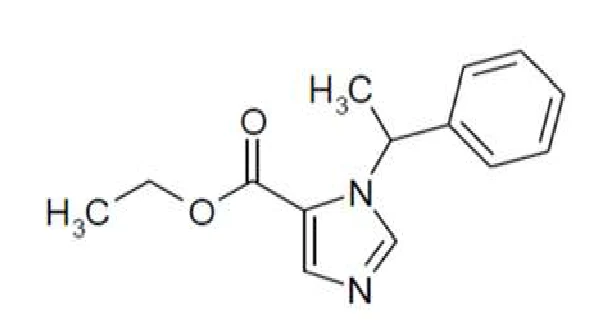
| Chemical name: | Ethyl 1-[(1R)-1-phenylethyl]-1H-imidazole-5-carboxylate. |
| Molecular formula and molecular mass: | C14H16N2O2, 244.29 g/mol |
| Structural formula: | |
| Physicochemical properties: | A white or almost white powder that is insoluble in water, freely soluble in alcohol and in methylene chloride. |
13 CLINICAL TRIALS
13.1 Trial Design and Study Demographics
Table 7 - Summary of patient demographics for clinical trials in patients undergoing short surgical procedures
| Study # | Trial design | Dosage, route of administration and duration | Study subjects (n) | Mean age (Range) | Sex |
|---|---|---|---|---|---|
| Milller et.al., 1978 | Double-blind randomized controlled trial | Group 1: 0.3 mg/kg of intravenous etomidate. Group 2: 1.5 mg/kg of intravenous methohexitone: | 100 | Group 1: 56.83±2.7 years Group 2: 56.3±2.75 years | Group 1: 33M/17F Group 2: 32M/18F |
 |
| Study # | Trial design | Dosage, route of administration and duration | Study subjects (n) | Mean age (Range) | Sex |
|---|---|---|---|---|---|
| Morison et al., 1982 | Double-blind randomized controlled trial | Group 1: 0.3 mg/kg of intravenous etomidate. Group 2: 75 mcL/kg of intravenous alfathesin. | 48 | Group 1: 23.7±1.4 years Group 2: 23.0±1.2 years | 24F per group |
Wu et al., 2013 | Double-blind randomized controlled trial | Group 1: 0.2 mg/kg etomidate Group 2: 0.2 mg/kg etomidate + 1 mcg/kg fentanyl Group 3: 0.2 mg/kg etomidate + 1 mcg/kg fentanyl + 0.02 mg/kg midazolam Group 4: 2 mg/kg propofol Group 5: 2 mg/kg propofol + 1 mcg/kg fentanyl Group 6: 2 mg/kg propofol + 1 mcg/kg fentanyl + 0.02 mg/kg midazolam | 240 | Group 1: 27.1±5.0 years Group 2: 29.5±6.3 years Group 3: 27.7±5.8 years Group 4: 27.1±4.0 years Group 5: 28.4±6.2 years Group 6: 28.2±5.0 years | 40F per group |
F=female; M=male
The patient populations in the three studies consisted predominantly of female patients with two of the studies only including females while one study was predominantly (65%) male patients. The mean age of patients in the studies ranged from 23.0 to 56.8 years with mean weight ranging from 51.5 to 66.7 kg. The surgical procedures included cystoscopy, minor gynaecological operations, and surgical abortion. Other demographic data were not provided, although one study was conducted in Canada, one study in the United Kingdom, and one study in China.
13.2 Study Results
Miller et al., 1978
This double-blind randomized controlled trial conducted in the United Kingdom enrolled 100 adult patients (65 male, 35 female) scheduled for outpatient cystoscopy. Patients were randomized to receive either 0.3 mg/kg etomidate or 1.5 mg/kg methohexitone for the procedure with the anaesthetist blinded to the drug administered. Systemic arterial pressure and heart rate were measured prior to induction, immediately after induction, and on recovery. Patient recovery times were also recorded. Anesthesia was maintained with 1% halothane in 66% nitrous oxide and oxygen.
Overall, recovery times did not significantly differ between etomidate and methohexitone.
Table 8 - Results of Miller et al., 1978 study patients undergoing cystoscopy
| Endpoint | Etomidate (n=50) | Methohexitone (n=50) | P-value |
|---|---|---|---|
| Time to recover from anesthesia (minutes) | 4.6±0.3 | 3.8±0.28 | NS |
NS=non-significant
Morison et al., 1982
This double-blind randomized controlled trial conducted in Canada enrolled 48 patients undergoing minor gynaecological operations. Patients were randomized to receive either 0.3 mg/kg etomidate or 75 mcL/kg alfathesin as intravenous induction agents. Loss of response, loss of eyelash reflex, duration of anesthesia, recovery times, heart rate, and blood pressure were measured. Additional increments of etomidate or alfathesin were injected at 25% of induction dose if patients moved in response to surgical stimulus.
There were no differences between groups in terms of time for loss of response (etomidate: 50.9±1.8 seconds; alfathesin: 45.7±2.1 seconds), loss of eyelash reflex (etomidate: 77.3±5.7 seconds; alfathesin: 62.2±2.5 seconds), and duration of anesthesia (etomidate: 8.8±1.1 min; alfathesin: 8.3±0.9 min).
Recovery times for the two groups were not significantly different for eyes open (etomidate: 2.83±0.42 min; alfathesin: 2.87±0.35 min), giving date of birth (etomidate: 5.23±0.68 min; alfathesin: 5.76±0.60 min), and being “street fit” (etomidate: 3.30±0.15 hours; alfathesin: 3.25±0.15 hours).
Table 9 - Results of Morison et al., 1982 study patients undergoing minor gynecological operations
| Endpoint | Etomidate (n=24) | Alfathesin (n=24) | P-value |
|---|---|---|---|
| Time until loss of response (seconds) | 50.9±1.8 | 45.7±2.5 | NS |
| Time until loss of eyelash reflex (seconds) | 77.3±5.7 | 62.2±2.5 | NS |
| Duration of anesthesia (minutes) | 8.8±1.1 | 8.3±0.9 | NS |
| Time until eyes open (minutes) | 2.83±0.42 | 2.87±0.35 | NS |
| Time to recall birth date (minutes) | 5.23±0.68 | 5.76±0.60 | NS |
| Time until street fit (hours) | 3.30±0.15 | 3.25±0.15 | NS |
NS=non-significant
Wu et al., 2013
This double-blind randomized controlled trial in China enrolled 240 female patients undergoing surgical abortion. Patients were randomized to receive 0.2 mg/kg etomidate (E), 0.2 mg/kg etomidate and 1 mcg/kg fentanyl (EF), 0.2 mg/kg etomidate with 1 mcg/kg fentanyl and 0.02 mg/kg midazolam (EFM), 2 mg/kg propofol (P), 2 mg/kg propofol and 1 mcg/kg fentanyl (PF), or 2 mg/kg propofol with 1 mcg/kg fentanyl and 0.02 mg/kg midazolam (PFM; N=40 each). Recovery times, respiratory and cardiovascular measures, and adverse events were assessed throughout. If a patient had spontaneous movements that hampered the surgical procedure a 1 to 2 mL bolus dose of 2 mg/kg propofol or 0.2 mg/kg etomidate (group dependent) was supplemented.
The mean time to eye opening in group PF was significantly shorter than that in group PFM (4.5±1.7 min vs. 6.0±2.5 min, p=0.026). In addition, the mean time to obeying commands achieved in group PF (4.6±1.7 min) was significantly shorter than that in groups P (5.7±1.6 min, p=0.042) and PFM (6.2±2.4 min, p=0.016). The mean PACU recovery time in group PF was significantly shorter than that in group P (11.8±2.7 min vs. 13.9±3.2 min, p=0.047). Recovery times for eye opening, obeying commands, and PACU recovery time were not significantly different in the etomidate groups.
Recovery times for etomidate and propofol were similar and recovery time was not influenced by fentanyl or midazolam in the etomidate group. The addition of fentanyl and midazolam in the etomidate group increased the duration until a supplementary dose was needed.
Table 10 - Results of Wu et al., 2013 study patients undergoing surgical abortion
| Endpoint | Group P (n=4) | Group PF (n=4) | Group PFM (n=4) | Group E (n=4) | Group EF (n=4) | Group EFM (n=4) |
|---|---|---|---|---|---|---|
| Time to eye opening (minutes) | 4.7±1.2 | 4.5±1.7 | 6.0±2.5 b | 5.2±5.1 | 5.4±2.1 | 4.6±2.1 |
| Time to obeying commands (minutes) | 5.7±1.6b | 4.6±1.7a | 6.2±2.4 b | 5.1±3.1 | 5.8±2.3 | 4.7±2.2 |
| PACU recovery time | 13.9±3.2b | 11.8±2.7 a | 12.7±4.3 | 12.0±5.7 | 13.6±5.0 | 12.8±5.0 |
a p<0.05 differences between groups P and PF.
b p<0.05 differences between groups PF and P, and between groups PF and PMF
E=etomidate; EF=etomidate and fentanyl; EFM=etomidate, fentanyl, and midazolam; P=propofol; PACU=post-anesthesia care unit; PF=propofol and fentanyl; PFM=propofol, fentanyl, and midazolam Data are mean±SD. One-way ANOVA determined significant differences.
14 NON-CLINICAL TOXICOLOGY
General Toxicology
Etomidate is a potent IV hypnotic in mice, rats, guinea-pigs, rabbits and dogs with ED50's for hypnosis varying from 0.14 mg/kg in guinea-pigs to 1.02 mg/kg in mice. In rats, ED50's for hypnosis varied (0.57 to
1.11 mg/kg) based on weight (100 g vs. 200 g) and how quickly etomidate was injected (fast vs. slow), with hypnosis occurring at lower concentrations of etomidate at higher weights and following fast injection. In dogs and rabbits, the ED50's were 0.48 mg/kg and 0.50 mg/kg, respectively. Duration of hypnosis in all species is dose-dependent and recovery is very rapid. Following 5 minutes of hypnosis, complete recovery was observed within 8.3 minutes after injection in rabbits, within 11 minutes in guinea-pigs, within 14 minutes in dogs, within 31 minutes in mice, and within 20 to 28 minutes in rats. The safety ratio (LD50/ED50) of etomidate is very high across species with the ratio being 50.0 in guinea- pigs, 29.0 in mice, from 19.8 to 31.7 by rapid and from 20.5 to 28.3 by slow injection in rats, 24.0 in rabbits, and 15.9 in dogs. In rats of different body weights, it appears that etomidate is more potent (ED50 range: 0.57 to 0.75 mg/kg) and slightly more toxic (LD50 range: 14.8 to 18.5 mg/kg) when injected rapidly than when injected slowly (ED50 range: 0.88 to 1.11 mg/kg; LD50 range: 22.8 to 26.1 mg/kg).
Repeat-dose studies were conducted in rats and dogs. No mortality was noted in either rats or dogs. Rats were administered 0, 0.31, 1.25 or 5 mg/kg/day for 21 days, and dogs 0, 0.25, 0.75 or 1.5 mg/kg/day for 14 days. In female rats, a decrease in food consumption was noted at doses of 1.25 and 5 mg/kg/day and in male rats a decrease in absolute and relative weight of the spleen was noted. In dogs, at doses of 0.75 and 1.5 mg/kg/day, myoclonic contractions, muscle tremors, vomiting and defecation was occasionally observed. Ataxia was observed at all dose levels in dogs and rats.
Etomidate has been shown to affect steroidogenesis in animals; specifically, cortisol, aldosterone, and testosterone.
Published studies in animals demonstrate that the use of anesthetic agents during the period of rapid brain growth or synaptogenesis results in widespread neuronal and oligodendrocyte cell loss in the developing brain and alterations in synaptic morphology and neurogenesis.
Genotoxicity
Studies to evaluate the mutagenic potential of etomidate have not been completed.
Carcinogenicity
Long-term animal studies to evaluate the carcinogenic potential of etomidate have not been completed.
Reproductive Toxicity
Fertility
In a fertility and early embryonic development study in which male and female rats were treated intravenously with 0.31, 1.25, or 5 mg/kg/day etomidate prior to mating, no adverse effects on fertility were noted.
Embryo-fetal Development
Repeated doses of etomidate administered to rats from gestation day (GD) 6 through GD 15 had no adverse effects on average litter size, number of implantations, proportions of live, dead, and resorbed fetuses, and fetal body weights up to 5.00 mg/kg/day. At 5 mg/kg/day, 2 fetuses had waved ribs; however, this was not considered treatment-related due to regular encounters within control groups.
Repeated doses of etomidate administered to rabbits from gestation day (GD) 6 through GD 18 had no adverse effects on average litter size, number of implantations, proportions of live, dead, and resorbed fetuses, and fetal body weights up to 4.50 mg/kg/day. At 4.50 mg/kg/day, 1 fetus had fused ribs; however, this was not considered treatment-related due to regular encounters within control groups.
Administration of isoflurane or propofol over a 5-hour period on GD 120 (with respect to brain development, this corresponds to the 3rd trimester of gestation in humans) or in 6-day old primates, as well as administration of ketamine for 24 hours on GD122, resulted in increased neuronal and oligodendrocyte apoptosis in the developing brain. The clinical significance of these findings is not clear; however, studies in juvenile animals suggest neuroapoptosis correlates with long-term cognitive deficits.
Pre- and Post-natal Development
Increased still born fetuses and decreased pup survival were noted at all doses tested in a study where pregnant rats received etomidate via IV injection during gestation and throughout lactation (GD 16 through Lactation Day 21) at dose levels of 0.31, 1.25, or 5 mg/kg/day etomidate. These doses also produced maternal toxicity (decreased food consumption and increased mortality).
In sheep studies, etomidate is shown to rapidly cross the placenta and reach the fetus after a 1 mg/kg IV bolus dose and one-hour infusion of 100 mcg/kg/min. After a single IV bolus dose the AUC ratio between the fetus and mother showed a value of 0.45 ± 0.32, and after a one-hour infusion 0.37 ± 0.08. Although etomidate crosses the placenta very rapidly and reaches the fetus in high amounts, there was no evidence of cumulative effects of the drug in the fetus.
Studies in Juvenile Animals
Published juvenile animal studies demonstrate that the administration of anesthetic and sedation drugs, such as etomidate, that either block N-methyl-D-aspartate (NMDA) receptors or potentiate the activity of GABA during the period of rapid brain growth or synaptogenesis, results in widespread neuronal and oligodendrocyte cell loss in the developing brain and alterations in synaptic morphology and neurogenesis. Based on comparisons across species, the window of vulnerability to these changes is believed to correlate with exposures in the third trimester of gestation through the first several months of life, but may extend out to approximately 3 years of age in humans.
Other Toxicity
A local irritation study was conducted with high concentrations of etomidate in New Zealand white rabbits. High concentrations of etomidate sulphate were injected into the ear veins. No irritation was observed at concentrations up to 5 mg/mL. Irritation was observed at 10 mg/mL; however, this was reversible, resolving within 24 to 96 hours following injection. At 20 and 40 mg/mL, severe irritation was observed followed by necrosis in all treated ears.
15 SUPPORTING PRODUCT MONOGRAPHS
PrTOMVI™, Solution, 2 mg/mL, submission control 231245, Product Monograph, SteriMax Inc.
(JUL 14, 2020).