


Product Monograph - Eyezirgan
RECENT MAJOR LABEL CHANGES
| 4 DOSAGE AND ADMINISTRATION – 4.1 Dosing Considerations | 06/2024 |
|---|---|
| 7 WARNINGS AND PRECAUTIONS – 7.1 Special Populations – 7.1.1 Pregnant Women | 06/2024 |
| PATIENT MEDICATION INFORMATION | 06/2024 |
TABLE OF CONTENTS
Sections or subsections that are not applicable at the time of authorization are not listed.
RECENT MAJOR LABEL CHANGES ............................................................................................ 2
TABLE OF CONTENTS .............................................................................................................. 2
PART I: HEALTH PROFESSIONAL INFORMATION ...................................................................... 4
1 INDICATIONS ............................................................................................................... 4
1.1 Pediatrics (<18 years of age) ................................................................................... 4
2 CONTRAINDICATIONS ................................................................................................. 4
4 DOSAGE AND ADMINISTRATION ................................................................................. 4
4.1 Dosing Considerations ............................................................................................ 4
4.2 Recommended Dose and Dosage Adjustment ....................................................... 4
4.4 Administration ........................................................................................................ 4
4.5 Missed Dose ........................................................................................................... 4
5 OVERDOSAGE .............................................................................................................. 4
6 DOSAGE FORMS, STRENGTHS, COMPOSITION AND PACKAGING ................................. 5
7 WARNINGS AND PRECAUTIONS .................................................................................. 5
7.1 Special Populations................................................................................................. 6
7.1.1 Pregnant Women ............................................................................................. 6
7.1.2 Breast-feeding .................................................................................................. 7
7.1.3 Pediatrics (<18 years of age) ............................................................................. 7
7.1.4 Geriatrics .......................................................................................................... 7
8 ADVERSE REACTIONS .................................................................................................. 7
8.1 Adverse Reaction Overview .................................................................................... 7
8.2 Clinical Trial Adverse Reactions .............................................................................. 7
8.3 Less Common Clinical Trial Adverse Reactions (<1%) ............................................. 8
8.5 Post-Market Adverse Reactions ............................................................................. 8
9 DRUG INTERACTIONS .................................................................................................. 8
9.2 Drug Interactions Overview .................................................................................... 8
9.3 Drug-Behavioural Interactions ................................................................................ 9
9.4 Drug-Drug Interactions ........................................................................................... 9
9.5 Drug-Food Interactions ........................................................................................... 9
9.6 Drug-Herb Interactions ........................................................................................... 9
9.7 Drug-Laboratory Test Interactions .......................................................................... 9
10 CLINICAL PHARMACOLOGY ......................................................................................... 9
10.1 Mechanism of Action ........................................................................................ 9
10.2 Pharmacodynamics .......................................................................................... 9
10.3 Pharmacokinetics ........................................................................................... 10
11 STORAGE, STABILITY AND DISPOSAL ......................................................................... 11
PART II: SCIENTIFIC INFORMATION ....................................................................................... 12
13 PHARMACEUTICAL INFORMATION ............................................................................ 12
14 CLINICAL TRIALS ........................................................................................................ 13
14.1 Clinical Trials by Indication ............................................................................. 13
15 MICROBIOLOGY ........................................................................................................ 14
16 NON-CLINICAL TOXICOLOGY ..................................................................................... 15
PATIENT MEDICATION INFORMATION .................................................................................. 17
PART I: HEALTH PROFESSIONAL INFORMATION
1 INDICATIONS
EYEZIRGAN (ganciclovir ophthalmic gel) 0.15% is a topical ophthalmic antiviral that is indicated for the treatment of superficial acute herpes simplex keratitis (dendritic ulcers).
1.1 Pediatrics (<18 years of age)
No data are available to Health Canada; therefore, Health Canada has not authorized an indication for pediatric use.
2 CONTRAINDICATIONS
- EYEZIRGAN is contraindicated in patients who are hypersensitive to ganciclovir, valganciclovir, acyclovir or to any ingredient in the formulation, including any non-medicinal ingredient, or component of the container. For a complete listing see 6 DOSAGE FORMS, STRENGTHS, COMPOSITION AND PACKAGING.
4 DOSAGE AND ADMINISTRATION
4.1 Dosing Considerations
- Women of childbearing potential should use effective contraception during treatment with EYEZIRGAN and for six months after stopping treatment (see 7.1.1 WARNINGS AND PRECAUTIONS, Special Populations, Pregnant Women);
- Men taking EYEZIRGAN should use barrier contraceptive measures during treatment and for three months after stopping treatment (see 7.1.1 WARNINGS AND PRECAUTIONS, Special Populations, Pregnant Women).
4.2 Recommended Dose and Dosage Adjustment
- Adults: 1 drop 5 times daily until complete corneal re-epithelialization, then 1 drop 3 times daily for 7 days. Treatment duration does not generally exceed 21 days.
- Health Canada has not authorized an indication for pediatric use.
4.4 Administration
EYEZIRGAN should be administered topically to the affected eye(s) approximately every three hours while awake.
4.5 Missed Dose
If a dose is missed, it should be applied as soon as possible. However, if it is almost time for the next dose, the missed dose should be skipped and the next dose should be taken as usual.
5 OVERDOSAGE
No reports of overdose were received during the clinical studies of ganciclovir ophthalmic gel.
The estimated maximum daily dose of ganciclovir administered as 1 drop, 5 times per day is 0.375 mg.
Compared to maintenance doses of 900 mg oral ganciclovir (valganciclovir) and 5 mg/kg intravenous (IV) ganciclovir), the daily dose of topical ophthalmic ganciclovir is approximately 0.04% and 0.1 % of the oral dose and IV doses, respectively, thus minimal systemic exposure is expected.
No data are available in humans regarding overdose by accidental or deliberate ingestion of ganciclovir ophthalmic gel.
If a topical overdose of ganciclovir ophthalmic gel occurs, the eye(s) may be flushed with tap water.
| For management of a suspected drug overdose, contact your regional poison control centre. |
|---|
6 DOSAGE FORMS, STRENGTHS, COMPOSITION AND PACKAGING
Table – Dosage Forms, Strengths, Composition and Packaging
EYEZIRGAN is supplied as 5 grams of a sterile, preserved, opalescent, colourless, topical ophthalmic gel containing 1.5 mg/g of ganciclovir in a polycoated aluminum tube with a white polyethylene tip and cap and protective band.
7 WARNINGS AND PRECAUTIONS
General
EYEZIRGAN is indicated for topical ophthalmic use only.
EYEZIRGAN is not indicated for the treatment of cytomegalovirus (CMV) intraocular infections.
Efficacy in other viral types of keratoconjunctivitis has not been demonstrated.
Carcinogenesis and Mutagenesis
- See 16 NON-CLINICAL TOXICOLOGY.
Driving and Operating Machinery
Due caution should be exercised when driving or operating a vehicle or potentially dangerous machinery.
Hepatic / Biliary / Pancreatic
No studies were conducted in hepatically impaired subjects.
Immune
No specific clinical studies were performed in immunosuppressed subjects.
Ophthalmologic
Benzalkonium chloride, the preservative in EYEZIRGAN, has been reported to cause punctate keratopathy and/or toxic ulcerative keratopathy. Close monitoring is required with frequent and/or
| Route of Administration | Dosage Form / Strength/Composition | Non-medicinal Ingredients |
| Ophthalmic | Ophthalmic gel containing 1.5 mg/g ganciclovir | Benzalkonium chloride (as preservative), carbomer, sodium hydroxide, sorbitol, water |
prolonged use of this product.
Benzalkonium chloride is also known to discolour soft contact lenses and may cause eye irritation. Patients should not wear contact lenses if they have signs or symptoms of herpetic keratitis or during the course of therapy with EYEZIRGAN.
Renal
No studies were conducted in renally impaired subjects.
Reproductive Health: Female and Health Potential
Fertility
Intravenous and oral studies with ganciclovir in animals resulted in testicular and ovarian suppression with consequential effects on fertility. Toxicity to the male reproductive system occurred following the systemic exposure of 12-fold in dogs and 19-fold in mice of the systemic exposure of patients treated with EYEZIRGAN.
Function
Impairment of reproductive performance in male mice occurred at 60-fold the systemic exposure of EYEZIRGAN patients. Impairment of reproductive performance in female mice occurred at 3000-fold the systemic exposure of patients treated with EYEZIRGAN.
Teratogenic Risk
- In non-clinical studies, ganciclovir has been shown to be embryotoxic in rabbits and mice following intravenous administration and teratogenic in rabbits (see 7.1.1 WARNINGS AND PRECAUTIONS, Special Populations, Pregnant Women and 16 NON-CLINICAL TOXICOLOGY).
7.1 Special Populations
7.1.1 Pregnant Women
There are no adequate and well-controlled studies in pregnant women. EYEZIRGAN should be used during pregnancy only if the potential benefit justifies the potential risk to the fetus.
- Women of childbearing potential should use effective contraception during treatment with EYEZIRGAN and for six months after stopping treatment (see 4.1 DOSAGE AND ADMINISTRATION, Dosing Considerations);
- Men taking EYEZIRGAN should use barrier contraceptive measures during treatment and for three months after stopping treatment (see 4.1 DOSAGE AND ADMINISTRATION, Dosing Considerations).
Ganciclovir has been shown to be embryotoxic in rabbits and mice following intravenous administration and teratogenic in rabbits. Fetal resorptions were present in at least 85% of rabbits and mice administered 60 mg/kg/day and 108 mg/g/day (approximately 10,000x and 17,000x the human ocular dose of 6.25 mcg/kg/day), respectively, assuming complete absorption. Effects observed in rabbits included: fetal growth retardation, lethality, teratogenicity, and/or maternal toxicity. Teratogenic changes included cleft palate, anophthalmia/microphthalmia, aplastic organs (kidney and pancreas), hydrocephaly, and brachygnathia. In mice, effects observed were maternal/fetal toxicity and embryo lethality. Daily intravenous doses of 90 mg/kg/day (14,000x the human ocular embryo dose) administered to female mice prior to mating, during gestation, and during lactation caused hypoplasia of the testes and seminal vesicles in the month-old male offspring, as well as pathologic changes in the nonglandular region of the stomach.
7.1.2 Breast-feeding
Breast-feeding is not recommended during treatment with EYEZIRGAN. Administration of ganciclovir in animal studies have shown that it is excreted during lactation; however, as the drug is being used as a topical ophthalmic gel, there is uncertainty regarding its potential systemic concentration.
7.1.3 Pediatrics (<18 years of age)
No data are available to Health Canada; therefore, Health Canada has not authorized an indication for pediatric use.
7.1.4 Geriatrics
No specific studies in hepatic or renally impaired patients have been conducted (see 7 WARNINGS AND PRECAUTIONS, Hepatic / Biliary / Pancreatic and 7 WARNINGS AND PRECAUTIONS, Renal). Patients over the age of 65 are more likely to have underlying conditions affecting their hepatic or renal system. Caution should be used in patients over the age of 65 who may be either hepatically or renally impaired.
8 ADVERSE REACTIONS
8.1 Adverse Reaction Overview
Ganciclovir ophthalmic gel was studied in a total of 218 patients in three Phase 2 studies and one Phase 3 study over treatment periods of 0-28 days. In these studies, 161 patients were treated with 1.5 mg/g ganciclovir, 57 were treated with 0.5 mg/g ganciclovir and 157 were treated with acyclovir 3%. The most commonly reported treatment-emergent adverse events were related to eye disorders (eye irritation (burning and stinging), blurred vision, superficial punctuate keratitis and conjunctival hyperaemia). There were no serious adverse reactions reported in clinical trials. In the post-marketing setting, the following serious adverse reactions have been reported: leukopenia, thrombocytopenia, eye irritation, eye pain, eye swelling, keratitis, blurred vision and corneal abrasion.
8.2 Clinical Trial Adverse Reactions
Clinical trials are conducted under very specific conditions. The adverse reaction rates observed in the clinical trials; therefore, may not reflect the rates observed in practice and should not be compared to the rates in the clinical trials of another drug. Adverse reaction information from clinical trials may be useful in identifying and approximating rates of adverse drug reactions in real-world use.
Because clinical trials are conducted under very specific conditions, the adverse reaction rates observed in the clinical trials may not reflect the rates observed in practice and should not be compared to the rates in the clinical trials of another drug. Adverse reaction information from clinical trials is useful for identifying drug-related adverse events and for approximating rates.
The clinical safety of EYEZIRGAN has been evaluated in a total of 4 clinical trials (three Phase 2 studies and one Phase 3 study) performed in patients with dendritic or geographic herpetic keratitis. The incidence of treatment-emergent adverse reactions reported at any time during treatment with EYEZIRGAN or the active control acyclovir ophthalmic ointment 3% by ≥1% of subjects in Phase 2 and 3 trials is presented in Table 1.
Table 1: Adverse Events reported in ≥ 1% of Subjects in Clinical Trialsa
EYEZIRGAN n = 161 (%) | Active Controlb n = 157 (%) | |
| Eye Disorders | ||
| Vision blurred | 57.8 | 71.3 |
| Eye irritation | 25.6 | 46.2 |
| Punctate keratitis | 8.8 | 16.0 |
| Conjunctival hyperaemia | 5.6 | 5.0 |
| Erythema of the eyelid | 3.2 | 3.4 |
| Dysgeusia | 1.2 | 0.0 |
a Pooled Phase 2 and 3 clinical trials
b The active control used in clinical trials was acyclovir 3% ophthalmic ointment; this formulation of acyclovir is not approved for use in Canada.
8.3 Less Common Clinical Trial Adverse Reactions (<1%)
Ophthalmic: Corneal disorder
8.5 Post-Market Adverse Reactions
The following serious post-market adverse drug reactions have been reported following use of ganciclovir ophthalmic ointment.
Blood and lymphatic system disorders: Leukopenia, Thrombocytopenia
Eye disorders: Eye pain, Eye swelling, Corneal abrasion, Lacrimation increased
Gastrointestinal disorders: Ascites
General disorders and administration site conditions: Application site pain
Immune system disorders: Renal transplant failure
Infections and infestations: Pathogen resistance, Pseudomonas infection
Investigations: Coma scale abnormal, Liver function test abnormal, Viral load increased, White blood cell increased
Nervous system disorders: Balance disorder, Cerebrovascular accident, Headache, Hepatic encephalopathy
Psychiatric disorders: Confusional state
9 DRUG INTERACTIONS
9.2 Drug Interactions Overview
Systemic absorption of ganciclovir from EYEZIRGAN is very low or negligible and drug-drug interactions with other systemically available drugs are unlikely.
9.3 Drug-Behavioural Interactions
Interactions with alcohol have not been established.
9.4 Drug-Drug Interactions
There have been no formal drug interaction studies done with topical ophthalmic ganciclovir.
If another topical ophthalmic drug is being used with EYEZIRGAN, the drugs should be administered at least 15 minutes apart, and EYEZIRGAN should be instilled last.
9.5 Drug-Food Interactions
Interactions with food have not been established.
9.6 Drug-Herb Interactions
Interactions with herbal products have not been established.
9.7 Drug-Laboratory Test Interactions
Interactions with laboratory tests have not been established.
10 CLINICAL PHARMACOLOGY
10.1 Mechanism of Action
Ganciclovir is a synthetic nucleoside analogue of guanine that inhibits the replication of herpes viruses both in vitro and in vivo.
Intracellular ganciclovir is phosphorylated to ganciclovir monophosphate by a cellular deoxyguanosine kinase. Further phosphorylation occurs by several cellular kinases to produce ganciclovir triphosphate. It has been shown in vitro that the levels of ganciclovir triphosphate are as much as 100-fold greater in CMV-infected cells than non-infected cells. Thus, there is a preferential phosphorylation of ganciclovir in virus-infected cells. In virus-infected cells, ganciclovir triphosphate is metabolized slowly, with 60 to 70% remaining intracellularly 18 hours after removal of ganciclovir from the extracellular fluid. The antiviral activity of ganciclovir is the result of inhibition of viral DNA synthesis by two modes: (1) ganciclovir triphosphate competitively inhibits dGTP incorporation into DNA by DNA polymerase and (2) incorporation of ganciclovir triphosphate into viral DNA causes subsequent termination or very limited viral DNA elongation.
Ganciclovir inhibits mammalian cell proliferation in vitro at concentrations from 10 to 60 µg/mL, with bone marrow colony forming cells being most sensitive (IC50 of 10 µg/mL).
10.2 Pharmacodynamics
No formal clinical pharmacodynamic studies have been performed with EYEZIRGAN. The antiviral activity of EYEZIRGAN was confirmed during clinical trials through evaluation of conjunctival viral samples from subjects with acute herpetic keratitis.
10.3 Pharmacokinetics
In humans after ocular instillation 5 times daily for 11 to 15 days during treatment of superficial herpetic keratitis, the plasma levels of ganciclovir are very low. After repeated instillations of ganciclovir eye gel 0.15%, the concentration of ganciclovir in tears was higher than the published IC50 of ganciclovir for HSV-1 and HSV-2.
Ocular pharmacokinetics studies in rabbits evidenced rapid and relevant penetration of ganciclovir into the cornea and the anterior segment of the eye, allowing concentrations higher than the median effective doses (ED50) for several hours.
In two radiolabeled single-dose studies in rabbits, radioactivity was maximal approximately 0.5 hours after instillation in both intact and de-epithelialized eyes before gradually declining and was not detectable 24 hours after instillation. Radioactivity was mainly distributed in the anterior segment (cornea, aqueous humor, iris-ciliary body) and was low in the posterior segment (vitreous, retina, and choroids). No radioactivity was detected in the lens. Radioactivity remained on the surface of the eyelids and did not penetrate the tissue. Radioactivity levels were higher in the de-epithelialized eyes than intact eyes. The levels of radioactivity were higher on the eyelids of the intact eyes than the de-epithelialized eyes. Analysis of the plasma samples produced a single peak of radioactivity, indicating that ganciclovir had not been extensively metabolized. Radioactivity was no longer detectable in the plasma 24 hours after administration.
After ocular administration of a single dose of 75 µg 3H-ganciclovir to rabbits with de-epithelialized corneas, 20% of the dose was excreted via urine and 4% was excreted in faeces.
Absorption
Plasma ganciclovir levels were investigated after repeated instillations of EYEZIRGAN (1 drop 5 times per day for 7 days) in healthy volunteers and in subjects with herpetic keratitis. The mean plasma concentrations of ganciclovir on the seventh day of treatment in each group were negligible at 0.0115 ± 0.0037 mcg/mL and 0.0127 ± 0.0037 mcg/mL, respectively. The maximum plasma concentration of ganciclovir in healthy volunteers was found to be 0.03 mcg/mL.
Ganciclovir levels in tears were investigated after repeated instillations of EYEZIRGAN in healthy volunteers (tear samples were collected 30 minutes before the first instillation and 2 hours and 45 minutes after each of 4 instillations). In the tear samples in which ganciclovir was detected (32/48 samples [67%]), all of the tear concentrations were greater than the in vitro IC50 for the HSV-1 strain (0.05 mcg/mL–0.13 mcg/mL, or 0.2 mcM to 0.5 mcM) and were greater than the IC50 for the HSV-2 strain (0.08 mcg/mL–0.46 mcg/mL, or 0.4 mcM–1.8 mcM).
Distribution:
Following topical administration of EYEZIRGAN to rabbits with intact or de-epithelialized corneas, the highest concentrations of radioactivity were found in the external ocular structures, tears, conjunctiva, and cornea. In the interior eye, the radioactivity was higher in the anterior than in the posterior segment. Detectable levels of radiolabeled drug persisted in the cornea for up to 8 hours after administration, while all other tissues showed borderline or nonsignificant levels of radioactivity past 2 hours.
There is negligible systemic exposure to ganciclovir from topical ophthalmic use of EYEZIRGAN.
Binding of ganciclovir to plasma proteins is only about 1% - 2%.
Metabolism:
Given the low systemic exposure to ganciclovir from topical ophthalmic use of EYEZIRGAN, metabolism studies have not been conducted.
Elimination
Renal excretion through both glomerular filtration and active tubular secretion is the major route of elimination of ganciclovir.
After ocular administration of 5 drops per day for up to 14 days in a small subset of patients diagnosed with herpetic keratitis, concentrations of ganciclovir in urine samples were found to be less than 0.1 mcg/mL in all samples for all of the time points measured.
Special Populations and Conditions
- Pregnancy – There are no adequate and well-controlled studies in pregnant women and no studies have been performed to investigate the pharmacokinetic profiles in pregnant women. See 16 NON-CLINICAL TOXICOLOGY.
- Breastfeeding – No studies have been performed to investigate the pharmacokinetic profiles in breastfeeding women. See 16 NON-CLINICAL TOXICOLOGY.
- Pediatrics - EYEZIRGAN has not been evaluated in the pediatric population.
- Geriatrics - No overall differences in safety and effectiveness have been observed between elderly and younger patients.
- Sex - No studies have been performed to investigate differences in the pharmacokinetic profiles between males and females.
- Ethnic Origin - No studies have been performed to investigate differences in the pharmacokinetic profiles due to race.
- Hepatic Insufficiency - No specific hepatic function tests have been conducted with EYEZIRGAN.
- Renal Insufficiency - Renal function was not evaluated in clinical studies with EYEZIRGAN. The major elimination pathway for systemic ganciclovir is renal and dosage reductions according to creatinine clearance are required.
11 STORAGE, STABILITY AND DISPOSAL
Store at 15°C-30°C. Do not freeze. Use within 30 days after first opening of the tube container.
PART II: SCIENTIFIC INFORMATION
13 PHARMACEUTICAL INFORMATION
Drug Substance
Proper name: Ganciclovir
Chemical name: 9-[[2-hydroxy-1-(hydroxymethyl)ethoxy]methyl]guanine (IUPAC).
6H-Purin-6-one, 2-amino-1,9-dihydro-9-[[2-hydroxy-1-(hydroxymethyl)ethoxy]methyl](CAS)
9-(1-Hydroxymethyl-2-hydroxyethyloxy)methylguanine
2-Amino-9-[[2-hydroxy-1-(hydroxymethyl)ethoxy]methyl]-1,9-dihydro-6H-purin-6-one.
Molecular formula and molecular mass: C9H13N5O4, 255.23 g/mole
Structural formula:
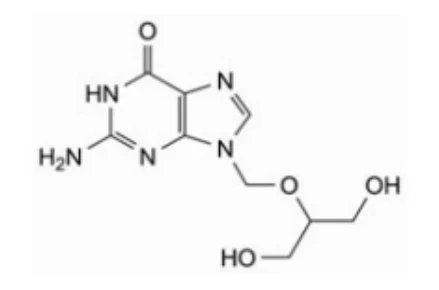
Appearance: White or almost white, hygroscopic, crystalline powder.
Physicochemical properties: pKa1 = 2.2
pKa2 = 9.40
Table 2: Solubility of Ganciclovir in Common Solvents
| Solvent | Solubility (mg/ml) | USP Classification |
|---|---|---|
| 0.1 N aqueous NaOH | 16.8 | Sparingly soluble |
| 10% Tween 20 | 3.17 | Slightly soluble |
| 10% EL 719 | 3.15 | Slightly soluble |
| 0.005M NH4H2PO4 (pH 2.5) | 3.0 | Slightly soluble |
| 10 % sorbitol | 2.66 | Slightly soluble |
| Glacial acetic acid | 2.3 | Slightly soluble |
| Propylene glycol | 2.0 | Slightly soluble |
| Water | 2.6 | Slightly soluble |
| Methanol | 0.23 | Very slightly soluble |
| Solvent | Solubility (mg/ml) | USP Classification |
|---|---|---|
| Ethanol | 0.16 | Very slightly soluble |
| Hexane | < 0.1 | Practically insoluble |
| Dichloromethane | < 0.1 | Practically insoluble |
| Acetone | < 0.1 | Practically insoluble |
| Acetonitrile | < 0.1 | Practically insoluble |
14 CLINICAL TRIALS
14.1 Clinical Trials by Indication
Herpetic Keratitis (Dendritic Ulcers)
Table 3: Summary of patient demographics for Phase 3 clinical trial in herpetic keratitis
| Study # | Study design | Dosage, route of administration and duration | Study subjects (n) | Mean age (Range) | Sex |
| 7 | Open-label, randomized, comparative, active controlled | Ganciclovir 0.15% **Acyclovir 3% Topical, 1 drop 5×/day until complete cicatrisation of the ulcer, then 3×/day for 7 days | 84 80 | 47 44 | 26 F/58 M 24 F/56 M |
** Acyclovir 3% ophthalmic ointment is not available in Canada.
The clinical safety and efficacy of EYEZIRGAN (ganciclovir 0.15% ophthalmic gel) in the treatment of superficial herpetic keratitis (dendritic ulcers) was studied in one Phase 3 open-label, randomized, active-controlled parallel group, non-inferiority clinical trial (Study 7). A total of 138 patients with herpetic keratitis (dendritic ulcers) were randomized to treatment with ganciclovir 0.15% (EYEZIRGAN) or active comparator (acyclovir 3% ophthalmic ointment), which is not authorized for the treatment of superficial herpetic keratitis (dendritic ulcers) in Canada, but is an antiherpetic drug.
Study 7 included patients with dendritic ulcers. Patients under the age of 18, those with a known hypersensitivity to acyclovir or ganciclovir, and those with known leukopenia, anaemia, or thrombocytopenia were excluded from the study. Pregnant or breastfeeding women, or those not using an effective means of contraception were also excluded from the study.
The principal efficacy evaluation criterion in Study 7 was the time until recovery of the dendritic ulcer (evaluated by the absence of fluorescein staining at the ulcer site). Secondary efficacy evaluations were recovery rate (the number of recovered at a given moment of development, compared to the total number of patients), the number of relapses, withdrawals due to lack of efficacy, and the investigator’s assessment of efficacy. Evaluations were performed on Days 3, 5 (optional), 7, 10, and 14, with a follow-up visit on Day 21 if the ulcer recovered on Day 10 or Day 14.
The results obtained from the Phase 3 study (Study 7) are presented in Table 4 below.
Table 4: Study 7 - Summary of Efficacy Results (ITT Population), Dendritic Ulcers
| Efficacy Measure | EYEZIRGAN | ACV 3% |
| Number of subjects with dendritic ulcers | N=71 | N=67 |
| Recovery at any time | 63 (88.7%) | 61 (91.0%) |
| Time to recovery (median days) | 7 | 7 |
| Number of relapses | 2 (2.8%) | 2 (3.0%) |
| Withdrawals due to lack of efficacy | 9 (12.7%) | 7 (10.4%) |
| Investigator assessment of efficacy at the last visit* | ||
| Unsatisfactory | 4 (5.6%) | 2 (3.0%) |
| Not very satisfactory | 3 (4.2%) | 4 (6.1%) |
| Reasonably satisfactory | 16 (22.5%) | 12 (18.2%) |
| Very satisfactory | 48 (67.6%) | 48 (72.7%) |
*One patient in the ACV 3% group dropped out after D0
Phase 2 clinical trials have also demonstrated that EYEZIRGAN is effective in the treatment of superficial acute herpes simplex keratitis (dendritic ulcers).
Three Phase 2 clinical trials (studies 4, 5 and 6) were conducted using ganciclovir gel 0.15% (with two studies also including a 0.05% formulation) compared to acyclovir 3% ophthalmic ointment (which is not authorized for use for the treatment of superficial herpetic keratitis (dendritic ulcers) in Canada). The formulations used in studies 4, 5 and 6 had a different preservative than that which was used in the Phase 3 study. The three Phase 2 studies had similar endpoints as used in Study 7. However, while studies 4 and 5 used the identical dosing regimen to Study 7, a different dosing regimen was used in Study 6 (1 drop 5 times a day for 10 days). The results from studies 4, 5 and 6 showed that ganciclovir gel 0.15% was non-inferior to acyclovir 3% ophthalmic ointment.
An integrated analysis of the Phase 3 and Phase 2 studies is shown in Table 5.
Table 5: Summary of Pooled Efficacy Results (ITT Population), Dendritic Ulcers
| Efficacy Measure | EYEZIRGAN | ACV 3% |
| Number of subjects with dendritic ulcers | N=125 | N=115 |
| Recovery at Day 7 | 95 (76.0%) | 84 (73.0%) |
| Recovery at Day 14 | 109 (87.2%) | 98 (85.2%) |
15 MICROBIOLOGY
Ganciclovir has demonstrated efficacy both in vitro and in vivo against HSV-1 and HSV-2 ocular infections when administered at concentrations ranging from 0.05% to 1%. Using reference isolates of HSV-1 and HSV-2, ganciclovir has demonstrated in vitro virustatic activity where the 50% inhibitory concentration (IC50) of ganciclovir ranged from 0.05 to 0.13 mcg/mL (or 0.2–0.5 mcM) for HSV-1 and 0.08 to 0.46 µg/mL (or 0.4–1.8 mcM) for HSV-2. Topical ocular administration of ganciclovir has been shown to be effective in vivo against herpetic keratitis in laboratory animals.
16 NON-CLINICAL TOXICOLOGY
General Toxicology: Systemic toxicity studies were carried out in mice and dogs, with daily intravenous administration of ganciclovir for 1 month followed by 1 month recovery period.
In mice, the following doses were administered: 15 mg/kg/day, 45 mg/kg/day and 135 mg/kg/day. Treatment-related clinical signs were observed from 45 mg/kg/day (equivalent to 7200x the human ocular dose of 6.25mcg/kg/day, assuming complete absorption) including hypothermia, inactivity, pallor, rough coat, wasting, unthriftiness and death. The clinical signs were dose dependent and reversible. Most animals fully recovered by the end of the first week of recovery. Organ changes were observed from 15 mg/kg/day (2400x the human ocular dose) and were related to reproductive cell atrophy in both males and females, atrophy of adnexal skin tissue, and some nephropathy. These changes were mostly reversible by the end of the recovery period. The testes from 15 mg/kg/day in males (2400x the human ocular dose) exhibited early evidence of recovery, which was not the case from 45 mg/kg/day dose in male (7200x the human ocular dose).
In dogs, the only treatment related pathologic changes observed with doses from 0.4 mg/kg/day to 3.6 mg/kg/day (64x to 576x the human ocular dose) were testicular atrophy with hypospermatogenesis. This change was present in all treated males at the end of the 1-month recovery period post treatment. The severity of hypospermatogenesis increased with increasing dose. Nevertheless, as spermatogonia and primary spermatocytes were present at the end of recovery in all males, full recovery of spermatogenesis would be expected if the animals were allowed a longer recovery period. Increased doses induced further toxicity to death. Some examples are reduction in bone marrow cellularity (from 10 mg/kg/day, equivalent to 1600x the human ocular dose), and haematology and clinical chemistry changes including reduced levels of leukocytes, platelets, or reticulocytes (from 30 mg/kg/day, equivalent to 4800x the human ocular dose).
Carcinogenicity: Ganciclovir was carcinogenic in the mouse at oral doses of 20 and 1,000 mg/kg/day (approximately 3,000x and 160,000x the human ocular dose of 6.25 mcg/kg/day, assuming complete absorption). At the dose of 1,000 mg/kg/day there was a significant increase in the incidence of tumors of the preputial gland in males, forestomach (nonglandular mucosa) in males and females, and reproductive tissues (ovaries, uterus, mammary gland, clitoral gland, and vagina) and liver in females. At the dose of 20 mg/kg/day, a slightly increased incidence of tumors was noted in the preputial and Harderian glands in males, forestomach in males and females, and liver in females. No carcinogenic effect was observed in mice administered ganciclovir at 1 mg/kg/day (60x the human ocular dose). Except for histocytic sarcoma of the liver, ganciclovir-induced tumors were generally of epithelial or vascular origin. The significance of tumors in the preputial and clitoral glands, forestomach and Harderian glands of mice is uncertain as these tissues do not have human counterparts.
Genotoxicity: Ganciclovir increased mutations in mouse lymphoma cells and DNA damage in human lymphocytes in vitro at concentrations between 50 to 500 and 250 to 2,000 mcg/mL, respectively. In the mouse micronucleus assay, ganciclovir was clastogenic at doses of 150 and 500 mg/kg (IV) (24,000x to 80,000x human ocular dose) but not 50 mg/kg (8,000x human ocular dose). Ganciclovir was not mutagenic in the Ames Salmonella assay at concentrations of 500 to 5,000 mcg/mL.
Ocular toxicity: Ocular use of EYEZIRGAN during 28 days in rabbits, with 5 instillations per day, did not demonstrate any local or systemic toxic effect.
Reproductive and Developmental Toxicology: Ganciclovir has been shown to be embryotoxic in rabbits and mice following intravenous administration and teratogenic in rabbits. Fetal resorptions were present in at least 85% of rabbits and mice administered 60 mg/kg/day and 108 mg/kg/day (approximately 10,000x and 17,000x the human ocular dose of 6.25 mcg/kg/day), respectively, assuming complete absorption. Effects observed in rabbits included: fetal growth retardation, lethality, teratogenicity, and/or maternal toxicity. Teratogenic changes included cleft palate, anophthalmia/microphthalmia, aplastic organs (kidney and pancreas), hydrocephaly, and brachygnathia. In mice, effects observed were maternal/fetal toxicity and embryo lethality. Daily intravenous doses of 90 mg/kg/day (14,000x the human ocular embryo dose) administered to female mice prior to mating, during gestation, and during lactation caused hypoplasia of the testes and seminal vesicles in the month-old male offspring, as well as pathologic changes in the nonglandular region of the stomach.