


Product Monograph - Vitrasert, Intravitreal Implant
ACTION AND CLINICAL PHARMACOLOGY
Ganciclovir is a synthetic nucleoside analogue of 2-deoxguanosine that inhibits replication of herpes viruses both in vitro and in vivo. Sensitive human viruses include cytomegalovirus (CMV) herpes simplex virus — 1 and —2 (HSV-1, HSV-2), Epstein —
Barr virus (EBV) and varicella zoster virus (VZV). Clinical studies have been limited to assesstment of efficacy in patients with CMV infection.
Median effective inhibitory doses (ED50) of ganciclovir for human CMV isolates tested in vitro in several cell lines ranged from 0.2 to 3.0 pg/mL. The relationship between in vitro sensitivity of CMV to ganciclovir and clinical response has not been established.
Ganciclovir inhibits mammalian cell proliferation in vitro at higher concentrations (10 to
6Oug/mL), with bone marrow colony forming cells being most sensitive (LD 50?
lOug/mL of those cells tested.
Emergence of viral resistance has been reported based on in vitro sensitivity testing of
CMV isolates from patients receiving intravenous ganciclovir treatment. The prevalence of resistant isolates is unknown, and there is a possibility that some patients may be infected with strains of CMV resistant to ganciclovir. Therefore the possibility of viral resistance should be considered in patients who show poor clinical response. Clinical Pharmacokinetics
In a clinical trial of Vitrasert Implants, 26 patients (30 eyes) received a total of 39 primary implants and 12 exchange implants (preformed 32 weeks after the implant was inserted or earlier if progression of CMV retinitis occurred. Because most of the exchanged implants were empty the time the implant actually ran out of drug was unknown, and a precise in vivo release rate could not be calculated. However approximate in-vivo release rates could be determined for the exchanged implants, which ranged from 1.001.i.g/h to more than 1.62 jig/h.
In 14 implants (3 exchanged, 11 autopsy) in which the in-vivo release rate could accurately be calculate, the mean release rate was 1.4Oug/h, with a range from 0.5 to 2.88 jig/h. The mean vitreous drug levels in eight eyes ( 4 collected at the time of retinal detachment surgery: 2 collected from autopsy eyes within 6 hours of death and prior to fixation; 2 colleted from implant exchanges) was 4.11.1g/h
Drug delivery
The implant is non-erodible reservoir drug delivery platform. Devices of this classification have a general mechanism controlling the delivery that is outlined in the following figure.
The drug active agent (i.e. ganciclovir) disolutes from the solid dosage form by the incoming solvent molecules (i.e. water). Once the drug is in solution, the drug or solute can then diffuse across the polymer membrane to the surrounding media. The polymer membrane controls the rate of the diffusion to the surrounding media. This mass transport is described by the following expression, derived from Frick's law.
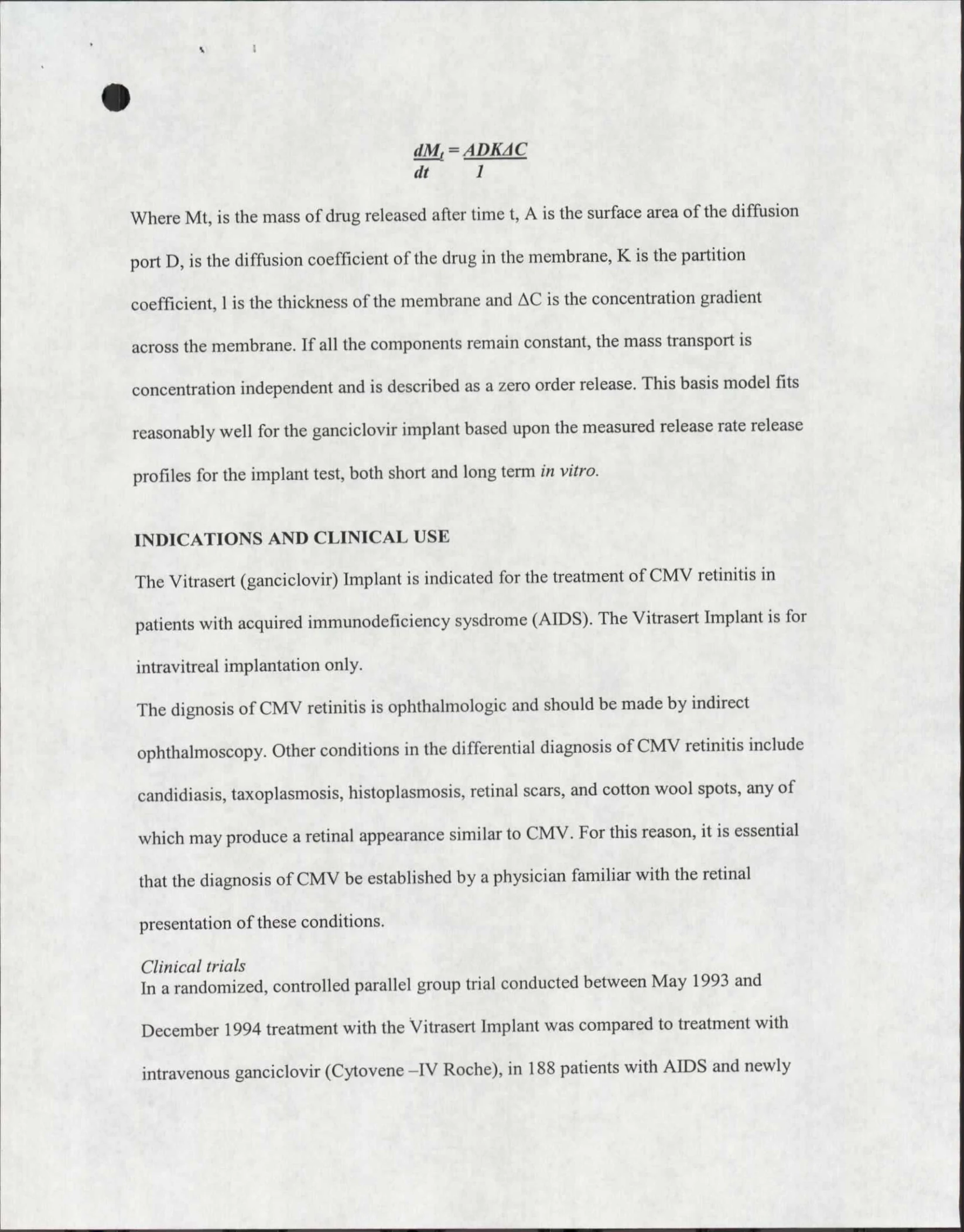 th = ADICAC dl I
Where Mt, is the mass of drug released after time t, A is the surface area of the diffusion port D, is the diffusion coefficient of the drug in the membrane, K is the partition coefficient, 1 is the thickness of the membrane and AC is the concentration gradient across the membrane. If all the components remain constant, the mass transport is concentration independent and is described as a zero order release. This basis model fits reasonably well for the ganciclovir implant based upon the measured release rate release profiles for the implant test, both short and long term in vitro.
INDICATIONS AND CLINICAL USE
The Vitrasert (ganciclovir) Implant is indicated for the treatment of CMV retinitis in patients with acquired immunodeficiency sysdrome (AIDS). The Vitrasert Implant is for intravitreal implantation only.
The dignosis of CMV retinitis is ophthalmologic and should be made by indirect ophthalmoscopy. Other conditions in the differential diagnosis of CMV retinitis include candidiasis, taxoplasmosis, histoplasmosis, retinal scars, and cotton wool spots, any of which may produce a retinal appearance similar to CMV. For this reason, it is essential that the diagnosis of CMV be established by a physician familiar with the retinal presentation of these conditions.
Clinical trials
In a randomized, controlled parallel group trial conducted between May 1993 and
December 1994 treatment with the Vitrasert Implant was compared to treatment with
intravenous ganciclovir (Cytovene —IV Roche), in 188 patients with AIDS and newly  diagnosed CMV retinitis. Patients randomized to the Cytovene IV treatment group
received Cytovene IV solution at induction doses (5mg/kg twice daily) for 14 days, followed by maintenance dosing (5mg/kg once daily) Based on masked assessment of fundus photographs the median time to progression was approximately 210 days of the
Vitrasert Implant Treatment group compared to approximately 120 days for the intravenous treatment group.
CONTRAINDICATIONS
The Vitrasert Implant (ganciclovir) is contraindicated in patients with hypersensitivity to ganciclovir or acyclovir, and in patients with any contraindications for intraocular surgery such as external infection or sever thrombocytopenia.
 WARNINGS
CMV retinitis may be associated with CMV disease elsewhere in the body. The Vitrasert
Implant (ganciclovir) provides localized therapy limited to the implanted eye. The
Vitrasert Implant does not provide treatment for systemic CMV disease. Patients should be monitored for extraocular CMV disease.
As with other surgical procedure, there is risk involved. Potential complications accompanying intraocular surgery to place the Vitrasert Implant in the vitreous cavity may include, but are not limited to, the following: vitreous loss, vitreous hemorrhage, cataract formation, retinal detachment, uveitis, endophthalmitis, and decrease in visual acuity.
Following implantation of the Vitrasert Implant, nearly all patients will experience an immediate and temporary decrease in visual acuity in the implanted eye which lasts for approximately two to four weeks post-operatively. This decrease in visual acuity is likely a result of the surgical implantation procedure.
 PRECAUTIONS
As with all intraocular surgery, sterility of the surgical field and the Vitrasert Implant
(ganciclovir) should be rigorously maintained. The Vitrasert Implant should be handled only by a suture tab in order to avoid damaging the polymer coatings since this could affect release rate of ganciclovir inside the eye. The Vitrasert Implant should not be resterilized by any method.
A high level of surgical skill is required for implantation if the Vitrasert Implant. A surgeon should have observed or assisted in surgical implantation of the Vitrasert Implant prior to attempting the procedure.
Drug Interactions
No drug interactions have been observed with the Vitrasert Implant. There is limited experience with use of retinal tamponades in conjunction with the Vitrasert Implant.
Used in Pregnancy:
Ganciclovir has been shown to be embryotoxic in rabbits and mice following intravenous administration and teratogenic in rabbits. Fetal resorptions were present in at least 85% of rabbits and mice administered 60mg/kg/day and 108mg/kg/day, respectively. Effects observed in rabbits included: fetal growth retardation, embryolethality, teratogenicity and
/or maternal toxicity. Teratogenic changes included cleft palate,
anophthalmia/microphthalmia, aplastic organs (kidney and pancreas, hydrocephaly, and brachynathia. In mice, effects observed were maternal/fetal toxicity and embryolethality.
Daily intravenous doses of 90mg/kg administered to female mice prior to mating, during gestation, and during lactation caused hypoplasia of the testes and seminal vesicles in the month old male offspring, as well as pathologic changes in the nonglandular region of the stomach.
 S
Although each Vitrasert Implant contains from 4.5 to 6.4 mg of ganciclovir, which is released locally in the vitreous, there are no adequate and well controlled studies in pregnant women on the effects of the Vitrasert Implant. Therefore, the Vitrasert Implant should be used during pregnancy only if the potential benefit justifies the potential risk to the fetus.
Impairment offertility
Ganciclovir caused decreased mating behavior, decreased fertility, and an increased incidence of embryolethality in female mice following intravenous doses of
90mg/kg/day. Ganciclovir caused decreased fertility in male mice and
hypospermatogenesis in mice and rats following daily oral or intravenous administration of doses ranging from 0.2 — 10mg/kg.
Nursing Mothers
It is now known whether ganciclovir from the Vitrasert Implant is excreted in human milk. Daily intravenous doses of 90mg/kg administered to female mice prior to mating, during gestation, and during lactation caused hypoplasia of the testes and seminal vesicles in the month old offspring, as well as pathologic changes in the non-glandular region of the stomach. Because many drugs are excreted in human milk and, because carcinogenicity and teratogenicity effects occurred in animals treated with ganciclovir, mothers should be instructed to discontinue nursing if they have a Vitrasert Implant.
Pediatric Use
There have been no studies conducted in pediatric patients. Safety and effectiveness was observed, however, in two patients aged 11 and 9 who received the Vitrasert Implant in an open label trial.
 Information to Patients
The Vitrasert Implant is not a cure for CMV retinitis, and some immunocompromised patients may continue to experience progession of retinitis with the Vitrasert Implant.
Patients should be advised to have ophthalmologic follow-up examinations of both eyes at appropriate intervals following implantation of the Vitrasert Implant.
As with any surgical procedure, there is a risk involved. Potential complications accompanying intraocular surgery to place the Vitrasert Implant into the vitreous cavity may include, but are not limited to, the following: intraocular infection or inflammation, detachment of the retina, and formation of cataract in the natural crystalline lens.
Following implantation of the Vitrasert Implant (ganciclovir), nearly all patients will experience an immediate and temporary decrease in visual acuity in the implanted eye which lasts for approximately two to four weeks post-operatively. This decrease in visual acuity is likely a result of the surgical implant procedure.
The Vitrasert Implant (ganciclovir) only treats eyes in which it has been implanted.
Additionally, because CMV is a systemic disease, patients should be monitored for extraocular CMV infections (e.g. pneumonitis, colitis) in the body.
Patients should be advised that ganciclovir has caused decreased sperm production in animals and may cause infertility in humans. Woman of childbearing potential should be advised that ganciclovir causes birth defects, including hypoplastic testes in animals and should not be used during pregnancy.
Patients should be advised that ganciclovir has caused tumors in animals. Although there is no information from human studies, ganciclovir should be considered a potential carcinogen.
 ADVERSE REACTIONS
During clinical trials, the most frequent adverse events seen in patients treated with the
Vitrasert Implant ( ganciclovir) involved the eye.
During the first two months following implantation, visual acuity loss of 3 lines or more, vitreous hemorrhage, and retinal detachments occurred in approximately 10-20% of patients. Cataract formation/lens opacities, macular abnormalities, intraocular pressure spikes, optic disk/ nerve changes, hyphemas and uveitis occurred in approximately 1-5%.
Adverse reactions with an incidence of less than 1°/0 were:retinopathy, anterior chamber cell and flare, sychenia, hemorrhage (other than vitreous), cotton wool spots, keratopathy, astigmatism, endophthalmitis, microangiopathy, sclerosis, choroiditis, chemosis, phthisis bulbi, angle closure glaucoma with anterior chamber shallowing, vitreous detachment, vitreous traction, hypotony, severe post operative inflammation, retinal tear, retinal hole,
corneal dellen, choroidal folds, pellet extrusion from scleral wound and gliosis.  SYMPTOMS AND TREATMENT OF OVERDOSAGE
There is no information available on the symptoms and treatment of overdosage of ganciclovir from the Vitrasert Implant device in the treated eye. Systemic ganciclovir overdosage from the implant is unlikely to occur.
Henry et al., 1987, investigated serum levels of ganciclovir 48 hours after a 200 j.tg
(0.1mL) intravitreal injection of ganciclovir. In this study, serum levels could not be established since they were below the detection of level of the assay, which was 0.411M.
For this reason, it was considered useful to analyze serum samples for ganciclovir levels after the Vitrasert implantation. In a "worst case scenario", that is if the total amount of ganciclovir contained in an implant (4.5-6.0 mg ) were to be released into the vitreous
(approximately 5mL), all at once, the resulting concentration would be 0.9-1.2mg/mL, or approximately 4.1 p.M. Assuming instantaneous distribution into plasma, with a volume of approximately 3 liters, the resulting concentration would be 1.5-2.0 gg/mL or 6.8 nanoM, which is approximately 60 fold lower than the detection limit of the assay. O
 O
DOSAGE AND ADMINISTRATION
Each Vitrasert Implant (ganciclovir) contains a minimum of 4.5mg of ganciclovir, and is designed to release the drug over a 5 to 8 month period of time. Following depletion of ganciclovir from the Vitrasert Implant, as evidenced by progression of retinitis, the
Vitrasert Implant may be removed ad replaced.
 PHARMACEUTICAL INFORMATION
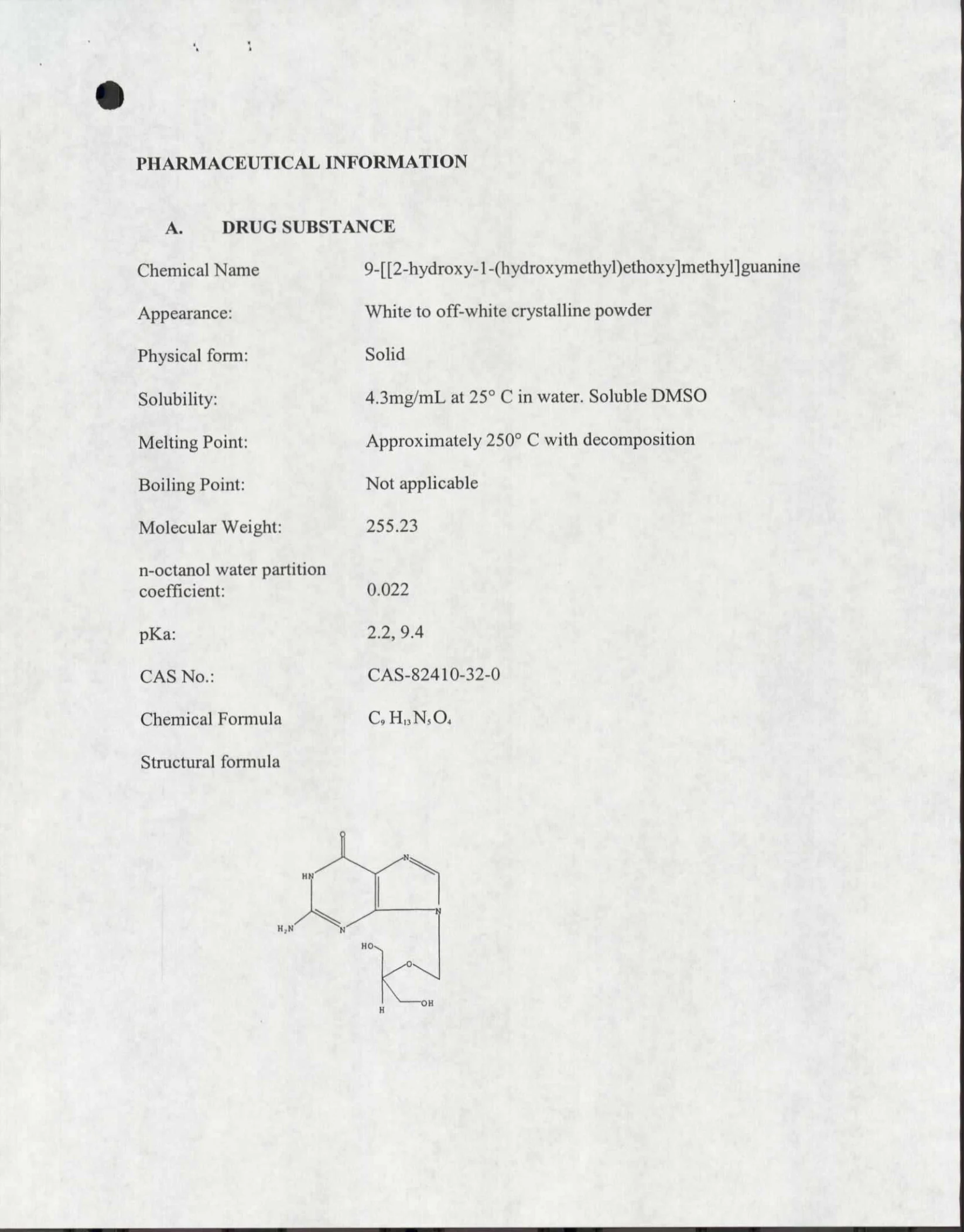
A. DRUG SUBSTANCE
Chemical Name
Appearance:
Physical form:
Solubility:
Melting Point:
Boiling Point:
Molecular Weight:
n-octanol water partition
coefficient:
pKa:
CAS No.:
Chemical Formula
Structural formula
9-[[2-hydroxy-1-(hydroxymethypethoxy]methyl]guanine
White to off-white crystalline powder
Solid
4.3mg/mL at 25° C in water. Soluble DMSO
Approximately 250° C with decomposition
Not applicable
255.23
0.022
2.2, 9.4
CAS-82410-32-0
C9H,,N,O,
OH
 PHARMACEUTICAL INFORMATION
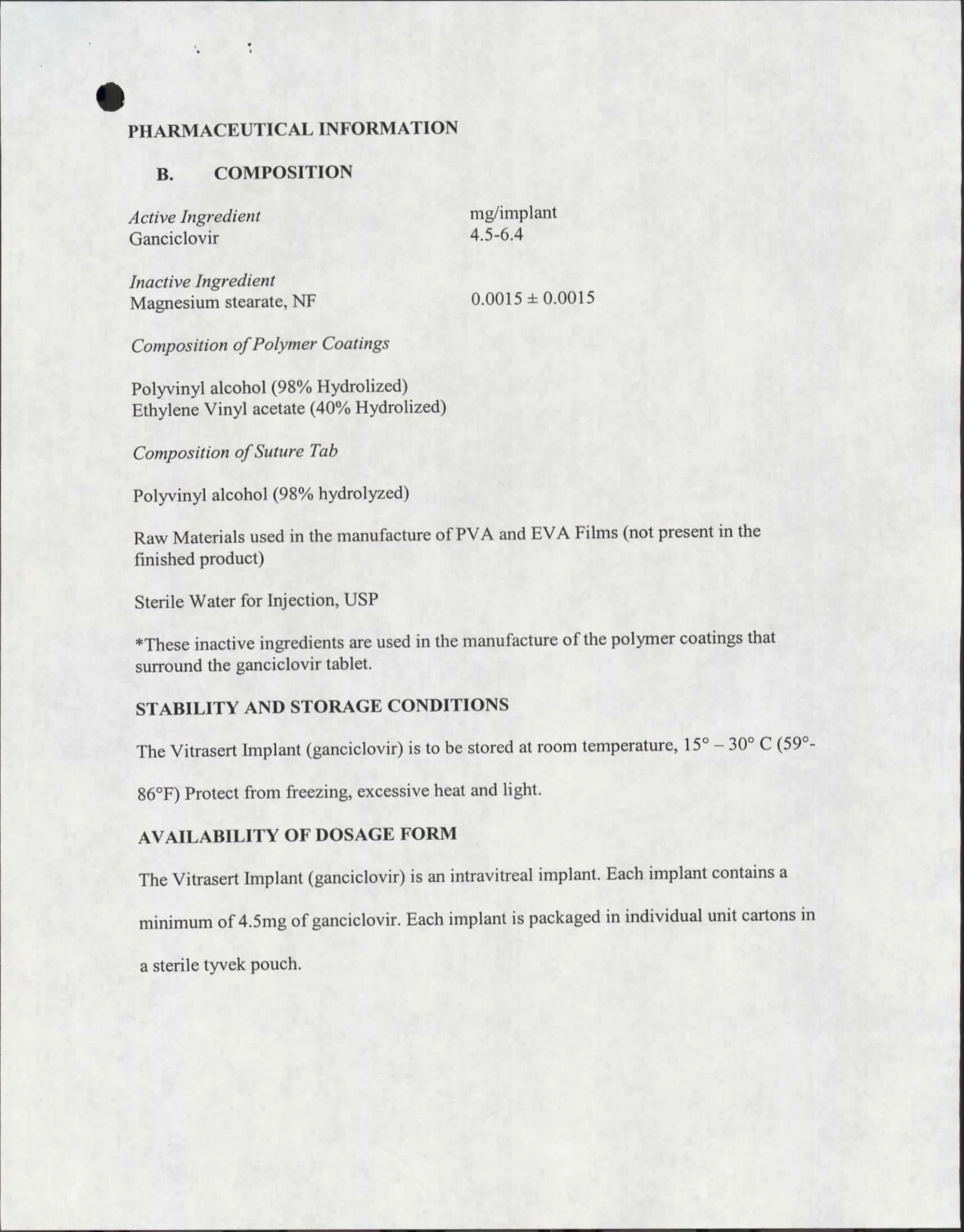
B. COMPOSITION
Active Ingredient
Ganciclovir
Inactive Ingredient
Magnesium stearate, NF
Composition of Polymer Coatings
mg/implant
4.5-6.4
0.0015 ± 0.0015
Polyvinyl alcohol (98% Hydrolized)
Ethylene Vinyl acetate (40% Hydrolized)
Composition of Suture Tab
Polyvinyl alcohol (98% hydrolyzed)
Raw Materials used in the manufacture of PVA and EVA Films (not present in the finished product)
Sterile Water for Injection, USP
*These inactive ingredients are used in the manufacture of the polymer coatings that surround the ganciclovir tablet.
STABILITY AND STORAGE CONDITIONS
The Vitrasert Implant (ganciclovir) is to be stored at room temperature, 15° — 30° C (59°-
86°F) Protect from freezing, excessive heat and light.
AVAILABILITY OF DOSAGE FORM
The Vitrasert Implant (ganciclovir) is an intravitreal implant. Each implant contains a minimum of 4.5mg of ganciclovir. Each implant is packaged in individual unit cartons in a sterile tyvek pouch.
 INFORMATION FOR THE CONSUMER
The Vitrasert Implant (ganciclovir) is not a cure for CMV retinitis, and some immunocompromised patients may continue to experience progression of retinitis with the vitrasert implant. Patients should beadvised to have ophthalmologic follow-up examination of both eyes at appropriate intervals following implantation of the Vitrasert
Implant.
As with any surgical procedure, there is a risk involved. Potential complications accompanying intraocular surgery to place the Vitrasert Implant into the vitreous cavity may include, but are not limited to, the following: intraocular infection, or inflammation, detachment of the retina, and formation of cataracts in the natural crystalline lens.
Following Implantation of the Vitrasert Implant, nearly all patients will experience an immediate and temporary decrease in visual acuity in the implanted eye which lasts for approximately two to four weeks post-operatively. This decrease in visual acuity is likely as result of the surgical implant procedure.
The Vitrasert Implant only treats eyes in which it has been implanted. Additionally, because CMV is a systemic disease, patients should be monitored for CMV infection in the untreated, initially disease free eye and for extraocular CMV infections (e.g.
pneumonia, colitis) in the body.
Patients should be advised that ganciclovir has caused decreased sperm production in animals and may cause infertility in humans. Women of childbearing potential should be advised that ganciclovir causes birth defects in animals and should not be used during pregnancy.
Patients should be advised that ganciclovir has caused tumor in animals. Although there  is no information from human studies, ganciclovir should be considered a potential
carcinogen.
PHARMACOLOGY
The Vitrasert Implant (ganciclovir) provides for the localized treatment of
cytomegalovirus (CMV) retinitis resulting in minimal systemic exposure compared to currently approved induction and maintenance therapies. Therefore, additional ADME studies of the Vitrasert Implant were not justified.
Local administration of ganciclovir with an intravitreal ganciclovir implant whose putative intraocular delivery is approximately 24-481.tg/day will result in substantially lower systemic concentration than the systemic dosing described in the literature.
Therefore, the phannacokinetics parameters associated with the systemic distribution and fate of ganciclovir should not be affected adversely by localized dosing, and not further pharmacokinetics were performed.
TOXICOLOGY
Both I.V. and oral ganciclovir (Roche: Cytovene) have been approved in Canada for use in treating cytomegalovirus (CMV) retinitis in patients with AIDS. High systemic levels of drug are required to achieve efficacious intravitreal drug levels. The Vitrasert Implant
(ganciclovir) provides efficacious levels of drug in the vitreous through localized delivery. Consequently, the toxicity problems related to the high systemic concentrations required for intravenous or orally administered ganciclovir are eliminated.
Studies focusing on the biocompatibility and toxicity of the implant and its polymer
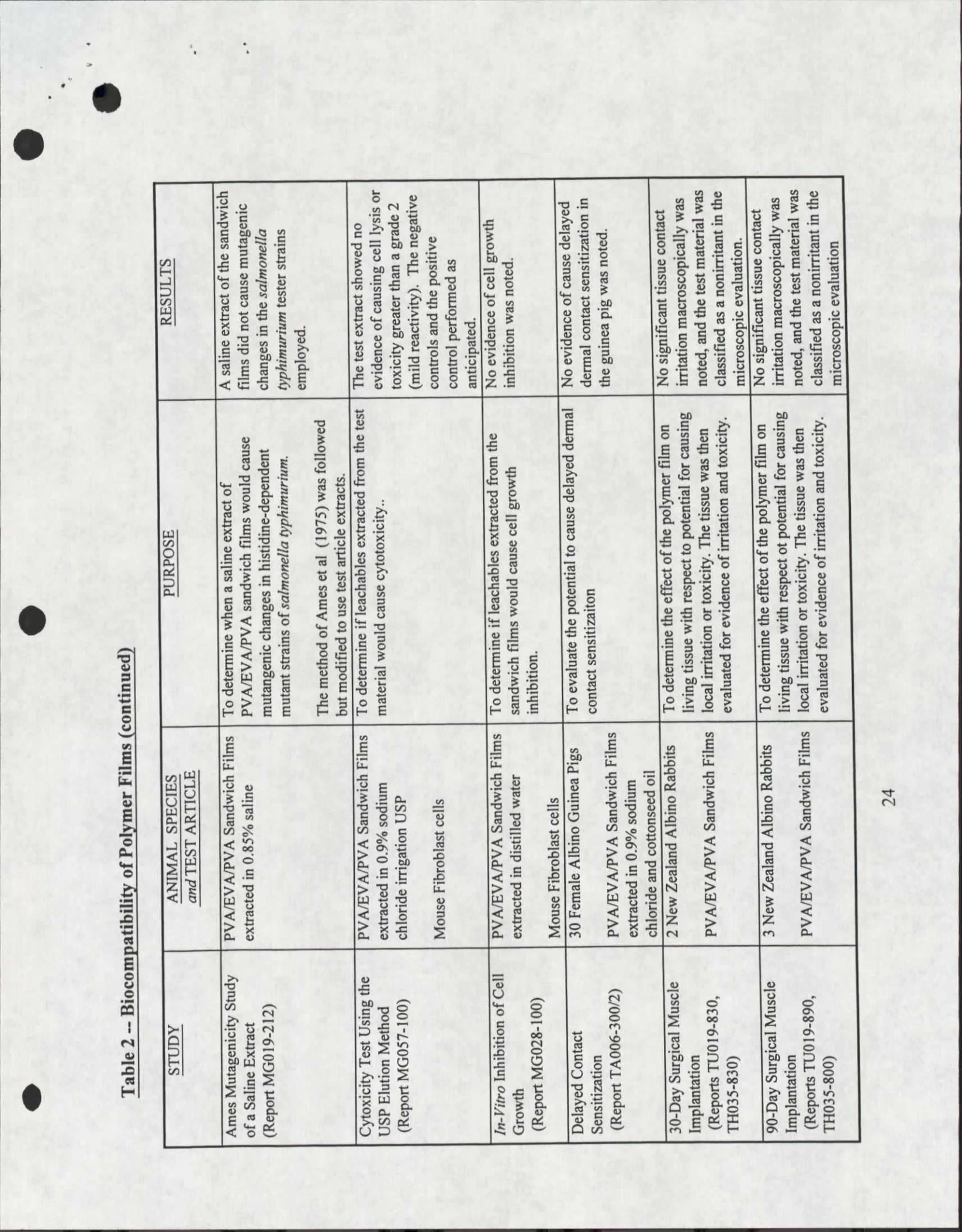
coating were conducted by the original sponsor (Chiron). These studies are summarized  in Table I (Toxicity Studies) and Table 2 (Biocompatibility of the Polymer Films).
Biocompatibility tests were performed according to the "Tripartite Biocompatibility
Guidance for Medical Devices for Internal Devices in Longer Term Contact with Tissue and Tissue Fields" on sandwich films of the PVA and EVA polymers contained in the intravitreal ganciclovir implant. A film of EVA was sandwiched between two films of
PVA. The resulting sandwich film (PVA/EVA/PVA) was cured and processed in a manner equivalent to the processing of the intravitreal ganciclovir implant. Table 1 — Toxicity Studies
STUDY
SPECIES
PURPOSE
_
PROCEDURE
,
RESULTS
Biocompatibility of the
Intravitreal Ganciclovir Implant
in the Vitreous of the Rabbit
Eye
(UBTL Study 67074)
30 Dutch
Belted
Rabbits
To evaluate the
biocompatibility of the
intravitreal ganciclovir
implant in the vitreous
of the rabbit eye for 6
months
The right eye of each rabbit in
the test group (12 male and 12
female) was implanted with the
implant. The right eye of each
rabbit in the control group (6
male) was implanted with the
PVA suture tab. The left eye of
each animal served as an
untreated control.
There was an interim sacrifice
of 12 animals at 3 months, and
the remainder were sacrified at 6
months.
With the exception of fibrin (noted in all 12 test
animals at termination), the gross ocular
responses observed during the study period
improved with time. The presence of fibrin
observed both grossly and microscopically,
suggest that a more sustained inflammatory
response occurred in the test eyes than occurred
in the treated control eyes. This presence of
fibrin associated with the implant is considered
to be clinically significant. No other finding can
be attributed to implantation with the implant.
.
Intravitreal Sustained-Release
Ganciclovir (Smith, 1992)
Rabbits
To evaluate the
toxicity and release-
rate characteristics of
intravitreal ganciclovir
implants in rabbits Implants that released
ganciclovir at approximately
2gg/hr and 5gg/hr in vitro were
implanted into the vitreous of
rabbit eyes. Mean intravitreal ganciclovir levels of 9 mg/L
(2gg/hr implant) and 16 mg/L (5gg/hr implant)
were maintained for more than 80 days and 42
days, respectively. The implants were well
tolerated in the rabbit eye, with no evidence of intraocular inflammation observable with indirect ophthalmoscopy. Lens °pacification was observed in some rabbits, however, it could have been caused by trauma resulting from frequent vitreous sampling, as no lens
°pacification occurred in either control or 2gg/hr implant eyes from which vitreous samples were not collected after the rabbit was sacrificed.
Additionally, no lens °pacification was observed in eyes of rabbits receiving an un-coated 6 mg pellet of ganciclovir. Table 2 -- Biocompatibility of Polymer Films
STUDY
ANIMAL SPECIES and TEST
PURPOSE
RESULTS
ARTICLE
In-Vitro Hemolysis Study
(Report CB036-100)
Aliquot of 0.1 mL of clot free
blood from a New Zealand
Albino Rabbit
PVA/EVA/PVA Sandwich Films
To determine if any leachables from the polymers
would cause hemolysis
in vitro
_
Test article was not found to be
hemolytic.
USP Intracutaneous
Toxicity Study
(Report TU013-800/2)
2 New Zealand Albino Rabbits
PVA/EVA/PVA Sandwich Films
To determine if leachables from the polymers
would cause dermal irritation or toxicity
following injection into rabbit skin
There was no evidence of
significant irritation or toxicity
from the extracts injected
intracutaneously into rabbits.
USP Systemic Toxicity
Study in Mice
(Report TU012-500/2)
20 Mice
PVA/EVA/PVA Sandwich Films
To determine systemic toxicity of intravenous or
intraperitoneal injection of extracts of the
PVA/EVA/PVA sandwich film into mice.
No mortality or evidence of
significant systemic toxicity
from the extracts were noted.
Rabbit Pyrogen Study --
Material Mediated
(Report TU010-807)
3 New Zealand Albino Rabbits
PVA/EVA/PVA
Sandwich Films extracted in
steile nonpyrogenic saline (0.9%
soiduom chloride USP solution)
_ To determine if any extract of the
PVA/EVA/PVA sandwich film produced a
pyrogenic response following intravenous
injection.
In vivo biological reactivity following
a single injection of the extract into rabbits was
evaluated. The total rise of rabbit
temperatures during the 3 hour
observation period was within
acceptable USP limits. The test
extract was judged as
nonpyrogenic.
Ames Mutagenicity Study of a DMSO Extract
(Report MG019-211) PVA/EVA/PVA Sandwich Films extracted in dimethyl sulfoxide
(DMSO) To determine whether a DMSO extract of
PVA/EVA/PVA sandwich films would cause mutagenic changes in histidine-dependent mutant strains of salmonella typhimurium.
The method of Ames et al (1975) was followed but modified to use test article extracts. A DMSO extract of the sandwich films did not cause mutagenic changes in the salmonella typhimurium tester strains employed
 o
Table 2 — Biocompatibility of Polymer Films (continued)
STUDY
ANIMAL SPECIES
PURPOSE
RESULTS
and TEST ARTICLE
Ames Mutagenicity Study
of a Saline Extract
(Report MG019-212)
PVA/EVA/PVA Sandwich Films
extracted in 0.85% saline
To determine when a saline extract of
PVA/EVA/PVA sandwich films would cause
mutangenic changes in histidine-dependent
mutant strains of salmonella typhimurium.
The method of Ames et al (1975) was followed
but modified to use test article extracts.
A saline extract of the sandwich
films did not cause mutagenic
changes in the
salmonella
typhimurium tester strains
employed.
Cytoxicity Test Using the
USP Elution Method
(Report MG057-100)
PVA/EVA/PVA Sandwich Films
extracted in 0.9% sodium
chloride irrigation USP
Mouse Fibroblast cells
To determine if leachables extracted from the test
material would cause cytotoxicity..
The test extract showed no
evidence of causing cell lysis or
toxicity greater than a grade 2
(mild reactivity). The negative
controls and the positive
control performed as
anticipated.
In-Vitro
Inhibition of Cell
Growth
(Report MG028-100)
PVA/EVA/PVA Sandwich Films
extracted in distilled water
Mouse Fibroblast cells
To determine if leachables extracted from the
sandwich films would cause cell growth
inhibition.
No evidence of cell growth
inhibition was noted.
Delayed Contact
Sensitization
(Report TA006-300/2)
30 Female Albino Guinea Pigs
PVA/EVA/PVA Sandwich Films
extracted in 0.9% sodium
chloride and cottonseed oil
To evaluate the potential to cause delayed dermal
contact sensitizaiton
No evidence of cause delayed
dermal contact sensitization in
the guinea pig was noted.
30-Day Surgical Muscle
Implantation
(Reports TU019-830,
TH035-830) 2 New Zealand Albino Rabbits
PVA/EVA/PVA Sandwich Films To determine the effect of the polymer film on
living tissue with respect to potential for causing
local irritation or toxicity. The tissue was then
evaluated for evidence of irritation and toxicity, No significant tissue contact
irritation macroscopically was
noted, and the test material was
classified as a nonirritant in the microscopic evaluation.
90-Day Surgical Muscle
Implantation
(Reports TU019-890,
TH035-800) 3 New Zealand Albino Rabbits
PVA/EVA/PVA Sandwich Films To determine the effect of the polymer film on living tissue with respect ot potential for causing local irritation or toxicity. The tissue was then evaluated for evidence of irritation and toxicity. No significant tissue contact irritation macroscopically was noted, and the test material was classified as a nonirritant in the microscopic evaluation
24 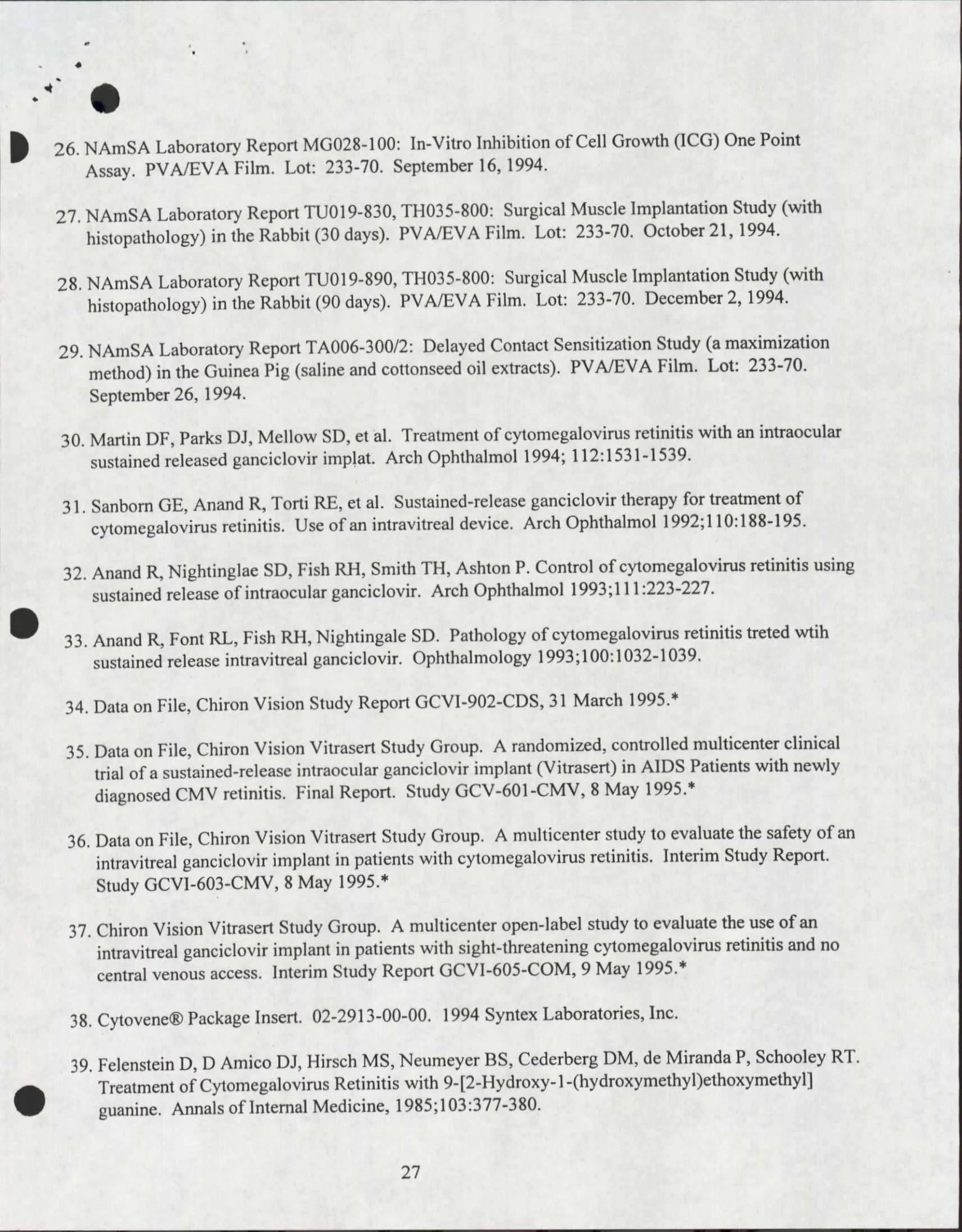 4 •
- 26.
NAmSA Laboratory Report MG028-100: In-Vitro Inhibition of Cell Growth (ICG) One Point
Assay. PVA/EVA Film. Lot: 233-70. September 16, 1994.
- 27. NAmSA Laboratory Report TU019-830, TH035-800: Surgical Muscle Implantation Study (with histopathology) in the Rabbit (30 days). PVA/EVA Film. Lot: 233-70. October 21, 1994.
- 28. NAmSA Laboratory Report TU019-890, TH035-800: Surgical Muscle Implantation Study (with histopathology) in the Rabbit (90 days). PVAJEVA Film. Lot: 233-70. December 2, 1994.
- 29.
NAmSA Laboratory Report TA006-300/2: Delayed Contact Sensitization Study (a maximization method) in the Guinea Pig (saline and cottonseed oil extracts). PVA/EVA Film. Lot: 233-70.
September 26, 1994.
- 30. Martin DF, Parks DJ, Mellow SD, et al. Treatment of cytomegalovirus retinitis with an intraocular sustained released ganciclovir implat. Arch Ophthalmol 1994; 112:1531-1539.
- 31. Sanborn GE, Anand R, Torti RE, et al. Sustained-release ganciclovir therapy for treatment of cytomegalovirus retinitis. Use of an intravitreal device. Arch Ophthalmol 1992;110:188-195.
- 32. Anand R, Nightinglae SD, Fish RH, Smith TH, Ashton P. Control of cytomegalovirus retinitis using sustained release of intraocular ganciclovir. Arch Ophthalmol 1993;111:223-227.
- 33. Anand R, Font RL, Fish RH, Nightingale SD. Pathology of cytomegalovirus retinitis treted wtih sustained release intravitreal ganciclovir. Ophthalmology 1993;100:1032-1039.
- 34. Data on File, Chiron Vision Study Report GCVI-902-CDS, 31 March 1995.*
- 35.
Data on File, Chiron Vision Vitrasert Study Group. A randomized, controlled multicenter clinical trial of a sustained-release intraocular ganciclovir implant (Vitrasert) in AIDS Patients with newly diagnosed CMV retinitis. Final Report. Study GCV-601-CMV, 8 May 1995.*
- 36.
Data on File, Chiron Vision Vitrasert Study Group. A multicenter study to evaluate the safety of an intravitreal ganciclovir implant in patients with cytomegalovirus retinitis. Interim Study Report.
Study GCVI-603-CMV, 8 May 1995.*
- 37. Chiron Vision Vitrasert Study Group. A multicenter open-label study to evaluate the use of an intravitreal ganciclovir implant in patients with sight-threatening cytomegalovirus retinitis and no central venous access. Interim Study Report GCVI-605-COM, 9 May 1995.*
- 38. Cytovene® Package Insert. 02-2913-00-00. 1994 Syntex Laboratories, Inc.
- 39.
Felenstein D, D Amico DJ, Hirsch MS, Neumeyer BS, Cederberg DM, de Miranda P, Schooley RT.
Treatment of Cytomegalovirus Retinitis with 9-[2-Hydroxy-1-(hydroxymethypethoxymethyl]
guanine. Annals of Internal Medicine, 1985;103:377-380.
- 36.
- 40. Fletcher C, Sawchuk R, Chinnock B, de Miranda P, Balfour HH. Human pharmacokinetics of the antiviral drug DHPG. Clin Pharmacol Ther, 1986;40(3):281-286.
- 41.
Hedaya MA, Sawchuk RJ. A Sensitive and Specific Liquid-Chromatographic Assay for
Determination of Ganciclovir in Plasma and Urine and Its Application to Pharrnacokinetic Studies in the Rabbit. Pharmaceutical Research, 1990;7(11):1113-1118.
- 42.
Henry K, Cantrill H, Fletcher C, Chinnock BI, Balfour Jr. HH. Use of intravitreal ganciclovir
(dihydroxy propoxymethyl guanine) for cytomegalovirus retinitis in a patient with AIDS. Am J
Ophthalmol 1987;103:17-23.
- 43.
Kuppermann B, Quiceno J, Flores-Aguilar, Connor J, Capparelli E, Sherwood C, Freeman W.
Intravitreal Ganciclovir Concentration after Intravenous Administration in AIDS Patients with
Cytomegalovirus Retinitis: Implications for Therapy, Journal of Infectious Diseases 1993;168:1506-
9.
- 44.
Laskin OL, Cederberg DM, Mills J, Eron LJ, Mildvan D, Spector SA. Ganciclovir for the Treatment and Suppression of Serious Infections Caused by Cytomegalovirus. American Journal of Medicine
1987;83:201-207.
- 45.
Martin DF, Parks DJ, Mellow SD, Ferris FL, Walton RC, Remaley NA, Chew EY, Ashton P, Davis
MD, Nussenblatt RB. Treatment of cytomegalovirus retinitis with an intraocular sustained-release ganciclovir implant. Arch Ophthalmol 1994;112:1531-1539.
- 46.
Schulman J, Peyman GA, Horton MB, Liu J, Barber JC, Fiscella R, de Miranda P. Intraocular penetration of new antiviral agent, hydroxyacyclovir (BW-B759U). Jpn J Ophthalmol 1986;30:116-
124.
- 47.
Smith TJ, Pearson A, Blandford DL, Brown JD, Goins KA, Hollins JL, Schmeisser ET, Glavinos P,
Baldwin LB, Ashton P. Intravitreal sustained-release ganciclovir. Arch Ophthal 1992;110:255-258.
- 48.
Sommadossi JP, Bevan R, Ling T, Lee F, Mastre B, Chaplin MD, Nerenberg C, Koretz S, Buhles
WC. Clinical Pharmacokinetics of Ganciclovir in Patients with Normal and Impaired Renal
Function. Reviews of Infectious Diseases 1988;10(Supplement 3:S):507-S514.
- 47.
*Note: A report of these studies will be available upon request.