


Product Monograph - Ferrlecit
RECENT MAJOR LABEL CHANGES
| 7 WARNINGS AND PRECAUTIONS, Immune | 02/2022 |
|---|---|
| 7 WARNINGS AND PRECAUTIONS, 7.1.1 Pregnant Women | 12/2022 |
TABLE OF CONTENTS
Sections or subsections that are not applicable at the time of authorization are not listed.
TABLE OF CONTENTS ............................................................................................................ 2
PART I: HEALTH PROFESSIONAL INFORMATION .................................................................... 4
1 INDICATIONS ............................................................................................................. 4
1.1 Pediatrics .................................................................................................................. 4
1.2 Geriatrics .................................................................................................................. 4
2 CONTRAINDICATIONS ................................................................................................ 4
3 SERIOUS WARNINGS AND PRECAUTIONS BOX ........................................................... 4
4 DOSAGE AND ADMINISTRATION ................................................................................ 5
4.1 Dosing Considerations ............................................................................................. 5
4.2 Recommended Dose and Dosage Adjustment ........................................................ 5
4.4 Administration ......................................................................................................... 5
5 OVERDOSAGE ............................................................................................................ 5
6 DOSAGE FORMS, STRENGTHS, COMPOSITION AND PACKAGING ................................ 6
7 WARNINGS AND PRECAUTIONS ................................................................................. 6
7.1 Special Populations .................................................................................................. 8
7.1.1 Pregnant Women ............................................................................................... 8
7.1.2 Breast-feeding .................................................................................................... 8
7.1.3 Pediatrics ............................................................................................................ 8
7.1.4 Geriatrics ............................................................................................................ 8
8 ADVERSE REACTIONS................................................................................................. 9
8.1 Adverse Reaction Overview ..................................................................................... 9
8.2 Clinical Trial Adverse Reactions ............................................................................. 11
8.4 Abnormal Laboratory Findings: Hematologic, Clinical Chemistry and Other Quantitative Data ............................................................................................................. 12
8.5 Post-Market Adverse Reactions ............................................................................. 13
9 DRUG INTERACTIONS .............................................................................................. 13
9.2 Drug Interaction Overview ..................................................................................... 13
9.4 Drug-Drug Interactions .......................................................................................... 14
9.5 Drug-Food Interactions .......................................................................................... 14
9.6 Drug-Herb Interactions .......................................................................................... 14
9.7 Drug-Laboratory Test Interactions......................................................................... 14
10 CLINICAL PHARMACOLOGY ...................................................................................... 14
10.1 Mechanism of Action ....................................................................................... 14
10.3 Pharmacokinetics ............................................................................................. 14
11 STORAGE, STABILITY AND DISPOSAL ........................................................................ 15
12 SPECIAL HANDLING INSTRUCTIONS .......................................................................... 15
PART II: SCIENTIFIC INFORMATION ..................................................................................... 16
13 PHARMACEUTICAL INFORMATION .......................................................................... 16
14 CLINICAL TRIALS ...................................................................................................... 16
14.1 Clinical Trials by Indication .............................................................................. 16
15 MICROBIOLOGY ...................................................................................................... 24
16 NON-CLINICAL TOXICOLOGY .................................................................................... 24
PATIENT MEDICATION INFORMATION ................................................................................ 32
PART I: HEALTH PROFESSIONAL INFORMATION
1 INDICATIONS
FERRLECIT (sodium ferric gluconate complex in sucrose injection) is indicated for:
- the treatment of iron deficiency anemia in patients undergoing chronic hemodialysis who are receiving supplemental erythropoietin therapy.
1.1 Pediatrics
Pediatrics (˂ 18 years old): No data are available to Health Canada; therefore, Health Canada has not authorized an indication for pediatric use.
1.2 Geriatrics
No data are available to Health Canada; therefore, Health Canada has not authorized an indication for geriatric use.
2 CONTRAINDICATIONS
FERRLECIT is contraindicated in the following situations:
- all anemias not associated with iron deficiency and where there is evidence of iron overload (e.g., hemochromatosis, chronic hemolysis) or iron utilization disorders (e.g., sideroblastic anemia, lead anemia).
- known or suspected hypersensitivity to this drug or to any ingredient in the formulation, including any non-medicinal ingredient, or component of the container. For a complete listing, see 6 DOSAGE FORMS, STRENGTHS, COMPOSITION AND PACKAGING.
- known serious hypersensitivity to other parenteral iron products.
- severe inflammatory diseases of the liver.
- severe inflammatory diseases of the kidneys.
FERRLECIT contains benzyl alcohol and must not be used in preterm or term newborn infants (see 7.1.3 Pediatrics).
3 SERIOUS WARNINGS AND PRECAUTIONS BOX
Serious Warnings and Precautions
|
|---|
4 DOSAGE AND ADMINISTRATION
4.1 Dosing Considerations
- The dosage of FERRLECIT is expressed in terms of mg of elemental iron. Each 5 mL vial contains 62.5 mg of elemental iron (12.5 mg/mL).
- Do not mix FERRLECIT with other medications, or add to parenteral nutrition solutions for intravenous infusion. The compatibility of FERRLECIT with intravenous infusion vehicles other than 0.9% sodium chloride for injection has not been evaluated.
4.2 Recommended Dose and Dosage Adjustment
The recommended dosage of FERRLECIT for the repletion treatment of iron deficiency in hemodialysis patients is 10 mL of FERRLECIT (125 mg of elemental iron). Most patients will require a minimum cumulative dose of 1.0 gram of elemental iron, administered over eight sessions at sequential dialysis treatments, to achieve a favourable hemoglobin or hematocrit response. Patients may continue to require therapy with FERRLECIT at the lowest dose necessary to maintain the target levels of hemoglobin, hematocrit, and laboratory parameters of iron storage within acceptable limits. FERRLECIT has been administered at sequential dialysis sessions by infusion or by slow IV injection during the dialysis session itself.
Health Canada has not authorized an indication for pediatric use (see 1.1 Pediatrics).
4.4 Administration
FERRLECIT may be diluted in 100 mL of 0.9% sodium chloride for injection, administered by intravenous infusion over 1 hour. FERRLECIT may also be administered undiluted as a slow IV injection (at a rate of up to 12.5 mg/min).
In case of intramuscular or paravenous injection, the administration of FERRLECIT should be stopped immediately.
Should hypersensitivity reactions or signs of intolerance occur, stop FERRLECIT immediately. Monitor patients for signs and symptoms of hypersensitivity during and after FERRLECIT administration for at least 30 minutes and until clinically stable following completion of the infusion. Only administer FERRLECIT when personnel and resuscitative interventions are immediately available for the treatment of serious hypersensitivity reactions.
5 OVERDOSAGE
Dosages in excess of iron needs may lead to accumulation of iron in iron storage sites and hemosiderosis. Periodic monitoring of laboratory parameters of iron levels storage may assist in recognition of iron accumulation. FERRLECIT is contraindicated in patients with iron overload.
Serum iron levels greater than 300 mcg/dL may indicate iron poisoning which is characterized by abdominal pain, diarrhea, or vomiting which progresses to pallor or cyanosis, lassitude, drowsiness, hyperventilation due to acidosis, and cardiovascular collapse. Signs of an overdose with FERRLECIT may also include diarrhea, dyspnea, restlessness, shock, as well as confusion and coma. Fever and convulsions have also been reported. Caution should be exercised in interpreting serum iron levels in the 24 hours following the administration of FERRLECIT since many laboratory assays will falsely overestimate serum or transferrin-bound iron by measuring iron still bound to the FERRLECIT complex.
Additionally, in the assessment of iron overload, caution should be exercised in interpreting serum ferritin levels in the week following FERRLECIT administration since, in clinical studies, serum ferritin exhibited a non-specific rise which persisted for five days.
The FERRLECIT iron complex is not dialyzable.
When there is iron overload based/confirmed on laboratory testing, a chelating agent such as deferoxamine may be considered.
| For management of a suspected drug overdose, contact your regional poison control centre. |
|---|
6 DOSAGE FORMS, STRENGTHS, COMPOSITION AND PACKAGING
Table 1 – Dosage Forms, Strengths, Composition and Packaging
FERRLECIT is supplied as a clear, dark brown liquid packaged in a 5 mL colorless glass vials with a bromobutyl rubber stopper and an aluminum cap with plastic flip-off cover. The product is packaged in cartons of 10 vials.
Each vial of 5 mL of FERRLECIT contains 12.5 mg/mL (62.5 mg/5 mL vial) of elemental iron as the sodium salt of a ferric ion gluconate complex in alkaline aqueous solution with approximately 20% sucrose w/v (195 mg/mL) in Water for Injection (pH 7.7 - 9.7). The solution contains 0.9% w/v (9 mg/mL) benzyl alcohol as preservative.
7 WARNINGS AND PRECAUTIONS
Please see 3 SERIOUS WARNINGS AND PRECAUTIONS BOX.
General
Iron is not easily eliminated from the body and accumulation can be toxic. Unnecessary therapy with parenteral iron will cause excess storage of iron with consequent possibility of iatrogenic hemosiderosis. In order to avoid hemosiderosis, the iron status of patients should be determined before IV administration of iron and periodically monitored for the development of iron-overload syndromes. Iron overload is particularly apt to occur in patients with hemoglobinopathies and other refractory anemias. FERRLECIT is contraindicated patients with iron overload (see 5 OVERDOSAGE).
FERRLECIT contains benzyl alcohol. Benzyl alcohol is an irritant and may cause hypersensitivity reactions, including local irritation and skin reactions.
Cardiovascular
Hypotension:
| Route of Administration | Dosage Form / Strength/Composition | Non-medicinal Ingredients |
| Intravenous | Solution, 12.5 mg elemental iron/mL (as sodium ferric gluconate complex in sucrose) | benzyl alcohol, sodium carbonate anhydrous, sodium carbonate decahydrate, water for injection |
Hypotension associated with light-headedness, malaise, fatigue, weakness or severe pain in the chest, back, flanks, or groin has been associated with rapid administration of intravenous iron. These hypotensive reactions are not associated with signs of drug hypersensitivity and have usually resolved within one or two hours. Successful treatment may consist of observation or, if the hypotension causes symptoms, volume expansion (see 8 ADVERSE REACTIONS). Monitor patients for signs and symptoms of hypotension following FERRLECIT administration.
Immune
Hypersensitivity and Anaphylactic Reactions:
Serious hypersensitivity reactions, including anaphylactic-type reactions, some of which have been life-threatening and fatal, have been reported in patients receiving FERRLECIT. Hypersensitivity reactions have also been reported after previously uneventful doses of parenteral iron complexes. Several cases of mild to moderate hypersensitivity reactions characterized by wheezing, dyspnea, hypotension, rash and/or pruritus were observed in pivotal and post-market studies. Although very rare, anaphylactic(oid) reactions have been reported in worldwide clinical safety studies and spontaneous post-marketing reports (see 8 ADVERSE REACTIONS).
Hypersensitivity reactions can also progress to Kounis syndrome, a serious allergic reaction that can result in myocardial infarction. Presenting symptoms of such reactions can include chest pain occurring in association with an allergic reaction to iron containing medicinal products for IV administration. In patients with present coronary disease or risk factors for coronary disease, Kounis syndrome may be more severe. In those patients, iron containing medicinal products for intravenous administration, such as FERRLECIT, should be used only after careful risk/ benefit evaluation.
The risk is enhanced for patients with known allergies including drug allergies, including patients with a history of severe asthma, eczema or other atopic allergy. There is also an increased risk of hypersensitivity reactions to parenteral iron complexes in patients with immune or inflammatory conditions (e.g. rheumatoid arthritis, systemic lupus erythematosus, Crohn’s disease).
Should hypersensitivity reactions or signs of intolerance occur, stop FERRLECIT immediately. Most reactions associated with intravenous iron preparation occur within 30 minutes of the completion of the infusion. Monitor patients for signs and symptoms of hypersensitivity during and after FERRLECIT administration for at least 30 minutes and until clinically stable following completion of the infusion. Only administer FERRLECIT when personnel and resuscitative interventions are immediately available for the treatment of serious hypersensitivity reactions.
Neurologic
There have been post-marketing reports of seizures in patients receiving FERRLECIT.
FERRLECIT should be discontinued in patients who experience seizures suspected to be related to treatment (see 8.5 Post-Market Adverse Reactions).
Reproductive Health: Female and Male Potential
- Fertility
Studies to assess the effect of FERRLECIT on fertility were not conducted.
Skin
FERRLECIT should be administered with caution to avoid accidental intramuscular or paravenous injection. In addition, accidental intramuscular or paravenous administration can lead to reddish-brown discolouration of the skin. In case of intramuscular or paravenous injection, the administration of FERRLECIT should be stopped immediately.
7.1 Special Populations
7.1.1 Pregnant Women
There were no adequate and well-controlled trials of FERRLECIT in pregnant women.
FERRLECIT should not be used during pregnancy unless the benefits outweigh the risks including those to the fetus. Treatment with FERRLECIT should be confined to second and third trimester, only if the benefit is judged to outweigh the potential risk for both the mother and the fetus.
FERRLECIT was not teratogenic in animal studies but has shown reproductive toxicity (see 16 NON-CLINICAL TOXICOLOGY).
The fetus should be monitored during IV infusion of FERRLECIT in pregnant women.
Severe adverse drug reactions in the mother and the fetus, including fetal bradycardia resulting from maternal anaphylactic reaction, severe hypotension and/or shock (outside the context of anaphylactic reaction), have been reported in women treated with FERRLECIT during the second and third trimester. Fetal bradycardia may occur following administration of parenteral irons. It is usually transient and a consequence of a hypersensitivity reaction in the mother. Patients should be advised of the potential risk to the fetus. If intravenous administration of parenteral irons to pregnant women is considered, the unborn baby should be carefully monitored (see 8.5 Post-Market Adverse Reactions).
FERRLECIT contains benzyl alcohol and it is not known whether benzyl alcohol crosses the placenta (see 7.1.3 Pediatrics).
7.1.2 Breast-feeding
It is not known whether this drug is excreted in human milk. Because many drugs are excreted in human milk, caution should be exercised when FERRLECIT is administered to a nursing woman. FERRLECIT should therefore be used during lactation only after a careful weighing up of the benefits and risks.
7.1.3 Pediatrics
Pediatrics (< 18 years of age): No data are available to Health Canada; therefore, Health Canada has not authorized an indication for pediatric use.
FERRLECIT contains benzyl alcohol. Benzyl alcohol has been associated with a “gasping syndrome” that can be fatal in preterm newborn infants of low birth weight. The syndrome is characterized by neurologic deterioration, metabolic acidosis, a striking onset of gasping respiration, hematologic abnormalities, skin breakdown, hepatic and renal failure, bradycardia, hypotension and cardiovascular collapse. FERRLECIT must not be used in preterm or term newborn infants (see 2 CONTRAINDICATIONS).
7.1.4 Geriatrics
Clinical studies of FERRLECIT did not include sufficient numbers of subjects aged 65 and over to determine whether they respond differently from younger subjects. Other reported clinical experience has not identified differences in responses between the elderly and younger patients. In particular, 51/159 hemodialysis patients in North American clinical studies were aged 65 years or older. Among these patients no differences in safety or efficacy as a result of age were identified. In general, dose selection for an elderly patient should be cautious, usually starting at the low end of the dosing range, reflecting the greater frequency of decreased hepatic, renal, or cardiac function, and of concomitant disease or other drug therapy.
8 ADVERSE REACTIONS
8.1 Adverse Reaction Overview
Exposure to FERRLECIT has been documented from various sources in over 3,000 patients on hemodialysis. Less than 1% of patients have experienced serious reactions which precluded further therapy.
In a post-market clinical study which included 2,534 FERRLECIT-naive patients who received a single-dose of FERRLECIT in a placebo-controlled, crossover, post-marketing safety study, undiluted FERRLECIT was administered over ten minutes (125 mg at 12.5 mg/min) during the first hour of hemodialysis. No test dose was used (see Study C in 14 CLINICAL TRIALS).
FERRLECIT was tolerated, with an overall incidence of all adverse events of 12.3% (310/2514) compared to 9.8% (245/2509) for placebo, although with statistical significance (p<0.05 by McNemar’s test). FERRLECIT had an incidence of adverse events of 0.4% (11/2493; confidence intervals 0.21, 0.71%) and an incidence of life-threatening adverse events of 0.0% (1/2493; confidence intervals 0.00, 0.22%). There was no difference in the incidence of life-threatening, outcome, suspected or confirmed allergic, or serious adverse events in patients with prior iron dextran sensitivity compared with patients without iron dextran sensitivity.
Concomitant angiotensin converting enzyme (ACE) inhibitor use was also not a pre-disposing factor for adverse events with FERRLECIT.
In a small pharmacokinetic study, 14 subjects were given either 62.5 mg or 125 mg of FERRLECIT at a “slow” infusion rate at approximately 2 mg/min and subsequently at a “fast” infusion rate at 15-18 mg/min. Three adverse events (palpitation, shortness of breath and dizziness) were experienced by one subject during the administration of FERRLECIT under “fast” infusion conditions at a dose of 62.5 mg FERRLECIT over 4 minutes. The adverse events began just after initiation of the drug and were resolved just as the administration of the drug was completed. They did not correlate with the time of maximum concentration of FERRLECIT in the blood of the subject and were not correlated with dose. The study predicted that most patients can safely tolerate infusions of FERRLECIT at the fast infusion rate.
Hypersensitivity Reactions:
From 1976 to 1996, there were 74 allergic adverse events reported for FERRLECIT to the World Health Organization (WHO), German Health Bureau, and the manufacturer all combined. The estimated usage of FERRLECIT in Europe is about 2.7 million IV doses per year (1992 to 1996 figures). For the same period, FERRLECIT had an allergy event reporting rate of 3.3 allergy episodes per million doses per year. There were no reports of deaths over the entire time period (1976 to 1996).
Table 2 - Allergy and Anaphylaxis Reporting from European and US Sources
| Drug Rate | Number of Reports | Number of Deaths | Number of Unknown Outcomes | Case Fatality |
|---|---|---|---|---|
| Iron Dextrans | 196 | 31 | 129 | 15.8% |
| Ferrlecit Injection | 74 | 0 | 3 | 0% |
Data from Faich, G.A. and Strobos, J. 1999
A rise in serum tryptase is a marker for an immediate anaphylactic or anaphylactoid event or an allergic event. In a post-marketing safety study of 2,534 patients who received a single dose of FERRLECIT (Study C), serum tryptase data substantiated the lack of clinically significant immediate hypersensitivity to FERRLECIT (see Study C in 14 CLINICAL TRIALS). Overall in Study C, 16 patients (0.6%; 16/2512) had 18 suspected allergic events according to the clinical investigator’s judgment. In only two (0.1%; 2/2512) of the 16 patients were the allergic events (facial redness and back pain) after FERRLECIT administration confirmed as drug intolerance events by a significant rise in serum tryptase levels.
Only a single patient was determined to have mast cell degranulation by pre-defined criteria in the entire study. This patient exhibited facial and upper body flushing when given 12.5 mg of FERRLECIT, which resolved without any treatment other than withdrawal of drug. The reaction was accompanied by a rise in tryptase from 2.1 to 4.9 ng/mL. The reaction was not considered life-threatening or even serious in the judgment of the clinical investigator.
One patient experienced an immediate suspected life-threatening anaphylactoid reaction (diaphoresis, dyspnea, and wheezing, for 20 minutes) following FERRLECIT administration. However, the event was not confirmed as a hypersensitivity reaction by laboratory test. This patient had experienced prior sensitivities to iron dextran and other drugs and the reaction to FERRLECIT is best described as an idiosyncratic drug intolerance reaction rather than a specific drug allergy.
There was no significant difference in the occurrence of suspected hypersensitivity reactions between FERRLECIT and placebo treatment. The study concluded that FERRLECIT is not an allergen. No patients in Study C experienced an anaphylactic allergic adverse event as defined by the protocol.
In multiple dose Studies A and B (see 14 CLINICAL TRIALS), no fatal hypersensitivity reactions occurred among the 126 patients who received FERRLECIT. FERRLECIT-associated hypersensitivity events in Study A resulting in premature study discontinuation occurred in three out of a total 88 (3.4%) FERRLECIT-treated patients. The first patient withdrew after the development of pruritus and chest pain following the test dose of FERRLECIT. The second patient, in the high-dose group, experienced nausea, abdominal and flank pain, fatigue and rash following the first dose of FERRLECIT. The third patient, in the low-dose group, experienced a “red blotchy rash” following the first dose of FERRLECIT. Of the 38 patients exposed to FERRLECIT in Study B, none reported hypersensitivity reactions. No serum tryptase determinations were made in these studies.
It should be noted that many chronic renal failure patients experience cramps, pain, nausea, rash, flushing, and pruritus.
Serious hypersensitivity reactions have been reported from the spontaneous reporting system in the United States. There have been eleven serious events which were described by the reporters as allergic or anaphylactoid since the product was introduced in the United States in June of 1999. All resolved without sequelae after withdrawal of FERRLECIT and administration of appropriate therapy.
Hypotension:
Hypotension has been reported following administration of FERRLECIT in European case reports. Of the 226 renal dialysis patients exposed to FERRLECIT and reported in the literature, 3 (1.3%) patients experienced hypotensive events which were accompanied by flushing in two. All completely reversed after one hour without sequelae. Transient hypotension is a frequent concomitant event during hemodialysis. In Study C, no specific drug relationship of FERRLECIT to hypotension could be identified. (See 7 WARNINGS AND PRECAUTIONS).
Among the 126 patients who received FERRLECIT in Studies A and B (see 14 CLINICAL TRIALS), one patient experienced a transient decreased level of consciousness without hypotension. Another patient discontinued treatment prematurely because of dizziness, lightheadedness, diplopia, malaise, and weakness without hypotension that resulted in a 3-4 hour hospitalization for observation following drug administration. The syndrome resolved spontaneously.
8.2 Clinical Trial Adverse Reactions
Clinical trials are conducted under very specific conditions. The adverse reaction rates observed in the clinical trials, therefore, may not reflect the rates observed in practice and should not be compared to the rates in the clinical trials of another drug. Adverse reaction information from clinical trials may be useful in identifying and approximating rates of adverse drug reactions in real-world use.
In multiple-dose Studies A and B (see 14 CLINICAL TRIALS), the most frequent adverse reactions following FERRLECIT were:
Blood and lymphatic system disorders: abnormal erythrocytes, anemia, leukocytosis, lymphadenopathy.
Cardiac disorders: hypotension, hypertension, syncope, tachycardia, bradycardia, vasodilatation, angina pectoris, myocardial infarction, pulmonary edema.
Eye disorders: conjunctivitis, abnormal vision.
Ear and labyrinth disorders: ear disorder.
Gastrointestinal disorders: nausea, vomiting, diarrhea, anorexia, rectal disorder, dyspepsia, eructation, flatulence, gastrointestinal disorder, melena.
General disorders and administration site conditions: injection site reaction, chest pain, pain, asthenia, headache, abdominal pain, fatigue, fever, malaise, infection, abscess, back pain, chills, rigours, arm pain, carcinoma, flu-like syndrome, sepsis.
Metabolic and Nutritional Disorders: hyperkalemia, generalized edema, leg edema, peripheral edema, hypoglycemia, edema, hypervolemia, hypokalemia.
Musculoskeletal and connective tissue disorders: leg cramps, myalgia, arthralgia.
Nervous System disorders: cramps, dizziness, paresthesias, agitation, somnolence.
Renal and urinary disorders: urinary tract infection.
Respiratory, thoracic and mediastinal disorders: dyspnea, coughing, upper respiratory infections, rhinitis, pneumonia.
Skin and subcutaneous tissue disorders: pruritus, rash, increased sweating.
8.4 Abnormal Laboratory Findings: Hematologic, Clinical Chemistry and Other Quantitative Data
Clinical Trial Findings
No differences in laboratory findings associated with FERRLECIT were reported in North American clinical trials when normalized against a National Institute of Health database on laboratory findings in 1,100 hemodialysis patients.
8.5 Post-Market Adverse Reactions
In the single-dose, post-marketing safety study (Study C), the cardiovascular system and the digestive system were the only two body systems for which adverse events occurred statistically (p<0.05 by McNemar’s test) more frequently among patients receiving FERRLECIT versus placebo. The percentage of patients who experienced at least one cardiovascular event was 5.4% (136/2514) for FERRLECIT-treated patients and 4.1% (103/2509) for placebo-treated patients. The majority of the cardiovascular incidents were hypotension, hypertension and vasodilation. Within the digestive system, 2.5% (64/2514) of patients experienced an event following FERRLECIT and 1.6% (39/2509) of patients experienced an event after placebo. The majority of these events were diarrhea and nausea.
Blood and lymphatic system disorders
- Hemolysis and hemoglobinuria (due to the overload of transferrin system)
Cardiac disorders
- Palpitations, fetal bradycardia due to maternal hypersensitivity reactions, Kounis syndrome (acute spasm of coronary vessels due to hypersensitivity reaction)
Immune system disorders
- Hypersensitivity-like reactions (fever, arthralgia, nausea, vomiting)
- Anaphylactic reaction including angioedema and anaphylactic shock
Musculoskeletal and connective tissue disorders
- Worsening of symptoms in patients with rheumatic disorders (e.g. pain in chest and back, myalgia, and/or arthralgia)
Nervous system disorders
- Generalized seizures
- Dysgeusia
Vascular disorders
- Circulatory collapse (with or without preceding hypotension)
- Superficial thrombophlebitis at the injection site
9 DRUG INTERACTIONS
9.2 Drug Interaction Overview
Drug-drug interactions involving FERRLECIT have not been studied. However, like other parenteral iron preparations, FERRLECIT may be expected to reduce the absorption of concomitantly administered oral iron preparations.
The incidence and severity of possible anaphylactic/anaphylactoid reactions with FERRLECIT therapy can be increased if FERRLECIT is used in patients under treatment with ACE-inhibitors.
9.4 Drug-Drug Interactions
Interactions with other drugs have not been established.
9.5 Drug-Food Interactions
Interactions with food have not been established.
9.6 Drug-Herb Interactions
Interactions with herbal products have not been established.
9.7 Drug-Laboratory Test Interactions
Interactions with laboratory tests have not been established.
10 CLINICAL PHARMACOLOGY
10.1 Mechanism of Action
Sodium ferric gluconate complex in sucrose injection is a stable macromolecular complex used to replete and maintain the total body content of iron. Iron is critical for normal hemoglobin synthesis to maintain oxygen transport. Additionally, iron is necessary for metabolism and synthesis of DNA and various enzymatic processes.
10.3 Pharmacokinetics
Multiple sequential single dose intravenous pharmacokinetic studies were performed on 14 healthy iron-deficient volunteers. Entry criteria included hemoglobin ≥ 10.5 gm/dL and transferrin saturation ≤ 15% (TSAT) or serum ferritin value ≤ 20 ng/mL. In the first stage, each subject was randomized 1:1 to undiluted FERRLECIT infusion of either 125 mg/hr or 62.5 mg/½ hr (2.1 mg/min). Five days after the first stage, each subject was re-randomized 1:1 to undiluted FERRLECIT infusion of either 125 mg/7 min or 62.5 mg/4 min (>15.5 mg/min).
Peak drug levels (Cmax) varied significantly by dosage and by rate of administration with the highest Cmax observed in the regimen in which 125 mg was administered in 7 minutes (19.0 mg/L). The initial volume of distribution (VFerr) of 6 L corresponds well to calculated blood volume. VFerr did not vary by dosage or rate of administration. The terminal elimination half-life (λz-HL) for drug-bound iron was approximately 1 hour. λz-HL varied by dose but not by rate of administration. The shortest value (0.85 h) occurred in the 62.5 mg/4 min regimen; the longest value (1.45 h) occurred in the 125 mg/7 min regimen. Total clearance of FERRLECIT was 3.02 to 5.35 L/h. There was no significant variation by rate of administration. Approximately 80% of drug-bound iron was delivered to transferrin as a mononuclear ionic iron species within 24 hours of administration in each dosage regimen. Direct movement of iron from FERRLECIT to transferrin was not detected. Mean peak transferrin saturation did not exceed 100% and returned to near baseline by 40 hours after administration of each dosage regimen.
In this study, 14 subjects received either 62.5 mg or 125 mg of FERRLECIT at a “slow” infusion rate at approximately 2 mg/min and subsequently at a “fast” infusion rate at 15-18 mg/min. Three adverse events (palpitation, shortness of breath and dizziness) were considered to be drug-related in this study. The three adverse events were all experienced by one subject during the administration of FERRLECIT under “fast” infusion conditions at a dose of 62.5 mg FERRLECIT over 4 minutes. These adverse events began just after initiation of the drug and were resolved just as the administration of the drug was completed. These adverse events did not correlate with the time of maximum concentration of FERRLECIT in the blood of the subject and were not correlated with dose.
The study demonstrated that differences in the rate of infusion had no significant effect on the pharmacokinetics of FERRLECIT. The study predicts that most patients can safely tolerate infusions of FERRLECIT at the fast infusion.
In vitro experiments have shown that less than 1% of the iron species within FERRLECIT can be dialyzed through membranes with pore sizes corresponding to 12,000 to 14,000 daltons over a period of up to 270 minutes. Human studies in renally competent subjects confirm the clinical insignificance of urinary excretion.
11 STORAGE, STABILITY AND DISPOSAL
Store at controlled room temperature between 20°C - 25°C (excursions permitted between 15°C to 30°C). Protect from light. Do not freeze.
Parenteral drug products should be inspected visually for particulate matter and discoloration before administration, whenever the solution and container permit. Use immediately after dilution in saline. Discard any unused portion.
12 SPECIAL HANDLING INSTRUCTIONS
No special handling instructions are required for this product.
PART II: SCIENTIFIC INFORMATION
13 PHARMACEUTICAL INFORMATION
Drug Substance
Proper name: Sodium ferric gluconate complex
Chemical name: D-Gluconic acid, iron (3+) sodium salt
Molecular formula and molecular mass: [NaFe2O3(C6H11O7)(C12H22O11)5] n≈200 and 289-440 KDa
Structural formula:
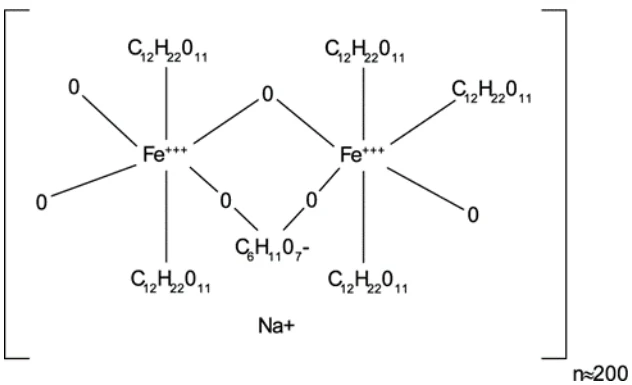
Physicochemical properties: The macromolecular complex is negatively charged at alkaline pH and is present in solution with sodium cations. It is free of ferrous ion and dextran polysaccharides. The product has a dark brown colour indicative of ferric oxide linkages.
14 CLINICAL TRIALS
14.1 Clinical Trials by Indication
Iron Deficiency Anemia in Patients Undergoing Chronic Hemodialysis Who Are Receiving Supplemental Erythropoietin Therapy
Table 3 - Summary of patient demographics for clinical trials in iron deficiency anemia
| Study # | Study design | Dosage, route of administration and duration | Study subjects (n) |
| Study A | Three-center, randomized, open-label study of the safety and efficacy of two doses of FERRLECIT to iron-deficient hemodialysis patients | 500 mg (low dose) or 1000 mg (high dose) Administered intravenously 40 days duration | 108 |
| Study # | Study design | Dosage, route of administration and duration | Study subjects (n) |
| Study B | Single-center, non-randomized, open-label, historically controlled study of the safety and efficacy of variable, cumulative doses of intravenous FERRLECIT in iron-deficient hemodialysis patients. | 500 mg (low dose) or 1000 mg (high dose) Administered intravenously 50 days duration | 63 |
| Study C | Multicentre, crossover, randomized, double-blind, prospective study of the safety of FERRLECIT in hemodialysis patients who required at least 125 mg of elemental intravenous iron. | 125 mg Administered intravenously over ten minutes (125 mg at 12.5 mg/min) N/A |
Three clinical studies (Studies A, B and C) were conducted to assess the efficacy and safety of FERRLECIT.
Study A
Study A was a three-center, randomized, open-label study of the safety and efficacy of two doses of FERRLECIT administered intravenously to iron-deficient hemodialysis patients. The study included both a dose-response concurrent control and an historical control. Enrolled patients received a test dose of FERRLECIT (25 mg of elemental iron) and were then randomly assigned to receive FERRLECIT at cumulative doses of either 500 mg (low dose) or 1000 mg (high dose) of elemental iron. FERRLECIT was given to both dose groups in eight divided doses during sequential dialysis sessions (a period of 16 to 17 days). At each dialysis session, patients in the low-dose group received FERRLECIT 62.5 mg of elemental iron over 30 minutes, and those in the high-dose group received FERRLECIT 125 mg of elemental iron over 60 minutes. The primary endpoint was the change in hemoglobin from baseline to the last available observation through Day 40.
Eligibility for this study included chronic hemodialysis patients with a hemoglobin below 10 g/dL (or hematocrit at or below 32%) and either serum ferritin below 100 ng/mL or transferrin saturation below 18%. Exclusion criteria included significant underlying disease or inflammatory conditions or an epoetin requirement of greater than 10,000 units three times per week. Parenteral iron and red cell transfusion were not allowed for two months before the study. Oral iron and red cell transfusion were not allowed during the study for FERRLECIT treated patients.
The historical control population consisted of 25 chronic hemodialysis patients who received only oral iron supplementation for 14 months and did not receive red cell transfusion. All patients had stable epoetin doses and hematocrit values for at least two months before initiation of oral iron therapy.
The evaluated population consisted of 39 patients in the low-dose FERRLECIT group, 44 patients in the high-dose FERRLECIT group, and 25 historical control patients.
The mean baseline hemoglobin and hematocrit were similar between treatment and historical control patients: 9.8 g/dL and 29% and 9.6 g/dL and 29% in low- and high-dose FERRLECIT treated patients, respectively, and 9.4 g/dL and 29% in historical control patients. Baseline serum transferrin saturation was 20% in the low-dose group, 16% in the high-dose group, and 14% in the historical control. Baseline serum ferritin was 106 ng/mL in the low-dose group, 88 ng/mL in the high-dose group, and 606 ng/mL in the historical control.
Patients in the high-dose FERRLECIT group achieved significantly higher increases in hemoglobin and hematocrit than either patients in the low-dose FERRLECIT group or patients in the historical control group (oral iron). Patients in the low-dose FERRLECIT group did not achieve significantly higher increases in hemoglobin and hematocrit than patients receiving oral iron. See Table 4.
Table 4 – Hemoglobin, Hematocrit, and Iron Studies
| Study A | Mean Change from Baseline to Two Weeks After Cessation of Therapy | ||
Ferrlecit 1000 mg IV (N=44) | Ferrlecit 500 mg IV (N=39) | Historical Control-Oral Iron (N=25) | |
| Hemoglobin | 1.1 g/dL* | 0.3 g/dL | 0.4 g/dL |
| Hematocrit | 3.6%* | 1.4% | 0.8% |
| Transferrin Saturation | 8.5% | 2.8% | 6.1% |
| Serum Ferritin | 199 ng/mL | 132 ng/mL | NA |
*p<0.01 versus both the 500 mg group and the historical control group.
Study B
Study B was a single-center, non-randomized, open-label, historically-controlled study of the safety and efficacy of variable, cumulative doses of intravenous FERRLECIT in iron-deficient hemodialysis patients. FERRLECIT administration was identical to Study A. The primary efficacy variable was the change in hemoglobin from baseline to the last available observation through Day 50.
Inclusion and exclusion criteria were identical to those of Study A as was the historical control population. Sixty-three patients were evaluated in this study: 38 in the FERRLECIT -treated group and 25 in the historical control group.
FERRLECIT -treated patients were considered to have completed the study per protocol if they received at least eight FERRLECIT doses of either 62.5 mg or 125 mg of elemental iron. A total of 14 patients (37%) completed the study per protocol. Twelve (32%) FERRLECIT -treated patients received less than eight doses, and 12 (32%) patients had incomplete information on the sequence of dosing. Not all patients received FERRLECIT at consecutive dialysis sessions and many received oral iron during the study.
Table 5 – Patient Dosing in Study B
| Cumulative Ferrlecit Dose (mg of elemental iron) | 62.5 | 250 | 375 | 562.5 | 625 | 750 | 1000 | 1125 | 1187.5 |
| Patients (#) | 1 | 1 | 2 | 1 | 10 | 4 | 12 | 6 | 1 |
Baseline hemoglobin and hematocrit values were similar between the treatment and control groups, and were 9.1 g/dL and 27.3%, respectively, for FERRLECIT-treated patients. Serum iron studies were also similar between treatment and control groups, with the exception of serum ferritin, which was 606 ng/mL for historical control patients, compared to 77 ng/mL for FERRLECIT-treated patients.
In this patient population, only the FERRLECIT-treated group achieved significant increase in hemoglobin and hematocrit from baseline. This increase was significantly greater than that seen in the historical oral iron treatment group. See Table 6.
Table 6– Hemoglobin, Hematocrit, and Iron Studies
| Study B | Mean Change from Baseline One Month after Treatment | |
Ferrlecit (N=38) | Oral iron (N=25) | |
| change | change | |
| Hemoglobin (g/dL) | 1.3 a, b | 0.4 |
| Hematocrit (%) | 3.8 a, b | 0.2 |
Transferrin Saturation (%) | 6.7 b | 1.7 |
| Serum Ferritin (ng/mL) | 73 b | -145 |
a - p<0.05 on group comparison by the ANCOVA method
b - p<0.001 from baseline by the paired t-test method
Study C
Study C was a multicentre (n = 2,534), crossover, randomized, double-blind, prospective study of the safety of FERRLECIT in hemodialysis patients who required at least 125 mg of elemental intravenous iron.
A primary objective of the study was to compare outcome (drug intolerance) events and life-threatening adverse events after FERRLECIT administration compared to placebo and an historical control. The historical control was based on a conservative analysis of exposure to iron dextran in defined patient populations from three independent publications which were combined by meta-analysis. The drugs were three different marketed formats of iron dextrans, used in three different populations. Two of the studies were retrospective and one study was prospective. Iron dextran was administered intravenously in doses which varied from 25 mg to 100 mg in these studies.
Another primary objective of Study C was to assess the safety of FERRLECIT when administered undiluted at a rate of 12.5 mg/minute without a test dose in a large patient population. Each patient received a total of 125 mg of FERRLECIT (10 mL undiluted) by slow injection via the venous return over 10 minutes. Treatment was administered during the first hour of hemodialysis.
Patients received a course of four sequential dialysis sessions over a duration of approximately one week. At the first hemodialysis session, patients underwent screening procedures. If eligible to continue the study, patients were randomized to one of two crossover treatment schedules as follows: FERRLECIT at session 2 and placebo at session 3 or placebo at session 2 and FERRLECIT at session 3.
A third primary objective of Study C was to compare the incidence of all immediate-type suspected and confirmed allergic reactions following FERRLECIT administration with those following placebo administration.
A rise in serum tryptase is a marker for an immediate anaphylactic or anaphylactoid event or an allergic event. The first 200 patients from selected centres had serum tryptase assays performed on samples obtained during dialysis. Blood from these patients was also drawn at session 2 prior to and 60 minutes after study drug administration, to define the normal range for changes in tryptase in this population, and to identify the effect of dialysis, FERRLECIT administration, and normal saline / benzyl alcohol solution (placebo) on circulating tryptase levels. In the event that one of these selected patients had a suspected allergic event, their blood was not included in the analysis defining the normal range, and a replacement was selected. A significant increase in tryptase level was defined as two standard deviations from the mean change defined in the reference (n = 200) population.
In all patients, a baseline blood sample was obtained at initiation of dialysis before study drug administration. In patients who had a suspected allergic event during administration of either study drug (FERRLECIT or placebo), then another blood sample was obtained one hour following the beginning of the event, and both samples for the patient were analyzed for serum tryptase levels. A confirmed allergic event was defined as one that had a post-event increase in tryptase level that was at least two times greater than baseline (at or above 100% increase).
In the final analysis, 2512 patients were exposed to FERRLECIT and 2487 were exposed to placebo in the cross-over design for Study C. 2489 patients were evaluable for protocol events, having received both FERRLECIT and placebo infusions and having completed the study according to protocol.
FERRLECIT was well tolerated, with an overall incidence of all adverse events (12.3%, 310/2514) which compared favourably to placebo (9.8%, 245/2509), although with statistical significance (p < 0.05 by McNemar’s test).
The safety of FERRLECIT was also demonstrated by the incidence of outcome (0.4%, 11/2493) and life-threatening (0.0%, 1/2493) adverse events which was not significantly different (McNemar’s test) than for the placebo treatment (outcome events 0.1%, 2/2487, life-threatening events 0%, 0/2487). The incidence of adverse events for FERRLECIT was lower than reported historically with iron dextran (2.47%, 64/2589 for outcome events and 0.61%, 23/37684 for life-threatening events).
The incidence of serious adverse events following FERRLECIT was 0.6%, 14/2514 while the incidence following placebo was 0.5%, 12/2509. The difference was not statistically significant by McNemar’s test.
Three of 11 outcome events after FERRLECIT were considered immediate serious adverse events (pruritus, hypotension and anaphylactoid reaction). Both the pruritus and the anaphylactoid reaction were also classified as clinically suspected allergic events; however both were subsequently confirmed by tryptase assay to be non-allergic.
The third event (anaphylactoid reaction) was also considered by the investigator to be a life-threatening adverse event. The patient had a suspected anaphylactoid reaction (diaphoresis, dyspnea and wheezing for 20 minutes) immediately following administration of FERRLECIT. However the event was not anaphylactic per protocol because the patient’s serum tryptase level decreased from 11.7 ng/mL to 10.8 ng/mL. Additionally the patient had prior history of severe anaphylactoid reaction to iron dextran, had experienced rash when given penicillin and pruritus when given cephalosporin. This patient most probably had a high constitutive leak of tryptase with resultant drug idiosyncratic intolerance rather than a specific drug allergy.
FERRLECIT was not statistically different (by McNemar’s test) from placebo in suspected allergic reactions (rash, pruritus, nausea, dizziness, chills, dyspnea, chest pain, dry throat, vomiting, headache, malaise). The rate of reaction following FERRLECIT was 0.5% (12/2493) compared to 0.2% (5/2487) for placebo.
For confirmed allergic events (based on tryptase assay), the rate following FERRLECIT was 0.1% (2/2493, facial redness with rise in serum tryptase from 2.1 to 4.9 ng/mL, and back pain with rise in serum tryptase from 3.8 to 7.8 ng/mL). No allergic events were confirmed by tryptase assay following placebo; calculated incidence 0% (0/2487).
There were no patients in Study C who experienced an anaphylactic event as defined by the protocol.
All life-threatening, outcome and suspected allergic adverse events in the Intent-To-Treat population are summarized below in Table 7:
Table 7 –Life-threatening, Outcome and Suspected Allergic Adverse Events in the Intent-To-Treat Population
Event/s per patient n=20 | Treat-ment | Life-threatening adverse event | Outcome event (drug intolerance) | Suspected allergic event | Onset time | Severity | |||||||||
| Confirmed Non-allergic | Confirmed allergic | Uncon-firmed | |||||||||||||
| allergic reaction (nausea, unease, dry throat) | Ferrlecit | X | immed2 | mild | |||||||||||
| allergic reaction (abdominal cramps [immediate], diarrhea, nausea, itching and flushing [delayed]) | placebo | X | X | immed. | mod. | ||||||||||
| nausea | Ferrlecit | X | instant1 | mild | |||||||||||
| pruritus | Ferrlecit | X | X | immed. | mod. | ||||||||||
| hypotension | Ferrlecit | X | immed. | severe | |||||||||||
| allergic reaction (nausea, dizziness, headache & vomiting) | placebo | X | instant. | mild | |||||||||||
| dizziness, nausea | Ferrlecit | X | instant. | mild | |||||||||||
| allergic reaction (flushing & malaise) | placebo | X | immed. | mild | |||||||||||
| allergic reaction (pronounced facial flushing) | Ferrlecit | X | X | instant. | severe | ||||||||||
| allergic reaction (chills) | Ferrlecit | X | X | immed. | mild | ||||||||||
| anaphylactoi d reaction (diaphoresis, dyspnea & wheezing) | Ferrlecit | X | X | X | immed. | severe | |||||||||
| hypotension | placebo | X | immed. | mod. | |||||||||||
Event/s per patient n=20 | Treat-ment | Life-threatening adverse event | Outcome event (drug intolerance) | Suspected allergic event | Onset time | Severity | |||||||||
| Confirmed Non-allergic | Confirmed allergic | Uncon-firmed | |||||||||||||
| porphyria | Ferrlecit | X | delayed3 | mod. | |||||||||||
rash pruritus | placebo Ferrlecit | X | X | X | delayed immed. | mild | |||||||||
| allergic reaction (dyspnea and chest pain) | Ferrlecit | X | X | instant. | mod. | ||||||||||
| allergic reaction (rash) | Ferrlecit | X | X | delayed | mild | ||||||||||
| back pain | Ferrlecit | X | X | immed. | mild | ||||||||||
| rash | Ferrlecit | X | immed. | mild | |||||||||||
| pruritus | Ferrlecit | X | immed. | mild | |||||||||||
| pruritus | placebo | X | immed. | mild | |||||||||||
1 AE during infusion 2 AE after infusion but before dialysis was complete 3 AE after dialysis was completed.
The cardiovascular system and the digestive system were the only two body systems for which adverse events occurred statistically (p<0.05 by McNemar’s test) more frequently among patients receiving FERRLECIT versus placebo. The percentage of patients who experience at least one cardiovascular event was 5.4%, 136/2514 for FERRLECIT-treated patients and 4.1% 103/2509 for placebo-treated patients. The majority of the cardiovascular incidents were hypotension, hypertension and vasodilation. Hypotension is known to be a frequent concomitant event during hemodialysis and in fact, there was no statistically significant difference between FERRLECIT and placebo for this adverse event.
Within the digestive system, 2.5%, 64/2514 of patients experienced an event following FERRLECIT and 1.6%, 39/2509 of patients experienced an event after placebo. The majority of these events were diarrhea and nausea.
Prior iron dextran sensitivity and concomitant angiotensin converting enzyme (ACE) inhibitor therapy were monitored as secondary study objectives, and were found to be not predisposing factors for adverse events.
Finally, the overall low incidence of all adverse events, including allergic outcome, serious, and life-threatening events supports the safety of administering FERRLECIT at a rate of 12.5 mg/minutes without a test dose.
15 MICROBIOLOGY
No microbiological information is required for this drug product.
16 NON-CLINICAL TOXICOLOGY
General Toxicology:
Acute Toxicity
Acute toxicity studies have been carried out in mice, rats, rabbits and dogs (Table 8).
Table 8– Acute Single Dose Toxicity Studies by the Intravenous Route
| Species | Strain | Group Size | Single Doses (mg Fe/kg) (mL/kg) | LD50 |
| Mice | CF-1 | 10M + 10F | 99.25 - 198.75 (7.9 - 15.9) | After 24 hrs: 159 mg Fe/kg males 155 mg Fe/kg females |
| Rats | Wistar SD | 10M + 10F 10M + 10F | 62.5 - 157.5 (5.0 - 12.6) as above | After 24 hrs: 111.25 mg Fe/kg males 90 mg Fe/kg females After 5 days: Combined male and female 274 mg Fe/kg |
| Rabbits | Morini | 8M | 62.5, 87.5, 112.5 (5, 7, 9) | After 5 days: 70.4 mg Fe/kg |
| Dogs | Mixed | 3M + 3F | 5 mL/animal | After 96 hours: no systemic toxicity |
| Dogs | Mixed | 2M + 2F | 125 - 250 (10 - 20) | After 24 hours: 262.5 mg Fe/kg same for both sexes |
Sodium ferric gluconate complex in sucrose injection at elemental iron doses of 125 mg/kg, 78.8 mg/kg, 62.5 mg/kg and 250 mg/kg caused deaths to mice, rats, rabbits, and dogs respectively. The major symptoms of acute toxicity were decreased activity, staggering, ataxia, increases in the respiratory rate, tremor, and convulsions. On a body surface area basis, these doses were 4, 5, <8, 54 times, respectively, the recommended human dose (125 mg/day or 92.5 mg/m2/day) for a person of 50 kg body weight, average height and body surface area of 1.46 m2.
Repeat Dose Toxicity
Repeated dose toxicity studies have been carried out in rats and rabbits. The results of these studies are provided in Table 7.
Table 9– Repeated Dose Toxicity Studies
| Species | Strain | Group Size | Doses (mg Fe/kg) (mL/kg) | Dosing Days | Results |
| Rats | SD | 20M + 20F | 42.25 (3.3) | 28 | No deaths. Rats showed evidence of pain and aggressiveness. Body weight gain was inhibited and food consumption dropped. Leukocytes increased at four weeks. Plasma iron content increased and iron binding capacity increased in all except the females in one group. Hemorrhage and some thrombosis and necrosis occurred at the injection site. Gross examination at necropsy revealed only enlargement of the spleen. Some organ weights including the heart, lungs, kidneys, adrenals, thymus, hypophysis, gonads, thyroid, and liver, were reduced compared to controls. In almost all treated animals, a discrete reticular activation was found on the hilus and in the alveolar parenchyma. A small bladder papilloma was seen in a treated male rat. All treated animals revealed pronounced siderophilic deposition in the lymphatic reticulum, but no signs of system activation. |
| Rats | Wistar | 20M + 20F | 2.5, 6.25, 12.5 (0.2, 0.5, 1.0) | 84 | Body weight of the males in the 6.25 and 12.50 mg/kg groups was slightly, but not dose-dependently reduced. A slight reduction in body weight was found in the 12.50 mg/kg group females. Serum iron values were increased dose-dependently in all groups of both sexes. Total lipids were increased in both sexes of the 6.25 and 12.50 mg/kg groups. Phospholipids were increased in the males of the 12.50 mg/kg group and the females of the 6.25 and 12.5 mg/kg groups. Total cholesterol was dose-dependently increased in the males of all groups and in the 12.50 mg/kg group females. Triglycerides were elevated in the 6.25 and 12.50 mg/kg group females. Urinalysis revealed a substantial increase in protein values in the 6.25 mg/kg group males. Organs revealed light to dark brown coloration in virtually all rats of the 12.50 mg/kg group: pancreas, spleen, liver, adrenals, intestine, and subcutaneous fatty tissue. Adrenals were reduced in size and the spleen and liver enlarged. The liver |
Carcinogenicity: No long-term carcinogenicity studies have been performed with sodium ferric gluconate complex in sucrose injection.
Genotoxicity: Sodium ferric gluconate complex in sucrose injection was not mutagenic in the Ames test and the rat micronucleus test. It produced a clastogenic effect in an in vitro chromosomal aberration assay in Chinese hamster ovary cells.
Reproductive and Developmental Toxicology:
Teratogenicity
Sodium ferric gluconate complex in sucrose injection was not teratogenic at doses of elemental iron up to 100 mg/kg/day (300 mg/m2/day) in mice and 20 mg/kg/day (120 mg/m2/day) in rats. On a body surface area basis, these doses were 3.24 and 1.3 times, respectively, the recommended human dose (125 mg/day or 92.5 mg/m2/day) for a person of 50 kg body weight, average height and body surface area of 1.46 m2.
Impairment of fertility:
Studies to assess the effect of sodium ferric gluconate complex in sucrose injection on fertility were not conducted.
Table 10- Reproduction Studies
| Species | Strain | Group Size | Doses (mg Fe/kg) (mL/kg) | Dosing Days | Results | ||||
| weights in the 6.25 and 12.50 mg/kg group males and in the 12.50 mg/kg group females were considerably increased. Spleen weights were increased dose-dependently in both sexes of the 6.25 and 12.50 mg/kg groups. Histology examination revealed increased deposits of iron-containing pigment in the liver, spleen, lymph nodes, and kidneys, and sporadic deposits in other organs, apparently dose-dependent. | |||||||||
| Rabbits | Morini | 10 | 1.875 (0.15) | 90 | No changes in the hematology or blood chemistry tests except for an increase in hemoglobin and SGPT. No signs of toxic effects observed in organ weights, macroscopic, or microscopic examinations. No signs of iron deposits in duodenum, pancreas, adrenal cortex, or liver. | ||||
| Species | Strain | Group Size | Doses (mg Fe/kg) (mL/kg) | Dosing Days | Results |
| Mouse | CD-1 | 5F | 2.5, 5, 15, 30 (0.2 - 2.4) | GD 6-15 | No treatment-related deaths. Local effects at the treatment site included swelling and blue discoloration of the tail. Skin lesions and or areas of scab formation were seen on the tail in all groups, including the control. Body weights and food consumption for the treated groups were comparable to the controls. No gross pathological findings. The pregnancy rate was 100% in all groups. The number of corpora lutea, implantation sites, live fetuses, dead fetuses, resorptions, the sex ratio, and the pre- and post-implantation losses were unaffected by treatment. Fetal weights were similar to control values. The incidence of major malformations and minor anomalies was unaffected. |
| Mouse | CD-1 | 25F | 10, 30, 100 (0.4, 2.4, 8.06) | GD 6-15 | No drug related mortality. Effects seen at the injection sites in the 30 and 100 mg/kg groups included dry skin and ulceration on the tail, and black discoloration at the tip of the tail. Decreased activity and red vaginal discharge were also observed for some mice in the 100 mg/kg group. The body weight gains were decreased for the intervals Days 6 to 9 and Days 15 to 18 for the 100 mg/kg group. Body weights by Day 18 of gestation were significantly decreased compared with controls. Food consumption for the 100 mg/kg group was significantly decreased between Days 6 and 9 of gestation. Gross pathological findings in the 30 and 100 mg/kg groups included splenic enlargement and focal to multi-focal hepatic pallor. Other hepatic alterations including prominent lobular architecture and/or irregular pattern were also seen for a few 100 mg/kg group mice. Subcutaneous edema, sometimes with ascites and/or edema affecting the pancreas and cecum, was seen in three 100 mg/kg mice. The number of early resorptions was slightly increased in the 100 mg/kg group. Evaluation of the number of resorptions per litter and numbers of litters with total resorption were indicative of embryolethality. The numbers of corpora lutea, implantation sites, dead fetuses, the sex ratio and the pre-implantation losses in the control and treated groups were similar. Fetal weights were significantly (P<0.01) reduced in the 100 mg/kg group. There were |
| Species | Strain | Group Size | Doses (mg Fe/kg) (mL/kg) | Dosing Days | Results | ||||
| no drug induced malformations seen in this study. The overall incidence of fetuses with minor skeletal anomalies was significantly increased in the 30 and 100 mg/kg groups. This resulted primarily from increased incidences of reduced numbers of ossified caudal vertebrae and a higher incidence of reduced numbers of ossified phalanges in the fore and/or hind paws. The percentage of fetuses with sternebral variants was increased in the 30 and 100 mg/kg groups. These latter findings were probably associated with the reduced growth of the offspring which was a consequence of reduced weight gains in the maternal animals at the high dose. | |||||||||
| Rat | SD | 6F | 2.5, 5, 15, 30 (0.2 - 2.42) | GD 6-17 | Two animals in the 15 mg/kg group and one animal in the 30 mg/kg group died or were sacrificed in poor condition during the study. Clinical findings prior to sacrifice or death included vaginal discharge, pallor, fur staining, cold to touch, hunched posture, dehydration, weak, lying on side, and/or decreased respiratory rate/labored breathing, and one dam had started to litter. Necropsy findings for the respective animals included dark discoloration of the ingesta, multiple dark areas on the stomach, pale or irregular area/foci on the livers, enlarged spleen, dark area/small thymus and dark fluid in the uterus or bladder. Common findings for the animals in the 15 and 30 mg/kg groups included yellow/orange/red urine staining of the urogenital region. Local effects included blue discoloration of the tail seen primarily in the 5 mg/kg group and above. Dose-related body weight decreases were evident between Days 6 and 9 of gestation, with body weights for the 30 mg/kg group were remained lower through gestation Day 18. Food consumption from Days 6 to 9 of gestation showed dose-related reductions. Food consumption was decreased in the 15 and 30 mg/kg/Day groups between Days 15 to 18 and Days 9 to 18 of gestation, respectively. Necropsy of the animals examined at cesarean section revealed clear fluid in the abdomen, discolored / enlarged or dark lymph nodes, multiple pale areas on the liver, swollen or discolored pancreas, enlarged spleen. Dark | ||||
| Species | Strain | Group Size | Doses (mg Fe/kg) (mL/kg) | Dosing Days | Results | ||||
| areas on the uterus were seen among the dams in the 15 and/or 30 mg/kg groups. The pregnancy rate was at least 83% in all groups. The number of corpora lutea, implantation sites, live fetuses, dead fetuses, the sex ratio, and the pre and post-implantation losses were unaffected by treatment. Fetal weights were slightly reduced in the 15 and 30 mg/kg groups. There were no major malformations or minor anomalies observed externally. | |||||||||
| Rat | SD | 20 | 1, 5, 10 (0.08, 0.4, 0.81) | GD 6 to PP D21 | F0 Generation No deaths, and no animals were sacrificed in poor condition during the study. Local clinical effects at the injection site, including blue discoloration of the tail, were seen at a higher incidence in the 5 and 10 mg/kg groups. Dark discoloration of the urine was seen in the 10 mg/kg group. There were significant dose-related weight losses for the 5 and 10 mg/kg groups from Days 6 to 9 of gestation. There was an increased weight gain at the 10 mg/kg level for Days 9 to 12 of gestation, and between Days 12 and 15 of gestation there was again a lower weight gain. During lactation there was marked variability of weight gains with lower values being seen in the period Days 0 to 4 post partum for the 5 and 10 mg/kg groups and smaller weight losses between Days 17 and 21 post partum at 10 mg/kg. Food intakes from Days 6 to 9 and Days 15 to 18 of gestation showed dose-related reductions which were significant (P<0.05) in the 10 mg/kg group. There were no treatment-related gross pathological changes. Maternal performance in terms of the length of gestation, duration of parturition, and number of live, dead and malformed pups at birth was unaffected by treatment. F1 Generation: The viability and survival indices were unaffected. There were no treatment-related clinical findings. Pup weights (male, female, and total) were slightly lower at birth in the 10 mg/kg group. These differences were significantly lower on Day 4 post partum and continued to be significant until Day 21 post partum. Slightly lower pup weights were seen on Day 7 post partum, with significantly lower values on Days 14 and 21 post partum in the 5 mg/kg group. Evaluation | ||||
| Species | Strain | Group Size | Doses (mg Fe/kg) (mL/kg) | Dosing Days | Results | |||||
| of the data from the F1 adult animals indicated that there were no adverse clinical observations. Behavioral and maturational assessments indicated that there were no direct effects of drug treatment on normal development. At the highest dose, there was an increase in the meantime to vaginal opening and an increase in exploration activity counts on Day 35 postpartum (but not on Day 60). Both of these findings are attributed to the decrease in the rate of maternal weight gains. The reproductive capacity of the F1 generation was not affected and their offspring were normal with respect to clinical observations and weight gains. | ||||||||||
| Rats | Wista r | 20 | 4, 20 (0.5, 2.5) | GD 6-15 | Treatment of pregnant rats at a dose of 20 mg/kg resulted in marked effects that included lower maternal weight gain, lower food consumption, reduced gestation index, a significantly lower litter size, increased resorption sites, and fetal mortality. Treatment at 4 mg/kg did not show any difference from controls regarding weight gain or food intake. Both treatment groups consumed more water than the controls, but a significant difference was not observed. The fertility index was identical between all groups. There was no difference between the control and the 4 mg/kg group regarding the gestation index or the number of dead fetuses. There was no difference in the litter size or birth weights between the controls and 4 mg/kg group. There was a significant difference in the birth weights of both the males and females in the 20 mg/kg group compared to the control and 4 mg/kg groups. No treatment related anomalies were observed. However, many of the 20 mg/kg fetuses showed retardation in ossification of the cranial bones. This was interpreted to indicate a delay in general development associated with reduced maternal weight gains and food consumption. There was no evidence of teratogenicity at any dose level. | |||||
| Rabbits | Morin i | 4F | 1.875 (0.15) | GD 1-23 GD 1-28 | IV injections of sodium ferric gluconate complex in sucrose injection at 1.875 mg/kg/day in pregnant rabbits did not result in changes in the number and weight of the fetuses, in the number of live births, or in the | |||||
| Species | Strain | Group Size | Doses (mg Fe/kg) (mL/kg) | Dosing Days | Results | |
| structures of the main organs of the fetuses. There was no teratogenic effect on the morphology of the skeleton, limbs, or viscera. The fetuses were similar in number and weight to those from the animals treated with vehicle. | ||||||