


Product Monograph - Finacea
Recent Major Label Changes
| None at time of the most recent authorization |
|---|
Table of Contents
Certain sections or subsections that are not applicable at the time of the preparation of the most recent authorized product monograph are not listed.
Recent Major Label Changes .................................................................................................... 2
Table of Contents .................................................................................................................... 2
Part 1: Healthcare Professional Information ............................................................................ 4
- 1.
Indications ........................................................................................................................... 4
1.1. Pediatrics ........................................................................................................................... 4
1.2. Geriatrics ........................................................................................................................... 4
- 2. Contraindications ................................................................................................................ 4
- 4.
Dosage and Administration ................................................................................................. 4
4.2. Recommended Dose and Dosage Adjustment .................................................................. 4
4.4. Administration ................................................................................................................... 5
- 5. Overdose ............................................................................................................................. 5
- 6. Dosage Forms, Strengths, Composition, and Packaging ....................................................... 5
- 7.
Warnings and precautions ................................................................................................... 6
General ..................................................................................................................................... 6
Carcinogenesis and Genotoxicity .............................................................................................. 6
Skin ........................................................................................................................................... 6
7.1. Special Populations ............................................................................................................ 7
7.1.1. Pregnancy ................................................................................................................... 7
7.1.2. Breastfeeding ............................................................................................................. 7
7.1.3. Pediatrics .................................................................................................................... 7
7.1.4. Geriatrics .................................................................................................................... 7
- 8.
Adverse Reactions ............................................................................................................... 7
8.1. Adverse Reaction Overview ............................................................................................... 7
8.3 Less Common Clinical Trial Adverse Drug Reactions (< 1%) ................................................ 8
8.5 Post-Market Adverse Drug Reactions ................................................................................. 9
- 9.
Drug Interactions ................................................................................................................. 9
9.1. Drug Interactions Overview ............................................................................................... 9
9.2. Drug-Behaviour Interactions ............................................................................................. 9
9.3. Drug-Drug Interactions ...................................................................................................... 9
9.4. Drug-Food Interactions ...................................................................................................... 9
9.5. Drug-Herb Interactions ...................................................................................................... 9
9.6. Drug-Laboratory Test Interactions ..................................................................................... 9
- 10.
Clinical Pharmacology ........................................................................................................ 9
10.1. Mechanism of Action ....................................................................................................... 9
10.2. Pharmacodynamics ......................................................................................................... 9
10.3. Pharmacokinetics .......................................................................................................... 11
- 11. Storage, Stability, and Disposal ........................................................................................ 13
- 12. Special Handling Instructions ........................................................................................... 13
Part 2: Scientific Information ................................................................................................. 14
- 13. Pharmaceutical Information ............................................................................................ 14
- 14.
Clinical Trials .................................................................................................................... 14
14.1. Clinical Trials by Indication ............................................................................................ 14
- 16. Non-Clinical Toxicology .................................................................................................... 17
Patient Medication Information ............................................................................................ 20
Part 1: Healthcare Professional Information
1. Indications
FINACEA (azelaic acid) is indicated for:
- Topical treatment of inflammatory papules and pustules and erythema of mild to moderate rosacea.
1.1. Pediatrics
Pediatrics (<18 years of age): Based on the data submitted and reviewed by Health Canada, the safety and efficacy of FINACEA in pediatric patients have not been established; therefore, Health Canada has not authorized an indication for pediatric use (see 7 Warnings and Precautions).
1.2. Geriatrics
Geriatrics (> 65 years of age): Clinical studies of FINACEA did not include sufficient numbers of subjects aged 65 and over to determine whether they respond differently than younger subjects (see 7 Warnings and Precautions).
2. Contraindications
FINACEA (azelaic acid) is contraindicated in patients with a history of hypersensitivity to azelaic acid, propylene glycol or to any other component of the formulation. For a complete listing, see 6 Dosage Forms, Strengths, Composition, and Packaging.
4. Dosage and Administration
4.2. Recommended Dose and Dosage Adjustment
FINACEA (azelaic acid) is intended for topical use only.
Before application, the skin should be thoroughly washed and patted dry with a soft towel. Only very mild soaps or mild soapless cleansing lotions should be used.
A thin layer of FINACEA (0.5 g or approximately 2.5 cm of gel) should be applied twice daily, in the morning and evening, to the entire affected areas and gently massaged into the skin. The use of occlusive dressings or wrappings should be avoided, and the hands should be washed following application. It is important to use FINACEA continuously over the entire period of treatment.
The duration of use of FINACEA can vary from person to person and depends on the severity of rosacea. Significant initial therapeutic effects have been observed after four to eight weeks of treatment.
The hands should be washed after application of FINACEA.
4.4. Administration
In the event of skin irritation, the amount of gel per application should be reduced or the frequency of use of FINACEA should be decreased to once a day until the irritation ceases. If required, the treatment should be interrupted for a few days.
Avoid contact with the mouth, eyes, and other mucous membranes. If FINACEA comes in contact with the eyes, wash with large amounts of water and consult a physician if eye irritation persists.
Non-medicated cosmetics or cosmetics free of substances causing acneiform eruptions or irritations may be applied after the application of FINACEA has dried.
Patients should be instructed to avoid spicy foods, hot foods and drinks, and alcoholic beverages.
4.5. Missed Dose
If a dose is missed for this medication, skip the missed dose and continue with the next scheduled dose. Do not take two doses at the same time.
5. Overdose
FINACEA (azelaic acid) is intended for cutaneous use only. If pronounced local irritation occurs due to excessive application, patients should be directed to temporarily use the medication less frequently or to discontinue use until symptoms and signs subside (See 7 Warnings and Precautions).
Acute toxicology studies in laboratory animals do not indicate that acute intoxication is to be expected following oral ingestion of large amounts of the drug.
For the most recent information in the management of a suspected drug overdose, contact your regional poison control centre or Health Canada’s toll-free number, 1-844 POISON-X (1-844-764-7669).
- 6. Dosage Forms, Strengths, Composition, and Packaging
Table 1 – Dosage Forms, Strengths, and Composition
Description
FINACEA (azelaic acid) is available in tubes of 5 g and 50 g. aEach tube is made of aluminium, with a membrane closure, an internal epoxide resin coating, a white exterior and a screw cap a Not all presentations may be available in Canada.
| Route of Administration | Dosage Form/ Strength/Composition | Non-Medicinal Ingredients |
| Topical | gel / 15 % w /w | Benzoic acid, disodium edetate, lecithin, medium-chain triglycerides, polyacrylic acid, polysorbate 80, propylene glycol, purified water and sodium hydroxide. |
made of high-density polyethylene.
Each gram of FINACEA contains 0.15 g azelaic acid (15% w/w) as the active ingredient in an aqueous gel base containing benzoic acid (as a preservative), disodium edetate, lecithin, medium-chain triglycerides, polyacrylic acid, polysorbate 80, propylene glycol, purified water, and sodium hydroxide to adjust pH.
7. Warnings and precautions
General
FINACEA (azelaic acid gel) should be used only as directed by a physician.
FINACEA is for dermatological use only, and not for ophthalmic, oral, rectal or intravaginal use.
Carcinogenesis and Genotoxicity
Long-term animal studies have not been performed to evaluate the carcinogenic potential of FINACEA Gel. Azelaic acid was not mutagenic or clastogenic in a battery of in vitro [Ames assay, HGPRT in V79 cells (Chinese hamster lung cells), and chromosomal aberration assay in human lymphocytes] and in vivo [dominant lethal assay in mice and mouse micronucleus assay] genotoxicity tests.
In a 26-week dermal carcinogenicity study using male and female transgenic (Tg.AC) mice, FINACEA and the gel vehicle did increase the number of papillomas in male animals after twice daily application at the treatment site. This effect was not observed after single administration in male and female mice. This effect may be associated with the vehicle application. The clinical relevance of the findings in animals to humans is not clear (see 16 Non-Clinical Toxicology).
Oral administration of azelaic acid at dose levels up to 2500 mg/kg/day [162 times the maximum recommended human dose based on body surface area] did not affect fertility or reproductive performance in male or female rats.]
Driving and Operating Machinery
FINACEA (azelaic acid) has no influence on the ability to drive and use machines.
Skin
FINACEA contains benzoic acid and propylene glycol which may cause mild irritant cutaneous and mucocutaneous reactions. Care should be taken to avoid contact with the eyes, mouth and other mucous membranes, and patients should be instructed accordingly. In the event of accidental contact, the eyes, mouth and/or affected mucous membranes should be washed with large amounts of water. If eye irritation persists, patients should consult a physician.
If pronounced local irritation occurs, patients should be directed to temporarily use the medication less frequently or to discontinue use for a few days. In case of sensitization, or if severe irritation persists, FINACEA should be discontinued and appropriate therapy instituted.
There have been isolated reports of hypopigmentation after use of azelaic acid. Since azelaic acid has not been well studied in patients with a dark complexion, these patients should be monitored for early signs of hypopigmentation.
7.1. Special Populations
7.1.1. Pregnancy
There are no adequate and well-controlled studies in pregnant women. Therefore, FINACEA Gel should be used during pregnancy only if the potential benefit justifies the potential risk to the fetus.
Dermal embryofetal developmental toxicology studies have not been performed with azelaic acid, 15% gel. Embryofetal developmental studies with oral administration of azelaic acid to rats, rabbits, and cynomolgus monkeys during the period of organogenesis revealed embryotoxicity at doses where some maternal toxicity was noted. No teratogenic effects were observed. The embryofetal NOAEL was 32 times the MRHD based on BSA in rats, 6.5 times the MRHD based on BSA in rabbits and 19 times the MRHD based on BSA in monkeys.
In a peri- and post-natal developmental study in rats, azelaic acid was administered orally from gestational day 15 through day 21 postpartum. Slight disturbances in the post-natal development of fetuses were noted at oral doses that generated some maternal toxicity. The NOAEL was 3 times the MRHD based on BSA. No effects on sexual maturation of the fetuses were noted in this study
(see 16 Non-Clinical Toxicology).
7.1.2. Breastfeeding
Equilibrium dialysis was used to assess human milk partitioning in vitro. At an azelaic acid concentration of 25 μg/mL, the milk/plasma distribution coefficient was 0.7 and the milk/buffer distribution was 1.0, indicating that passage of the drug into the maternal milk may occur. Since less than 4% of a topically applied dose is systemically absorbed, the uptake of azelaic acid into maternal milk is not expected to cause a significant change from baseline azelaic acid levels in the milk. However, caution should be exercised when FINACEA is administered to a nursing mother.
7.1.3. Pediatrics
Pediatrics (<18 years of age): Based on the data submitted and reviewed by Health Canada, the safety and efficacy of FINACEA in pediatric patients have not been established; therefore, Health Canada has not authorized an indication for pediatric use (see the 1 Indications).
7.1.4. Geriatrics
Clinical studies of FINACEA did not include sufficient numbers of subjects aged 65 and over to determine whether they respond differently than younger subjects subjects (see 1 Indications).
8. Adverse Reactions
8.1. Adverse Reaction Overview
Local skin irritation (mostly burning or itching sensations, occasionally reddening and scaling) may occur, usually at the start of treatment with FINACEA (azelaic acid gel). In the majority of cases, the irritation symptoms are mild and generally regress during the course of treatment. In very rare cases, allergic skin reactions (e.g., rash) may occur to azelaic acid or any of the nonmedicinal ingredients
(see 2 Contraindications).
8.2 Clinical Trial Adverse Drug Reactions
Clinical trials are conducted under very specific conditions, the adverse reaction rates observed in the clinical trials may not reflect the rates observed in practice and should not be compared to the rates in the clinical trials of another drug. Adverse drug reaction information from clinical trials is useful for identifying drug-related adverse events and for approximating rates.
In pivotal studies (two 12-week, vehicle-controlled clinical trials; n=664), safety was monitored in the 333 patients who used FINACEA and the 331 patients who used the gel vehicle.
Table 2 – Cutaneous Adverse Events Occurring in 1% or More of Subjects in Two Clinical Trials in Rosacea Patients, by Treatment Group and Maximum Intensity*
| Cutaneous | FINACEA n = 333 (100%) | Vehicle n = 331 (100%) | |||||||||
mild n = 86 (26%) | moderate n = 44 (13%) | severe n = 20 (6%) | mild n = 49 (15%) | moderate n = 27 (8%) | severe n = 5 (2%) | ||||||
| burning/stinging/tingling | 66 (20%) | 30 (9%) | 12 (4%) | 8 (2%) | 6 (2%) | 2 (1%) | |||||
| pruritus | 24 (7%) | 14 (4%) | 3 (1%) | 9 (3%) | 6 (2%) | 0 (0%) | |||||
| scaling/dry skin/xerosis | 21 (6%) | 8 (2%) | 4 (1%) | 33 (10%) | 12 (4%) | 1 (0%) | |||||
| erythema/irritation | 6 (2%) | 6 (2%) | 1 (0%) | 8 (2%) | 4 (1%) | 2 (1%) | |||||
| edema | 3 (1%) | 2 (1%) | 1 (0%) | 3 (1%) | 0 (0%) | 0 (0%) | |||||
| contact dermatitis | 2 (1%) | 2 (1%) | 0 (0%) | 1 (0%) | 0 (0%) | 0 (0%) | |||||
| acne | 2 (1%) | 1 (0%) | 0 (0%) | 1 (0%) | 0 (0%) | 0 (0%) | |||||
| seborrhea | 2 (1%) | 0 (0%) | 0 (0%) | 0 (0%) | 0 (0%) | 0 (0%) | |||||
| photosensitivity | 1 (0%) | 0 (0%) | 0 (0%) | 3 (1%) | 1 (0%) | 1 (0%) | |||||
| skin disease | 1 (0%) | 0 (0%) | 0 (0%) | 1 (0%) | 2 (1%) | 0 (0%) | |||||
* Subjects may have > 1 cutaneous adverse event; thus, the sum of the frequencies of the preferred terms may exceed the number of subjects with at least 1 cutaneous adverse event.
No phototoxicity or photoallergenicity was reported in the controlled clinical studies and in human dermal safety studies.
8.3 Less Common Clinical Trial Adverse Drug Reactions (< 1%)
- Cardiovascular: vasodilatation
- Infections and Infestations: exacerbation of recurrent herpes labialis, herpes simplex and herpes zoster infections
- Respiratory: worsening of asthma
- Skin: acne flare, nevi, hirsutism, vitiligo depigmentation, small depigmented spots, hypertrichosis, reddening (signs of keratosis pilaris), mycosis
8.5 Post-Market Adverse Drug Reactions
The following additional adverse reactions have been reported during post-approval use of FINACEA (frequency unknown):
- Hypersensitivity, which may occur with one or more of the following adverse reactions: angioedema, eye swelling, swelling face, dyspnoea
- Urticaria
9. Drug Interactions
9.1. Drug Interactions Overview
There have been no formal studies evaluating the interaction of FINACEA (azelaic acid) with other drugs.
The pivotal clinical trials excluded concomitant use of medications that affect rosacea.
9.2. Drug-Behaviour Interactions
The interaction of FINACEA (azelaic acid) with individual behavioural risks (e.g. cigarette smoking, cannabis use, and/or alcohol consumption) has not been studied.
9.3. Drug-Drug Interactions
Interactions with other drugs have not been established.
9.4. Drug-Food Interactions
Interactions with food have not been established.
9.5. Drug-Herb Interactions
Interactions with herbal products have not been established.
9.6. Drug-Laboratory Test Interactions
Interactions with laboratory tests have not been established.
10. Clinical Pharmacology
10.1. Mechanism of Action
While the pathophysiology of rosacea is not completely understood, there is increasing consensus that inflammation involving the elevation of several pro-inflammatory effector molecules such as kallikrein-5 and cathelicidin as well as reactive oxygen species (ROS), is a central process of this disease.
Azelaic acid has been shown to directly inhibit kallikrein-5 and cathelicidin expression in three models: in vitro (human keratinocytes), in murine skin and in the facial skin of patients with rosacea.
These anti-inflammatory properties of azelaic acid may play a role in the treatment of rosacea. While the clinical significance of these findings regarding kallikrein-5 and cathelicidin and their impact on the pathophysiology of rosacea has not yet been fully demonstrated in a large clinical study, initial studies in human facial skin appear to confirm the in vitro and murine findings.
10.2. Pharmacodynamics
Azelaic acid has been characterized as anti-keratinizing and anti-bacterial. The mechanisms by which azelaic acid interferes with the pathogenic events in rosacea are unknown, but appear to include an anti-inflammatory effect. In vitro findings indicate that azelaic acid inhibits the production and/or release of reactive pro-inflammatory oxygen species from neutrophils. The clinical relevance of this in vitro effect is unknown.
In vitro, azelaic acid was bacteriostatic and bactericidal against a variety of aerobic and anaerobic bacteria including Propionibacterium acnes and Staphylococcus aureus. The numbers of P. acnes are known to be elevated in acne vulgaris and successful antibacterial treatment of acne causes a decline in P. acnes populations.
The effects of azelaic acid on the accumulation of keratinous material in the infundibular region of the sebaceous follicle (the microcomedo) were tested in an in vivo animal model (tetradecane-induced comedo formation in the rabbit ear). A statistically significant reduction of follicular epithelial hyperplasia (i.e., comedo size) was observed morphometrically after daily application of an ethanolic solution containing 20% azelaic acid or after daily application of azelaic acid 20% cream for 11 days to rabbit ears pretreated with tetradecane. No effect was observed after similar application of ethanolic solution of 20% pimelic acid, the initial metabolite formed in animals and humans by β-oxidation, for 11 consecutive days.
To determine if azelaic acid has a direct effect on the sebaceous gland, an ethanolic solution containing 10% azelaic acid or a cream formulation containing 20% azelaic acid was applied to the ear and flank organ of intact male golden Syrian hamsters and to castrated, testosterone propionate-substituted golden Syrian hamsters. There were no effects on ear tissue lipid profiles, serum total cholesterol, triglycerides or fatty acids after daily application over four months.
Because of the higher water solubility of the disodium salt of azelaic acid, sodium azelainate was used to study the effects of azelaic acid on intermediary metabolism and its general pharmacological profile in vivo and in vitro.
In determining the effects of azelaic acid on intermediary metabolism, a single 1000 mg/kg intravenous dose of sodium azelainate in rats resulted in transient (15 to 30 minutes after dosing) increases in lactate concentration associated with reduced free fatty acid concentrations. In a similar study of rabbits dosed intravenously with 100 mg/kg/day of sodium azelainate for six consecutive days, glucose tolerance was slightly delayed, but there was no effect on liver function, plasma concentrations of lactate, pyruvate and glucose, and serum concentrations of urea and creatinine.
In general pharmacology studies of sodium azelainate, neurotropic effects observed in rats following a single intravenous administration were limited to individual instances of mydriasis (400 mg/kg) and slightly reduced locomotor activity (800 mg/kg) in the Irwin test. Sodium azelainate had no chronotropic or inotropic effects on spontaneous or stimulated contractions in isolated guinea pig atria preparations at concentrations up to 10-3 mol/L. However, a slight increase in spontaneous rate accompanied by a slight decrease in contractility was observed in the highest concentration tested (10-2 mol/L). In addition, sodium azelainate did not affect stimulated contraction of isolated guinea pig papillary muscle at similar concentrations. In conscious rats, intravenous administration of sodium azelainate at ascending doses of 10, 50 or 250 mg/kg did not influence heart rate or blood pressure up to one hour post-administration.
Renal function of Wistar rats (monitored by excretion of Na+, K+ and Ca2+, and urinary flow over a 20 hour period) was not affected after single intravenous doses of sodium azelainate (up to 1000 mg/kg).
Sodium azelainate had no clear effect on isolated smooth muscle preparations of guinea pig ileum, trachea or uterus with the exception of a moderate stimulatory effect at a very high in vitro concentration of 25 mg/mL.
10.3. Pharmacokinetics
All studies of absorption, distribution, metabolism and excretion (ADME) were conducted using 14C labeled azelaic acid ([14C]AzA). [14C]AzA contained the14C-label at both carboxyl groups and had a specific activity and a radiochemical purity of 4.136 GBq/mmol and > 97%, respectively. [14C]AzA was diluted with non-radiolabeled drug to the specific activity used in each experiment. Radioactivity was measured using liquid scintillation counting with quench monitoring and correction by the external standard ratio method. The bioanalytical methods employed for measurement of unchanged drug and its metabolites were high-performance liquid chromatography with radiochemical detection and liquid chromatography / mass spectrometry / mass spectrometry (LC/MS/MS).
Because azelaic acid is a straight-chain dicarboxylic acid, it is expected that the main process of elimination is by biotransformation. Systemically absorbed azelaic acid is metabolized by β-oxidation into shorter straight-chain dicarboxylic acids (i.e., pimelic and glutaric acids), malonyl-CoA and acetyl-CoA. Released acetate enters the Krebs cycle for energy production or is used for lipid synthesis. Therefore, in these studies, exhaled 14C-label (14CO2) indicates catabolism of the released acetate.
Absorption, distribution, metabolism and excretion studies of [14C]AzA were conducted in the same species used in toxicology studies (rats, rabbits, dogs and monkeys). For each species, both the oral (intragastric) and intravenous routes of administration were employed to investigate absorption and systemic bioavailability by following the time course of plasma levels, distribution into organs and tissues, and pathways and rates of excretion.
[14C]AzA was almost completely absorbed in rats, rabbits, dogs and monkeys when given as a single intragastric administration of a microcrystalline suspension at doses (1000 mg/kg in rats, 500 mg/kg in rabbits, 100 mg/kg in dogs and 150 mg/kg in monkeys) which were comparable to those used in toxicology studies. Across species, the label was excreted mainly in the urine.
After a single intragastric administration of 500 mg/kg to nonpregnant female rabbits or of 400 mg/kg to pregnant rabbits, the 14C-label was excreted mainly in the urine (49% and 47%, respectively), with only trace amounts of radioactivity (1.5% and approximately 0.5%, respectively) present in the feces. While only a trace amount of the administered radioactivity was able to pass the placental barrier, the relative amounts of radioactivity in the fetus and fetal liver were similar to those in the dam, indicating that azelaic acid and its metabolites did not accumulate in the fetus.
The 14C-label was rapidly distributed throughout rat body tissues after a single intravenous dose of 10 mg/kg of [14C]AzA. High levels of radioactivity were found in the kidney (the main organ of excretion) and in the liver, and trace amounts of radioactivity appeared to cross the blood-brain barrier (brain, spinal cord). No radioactivity was detected in the fetuses of pregnant rats given a single 10 mg/kg dose of [14C]AzA intravenously. No differences in distribution pattern were observed between albino and pigmented rats. The 14C-label was rapidly excreted (within 24 hours of injection) mainly with the urine (64%) and with respiratory air (18%). Only trace amounts of radioactivity (1.5%) were present in the feces.
Similarly, in rabbits given a single 10 mg/kg dose of [14C]AzA intravenously, the 14C-label was also rapidly excreted mainly with the urine (53% to 65%) and respiratory air (19%), with only trace amounts found in the feces (0.7%). In dogs given the same intravenous dose level, 64% of the label was excreted with the urine and 0.6% was excreted with the feces. Approximately equal amounts of the 14C-label were excreted in the urine and in respiratory air of cynomolgus monkeys after a single intravenous dose of 10 mg/kg of [14C]AzA, suggesting that azelaic acid may be metabolized to a greater extent in monkeys than in other animals.
In order to evaluate the effects of azelaic acid in animals after topical administration, studies of the percutaneous absorption of azelaic acid 20% cream and 15% gel were conducted in vitro in mice and in vivo in rats and dogs.
In an in vitro skin penetration model using hairless mouse skin, the gel formulation delivered a higher dose fraction (6% to 25%) into the skin than the cream formulation (3%), even though the average steady state percutaneous flux of [14C]AzA was greater for the cream formulation (8.9 μg/cm2/hr) than for the gel formulations (2.8 to 4.4 μg/cm2/hr), suggesting a potential for lower systemic burden and higher drug concentration in viable skin for the gel formulation compared with the cream formulation. In rats and dogs, the in vivo percutaneous absorption of azelaic acid cream and gel formulations was compared. In rats, at the highest dose (300 mg/kg), the absorption of the cream formulation was almost two times higher than the gel (2.4% and 1.3%, respectively). In the dog, after a single dermal application of the 20% cream at either 34 mg/kg or 150 mg/kg, the percutaneous absorption was 0.24% and 1.16%, respectively. After a single dermal application of the gel formulation to dogs at 15 mg/kg or 150 mg/kg, the percutaneous absorption was 3.83% and 0.43%, respectively, corresponding to nearly identical percutaneous fluxes of 1.2-1.3 g/cm²/hr of azelaic acid. Since the treatment area was kept constant, the ten-fold dose increase was achieved by an increase in the thickness of the gel layer applied to the skin. The constant percutaneous flux, independent of the area dose, indicated that the percutaneous absorption of azelaic acid occurred only from the most proximal layer of the gel. Furthermore, in both species, the average daily percutaneous flux was two to four times greater with the 20% cream than with the 15% gel, suggesting that the movement of azelaic acid across the skin layer in vivo was enhanced in the cream formulation. The data after a single topical application of cream or gel indicated that, regardless of dose, the percutaneous absorption of azelaic acid was low in both rats and dogs.
Absorption
Endogenous plasma concentration (20 to 80 ng/mL) and daily urinary excretion (4 to 28 mg) of azelaic acid are highly dependent on dietary intake. The percutaneous absorption of azelaic acid after topical application of azelaic acid 15% gel is unknown. After topical application of an azelaic acid 20% cream, approximately 4% of azelaic acid is systemically absorbed. There was no difference between azelaic acid 15% gel and azelaic 20% cream in the urinary excretion of azelaic acid in patients with facial acne treated over a period of 8 weeks. Additionally, plasma azelaic acid concentrations in rosacea patients treated with FINACEA gel twice daily for at least 8 weeks are within the range of endogenous plasma azelaic acid concentrations. This indicates that FINACEA does not increase plasma azelaic acid concentration beyond the range derived from nutrition and endogenous metabolism.
Metabolism
Azelaic acid is a dietary constituent (found in whole-grain cereals and animal products) and can be formed endogenously from longer-chain dicarboxylic acids, metabolism of oleic acid, and β-oxidation of monocarboxylic acids. Negligible cutaneous metabolism occurs after topical application.
Elimination
Azelaic acid is mainly excreted unchanged in the urine but undergoes some ß-oxidation to shorter-chain dicarboxylic acids. The observed half-lives in healthy subjects are approximately 45 minutes after oral dosing and 12 hours after topical dosing of the cream, indicating percutaneous absorption rate-limited kinetics.
- 11. Storage, Stability, and Disposal
Store at room temperature (between 15°C and 30°C).
12. Special Handling Instructions
Keep out of the reach of children before and after use.
Part 2: Scientific Information
13. Pharmaceutical Information
Drug Substance
Non-proprietary name of the drug substance: azelaic acid
Chemical name: nonanedioic acid (IUPAC)
1,9-nonanedioic acid (CAS)
Molecular formula and molecular mass: C9H16O4
188.22
Structure (for biologics)/Structural formula:
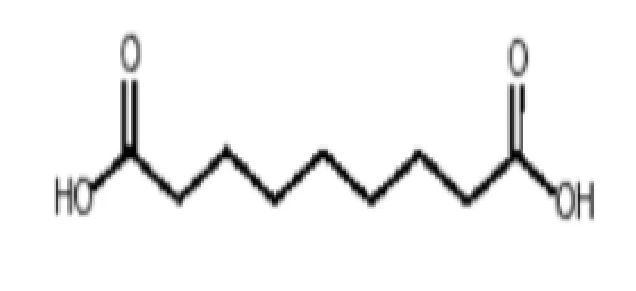
Physicochemical properties: Physical form: white, crystalline powder
Melting point: 105°C to 110°C
14. Clinical Trials
14.1. Clinical Trials by Indication
Treatment of papulopustular rosacea.
Table 3 – Summary of Patient Demographics for Clinical Trials in Rosacea
| Study # | Study design | Dosage, route of administration and duration | Study subjects (n) | Age (range) | Sex |
| 1 | double-blind, randomized, vehicle-controlled, parallel-group, multicentre | 0.5 g (approx. 2.5 cm of gel) applied twice daily to the entire face topical 12 weeks | Finacea: 164 Vehicle: 165 | 21-84 (48.0) 24-77 (49.2) | 40 M, 124 F 45 M, 120 F |
| 2 | double-blind, randomized, vehicle-controlled, parallel-group, multicentre | 0.5 g (approx. 2.5 cm of gel) applied twice daily to the entire face topical 12 weeks | Finacea: 169 Vehicle: 166 | 24-86 (47.6) 23-78 (47.0) | 48 M, 121 F 46 M, 120 F |
FINACEA was evaluated for the treatment of papulopustular rosacea in two pivotal efficacy studies comprising a total of 664 patients. Both studies were multicentre, randomized, double-blind, vehicle-controlled studies with identical protocols. Baseline eligibility criteria included moderate rosacea with 10 to 50 inflammatory papules and pustules, persistent erythema and telangiectasia. Subjects without papules and pustules, subjects with nodules, rhinophyma or ocular involvement, and subjects with a history of hypersensitivity to ingredients of the study drug were excluded. FINACEA or its vehicle were to be applied twice daily for 12 weeks; no other topical or systemic medication affecting the course of rosacea and/or evaluability was to be applied during the studies. Patients were instructed to avoid spicy foods, hot foods and drinks, and alcoholic beverages during the study, and only to use very mild soaps or soapless cleansing lotions on the face.
The primary efficacy endpoints were both 1) change from baseline in inflammatory lesion counts and 2) success defined as a score of clear or minimal with at least a 2 step reduction from baseline on the Investigator’s Global Assessment (IGA).
Clear: No papules and/or pustules; no or residual erythema; no or mild to moderate telangiectasia.
Minimal: Rare papules and/or pustules residual to mild erythema; mild to moderate telangiectasia.
Mild: Few papules and/or pustules; mild erythema: mild to moderate telangiectasia.
Mild to Moderate: Distinct number of papules and/or pustules; mild to moderate telangiectasia.
Moderate: Pronounced number of papules and/or pustules: moderate erythema; mild to moderate telangiectasia.
Moderate to Severe: Many papules and/or pustules: occasionally with large inflamed lesions; moderate erythema; moderate degree of telangiectasia.
Severe: Numerous papules and/or pustules; occasionally with confluent areas of inflamed lesions; moderate or severe erythema; moderate or severe telangiectasia.
Primary efficacy assessment was based on the intent-to treat (ITT) population with last observation carried forward (LOCF).
Both studies have demonstrated a statistically significant difference in favour of FINACEA Gel over its’ vehicle in reducing the number of inflammatory papules and pustules associated with rosacea and with success on the IGA in the ITT-LOCF population at the end of treatment.
Table 4 – Results of Key Endpoints in Studies 1 and 2
| Study | Primary Endpoints | FINACEA | Vehicle |
| Study 1 | N = 164 | N = 165 | |
Inflammatory papules and pustules (ITT population)1 | |||
Mean lesion count Baseline End of treatment1 | 17.5 6.8* | 17.6 10.5 | |
Mean percent reduction End of treatment1 | 58.1%+ | 40.2% | |
Investigator’s global assessment at the end of treatment1 | |||
| Clear, minimal or mild at end of treatment (% of patients) | 61%* | 40% | |
| Study 2 | N = 169 | N = 166 | |
Inflammatory papules and pustules (ITT population)1 | |||
Mean lesion count Baseline End of treatment1 | 17.8 8.7$ | 18.5 11.8 | |
Mean percent reduction End of treatment1 | 50.7%++ | 38.7% | |
| Investigator’s global assessment at the end of treatment1 | |||
| Treatment success (clear, minimal or mild) at end of treatment (% of patients) | 62%# | 48% | |
1 ITT population with last observation carried forward (LOCF);
* statistically significant differences between FINACEA and vehicle p < 0.0001
+ statistically significant differences between FINACEA and vehicle with p = 0.0001
$ statistically significant differences between FINACEA and vehicle p = 0.0144
++ statistically significant differences between FINACEA and vehicle with p = 0.0208
# statistically significant differences between FINACEA and vehicle with p = 0.0127
FINACEA had a significantly greater effect than its vehicle in reducing the number of inflammatory papules and pustules associated with rosacea. Significant treatment differences were discernible after four weeks; at the end of treatment (at last visit), FINACEA achieved mean reductions of 50.7% and 58.1% in the count of the inflammatory lesions.
Adverse events were monitored in patients who used FINACEA in the clinical studies. Treatment-emergent adverse events causally associated with FINACEA predominantly affected the skin. The most frequent cutaneous adverse events related to FINACEA and occurring in more than 10% of patients included burning, 21%, itching, 12%, and stinging, 12%. Events occurring in 1 to 10% of patients included dry skin, 9%, and rash, 4%. Other treatment-related cutaneous adverse events reported in less than 1% of patients during treatment with FINACEA included acne flare, contact dermatitis and facial edema. Single cases of hirsutism were reported with FINACEA and vehicle respectively; a relation to medication appears doubtful. The majority of adverse events were mild to moderate in severity. No phototoxicity or photoallergenicity was reported in the studies.
16. Non-Clinical Toxicology
General toxicology
Following single oral doses of azelaic acid administered as a microcrystalline suspension, the minimum lethal doses (MLD) were 3750 mg/kg (male mice) and 5000 mg/kg (female mice and male rats). After intraperitoneal administration, the minimum lethal doses were 400 mg/kg (male rats) and 500 mg/kg (male and female mice). No male rats died after intraperitoneal administration of up to 1000 mg/kg of sodium azelainate. The main clinical signs were apathy, disturbances in gait, prone position (conscious), eyelid closure, distended abdomen (mice, intraperitoneal), ruffled fur (mice and rats, intraperitoneal), accelerated respiration (rats, oral), unconsciousness and tremor (rats, intraperitoneal). Death occurred within 30 minutes to 7 days after intraperitoneal administration and 1.5 to 3 days after oral administration.
In dogs, oral doses of 250 mg/kg and higher of azelaic acid, given as capsules, resulted in emesis. The stomach and small intestine were identified as target organs following intraperitoneal administration of high doses of azelaic acid to mice and rats.
No direct compound-related signs of toxicity were observed after repeated oral administration of a microcrystalline suspension of azelaic acid to rats (at a dose level of 1500 mg/kg/day for four weeks or dose levels of 100 and 1000 mg/kg/day for six months) and to monkeys (at a dose level of 250 mg/kg/day for four weeks). In the four-week rat study, the deaths of 15 of 20 rats given 5000 mg/kg (reduced to 3000 mg/kg from Day 3 onwards) were attributed to the amount of substance administered (as evidenced by over-distension of the stomach, obstructive atelectasis of the lungs and/or aspiration pneumonia).
Azelaic acid was not a contact sensitizer in a maximization test conducted in guinea pigs.
The slight irritation observed in dogs was consistent with the results of a study in which the dermal tolerance of 28 daily applications of 250 mg azelaic acid 20% cream to the intact and scarified skin of albino rabbits (5 hrs/day, without occlusion), was compared with the dermal tolerance of 28 daily applications of similar amounts of tretinoin and benzoyl peroxide. Slight incompatibility reactions were observed histologically for the azelaic acid 20% cream and for benzoyl peroxide, while more pronounced incompatibility reactions were observed after repeated application of tretinoin. Similarly, single or repeated applications of azelaic acid 15% gel or the placebo gel formulation to the intact skin of albino rabbits produced slight incompatibility reactions.
Primary, ocular tolerance studies in rabbits revealed moderate to severe ocular irritation with a preservative-free formulation of azelaic acid 20% cream. This irritation was judged to be mainly due to azelaic acid itself because the vehicle alone caused only slight irritation. Administration of a single dose of azelaic acid 20% cream to the monkey eye led to pain reactions immediately after dosing that disappeared after rinsing with water.
Genotoxicity
Azelaic acid was not a gene mutagen in bacterial cells or in somatic mammalian cells in vitro, in the presence or absence of an extrinsic metabolizing system. Azelaic acid was not clastogenic in human lymphocytes in vitro, in the presence and absence of an extrinsic metabolizing system and was not a mutagen in vivo in the dominant lethal assay or micronucleus assay in mice.
Carcinogenicity
Systemic long-term animal studies have not been performed to evaluate the carcinogenic potential of azelaic acid. In a 26-week dermal carcinogenicity study using transgenic (Tg.AC) mice, FINACEA Gel and the gel vehicle, when applied once or twice daily, did not increase the number of female Tg.AC animals with papillomas at the treatment site. No statistically significant increase in the number of animals with papillomas at the treatment site was observed in male Tg.AC animals after once daily application. After twice daily application, FINACEA Gel and the gel vehicle induced a statistically significant increase in the number of male animals with papillomas at the treatment site when compared to untreated males. This suggests that the positive effect may be associated with the vehicle application. The clinical relevance of the findings in animals to humans is not clear.
Reproductive and developmental toxicology
Daily intragastric administration of microcrystalline suspensions of azelaic acid at dose levels up to 2500 mg/kg/day did not affect fertility or reproductive performance in male or female rats or in their untreated offspring. No teratogenicity was observed after oral administration of microcrystalline suspensions of azelaic acid at doses ranging from 50 to 2500 mg/kg/day in inseminated rats, or from 50 to 500 mg/kg/day in pregnant rabbits and pregnant monkeys. Embryolethal effects were noted only after administration of high dosages (2500 mg/kg/day in rats, 150 mg/kg/day in rabbits and 500 mg/kg/day in monkeys). Postnatal development was slightly affected in the offspring of rats orally administered microcrystalline suspensions of azelaic acid at dose levels (500 and 2500 mg/kg/day) which were maternally toxic (increased mortality and decreased body weight). In addition, the viability index was slightly reduced in the F1-generation animals. Development of genitalia, including anogenital distance, was not altered in offspring of rat dams given 2500 mg/kg/day during pregnancy and lactation or during late gestation and lactation.
Embryofetal developmental studies with oral administration of azelaic acid to rats, rabbits, and cynomolgus monkeys during the period of organogenesis revealed embryotoxicity at doses where some maternal toxicity was noted. No teratogenic effects were observed. The embryofetal NOAEL was 32 times the MRHD based on BSA in rats, 6.5 times the MRHD based on BSA in rabbits and 19 times the MRHD based on BSA in monkeys.
In a peri- and post-natal developmental study in rats where azelaic acid was administered orally from gestational day 15 to through day 21 postpartum slight disturbances in the post-natal development of fetuses were noted at oral doses that generated some maternal toxicity. The NOAEL was 3 times the MRHD based on BSA. No effects on sexual maturation of the fetuses were noted in this study.
Special Toxicology (Special Tolerance Studies in Human)
FINACEA was found to have some irritation potential in tests employing exaggerated use (repetitive application under occlusion and/or to damaged skin) in healthy volunteers.
With similar exaggerated use in sensitization protocols, no evidence of a sensitization potential was found in 253 subjects with healthy skin.
No evidence of photosensitization or phototoxicity involving 33 and 12 healthy subjects, respectively, was found. Furthermore, FINACEA does not appear to absorb UV light.
The nature of adverse events and the absence of severe or serious reactions were similar in the different tests. No systemic adverse events were regarded as related to the drug. All drug-related adverse events were cutaneous and mild or moderate in severity. The frequency of related cutaneous adverse events differed in the special tolerance studies in humans, most probably due to the different application modes (prolonged, repeated occlusive application versus application to damaged skin). Moreover, the frequency and severity reflect the exaggerated use and not the clinically intended use of twice daily application.