


Product Monograph - Winlevi
Recent Major Label Changes
None at the time of the most recent authorization.
Table of Contents
Certain sections or subsections that are not applicable at the time of the preparation of the most recent authorized product monograph are not listed.
Recent Major Label Changes ................................................................................................... 2
Table of Contents ................................................................................................................... 2
Part 1: Healthcare Professional Information ........................................................................... 4
- 1.
Indications ............................................................................................................................ 4
1.1. Pediatrics .................................................................................................................. 4
1.2. Geriatrics .................................................................................................................. 4
- 2. Contraindications .................................................................................................................. 4
- 4.
Dosage and Administration ................................................................................................... 4
4.1. Dosing Considerations .............................................................................................. 4
4.2. Recommended Dose and Dosage Adjustment .......................................................... 4
4.4. Administration .......................................................................................................... 4
4.5. Missed Dose ............................................................................................................. 5
- 5. Overdose .............................................................................................................................. 5
- 6. Dosage Forms, Strengths, and Composition ......................................................................... 5
- 7.
Warnings and Precautions .................................................................................................... 5
General ................................................................................................................................. 5
Endocrine and Metabolism ................................................................................................... 5
Reproductive Health ............................................................................................................. 6
Skin ....................................................................................................................................... 6
7.1. Special Populations ................................................................................................... 6
7.1.1. Pregnancy ........................................................................................................ 6
7.1.2. Breastfeeding .................................................................................................. 6
7.1.3. Pediatrics ......................................................................................................... 6
7.1.4. Geriatrics ......................................................................................................... 7
- 8.
Adverse Reactions ................................................................................................................. 7
8.1. Adverse Reaction Overview ...................................................................................... 7
8.2. Clinical Trial Adverse Reactions ................................................................................. 7
8.2.1. Clinical Trial Adverse Reactions – Pediatrics .................................................... 8
8.3. Less Common Clinical Trial Adverse Reactions .......................................................... 8
8.3.1. Less Common Clinical Trial Adverse Reactions – Pediatrics ............................. 8
8.4. Abnormal Laboratory Findings: Hematologic, Clinical Chemistry, and Other Quantitative Data.................................................................................................................. 9
In maximum-use Phase 2 studies, the following abnormal laboratory findings were observed: .............................................................................................................................. 9
8.5. Post-Market Adverse Reactions ................................................................................ 9
- 9.
Drug Interactions .................................................................................................................. 9
9.2. Drug Interactions Overview ...................................................................................... 9
9.4. Drug-Drug Interactions ............................................................................................. 9
9.5. Drug-Food Interactions ............................................................................................. 9
9.6. Drug-Herb Interactions ............................................................................................. 9
9.7. Drug-Laboratory Test Interactions ............................................................................ 9
- 10.
Clinical Pharmacology ........................................................................................................... 9
10.1. Mechanism of Action ................................................................................................ 9
10.2. Pharmacodynamics ................................................................................................ 10
10.3. Pharmacokinetics ................................................................................................... 10
- 11. Storage, Stability, and Disposal ........................................................................................... 11
- 12. Special Handling Instructions .............................................................................................. 11
Part 2: Scientific Information ................................................................................................ 12
- 13. Pharmaceutical Information ............................................................................................... 12
- 14.
Clinical Trials ....................................................................................................................... 13
14.1. Clinical Trials by Indication ...................................................................................... 13
Acne vulgaris ....................................................................................................................... 13
- 15. Microbiology ....................................................................................................................... 15
- 16. Non-Clinical Toxicology ....................................................................................................... 15
Patient Medication Information ........................................................................................... 18
Part 1: Healthcare Professional Information
1. Indications
WINLEVI (clascoterone) is indicated for:
- the topical treatment of acne vulgaris in patients 12 years of age and older.
1.1. Pediatrics
Pediatrics (12 to <18 years): Based on the data submitted and reviewed by Health Canada, the safety and efficacy of WINLEVI in pediatric patients aged 12 to <18 years have been established. Therefore, Health Canada has authorized an indication for pediatric use in this age group (see 7.1.3 Pediatrics).
Pediatrics (<12 years): The safety and efficacy of WINLEVI have not been established in pediatric patients under 12 years of age (see 7.1.3 Pediatrics).
1.2. Geriatrics
Geriatrics (≥ 65 years): The clinical studies did not include participants ≥ 65 years of age. Thus, the clinical studies did not determine whether patients ≥ 65 years of age respond differently from younger patients.
2. Contraindications
- WINLEVI is contraindicated in patients who are hypersensitive to this drug or to any ingredient in the formulation, including any non-medicinal ingredient, or component of the container. For a complete listing, see 6 Dosage Forms, Strengths, Composition and Packaging.
4. Dosage and Administration
4.1. Dosing Considerations
- WINLEVI is for external use only. WINLEVI is not for ophthalmic, oral or vaginal use.
- This medication should not be applied to cuts, abrasions, eczematous, or sunburned skin.
4.2. Recommended Dose and Dosage Adjustment
- The recommended dose per application is up to approximately 1 gram, which corresponds to 2 fingertip units. The recommended dosing regimen for WINLEVI is to apply a thin uniform layer of cream twice per day, in the morning and the evening, over the area prone to acne, as instructed by a health professional. Do not spot treat for optimal efficacy.
4.4. Administration
Cleanse the entire area to be treated and dry gently. After the skin is dry, apply a thin uniform layer of WINLEVI twice per day, in the morning and in the evening, over the area prone to acne, as instructed by a health professional.
The recommended dose per application is up to approximately 1 gram, which corresponds to 2 fingertip units. Each fingertip unit (approximately 0.5 g) is the amount of cream squeezed along the index finger from the tip to the first joint. When spread on the skin, the cream is expected to cover an area approximately the size of two adult palms or one adult face.
Hands should be washed before and after applying WINLEVI cream.
Avoid accidental transfer of WINLEVI into eyes, lips, mouth, corners of the nose, or other mucous membranes. If contact with mucous membranes occurs, rinse immediately and thoroughly with water.
4.5. Missed Dose
If patients forget to take a dose of WINLEVI, they should be instructed to apply the next dose at the usual time. Patients should be instructed to not apply a double dose to make up for forgotten doses.
5. Overdose
For the most recent information in the management of a suspected drug overdose, contact your regional poison control centre or Health Canada’s toll-free number, 1-844 POISON-X (1-844-764-7669).
- 6. Dosage Forms, Strengths, and Composition
Table 1 – Dosage Forms, Strengths, and Composition
Description
Each gram of WINLEVI contains 10 mg of clascoterone in a white to almost white cream.
WINLEVI is supplied in 30 gram and 60 gram aluminum tubes. Health professional samples are supplied in 2 gram and 10 gram aluminum tubes.
7. Warnings and Precautions
General
WINLEVI is for external use only. Not for ophthalmic, oral or vaginal use.
WINLEVI should not be applied to cuts, abrasions, eczematous or sunburned skin.
Avoid accidental transfer of WINLEVI into eyes, lips, mouth, corners of the nose, or other mucous membranes. If contact with mucous membranes occurs, rinse immediately and thoroughly with water.
Endocrine and Metabolism
Hypothalamic-pituitary-adrenal (HPA) axis suppression was observed and may occur during or after treatment with clascoterone. All Phase 2 maximum use clinical-trial subjects with HPA-axis suppression returned to normal HPA axis function 4 weeks after stopping treatment (see 7.1.3 Pediatrics; 10.2 Pharmacodynamics). Conditions which augment systemic effects include use over large surface areas,
| Route of Administration | Dosage Form/ Strength/Composition | Non-Medicinal Ingredients |
| Topical | Cream / 1% w/w | Cetyl alcohol, citric acid monohydrate, edetate disodium, DL-alpha tocopherol (vitamin E), mineral oil, mono- and di-glycerides, polysorbate 80, propylene glycol, and water |
prolonged use, concomitant use of corticosteroid-containing products, and the use of occlusive dressings. Pediatric patients may be more susceptible.
If HPA axis suppression is suspected, consider withdrawing the drug.
Reproductive Health
See 16 Non-Clinical Toxicology, Reproductive and developmental toxicology.
Skin
WINLEVI may induce local irritation (edema, erythema/redness, pruritus, scaling/dryness, skin atrophy, stinging/burning, striae rubrea, telangiectasia). Concomitant use with other potentially irritating topical products (medicated or abrasive soaps and cleansers, soaps and cosmetics that have a strong drying effect and products with high concentrations of alcohol, astringents, spices or lime) should be limited.
7.1. Special Populations
7.1.1. Pregnancy
There are no available data on the use of WINLEVI in pregnant women to evaluate for a drug-associated risk of major birth defects, miscarriage, or adverse maternal or fetal outcomes. In animal reproduction studies, subcutaneous administration of clascoterone to pregnant rats and rabbits during organogenesis at doses 8 or 39 times the MRHD, respectively, increased malformations in rats and post-implantation loss and resorptions in rabbits (see 16 NON-CLINICAL TOXICOLOGY, Reproductive and developmental toxicology).
7.1.2. Breastfeeding
No studies were conducted to determine the presence of clascoterone or its metabolite in human or animal milk, the effects on the breastfed infant or the effects on milk production. It is unknown if the drug is excreted in human milk. Precaution should be exercised because many drugs are excreted in human milk. The developmental and health benefits of breastfeeding should be considered along with the mother's clinical benefit from clascoterone and any potential adverse effects on the breastfed child from clascoterone.
7.1.3. Pediatrics
Pediatric patients may be more susceptible to systemic toxicity than adults when treated with WINLEVI.
Pediatrics (12 to <18 years): The safety and efficacy of WINLEVI for the topical treatment of acne vulgaris have been established in pediatric patients, aged 12 to <18 years (see 14.1 Clinical Trials by Indication).
The safety and efficacy of WINLEVI have not been established in pediatric patients under 12 years of age.
In a Phase 2 maximum use clinical study with WINLEVI administered at 4 to 6 times above the recommended daily dose for up to 2 weeks (and twice the maximal dose in the controlled trials on the face), biochemical HPA axis suppression was observed in 2/22 (9%) adolescent patients aged 12 to <18 years. The subjects returned to normal HPA axis response at follow-up 4 weeks after stopping the treatment (see 10.2 Pharmacodynamics).
Pediatrics (<12 years):
WINLEVI is not authorized in pediatric patients under 12 years of age.
Pediatric patients under 12 years of age may be more susceptible to HPA axis suppression and hyperkalemia (see 10.2 Pharmacodynamics).
7.1.4. Geriatrics
Clinical studies of WINLEVI did not include patients aged 65 years of age and over to determine whether they respond differently from younger patients.
8. Adverse Reactions
8.1. Adverse Reaction Overview
In two identical multicenter, randomized, double-blind, vehicle-controlled trials, 1421 patients 12 years and older with facial acne vulgaris applied WINLEVI or vehicle (placebo cream) twice daily to the entire face for 12 weeks.
The most frequently reported treatment-emergent adverse events (referred to as local skin reactions (LSRs)) that occurred in ≥ 10% of WINLEVI-treated patients versus vehicle were erythema (12.2% vs 15.4%) and scaling/dryness (10.5% vs 10.4%). Most of the treatment-emergent LSRs were trace or mild in severity.
In maximum-use Phase 2 studies, less common adverse reactions were HPA-axis suppression and hyperkalemia (see 10.2 Pharmacodynamics).
8.2. Clinical Trial Adverse Reactions
Clinical trials are conducted under very specific conditions. Therefore, the frequencies of adverse reactions observed in the clinical trials may not reflect frequencies observed in clinical practice and should not be compared to frequencies reported in clinical trials of another drug.
There were no adverse events reported as adverse drug reactions in > 1% of patients.
Local skin reactions (edema, erythema/redness, pruritus, scaling/dryness, skin atrophy, stinging/burning, striae rubrea, telangiectasia) were observed during the 12-week treatment and occurred in a similar percentage of patients treated with vehicle. Local skin reactions reported by ≥ 1% of patients treated with WINLEVI are shown in the following table.
Table 2 – Incidence of New or Worsening Treatment-Emergent Adverse Events (referenced as Local Skin Reactions)* Reported by ≥ 1% of Patients Treated with WINLEVI Cream After Day 1 in 12-Week Controlled Phase 3 Clinical Trialsa – Aged 12 years and older
| Adverse Event | WINLEVI n = 674b (%) | Vehicle n = 656b (%) |
| Erythema/redness | 82 (12.2) | 101 (15.4) |
| Scaling/dryness | 71 (10.5) | 68 (10.4) |
| Pruritus | 52 (7.7) | 54 (8.2) |
| Stinging/burning | 28 (4.2) | 28 (4.3) |
| Edema | 24 (3.6) | 23 (3.5) |
| Striae rubrae | 17 (2.5) | 10 (1.5) |
| Skin atrophy | 11 (1.6) | 17 (2.6) |
| Telangiectasia | 8 (1.2) | 12 (1.8) |
* Local Skin Reactions (LSRs) are defined in the clinical trials by the adverse events identified in the above table. Causality assessment was not completed for LSRs.
a Pooled Data of Trial 1 and Trial 2; The median age of patients who experienced new or worsening LSRs is 18 years of age (age range: 12 to 50 years of age).
b The denominators for calculating the percentages were the 674 of 709 patients treated with WINLEVI and 656 of 712 patients treated with vehicle in these trials who had local skin reaction results reported after Day 1.
8.2.1. Clinical Trial Adverse Reactions – Pediatrics
In the pooled Phase 3 studies, in patients aged 12 to <18 years of age, there were no adverse reactions reported in > 1% of patients. The TEAEs reported in ≥ 1% of patients aged 12 to <18 years in the pooled Phase 3 studies, and more often with WINLEVI, were headaches (1.3% WINLEVI, 0.3% vehicle).
8.3. Less Common Clinical Trial Adverse Reactions
- the long-term safety study. The events are categorized by body system.
- polycystic ovaries
- : hair colour changes
8.3.1. Less Common Clinical Trial Adverse Reactions – Pediatrics
In clinical trials, the types of adverse reactions seen with WINLEVI were comparable in adult and pediatric patients.
8.4. Abnormal Laboratory Findings: Hematologic, Clinical Chemistry, and Other Quantitative Data
Clinical Trial Findings
Clinical laboratory evaluations were not performed in the Phase 3 studies.
In maximum-use Phase 2 studies, the following abnormal laboratory findings were observed:
Endocrine and Metabolism: hypothalamic-pituitary-adrenal (HPA) axis suppression, hyperkalemia (observed in subjects aged 9 to <12 years)
8.5. Post-Market Adverse Reactions
Not applicable.
9. Drug Interactions
9.2. Drug Interactions Overview
No clinical studies evaluating the drug interaction potential of WINLEVI have been conducted.
In Vitro Studies
Cytochrome P450 (CYP) Enzymes: Clascoterone inhibited CYP 1A2, 2B6, 2C8, 2C9, 2C19, 2D6, 2E1, and 3A4 with an IC50 value of >40 μM. Clascoterone up to 50 μM did not induce CYP 1A2, 2B6, or 3A4. These findings suggest that WINLEVI has no clinically meaningful effect on the PK of drugs metabolized by CYP 1A2, 2B6, 2C8, 2C9, 2C19, 2D6, 2E1, and 3A4.
9.4. Drug-Drug Interactions
Interactions with other drugs, including other topical medications, have not been established. Caution should be exercised in using WINLEVI along other drugs known to suppress the HPA axis (e.g., topical or inhaled corticosteroids).
9.5. Drug-Food Interactions
Interactions with food have not been established.
9.6. Drug-Herb Interactions
Interactions with herbal products have not been established.
9.7. Drug-Laboratory Test Interactions
Interactions with laboratory tests have not been established.
10. Clinical Pharmacology
10.1. Mechanism of Action
Clascoterone is an androgen receptor inhibitor. Androgen receptor inhibitors may reduce sebaceous gland activity. The mechanism of action of WINLEVI cream for the topical treatment of acne vulgaris is unknown.
10.2. Pharmacodynamics
Hypothalamic-Pituitary-Adrenal (HPA) Axis Suppression
HPA axis suppression was evaluated in adult (n=20), adolescent (n=22), and pediatric (n=27) patients with acne vulgaris following twice daily application of WINLEVI for 2 weeks in two maximum use pharmacokinetic studies. HPA axis suppression indicated by 30-minute post-stimulation serum cortisol level of ≤18 mcg/dL was observed in 1/20 (5%) of adult subjects, 2/22 (9%) of adolescent and 2/23 (8.7%) of pediatric patients (< 12 years of age) at Day 14. All patients returned to normal HPA axis function at follow-up 4 weeks after the end of treatment. No subject experienced clinical signs and symptoms of adrenal suppression or associated complications.
Potassium
Overall, shifts from normal to elevated potassium levels were observed in 3.6% (17/468) of clascoterone-treated patients and 3.9% (4/103) of vehicle-treated patients (age range: 12 to 64). In a Phase 2 maximum use clinical study with WINLEVI administered above the recommended daily dose for up to 2 weeks, an increase in plasma potassium levels (hyperkalemia) was observed in 9/27 (33%) subjects aged 9 to <12.
Cardiac Electrophysiology
At approximately 2-times the systemic exposure observed with the maximum dose, WINLEVI does not prolong the QT interval to any clinically relevant extent.
10.3. Pharmacokinetics
Absorption
Following topical treatment of WINLEVI for 2 weeks with a mean dose of approximately 6 grams applied twice daily to adult patients with moderate to severe acne vulgaris (n=20), systemic concentrations of clascoterone were at steady state by Day 5. On Day 14, the mean ± SD maximum plasma concentration (Cmax) was 4.5 ± 2.9 ng/mL, the mean ± SD area under the plasma concentration-time over the dosing interval (AUCꞇ) was 37.1 ± 22.3 h*ng/mL and the mean± SD average plasma concentration (Cavg) was 3.1 ± 1.9 ng/mL.
Distribution
Plasma protein binding of clascoterone is 84% to 89% and is independent of concentrations, in vitro.
Metabolism
Following topical treatment with WINLEVI, the plasma concentrations of cortexolone, a possible primary metabolite of clascoterone, were detectable and generally below or near the lower limit of quantitation (0.5 ng/mL) in patients ≥9 years of age with acne vulgaris.
The in vitro study indicated that incubation of 10 µmol/L clascoterone with human cryopreserved hepatocytes generated cortexolone as the possible primary metabolite and other unidentified metabolites, including conjugated metabolites.
Elimination
Excretion of clascoterone has not been fully characterized in humans.
Special populations and conditions
Pediatrics
In adolescent patients 12 to <18 years of age (n=22) after 2 weeks of twice daily treatment with mean dose of approximately 6 grams of WINLEVI per application (or mean dose of approximately 4 grams per application in younger, smaller subjects), steady-state concentrations of clascoterone were achieved by Day 5. Clascoterone systemic exposure in adolescents was similar to those observed in adults (see Absorption).
Geriatrics
No studies were conducted in patients ≥65 years of age (see 7.1.4 – Geriatrics).
- Storage, Stability, and Disposal
Prior to Dispensing: Store the product in a refrigerator between 2°C and 8°C. Do not freeze.
Dispensing Instructions for the Pharmacist: Direct the patient to store the product while in use at room temperature (20°C to 25°C). Do not freeze. Discard the unused product 6 months after the date of dispensing or after first opening, whichever is sooner.
Keep out of the reach and sight of children.
12. Special Handling Instructions
No special handling instructions are required for WINLEVI.
Part 2: Scientific Information
13. Pharmaceutical Information
Drug Substance
Non-proprietary name of the drug substance(s): Clascoterone
Chemical name: Cortexolone-17α propionate
Molecular formula and molecular mass: C24H34O5 ; 402.5 g/mol
Structural formula:
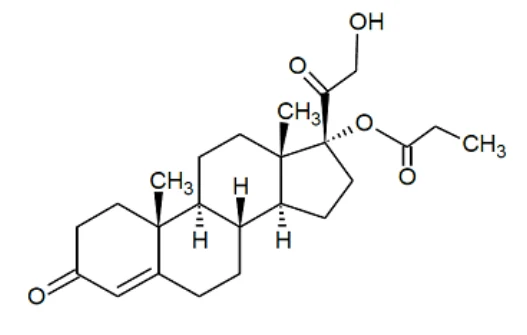
Physicochemical properties: Clascoterone is a white to almost white powder, practically insoluble in water.
14. Clinical Trials
14.1. Clinical Trials by Indication
Acne vulgaris
Table 3 - Summary of Patient Demographics for Phase 3 Clinical Trials in acne vulgaris
| Study # | Study design | Dosage, route of administration and duration | Study patients (n) | Mean age (Range) | Sex n (%) |
| CB-03-01/25 (Trial 1) | Phase 3, multicenter, randomized, double-blind, vehicle-controlled, parallel-group study | WINLEVI, 1% cream, Topical, twice daily, 12 weeks | Total: 353 Patients ≥12 years: 342 | Total: 20.0 years (10 – 58) Patients ≥12 years: 20.3 years (12 – 58) | Total: Female: 221 (62.6) / Male: 132 (37.4) Patients ≥12 years: Female: 211 (61.7) / Male: 131 (38.3) |
Vehicle Topical, twice daily, 12 weeks | Total: 355 Patients ≥12 years: 350 | Total: 19.9 years (9 – 50) Patients ≥12 years: 20.0 years (12 – 50) | Total: Female: 215 (60.6) / Male: 140 (39.4) Patients ≥12 years: Female: 210 (60.0) / Male: 140 (40.0) | ||
| CB-03-01/26 (Trial 2) | Phase 3, multicenter, randomized, double-blind, vehicle-controlled, parallel-group study | WINLEVI, 1% cream, Topical, twice daily, 12 weeks | Total: 369 Patients ≥12 years: 367 | Total: 19.3 years (10 – 50) Patients ≥12 years: 19.4 years (12 – 50) | Total: Female: 243 (65.9) / Male: 126 (34.1) Patients ≥12 years: Female: 242 (65.9) / Male: 125 (34.1) |
Vehicle Topical, twice daily, 12 weeks | Total: 363 Patients ≥12 years: 362 | Total: 19.0 years (11 – 42) Patients ≥12 years: 19.0 years (12 – 42) | Total: Female: 221 (60.9) / Male: 142 (39.1) Patients ≥12 years: Female: 220 (60.8) / Male: 142 (39.2) |
The safety and efficacy of WINLEVI applied twice daily for 12 weeks for the treatment of acne vulgaris were assessed in two identically designed, multicenter, randomized, double-blind, vehicle-controlled, parallel-group Phase 3 clinical trials (Trial 1 and Trial 2) enrolling 1440 patients with facial acne vulgaris. The trials enrolled patients 9 years or older with Investigator’s Global Assessment (IGA) of moderate or severe facial acne vulgaris (score of 3 or 4), 30 to 75 inflammatory lesions (papules, pustules and nodules), and 30 to 100 non-inflammatory lesions (open and closed comedones). Patients with 2 facial nodules or nodulocystic acne were excluded. Concurrent acne treatment was not allowed.
A total of 1421 patients 12 years and older with facial acne vulgaris were enrolled. The treatment groups in each study were well-balanced with similar demographic and baseline characteristics in the intent-to-treat (ITT) population, both within and between Trial 1 and Trial 2. Of these subjects, 641 (45.1%) were 12 to <18 years of age, and 780 (54.9%) were 18 years of age or older. In addition, 62.1% of the patients were female, and 90.6% were Caucasian. At baseline, patients had a mean inflammatory lesion count of 42.4 and a mean non-inflammatory lesion count of 61.4. Approximately 83.3% of patients had an IGA score of 3 (“moderate”), and 16.7% had an IGA score of 4 (“severe”).
Efficacy was assessed at Week 12 by the co-primary efficacy endpoints which included the proportion of patients in each treatment group with at least a 2-point reduction in IGA compared to baseline and a final IGA score of 0 (clear) or 1 (almost clear); absolute change from baseline in non-inflammatory lesion count (NILC) and inflammatory lesion count (ILC). Secondary efficacy endpoints included absolute and percent change from baseline in total lesion count (TLC); percent change from baseline in non-inflammatory and inflammatory lesion count.
The IGA success rate and mean absolute reduction from baseline in acne lesion counts after 12 weeks of treatment for patients 12 years of age and older are presented in the Table 4 below.
Table 4 – Clinical Efficacy of WINLEVI Cream 1% in patients (aged 12 and older) with Acne Vulgaris at Week 12
| Co-Primary Endpoints | Trial 1 | Trial 2 | ||
WINLEVI N=342 | Vehicle N=350 | WINLEVI N=367 | Vehicle N=362 | |
| Proportion of patients with IGA Successa | ||||
| n (%) | 55 (16.1) | 24 (6.8) | 69 (18.8) | 17 (4.7) |
| Adjusted proportionsb | 18.8% | 8.7% | 20.9% | 6.6% |
Adjusted odds ratio Point estimate (95% Confidence limits), p-valueb | 2.42 (1.46, 4.01), p = 0.0007 | 3.77 (2.20, 6.45), p = 0.0001 | ||
| Absolute change from baseline in Non-inflammatory Lesion Count | ||||
| LS meansc | -20.4 | -13.0 | -19.5 | -10.8 |
Difference between treatments (95% Confidence limits), p-valuec | -7.3 (-11.1, -3.5), p = 0.0002 | -8.7 (-12.6, -4.7), p < 0.0001 | ||
| Absolute change from baseline in Inflammatory Lesion Count | ||||
| LS meansc | -19.3 | -15.4 | -20.1 | -12.6 |
Difference between treatments (95% Confidence limits), p-valuec | -3.9 (-6.5, -1.3), p = 0.0034 | -7.5 (-9.9, -5.2), p < 0.0001 | ||
a Investigator Global Assessment (IGA) success was defined as at least a 2-point reduction in IGA compared to baseline and an IGA score of 0 (clear) or 1 (almost clear).
b Adjusted proportion and p-value are based on a logistic regression model with treatment and analysis center as fixed effects
c LS = Least square; Least square mean and p-value are based on analysis of covariance with treatment and analysis center as fixed effects, and baseline value as a covariate
The results for the secondary endpoints were similar between the 2 studies. The results were statistically significant compared to vehicle in both studies (Table 5).
Table 5 - Results of Secondary Endpoints for Trial 1 and Trial 2 in Patients with acne vulgaris Aged 12 and older at Week 12 (ITT)
| Secondary Endpoints | Trial 1 | Trial 2 | ||
WINLEVI N=342 | Vehicle N=350 | WINLEVI N=367 | Vehicle N=362 | |
| Absolute change from baseline in Total Lesion Count | ||||
| LS meansa | -40.0 | -28.6 | -40.5 | -23.6 |
Difference between treatments (95% Confidence limits), p-valuea | -11.4 (-16.8, -6.0), p < 0.0001 | -16.9 (-22.4, -11.4), p < 0.0001 | ||
| Percent change from baseline Total Lesion Count | ||||
| LS meansa | -38.1 | -28.3 | -38.0 | -22.1 |
Difference between treatments (95% Confidence limits), p-valuea | -9.8 (-15.2, -4.4), p = 0.0004 | -15.9 (-21.2, -10.6), p < 0.0001 | ||
| Percent change from baseline in Non-inflammatory Lesion Count | ||||
| LS meansa | -32.6 | -21.8 | -29.6 | -15.7 |
Difference between treatments (95% Confidence limits), p-valuea | -10.8 (-17.6, -3.9), p = 0.0021 | -13.8 (-20.2, -7.5), p < 0.0001 | ||
| Percent change from baseline in Inflammatory Lesion Count | ||||
| LS meansa | -44.6 | -36.3 | -47.1 | -29.7 |
Difference between treatments (95% Confidence limits), p-valuea | -8.3 (-14.4, -2.2), p = 0.0080 | -17.5 (-23.1, -11.8), p < 0.0001 | ||
a LS = Least square; Least square mean and p-value are based on analysis of covariance with treatment and analysis center as fixed effects, and baseline value as a covariate
Given the limitations of subgroup analyses, the results of such analyses should be interpreted with caution. When stratified by Fitzpatrick skin type (I, II, III versus IV, V, VI), ethnicity, and race, there is a trend of less favourable effect estimates in racialized subgroups. This could be due to between-group differences in acne assessments, treatment effects, and/or chance.
15. Microbiology
No microbiological information is required for this drug product.
16. Non-Clinical Toxicology
General toxicology
In acute intravenous (IV) and subcutaneous (SC) toxicity studies in mice, a single IV administration produced a median lethal dose (LD50) of > 100 mg/kg and a single SC administration produced an LD50 of > 1000 mg/kg. In female Wistar rats, animals dosed 30 mg/kg (IV) showed slight or moderate sedation and deep respiration immediately after dosing which was transient and no longer present after 0.5 hour. Three out of seven rats dosed with 100 mg/kg (IV) died shortly after dosing. Clinical signs noted were ruffled fur, poor coordination, ventral recumbency, tachypnea and convulsions within first 30 minutes post dose and resolved by Day 2. LD50 was determined to be > 100 mg/kg. In female Wistar rats dosed 1000 mg/kg (SC), one animal exhibited scabs and/or wounds and one animal developed erythema at the injection site. LD50 was determined to be > 1000 mg/kg. Transient weight loss was observed in all these studies, however, animals recovered by Day 15.
In estrogen-pretreated immature female rabbits, clascoterone administered subcutaneously at 1 mg/kg showed progestational activity characterized by endometrial stimulation and increased uterine weight.
In a 28-day dermal toxicity study in rabbits, hematological and clinical chemistry changes consistent with glucocorticoid effects were seen in animals treated with 50 mg/kg/day, including decreased lymphocytes, increased plasma phospholipids, increased albumin, and increased enzyme levels (AST, ALT, ALP), along with increased liver weight and decreased adrenal weight. Leucopenia was also observed in rats treated with 25 mg/kg/day in a 13-week subcutaneous toxicity study.
In a 26-week repeat-dose toxicity study in Wistar rats, no test article-related changes that could be considered as adverse occurred following repeated SC injection of clascoterone at any of the dose levels investigated (0.1, 0.5 and 2.5 mg/kg/day). The high dose of 2.5 mg/kg/day (associated with Day 182 AUC values of 298.61 and 173.19 ng·hr/mL in males and females, respectively) was considered the no-observed-adverse-effect-level (NOAEL) in this study.
In a 9-month dermal toxicity study in Göttingen minipigs, mild transient erythema was observed in some animals from both sexes at all dose levels (1%, 2.5% or 5%) of clascoterone, with a few isolated instances of moderate to severe erythema. The mean adrenal gland weight was lower in animals treated with 2.5% and 5% clascoterone cream, which correlated with adrenal cortical atrophy (in the zona reticularis and zona fasciculata); this was not fully reversible in males after the recovery period. Minimal to mild atrophy of the skin of animals treated with all dose levels of clascoterone was observed. The testes of one male in the 5% treatment group had minimal interstitial cell hypertrophy. Hair follicles in the treated skin were also in the resting stage more often compared to vehicle. These findings were not considered to be adverse, therefore the NOAEL was determined to be clascoterone 5% cream, the highest concentration tested (associated with Day 272 mean AUC0-24 values of 401 and 269 ng·hr/mL in males and females, respectively).
Genotoxicity
Clascoterone was not clastogenic in the in vitro human lymphocyte chromosomal aberration assay. In the Ames reverse mutation assay, a negative response was seen in all strains tested except TA98, in which a slight increase in revertants was noted at 333 µg/plate in the pre-incubation experiment. This response was considered equivocal. In rats, clascoterone administered via subcutaneous injection did not induce micronuclei in the bone marrow at 500 or 1000 mg/kg but a slight increase in micronuclei occurred in 2 of 5 rats at 2000 mg/kg. The response was considered equivocal. Overall, the weight of evidence indicates that clascoterone does not represent a genotoxic risk.
Carcinogenicity
Clascoterone cream (0.1%, 1%, or 5%) was not carcinogenic after daily topical administration in a 2-year carcinogenicity study in rats. A slight increase in benign sebaceous cell adenoma at the topical application site was observed in males treated with 5% clascoterone cream. An increased incidence of the non-neoplastic finding of atrophy of the skin and subcutis at the application site was reported in males and females treated with 1% and 5% clascoterone cream.
Reproductive and developmental toxicology
In a fertility and early embryonic development study in rats, clascoterone was administered subcutaneously at doses of 0.5, 2.5, or 12.5 mg/kg/day from 2 – 4 weeks before mating through mating. Clascoterone increased pre-implantation loss at 12.5 mg/kg/day (163 times the MRHD based on AUC comparison). Clascoterone decreased testicular sperm counts and increased caudal epididymis sperm counts in males at 12.5 mg/kg/day (163 times the MRHD based on AUC comparison).
Clascoterone had no effects on mating or fertility in rats at doses up to 12.5 mg/kg/day (163 times the MRHD based on AUC comparison). No effects were noted on development at doses up to 2.5 mg/kg/day (33 times the MRHD based on AUC comparison).
In an embryofetal development study, clascoterone was administered subcutaneously to pregnant rats at doses of 1, 5, or 25 mg/kg/day during the period of organogenesis. No clascoterone-related maternal toxicity or effects on uterine parameters were noted at doses up to 25 mg/kg/day (336 times the MRHD based on AUC comparison). Clascoterone-related malformations were noted at all dose levels, without a dose relationship. Omphalocele was noted in a single fetus (0.5% of fetuses examined) at each dose level. External and visceral malformations (severe dilation of the lateral and third cerebral ventricles; thin skin, small size, and protruding tongue) were noted in two additional fetuses (0.9% of fetuses examined) at 1 mg/kg/day (8 times the MRHD based on AUC comparison).
In an embryofetal development study, clascoterone was administered subcutaneously to pregnant rabbits at doses of 0.1, 0.4, or 1.5 mg/kg/day during the period of organogenesis. Post-implantation loss and resorptions were increased at 1.5 mg/kg/day (39 times the MRHD based on AUC comparison). No developmental toxicity was noted at doses up to 0.4 mg/kg/day (12 times the MRHD based on AUC comparison). No clascoterone-related maternal toxicity or fetal malformations were noted at doses up to 1.5 mg/kg/day (39 times the MRHD based on AUC comparison).
In a prenatal and postnatal development study, clascoterone was administered subcutaneously to pregnant rats at doses of 0.5, 2.5, and 12.5 mg/kg/day beginning on Gestation Day 6 and continuing through Lactation Day 20. No significant maternal or developmental toxicity was observed at doses up to 12.5 mg/kg/day (163 times the MRHD based on AUC comparison).