


Product Monograph - Firmagon
SUMMARY PRODUCT INFORMATION
| Route of Administration | Dosage Form / Strength | Clinically Relevant Nonmedicinal Ingredients |
Subcutaneous Injection | Powder for injection: 120 mg/vial Powder for injection: 80 mg/vial | Mannitol For a complete listing see Dosage Forms, Composition and Packaging section. |
INDICATIONS AND CLINICAL USE
FIRMAGON® (degarelix) is a gonadotropin-releasing hormone (GnRH) receptor antagonist (blocker) indicated for testosterone suppression in patients with advanced hormone-dependent prostate cancer in whom androgen deprivation is warranted.
Approval of FIRMAGON for prostate cancer is based on testosterone suppression to castrate levels. Evidence of palliation or prolongation of survival has not been established for FIRMAGON in prostate cancer.
Geriatrics (>65 years of age)
The patient population tested in the clinical program was typical of the intended target population of patients with prostate cancer. The mean age was 74 years (range 47 to 98 years), with 82% age 65 and over and 42% age 75 and over.
Pediatrics (<18 years of age)
FIRMAGON is not indicated in pediatric patients.
Women (>18 years of age)
FIRMAGON is not indicated for use in women.
CONTRAINDICATIONS
Hypersensitivity to degarelix or to any of the excipients.
FIRMAGON is not indicated for use in women and is contraindicated in women who are or who may become pregnant.
WARNINGS AND PRECAUTIONS
General
Route of administration
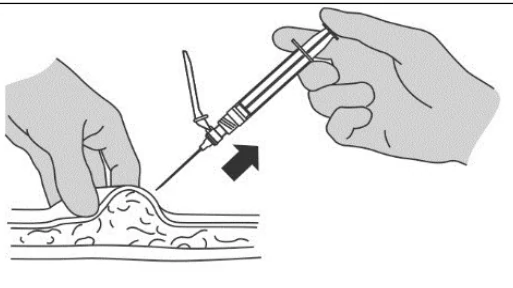
FIRMAGON is for subcutaneous administration only and is not to be administered intravenously. Gently pull back the plunger to check if blood is aspirated. If blood appears in the syringe, the reconstituted product can no longer be used. Discontinue the procedure and discard the syringe and the needle (reconstitute a new dose for the patient) (See Dosage and Administration Section).
FIRMAGON is administered as a subcutaneous injection in the abdominal region. As with other drugs administered by subcutaneous injection, the injection site should vary periodically. Injections should be given in areas of the abdomen that will not be exposed to pressure, e.g. not close to waistband or belt nor close to the ribs.
Serious Warnings and Precautions:
FIRMAGON® (degarelix) should be prescribed by a qualified health professional that is experienced in the use of hormonal therapy in prostate cancer. FIRMAGON should be administered under the supervision of a physician (see Dosage and Administration section).
FIRMAGON has not been studied in patients with severe hepatic or severe renal impairment (see Hepatic/Biliary/Pancreatic and Renal sections below).
The following are clinically significant adverse events:
- QT prolongation (see Cardiovascular section below and Drug-Drug Interactions section).
- Osteoporosis (see Musculoskeletal section below and Other Clinical Trial Adverse Drug Reactions section).
Cardiovascular
An increased risk of heart disease has been observed in men who have had orchiectomy or who have been treated with a GnRH agonist or antiandrogen monotherapy. In the randomized, active-controlled trial comparing degarelix to leuprolide, mild/moderate hypertension occurred in 26 (6%) patients in the pooled degarelix group and 8 (4%) patients in the leuprolide 7.5 mg group; myocardial infarction occurred in 5 (1%) patients in the pooled degarelix group and 4 (2%) patients in the leuprolide 7.5 mg group. Screening for and intervention to prevent/treat cardiovascular disease is warranted.
Effect on QT/QTc interval:
Long-term androgen deprivation therapy prolongs the QT interval. Physicians should consider whether the benefits of androgen deprivation therapy outweigh the potential risk in patients with congenital long QT syndrome, electrolyte abnormalities, or congestive heart failure and in patients taking Class IA (e.g. quinidine, procainamide), Class III (e.g. amiodarone, sotalol, dofetilide, ibutilide)), or Class IC (e.g. flecainide, propafenone) antiarrhythmic medications.
In the randomized, active-controlled trial comparing degarelix to leuprolide, periodic electrocardiograms were performed. Both therapies showed QT/QTc intervals exceeding 450 msec in approximately 20% of the patients. Seven patients, three (<1%) in the pooled degarelix group and four (2%) patients in the leuprolide 7.5 mg group, had a QTcF ≥500 msec. From baseline to end of study the median change for degarelix was 12.3 msec and for leuprolide was 16.7 msec.
A thorough QT study showed that there was no intrinsic effect of degarelix on QT/QTc interval, or on heart rate, PR interval, QRS duration, or T or U wave morphology in healthy men (N=76) receiving an i.v. infusion of degarelix over 60 min. The mean Cmax reached 222 ng/mL, approx. 3.7-fold the Cmax obtained during prostate cancer treatment.
Endocrine and Metabolism
Changes in glucose tolerance: A reduction in glucose tolerance has been observed in men who have had orchiectomy or who have been treated with a GnRH agonist. Development or aggravation of diabetes may occur; therefore diabetic patients may require more frequent monitoring of blood glucose when receiving androgen deprivation therapy. The effect of degarelix on insulin and glucose levels has not been studied.
Hematologic
Anemia is a known physiological consequence of testosterone suppression. In the randomized, active-controlled trial comparing degarelix to leuprolide, anemia occurred in fourteen (3%) patients in the pooled degarelix group and ten (5%) patients in the leuprolide 7.5 mg group.
Hepatic/Biliary/Pancreatic
Patients with known or suspected hepatic disorder have not been included in long-term clinical trials with degarelix. Mild, transient increases in ALT and AST have been seen, these were not accompanied by a rise in bilirubin or clinical symptoms. Monitoring of liver function in patients with known or suspected hepatic disorder is advised during treatment.
A single dose of 1 mg degarelix administered as an intravenous infusion over 1 hour has been studied in a pharmacokinetic study in 16 non-prostate cancer patients with mild to moderate hepatic impairment. Compared to non-prostate cancer patients with normal liver function, the exposure of degarelix decreased by 10% and 18% in patients with mild and moderate hepatic impairment, respectively. Therefore, dose adjustment is not necessary in patients with mild or moderate hepatic impairment. However, since hepatic impairment can lower degarelix exposure, it is recommended that in patients with hepatic impairment testosterone concentrations should be monitored on a monthly basis until medical castration is achieved. Once medical castration is achieved, an every-other-month testosterone monitoring approach could be considered.
Patients with severe hepatic dysfunction have not been studied and caution is therefore warranted in this group.
Immune
Hypersensitivity: Degarelix has not been studied in patients with a history of severe untreated asthma, anaphylactic reactions, severe urticaria or angioedema. No immediate onset of generalized hypersensitivity was seen in the development program.
Hypersensitiviy reactions including anaphylaxis, urticaria and angioedema have been reported in clinical trials and post-marketing with FIRMAGON.
Musculoskeletal
Changes in bone density: Decreased bone density has been reported in the medical literature in men who have had orchiectomy or who have been treated with a GnRH agonist. It can be anticipated that long periods of medical castration in men will have effects on bone density. Bone density has not been measured during treatment with degarelix.
Neurologic
No studies on the effects of degarelix on the ability to drive and use machines have been performed. However, fatigue and dizziness are common adverse reactions that might influence the ability to drive and use machines
Renal
No pharmacokinetic studies in renally impaired patients have been conducted. Approximately
20-30% of a given dose of degarelix is excreted unchanged in the urine. A population pharmacokinetics analysis of the data from the confirmatory Phase III study has demonstrated that the clearance of degarelix in patients with moderate CrCL <50 mL/min, renal impairment is reduced by 23%: therefore dose adjustment in patients with mild or moderate renal impairment is not recommended. Data on patients with severe renal impairment are scarce and caution is therefore warranted in this patient category.
Special Populations
Pregnant Women
FIRMAGON is contraindicated in women who are or who may become pregnant.
Fetal harm can occur when administered to pregnant women based on nonclinical reproductive studies (See Contraindications Section and Toxicology Section).
Nursing Women
FIRMAGON is not indicated for use in women and is contraindicated in women who are or who may become pregnant. It is not known whether this drug is excreted in human milk. Because many drugs are excreted in human milk and because of the potential for serious adverse reactions in nursing infants from degarelix, a decision should be made whether to discontinue nursing or discontinue the drug taking into account the importance of the drug to the mother.
Pediatrics (<18 years of age)
Safety and effectiveness in pediatric patients have not been established.
Geriatrics (>65 years of age)
Of the total number of subjects in clinical studies of FIRMAGON, 82% were age 65 and over, while 42% were age 75 and over. No overall differences in safety or effectiveness were observed between these subjects and younger subjects, but greater sensitivity of some older individuals cannot be ruled out.
Monitoring and Laboratory Tests
- Therapy with FIRMAGON results in suppression of the pituitary gonadal axis. Results of diagnostic tests of pituitary gonadotropic and gonadal functions conducted during and after FIRMAGON therapy may be affected.
- The therapeutic effect of FIRMAGON should be monitored by measuring serum concentrations of prostate-specific antigen (PSA) periodically. If PSA increases, serum concentrations of testosterone should be measured.
- A screening electrocardiogram (ECG) is recommended prior to initiation of treatment with FIRMAGON.
- Baseline measurements of serum potassium, calcium, and magnesium levels are recommended. Monitoring of serum electrolyte levels during treatment is recommended in those patients at risk for an electrolyte abnormality. Electrolyte abnormalities may prolong the QT interval.
ADVERSE REACTIONS
Adverse Drug Reaction Overview
In total, 1839 patients with prostate cancer have been exposed to degarelix, including 1567 exposed for at least 6 months and 1178 exposed for more than one year. Degarelix was studied primarily in an active-controlled trial (N = 610) and in uncontrolled trials, including long-term extension studies evaluating safety and tolerability.
The population was male patients with prostate cancer; the median age was 74 years and the age range was 47 to 98 years of age. Patients were given degarelix at monthly (N = 1259) or 3-monthly (N = 580) intervals. Most patients have received mean monthly doses of 60-120 mg, given as subcutaneous injections at 28-days intervals (N = 875). The most commonly observed adverse reactions during degarelix therapy included injection site reactions (e.g. pain, erythema, swelling, nodule or induration), hot flashes, increased weight, fatigue, dizziness, anemia and increases in serum levels of transaminases and gamma-glutamyltransferase (GGT). The majority of the adverse reactions were Grade 1 or 2, with Grade 3/4 adverse reaction incidences of 1% or less. Adverse reactions reported as uncommon were cardiac arrhythmia (incl. atrial fibrillation, QT-prolongation), hypertension, hyperglycemia/diabetes mellitus, hypersensitivity (including urticaria, rash and pruritus), osteoporosis/osteopenia and renal impairment.
The most commonly observed adverse reactions during degarelix therapy in the confirmatory Phase III trial (N= 409) were due to the expected physiological effects of testosterone suppression, including hot flashes and weight increase (reported in 25% and 7%, of patients receiving treatment for one year) and injection site reactions. Transient chills, fever or influenza like illness were reported to occur hours after dosing (in 3%, 2% and 1% of patients, respectively).
Clinical Trial Adverse Drug Reactions
Degarelix was studied in an active-controlled trial (N = 610) in which patients with prostate cancer were randomized to receive degarelix (subcutaneous) or leuprolide (intramuscular) monthly for 12 months. Adverse events reported in 5% of patients or more regardless of causality are shown in Table 1 below.
Table 1: Adverse Events Reported in ≥5% of Patients in an Active Controlled Study
| Adverse Events Reported in ≥5% of Patients in an Active Controlled Study | |||
|---|---|---|---|
Degarelix 240/160 mg (subcutaneous) | Degarelix 240/80 mg (subcutaneous) | Leuprolide 7.5 mg (intramuscular) | |
| N=202 | N=207 | N=201 | |
| % | % | % | |
Percentage of subjects with adverse events | 83 | 79 | 78 |
| Body as a whole | |||
| Injection site adverse events | 44 | 35 | <1 |
| Weight increase | 11 | 9 | 12 |
| Fatigue | 6 | 3 | 6 |
| Chills | 3 | 5 | 0 |
| Cardiovascular system | |||
| Hot flash | 26 | 26 | 21 |
| Hypertension | 7 | 6 | 4 |
| Musculoskeletal system | |||
| Back pain | 6 | 6 | 8 |
| Arthralgia | 3 | 5 | 9 |
| Urogenital system | |||
| Urinary tract infection | 1 | 5 | 9 |
| Digestive system | |||
Increases in Transaminases and GOT | 10 | 10 | 5 |
| Constipation | 3 | 5 | 5 |
| Nausea | 5 | 4 | 4 |
| Hypercholesterolemia | 6 | 3 | 2 |
The most frequently reported adverse reactions at the injection sites were pain (28%), erythema (17%), swelling (6%), induration (4%) and nodule (3%) with the FIRMAGON 240/80 mg dosing regimen. These adverse reactions were mostly transient, of mild to moderate intensity, occurred primarily with the starting dose and led to few discontinuations (<1%). Grade 3 injection site reactions occurred in 2% or less of patients receiving degarelix. Serious injection site reactions were reported such as injection site infection, injection site abscess or injection site necrosis that could require surgical treatment/drainage.
Hepatic laboratory abnormalities were primarily Grade 1 or 2 and were generally reversible. Grade 3 hepatic laboratory abnormalities occurred in less than 1% of patients. Changes in hepatic laboratory values were similar for degarelix and the comparator.
In 1-5% of patients in the active controlled trial the following adverse reactions, not already listed, were considered related to degarelix by the investigator:
Body as a whole: Asthenia, fever, night sweats; Digestive system: Nausea; Nervous system: Dizziness, headache, insomnia.
In uncontrolled trials the following adverse reactions, not already listed, were reported to be drug-related by the investigator in ≥1% of patients: erectile dysfunction, gynecomastia, hyperhidrosis, testicular atrophy, and diarrhea.
Abnormal Hematologic and Clinical Chemistry Findings
Changes in laboratory parameters:
Changes in laboratory values seen during one year of treatment were in the same range for degarelix and a GnRH-agonist (leuprolide) used as comparator. Markedly abnormal (>3*ULN) liver transaminase values (ALT, AST and GGT) were seen in 2-6% of patients with normal values prior to treatment, following treatment with both medicinal products. Marked decrease in hematological values, hematocrit (<0.37) and hemoglobin (<115 g/L) were seen in 40% and 13-15%, respectively, of patients with normal values prior to treatment, following treatment with both medicinal products. It is unknown to what extent this decrease in hematological values was caused by the underlying prostate cancer and to what extent it was a consequence of androgen deprivation therapy. Markedly abnormal values of potassium (>5.8 mmol/L), creatinine (>l77 mmol/L) and BUN (>10.7 mmol/L) in patients with normal values prior to treatment, were seen in 6%, 2% and 15% of degarelix treated patients and 3%, 2% and 14% of leuprolide treated patients, respectively.
Other Clinical Trial Adverse Drug Reactions
The following less common adverse reactions were reported in the active-controlled trial.
- Cardiovascular: atrio-ventricular first degree block, hypertension, vaso-vagal reaction
- Haematologic: anemia
- Immune: hypersensitivity, urticaria
- Musculoskeletal: musculoskeletal pain, muscular weakness
- Renal: renal impairment, pollakiuria, micturition urgency
Anti-Degarelix Antibody development:
Anti-degarelix antibody development has been observed in 12% of patients after treatment with FIRMAGON for one year. The prevalence of anti-degarelix antibody positive patients increased with time up to 46% between 2-3 years and tended to stabilise up to 5.5 years of FIRMAGON treatment. There is no indication that the efficacy or safety of FIRMAGON treatment is affected by antibody formation after up to 5.5 years of treatment.
Changes in Bone Density
Decreased bone density has been reported in the medical literature in men who have had orchiectomy or who have been treated with a GnRH agonist. It can be anticipated that long periods of medical castration in men will have effects on bone density. Bone density has not been measured during treatment with degarelix.
During the one year treatment in CS21, 0.7% of degarelix and 2.5% of leuprolide patients reported fractures and/or osteoporosis or osteopenia.
Table 2: Patient reported incidences of fractures, osteoporosis and osteopenia
| CS21 | ||||||
| Degarelix (N=409) | Leuprolide (N=201) | |||||
| Any fracture, osteoporosis or osteopenia | 3 (0.7 %) | 5 (2.48%) | ||||
| Osteoporosis | 1 (0.24%) | 1 (0.49%) | ||||
| Osteopenia | 0 (0.0%) | 0 (0.0%) | ||||
| Any fracture | 2 (0.49) | 4 (1.99%) | ||||
| Fracture of long tubular bone, spine or pelvis* | 2 (0.49%) | 4 (1.99%) | ||||
*excluding fractures of minor bones (i.e. face, rib, clavicular bone, patella, hands and feet).
In the pooled degarelix safety database, where the median duration of follow-up has been 1.2 years (mean 1.7 years), 3.3% of prostate cancer patients have reported bone mineral density/osteoporosis-related adverse events.
DRUG INTERACTIONS
Drug-Drug Interactions
No drug-drug interaction studies have been performed.
Since androgen deprivation treatment may prolong the QTc interval, the concomitant use of degarelix with medicinal products known to prolong the QTc interval or medicinal products able to induce torsades de pointes should be carefully evaluated. Such medicinal products include but are not limited to the examples that follow: Class IA (e.g. quinidine, disopyramide), Class III (e.g. amiodarone, sotalol, dofetilide, ibutilide), or Class IC (e.g. flecainide, propafenone) antiarrhythmic medicinal products, antipsychotics (e.g. chlorpromazine), antidepressants (e.g. amitriptyline, nortriptyline), opioids (e.g. methadone), macrolide antibiotics and analogues (e.g. erythromycin, clarithromycin, azithromycin), quinolone antibiotics (e.g. moxifloxacin), pentamidine, antimalarials (e.g. quinine), azole antifungals, cisapride, 5-hydroxytryptamine (5-HT3) receptor antagonists (e.g. ondansetron), and beta-2 adrenoceptor agonists (e.g. salbutamol).
Degarelix is not a substrate for the human CYP450 system (as demonstrated in vitro) and has not been shown to induce or inhibit CYP1A2, CYP2B6, CYP2C8, CYP2C9, CYP2C19, CYP2D6, CYP2E1, or CYP3A4/5 to any great extent in vitro. Furthermore, degarelix up to 10 µM did not interact with PgP, BCRP, MRP2, BSEP, OATP1B1, OATP1B3 and OATP2B1in vitro. Therefore, clinically significant pharmacokinetic drug-drug interactions are unlikely.
Drug-Food Interactions
Interactions with food have not been established.
Drug-Herb Interactions
Interactions with herbal products have not been established.
Drug-Laboratory Interactions
Therapy with FIRMAGON results in suppression of the pituitary gonadal axis. Results of diagnostic tests of pituitary gonadotropic and gonadal functions conducted during and after FIRMAGON therapy may be affected.
The therapeutic effect of FIRMAGON should be monitored by measuring serum concentrations of prostate-specific antigen (PSA) periodically. If PSA increases, serum concentrations of testosterone should be measured.
DOSAGE AND ADMINISTRATION
Dosing Considerations
FIRMAGON should be administered by a healthcare professional under the supervision of a physician.
The therapeutic effect of FIRMAGON should be monitored by clinical parameters and by measuring prostate specific antigen (PSA) serum levels. Clinical studies have shown that testosterone (T) suppression occurs immediately after administration of the starting dose with 96% of the patients having plasma testosterone at medical castration levels (T≤0.5 ng/mL) after three days and 100% after one month. Long term treatment with the maintenance dose up to 1 year shows that 97% of the patients have sustained suppressed testosterone levels (T≤0.5 ng/mL).
In case the patient’s clinical response appears to be sub-optimal, it should be confirmed that serum testosterone levels are remaining sufficiently suppressed.
Since FIRMAGON does not induce a testosterone surge it is not necessary to add an anti-androgen as surge protection at initiation of therapy.
FIRMAGON is supplied as a powder to be reconstituted with Sterile Water for Injection, USP.
The reconstitution procedure needs to be carefully followed. Administration of other concentrations is not recommended. The reconstituted solution should be a clear liquid, free of undissolved matter. See Instructions for Reconstitution and Administration below.
FIRMAGON is administered as a subcutaneous injection in the abdominal region. As with other drugs administered by subcutaneous injection, the injection site should vary periodically. Injections should be given in areas of the abdomen that will not be exposed to pressure, e.g. not close to waistband or belt nor close to the ribs.
Read and follow all instructions carefully before use.
The first maintenance dose should be given one month after the starting dose.
The patient should be instructed to return every month after the starting dose and thereafter for their next injections.
Method of Administration
FIRMAGON must be reconstituted prior to administration. FIRMAGON is administered by subcutaneous injection only. FIRMAGON should not be administered intravenously.
Dosage for Adult Males
| Starting Dose | Maintenance Dose – Monthly Administration every 28 days |
| 240 mg given as two subcutaneous injections of 120 mg at a concentration of 40 mg/mL | 80 mg given as one subcutaneous injection at a concentration of 20 mg/mL |
The first maintenance dose should be given one month after the starting dose.
Starting Dose: 240 mg given as two subcutaneous injections of 120 mg at concentration of 40 mg/mL
One vial of FIRMAGON 120 mg contains 120 mg degarelix as degarelix acetate. Each vial is to be reconstituted with 3 mL of sterile water for injection. One starting dose comprises 240 mg given as two 3 mL subcutaneous injections of 120 mg each.
Maintenance Dose: Monthly administration of 80 mg administered as one subcutaneous injection
One vial of FIRMAGON 80 mg contains 80 mg degarelix as degarelix acetate. Each vial is to be reconstituted with 4.2 mL of sterile water for injection. One maintenance dose comprises 80 mg given as one 4 mL injection.
Recommended Dose and Dosage Adjustment
Dose Adjustment in Specific Patient Populations
Elderly, Hepatically or Renally impaired:
There is no need to adjust the dose for the elderly or in patients with mild or moderate liver or kidney function impairment. Patients with severe liver or kidney dysfunction have not been studied and caution is therefore warranted.
There is no relevant indication for FIRMAGON in women and children.
Missed Dose
Maintaining testosterone suppression is important in treating the symptoms of hormone-dependent prostate cancer. Missing an appointment by a few days should not disrupt the benefits of treatment, but keeping a consistent schedule of FIRMAGON injections is an important part of treatment.
Administration
FIRMAGON is for subcutaneous administration only and is not to be administered intravenously.
FIRMAGON is administered as a subcutaneous injection in the abdominal region. As with other drugs administered by subcutaneous injection, the injection site should vary periodically. Injections should be given in areas where the patient will not be exposed to pressure, e.g., not close to waistband or belt and not close to the ribs.
FIRMAGON is supplied as a powder to be reconstituted with water for injection.
The reconstitution procedure needs to be carefully followed. Administration of other concentrations is not recommended. The concentration of the injected solution strongly influences the pharmacokinetic behaviour of degarelix. The reconstituted solution should be a clear liquid, free of undissolved matter. See instuctions for Reconstitution and Administration below.
Starting dose:
One starting dose comprises of two vials of degarelix for injection 120 mg and two pre-filled syringes with line-marking at 3 ml containing 3 ml solvent. After reconstitution the concentration is 40 mg/mL.
Maintenance dose:
One maintenance dose comprises one vial of powder for injection 80 mg and one pre-filled syringe with 4.2 ml solvent. After reconstitution the concentration is 20 mg/mL.
Instructions for Reconstitution and Administration
FIRMAGON has a unique reconstitution process. It is important to read the instructions carefully.
Remember to not to shake the vial.
After reconstitution, the product should be injected immediately. Chemical and physical in-use stability of the reconstituted solution has been demonstrated for 2 hours after solvent addition. From a microbiological point of view, once reconstituted, the product should be administered immediately.
NOTE:
- Gloves should be worn during preparation and administration
- Reconstituted drug must be administered within 2 hours after addition of Sterile Water for Injection, USP (WFI)
- Do not shake the vials
- Follow aseptic technique
FIRMAGON 120 mg
The Treatment Starter pack contains 2 vials of FIRMAGON 120 mg degarelix as degarelix acetate that must be prepared for 2 subcutaneous injections. Hence, the instructions here below need to be repeated a second time.
Prepare FIRMAGON 120 mg for reconstitution by gathering the following:
Contained in the Treatment Starter pack:
- 2 vials of FIRMAGON 120 mg powder
- 2 pre-filled syringes with line-marking at 3 ml containing 3 ml solvent
- 2 vial adapters
- 2 plunger rods
- 2 administration needles for subcutaneous injection – 25G/ 0.5 x 25 mm needle
Additional items:
- gloves
- alcohol swabs
- a clean, flat surface to work on, like a table
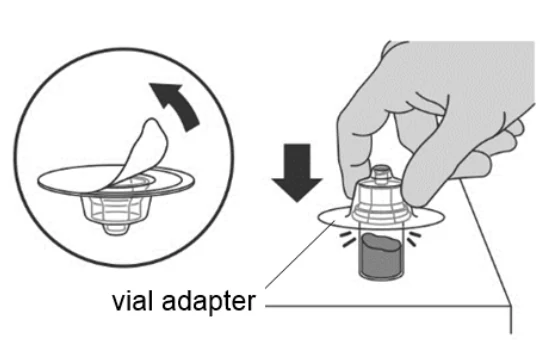 | Step 1: Attaching the vial adaptor to the vial
IMPORTANT: Do not use if there is no powder in the vial or the solvent is discoloured.
|
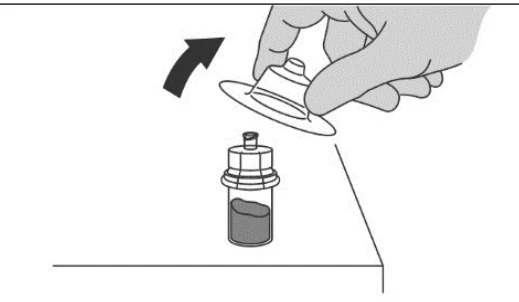 |
IMPORTANT: Do not touch the vial adapter |
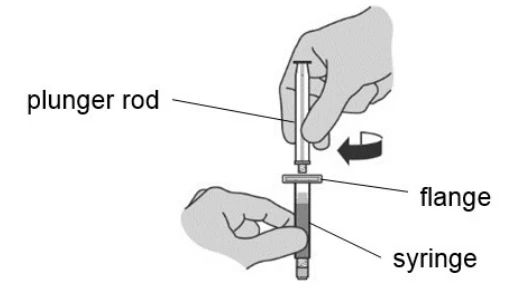 | Step 2: Assembling the syringe
IMPORTANT: Do not pull the back stopper (flange) off the syringe. You will only feel light resistance screwing the plunger rod in position. |
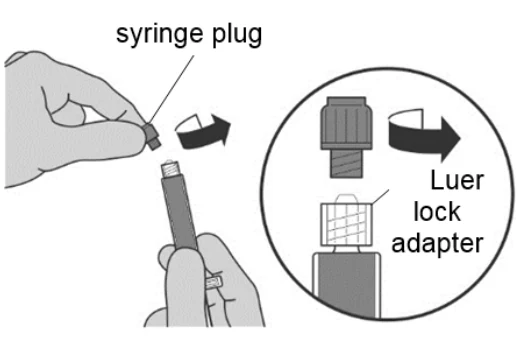 | Step 3: Transferring sterile water from syringe to vial
IMPORTANT: Do not pull off the Luer lock adapter. |
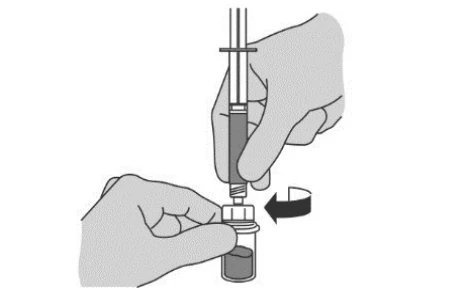 |
IMPORTANT: Do not over twist the syringe. |
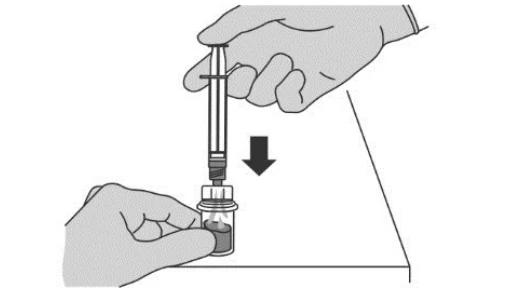 |
|
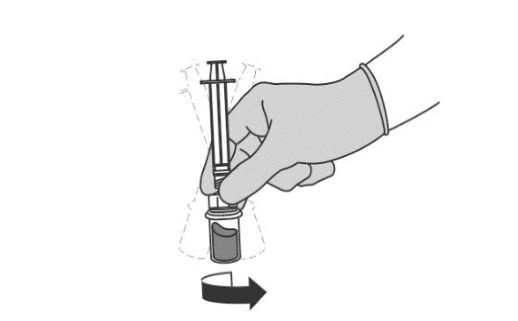 | Step 4: Preparing the reconstituted injection
IMPORTANT: Avoid shaking to prevent foam formation. If the powder adheres to the side of the vial above the liquid surface, the vial can be tilted slightly. A ring of small air bubbles on the surface of the liquid is acceptable. The reconstitution procedure usually takes a few minutes, but may take up to 15 minutes in some cases. NOTE: After reconstitution, the product should be injected immediately. |
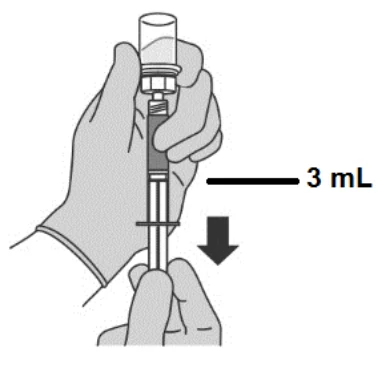 . | Step 5: Transferring the liquid to the syringe
Always make sure to withdraw the precise volume and adjust for any air bubbles. |
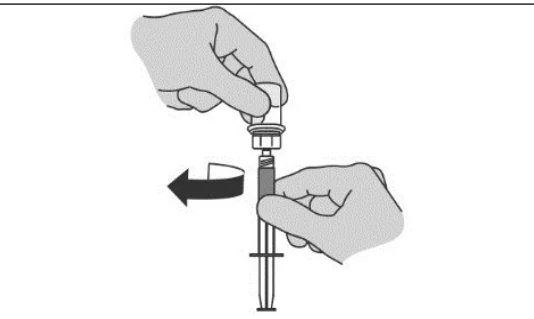 | Step 6: Preparing the syringe for injection
|
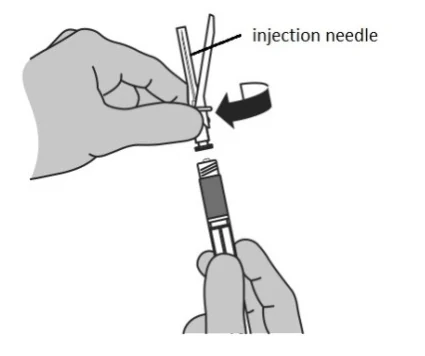 |
|
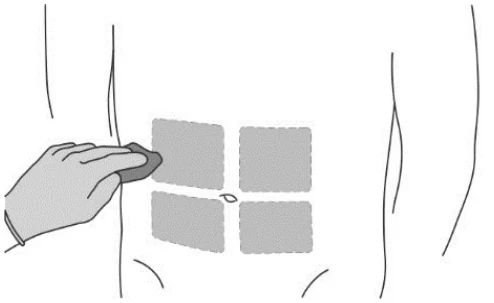 | Step 7: Preparing the patient
IMPORTANT:
|
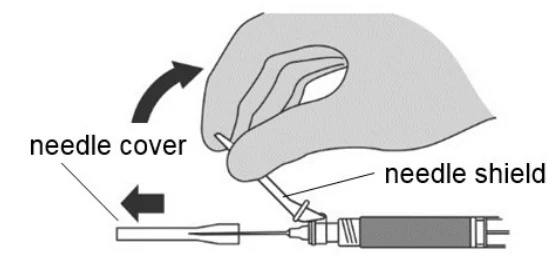 | Step 8: Performing the injection
|
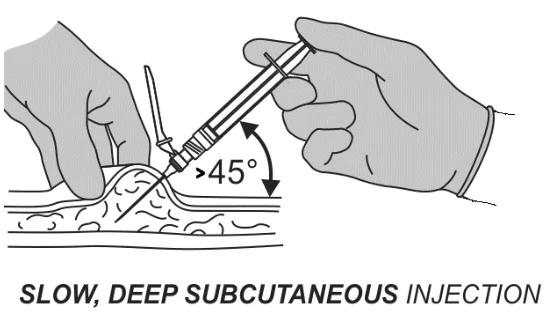 |
PRECAUTION: If blood appears in the syringe, the medicinal product can no longer be used. Discontinue the procedure and discard the syringe and needle (reconstitute a new dose for the patient).
|
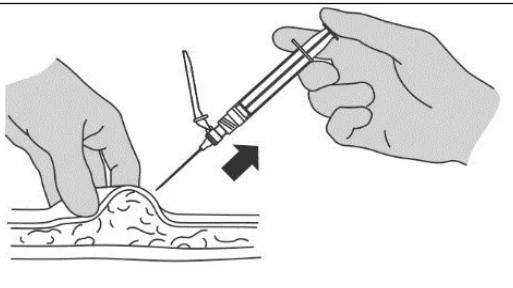 |
IMPORTANT: Do not rub the injection site after retracting the needle |
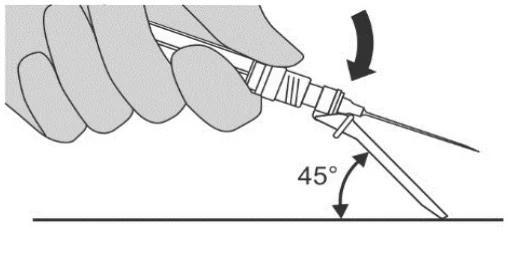 | Step 9: Locking the needle into the shield
|
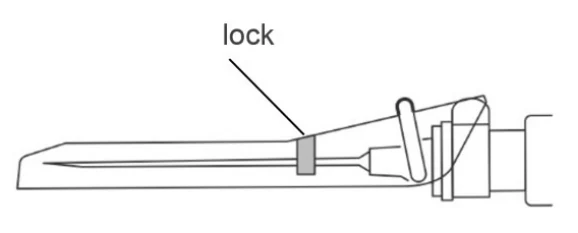 |
IMPORTANT: Syringe is for single use only. Do not reuse the syringe and needle. |
| Repeat the reconstitution procedure for the second dose. Choose a different injection site and inject 3 ml. |
FIRMAGON 80 mg
The Treatment Maintenance pack contains 1 vial of FIRMAGON 80 mg degarelix as degarelix acetate that must be prepared for subcutaneous injection.
Prepare FIRMAGON 80 mg for reconstitution by gathering the following;
Contained in the Treatment Maintenance Pack;
- 1 vial of FIRMAGON 80 mg powder
- 1 pre-filled syringe with line-marking at 4 ml containing 4.2 ml solvent
- 1 plunger rod
- 1 vial adapter
- 1 administration needle for sc injection – 25G/ 0.5 x 25 mm needle
Additional items;
- gloves
- alcohol swabs
- a clean, flat surface to work on, like a table
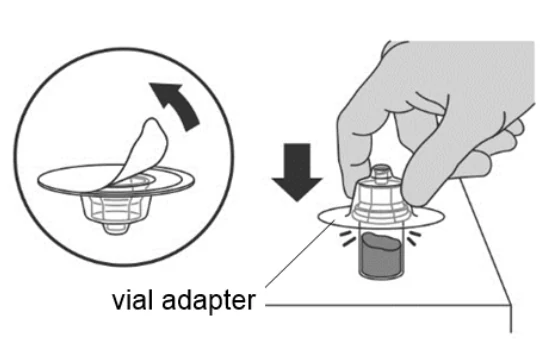 | Step 1: Attaching the vial adaptor to the vial
IMPORTANT: Do not use if there is no powder in the vial or the solvent is discoloured.
|
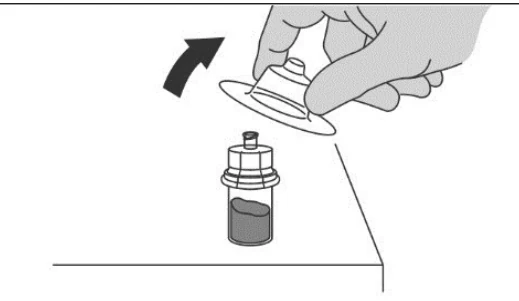 |
IMPORTANT: Do not touch the vial adapter |
| Step 2: Assembling the syringe
IMPORTANT: Do not pull the back stopper (flange) off the syringe. You will only feel light resistance screwing the plunger rod in position. |
| Step 3: Transferring sterile water from syringe to vial
IMPORTANT: Do not pull off the Luer lock adapter. |
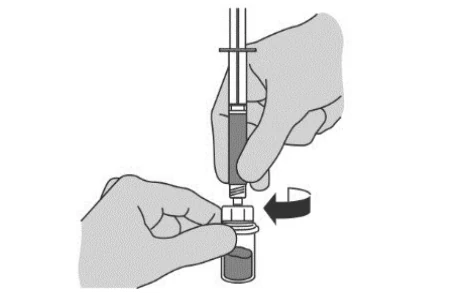 |
IMPORTANT: Do not over twist the syringe. |
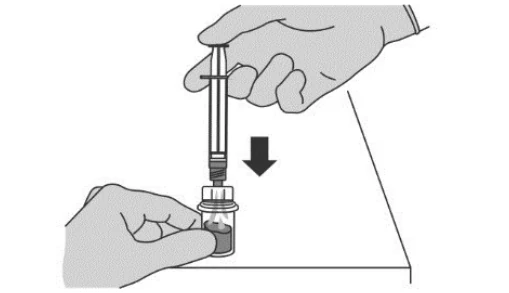 |
|
| Step 4: Preparing the reconstituted injection
IMPORTANT: Avoid shaking to prevent foam formation. If the powder adheres to the side of the vial above the liquid surface, the vial can be tilted slightly. A ring of small air bubbles on the surface of the liquid is acceptable. The reconstitution procedure usually takes a few minutes, but may take up to 15 minutes in some cases. NOTE: After reconstitution, the product should be injected immediately. |
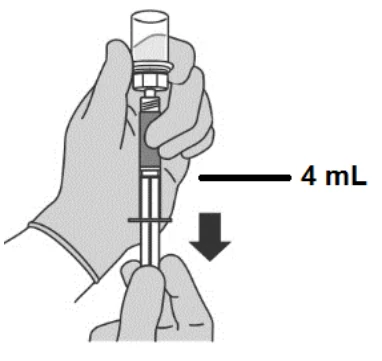 | Step 5: Transferring the liquid to the syringe
Always make sure to withdraw the precise volume and adjust for any air bubbles. |
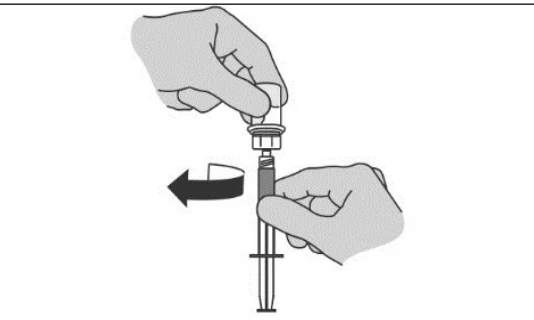 | Step 6: Preparing the syringe for injection
|
|
|
| Step 7: Preparing the patient
IMPORTANT:
|
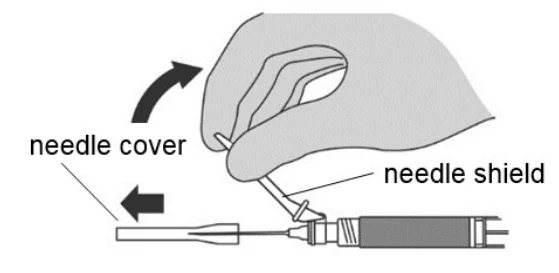 | Step 8: Performing the injection
|
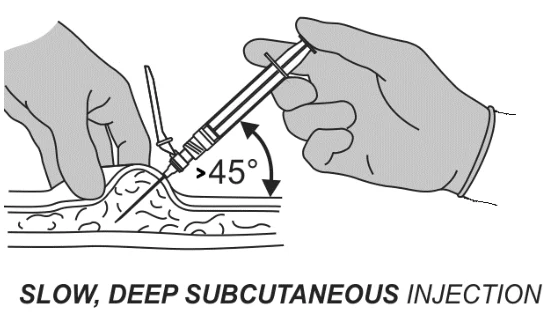 |
PRECAUTION: If blood appears in the syringe, the medicinal product can no longer be used. Discontinue the procedure and discard the syringe and needle (reconstitute a new dose for the patient).
|
 |
IMPORTANT: Do not rub the injection site after retracting the needle |
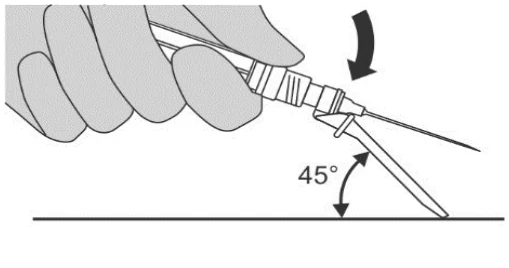 | Step 9: Locking the needle into the shield
|
|
IMPORTANT: Syringe is for single use only. Do not reuse the syringe and needle. |
OVERDOSAGE
There have been no reports of overdose with FIRMAGON. In case of overdose, discontinue FIRMAGON, treat the patient symptomatically, and institute supportive measures.
ACTION AND CLINICAL PHARMACOLOGY
Mechanism of Action
Degarelix is a selective GnRH receptor antagonist (blocker) that competitively and reversibly binds to the pituitary GnRH receptors, thereby rapidly reducing the release of gonadotropins luteinizing hormone (LH) and follicle stimulating hormone (FSH), and thereby reducing the secretion of testosterone by the testes. Prostatic carcinoma is known to be androgen sensitive and responds to androgen deprivation therapy. Unlike GnRH agonists, GnRH antagonists do not induce an LH surge with subsequent testosterone surge and potential symptomatic flare after the initiation of treatment.
Pharmacodynamics
A single dose of FIRMAGON 240 mg followed by a monthly maintenance dose of 80 mg rapidly causes a decrease in the concentrations of luteinizing hormone (LH), follicle stimulating hormone (FSH), and subsequently testosterone. The serum concentration of dihydrotestosterone (DHT) decreases in a similar manner to testosterone.
FIRMAGON is effective in achieving and maintaining testosterone suppression well below the medical castration level of 0.5 ng/mL. No testosterone microsurges were observed after re-injection during degarelix treatment.
Figure 1: Plasma testosterone from day 0 to 364 for degarelix 240 mg/80 mg (median with interquartile ranges)
Maintenance monthly dosing of degarelix 80 mg resulted in sustained testosterone suppression in 97% of patients for at least one year. Median testosterone levels after one year of treatment were 0.087 ng/mL (interquartile range 0.06-0.15, N=167). At a median follow up of 27.5 months following the 1-year Phase III study (total 39.5 months), median testosterone levels remained suppressed at less than 0.2 ng/mL in patients receiving degarelix 240/80 mg.
Prostate specific antigen (PSA) levels were lowered by 64% two weeks after administration of degarelix, by 85% after one month, 95% after three months, and remained suppressed throughout the one year of treatment. These PSA results should be interpreted with caution because of the heterogeneity of the patient population studied. No evidence has shown that the rapidity of PSA decline is related to a clinical benefit.
Pharmacokinetics
The concentration of the injected solution strongly influences the pharmacokinetic behaviour.
Absorption
FIRMAGON forms a depot upon subcutaneous administration, from which degarelix is released to the circulation. The relevant pharmacokinetic results of FIRMAGON evaluated in 30 patients with prostate cancer administered a starting dose of 240 mg (at 40 mg/mL) followed by six monthly maintenance doses of 80 mg (at 20 mg/mL) are summarized in Table 3. There were substantial inter-individual variations for AUC (CV%: 56-72%) and Cmax (CV%: 90-106%). Degarelix mean (SD) trough concentrations in the maintenance phase with 80 mg at a concentration of 20 mg/mL was 15.1 (6.9) ng/mL.
Table 3: Pharmacokinetic parameters after subcutaneous administration of FIRMAGON starting dose 240 mg at a concentration of 40 mg/mL and 6th maintenance dose 80 mg at a concentration of 20 mg/mL over a dosing interval. Mean (SD)
| Pharmacokinetic parameter | FIRMAGON 240 mg at 40 mg/mL (n = 30) | FIRMAGON 80 mg at 20 mg/mL (steady state) (n = 29) |
| Cmax (ng/mL) | 74.4 (67.3) | 78.5 (83.3) |
| Tmax (day)# | 2.0 (1-3) | 1.0 (1-3) |
| T½ (day)# | - | 31 (12-73) |
| AUC (day·ng/mL) | 741 (537)* | 773 (431)* |
* AUC with dosing interval of 28 days, #Median (range).
Following subcutaneous administration of 240 mg FIRMAGON at a concentration of 40 mg/mL to prostate cancer patients, degarelix is eliminated in a biphasic fashion. The estimated median terminal half-life; using a population based pharmacokinetic model, is approximately 43 days for the starting dose of 240 mg (40 mg/mL) and 31 days for the maintenance dose of 80 mg (20 mg/mL). The long half-life after subcutaneous administration is a consequence of a very slow release of degarelix from the FIRMAGON depot formed at the injection site(s). The pharmacokinetic behaviour of the drug is strongly influenced by its concentration in the injection suspension.
Distribution
The distribution volume of degarelix after intravenous administration is approximately 1L/kg in healthy elderly men. This indicates that degarelix is distributed throughout total body water. In vitro plasma protein binding of degarelix is estimated to be approximately 90%.
Metabolism
Degarelix is subject to common peptidic degradation during passage through the hepato-biliary system and is mainly excreted as peptide fragments in the feces. No quantitatively significant metabolites were detected in plasma samples after subcutaneous administration. In vitro studies have shown that degarelix is not a substrate, inducer nor inhibitor of CYP450 or P-glycoprotein transporter systems.
Excretion
In healthy men, approximately 20-30% of a given dose of degarelix was renally excreted, suggesting that approximately 70-80% is excreted via the hepato-biliary system in humans. The clearance after an intravenous administration is approximately 35-50 mL/h/kg in healthy elderly men.
Special Populations and Conditions
Renal Insufficiency
No pharmacokinetic studies in renally impaired patients have been conducted. Only about 20-30% of a given dose of degarelix is excreted unchanged by the kidneys. A population pharmacokinetics analysis of the data from the confirmatory Phase III trial has demonstrated that the clearance of degarelix in patients with moderate renal impairment is reduced by 23%; therefore dose adjustment in patients with mild or moderate renal impairment is not recommended. Data on patients with severe renal impairment are scarce and caution is therefore warranted in this patient population.
Hepatic Insufficiency
Degarelix has been studied in a pharmacokinetic study in patients with mild to moderate hepatic impairment. No signs of increased exposure in the hepatically impaired were observed compared to healthy subjects. Dose adjustment is not necessary in patients with mild or moderate hepatic impairment. Patients with severe hepatic dysfunction have not been studied and caution is therefore warranted in this group.
Geriatrics
The patient population tested in the clinical program was typical of the intended target population of patients with prostate cancer. The mean age was 74 years (range 47 to 98 years).
Effect of Age, Weight and Race
Population pharmacokinetic analysis shows only a small change in clearance of degarelix related to age and weight. Therefore, dose adjustment is not warranted.
STORAGE AND STABILITY
Degarelix Powder for Injection: Store at 25°C (excursions permitted to15-30°C).
Sterile Water for Injection: Store at 25°C (excursions permitted to15-30°C).
SPECIAL HANDLING INSTRUCTIONS
The instruction for reconstitution must be followed carefully. After reconstitution, the product should be injected immediately. Chemical and physical in-use stability of the reconstituted solution has been demonstrated for two hours after solvent addition. From a microbiological point of view, once reconstituted, the product should be administered immediately.
DOSAGE FORMS, COMPOSITION AND PACKAGING
FIRMAGON is available in the following pack sizes:
Starting dose (240 mg, 40 mg/mL) – 1 pack contains:
2 single use vials of FIRMAGON containing degarelix 120 mg powder as degarelix acetate for injection with mannitol
2 pre-filled syringes with line-marking at 3 ml containing 3 ml solvent (sterile water for injection)
2 vial adapters
2 plunger rods
2 injection needles 25G/ 0.5 x 25 mm
Maintenance dose (80 mg, 20 mg/mL) – 1 pack contains:
1 single use vial of FIRMAGON containing degarelix 80 mg powder as degarelix acetate for injection with mannitol
1 pre-filled syringe with line-marking at 4 ml containing 4.2 ml solvent (sterile water for injection)
1 vial adapter
1 plunger rod
1 injection needle 25G/ 0.5 x 25 mm
PART II: SCIENTIFIC INFORMATION
PHARMACEUTICAL INFORMATION
Drug Substance
The drug substance is manufactured as its acetate salt by freeze-drying from solutions containing acetic acid. The freeze-dried powder also contains variable amounts of acetic acid (not as a counter ion) and water (not as crystal water) not fully removed in the freeze-drying process. The free base content of the drug substance in the freeze-dried powder is always used for dose calculations since the freeze-drying process gives variations in the content of acetic acid and water. Therefore the drug substance is presented as its free base below.
Common name: Degarelix acetate (degarelix is the free base of the drug substance)
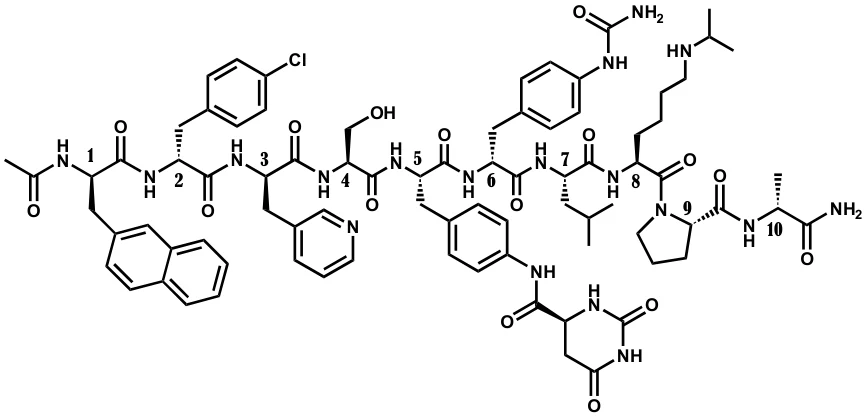
Chemical name: D-Alaninamide, N-acetyl-3-(2-naphthalenyl)-D-alanyl-4-chloro-D-phenylalanyl-3-(3-pyridinyl)-D-alanyl-L-seryl-4-[[[(4S)-hexahydro-2,6-dioxo-4-pyrimidinyl]carbonyl]amino]-L- phenylalanyl-4-[(aminocarbonyl)amino]-D-phenylalanyl-L-leucyl-N6–(1-methylethyl)-L-lysyl-L-prolyl
Molecular formula: C82H103N18O16Cl
Molecular mass: 1632.3 Da.
Structural formula:
Physicochemical properties:
Solubility:
Degarelix acetate is soluble in water and in aqueous solution containing 5% mannitol.
pKa:
Experimental pKa values for degarelix are 10.8 (side-chain of Lys(iPr)), 10.2(hydroorotyl) and 4.4 (side-chain of D-3Pal).
pH:
The pH value of 20 mg degarelix/mL in 2.5% mannitol (w/v) at 20°C is approximately 4.
CLINICAL TRIALS
Study demographics and trial design
Table 4: Summary of patient demographics for clinical trials in patients with prostate cancer
| Study | Trial design | Dosage, route of administration and duration | Study subjects (N=number of patients) | Age | Gender |
|---|---|---|---|---|---|
| Phase III Study | Open-label, randomised, active-control parallel group study | degarelix s.c.: starting dose 240 mg (40mg/mL) followed by a monthly maintenance dose of 80mg (20 mg/mL) or 160 mg (40 mg/mL) leuprolide 7.5 mg i.m. monthly | N=610 degarelix N=409 degarelix 240/160 mg: N =202 degarelix 240/80 mg: N=207 leuprolide 7.5 mg: N=201 | degarelix 240/160 mg: Mean (SD): 72.1 (8.47) Median (range) 72.0 (50.0-88.0) degarelix 240/80 mg: Mean (SD): 71.6 (8.12) Median (range) 72.0 (51.0-89.0) leuprolide 7.5 mg: Mean (SD): 72.5 (8.77) Median (range) 74.0 (52.0-98.0) | Male patients with prostate cancer |
Study results
The efficacy and safety of FIRMAGON was evaluated in an open-label, multi-centre, randomized, active comparator, parallel-group study. The study investigated the efficacy and safety of two different degarelix monthly dosing regimens; a starting dose of 240 mg (40 mg/mL) followed by monthly doses via subcutaneous administration of 160 mg (40 mg/mL) or 80 mg (20mg/mL) in comparison to monthly intramuscular administration of leuprolide 7.5 mg in patients with prostate cancer requiring androgen deprivation therapy. In total, 620 patients were randomized to one of the three treatment groups, 610 received investigational medicinal product treatment, and 504 (81%) completed the study. In the degarelix 240/80 mg treatment group, 41 (20%) patients discontinued the study as compared to 32 (16%) patients in the leuprolide group. The primary objective of the study was to demonstrate that degarelix is effective with respect to achieving and maintaining testosterone suppression to castrate levels, evaluated as the proportion of patients with testosterone suppression ≤0.5 ng/mL during 12 months treatment. The lowest effective maintenance dose of 80 mg was chosen.
Of the 610 patients treated:
- 31% had localized prostate cancer (T1 or T2 N0 M0)
- 29% had locally advanced prostate cancer (T3/T4 Nx M0 or N1 M0)
- 20 % had metastatic prostate cancer
- 7% had an unknown metastatic status
- 13% had previous curative intent surgery or radiation and a rising PSA
Baseline demographics were similar between the treatment arms. The median age was 74 years and the age range was 47 to 98 years of age. The ethnic/racial distribution was 84% white, 6% black and 10% other.
Attainment of Serum Testosterone (T) ≤0.5 ng/mL
FIRMAGON is effective in achieving fast testosterone suppression; see Table 5
Table 5: Percentage of patients attaining T≤0.5 ng/mL after start of treatment
| Time | Degarelix 240/80 mg s.c. | Leuprolide 7.5 mg i.m. |
| Day 1 | 52% | 0% |
| Day 3 | 96% | 0% |
| Day 7 | 99% | 1% |
| Day 14 | 100% | 18% |
| Day 28 | 100% | 100% |
Avoidance of testosterone surge
None of the degarelix treated patients experienced a testosterone surge; there was an average decrease of 96% in testosterone at day 3. Most of the leuprolide treated patients experienced testosterone surge; there was an average increase of 65% in testosterone at day 3. Surge was defined as testosterone exceeding baseline by ≥15% within the first 2 weeks. This difference was statistically significant (p<0.001). The clinical benefit for degarelix compared to leuprolide plus antiandrogen for surge protection in the initial phase of treatment has not been demonstrated.
Figure 2: Percentage Change in Testosterone from Day 0 to 28 (median with interquartile ranges)
Long-Term Testosterone Suppression
Successful response in the study was defined as attainment of medical castration at day 28 and maintenance through day 364 where no single testosterone concentration was greater than
0.5 ng/mL.
Table 6: Cumulative Probability of Testosterone ≤0.5 ng/mL from Day 28 to Day 364
Degarelix 240/80 mg N =207 | Leuprolide 7.5 mg N=201 | |
No. of responders | 202 | 194 |
Response Rate (confidence intervals)* | 97.2% (93.5; 98.8%) | 96.4% (92.5; 98.2%) |
* Kaplan Meier estimates within group
DETAILED PHARMACOLOGY
Mechanism of Action
Degarelix is a selective GnRH receptor antagonist (blocker) that competitively and reversibly binds to the pituitary GnRH receptors. Degarelix has weak in vitro histamine-releasing activity (effective concentration 50% (EC50) = 170 μg/mL) and its effects on vascular permeability in vivo are very low.
The suppression of luteinizing hormone (LH), follicle-stimulating hormone (FSH), testosterone and estradiol has been demonstrated in rats, dogs, monkeys and humans. It has been shown to suppress tumor growth in several models including androgen–dependent rat prostate tumor Dunning R-3327 and nude mice xenografts of human PAC 120 prostate cancer.
Unlike GnRH agonists, GnRH antagonists do not induce an LH surge with subsequent testosterone surge and potential symptomatic flare after the initiation of treatment.
Pharmacodynamics
Degarelix rapidly and reversibly suppresses secretion of gonadotropins, thereby achieving a rapid and sustained suppression of testosterone. This is achieved by the starting dose of FIRMAGON 240 mg followed by a monthly maintenance dose of 80 mg as shown in the pivotal clinical trial.
When injected s.c. at doses 0.3-10 µg/kg, degarelix produced a dose-dependent suppression of plasma testosterone in rats. The minimum effective dose was 1µg/kg, producing 71% suppression of plasma testosterone.
When compared to abarelix, ganirelix, and azaline B, a single s.c. injection of 2 mg/kg degarelix showed a longer duration of action than the other GnRH antagonists, given at a similar dose and concentration. All antagonists decreased plasma testosterone to similar levels at Day 1, but by Day 7 plasma testosterone in the abarelix- and ganirelix-treated groups were already returning to baseline, while in the azaline B-treated groups only three out of eight rats had castrate levels of plasma testosterone at Day 14. In contrast, degarelix suppressed testosterone to castration levels for a total of 42 days in all rats and 56 days in seven out of eight rats, at which time plasma testosterone levels began to increase gradually, returning to baseline levels at Day 77.
Pharmacokinetics
Absorption
After s.c. administration FIRMAGON forms a local depot at the injection site from which degarelix is released to the circulation. Degarelix decreases in a biphasic fashion, with a median terminal half-life (t ½) of approximately 43 days for the starting dose, or 28 days for the maintenance dose, as estimated based on population pharmacokinetics modeling. The long t1/2 observed after s.c. administration, compared to i.v. administration is due to the slow release of degarelix from the depot.
Studies in mice, rats and dogs have demonstrated that increasing the concentration of the dosing solution resulted in increase of time to maximum plasma concentration (tmax) and t1/2, but decrease of maximum plasma concentration (Cmax) and bioavailability.
Distribution
The distribution volume of degarelix after i.v. administration is approximately 1 L/kg in healthy elderly men. This indicates that degarelix is distributed throughout total body water. Distribution of [3H] degarelix in rats, dogs and monkeys demonstrated highest concentration in tissues related to hepatic and renal excretion (i.e. liver, bile, intestines, kidneys), organs containing specific receptors for LHRH (e.g., pituitary) and organs rich in reticuloendothelial cells (e.g., aorta, and vena cava.
In vitro, degarelix is bound to plasma proteins (90%) in animals and man with a high affinity for albumin and α-acid glycoprotein.
Metabolism and Excretion
In vitro studies have demonstrated that there is negligible degradation of degarelix in human plasma, and when incubated with liver microsomes (rabbit, dog, monkey and human). Only minor degradation was seen in liver microsomes from guinea pig and rat. Degarelix is a poor substrate for the cytochrome P450 (CYP450) enzyme system. Degarelix has not been shown to induce or inhibit CYP1A2, CYP2B6, CYP2C8, CYP2C9, CYP2C19, CYP2D6, CYP2E1, or CYP3A4/5 to any great extent in vitro. In human liver microsomes, the total amount of oxidative metabolites formed was <1%. The main metabolite (approximately 2% of initial amount of degarelix) was not oxidative and probably formed by proteases, post-proline cleaving enzyme.
Degarelix is subject to proteolysis by endopeptidases and unchanged degarelix and metabolites are fully excreted via the hepatic and urinary pathways. Systemic exposure to any metabolic products appears to be very low.
Studies in rats and dogs have shown that degarelix is excreted, both as unchanged degarelix and degarelix metabolites, via the kidneys and bile.
Special Populations and Conditions
Hepatic Insufficiency
Degarelix has been investigated in a pharmacokinetic study in patients with mild to moderate hepatic impairment. No signs of increased exposure in the hepatically impaired subjects were observed compared to healthy subjects. Dose adjustment is not necessary in patients with mild or moderate hepatic impairment. Patients with severe hepatic dysfunction have not been studied and caution is therefore warranted in this group. (See WARNINGS AND PRECAUTIONS - Hepatic/Biliary/Pancreatic)
Renal Insufficiency
No pharmacokinetic studies in renally impaired patients have been conducted. Approximately
20-30% of a given dose of degarelix is excreted unchanged in the urine. A population pharmacokinetics analysis of the data from the confirmatory Phase III study has demonstrated that the clearance of degarelix in patients with moderate CrCL <50 mL/min renal impairment is reduced by 23% therefore dose adjustment in patients with mild or moderate renal impairment is not recommended. Data on patients with severe renal impairment are scarce and caution is therefore warranted in this patient category.
TOXICOLOGY
Single Dose Toxicity
Subcutaneous Administration
Administration of a single subcutaneous dose showed that degarelix was well tolerated and no acute signs of systemic toxicity were seen at the highest dose level tested in single or repeat dose toxicity studies: 100 mg/kg in mice, 100 mg/kg in rats and 50 mg/kg in monkeys.
In a tolerance study in dogs, clinical signs (e.g. s.c. edema) consistent with a histamine reaction were noted following three consecutive daily s.c. doses of 20 mg/kg and higher.
Intravenous Administration
The lowest lethal dose seen after a single i.v. dose in single or repeat dose studies was 12.5 mg/kg in rats. Signs of systemic toxicity in surviving animals were abnormal respiration and lethargy which resolved within 24 hours. No deaths occurred up to and including 6.25 mg/kg. In monkeys there were no deaths following single i.v. doses of up to 6.25 mg/kg/day for 7 days.
Repeat Dose Toxicity
Subcutaneous Administration
Repeat-dose toxicity studies were carried out by s.c. administration with durations of 6 and 12 months in rats and monkeys. A 13 week subcutaneous toxicity study was carried out in mice. Results of the studies showed that the pharmacological effect was evident at the low dose level tested: 1.0 mg/kg/2 weeks s.c. in mice, 0.5 mg/kg/2 weeks s.c. in rats and 0.5 mg/kg/4 weeks s.c. in monkeys.
The injections caused a dosage-related increase in the local reaction which has occasionally been the reason for premature euthanasia and has caused signs of systemic toxicity (decreased body weight development) at high dose levels of 100 mg/kg/2 week s.c. in the 13 week toxicity study in mice, 50 and 100 mg/kg/2 week s.c. in the 26 week toxicity studies in rats, and 50 mg/kg/4 week s.c. in the 12 month toxicity study in monkeys.
Carcinogenesis, Mutagenesis, Impairment of Fertility
Degarelix was administered subcutaneously to mice every 2 weeks for 2 years at doses of 2, 10 and 50 mg/kg/2 weeks (about 3, 15 and 75 times the recommended human maintenance dose on a mg/kg basis; or about 1, 4.6 and 17 times human exposure at the recommended dose). Sarcomas related to the injection sites were seen in about 3% of the treated animals, which is not considered relevant in humans given the species specific high susceptibility of mice to foreign body carcinogenesis. This is considered to be a rodent specific effect, as rodents are known to be susceptible to foreign body carcinogenesis.
Degarelix was administered subcutaneously to rats every 2 weeks for 2 years at doses of 2, 10 and 25 mg/kg/2 weeks (about 3, 15 and 38 times the recommended human maintenance dose on a mg/kg basis; or about 1.8, 6.2 and 12.4 times human exposure at the recommended dose). The incidence of combined hemangiomas and hemangiosarcomas was increased in female rats treated with the 25 mg/kg/2 week dose.
Degarelix was not mutagenic. Degarelix was embryotoxic. When degarelix was given to rabbits during early organogenesis at doses of 0.002 mg/kg/day (about 0.02% of the clinical loading dose on a mg/m2 basis), there was an increase in early post-implantation loss. Degarelix given to rabbits during mid and late organogenesis at doses of 0.006 mg/kg/day (about 0.05% of the clinical loading dose on a mg/m2 basis) caused embryo/fetal lethality and abortion. When degarelix was given to female rats during early organogenesis, at doses of 0.0045 mg/kg/day (about 0.036% of the clinical loading dose on a mg/m2 basis), there was an increase in early post-implantation loss. When degarelix was given to female rats during mid and late organogenesis, at doses of 0.045 mg/kg/day (about 0.36% of the clinical loading dose on a mg/m2 basis), there was an increase in the number of minor skeletal abnormalities and variants.
Degarelix produces reversible infertility in both male and female rats. A single subcutaneous dose caused reversible infertility at ≥1 mg/kg and ≥0.1 mg/kg in males and females, respectively.
REFERENCES
- 1. Agerso H, Koechling W, Knutsson M, Hjortkjaer R, Karlsson MO. The dosing solution influence on the pharmacokinetics of degarelix, a new GnRH antagonist, after s.c. administration to beagle dogs. Eur J Pharm Sci. 2003; 20:335-340.
- 2. Ako D, Shiba M, Arai Y, Nakayama M, Takayama H, Inoue H, Nishimura K et al. Skin reactions to 3-month depot type of luteinizing hormone-releasing hormone agonist therapy. JMAJ. 2006; 49:48-54.
- 3. Behre HM, Kliesch S, Pühse G, Reissmann T, Nieschlag E. High loading and low maintenance doses of a gonadotropin-releasing hormone antagonist effectively suppress serum luteinizing hormone, follicle-stimulating hormone, and testosterone in normal men. J Clin Endocrinol Metab. 1997; 82:1403-1408.
- 4. Bidoggia H, Maciel JP, Capalozza N, Mosca S, Blaksley EJ, Valverde E, Bertran G, Arini P, Biagetti MO, Quinteiro RA. Sex Differences on the Electrocardiographic Pattern of Cardiac Repolarization: Possible Role of Testosterone. Am Heart J. 2000; 140:678-683.
- 5. Boccon-Gibod L, Laudat MH, Dugue MA, Steg A. Cyproterone acetate lead-in prevents initial rise of serum testosterone induced by LHRH analogs in the treatment of metastatic carcinoma of the prostate. Eur Urol. 1986; 12:400-402.
- 6. Braga-Basaria M, Dobs AS, Muller DC, Carducci MA, John M, Egan J, Basaria S. Metabolic syndrome in men with prostate cancer undergoing long-term androgen-deprivation therapy. J Clin Oncol. 2006; 24:3979-3983.
- 7. Choo R, Chander S, Danjoux C, Morton G, Pearce A, Deeor G, Szumacher W, Loblaw A, Cheung P, Woo T. How are haemoglobin levels affected by androgen deprivation in non-metastatic prostate cancer patients? The Canadian Journal of Urology. 2005; 12:2547-2552Conn PM.
- 8. Crawford ED, Tombal B, Miller K, Boccon-Gibod L, Schröder F, Shore N, Moul JW, Jensen JK, Olesen TK, Persson BE. A phase III extension trial with a 1-arm crossover from leuprolide to degarelix: comparison of gonadotropin-releasing hormone agonist and antagonist effect on prostate cancer. J Urol. 2011 Sep;186(3):889-897.
- 9. Debruyne FM Gonadotropin-releasing hormone in the management of prostate cancer. Rev Urol. 2004; Suppl 7: S25-S32.
- 10. Granfors T, Modig H, Damber J-E, Tomic R. Combined orchiectomy and external radiotherapy versus radiotherapy alone for nonmetastatic prostate cancer with or without pelvic lymph node involvement: A prospective randomized study. J Urol. 1998; 159:2030-2034.
- 11. Higano C. Androgen deprivation therapy: monitoring and managing the complications. Haematol Oncol Clin N Am 2006; 20:909-923.
- 12. Higano CS. Side effects of androgen deprivation therapy: Monitoring and minimizing toxicity. Urology 2003; 61 (Suppl 2A):32–38.
- 13. Huhtaniemi I. Expert opinion about: FE200486 – 104-Week Carcinogenicity Study in Mice: Pituitary, Focal Hyperplasia of the Intermediate Lobe. 2007.
- 14. Jiang G, Gavini E, Dani BA, Murty SB, Schrier B, Thanoo BC & DeLuca PP. Identification and determination of GnRH antagonist gelling at injection site. Int J Pharm. 2002; 233:19-27.
- 15. Jiang G, Stalewski J, Galyean R, Dykert J, Schteingart C, Broqua P, Aebi A, Aubert ML, Semple G, Robson P, Akinsanya K, Haigh R, Riviere P, Trojnar J, Junien JL & Rivier JE. GnRH Antagonists: a new generation of long acting analogues incorporating urea functions at positions 5 and 6. J Med.Chem. 2001; 44:453-467.
- 16. Kaku H, Saika T, Tsushima T, Ebara S, Senoh T, Yamato T, Yasutomo N, Kumon H. Time course of serum testosterone and luteinizing hormone levels after cessation of long-term luteinizing hormone-releasing hormone agonist treatment in patients with prostate cancer. The Prostate. 2006; 66:439-444.
- 17. Keating NJ, O’Malley AJ, Smith MR. Diabetes and cardiovascular disease during androgen deprivation therapy for prostate cancer. J Clinical Oncology. 2006; 24:4448-4456.
- 18. Lepor H. Comparison of single-agent androgen suppression for advanced prostate cancer. Reviews in Urology. 2005; 7: S3-S12.
- 19. Mazzei T, Mini E, Rizzo M, Periti P. Human pharmacokinetic and pharmacodynamic profiles of leuprorelin acetate depot in prostatic cancer patients. J Int Med Res. 1990; 18 Suppl 1:42-56.
- 20. McLeod D, Zinner N, Tomera K, Gleason D, Fotheringham N, Campion M, Garnick MB. A phase 3 multicenter, open-label randomized study of abarelix versus leuprolide acetate in men with prostate cancer. Urology. 2001; 58(5):756-761.
- 21. Medical Research Council Prostate Cancer Working Party Investigators Group. Immediate versus deferred treatment for advanced prostatic cancer: Initial results of the Medical Research Council trial. Br J Urol. 1997; 79:235-246.
- 22. Messing EM, Manola J, Sarosdy M, Wilding G, Crawford ED, Trump D. Immediate hormonal therapy compared with observation after radical prostatectomy and pelvic lymphadenectomy in men with node-positive prostate cancer. N Engl J Med. 1999; 341:1781-1788.
- 23. Mongiat-Artus P, Teillac P. Abarelix. The first gonatrophin-releasing hormone antagonist for the treatement of prostate cancer. Expert Opin Pharmacother 2004; 5: 2171-2179.
- 24. Nalesnik JG, Mysliwiec AG, MD,Canby-Hagino E. Anemia in men with advanced prostate cancer: Incidence, etiology, and treatment. Rev Urol. 2004;6(1):1-4.
- 25. Nejat RJ, Rashid HH, Bagiella E, Katz AE, Benson MC. A prospective analysis of time to normalization of serum testosterone after withdrawal of androgen deprivation therapy. Journal of Urology. 2000; 164:1891-1894.
- 26. Nishiyama T, Ishizaki F, Anraku T, Shimura H, Takahashi K. The influence of androgen deprivation therapy on metabolism in patients with prostate cancer. J Clin Endocrinol Metab 2005; 90(2):657-660.
- 27. Perez-Marrero R, Tyler RC. A subcutaneous delivery system for the extended release of leuprolide acetate for the treatment of prostate cancer. Expert Opin Pharmacother. 2004; 5:447-457.
- 28. Perlmutter MA, Lepor H. Androgen deprivation therapy in the treatment of advanced prostate cancer. Rev Urol 2007; 9(suppl 1):S3-S8.
- 29. Plosker GL, Brogden RN. Leuprorelin – a review of its pharmacology and therapeutic use in prostate cancer, endometriosis and other sex hormone-related disorders. Drugs 1994; 48:930-967.
- 30. Schrijvers D. Androgen-independent prostate cancer. Cancer Res. 2007; 175:239-249.
- 31. Segawa N, Nishida T, Hamada S, Azuma H, Katsuoka Y, Nozaki K, Tsuji M. Skin reaction induced by subcutaneous injection of LH-RH analogue. Hinyokika Kiyo. 2007; 53:695-698.
- 32. Sharifi R, Bruskewitz RC, Gittleman MC, Graham SD, Hudson PB, Stein B. Leuprolide acetate 22.5 mg 12-week depot formulation in the treatment of patients with advanced prostate cancer. Clin Ther 1996; 18:647-657.
- 33. Sharifi R, Soloway M. Clinical study of leuprolide depot formulation in the treatment of advanced prostate cancer. The Leuprolide Study Group. J Urol. 1990; 143:68-71.
- 34. Shiota M, Tokuda N, Kanou T, Yamasaki H. Incidence rate of injection-site granulomas resulting from the administration of luteinizing hormone-releasing hormone analogues for the treatment of prostatic cancer. Yonsei Med J. 2007; 48:421-424.
- 35. Smith JC, Bennett S, Evans LM, Kynaston HG, Parmar M, Mason MD, et al. The effects of induced hypogonadism on arterial stiffness, body composition, and metabolic parameters in males with prostate cancer. J Clin Endocrinol Metab. 2001; 86:4261–4267.
- 36. Smith MR, Lee H, Nathan DM. Insulin sensitivity during combined androgen blockade for prostate cancer. J Clin Endocrinol Metab. 2006; 91:1305–1308.
- 37. Soloway MS, Chodak G, Vogelzang NJ, Block NL, Schellhammer PF, Smith JA Jr, Scott M, Kennealey G, Gau TC. Zoladex versus orchiectomy in treatment of advanced prostate cancer: a randomized trial. Zoladex Prostate Study Group. Urology. 1991; 37:46-51.
- 38. Sprenkle PC, Fisch H. Pathologic effects of testosterone deprivation. Curr Opin Urol 2007; 17:424-430.
- 39. Tanriverdi F, Silveira LFG, MacColl GS and Bouloux PMG. The hypothalamic-pituitary-gonadal axis: immune function and autoimmunity. Journal of Endocrinology 2003; 176:293-304.
- 40. Thompson IM, Zeidman EJ, Rodriguez FR. Sudden death due to disease flares with luteinizing hormone-releasing hormone agonist therapy for carcinoma of the prostate. J Urol 1990; 144:1479-1480.
- 41. Vogelzang NJ, Chodak GW, Soloway MS, Block NL, Schellhammer PF, Smith JA Jr, Caplan RJ, Kennealey GT. Goserelin versus orchiectomy in the treatment of advanced prostate cancer: final results of a randomized trial. Zoladex Prostate Study Group. Urology 1995; 46:220-226.
- 42. Waxman J, Man A, Hendry WF, Whitfield HN, Besser GM, Tiptaft RC, Paris AMI, Oliver RTD. Importance of early tumor exacerbation in patients treated with long acting analogues of gonadotrophin releasing hormone for advanced prostatic cancer. Br Med J 1985; 291:1387-1388.
- 43. Weckermann D, Harzmann R. Hormone therapy in prostate cancer: LHRH antagonists vs. LHRH analogues Eur Urol 2004; 46:283-284.