


Patient Medication Information: uses, side effects, how to take - Flagyl (Sanofi-Aventis Canada, 10 %)
Serious warnings and precautions box
What FLAGYL is used for:
FLAGYL belongs to a group of medicines called antibacterial - antiprotozoal.
It can be used to treat:
- infections of the genital tract (such as trichomoniasis: a sexually transmitted infection, bacterial vaginosis: bacterial infection of the vagina).
Antibacterial and antiprotozoal drugs like FLAGYL treat only bacterial and protozoal infections. They do not treat viral infections such as the common cold. Although you may feel better early in treatment, FLAGYL should be used exactly as directed. Misuse or overuse of FLAGYL could lead to the growth of bacteria/protozoans that will not be killed by FLAGYL (bacterial/protozoan resistance). This means that FLAGYL may not work for you in the future. Do not share your medicine with anyone.
How FLAGYL works:
FLAGYL works by killing bacteria and parasites (protozoans) that cause infections in your body.
The ingredients in FLAGYL are:
Medicinal ingredients: Metronidazole.
Non-medicinal ingredients: Glycerin, glyceryl monostearate, methylparaben, purified water, stearic acid, propylparaben and trolamine.
FLAGYL comes in the following dosage form:
Vaginal cream, 10% w/w
Do not use FLAGYL if:
|
- You are allergic (hypersensitive) to metronidazole, nitroimidazoles (e.g. tinidazole) or any of the ingredients in FLAGYL or components of the container (see What are the ingredients in FLAGYL?).
- You have a disease of the nervous system.
- You have a history of blood problems.
- Have hypothyroidism (underactive thyroid gland) or hypoadrenalism (underactive adrenal glands).
To help avoid side effects and ensure proper use, talk to your healthcare professional before you take FLAGYL. Talk about any health conditions or problems you may have, including if you:
are pregnant, think you are pregnant, or plan to get pregnant.
- are breastfeeding, or planning to breastfeed, as metronidazole is excreted in human breast milk.
- have liver problems.
- have an active or chronic severe disease of the nervous system.
- have any blood disorder (e.g. leukemia, hemophilia, or other). Your doctor may order periodic blood tests.
Other warnings you should know about:
FLAGYL may darken your urine and this is not considered a concern.
Driving and Operating Machinery
- Do NOT drive any type of vehicle or use any tools or machinery if:
- you feel confused, dizzy or experience vertigo (spinning sensation).
- you see or hear things that are not there (hallucinations).
- you have a seizure.
- you have an eye problem, like blurred or double vision.
Liver problems
- If you have liver problems, advise your doctor.
- Cases of severe liver toxicity/acute liver failure, including deaths, in patients with Cockayne syndrome have been reported with products containing metronidazole.
- If you are affected by Cockayne syndrome, your doctor will also monitor your liver function often while you are being treated with FLAGYL and afterwards.
- Tell your doctor immediately and stop taking FLAGYL if you develop signs of liver injury. This includes stomach pain, loss of appetite, nausea, vomiting, fever, malaise, fatigue, jaundice (e.g. yellowing of skin and eyes), putty or mastic (yellowish to greenish) colored stools or itching.
Reproductive Health
- If a sexual partner shows signs of infection, the partner should be examined and treated by the doctor as well.
- Condoms or diaphragms may not work well when you are using FLAGYL. Please talk to your healthcare professional about choosing a different form of birth control while you are using this vaginal cream.
Tell your healthcare professional about all the medicines you take, including any drugs, vitamins, minerals, natural supplements or alternative medicines.
The following may interact with FLAGYL:
- blood thinners, such as warfarin.
- lithium, a drug used to treat bipolar disorder.
- phenobarbital, a drug used to treat anxiety or to control seizures.
- phenytoin, a drug used to control seizures.
- 5-fluorouracil, a drug used to treat cancer.
- busulfan, a drug used to treat cancer.
- cyclosporin, a drug used to suppress the immune system.
- disulfiram, a drug used to treat drinking problems.
- vecuronium, an agent used to relax muscles during surgical procedures.
- medications that may cause heart rhythm changes (QT prolongation), like certain anti-arrhythmics (medicines for heart rhythm disorders), certain antibiotics, and psychotropic medicines.
Do not drink any alcohol while you are taking FLAGYL and for at least 1 day after finishing your course. Drinking alcohol while using FLAGYL might cause side effects, such as feeling sick (nausea), being sick (vomiting), stomach pain, hot flushes, very fast or uneven heartbeat (palpitations) and headache.
FLAGYL may interact with some blood tests. Tell your healthcare professional if you have any upcoming blood tests while you are taking FLAGYL.
How to take FLAGYL:
One applicator full of FLAGYL Cream (500 mg) once or twice a day into the vagina for 10 or 20 consecutive days, even during menstruation.
The applicator should not be used after the 7th month of pregnancy.
Usual dose:
One full applicator delivers 500 mg metronidazole.
Instructions:
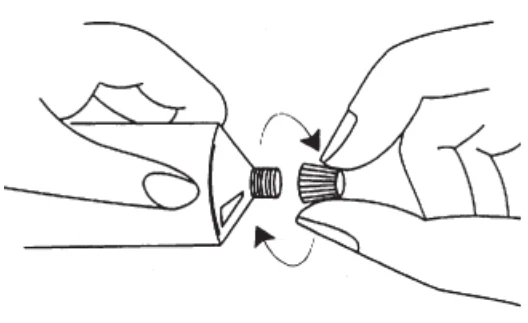
- 1. Remove the cap from the tube of cream and pierce the sealed end with the cap point. Screw the open end of the applicator onto the threaded end of the tube.
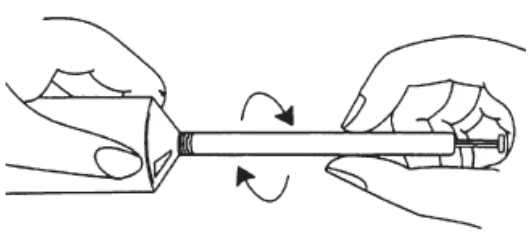
- 2. Load the applicator by squeezing the tube from the bottom until the red graduation mark on the plunger becomes visible.
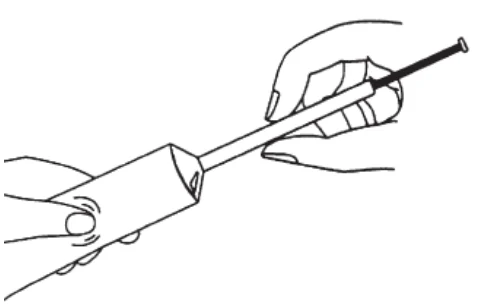
- 3. Remove the applicator from the tube of cream once it is full. Replace the cap on the tube of cream.
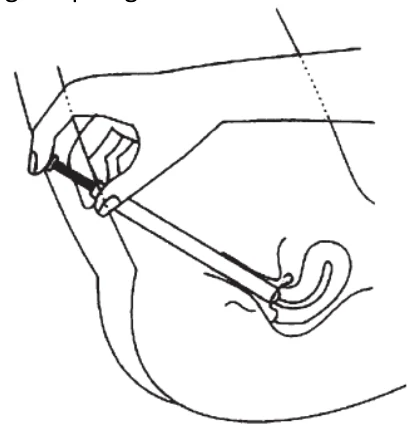
- 4. Lay down on your back with your legs raised. Insert the applicator deeply into the vagina and deposit the cream by depressing the plunger.
- 5. Remove the applicator and wash it with mild soap and warm water. Rinse thoroughly.
Overdose:
| If you think you, or a person you are caring for, have taken too much FLAGYL, contact a healthcare professional, hospital emergency department, or regional poison control centre or Health Canada’s toll-free number, 1-844-POISON-X (1-844-764-7669) immediately, even if there are no symptoms. |
|---|
Missed Dose:
If you forget to take FLAGYL, take it as soon as you remember. However, if it is almost time for your next dose, skip the missed dose. Do not use a double dose to make up for a forgotten dose.
Possible side effects from using FLAGYL:
These are not all the possible side effects you may have when taking FLAGYL. If you experience any side effects not listed here, tell your healthcare professional.
These side effects may include:
- Unpleasant taste in the mouth
- Furred tongue or tongue discoloration
- Feeling sick (nausea), being sick (vomiting), upset stomach, stomach pain or diarrhea
- Hearing loss
- Noise such as buzzing, ringing, or whistling heard in the ear
- Loss of appetite
- Feeling sleepy or dizzy
- Vaginal dryness and burning
Serious side effects and what to do about them
| Frequency/Side Effect/Symptom | Talk to your healthcare professional | Stop taking the/this drug and get immediate medical help | |
|---|---|---|---|
| Frequency/Side Effect/Symptom | Talk to your healthcare professional | Stop taking the/this drug and get immediate medical help | |
| Frequency/Side Effect/Symptom | Talk to your healthcare professional | Stop taking the/this drug and get immediate medical help | |
| Only if severe | In all cases | ||
| Only if severe | In all cases | ||
| Only if severe | In all cases | ||
| Allergic reaction: difficulty swallowing or breathing, wheezing; drop in blood pressure; feeling sick to your stomach and throwing up; hives or rash; swelling of the face, lips, tongue or throat | ✓ | ||
Severe Cutaneous Adverse Reactions (severe skin reactions that may also affect other organs):
blistering (with or without pus) which may also affect your eyes, mouth, nose, or genitals, itching, severe rash, bumps under the skin, skin pain, skin color changes (redness, yellowing, purplish).
or face.
body aches, swollen glands, cough.
or discomfort.
| ✓ | ||
| including the chest, back, arms, legs, head (where hair grows), genitals, or face. | |||
| Diarrhea | ✓ | ||
| Liver problems: yellowing of your skin and eyes (jaundice), right upper stomach area pain or swelling, nausea or vomiting, unusual tiredness | ✓ | ||
| Nervous system problems: inability to coordinate voluntary movements, problems using your arms and legs, problems with speaking or feel confused, convulsions, tingling sensation on the skin, stiff neck associated with headache, extreme sensitivity to bright light | ✓ | ||
| Fever, unexpected infections, mouth ulcers, bruising, bleeding gums, or extreme tiredness | ✓ | ||
| Posterior Reversible Encephalopathy Syndrome (brain swelling): Headache, confusion, visual disturbances, seizures | ✓ | ||
| Meningitis (inflammation of the thin tissue that surrounds the brain and spinal cord): sudden, high fever, severe headache, stiff neck, confusion, nausea and vomiting | ✓ | ||
| Pancreatitis (inflammation of the pancreas): severe abdominal pain which may reach through to your back, especially associated with nausea, vomiting and fatigue | ✓ | ||
| Eyesight problems: blurred or double vision | ✓ | ||
| Feeling depressed | ✓ | ||
| Pain in your eyes | ✓ | ||
| Irritation at the site of application | ✓ | ||
| Mental health problems: irrational thoughts, hallucinations, feeling confused or feeling depressed | ✓ | ||
| Thoughts or actions of self-harm or suicide | ✓ | ||
| Vertigo (spinning sensation) | ✓ | ||
| Numbness, tingling, pain, or a feeling of weakness, in the arms or legs | ✓ | ||
| Changes in blood cell levels (change in the number of white blood cells or blood platelets): infections, fatigue, fever, aches, pains and flu-like symptoms, bruising or bleeding for longer than usual if you hurt yourself | ✓ | ||
Heart problems: very fast or uneven heartbeat, chest pain, dizziness, weakness, blurred vision, fainting. This may also happen when FLAGYL is taken with drugs that can cause QT prolongation (a heart rhythm condition). | ✓ | ||
Gastrointestinal problems: Abdominal pain, cramps, diarrhea with possible bloody stools | ✓ | ||
Serious blood problem, where your blood does not clot properly called TTP (Thrombotic Thrombocytopenic Purpura): fever, unusual bruising (you see bruises under your skin that look like tiny red dots), unexplained extreme tiredness, confusion, yellow skin or eyes (this is called jaundice), low amount of urine or dark colored urine. It is advised to seek medical attention urgently as TTP can be fatal. | ✓ | ||
If you have a troublesome symptom or side effect that is not listed here or becomes bad enough to interfere with your daily activities, tell your healthcare professional.
Reporting Side Effects
You can report any suspected side effects associated with the use of health products to Health Canada by:
NOTE: Contact your healthcare professional if you need information about how to manage your side effects. The Canada Vigilance Program does not provide medical advice. |
Storage:
FLAGYL should be stored between 15 and 30° C.
Keep out of reach and sight of children.
If you want more information about FLAGYL:
- Talk to your healthcare professional.
- Find the full product monograph that is prepared for healthcare professionals and includes this Patient Medication Information by visiting the Health Canada Drug Product Database website (Drug Product Database: Access the database); the manufacturer’s website (www.sanofi.com/en/canada), or by calling 1-800-265-7927.
Date of Authorization: 2026-08-27