


Patient Medication Information: uses, side effects, how to take - Nidagel
Serious Warnings and Precautions
Cases of severe hepatic failure in patients with Cockayne syndrome have been reported with products containing metronidazole. If you have Cockayne syndrome, your doctor should check your liver function many times during your treatment and after.
What is NIDAGEL used for?
NIDAGEL is a prescription medicine used to treat a bacterial infection of the vagina in adults.
Antibacterial drugs like NIDAGEL treat only bacterial infections. They do not treat viral infections such as the common cold. Although you may feel better early in treatment, NIDAGEL should be taken exactly as directed. Misuse or overuse of NIDAGEL could lead to the growth of bacteria that will not be killed by NIDAGEL (resistance). This means that NIDAGEL may not work for you in the future.
How does NIDAGEL work?
NIDAGEL is applied inside the vagina. It is used to kill the bacteria in the infection.
What are the ingredients in NIDAGEL?
Medicinal ingredients: Metronidazole
Non-medicinal ingredients: Carbomer 934P, Edetate Disodium, Methylparaben, Propylparaben, Propylene Glycol, Purified Water and Sodium Hydroxide
NIDAGEL comes in the following dosage forms:
Gel: 0.75% w/w
Do not use NIDAGEL if:
- you are allergic to this drug (metronidazole) or to any ingredient in the formulation, including any non-medicinal ingredient, or component of the container;
- you are allergic to any similar drug (nitroimidazole derivatives);
- you are allergic to parabens;
you are pregnant and in your first trimester of pregnancy (your first 3 months).
To help avoid side effects and ensure proper use, talk to your healthcare professional before you take NIDAGEL. Talk about any health conditions or problems you may have, including if you:
- Have a disease of the central nervous system. Oral metronidazole has caused seizures, numbness in the fingers and toes. Contact your doctor right away if this happens.
Have Cockayne syndrome. Some patients using metronidazole have had severe liver problems, including death, with symptoms such as:
- Abdominal pain, nausea, vomiting.
- Yellowing of the skin and eyes.
- Fatigue, weakness, weight loss.
Stop taking NIDAGEL and contact your doctor right away if you experience any of these symptoms.
- Have liver disease with the same symptoms as above.
- Have had any blood problem. Using metronidazole has resulted in low white blood cell count (leukopenia).
- Are pregnant or plan to become pregnant. Metronidazole can be passed to the fetus and cause harm.
- NIDAGEL should only be used under the supervision of a doctor during the last 6 months of pregnancy.
- Are breastfeeding or planning to breastfeed.
You have or think you have a similar infection, thrush (candidiasis) with symptoms such as:
- Itching, pain, pain in urinating.
Vaginal discharge (white or watery).
Contact your doctor right away if you experience any of these symptoms..
Other warnings you should know about:
- NIDAGEL is for vaginal use only.
- Do not share your medicine.
- Avoid using NIDAGEL when you are having your period.
- Avoid intercourse during use of NIDAGEL.
- Severe liver problems, including death, were seen in patients with Cockayne syndrome using metronidazole.
- If you have Cockayne syndrome, your doctor should check your liver function many times during your treatment and after.
Oral metronidazole has caused psychotic reactions in alcoholic patients who are using metronidazole with disulfiram. Disulfiram is a medication used to treat chronic alcoholism.
Tell your healthcare professional about all the medicines you take, including any drugs, vitamins, minerals, natural supplements or alternative medicines.
The following may interact with NIDAGEL:
- Warfarin and other coumarin anticoagulants (medications used to treat blood clots).
- Certain laboratory tests results, such as: aspartate aminotransferase (AST, SGOT), alanine aminotransferase (ALT, SGPT), lactate dehydrogenase (LDH), triglycerides, and hexokinase glucose.
Alcohol may interact with NIDAGEL and cause some effects such as:
- Feeling sick, vomiting, stomach pain.
Hot flushes, fast or uneven heartbeat.
Avoid alcohol during NIDAGEL treatment and for 1 day after.
How to take NIDAGEL:
- 1.
Filing the applicator
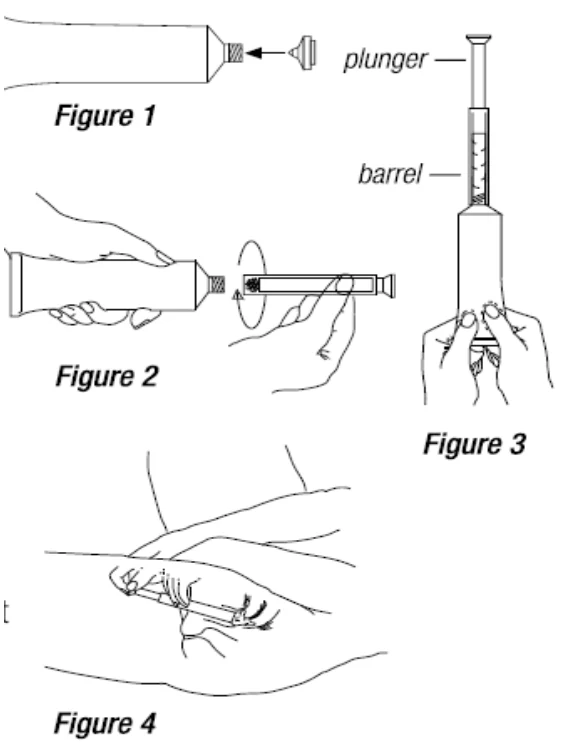
- Remove cap and puncture metal seal on tube with the pointed tip of cap. (See Figure 1)
- Screw end of applicator onto tube. (See Figure 2)
- Slowly squeeze gel out of tube and into applicator. Plunger will stop when the applicator is full. (See Figure 3)
- Unscrew applicator and replace cap on tube.
- 2.
Inserting the applicator
- The applicator may be inserted while lying on your back with your knees bent or in any comfortable position.
- Hold filled applicator by barrel, and gently insert into vagina as far as it will comfortably go. (See Figure 4)
- Slowly press the plunger until it stops to deposit gel into vagina and then withdraw the applicator.
- 3.
Care of the Applicator (if prescribed twice daily)
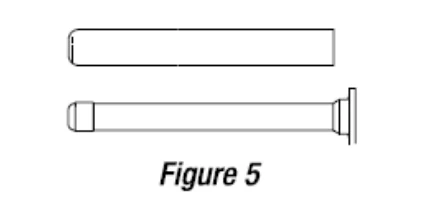
- After use, pull the plunger out of the barrel. (See Figure 5)
- Wash both plunger and barrel in warm soapy water and rinse thoroughly.
- To reassemble applicator, gently push plunger back into barrel.
Usual dose:
One full applicator contains about 5 grams of product.
Insert one full applicator into the vagina once or twice daily, as directed by your doctor:
- Once daily at bedtime for 5 days OR.
- Twice daily at morning and bedtime for 5 days.
Overdose:
| If you think you, or a person you are caring for, have taken too much NIDAGEL, contact a healthcare professional, hospital emergency department, or regional poison control centre immediately, even if there are no symptoms. |
Missed Dose:
If you forget to take NIDAGEL, apply the product at your next scheduled time. Do not double dose.
What are possible side effects from using NIDAGEL?
These are not all the possible side effects you may have when taking NIDAGEL. If you experience any side effects not listed here, tell your healthcare professional.
The most common side effects observed with NIDAGEL are:
- Vaginal secretions, in different colour and texture.
Less common side effects include:
- Headache, felling sleepy or dizzy.
- Feeling sick (nausea), being sick (vomiting), loss of appetite.
- Pubic discomfort.
- Upset stomach, cramps or pain.
- Different taste in mouth, feeling thirsty, dry mouth.
- Yeast infection, urinary infection.
- Diarrhea, loose stools, bloating, gas, constipation.
- Medication leakage.
- Feeling depressed or short-tempered.
- Discomfort during period or changes in menstrual cycle.
- Vaginal loss of feeling, spotting or bleeding, burning sensation in vaginal area, itching, dark urine.
Some effects were seen with other metronidazole products. These include:
- Unpleasant feeling in tongue, metallic taste.
- Change in blood eosinophils or neutrophils.
- Seizures, nervous system problems, hearing loss, ringing or other noises in one or both ears.
- Loss of balance or coordination, loss of muscle control.
- Feeling confused, unable to sleep.
- Dryness of the vagina, painful urination.
- Blushing of the skin, rash, itchy skin, allergic skin reaction.
- Fast or uneven heartbeat and chest pain.
Serious side effects and what to do about them
| Symptom / effect | Talk to your healthcare professional | Stop taking drug and get immediate medical help | |
|---|---|---|---|
| Only if severe | In all cases | ||
| COMMON | |||
| Vaginal irritation | √ | ||
| RARE | |||
| If you suffer of Cockayne syndrome and you develop liver problems with symptoms such as stomach pain, loss of appetite, nausea, vomiting, fever, malaise, fatigue, yellowing of the skin and eyes (jaundice), dark urine, putty or mastic-coloured stools or itching. | √ | ||
If you have a troublesome symptom or side effect that is not listed here or becomes bad enough to interfere with your daily activities, tell your healthcare professional.
Reporting Side Effects
You can report any suspected side effects associated with the use of health products to Health Canada by:
NOTE: Contact your health professional if you need information about how to manage your side effects. The Canada Vigilance Program does not provide medical advice. |
Storage:
- Store between 15 and 25 ˚C. Avoid exposure to extreme heat or cold.
- See end of carton and bottom of tube for lot number and expiration date.
- Keep out of reach and sight of children.
If you want more information about NIDAGEL:
- Talk to your healthcare professional
- Find the full product monograph that is prepared for healthcare professionals and includes this Patient Medication Information by visiting the Health Canada website: (https://www.canada.ca/en/health-canada/services/drugs-health-products/drug-products/drug-product-database.html; the manufacturer’s website www.bauschhealth.ca, or by calling 1-800-361-4261.
Bausch Health, Canada Inc.
2150 St-Elzear Blvd. West
Laval (Quebec) H7L 4A8
www.bauschhealth.ca