


Patient Medication Information: uses, side effects, how to take - Flagystatin (Aventis Pharma)
What is Flagystatin used for?
- Flagystatin treats and reduces two infections in your vagina at the same time.
- These infections are caused by the following microorganisms or “germs”: Trichomonas vaginalis and Candida albicans.
How does Flagystatin work?
Flagystatin kills the microorganisms causing the vaginal infection.
What are the ingredients in Flagystatin?
Medicinal ingredients: Metronidazole, nystatin.
Non-medicinal ingredients: Glycerides of saturated fatty acid (hard fat).
Flagystatin comes in the following dosage forms:
- Flagystatin comes in vaginal ovules. Each ovule contains metronidazole (500 mg) and nystatin (100,000 IU).
Do not use Flagystatin if:
- you are allergic to metronidazole (e.g., Flagyl®) or nystatin (e.g., Mycostatin®, Nilstat®, Nyaderm®), or any of the other ingredients in Flagystatin. (Read also “What are the ingredients in Flagystatin?” above).
- you are allergic to medications in the imidazole group of drugs. This group includes clotrimazole (e.g., Canesten®) and miconazole (e.g., Monistat®). These drugs are used to treat fungal and yeast infections.
To help avoid side effects and ensure proper use, talk to your healthcare professional before you use Flagystatin. Talk about any health conditions or problems you may have, including if you:
are pregnant, think you may be pregnant, or plan to get pregnant.
- are breastfeeding or plan to breastfeed. Metronidazole passes into breast milk and may affect your baby.
- have liver problems.
- have a disease of the nervous system.
- have a blood problem (like leukemia or hemophilia).
- have a thyroid problem.
- have hypoadrenalism (underactive adrenal glands).
Warnings you should know about:
Condoms or diaphragms may not work well when you are using Flagystatin. Please talk to your healthcare professional about choosing a different form of birth control while you are using this medicine.
Cases of severe liver toxicity/acute liver failure, including deaths, in patients with Cockayne syndrome have been reported with products containing metronidazole.
If you are affected by Cockayne syndrome, your doctor should also monitor your liver function frequently while you are being treated with metronidazole and afterwards.
- Tell your doctor immediately and stop taking metronidazole if you develop stomach pain, loss of appetite, nausea, vomiting, fever, malaise, fatigue, jaundice (e.g. yellowing of skin and eyes), dark urine putty or mastic colored stools or itching.
Do NOT use other vaginal injection or irrigation products, menstrual tampons, and soaps, douches and washes for your vagina while you are using Flagystatin. Your infection may be harder to treat if you use these products.
If a sexual partner thinks they may be infected, they should go to the healthcare professional for treatment too.
Do NOT drink alcohol (beer, wine or liquor) while you are using Flagystatin. Do NOT drink alcohol until one day after you finish your treatment. You could have a reaction that could make you throw up (vomit), feel flushed (become red in the face or other part of the body) and have a fast heartbeat.
Flagystatin may make your urine darker. You do not need to worry about this.
Do NOT drive any type of vehicle or use any tools or machinery if:
- you feel confused or dizzy.
- you see or hear things that are not there (hallucinations).
- you have a seizure.
- you have an eye problem, like blurred or double vision.
Other warnings you should know about:
Do not use this product after the seventh month of pregnancy,
Tell your healthcare professional about all the medicines you take, including any drugs, vitamins, minerals, natural supplements or alternative medicines.
The following may interact with Flagystatin:
- alcohol (e.g., beer, wine or liquor).
- drugs containing alcohol.
- anticoagulants (blood thinners), like warfarin (e.g., Coumadin®).
- busulfan (e.g., Myleran®), a drug used to treat cancer.
- cyclosporine (e.g. Neoral®), a drug used to suppress the immune system.
- disulfiram (e.g., Antabuse®), a drug used to treat drinking problems.
- 5-fluorouracil (e.g., fluorouracil or “5-FU” injection ), a drug used to treat cancer.
- lithium (e.g., Carbolith®, Duralith®, Lithane®, Lithmax®), a drug used to treat bipolar disorder.
- phenobarbital, a drug used to treat anxiety or to control seizures.
- phenytoin (e.g., Dilantin®), a drug used to control seizures.
How to use Flagystatin:
Ovules:
Insert one vaginal ovule deep into your vagina. Do this at bedtime.
Flagystatin ovule applicator
- 1. The applicator in this package is especially designed to be used with Flagystatin ovules.
- 2. The applicator will help you to properly insert Flagystatin ovules into your vagina.
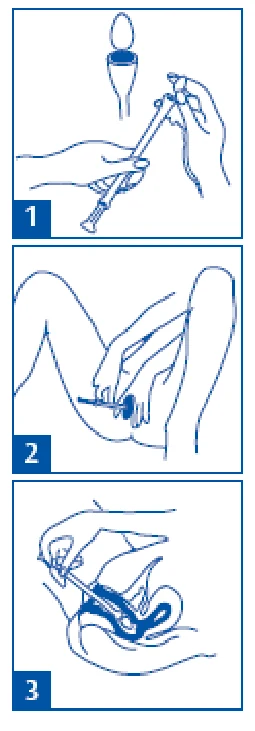
How to use the Flagystatin ovule applicator
- 1. Pull back the applicator plunger about 2.5 centimetres (1 inch). Insert an ovule into the cup at the end of the hollow tube (applicator).
- 2. Lie on your back with your knees drawn up. Insert the applicator into your vagina as far as it will comfortably go. Do NOT try to force it to go further.
- 3. BE SURE the applicator is in the correct position in your vagina BEFORE you push the plunger.
- 4. Then, push the plunger to place the ovule in your vagina.
- 5. Remove the applicator. Wash with mild soap and warm water. Rinse thoroughly and dry.
Usual dose Flagystatin ovules:
- Insert one vaginal ovule deep into you vagina at bedtime each day. Do this for 10 days in a row, or as prescribed by your doctor.
Further general directions:
- Tell your healthcare professional if you still have the infections after you finish the 10 days of treatment.
Overdose:
| If you think you have taken too much Flagystatin, contact your healthcare professional, hospital emergency department or regional Poison Control Centre immediately, even if there are no symptoms. |
Missed dose:
If you miss a dose of Flagystatin, ask your healthcare professional for advice. Do NOT insert two doses at the same time. Do NOT make up for a missed dose.
What are possible side effects from using Flagystatin?
These are not all the possible side effects you may feel when using Flagystatin. If you experience any side effects not listed here, contact your healthcare professional.
- slight burning or grainy feeling in your vagina
- darker urine
- constipation
- dry mouth
- bitter or metallic taste in your mouth
- indigestion (stomach upset)
- loss of appetite
- nausea
- vomiting
- depression
- headache
- trouble sleeping
- hearing loss
- noise such as buzzing, ringing, or whistling heard in the ear.
Serious side effects and what to do about them
| Symptom / effect | Talk to your healthcare professional | Stop taking drug and get immediate medical help | |
|---|---|---|---|
| Only if severe | In all cases | ||
| Diarrhea | ✓ | ||
| Irritation in or around your vagina | ✓ | ||
Severe liver problems: nausea, fatigue, yellowing of the skin and eyes, abdominal (belly) pain. | ✓ | ||
Nervous system problems: trouble moving, seizures, tingling feeling on the skin. | ✓ | ||
Decrease in some blood cells: Fever; other sign of infection such as chills, body aches, sore throat; or extreme tiredness. | ✓ | ||
Allergic reaction: swelling of the mouth, throat, lips, tongue, eyes, face, arms and legs, or hands, trouble breathing or swallowing, itching, rash, red spots and blisters. | ✓ | ||
Meningitis (inflammation of the thin tissue that surrounds the brain and spinal cord). You might have meningitis if you have a combination of these symptoms: a sudden, high fever, a severe headache, a stiff neck, confusion, nausea and vomiting. | ✓ | ||
Palpitation abnormal heartbeat, like a fast heartbeat or skipped beats. | ✓ | ||
| Chest pain | ✓ | ||
If you have a troublesome symptom or side effect that is not listed here or becomes bad enough to interfere with your daily activities, talk to your healthcare professional.
Reporting Side Effects
You can report any suspected side effects associated with the use of health products to Health Canada by:
NOTE: Contact your health professional if you need information about how to manage your side effects. The Canada Vigilance Program does not provide medical advice. |
Storage:
Store the vaginal ovules at room temperature, between 15°C and 25°C.
Protect them from light.
Keep Flagystatin where children cannot reach it or see it.
If you want more information about Flagystatin:
- Talk to your healthcare professional.
- Find the full product monograph that is prepared for healthcare professionals and includes this Patient Medication Information by visiting the Health Canada website (https://www.canada.ca/en/health-canada/services/drugs-health-products/drug-products/d rug-product-database.html); the manufacturer’s website www.sanofi.ca, or by calling 1-800-265-7927.