


Product Monograph - Flunarizine
RECENT MAJOR LABEL CHANGES
| None at time of authorization. |
TABLE OF CONTENTS
Sections or subsections that are not applicable at the time of authorization are not listed.
RECENT MAJOR LABEL CHANGES ............................................................................................ 2
TABLE OF CONTENTS ............................................................................................................. 2
PART I: HEALTH PROFESSIONAL INFORMATION ...................................................................... 4
1 INDICATIONS .............................................................................................................. 4
1.1 Pediatrics ................................................................................................................... 4
1.2 Geriatrics ................................................................................................................... 4
2 CONTRAINDICATIONS ................................................................................................. 4
4 DOSAGE AND ADMINISTRATION ................................................................................. 4
4.2 Recommended Dose and Dosage Adjustment ......................................................... 4
4.5 Missed Dose .............................................................................................................. 5
5 OVERDOSAGE ............................................................................................................. 5
6 DOSAGE FORMS, STRENGTHS, COMPOSITION AND PACKAGING ................................. 5
7 WARNINGS AND PRECAUTIONS .................................................................................. 6
7.1 Special Populations ................................................................................................... 7
7.1.1 Pregnant Women ................................................................................................ 7
7.1.2 Breast-feeding ..................................................................................................... 7
7.1.3 Pediatrics ............................................................................................................. 7
7.1.4 Geriatrics ............................................................................................................. 7
8 ADVERSE REACTIONS .................................................................................................. 7
8.2 Clinical Trial Adverse Reactions ................................................................................. 7
8.5 Post-Market Adverse Reactions ................................................................................ 8
9 DRUG INTERACTIONS ................................................................................................. 8
9.3 Drug-Behavioral Interactions .................................................................................... 8
9.4 Drug-Drug Interactions .............................................................................................. 8
9.5 Drug-Food Interactions ............................................................................................. 9
9.6 Drug-Herb Interactions ............................................................................................. 9
9.7 Drug-Laboratory Test interactions ............................................................................ 9
10 CLINICAL PHARMACOLOGY ......................................................................................... 9
10.1 Mechanism of Action .......................................................................................... 9
10.2 Pharmacodynamics ............................................................................................. 9
10.3 Pharmacokinetics .............................................................................................. 10
11 STORAGE, STABILITY AND DISPOSAL ......................................................................... 11
12 SPECIAL HANDLING INSTRUCTIONS ........................................................................... 11
PART II: SCIENTIFIC INFORMATION ...................................................................................... 12
13 PHARMACEUTICAL INFORMATION ............................................................................ 12
14 CLINICAL TRIALS ....................................................................................................... 12
14.2 Comparative Bioavailability Studies .................................................................. 12
15 MICROBIOLOGY ........................................................................................................ 13
16 NON-CLINICAL TOXICOLOGY ..................................................................................... 13
17 SUPPORTING PRODUCT MONOGRAPHS .................................................................... 18
PATIENT MEDICATION INFORMATION ................................................................................. 19
PART I: HEALTH PROFESSIONAL INFORMATION
1 INDICATIONS
FLUNARIZINE (flunarizine hydrochloride) is indicated for:
- Prophylaxis of migraine (with and without aura) in patients with frequent and severe attacks, who have not responded satisfactorily to other treatment and/or in whom other therapy has resulted in unacceptable side effects.
FLUNARIZINE is not indicated for the treatment of acute attacks.
1.1 Pediatrics
Pediatrics (< 18 years of age): Based on the data submitted and reviewed by Health Canada, the safety and efficacy of FLUNARIZINE in pediatric patients has not been established. Therefore, Health Canada has not authorized an indication for pediatric use See 7.1.3 Pediatrics.
1.2 Geriatrics
Geriatrics (> 65 years of age): The safety and efficacy of FLUNARIZINE in the prophylaxis of migraine has not been established in elderly subjects. See 7.1.4 Geriatrics, 8.2 Clinical Trial Adverse Reaction and 10.3 Pharmacokinetics, Geriatrics.
2 CONTRAINDICATIONS
FLUNARIZINE is contraindicated in:
- Patients with known hypersensitivity to the drug or to any ingredient in the formulation, including any non-medicinal ingredient, or component of the container. For a complete listing, see 6 DOSAGE FORMS, STRENGTHS, COMPOSITION AND PACKAGING.
- Patients with a history of depressive illness, or with pre-existing symptoms of Parkinson's disease or other extrapyramidal disorders. See 7 WARNINGS AND PRECAUTIONS, Depression and 7 WARNINGS and PRECAUTIONS, Extrapyramidal Symptoms; 8.5 Post Market Adverse Reactions)
4 DOSAGE AND ADMINISTRATION
4.2 Recommended Dose and Dosage Adjustment
- Adults
The recommended dose is 10 mg daily (at night) for patients younger than 65 years of age. If, during this treatment, depressive, extrapyramidal or other unacceptable adverse experiences occur, administration should be discontinued. If, after 3 months of this initial treatment, no significant improvement is observed, the patient should be considered a non-responder and administration should also be discontinued.
If treatment goes beyond 6 months, patients should continue to be closely monitored for side effects, in particular CNS related events and therapy should be discontinued at the first sign of adverse reactions. See 7 WARNINGS AND PRECAUTIONS, Extrapyramidal Symptoms.
Although there are no long-term controlled clinical trials with FLUNARIZINE, clinical experience suggests that two successive drug-free days per week may decrease the potential for adverse reactions. However, it should be noted that a brief interruption in therapy will not significantly reduce the exposure to FLUNARIZINE, given its long half-life (19 days).
- Pediatrics
Health Canada has not authorized an indication for pediatric use.
4.5 Missed Dose
If the patient misses a dose, instruct the patient to take the dose as soon as they remember. If it is almost time for the next dose, inform the patient to skip the missed dose and continue the regular dosing schedule.
5 OVERDOSAGE
Symptoms
On the basis of the pharmacological properties of the drug, sedation and asthenia may be expected to occur. A few cases of acute overdosage (up to 600 mg in one intake) have been reported and the observed symptoms included central nervous system effects (e.g. sedation, confusion and agitation) and cardiovascular effects (e.g. tachycardia).
Treatment
There is no specific antidote. Activated charcoal may be given if considered appropriate.
| For management of a suspected drug overdose, contact your regional poison control centre. |
6 DOSAGE FORMS, STRENGTHS, COMPOSITION AND PACKAGING
Table 1 – Dosage Forms, Strengths, Composition and Packaging
Each grey opaque body, red opaque cap, hard gelatin capsule, imprinted "5", with a white powder fill, contains flunarizine hydrochloride equivalent to 5 mg flunarizine. Available in bottles of 60 and 100, and unit dose packages of 60 capsules.
| Route of Administration | Dosage Form / Strength/Composition | Non-medicinal Ingredients |
|---|---|---|
| oral | capsule 5 mg of flunarizine hydrochloride | cornstarch, lactose monohydrate, stearic acid, and talc. The capsule shell, imprinted with edible black ink, contains the non-medicinal ingredients black iron oxide, D&C Red #28, D&C Yellow #10, FD&C Blue #1, FD&C Red #40, gelatin and titanium dioxide. The edible black ink contains the non-medicinal ingredients black iron oxide, potassium hydroxide, propylene glycol, shellac and strong ammonia solution. |
7 WARNINGS AND PRECAUTIONS
General
- Fatigue: In rare cases, fatigue may increase progressively during FLUNARIZINE treatment: in this event, therapy should be discontinued. Monitor patients closely and at regular intervals for fatigue.
Driving and Operating Machinery
Since sedation and/or drowsiness occur in some patients during treatment with FLUNARIZINE (see 8.2 Clinical Trial Adverse Reactions), patients should be cautioned against activities which require alertness or rapid, precise responses (e.g. operating potentially dangerous machinery or a vehicle) until the response to the drug has been determined.
Endocrine and Metabolism
- Galactorrhea: Galactorrhea has been reported in a few female patients, some of whom were also on oral contraceptives, within the first two months of FLUNARIZINE treatment. Discontinuation of FLUNARIZINE therapy resolved the galactorrhea in most cases. FLUNARIZINE therapy caused a mild but significant elevation of serum prolactin levels while Growth Hormone (GH), Luteinizing Hormone (LH), Follicle-Stimulating Hormone (FSH) and Thyroid-Stimulating Hormone (TSH) levels did not show significant variation. Two cases of menstrual irregularities have been reported.
- Lactose: FLUNARIZINE capsules contain lactose monohydrate. Patients with hereditary problems of galactose intolerance, the Lapp lactase deficiency or glucose-galactose malabsorption should not take this product.
Hepatic/Biliary/Pancreatic
FLUNARIZINE is metabolised by the liver, therefore care should be exercised when FLUNARIZINE is given to patients with compromised liver function
Monitoring and Laboratory Tests
Patients should be followed closely and monitored at regular intervals for:
- extrapyramidal symptoms
- depressive symptoms
- fatigue
This is to facilitate early detection and treatment discontinuation.
If the therapeutic effects diminish during treatment, FLUNARIZINE should be discontinued. For duration of treatment, see 4.2 Recommended Dose and Dosage Adjustment.
Neurologic
- Extrapyramidal Symptoms:
FLUNARIZINE is contraindicated in patients with pre-existing symptoms of Parkinson's disease or other extrapyramidal disorders (see 2 CONTRAINDICATIONS).
Clinical studies indicate that FLUNARIZINE treatment, even at recommended doses, can produce motor disturbances in subjects who did not show previous neurological deficits. Elderly patients appear to be particularly at risk. The clinical symptoms resemble Parkinson's disease, however, they do not improve with antiparkinson medication. Experience to date suggests that in most instances the extrapyramidal symptoms tend to be reversible following discontinuation of FLUNARIZINE treatment. Monitor patients closely and at regular intervals for extrapyramidal symptoms.
Psychiatric
- Depression: FLUNARIZINE is contraindicated in patients with depression (see 2 CONTRAINDICATIONS).
Clinical studies indicate that FLUNARIZINE can, even at recommended doses, precipitate depression, mostly in younger patients. Monitor patients closely and at regular intervals for depressive symptoms.
7.1 Special Populations
7.1.1 Pregnant Women
To date, there are no data to support the use of FLUNARIZINE during pregnancy. It should therefore not be administered to pregnant women unless the anticipated benefits outweigh the potential risks.
7.1.2 Breast-feeding
Studies in lactating dogs have shown that FLUNARIZINE is excreted in milk. The concentration of FLUNARIZINE in milk is much greater than that in plasma. No data are available on the excretion in human breast milk. Women taking FLUNARIZINE should not breast feed.
7.1.3 Pediatrics
Pediatrics (< 18 years of age): Based on the data submitted and reviewed by Health Canada, the safety and efficacy of FLUNARIZINE in pediatric patients has not been established. Therefore, Health Canada has not authorized an indication for pediatric use. See 1.1 Pediatrics.
7.1.4 Geriatrics
Geriatrics (> 65 years of age): The safety and efficacy of FLUNARIZINE in the prophylaxis of migraine has not been established in elderly subjects. See 1.2 Geriatrics, 7 WARNINGS AND PRECAUTIONS, Extrapyramidal Symptoms; 8.2 Clinical Trial Adverse Reaction and 10.3 Pharmacokinetics, Geriatrics.
8 ADVERSE REACTIONS
8.2 Clinical Trial Adverse Reactions
Clinical trials are conducted under very specific conditions. The adverse reaction rates observed in the clinical trials, therefore, may not reflect the rates observed in practice and should not be compared to the rates in the clinical trials of another drug. Adverse reaction information from clinical trials may be useful in identifying and approximating rates of adverse drug reactions in real-world use.
In clinical trials with FLUNARIZINE in migraine patients, drowsiness (also described as sedation or fatigue) as well as weight gain (and/or increased appetite) occurred fairly frequently, in the order of 20 and 15%, respectively. Of 840 migraine patients, 23 (2.7%) and 9 (1.1%) required withdrawal from FLUNARIZINE therapy due to drowsiness and weight gain, respectively.
The most serious side effect encountered in migraineurs during clinical trials was depression. Of 840 migraine patients, 11 (1.3%) were withdrawn due to depression.
Clinical experience in other indications and epidemiologic surveys suggest that extrapyramidal symptoms may develop during FLUNARIZINE therapy. Elderly patients are particularly at risk. See 2 CONTRAINDICATIONS and 7 WARNINGS AND PRECAUTIONS, Extrapyramidal Symptoms.
Other side effects encountered in clinical trials for migraine prophylaxis included the following:
Central Nervous System Disorders: Anxiety, dizziness/vertigo insomnia and sleep change;
Gastrointestinal Disorders: Emesis, gastralgia, heartburn, nausea;
Miscellaneous: Asthenia, dry mouth, muscle aches, skin rash.
8.5 Post-Market Adverse Reactions
International post-marketing experience suggests that patients between 20 and 54 years of age with a personal or familial history of depression are particularly at risk. See 2 CONTRAINDICATIONS and 7 WARNINGS AND PRECAUTIONS, Depression.
9 DRUG INTERACTIONS
9.3 Drug-Behavioral Interactions
Alcohol should be avoided when taking FLUNARIZINE. Excessive sedation can occur.
9.4 Drug-Drug Interactions
The drugs listed in this table are based on either drug interaction case reports or studies, or potential interactions due to the expected magnitude and seriousness of the interaction (i.e., those identified as contraindicated).
Table 2 - Established or Potential Drug-Drug Interactions
| Common name | Source of Evidence | Effect | Clinical comment |
| Anticonvulsants (phenytoin, carbamazepine, valproic acid and mephenytoin) | CT | Evidence from therapeutic trials in epileptic patients indicates that whereas FLUNARIZINE does not affect the kinetics of phenytoin, carbamazepine and valproic acid, it does decrease the plasma levels of mephenytoin. Furthermore, steady state levels of FLUNARIZINE are reduced by coadministration of two or more anticonvulsants. This is considered to be a result of enhanced first pass metabolism of FLUNARIZINE as a consequence of liver enzyme induction by the anticonvulsant medications. | Plasma concentration of FLUNARIZINE was generally lower in patients with epilepsy taking these anti-epileptic drugs. Caution is warranted and therapeutic concentration monitoring is recommended for FLUNARIZINE. |
| Warfarin sodium | CT | In other studies, FLUNARIZINE was shown not to affect the anticoagulant effect of warfarin sodium. | No evidence of clinically significant adverse interactions. |
| Glibenclamide and insulin | CT | In other studies, FLUNARIZINE was shown not to affect the hypoglycemic effect of glibenclamide and insulin. | No evidence of clinically significant adverse interactions. |
| Alcohol, hypnotics or tranquilizers | T | Excessive sedation can occur when alcohol, hypnotics or tranquilizers are taken simultaneously with FLUNARIZINE. | Alcohol, hypnotics or tranquilizers should be avoided when taking FLUNARIZINE. |
| Antihypertensives | T | FLUNARIZINE is a calcium channel blocker which improves blood flow, when used with an antihypertensive drug, it may result in an additive effect. | Reduction in the dosage of the anti-hypertensive drug may be required. |
Legend: C = Case Study; CT = Clinical Trial; T = Theoretical
9.5 Drug-Food Interactions
Interactions with food have not been established.
9.6 Drug-Herb Interactions
Interactions with herbal products have not been established.
9.7 Drug-Laboratory Test interactions
Interactions with laboratory tests have not been established.
10 CLINICAL PHARMACOLOGY
10.1 Mechanism of Action
Flunarizine hydrochloride is a selective calcium antagonist. It prevents cellular calcium overload by reducing excessive transmembrane calcium influx. Flunarizine does not interfere with normal cellular calcium homeostasis. Flunarizine also has antihistaminic properties.
The effects of flunarizine hydrochloride in the prophylaxis of migraine are most pronounced with regards to the reduction of the frequency of attacks. The severity of migraine attacks improves to a lesser extent, while little or no effect is seen on the duration of migraine episodes.
10.2 Pharmacodynamics
Flunarizine is a difluorinated derivative of cinnarizine which acts as a selective calcium-entry blocker.
In in vitro receptor-binding assays, flunarizine showed moderate binding affinity for five receptor sites in the following order of potency (Ki nM): histamine-H1(68), dopamine-D2 (80), serotonin- S2(200), αl-adrenergic (250), nitrendipine calcium sites (380). Flunarizine was inactive at the serotonin-S1, muscarinic-cholinergic, α2-adrenergic, and β-adrenergic receptor sites.
In ex vivo receptor-binding studies, flunarizine occupied the midbrain histamine-H1 receptor sites in a dose-related manner (minimal effective dose: 1.25 mg/kg) and for a prolonged period of time. Dopamine-D2 receptor sites in the striatum were occupied only at higher doses (10 mg/kg) and for a brief period of time. Serotonin-S2, αl-adrenergic and 3H- nitrendipine binding sites did not become significantly occupied in doses up to 10 mg/kg.
Cardiovascular effects
The effects of flunarizine on phenylephrine (PhE) and norepinephrine (NE)-induced vasoconstriction were examined in the isolated perfused rat mesentery. Both agents produced vasoconstriction in a dose-related manner. In flunarizine-pretreated rats (3 mg/kg IV), the dose- response curves were shifted to the right indicating that flunarizine exerted an anti- vasoconstrictor effect. When flunarizine was added to the perfusion medium, the vasoconstrictor responses to both PhE and NE were attenuated. Neither agent produced vasoconstriction in a calcium-free environment.
Flunarizine, 5 mg/kg IV, did not affect blood pressure, heart rate and cardiac output in anesthetized rats. However, it significantly decreased renal and splenic blood flow. The changes in blood flow were associated with similar changes in the percent distribution of cardiac output to these organs. Blood flow to other organs, namely the heart, liver, brain, lungs, and mesentery remained unchanged indicating that flunarizine influenced local regulatory mechanisms.
Flunarizine was also administered to anesthetized dogs, at doses ranging from 0.16 to 5.0 mg/kg IV. The lowest dose was without effect. The 0.63 mg/kg dose significantly decreased dp/dt and right ventricular force while blood pressure, heart rate and left ventricular pressure remained unchanged. At higher doses, all parameters decreased in a dose-related manner.
Although left ventricular dp/dt decreased, cardiac index and coronary artery blood flow increased indicating that myocardial pump performance was not impaired by flunarizine in doses up to 2.5 mg/kg IV.
10.3 Pharmacokinetics
The pharmacokinetic parameters of orally administered flunarizine are summarized in Table 3
Table 3: Pharmacokinetic parameters of flunarizine in healthy volunteers
| No. of Doses | Dose (mg) | Cmax (ng/mL) | Tmax (h) | AUC (ng/mL·h) | t1/2α (h) | Clp (mL/min) | t1/2β (mean days) [range] | ||||||||||
| Single | 5 | 30.5 | 133a | 2.4 | |||||||||||||
| Dose | 10 | 81.5 | 615d | 2.8 | |||||||||||||
| Studies | 20 | 117.0 | 2 - 4 | 1091d | 3.6 | ||||||||||||
| 30 | 81.6 | 2 - 6 | 1169c | 5.5 | 443.7 | 4 [2 - 8] | |||||||||||
| Multiple | 14 | 5 | 18.1b | ||||||||||||||
| Dose | 14 | 10 | 38.8b | ||||||||||||||
| Studies | 14 | 15 | 68.4b | 1264d | 301.2 | [4 - 19] | |||||||||||
| 57 | 10 | 114.5 | 1678d | 19 | |||||||||||||
a Area under curve 0 to 8 hours c Area under curve 0 to 168 hours
b Plasma concentrations at 2 hours d Area under curve 0 to 24 hours
Absorption
Flunarizine is well absorbed; peak plasma levels are attained 2 to 4 hours after oral administration in healthy volunteers. Plasma concentrations increase gradually during chronic administration of 10 mg daily, reaching a steady state level after 5 to 6 weeks of drug administration. Steady state plasma levels remain constant during prolonged treatment although there is substantial interindividual variation; plasma levels range between 39 and 115 ng/mL.
Distribution
As indicated by the large apparent volume of distribution (mean = 43.2 L/kg; range = 26.7-79.9 L/kg) seen after the oral administration of 30 mg in healthy volunteers, flunarizine is extensively distributed to tissues. Drug concentrations in tissues, particularly adipose tissue and skeletal muscle, were several times higher than plasma levels.
Flunarizine is 99.1% bound; 90% is bound to plasma proteins and 9% distributed to blood cells, leaving less than 1% present as free drug in the plasma water.
Metabolism
Flunarizine is metabolized principally through N-oxidation and aromatic hydroxylation.
Elimination
During a 48-hour period after a single 30 mg dose, minimal urinary (<0.2%) and fecal (<6%) excretion of flunarizine and/or its metabolites was found. This indicates that the drug and its metabolites are excreted very slowly over a prolonged period of time.
Flunarizine has a long elimination half-life of about 19 days.
Special Populations and Conditions
- Geriatrics: In 50 elderly patients (mean age 61 years), with intermittent claudication, long term (median 6 months) treatment with flunarizine, 10 mg per day, yielded fairly constant steady-state plasma levels albeit with considerable interindividual differences. While plasma flunarizine levels were between 50 ng/mL and 100 ng/mL in 46% of patients, individual values ranged from less than 20 ng/mL to 580 ng/mL. Flunarizine was devoid of cumulative effects as shown by repeated measurements.
11 STORAGE, STABILITY AND DISPOSAL
Store at room temperature (15-30°C). Protect from light and moisture.
FLUNARIZINE Should never be disposed of in household trash. Disposal via a pharmacy take back program is recommended.
12 SPECIAL HANDLING INSTRUCTIONS
None
PART II: SCIENTIFIC INFORMATION
13 PHARMACEUTICAL INFORMATION
Drug Substance
Proper name: Flunarizine hydrochloride
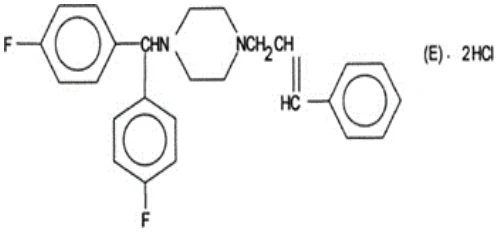
Chemical name: (E)-1-[bis(4-fluorophenyl)methyl]-4-(3-phenyl-2-propenyl) piperazine dihydrochloride
Molecular formula and molecular mass: C26H26F2N2 • 2HCI and 477.41
Structural formula:
Physicochemical properties: Flunarizine hydrochloride is a white to pale cream coloured powder soluble in dimethylsulfoxide, PEG 400, propylene glycol, N, N-dimethylformamide or methanol. Flunarizine is poorly soluble in water or ethanol (0.1-1%).
pKa: pKa1, is about 10 and pKa2 is about 6.
Partition Coefficient: Melting Point: Log P = 1.97 (n-octanol/water) by shake-flask method
Melting Point: 251°C
14 CLINICAL TRIALS
14.2 Comparative Bioavailability Studies
A standard, randomized, two-way crossover study was conducted in 28 healthy, adult, male volunteers to evaluate the relative bioavailability of single oral doses of FLUNARIZINE 5 mg Capsules and Sibelium® 5 mg Capsules. The mean pharmacokinetic parameters of these subjects are summarized in the following Table 4.
Table – 4. Summary Table of the Comparative Bioavailability Data
| Flunarizine (Dose: 2 x 5 mg) From Measured Data | ||
|---|---|---|
| Parameter | Geometric Mean Arithmetic Mean (CV%) | Ratio of Geometric Means (%) (90% CI) |
| FLUNARIZINE | Sibelium®† | |
| Flunarizine (Dose: 2 x 5 mg) From Measured Data |
|---|
| Parameter | Geometric Mean Arithmetic Mean (CV%) | Ratio of Geometric Means (%) (90% CI) |
|---|
| FLUNARIZINE | Sibelium®† | ||
|---|---|---|---|
| AUC0-72h (ng·hr/mL) | 315.13 | 276.44 | 114.0 |
| 364.46 (55) | 327.39 (58) | (106.7 - 121.9) | |
| AUCI (ng·hr/mL) | 361.41 | 319.26 | 113.2 |
| 426.11 (60) | 389.07 (65) | (106.2 - 120.6) | |
| Cmax (ng/mL) | 27.28 | 24.63 | 110.7 |
| 29.09 (38) | 26.38 (36) | (103.0 - 119.0) | |
| Tmax (hr)* | 3.50 (38) | 3.00 (37) | -- |
| t1/2 (hr)* | 25.14 (53) | 23.35 (68) | -- |
* Arithmetic means (CV %).
† Sibelium® is manufactured by Janssen Pharmaceutica, and was purchased in Canada.
15 MICROBIOLOGY
No microbiological information is required for this drug product.
16 NON-CLINICAL TOXICOLOGY
General Toxicology:
Acute Toxicity
Table 5. Behavioral, neurological and autonomic symptomatology observed during the acute toxicity studies:
Route of Administration | Species | Sex | Duration of Observation (days) | LD50 (mg/kg) |
|---|---|---|---|---|
| i.v. | Mice | M | 14 | 31* |
| F | 14 | 34* | ||
| i.v. | Rat | M & F | 14 | >22* |
| i.v. infusion | Rat | M & F | 14 | >25* |
| intra-arterial | Rat | M & F | 14 | >24* |
| i.p. | Mice | M | 7 | 174 |
| F | 7 | 142 | ||
| i.p. | Rats | M | 7 | 353 |
| F | 7 | 312 | ||
| oral | Mice | M | 7 | 815 |
| F | 7 | >1280 |
Route of Administration | Species | Sex | Duration of Observation (days) | LD50 (mg/kg) |
|---|---|---|---|---|
| oral | Rats | M | 7 | 312 |
| F | 7 | 247 | ||
| oral | Guinea-pigs | M | 7 | 640* |
| F | 7 | 300 | ||
| i.p. | Mice | M | 7 | 468 |
| F | 7 | 501 | ||
| i.p. | Rats | M & F | 7 | >600 |
| s.c. | Mice | M & F | 7 | >6000 |
| s.c. | Rats | M & F | 7 | >1000 |
| oral | Mice | M | 7 | 1928 |
| F | 7 | 1863 | ||
| oral | Rats | M | 7 | >3000 |
| F | 7 | 871 |
* indicates approximate value
Intravenous Administration
Mice: exophthalmos, hypotonia, tremors, dyspnea, convulsions, loss of righting reflex, occasional inflammation at injection site
Rats: hypotonia, ataxia, catalepsy, loss of righting reflex, palpebral ptosis, dyspnea, occasional inflammation at injection site
Rats (infusion): some cyanosis followed by necrosis at injection site
Rats (intra-arterial): hypotonia, hypothermia, piloerection, tremors and loss of righting reflex, paresis followed by hindpaw necrosis of cannulated leg
Oral Administration
Mice: piloerection, exophthalmos, tremors, convulsions, abnormal breathing
Rats: piloerection, ptosis, ataxia, abnormal gait, tremors, abnormal breathing, diarrhea
Guinea-pigs: ptosis, ataxia, tremors, convulsions
Intraperitoneal Administration
Mice: decreased spontaneous activity, ataxia, tremors, convulsions, ptosis, hypothermia, abnormal breathing, diarrhea
Rats: sedation, hypotonia, ataxia, catalepsy, convulsions, ptosis, hypothermia, abnormal breathing and cyanosis, diarrhea
Subcutaneous Administration
Mice: decreased activity, piloerection, ptosis, abnormal breathing, diarrhea, loss of hair
Rats: decreased activity, piloerection, abnormal breathing, loss of hair.
Subacute Toxicity
Oral Toxicity Study in Wistar Rats (13 weeks): Groups of 10 male and 10 female Wistar rats were administered flunarizine in the diet at doses of 0, 5, 20 or 80 mg/100 g food. The actual daily doses were 4.5, 18.1 and 72.3 mg/kg. There was no mortality in any of the groups or behavioural changes in the low- and medium-dose animals. High-dose animals exhibited sedation, rough coats, back arching and poor general condition during the early part of the study. Food consumption was reduced dose-dependently; the reduction was slight in males and substantial in females. Body weight gain was reduced in a corresponding fashion.
There were no effects on hematology or urinalysis with the exception of occasional granular casts in the urine of some high-dosed rats. The following significant changes were observed in serum biochemistry: decreased potassium in mid-and high-dose females and all treated males; decreased chloride in mid- and high-dose females; increased CO2 in the mid- and high-dose females; increased alkaline phosphatase in high-dose females; elevated bilirubin in all treated females; elevated SGOT in the high-dose females, and decreased haptoglobin in all treated females.
The only gross pathological differences were filiform uteri and ovarian follicular enlargements in mid- and high-dose females. Relative brain weights were increased in mid- and high-dose groups and relative liver weights were increased in high-dose animals. Absolute adrenal weights were significantly decreased in mid- and high-dose females. Relative gonad weights were increased in mid- and high-dose males while absolute gonad weights were decreased in high-dose females. Histological findings included vacuolated neurons in the colliculus or thalamus and/or nucleus reticularis of some rats in all groups including one control animal.
The livers showed centrilobular cloudy swelling and/or granular to vacuolar degeneration with slight fatty surcharge in high-dose rats. In the mid-dose animals similar but weaker changes were noted. The kidneys of the high-dose rats showed more or less marked degenerative changes of the tubuli recti and Henle's loops.
Oral Toxicity Study in Beagle Dogs (3 months): Flunarizine was administered daily for 3 months in gelatin capsules to 3 beagle dogs/sex/dose at the following doses (mg/kg): 4.2 from day 1-77 and 8.5 from day 78-91 (low-dose); 12.7 from day 1-21 and 16.9 from day 22-91 (mid-dose) and 38.1 from day 1-21, 50.8 from day 22-44, 38.1 from day 45-77 and 50.8 from day 78-91. Miosis and emesis occurred in the mid- and high-dose groups. High-dose animals also exhibited gingival swelling, relaxation of the nictitating membrane, ataxia, tremors, muscle tension, prostration, myoclonus and side to side head movement. There were no effects on food consumption and substantial weight loss occurred in only one high-dose female dog.
Hematology and urinalysis were normal. There was a decrease in serum potassium and chloride and increase in serum CO2 in high-dose dogs and a dose-related increase in alkaline phosphatase in 2 mid- and 4 high-dose dogs. Serum electrophoretic studies indicated decreases for albumin, which became significant in the high-dose group.
Tachycardia associated with lower blood pressure occurred in all groups and was accompanied by ST segment deviation and T wave changes in high-dose animals. Gross pathology and histopathology reflected gingival hyperplasia in mid-and high-dose dogs.
Chronic Toxicity
Oral Toxicity Study in Wistar Rats (6 and 12 months): Flunarizine was administered in the diet at dosages of 0, 5, 20 or 80 mg/100 g of food to groups of 10 male and 10 female Wistar rats for 6 or 12 months. The actual daily doses were 3.8, 15.4 and 65.0 mg/kg flunarizine. Several of the rats died or had to be sacrificed in a moribund state, namely: 30% of high-dose females in the 6-month study; 40% of the high-dose males and 60% of high-dose females in the 12-month study. One control male and one low-dose female also died in the latter study. High-dosed animals exhibited sedation and catalepsy during the entire experimental period. Sedation was less pronounced at the lower doses. Food consumption was reduced in the low- and high-dose males at 6 months, and in most females at both 6 and 12 months. Body weight gain was decreased in mid- and high-dose females in both studies.
Hematology findings included: decreased eosinophils in high-dose males at 6 months; increased WBC in high-dose females at 6 months and increased hematocrit and hemoglobin in high-dose females at 12 months. Biochemical findings included: increased alkaline phosphatase in high-dose females at 6 months; decreased potassium in all animals at 12 months with practically all values being below the normal range; decreased calcium in all females, and decreased phosphorus in high-dose males at 12 months. Urinary creatinine was decreased in the mid- and high-dose females at 6 and 12 months.
Gross pathology was normal except for an increased frequency of malformed incisors in high-dose females at both 6 and 12 months, and an adenofibroma of the mammary glands (confirmed histologically) in a low-dose female rat at 12 months. Relative liver weights were increased at 6 and 12 months in the high-dose groups with the values being outside of the normal ranges. Relative kidney weights in mid- and high-dose males and females, and relative brain weights in mid- and high-dose females were increased at 6 and 12 months. Absolute and relative adrenal weights were increased in high-dose males at 6 months. Histopathological changes were seen mainly in high- dose rats, the changes observed at the lower doses were minor and occurred only occasionally. The following lesions were seen: the lungs of some rats showed septal cell proliferation, which on occasion lead to lipoid pneumonia; the liver showed centrilobular swelling and vacuolization (fatty degeneration), as well as hyaline degeneration (only at 12 months); female rats showed evidence of prolonged diestrus, i.e.: reduced number of corpora lutea and increased clear glandular tissue of the ovaries, and atrophy of few uteri. Changes related to prolonged diestrus were also observed in mid-dose females at 6 months. The zona glomerulosa and on occasion the zona fasciculata of the adrenals were thickened and the fatty load increased; gingivitis and deficient calcification of dentin and of alveolar bone were seen in many rats, particularly females.
Oral Toxicity Study in Beagle Dogs (12 months): Flunarizine was administered 6 days/week for 52 weeks in gelatin capsules to three beagle dogs/sex/group at doses of 0, 5, 20, 40 or 80 (reduced to 40 after 2 weeks) mg/kg/day. Only 1 female dog survived in the 40-80 mg/kg group. Two males in the 20 mg/kg group and one female in the 40 mg/kg group died. In the mid- and high-dose animals salivation, emesis, prostration and occasional tremors were observed. All survivors showed an increase in body weight although this was slightly and substantially less in mid- and high-dose dogs, respectively, when compared to controls. Blood pressure was slightly decreased in mid- and high-dose animals and there was a dose-related increase in pulse rate in treated animals.
Hematology was normal in low- and mid-dose animals. There was a decrease followed by a terminal increase in WBC; non-segmented heterophils, lymphocytes and monocytes increased and normoblasts appeared in the high-dose group. Blood chemistry and urinalysis findings were normal.
Surviving dogs at 12 months showed no changes in gross pathology except the high-dose group which exhibited gingival hypertrophy and increased dental calculus. Withdrawal of the drug during 17 weeks, did not completely reverse the hyperplastic changes in the gum. Dogs which died during the study had empty digestive tracts with congestion of gastric and duodenal mucosa, swollen gums and tartar on the teeth. In the animals which died, agonal and autolytic lesions were observed.
Carcinogenicity:
Carcinogenicity Study in Albino Swiss Mice (18 months): Four groups of 50 male and 50 female Albino Swiss mice received flunarizine in the diet, at doses of 0, 5, 20 or 40 mg/kg/day for 18 months. In male animals, mortality was 38%, 50%, 28% and 26% in the control, low, medium and high-dose groups, respectively. In female animals, mortality was 32%, 38%, 62% and 90% in the control, low, medium and high-dose groups, respectively.
The mortality in the medium and high-dose groups was significantly higher than that seen in the control group.
Gross pathological examination revealed mammary gland stimulation in the medium- and high- dose females and an increase in mammary adenocarcinomas in all the treated female mice with the increased incidence being significant at the 20 mg/kg dose level. There were no other significant differences between control and treated mice and it was concluded that the effect on mammary gland tissue was probably due to a weak dopamine antagonistic effect.
Carcinogenicity Study in Wistar Rats (24 months):
Four groups of 50 male and 50 female Wistar rats received flunarizine in the diet, at doses of 0, 5, 20 or 40 mg/kg/day for 24 months. The high-dose (40 mg/kg) groups were treated with 80 mg/kg for the first 2 months. Survival rates were extremely low both in control and treated groups. More than 90% of the male rats and about 80% of the female rats died in the course of the study. While flunarizine did not affect tumor rate or type in rats at the doses studied, the validity of the study is questionable in view of the high mortality.
Genotoxicity:
Mutagenicity
Flunarizine had no mutagenic effects when tested by the Ames Test, the sister chromatid change test in human lymphocytes, the sex-linked recessive lethal test in Drosophila melanogaster, the micronucleus test in male rats or the dominant lethal test in male and female mice.
Reproductive and Developmental Toxicology:
Fertility and General Reproductive Performance in Wistar Rats:Three hundred twenty Wistar rats were divided into groups of 20 males and 20 females. Flunarizine, 0, 10, 40 or 160 mg/100 g food, (approximately 0, 10, 40 and 160 mg/kg) was administered at each dosage level to males for 60 days pre-mating or to females for 14 days pre-mating and 21 days of gestation. Treated animals were mated with non-treated animals. In dosed females, there were no pregnancies at the 160 mg/kg dose and 14/20 animals died. Two of the 160 mg/kg dosed males also died. All other animals survived until the end of the study. In female rats, treated with 40 mg/kg of flunarizine, the following changes were seen: decreased weight gain during pregnancy, decreased rate of pregnancy (50%), increase in the number of resorbed fetuses (51%), decreased litter size and decreased weight of pups at birth. The low dose of flunarizine had no effect on any of the parameters evaluated. In non-dosed females, mated with treated males, only a slight elevation of resorption was seen at the highest dose.
Teratology Study in Wistar Rats: Groups of 20 female Wistar rats received flunarizine 0, 10, 20 or 40 mg/100 g food (approximately 0, 10, 20 and 40 mg/kg) from day 6 to day 15 of pregnancy. Two females died in the high-dose group. Pregnancy rates at day 22 post-mating were 95% (0 mg/kg), 90% (10 mg/kg), 85% (20 mg/kg) and 56% (40 mg/kg). Litter size, live fetuses and number of resorptions were comparable in the 0, 10, and 20 mg/kg groups. At the 40 mg/kg dose, the resorption rate was slightly increased (16.4% vs. 6.0%) and number of live fetuses slightly decreased (84% vs. 94%) when compared to controls. There was no evidence of teratogenicity.
Teratology Study in New Zealand Rabbits: Groups of 20 female New Zealand rabbits received flunarizine by gavage at doses of 0, 2.5 or 10 mg/kg from day 6 to day 18 of pregnancy. One female in each of the flunarizine-treated groups died. After artificial insemination, the pregnancy rates were 65%, 90% and 85% in the control, 2.5 mg/kg and 10 mg/kg groups respectively. The percentages of resorptions increased with increasing dose from 7.8% in the control group to 13.5% in the 2.5 mg/kg group and 28.6% in the 10 mg/kg group. The number of live births decreased correspondingly, the values being 89.6%, 84.8% and 71.4% in the control, low-dose and high-dose groups, respectively. There was no evidence of teratogenicity.
Special Toxicology:
Other Endocrine Studies
Effect of flunarizine on the female genital tract and mammary gland in mice: Groups of 20 female mice received flunarizine in the diet at approximate doses of 0, 5, 20 or 40 mg/kg for 8 days. The following dose-related changes were seen in mice treated with 20 or 40 mg/kg flunarizine: slightly increased acinar growth of the mammary glands, pseudopregnant-stage of the vagina, pseudopregnant corpora lutea in the ovaries and decreased diameter of the uterine horns. In mice treated with the 5 mg/kg dose, all these parameters were similar to those seen in control animals.
Effect of flunarizine on the estrus cycle in rats: Flunarizine was administered by gavage to young female rats, with regular, 4-day cycles 24 hours after detection of estrus. The potential prolongation of the diestral period was evaluated by daily vaginal smears. Up to 5 mg/kg, flunarizine did not affect normal cycling. At 10 mg/kg, flunarizine delayed the cycle by one day while at 20 mg/kg it caused pseudopregnancy.
Juvenile Toxicity:
Perinatal and Postnatal Study in Wistar Rats: Groups of 20 female rats received flunarizine, 0, 10, 20 or 40 mg/100 g food (approximately 10, 20 and 40 mg/kg) from day 16 of pregnancy throughout a 3-week lactation period. Body weight gain and food consumption showed dose- related decreases. Litter size (8.5 vs. 9.9) and the percentage of live fetuses (62.3% vs. 93.9%) were lower in the 40 mg/kg group than in the control group. There were no teratogenic effects. At weaning the survival rates were 94% in control dams, 66% at 10 mg/kg, 10% at 20 mg/kg and 1.9% at 40 mg/kg. The decreased survival rates were probably due to a dose-related decrease in food consumption and milk production in the treated females.
17 SUPPORTING PRODUCT MONOGRAPHS
- 1. Sibelium® (Flunarizine Hydrochloride Capsules, 5 mg), Selective Calcium-Entry Blocker, Product Monograph, Pharmascience Inc., September 1, 1998.