


Product Monograph - PMS-Betahistine
SUMMARY PRODUCT INFORMATION
| Route of Administration | Dosage Form / Strength | All Non-Medicinal Ingredients |
| Oral | Tablet 16 mg and 24 mg | Colloidal Anhydrous Silica, Crospovidone, Lactose Monohydrate, Microcrystalline Cellulose, Povidone and Stearic Acid |
INDICATIONS AND CLINICAL USE
pms-BETAHISTINE (betahistine dihydrochloride) is indicated for:
- reducing the episodes of recurrent vertigo associated with Ménière’s disease.
Geriatrics (> 65 years of age)
Limited data from clinical studies in this patient group is available. However, as with all drugs, caution should be exercised in this patient population (see WARNINGS AND PRECAUTIONS, Special Populations, Geriatrics (> 65 years of age)).
Pediatrics (< 18 years of age):
Betahistine dihydrochloride is not recommended for use in children below 18 years of age due to insufficient data on safety and efficacy (see WARNINGS AND PRECAUTIONS, Special Populations, Pediatrics (< 18 years of age)).
CONTRAINDICATIONS
pms-BETAHISTINE (betahistine dihydrochloride) is contraindicated in:
- patients with known hypersensitivity to betahistine or to any of the tablet constituents. For a complete listing, see the DOSAGE FORMS, COMPOSITION AND PACKAGING section.
- patients with peptic ulcer and in patients with a history of this condition (see WARNINGS AND PRECAUTIONS, Gastrointestinal).
- patients with pheochromocytoma.
WARNINGS AND PRECAUTIONS
Respiratory
Although clinical intolerance to betahistine dihydrochloride tablets has been shown in a relatively few patients with bronchial asthma, caution should be exercised when giving the product to asthmatic patients.
Gastrointestinal
Several patients with a history of peptic ulcer have experienced an exacerbation of symptoms while using betahistine dihydrochloride. Although experiments in animals and in humans have shown that the gastrointestinal side effects associated with betahistine dihydrochloride are not related to gastric acid production, betahistine dihydrochloride is contraindicated in the presence of patients with peptic ulcer and in patients with a history of this condition.
Special Populations
Pregnant Women
The safety of betahistine dihydrochloride in human pregnancy has not been established. Animal studies are insufficient with respect to effects on pregnancy, embryonal/foetal development, parturition and postnatal development. The potential risk for humans is unknown. Betahistine dihydrochloride should not be used during pregnancy unless the potential benefits to the mother outweigh the potential risk to the fetus.
Nursing Women
There are no clinical studies of the excretion of betahistine dihydrochloride into human milk. Betahistine accumulates in the milk of lactating rat dams. The importance of the drug to the mother should be weighed against the benefits of nursing and the potential risks for the child.
Pediatrics (< 18 years of age)
The safety and efficacy of betahistine hydrochloride in pediatric patients below 18 years of age have not been evaluated, therefore its use in this population is not recommended.
Geriatrics (> 65 years of age)
Limited data from clinical studies suggest that a dosage adjustment is unlikely to be required in this patient group. In general, however, the risk of adverse reactions to any drug may be greater in elderly patients as they are more likely to have decreased renal and/or hepatic function, and are more likely to be taking concomitant medications. Therefore, as with all drugs, caution should be exercised in this patient population.
Effect on Ability to Drive and Use Machines
Although not studied in patients with Ménière’s disease, in clinical studies using normal healthy volunteers without Ménière’s disease, 72 mg of betahistine dihydrochloride taken three times daily for three days, had no or negligible effects on driving skills in a driving task. However, Ménière’s disease itself can negatively affect the ability to drive and use machines.
Monitoring and Laboratory Tests
There is no known interference between betahistine dihydrochloride and laboratory tests.
ADVERSE REACTIONS
Adverse Drug Reaction Overview
The most common adverse reactions experienced with betahistine dihydrochloride are nausea, dyspepsia and headache.
Clinical Trial Adverse Drug Reactions
Because clinical trials are conducted under very specific conditions, the adverse reaction rates observed in the clinical trials may not reflect the rates observed in practice and should not be compared to the rates in the clinical trials of another drug. Adverse drug reaction information from clinical trials is useful for identifying drug-related adverse events and for approximating rates.
Table 1: Undesirable Effects Experienced in Betahistine Dihydrochloride-Treated Patients in Placebo-Controlled Clinical Trials*
Betahistine Dihydrochloride n=770 (%) | Placebo n=751 (%) | |
| Gastrointestinal Disorders | ||
| Dyspepsia | 1.0 | 0.5 |
| Nausea | 1.8 | 0.5 |
| Nervous System Disorders | ||
| Headache | 5.3 | 4.4 |
* Data represent adverse events reported from 23 placebo-controlled studies where the frequency of the adverse event was reported ≥ 1% in the Betahistine group and at a frequency at least ≥ 0.5% higher than placebo.
Post-Market Adverse Drug Reactions
In addition to those events reported during clinical trials, the following undesirable effects have been reported spontaneously during post-marketing use and in scientific literature. A frequency cannot be estimated from the available data and is therefore classified as 'not known'.
| Cardiac Disorders: | Ventricular extrasystoles*, hypotension*, including orthostatic and postural hypotension, tachycardia* |
| Gastrointestinal Disorders: | Mild gastric complaints (e.g., vomiting, gastrointestinal pain, abdominal distension and bloating) |
| Immune System Disorders: | Hypersensitivity reactions (e.g., anaphylaxis). |
| Nervous System Disorders: | Somnolence*, convulsions*, paraesthesia*, confusion and hallucinations* |
| Respiratory System: | Dyspnoea* |
| Skin and Subcutaneous Tissue Disorders: | Angioneurotic oedema, urticaria, skin rashes of various types, pruritus and Stevens Johnson syndrome* |
* The causal relationship between betahistine dihydrochloride and the emergence of these events has not been established.
DRUG INTERACTIONS
Overview
No in vivo interaction studies have been performed. In vitro data revealed no inhibition of Cytochrome P450 enzymes.
Drug-Drug Interactions
Table 2: Established or Potential Drug-Drug Interactions
Betahistine Dihydrochloride | Ref | Effect | Clinical comment |
| Antihistamines | T | Efficacy of either drug affected. | Caution is recommended. |
| Drugs that inhibit monoamine-oxidase (MAO) including MAO subtype B (e.g., selegiline) | In vitro | Inhibition of betahistine dihydrochloride metabolism. | Caution is recommended when using betahistine dihydrochloride and MAO inhibitors (including MAO-B selective) concomitantly. |
Legend: C = Case Study; CT = Clinical Trial; T = Theoretical
Drug-Food Interactions
Following administration of betahistine dihydrochloride to healthy male subjects under fed conditions, the rate of absorption was slowed down and maximum concentrations (Cmax) decreased, whereas the extent of absorption (AUCinf) was not affected by food.
Drug-Herb Interactions
Interactions with herbal products have not been established.
Drug-Laboratory Interactions
Interactions with laboratory tests have not been established.
DOSAGE AND ADMINISTRATION
Dosing Considerations
Mild gastric complaints (e.g., vomiting, gastrointestinal pain, abdominal distension and bloating), have been observed. These can normally be minimized or eliminated by taking the dose during meals or by lowering the dose.
Hepatic Insufficiency
Betahistine dihydrochloride is highly metabolized primarily by the liver. No pharmacokinetic data are available in patients with hepatic impairment. Caution is advised with use of pms-BETAHISTINE in this population.
Recommended Dose and Dosage Adjustment
The usual daily dosage range is 24 to 48 mg administered orally in divided doses.
Three Times Daily Dosing
16 mg tablets: ½ to 1 tablet three times daily.
Twice Daily Dosing
24 mg tablets: 1 tablet twice daily.
Missed Dose
If a dose is missed, the missed dose should not be taken. The next dose should be taken at the usual time. A double dose should never be taken to make up for a forgotten dose.
OVERDOSAGE
A few overdose cases (up to 640 mg), with mild to moderate symptoms of nausea, dry mouth, dyspepsia, abdominal pain and somnolence have been reported. Presumably, more serious complications (e.g., convulsion, pulmonary or cardiac complications) may occur in cases of intentional overdose of betahistine dihydrochloride above 640 mg, especially in combination with other overdosed drugs. Standard overdose protocol/supportive measures should be followed.
| For management of a suspected drug overdose, contact your regional Poison Control Centre. |
ACTION AND CLINICAL PHARMACOLOGY
Mechanism of Action
The mechanism of action of betahistine dihydrochloride is only partly understood. There are several plausible hypotheses that are supported by animal studies and human data:
Betahistine dihydrochloride affects the histaminergic system
Betahistine dihydrochloride acts both as a partial histamine H1-receptor agonist and histamine H3-receptor antagonist in neuronal tissue, and has negligible H2-receptor activity. Betahistine dihydrochloride increases histamine turnover and release by blocking presynaptic H3-receptors and inducing H3-receptor downregulation.
Betahistine dihydrochloride may increase blood flow to the cochlear region
Pharmacological testing in animals has shown that the blood circulation in the striae vascularis of the inner ear improves, probably by means of a relaxation of the precapillary sphincters of the microcirculation of the inner ear.
Betahistine dihydrochloride alters neuronal firing in the vestibular nuclei
Betahistine dihydrochloride was also found to have a dose dependent inhibiting effect on spike generation of neurons in lateral and medial vestibular nuclei.
Pharmacodynamics
In ten healthy male volunteers, single oral doses of 8, 16, and 32 mg of betahistine dihydrochloride given in a placebo-controlled, double-blind crossover study produced dose-related effects on the vestibular system, as measured by electronystagmography (ENG). Maximal effects on the slow nystagmus phase were found 3 to 4 hours after drug intake. Nystagmus duration was reduced by a mean value of 35% (after 8 mg), 48% (16 mg), or 59% (32 mg); all reductions were statistically significant (p < 0.0005).
Eleven patients with Ménière's disease were treated in a three month, open-label study of the pharmacological effects of betahistine dihydrochloride on hearing and ENG-recorded, rotation-induced nystagmus. The study participants took one, 8 mg tablet three times a day (total daily dose, 24 mg). The speed of the quick phase of eye shift pre-treatment versus that achieved at the end of the three-month treatment period was used as the parameter of effectiveness in this study. Hearing was evaluated pre- and post-treatment using three pure tone hearing levels (250, 500, 1,000 Hz).
Hearing loss was less after treatment, but the difference did not achieve statistical significance. At some rates of acceleration and at all rates of deceleration, there was an increase in the mean eye shift per second; this increase reached statistical significance in six of the 12 tests.
Pharmacokinetics
The pharmacokinetic profile of betahistine dihydrochloride was studied in six healthy male volunteers. Tablets containing 8 mg of radio-labelled betahistine dihydrochloride were administered to the subjects following an overnight fast, 30 minutes before a standard breakfast. Urine was collected for at least 56 hours after dosing, and five blood samples were drawn from each volunteer at 1, 2, 3, 8, and 25 hours for the first two volunteers, and at 1, 2, 3, 5.5, and 8 hours for the next four subjects.
Total urinary excretion of the radio-label was 90.7%, and the urinary half-life was 3.5 hours. More than 85% of the administered dose was excreted in the urine within 24 hours. Only one primary urinary metabolite was identified - 2-pyridylacetic acid. Maximum plasma levels of radioactivity were attained by the 1-hour sampling time; the plasma half-life of the radio-label was 3.4 hours.
Absorption
Orally administered betahistine dihydrochloride is readily and almost completely absorbed from all parts of the gastro-intestinal tract. Under fed conditions Cmax is lower compared to fasted conditions. However, total absorption of betahistine dihydrochloride is similar under both conditions, indicating that food intake only slows down the absorption of betahistine dihydrochloride.
Distribution
The percentage of betahistine dihydrochloride that is bound by blood plasma proteins is less than 5%.
Metabolism
After absorption, betahistine dihydrochloride is rapidly and almost completely metabolized into 2-pyridylacetic acid (2-PAA; which has no pharmacological activity). After oral administration of betahistine dihydrochloride the plasma (and urinary) levels of betahistine dihydrochloride are very low. Pharmacokinetic analyses are therefore based on 2-PAA measurements in plasma and urine. The plasma concentration of 2-PAA reaches its maximum 1 hour after intake and declines with a half-life of about 3.5 hours.
Excretion
2-PAA is readily excreted in the urine. In the dose range between 8 and 48 mg, about 85% of the original dose is recovered in the urine. Renal or fecal excretion of betahistine dihydrochloride itself is of minor importance.
Recovery rates are constant over the oral dose range of 8 to 48 mg indicating that the pharmacokinetics of betahistine dihydrochloride are linear, and suggesting that the involved metabolic pathway is not saturated.
Special Populations and Conditions
Pediatrics
pms-BETAHISTINE (betahistine dihydrochloride) is not recommended for use in children below 18 years of age (see WARNINGS and PRECAUTIONS, Pediatrics (< 18 years of age)).
Geriatrics
Limited data from clinical studies in this patient group is available, however, as with all drugs, caution should be exercised in this patient population (see WARNINGS and PRECAUTIONS, Geriatrics (> 65 years of age)).
Gender
No gender related pharmacokinetic differences have been observed in adult patients studied.
Race
Pharmacokinetic differences due to race have not been identified.
Hepatic Insufficiency
No pharmacokinetic data are available in patients with hepatic impairment.
Renal Insufficiency
No pharmacokinetic data are available in patients with renal impairment.
Genetic Polymorphism
No data is available on genetic polymorphism.
STORAGE AND STABILITY
Store tablets at controlled room temperature 15°C and 25°C. Protect from exposure to light and moisture.
Keep in a safe place out of the sight and reach of children.
DOSAGE FORMS, COMPOSITION AND PACKAGING
Tablets
16 mg Each white to almost white, round, flat-faced, bevel-edged, tablet debossed with “B16” on one side, scored on the other side contains 16 mg of betahistine dihydrochloride and the following non-medicinal ingredients: Colloidal Anhydrous Silica, Crospovidone, Lactose Monohydrate, Microcrystalline Cellulose, Povidone and Stearic Acid. Available in blister packages of 100 tablets (25 tablets per blister strips, 4 blisters strips per carton).
24 mg Each white to almost white, round, biconvex, tablet, debossed with “B24” on one side, scored on the other side contains 24 mg of betahistine dihydrochloride and the following non-medicinal ingredients: Colloidal Anhydrous Silica, Crospovidone, Lactose Monohydrate, Microcrystalline Cellulose, Povidone and Stearic Acid. Available in blister packages of 100 tablets (25 tablets per blister strips, 4 blisters strips per carton).
PART II: SCIENTIFIC INFORMATION
PHARMACEUTICAL INFORMATION
Drug Substance
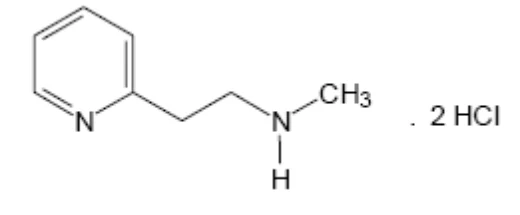
Proper name: Betahistine dihydrochloride
Chemical name: 2-[2-(methylamino) ethyl]pyridine dihydrochloride
Molecular formula: C8H12N2.2HCl
Molecular mass: 209.1 g/mol
Structural formula:
Physicochemical properties:
Description: Betahistine dihydrochloride is a white to almost white crystalline product which is very hygroscopic.
Solubility: The product is very soluble in water, freely soluble in methanol and 96% methanol, and slightly soluble in isopropanol.
pKa: The pKa values are 3.5 and 9.7.
Melting point: The substance melts at about 152 °C.
CLINICAL TRIALS
Comparative Bioavailability Studies
A blind, randomized, two-way crossover bioequivalence study was performed in normal healthy male volunteers (n=17) under fasting conditions on Betahistine Dihydrochloride tablets using pms-BETAHISTINE 24 mg versus the reference product, SERC® 24 mg tablets. The pharmacokinetic data calculated for the pms-BETAHISTINE 24 mg tablets and SERC® 24 mg tablets formulation is tabulated below:
SUMMARY TABLE OF THE COMPARATIVE BIOAVAILABILITY DATA
Betahistine (1 x 24 mg tablet) From measured data Geometric Mean Arithmetic Mean (CV %) | ||||
|---|---|---|---|---|
| Parameter | Test* | Reference† | % Ratio of Geometric Means | Confidence Interval (90%) |
AUCT (ng·h/mL) | 3,059.4 3,113.0 (19.1) | 3,232.1 3,273.0 (18.1) | 94.66 | 89.04-100.62 |
AUCI (ng·h/mL) | 3,227.9 3,295.9 (20.8) | 3,437.6 3,490.9 (19.4) | 93.90 | 87.89-100.32 |
Cmax (ng/mL) | 633.6 644.1 (18.3) | 638.5 648.0 (18.0) | 99.24 | 91.16-108.03 |
Tmax § (h) | 0.67 (0.500 – 1.75) | 0.67 (0.500 – 1.5) | ||
T½€ (h) | 3.58 (21.6) | 3.83 (22.3) | ||
*pms-BETAHISTINE, Pharmascience Inc., Montréal, Canada
†SERC®, Solvay Pharma Inc., Markham, Ontario, Canada
§ Expressed as the median (range)
€ Expressed as the arithmetic mean (CV %)
DETAILED PHARMACOLOGY
Animal
Pharmacodynamics
In vitro
In studies on a variety of isolated organs and isolated tissues, betahistine dihydrochloride produced responses similar to those induced by histamine. Betahistine dihydrochloride had little or no affinity for histamine H2-receptors as confirmed by its activity in tests using rat uterine muscle, rabbit and guinea pig hearts and atrial pairs, and isolated guinea pig ileum.
In vivo
In evaluations of its effects on the circulation of the inner ear, betahistine dihydrochloride was found to produce greater effects than histamine. Betahistine dihydrochloride increased blood flow in the labyrinthine arteries of dogs by 60.9% following a dose of 100 mcg. Circulation in the stria vascularis and spiral ligament of guinea pigs and chinchillas was increased by a mean of 50% when betahistine dihydrochloride was administered at doses as low as 0.1 mg/animal. In guinea pigs, cochlear blood flow was increased for 30 minutes following a dose of 0.2 mg/kg.
In cats, betahistine dihydrochloride was also found to have a dose dependent inhibiting effect on spike generation of neurons in lateral and medial vestibular nuclei. Betahistine dihydrochloride at 60 and 120 times the normal human dose accelerates the vestibular recovery after unilateral neurectomy. Taken together these properties may contribute to its beneficial therapeutic effects in Ménière's disease and vestibular vertigo.
Betahistine dihydrochloride increases histamine turnover and release likely by blocking presynaptic H3-receptors and inducing H3-receptor downregulation. This effect on the histaminergic system could provide an explanation for the efficacy of betahistine dihydrochloride in the treatment of vertigo and vestibular diseases.
Studies of the effects on the cardiovascular system, the pulmonary system, the renal system, the gastrointestinal system, and the central nervous system all indicated that betahistine dihydrochloride produced effects similar to, but less potent than, those of histamine.
Following rapid intravenous (IV) administration of betahistine dihydrochloride, a brief fall in blood pressure was evoked in rats, guinea pigs, dogs, and cats. This hypotensive effect could be blocked by the administration of histamine H1-antagonists, but not by histamine H2-antagonists. When betahistine dihydrochloride was injected slowly into anaesthetized dogs, general blood pressure decreased while basilar blood flow increased by up to 200%. Pronounced increases in blood flow were found in the coronary (225%), labyrinthine (161%), and communicating hepatic arteries (156%).
Intravenous doses of 0.2 to 0.4 mg/kg given to anaesthetized guinea pigs produced an increase in pulmonary resistance while large doses induced bronchoconstriction. Parenteral administration to guinea pigs at a dose of 0.2 mg/kg induced vasopermeability. Administration of an intraperitoneal dose of 40 mg/kg caused death by respiratory failure.
In the perfused baboon kidney, the addition of betahistine dihydrochloride to the perfusate produced increases in urine flow, osmotic clearance, urea and creatinine clearance.
Betahistine dihydrochloride doses of 80 to 1600 mcg/kg/min administered as a continuous infusion to dogs with Heidenhain pouches produced a slight increase in the rate of acid secretion corresponding to 8.8% to 17.6% of the maximum response to histamine. In dogs with gastric fistulae, an increase in acid secretion was obtained with a subcutaneous dose of 20 mg/kg betahistine dihydrochloride. This increase corresponded with that produced by 30 mcg/kg of histamine.
The effect of betahistine dihydrochloride on continuous avoidance behaviour in rats was compared with that of histamine. Betahistine dihydrochloride injected intraventricularly at a dose of 0.32 mg/animal and histamine at a dose of 0.08 mg/animal produced a significant increase in the avoidance rate; an increase was also observed after an intraperitoneal dose of 4.0 mg/kg betahistine dihydrochloride, but this did not achieve statistical significance. Betahistine dihydrochloride did not affect the righting reflex when given to newborn chicks at a dose of 100 mg/kg, while a dose of 50 mg/kg histamine produced sleep characterized by loss of the righting reflex.
Pharmacokinetics
The absorption, distribution, metabolism, and excretion of betahistine dihydrochloride were studied in female rats.
Absorption
After oral administration, betahistine dihydrochloride is completely absorbed from the gastrointestinal tract.
Distribution
The distribution of radio-labelled betahistine dihydrochloride was evaluated at 0.5, 1, 3, 6, 24 or 48 hours after the oral or intravenous administration of a 1 mg dose. Following intravenous administration, radioactivity was distributed rapidly throughout the body, with immediate and intensive secretion into the stomach and intestines. There was a transient accumulation of radioactivity in the liver and the portal vein. After oral administration, radioactivity was distributed throughout the body, with high accumulation in the stomach and intestines. Levels of radioactivity in excess of blood levels were observed in the bronchial epithelium, the eye, and the preputial gland. At 24 hours, only the preputial gland and the alimentary system still showed evidence of accumulated radioactivity. By 48 hours, there was no remaining activity.
Metabolism
The metabolite pattern in rat urine showed only one main metabolite – 2 pyridylacetic acid.
Excretion
Following the oral or intravenous administration of 0.5 mg radio-labelled compound, total excretion of the radioactive label was 80 to 90%, about 67% of which was in the urine. Of the total excretion which took place, 98.5% appeared in the urine within 24 hours.
TOXICOLOGY
Acute Toxicity
The oral LD50 (Lethal Dose; LD50 is the amount of compound, given at a single dose, which causes the death of 50% [one half] of a group of test animals) for betahistine dihydrochloride is 3,040 mg/kg in the albino rat. The intravenous LD50 is 5.1 mg/kg in the rabbit. Side effects in the nervous system were seen in dogs and baboons after intravenous doses at and above 120 mg/kg. Signs of toxicity included ataxia, salivation, inactivity, hyperpnoea, tremors, and cyanosis. Severe gastroenteritis was noted during pathology.
Long-Term Toxicity
Rat and Dog
In a six month study, dogs were given doses of up to 25 mg/kg/day. There were no significant abnormalities noted in any of the parameters assessed. In rats given doses of up to 500 mg/kg/day for 18 months, there were no significant abnormalities noted in any of the parameters assessed. Oral dosing up to and above 250 mg/kg, in dogs and in rats respectively, of betahistine dihydrochloride administered during 3 months did not result in adverse effects.
In investigational studies with betahistine dihydrochloride in rats over 6 months with doses starting at 13 mg/kg and above, hyperemia in some tissues was reported, namely liver, spleen and kidneys. Data presented in the literature are limited, therefore, the impact of this finding is not clear.
Dog and Baboon
Emesis was observed at 300 mg/kg and 120 mg/kg following oral and iv dosing respectively in dogs and sporadically in baboons.
Mutagenicity and Carcinogenicity
In the studies conducted with betahistine dihydrochloride, no mutagenic effects have been observed.
Special carcinogenicity studies were not performed with betahistine dihydrochloride. However, in two 18 month chronic toxicity studies in rats there was no indication of any tumors, neoplasms or hyperplasia in the histopathological examination. Therefore, betahistine dihydrochloride up to a dose of 500 mg/kg did not show any evidence for carcinogenicity in these limited 18 month studies.
Reproduction and Teratology
Limited data are available for betahistine dihydrochloride on reproduction. In a one-generation study in rats, an oral dose of approximately 250 mg/kg/day betahistine dihydrochloride had no adverse effect on male and female fertility, implantation of foetuses, parturition and viability of pups during lactation. No abnormalities were noted in weaned rats. In pregnant rabbits treated orally with 10 or 100 mg/kg betahistine dihydrochloride from mating (gestation day 0) to gestation day 28, slight increases in fetal loss were observed in the two test groups and a slight increase in the incidence of reduced or unossified sternebrae and extra ribs were observed compared to untreated rabbits. Both effects were non-significant and within historical control data. No adverse effects were noted on implantations, vitality or weight of foetuses.
REFERENCES
- 1. Bertrand R.A. Meniere's disease: Subjective and objective evaluation of medical treatment with betahistine HCl. Acta Otolaryngol Suppl 1970; 305:48-69.
- 2. Burkin A. Betahistine treatment of Meniere's syndrome. Clin Med 1967; 74:41-48.
- 3. Frew I.J.C., Menon G.N. Betahistine hydrochloride in Menière's disease. Postgrad Med J 1976; 52:501-503.
- 4. Martinez D.M. The effect of SERC® (betahistine dihydrochloride) on the circulation of the inner ear in experimental animals. Acta Otolaryngol 1970; Suppl 305:29-47.
- 5. Oosterveld W.J. Betahistine dihydrochloride in the treatment of vertigo of peripheral vestibular origin. A double-blind placebo-controlled study. J Laryngol Otol 1984; 98:37-41.
- 6. Wilmot T.J. An objective study of the effect of betahistine dihydrochloride on hearing and vestibular function tests in patients with Meniere's disease. J Laryngol Otol 1971; 85:369-73.
- 7. Wilmot T.J., Menon G.N. Betahistine in Menière's disease. J Laryngol Otol 1976; 90:833- 840.
- 8. PrSERC® Product Monograph, BGP Pharma Inc., Date of Revision: August 1, 2017, Control No.: 203694.