


Product Monograph - Flutamide
RECENT MAJOR LABEL CHANGES
| None | N/A |
TABLE OF CONTENTS
Sections or subsections that are not applicable at the time of authorization are not listed.
RECENT MAJOR LABEL CHANGES..............................................................................................2
TABLE OF CONTENTS ................................................................................................................2
PART I: HEALTH PROFESSIONAL INFORMATION .......................................................................4
1 INDICATIONS ................................................................................................................4
1.1 Pediatrics ............................................................................................................4
1.2 Geriatrics.............................................................................................................4
2 CONTRAINDICATIONS ...................................................................................................4
4 DOSAGE AND ADMINISTRATION...................................................................................4
4.2 Recommended Dose and Dosage Adjustment.......................................................4
4.4 Administration.....................................................................................................5
4.5 Missed Dose ........................................................................................................5
5 OVERDOSAGE ...............................................................................................................5
6 DOSAGE FORMS, STRENGTHS, COMPOSITION AND PACKAGING ...................................6
7 WARNINGS AND PRECAUTIONS ....................................................................................6
7.1 Special Populations ..............................................................................................9
7.1.1 Pregnant Women ............................................................................................... 9
7.1.2 Breast-feeding ................................................................................................... 9
7.1.3 Pediatrics ..........................................................................................................10
7.1.4 Geriatrics ..........................................................................................................10
8 ADVERSE REACTIONS .................................................................................................. 10
8.1 Adverse Reaction Overview............................................................................... 10
8.2 Clinical Trial Adverse Reactions .......................................................................... 10
8.4 Abnormal Laboratory Findings: Hematologic, Clinical Chemistry and Other Quantitative Data ............................................................................................... 11
8.5 Post-Market Adverse Reactions .......................................................................... 12
9 DRUG INTERACTIONS.................................................................................................. 12
9.2 Drug Interactions Overview................................................................................ 12
9.4 Drug-Drug Interactions ...................................................................................... 13
9.5 Drug-Food Interactions ...................................................................................... 13
9.6 Drug-Herb Interactions ...................................................................................... 13
9.7 Drug-Laboratory Test Interactions ...................................................................... 13
10 CLINICAL PHARMACOLOGY ......................................................................................... 14
10.1 Mechanism of Action ......................................................................................... 14
10.2 Pharmacodynamics ............................................................................................ 14
10.3 Pharmacokinetics............................................................................................... 14
11 STORAGE, STABILITY AND DISPOSAL ........................................................................... 15
12 SPECIAL HANDLING INSTRUCTIONS............................................................................. 15
PART II: SCIENTIFIC INFORMATION ........................................................................................ 16
13 PHARMACEUTICAL INFORMATION.............................................................................. 16
14 CLINICAL TRIALS.......................................................................................................... 16
14.1 Trial Design and Study Demographics ................................................................. 16
14.2 Study Results ..................................................................................................... 17
14.3 Comparative Bioavailability Studies .................................................................... 17
15 MICROBIOLOGY .......................................................................................................... 18
16 NON-CLINICAL TOXICOLOGY ....................................................................................... 18
17 SUPPORTING PRODUCT MONOGRAPHS...................................................................... 19
PATIENT MEDICATION INFORMATION ................................................................................... 20
PART I: HEALTH PROFESSIONAL INFORMATION
1 INDICATIONS
FLUTAMIDE (flutamide) is indicated:
- For use in combination with LHRH agonistic analogues (such as leuprolide acetate) for the treatment of metastatic prostatic carcinoma (stage D2). To achieve the benefit of the adjunctive therapy with FLUTAMIDE, treatment must be started simultaneously using both drugs.
- As an adjunctive therapy to orchiectomy, in order to achieve complete androgen blockade.
- FLUTAMIDE in combination with LHRH agonists are also indicated prior to and during definitive external beam radiotherapy for patients with bulky locally advanced Stage B2 and Stage C prostatic carcinoma. See 4 DOSAGE AND ADMINISTRATION.
1.1 Pediatrics
Pediatrics (<18 years of age): No data are available to Health Canada; therefore, Health Canada has not authorized an indication for pediatric use.
1.2 Geriatrics
Geriatrics (>65 years of age): Evidence from clinical studies and experience suggests that use in the geriatric population is associated with differences in safety or effectiveness. See 8.2 Clinical Trial Adverse Reactions and 10.3 Pharmacokinetics.
2 CONTRAINDICATIONS
FLUTAMIDE (flutamide) is contraindicated in:
- Patients who are hypersensitive to flutamide or to any ingredient in the formulation, including any non-medicinal ingredient, or component of the container. For a complete listing, See 6 DOSAGE FORMS, STRENGTHS, COMPOSITION AND PACKAGING.
- Patients with severe hepatic impairment.
FLUTAMIDE has not been studied in women and is not indicated for this population, particularly for nonserious or nonthreatening conditions.
4 DOSAGE AND ADMINISTRATION
4.2 Recommended Dose and Dosage Adjustment
Adult Dose
The recommended dosage of FLUTAMIDE (flutamide) in combination with orchiectomy or in combination with a LHRH agonist is one 250 mg tablet three times a day at eight-hour intervals. In combination with a LHRH agonist, either the two agents may be initiated simultaneously, or FLUTAMIDE therapy may be started 24 hours prior to initiation of the LHRH agonist.
In the management of bulky locally advanced Stage B2 and Stage C prostatic carcinoma, the recommended dosage is one 250 mg tablet, three times a day at eight-hour intervals. FLUTAMIDE should be started simultaneously or 24 hours prior to initiation of the LHRH agonist. Administration of FLUTAMIDE should begin eight weeks prior to external beam radiation therapy and continue through the course of radiation therapy.
Pediatric
Health Canada has not authorized an indication for pediatric use.
4.4 Administration
No special considerations regarding administration.
4.5 Missed Dose
If the patient misses a dose, instruct the patient to take the dose as soon as they remember. If it is almost time for the next dose, inform the patient to skip the missed dose and continue the regular dosing schedule.
5 OVERDOSAGE
In animal studies with flutamide alone, signs of overdose included hypoactivity, piloerection, slow respiration, ataxia, and/or lacrimation, anorexia, tranquillization, emesis and methemoglobinemia. Clinical trials have been conducted with flutamide in doses up to 1500 mg per day for periods up to 36 weeks with no serious adverse effects reported. Those adverse reactions reported included gynecomastia, breast tenderness and some increases in SGOT. The single dose of flutamide ordinarily associated with symptoms of overdose or considered to be life-threatening has not been established.
Since flutamide is highly protein bound, dialysis may not be of any use as treatment for overdose.
As in the management of overdosage with any drug, it should be borne in mind that multiple agents may have been taken. Gastric lavage may be considered. General supportive care, including frequent monitoring of the vital signs and close observation of the patient, is indicated.
| For management of a suspected drug overdose, contact your regional poison control centre. |
6 DOSAGE FORMS, STRENGTHS, COMPOSITION AND PACKAGING
Table 1 – Dosage Forms, Strengths, Composition and Packaging
FLUTAMIDE 250 mg: Each round, pale yellow coloured, biconvex, film-coated tablet, scored and engraved FLUT over 250 on one side and APO on the other side, contains flutamide 250 mg.
Available in bottles of 100 tablets.
7 WARNINGS AND PRECAUTIONS
General
Gynecomastia occurred in 9% of patients receiving flutamide together with medical castration.
Physicians must familiarize themselves with the proper use of LHRH before combination medication is contemplated.
Carcinogenesis and Mutagenesis
After long-term administration in rats, flutamide produced testicular interstitial cell adenomas and dose-related increases in mammary gland adenomas or carcinomas. The relevance of these findings to humans is unknown. It should be noted that few cases of malignant breast neoplasms have been reported in male patients receiving flutamide; causality has not been established (see 16 NON-CLINICAL TOXICOLOGY).
- Antiandrogen Withdrawal Syndrome
In some patients with metastatic prostate cancer, antiandrogens (steroidal or non-steroidal), may promote, rather than inhibit, the growth of prostate cancer. A decrease in PSA and/or clinical improvement following the discontinuation of antiandrogens have been reported. It is recommended that patients prescribed an antiandrogen, who have PSA progression, should have the antiandrogen discontinued immediately and be monitored for 6-8 weeks for a withdrawal response prior to any decision to proceed with other prostate cancer therapy.
| Route of Administration | Dosage Form / Strength/Composition | Non-medicinal Ingredients |
| oral | tablet 250 mg | carnauba wax, colloidal silicon dioxide, croscarmellose sodium, D&C Yellow No. 10 Aluminum Lake 16%, hydroxypropyl cellulose, hydroxypropyl methylcellulose, lactose, magnesium stearate, microcrystalline cellulose, polyethylene glycol, titanium dioxide. |
Cardiovascular
FLUTAMIDE is indicated for use in combination with an LHRH analogue or orchiectomy. Based on evidence from the published literature, combined androgen blockade with an antiandrogen plus LHRH analogue increases risk of cardiovascular disease (heart attack, cardiac failure, sudden cardiac death) and adversely affects independent cardiovascular risk factors (serum lipoproteins, insulin sensitivity and obesity). Physicians should carefully consider whether the benefits of combined androgen blockade outweigh the potential cardiovascular risk. Assessment of cardiovascular risk factors, monitoring for signs and symptoms suggestive of development of cardiovascular disease, and management according to local clinical practice and guidelines should be considered.
Since flutamide tends to elevate plasma testosterone and estradiol levels, fluid retention may occur. Accordingly, flutamide should be used with caution in those patients with cardiac disease.
- Effect on QT/QTc interval
FLUTAMIDE is indicated for use in combination with an LHRH analogue or orchiectomy. The potential for QT/QTc prolongation has not been studied with FLUTAMIDE. Combined androgen blockade studies with other anti-androgen plus LHRH analogue or surgical castration have been associated with the potential to prolong QT/QTc interval on ECG. Physicians should consider whether the benefits of androgen deprivation therapy outweigh the potential risk in patients with congenital long QT syndrome, electrolyte abnormalities, or congestive heart failure and in patients taking Class IA (e.g. quinidine, procainamide), Class III (e.g. amiodarone, sotalol, dofetilide, ibutilide), or Class IC (e.g. flecainide, propafenone) antiarrhythmic medications (see 9.2 Drug Interactions Overview).
Endocrine and Metabolism
A reduction in glucose tolerance and/or glycated hemoglobin (HbAlc) has been observed in males receiving combined androgen blockade. This may manifest as diabetes or loss of glycemic control in those with pre-existing diabetes. Consideration should therefore be given to monitoring blood glucose and/or glycated hemoglobin (HbAlc) in patients receiving FLUTAMIDE in combination with LHRH analogues.
Hematologic
Anemia is a known physiologic consequence of testosterone suppression. Assessment of anemia risk and management according to local clinical practice and guidelines should be considered.
Hepatic/Biliary/Pancreatic
- Hepatic Injury
There have been postmarketing reports of hospitalization and rarely death due to liver failure in patients taking flutamide. Evidence of hepatic injury included elevated serum transaminase levels, jaundice, hepatic encephalopathy, and death related to acute hepatic failure. The hepatic injury was reversible after prompt discontinuation of therapy in some patients. Approximately half of the reported cases occurred within the initial 3 months of treatment with flutamide.
Serum transaminase levels should be measured prior to starting treatment with flutamide. Flutamide is not recommended in patients whose ALT values exceed twice the upper limit of normal. Serum transaminase levels should then be measured monthly for the first 4 months of therapy, and periodically thereafter. Liver function tests also should be obtained at the first signs and symptoms suggestive of liver dysfunction, e.g., nausea, vomiting, abdominal pain, fatigue, anorexia, “flu-like” symptoms, hyperbilirubinuria, jaundice, or right upper quadrant tenderness. If at any time a patient has jaundice, or their ALT rises above 2 times the upper limit of normal, flutamide should be immediately discontinued with close follow-up of liver function tests until resolution.
Treatment with flutamide should not be initiated in patients with serum transaminase levels exceeding 2 to 3 times the upper limit of normal. Since transaminase abnormalities, cholestatic jaundice, hepatic necrosis, and hepatic encephalopathy have been reported with the use of flutamide, periodic liver function tests must be performed in all patients.
Appropriate laboratory testing should be done monthly for the first 4 months, and periodically thereafter, and at the first symptom/sign of liver dysfunction (e.g., pruritus, dark urine, persistent anorexia, jaundice, right upper quadrant tenderness or unexplained “flu-like” symptoms).
If the patient has laboratory evidence of liver injury or jaundice, in the absence of biopsy-confirmed liver metastases, flutamide therapy should be discontinued if the patient develops jaundice or if the serum transaminase levels rise to 2 to 3 times the upper limit of normal, even in clinically asymptomatic patients.
The hepatic injury is usually reversible after discontinuation of therapy and in some patients, after dosage reduction. However, there have been reports of death following severe hepatic injury associated with the use of flutamide.
Monitoring and Laboratory Tests
Regular assessments of serum Prostate Specific Antigen (PSA) may be helpful in monitoring patients' response.
Anemia has been observed in patients treated with FLUTAMIDE. Hemoglobin levels should be monitored.
Assessment of cardiovascular risk factors, monitoring for signs and symptoms suggestive of development of cardiovascular disease, and management according to local clinical practice and guidelines should be considered. Monitoring of ECG and serum electrolyte levels during treatment should also be considered for those at risk for electrolyte abnormality and QTc prolongation.
Serum transaminase levels should be measured prior to starting treatment with flutamide, then monthly for the first 4 months of therapy, and periodically thereafter. Liver function tests also should be obtained at the first signs and symptoms suggestive of liver dysfunction.
Consideration should be given to monitoring blood glucose and/or glycated hemoglobin (HbAlc) in patients receiving FLUTAMIDE in combination with LHRH analogues. Assessment of osteoporosis risk and management according to clinical practice and guidelines should be considered.
Periodic liver function tests and sperm count determinations must be performed in patients on long-term treatment with flutamide.
Musculoskeletal
- Changes in Bone Density
FLUTAMIDE is indicated for use in combination with an LHRH analogue or orchiectomy. Based on studies conducted in the literature, decreased bone mineral density can be anticipated with long term combined androgen blockade with an anti-androgen plus LHRH analogue. Combined androgen blockade is associated with increased risks of osteoporosis and skeletal bone fractures. The risk of skeletal fracture increases with the duration of combined androgen blockade. Assessment of osteoporosis risk and management according to clinical practice and guidelines should be considered.
In patients with significant risk factors for decreased bone mineral content and/or bone mass such as chronic alcohol and/or tobacco use, presumed or strong family history of osteoporosis or chronic use of drugs that can reduce bone mass such as anticonvulsants or corticosteroids, combined androgen blockade may pose an additional risk. In these patients, risk versus benefit must be weighed carefully before therapy is instituted.
Reproductive Health: Female and Male Potential
No data is available on the effects of flutamide on reproductive health in humans.
7.1 Special Populations
7.1.1 Pregnant Women
No studies have been conducted in pregnant women. Therefore, the possibility that FLUTAMIDE may cause fetal harm if administered to a pregnant woman must be considered.
There was decreased 24-hour survival in the offspring of rats treated with flutamide at doses of 30, 100, or 200 mg/kg/day (approximately 3, 9, and 19 times the human dose) during pregnancy. A slight increase in minor variations in the development of the sternebra and vertebra was seen in fetuses of rats at the two higher doses. Feminization of the males also occurred at the two higher dose levels. There was a decreased survival rate in the offspring of rabbits receiving the highest dose (15 mg/kg/day; equal to 1.4 times the human dose).
7.1.2 Breast-feeding
No studies have been conducted in lactating women. Therefore, the possibility that FLUTAMIDE may be present in the breast milk of lactating women must be considered.
7.1.3 Pediatrics (< 18 years)
No data are available to Health Canada; therefore, Health Canada has not authorized an indication for pediatric use.
7.1.4 Geriatrics (≥ 65 years)
Evidence from clinical studies and experience suggests that use in the geriatric population is associated with differences in safety or effectiveness. See 8.2 Clinical Trial Adverse Reactions and 10.3 Pharmacokinetics.
8 ADVERSE REACTIONS
8.1 Adverse Reaction Overview
The most frequently reported adverse reactions to flutamide monotherapy are gynecomastia and/or breast tenderness, sometimes accompanied by galactorrhea. These reactions disappear upon discontinuation of treatment or reduction in dosage. The incidence of gynecomastia is reduced greatly when flutamide is administered concomitantly with a LHRH agonist.
8.2 Clinical Trial Adverse Reactions
Clinical trials are conducted under very specific conditions. The adverse reaction rates observed in the clinical trials; therefore, may not reflect the rates observed in practice and should not be compared to the rates in the clinical trials of another drug. Adverse reaction information from clinical trials may be useful in identifying and approximating rates of adverse drug reactions in real-world use.
The most frequently reported (greater than 5%) adverse experiences during treatment with flutamide in combination with a LHRH agonist are listed in the table below. For comparison, adverse experiences seen with a LHRH agonist and placebo are also listed in the following table.
Table 2 - Adverse reactions with an incidence of ≥ 5%
| Flutamide + LHRH-agonist (n=294) | Placebo + LHRH-agonist (n=285) | |
| % All | % All | |
| Hot Flashes | 61 | 57 |
| Loss of Libido | 36 | 31 |
| Impotence | 33 | 29 |
| Diarrhea | 12 | 4 |
| Nausea/Vomiting | 11 | 10 |
| Gynecomastia | 9 | 11 |
| Other | 7 | 9 |
| Other GI | 6 | 4 |
As shown in the table, for both treatment groups, the most frequently occurring adverse experiences (hot flashes, loss of libido, impotence) were those known to be associated with low serum androgen levels and known to occur with LHRH-agonists alone.
The only notable difference between these treatment groups was the higher incidence of diarrhea in the flutamide + LHRH-agonist group (12%; severe in 5%) as compared to the placebo + LHRH-agonist group (4%; were severe in less than 1%).
In addition, the following adverse reactions were reported during treatment with flutamide + LHRH-agonist. No causal relatedness of these reactions to drug treatment has been made, and some of the adverse experiences reported are those that commonly occur in elderly patients.
Cardiovascular System: Hypertension in 1% of patients. Rarely thrombophlebitis, pulmonary embolism, myocardial infarction.
Central Nervous System: CNS (drowsiness/confusion/depression/anxiety/nervousness) reactions occurred in 1% of patients. Rarely insomnia, tiredness, headache, dizziness, weakness, malaise, blurred vision and decreased libido have been reported.
Endocrine System: Gynecomastia in 9% of patients. Rarely breast tenderness sometimes accompanied by galactorrhea.
Gastrointestinal System: Nausea/vomiting occurred in 11%; diarrhea 12%, anorexia 4%, and other gastro-intestinal disorders occurred in 6% of patients. Increased appetite, indigestion and constipation have also been reported.
Hematopoietic System: Anemia occurred in 6% of patients, leukopenia 3%, thrombocytopenia 1%.
Liver and Biliary System: Clinically evident hepatitis and jaundice occurred in <1% of patients.
Skin: Irritation at the injection site and rash occurred in 3% of patients. Photosensitivity reactions have been reported in five patients.
Other: Pruritus, ecchymosis, herpes zoster, thirst, lymphedema, lupus-like syndrome, hematuria, reduced sperm counts have been reported rarely in long-term treatment. Edema occurred in 4% of patients; neuromuscular, genitourinary symptoms occurred in 2% of patients. Interstitial lung disease occurred in <1% of patients.
8.4 Abnormal Laboratory Findings: Hematologic, Clinical Chemistry and Other Quantitative Data
Clinical Trial Findings
Laboratory Values: Reported abnormal laboratory test results include elevated SGOT (AST), SGPT (ALT); elevated blood urea nitrogen (BUN) and bilirubin levels; less frequently, elevated serum creatinine levels and elevated gamma-glutamyl transferase levels have been reported.
8.5 Post-Market Adverse Reactions
In addition, the following adverse experiences have been reported during world-wide marketing of flutamide: hemolytic anemia, macrocytic anemia, methemoglobinemia, sulfhemoglobinemia, photosensitivity reactions- including erythema, ulcerations, bullous eruptions, and epidermal necrolysis - and change in urine colour to an amber or yellow-green appearance, which can be attributed to flutamide and/or its metabolites. Also observed were cholestatic jaundice, hepatic encephalopathy and hepatic necrosis. The hepatic conditions were usually reversible after discontinuing therapy; however, there have been reports of death following severe hepatic injury associated with use of flutamide. Cardiac failure, sudden cardiac deaths have been reported. Hyperglycemia and aggravated diabetes mellitus have been reported very rarely.
Two reports of malignant male breast neoplasms in patients being dosed with flutamide have been reported. One involved aggravation of a pre-existing nodule which was first detected three to four months before initiation of flutamide monotherapy in a patient with benign prostatic hypertrophy. After excision, this was diagnosed as a poorly differentiated ductal carcinoma. The other report involved gynecomastia and a nodule noted two and six months respectively, after initiation of flutamide monotherapy for treatment of advanced prostatic carcinoma. Nine months after the initiation of therapy, the nodule was excised and diagnosed as a moderately differentiated invasive ductal tumor staged T4N0M0, G3, no metastases had advanced.
9 DRUG INTERACTIONS
9.2 Drug Interactions Overview
FLUTAMIDE is indicated for use in combination with an LHRH analogue or orchiectomy. The potential for QT/QTc prolongation has not been studied with flutamide. Since combined androgen blockade prolongs the QTc interval, the concomitant use of FLUTAMIDE with medicinal products known to prolong the QTc interval or medicinal products able to induce torsades de pointes should be carefully evaluated. Such medicinal products include but are not limited to the examples that follow: Class IA (e.g. quinidine, disopyramide), Class III (e.g. amiodarone, sotalol, dofetilide, ibutilide, dronedarone), or Class IC (e.g. flecainide, propafenone) antiarrhythmic medicinal products, antipsychotics (e.g. chlorpromazine), antidepressants (e.g. amitriptyline, nortriptyline), opioids (e.g. methadone), macrolide antibiotics and analogues (e.g. erythromycin, clarithromycin, azithromycin), quinolone antibiotics (e.g. moxifloxacin), antimalarials (e.g. quinine), azole antifungals, 5- hydroxytryptamine (5-HT3) receptor antagonists (e.g. ondansetron), and beta-2 adrenoceptor agonists (e.g. salbutamol).
9.4 Drug-Drug Interactions
The drugs listed in this table are based on either drug interaction case reports or studies, or potential interactions due to the expected magnitude and seriousness of the interaction (i.e., those identified as contraindicated).
Table 3 - Established or Potential Drug-Drug Interactions
| Common name | Source of Evidence | Effect | Clinical comment |
|---|---|---|---|
| Leuprolide | T | Interactions between flutamide and leuprolide have not occurred. | |
| Oral anticoagulants | CT | In patients receiving long-term oral anticoagulant therapy, increases in prothrombin time have been reported after flutamide monotherapy was initiated. | Close monitoring of prothrombin time is recommended, and adjustment of the anticoagulant dose may be necessary when FLUTAMIDE is administered concomitantly. |
| Theophylline | CT | Cases of increased theophylline plasma concentrations have been reported in patients receiving concomitant theophylline and flutamide tablets. Theophylline is primarily metabolized by CYP 1A2, which is the primary enzyme responsible for the conversion of flutamide to its active agent 2-hydroxyflutamide. |
Legend: C = Case Study; CT = Clinical Trial; T = Theoretical
9.5 Drug-Food Interactions
Interactions with food have not been established.
9.6 Drug-Herb Interactions
Interactions with herbal products have not been established.
9.7 Drug-Laboratory Test Interactions
Interactions with laboratory tests have not been established.
10 CLINICAL PHARMACOLOGY
10.1 Mechanism of Action
Flutamide demonstrates potent antiandrogenic effects by inhibiting androgen uptake and/or inhibiting nuclear binding of androgen in target tissues. In adult male rats, ventral prostate weights and seminal vesicle weights were markedly reduced by daily administration of flutamide.
10.2 Pharmacodynamics
General: In animal studies, flutamide demonstrates potent antiandrogenic effects. It exerts its antiandrogenic action by inhibiting androgen uptake and/or by inhibiting nuclear binding of androgen in target tissues or both. Prostatic carcinoma is known to be androgen-sensitive and responds to treatment that counteracts the effect of androgen and/or removes the source of androgen, e.g. castration.
10.3 Pharmacokinetics
Absorption:
Analysis of plasma, urine, and feces following a single oral 200 mg dose of tritium-labelled flutamide to human volunteers showed that the drug is rapidly and completely absorbed.
Distribution:
Following a single 250 mg oral dose to normal adult volunteers, low plasma levels of varying amounts of flutamide were detected. The biologically active alpha-hydroxylated metabolite reaches maximum plasma levels in about two hours, indicating that it is rapidly formed from flutamide. The plasma half-life for this metabolite is about 6 hours.
Flutamide, in vivo, at steady-state plasma concentrations of 24 to 78 ng/mL is 94% to 96% bound to plasma proteins. The active metabolite of flutamide, in vivo, at steady-state plasma concentrations of 1556 to 2284 ng/mL, is 92% to 94% bound to plasma proteins.
In male rats neither flutamide nor any of its metabolites are preferentially accumulated in any tissue except the prostate after an oral 5 mg/kg dose of 14C-flutamide. Total drug levels were highest 6 hours after drug administration in all tissues. Levels declined at roughly similar rates to low levels at 18 hours. The major metabolite was present at higher concentrations than flutamide in all tissues studied.
Elevations of plasma testosterone and estradiol levels have been noted following flutamide administration.
Metabolism:
The composition of plasma radioactivity showed that flutamide is rapidly and extensively metabolized, with flutamide comprising 2.5% of plasma radioactivity one hour after administration. At least six metabolites have been identified in plasma. The major plasma metabolite is a biologically active alpha-hydroxylated derivative, which accounts for 23% of the plasma tritium one hour after drug administration. The major urinary metabolite is 2- amino-5-nitro-4-(trifluoromethyl)phenol.
Elimination:
Flutamide is excreted mainly in the urine with 4.2% of the dose excreted in the faeces over 72 hours.
Special Populations and Conditions
- Pediatrics: No data are available to Health Canada; therefore, Health Canada has not authorized an indication for pediatric use.
- Geriatrics: Following multiple oral dosing of 250 mg three times a day in normal geriatric volunteers, flutamide and its active metabolite approached steady-state plasma levels (based on pharmacokinetic simulations) after the fourth flutamide dose. The half-life of the active metabolite in geriatric volunteers after a single flutamide dose is about 8 hours and at steady-state is 9.6 hours.
- Sex: FLUTAMIDE has not been studied in women and is not indicated for this population, particularly for nonserious or nonthreatening conditions.
- Pregnancy and Breast-feeding: No studies have been conducted in pregnant or lactating women. Therefore, the possibility that FLUTAMIDE may cause fetal harm if administered to a pregnant woman or may be present in the breast milk of lactating women must be considered.
- Hepatic Insufficiency: FLUTAMIDE is contraindicated in patients with severe hepatic impairment.
11 STORAGE, STABILITY AND DISPOSAL
Store at room temperature (15 C to 30 C). Protect from light and excessive moisture.
12 SPECIAL HANDLING INSTRUCTIONS
None
PART II: SCIENTIFIC INFORMATION
13 PHARMACEUTICAL INFORMATION
Drug Substance
Proper name: Flutamide
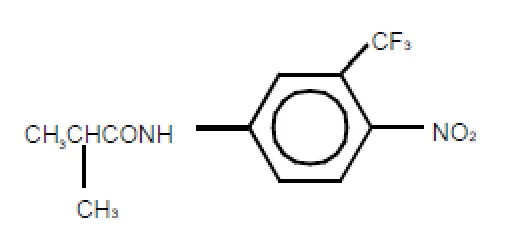
Chemical name: 1) Propanamide, 2-methyl-N-[4-nitro-3-(trifluoromethyl)-phenyl];
- 2) α,α,α-Trifluoro-2-methyl-4’-nitro-m-propionotoluidide.
Molecular formula and molecular mass: C11H11F3N2O3 and 276.22 g/mol
Structural formula:
Physicochemical properties:
Description: Pale yellow, crystalline powder.
14 CLINICAL TRIALS
14.1 Trial Design and Study Demographics
Flutamide has been demonstrated to interfere with testosterone at the cellular level. This can complement medical castration achieved with leuprolide, which suppresses testicular androgen production by inhibiting luteinizing hormone secretion.
Combination Therapy: To study the effects of combination therapy, 617 patients (311 different leuprolide + flutamide, 306 leuprolide + placebo) with previously untreated advanced prostatic carcinoma were enrolled in a large multi-centred, controlled clinical trial.
Three and one–half years after the study was initiated, median survival had been reached. The median actuarial survival times were 34.9 months for patients treated with leuprolide and flutamide versus 27.9 months for patients treated with leuprolide alone. This seven month increment represents 25% improvement in overall survival with the flutamide therapy. Analysis of progression free survival showed a 2.6 month improvement in patients who received leuprolide plus flutamide, a 19% increment over leuprolide and placebo.
Locally Advanced Prostatic Carcinoma: A prospective, multicentre, phase-three trial evaluated the efficacy and safety of the therapy regimen of flutamide and goserelin acetate administered prior to and during definitive external beam radiation therapy to patients with bulky locally advanced, clinical stage B2 or C prostate cancer. Patients randomized to the treatment group received flutamide at a dose of 750 mg/day (250 mg three times a day) initiated eight weeks prior to the start of radiation therapy and continued for a total of 16 weeks or until the last day of radiation therapy, whichever occurred first. Flutamide treatment was continued during unexpected interruptions of radiation therapy. These patients also received a depot injection of goserelin acetate 3.6 mg administered subcutaneously into the anterior abdominal wall every four weeks for 16 weeks (total 4 injections) beginning eight weeks prior to initiation of radiation therapy. Patients in the control group were treated with radiation only.
14.2 Study Results
The combination of flutamide and goserelin acetate administered prior to and during radiation therapy increased disease-free survival and loco-regional control without a clinically significant increase in toxicity. Approximately 75% of patients in both groups were alive four years after initial randomization; local failure occurred in 33% of the controls, but in only 16% of the treated patients (p<0.001). Over four years, 36% of the controls vs. 27% of the treated patients developed distant metastasis.
When prostate-specific antigen (PSA) levels were not used as a criterion for the presence of disease, duration of disease-free survival was significantly longer in treated patients than in controls (p<0.001). Treated patients had an estimated median disease-free survival time of 4.4 years as compared to 2.6 years for control patients. Similarly, when normal PSA levels were considered as part of the survival criteria, treated patients had a significantly longer median disease-free survival time than controls (p<0.001). Patients in the treated group had an estimated median disease-free survival period of 2.7 years, while control patients achieved an estimated median disease-free survival time of 1.5 years. It is noteworthy that the increase in disease-free survival time observed among treated patients was achieved with 16 weeks of reversible androgen blockade.
External beam radiation therapy morbidity was not increased by the added combination of flutamide and goserelin acetate. Hot flashes and diarrhea were the most commonly reported adverse events among treated patients (46% and 40%, respectively). Diarrhea also was reported in 40% of the control patients as a late effect of the radiation therapy. Gynecomastia was reported in 3% of the treated patients; elevated SGOT levels were observed in 1% of patients in the treated group. Although more treated patients than controls had abnormal SGOT and/or SGPT levels during the follow-up period, more treated than control patients also had abnormal baseline values as well. During the follow-up period, levels of acid phosphatase were higher in controls than in treated patients.
14.3 Comparative Bioavailability Studies
A randomized, single dose, blinded, two–way crossover comparative bioavailability study, of Flutamide 250 mg tablets (AA Pharma Inc.) versus Euflex® 250 mg tablets (Schering Canada Inc.) was performed in healthy, adult male subjects (n=22) under fasting conditions.
A summary of the results is presented in the following table:
2-Hydroxyflutamide (1 x 250 mg flutamide) From measured data Geometric Mean Arithmetic Mean (CV %) | ||||
|---|---|---|---|---|
| Parameter | Test* | Reference† | % Ratio of Geometric Means | 90 % Confidence Interval |
AUCT (ng*hr/mL) | 3016.9 3322.1 (47.9) | 3026.0 3201.8 (35.7) | 100% | 90% – 110% |
AUCI (ng*hr/mL) | 3155.8 3463.0 (47.2) | 3146.4 3326.0 (35.2) | 100% | 91% - 111% |
Cmax (ng/mL) | 443.2 480.9 (45.5) | 555.0 573.4 (27.3) | 80% | 70% – 91% |
Tmax§ (h) | 2.68 (37.97) | 2.09 (38.09) | ||
t1/2§ (h) | 4.74 (24.73) | 4.73 (25.29) | ||
*Flutamide 250 mg tablets, AA Pharma Inc., Vaughan, Canada
† Euflex® 250 mg tablets, Schering Canada Inc., Purchased in Canada
§Arithmetic mean (%CV) presented only
15 MICROBIOLOGY
No microbiological information is required for this drug product.
16 NON-CLINICAL TOXICOLOGY
General Toxicology:
Signs of flutamide overdose were hypoactivity, piloerection, slow respiration, ataxia and/or lacrimation as seen in the rat, mouse and guinea pig. Anorexia, tranquillization and emesis were observed in the cat and dog. The oral LD50 was in excess of 1000 mg/kg in the cat and dog.
A 52-week chronic oral toxicity study in male and female rats produced a dose-related decrease in body weight gain. Necropsy revealed the following drug-related changes: reduction in prostatic, seminal vesicle and male kidney size; a reduction in testicular or uterine size in the highest dosage groups (18 times human dose); increase in liver size, unusually textured and coloured testes, and in females suppression of lactation. Histological drug-related changes in males included testicular interstitial cell hyperplasia, interstitial space edema, and at 52 weeks only, interstitial cell adenoma, spermatogenesis suppression, seminal vesicle and prostatic atrophy and an increase in the number of pituitary castration cells. The adenoma was related to the mechanism of action of flutamide and was species specific.
Carcinogenicity:
Daily administration of flutamide to rats for 52 weeks at doses of 30, 90, or 180 mg/kg/day (approximately 3, 8, or 17 times the human dose), produced testicular interstitial cell adenomas at all doses.
In the chronic toxicity studies in male rats, dose - dependent increases in mammary gland adenomas and carcinomas were observed. Both of these findings are related to the recognized mechanism of action of flutamide on endocrine sensitive cells.
Genotoxicity:
Flutamide did not demonstrate DNA modifying activity in the Ames Salmonella/microsome Mutagenesis Assay. Dominant lethal tests in rats were negative.
Reproductive and Developmental Toxicology:
Reduced sperm counts were observed during a six-week study of flutamide monotherapy in normal volunteers. Flutamide did not affect estrous cycles or interfere with the mating behaviour of male and female rats when the drug was administered at 25 and 75 mg/kg/day prior to mating. Males treated with 150 mg/kg/day (30 times the minimum effective antiandrogenic dose) failed to mate; mating behaviour returned to normal after dosing was stopped. Conception rates were decreased in all dosing groups. Suppression of spermatogenesis was observed in rats dosed for 52 weeks at approximately 3, 8, or 17 times the human dose and in dogs dosed for 78 weeks at 1.4, 2.3, and 3.7 times the human dose.
Histologic changes characteristic of the antiandrogenic activity of flutamide were observed in all species, and there was evidence of suppressed spermatogenesis. In rats only, testicular interstitial cell adenomas were increased in number after chronic administration of flutamide independent of the dose administered.
17 SUPPORTING PRODUCT MONOGRAPHS
- 1. Euflex® (flutamide 250 mg tablets) - Nonsteroidal antiandrogen, submission control Number 157238, Product Monograph. Merck Canada Inc., Kirkland, Quebec. October 15, 2012.
- 2. Euflex® (flutamide), Schering, Nonsteroidal Antiandrogen. Prescribing Information (CPS Monograph). Compendium of Pharmaceuticals and Specialties, 31st Edition, 1996; pp. 510 - 511.