


Product Monograph - Fluviral (Id Biomedical Corporation of Quebec, PM 00085961)
Recent Major Label Changes
| 4 Dosage and Administration, 4.4 Administration | 2026-04 |
|---|
Table of Contents
Certain sections or subsections that are not applicable at the time of the preparation of the most recent authorized product monograph are not listed.
Recent Major Label Changes ................................................................................................. 2
Table of Contents ................................................................................................................. 2
Part 1: Healthcare Professional Information.......................................................................... 4
- 1.
Indications..................................................................................................................... 4
1.1. Pediatrics .................................................................................................................... 4
- 2. Contraindications .......................................................................................................... 4
- 4.
Dosage and Administration ............................................................................................ 4
4.2. Recommended Dose and Dosage Adjustment .......................................................... 4
4.4. Administration ........................................................................................................... 4
- 5. Overdose ....................................................................................................................... 5
- 6. Dosage Forms, Strengths, Composition, and Packaging .................................................. 5
- 7.
Warnings and Precautions ............................................................................................. 7
General ................................................................................................................................... 7
Hematologic ........................................................................................................................... 7
Immune .................................................................................................................................. 7
Neurologic .............................................................................................................................. 8
Respiratory ............................................................................................................................. 8
Skin (Local Reactions at Vaccination Sites) ............................................................................ 8
7.1. Special Populations .................................................................................................... 8
7.1.1. Pregnancy ........................................................................................................... 8
7.1.2. Breastfeeding ..................................................................................................... 8
- 8.
Adverse Reactions ......................................................................................................... 9
8.1. Adverse Reaction Overview ....................................................................................... 9
8.2. Clinical Trial Adverse Reactions ................................................................................. 9
8.2.1. Clinical Trial Adverse Reactions – Pediatrics.................................................... 11
8.5. Post-Market Adverse Reactions ............................................................................... 12
- 9.
Drug Interactions ......................................................................................................... 13
9.3. Drug-Behaviour Interactions .................................................................................... 13
9.4. Drug-Drug Interactions ............................................................................................ 13
9.7. Drug-Laboratory Test Interactions........................................................................... 13
- 10.
Clinical Pharmacology .................................................................................................. 13
10.1. Mechanism of Action ............................................................................................... 13
10.3. Pharmacokinetics ..................................................................................................... 14
- 11. Storage, Stability, and Disposal .................................................................................... 14
- 12. Special Handling Instructions ....................................................................................... 14
Part 2: Scientific Information .............................................................................................. 15
- 13. Pharmaceutical Information ........................................................................................ 15
- 14.
Clinical Trials ............................................................................................................... 15
14.1. Clinical Trials by Indication ...................................................................................... 15
- 16. Non-Clinical Toxicology ................................................................................................ 18
Patient Medication Information ......................................................................................... 21
Part 1: Healthcare Professional Information
1. Indications
FLUVIRAL (Trivalent Influenza Vaccine (Split-Virion, Inactivated)) is indicated for:
- active immunization of adults and children from 6 months of age for the prevention of influenza disease caused by influenza virus types A and B contained in the vaccine.
The National Advisory Committee on Immunization (NACI) provides additional guidance on the use of the influenza vaccine in Canada. Please refer to published Statement on Seasonal Influenza Vaccine for the current season.
1.1. Pediatrics
Pediatrics (6 months – 17 years): Based on the data submitted and reviewed by Health Canada, the safety and efficacy of FLUVIRAL in pediatric patients has been established. Therefore, Health Canada has authorized an indication for pediatric use.
2. Contraindications
- FLUVIRAL should not be administered to subjects with known history of hypersensitivity to any component of the vaccine or following a previous dose of any influenza vaccine produced in eggs. For a complete listing, see 6 Dosage Forms, Strengths, Composition, and Packaging.
4. Dosage and Administration
4.2. Recommended Dose and Dosage Adjustment
- FLUVIRAL should be administered as a single 0.5 mL injection.
- Children 6 months to less than 9 years of age who have not previously been vaccinated against influenza should receive a second dose of 0.5 mL after an interval of at least 4 weeks.
4.4. Administration
For intramuscular use only. Do not inject intravascularly.
The preferred site for injection is the anterolateral aspect of the thigh in infants or the deltoid muscle of the upper arm in children and adults. The vaccine should not be injected in the gluteal area or areas where there may be a major nerve trunk and/or blood vessel.
Instructions for use:
FLUVIRAL should not be mixed with other vaccines/medicinal products (see 9.4 Drug-Drug Interactions, Use with Other Vaccines).
The vaccine presents as an opalescent translucent to off-white suspension that may sediment slightly.
The vial/syringe should be shaken prior to each administration and inspected visually for any foreign particulate matter and/or variation of physical aspect prior to administration. In the event of either being observed, discard the vaccine.
For the multi-dose vial presentation, each vaccine dose of 0.5 mL is withdrawn into a 1 mL syringe for injection and administered intramuscularly. It is recommended to equip the syringe with a needle gauge not larger than 23-G.
Between uses, the multi-dose vial should be stored in a refrigerator (2°C - 8°C).
Instructions for the pre-filled syringe
Hold the syringe by the barrel, not by the plunger. Unscrew the syringe cap by twisting it anticlockwise. | |
|---|---|
To attach the needle, connect the hub to the Luer Lock Adaptor and rotate a quarter turn clockwise until you feel it lock. Do not pull the syringe plunger out of the barrel. If it happens, do not administer the vaccine. |
5. Overdose
Insufficient data are available.
| For the most recent information in the management of a suspected drug overdose, contact your regional poison control centre or Health Canada’s toll-free number, 1-844 POISON-X (1-844-764-7669). |
|---|
- 6. Dosage Forms, Strengths, Composition, and Packaging
To help ensure the traceability of vaccines for patient immunization record-keeping as well as safety monitoring, health professionals should record the time and date of administration, quantity of administered dose (if applicable), anatomical site and route of administration, brand name and generic name of the vaccine, the product lot number and expiry date.
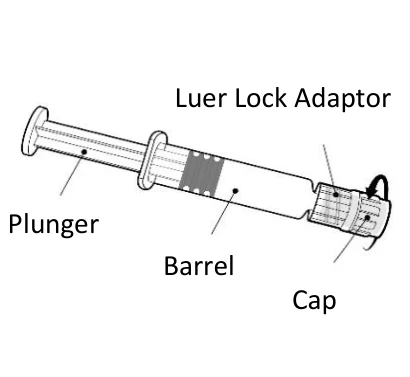 Plunger Barrel Cap Luer Lock Adaptor | |
|---|---|
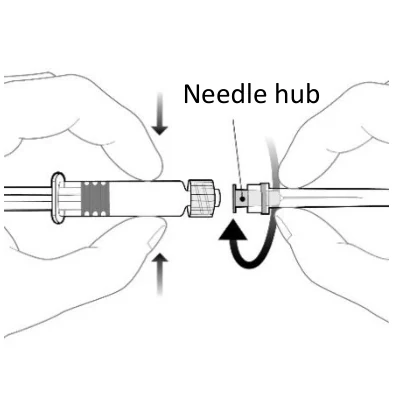 Needle hub |
Table 1 – Dosage Forms, Strengths, and Composition
*The pre-filled syringe presentation is not available for the 2026 - 2027 season.
Description
FLUVIRAL is a trivalent influenza vaccine (split-virion, inactivated) prepared from virus grown in the allantoic cavity of embryonated hens' eggs. The virus is inactivated with ultraviolet light treatment followed by formaldehyde treatment, purified by centrifugation, and disrupted with sodium deoxycholate.
This vaccine complies with the World Health Organization (WHO) recommendation (Northern Hemisphere) for the 2026 – 2027 season. The trivalent vaccine contains 2 influenza A virus subtypes and one influenza B virus lineage.
Each 0.5 mL dose of vaccine contains 15 micrograms (µg) haemagglutinin (HA) of each of the following three influenza virus strains:
15 µg HA - A/Missouri/11/2025 (H1N1)pdm09-like virus (A/Switzerland/6849/2025 IVR-278)
15 µg HA - A/Darwin/1454/2025 (H3N2)-like virus (A/Michigan/105/2025 SAN-049A)
15 µg HA - B/Tokyo/EIS13-175/2025 (B/Victoria lineage)-like virus (B/Tokyo/EIS13-175/2025)
The vaccine is formulated with phosphate buffered saline, which is composed of: sodium chloride, potassium chloride, disodium hydrogen phosphate heptahydrate, potassium dihydrogen phosphate and water for injection.
Each 0.5 mL dose contains, α-tocopheryl hydrogen succinate (200 µg), and polysorbate 80 (512 µg).
Each 0.5 mL dose may also contain residual amounts of egg proteins (ovalbumin ≤0.3 µg), sodium deoxycholate, ethanol, formaldehyde and sucrose from the manufacturing process.
The multi-dose vial presentation contains thimerosal, a mercury derivative, added as a preservative. Each 0.5 mL dose contains 50 µg thimerosal (<25 µg mercury).
The single-dose pre-filled syringe presentation does not contain thimerosal or any other preservative.
| Route of Administration | Dosage Form / Strength / Composition | Non-Medicinal Ingredients |
Intramuscular (IM) | Suspension for Injection Each 0.5 mL dose contains 15 µg of influenza virus haemagglutinin/strain for each strain listed below (see Description). Available in multi-dose vial and single-dose pre-filled syringe*. | Egg proteins, ethanol, formaldehyde, phosphate buffered saline, polysorbate 80, sodium deoxycholate, α-tocopheryl hydrogen succinate, sucrose. Thimerosal preservative in the multi-dose vial presentation only. |
Antibiotics are not used in the manufacture of this vaccine.
Packaging
Multi-dose vial presentation:
6 mL vial (type 1 glass) containing 5 mL of vaccine (10 doses of 0.5 mL).
Pack size of 1 or 10 vials.
The vial stopper does not contain latex.
Single-dose pre-filled syringe presentation:
0.5 mL single-dose pre-filled syringe (type I glass) with Luer Lock.
Pack size of 10 syringes (packaged without needles).
The tip cap and plunger stopper of the pre-filled syringe do not contain latex.
This presentation is not currently available.
7. Warnings and Precautions
General
As with all injectable vaccines, appropriate medical treatment and supervision must always be readily available in case of a rare anaphylactic event following the administration of the vaccine.
FLUVIRAL should under no circumstances be administered intravascularly.
Syncope (fainting) can occur following, or even before, any vaccination as a psychogenic response to the needle injection. It is important that procedures are in place to avoid injury from faints.
As with any vaccine, a protective immune response may not be elicited in all vaccinees.
FLUVIRAL is not effective against all possible strains of influenza virus. FLUVIRAL is intended to provide protection against those strains of virus from which the vaccine is prepared and to closely related strains.
Febrile or Acute Disease
As with other vaccines, vaccination with FLUVIRAL should be postponed in subjects suffering from an acute severe febrile illness. The presence of a minor infection, such as a cold, should not result in the deferral of vaccination.
Hematologic
As with other vaccines administered intramuscularly, FLUVIRAL should be given with caution in individuals with thrombocytopenia or any coagulation disorder since bleeding may occur following an intramuscular administration to these subjects.
Immune
It may be expected that in patients receiving immunosuppressive treatment or patients with immunodeficiency, an adequate immune response may not be elicited.
Neurologic
If Guillain-Barré syndrome has occurred within 6 weeks of receipt of a prior influenza vaccine, the decision to give FLUVIRAL should be based on the careful consideration of the potential benefits and risks.
Immunization should be delayed in a patient with an active neurologic disorder, but should be considered when the disease process has been stabilized.
Respiratory
Revaccination of individuals who have previously experienced oculo-respiratory symptoms is safe. Previously affected individuals should be encouraged to be revaccinated. The risk of recurrence of oculo-respiratory symptoms after revaccination is minimal compared to the serious threat posed by influenza. Please refer to the most current NACI recommendations regarding revaccination of subjects who experienced more severe oculo-respiratory syndrome.
Skin (Local Reactions at Vaccination Sites)
Soreness and redness at the injection site may occur and may last for up to two days. Prophylactic acetaminophen may decrease the frequency of pain at the injection site.
7.1. Special Populations
7.1.1. Pregnancy
The safety of FLUVIRAL when administered to pregnant women has not been evaluated in clinical trials. A systematic literature review on inactivated influenza vaccines do not indicate an increased risk of adverse pregnancy outcomes. Animal studies with FLUVIRAL do not indicate direct or indirect harmful effects with respect to reproductive and developmental toxicity. The FLUVIRAL vaccine may be administered to pregnant women following an assessment of the risks and benefits.
7.1.2. Breastfeeding
The safety of FLUVIRAL when administered to breastfeeding women has not been evaluated. It is unknown whether FLUVIRAL is excreted in human breast milk. FLUVIRAL should only be used during breastfeeding when the possible advantages outweigh the potential risks.
8. Adverse Reactions
8.1. Adverse Reaction Overview
The most commonly reported adverse drug reactions from 6 pooled clinical studies in adults with FLUVIRAL are pain at the injection site (32%), fatigue (16%), headache (16%), myalgia (15%), and redness at the injection site (10%). The most commonly reported adverse drug reactions in 3-17 year-old children from the Flu Q-TIV-TF-008 study included pain at the injection site (53%), irritability (21%), appetite loss (19%), and drowsiness (14%). Reactions are generally mild and of limited duration.
8.2. Clinical Trial Adverse Reactions
Clinical trials are conducted under very specific conditions. Therefore, the frequencies of adverse reactions observed in the clinical trials may not reflect frequencies observed in clinical practice and should not be compared to frequencies reported in clinical trials of another drug.
In six adult clinical studies conducted in the United States and Canada, FLUVIRAL was administered to more than 2,200 subjects at least 18 years of age and in one paediatric clinical study conducted in the United States, FLUVIRAL was administered to more than 1,000 children 3 to 17 years of age.
Local and general symptoms were solicited by a diary aid used by the subjects for at least the day of vaccination and 3 days post-vaccination. Subjects were also requested to report any clinical events occurring during the 21-day (for adults) and 28-day (for children) study period.
The clinical trial data with FLUVIRAL are supported by 2 studies conducted with FLULAVAL TETRA, a vaccine manufactured by the same process containing three influenza virus strains shared with FLUVIRAL plus a second influenza B virus lineage. Therefore, adverse reactions attributed to FLULAVAL TETRA (60 µg haemagglutinin per 0.5 mL) are likely to predict those expected with FLUVIRAL (45 µg haemagglutinin per 0.5 mL).
Safety data in FLULAVAL TETRA studies were collected by the same method used in FLUVIRAL studies, except that solicited local and general symptoms were collected over a 7-day rather than a 4-day period.
In more than 1200 adults, FLULAVAL TETRA had a similar safety profile to that observed for FLUVIRAL in adults. Additional adverse reactions were gastrointestinal symptoms (including nausea, vomiting, diarrhoea and /or abdominal pain) reported as common and injection site reactions (such as haemorrhage, haematoma, warmth), lymphadenopathy, pruritus and rash reported as uncommon.
In 299 children 6 to 35 months of age, FLULAVAL TETRA had a similar safety profile to that observed for FLUVIRAL in children 3 to 4 years of age. Additional adverse reactions were diarrhoea and vomiting reported as uncommon.
Adults: Study Q-QIV-007 (Immunogenicity Non-Inferiority):
A randomized, double-blind, active-controlled study evaluated 1,703 adults 18 years of age and older who received FLULAVAL TETRA, a quadrivalent seasonal vaccine, with two A strains and two B strains, one of Victoria lineage and one of Yamagata lineage (N = 1,272), or FLUVIRAL manufactured for the 2010-2011 season with a B strain of Victoria lineage (N = 213), or a TIV with the same two A strains as FLUVIRAL but with a B strain of Yamagata lineage (N = 218). The mean age of subjects was 50 years. Solicited local adverse reactions and systemic adverse events were collected using diary cards for 7 days (day of vaccination and the next 6 days).
Table 1 – Incidence of Solicited Local Adverse Reactions and Systemic Adverse Events within 7 Daysa of Vaccination in Adultsb (Total Vaccinated Cohort)
FLULAVAL Tetrac N = 1,260 % | FLUVIRAL (B Victoria)d N = 208 % | TIV (B Yamagata)e N = 216 % | ||||
| Local | ||||||
| Pain | 60 | 45 | 41 | |||
| Swelling | 3 | 1 | 4 | |||
| Redness | 2 | 3 | 1 | |||
| Systemic | ||||||
| Myalgia | 26 | 25 | 19 | |||
| Headache | 22 | 20 | 23 | |||
| Fatigue | 22 | 22 | 17 | |||
| Arthralgia | 15 | 17 | 15 | |||
| Gastrointestinal symptomsf | 9 | 10 | 7 | |||
| Shivering | 9 | 8 | 6 | |||
| Fever ≥100.4°F (38.0°C) | 2 | 1 | 1 | |||
TIV = trivalent influenza vaccine.
Total vaccinated cohort for safety included all vaccinated subjects for whom safety data were available.
a7 days included day of vaccination and the subsequent 6 days.
b Study Q-QIV-007: NCT01196975.
c Contained two A strains and two B strains, one of Victoria lineage and one of Yamagata lineage.
d Contained two A strains and a B strain of Victoria lineage.
e Contained the same two A strains as FLUVIRAL and a B strain of Yamagata lineage.
f Gastrointestinal symptoms included nausea, vomiting, diarrhea, and/or abdominal pain.
Unsolicited adverse events: Unsolicited events that occurred within 21 days of vaccination (day 0-20) were recorded based on spontaneous reports or in response to queries about changes in health status. The incidence of unsolicited adverse events reported during the 21-day post-vaccination period for subjects who received FLULAVAL TETRA (N = 1,272), FLUVIRAL (N = 213), or TIV (B Yamagata) (N = 218) was 19%, 23%, and 23%, respectively. Unsolicited events reported for FLULAVAL TETRA considered as possibly related to vaccination and occurring in ≥0.1% of subjects included dizziness, injection site hematoma, injection site hemorrhage, injection site warmth, lymphadenopathy, pruritus, rash, and upper respiratory tract infection.
8.2.1. Clinical Trial Adverse Reactions – Pediatrics
Children: Study Q-TIV TF-008 (Immunogenicity Non-Inferiority):
An observer-blind, active-controlled study evaluated subjects 3 through 17 years of age who received FLUVIRAL (N = 1,055) or FLUZONE (N = 1,061), a licensed trivalent, inactivated influenza virus vaccine, manufactured by Sanofi Pasteur SA. In the overall population, 53% were male. The mean age of subjects was 8 years. Children 3 through 8 years of age with no history of influenza vaccination received 2 doses approximately 28 days apart. Children 3 through 8 years of age with a history of influenza vaccination and children 9 years of age and older received one dose. Solicited local adverse reactions and systemic adverse events were collected using diary cards for 4 days (day of vaccination and the next 3 days) (Table 2).
Table 2 – Incidence of Solicited Local Adverse Reactions and Systemic Adverse Events Within 4 Daysa of First Vaccination in Children 3 to 17 Years of Ageb (Total Vaccinated Cohort)
FLUVIRAL % | Comparatorc % | |||||||
| Age Group: 3 to 17 Years | ||||||||
| Local | N = 1,042 | N = 1,026 | ||||||
| Pain | 56 | 53 | ||||||
| Redness | 4 | 5 | ||||||
| Swelling | 4 | 5 | ||||||
| Age Group: 3 to 4 Years | ||||||||
| Systemic | N = 293 | N = 279 | ||||||
| Irritability | 25 | 27 | ||||||
| Drowsiness | 19 | 19 | ||||||
| Loss of appetite | 16 | 13 | ||||||
| Fever ≥100.4°F (38.0°C) | 5 | 3 | ||||||
| Age Group: 5 to 17 Years | ||||||||
| Systemic | N = 749 | N = 747 | ||||||
| Muscle aches | 24 | 23 | ||||||
| Headache | 17 | 15 | ||||||
| Fatigue | 17 | 17 | ||||||
| Arthralgia | 8 | 10 | ||||||
| Shivering | 6 | 5 | ||||||
| Fever ≥100.4°F (38.0°C) | 5 | 4 | ||||||
Total vaccinated cohort for safety included all vaccinated subjects for whom safety data were available.
a 4 days included day of vaccination and the subsequent 3 days.
b Study Q-TIV TF-008: NCT00980005.
c Licensed trivalent, inactivated influenza virus vaccine (manufactured by Sanofi Pasteur SA).
In children who received a second dose of FLUVIRAL or the comparator vaccine, the incidences of adverse events following the second dose were generally lower than those observed after the first dose.
Unsolicited adverse events that occurred within 28 days (day 0-27) of any vaccination were recorded based on spontaneous reports or in response to queries about changes in health status. The incidence of unsolicited adverse events reported in subjects who received FLUVIRAL (N = 1,055) or FLUZONE (N = 1,061) was 40% and 37%, respectively. Unsolicited events reported for FLUVIRAL considered as possibly related to vaccination and occurring in ≥0.1% of subjects included diarrhea, influenza-like illness, injection site hematoma, injection site rash, injection site warmth, rash, upper abdominal pain, and vomiting. The rates of SAEs were comparable between groups (0.9% and 0.6% for FLUVIRAL and the comparator, respectively); none of the SAEs were considered related to vaccination.
Children 6-35 months: Study Q-QIV-013 (Immunogenicity and Safety):
A randomized, double-blind, active controlled study in which subjects received one or two 0.5 mL doses of FLULAVAL TETRA (N = 299) or a comparator trivalent influenza vaccine (FLUARIX N = 302) containing one B strain from the B/Yamagata lineage. Children with no history of prior influenza vaccination received 2 doses approximately 28 days apart (92.6% and 93.0% for FLULAVAL TETRA and FLUARIX, respectively). Children with a history of prior influenza vaccination received one dose of vaccine (7.4% and 7.0%, respectively). Solicited local adverse reactions and systemic adverse events were collected using diary cards for 7 days.
Table 3 – Incidence of Solicited Local and Systemic Adverse Events Within 7 Daysa of Vaccination in Children 6 to 35 Months of Ageb (Total Vaccinated Cohort)
Children 6-35 months | FLULAVAL TETRAc % | FLUARIXd % |
| Local | N = 564 doses | N = 573 doses |
| Pain | 23.0 | 21.5 |
| Swelling | 1.1 | 1.2 |
| Redness | 1.2 | 1.0 |
| Systemic | N = 561 doses | N = 572 doses |
| Irritability | 29.1 | 29.5 |
| Drowsiness | 21.6 | 18.9 |
| Loss of appetite | 22.5 | 22.0 |
| Fever ≥38.0°C | 13.4 | 12.1 |
a 7 days included day of vaccination and the subsequent 6 days.
b Study Q-QIV-013: NCT01711736
c Contained two A strains and two B strains, one of Victoria lineage and one of Yamagata lineage.
d Contained two A strains and one B strain from the Yamagata lineage
Unsolicited adverse events
During the 28-day post-vaccination period, overall, unsolicited AEs were experienced after 33.5% of FLULAVAL TETRA doses and 35.8% of FLUARIX doses. The most frequently reported unsolicited AEs were nasopharyngitis (16.1% and 17.7% respectively) followed by diarrhoea (7.5% and 7.2% respectively).
8.5. Post-Market Adverse Reactions
The following adverse reactions have been identified during post approval use of FLUVIRAL or FLULAVAL TETRA (quadrivalent influenza vaccine). Because these reactions are reported voluntarily from a population of uncertain size, it is not always possible to reliably estimate their frequency or establish a causal relationship to the vaccine.
Immune system disorders
Allergic reactions including anaphylactic and anaphylactoid reactions
Nervous system disorders
Guillain-Barré syndrome
Spontaneous reports of Guillain-Barré syndrome have been received following vaccination with FLUVIRAL. However, a causal association between vaccination and the Guillain-Barré syndrome has not been established.
Skin and subcutaneous tissue disorders
Angioedema, urticaria
There have been reports of other neurological illnesses, including facial paralysis, encephalitis, encephalopathy, demyelinating disease and labyrinthitis, associated with other influenza vaccines. Any relationship, other than temporal, to the vaccine has not been established.
9. Drug Interactions
9.3. Drug-Behaviour Interactions
The vaccine is unlikely to produce an effect on the ability to drive and use machines.
The interaction of FLUVIRAL with individual behavioural risks (e.g. cigarette smoking, cannabis use, and/or alcohol consumption) has not been studied.
9.4. Drug-Drug Interactions
Use with Other Vaccines
No interaction studies have been performed. If FLUVIRAL is to be given at the same time as another injectable vaccine, the vaccines should always be administered at different injection sites.
9.7. Drug-Laboratory Test Interactions
False positive ELISA serologic tests for HIV-1, Hepatitis C, and especially HTLV-1 may occur following influenza vaccination. These transient false-positive results may be due to cross-reactive IgM elicited by the vaccine. For this reason, a definitive diagnosis of HIV-1, Hepatitis C, or HTLV-1 infection requires a positive result from a virus-specific confirmatory test (e.g. Western Blot or immunoblot).
10. Clinical Pharmacology
10.1. Mechanism of Action
FLUVIRAL provides active immunization against the three influenza virus strains (two A subtypes and one B type) contained in the vaccine. Although multiple mechanisms, including cellular immunity, may contribute to vaccine-induced protection against influenza, the humoral components of the immune response, in particular antibodies against virus haemagglutinin (HA) and neuraminidase (NA) antigens is best understood. Specific levels of vaccine-induced haemagglutination-inhibiting HI antibodies that protect against naturally occurring influenza disease have not been established in randomized, controlled trials.
In human challenge studies, HI antibody titers of ≥ 1:40 have been associated with reductions in influenza illness. In addition, HI antibody responses are used as a measure of vaccine activity. The effectiveness of inactivated influenza virus vaccines is influenced by the age and immunocompetence of the vaccine recipient and the degree of similarity between the virus strains used to prepare the vaccines and those circulating in the population.
10.3. Pharmacokinetics
Duration of effect
Annual revaccination is recommended because immunity declines during the year after vaccination, and because circulating strains of influenza virus might change from year to year.
- 11. Storage, Stability, and Disposal
Store in a refrigerator (2oC – 8oC).
Do not freeze.
Store in the original package in order to protect from light.
The vaccine in multi-dose vials is stable for 13 months.
Once entered, the multi-dose vial should be discarded within 28 days.
The vaccine in pre-filled syringes is stable for 12 months.
12. Special Handling Instructions
Any unused product or waste material should be disposed of in accordance with local requirements.
Part 2: Scientific Information
13. Pharmaceutical Information
Drug Substance
FLUVIRAL contains three split-virion, inactivated influenza virus strains prepared from virus propagated in the allantoic cavity of embryonated hens' eggs. Each of the influenza virus strains is produced and purified separately. The virus is inactivated with ultraviolet light followed by formaldehyde treatment, purified by centrifugation, and disrupted with sodium deoxycholate.
Product Characteristics:
FLUVIRAL is a sterile, opalescent translucent to off-white suspension in a phosphate-buffered saline solution and may sediment slightly. The vaccine has been formulated to contain 45 micrograms (µg) haemagglutinin (HA) per 0.5 mL dose in the recommended ratio of 15 µg HA of each of the 3 influenza virus strains. Antibiotics are not used in the manufacture of this vaccine.
14. Clinical Trials
14.1. Clinical Trials by Indication
The immunogenicity of FLUVIRAL has been evaluated as a trivalent or as a quadrivalent thimerosal-free formulation (FLULAVAL TETRA) in controlled and open-label clinical trials involving adults 18 years and older, and children aged 3 to 17 years. Adults and children 9 years and older received a single 0.5 mL dose of FLUVIRAL or a quadrivalent formulation of the vaccine (FLULAVAL TETRA). Children 6 months through 8 years with a history of influenza vaccination received one 0.5 mL dose. Children 6 months through 8 years of age with no history of influenza vaccination received 2 doses approximately 28 days apart.
The humoral immune response was assessed in terms of a serum haemagglutinin-inhibiting (HI) antibody titer against each virus strain included in the vaccine. In adult studies the immune response was assessed 21 days following vaccination. In pediatric studies, the immune response was assessed 28 days following the last vaccination.
Table 4 – Summary of Patient* Demographics for Clinical Trials
| Study # | Study design | Dosage, route of administration and duration | Study subjects (n) | Mean age (Range) | Sex |
| Q-QIV-007 | randomized, double-blind, immunogenicity and safety | 0.5 mL, IM | 1703 ≥18 years | 50.0 years (18-97 years) | F = 1044 M = 659 |
| Q-TIV-TF-008 | randomized, observer-blind, immunogenicity and safety | 0.5 mL, IM (unprimed: 2x0.5 mL IM, 28 days apart) | 1055 | 7.8 years (3-17 years) | F = 500 M = 555 |
*Total Vaccinated Cohort
Adults 18 years of age and older
In clinical study Q-QIV-007, approximately 1,200 adults 18 years of age and older received a single dose of a quadrivalent formulation of FLUVIRAL (FLULAVAL TETRA) and approximately 200 subjects received a single dose of FLUVIRAL.
The study assessed the non-inferiority of FLULAVAL TETRA versus FLUVIRAL for HI Geometric mean antibody titer (GMT) at Day 21 and HI seroconversion rate (4-fold rise in reciprocal titer or change from undetectable [<10] to a reciprocal titer of ≥40) in adults 18 years of age and older.
Table 5 – Non-inferiority of Q-QIV versus FLUVIRAL for the common strains in terms of adjusted GMT ratios at Day 21
| Strain | Comparator | Q-QIV | Adjusted GMT ratio (Comparator / QIV) | ||||
|---|---|---|---|---|---|---|---|
| Value | 95% CI | ||||||
| N | Adjusted GMT | N | Adjusted GMT | LL | UL | ||
| TIV-VB+TIV-YB vs. QIV | |||||||
| A/California/7/2009 (H1N1) | 414 | 160.0 | 1238 | 205.1 | 0.78 | 0.68 | 0.90 |
| A/Victoria/210/2009 (H3N2) | 415 | 147.6 | 1237 | 124.2 | 1.19 | 1.05 | 1.35 |
| TIV-VB vs. QIV | |||||||
| B/Brisbane/60/2008 (Victoria) | 203 | 133.0 | 1240 | 177.2 | 0.75 | 0.65 | 0.87 |
| TIV-YB vs. QIV | |||||||
| B/Florida/4/2006 (Yamagata) | 211 | 311.7 | 1241 | 396.2 | 0.79 | 0.69 | 0.90 |
Q-QIV = Subjects received Q-QIV;
TIV-VB = Subjects received TIV with B strain of Victoria lineage;
TIV-YB = Subjects received TIV with B strain of Yamagata lineage;
TIV-VB+TIV-YB = Pooled TIV-VB and TIV-YB groups;
Adjusted GMT = geometric mean antibody titer adjusted for baseline titer;
N = Number of subjects with both pre- and post-vaccination results available;
95% CI = 95% confidence interval for the adjusted GMT ratio (ANCOVA model: adjustment for baseline titer - pooled variance); LL = lower limit, UL = upper limit
FLULAVAL TETRA met the non-inferiority criteria based on GMT’s (upper limit of 2-sided 95% CI for GMT ratio (comparator / FLUVIRAL ≤1.5)
Table 6 – Post-vaccination GMTs and seroconversion rates from Study Q-QIV-007 in adults 18 years of age and older (ATP Cohort for analysis of immunogenicity)
| Influenza Strain | FLULAVAL Tetra N=1246 | FLUVIRAL1 N=204 |
|---|---|---|
| GMT4 (95% confidence interval) | ||
| A/H1N1 | 204.6 (190.4;219.9) | 176.0 (149.1;207.7) |
| A/H3N2 | 125.4 (117.4;133.9) | 147.5 (124.1;175.2) |
| B (Victoria)2 | 177.7 (167.8;188.1) | 135.9 (118.1;156.5) |
| B (Yamagata)3 | 399.7 (378.1;422.6) | 176.9 (153.8;203.5) |
| Seroconversion rate (95% confidence interval) | ||
| A/H1N1 | 74.5% (71.9;76.9) | 66.7% (59.7;73.1) |
| A/H3N2 | 66.5% (63.8;69.2) | 73.0% (66.4;79.0) |
| B (Victoria)2 | 55.2% (52.4;58.0) | 48.8% (41.7;55.9) |
| B (Yamagata)3 | 54.8% (52.0;57.6) | 33.3% (26.9;40.3) |
ATP = according to protocol. ATP cohort for immunogenicity included all evaluable subjects for whom assay results were available after vaccination for at least one study vaccine antigen.
1 containing A/H1N1, A/H3N2 and B (Victoria lineage)
2 recommended strain by WHO during the season 2010-2011
3 additional B strain contained in FLULAVAL TETRA recommended in season 2008-2009
4 GMT is reported as the absolute value
The respective post-vaccination seroprotection rates (Day 21 reciprocal titer of ≥ 40) for FLUVIRAL and FLULAVAL TETRA in adults 18 years of age and older were 92.6% and 93.7% against A/H1N1, 92.2% and 90.8% against A/H3N2, 94.6% and 96.4% against B (Victoria) and 98.0% and 99.8% against B (Yamagata).
Children (Immunogenicity Non-Inferiority)
In study Q-TIV-TF-008, the immune response of FLUVIRAL (N = 987) was compared to FLUZONE, a licensed trivalent, inactivated influenza virus vaccine (N = 979), manufactured by Sanofi Pasteur SA, in an observer-blind, randomized study in children 3 through 17 years of age. The immune responses to each of the antigens contained in FLUVIRAL formulated for the 2009-2010 season were evaluated in sera obtained after one or 2 doses of FLUVIRAL and were compared to those following the comparator influenza vaccine.
Immune responses, specifically HI antibody titers to each virus strain in the vaccine, were evaluated in sera 28 days following one or 2 doses. The non-inferiority endpoints were geometric mean antibody titers (GMTs) adjusted for baseline, and the percentage of subjects who achieved seroconversion, defined as at least a 4-fold increase in serum HI titer over baseline to ≥1:40, following vaccination, performed on the According-to-Protocol (ATP) cohort. FLUVIRAL was non-inferior to the comparator influenza for all strains based on adjusted GMTs and seroconversion rates.
Table 7 – Immune Responses to Each Antigen 28 Days After Last Vaccination in Children 3 to 17 Years of Age (ATP Cohort for Immunogenicity)a
| GMTs Against | FLUVIRAL | Comparatorb | GMT Ratioc (95% CI) |
|---|---|---|---|
N = 987 (95% CI) | N = 979 (95% CI) | ||
| A/H1N1 | 320.9 (298.3, 345.2) | 329.4 (306.8, 353.7) | 1.03 (0.94, 1.13) |
| A/H3N2 | 414.7 (386.5, 444.9) | 451.9 (423.8, 481.8) | 1.05 (0.96, 1.13) |
| B | 213.7 (198.5, 230.1) | 200.2 (186.1, 215.3) | 0.93 (0.85, 1.02) |
| Seroconversiond | N = 987 % (95% CI) | N = 978 % (95% CI) | Difference in Seroconversion Ratese (95% CI) |
| A/H1N1 | 59.8 (56.6, 62.9) | 58.2 (55.0, 61.3) | -1.6 (-5.9, 2.8) |
| A/H3N2 | 68.2 (65.2, 71.1) | 66.2 (63.1, 69.1) | -2.0 (-6.1, 2.1) |
| B | 81.1 (78.5, 83.5) | 78.6 (75.9, 81.2) | -2.4 (-6.0, 1.1) |
ATP = according to protocol; CI = Confidence Interval.
ATP cohort for immunogenicity included all evaluable subjects for whom assay results were available after vaccination for at least one study vaccine antigen.
a Results obtained following vaccination with influenza vaccines formulated for the 2009-2010 season.
b licensed trivalent, inactivated influenza virus vaccine (Sanofi Pasteur SA).
c FLUVIRAL met non-inferiority criteria based on GMTs (upper limit of 2-sided 95% CI for GMT ratio [comparator vaccine/FLUVIRAL] ≤1.5).
d Seroconversion defined as at least a 4-fold increase in serum titers of HI antibodies to ≥1:40.
e FLUVIRAL met non-inferiority criteria based on seroconversion rates (upper limit of 2-sided 95% CI for difference of the comparator vaccine minus FLUVIRAL ≤10%).
16. Non-Clinical Toxicology
Non-clinical data reveal no special hazards for humans based on conventional studies of acute toxicity, local tolerance, repeated dose toxicity and reproductive/developmental toxicity.
The potential for toxicity of the trivalent vaccine was evaluated with FLULAVAL TETRA, a quadrivalent thimerosal-free (Q-QIV TF) vaccine that was manufactured by the same process as the trivalent FLUVIRAL. The Q-QIV TF vaccine was used as a representative formulation for the toxicology assessment of thimerosal-plus and thimerosal-free formulations. The vaccine has not been evaluated for carcinogenicity or mutagenic potential.
Table 8 – Toxicity Studies with Q-QIV TF Vaccine
| Study | Species or Substrate | Route | Dosing Regimen | Tested Material |
|---|---|---|---|---|
| Single dose and local tolerance | New Zealand White rabbits | Intramuscular | Single dose: FHD | Q-QIV TF a Phosphate buffer saline |
| Repeated dose | New Zealand White rabbits | Intramuscular | 3 doses at 2 weeks interval; FHD | Q-QIV TF a Phosphate buffer saline |
| Repeated dose | New Zealand White rabbits | Intramuscular | 3 doses at 2 weeks interval; FHD | Q-QIV TF Phosphate buffer saline |
| Reproduction and development | Sprague-Dawley rats (Crl:CD (SD) IGS BR) | Intramuscular | Day -28 and -14 before pairing, then Days 3, 8, 11, 15 after mating and Day 7 of lactation; 2/5th HD | Q-QIV TF D-QIV TF b Phosphate buffer saline |
| Female fertility and embryo-fetal survival | Sprague-Dawley rats (Crl:CD (SD) IGS BR) | Intramuscular | Day -28 and -14 before pairing, and then Days 3, 8, 11, 15 after mating; 2/5th HD | Q-QIV TF Phosphate buffer saline |
aB strains from both lineages were not available at the time of testing: a trivalent influenza virus candidate vaccine was tested: 2 “A” strains + 1 “B” strain, with double the amount of antigen, in order to mimic the total amount of antigen included in the quadrivalent vaccine.
bD-QIV TF: Dresden (Germany) manufactured antigens.
FHD: Full Human Dose
HD: Human Dose
Single Dose Toxicity
In the single dose/local tolerance study, a full human dose of Q-QIV TF vaccine was administered to New Zealand White rabbits. There were no deaths, clinical signs, or changes in body weights that could be attributed to the administration of the vaccine. There was no associated toxicity after treatment with the vaccine. Minor inflammation was seen in both treated groups; however there were no clear differences between the Q-QIV TF vaccine and the saline control group.
Repeat Dose Toxicity
In the two repeated dose studies, a full human dose of the Q-QIV-TF vaccine was administered three times within a 2-week interval. The repeated intramuscular treatment of rabbits with the vaccine induced mild, transient local effects in the injected muscles. A few hematology and clinical chemistry parameters related to the local inflammation were transiently affected. The inflammation diminished distinctly over time and a clear recovery process was observed at the end of the 28-day observation period.
Reproductive and developmental toxicology Vaccination of female rats with Q-QIV TF vaccine, at doses shown to be immunogenic in the rat, had no effect on F0 female clinical condition, food consumption, weight, mating performance, fertility, or ability to produce a live litter. There was no effect on pre- or post-natal development of F1 offspring.