


Product Monograph - Folic Acid Injection, USP
RECENT MAJOR LABEL CHANGES
| 1 INDICATIONS, 1.1 Pediatrics | 08/2022 |
| 1 INDICATIONS, 1.2 Geriatrics | 08/2022 |
| 2 CONTRAINDICATIONS | 08/2022 |
| 4 DOSAGE AND ADMINISTRATION, 4.1 Dosing Considerations | 08/2022 |
| 4 DOSAGE AND ADMINISTRATION, 4.3 Reconstitution | 08/2022 |
| 4 DOSAGE AND ADMINISTRATION, 4.4 Administration | 08/2022 |
| 4 DOSAGE AND ADMINISTRATION, 4.5 Missed Dose | 08/2022 |
| 7 WARNINGS AND PRECAUTIONS, General | 08/2022 |
| 7 WARNINGS AND PRECAUTION, Carcinogenesis and Mutagenesis | 08/2022 |
| 7 WARNINGS AND PRECAUTION, Hematologic | 08/2022 |
| 7 WARNINGS AND PRECAUTION, Immune | 08/2022 |
| 7 WARNINGS AND PRECAUTION, Monitoring and Laboratory Tests | 08/2022 |
| 7 WARNINGS AND PRECAUTION, Neurologic | 08/2022 |
| 7 WARNINGS AND PRECAUTIONS, 7.1.1 Pregnant Women | 08/2022 |
| 7 WARNINGS AND PRECAUTIONS, 7.1.2 Breast-feeding | 08/2022 |
| 7 WARNINGS AND PRECAUTIONS, 7.1.3 Pediatrics | 08/2022 |
| 7 WARNINGS AND PRECAUTIONS, 7.1.4 Geriatrics | 08/2022 |
| 7 WARNINGS AND PRECAUTIONS, 7.1.5 Renal Impairment | 08/2022 |
TABLE OF CONTENTS
Sections or subsections that are not applicable at the time of authorization are not listed.
RECENT MAJOR LABEL CHANGES..............................................................................................2
TABLE OF CONTENTS ................................................................................................................2
PART I: HEALTH PROFESSIONAL INFORMATION .......................................................................5
1 INDICATIONS ................................................................................................................5
1.1 Pediatrics .............................................................................................................5
1.2 Geriatrics .............................................................................................................5
2 CONTRAINDICATIONS ...................................................................................................5
4 DOSAGE AND ADMINISTRATION...................................................................................5
4.1 Dosing Considerations ..........................................................................................5
4.2 Recommended Dose and Dosage Adjustment .......................................................6
4.3 Reconstitution......................................................................................................6
4.4 Administration .....................................................................................................7
4.5 Missed Dose.........................................................................................................7
5 OVERDOSAGE ...............................................................................................................7
6 DOSAGE FORMS, STRENGTHS, COMPOSITION AND PACKAGING ...................................7
7 WARNINGS AND PRECAUTIONS ....................................................................................8
7.1 Special Populations ..............................................................................................9
7.1.1 Pregnant women............................................................................................9
7.1.2 Breast-feeding................................................................................................9
7.1.3 Pediatrics .......................................................................................................9
7.1.4 Geriatrics .......................................................................................................9
7.1.5 Renal Impairment...........................................................................................9
8 ADVERSE REACTIONS .................................................................................................. 10
8.1 Adverse Reaction Overview ................................................................................ 10
9 DRUG INTERACTIONS.................................................................................................. 10
9.2 Drug Interactions Overview ................................................................................ 10
9.3 Drug-Behavioural Interactions ............................................................................ 10
9.4 Drug-Drug Interactions ....................................................................................... 11
9.5 Drug-Food Interactions....................................................................................... 11
9.6 Drug-Herb Interactions ....................................................................................... 12
9.7 Drug-Laboratory Test Interactions ...................................................................... 12
10 CLINICAL PHARMACOLOGY ......................................................................................... 12
10.1 Mechanism of Action.......................................................................................... 12
10.2 Pharmacodynamics ............................................................................................ 12
10.3 Pharmacokinetics ............................................................................................... 12
11 STORAGE, STABILITY AND DISPOSAL ........................................................................... 13
12 SPECIAL HANDLING INSTRUCTIONS............................................................................. 13
PART II: SCIENTIFIC INFORMATION ........................................................................................ 14
13 PHARMACEUTICAL INFORMATION.............................................................................. 14
14 CLINICAL TRIALS.......................................................................................................... 14
15 MICROBIOLOGY .......................................................................................................... 14
16 NON-CLINICAL TOXICOLOGY ....................................................................................... 14
PATIENT MEDICATION INFORMATION ................................................................................... 15
PART I: HEALTH PROFESSIONAL INFORMATION
1 INDICATIONS
Folic Acid Injection, USP alone is effective in the treatment of megaloblastic anemias due to folate deficiency as may be seen in tropical or nontropical sprue, in anemias of nutritional origin, pregnancy, infancy or childhood.
Folic Acid Injection, USP should only be used in conditions in which folate deficiency has been confirmed.
1.1 Pediatrics
Pediatrics (<18 years of age): Based on the data submitted and reviewed by Health Canada, the safety and efficacy of folic acid in pediatric patients has been established. Therefore, Health Canada has authorized an indication for pediatric use. See 4.2 Recommended Dose and Dosage Adjustment.
1.2 Geriatrics
Geriatrics (>65 years): Evidence from post-market experience suggests that use in the geriatric population is associated with differences in safety or effectiveness.
2 CONTRAINDICATIONS
Folic Acid Injection, USP is contraindicated:
- in patients who are hypersensitive to this drug or to any ingredient in the formulation, including any non-medicinal ingredient, or component of the container. For a complete listing, see 6 DOSAGE FORMS, STRENGTHS, COMPOSITION AND PACKAGING. Although rare, an anaphylactic reaction has been reported.
- in any patient with untreated cobalamin deficiency.
- in neonates, as this product contains benzyl alcohol (see 7 WARNINGS AND PRECAUTIONS).
- in patients with impaired renal function or in premature neonates with immature kidneys (see 7 WARNINGS AND PRECAUTIONS).
4 DOSAGE AND ADMINISTRATION
4.1 Dosing Considerations
Cobalamin deficiency should be ruled out before initiating treatment. High serum folate levels in individuals with low cobalamin have been associated with anemia and cognitive impairment in older individuals, an increased risk of diabetes mellitus in the offspring of pregnant women, and high levels of the cobalamin-dependent metabolites methylmalonic acid (MMA) and homocysteine. Folate supplementation in the setting of cobalamin deficiency may also impair fetal growth and brain development.
Folic acid should not be used alone in undiagnosed megaloblastic anemia including in infancy, pernicious anemia or macrocytic anemia of unknown etiology, unless administered with adequate amounts of cobalamin.
Excessive intake of folate may obscure and potentially delay the diagnosis of vitamin B12 deficiency, which could result in an increased risk of progressive, unrecognized neurological damage.
Geriatrics:
High MMA and homocysteine levels are more common in elderly adults even when serum cobalamin levels are normal, and higher doses of cobalamin supplements are required to correct MMA levels in older individuals (see 7 WARNINGS AND PRECAUTIONS).
4.2 Recommended Dose and Dosage Adjustment
Parenteral Administration: Intramuscular, Intravenous and Subcutaneous routes may be used if the disease is exceptionally severe or if gastrointestinal absorption may be or is known to be impaired.
Parenteral drug products should be inspected visually for particulate matter and discolouration prior to administration, whenever solution and container permit.
Usual Therapeutic Dosage in adults and children (regardless of age):
- up to 1 mg daily. Resistant cases may require larger doses.
Maintenance Level: When clinical symptoms have subsided and the blood picture has become normal, a maintenance level should be used:
- 0.1 mg for infants and up to 0.3 mg for children under four years of age,
- 0.4 mg for adults and children four or more years of age, and
- 0.8 mg for pregnant and lactating women, per day, but never less than 0.1 mg per day.
Patients should be kept under close supervision and adjustment of the maintenance level made if relapse appears imminent.
In the presence of alcoholism, hemolytic anemia, anticonvulsant therapy or chronic infection, the maintenance level may need to be increased.
4.3 Reconstitution
There is no reconstitution for Folic Acid Injection, USP. See Dilution for Intravenous use below for further instruction.
Dilution for Intravenous use
Although Folic Acid Injection, USP can be given undiluted for intramuscular or subcutaneous use, it must be diluted before intravenous use.
of 5% dextrose bag or 49 mL of sterile water for injection bag. The diluted solution of folic acid (0.1 mg/mL) is stable for 30-hour with light protection.
Discard unused portion of punctured vial within 28 days after initial use. See 11 STORAGE, STABILITY AND DISPOSAL.
4.4 Administration
Folic Acid Injection, USP is used for parenteral folate therapy, and may be administered by intramuscular, intravenous or subcutaneous injection.
Do not use if seal is broken.
4.5 Missed Dose
Folic Acid Injection, USP should be given on a fixed schedule. If you miss an appointment, call your doctor for instructions.
5 OVERDOSAGE
In a double-blind randomised trial 15 mg of folic acid per day for one month produced no signs of toxicity in healthy volunteers.
| For management of a suspected drug overdose, contact your regional Poison Control Centre. |
6 DOSAGE FORMS, STRENGTHS, COMPOSITION AND PACKAGING
Table 1 – Dosage Forms, Strengths, Composition and Packaging
| Route of Administration | Dosage Form / Strength / Composition | Non-medicinal Ingredients |
| Intramuscular, Intravenous or Subcutaneous Use | Sterile Solution, 5 mg / mL Folic Acid as Sodium folate | benzyl alcohol (preservative), edetate disodium, hydrochloric acid and / or sodium hydroxide (for pH adjustment) and water for injection. |
Folic Acid Injection, USP (5 mg / mL) is available as:
10 mL multiuse vial with aluminum flip-top seal. Packaged individually. The vial stopper is not made with natural rubber latex.
7 WARNINGS AND PRECAUTIONS
General
In the presence of conditions like alcoholism, hemolytic anemia, anticonvulsant therapy or chronic infection, which require high folic acid intake, the maintenance level of folic acid may exceed the tolerable upper intake level (UL) of 1 mg. This can result in adverse effects.
Unmetabolized folic acid might be related to cognitive impairment among older adults. These potential negative health consequences are not well understood and warrant further research. Limited research suggests that single doses of 0.3 mg or 0.4 mg folic acid (a common amount in folic acid-containing supplements or servings of fortified foods, such as breakfast cereals) result in detectable serum levels of unmetabolized folic acid, whereas doses of 0.1 mg or 0.2 mg do not. In addition, a dose-frequency interaction appears to occur in which smaller amounts of folic acid consumed more frequently produce higher unmetabolized folic acid concentrations than the same total dose consumed in larger, less frequent amounts.
Folic acid alone is improper therapy in the treatment of pernicious anemia and other megaloblastic anemias in which vitamin B12 is deficient.
Folic Acid Injection, USP contains the preservative benzyl alcohol. There have been reports of fatal “gasping syndrome” in neonates (children less than one month of age) following the administration of intravenous solutions containing the preservative benzyl alcohol. Manifestations of the disease included: metabolic acidosis, respiratory distress, gasping respirations, central-nervous system dysfunction, convulsions, intracranial hemorrhages, hypoactivity, hypotonia, cardiovascular collapse and death.
Carcinogenesis and Mutagenesis
High folate intake might accelerate the progression of preneoplastic lesions, increasing the risk of colorectal and possibly other cancers in certain individuals.
Hematologic
Folic acid in doses above 0.1 mg daily may obscure pernicious anemia, as hematologic remission can occur while neurological manifestations remain progressive.
Folic acid alone is improper therapy in the treatment of pernicious anemia, other megaloblastic anemias where vitamin B12 is deficient, and conditions that manifest with cobalamin deficiency, like Food-Bound Cobalamin Malabsorption (FBCM). FBCM is seen in 20-40% of those >60 years of age. FBCM is caused by either lack of gastric acid or H. Pylori infection. Occasionally it can be seen in younger people especially those with long-term use of drugs (such as histamine (H2) blockers, proton pump inhibitors, or metformin) or gastric resection.
Immune
Intake of folate that exceed the body’s ability to reduce it to tetrahydrofolate (THF) lead to unmetabolized folate in the body, which has been linked to reduced numbers and activity of natural killer cells, suggesting that it could affect the immune system.
Monitoring and Laboratory Tests
Monitor Vitamin B12 levels before initiating folate supplementation if doses are greater than 1.0 mg, when daily doses of more than 0.4 mg are administered, and as clinically indicated.
Monitor folate level when drugs known to interact with folic acid are taken concomitantly (see 9.4 Drug-Drug Interactions).
Neurologic
Folate supplementation can mask the early symptoms of vitamin B12 deficiency, potentially allowing irreversible symptoms of nerve damage to develop. Therefore, when taking more than 0.4 mg daily, the level of B12 should be monitored. Signs and symptoms of vitamin B12 deficiency (e.g., chronic malaise, sore tongue, numbness of the fingers) should be investigated before starting folate supplementation.
7.1 Special Populations
7.1.1 Pregnant women
There are no known hazards to the use of folic acid in pregnancy.
7.1.2 Breast-feeding
Folic acid is actively excreted in human breast milk. Accumulation of folate in milk takes precedence over maternal folate needs. Levels of folic acid are relatively low in colostrum but as lactation proceeds, concentrations of the vitamin rise. No adverse effects have been observed in breast fed infants whose mothers were receiving folic acid.
7.1.3 Pediatrics
Pediatrics (<18 years of age): Based on the data submitted and reviewed by Health Canada, the safety and efficacy of folic acid in pediatric patients has been established. Therefore, Health Canada has authorized an indication for pediatric use (see 4.2 Recommended Dose and Dosage Adjustment).
7.1.4 Geriatrics
Geriatrics: High MMA and homocysteine levels are more common in elderly adults even when serum cobalamin levels are normal, and higher doses of cobalamin supplements are required to correct MMA levels in older individuals.
Advanced age is a risk factor for folate-associated functional cobalamin deficiency since vitamin B deficiency is more common among the elderly population.
7.1.5 Renal Impairment
This product contains aluminum that may be toxic. Aluminum may reach toxic levels with prolonged parenteral administration if kidney function is impaired. Premature neonates are particularly at risk because their kidneys are immature, and they require large amounts of calcium and phosphate solutions, which contain aluminum.
Research indicates that patients with impaired kidney function, including premature neonates, who receive parenteral levels of aluminum at greater than 4 to 5 mcg/kg/day accumulate aluminum at levels associated with central nervous system and bone toxicity. Tissue loading may occur at even lower rates of administration of TPN products and of the lock-flush solutions used in their administration.
8 ADVERSE REACTIONS
8.1 Adverse Reaction Overview
Allergic sensitization has been reported following both oral and parenteral administration of folic acid. Allergic reactions, including bronchospasm, erythema, fever, general malaise, skin rash or itching have been reported with folic acid administration.
High doses (e.g. 15 mg/day) have been associated rarely with various CNS effects such as altered sleep patterns, difficulty concentrating, irritability, overactivity, excitement, mental depression, confusion, and impaired judgment.
EEG changes and convulsion have been reported with intravenous therapy.
9 DRUG INTERACTIONS
9.2 Drug Interactions Overview
Interaction of folic acid and alcohol has been reported. See 9.3 Drug-Behavioural Interactions.
It is recommended that oral folic acid supplementation not exceed 1 mg/day in epileptic patients taking anticonvulsants. If large doses are used, monitor anticonvulsant concentrations upon folic acid initiation, dose titration, and discontinuation. Adjust the anticonvulsant dosage as appropriate.
Prolonged administration of phenytoin has reportedly resulted in a folate deficiency in 27% to 91% of patients. Megaloblastic anemia occurs in fewer than 1% of patients receiving phenytoin. The proposed mechanisms of this phenomenon include an increase in folate catabolism, folate malabsorption, or use of folic acid secondary to enzyme induction by phenytoin. Some evidence suggests that the anticonvulsant effect of phenytoin is partially the result of a reduction in folic acid concentrations. Folic acid replacement has resulted in an increase in metabolism of phenytoin and a decrease in phenytoin concentration in some patients, apparently through increased metabolism and/or redistribution of phenytoin in the brain and CSF. A clinically significant increase in seizure activity has occurred with this drug combination in rare instances, especially when doses of 4 mg/day or more were utilized.
Antagonism of activities of either folic acid or certain dugs have been reported upon co-administration. See 9.4 Drug-Drug Interactions.
Folic acid is incompatible with oxidising and reducing agents and with ions of heavy metals.
9.3 Drug-Behavioural Interactions
Folate deficiency may result from chronic alcohol consumption, and especially in alcoholic cirrhosis. Such patients may derive most of their caloric intake from alcohol-containing beverages which do not contain adequate amounts of folic acid. In addition, alcohol may affect folate metabolism, increasing folate loss. Supplementation in patients known to have excessive alcohol intake is prudent. Avoidance of excessive intake of alcohol is recommended to help treat the deficiency.
Absorption of folic acid is decreased in chronic alcoholics. This effect can be partially reversed by abstinence from alcohol.
9.4 Drug-Drug Interactions
The drugs listed in this table are based on either drug interaction case reports or studies, or potential interactions due to the expected magnitude and seriousness of the interaction (i.e., those identified as contraindicated).
Table 2 - Established or Potential Drug-Drug Interactions
| [Proper/Common name] | Source of Evidence | Effect | Clinical comment |
|---|---|---|---|
| Analgesics (NSAIDS such as indomethacin, naproxen, ibuprofen and mefenamic acid), long-term use; Carbamazepine; Estrogens; Oral contraceptives; Phenobarbital; Primidone; Hyoscyamine; Atropine; Scopolamine | T | ↓ Folic acid | Requirements for folic acid may be increased. Monitoring / dose titration / discontinuation may be needed. |
| Hydantoin anticonvulsants (phenytoin; fosphenytoin, etc.) | T | Antagonism of CNS effects | Requirements for both may be increased. Monitoring / dose titration / discontinuation may be needed. |
| Chloramphenicol | T | Antagonism of Folic acid | Hematologic response to be monitored. |
| Methotrexate; Pyrimethamine; Triamterene; Trimethoprim (most significant with high doses and/or prolonged use) | T | Folate antagonism by inhibiting dihydrofolate reductase; Folic acid may compete with methotrexate for entry into cells. | Leucovorin calcium must be used instead of folic acid. |
| Capecitabine | T | Metabolic interactions | Monitor for an increase in capecitabine-related adverse reactions |
| Legend: C = Case Study; CT = Clinical Trial; T = Theoretical | |||
9.5 Drug-Food Interactions
Interactions with food have not been established.
9.6 Drug-Herb Interactions
Interactions with herbal products have not been established.
9.7 Drug-Laboratory Test Interactions
Antibiotics may interfere with the microbiologic method of assay for serum and erythrocyte folic acid concentrations and cause falsely low results.
10 CLINICAL PHARMACOLOGY
10.1 Mechanism of Action
Folic acid is a water soluble B complex vitamin. It is essential in the body for the formation of new cells and is required for normal growth, development and functioning of the foetus, nervous system and bone marrow.
Folate plays a central role in the synthesis of deoxyribonucleic acid (DNA) and ribonucleic acid (RNA), and it is essential to normal cell replication and embryonic development. Folate also has a key role in the synthesis of phospholipids and creatine-phosphorus.
Folic acid is a coenzyme required for the synthesis of purine and pyrimidine bases. It is involved in the maturation of all rapidly proliferating tissues, particularly those of bone marrow and gastrointestinal tract. Folate deficiency leads to megaloblastic anaemia.
10.2 Pharmacodynamics
Folic acid is transformed into different coenzymes that are responsible for various reactions of intracellular metabolism - mainly conversion of homocysteine to methionine, conversion of serine to glycine, synthesis of thymidylate, histidine metabolism, synthesis of purines and utilization or generation of formate.
Nucleoprotein synthesis and the maintenance of normal erythropoiesis requires exogenous folate. Folic acid is the precursor of tetrahydrofolic acid which is active and acts as a co-factor for 1-carbon transfer reactions in the biosynthesis of purines and thymidylates of nucleic acids.
Folic acid deficiency can lead to megaloblastic and macrocytic anemias, as a result of impairment of thymidylate synthesis.
10.3 Pharmacokinetics
Absorption
Following a single i.v. dose of Folic acid, Cmax typically occurred within half an hour.
Distribution
Protein binding to plasma proteins is extensive. The principal storage site is the liver. Folic acid is distributed into breast milk. Folic acid congeners are distributed throughout the body including the cerebrospinal fluid (CSF).
Metabolism
Folic acid is converted (in the presence of ascorbic acid) in the liver and plasma to its metabolically active form (tetrahydrofolic acid) by dihydrofolate reductase. After administration of small doses, reduction and methylation of folic acid to methyltetrahydrofolate occurs in the liver. Following large doses, folic acid may appear unchanged in the plasma.
Elimination
There is an enterohepatic circulation for folate; about 4 to 5 micrograms is excreted in the urine daily. Administration of larger doses of folic acid leads to proportionately more of the vitamin being excreted in the urine.
11 STORAGE, STABILITY AND DISPOSAL
Store at room temperature (15 °C to 30 °C).
Discard unused portion of punctured vial within 28 days after initial use.
Protect from exposure to light.
Retain vial in box until contents are used.
Keep out of reach and sight of children.
12 SPECIAL HANDLING INSTRUCTIONS
This information is not available for this drug product.
PART II: SCIENTIFIC INFORMATION
13 PHARMACEUTICAL INFORMATION
| Drug Substance | |
| Proper Name: | Folic acid |
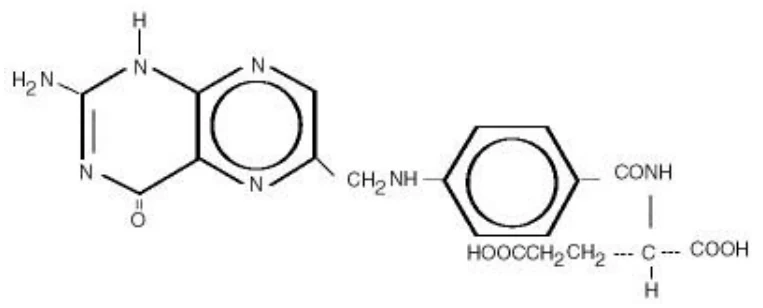
| Chemical Name: | L-Glutamic acid, N-[4-[[(2-amino-1-4-dihydro-4-oxo-6-pteridinyl) methyl]amino]-benzoyl]- |
| Molecular Formula: | C19H19N7O6 |
| Molecular Mass: | 441.4 g/mol |
| Structural Formula: | |
| Physicochemical properties: | Description: Folic acid is a complex organic compound present in liver, yeast and other substances, which may be prepared synthetically. It is a yellow or yellowish-orange, odorless crystalline powder. It is very slightly soluble in water, insoluble in alcohol, chloroform, ether; readily dissolves in dilute solutions of alkali hydroxides and carbonates. |
14 CLINICAL TRIALS
This information is not available for this drug product.
15 MICROBIOLOGY
No microbiological information is required for this drug product.
16 NON-CLINICAL TOXICOLOGY
This information is not available for this drug product.
 |