


Product Monograph - Jamp-Folic Acid
RECENT MAJOR LABEL CHANGES
| 1 Indications | 12/2022 |
|---|---|
| 1 Indications, 1.1 Pediatrics | 12/2022 |
| 2 Contraindications | 12/2022 |
| 4 Dosage and Administration, 4.1 Dosage considerations | 12/2022 |
| 4 Dosage and Administration, 4.2 Recommended Dose and Dosage Adjustment | 12/2022 |
| 7 Warnings and Precautions | 12/2022 |
| 7 Warnings and Precautions, 7.1.1 Pregnant women | 12/2022 |
| 7 Warnings and Precautions, 7.1.2 Breast-feeding | 12/2022 |
| 7 Warnings and Precautions, 7.1.4 Geriatrics | 12/2022 |
TABLE OF CONTENTS
Sections or subsections that are not applicable at the time of authorization are not listed.
RECENT MAJOR LABEL CHANGES ................................................................................................2
TABLE OF CONTENTS ..................................................................................................................2
PART I: HEALTH PROFESSIONAL INFORMATION ..........................................................................4
1 INDICATIONS ..................................................................................................................4
1.1 Pediatrics ...............................................................................................................4
1.2 Geriatrics ...............................................................................................................5
2 CONTRAINDICATIONS .....................................................................................................5
4 DOSAGE AND ADMINISTRATION .....................................................................................5
4.1 Dosing Considerations ............................................................................................5
4.2 Recommended Dose and Dosage Adjustment .........................................................6
4.4 Administration .......................................................................................................7
4.5 Missed Dose ..........................................................................................................7
5 OVERDOSAGE ........................................................................................................................7
6 DOSAGE FORMS, STRENGTHS, COMPOSITION AND PACKAGING............................................8
7 WARNINGS AND PRECAUTIONS.............................................................................................8
7.1 Special Populations ................................................................................................9
7.1.1 Pregnant Women ...................................................................................................9
7.1.2 Breast-feeding ..................................................................................................... 10
7.1.3 Pediatrics ............................................................................................................. 10
7.1.4 Geriatrics ............................................................................................................. 10
8 ADVERSE REACTIONS .................................................................................................... 10
8.1 Adverse Reaction Overview .................................................................................. 10
8.5 Post-Market Adverse Reactions ............................................................................ 10
9 DRUG INTERACTIONS .................................................................................................... 10
9.2 Drug Interactions Overview .................................................................................. 10
9.3 Drug-Behavioural Interactions .............................................................................. 11
9.4 Drug-Drug Interactions ......................................................................................... 11
9.5 Drug-Food Interactions......................................................................................... 12
9.6 Drug-Herb Interactions ......................................................................................... 12
9.7 Drug-Laboratory Test Interactions ........................................................................ 12
10 CLINICAL PHARMACOLOGY ........................................................................................... 13
10.1 Mechanism of Action ........................................................................................... 13
10.2 Pharmacodynamics .............................................................................................. 13
10.3 Pharmacokinetics.................................................................................................. 15
11 STORAGE, STABILITY AND DISPOSAL ............................................................................. 16
12 SPECIAL HANDLING INSTRUCTIONS ............................................................................... 16
PART II: SCIENTIFIC INFORMATION ........................................................................................... 17
13 PHARMACEUTICAL INFORMATION .................................................................................... 17
14 CLINICAL TRIALS ............................................................................................................ 17
15 MICROBIOLOGY ............................................................................................................ 17
16 NON-CLINICAL TOXICOLOGY.......................................................................................... 17
17 SUPPORTING PRODUCT MONOGRAPHS ........................................................................ 18
PATIENT MEDICATION INFORMATION ...................................................................................... 19
PART I: HEALTH PROFESSIONAL INFORMATION
1 INDICATIONS
JAMP-Folic Acid (folic acid) is indicated for:
- The prevention and treatment of folate deficiency due to inadequate dietary intake, absorption or utilization or increased excretion or need as in tropical sprue (not in all forms of sprue), chronic haemodialysis, chronic haemolytic anaemia, nutritional megaloblastic anaemia, megaloblastic anaemia of pregnancy, infancy, and childhood, and megaloblastic anaemia associated with primary liver disease, alcoholism with cirrhosis, or associated with anticonvulsant therapy.
- Women who are planning pregnancy or are pregnant and have had a previous pregnancy affected by a neural tube defect (NTD), who have a family history of neural tube defects, have diabetes or malabsorption disorders, who are taking folic acid antagonists or anticonvulsant drugs.
JAMP-Folic Acid should only be used in conditions in which folate deficiency has been confirmed; specific indicators are:
- the low serum or plasma folate levels [initial],
- red cell folate level [cannot distinguish between folate deficiency and cobalamin deficiency and it remains unaffected by sudden changes in folate intake since it reflects the folate status over the lifespan of a red blood cell [120 days]
- an increase in homocysteine level [often precedes the decrease in the serum folate levels but its less specific indicator.
Folic acid is not effective in reversing the effects of folic acid reductase inhibitors such as methotrexate, for which leucovorin calcium (folinic acid) must be used. However, folic acid is used during long term, low-dose methotrexate therapy to prevent methotrexate toxicity, particularly oral ulceration and gastrointestinal irritation, to treat or prevent folate deficiency and to prevent hyperhomocysteinemia.
Taking this medication does not eliminate the need for a balanced nutrition.
1.1 Pediatrics
Pediatrics (<18 years of age): Based on the data submitted and reviewed by Health Canada, the safety and efficacy of folic acid in pediatric patients has been established. Therefore, Health Canada has authorized an indication for pediatric use. See 4.2 Recommended Dose and Dosage Adjustment.
For infants with documented folic acid deficiency, a more suitable formulation should be used.
1.2 Geriatrics
Geriatrics: Evidence from post-market experience suggests that use in the geriatric population is associated with differences in safety or effectiveness.
2 CONTRAINDICATIONS
JAMP-Folic Acid (folic acid) is contraindicated in:
- Patients with hypersensitivity to folic acid products and/or any of the inactive ingredients present in the drug product, including any non-medicinal ingredient, or component of the container. For a complete listing, See 6 DOSAGE FORMS, STRENGTHS, COMPOSITION AND PACKAGING.
- People who have diseases of the small intestine, especially Crohn’s disease and Sprue, may have trouble absorbing folic acid.
In the following situation, JAMP-Folic Acid should not be used because the risk outweighs any potential therapeutic benefit:
- in any patient with untreated cobalamin deficiency (evidence suggests that long term folate therapy in these subjects precipitates cobalamin neuropathy and/or the degeneration of the spinal cord).
4 DOSAGE AND ADMINISTRATION
4.1 Dosing Considerations
- Cobalamin deficiency should be ruled out before initiating treatment. High serum folate levels in individuals with low cobalamin have been associated with anemia and cognitive impairment in older individuals, an increased risk of diabetes mellitus in the offspring of pregnant women, and high levels of the cobalamin-dependent metabolites methylmalonic acid (MMA) and homocysteine. Additionally, folate supplementation in the setting of cobalamin deficiency may also impair fetal growth and brain development.
- Folic acid should not be used alone in undiagnosed megaloblastic anaemia including in infancy, pernicious anaemia or macrocytic anaemia of unknown etiology, unless administered with adequate amounts of cobalamin.
- For the prevention of neural tube defects for woman planning a pregnancy and known to be at risk (red blood cell folate concentrations below 906 nmol/L—the threshold associated with increased NTD prevalence).
4.2 Recommended Dose and Dosage Adjustment
To prevent deficiency: Adequate dietary intake of folic acid is preferred over supplementation whenever possible.
Adults (including the elderly)
In folate deficient megaloblastic anaemia: 5 mg daily for 4 months; up to 15 mg daily may be necessary for malabsorption states.
In drug induced folate deficiency: 5 mg daily for 4 months; up to 15 mg daily may be necessary for malabsorption states.
For prophylaxis in chronic haemolytic states or in renal dialysis: 5 mg every 1-7 days depending on underlying disease.
Prevention of neural tube defects in women known to be at risk: 5 mg daily started before conception and continued throughout the first trimester.
In sickle cell disease: 1-5 mg of folic acid daily Pregnancy:
In established folate deficiency: 5 mg daily continued to term.
Higher doses have been recommended for the treatment of tropical sprue: 3 to 15 mg daily.
Pediatrics
For young children a more suitable dosage form should be used. In folate deficient megaloblastic anaemia:
Child 1-18 years 5 mg daily for 4 months; maintenance 5 mg every 1-7 days. In haemolytic anaemia; metabolic disorders:
Child 1-12 years 2.5 mg-5 mg once daily. Child 12-18 years 5-10 mg once daily.
Prophylaxis of folate deficiency in renal dialysis:
Child 1-12 years 250 microgram/kg (max 10 mg) once daily. Children 12-18 years 5-10 mg once daily.
Geriatrics
High MMA and homocysteine levels are more common in elderly adults even when serum cobalamin levels are normal, and higher doses of cobalamin supplements are required to correct MMA levels in older individuals.
Advanced age is a risk factor for folate-associated functional cobalamin Deficiency since vitamin B deficiency is a lot more common among the elderly population. A prospective survey of older adult North Americans (>60 years) revealed that 1.9% of the population had unrecognized and untreated pernicious anemia.
Prophylaxis of Neural Tube Defects (NTD): Women with a history of pregnancy complicated by NTD are considered at high risk for recurrence and are advised to take 5 mg folic acid daily under physician supervision while not using reliable birth control (or 3 months prior to conception), continuing for 10 to 12 weeks after the last menstrual period. Thereafter, supplementation with 0.4 mg to 1 mg daily throughout pregnancy and 4 to 6 weeks postpartum or as long as breastfeeding continues is recommended. High doses (5 mg/ day) should not be made up from taking multivitamins/ supplements because of the risk of intake of harmful amounts of other components such as retinol and vitamin D.
Excessive intake of folate may obscure and potentially delay the diagnosis of vitamin B12 deficiency; which could translate into delayed diagnosis and can result in an increased risk of progressive, unrecognized neurological damage.
Some women with no previous history of NTD-affected pregnancy may be at increased risk due to a 1st degree relative (child, sibling or parent) with NTD, belonging to a high-risk group (e.g., Celtic, northern Chinese, Sikh heritage), or certain medical conditions (e.g., type I diabetes, therapy with valproic acid or carbamazepine, BMI >35 kg/m2, malabsorption disorders). Such women should consider taking folic acid 5 mg daily under physician supervision when not using reliable birth control (or 3 months prior to conception), continuing until 10 to 12 weeks after the last menstrual period.
Prevention of methotrexate toxicity: See 1 INDICATIONS: 0.4 to 1 mg daily.
4.4 Administration
Do not use if seal is broken.
4.5 Missed Dose
Women should not take more than the prescribed daily dose. If a dose is missed, for one or more days, do not try to ‘catch up’ by taking the missed dose(s) all at one time.
5 OVERDOSAGE
Symptoms of overdosage
Following chronic administration of very high doses (over 15 mg folic acid daily for more than 4 weeks), overdosage with folic acid manifests in the form of the following symptoms: bitter taste, loss of appetite, nausea, flatulence, nightmares, agitation, depression. The incidence and intensity of epileptic attacks may increase in patients receiving antiepileptic therapy (especially with Phenobarbital, phenytoin or primidone).
Management of overdosage
No specific measures are necessary.
For management of a suspected drug overdose, contact your regional poison control centre.
6 DOSAGE FORMS, STRENGTHS, COMPOSITION AND PACKAGING
Table 1 – Dosage Forms, Strengths, Composition and Packaging
JAMP-Folic Acid tablet is a round yellow tablet with "J 5" debossed on one side and a stripe on the other side. Available in bottles of 100 or 1000 tablets.
7 WARNINGS AND PRECAUTIONS
General
Megavitamin therapy is a cause of vitamin toxicity (hypervitaminosis) for folic acid (folate).
Folic acid is not effective in the rescue treatment or overdosage of folic acid antagonists such as methotrexate.
When cholestyramine and folic acid are administered together, there may be a reduction or delay in the folic acid absorption. If concomitant therapy is required, folic acid should be administered at least 1 hour before and 4 hours after cholestyramine.
Avoid supplements containing herbs and various other non-medicinal ingredients.
Large amounts of folate can correct the megaloblastic anemia, but not the neurological damage, that can result from vitamin B12 deficiency. Some experts have therefore been concerned that high intakes of folate supplements might “mask” vitamin B12 deficiency until its neurological consequences become irreversible.
Concerns have also been raised that high folic acid intakes might accelerate the progression of preneoplastic lesions, increasing the risk of colorectal and possibly other cancers in certain individuals.
Studies have found unmetabolized folic acid in blood from children, adolescents, and adults; breastmilk; and cord blood from newborns. Limited research suggests that single doses of 300 mcg or 400 mcg folic acid (a common amount in folic acid-containing supplements or servings of fortified foods, such as breakfast cereals) result in detectable serum levels of unmetabolized folic acid, whereas doses of 100 mcg or 200 mcg do not. In addition, a dose-frequency interaction appears to occur in which smaller amounts of folic acid consumed more frequently produce higher unmetabolized folic acid concentrations than the same total dose consumed in larger, less frequent amounts.
| Route of Administration | Dosage Form / Strength/Composition | Non-medicinal Ingredients |
|---|---|---|
| oral | tablet 5 mg of folic acid | pregelatinized starch, microcrystalline cellulose, silicone dioxide, magnesium stearate, magnesium trisilicate |
Hematologic
Use only as an adjunct to treatment with vitamin B12 whenever pernicious anemia is present or suspected. However, proper diagnosis of the condition of the patient and evaluation of the underlying etiology of the deficiency state is required. The use of folic acid in pernicious anemia patients without adequate vitamin B12 therapy may result in hematological improvement, while neurologic manifestations continue to progress.
Food-Bound Cobalamin Malabsorption (FBCM) is seen in 20-40% of those >60 years of age. FBCM is caused by either lack of gastric acid or H. Pylori infection. Occasionally it can be seen in younger people especially those with long-term use of drugs (such as histamine (H2) blockers, proton pump inhibitors, or metformin) or gastric resection.
Monitoring and Laboratory Tests
To address potential concerns that high doses of folate may mask manifestations of vitamin B 12 deficiency, signs or symptoms of vitamin B12 deficiency should be considered before initiating folic acid supplementation if doses are greater than 1.0 mg. Vitamin B12 levels may be monitored before and during JAMP-Folic Acid therapy if in the opinion of the healthcare professional it is warranted.
Monitor folate level when drugs known to interact with folic acid are taken concomitantly (See 9.4 Drug-Drug Interactions).
Neurologic
Folate supplementation can mask the early symptoms of vitamin B12 deficiency (e.g., chronic malaise, sore tongue, numbness of the fingers), potentially allowing more irreversible symptoms of nerve damage to develop. For this reason, when taking more than 400 mcg daily, it is important to check the level of B12. Signs and symptoms of vitamin B12 deficiency (e.g., chronic malaise, sore tongue, numbness of the fingers) should be investigated before starting supplementation with folic acid.
7.1 Special Populations
7.1.1 Pregnant Women
There are no known hazards to the use of folic acid in pregnancy, supplements of folic acid are often beneficial.
Non-drug - induced folic acid deficiency, or abnormal folate metabolism, is related to the occurrence of birth defects and some neural tube defects. Interference with folic acid metabolism or folate deficiency induced by drugs such as anticonvulsants and some antineoplastics early in pregnancy results in congenital anomalies. Lack of the vitamin or its metabolites may also be responsible for some cases of spontaneous abortion and intrauterine growth retardation. See 10.3 Pharmacokinetics, Special populations and conditions, Pregnancy and Breast-feeding.
7.1.2 Breast-feeding
Folic acid is actively excreted in human breast milk. Accumulation of folate in milk takes precedence over maternal folate needs. Levels of folic acid are relatively low in colostrum but as lactation proceeds, concentrations of the vitamin rise. No adverse effects have been observed in breast fed infants whose mothers were receiving folic acid.
7.1.3 Pediatrics
Pediatrics (<18 years of age): Based on the data submitted and reviewed by Health Canada, the safety and efficacy of folic acid in pediatric patients has been established. Therefore, Health Canada has authorized an indication for pediatric use. See 4.2 Recommended Dose and Dosage Adjustment.
7.1.4 Geriatrics
Geriatrics: Red cell folate levels and serum folate levels as well as the existence of a cobalamin deficiency, especially in elderly patients should be determined upfront initiating the treatment.
8 ADVERSE REACTIONS
8.1 Adverse Reaction Overview
Folic acid is relatively non-toxic but has rarely caused allergic reactions including erythema, pruritus, and/or urticaria. High doses (e.g. 15 mg/day) have rarely been associated with various gastrointestinal symptoms such as anorexia, nausea, abdominal distention, flatulence and bitter taste and CNS effects such as altered sleep patterns, difficulty concentrating, irritability, overactivity, excitement, mental depression, confusion, and impaired judgment.
8.5 Post-Market Adverse Reactions
Information is not available.
9 DRUG INTERACTIONS
9.2 Drug Interactions Overview
Pregnant and lactating women and people undergoing haemodialysis for kidney disease develop this deficiency because they have an increased need for folic acid.
Pregnant women are more prone to develop folate deficiency that can lead to complications and foetal abnormalities. See 10.3 Pharmacokinetics, Special populations and conditions,Pregnancy and Breast-feeding.
Lactation: Folic acid is actively excreted in human breast milk. Problems in humans have not been documented with intake of normal daily requirements of folic acid during lactation.
9.3 Drug-Behavioural Interactions
Alcohol interferes with the absorption and metabolism of folic acid. Those who drink large amounts of alcohol develop this deficiency.
9.4 Drug-Drug Interactions
The drugs listed in this table are based on either drug interaction case reports or studies, or potential interactions due to the expected magnitude and seriousness of the interaction (i.e., those identified as contraindicated).
Table 2 - Established or Potential Drug-Drug Interactions
| Common name | Source of Evidence | Effect | Clinical comment |
|---|---|---|---|
| Common name | Source of Evidence | Effect | Clinical comment |
| Phenytoin, isoniazid, primidone, barbiturates, sulfasalazine, glutethamide, cycloserine, folic acid antagonists (methotrexate, pyrimethamine, triamterene, diamidine compounds, trimethoprim), anticonvulsants, antacids, cholestyramine, colestipol, H2 blockers, carbamazepine, phenobarbitol, valproate, sulfasalazine, nitrous oxide, and oral contraceptives | C | ↓Folic acid | Decrease absorption of folic acid |
| Cholestyramine | C | ↓Folic acid | When cholestyramine and folic acid are administered together, there may be a reduction or delay in folic acid absorption. If concomitant therapy is required, folic acid should be administered at least one hour before or 4 to 6 hours after cholestyramine |
| Anticonvulsant drugs | T | Folic acid may interfere with the action of anticonvulsant drugs. | |
| Phenytoin | T | ↓Phenytoin | Folic acid therapy in folate-deficient individuals may decrease serum levels of phenytoin. |
| Pancreatin | C | Separate the dose of pancreatin from the dose of folate by at least two hours in order to avoid absorption problems. | |
| Methotrexate | C | ↓Methotrexate | Methotrexate for rheumatoid arthritis, juvenile rheumatoid arthritis, or psoriasis: evidence suggests that folate supplements may reduce side effects of the drug without decreasing its benefits. Nonetheless, physician supervision is highly recommended. If methotrexate is taken for other conditions, folate might decrease the drug’s effectiveness. Although folic acid is not effective in the treatment of methotrexate overdose, it is used during long-term methotrexate therapy to prevent or treat associated folate deficiency, prevent methotrexate toxicity and to prevent hyperhomocysteinemia. |
Legend: C = Case Study; CT = Clinical Trial; T = Theoretical
9.5 Drug-Food Interactions
Interactions with food have not been established.
9.6 Drug-Herb Interactions
Interactions with herbal products have not been established.
9.7 Drug-Laboratory Test Interactions
Interactions with laboratory tests have not been established.
10 CLINICAL PHARMACOLOGY
10.1 Mechanism of Action
Folic acid is a water soluble B complex vitamin and is essential in the body for the formation of new cells. It is involved in the metabolism of DNA and RNA, deoxyribonucleic acid and ribonucleic acid respectively, and is required for normal growth, development and functioning of the foetus, nervous system and bone marrow.
Folates act as coenzymes for two sets of cellular reactions. The first involves methylation reactions that are central to amino acid metabolism. For example, folate plays an important role in the conversion of homocystine to methionine. (Vitamin B12 is also a coenzyme for this reaction) Methionine is in turn a central building block for proteins. It plays a further role in phospholipids synthesis and creatine- phosphate synthesis, two reactions vital to the survival of the cell and the organism. Folate’s second important function as a coenzyme is in the synthesis of nucleic acids, i.e., of DNA and RNA. In this capacity, folate is essential to normal cell replication and embryonic development.
10.2 Pharmacodynamics
Folic acid deficiency can lead to megaloblastic and macrocytic anemias, as a result of impairment of thymidylate synthesis.
Folic acid occurs in a variety of foods in the form of polyglutamate complexes. Folic acid found in pharmaceutical preparations is synthetically derived.
Many plant and animal tissues contain folic acid (pteroylglutamic acid, folacin, vitamin B2) as reduced methyl or formyl polyglutamates. In the tetrahydro form, folates act as coenzymes for processes in which there is a transfer of a one-carbon unit (e.g., in purine and pyrimidine nucleotide biosynthesis), amino acid conversions (e.g., histidine to glutamic acid through formiminoglutamic acid), generation and use of formate, maturation of RBCs, neural function, DNA synthesis related to folate coenzyme, and methionine synthesis.
Absorption occurs in the gastrointestinal tract (duodenum and upper jejunum). Folic acid is converted in the liver into tetrahydrofolic acid that is a cofactor in the biosynthesis of purines and thymidylates of nucleic acids. An exogenous source of folic acid necessary for the synthesis of nucleoproteins and maintenance of normal erythropoiesis. In the epithelial cells, food polyglutamates are reduced to dihydrofolates and tetrahydrofolates. They are bound to protein and transported as methyltetrahydrofolate. Serum levels vary from 4 to 21 ng/mL (9 to 48 nmol/L) and closely reflect dietary intake. RBC folate (normal, 225 to 640 ng/mL whole blood [510 to 1450 nmol/L] corrected to packed cell volume of 45%) is a better indicator of folate tissue status. Total body folate is about 70 mg, of which 1/3 is found in the liver. About 20% of ingested folate is secreted unabsorbed together with 60 to 90 mcg/day not reabsorbed from bile.
Alcohol interferes with its intermediate metabolism, intestinal absorption, and enterohepatic salvage. Hence marginal dieters and chronic alcoholics are prone to macrocytic anaemia from folate deficiency, as are those with chronic liver disease. Because the foetus obtains folate from maternal supplies, pregnant women are susceptible to megaloblastic anaemia. In tropical sprue, malabsorption is secondary to the atrophy of intestinal mucosa resulting from the lack of folate, so even minute doses usually correct both anaemia and steatorrhea. Folate deficiency may develop in patients taking long- term anticonvulsant therapy or oral contraceptives, due to decreased absorption, or in patients taking antimetabolites (methotrexate) and antimicrobial drugs (e.g., trimethoprim-sulfa- methoxazole) that interfere with folate metabolism. Increased demand for folate occurs in pregnant and lactating patients with chronic (especially congenital) haemolytic anaemias or psoriasis and in patients on long-term dialysis.
CAUSES OF FOLATE DEFICIENCY
| CAUSE | SOURCE |
|---|---|
| Inadequate intake | Diet lacking fresh, slightly cooked food; chronic alcoholism; TPN |
| Inadequate absorption | Malabsorption syndromes (especially celiac disease, sprue), drugs (phenytoin, primidone, barbiturates, cycloserine, oral contraceptives), folic acid malabsorption (congenital, acquired), blind loop syndrome. |
| Inadequate utilization | Folic acid antagonists (methotrexate, pyrimethadine, triamterene, diamidine compounds, trimethoprim), anticonvulsants, enzyme deficiency (congenital, acquired), vitamin B12 deficiency, alcoholism, scurvy |
| Increased requirement | Pregnancy, lactation, infancy, malignancy (especially lymphoproliferative), increased haemopoiesis (especially β- thalassemia major), increased metabolism |
| Increased excretion | Renal dialysis (peritoneal or haemodialysis); vitamin B12 dependency, liver disease |
Deficiency of folic acid is quite common and can be caused by inadequate intake, problems with absorption and metabolism or increased requirements. Symptoms of severe deficiency include:
- Loss of appetite
- Abdominal pain
- Sickness
- Diarrhoea
- Ulcers in the mouth
- In pregnancy: premature birth and/or malformation
- In children: growth retardation
Folic acid is a B complex vitamin, which after conversion to tetrahydrofolic acid, is necessary for normal erythropoiesis and nucleoprotein synthesis. It is important for carbohydrate metabolism and healthy mucous membranes.
Because Folic Acid is a water-soluble vitamin, it is not stored in the body in appreciable amounts and as a result a daily supply is essential to prevent depletion.
Folic acid dependency results from a genetic defect in the metabolism of the vitamin or in the binding of the vitamin-related coenzyme to its apoenzyme. In some instances, doses much higher than the recommended dietary allowance (RDA) improve the function of the altered metabolic pathway. Patients on long-term dialysis commonly receive multivitamin supplements (to replace estimated dialytic loss of the water-soluble vitamins B-complex, folic acid and vitamin C.
Folic acid and vitamin B12 function interdependently in the formation of normal red blood cells and in the production of DNA, and thymidine. A deficiency of either of these vitamins results in a serious anaemia (such as pernicious anaemia), in which the red blood cells are few in number but large in size. Symptoms include paleness, weakness, reduced acid secretion in the stomach, and nerve damage (neuropathy). Nerve damage occurs mainly in vitamin B12 deficiency. Folic acid deficiency can lead to megaloblastic and macrocytic anaemias as a result of impairment of thymidylate synthesis. Within 48 hours of beginning treatment with folic acid, the bone marrow of patients with megaloblastic anaemia due to folate deficiency begins to become normoblastic. In megaloblastic anaemias due to folate deficiency, the megaloblastic erythropoiesis disappears within 48 hours of initiation of treatment and the reticulocyte count begins to increase within 2 to 5 days, reaching a maximum at 5 to 7 days.
Folic acid polyglutamates from food sources are enzymatically hydrolized in the gastrointestinal tract to monoglutamates prior to absorption, which occurs mainly in the proximal small intestine. In the presence of malabsorption syndrome, folic acid from oral supplements will still be absorbed whereas absorption of folic acid from food sources may be impaired.
10.3 Pharmacokinetics
Absorption and Distribution:
Following absorption of 1 mg or less, folic acid is converted in the liver and plasma into its metabolically active form tetrahydrofolic acid, which is then distributed into all body tissues.
Metabolism:
The liver contains about 50% of total body folate stores. Larger doses of folic acid may escape metabolism by liver and appear in the blood mainly as folic acid.
Elimination
Following oral administration of single 0.1 to 0.2 mg doses of folic acid in healthy adults, only a trace amount of the drug appears in urine. Following administration of large doses, the renal tubular reabsorption maximum is exceeded, and excess folate is excreted unchanged in urine.
After doses of about 2.5 to 5.0 mg, about 50% of a dose is excreted in urine and after a 15 mg dose, up to 90% may be recovered in urine. Small amounts of orally administered folic acid have been recovered from feces.
Special Populations and Conditions
- Pediatrics The clinical trial data on which the indication was originally authorized is not available.
- Geriatrics The clinical trial data on which the indication was originally authorized is not available.
- Sex The clinical trial data on which the indication was originally authorized is not available.
- Pregnancy and Breast-feeding Studies have provided strong scientific support for periconceptual prophylaxis with folic acid in reducing the risk of foetal neural tube defects. Folic acid deficiency may occur in pregnant women on diets that lack green leafy vegetables and legumes that contain folic acid. Infants may develop folic acid deficiency when the folic acid content of their formula is low. Treatment of folic acid deficiency consists of folic acid taken orally. Infants may have neurological abnormalities, and this deficiency in a pregnant woman can cause spinal cord defects and other malformations of the foetus.
- Genetic Polymorphism The clinical trial data on which the indication was originally authorized is not available.
- Ethnic Origin The clinical trial data on which the indication was originally authorized is not available.
- Hepatic Insufficiency The clinical trial data on which the indication was originally authorized is not available.
- Renal Insufficiency The clinical trial data on which the indication was originally authorized is not available.
- Obesity The clinical trial data on which the indication was originally authorized is not available.
11 STORAGE, STABILITY AND DISPOSAL
Store in well-closed container at room temperature (15°C-30°C).
Keep out of reach and sight of children. This product contains sufficient drug to seriously harm a child.
JAMP-Folic Acid should never be disposed of in household trash. Disposal via a pharmacy take back program is recommended
12 SPECIAL HANDLING INSTRUCTIONS
No special handling required.
PART II: SCIENTIFIC INFORMATION
13 PHARMACEUTICAL INFORMATION
Drug Substance
Proper name: folic acid
Chemical name: Information is not available Molecular formula and molecular mass: C19H19N7O6 and 441.40 g / mol Structural formula:
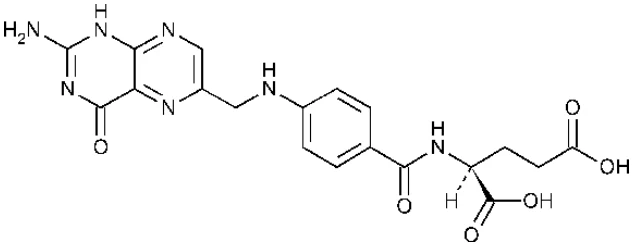
Physicochemical properties: Information is not available
Pharmaceutical standard: USP
14 CLINICAL TRIALS
The clinical trial data on which the original indication was authorized is not available.
15 MICROBIOLOGY
No microbiological information is required for this drug product.
16 NON-CLINICAL TOXICOLOGY
General Toxicology: Information is not available.
Carcinogenicity: Information is not available.
Genotoxicity: Information is not available.
Reproductive and Developmental Toxicology: Information is not available.
Special Toxicology: Information is not available.
Juvenile Toxicity: Information is not available.
17 SUPPORTING PRODUCT MONOGRAPHS
1 Pr Folic Acid (Folic Acid Tablets, 5 mg), submission control No. 258037, Product Monograph. AA Pharma Inc. Date of Revision: APR 7, 2022.