


Product Monograph - Fortaz
Indications and Clinical Use
FORTAZ (ceftazidime for injection) may be indicated for the treatment of patients with infections caused by susceptible strains of the designated organisms in the following diseases:
Lower Respiratory Tract Infections
Pneumonia caused by Pseudomonas aeruginosa; Haemophilus influenzae including ampicillin-resistant strains; Klebsiella species; Enterobacter species; Proteus mirabilis;
Escherichia coli, Serratia species, Streptococcus pneumoniae, and Staphylococcus aureus (methicillin susceptible) strains.
Urinary Tract Infections
Caused by Pseudomonas aeruginosa; Enterobacter species; Proteus species (indole positive and negative); Klebsiella species, and Escherichia coli.
Due to the nature of the underlying conditions which usually predispose patients to
Pseudomonas infections of the lower respiratory and urinary tracts, a good clinical response accompanied by bacterial eradication may not be achieved despite evidence of in vitro sensitivity.
Skin Structure Infections
Caused by Pseudomonas aeruginosa; Klebsiella species; Escherichia coli; Proteus mirabilis; Enterobacter species; Staphylococcus aureus (methicillin susceptible) strains;
and Streptococcus pyogenes.
Bacteremia/Septicemia
Caused by Pseudomonas aeruginosa; Klebsiella species; Escherichia coli; Serratia species; Streptococcus pneumoniae; Staphylococcus aureus (methicillin susceptible)
strains; and Staphylococcus epidermidis.
Bone Infections
Caused by Pseudomonas aeruginosa; Proteus mirabilis; Enterobacter species; and
Staphylococcus aureus (methicillin susceptible) strains.
Peritonitis
Caused by Escherichia coli; Klebsiella species; and Peptostreptococcus species.
Patients infected with Bacteroides species have also responded.
Meningitis
Caused by Haemophilus influenzae and Neisseria meningitidis. FORTAZ has also been used successfully in a limited number of cases of meningitis due to Pseudomonas aeruginosa.
General
Specimens for bacteriologic culture should be obtained prior to therapy in order to identify the causative organisms and to determine their susceptibilities to FORTAZ.
Therapy may be instituted before results of susceptibility testing are known. However, modification of the treatment may be required once these results become available.
To reduce the development of drug-resistant bacteria and maintain the effectiveness of
FORTAZ and other antibacterial drugs, FORTAZ should be used only to treat infections that are proven or strongly suspected to be caused by susceptible bacteria. When culture and susceptibility information are available, they should be considered in selecting or modifying antibacterial therapy. In the absence of such data, local epidemiology and susceptibility patterns may contribute to the empiric selection of therapy.
Contraindications
FORTAZ (ceftazidime for injection) is contraindicated for patients who have shown hypersensitivity to ceftazidime or the cephalosporin group of antibiotics.
Warnings
Before therapy with FORTAZ (ceftazidime for injection) is instituted, careful enquiry should be made to determine whether the patient has had previous hypersensitivity reactions to ceftazidime, cephalosporins, penicillins, or other drugs. FORTAZ should be administered with caution to any patient who has demonstrated some form of allergy, particularly to drugs. Special care is indicated in patients who have experienced an allergic reaction to penicillins or other beta-lactams. If an allergic reaction to FORTAZ occurs, treatment should be discontinued and standard agents (e.g. epinephrine, antihistamines, corticosteroids) administered as necessary. Elevated levels of ceftazidime in patients with renal insufficiency can lead to convulsions. (see
PRECAUTIONS).
Clostridium difficile-Associated Disease
Clostridium difficile-associated disease (CDAD) has been reported with use of many antibacterial agents, including FORTAZ (ceftazidime for injection). CDAD may range in severity from mild diarrhea to fatal colitis. It is important to consider this diagnosis in patients who present with diarrhea, or symptoms of colitis, pseudomembranous colitis, toxic megacolon, or perforation of colon subsequent to the administration of any antibacterial agent. CDAD has been reported to occur over 2 months after the administration of antibacterial agents.
Treatment with antibacterial agents may alter the normal flora of the colon and may permit overgrowth of Clostridium difficile. C. difficile produces toxins A and B, which contribute to the development of CDAD. CDAD may cause significant morbidity and mortality. CDAD can be refractory to antimicrobial therapy.
If the diagnosis of CDAD is suspected or confirmed, appropriate therapeutic measures should be initiated. Mild cases of CDAD usually respond to discontinuation of antibacterial agents not directed against Clostridium difficile. In moderate to severe cases, consideration should be given to management with fluids and electrolytes, protein supplementation, and treatment with an antibacterial agent clinically effective against
Clostridium difficile. Surgical evaluation should be instituted as clinically indicated, as surgical intervention may be required in certain severe cases (see ADVERSE
REACTIONS).
Hemolytic Anemia
FORTAZ SHOULD NOT BE USED IN PATIENTS WITH A HISTORY OF
CEPHALOSPORIN-ASSOCIATED HEMOLYTIC ANEMIA SINCE THE RECURRENCE
OF HEMOLYSIS IS MUCH MORE SEVERE.
An immune mediated hemolytic anemia has been observed in patients receiving cephalosphorin class antibacterials, including FORTAZ. Severe cases of hemolytic anemia, including fatalities, have been reported in both adults and children. If a patient develops anemia anytime during, or within 2-3 weeks subsequent to the administration of FORTAZ, the diagnosis of a cephalosphorin-associated anemia should be considered and the drug discontinued until the etiology is determined.
Patients may benefit from periodic monitoring for signs and symptoms of hemolytic anemia, including measurement of hematological parameters or drug-induced antibody testing, where appropriate (see ADVERSE REACTIONS).
Susceptibility / Resistance
Development of Drug-Resistant Bacteria
Prescribing FORTAZ in the absence of a proven or strongly suspected bacterial infection is unlikely to provide benefit to the patient and risks the development of drug-resistant bacteria.
Development of resistance during the administration of FORTAZ has been observed for
Staphylococcus aureus, members of the Enterobacteriaceae family, Acinetobacter species, Pseudomonas species, and Serratia species.
The prevalence of acquired resistance is geographically and time dependent and for select species may be very high. Local information on resistance and prevalence of extended spectrum beta lactamase (ESBLs) producing organisms is desirable, particularly when treating severe infections.
Potential for Microbial Overgrowth
Prolonged treatment with FORTAZ may result in the overgrowth of nonsusceptible organisms, including species originally sensitive to the drug. Repeated evaluation of the patient's condition is essential. If superinfection occurs during therapy, appropriate measures should be taken.
Precautions
General
FORTAZ (ceftazidime for injection) should be administered with caution to individuals with a history of gastrointestinal disease, particularly colitis.
Patients with impaired renal function (i.e. creatinine clearance of 50 mL/min/1.73 m2 or less) should be placed on the special dosage schedule for FORTAZ recommended under DOSAGE AND ADMINISTRATION. Normal dosages in these individuals are likely to produce excessive serum concentrations of ceftazidime. Elevated levels of ceftazidime in these patients could lead to convulsions.
Ceftazidime is eliminated via the kidneys, therefore the dosage should be reduced according to the degree of renal impairment. Neurological sequelae have occasionally been reported when the dose has not been reduced appropriately (see Dosage in
Impaired Renal Function and see ADVERSE REACTIONS).
Sodium Content
Each 1 g of ceftazidime contains 52 mg of sodium. The sodium content must be taken into account in patients requiring sodium restriction.
Pregnancy
The safety of FORTAZ in pregnancy has not been established. The use of FORTAZ in pregnant women requires that the likely benefit from the drug be weighed against the possible risk to the mother and fetus.
Reproduction studies have been performed in mice and rats employing ceftazidime doses of up to 25 times those usually administered to humans. These studies have revealed no evidence of impaired fertility or harm of the fetus caused by ceftazidime.
Animal reproduction studies, however, are not always predictive of human response.
Nursing Mothers
Ceftazidime is excreted in human milk in low concentrations (3.8 - 5.2 mg/L). The clinical significance of this is unknown, therefore, caution should be exercised when
FORTAZ is administered to a nursing mother.
Elderly Patients
Because elderly patients are more likely to have decreased renal function, care should be taken in dose selection, and it may be useful to monitor renal function.
Carcinogenesis, Mutagenesis, Impairment of Fertility
Long-term studies in animals have not been performed to evaluate carcinogenic potential. However, a mouse micronucleus test and an Ames test were both negative for mutagenic effects.
Drug Interactions
The concomitant administration of aminoglycosides and some cephalosporins has caused nephrotoxicity. Although transient elevations of BUN and serum creatinine have been observed in clinical studies, there is no evidence that FORTAZ, when administered alone, is significantly nephrotoxic. However, the effect of administering FORTAZ concomitantly with aminoglycosides is not known. Studies suggest that the concomitant use of potent diuretics, such as furosemide and ethacrynic acid, may increase the risk of renal toxicity with cephalosporins.
Chloramphenicol is antagonistic in vitro with ceftazidime and other cephalosporins. The clinical relevance of this finding is unknown, but if concurrent administration of ceftazidime with chloramphenicol is proposed, the possibility of antagonism should be considered.
In common with other antibiotics, ceftazidime may affect the gut flora, leading to lower estrogen reabsorption and reduced efficacy of combined oral contraceptives.
Drug-Laboratory Test Interactions
Ceftazidime may cause a false positive reaction for glucose in the urine with copper reduction tests (Benedict's or Fehling's solution). As a false negative result may occur in the ferricyanide test, it is recommended that either glucose oxidase or hexokinase method be used to determine blood plasma glucose levels in patients receiving
FORTAZ.
Ceftazidime does not interfere in the alkaline picrate assay for creatinine.
A positive Coombs' test has been reported during treatment with cephalosporins. This phenomenon can interfere with cross matching of blood.
Adverse Reactions
The most common adverse effects have been local reactions following intravenous injection, allergic reactions and gastrointestinal reactions. Other adverse effects have been encountered less frequently.
Local (2.8% of patients)
Thrombophlebitis or phlebitis and pain with intravenous administration. Pain after intramuscular injection.
Hypersensitivity (2.7% of patients)
Pruritus, urticaria, macropapular rash, allergic exanthema, and fever.
Gastrointestinal (<4% of patients)
Diarrhea, nausea, vomiting, colitis and abdominal pain. Pseudomembranous colitis has been reported (see WARNINGS). Oral thrush has been reported very rarely.
Central Nervous (<1% of patients)
Headache, dizziness, hallucinations, and lethargy. There have been reports of neurological sequelae including tremor, myoclonia, convulsions, encephalopathy and coma occurring in patients with renal impairment in whom the dose of ceftazidime has not been appropriately reduced.
Renal (<1% of patients)
Transient elevations of blood urea, blood urea nitrogen and serum creatinine.
Hepatic (<4% of patients)
Transient elevations of serum bilirubin, alkaline phosphatase, LDH, AST (SGOT), ALT
(SGPT) and GGT.
Hematopoietic
Eosinophilia (3.4%), positive Direct Coombs' Test (5.1%), and with an incidence of <1%:
thrombocytosis, transient leukopenia, neutropenia, thrombocytopenia (see WARNINGS).
Miscellaneous (<1% of patients)
Blurred vision, flushing, candidiasis, and vaginitis.
POST-MARKETING EXPERIENCE WITH FORTAZ
In addition to adverse events reported during clinical trials, the following events have been identified during clinical practice in patients treated with FORTAZ and were reported spontaneously. Because these reactions were reported voluntarily from a population of uncertain size, it is not possible to reliably estimate their frequency.
Blood and lymphatic system disorders
Lymphocytosis, hemolytic anemia, and agranulocytosis.
Immune system disorders
Anaphylaxis (including bronchospasm and/or hypotension).
Nervous system disorders
Paraesthesia.
Gastrointestinal disorders
Bad taste.
Hepatobiliary disorders
Jaundice.
Skin and subcutaneous tissue disorders
Angioedema, erythema multiforme, Stevens-Johnson syndrome, and toxic epidermal necrolysis.
Symptoms and Treatment of Overdosage
Overdosage of cephalosporins can lead to neurological sequelae including
encephalopathy, convulsions and coma. Excessive serum levels of ceftazidime can be reduced by hemodialysis or peritoneal dialysis.
Dosage and Administration
FORTAZ (ceftazidime for injection) may be administered either intravenously or intramuscularly after reconstitution.
Dosage and route of administration should be determined by severity of infection, susceptibility of the causative organism(s), and condition of the patient. The intravenous route is preferable for patients with septicemia, peritonitis or other severe or life threatening infections, or for patients who may be poor risks because of lowered resistance resulting from such debilitating conditions as malnutrition, trauma, surgery, diabetes, heart failure, or malignancy, particularly if shock is present or pending.
The usual duration of treatment is 7 to 14 days. For Streptococcal infections, therapy should be continued for at least 10 days.
Adults
The recommended daily dosage of FORTAZ is 0.5 to 6 g administered in equally divided doses every 8 to 12 hours (see Table 1).
For management of a suspected drug overdose contact your regional Poison Control Centre.
TABLE 1
| TYPE OF INFECTION | DAILY DOSE IN GRAMS | FREQUENCY AND ROUTE |
uncomplicated pneumonia or skin structure infection uncomplicated urinary tract infections complicated urinary tract infections bone infections peritonitis or septicemia meningitis | 1.5 – 3.0 0.5 1.0 – 1.5 4.0 6.0 6.0 | 0.5 – 1.0 g IM or IV q8h 250 mg IM or IV q12h 500 mg IM or IV q8h or q12h 2 g IV q12h 2 g IV q8h 2 g IV q8h |
For the treatment of infections caused by Staphylococcus species, a dosage of 1 or 2 g administered every 8 hours is recommended. For the treatment of infections (except those confined to the urinary tract) caused by Enterobacter species, a dosage of at least
1 g administered every 8 hours is recommended.
Children
TABLE 2
| Type of Infection | Age group dosage | Dosage |
Infections other than meningitis Meningitis | 1 month – 2 months 2 months – 12 years 1 month – 12 years | 25 – 50 mg/kg IV q12h to a maximum of 6 g/day 30 – 50 mg/kg IV q8h to a maximum of 6 g/day 50 mg/kg IV q8h to a maximum of 6 g/day |
The maximum daily dose in children is 6 g.
Neonates (aged 0-28 days)
In children aged one month or less the recommended dose is 25-50 mg/kg of FORTAZ given twice daily.
Data indicates that half life of ceftazidime in neonates increases with decreasing gestational age and can be 3-4 times that in adults. An adjustment in dosing interval may be necessary with an increasing degree of prematurity. Additionally, clearance may increase rapidly in the first 2-3 weeks of life necessitating a readjustment of dose and/or dosing interval.
Use in Elderly
In acutely ill elderly patients with reduced renal clearance of ceftazidime, the daily dosage should not exceed 3 g.
Impaired Hepatic Function
No adjustment in dosage is required for patients with hepatic dysfunction provided renal function is not impaired (see PHARMACOLOGY).
Adults with Impaired Renal Function
Ceftazidime is excreted almost exclusively by glomerular filtration. In patients in whom the glomerular filtration rate (GFR) is less than or equal to 50 mL/min
(0.83 mL/s), the dosage of FORTAZ must be reduced to compensate for its slower excretion. After an initial loading dose of 1 g of FORTAZ, a maintenance dosage schedule should be followed (see Table 3).
TABLE 3 Recommended Maintenance doses of FORTAZ in Renal
Insufficiency
| Creatinine Clearance | Recommended Unit dose of FORTAZ | Frequency of Dosing* | ||
| mL/min/1.73 m2 | mL/s/1.73 m2 | Moderate Infections | Severe Infections | |
| 31- 50 16 – 30 6 -15 <5 | 0.51 – 0.83 0.26 – 0.50 0.10 – 0.25 <0.09 | 1 g 1 g 500 mg 500 mg | 1.5 g 1.5 g 750 mg 750 mg | q12h q24h q24h q48h |
* If the severity of the infection necessitates an increase in the dosing frequency, serum concentrations of ceftazidime should be used as guidelines.
When only serum creatinine levels are known, the following formulae may be used to estimate creatinine clearance. The serum creatinine must represent a steady state of renal function:
Males
Creatinine clearance (mL/s) = Weight (kg) X (140 - age) 49 x serum creatinine (μmol/L)
OR
Creatinine clearance (mL/min) = Weight (kg) X (140 - age) 72 x serum creatinine (mg/dL)
Females
0.85 X above value.
Mean serum half life of ceftazidime in patients with no kidney function was reduced from a range of 24.0 - 35.4 h between dialysis sessions to a range of 2.8 - 4.6 h during hemodialysis. Therefore a loading dose of 1 g is recommended followed by 0.5 to 1.0 g after each hemodialysis period. Serum concentrations of ceftazidime should be carefully monitored and used as a basis to adjust the dosage.
FORTAZ can also be used in patients undergoing peritoneal dialysis and continuous ambulatory peritoneal dialysis. In such patients, a loading dose of FORTAZ (1 g) is suggested, followed by 500 mg every 24 hours. Serum concentrations of ceftazidime should be carefully monitored and used as a basis to adjust the dosage.
For patients in renal failure receiving low-flux haemofiltration, the dosage as recommended under impaired renal function should be followed. For patients in renal failure receiving continuous arteriovenous haemodialysis or high-flux haemofiltration ,
1 g of FORTAZ daily either as a single dose or in divided doses may be administered.
Clinical studies on safety and efficacy of FORTAZ in patients on continuous venovenous hemofiltration (CVVH) and continuous venovenous haemodialysis (CVVHD) have not been conducted. Pharmacokinetic modelling data from a limited number of patients with end stage renal disease suggest that ceftazidime clearance is dependent on the ultrafiltration rate and residual renal function in patients receiving CVVH. However, in patients receiving CVVHD, ceftazidime clearance is dependent on ultrafiltration rate, diluent volume, and residual renal function. Therefore a loading dose of 1 g - 2 g followed by a maintenance dosage of 0.25 - 2.0 g every 12 hours (total daily dose 0.5- 4
- g) and 0.5 g -2 g every 12 hours (total daily dose 1- 4 g) may be considered in patients on CVVH or CVVHD, respectively.
A clinical judgement for individual patient dose optimisation should be considered based on severity of the infection, susceptibility of the causative organism and therapeutic monitoring. Dosage should be adjusted to maintain drug levels ≥4 times the minimum inhibitory concentration (MIC) for gram negative susceptible pathogens.
ADMINISTRATION
Intramuscular
FORTAZ may be administered by deep intramuscular injection into a large muscle mass such as the upper outer quadrant of the gluteus maximus or vastus lateralis. The maximum dose of FORTAZ should be one (1) gram for a single intramuscular injection.
Intermittent Intravenous Administration
The reconstituted solution may be slowly injected into the vein over a period of 3 to
5 minutes or given through the tubing of an administration set. During the infusion of the solution containing FORTAZ, the administration of other solutions should be discontinued temporarily.
Continuous Intravenous Infusion
FORTAZ may also be administered over a longer period of time.
NOTE: If therapy with FORTAZ is carried out in combination with an aminoglycoside antibiotic, each should be administered at different sites because of a physical incompatibility. An aminoglycoside should not be mixed with FORTAZ in the same container.
Pharmaceutical Information
CHEMISTRY
Proper Name: ceftazidime for injection
Chemical Name: Pyridinium, 1-[[7-[[(2-amino-4-thiazolyl) [(1-carboxy-1-methylethoxy)imino]acetyl]amino]-2-carboxy-8-oxo-5-thia-1-azabicyclo[4.2.0]oct-2-en-3-yl]methyl]-, hydroxide, inner salt, pentahydrate, [6R- [6α, 7β(Z)]]-
Structural Formula:
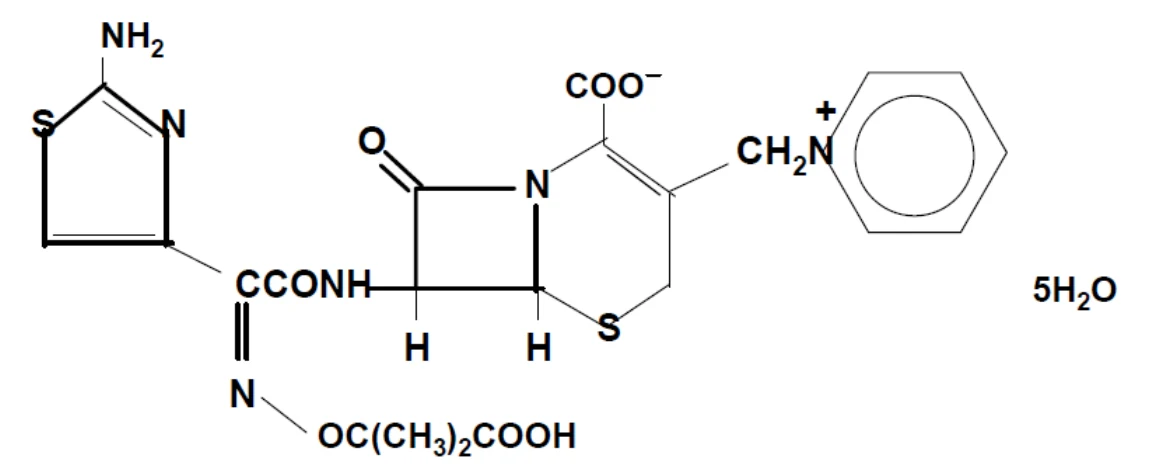
Molecular Formula: C22H22N6O7S2 · 5H2O
Molecular Weight: 636.6 (as pentahydrate)
Description: Ceftazidime pentahydrate is a white to cream-coloured powder. It is soluble in acid, alkali and dimethyl sulfoxide; slightly soluble in water, methanol and dimethylformamide; insoluble in 95% ethanol, ethyl acetate, acetone, 1, -4-dioxan, diethyl ether, toluene, petroleum spirit and chloroform.
Composition
FORTAZ vials contain a mixture of ceftazidime pentahydrate and sodium carbonate.
When constituted, this mixture provides a solution of ceftazidime sodium.
The sodium carbonate at a concentration of 118 mg/g of ceftazidime activity has been admixed to facilitate dissolution. The total sodium content of the mixture is approximately 52 mg (2.3 mEq/g of ceftazidime activity).
Solutions of FORTAZ range in colour from light yellow to amber, depending upon the diluent and volume used. The pH of freshly reconstituted solutions usually ranges from
5.0 to 7.5.
RECONSTITUTION
CAUTION: Ensure adequate venting, addition of diluent generates a positive pressure.
For Intramuscular Use
Solutions for Reconstitution
Sterile Water for Injection or, if required Bacteriostatic Water for Injection with Benzyl
Alcohol or Parabens (not for use in neonates) 0.5 w/v to 1.0% w/v Lidocaine
Hydrochloride Injection.
Reconstitution Table
| Vial size | Diluent to be added to Vial | Approximate Available Volume | Approximate Average Concentration |
| 1.0 g | 3.0 mL | 3.9 mL | 280 mg/mL |
Shake well until dissolved.
For Intravenous Use
Solution for Reconstitution
Sterile Water for Injection
Reconstitute as follows:
Reconstitution Table
Shake well until dissolved. The prepared solution may be further diluted to the desired volume with any of the solutions listed under "Solutions for IV Infusion".
For Direct Intravenous Injection
Reconstitute as directed above.
For Intermittent Intravenous Infusion
Reconstitute as directed above for 1.0 g and 2.0 g vials of FORTAZ.
| Vial size | Diluent to be added to Vial | Approximate Available Volume | Approximate Average Concentration |
| 1.0 g 2.0 g | 10 mL 10 mL | 10.9 mL 11.7 mL | 100 mg/mL 175 mg/mL |
For Continuous Intravenous Infusion
Reconstitute 1.0 g and 2.0 g vials of FORTAZ with 10 mL Sterile Water for Injection.
The appropriate quantity of the reconstituted solution may be added to an intravenous bottle containing any of the solutions listed under "Solutions for IV Infusion".
6.0 g Pharmacy Bulk Vial
THE AVAILABILITY OF THE PHARMACY BULK VIAL IS RESTRICTED TO
HOSPITALS WITH A RECOGNIZED INTRAVENOUS ADMIXTURE PROGRAM.
FORTAZ FOR INJECTION does not contain any preservatives. The Pharmacy Bulk Vial is intended for multiple dispensing for intravenous use only, employing a single puncture.
Reconstitute with 26 mL Sterile Water for Injection.
Reconstitution Table
| Vial size | Diluent to be added to vial | Approximate Available Volume | Approximate Average Concentration |
| 6.0 g | 26 mL | 30 mL | 200 mg/mL |
Shake well until dissolved. Following reconstitution with Sterile Water for Injection, the solution should be dispensed and diluted for use within 8 hours at room temperature (not exceeding 25ºC). Any unused reconstituted solution should be discarded after 8 hours.
The appropriate quantity of the reconstituted solution may be added to an intravenous bottle containing any of the solutions listed below.
Solutions for IV Infusion
0.9% Sodium Chloride Injection
M/6 Sodium Lactate Injection
Ringers Injection USP
Lactated Ringers Injection USP
5% Dextrose Injection
5% Dextrose and 0.225% Sodium Chloride Injection
5% Dextrose and 0.45% Sodium Chloride Injection
5% Dextrose and 0.9% Sodium Chloride Injection
10% Dextrose Injection
10% Invert Sugar in Water for Injection
Normosol-M in 5% Dextrose Injection
Sterile Water for Injection
Stability of Solutions
Storage
Reconstituted solutions should be administered within 12 hours when stored at room temperature (not exceeding 25°C), and within 48 hours when refrigerated, from the time of reconstitution, both when prepared as bolus injections, IM or IV, and as infusion admixtures with the recommended IV diluents.
Incompatibility
FORTAZ should not be added to blood products, protein a hydrolysates or amino acids.
FORTAZ should not be mixed together with an aminoglycoside. FORTAZ is less stable in Sodium Bicarbonate Injection than in other intravenous fluids, therefore it is not recommended as a diluent. Precipitation has been reported when vancomycin has been added to FORTAZ in solution. Therefore, it would be prudent to flush giving sets and intravenous lines between administration of these two agents.
Availability of Dosage Forms
FORTAZ for intramuscular or direct intravenous injection
Vials containing the equivalent of 1 g ceftazidime are available in packs of ten.
FORTAZ for intravenous injection or infusion
Vials containing the equivalent of 1 g and 2 g ceftazidime are available in packs of ten.
Vials containing the equivalent of 6 g ceftazidime are available in packs of 6.
STORAGE
FORTAZ in the dry state should be stored below 25°C and protected from light.
MICROBIOLOGY
Mechanism of Action
Ceftazidime is a bactericidal agent that inhibits bacterial cell wall synthesis following attachment to penicillin binding proteins (PBPs). This results in the interruption of cell wall (peptidoglycan) biosynthesis, which leads to bacterial cell lysis and death.
Mechanism of Resistance
Resistance to ceftazidime is primarily through hydrolysis by beta-lactamase, alteration of penicillin-binding proteins (PBPs), outer membrane impermeability, and presence of bacterial efflux pumps.
Spectrum of Activity
Ceftazidime has been shown to be active against most isolates of the following bacteria, both in vitro and in clinical infections (see INDICATIONS AND CLINICAL USE).
Gram-positive bacteria
Staphylococcus aureus (methicillin susceptible)
Streptococcus pneumoniaea
Streptococcus pyogenes
Gram-negative bacteria
Enterobacter speciesb
Escherichia colib
Haemophilus influenzae (including ampicillin-resistant strains)
Klebsiella speciesb
Neisseria meningitidis
Proteus mirabilisb
Pseudomonas aeruginosab
Serratia speciesb
aSome strains of S. pneumoniae are resistant to ceftazidime due to alterations in penicillin-binding proteins.
bMost extended spectrum beta-lactamase (ESBL)-producing, AmpC and carbapenemase-producing isolates are resistant to ceftazidime.
The following in vitro data are available, but their clinical significance is unknown. At least 90 percent of the following bacteria exhibit an in vitro minimum inhibitory concentration (MIC) less than or equal to the susceptible breakpoint for ceftazidime.
However, the efficacy of ceftazidime in treating clinical infections due to these bacteria have not been established in adequate and well-controlled clinical trials.
Gram-positive bacteria
Coagulase negative Staphylococcus (methicillin susceptible)
Streptococcus agalactiae
Gram-negative bacteria
Burkholderia cepacia
Haemophilus parainfluenzae
Neisseria gonorrhoeae
Pasteurella multocida
Providencia species
Salmonella species
Shigella species
Anaerobic bacteria
Peptostreptococcus species
Ceftazidime is not active in vitro against methicillin-resistant staphylococci, Enterococcus species, Listeria monocytogenes, Campylobacter species, Clostridium difficile,
Bacteroides species, Chlamydia species, Mycoplasma species and Legionella species.
Susceptibility Test Methods
Susceptibility to FORTAZ will vary with geography and time (see Warnings). Local susceptibility data should be consulted where available.
Dilution Technique:
Quantitative methods are used to determine antimicrobial MICs. These MICs provide estimates of the susceptibility of bacteria to antimicrobial compounds. The MICs should be determined using a standardized test method (broth and/or agar). The disc diffusion
Interpretive criteria are based on the CLSI M100-S24 interpretive criteria as provided in
Table 4.
Diffusion Technique:
Quantitative methods that require measurement of zone diameters can also provide reproducible estimates of the susceptibility of bacteria to antimicrobial compounds. The zone size provides an estimate of the susceptibility of bacteria to antimicrobial compounds. The zone size should be determined using a standardized test method.
These procedures use paper discs impregnated with 30 μg FORTAZ to test the susceptibility of bacteria to ceftazidime. The disc diffusion interpretive criteria are provided in Table 4.
TABLE 4 Disk and MIC breakpoints for ceftazidime susceptibility testing
Organism
Zone Diameter Interpretive Criteria* (mm) (30 µg disk)
MIC Interpretive Criteria* (µg/mL)
Susceptible Intermediate Resistant Susceptible Intermediate Resistant
Enterobacteriaceae ≥21 18-20 ≤17 ≤4 8 ≥16
Hemophilus
influenza ≥26 - - ≤2 - -
Pseudomonas
aeruginosa ≥18 15-17 ≤14 ≤8 16 ≥32
Staphylococcus
spp. Susceptibility may be deduced from testing either cefoxitin or oxacillin.
Streptococcus
pneumonia Penicillin-susceptible S. pneumoniae can be considered susceptible to ceftazidime
Streptococcus
pyogenes Penicillin-susceptible S. pyogenes can be considered susceptible to ceftazidime
*Interpretive criteria based on CLSI M100-S24 interpretive criteria
A report of “Susceptible” indicates the antimicrobial is likely to inhibit growth of the pathogen if the antimicrobial compound reaches the concentrations at the infection site necessary to inhibit growth of the pathogen. A report of “Intermediate” indicates that the result should be considered equivocal, and, if the bacterium is not fully susceptible to alternative, clinically feasible drugs, the test should be repeated. This category implies possible clinical applicability in body sites where the drug product is physiologically concentrated or in situations where a high dosage of the drug product can be used. This category also provides a buffer zone that prevents small uncontrolled technical factors from causing major discrepancies in interpretation. A report of “Resistant” indicates that the antimicrobial is not likely to inhibit growth of the pathogen if the antimicrobial compound reaches the concentrations usually achievable at the infection site; other therapy should be selected.
Quality Control:
Standard ceftazidime powder should provide the range of MIC values noted in Table 5.
The Quality Control should be performed and evaluated according to the CLSI M100-
S24 published QC ranges as provided in Table 5.
TABLE 5 Disk and MIC QC ranges for ceftazidime susceptibility testing
QC Strain
Disk Range* (mm)
(30 µg disk)
MIC Range* (µg/mL)
Escherichia coli ATCC 25922 25-32 0.06-0.5
Pseudomonas aeruginosa ATCC 27853 22-29 1-4
Staphylococcus aureus ATCC 29213 - 4-16
Staphylococcus aureus ATCC 25923 16-20 -
Haemophilus influenzae ATCC 49247 27-35 0.12-1
*Disk and MIC QC ranges as published from CLSI M100-S24
Pharmacology
Animals
The secondary pharmacological actions of ceftazidime have been studied in four species: mouse, rat, cat and dog. The possible effects of ceftazidime on the central nervous system, cardiovascular, respiratory and autonomic nervous systems, gastrointestinal tract and in smooth muscle contractions have been determined. The following effects were observed:
TABLE 6
| Animal | Dose | Effect |
cat mouse rat | 1 g/kg, IV 4 g/kg, SC | increases or decreases in blood pressure and heart rate; transient increase in respiratory rate and minute volume; slight inhibition of contraction of nictitating membrane slight inhibition of gastrointestinal propulsion |
Human
Ceftazidime is poorly absorbed when given orally (e.g. following a 250 mg dose the average urinary recovery was less than 1% of the dose).
Intravenous Administration
Bolus Injections
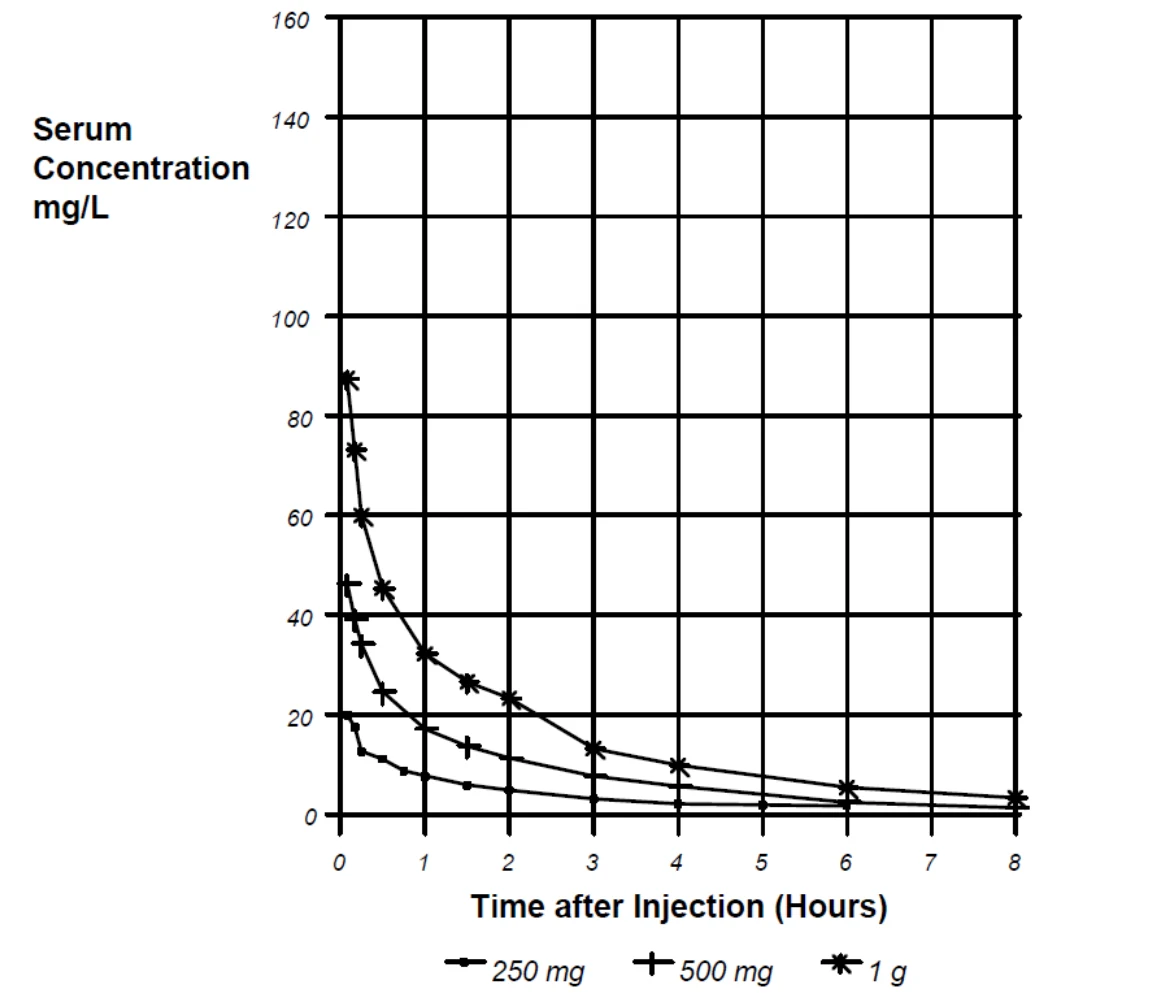
Ceftazidime was administered as single bolus injections (over 1 min) to 22 healthy male volunteers in three doses: 250 mg (6 subjects, mean age 34 years), 500 mg (8 subjects, mean age 33 years) and 1000 mg (8 subjects, mean age 35 years). Serum concentration-time curves follow a biexponential decay (see Figure 1).
FIGURE 1 Serum concentrations of ceftazidime
administered intravenously over 1 minute
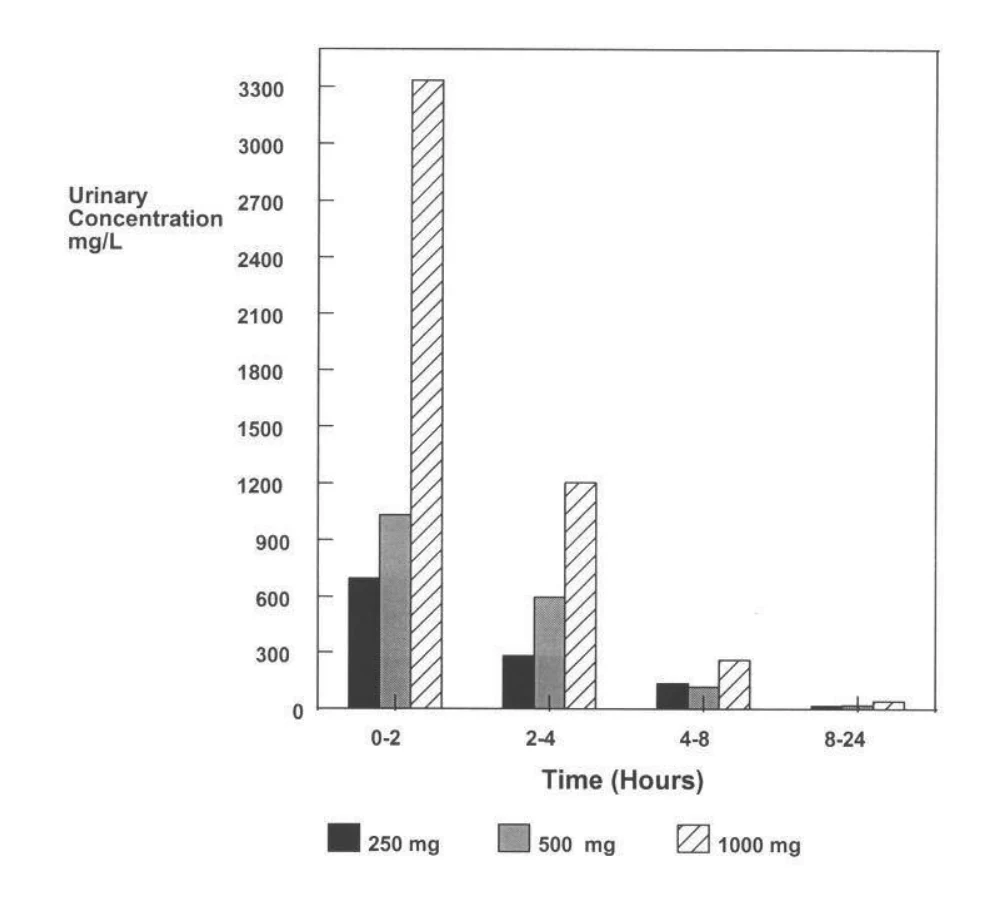
Mean urinary recovery of unchanged drug over 24 hours ranged from 77.4 to 85.5%
(Table 7) with over 50% being excreted in the first two to four hours. Figure 2 shows urinary concentrations of ceftazidime for various collection intervals following injection.
Derived pharmacokinetic indices (based on a two-compartment model) are summarized in Table 7.
FIGURE 2 Urinary concentrations of ceftazidime after
single bolus intravenous injections
No accumulation of drug occurred during repeated administrations of ceftazidime (2 g t.i.d., 10 days). Trough serum level did not increase after dose 2 and urinary recoveries over the first eight hours averaged 81.2% after dose 1 and 76.3% after dose 28.
Pharmacokinetic parameters remained unchanged (see Table 7).
TABLE 7 Average pharmacokinetic parameters of ceftazidime after IV bolus administration
| Dose/ Route | Peak Serum Conc (mg/L) | Apparent Volume of distribution (L) | Area under serum level/time curve (mg/L/h) | Serum half-life (h) | Dose recovered in urine to 24 h (%) | Renal Clearance (mL/min) | Plasma Clearance (mL/min) |
250 mg IV bolus 500 mg IV bolus 1g IV bolus 2g IV dose 1 2g IV dose 28 | 28.7 57.6 119.1 182.8 156.7 | 18.9 16.9 17.1 19.7 18.0 | 30.2 71.9 135.8 279.4 274.7 | 1.8 1.9 1.8 1.9 1.7 | 77.4 85.5 85.1 81.2* 76.3* | 109 100 109 102 95 | 139 116 128 - - |
* 8h collection only
Intravenous Infusion
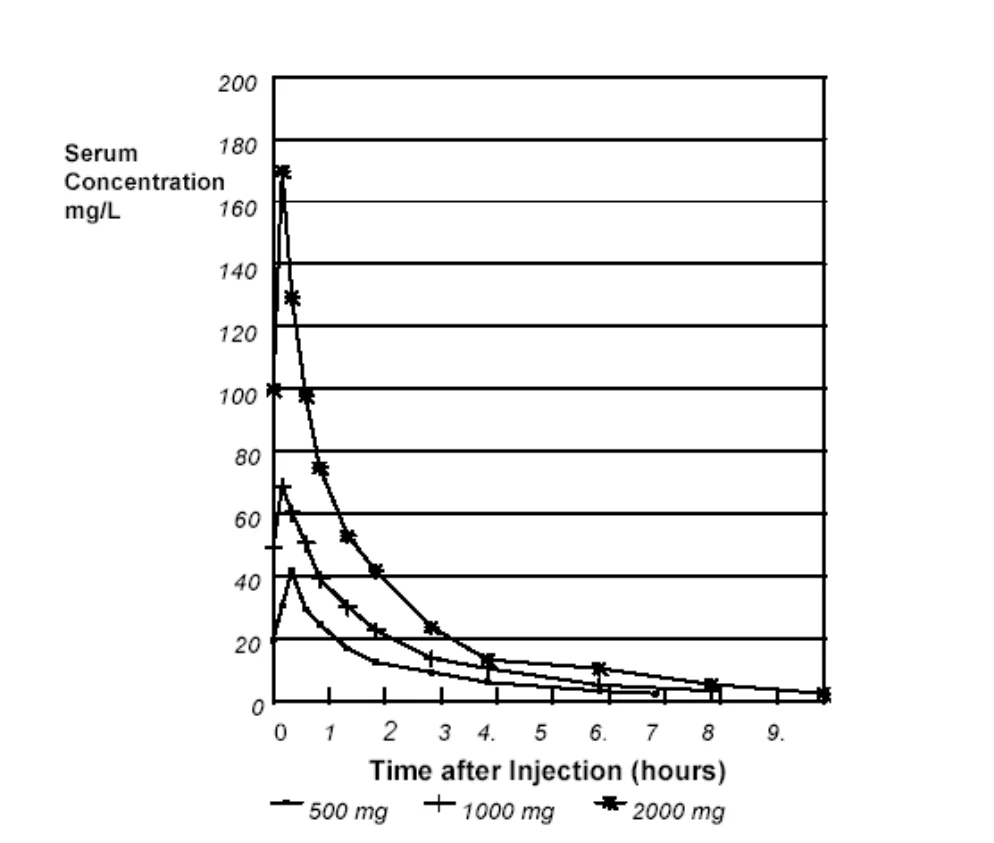
Single intravenous infusions of 500 mg (6 subjects, mean age 35 years), 1000 mg
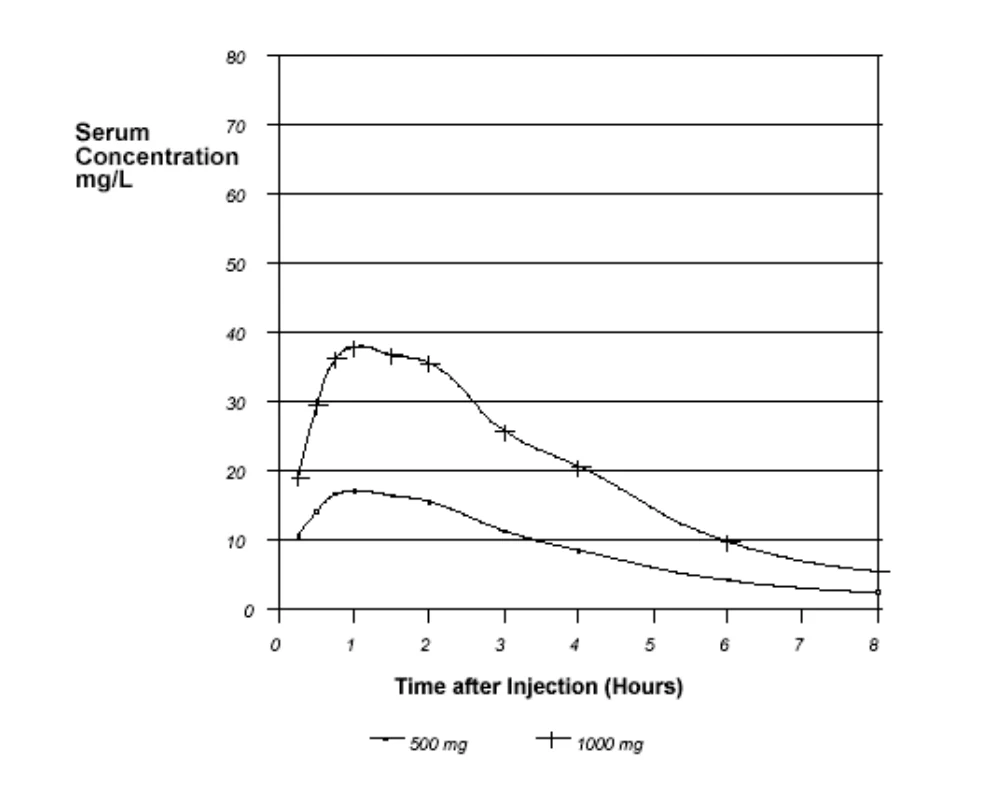
(7 subjects, mean age 33 years) and 2000 mg (7 subjects, mean age 30 years) of ceftazidime were administered over 20 to 30 minutes to normal adult male volunteers.
Serum concentration-time curves (Figure 3) follow a biexponential decay.
FIGURE 3 Serum concentrations of ceftazidime infused intravenously over 20-30 minutes
Mean urinary recovery of unchanged drug over 24 hours ranged from 83.7 to 87.1%
(Table 8) with over 50% being excreted in the first two to four hours. Figure 4 shows urinary concentrations of ceftazidime for various collection intervals following infusion.
Derived pharmacokinetic indices (based on a two-compartment model) are summarized in Table 8.
FIGURE 4 Urinary concentrations of ceftazidime after single intravenous infusions over 20-30 minutes
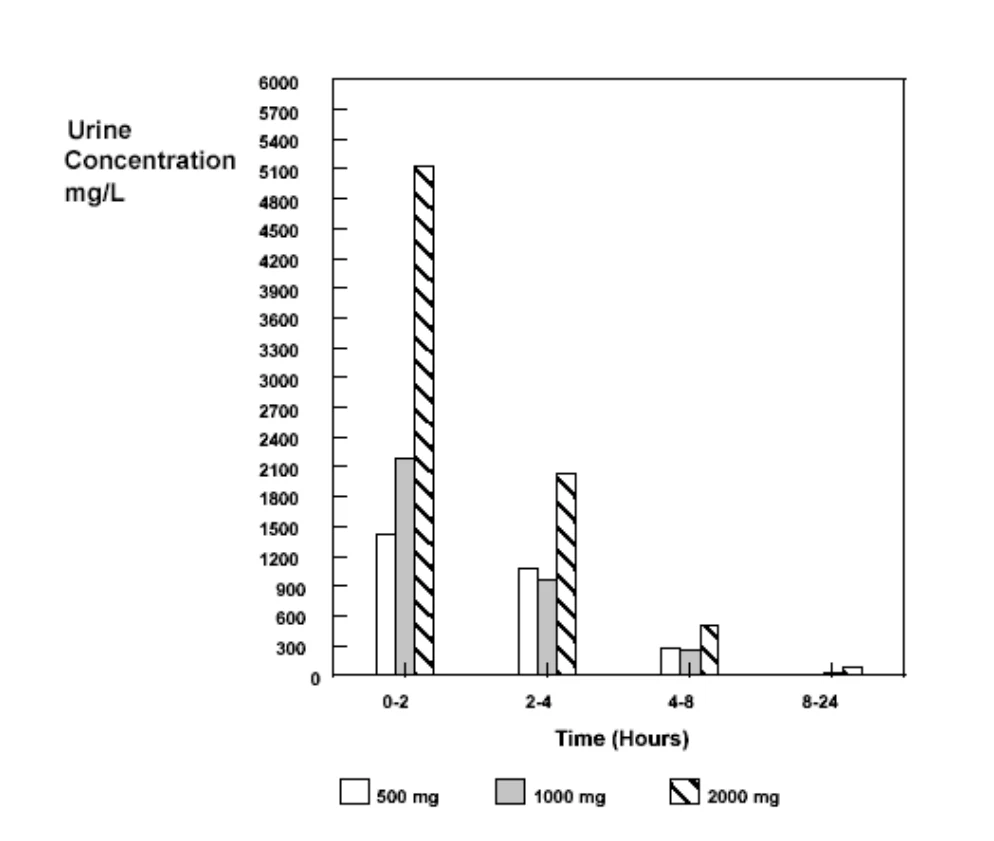
TABLE 8 Average pharmacokinetic parameters of ceftazidime after IV infusion
| Dose/ Route | Peak Serum Conc (mg/L) | Apparent Volume of distribution (L) | Area under serum level/time curve (mg/L/h) | Serum half-life (h) | Dose recovered in urine to 24 h (%) | Renal Clearance (mL/min) | Plasma Clearance (mL/min) |
500 mg IV infusion 1g IV infusion 2g IV infusion | 41.5 72.1 170.0 | 16.3 19.9 19.9 | 82 143.2 266.0 | 1.9 1.9 1.9 | 86.8 83.7 87.1 | 89 98 110 | 102 117 126 |
Intramuscular Injection:
Serum concentration-time curves following intramuscular injection of 500 mg (8 subjects, mean age 32 years) or 1000 mg (8 subjects, mean age 34 years) of ceftazidime is shown in Figure 5.
FIGURE 5 Serum concentrations of ceftazidime administered intramuscularly
Mean urinary recovery of ceftazidime over 24 hours ranged from 78.9 to 84.6% (Table
9). Figure 6 shows urinary concentrations of ceftazidime for various collection intervals following injection. Derived pharmacokinetic indices (based on a one-compartment model) are summarized in Table 9.
FIGURE 6 Urinary concentrations of ceftazidime after single intramuscular injections
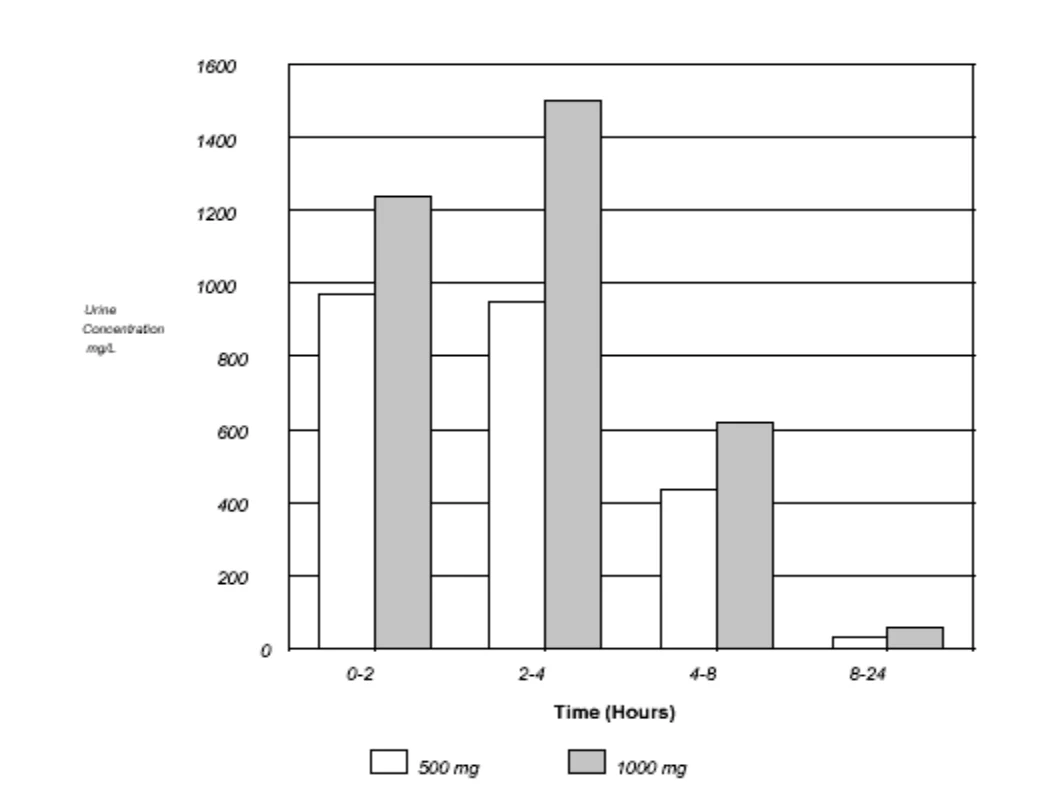
TABLE 9 Average pharmacokinetic parameters of ceftazidime after IM administration
| Dose/Route | Peak Serum Conc (mg/L) | Apparent Volume of distribution (L) | Area under serum level/time curve (mg/L/h) | Serum half-life (h) | Dose recovered in urine to 24 h (%) | Renal Clearance (mL/min) | Plasma Clearance (mL/min) |
500 mg IM injection 1g IM injection 1g IM dose 1 1g IM dose 25 | 17.4 38.8 38.5 44.0 | 21.2 16.7 16.7 17.1 | 79.0 174.7 174 186 | 2.2 2.0 2.0 2.2 | 84.6 78.9 - - | 90 76 - - | 106 97 97 90 |
No accumulation of drug was noted during repeated intramuscular doses of ceftazidime
(1 g, t.i.d., 10 days). Pharmacokinetic parameters remained unchanged (Table 9).
The pharmacokinetic parameters of 1 g of ceftazidime in 1% lidocaine (6 healthy male volunteers, mean age 37 years) did not differ significantly from those obtained without the use of lidocaine.
When ceftazidime was administered to two subjects (750 mg IM) in the recumbent position, average peak serum levels were lower (20.8 mg/L) and serum half-life was longer (2.6 hours) when compared to the two mobile volunteers (36.4 mg/L and 1.8 hours, respectively). The area-under-the-curve was not significantly affected by physical activity.
Excretion and Metabolism
Ceftazidime is not metabolized. Metabolites were not detected either in the serum by
HPLC or in the urine by chromatography or bioautography.
Hepatic clearance (i.e. biliary excretion) accounts for less than 1% of the total clearance of ceftazidime in the presence of normally functioning kidneys.
The mean renal clearance of ceftazidime was 97.6 mL/min (range 76 to 110 mL/min).
The calculated plasma clearance of 116.4 mL/min (range 97 - 139 mL/min) indicated nearly complete elimination of ceftazidime by the renal route. Administration of probenecid prior to dosing had no effect on the elimination kinetics of ceftazidime. This suggested that ceftazidime is eliminated by glomerular filtration and is not actively secreted by renal tubular mechanisms.
Protein Binding
In vitro
In vitro studies with human serum revealed that 5-23% of ceftazidime is protein bound and is independent of drug concentration.
Tissue and Body Fluid Concentrations
Therapeutic concentrations of ceftazidime in tissues and body fluids other than serum are presented in Table 10.
TABLE 10 Ceftazidime Concentration in Body Tissues and Fluids
* Cystic fibrosis patients
** Sputum collected for 8h period
Concentrations of ceftazidime in the breast milk of 11 puerperal women following intravenous administration of 2 g doses every 8 hours for 5 days were determined by bioassay. Mean ± S.D. concentrations of ceftazidime averaged 3.8 ± 2.0 µg/mL (before the next dose), 5.2 ± 3.0 µg/mL (1 hour after dosing) and 4.5 ± 1.7 µg/mL (3 hours after
| TISSUE OR FLUID | DOSE/ROUTE | NO. PATIENTS | TIME OF SAMPLE POST-DOSE | AVERAGE TISSUE OR FLUID LEVEL CONCENTRATION (μg/mL or μg/g) |
| Aqueous humour | 2 g IV | 21 | 1-3 h | 11 ± 4 |
| Bile | 2 g IV | 3 | 90 min | 36.4 |
| Blister fluid | 1 g IV | 7 | 2-3 h | 19.7 ± 2.3 |
| Bone | 2 g IV | 5 | 40 min | 31.1 ± 1.7 |
| Cerebrospinal fluid (inflamed meninges) | 2 g q8h IV 2 g q8h IV | 5 6 | 120 min 180 min | 9.8 ± 11.4 9.4 ± 4.0 |
| Endometrium | 2 g IV | 6 | 1-2 h | 18.7 ± 4.7 |
| Fat | 2 g IV | 39 | 30-280 min | 9.2 |
| Heart Muscle | 2 g IV | 35 | 30-280 min | 12.7 |
| Lymphatic fluid | 1 g IV | 7 | 2-3 h | 23.4 ± 1.2 |
| Myometrium | 2 g IV | 9 | 1-2 h | 18.9 ± 4.9 |
| Peritoneal fluid | 2 g IV | 8 | 2 h | 48.6 |
| Pleural fluid | 2 g IV | 5 | 4 h | 28 ± 2 |
| Salpinges | 2 g IV | 6 | 1-2 h | 18.8 ± 5.4 |
| Skeletal muscle | 2 g IV | 35 | 30-280 min | 9.4 |
| Skin | 2 g IV | 22 | 30-180 min | 6.6 |
| Sputum* | 35 mg/kg IV | 6 | ** | 2.7 |
| Subcutaneous tissue | 2 g IV | 2 | 1-2 h | 6.9 ± 6.3 |
| Synovial fluid | 2 g IV | 13 | 2 h | 25.6 ± 1.8 |
dosing). Excretion of ceftazidime into breast milk remained constant between days 2 and 4 of therapy.
Factors Influencing Pharmacokinetics
Sex
The peripheral comparative volume of distribution was smaller in females (mean 3.5 ±
0.5 L) than in males (6.7 ± 0.6 L) following intravenous administration (1 g, bolus injection).
Following intramuscular administration (1 g), the time to peak concentration occurred earlier in the men (1.0 ± 0.1h - vastus lateralis and 1.1 ± 0.1h - gluteus maximus) than in women (1.3 ± 0.03h and 1.5 ± 0.2h, respectively). Peak serum concentrations were greater in women (37.2 ± 0.2 mg/L - vastus lateralis and 34.0 ± 2.3 mg/L - gluteus maximus) than in men (29.4 ± 1.6 mg/L and 27.6 ± 2.3 mg/L, respectively).
Pregnancy
Intramuscular injections of at least three doses of ceftazidime (1 g t.i.d.) were administered to 9 pregnant women (mean age 25.6 yr; mean gestational age
20.2 weeks) scheduled for abortion following diagnosis of fetal Cooley's anemia.
Amniotic fluid levels of 1.0 - 5.5 µg/mL were observed between 2 and 6 hours after dosing. Serum levels of ceftazidime were approximately 50% lower in pregnant than non-pregnant females.
Age
Neonates and Infants
Two studies were conducted in neonates (aged 0-29 days) which indicated that the serum half-life of ceftazidime in neonates could be 3-4 times that of an adult.
In the first study, 56 neonates (aged less than 29 days) were administered ceftazidime at a dose of 25 mg/kg every 12 hours. The mean serum half-life was 7.57 hours.
In the second study 29 neonates (aged less than 12 days) were dosed with 30-50 mg/kg of ceftazidime every 12 hours had an overall elimination half-life of 4.28 hours. The
30 mg/kg bid dose gave sustained serum levels of ceftazidime throughout the dosing interval and was found to be appropriate for the neonate population.
In another study, conducted in both neonates and infants (1 day to 12 months of age) 53 patients were administered ceftazidime as a single intravenous bolus injection at a mean dose of 31 mg/kg (25.0 - 35.7 mg/kg) in addition to other antimicrobial therapy. Serum levels are presented in Table 11. The mean serum half-life for babies aged 2 months or younger was prolonged (4.2 ± 1.6h). Those aged greater than 2 months had a half-life of 2.0 ± 0.6h.
TABLE 11
Serum levels (μg/mL) at hrs after dose (mean ± S.D.) | |||||
| Age | 3 5 6 7 9 | ||||
<2 months (n=30) 2-12 months (n=23) | 54.1 ±28.7 26.5 ±10.7 | - 12.3 ±7.6 | 31.2 ±17.9 - | - 6.4 ±6.0 | 18.6 ±12.1 3.3 ±4.2 |
In another study pediatric patients (mean age, 3.5 years) with Gram-negative infections received a single intravenous infusion over 15 minutes of either 15 mg/kg (8 patients) or
50 mg/kg (5 patients) of ceftazidime. Serum levels were measured by bioassay.
Pharmacokinetic data are presented in Table 12.
TABLE 12 Pharmacokinetic Parameters in Children
| Patient Group | n | Mean Age (Months) | Dose (mg/kg) | Peak Conc. (mg/L) | t1/2β (h) | Vd (L/kg) | C1 (mL/min/kg) |
| A | 8 | 22.5 | 15 | 37.8 | 1.65 | 0.73 | 5.03 |
| B | 5 | 57.4 | 50 | 186.4 | 1.72 | 0.52 | 3.75 |
Elderly
Ceftazidime, at a dose of 2 g b.i.d., was administered as a bolus intravenous injection to
13 elderly patients with a mean age of 77 years (63 - 83 years) and to 6 younger volunteers (24 - 32 years). A mean serum half-life of 2.9 hours was observed for the elderly patients and 1.75 hours in the young volunteers. The elderly patients were continued on treatment and no accumulation was noted on day 7.
Impaired Renal Function
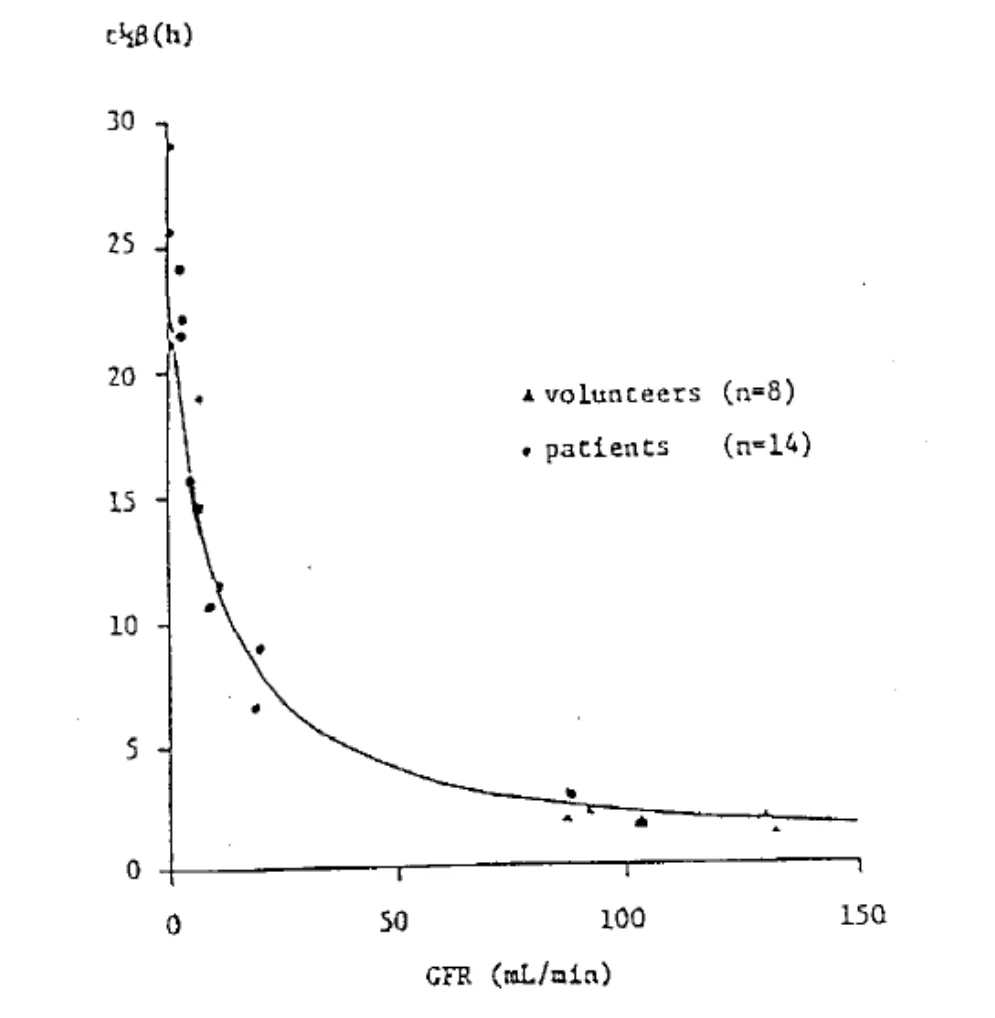
The relationship between serum elimination half-life and glomerular filtration rate (GFR)
is curvilinear. The half-life increases steeply at GFR's less-than 50 mL/min/1.73 m2 (see
Figure 7).
FIGURE 7 The relationship between serum elimination half-life and glomerular filtration rate
The pharmacokinetic parameters obtained following intravenous administration of a 1 g bolus dose of ceftazidime to 14 patients (mean age 49 years) with severely impaired renal function and those from 8 healthy volunteers (mean age 35 years) are given in
Table 13.
TABLE 13 Mean Pharmacokinetic Parameter after 1 g Ceftazidime IV
| Group | C0 (mg/L) | AUCT (mg/h/L) | β (h-1) | t1/2β (h) | Vdβ (L) | UR (%) | GFR (mL/min) |
Volunteers (8) Patients (8) Patients on Dialysis (6) | 108 70 82 | 152 1360 292 | 0.378 0 .061 0.176 | 1.9 16.7 4.6 | 17.8 19.2 22.2 | 88 24 0 | 115 12 -- |
Co = Fictive serum concentration at time zero
AUCT = Area under the serum concentration/time curve to infinity
β = Serum elimination rate constant
t1/2β = Serum half-life
Vdβ = Volume of distribution during the post-distributive phase
UR = Urinary recovery over 24 h
Mean maximum urine levels ranged between 0.2 g/L in patients with a GFR of
<5 mL/min to 0.8 g/L with a GFR of 88 mL/min.
In another study, six normal volunteers and four end-stage renal disease (ESRD)
patients on hemodialysis were administered a single 1 g IV dose of ceftazidime. The apparent volumes of distribution were similar in both groups. The terminal half-life in the normal subjects ranged from 1.3 to 1.7 hours, while in the ESRD patients it ranged from
25.5 to 35.4 hours. Dialysis clearance ranged from 27 to 50 mL/min, while the total body clearance in the normals ranged from 98 to 184 mL/min. In another study single bolus doses of ceftazidime (15 mg/kg IV) were administered to 5 normal volunteers and 19 uremic patients (See Table 14). Four of the latter patients received an additional dose during hemodialysis.
TABLE 14 Pharmacokinetic parameters of ceftazidime in healthy
volunteers and in patients with impaired renal function
| Group (n) | Clcr (mL/min) | t1/2β(h) (mean ± S.D.) | VD (L) |
I - Healthy Volunteers (5) II - Uremic Patients (5) III - Uremic Patients (6) IV - Uremic Patients (4) V - Hemodialysis Patients (4)
| >80 30-80 13-29 2-12 --- | 1.5 ± 0.2 3.6 ± 0.7 9.0 ± 1.0 16.1 ± 4.0 2.8 ± 0.2 25.5 ± 4.6 | 17.8 ± 1.2 17.5 ± 3.1 16.1 ± 3.4 19.1 ± 8.4 --- |
CIcr = creatinine clearance VD = volume of distribution
The pharmacokinetics of ceftazidime were studied in 12 patients with end-stage chronic renal failure during peritoneal dialysis. Mean serum levels (mg/L) following the IV administration of ceftazidime (1 g) to 5 patients at 0.25, 2 and 12 hours after starting peritoneal dialysis were 50.6 ± 11.2, 35.6 ± 3.7 and 22.7 ± 7.9 respectively. The mean serum half-life during and after peritoneal dialysis was 8.7 ± 3.1 hours and 26.9 ±
11 hours respectively.
Four patients were administered ceftazidime (1 g) via an intraperitoneal catheter. The mean serum levels (mg/L) at 0.25, 2 and 8 hours were 14.2 ± 3.1, 40 ± 3.1 and 32.5 ±
6.4 respectively.
Five male and one female patient undergoing continuous ambulatory peritoneal dialysis
(CAPD) were administered 1 g ceftazidime. Two litres of dialysis fluid were used every six hours. The mean concentrations of ceftazidime in plasma and dialysate are shown in
Figure 8. Using a dwell time of 4 to 6 hours, approximately 10% of a dose of ceftazidime
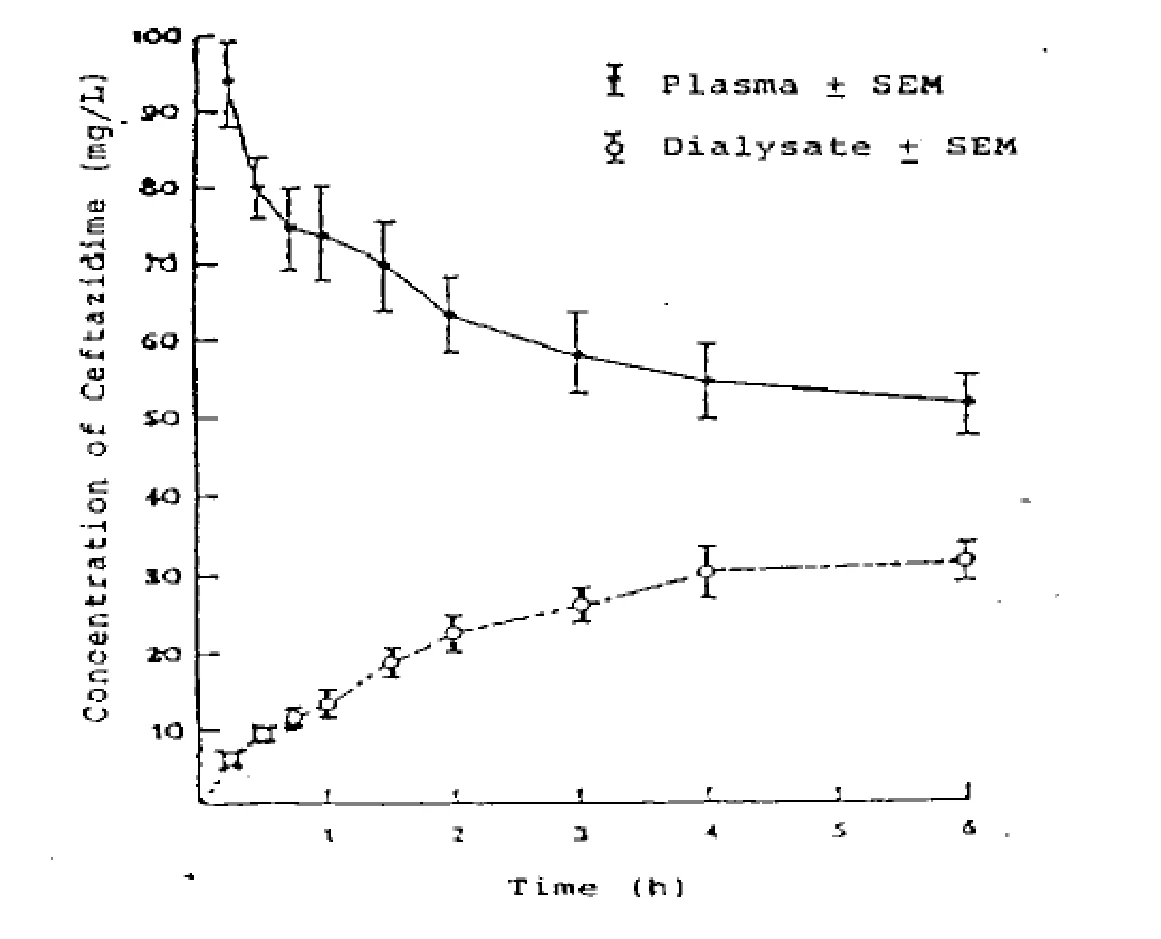
is removed. The data indicate that the half-life of ceftazidime is reduced to
approximately 12 hours.
FIGURE 8 Mean ceftazidime levels in plasma and dialysate of CAPD patients
Cystic Fibrosis
The pharmacokinetics of an intravenous infusion (20 min) of 50 mg/kg ceftazidime were studied in 10 patients (20.8 ± 4.8 yr, 4 female, 6 males) with cystic fibrosis and 10 normal volunteers (21.6 ± 1.9 yr, 3 females, 7 males). Serum elimination half-lives were
1.76 ± 0.21 h in controls and 1.50 ± 0.19 h in cystic fibrotics. Total body clearance was
41.9% greater in the cystic fibrosis group (142.4 ± 16.9 mL/min/1.73 m2) compared to controls (100.5 ± 10.3 mL/min/1.73 m2). Although the fraction of the dose recovered in urine was the same in each group, renal clearance was 40.9% greater in patients with cystic fibrosis (130.1 ± 11.4 and 92.7 ± 11.6 mL/min/1.73 m2 respectively).
The mechanisms responsible for the altered renal clearance of ceftazidime in cystic fibrotic patients is not known.
Toxicology
Acute Toxicity
TABLE 15
All deaths in mice occurred within 24 hours after an intravenous dose or within 6 hours following an intraperitoneal dose. Toxic signs consisted of purplish colouration of the skin, immobility and bradypnea alternating with jumping and convulsions. Survivors exhibited no abnormal signs or symptoms at 24 hours following the test dose. Post-mortem examinations revealed meningorrhagia, especially in the cerebellum, and pulmonary congestion.
| ANIMAL | AGE | SEX | ROUTE | DOSES (g/kg) | ANIMALS /DOSE | LENGTH OF OBSERVATION | LD50 (g/kg) |
mouse 3 days M IP 2.1,3.0,4.2,5.9,8.2 8 18 days 4.6 ± 0.6 F IP 2.1,3.0,4.2,5.9,8.2,11.5 8 18 days 6.1 ± 0.9 14 days M IP 3.6,4.3,5.2,6.2,7.4,8.9 8 14 days 4.9 ± 0.3 F IP 3.6,4.3,5.2,6.2,7.4,8.9 8 14 days 4.8 ± 0.2 21 days M IP 4.7,5.7,6.8,8.2,9.8,11.8 8 14 days 9.0 ± 0.8 F IP 4.7,5.7,6.8,8.2,9.8,11.8 8 14 days 8.4 ± 0.6 adult M IV 5.0,6.25,7.5,8.8,10.0 5 14 days 7.0 ± 1.1 F IV 5.0,5.6,6.25,6.9,7.5,8.8 5 14 days 6.3 ± 0.6 | |||||||
| rat 3 days M IP 3.9,4.6,5.6,6.7,8.0,9.6 8 14 days 5.7 ± 0.4 SC 4.8,5.8,6.9 8 14 days 6 F IP 3.9,4.6,5.6,6.7 8 14 days 5.7 ± 0.4 SC 4.8,5.8,6.9,8.3 8 14 days 6 14 days M IP 4.2,5.0,6.0,7.3,8.7,10.5 8 14 days 5.9 ± 0.6 SC 4.7,5.6,6.7,8.1,9.7,11.6 8 14 days 6.6 ± 0.4 F IP 3.5,4.2,5.0,6.0,7.3,8.7 8 14 days 5.8 ± 0.4 SC 4.7,5.6,6.7,8.1,9.7,11.6 8 14 days 7.2 ± 0.4 21 days M IP 5.6,6.7,8.1,9.7 8 14 days 7.5 ± 0.4 SC 8.1,9.7,11.7,14.0,16.8 8 14 days 11.9± 0.8 F IP 5.6,6.7,8.1,9.7 8 14 days 7.0 SC 8.1,9.7,11.7,14.0,13.8 8 14 days 12.2± 0.7 | |||||||
Death in rats occurred within 24 hours following subcutaneous injection and 6 hours following intraperitoneal dosing. Purplish colouration and reduction in elasticity of the skin, bradypnea, corneal opacity, piloerection, and immobility followed by jumping and convulsions were observed. All survivors appeared normal by 48 hours post-dose.
Post-mortem examinations revealed meningorrhagia, pulmonary congestion, splenic cysts and spots, and, in rats who received IP dosing, dilation of the caecum with large amount of contents.
Groups of 6 rats of each sex were given a single intravenous or subcutaneous dose of ceftazidime (5 g/kg). One female died immediately after IV injection while the remaining animals survived in good condition. All animals were sacrificed 7 days post-dose. Post-mortem examinations revealed mild renal damage in the form of paling and slight dilation of some renal tubules containing cellular debris.
A single IV dose of ceftazidime (5 g/kg) was administered to 6-month-old Beagle dogs
(2/sex), which survived in good condition except for intermittent emesis and transient tachycardia. The animals were sacrificed 7 days post-dose for extensive histological examinations, but no pathological findings were noted.
Subchronic and Chronic Toxicity
TABLE 16
| ANIMAL | AGES* | ROUTE | DOSES (g/kg/day) | ANIMALS /DOSE** | DURATION OF | |
| TREATMENT | RECOVERY | |||||
| rat | 8 - 13 wk | IV | 0.0,0.1,0.3,0.9,2.7,8.1 | 12 | 30 days | 14 days |
| rat | 8 - 13 wk | SC | 0.0,0.1,0.3,0.9,2.7,8.1 | 12 | 30 days | 14 days |
| rat | unavailable | IM | 0.0,0.1,0.3,0.9 | 20 | 12 weeks | -- |
| rat | 6 - 7 wk | SC | 0.0,0.1,0.3,0.9,2.7 | 20 | 28 weeks | 59 days |
| rat | 5 - 6 wk | SC | 0.0,0.1,0.5,2.5 | 20 | 27 weeks | 21 days |
| dog | 5 - 18 mo | IM | 0.00,0.06,0.18,0.54 | 2 or 4 | 30-32 days | 22-23 days |
| dog | 5 - 18 mo | IV | 0.00,0.06,0.18,0.54 | 4 or 8 | 30-32 days | 22-23 days |
| dog | 5 - 18 mo | SC | 0.00,0.06,0.18,0.54 | 2 or 4 | 30-32 days | 22-23 days |
| dog | 3 wk | IV | 0.0,0.1,0.3,1.0 | 14 | 35 days | 35 days |
| dog | 8 – 10 mo | IM | 0.000,0.125,0.250,0.500 | 6 | 13 weeks | -- |
| dog | 16-27 wk | IV | 0.000,0.085,0.255,0.595, 0.85 | 8 | 28 weeks | 3 weeks |
* Ages at commencement of treatment.
** Each dosage group was composed of equal numbers of males and females.
Rat: 30 day study, intravenous and subcutaneous
All rats given 8.1 g/kg IV and 2 of 12 given 2.7 g/kg died within 10 minutes in convulsive shock and were found to have dilation of proximal and distal convoluted renal tubules.
The 8.1 g/kg dose given sc was tolerated by females for the entire 30 day treatment period; males, however, had to be sacrificed after their third dose, and were found to have coagulative necrosis of 50 to 85% of the proximal convoluted tubules, but no other organ pathology.
Toxicity in survivors was similar by either route of administration. The following biochemical and morphological changes were observed in survivors during or immediately following the treatment period: decreases in serum transaminases, protein
(8.1 g/kg/day dose), alkaline phosphatase, calcium, and triglycerides; increases in serum sodium, potassium, inorganic phosphorus, protein (<8.1 g/kg/day doses), and cholesterol; increased weights of liver, kidney, spleen, ovaries, and adrenals; thymus involution; neutrophilia, lymphocytosis, and normocytic normochromic anemia; and increased urinary volume and output of epithelial cells, protein, and electrolytes. All of these abnormalities regressed during the recovery period.
Post-mortem examination of both treatment mortalities and sacrificed survivors of the
8.1 g/kg/day regimen revealed pulmonary edema, subpleural hemorrhages, fatty change in liver cells, and dilation and fluid content of renal tubules.
Rat: 12 week study, intramuscular
All animals survived treatment and no abnormal physical or behavioural symptoms were observed. The injections were well tolerated at the IM sites.
The following statistically significant changes in laboratory parameters which, nevertheless, still fell within the normal range occurred in the 0.9 g/kg/day group:
erythrocyte counts increased in females and decreased in males; decreases in serum alkaline phosphatase, SGPT, hematocrit, and hemoglobin; increases in serum creatinine, bilirubin, potassium, BUN, and SGOT; and inconsistent changes in lymphocyte and neutrophil counts.
The following laboratory abnormalities were observed in the 0.3 and 0.9 g/kg/day groups: increases in serum cholesterol; inconsistent changes in serum proteins; and increases in urinary volume and pH and decreases in specific gravity.
Rat: 28 week study, subcutaneous
One male from the 2.7 g/kg/day group was killed on Day 95 for investigation of suspected hepatotoxicity. Post-mortem examination revealed splenomegaly and hepatic fibroplasia. A female from the 0.9 g/kg/day group died on Day 183 and was found to have congestion of the lung, thymus, liver and kidney. All other rats survived the entire treatment period. Adverse effects noted in the 2.7 g/kg/day group were local irritation, loose feces, lethargy, decreased weight gain, and a general loss of condition characterized by a rough sticky coat, dirty tail, irregular thickening of the skin, and increased aggressiveness.
Observed laboratory abnormalities in the 0.9 and 2.7 g/kg/day groups were decreases in serum hemoglobin, packed cell volume, and erythrocyte counts; increases in neutrophil, lymphocyte, and platelet counts; increases in prothrombin time; decreases in serum albumin, triglycerides, SGOT, SGPT, and alkaline phosphatase; increases in serum cholesterol and bilirubin; hematuria, bacteriuria, and increases in urinary volume and protein output. Post-mortem examinations revealed increased weights of liver, kidneys, spleen, and adrenals (in females), fibrosis around the central veins of the liver, hemorrhage and fibroplasia at the injection site, and salivary gland edema.
Abnormalities which did not regress during the recovery period were increased weights of liver, spleen, adrenals (in females), and kidneys (in males).
Rat: 27 week study, subcutaneous
Environmental control failure resulted in the normal temperatures of 18 – 22°C being exceeded, and rats being exposed to temperatures as high as 29°C.
The toxicity of ceftazidime in heat stressed animals was much higher in females than in males. All females in the 2.5 g/kg/day group died or had to be sacrificed after 8 to
12 weeks of treatment and were found to have extensive centrilobular liver necrosis, and in some, subendocardial fibrosis of the left ventricle. Although males survived the
2.5 g/kg/day dosage regimen, they also showed hepatic changes including fibrosis.
Animals of both sexes in the high dose group were found to have dilation of renal tubules with casts and debris.
Changes in laboratory parameters in both sexes were decreased plasma enzyme activities and hypercholesterolemia at 0.1 g/kg/day or more, increased urinary protein at
0.5 g/kg/day or more, and increased BUN, hyperkalemia, hypoglycemia, hypochromic macrocytic anemia, leukocytosis, thrombocytosis, and increased diuresis at
2.5 g/kg/day.
Dog: 30 to 32 days study, intravenous and subcutaneous/intramuscular
All beagles survived the treatment in good general condition apart from an erythematous skin condition which developed in six dogs, including one control. The IM and SC injections produced dose-related transient pain and irritation which varied from mild to severe. The IV injections caused no apparent local effects but were associated with a dose-related incidence of emesis.
Observed abnormalities consisted of increased total iron binding capacity in males at
0.18 g/kg/day, and increases in relative liver weight, hypoglycemia (in females), and hypertriglyceridemia at 0.54 g/kg/day. Post-mortem examinations revealed no abnormal pathology.
Infant Dog: 35 day study, intravenous
All beagles survived the treatment in good condition. Observed abnormalities consisted of salivation, emesis, and loose feces in the 0.3 and 1.0 g/kg/day groups. These symptoms regressed during the recovery period.
A tendency toward decreased SGOT levels was noted in the 1.0 kg/day group, but the mean change was not statistically significant. No other laboratory abnormalities were observed. Post-mortem findings were also negative.
Dog: 13 week study, intramuscular
All beagles survived the treatment in good condition. The injections were well tolerated at the IM site. No physical or behavioral abnormalities were observed.
The following hematological changes were noted in the 0.25 and 0.50 g/kg/day groups:
decreased serum hemoglobin, hematocrit, lymphocytes, and platelets, and prolonged prothrombin time. These changes were statistically significant but the values remained within the normal range.
Other laboratory findings were increases in total serum cholesterol and BUN. Post-mortem examinations revealed protein casts in the lumen of renal tubules in 6 males, including 2 out of the 3 male controls.
Dog: 28 week study, intravenous
Two beagles were sacrificed during the study and found to have, respectively, a cerebellar lesion and polyarteritis. All other dogs survived the study in satisfactory condition. Adverse effects of treatment were discomfort during injection, and a dose-related incidence of salivation and vomiting. Laboratory abnormalities were generally confined to the 0.595 and 0.850 g/kg/day groups and consisted of decreases in serum gamma-globulin and SGPT, and increases in cholesterol, albumin, and total protein.
Post-mortem examinations revealed hepatomegaly, injection phlebitis, proteinaceous droplets in proximal convoluted tubular cells, and infiltration of the prostate.
Nephrotoxicity Studies
TABLE 17
| ANIMAL | SEX | ROUTE | CEFTAZIDIM E DOSES (g/kg/day) | ANIMA LS /DOSE | CONCURRENT DRUG AND DOSE | COMPARATIVE DRUG AND DOSE | DURATION OF | |
| TREATMENT | OBSERVATION | |||||||
| mouse | F | SC | 0,4,6,8,10 | 10 | -- | cephaloridine 1.1 g/kg | 1 dose | 48 hr |
| F | SC | 0,10 | 10 | furosemide 50 mg/kg | cephaloridine 1.1 g/kg | 1 dose | 48 hr | |
| F | SC | 0,10 | 10 | probenecid 100 g/kg | cephaloridine 1.1 g/kg | 1 dose | 48 hr | |
| F | SC | 0,10 | 10 | -- | cephaloridine 1.1 g/kg | 1 dose | 1-7 days | |
| rat | M | SC | 0,4 | 5 | -- | cephaloridine 2 g/kg | 1 dose | 1-7 days |
| M | SC | 0,2,4,6,8,10 | 6 | -- | cephaloridine 2 g/kg | 1 dose | 48 hr | |
| M | SC | 0,4 | 6 | -- | cefuroxime 4 g/kg | 1 dose | 48 hr | |
| M | SC | 0,4 | 6 | gentamicin 35 mg/kg | -- | 1 dose | 48 hr | |
| M | SC | 0,4 | 6 | furosemide 100 mg/kg | cephaloridine 2 g/kg | 1 dose | 48 hr | |
| M | SC | 0,4 | 6 | probenecid 100 mg/kg | cephaloridine 2 g/kg | 1 dose | 48 hr | |
| M | SC | 0,4 | 10 | -- | -- | 10 days | 10 days | |
| M | SC | 0,4 | 6 | gentamicin 35 mg/kg | -- | 10 days | 24 hr | |
| M | SC | 0,4 | 6 | amikacin 250 mg/kg/day | -- | 10 days | 24 hr | |
| M | SC | 0,4 | 6 | tobramycin 60 mg/kg/day | -- | 10 days | 24 hr | |
| rabbit | M | IM | 0.0,0.5 | 6 | -- | cephaloridine 0.14 g/kg | 1 dose | 48 hr |
| F | SC | 0.0,0.4,0.8 | 4 | -- | cephaloridine 0.2 g/kg | 1 dose | 48 hr | |
| F | SC | 0.0,0.4,0.8 | 4 | -- | cefazolin 0.4 g/kg | 1 dose | 48 hr | |
| F | SC | 0.0,0.4,0.8 | 4 | -- | cefazolin 0.8 g/kg | 1 dose | 48 hr | |
In female mice, a single sc dose of ceftazidime 6 g/kg resulted in no evidence of nephrotoxicity. Doses of 8 and 10 g/kg produced coagulative necrosis of inner cortical tubules. Cephaloridine (1.1 g/kg) was associated with more severe tubular necrosis than was ceftazidime (10 g/kg), the exerted its toxicity primarily on tubules of the outer cortex. The concurrent administration of furosemide 50 mg/kg potentiated the nephrotoxicity of cephaloridine but not that of ceftazidime. Pre-treatment with probenecid (100 mg/kg) prevented the nephrotoxicity of cephaloridine but not that of ceftazidime.
In male rats, single sc doses of ceftazidime, 4 g/kg or more, produced acute tubular necrosis (inner cortex) and elevations in serum urea nitrogen. This effect was not potentiated by concurrent administration of either gentamicin (35 mg/kg) or furosemide
(100 mg/kg), nor was it prevented by pre-treatment with probenecid (100 mg/kg).
In both mice and rats (single dose studies), prolonged observation indicated that the tubular necrosis caused by a single dose of ceftazidime was maximal in severity
48 hours post-dose. Significant improvement was noted after 3 days, with nearly complete regeneration after 7 days.
Male rats given sc injections of ceftazidime 4 g/kg/day for 10 days exhibited increased urinary excretion of enzymes, protein and epithelial cells, which were maximal on day 2 but gradually returned to normal with continued treatment. Ten day treatment with either gentamicin (35 mg/kg/day), amikacin (250 mg/kg/day), or tobramycin (60 mg/kg/day)
produced necrosis, mainly of outer cortical tubules. Combination of an aminoglycoside regimen with ceftazidime 4 g/kg/day produced inner cortical tubular necrosis similar to that observed for ceftazidime alone, but with less outer cortical tubular necrosis than that caused by the aminoglycoside alone.
In the rabbit, single ceftazidime doses of 500 mg/kg IM, and 400 or 800 mg/kg SC were not nephrotoxic. Cephaloridine (140 mg/kg IM or 200 mg/kg SC), and cefazolin
(800 mg/kg SC) caused marked abnormalities of plasma urea and creatinine, and of tubular ion transport, gluconeogenesis and histology.
Mutagenicity Studies
Ceftazidime was evaluated in vivo and in vitro in a series of standard mutagenicity assays.
In Vitro Assays
The mutagenic potential of ceftazidime was assessed using a modified Ames test, a modified fluctuation test (Harefield) and a yeast gene conversion test (Davis). The results of the Ames plate incorporation assay, in which six concentrations of antibiotic were tested in the presence and absence of microsomes, showed a significantly positive result with Salmonella typhimurium strain TA 1537 at 0.9 µg of ceftazidime/plate but this was believed to have occurred by chance. Ceftazidime was negative in the modified
Ames test in which it was pre-incubated with liver microsomes.
In the modified pre-incubation fluctuation test, no mutagenic effects were observed at ceftazidime concentrations up to 430 µg/mL.
Similarly, ceftazidime did not induce detectable gene conversion in Saccharomyces cerevisiae JD1 cells at concentrations up to 860 µg/mL.
In-vivo Micronucleus Test
In a micronucleus test, mice received single intraperitoneal injections of 0.56, 1.67 or
5.02 g/kg ceftazidime. No evidence of a clastogenic effect was noted.
In-vivo Cytogenicity Study
A micronucleus test was used to compare the clastogenic properties of freshly prepared solutions of ceftazidime with samples of ceftazidime stored for up to 24 hours at 25°C.
Mice were injected with single IP doses of 1.0 or 2.5 g/kg. Neither fresh nor stored
(which contains pyridine as a degradation product of the antibiotic during storage)
solutions of ceftazidime induced a significant increase in detectable chromosomal damage. However, a significant (p<0.05) reduction in the ratio of immature to mature erythrocytes occurred in mice given 2.5 g/kg of ceftazidime (stored solution) 24 hours previously.
Tolerance Studies
An aqueous solution of ceftazidime 25% w/v was tested for intramuscular irritancy in both adult (1.0 mL) and infant (0.2 mL) rabbits. Lesions consisting of hemorrhage, inflammation, and necrosis were produced which regressed and had almost completely healed by 14 days post-dose.
Intra-arterial injection of 0.5 mL ceftazidime 25% w/v into rabbit ears produced minimal local damage, being morphologically and histologically similar to that caused by intra-arterial injection of 0.5 mL normal saline.
The intracisternal injection of ceftazidime, ampicillin sodium, and gentamicin sulphate caused convulsions of dose-related severity in male rabbits. The minimum dosage levels at which convulsions were observed were 5 mg/kg for ceftazidime, 12 mg/kg for ampicillin sodium, 4.5 mg/kg for gentamicin sulphate.
Immunological Studies
Ceftazidime (25 mg/kg, IM) was administered as an aqueous solution to 10 rabbits (5M,
5F) once weekly for 6 weeks. Sera taken 7 days after the last dose were negative for ceftazidime antibody by both enzyme-linked immunosorbent assay (ELISA) and passive cutaneous anaphylaxis (PCA) test.
Four doses of ceftazidime (25 mg/kg) in an aqueous emulsion with Freund's adjuvant were given to 6 rabbits (3M, 3F) as a single inoculation followed by boosters on days 21,
56 and 95. Sera taken on day 102 were all negative for drug antibody by ELISA, but 1 out of 6 (female subject) was positive by PCA test. This antibody was skin fixing and heat labile.
Antisera prepared with cephaloridine, cephalexin, cephalothin, and cefotaxime showed cross-reactivity with a ceftazidime-cytochrome C antiserum, but did not cross-react with an antiserum prepared with a ceftazidime-human gamma globulin conjugate.
The effects of storage of ceftazidime (either as a dry powder at 37°C for 4 months or as a 25% w/v solution at 25°C for 72 hours) on its immunogenicity and elicitogenicity (i.e.
the ability to produce anaphylaxis in an immunized subject) were studied in rabbits and guinea pigs. Immunogenicity was unaffected but elicitogenicity was found to increase with storage.
Solutions of ceftazidime and its degradation products, formed on both wet and dry storage as above, did not cause the release of allergic mediators from human peripheral blood basophils or from fragments of human lung parenchyma in vitro.
Reproduction and Teratology Studies
Teratology
Mouse
Four groups of pregnant female mice were administered sc injections of either saline
(28 mice) or ceftazidime (1.5 g/kg/day - 21 mice, 3.25 g/kg/day - 20 mice, 6.5 g/kg/day -
29 mice) from day 6 to day 15 of pregnancy inclusive (period of organogenesis). Eight mice from the control group and eight from the group given 6.5 g/kg/day were allowed to give birth and rear their young to weaning. The remaining animals were sacrificed on day 18 of pregnancy and an examination made of their uterine contents.
The following external or soft tissue defects were found, each occurring in a single fetus only: control - left testis absent (1 mouse); 1.5 g/kg - small depression in palate
(2 mice), right testis not found (1 mouse); cleft palate (1 mouse); 3.25 g/kg - small swelling at base of tail (1 mouse); 6.5 g/kg - enlarged space in thoracic cavity (1 mouse);
cleft palate (1 mouse), enlarged thin walled bladder (1 mouse), small depression in palate (1 mouse).
The high incidence of skeletal variants seen in all groups (control: 39.51%, 1.5 g/kg:
53.98%, 3.25 g/kg: 50.70%, and 6.5 g/kg: 63.55%) was due to the large number of fetuses with supernumerary ribs. The incidence of rib variants was significantly higher
(p<0.05) in the high-dose group (6.5 g/kg) than in the control group.
The overall incidence of skeletal abnormalities was 15% (controls), 20% (3.25 g/kg ceftazidime) and 24% (6.5 g/kg ceftazidime). These consisted mainly of obliquely fused sternebrae. In the group treated with the high dose (6.5 g/kg), one fetus had extra ribs on cervical vertebrae 6 and 7 and one fetus had a bifid hyoid bone.
The number of live pups/litter born to mice treated with the high-dose (6.5 g/kg) was significantly (p<0.05) lower (10) when compared to controls (13). Similarly the litter weights for the treated group were consistently and significantly (p<0.05) lower than those in the control group throughout lactation.
Rabbit
Female Dutch rabbits were given intramuscular injections of 0 (18 rabbits), 25 mg/kg
(27), 50 mg/kg (18), 100 mg/kg (18) or 200 mg/kg (9) ceftazidime daily from day 6 to day
18 of pregnancy (organogenesis). On day 29, the rabbits were sacrificed and the uterine contents examined.
Twenty-nine rabbits dosed with ceftazidime were either found dead (18) or had to be destroyed (11) due to ill health (diarrhea and emaciation) or because they had aborted their fetuses. One rabbit in the control group was found dead on day 10 of pregnancy.
The incidence of death was not dose-related (highest incidence occurred in the group given 25 mg/kg/day).
A decrease in body weight was noted during the first week of dosing and continued for the duration of the study in those rabbits receiving doses greater than 25 mg/kg of ceftazidime per day.
Results of the examination of the uterine contents are presented in the Table 18.
TABLE 18
| Observation | MEAN RESULTS | ||||
| Control | 25 mg/kg ceftazidime | 50 mg/kg ceftazidime | 100 mg/kg ceftazidime | 200 mg/kg ceftazidime | |
| Implantations | 7 | 6 | 6 | 6 | 6 |
| Resorptions | 1 | 1 | 2 | 2 | 4 |
| Live Fetuses | 6 | 5 | 4 | 4 | 3 |
| Live Litter Weight (g) | 191 | 153 | 136 | 141 | 138 |
| Within Litter Mean Live Fetus Weight (g) | 31.4 | 30.2 | 28.6 | 26.9 | 24.5 |
| Within Litter Mean Placenta Weight (g) | 3.93 | 4.56 | 3.56 | 3.87 | 2.91 |
Two dead fetuses were reported - one in the control group (flexed forepaws) and one in
25 mg/kg/day group. Three fetuses (25 mg/kg group) from a litter of 5 had one or more of the following gross external abnormalities: anencephaly, gastroschisis, 1st and 3rd toes absent from both forepaws, 4th toe on right hind paw absent, tail twisted, craniorachischisis, lower jaw absent, eyes open, fore and hind limb buds present, tail and anogenital papilla present, thoracic and abdominal organs exposed.
Peri- and Postnatal Study
Groups of 20 female AHA rats (approximately 10 wk of age, 200 g body weight) received a daily SC injection of either 0, 0.1, 0.5 or 2.5 g/kg ceftazidime. Animals were dosed from day 17 of pregnancy to the day of parturition and subsequently on days 1-21 inclusive postpartum.
No significant adverse reactions were seen during pregnancy with the exception of the high dose (2.5 g/kg) group which produced large quantities of soft wet feces. During the second and third week of the lactation period the dams treated with ceftazidime gained weight more rapidly than the control group and this effect was dose-related.
At termination (day 21 postpartum), pups in the high dose group (2.5 g/kg) had gained significantly (p<0.05) less weight (47.95 g) than controls (52.23 g). This was observed throughout lactation. Two of the dams in the high dose (2.5 g/kg) group were killed due to the death of their litters. Both animals had gastrointestinal disorders due to heavy growth of Gram-positive Streptococcus. One dam in the 0.5 g/kg group was killed due to ill health (diarrhea due to bacterial typhlitis).
Fertility and Reproduction
Groups of 20 male and 40 female mice received SC injections of either saline or 1.5,
3.25 or 6.5 g/kg of ceftazidime daily throughout gametogenesis and mating and in the case of females through pregnancy. Males were treated for 60 days prior to mating and females for 14 days. One half of the pregnant mice were sacrificed on day 18 of pregnancy while the remainder were allowed to litter and rear their young for 21 days.
Two pups from each litter were retained to study any effects on fertility of the F1 generation.
Treatment with ceftazidime had no adverse effect on the fertility of either male or female mice.
A high incidence of skeletal variants seen in all of the groups (control: 45.48%,
1.5 g/kg/day: 55.04%, 3.25 g/kg/day: 64.40%, 6.5 g/kg/day: 73.97%) was due to the large number of fetuses with supernumerary ribs.
The incidence of bone variants was significantly higher (p<0.05) in the high-dose group
(6.5 g/kg/day) as compared to the controls. Throughout lactation, the mean pup weights
(F1 generation) for the mid (3.25 g/kg/day) and high (6.5 g/kg/day) dose groups were lower than the corresponding control values but the differences did not achieve statistical significance.
There were no significant differences in pregnancy rates for any of the F1 generation groups.
The mean pup weights (F2 generation) during lactation in the high-dose group were consistently less than those of controls but the differences were not statistically significant and this was attributed to the lighter weights of the dams.
References or Selected Bibliography
- 1. Ackerman BH, Ross J, Tofte W, Rotschafer JC. Effect of decreased renal function on the pharmacokinetics of ceftazidime. Antimicrobial Agents and Chemotherapy 1984; 25(6):785-786.
- 2. Acred P, Ryan DM, Sowa MA, Watts CM. The in vitro antibacterial activity of ceftazidime (GR 20263) - a comparison with other new beta-lactam antibiotics and gentamicin. Journal of Antimicrobial Chemotherapy 1981; 8(Suppl B):247-255.
- 3. Adam D, Reichart B, Williams KJ. Penetration of ceftazidime into human tissue in patients undergoing cardiac surgery. Journal of Antimicrobial Chemotherapy 1983; 12(Suppl.A):269-273.
- 4.
Assael BM, Boccazzi A, Caccamo ML, Giunta A, Marini A, Padoan R et al.
Clinical Pharmacology of Ceftazidime in Paediatrics. J Antimicrob Chemother 1983; 12(SUPPL A):341-346.
- 5.
Bauernfeind A. An evaluation of the activity of cephalosporins against
Pseudomonas aeruginosa. Journal of Antimicrobial Chemotherapy 1981; 8(Suppl.B):111-117.
- 6. Bint AJ, Yeoman P, Kilburn P, Anderson R, Stansfield E. The in vitro activity of ceftazidime compared with that of other cephalosporins. Journal of Antimicrobial Chemotherapy 1981; 8(Suppl.B):47-51.
- 7. Brumfitt W, Hamilton-Miller JMT. The susceptibility of nosocomial pathogens to ceftazidime. Journal of Antimicrobial Chemotherapy 1981; 8(Suppl B):15-21.
- 8.
Chow AW, Bartlett KH. Comparative in vitro activity of ceftazidime (GR 20263)
and other beta-lactamase stable cephalosporins against anaerobic bacteria. Journal of Antimicrobial Chemotherapy 1981; 8(Suppl. B):91-95.
- 9.
Chow AW, Bartlett KH. Comparative in vitro activity of ceftazidime (GR 20263)
and other beta-lactamase stable cephalosporins against Pseudomonas. Journal of Antimicrobial Chemotherapy 1981; 8(Suppl B):345-348.
- 10. Clumeck N, Gordts B, Dab I, Jaspar N, Van Laethem Y, Butzler JP. Ceftazidime as a single agent in the treatment of severe Pseudomonas aeruginosa infections. Journal of Antimicrobial Chemotherapy 1983; 12(Suppl A):207-211.
- 11. Clumeck N, Van Laethem Y, Gordts B, Jaspar N, Butzler JP. Use of ceftazidime in the therapy of serious infections, including those due to multiresistant organisms. Antimicrobial Agents and Chemotherapy 1983; 24(2):176-180.
- 12. Cox CE. A comparison of ceftazidime and tobramycin in the treatment of complicated urinary tract infections. Journal of Antimicrobial Chemotherapy 1983; 12(Suppl.A):47-52.
- 13.
Daschner FD, Petersen EE, Just HM, Hillemanns HG. Penetration of Ceftazidime
Into Serum, Myometrium, Endometrium, Salpinges and Subcutaneous Tissue. J Antimicrob Chemother 1983; 12(SUPPL. A):247-249.
- 14. Davies BI, Maesen FPV, van Noord JA. Treatment of chronic and recurrent respiratory infections with intramuscular ceftazidime. Journal of Antimicrobial Chemotherapy 1983; 12(Suppl.A):1-8.
- 15. Dutoy JP, Wauters G. The treatment of bone infection with ceftazidime. Journal of Antimicrobial Chemotherapy 1983; 12(Suppl.A):229-233.
- 16. Gooch WM, Swenson E. Use of ceftazidime in the management of bacterial cellulitis in infants and children. Current Therapeutic Research 1985; 37(1):3-8.
- 17. Harding SM, Harper PB. The pharmacokinetic behaviour of ceftazidime in man and the relationship between serum levels and the in vitro susceptibility of clinical isolates. Infection 1983; 11(Suppl.1):S49-S53.
- 18.
Harper PB. The in vitro properties of ceftazidime. Journal of Antimicrobial
Chemotherapy 1981; 8(Suppl.B):5-13.
- 19. Hayes MV, Orr DC. Mode of action of ceftazidime: affinity for the penicillin-binding proteins of Escherichia coli K12, Pseudomonas aeruginosa and Staphylococcus aureus. Journal of Antimicrobial Chemotherapy 1983; 12: 119-126.:119-126.
- 20. Heintz, 2009. Antimicrobial dosing concepts and recommendations for critically ill adult patients receiving continuous renal replacement therapy or intermittent hemodialysis. Pharmacotherapy, 2009; 29 (5):562-577
- 21.
Jones RN, Barry AL, Thornsberry C, Gerlach EH, Fuchs PC, Gavan TL et al.
Ceftazidime, a Pseudomonas active cephalosporin; in vitro antimicrobial activity evaluation including recommendations for disc diffusion susceptibility tests. Journal of Antimicrobial Chemotherapy 1981; 8(Suppl.B):187-211.
- 22. Kemmerich B, Warns H, Lode H, Borner K, Koeppe P, Knothe H. Multiple-dose pharmacokinetics of ceftazidime and its influence on fecal flora. Antimicrobial Agents and Chemotherapy 1983; 24(3):333-338.
- 23. Leeder JS, Spino M, Isles AF, Tesoro AM, Gold R, MacLeod SM. Ceftazidime disposition in acute and stable cystic fibrosis. Clinical Pharmacology and Therapeutics 1984; 36(3):355-362.
- 24.
Low DC, Bissenden JG, Wise R. Ceftazidime in neonatal infections. Archives of
Disease in Childhood 1985; 60: 360-364.:360-364.
- 25. Lundbergh P, Jarstrand C, Morfeldt-Manson L, Weiland O. Ceftazidime in septicaemia. Journal of Antimicrobial Chemotherapy 1983; 12(Suppl.A):199-205.
- 26. Mandell LA, Nicolle LE, Ronald AR, Duperval R, Robson HG, Feld R et al. A multicentre prospective randomized trial comparing ceftazidime with cefazolin/tobramycin in the treatment of hospitalized patients with non-pneumococcal pneumonia. Journal of Antimicrobial Chemotherapy 1983; 12(Suppl.A):9-20.
- 27. Matzke G et al. Determinants of ceftazidime clearance by continuous venovenous hemoflitration and continuous venvenous hemodialysis. Antimicrob Agents and Chemo, 2000; 44:1639-1644
- 28. Modai J, Vittecoq D, Decazes JM, Wolff M, Meulemans A. Penetration of ceftazidime into cerebrospinal fluid of patients with bacterial meningitis. Antimicrobial Agents and Chemotherapy 1983; 24(1):126-128.
- 29. Mulhall A, de Louvois J. The pharmacokinetics and safety of ceftazidime in the neonate. Journal of Antimicrobial Chemotherapy 1985; 15(1):97-103.
- 30. Naber KG, Kees F, Grobecker H. Ceftazidime: pharmacokinetics in young volunteers versus elderly patients and therapeutic efficacy with complicated urinary tract infections. Journal of Antimicrobial Chemotherapy 1983; 12(Suppl.A):41-45.
- 31. Neu HC, Labthavikul P. Antibacterial activity and beta lactamase stability of ceftazidime, an aminothiazolyl cephalosporin potentially active against Pseudomonas aeruginosa. Antimicrobial Agents and Chemotherapy 1982; 21(1):11-18.
- 32.
Norrby SR, Burman LA, Linderholm H, Trollfors B. Ceftazidime:
pharmacokinetics in patients and effects on the renal function. Journal of Antimicrobial Chemotherapy 1982; 10(3):199-206.
- 33. Piot P, Van Dyck E, Colaert J. In vitro activity of ceftazidime (GR 20263) and other beta lactam antibiotics against Haemophilus influenzae. Infection 1983; 11(Suppl.1):S32-S34.
- 34. Pollock I, Mulhall A, de Louvois J. Ceftazidime in the treatment of neonatal infection. Journal of Hospital Infection 1985; 6:158-165.
- 35. Reed MD, O'Brien CA, Aronoff SC, Klinger JD, Blumer JL. Ceftazidime as initial therapy for suspected bacterial infections in hospitalized pediatric patients. Antimicrobial Agents and Chemotherapy 1984; 26(3):318-321.
- 36. Richards DM, Brogden RN. Ceftazidime. A review of its antibacterial activity, pharmacokineticproperties and therapeutic use. Drugs 1985; 29:105-161.
- 37. Shah PM. Bactericidal activity of ceftazidime against Pseudomonas aeruginosa under conditions simulating serum pharmacokinetics. Journal of Antimicrobial Chemotherapy 1981; 8(Suppl.B):135-140.
- 38. Simpson IN, Plested SJ, Harper PB. Investigation of the beta-lactamase stability of ceftazidime and eight other new cephalosporin antibiotics. Journal of Antimicrobial Chemotherapy 1982; 9: 357-368:357-368.
- 39.
Sommers DK, Walters L, Van Wyk M, Harding SM, Paton AM, Ayrton J.
Pharmacokinetics of ceftazidime in male and female volunteers. Antimicrobial Agents and Chemotherapy 1983; 23(6):892-896.
- 40. Thabaut A, Durosoir JL, Saliou P. Comparison of the in vitro activities of ceftazidime and new cephalosporins against 107 strains of Pseudomonas aeruginosa and 249 strains of cefazolin-resistant Enterobacteriaceae. Journal of Antimicrobial Chemotherapy 1981; 8(Suppl.B):123-125.
- 41. Tourkantonis A, Nicolaidis P. Pharmacokinetics of ceftazidime in patients undergoing peritoneal dialysis. Journal of Antimicrobial Chemotherapy 1983; 12(Suppl.A):263-267.
- 42. Turner A, Pedler SJ, Carswell F, Spencer GR, Speller DCE. Serum and sputum concentrations of ceftazidime in patients with cystic fibrosis. Journal of Antimicrobial Chemotherapy 1984; 14(5):521-527.
- 43. Walstad RA, Thurmann-Nielson E, Dale LG, Brunn JN. Blister and lymphatic fluid studies of ceftazidime, a new cephalosporin with antipseudomonal activity. British Journal of Clinical Pharmacology 1982; 14(4):626P.
- 44.
Walstad RA, Hellum KB, Blika S, Dale LG, Fredriksen T, Myhre KI et al.
Pharmacokinetics and tissue penetration of ceftazidime: studies on lymph, aqueous humour, skin blister, cerebrospinal and pleural fluid. Journal of Antimicrobial Chemotherapy 1983; 12(Suppl.A):275-282.
- 45. Welage LS, Schultz RW, Schentag JJ. Pharmacokinetics of ceftazidime in patients with renal insufficiency. Antimicrobial Agents and Chemotherapy 1984; 25(2):201-204.
- 46. Wittman DH, Schassan HH. Penetration of eight beta-lactam antibiotics into the peritoneal fluid. Archives of Surgery 1983; 118:205-213.
- 47. Wittmann DH, Schassan HH, Kohler F, Seibert W. Pharmacokinetic studies of ceftazidime in serum, bone, bile, tissue fluid and peritoneal fluid. Journal of Antimicrobial Chemotherapy 1981; 8(Suppl.B):293-297.
- 48.
Clinical and Laboratory Standards Institute (CLSI). Performance Standards for
Antimicrobial Susceptibility Testing; Twenty-fourth Informational Supplement. 2014. CLSI document M100-S24, Clinical and Laboratory Standards Institute, 950 West Valley Road, Suite 2500, Wayne, Pennsylvania 19087, USA