


Patient Medication Information: uses, side effects, how to take - Fycompa (Eisai, 12.0 mg, 0.5 mg)
ABOUT THIS MEDICATION
What the medication is used for:
FYCOMPA is a prescription medicine used in combination with other drugs to manage
- partial-onset seizures (fits that affect one part of your brain) in people with epilepsy who are 7 years of age and older.
- primary-generalized tonic-clonic seizures (certain fits that affect all of your brain from the start and cause convulsions or staring spells) in people with epilepsy who are 12 year of age and older.
FYCOMPA should only be used if your seizures are not controlled with standard treatment.
What it does:
The exact way in which FYCOMPA controls seizures is not known.
When it should not be used:
Do not take FYCOMPA:
- if you are allergic (hypersensitive) to perampanel or any of the other ingredients of FYCOMPA
What the medicinal ingredient is:
Perampanel
What the non-medicinal ingredients are:
Tablets: hypromellose, lactose monohydrate, low substituted hydroxypropyl cellulose, magnesium stearate, microcrystalline cellulose, polyethylene glycol, povidone, talc, titanium dioxide and additional agents listed below.
Keep all medicines in a safe place away from children. Accidental use by a child is a medical emergency and may result in death. Never take medicine in front of small children as they will want to copy you. If a child accidentally takes FYCOMPA, get emergency help right away.
2 mg tablets: yellow ferric oxide, red ferric oxide
4 mg tablets: red ferric oxide
6 mg tablets: red ferric oxide
8 mg tablets: black ferric oxide, red ferric oxide
10 mg tablets: FD&C Blue #2 indigo carmine aluminum lake, yellow ferric oxide
12 mg tablets: FD&C Blue #2 indigo carmine aluminum lake
Oral Suspension: carboxymethyl-cellulose sodium, citric acid, microcrystalline cellulose, poloxamer 188, purified water, simethicone emulsion, sodium benzoate and sorbitol. Dye free.
What dosage forms it comes in:
Tablets: 2 mg, 4 mg, 6 mg, 8 mg, 10 mg, 12 mg
Oral Suspension: 0.5 mg/mL
WARNINGS AND PRECAUTIONS
BEFORE you use FYCOMPA talk to your doctor or pharmacist if you:
- Have or have had depression, mood problems, or suicidal thoughts or behaviour
- Have liver or severe kidney problems
- Have abused prescription medicines, street drugs, or alcohol in the past
- Have other medical problems
- Are taking birth control pills, as FYCOMPA makes certain types less effective (see INTERACTIONS WITH THIS MEDICATION)
- Are pregnant or plan to become pregnant. It is not known if FYCOMPA can harm your unborn baby. Tell your doctor right away if you become pregnant while taking FYCOMPA. You and your healthcare provider will decide if you should take FYCOMPA while you are pregnant.
- Are breastfeeding or plan to breastfeed. It is not known whether FYCOMPA can pass into breast milk. Talk to your doctor about breastfeeding while you are taking FYCOMPA. You and your healthcare provider should decide if you will take FYCOMPA or breastfeed. You should not do both.
Pregnancy Registration
If you use FYCOMPA while you are pregnant, talk to your doctor about registering with the North American Antiepileptic Drug Pregnancy Registry. You can enroll in this registry by calling 1-888-233-2334. The purpose of this registry is to collect valuable information about the safety of antiepileptic medicine during pregnancy. Information on the registry can also be found at the website http://www.aedpregnancyregistry.org/
- Serious Psychiatric and Behavioural Reactions
You and your family and caregivers should be informed that FYCOMPA may increase your risks of psychiatric events, such as emergence of anger, aggression, hostility, unusual changes in mood, personality, or behaviour, and other behavioural symptoms. You are advised to report any such symptoms immediately to your health care providers.
- Suicidal Thinking and Behaviour
FYCOMPA may increase the risk of suicidal thinking and behaviour. It is advised your caregiver and families need to be alert for the emergence or worsening of symptoms of depression, any unusual changes in mood or behaviour, or the emergence of suicidal thoughts, behaviour or thoughts about self-harm. Instruct your families and care giver to report behaviours of concern immediately to your health care provider.
How do you watch for early symptoms of psychiatric and behaviour reactions, and suicidal thoughts and actions?
- Pay attention to any changes, especially sudden changes, in mood, behaviour, thoughts, or feelings.
- Keep all follow-up visits with your healthcare provider as scheduled.
Call you healthcare provider between visits as needed, especially if you are worried about symptoms.
- Neurologic Effects: Dizziness, Gait Disturbance, Somnolence, and Fatigue
FYCOMPA may cause dizziness, gait disturbance (problems walking normally), somnolence, and fatigue. While you are taking FYCOMPA, you are advised not to drive, operate heavy machinery, or engage in other hazardous activities until you know how FYCOMPA affects you.
- Increased risk of falls
Taking of FYCOMPA can increase your chance of falling. These falls can cause serious injuries. Your risk of falling may be higher if you are elderly.
- Serious allergic reaction
Taking FYCOMPA may affect your skin or other parts of your body such as your
- liver,
- kidneys,
- heart,
- or blood cells.
These allergic reactions can be life-threatening and can cause death.
Get immediate medical attention if you have:
- fever
- severe rash, hives
- swollen lymph glands
- swelling of your face
- flu-like feeling
- yellow skin or eyes
- shortness of breath
- swelling of the legs,
- dry cough
- chest pain or discomfort
- urinating less often, less urine or dark urine
FYCOMPA with Alcohol
As with some other anti-epileptic drugs, be careful about consuming alcohol with FYCOMPA.
- Drinking alcohol while taking FYCOMPA can make you less alert and affect your ability to drive or use tools or machines.
- Drinking alcohol while taking FYCOMPA may make any feelings of anger, confusion or sadness worse.
Lactose Intolerance
Tablets: contain lactose. If you have been told by your doctor that you have an intolerance to some sugars, contact your doctor before taking this medicinal product.
Oral Suspension: does not contain lactose
Vision:
FYCOMPA may cause double or blurred vision. If you experience problems with your vision while taking FYCOMPA, notify your doctor.
INTERACTIONS WITH THIS MEDICATION
Tell your doctor about all the medicines you take including prescription or non-prescription medicines, vitamins or herbal supplements. FYCOMPA and other medicines can affect each other, causing side effects. Especially tell your doctor if you take:
- Carbamazepine (TEGRETOL), Oxcarbazepine (TRILEPTAL), Phenytoin (DILANTIN),
- Other medications, such as ketoconazole, midazolam, levodopa, rifampin or St. John’s Wort, as these can also interact with FYCOMPA,
Oral contraceptives (birth control pills). FYCOMPA may interfere with your oral contraceptive’s ability to prevent pregnancy if your oral contraceptive contains levonorgestrel.
Talk to your doctor about using other forms of safe and effective contraception when taking FYCOMPA and for one month after stopping treatment.
Do not drink alcohol or take other medications that make you sleepy or dizzy while taking FYCOMPA until you talk to your doctor. Taking FYCOMPA with alcohol or medications that cause sleepiness or dizziness may make your sleepiness or dizziness worse.
PROPER USE OF THIS MEDICATION
Tablets:
- Take your dose once a day at bedtime.
Usual Dose: The usual starting dose is 2 mg or 4 mg once a day depending on what other anti-epileptic drugs you are taking. Your doctor may increase your dose depending on how you respond.
Maximum Dose: 12 mg a day
Oral Suspension:
Shake well for at least 5 seconds before use.
Use the syringe provided in the box to measure and take your dose.
Take it:
once a day at bedtime
- without food for the first 2 weeks when you first start taking the suspension or when you switch from taking the tablet to the suspension.
Usual Dose: The usual starting dose is 4 mL (2 mg) or 8 mL (4 mg) once a day depending on what other anti-epileptics drugs you are taking. Your doctor may increase your dose depending on how you respond.
Maximum Dose: 24 mL (12 mg) a day
Dosing Volumes (mL) Required for Oral Suspension
| Dose | Volume to be Administered |
| 2 mg | 4 mL |
| 4 mg | 8 mL |
| 6 mg | 12 mL |
| 8 mg | 16 mL |
| 10 mg | 20 mL |
| 12 mg | 24 mL |
If you have liver or severe kidney problems, your doctor may give you a lower dose of FYCOMPA.
Do not take any more FYCOMPA than your doctor has recommended. It may take a few weeks to find the right dose for you.
Take FYCOMPA for as long as your doctor recommends. Do not stop taking it unless your doctor tells you to. Your doctor may reduce your dose slowly to avoid your seizures coming back or getting worse.
INSTRUCTIONS FOR USE FOR ORAL SUSPENSION:
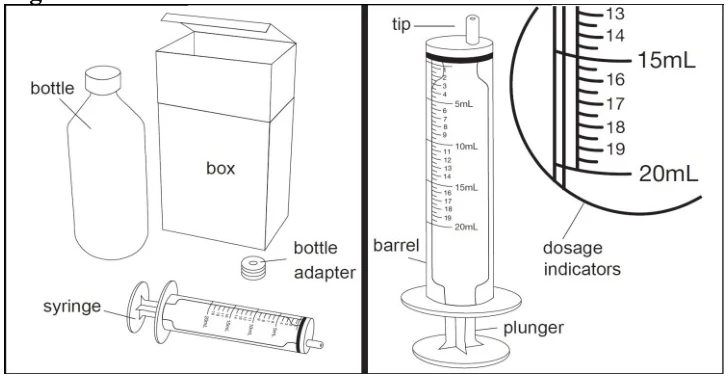
Step 1: Remove the following items from the box: (see Figure 1)
- FYCOMPA Oral Suspension bottle
- Bottle adapter
- 1 dosing syringe is included in the FYCOMPA Oral Suspension box
Figure 1
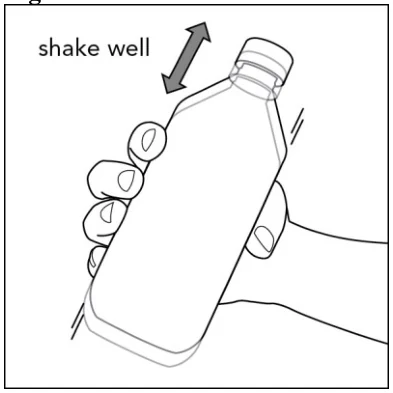
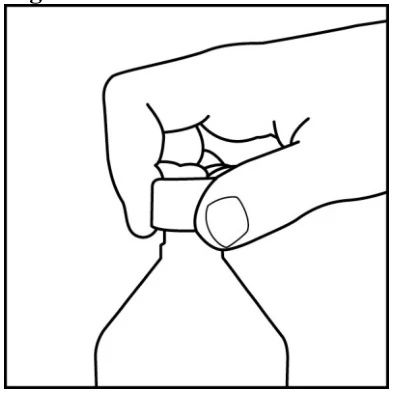
Step 2: Shake the bottle well for at least 5 seconds (see Figure 2)
Figure 2
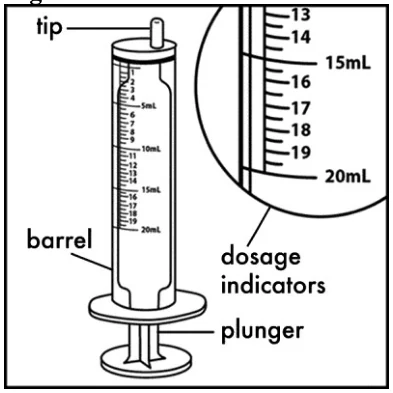
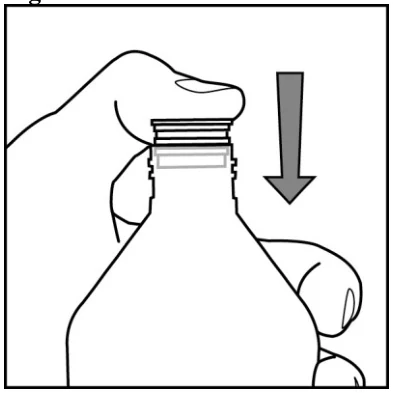
Step 3: Uncap the bottle. Insert the bottle adapter into the bottle and push down (see Figure 3 and Figure 4).
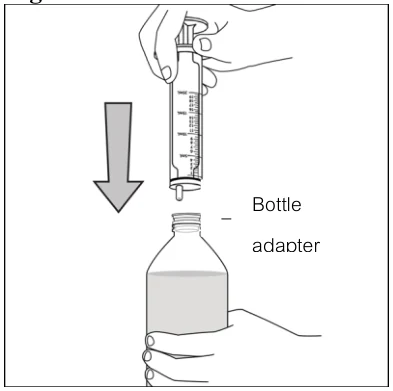
Note: Once the bottle adapter is in place, it cannot be removed.
Figure 3
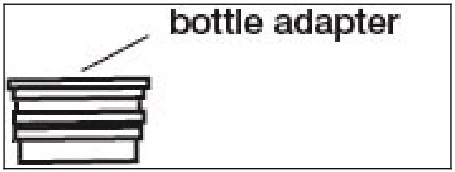
Figure 4
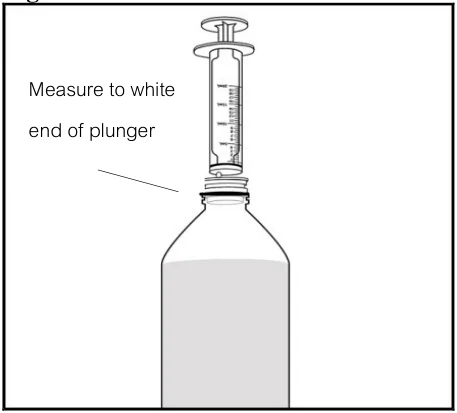
Step 4: Your doctor would have told you how much FYCOMPA you need to take. Your dose will be in millilitres (mL). Find this number on the syringe (see Figure 5).
Step 5: Insert the syringe into the upright bottle and push the plunger all the way down (see Figure 6).
Figure 5
Figure 6
Step 6: While keeping the syringe in place hold the bottle with your other hand and turn it upside down
- With your free hand, pull the plunger and take out the number of millilitres (mL) you need.
- If you see air bubbles in the syringe, fully push in the plunger so that all of the solution flows back into the bottle. Then, take out the number of millilitres (mL) you need once again (see Figure 7).
- To measure your dose correctly, the number of millilitres (mL) you need should be in line with the white layer of the plunger, not the black (see Figure 8).
Figure 7
Bottle adapter
_
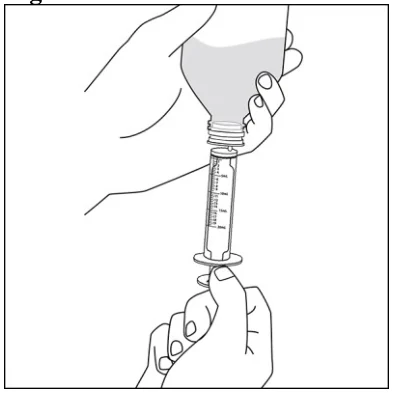
Figure 8
Step 7: If your dose is more than 20 mL (10 mg), you can use:
- 1 syringe, measuring the solution in the same syringe
For example:
- If your dose is 24 mL (12 mg), draw up 20 mL (10 mg) in the syringe and squirt the medicine into your mouth, then draw up the remaining 4 mL (2 mg) in that same syringe.
- If your dose is more than 20 mL (10 mg), repeat Steps 4 through 6 when drawing up the remaining dose of medicine.
Step 8: Turn the bottle right-side up and remove the syringe from the bottle adapter (see Figure 9).
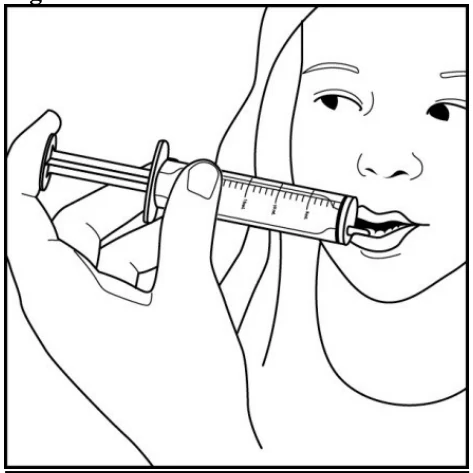
Step 9: Slowly squirt FYCOMPA directly into the corner of your mouth by pushing down on the plunger. If your dose is more than 20 mL (10 mg), draw up 20 mL (10 mg) in the syringe and squirt the medicine into your mouth, then draw up the remaining amount in that same syringe (See Figure 10).
Figure 9
Figure 10
Step 10: When you are done taking your dose, close the bottle tightly. The cap will fit over the bottle adapter. Store at 15 to 30oC. Do not freeze (see Figure 11).
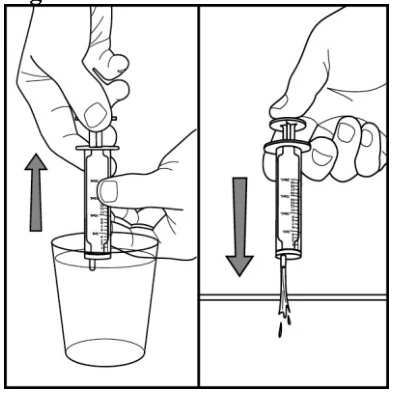
Step 11: Rinse the syringe (or syringes) with tap water after each use by:
- Filling a cup with water
- Pulling back on the plunger and drawing the water from the cup into the syringe
- Pushing down on the plunger to empty the water in the syringe into the sink (see Figure 12)
Figure 11
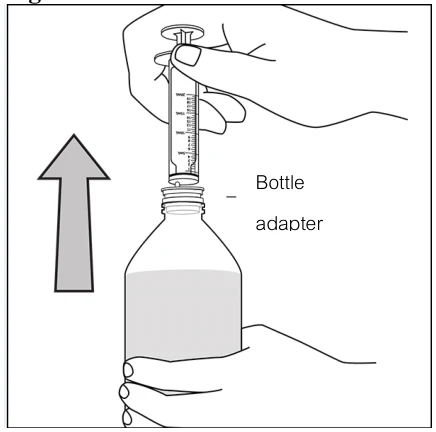
Figure 12
Measure to white end of plunger
Bottle adapter
_
Overdose:
| In case of drug overdose, contact a health care practitioner, hospital emergency department or regional Poison Control Centre immediately, even if there are no symptoms. Make sure you have your medicine bottle with you so that you have the correct information. |
Missed Dose:
If you forget to take a tablet or the oral suspension, resume dosing the following day at the prescribed daily dose. Contact your doctor if more than one day of dosing is missed.
SIDE EFFECTS AND WHAT TO DO ABOUT THEM
Like all medicines, FYCOMPA can cause side effects, although not everybody gets them.
If any of the side effects gets serious, or if you notice any side effects not listed below, please tell you doctor or pharmacist.
The most common side effects of FYCOMPA include:
- dizziness
- sleepiness
- tiredness
- irritability
- fall
- problems with muscle coordination
- problems with walking normally (gait disturbance)
- vertigo (sense of spinning)
- weight gain
- nausea
| SERIOUS SIDE EFFECTS, HOW OFTEN THEY HAPPEN AND WHAT TO DO ABOUT THEM | ||||
|---|---|---|---|---|
| Symptom / effect | Talk to your Health Care Professional | Seek Emergency Medical Attention | ||
| Only if severe | In all cases | |||
| Common | Irritability | √ | ||
| Fall | √ | |||
| Uncommon | Thoughts of suicide or hurting yourself | √ | ||
| Extreme sleepiness or tiredness and/or difficulty coordination muscles normally | √ | |||
| SERIOUS SIDE EFFECTS, HOW OFTEN THEY HAPPEN AND WHAT TO DO ABOUT THEM |
|---|
| Symptom / effect | Talk to your Health Care Professional | Seek Emergency Medical Attention |
|---|
| Only if severe | In all cases | |||
|---|---|---|---|---|
| Unusual mood change, aggression, hostility, personality change, behaviour change | √ | |||
| Allergic reactions (symptoms include swelling in the eyes, lips, mouth, tongue, face and throat, itching, rash, hives) | √ | |||
| UNKNOWN | Allergic Reactions known as Drug Reaction with Eosinophilia and Systemic Symptoms (DRESS) (serious skin reaction that may affect more than one or more organs): fever, severe rash, hives, swollen lymph glands, swelling of your face, flu-like feeling, yellow skin or eyes, shortness of breath, swelling of the legs, dry cough, chest pain or discomfort, urinating less often, less urine or dark urine. | √ |
This is not a complete list of side effects. For any unexpected effects while taking FYCOMPA, contact your doctor or pharmacist.
HOW TO STORE IT
Tablets: store at room temperature (15ºC to 30 ºC)
Keep out of the reach and sight of children
Oral Suspension:
- Store between 15 to 30oC
- Do not freeze
- Use the contents of the bottle within 90 days after opening
Keep out of the reach and sight of children
Reporting Side Effects
You can report any suspected side effects associated with the use of health products to Health Canada by:
NOTE: Contact your health professional if you need information about how to manage your side effects. The Canada Vigilance Program does not provide medical advice. |
MORE INFORMATION
This document plus the full product monograph, prepared for health professionals can be found by contacting the sponsor, Eisai Limited, at: 1-877-873-4724.
FYCOMPA® is a registered trademark owned by Eisai R&D Management Co., Ltd.