


Product Monograph - GD-Temsirolimus
SUMMARY PRODUCT INFORMATION
| Route of Administration | Dosage Form / Strength | Clinically Relevant Nonmedicinal Ingredients |
| Intravenous Infusion | Concentrate for Injection 25 mg/mL | Dehydrated alcohol |
| Diluent | Dehydrated alcohol For a complete listing see DOSAGE FORMS, COMPOSITION AND PACKAGING SECTION. |
INDICATIONS AND CLINICAL USE
GD-Temsirolimus (temsirolimus concentrate for injection) is indicated for the treatment of metastatic renal cell carcinoma.
Geriatrics (≥ 65 years of age):
No specific overall differences in safety were observed between patients younger than 65 or older than 65 (see WARNINGS AND PRECAUTIONS, Special Populations, Geriatrics).
Overall survival in a subset of patients 65 years of age or older (N=64) treated with temsirolimus was shorter than that observed with patients under 65 years of age (see CLINICAL TRIALS). The clinical relevance of this subgroup analysis is unclear.
No specific dose adjustment is recommended for elderly patients.
Pediatrics:
There is no indication for the use of GD-Temsirolimus in the pediatric population. The effectiveness of temsirolimus in 71 pediatric patients (aged 1 year to 21 years) with advanced relapsed/refractory solid tumors was not established (see WARNINGS AND PRECAUTIONS, Special Populations, Pediatrics).
CONTRAINDICATIONS
GD-Temsirolimus (temsirolimus concentrate for injection) is contraindicated in patients who have a history of anaphylaxis after exposure to temsirolimus, sirolimus or any other component GD-Temsirolimus (see DOSAGE FORMS, COMPOSITION AND PACKAGING).
GD-Temsirolimus is contraindicated in patients with bilirubin >1.5 x ULN (see WARNINGS AND PRECAUTIONS, DOSAGE AND ADMINISTRATION).
WARNINGS AND PRECAUTIONS
Serious Warnings and Precautions GD-Temsirolimus should be prescribed by a qualified healthcare professional who is experienced in the management of metastatic renal cell carcinoma. GD-Temsirolimus should be administered in an appropriate setting, under the supervision of a qualified healthcare professional. Appropriate management of therapy and complications is only possible when adequate diagnostic and treatment facilities are readily available. The following are clinically significant adverse events:
|
Bleeding
Patients with central nervous system tumors (primary CNS tumors or metastases) and/or receiving anticoagulation therapy may be at an increased risk of developing intracerebral bleeding (including fatal outcomes) while receiving therapy with temsirolimus
Bleeding events were noted in 103 (25%) of patients receiving temsirolimus. Epistaxis was the commonest bleeding event with 3-times the incidence in the temsirolimus arm than in the IFN arm (12.0% in the temsirolimus arm and 3.5% in the IFN arm). Most bleeding events were grade 1 or 2, with only 13 (3%) grade 3 and 4.
Carcinogenesis and Mutagenesis
Carcinogenicity studies have not been conducted with temsirolimus. However, sirolimus, the major metabolite of temsirolimus in humans, induced malignant lymphoma, hepatocellular adenoma and carcinoma, and testicular adenoma in mice and/or rats. Patients receiving immunosuppression regimens involving combinations of drugs, including sirolimus, are at increased risk of developing lymphomas and other malignancies, particularly of the skin.
Cardiovascular
GD-Temsirolimus is associated with small (< 10 msec) but statistically significant QT/QTc interval prolongation (see ACTION AND CLINICAL PHARMACOLOGY/Cardiac Electrophysiology).
Hypertension has been reported in 14 patients (7%) receiving temsirolimus compared with 8 patients (4%) receiving Interferon in the Renal Cell Carcinoma Study (3066K1-304-WW). In Study 3066K1-155-US, diastolic and systolic blood pressures of subjects continued to steadily increase up to 48 hours after administration of Temsirolimus (see ADVERSE REACTIONS).
Drug-Drug Interactions
Agents Inducing CYP3A Metabolism
Agents such as carbamazepine, phenytoin, barbiturates, rifabutin, rifampicin, and St John’s Wort are strong inducers of CYP3A4/5 and may decrease composite exposures of the active moieties, temsirolimus and its metabolite, sirolimus. Therefore, concomitant treatment with agents that have CYP3A4/5 induction potential should be avoided. The safety profile of temsirolimus at doses greater than 25 mg in the presence of a CYP3A4/5 inducer has not been evaluated in the context of compensation for the reduced sirolimus exposure (see OVERDOSAGE).
Agents Inhibiting CYP3A Metabolism
Agents such as protease inhibitors, anti-fungals, macrolide antibiotics, nefazodone, and selective serotonin inhibitors are strong CYP3A4 inhibitors and may increase blood concentrations of the active moieties, temsirolimus and its metabolite, sirolimus. Therefore, concomitant treatment with agents that have CYP3A4 inhibition potential should be avoided. Alternative treatments with agents that do not have CYP3A4 inhibition potential should be considered (see DRUG INTERACTIONS).
Pharmacodynamic Drug Interactions
Temsirolimus in combination with sunitinib, gemcitabine or 5-fluorouracil has been associated with serious adverse drug reactions. Fatal events have been seen when temsirolimus was combined with 5-fluorouracil.
Angioneurotic edema-type reactions (including delayed reactions occurring two months following initiation of therapy) have been observed in some patients who received temsirolimus and angiotensin-converting enzyme (ACE) and/or calcium channel blocker (e.g., amlodipine) inhibitors concomitantly (see DRUG INTERACTIONS).
Endocrine and Metabolism
Hyperglycemia/Glucose Intolerance
The use of temsirolimus in renal cell carcinoma (RCC) patients was frequently associated with increases in serum glucose. In Study 1, hyperglycemia was present on at least one occasion in over 82% of patients receiving temsirolimus and was an adverse event (greater than 13.9 mmol/L) in 15.9% of patients. This may result in the need for an increase in the dose of, or initiation of, insulin and/or oral hypoglycemic agent therapy. Patients should be advised to report excessive thirst or any increase in the volume or frequency of urination.
Hyperlipidemia
The use of temsirolimus in RCC patients was frequently associated with increases in serum triglycerides and cholesterol. In Study 1, hypercholesterolemia was present on at least one occasion in 80% of patients receiving temsirolimus, and hypertriglyceridemia was present in over 83% of patients. One or both dyslipidemias was an adverse event (cholesterol greater than 10.34 mmol/L, triglycerides greater than 5x upper limit of normal) in 45.2% of patients. This may require initiation, or increase in the dose of lipid-lowering agents. Serum cholesterol and triglycerides should be tested before and during treatment with GD-Temsirolimus.
Gastrointestinal
Cases of bowel perforation (including fatal outcomes) have occurred in patients who received temsirolimus (see ADVERSE REACTIONS).
Stomatitis and mucositis were significantly more common in the temsirolimus arm, with combined incidences of 19 (10%) and 86 (41%) in the IFN and temsirolimus arms, respectively. Grade 3 or 4 stomatitis and mucositis was reported in 0 and 6 (3%) in each arm, respectively.
Hematological
Anemia was very common across the treatment arms, with over 90% of patients reporting at least one low hemoglobin level. Grade 3 and 4 anemia was reported in 43 (21.5%) and 41 (19.7%) in the IFN and temsirolimus arms, respectively. Transfusion of at least one unit of blood was given to 51 (25.5%) and 63 (30.3%) patients in each arm respectively.
Leukopenia, neutropenia, lymphopenia and thrombocytopenia including grade 3 and 4 events were commonly reported in all treatment arms (see Table 2).
Immune
Infections
Infection related events were reported in patients receiving temsirolimus more than twice as frequently than in those receiving IFN only (31% vs. 15%). Temsirolimus may be immunosuppressive. Patients should be carefully observed for the occurrence of infections, including opportunistic infections (see ADVERSE REACTIONS). Cases of Pneumocystis jiroveci pneumonia (PJP), some with fatal outcomes, have been reported in patients who received temsirolimus, many of whom also received corticosteroids or other immunosuppressive agents. In some cases, prophylaxis of PJP may be considered, although there are no prospective clinical trial data to support this.
Sepsis
Cases of sepsis (including septic shock) have been reported in patients treated with temsirolimus.
Vaccinations
The use of live vaccines and close contact with people who have received live vaccines should be avoided during treatment with temsirolimus. Examples of live vaccines are: measles, mumps, rubella, oral polio, BCG, yellow fever, varicella, and TY21a typhoid vaccines.
Musculoskeletal and Connective Tissue Disorders
Myalgia, arthralgia, and increased serum creatine phosphokinase have been observed in subjects treated with temsirolimus.
Peri-Operative Considerations
Wound Healing Complications
The use of temsirolimus has been associated with abnormal wound healing. Therefore, caution should be exercised with the use of GD-Temsirolimus in the peri-surgical period.
Renal Dysfunction
Renal insufficiency was a common treatment emergent adverse event. In study 1, elevated creatinine was present on at least one occasion in 57.2% of patients receiving temsirolimus and in 48.5% of patients receiving IFN. Increased creatinine was an adverse event (greater than 3x upper limit of normal) in 3.4% of patients receiving temsirolimus and 1% of patients receiving IFN.
Cases of rapidly progressive and sometimes fatal acute renal failure not clearly related to disease progression occurred in patients who received temsirolimus.
Effect of renal impairment on GD-Temsirolimus pharmacokinetics has not been studied.
Hepatic Dysfunction
Dose de-escalation and multiple dose interruption were observed in patients with mild hepatic impairment primarily due to thrombocytopenia.
Temsirolimus was evaluated in a dose escalation phase 1 study in 110 patients with advanced malignancies and either normal or impaired hepatic function. Patients with moderate and severe hepatic impairment (bilirubin >1.5 X ULN) had increased rates of adverse events and deaths, including deaths due to progression of underlying cancer, during the study.
GD-Temsirolimus is contraindicated in patients with bilirubin >1.5 x ULN due to increased risk of death, including deaths due to progression of underlying cancer (see CONTRAINDICATIONS).
Use caution when treating patients with mild hepatic impairment. Concentrations of temsirolimus and its metabolite sirolimus were increased in patients with elevated AST or bilirubin levels. For patients with mild hepatic impairment (bilirubin >1-1.5 × ULN or AST >ULN but bilirubin ≤ULN), a reduction of the temsirolimus dose to 15 mg/week could be considered. Assessment of AST and bilirubin levels is recommended before initiation of temsirolimus and periodically thereafter (see ACTION AND CLINICAL PHARMACOLOGY).
Respiratory
Interstitial Lung Disease
Cases of interstitial lung disease, including some fatalities, have occurred in patients who received temsirolimus. Some patients were asymptomatic with infiltrates, including ground glass opacities and consolidation, detected on CT scan or chest X-ray. Others presented with symptoms such as dyspnea, cough, hypoxia, and fever. In a series of patients receiving intravenous temsirolimus 25 mg weekly for advanced neuroendocrine tumours or advanced endometrial carcinoma, 8 out of 22 patients developed pulmonary abnormalities compatible with drug-induced pneumonitis. Half were asymptomatic 1. Some patients required discontinuation of temsirolimus or treatment with corticosteroids and/or antibiotics, while some patients continued treatment without additional intervention.
It is recommended that patients undergo baseline radiographic assessment by lung computed tomography scan or chest radiograph prior to the initiation of temsirolimus therapy. Follow such assessments periodically, even in the absence of clinical respiratory symptoms.
It is recommended that patients be followed closely for occurrence of clinical respiratory symptoms. If clinically significant respiratory symptoms develop, consider withholding temsirolimus administration until after recovery of symptoms and improvement of radiographic findings related to Pneumonitis. Opportunistic infections such as Pneumocystis jiroveci pneumonia (PJP) should be considered in the differential diagnosis. Empiric treatment with corticosteroids and/or antibiotics may be considered. For patients who require use of corticosteroids, prophylaxis of PJP may be considered, although there are no prospective clinical trial data to support this.
Sensitivity/Resistance
Hypersensitivity/Infusion Reactions
Hypersensitivity/infusion reactions (including some life-threatening and rare fatal reactions), including but not limited to flushing, chest pain, dyspnea, hypotension, apnea, loss of consciousness, hypersensitivity and anaphylaxis, have been associated with the administration of temsirolimus. These reactions can occur very early in the first infusion, but may also occur with subsequent infusions. Patients should be monitored early during the infusion and appropriate supportive care should be available. GD-Temsirolimus infusion should be interrupted in all patients with severe infusion reactions and appropriate medical therapy administered. A benefit-risk assessment should be done prior to the continuation of GD-Temsirolimus therapy in patients with severe or life-threatening reactions.
Sirolimus is the major metabolite of temsirolimus, therefore, temsirolimus should be administered with caution in patients with a known hypersensitivity to sirolimus.
Because it is recommended that an H1 antihistamine be administered to patients before the start of the intravenous temsirolimus infusion, GD-Temsirolimus should be used with caution in patients with known hypersensitivity to an antihistamine, or patients who cannot receive an antihistamine for other medical reasons.
If a patient develops a hypersensitivity reaction during the GD-Temsirolimus infusion despite the premedication, the infusion should be stopped and the patient should be observed for at least 30 to 60 minutes (depending on the severity of the reaction). At the discretion of the physician, treatment may be resumed with the administration of an H1-receptor antagonist (such as diphenhydramine), if not previously administered (see DOSAGE AND ADMINISTRATION), and/or an H2-receptor antagonist (such as intravenous famotidine 20 mg or intravenous ranitidine 50 mg) approximately 30 minutes before restarting the GD-Temsirolimus infusion. The infusion may then be resumed at a slower rate (up to 60 minutes). Diluted GD-Temsirolimus should be administered within 6 hours of mixing (see DOSAGE AND ADMINISTRATION)
Skin
Rash NOS (all grades) was reported in 11 (5.5%) and 77 (37.0%) in the IFN and temsirolimus arms, respectively. Acne was common in the temsirolimus group with 21 (10.1%) reports, compared with 2 (1.0%) in the IFN arm.
Special Populations
Pregnant Women:
There are no adequate and well-controlled studies in pregnant women using GD-Temsirolimus. In animal toxicity studies with rats and rabbits, there was increased embryo/fetal mortality and decreased fetal growth (see TOXICOLOGY).
Women of childbearing age should use medically acceptable contraception during (and up to 3 months after) treatment.
Temsirolimus should not be used during pregnancy (see TOXICOLOGY).
In addition, men should be adequately counseled prior to starting treatment with GD-Temsirolimus and need to understand the possible danger of taking a medicinal product whose effects on the fetus and sperm are unknown. Men with partners of childbearing potential should use medically acceptable contraception throughout treatment and are recommended to continue this for 12 weeks after the last dose of GD-Temsirolimus.
Nursing Women:
It is not known whether GD-Temsirolimus is excreted into human milk. Because many drugs are excreted into human milk, and because the effects of temsirolimus excretion in human milk have not been studied, women should be advised against breast-feeding while receiving temsirolimus.
Pediatrics:
Limited data are available on the use of temsirolimus in pediatric patients. Temsirolimus has been studied in a total of 71 pediatric patients (59 patients ages 1 to 17 years, 12 patients ages 18 to 21 years) with advanced relapsed/refractory solid tumors in a phase I/II safety and exploratory pharmacodynamic study. The effectiveness of temsirolimus in this pediatric population was not established.
Geriatrics (≥ 65 years of age):
No specific overall differences in safety were observed between patients younger than 65 or older than 65.
Based on the results of a phase 3 study for renal cell carcinoma, elderly patients may be more likely to experience certain adverse reactions, including edema, diarrhea, and pneumonia.
Overall survival in a subset of patients 65 years of age or older (N=64) treated with temsirolimus was shorter than that observed with patients under 65 years of age (see CLINICAL TRIALS). The clinical relevance of this subgroup analysis is unclear.
No specific dose adjustment is recommended for elderly patients.
Renal Dysfunction:
Effect of renal impairment on GD-Temsirolimus pharmacokinetics has not been studied (see WARNINGS AND PRECAUTIONS - Renal Dysfunction)
Hepatic Dysfunction:
GD-Temsirolimus is contraindicated in patients with bilirubin >1.5 x ULN (see CONTRAINDICATIONS, WARNING AND PRECAUTIONS - Hepatic Dysfunction, DOSAGE AND ADMINISTRATION).
Monitoring and Laboratory Tests
In the randomized phase 3 trial, complete blood counts were checked weekly, and chemistry panels were checked every two weeks. In addition, it is recommended to measure fasting glucose and lipids prior to starting treatment, with regular follow up tests during the treatment period. Laboratory monitoring for patients receiving GD-Temsirolimus must be individualized at the discretion of the treating physician.
ADVERSE REACTIONS
Adverse Drug Reaction Overview
The following serious adverse reactions have been associated with temsirolimus concentrate for injection in clinical trials and are discussed in greater detail in other sections of the label (see WARNINGS AND PRECAUTIONS):
- Hypersensitivity Reactions
- Hyperglycemia / Glucose Intolerance
- Infections
- Interstitial Lung Disease
- Renal Failure
The most common (≥ 30%) adverse reactions observed with temsirolimus are rash, asthenia, mucositis, nausea, edema, and anorexia. The most common (≥ 30%) laboratory abnormalities observed with temsirolimus are anemia, hyperglycemia, hyperlipidemia, hypertriglyceridemia, lymphopenia, elevated alkaline phosphatase, elevated serum creatinine, hypophosphatemia, thrombocytopenia, elevated AST, and leukopenia.
Clinical Trial Adverse Drug Reactions
Renal Cell Carcinoma Study 1 (3066K1-304-WW)
Study 1 is a phase 3, three-arm, randomized, open-label study of Interferon alfa (IFN-α) alone, temsirolimus alone, and temsirolimus and IFN-α. A total of 616 patients were treated. Two hundred patients received IFN-α weekly, 208 received temsirolimus 25 mg weekly, and 208 patients received a combination of IFN-α and temsirolimus weekly (see CLINICAL TRIALS).
Treatment with the combination of temsirolimus 15 mg and IFN-α resulted in a statistically significant increase in the incidence of certain grade 3-4 adverse events (weight loss, hyperlipemia, anemia, neutropenia, thrombocytopenia and mucosal inflammation) when compared with the adverse events observed in the IFN-α or temsirolimus 25 mg-alone arms. The combination did not result in a significant increase in overall survival when compared with IFN-α alone (8.4 vs 7.3 months, hazard ratio = 0.96, p = 0.6965).
Of the 208 patients treated in the temsirolimus alone arm, 88 (42.3%) patients had adverse events of nausea or vomiting or both. Of these 88 patients, 59 (67.0%) received at least one anti-emetic during their study participation. Temsirolimus was dose-reduced and discontinued in one patient due to vomiting. Of the 8 patients who reported grade 3 or 4 nausea or vomiting or both, 2 patients had a past medical history of nausea or vomiting at the time of screening, and 2 patients did not receive any anti-emetics to control their nausea or vomiting while on study.
Table 1 shows the percentage of patients experiencing treatment emergent adverse reactions reported in Study 1. Reactions reported in at least 10% of patients who received temsirolimus 25 mg alone are listed. Data for the same adverse reactions in the IFN-α alone arm are shown for comparison.
| Table 1: Adverse Reactions Reported in at Least 10% of Patients Who Received 25 mg IV Temsirolimus in Study 1. | ||||
|---|---|---|---|---|
Temsirolimus 25 mg n=208 | IFN-α n=200 | |||
| Adverse Reaction | All Gradesa n (%) | Grades 3&4a n (%) | All Gradesa n (%) | Grades 3&4a n (%) |
| Any | 208 (100) | 139 (67) | 199 (100) | 155 (78) |
Blood and lymphatic system disorders Anemia Thrombocytopenia | 94 (45) 28 (14) | 41 (20) 3 (1) | 83 (42) 16 (8) | 43 (22) 0 (0) |
Gastrointestinal disorders Nausea Diarrhea Abdominal Pain Stomatitisb Vomiting Constipation | 77 (37) 56 (27) 44 (21) 86 (41) 40 (19) 43 (21) | 5 (2) 3 (1) 9 (4) 6 (3) 4 (2) 0 (0) | 82 (41) 40 (20) 34 (17) 19 (10) 57 (29) 37 (19) | 9 (4) 4 (2) 3 (2) 0 (0) 5 (3) 1 (<1) |
General disorders and administrative site conditions Asthenia Edemac Pain Pyrexia Chest Pain Headache | 106 (51) 88 (42) 59 (28) 50 (24) 34 (16) 32 (15) | 23 (11) 7 (3) 10 (5) 1 (1) 2 (1) 1 (<1) | 127 (64) 25 (13) 31 (16) 99 (50) 18 (9) 29 (15) | 52 (26) 1 (1) 4 (2) 7 (4) 2 (1) 0 (0) |
Infections and infestations Infectionsd Urinary tract infectione Pharyngitis Rhinitis | 52 (25) 39 (19) 25 (12) 25 (10) | 6 (3) 3 (1) 0 (0) 0 (0) | 19 (10) 30 (15) 3 (2) 4 (2) | 4 (2) 4 (2) 0 (0) 0 (0) |
Investigations Blood creatinine increased | 30 (14) | 6 (3) | 21 (10) | 1 (1) |
Metabolism and nutrition disorders Anorexia Hyperlipidemia Hyperglycemia Hypercholesteremia Weight Loss | 66 (32) 57 (27) 53 (26) 51 (25) 39 (19) | 5 (2) 6 (3) 22 (11) 1 (1) 3 (1) | 87 (44) 28 (14) 22 (11) 9 (4) 50 (25) | 8 (4) 2 (1) 3 (2) 0 (0) 4 (2) |
Musculoskeletal and connective tissue disorders Back Pain Arthralgia | 41 (20) 37 (18) | 6 (3) 2 (1) | 28 (14) 29 (15) | 3 (2) 2 (1) |
Nervous system disorders Dysgeusiaf Insomnia | 41 (20) 24 (12) | 0 (0) 1 (1) | 17 (9) 30 (15) | 0 (0) 0 (0) |
| Table 1: Adverse Reactions Reported in at Least 10% of Patients Who Received 25 mg IV Temsirolimus in Study 1. (Cont'd) | ||||
|---|---|---|---|---|
Temsirolimus 25 mg n=208 | IFN-α n=200 | |||
| Adverse Reaction | All Gradesa n (%) | Grades 3&4a n (%) | All Gradesa n (%) | Grades 3&4a n (%) |
Respiratory, thoracic and mediastinal disorders Dyspnea Cough Epistaxis | 58 (30) 53 (26) 25 (12) | 18 (9) 2 (1) 0 (0) | 48 (24) 29 (15) 7 (4) | 11 (6) 0 (0) 0 (0) |
Skin and subcutaneous tissue disorders Rashg Pruritus Nail Disorder Dry Skin Acne | 97 (47) 40 (19) 28 (14) 22 (11) 21 (10) | 11 (5) 1 (1) 0 (0) 1 (1) 0 (0) | 12 (6) 16 (8) 1 (1) 14 (7) 2 (1) | 0 (0) 0 (0) 0 (0) 0 (0) 0 (0) |
a. Common Toxicity Criteria for Adverse Events (CTCAE), Version 3.0. b. Includes aphthous stomatitis, glossitis, mouth ulceration, mucositis, and stomatitis c. Includes facial edema and peripheral edema d. Includes general infections and a variety of infections that occurred infrequently as distinct entities: cellulitis, herpes zoster, herpes simplex, bronchitis, and abscess e. Includes dysuria, hematuria, urinary frequency, and cystitis f. Includes taste loss and taste perversion g. Includes pruritic rash, maculopapular rash, and pustular rash | ||||
The following adverse reactions were commonly reported (≥1% and ≤10%) and may be associated with the use of temsirolimus:
Bleeding - GI haemorrhages (4%), haematuria (3.8%), urinary bladder haemorrhages (1.0%), hemoptysis (2.4%) (see WARNINGS AND PRECAUTIONS)
Eye Disorders - Conjunctivitis (including lacrimation disorder) (7%).
Gastrointestinal Disorders - Abdominal distension (4%), gingivitis (2%), mouth pain (2%), fatal bowel perforation (1%), dysphagia (3%), gastritis (1%).
General Disorders and Administrative Site Conditions – Impaired wound healing (1%).
Immune System –Allergic/Hypersensitivity reactions (9%).
Infections and Infestations – Pneumonia (7%), upper respiratory tract infection (7%.), flu syndrome (3%), oral moniliasis (2%), sinusitis (2%), folliculitis (2% ), laryngitis (1.0%), wound infection/post-operative wound infection (1.0%), fungal infection/fungal dermatitis (2.0%).
Investigations - Aspartate aminotransferase increase (8%); Alanine aminotransferase increase (6%).
Metabolism and Nutritional Disorders - Diabetes mellitus (5%), dehydration (5%).
Psychiatric Disorders - Anxiety (8%), somnolence (7%), depression (4%)
Renal and Urinary Disorders – Acute Renal Failure, including fatalities (1.4%), dysuria (4.8%), renal pain (2.4%), proteinuria (2.0%), pollakiuria (1.4%), azotaemia (1.4%), urinary retention (1%).
Respiratory, Thoracic and Mediastinal Disorders - Pleural effusion (5%), interstitial lung disease/pneumonitis (2%), including fatal episodes, has been reported in patients taking temsirolimus.
Skin and Subcutaneous Tissue Disorders - Exfoliative dermatitis (8%).
Vascular - Hypertension (7%) (see WARNINGS AND PRECAUTIONS), venous thromboembolism (including deep vein thrombosis and pulmonary embolus [including fatal outcomes]) (2%), thrombophlebitis (1%).
The following adverse reactions were uncommonly reported (≥0.1% and <1%) and may be associated with the use of temsirolimus:
Cardiac Disorders - Pericardial effusion (including hemodynamically significant pericardial effusions requiring intervention) (1%).
Nervous System Disorders – Dizziness (9%), paresthesia (6%), convulsion (0.5%).
Renal Cell Carcinoma Study 2 (3066K1-200-WW)
Study 2 was a phase 2, randomized, double-blind, multi-center, outpatient trial to evaluate the efficacy, safety, and pharmacokinetics of three dose levels of temsirolimus when administered to previously treated patients with advanced RCC. One hundred eleven (111) patients were randomly assigned in a 1:1:1 ratio to receive 25 mg, 75 mg, or 250 mg temsirolimus IV weekly. The incidence and type of adverse events reported for the temsirolimus 25 mg arm were generally similar to those reported in the pivotal phase 3 study (Study 1).
Abnormal Hematologic and Clinical Chemistry Findings
| Table 2: Incidence of Clinically Important Laboratory Abnormalities Reported in at Least 10% of Patients who Received 25 mg IV Temsirolimus in Study 1 | |||||||||||
|---|---|---|---|---|---|---|---|---|---|---|---|
Temsirolimus 25 mg n=208 | IFN-α n=200 | ||||||||||
| Laboratory Abnormality | All Gradesa n (%) | Grades 3&4a n (%) | All Gradesa n (%) | Grades 3&4a n (%) | |||||||
| Any | 208 (100) | 139 (67) | 199 (100) | 155 (78) | |||||||
Hematology Hemoglobin Decreased Lymphocytes Decreasedb Neutrophils Decreasedb Platelets Decreased Leukocytes Decreased | 195 (94) 110 (53) 39 (19) 84 (40) 67 (32) | 41 (20) 33 (16) 10 (5) 3 (1) 1 (1) | 180 (90) 106 (53) 58 (29) 51 (26) 93 (47) | 43 (22) 48 (24) 19 (10) 0 (0) 11 (6) | |||||||
Chemistry Alkaline Phosphatase Increased AST Increased Creatinine Increased Glucose Increased Phosphorus Decreased Total Bilirubin Increased Total Cholesterol Increased Triglycerides Increased Potassium Decreased Potassium Increased Calcium Increased Calcium Decreased Albumin Decreased | 141 (68) 79 (38) 119 (57) 186 (89) 102 (49) 16 (8) 181 (87) 173 (83) 43 (21) 46 (22) 46 (22) 82 (39) 108 (52) | 7 (3) 5 (2) 7 (3) 33 (16) 38 (18) 2 (1) 5 (2) 92 (44) 11 (5) 10 (5) 8 (4) 9 (4) 3 (1) | 111 (56) 103 (52) 97 (49) 128 (64) 61 (31) 25 (13) 95 (48) 144 (72) 15 (8) 68 (34) 46 (23) 83 (42) 121 (61) | 13 (7) 14 (7) 2 (1) 6 (3) 17 (9) 4 (2) 2 (1) 69 (35) 0 (0) 9 (5) 12 (6) 9 (5) 12 (6) | |||||||
a. NCI CTC version 3.0 b. Grade 1 toxicity may be under-reported for lymphocytes and neutrophils | |||||||||||
Post-Marketing Adverse Drug Reactions
The following adverse reactions have been identified during the post-approval use of temsirolimus. Frequency determination of adverse events reported from the post marketing environment is not possible since the size of the population receiving the drug is largely undetermined.
Cardiovascular disorders:
Adverse reactions observed in the post marketing environment include delayed angioneurotic edema-type reactions (occurring two months following initiation of therapy) observed in some patients who received concomitant therapy with temsirolimus and angiotensin-converting enzyme (ACE) inhibitors (see WARNINGS AND PRECAUTIONS), pleural effusion, pericardial effusion (including hemodynamically significant pericardial effusions requiring intervention), cardiac arrest, and convulsion.
Hypersensitivity/Infusion Reactions:
Hypersensitivity/infusion reactions (including some life-threatening and rare fatal reactions), have been associated with the administration of temsirolimus (see WARNINGS AND PRECAUTIONS).
Musculoskeletal and connective tissue disorders:
There have been reports of rhabdomyolysis in patients who received temsirolimus.
Respiratory disorders:
Cases of pulmonary embolus (including fatal outcomes) have been reported. Cases of Pneumocystis jiroveci pneumonia, some with fatal outcomes have also been reported (see WARNINGS AND PRECAUTIONS).
Skin and subcutaneous tissue disorders:
There have been reports of Stevens-Johnson Syndrome and hand-foot syndrome in patients who received temsirolimus.
DRUG INTERACTIONS
Overview
Temsirolimus in combination with sunitinib, gemcitabine or 5-fluorouracil has been associated with serious adverse drug reactions. Fatal cases of bowel perforation have been observed when temsirolimus was combined with 5-fluorouracil.
CYP3A4 is the major CYP isozyme responsible for the metabolism of temsirolimus and sirolimus. Potential interactions may occur with drugs/foods/herbs that are inhibitors or inducers of this enzyme system.
Drug-Drug Interactions
Agents Inducing CYP3A Metabolism
Co-administration of temsirolimus with rifampicin (600 mg), a potent CYP3A4/5 inducer, had no significant effect on temsirolimus Cmax (maximum concentration) and AUC, after intravenous administration, but decreased sirolimus Cmax by 65% and AUC by 56%, and AUCsum
(composite of temsirolimus AUC plus sirolimus AUC) by 41% compared to temsirolimus treatment alone. Therefore, concomitant treatment with agents that have CYP3A4/5 induction potential should be avoided. The safety profile of temsirolimus at doses greater than 25 mg in the presence of a CYP3A4/5 inducer has not been evaluated in the context of compensation for the reduced sirolimus exposure (see OVERDOSAGE).
Agents Inhibiting CYP3A Metabolism
Co-administration of temsirolimus (5 mg, 1/5th of the clinically recommended dose) with ketoconazole (400 mg), a potent CYP3A4 inhibitor to healthy subjects, had no significant effect on temsirolimus Cmax or AUC; however, AUC of sirolimus increased 3.1-fold, and AUCsum increased 2.3-fold compared to temsirolimus alone. A 51% increase in sirolimus half-life and 69% decrease in clearance were also observed.
Concomitant treatment of temsirolimus with agents that have strong CYP3A4 inhibition potential should be avoided (see WARNINGS AND PRECAUTIONS).
Interactions with Drugs Metabolized by CYP3A4/5
Temsirolimus may inhibit the metabolic clearance of substrates of CYP3A4/5 including statins. Caution should be exercised if a statin is required for hyperlipidemia, since the risk of developing rhabdomyolysis may be increased. Patients on treatment with GD-Temsirolimus who are co-prescribed a statin should be advised to report symptoms including muscle pain or weakness.
Interactions with Drugs Metabolized by CYP2D6
In a study with 23 healthy subjects, the concentration of desipramine (50 mg), a CYP2D6 substrate, was unaffected when 25 mg of temsirolimus was co-administered. However, there was over 8 hour gap between the peak concentration of the two drugs when they were administered concurrently. The magnitude of the interaction may have been reduced. Caution should be taken when temsirolimus is co-administered with agents that are metabolized by CYP2D6.
Interactions with drugs that are P-glycoprotein substrates
In an in vitro study, temsirolimus inhibited the transport of digoxin, a P-gp substrate, with an IC50 value of 2 μM. Clinical implications related to concomitant administration of P-gp substrates are not known.
Anti-emetic Agents
The safety of concomitant use of temsirolimus with anti-emetic agents, including but not limited to: prochlorperazine, diphenhydramine, metoclopramide, ondansetron, or domperidone, has not been formally studied.
Interactions with QT/QTc-prolonging drugs
The concomitant use of GD-Temsirolimus with another QT/QTc-prolonging drug should be avoided to the extent possible.
Other Pharmacodynamic Interactions
An increased risk of angioedema is possible in patients taking mTOR (mammalian target of rapamycin) inhibitors in combination with ramipril and/or amlodipine. Caution should be used when temsirolimus is given concomitantly with an ACE inhibitor (e.g., enalapril, lisinopril, ramipril) (see WARNINGS AND PRECAUTIONS) or a calcium channel blocker (e.g., amlodipine).
Drug-Food Interactions
The effect of food on exposure following an intravenous dose of temsirolimus was not examined.
Drug-Herb Interactions
Interactions with herbal products have not been established. St John’s Wort is a strong inducer of CYP3A4 and may decrease blood concentrations of temsirolimus metabolites (see WARNINGS AND PRECAUTIONS and D RUG INTERACTIONS).
Drug-Laboratory Interactions
Interactions with laboratory tests have not been established.
DOSAGE AND ADMINISTRATION
Dosing Considerations
- No special dosage modification is required for any of the populations that have been studied (e.g. gender, elderly).
- Limited data are available on the use of temsirolimus in pediatric patients. The effectiveness of GD-Temsirolimus in pediatric patients with advanced relapsed/refractory solid tumors was not established (see WARNINGS AND PRECAUTIONS, Special Populations, Pediatric). Therefore, a dosing recommendation cannot be made.
- Studies in patients with varying renal impairment or in patients undergoing hemodialysis have not been conducted (see ACTION AND CLINICAL PHARMACOLOGY).
- Temsirolimus should be used with caution in patients with hepatic impairment (see CONTRAINDICATIONS, WARNINGS AND PRECAUTIONS).
Recommended Dose and Dosage Adjustment
The recommended dose of GD-Temsirolimus for advanced renal cell carcinoma is 25 mg, infused over a 30-60 minute period once a week.
Treatment should continue until the patient is no longer clinically benefiting from therapy or until unacceptable toxicity occurs. No special dosage modification is required for any of the populations that have been studied (e.g. gender, elderly).
In Study 1, 19.2% of patients receiving temsirolimus alone reported vomiting as an adverse event. The emetogenic potential of temsirolimus is low.
Dose Modification
Management of suspected drug reactions may require temporary interruption and/or dose reduction of GD-Temsirolimus therapy. If a suspected reaction is not manageable with dose delays, then GD-Temsirolimus may be reduced by 5 mg/week decrements.
Hepatic Impairment: GD-Temsirolimus is contraindicated in patients with bilirubin >1.5 x ULN due to increased risk of death, including deaths due to progression of underlying cancer. For patients with mild hepatic impairment (bilirubin >1-1.5 × ULN or AST >ULN but bilirubin ≤ULN), a reduction of the temsirolimus dose to 15 mg/week could be considered. Assessment of AST and bilirubin levels is recommended before initiation of temsirolimus and periodically thereafter, because dosage adjustment may be required in some patients based upon hepatic function (see CONTRAINDICATIONS, WARNINGS AND PRECAUTIONS, ACTION AND CLINICAL PHARMACOLOGY).
Administration
Instructions for Intravenous Administration
GD-Temsirolimus (temsirolimus concentrate for injection and diluent) must be stored under refrigeration at 2°- 8°C and protected from light. During handling and preparation of admixtures, GD-Temsirolimus should be protected from excessive room light and sunlight. GD-Temsirolimus (temsirolimus concentrate for injection and diluent) should be inspected visually for particulate matter and discoloration prior to administration. Bags/containers that come in contact with GD-Temsirolimus must be made of glass, polyolefin, or polyethylene. (Text revised for clarification)
DO NOT USE IF PARTICULATES ARE PRESENT. USE A NEW VIAL.
Premedication
Patients should receive prophylactic medication of intravenous diphenhydramine 25 to 50 mg (or equivalent) approximately 30 minutes before the start of each dose of GD-Temsirolimus. If a hypersensitivity/infusion reaction develops during the temsirolimus infusion, the infusion should be stopped. Upon adequate resolution, and at the discretion of the physician, treatment may be resumed with the administration of an H1-receptor antagonist (or equivalent), if not previously administered, and/or an H2-receptor antagonist (such as intravenous famotidine 20 mg or intravenous ranitidine 50 mg) approximately 30 minutes before restarting the temsirolimus infusion. The infusion may then be resumed at a slower rate (up to 60 minutes)(see WARNINGS AND PRECAUTIONS).
Dilution
The diluted solution (concentrate and diluent) should be inspected visually for particulate matter and discoloration.
In preparing the GD-Temsirolimus administration solution, follow this two-step dilution process in an aseptic manner.
Step 1:
Inject 1.8 mL of diluent for GD-Temsirolimus concentrate into the vial containing GD-Temsirolimus for injection. The vial containing GD-Temsirolimus contains 30 mg of drug in 1.2 mL vehicle. The drug concentration after mixing will be 10 mg/mL. Allow sufficient time for air bubbles to subside. The solution is clear to slightly turbid, colorless to light yellow, essentially free from visual particulates. A 1.2 mL volume of drug concentrate contains a total of 30 mg of drug product. When 1.2 mL of drug concentrate is combined with 1.8 mL of diluent, a total volume of 3.0 mL is obtained. Thirty milligrams (30 mg) of drug product per 3.0 mL = 10 mg of drug product/mL. The drug concentrate-diluent mixture is stable for up to 24 hours at room temperature 20° to 25°C and protected from light. Any unused diluted mixture should be discarded after 24 hours.
| Vial Size | Volume of Diluent to be Added to Vial | Approximate Available Volume | Nominal Concentration per mL |
|---|---|---|---|
25 mg/mL (1.2 mL of drug concentrate) | 1.8 mL of diluent | 3.0 mL | 10 mg/mL |
Step 2:
Withdraw the required amount (2.5 mL) of GD-Temsirolimus concentrate/diluent mixture from step 1 (10 mg/mL) and inject rapidly into 250 mL of 0.9% sodium chloride injection to ensure adequate mixing. Mix the admixture by inversion of the bag or bottle. Avoid excessive shaking as this may cause foaming.
The final diluted solution in the bag or bottle should be inspected visually for particulate matter.
Administration
- Administration of the final diluted infusion solution should be completed within six hours from the time that the concentrate-diluent mixture is added to the sodium chloride injection.
- GD-Temsirolimus is administered as an IV solution over a 30-60 minute period once a week. The use of an infusion pump is the preferred method of administration to ensure accurate delivery of the drug.
- Appropriate administration materials must be composed of glass, polyolefin, or polyethylene to avoid excessive loss of drug and to decrease the rate of di-(2-ethylhexyl) phthalate (DEHP) extraction. The administration materials must consist of non-DEHP non-polyvinyl chloride (PVC) tubing with the recommended in-line filter. An in-line polyethersulfone filter with a pore size of not greater than 5 microns is recommended for administration to avoid the possibility of particles bigger than 5 microns being infused. If the administration set available does not have an in-line filter incorporated, a filter should be added at the end of the set (i.e., an end-filter) before the admixture reaches the vein of the patient. Different end-filters can be used ranging in filter pore size from 0.2 microns up to 5 microns. The use of both an in-line and end-filter is not recommended. It is important that the recommendations in DOSAGE AND ADMINISTRATION be followed closely.
- GD-Temsirolimus concentrate, when constituted, contains polysorbate 80, which is known to increase the rate of di-(2-ethylhexyl)phthalate (DEHP) extraction from PVC. This should be considered during the preparation and administration of GD-Temsirolimus, including storage time elapsed in a PVC container following constitution. It is important that the recommendations in DOSAGE AND ADMINISTRATION be followed closely.
Compatibilities, Incompatibilities
GD-Temsirolimus concentrate for injection should not be added directly to aqueous infusion solutions. Direct addition of GD-Temsirolimus concentrate for injection to aqueous solutions will result in precipitation of drug. Always combine GD-Temsirolimus concentrate for injection with diluent for GD-Temsirolimus concentrate for injection before adding to infusion solutions. It is recommended that temsirolimus be administered in 0.9% sodium chloride injection after combining with diluent. The stability of temsirolimus in other infusion solutions has not been evaluated. Addition of other drugs or nutritional agents to admixtures of temsirolimus in sodium chloride injection has not been evaluated and should be avoided. Temsirolimus is degraded by both acids and bases, and thus combinations of temsirolimus with agents capable of modifying solution pH should be avoided.
OVERDOSAGE
There is no specific treatment for GD-Temsirolimus intravenous overdose. Temsirolimus has been administered to patients with cancer with repeated intravenous doses as high as 220 mg/m2 (396 mg). However, the risk of serious adverse events including thrombosis, CNS hemorrhage, melena, bowel perforation, interstitial lung disease (ILD), seizure, and psychosis, is increased with doses of temsirolimus greater than 25 mg.
ACTION AND CLINICAL PHARMACOLOGY
Mechanism of Action
Temsirolimus is a selective inhibitor of mTOR (mammalian target of rapamycin)2. mTOR inhibition is implicated in preventing the proliferation of a number of tumour cell types and angiogenesis. Temsirolimus binds to an intracellular protein (FKBP12), and the protein-drug complex binds and inhibits the activity of mTOR that controls cell division. Inhibition of mTOR activity results in a G1 growth arrest in treated tumor cells resulting from selective disruption of translation of cell cycle regulatory proteins, such as D-type cyclins, c-myc, and ornithine decarboxylase. Temsirolimus exerts its effect by binding in a complex with FKBP-12 and mTOR. When mTOR is bound in this complex, its ability to phosphorylate, and thereby control the activity of protein translation factors (4E-BP1 and S6K, both downstream of mTOR in the P13 kinase/AKT pathway) that control cell division, is blocked. In addition to regulating cell cycle proteins, mTOR can regulate translation of the hypoxia-inducible factors, HIF-1 and HIF-2 alpha. These transcription factors regulate the ability of tumors to adapt to hypoxic microenvironments and to produce the angiogenic factor vascular endothelial growth factor (VEGF)3. The anti-tumor effect of temsirolimus, therefore, may also in part stem from its ability to depress levels of HIF and VEGF in the tumor or tumor microenvironment, thereby impairing vessel development.
Pharmacodynamics
The effect of temsirolimus on the inhibition of phosphorylation of S6-ribosomal protein in circulating lymphocytes was examined in 30 healthy male subjects. Data indicate that inhibition of protein phosphorylation was rapid and dose-dependent. Following a single 25 mg dose of temsirolimus, 50% of maximal inhibition of S6-ribosomal protein in CD3+ cells was shown for at least 3 days.
Cardiac Electrophysiology: The cardiac electrophysiology of a single 25 mg intravenous dose of temsirolimus was studied in 58 healthy male volunteers (18-50 years) in a fixed sequence, three period crossover design trial. In periods 1 and 2, the subjects were randomized to receive single-blind placebo IV infusion either alone or with open label oral moxifloxacin 400 mg. In period 3, all subjects were administered single-blind temsirolimus 25 mg IV.
Temsirolimus resulted in a statistically significant increase in the QTc interval from 1 to 48 hours post-dosing. The 48 hour ECG collection period in this study was not sufficiently long to
For management of a suspected drug overdose, contact your regional Poison Control Centre.
characterize the offset of the effect. The maximum increase was 8.05 ms (90% CI 5.77, 10.34 ms) at 36 hours post-dosing.
In a different trial in patients with a hematologic malignancy, 103 patients receiving temsirolimus doses up to 175 mg were studied for QTc effects. One subject with normal QTcF at baseline exhibited a QTcF increase > 60 ms by week 12 of treatment.
Many drugs that cause clinically significant QT/QTc prolongation are suspected to increase the risk of torsade de pointes. Temsirolimus should be administered with caution in patients who have or may develop prolongation of QTc interval. These include patients with hypokalemia or hypomagnesemia, patients with congenital long QT syndrome, patients taking anti-arrhythmic medicines or other medicinal products that lead to QTc prolongation, and cumulative high-dose anthracycline therapy.
Pharmacokinetics
Following a single 25 mg intravenous dose in patients with cancer, sirolimus AUC was 2.7-fold that of temsirolimus AUC, due principally to the longer half-life of sirolimus (see Table 3). Following varying IV temsirolimus doses, the AUCsum in whole blood increased in a dose-related, but non-proportional manner.
| Table 3: Mean (SD) Pharmacokinetic Parametersa of Temsirolimus and Sirolimus in Whole Blood of Patients Following a Single 25-mg Intravenous Dose of Temsirolimus | ||||||||||
Cmax (ng/mL) | AUC (ng*h/mL) | AUCsumb (ng Eq’s*h/Ml) | Tmax (h) | T1/2 (h) | ||||||
| Temsirolimus | 585.4 ± 83.1 | 1627 ± 425 | . | 1.0 ± 0 | 17.3 ± 5.9 | |||||
| Sirolimus | 55.4 ± 31.8 | 4151 ± 1600 | 5778 ± 1722 | 2.0 ± 0 | 54.6 ± 1.5 | |||||
a. N=13. For Cmax, N=5; for T1/2, N=2 b. AUCsum expressed relative to temsirolimus equivalents | ||||||||||
Distribution:
Temsirolimus exhibits a polyexponential decline in whole blood concentrations and distribution and is attributable to preferential binding to FKBP-12 in blood cells4. The mean (standard deviation, SD) dissociation constant (Kd) of binding was 5.1 (3.0) ng/mL, denoting the concentration at which 50% of binding sites in blood cells were occupied. Temsirolimus distribution is dose-dependent with mean (10th, 90th percentiles) maximal specific binding in blood cells of 1.4 mg (0.47 to 2.5 mg). Following a single 25 mg intravenous dose, mean steady-state volume of distribution in whole blood of patients with cancer was 172 liters. In vitro temsirolimus binding to plasma proteins was approximately 87% at the concentration of
100 ng/mL.
Metabolism:
Temsirolimus is metabolized primarily by CYP3A4 in human liver. It is also a substrate and potential inhibitor of P-glycoprotein. Sirolimus, an equally potent metabolite to temsirolimus was observed as the principal metabolite in humans following intravenous administration. Additional metabolic pathways were hydroxylation, reduction and demethylation in in vitro temsirolimus metabolism studies.
Temsirolimus inhibited CYP3A4/5 and CYP2D6 in human liver microsome studies with Cmax/Ki ratio values of 0.19 and 0.38, respectively. Following a single 25 mg intravenous dose in patients with cancer, sirolimus AUC was 2.7-fold that of temsirolimus AUC, due principally to the longer half-life of sirolimus.
Excretion:
Following administration of a single dose of [14C]-labeled temsirolimus, excretion was predominantly via the feces (78%), with renal elimination of drug and metabolites accounting for 4.6% of the administered radioactivity. Approximate 17% of the total radioactivity was not recovered from either route following 14-day sample collection. Mean (CV) systemic clearance was 16.2 (22%) L/h. Mean half-lives of temsirolimus and sirolimus were 17.3 hr and 54.6 hr, respectively.
Special Populations and Conditions
Pediatrics:
The effectiveness of GD-Temsirolimus in the pediatric population was not established (see INDICATIONS AND CLINICAL USE and WARNINGS AND PRECAUTIONS, Special Populations, Pediatrics.)
Geriatrics:
In population pharmacokinetic-based data analyses, age did not have a significant effect on the disposition of temsirolimus or sirolimus metabolite.
Gender:
In population pharmacokinetic-based data analyses, gender did not have a significant effect on the disposition of temsirolimus or sirolimus metabolite.
Race:
In a study of ten Japanese patients (mean [range] body surface area of 1.6 m2 [1.4 to
1.8 m2]), seven patients received an intravenous administration of 15 mg/m2 dose of temsirolimus (24 mg [21 to 28 mg]). In these patients, the whole blood mean (SD) Cmax was 1014 (316) ng/mL, AUCsum was 11041 (1935) ng Eq's⋅h/mL, and clearance was 8.48 (1.73) L/h. The total exposure level and Cmax of temsirolimus in Japanese patients were significantly higher than those of non-Japanese patients following a 25 mg dose (see Table 3 for comparison).
Renal Cell Carcinoma:
In an integrated population pharmacokinetic-based data analysis, patients with RCC exhibited an increase in apparent clearance of sirolimus of 24.8% compared to healthy subjects and patients without RCC. Temsirolimus exposure was not affected by presence or absence of RCC.
Hematocrit:
In a phase II study of RCC patients treated with temsirolimus, increased hematocrit was associated with increased trough drug concentrations in the blood [for hematocrit increase from 25% to 55%, end-of-week [temsirolimus+sirolimus] whole blood trough concentrations were 2.7 to 6.0 ng/mL; peak concentrations were unaffected (691 to 678 ng/mL)].
Hepatic Insufficiency:
Temsirolimus is cleared predominantly by the liver. Temsirolimus is contraindicated in patients with bilirubin >1.5 x ULN. Temsirolimus should be used with caution in patients with hepatic impairment (see CONTRAINDICATIONS, WARNINGS AND PRECAUTIONS, DOSAGE AND ADMINISTRATION).
Dose de-escalation and multiple dose interruption were observed in patients with mild hepatic impairment primarily due to thrombocytopenia. For patients with mild hepatic impairment (bilirubin >1-1.5 × ULN or AST >ULN but bilirubin ≤ULN), a reduction of the temsirolimus dose to 15 mg/week could be considered.
| Table 4: Temsirolimus Mean (± SD) PK Parameters in Subjects With Normal and Mild Hepatic Impairment | ||
| Hepatic function | AUC (ng*h/mL) – Day 1 (N) | AUCss (ng*h/mL) – Day 8 (N) |
| Normala | 2230 ± 426 (6) | 1900 ± 245 (6) |
| Mildb | 3050 ± 1050 (17) | 4090 ± 4430 (12) |
N= number of patients a = bilirubin and AST ≤ULN b = bilirubin >1 – 1.5 x ULN or AST >ULN but bilirubin ≤ULN | ||
For patients with mild hepatic impairment, a reduction of the temsirolimus dose to 15 mg could be considered to provide a degree of temsirolimus exposure in blood, which approximates those following the 25 mg dose in patients with normal liver function (see WARNINGS AND PRECAUTIONS).
Renal Insufficiency:
Studies in patients with varying renal impairment have not been conducted. Caution should be taken when GD-Temsirolimus is administered to patients with renal impairment.
GD-Temsirolimus concentrate for injection has not been studied in patients undergoing hemodialysis.
STORAGE AND STABILITY
GD-Temsirolimus (temsirolimus concentrate for injection) must be stored refrigerated (2°- 8°C) and protected from light.
GD-Temsirolimus (temsirolimus concentrate for injection) and Diluent for GD-Temsirolimus are co-packaged in a single carton, and must be stored refrigerated (2°- 8°C). Protect from light.
GD-Temsirolimus or Diluent for GD-Temsirolimus should not be used after the expiry date stated on the label.
The drug concentrate-diluent mixture is stable for up to 24 hours at controlled room temperature 20º - 25ºC and protected from light. Any unused diluted mixture should be discarded after 24 hours.
Admixtures containing temsirolimus with 0.9% sodium chloride for injection should be used within 6 hours of preparation and should be stored at room temperature and protected from excessive light and sunlight. Any unused admixture should be discarded after 6 hours.
SPECIAL HANDLING INSTRUCTIONS
GD-Temsirolimus (temsirolimus concentrate for injection) should be protected from excessive room light and sunlight during handling and preparation of admixtures. GD-Temsirolimus should be inspected visually for particulate matter and discoloration following reconstitution and prior to administration. Bags/containers that come in contact with GD-Temsirolimus must be made of glass, polyolefin, or polyethylene.
Once the concentrate is combined with the provided diluent, inject the mixture rapidly into 0.9% sodium chloride for injection. Administration of the final diluted infusion solution should be completed within six hours from the time that the concentrate is first diluted with the diluent.
Intravenous admixtures should be inspected visually for clarity, particulate matter, precipitate, discoloration, and leakage prior to administration. Solutions showing haziness, particulate matter, precipitate, discoloration or leadkage should not be used. Discard unused portion.
DOSAGE FORMS, COMPOSITION AND PACKAGING
GD-Temsirolimus (temsirolimus) concentrate for injection, 30 mg in 1.2 mL (25 mg/mL) per vial.
DILUENT for GD-Temsirolimus (temsirolimus) concentrate for injection, 1.8 mL per vial.
These two vials are co-packaged in a single carton, and must be stored at 2°-8°C. Protect from light.
Composition
GD-Temsirolimus (temsirolimus) concentrate for injection
Active ingredient: Temsirolimus
Inactive ingredients: dehydrated alcohol, d,l-alpha-tocopherol, propylene glycol, anhydrous citric acid.
DILUENT for GD-Temsirolimus (temsirolimus) concentrate for injection
Inactive ingredients: polysorbate 80, polyethylene glycol 400 macrogol, dehydrated alcohol (anhydrous ethanol).
Packaging
GD-Temsirolimus concentrate for injection and diluent are filled in clear glass vials with butyl rubber stoppers. A color-coded seal will be used with GD-Temsirolimus concentrate for injection and with the diluent.
PART II: SCIENTIFIC INFORMATION
PHARMACEUTICAL INFORMATION
Drug Substance
Common name: Temsirolimus
Chemical name: (3S,6R,7E,9R,10R,12R,14S,15E,17E,19E,21S,23S,26R,27R,34aS)-9,10,12,13,14,21,22,23,24,25,26,27,32,33,34,34a-Hexadecahydro-9,27-dihydroxy-3-[(1R)-2-[(1S,3R,4R)-4-hydroxy-3-methoxycyclohexyl]-1-methylethyl]-10,21-dimethoxy-6,8,12,14,20,26-hexamethyl-23,27-epoxy-3H-pyrido[2,1-c][1,4]oxaazacyclohentriacontine -1,5,11,28,29(4H,6H,31H)-pentone 4′-[2,2-bis(hydroxymethyl)propionate]; or Rapamycin, 42-[3-hydroxy-2-(hydroxymethyl)-2-methylpropanoate]
Molecular formula: C56H87NO16
Molecular mass: 1030.30
Structural formula:
N O O O O O CH3 O OCH3 CH3 CH3 OH H3CO CH3 H3C O CH3 O OH H3C OH H3C OH OCH3 O
Physicochemical properties:
Physical Form: white to off-white powder
Solubility: insoluble in water and soluble in alcohol. It has no ionizable functional groups, and its solubility is independent of pH.
CLINICAL TRIALS
The safety and efficacy of temsirolimus in the treatment of advanced renal cell carcinoma (RCC) were studied in the following two randomized clinical trials (Study 1 and Study 2) used to support the original market authorization.
Renal Cell Carcinoma Study 1 (3066K1-304-WW)
Study demographics and trial design
Study 1 was a phase 3, multi-center, three-arm, randomized, open-label study in previously untreated patients with advanced renal cell carcinoma and with 3 or more of 6 pre-selected prognostic risk factors (less than one year from time of initial RCC diagnosis to randomization, Karnofsky performance status of 60 or 70, hemoglobin less than the lower limit of normal, corrected calcium of greater than 10 mg/dL, lactate dehydrogenase > 1.5 times the upper limit of normal, more than one metastatic organ site). The primary study endpoint was overall survival (OS). Secondary endpoints included progression-free survival (PFS), objective response rate (ORR), clinical benefit rate, time to treatment failure (TTF), and quality adjusted survival measurement. Patients were stratified for prior nephrectomy status within three geographic regions and were randomly assigned (1:1:1) to receive Interferon alfa (IFN-α) alone (N=207), temsirolimus alone (25 mg weekly; N=209), or the combination of temsirolimus and IFN-α (N=210).
The combination of temsirolimus 15 mg and IFN-α did not result in a significant increase in overall survival when compared with IFN-α alone (median 8.4 vs 7.3 months, hazard ratio = 0.96, p = 0.6965) (see ADVERSE REACTIONS). Information on the temsirolimus 25 mg-alone and IFN-α alone arms is described in this section.
The demographic and disease characteristics of the study population are shown in Table 5. Baseline demographic and disease characteristics were well balanced across treatment arms.
| Table 5: Demographic and Other Baseline Characteristics For Patients in Clinical Study 1 | ||
| Characteristic | Temsirolimus 25 mg n (%) | IFN-α n (%) |
| Total patients in treatment arm | 209 | 207 |
Age < 65 years > 65 years | 145 (69.4) 64 (30.6) | 142 (68.6) 65 (31.4) |
Sex Female Male | 70 (33.5) 139 (66.5) | 59 (28.5) 148 (71.5) |
Race White Asian Other | 186 (89.0) 6 (2.9) 9 (4.3) 8 (3.8) | 191 (92.3) 4 (1.9) 8 (3.9) 4 (1.9) |
Prior nephrectomy No Yes | 70 (33.5) 139 (66.5) | 68 (32.9) 139 (67.1) |
Stage of disease at baseline Stage IV Recurrent Stage II Recurrent Stage III | 200 (95.7) 1 (0.5) 8 (3.8) | 201 (97.1) 1 (0.5) 5 (2.4) |
Primary cell type Clear Indeterminate Non-clear Unknown | 169 (80.9) 24 (11.5) 13 (6.2) 3 (1.4) | 170 (82.1) 23 (11.1) 13 (6.3) 1 (0.5) |
Study results
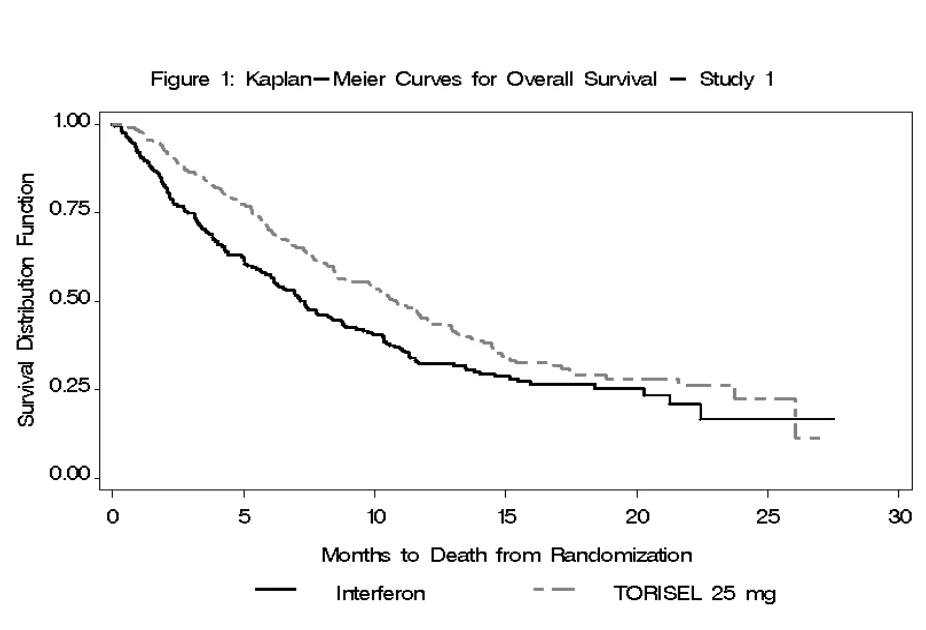
In Study 1, temsirolimus 25 mg was associated with a statistically significant advantage over IFN-α in the primary endpoint of OS (time from randomization to death). The advantage in OS was seen both in clear cell and non-clear cell subtypes. The temsirolimus arm showed a 49% increase in median OS compared with the IFN-α arm. Figure 1 is a Kaplan-Meier plot of OS in Study 1.
Temsirolimus also was associated with statistically significant advantages over IFN-α in the secondary endpoints of PFS (time from randomization to disease progression or death, censoredat the last tumor evaluation date), TTF (time from randomization to disease progression, death,withdrawal from treatment due to adverse event, withdrawal of voluntary consent, or loss tofollow up), and clinical benefit rate (complete response, partial response, or stable disease for
≥ 24 weeks). The evaluations of PFS, ORR, and clinical benefit rate were based on the investigator’s assessment of disease progression. Efficacy results are summarized in Table 6.
Figure 1: Kaplan-Meier Curves for Overall Survival – Study 1
| Table 6: Summary of Efficacy Results in Temsirolimus Clinical Study 1a | ||||
| Parameter | Temsirolimus n = 209 | IFN-α n = 207 | P-valueb | Hazard Ratio (95% CI)c |
Median Overall Survival Months (95% CI) | 10.9 (8.6, 12.7) | 7.3 (6.1, 8.8) | 0.0078d | 0.73 (0.58, 0.92) |
Median Progression-Free Survival Months (95% CI) | 3.8 (3.6, 5.2) | 1.9 (1.9, 2.2) | 0.0005 | 0.69 (0.57, 0.85) |
Overall Response Rate % (95% CI) | 8.6 (4.8, 12.4) | 7.7 (4.1, 11.4) | 0.7460e | NA |
Median Time to Treatment Failure Months (95% CI) | 3.8 (3.5, 3.9) | 1.9 (1.7, 1.9) | <0.0001 | 0.61 (0.50, 0.74) |
Clinical Benefit Rate % (95% CI) | 33.0 (26.6, 39.4) | 17.9 (12.7, 23.1) | 0.0004e | NA |
a. Based on investigator assessment b. Based on log-rank test stratified by prior nephrectomy and region. c. Based on Cox proportional hazard model stratified by prior nephrectomy and region. d. A comparison is considered statistically significant if the p-value is <0.0159 (O’Brien-Fleming boundary at 446 deaths). e. Based on Cochran-Mantel-Haenszel test stratified by prior nephrectomy and region. CI = confidence interval; NA = not applicable | ||||
In clinical Study 1, 31% of patients treated with temsirolimus were 65 or older. Median overall survival for patients treated with temsirolimus was 12 months (95% CI 9.9-14.5) with hazard ratio of 0.62 (95% CI 0.47-0.82), compared with IFN-α in patients younger than 65, and was 8.6 months (95% CI 6.4-11.5) with hazard ratio of 1.08 (95% CI 0.71-1.63) in patients 65 or older.
Quality Adjusted Survival
Quality adjusted survival was compared across treatment groups using the Q-TWiST approach5, 6. Survival was value-weighted by the patient based on presence or absence of toxicity or progression by completing the EuroQoL 5D (EQ-5D) scale at baseline, weeks 12 and 32, when a grade 3 or 4 toxicity was reported, upon relapse or progression, or upon withdrawal from the study. Temsirolimus 25 mg is associated with a statistically significant increase in quality adjusted survival (Q-TWiST) time of an estimated 1.3 months (7.0 vs. 5.7 months, 23%, p = 0.00145) as compared to IFN-α.
Renal Cell Carcinoma Study 2 (3066K1-200-WW)
Study demographics and trial design
Study 2 was a phase 2, randomized, double-blind, multi-center, outpatient trial to evaluate the efficacy, safety, and pharmacokinetics of three dose levels of temsirolimus when administered to previously treated patients with advanced RCC. The primary efficacy endpoint was objective response rate (ORR). Clinical benefit rate, PFS, and OS were also evaluated. PFS was defined as time from the first dose of temsirolimus to disease progression or death. One hundred eleven (111) patients were randomly assigned in a 1:1:1 ratio to receive 25 mg, 75 mg, or 250 mg temsirolimus IV weekly. In the 25 mg arm (n = 36), all patients had metastatic disease; 4 (11%) had no prior chemo- or immunotherapy; 17 (47%) had one prior treatment, and 15 (42%) had 2 or more prior treatments for RCC. Twenty-seven (27, 75%) had undergone a nephrectomy. Twenty-four (24, 67%) were Eastern Cooperative Oncology Group (ECOG) performance status (PS) = 1, and 12 (33%) were ECOG PS = 0.
Study results
Efficacy endpoints were based on investigator assessment. For patients treated weekly with 25 mg intravenous temsirolimus, the ORR was 5.6% (95% CI: 0.7, 18.7%), median OS was 13.8 months (95% CI: 9.0, 18.7 months), median PFS was 6.3 months (95% CI: 3.6, 7.8 months), and clinical benefit rate was 52.8% (95% CI: 35.5, 69.6%).
For patients treated weekly with 75 mg and 250 mg there was not a significant increase in overall survival compared with patients treated with 25 mg.
DETAILED PHARMACOLOGY
Nonclinical Pharmacology
In vitro Pharmacology
Temsirolimus was tested in vitro for its ability to inhibit the growth of a panel of 23 human tumor cell lines. A similar set of in vitro experiments was performed with temsirolimus at the National Cancer Institute (NCI) U.S.A. on a larger panel (51 cells lines) of human tumors. Hematopoietic and solid tumor lines from patients bearing lung, colon, breast, prostate, renal, CNS, melanoma and ovarian cancers were studied. In each tumor type, there were examples of sensitive lines that responded to temsirolimus with an IC50 for growth of 10 nM.
In vivo Pharmacology
Human tumor cell lines engrafted on the flanks of immunodeficient nude mice were studied to determine the efficacy of temsirolimus in vivo. Mouse / human tumor xenografts from renal, breast, prostate, pancreatic, colon, glioblastoma, and melanoma were established. In each tumor type evidence of growth inhibition with temsirolimus treatment was observed.
Safety Pharmacology
In single-dose intravenous (IV) central nervous system (CNS) and respiratory safety pharmacology studies in male rats administered temsirolimus at dosages up to 5 mg/kg, there were no biologically significant effects on CNS or respiratory function.
In human embryonic kidney cells, temsirolimus produced a concentration-dependent inhibition of the hERG potassium ion current by 13.3% at 3μM and 28.0% at 10μM (nominal concentrations). Higher concentrations could not be tested because of limited solubility preventing definition of the IC50. The concentrations tested exceed the mean unbound Cmax of temsirolimus observed in cancer patients (0.0738 μM).
The cardiovascular studies did not provide sufficient information to evaluate the cardiovascular safety of intravenous administration of temsirolimus.
Nonclinical Pharmacokinetics
The pharmacokinetic profile of temsirolimus in animal species (mouse, rat, and monkey) is represented by significant conversion of temsirolimus to sirolimus in mice, with a substantially smaller amount of conversion in rats and monkeys. In humans, sirolimus represents the predominant component in the blood.
Temsirolimus demonstrates moderate (85% to 87%) binding to plasma proteins at concentrations of 10 and 100 ng/mL with an apparent concentration-dependent binding to erythrocytes. Temsirolimus is converted to sirolimus via a presumed esterase-mediated hydrolysis of the C42 ester bond, and species differences in the sirolimus:temsirolimus exposure ratios (high in mice and humans and low in rats and monkeys) may be affected both by species differences in hydrolytic activity and differences in the concentration of FKBP-12 in erythrocytes.
There were species differences in the uptake of both temsirolimus and sirolimus into formed blood elements resulting in whole blood:plasma ratios that are highest in humans and monkeys and lower in rats and mice, and may be related to species differences in the concentration of FKBP-12 in erythrocytes. Temsirolimus is well distributed in the tissues, with tissue:blood ratios indicative of slower CLT from tissues than from blood. The tissues with the highest tissue:blood radioactivity were similar after IV and oral dosing and were generally not associated with tissue specific target organ toxicity related to the higher exposure. The tissue:blood ratio for kidney was > 10 after both oral and IV administration. The lower fetal exposure observed on GD 16 compared with GD 9 may in part be related to the development of P-glycoprotein activity in the mature placenta and the ability of temsirolimus to act as a substrate for P- glycoprotein -mediated efflux, suggesting that the placenta may play a significant role in protecting the fetus from exposure to maternally administered temsirolimus. However, pregnant female rats were exposed to low levels of temsirolimus compared to clinical exposure. Therefore it is not known whether the mature placenta plays a significant role in protecting the fetus from exposure to temsirolimus at clinically relevant doses.
The primary metabolites of temsirolimus in rats and monkeys are hydroxy-temsirolimus (M10) and seco-temsirolimus (M4). Oral administration of temsirolimus resulted in a more extensive number of circulating metabolites with temsirolimus as the major circulating compound-related product in rat and monkey whole blood, followed by sirolimus as the next most abundant metabolite. In humans, temsirolimus was readily metabolized to sirolimus, and the major compound-related components in human whole blood were temsirolimus, sirolimus, and the oxidative metabolites of temsirolimus or sirolimus. Other expected metabolites, as determined from human liver microsomal studies, include various demethylated and hydroxylated isomeric forms of temsirolimus and sirolimus, and the seco (ring opened) form of both temsirolimus and sirolimus. There is evidence of more extensive metabolism in the feces of rats compared with blood and plasma, suggesting further biotransformation during elimination. The primary oxidative metabolism is via CYP3A4, indicating that inhibitors and inducers of CYP3A4 enzyme system may alter the metabolism of temsirolimus. Temsirolimus does not induce CYP3A4 at the transcription level. Temsirolimus may inhibit the metabolic clearance of substrates of CYP3A4/5 or CYP2D6, but not CYP2C9 or CYP2C8.
TOXICOLOGY
The metabolism of temsirolimus in rats and monkeys is different than in humans. Temsirolimus is readily converted into sirolimus in humans but not in rats and monkeys. The toxicity studies in rats and monkeys provided essential information on the toxicity of temsirolimus. However, they did not provide sufficient information on the toxicity of sirolimus at the exposure level observed in humans administered a clinical dose of temsirolimus.
Single-Dose Toxicity
The single-dose toxicity of temsirolimus was assessed in IV and oral studies in mice and rats and after the first dose in repeat-dose toxicity studies in monkeys. In a single-dose toxicity study, after IV administration of 50 mg/kg in mice, there was no mortality. However, in genotoxicity studies, after IV administration of a single-dose of temsirolimus in mice, mortality was reported at dosages of 4, 10, 25 and 100 mg/kg. Decreased motor activity and ptosis were observed in the male group. Based on the results of 2 IV studies in rats, the median lethal dosage was approximately 50 mg/kg. After oral (gavage) administration of 100 mg/kg, there was no mortality in either species. After the first dose in repeat-dose toxicity studies in monkeys, there was no mortality and temsirolimus was well tolerated at IV dosages up to 2.5 mg/kg and oral dosages up to 7.5 mg/kg (the highest dosages administered by each route.
Repeat-Dose Toxicity
Toxicity studies with temsirolimus were conducted by the IV and oral routes of administration in rats and monkeys and by the oral route in mice. Findings after IV and oral administration were similar. Many of these effects were attributable to the pharmacologic antiproliferative effects of temsirolimus or were considered to be secondary to the antiproliferative effects.
In the 3-month oral toxicity study in mice, there were 3 temsirolimus-related deaths; 1 female at 10 mg/kg and 1 male and 1 female at 100 mg/kg were euthanized due to poor and/or deteriorating condition considered to be secondary to the antiproliferative effects of temsirolimus. In the repeat-dose toxicity studies in monkeys, 3 female monkeys were euthanized due to temsirolimus-related moribundity (ie, thin appearance and fecal alterations). These deaths occurred in 1 female at 0.1 mg/kg and 1 female at 2.5 mg/kg in the IV 9-month (once-weekly dosing) study and in 1 female at 0.5 mg/kg in the oral 3-month (once-daily dosing) study. Necropsy on the euthanized animals from the IV study showed microscopic erosions, cysts, or mixed cell inflammation in the cecal or colonic mucosa, and lymphoid atrophy in the thymus, mandibular lymph node, mesenteric lymph node, and /or gut associated lymphoid tissue (GALT).
Lymphoid atrophy of the thymus and lymphoid tissues was seen in mice, rats, and monkeys and was attributed to the antiproliferative activity of temsirolimus on lymphoid tissue. Lymphoid atrophy was associated with decreased peripheral blood lymphocytes in some studies in mice, rats, and monkeys. Bone marrow hypocellularity was observed in rats and may have been due to an antiproliferative effect on the lymphoid elements in the bone marrow. Lymphoid elements are present at higher levels in rat bone marrow than in bone marrow from other species, including nonhuman primates and humans, and may account for the rat-specific nature of this finding. Reversibility of hematology parameters was demonstrated during the interval between dosing cycles in the 4-cycle IV studies in rats and monkeys.
Hyperglycemia and pancreatic islet cell vacuolation were observed in rats. Additionally in rats, findings that were considered to be associated with hyperglycemia included cataracts, hepatocellular vacuolation, and renal tubular vacuolation.
Small testes, decreased testis weights, testicular tubular degeneration, testicular tubular giant cells, and/or hypospermia were observed in mice, rats, and monkeys. Based on severity, some instances of severe testicular tubular degeneration in rats administered IV dosages of 2.5 mg/kg may not have been reversible. Also observed in rats were decreased prostate weights; small seminal vesicles, epididymides, and prostates; and the presence of immature spermatocytes in the epididymides. The findings in the male reproductive system were considered to be secondary to the testicular tubular degeneration. Changes in the male reproductive system were consistent with the antiproliferative effects of temsirolimus, as well as a decrease in testosterone levels. Testosterone levels have not been determined in monkey studies with temsirolimus or sirolimus; however, decreases in testicular testosterone levels were noted in studies with sirolimus in rats and were partially attributed to sirolimus-induced suppression of testicular mitochondrial steroid side-chain cleavage activity.
Lameness, with or without evidence of bone fracture, was observed in rats (primarily males) administered temsirolimus. Although the specific cause of the lameness seen in rats administered temsirolimus is unknown, sirolimus is known to induce lameness associated with osteopenia and bone fracture in male rats that was associated with a decrease in testosterone.
Decreased ovary weights and microscopic atrophy of the ovaries, uterus, and cervix, and/or luteal or follicular cysts were observed in rats. The etiology of these findings is unknown, but decreased body weight may have had an influence. In addition to the changes observed in the rat repeat-dose toxicity studies, functional effects (decreased corpora lutea) were observed in a rat female fertility dose-ranging study.
Inflammation of the cecum/colon and fecal alterations (diarrhea, soft or unformed stools, or mucoid and/or liquid feces) were observed in monkeys. These findings were considered secondary to the antiproliferative effects of temsirolimus, including atrophy of the gastrointestinal-associated lymphoid tissue (GALT), and to the alteration of normal flora in the bowel. Clinical pathology changes (increased fibrinogen and neutrophils) consistent with mild inflammatory changes in the cecum and colon were observed in monkeys.
Abrasions, inflammation, and/or ulceration of the skin were observed in rodents and were consistent with the antiproliferative effect of temsirolimus on regenerating tissue and the immune system. The skin lesions seen in mice were consistent with ulcerative dermatitis, a well-recognized condition in mice. Clinical pathology changes (increased fibrinogen and neutrophils and decreased albumin and increased globulin) consistent with mild inflammation were observed in mice and rats. Rashes were observed in monkeys in the IV 9-month study.
Myocardial degeneration was observed in rats and mice. Myocardial degeneration occurs spontaneously in untreated laboratory rats and progresses in incidence and severity with age, particularly in male rats. In rats given temsirolimus, this progression was seen earlier than in age-matched controls with increased incidence and severity. In mice, cardiomyopathy was reported in 1 out of 10 females dosed 100mg/kg for 2 weeks. One case of heart amyloidosis was reported in a mouse female that received temsirolimus at an oral dose of 100 mg/kg for 3 months. Increased incidence and severity of myocardial degeneration (sometimes described as spontaneous rat cardiomyopathy) was an exacerbation of a naturally occurring condition in rats and may not be relevant to humans.
Increased numbers of pulmonary alveolar macrophages were seen in rats without appreciable inflammatory change and were consistent with phospholipidosis. Accumulation of phospholipid in rat pulmonary alveolar macrophages is associated with a variety of different compounds and is generally not predictive of adverse findings in humans. Increased pulmonary alveolar macrophages with phospholipid accumulation have not occurred in mice or monkeys given temsirolimus. The appearance and etiology of the changes in the lung are distinct from interstitial pneumonitis (observed in clinical studies with temsirolimus) and there is no relationship between the 2 conditions.
Increased cholesterol was seen in mice, rats, and monkeys. Although the increases were generally of low magnitude and not considered adverse, hypercholesterolemia and hyperlipemia have been seen in humans administered temsirolimus.
The primary findings observed in the IV repeat-dose toxicity studies in rats and monkey are provided in the following Table 7.
| Table 7: Principal Findings in IV Repeat-Dose Toxicity Studies in Rats and Monkeys | ||||
| Type of Study | Species/ Strain; N | Route; Duration | Dosage (mg/kg) | Principal Effects Observed |
| Once-Daily Dosing | Rats/S-D; 5/sex/dosage | Intravenous; 2 Weeks | 0 0.1 0.25 1 2.5 |
|
Cyclic (Cycles of 5 days of once-daily dosing separated by 9 days without dosing) | Rats/S-D; 15/sex/dosage | Intravenous; 4 Cycles | 0 0.1 0.5 2.5 |
|
| Table 7: Principal Findings in IV Repeat-Dose Toxicity Studies in Rats and Monkeys (Cont'd) | ||||
|---|---|---|---|---|
| Type of Study | Species/ Strain; N | Route; Duration | Dosage (mg/kg) | Principal Effects Observed |
| ||||
| Once-Weekly Dosing | Rats/S-D; 15/sex/dosage (recovery 10/sex at 0 and 2.5) | Intravenous; 6 months (3-month recovery) | 0 0.1 0.5 2.5 |
|
| Table 7: Principal Findings in IV Repeat-Dose Toxicity Studies in Rats and Monkeys (Cont'd) |
|---|
| Type of Study | Species/ Strain; N | Route; Duration | Dosage (mg/kg) | Principal Effects Observed | ||
|---|---|---|---|---|---|---|
| ||||||
| Once-Daily Dosing | Monkeys/ Cynomolgus; 1/sex/dosage | Intravenous; 2 Weeks | 0 0.1 0.25 1 2.5 |
| ||
| Table 7: Principal Findings in IV Repeat-Dose Toxicity Studies in Rats and Monkeys (Cont'd) |
|---|
| Type of Study | Species/ Strain; N | Route; Duration | Dosage (mg/kg) | Principal Effects Observed | ||
|---|---|---|---|---|---|---|
| ||||||
Cyclic (Cycles of 5 days of once-daily dosing separated by 9 days without dosing) | Monkeys/ Cynomolgus; 3/sex/dosage | Intravenous; 4 Cycles | 0 0.1 0.5 2.5 |
| ||
| Once-Weekly Dosing | Monkeys/ Cynomolgus; 4/sex/dosage (recovery 3/sex at 2.5) | Intravenous; 9 Months (3 month recovery) | 0 0.1 0.5 2.5 |
| ||
| Table 7: Principal Findings in IV Repeat-Dose Toxicity Studies in Rats and Monkeys (Cont'd) |
|---|
| Type of Study | Species/ Strain; N | Route; Duration | Dosage (mg/kg) | Principal Effects Observed |
|---|---|---|---|---|
| ||||
a. Bone marrow hypocellularity, observed in rats, may have been due to an antiproliferative effect on the lymphoid elements in bone marrow. Lymphoid elements are present at higher levels in rat bone marrow than in bone marrow from other species. b. Lameness, with or without evidence of bone fracture, observed in rats administered sirolimus (a similar compound) was associated with decreased testosterone levels. c. Hyperglycemia and pancreatic islet cell vacuolation were observed in rats and were considered to be associated with cataracts, hepatocellular vacuolation, and renal tubular vacuolation in some studies. d. Increased incidence and severity of myocardial degeneration (sometimes described as spontaneous rat cardiomyopathy) was an exacerbation of a naturally occurring condition in rats and may not be relevant to humans. e. Increased numbers of pulmonary alveolar macrophages were seen in rats without appreciable inflammatory change and were consistent with phospholipidosis. Accumulation of phospholipid in rat pulmonary alveolar macrophages is associated with a variety of different compounds and is not generally predictive of adverse findings in humans. f. Focal inflammatory hepatocellular lesions can be an incidental finding, but can also occur as a treatment effect related to increased numbers of bacteria in the enterohepatic circulation. APTT = Activated partial thromboplastin time; AUC = Area under the concentration-versus-time curve; GALT = Gastrointestinal-associated lymphoid tissue; N = Number of animals; NOAEL = No-observed-adverse-effect level; PT = Prothrombin time; RBC = Red blood cell; S-D = Sprague-Dawley; WBC = White blood cell. | ||||
Carcinogenicity
Carcinogenicity studies have not been conducted with temsirolimus.
Genotoxicity
Temsirolimus was not genotoxic in a battery of in vitro (bacterial reverse mutation in Salmonella typhimurium and Escherichia coli, forward mutation in mouse lymphoma cells, and chromosome aberrations in Chinese hamster ovary cells) and in vivo (mouse micronucleus) assays. Sirolimus, the main metabolite in humans, was previously shown to be devoid of genotoxicity potential in the same test-battery.
Reproductive and Developmental Toxicity
Studies in animals have shown reproductive toxicity. There are no adequate and well-controlled studies in pregnant women. GD-Temsirolimus should be used during pregnancy only if the potential benefit justifies the potential risk to the fetus.
The effects of temsirolimus on fertility was not evaluated with the intravenous route of administration, but only in oral studies in male and female rats. The bioavailability of temsirolimus administered orally is limited; the maximal dose used in these studies did not produce the levels of temsirolimus exposure corresponding to the clinical exposure in humans. Therefore, the effects of temsirolimus at clinically relevant exposure have not been evaluated. Nevertheless, oral studies demonstrated that in male rats, fertility was decreased at ≥ 0.5 mg/kg. Fertility was absent at 5 mg/kg. These effects on male fertility were accompanied by testicular tubular degeneration, decreased sperm concentration and motility, and decreased reproductive organ weights at oral dosages ≥ 0.5 mg/kg.
In fertility studies in female rats, there were increased incidences of pre and post-implantation losses at oral dosages ≥ 0.7 mg/kg, resulting in decreased numbers of live fetuses. Fetal weights were decreased at dosages ≥ 1 mg/kg.
In oral developmental toxicity studies in rats, there were increased embryo/fetal mortality and decreased fetal growth at dosages > 0.45 mg/kg.
In oral developmental toxicity studies in rabbits, there were increased embryo/fetal mortality and decreased fetal growth at dosages ≥ 0.6 mg/kg. Additionally in rabbits, there was an increased incidence of intestinal protrusion through the abdomen at 0.9 mg/kg.
REFERENCES
- 1 Duran I, Siu LL, Oza AM et al. Characterisation of the lung toxicity of the cell cycle inhibitor temsirolimus. Eu J Cancer 2006:42:1875-1880.
- 2 Bjornsti M-A, Houghton PJ. The TOR pathway: A target for cancer therapy. Nature Reviews-Cancer. 2004;4:335-348.
- 3 Abraham RT. MTOR as a positive regulator of tumor cell responses to hypoxia. Current Topics in Microbiol Immunnol 2004;279:299-319.
- 4 Bierer BE, Mattila PS, Standaert RF, Herzenberg LA, Burakoff SJ, Crabtree G et al. Two distinct signal transmission pathways in T lymphocytes are inhibited by complexes formed between an immunophilin and either FK506 or rapamycin. Proceed Nat Acad Sciences USA.1990;87(23):9231-9235.
- 5 Gelber RD and Goldhirsh A: A new endpoint for the assessment of adjuvant therapy on postmenopausal women with operable breast cancer. J. Clin. Oncol. 1986;4:1772-1779.
- 6 Cole BF, Bonetti M, Zaslavsky AM,Gelber RD. A multi-state Markov chain model for longitudinal, categorical quality-of-life data subject to non-ignorable missingness. Statistics in Med 2005;24(15):2317-2334.
- 7 Hudes G, Carducci M, Tomczak P, Dutcher J, Figlin R et al. Temsirolimus, Interferon Alfa, or Both for Advanced Renal-Cell Carcinoma. N Engl J Med 2007;356:2271-81.
- 8 Dutcher JP, de Souza P, McDermott D, Figlin R, Berkenblit A et al. Effect of temsirolimus versus interferon-a on outcome of patients with advanced renal cell carcinoma of different tumor histologies. Med Oncol (2009) 26:202–209.