


Product Monograph - Gentamicin Sulfate in 0.9% Sodium Chloride Injection
INDICATIONS AND CLINICAL USES
Gentamicin Sulfate in 0.9% Sodium Chloride Injection is indicated in the treatment of serious infections caused by susceptible strains of the following microorganisms: Pseudomonas aeruginosa, Proteus species (both indole positive and indole negative), Escherichia coli, Klebsiella pneumoniae, Enterobacter aerogenes, Serratia marcescens and Staphylococcus species (including penicillin and methicillin resistant strains).
Gentamicin may be considered for treatment of:
- 1. Bacteremia;
- 2. Respiratory tract infections;
- 3. Urinary tract infections;
- 4. Infected wounds: surgical and traumatic;
- 5. Soft tissue infections: including peritonitis and burns complicated by sepsis;
- 6. Bone Infections
In suspected or documented gram-negative septicemia, particularly when shock or hypotension is present, Gentamicin Sulfate in 0.9% Sodium Chloride Injection may be considered for initial antimicrobial therapy. Gentamicin should be considered in serious Staphylococcus infections when other less potentially toxic antimicrobial drugs are contraindicated, or when bacterial susceptibility testing and clinical judgement indicate its use. If a mixed infection involving anaerobic organism is suspected, additional antimicrobial therapy with anaerobic activity should be added to the gentamicin regimen.
Susceptibility
Appropriate culture and susceptibility studies should be obtained initially to identify the causative organism and to determine its sensitivity to gentamicin.
If susceptibility tests indicate the causative organism is resistant to gentamicin, other appropriate antimicrobial therapy should be instituted.
The decision to continue therapy with gentamicin should be based on results of the sensitivity tests, clinical response of the patient, and consideration of relative antibiotic toxicity.
Combined therapy with gentamicin and a penicillin type of drug has been used in suspected sepsis until bacteriological studies have identified the etiological organism.
Clinical studies have shown that organisms previously sensitive to gentamicin have become resistant during therapy. Although this has occurred infrequently, the possibility should nevertheless be considered. There is evidence that cross resistance between gentamicin and aminoglycoside antibiotics may occur, since bacteria made resistant to aminoglycoside antibiotics artificially in the laboratory are also resistant to gentamicin; however, gentamicin may be active against clinical isolates of bacteria resistant to other aminoglycosides. Conversely, organisms resistant to gentamicin may be sensitive to other aminoglycoside antibiotics.
CONTRAINDICATIONS
Gentamicin Sulfate in 0.9% Sodium Chloride Injection is contraindicated in patients with a history of hypersensitivity or toxic reactions to gentamicin. A history of hypersensitivity or toxic reaction to other aminoglycosides may also contraindicate use of gentamicin because of the known cross-sensitivity.
WARNINGS General
Patients treated with aminoglycosides should be under close clinical observation because of the potential toxicity associated with their use.
Pregnancy
Aminoglycosides can cause fetal harm when administered to a pregnant woman.
Gentamicin Sulfate in 0.9% Sodium Chloride Injection is not recommended during pregnancy except in life-threatening situations. Aminoglycoside antibiotics cross the placenta, and there have been several reports of total irreversible bilateral congenital deafness in children whose mothers received streptomycin or tobramycin during pregnancy.
Since they cross the placenta, aminoglycosides may be nephrotoxic in the human fetus. Animal reproduction studies conducted on rats and rabbits did not reveal evidence of impaired fertility or harm to the fetus due to gentamicin sulfate. It is also not known whether gentamicin sulfate can cause fetal harm when administered to a pregnant woman or can affect reproduction capacity. If gentamicin is used during pregnancy, the patient should be apprised of the potential hazard to the fetus.
Ototoxicity
Gentamicin, in common with the antibiotics streptomycin, neomycin and, kanamycin, has produced vestibular and auditory toxicity in man and in experimental animals. This adverse reaction may be delayed in onset and is manifested primarily by damage to vestibular function. The aminoglycoside-induced ototoxicity is usually irreversible. In all patients who develop tinnitus, dizziness or loss of hearing, the attending physician should strongly consider discontinuing this antibiotic except in those cases where gentamicin appears to be the only possible course of therapy.
There is a greater potential for ototoxicity in patients with preexisting renal damage, in patients with normal renal function treated with higher doses and/or longer periods than recommended and in patients who have had prior therapy with ototoxic drugs.
In patients who have previously been treated with drugs likely to affect 8th cranial nerve function (e.g. streptomycin, neomycin, kanamycin, etc.), Gentamicin Sulfate in 0.9% Sodium Chloride should be used with caution and with the understanding that toxic effects may be cumulative with these agents. Potent diuretics such as ethacrynic acid and furosemide have been associated with 8th cranial nerve dysfunction, and the concomitant use of either of these drugs with gentamicin should be avoided. It is believed that i.v. diuretics may cause fairly rapid rise in gentamicin serum levels and potentiate ototoxicity (see also Drug-Drug Interactions). In patients with impaired renal function, the frequency of Gentamicin administration should be reduced (see DOSAGE and ADMINISTRATION), and renal function should be monitored in addition to the evaluation of auditory and vestibular function. Serum concentrations of gentamicin should be monitored whenever feasible; prolonged concentrations above 12 :g/mL should be avoided.
Nephrotoxicity
Nephrotoxicity manifested by an elevated BUN or serum creatinine level or a decrease in the creatinine clearance has been reported with gentamicin. In most cases, these changes have been reversible when the drug has been discontinued.
The administration of other potentially nephrotoxic agents prior to, or in conjunction with gentamicin may increase the risk of nephrotoxicity.
Other factors which may increase patient risk to toxicity are advanced age and dehydration.
PRECAUTIONS
Patients should be well hydrated during treatment.
Elderly patients may have reduced renal function which may not be evident in the results of routine screening tests, such as BUN or serum creatinine. A creatinine clearance determination may be more useful. Monitoring of renal function during treatment with gentamicin, as with other aminoglycosides, is particularly important in such patients. A Fanconi-like syndrome, with aminoaciduria and metabolic acidosis has been reported in some adults and infants being given gentamicin injections.
Superinfection
Treatment with Gentamicin Sulfate in 0.9% Sodium Chloride Injection may result in overgrowth of nonsensitive organisms. If superinfection occurs, appropriate measures should be taken as dictated by the clinical situation.
Neuromuscular blocking action
Neuromuscular blockade and respiratory paralysis have been reported in the cat receiving high doses (40 mg/kg) of gentamicin. The possibility of these phenomena occurring in man should be considered if gentamicin is administered to patients receiving general anesthesia, neuromuscular blocking agents (eg succinylcholine and tubocurarine) or massive transfusion of citrate anticoagulated blood.
Gentamicin should be used with caution in patients with neuromuscular disorders such as myasthenia gravis or parkinsonism. The use of drugs with potential neuromuscular blocking action may aggravate muscle weakness because of their potential curare-like effects on the neuromuscular junction. During or following gentamicin therapy, paresthesia, tetany, positive Chvostek and Trousseau signs and mental confusion have been described in patients with hypomagnesemia, hypocalcemia and hypokalemia. When this has occurred in infants, tetany and muscle weakness has been described. Both adults and infants required appropriate corrective electrolyte therapy.
Infants and Neonates
Gentamicin should be used with caution in premature and neonatal infants because of their renal immaturity and the resultant prolongation of serum half-life of the drug.
Drug-Drug Interactions
Concurrent and/or sequential systemic or topical use of other potentially neurotoxic and/or nephrotoxic drugs, such as cisplastin, cephaloridine, kanamycin, amikacin, neomycin, polymixin B, colistin, paromomycin, streptomycin, tobramycin, vancomycin, and viomycin, should be avoided.
The concurrent use of gentamicin with potent diuretics, such as ethacrynic acid or furosemide, should be avoided; since certain diuretics by themselves may cause ototoxicity. In addition, when administered intravenously, diuretics may enhance aminoglycoside toxicity by altering the antibiotic concentration in serum and tissue.
Increased nephrotoxicity has been reported following concomitant administration of aminoglycoside antibiotics and cephalosporins.
Although the in vitro mixing of gentamicin and penicillins (such as carbenicillin) results in a rapid and significant inactivation of gentamicin, this interaction has not been demonstrated in patients with normal renal function who received both drugs by different routes of administration. A reduction in gentamicin serum half-life has been reported in patients with severe renal impairment receiving carbenicillin concomitantly with gentamicin.
ADVERSE REACTIONS
Nephrotoxicity: Adverse renal effects, as demonstrated by the presence of casts, cells or protein in the urine or by rising BUN, NPN, serum creatinine or oliguria, have been reported. They occur more frequently in patients with a history of renal impairment and in patients treated for longer periods or with larger dosages than recommended.
Neurotoxicity: Serious adverse effects on both vestibular and auditory branches of the eighth nerve have been reported, primarily in patients with renal impairment (especially if dialysis is required) and in patients on high doses and/or prolonged therapy. Symptoms include dizziness, vertigo, tinnitus, roaring in the ears and also hearing loss, which, may be irreversible. Hearing loss is usually manifested initially by diminution of high tone acuity. Other factors which may increase the risk of toxicity include excessive dosage, dehydration and previous exposure to other ototoxic drugs.
Peripheral neuropathy or encephalopathy, including numbness, skin tingling, muscle twitching, convulsions, and a myasthenia gravis-like syndrome, have been reported.
Other reported adverse reactions possibly related to gentamicin include: Respiratory depression, lethargy, confusion, depression, visual disturbances, decreased appetite, weight loss, and hypotension and hypertension; rash, itching, urticaria, generalized burning, laryngeal edema, anaphylactoid reactions, fever, and headache; nausea, vomiting, increased salivation, and stomatitis; purpura, pseudotumor cerebri, acute organic brain syndrome, pulmonary fibrosis, alopecia, joint pain, transient hepatomegaly, and splenomegaly.
Laboratory abnormalities possibly related to gentamicin include: Increased levels of serum transaminase (SOOT, SGPT), serum LDH, and bilirubin; decreased serum calcium, magnesium, sodium, and potassium; anemia, leukopenia, granulocytopenia, transient agranulocytosis, eosinophilia, increased and decreased reticulocyte counts, and thrombocytopenia. While clinical laboratory test abnormalities may be isolated findings, they may also be associated with clinically related signs and symptoms. For example, tetany and muscle weakness may be associated with hypomagnesemia, hypocalcemia and hypokalemia.
While local tolerance of gentamicin sulfate is generally excellent, there has been an occasional report of pain at the injection site. Subcutaneous atrophy or fat necrosis suggesting local irritation has been reported rarely.
Reporting Suspected Side Effects
You can report any suspected adverse reactions associated with the use of health products to the Canada Vigilance Program by one of the following 3 ways:
- Report online at www.healthcanada.gc.ca/medeffect
- Call toll-free at 1-866-234-2345
- Complete a Canada Vigilance Reporting Form and:
| |
| |
| Canada Vigilance Program | |
| Health Canada | |
| Postal Locator 0701D | |
| Ottawa, Ontario | |
| K1A 0K9 | |
Postage paid labels, Canada Vigilance Reporting Form and the adverse reaction reporting guidelines are available on the MedEffect™ Canada Web site at
www.healthcanada.gc.ca/medeffect.
NOTE: Should you require information related to the management of side effects, contact your health professional. The Canada Vigilance Program does not provide medical advice.
SYMPTOMS AND TREATMENT OF OVERDOSAGE
For management of a suspected drug overdose, contact your regional Poison Control Centre immediately.
In the event of overdosage or toxic reactions, hemodialysis or peritoneal dialysis may aid in the removal of gentamicin from the blood. This is especially important if renal function is or becomes compromised. The rate of removal of gentamicin is considerably less by peritoneal dialysis than it is by hemodialysis.
DOSAGE AND ADMINISTRATION
DOSAGE
The patient's pretreatment body weight should be obtained for calculation of correct dosage. The dosage of aminoglycosides in obese patients should be based on an estimate of the lean body mass.
It is desirable to limit the duration of treatment with aminoglycosides to short term. The usual duration of treatment is 7 to 10 days. In difficult and complicated infections, a longer course of therapy may be necessary. When longer courses of therapy are required, monitoring of renal, auditory and vestibular functions is advisable.
It is desirable to measure both peak and trough serum concentrations of gentamicin when feasible during therapy to assure adequate but not excessive drug levels. When monitoring peak concentrations after intravenous administration, dosage should be adjusted so that prolonged levels above 12 :g/mL are avoided. When monitoring trough concentrations (just prior to the next dose), dosage should be adjusted so that levels above 2 :g/mL are avoided.
Determination of the adequacy of serum level for a particular patient must take into consideration the susceptibility of the causative organism, the severity of the infection and the status of the patient's host-defense mechanisms.
Patients with Normal Renal Function
Urinary Tract Infections
Gentamicin is highly concentrated in urine and renal tissue. In patients weighing more than 60 kg, with lower urinary tract infection particularly if chronic or recurrent and without evidence of impairment of renal function, gentamicin may be administered intramuscularly either in a dose of 160 mg once a day or 80 mg twice daily for 7 to 10 days.
For adults weighing less than 60 kg, the single daily dose should be 3.0 mg/kg of body weight.
Upper urinary tract infections, such as pyelonephritis, and more particularly if there are signs of systemic involvement, should be treated according to one of the dosage schedules for systemic infections.
The in vitro activity of Gentamicin is increased at pH 7.5. Therefore, it may be advantageous to alkalinize the urine of patients treated for urinary tract infections.
Systemic Infections
Adults:
The recommended dosage of Gentamicin Sulfate in 0.9% Sodium Chloride Injection for patients with serious infection and normal renal function is 3 mg/kg/day administered in three equal doses every 8 hours. Therefore, for patients weighing over 60 kg, the usual dosage is 80 mg three times daily.
For patients weighing 60 kg or less, the usual dosage is 60 mg three times a day.
For patients with life-threatening infections, dosages up to 5 mg/kg/day may be administered in 3 or 4 equal doses. This dosage should be reduced to 3 mg/kg/day as soon as clinically indicated (see Table 1).
Table 1
Dosage Schedule Guide For Adults With Normal Renal Function
(Dosage at Eight-Hour Intervals)
| Patient's Weight* | Usual Dose | Dose for Life-Threatening | ||||||
| For Serious Infections | Infections | |||||||
| (Reduce as soon as | ||||||||
| Clinically Indicated) | ||||||||
| 1 mg/kg q8h | 1.7 mg/kg q8H** | |||||||
| Kg (1b) | (3 mg/kg/day) | (5 mg/kg/day) | ||||||
| 40 ( 88) 45 ( 99) 50 (110) 55 (121) 60 (132) 65 (143) 70 (154) 75 (165) 80 (176) 85 (187) 90 (198) 95 (209) 100 (220) | mg/dose q8H 40 45 50 55 60 65 70 75 80 85 90 95 100 | mg/dose q8H 66 75 83 91 100 108 116 125 133 141 150 158 166 | ||||||
* The dosage of aminoglycosides in obese patients should be based on an estimate of the lean body mass.
** For q6h schedules, dosage should be recalculated.
Children:
The precautions for the treatment of infection in children are the same as those for adults.
In severe infections, the recommended dosage is 3 to 6 mg/kg/day administered in 3 equal doses, every 8 hours. If a dosage greater than 3 mg/kg/day is administered initially, it should be reduced to 3 mg/kg/day when clinically indicated.
Infants and Neonates:
In premature and full term neonates, one week of age or less, a dosage of 6 mg/kg/day may be administered in 2 equal doses every 12 hours. In infants older than 1 week, a dosage of 6 mg/
kg/day may be administered in 3 equal doses every 8 hours. Using the recommended doses, considerable variation in the serum levels between individual patients has been observed. In order to insure adequate therapeutic levels which may be critical, while at the same time avoiding potentially toxic concentrations, serum levels should be monitored. A serum level in excess of 10-12 :g/mL following intravenous administration should be considered potentially toxic.
Patients with Impaired Renal Function
Dosage must be adjusted in patients with impaired renal function to assure therapeutically adequate, but not excessive, blood levels. Serum concentration of gentamicin must be monitored in these patients.
One method of dosage adjustment is to increase the interval between administration of the usual dosage.
Since the creatinine clearance rate and serum creatinine concentration have high correlation with the serum half-life of gentamicin, these laboratory tests may provide the guidance necessary for adjustment of the interval between doses. The serum half-life (in hours) of gentamicin may be estimated by multiplying the serum creatinine (:mol/L) by 0.045. The frequency of administration (in hours) may be approximated by doubling the serum half-life.
A second method of dosage adjustment is to administer the antibiotic at the usual interval but in reduced dose (see Table 2).
Table 2 Dosage Adjustment Guide For Patients with Renal Impairment (Dosage at Eight-Hour Intervals After the Usual Initial Dose)
Serum Creatinine :mol/L | Approximate Creatinine Clearance Rate (mL/sec/1.73m2) | Percent of Usual Doses Shown in Table 1 | Approximate Creatinine Clearance Rate (mL/min/1.73m2) |
| # 90 100 - 118 127 - 145 154 - 172 181 - 200 209 - 227 236 - 272 281 - 318 327 - 363 372 - 463 472 - 600 609 - 727 | $ 1.67 1.17 - 1.67 0.92 - 1.17 0.75 - 0.92 0.67 - 0.75 0.58 - 0.67 0.50 - 0.58 0.42 - 0.50 0.33 - 0.42 0.25 - 0.33 0.17 - 0.25 # 0.17 | 100 80 65 55 50 40 35 30 25 20 15 10 | $ 100 70 - 100 55 - 70 45 - 55 40 - 45 35 - 40 30 - 35 25 - 30 20 - 25 15 - 20 10 - 15 # 10 |
When only serum creatinine is available; the following formula (based on sex, weight, and age of the patient) may be used to convert this value into estimated creatinine clearance. The serum creatinine should represent a steady state of renal function.
Males:
Creatinine clearance (mL/sec) = Weight (kg) x (140 - age)
49 x serum creatinine (:mol/L)
Females: 0.85 x above value
In patients with renal failure who are undergoing 14-hour hemodialysis twice weekly, administration of gentamicin 1 mg/kg, at the end of each dialysis period has been suggested.
This dosage schedule is not intended as a rigid recommendation but is a guide to dosage when the measurement of gentamicin serum levels is not feasible. It should be used in conjunction with close clinical and laboratory observations of the patients and modified as deemed necessary by the treating physician.
Dosage in moderate obesity:
The appropriate dose may be calculated by using the patient's estimated lean body weight plus 40% of the excess as the basic weight on which to figure mg/kg.
ADMINISTRATION - FOR INTRAVENOUS INFUSION
The intravenous administration of gentamicin is recommended when the i.m. route is not feasible, e.g. patients in shock, with hemorrhagic disorders, severe burns or reduced muscle mass.
Gentamicin Sulfate in 0.9% Sodium Chloride Injection is a premixed ready-to-use isotonic solution to be administered by intravenous infusion only. No further dilution is recommended, and no other drug should be added to this solution.
Gentamicin Sulfate in 0.9% Sodium Chloride Injection should be infused over a period of one-half to two hours.
PHARMACEUTICAL INFORMATION
Drug Substance
Proper Name: Gentamicin sulfate USP
Chemical Name:
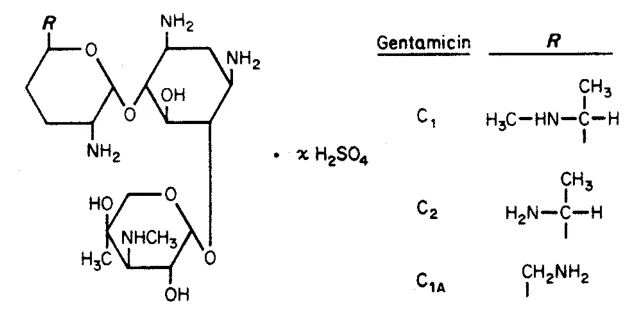
The chemical name for gentamicin C1A is: 0-3-Deoxy-4-C-methyl-3(methylamino)-ß-L-arabinopyranosyl-(1 -> 6 -0-[2,6-diamino-2,3,4,6-tetradeoxy-"-D-erythro-hexopyranosyl-(l -> 4)]-2-deoxy-D-streptamine.
Structural Formula:
Description:
Gentamicin, derived from Micromonospora pupurea, an actinomycete, is a complex antibiotic substance with three components, sulfates of gentamicin C1, gentamicin C2 and gentamicin C1A.
Gentamicin Sulfate is a white to buff powder, freely soluble in water, moderately soluble in methanol, ethanol, acetone and practically insoluble in benzene. The melting point is 102o-108oC.
Composition:
Gentamicin Sulfate in 0.9% Sodium Chloride Injection is a sterile, nonpyrogenic solution of gentamicin (as sulfate) in 0.9% sodium chloride injection in flexible (PVC) container. Each mL contains: gentamicin sulfate equivalent to 0.8 mg, gentamicin base with sodium chloride 9 mg in water for injection. May contain sulfuric acid and sodium hydroxide for pH adjustment. The pH is approximately 4 and the osmolarity is approximately 284 mOsm/Litre.
Stability and Storage Recommendations:
Store at controlled room temperature (15-30°C). Avoid excessive heat. Protect from freezing.
INSTRUCTIONS FOR USE
Gentamicin Sulfate in 0.9% Sodium Chloride Injection, in flexible (PVC) containers is a ready-
to-use isotonic solution. NO DILUTION OR BUFFERING IS REQUIRED.
To Open
Tear outer wrap at notch and remove solution container
Preparation for administration
(Use aseptic technique)
- 1. Close flow control clamp of administration set.
- 2. Remove cover from outlet port at bottom of container.
- 3. Insert piercing pin of administration set into port with a twisting motion until the set is firmly seated. NOTE: When using a vented administration set, replace bacterial retentive air filter with piercing pin cover. Insert piercing pin with twisting motion until shoulder of air filter housing rests against the outlet port flange.
- 4. Suspend container from hanger.
- 5. Squeeze and release drip chamber to establish proper fluid level in chamber.
- 6. Attach venipuncture device to set.
- 7. Open clamp to expel air from set and venipuncture device. Close clamp.
- 8. Perform venipuncture.
- 9. Regulate rate of administration with flow control clamp.
The flexible containers contain no preservative, and are intended only for use as a single dose injection. Unused portion must be discarded.
Parenteral drug products should be inspected visually for particulate matter and discoloration prior to administration, whenever solution and container permit. NOTES: Gentamicin Sulfate should not be physically mixed with other drugs (except, Normal saline and 5% Dextrose injection) to avoid chemical incompatibilities.
Cautions: DO NOT USE in series connections.
DO NOT administer unless solution is clear and container undamaged
AVAILABILITY OF DOSAGE FORMS
Gentamicin Sulfate in 0.9% Sodium Chloride Injection is supplied in single-dose flexible containers as follows:
Gentamicin 0.8 mg/mL (as gentamicin sulfate) in 100 mL (80 mg/100 mL), List No. 7884
MICROBIOLOGY
Gentamicin Sulfate is active against a wide variety of pathogenic gram-negative and gram-positive bacteria including Pseudomonas aeruginosa, Proteus species (both indole positive and indole negative), Escherichia coli, Klebsiella pneumoniae, Enterobacter aerogenes, Serratia marcescens and Staphylococcus species (including penicillin and methicillin-resistant strains) (see Table 3).
In addition, gentamicin is active in vitro against certain species of Streptococcus. Only minimal activity has been found against Streptococcus faecalis and Streptococcus pneumoniae. Most anaerobes (Clostridium, Bacteroides, and Diphtheroids) are resistant.
The bactericidal concentration of gentamicin is usually 1 to 4 times the minimal inhibitory concentration. Gentamicin was over 8 times more active in vitro at pH 7.5 than at pH 5.5, against several urinary pathogens.
Gentamicin may be active against clinical isolates of bacteria resistant to other aminoglycosides. Bacteria resistant to one aminoglycoside may be resistant to one or more other aminoglycosides.
Table 3 SENSITIVITY (IN VITRO) OF SOME BACTERIA TO GENTAMICIN SULFATE
Sources of Bacteria Number of Strains Tested | Number and Percent (%) of Strains inhibited by Two Concentrations of Gentamicin | |
| 5 :g/mL or less | 10 :g/mL or less | |
Klebsiella-Enterobacter-Serratia 2113 Klebsiella pneumoniae 1062 Enterobacter aerogenes 131 Serratia marcescens 175 Not specified 745 Escherichia species 2124 E. coli 2024 Not specified 100 Staphylococcus species 1640 S. albus 15 S. aureus 1450 Not specified 175 (methicillin-resistant S aureus) (21) Streptococcus species 344 S. faecalis 179 S.pyogenes 116 S. Agalactiae 3 S. Flavus 1 Not specified 45 Pseudomonas aeruginosa 2027 Proteus species 1487 (including indole positive) and indole negative) | 1912 (100%) 1023 (96%) 123 (94%) 163 (93%) 603 1775 (84%) 1675 (83%) 100 1582 (96%) 15 (100%) 1395 (96%) 172 (21) 176 (51%) 69 (39%) 86 (74%) 3 (100%) 1 (100%) 17 1667 (83%) 856 (58%) | 2064 (98%) 1046 (98%) 131 (100%) 174 (99%) 1961 (92%) 1861 (92%) 1596 (97%) 15 (100%) 1409 (97%) 172 (21) 211 (61%) 97 (54%) 95 (52%) 3 (100%) 1 (100%) 25 1952 (96%) 1278 (86%) |
Susceptibility Testing
The disc method of susceptibility testing using a disc containing 10 :g of gentamicin should be interpreted according to the following criteria:
Susceptible Category Zone Diameter (mm)
Susceptible $ 15
Intermediate 13 - 14
Resistant # 12
In certain conditions it may be desirable to do additional susceptibility testing by the tube or agar dilution method; gentamicin is available for this purpose.
PHARMACOLOGY
Serum Concentrations Via the I.V. route in Adults:
After a two-hour infusion of a dose of 1 mg/kg to a group of patients, peak gentamicin concentrations were reached at the end of the infusion and averaged 4.5 :g/mL (range 0.5 to 8 :g/mL).
Slow i.v. injection at recommended doses (3 mg/kg/day) in patients gave serum concentrations of 5 to 9 :g/mL after 10 minutes.
The mean serum half-life is approximately 2 hours.
Serum levels via the I.V. route in infants and neonates:
Peak serum concentrations of 2.2 to 8.6 :g/mL (mean 4.0 :g/mL) are observed. The mean serum half-life is approximately 5 hours in neonates under 72 hours of age. This may be considerably prolonged in infants weighing less than 1,500 g. In low birth weight infants, prolonged half-life values may extend through the second week of life. In contrast, values of 3 to 3½ hours are usually observed in full term infants who are 7 days of age and older.
Elimination
In man, about 25% to 30% of the administered dose of gentamicin is bound by serum protein; it is released as the drug is excreted. Gentamicin is excreted principally in the urine by glomerular filtration. After initial administration to patients with normal renal function, 30 to 100% of the drug is recoverable in the urine in 24 hours. Renal clearance of gentamicin is similar to that of endogenous creatinine.
In patients with impaired renal function, the clearance of gentamicin is decreased; the more severe the impairment, the slower the clearance.
In the newborn, approximately 30% of the administered dose is excreted in 12 hours.
Distribution
Gentamicin is detected in tissues and body fluids following parenteral administration. Concentrations of Gentamicin in bile in general have been low and have suggested minimal biliary excretion. Gentamicin has been found in the cerebrospinal fluid after parenteral administration however, concentrations have been low and may be inadequate for treatment of certain central nervous system infections.
Concentrations of gentamicin in CSF of infants with purulent meningitis range from 0.2 to 3.5 :g/mL after a dose of 1.5 to 2.5 mg/kg. Peak values are found 4 to 6 hours after the dose, and are dependent on degree of meningeal inflammation and dosage.
Gentamicin has also been found in the sputum, pleural fluid and peritoneal cavity. Gentamicin crosses the peritoneal as well as the placental membranes.
TOXICOLOGY
Acute toxicity
LD50 of gentamicin sulfate
| Species | Route | LD50 (mg/kg) |
| Mice | s.c. i.m. i.p. i.v. Oral | 485 250 430 75 > 9,050 |
| Rat | i.m. i.p. i.v. | 384 630 96 |
Subacute toxicity
Cats
Three groups of cats were given gentamicin sulfate s.c. at 2.5, 5, and 10 mg/kg once a day for 42 days. No vestibular toxicity (seen as ataxia) was noted in 42 days.
Gentamicin sulfate in doses of 25, 50, and 100 :g/kg was administered to another group of cats once a day for 27 days:
Slight to moderate ataxia was noted at the 50 :g/kg level on the 15th day; marked ataxia occurred on the 18th day with doses of 100 mg/kg, resulting in mortality several days later.
Rats
Doses of gentamicin sulfate of 20, 40 and 160 mg/kg once daily, were given to three groups of rats, 6 days a week for 4 weeks. All surviving animals were sacrificed at 4 weeks for pathological examination. The kidney was the main target organ in a dose-response relationship. Death occurred in 2 weeks in over 50% of the rats dosed at 160 mg/kg. This high dose level also could cause tubular necrosis. Doses of 40 mg/kg induced significant renal pathology changes, but less severe than the 160 mg/kg level; and the 20 mg/kg did not show any significant differences from controls.
Dogs
Subacute toxicity studies were conducted on three groups of 12 beagle hounds, given 5.6, 8, and 40 mg/kg gentamicin sulfate 7 days a week for 50 days. All four dogs dosed at 40 mg/kg (at the 15th day) and one dog dosed at 3 mg/kg (45th day) became moribund and were sacrificed: autopsy revealed a profound renal tubular necrosis. All remaining animals survived 50 days. There were no significant changes in the various clinical pathology except raised BUN levels with renal damage at doses of 40 mg/kg. No vestibular toxicity was noted at the 5.6 mg/kg level; but at 40 mg/kg, the occurrence of ataxia coincided with preterminal uremia and cachexia.
Reproduction and Teratology
Rats
Seven Wistar rats were given daily 75 mg/kg of gentamicin sulfate from day 7-11 and day 14-18 of pregnancy. After delivery, the mothers' kidneys were removed, neonates were weighed and kidneys also removed for histology. Gentamicin was found to slow down fetal growth (smaller neonates than in controls), and renal growth; it also had a disproportionately large depressive effect on glomerular differentiation.
Guinea Pigs
Twelve pregnant guinea pigs were given i.m. injection of gentamicin 4 mg/kg from days 48-54 of gestation. All gave birth spontaneously at the term of gestation. The mean birth weight of the pups was compared to those of controls; no significant differences in the body weight was noted.
Clearance data was found similar in the control and gentamicin treated groups, and no difference was reported as regards to overall kidney functions.
Gentamicin was found to be still present in the kidneys of young pups; the amount found in the renal cortex of 3-day-old neonates, was four times higher than the amount found in the renal cortex of 55-day-old fetuses. Gentamicin was probably released from all maternal and fetal tissues, and continue to accumulate in the developing kidney.
Teratogenicity
The influence of gentamicin on the early embryonic development of the mammalian inner ear was investigated in culture of otocysts from the 13th gestational day of CBA/CBA mouse. Gentamicin base was added in the medium to reach a final concentration of 1, 10 and 100 :g/mL. A malformation of gross morphology or lack of development of inner ear structure can occur.
REFERENCES
- 1.
Anniko M, Nordemar H. Ototoxicity or Teratogenicity. Arch otorhinolaryngol
1981;232:43-55.
- 2. Bennett WM, Parker RA, Clayton-Elliom W, Gilbert DN, Houghton DC. Sex related differences in the susceptibility of rats to gentamicin therapy. J Infect Dis 1982;145(3):370-373.
- 3. Bergeron MG, Lessard C, Turcotte A. In Vitro uptake of gentamicin and tobramycin by rat renal tubules in the presence or absence of E. coli endotoxin. J. Antimicrob Chemother 1986;18:375-386.
- 4. Black J, Calesnick B, Williams D, Weinstein MJ. Pharmacology of gentamicin, a new broad spectrum antibiotic. Antimicrob Agents Chemother 1963:138-152.
- 5.
Carlier MB, Paulus G, Maldague P, Giurgea L, Wilmotte E, Debroe ME, Tulkens P.
Early toxic events in kidney of rats and man following administration of gentamicin at low doses. Arch toxicol 1982;5:287-290.
- 6. Cowan RH, Jukkola AL, Arant BS. Pathophysiologic evidence of gentamicin nephrotoxicity in neonatal puppies. Pediatr Res 1980;14:1204-1211.
- 7. Donta ST, Lembke LA. Comparative effects of gentamicin and tobramycin on excretion of N-acetyl-s-D-glucosaminidase. Antimicrob and Chemoth 1985;500-503.
- 8.
Feig PU, Mitchell PP, Abrutyne, Brock SM, Carney WR, Graeber CW, Horak E, Lyons
RW, Maher JF. Ami noglycosi de nephrotoxi city: a double blind prospective randomized study of gentamicin and tobramycin. J Antimicrob Chemoth 1982;10:217-226.
- 9.
Kahlmeter G, Dahlager JI. Aminoglycoside toxicity. A review of clinical studies between
1985 and 1982. J Antimicrob Chemoth 1984;13(suppl. A):9-22.
- 10.
Kumin GD. Clinical Nephrotoxicity of tobramycin and gentamicin. JAMA
1980;244(16):1808-1810.
- 11. Lelievre-Pegorier M, Gilbert T, Saklyr, Meulemans A, Merlet-Benichou C. Effect of fetal exposure to gentamicin on kidneys of young guinea pigs. Antimicrob Agents Chemother 1987: 88-92.
- 12.
Lietman PS: Basic principles in the diagnostic and management of infectious diseases,
Part I. In: Mandell GL, Douglas RG, Bennett JE eds. Principles and practice of infectious diseases, 2nd ed. J Wiley and Sinus, 1985:192-206.
- 13. Malle JP, Gerard H, Gerard A. Gentamicin administration to pregnant rats: effect on fetal renal development in utero. Dev. pharmacol then 1984: 1:89-92.
- 14. McDowell B. Pattern of cochlear degeneration following gentamicin administration in both old and young guinea pigs. Brit J Audiol 1982;16:123-129.
- 15. Moore RD, Smith CR, Lietman PS. Risk factors for the development of auditory toxicity in patients receiving aminoglycosides. J Infect Dis 1984;149(1):23-30.
- 16. Mulhall A, De Louvios J, Hurley R. Incidence of potentially toxic concentrations of gentamicin in the neonates. Arch of Dis in childhood 1983;58:587-900.
- 17.
Rachjot P, Prober CG, Soldin S, Perlman M, Good F, Harding E, Klein J, McLeod S.
Aminoglycoside related nephrotoxicity in the premature newborn. Clin Pharmacol 1984;35(5):394-401.
- 18. Rahal JJ, Simberkoff MS. Comparative bacterial activity of penicillin - netilmicin and penicillin - gentamicin against enterococci. J. Antimicrob Chemother 1986;17:585-591.
- 19. Schentag JJ, Plaut ME, Cerra FB. Comparative nephrotoxicity of gentamicin and tobramycin, pharmacokinetic and clinical studies in 201 patients. Antimicrob Ag and chemother 1981;19(5):859-866.
- 20. Shanson DC, Tadayon M, Bakhtiaram. Bactericidal activity of netilmicin compared with gentamicin and streptomycin alone and in combination with penicillin, against penicillin tolerant viridans streptococci and enterococci. British Soc Antimicrob Chemother 1986;479-491.
- 21. Tessin I, Bergmark J, Hiesche K, Jagenburg R, Trollfors B. Renal function of neonates during gentamicin treatment. Arch of Dis in chi1dhood 1982;57:758-760.
- 22. Wills PJ, Wise R: Enzyme immunoassay for gentamicin and comparison with other methods. In: Nelson JD et Grassi C eds. Current chemotherapy and infectious disease, Proceedings of the 11th international congress of chemotherapy and the 19th interscience conference on antimicrobial agents and chemotherapy, 1979. The American Society for Microbiology, Washington DC, 1980;513-514.