


Product Monograph - Tobi Podhaler
Recent Major Label Changes
| 7 Warnings and Precautions, Renal: Nephrotoxicity | 2026-10 |
|---|
Table of Contents
Certain sections or subsections that are not applicable at the time of the preparation of the most recent authorized product monograph are not listed.
Recent Major Label Changes ................................................................................................... 2
Table of Contents ................................................................................................................... 2
Part 1: Healthcare Professional Information ........................................................................... 5
- 1.
Indications ....................................................................................................................... 5
1.1. Pediatrics .................................................................................................................. 5
1.2. Geriatrics .................................................................................................................. 5
- 2. Contraindications ............................................................................................................ 5
- 4.
Dosage and Administration ............................................................................................. 5
4.1. Dosing Considerations .............................................................................................. 5
4.2. Recommended Dose and Dosage Adjustment ......................................................... 6
4.4. Administration .......................................................................................................... 6
4.5. Missed Dose ............................................................................................................. 7
- 5. Overdose ......................................................................................................................... 7
- 6. Dosage Forms, Strengths, Composition, and Packaging ................................................... 7
- 7.
Warnings and Precautions ............................................................................................... 8
General ................................................................................................................................. 8
Driving and Operating Machinery ......................................................................................... 8
Ear/Nose/Throat ................................................................................................................... 8
Gastrointestinal .................................................................................................................... 9
Hepatic/Biliary/Pancreatic .................................................................................................... 9
Immune ................................................................................................................................ 9
Monitoring and Laboratory Tests ....................................................................................... 10
Neurologic .......................................................................................................................... 10
Renal ................................................................................................................................... 10
Respiratory ......................................................................................................................... 11
Sensitivity/Resistance ......................................................................................................... 11
7.1. Special Populations ................................................................................................ 12
7.1.1. Pregnancy ...................................................................................................... 12
7.1.2. Breastfeeding ................................................................................................ 12
7.1.3. Pediatrics ....................................................................................................... 12
7.1.4. Geriatrics ....................................................................................................... 12
- 8.
Adverse Reactions ......................................................................................................... 12
8.1. Adverse Reaction Overview .................................................................................... 12
8.2. Clinical Trial Adverse Reactions .............................................................................. 13
8.3. Less Common Clinical Trial Adverse Reactions ....................................................... 15
8.4. Abnormal Laboratory Findings: Hematologic, Clinical Chemistry, and Other Quantitative Data ............................................................................................................... 15
8.5. Post-Market Adverse Reactions ............................................................................. 15
- 9.
Drug Interactions ........................................................................................................... 16
9.3. Drug-Behaviour Interactions .................................................................................. 16
9.4. Drug-Drug Interactions ........................................................................................... 16
9.5. Drug-Food Interactions........................................................................................... 17
9.6. Drug-Herb Interactions ........................................................................................... 17
9.7. Drug-Laboratory Test Interactions ......................................................................... 17
- 10.
Clinical Pharmacology ................................................................................................... 17
10.1. Mechanism of Action .............................................................................................. 17
10.2. Pharmacodynamics ................................................................................................ 17
10.3. Pharmacokinetics ................................................................................................... 17
- 11. Storage, Stability, and Disposal ...................................................................................... 20
- 12. Special Handling Instructions ......................................................................................... 20
Part 2: Scientific Information ................................................................................................ 22
- 13. Pharmaceutical Information .......................................................................................... 22
- 14.
Clinical Trials .................................................................................................................. 23
14.1. Clinical Trials by Indication ..................................................................................... 23
- 15. Microbiology ................................................................................................................. 28
- 16. Non-Clinical Toxicology .................................................................................................. 29
- 17. Supporting Product Monographs ................................................................................... 35
Patient Medication Information ........................................................................................... 36
Part 1: Healthcare Professional Information
1. Indications
TOBI PODHALER (Tobramycin Inhalation Powder) is indicated for:
- the management of cystic fibrosis (CF) patients aged 6 years or older with chronic pulmonary Pseudomonas aeruginosa (P. aeruginosa) infections.
Safety and efficacy have not been demonstrated in patients with FEV1 (Forced Expiratory Volume in 1 second) < 25% or > 80% predicted, or patients colonized with Burkholderia cepacia.
Safety and efficacy of TOBI PODHALER has been demonstrated in clinical trials over 3 cycles (6 months) of therapy.
To reduce the development of drug-resistant bacteria and maintain the effectiveness of TOBI PODHALER and other antibacterial drugs, TOBI PODHALER should be used only to treat infections that are proven or strongly suspected to be caused by bacteria.
Culture and susceptibility testing performed periodically will provide information on changing microbial flora and the possible emergence of bacterial resistance (see 15 Microbiology).
1.1. Pediatrics
Pediatrics (≥ 6 years to < 18 years of age): Based on the data submitted and reviewed by Health Canada, the safety and efficacy of TOBI PODHALER in pediatric patients 6 years of age and older has been established. Therefore, Health Canada has authorized an indication for this patient population.
Pediatrics (< 6 years of age): Safety and efficacy for TOBI PODHALER have not been studied in patients under the age of 6 years. Therefore, Health Canada has not authorized an indication for this patient population (see 14.1 Clinical Trials by Indication).
1.2. Geriatrics
Geriatrics (≥ 65 years of age): Clinical studies with TOBI PODHALER did not include sufficient number of patients aged 65 years old and over to determine whether they responded differently from younger patients (see 7.1 Special Populations).
2. Contraindications
- TOBI PODHALER (Tobramycin Inhalation Powder) is contraindicated in patients with a known hypersensitivity to aminoglycosides or who are hypersensitive to this drug or to any ingredient in the formulation, including any non-medicinal ingredient, or any components of the capsule or the container. For a complete listing see 6 Dosage forms, Strengths, Composition and Packaging.
4. Dosage and Administration
4.1. Dosing Considerations
TOBI PODHALER (Tobramycin Inhalation Powder) should only be administered by the oral inhalation route and only using the PODHALER device. It must not be administered by any other
route or using any other inhaler. TOBI PODHALER capsules must not be swallowed. Do not administer other drugs with the PODHALER.
- The dose of TOBI PODHALER is the same for all patients within the approved age range regardless of age or weight.
- Safety and efficacy have not been demonstrated in patients with FEV1 (Forced Expiratory Volume in 1 second) < 25% or > 80% predicted, or patients colonized with Burkholderia cepacia.
4.2. Recommended Dose and Dosage Adjustment
- The recommended dosage is the content of four capsules (4 x 28 mg = 112 mg tobramycin) administered twice daily for 28 days. TOBI PODHALER is taken in alternating cycles of 28 days on drug followed by 28 days off drug. Each dose of four capsules should be inhaled as closely as possible to 12 hours apart and not less than six hours apart.
Dosing in special populations
- Pediatrics (< 6 years of age): TOBI PODHALER is not indicated for use in this age group. Safety, efficacy and pharmacokinetic studies have not been conducted in patients under the age of 6 years.
- Geriatrics (≥ 65 years): There are insufficient safety, efficacy and pharmacokinetic data in this population to recommend for or against dose adjustment. Renal function in elderly patients should be taken into account while using TOBI PODHALER.
- Patients with hepatic impairment: No studies have been performed in patients with hepatic impairment. As tobramycin is not metabolized, the effect of hepatic impairment on the exposure to tobramycin is not expected.
- Patients with renal impairment: Patients with serum creatinine 2 mg/dl or more and blood urea nitrogen (BUN) 40 mg/dl or more were not included in clinical studies and there are no data in this population to support a recommendation for or against dose adjustment with TOBI PODHALER. Tobramycin is primarily excreted unchanged in the urine and renal function is expected to affect exposure to tobramycin. Caution should be exercised when prescribing TOBI PODHALER to patients with known or suspected renal dysfunction. No studies have been conducted in patients requiring hemodialysis.
- Patients after organ transplant: There are no data for the use of TOBI PODHALER in patients after organ transplant. No recommendation for or against dose adjustment can be made for patients after organ transplant.
4.4. Administration
TOBI PODHALER is administered only by the oral inhalation route and only using the PODHALER device. It must not be administered by any other route or using any other inhaler. TOBI PODHALER capsules must not be swallowed.
To ensure proper administration of the drug, the physician or other health professional should show the patient how to operate the PODHALER inhalation device (see 12 Special Handling Instructions).
Where patients are using a short-acting bronchodilator, it should be inhaled 15-90 minutes prior to TOBI PODHALER treatment. The order of chest physiotherapy and other inhaled therapies should follow the physician’s recommendation. TOBI PODHALER should always be taken last.
4.5. Missed Dose
In case of a missed dose with at least 6 hours until the next dose, the patient should take the dose as soon as possible. Otherwise, the patient should wait for the next dose and not inhale more capsules to make up for the missed dose.
5. Overdose
The maximum tolerated daily dose of TOBI PODHALER (Tobramycin Inhalation Powder) has not been established. Tobramycin serum concentrations may be helpful in monitoring overdosage.
Acute toxicity should be treated with immediate withdrawal of TOBI PODHALER, and baseline tests of renal function should be undertaken.
In the event of accidental oral ingestion of TOBI PODHALER capsules, toxicity is unlikely as tobramycin is poorly absorbed from an intact gastrointestinal tract.
If necessary, hemodialysis may be helpful in removing tobramycin from the body.
| For the most recent information in the management of a suspected drug overdose, contact your regional poison control centre or Health Canada’s toll-free number, 1-844 POISON-X (1-844-764-7669). |
|---|
- 6. Dosage Forms, Strengths, Composition, and Packaging
Table 1 – Dosage Forms, Strengths, and Composition
TOBI PODHALER (Tobramycin Inhalation Powder) is available as a 28 mg inhalation powder capsule.
28 mg TOBI PODHALER package contains: aluminum blister-packaged 28 mg TOBI PODHALER clear, colorless hypromellose capsules with “MYL TPH” in blue radial imprint on one part of the capsule and the Mylan logo in blue radial imprint on the other part of the capsule and one PODHALER inhalation device in its plastic container.
TOBI PODHALER is supplied in monthly kits containing 4 weekly cartons and a reserve PODHALER device in its plastic container. Each weekly carton contains 56 x 28 milligram capsules: 7 blisters strips x 8 capsules per strip), and a PODHALER inhalation device in its plastic container.
For patient starts, TOBI PODHALER is also available as an 8 capsules and 2 inhaler sample pack.
TOBI PODHALER also contains the following non-medicinal ingredients: 1,2-distearoyl-sn-glycero-3-phosphocholine (DSPC), blue ink (containing shellac, indigo carmine aluminium lake (E 132), N-butyl
| Route of Administration | Dosage Form/ Strength/Composition | Non-Medicinal Ingredients |
| oral inhalation | capsule, 28 mg | 1,2-distearoyl-sn-glycero-3-phosphocholine (DSPC), blue ink (containing shellac, indigo carmine aluminium lake (E 132), N-butyl alcohol, titanium dioxide, propylene glycol, and isopropyl alcohol), calcium chloride, carnauba wax, carrageenan (E 407), hypromellose, potassium chloride, purified water, sulfuric acid (for pH adjustment). |
alcohol, titanium dioxide, propylene glycol, and isopropyl alcohol), calcium chloride, carnauba wax, carrageenan (E 407), hypromellose, potassium chloride, purified water, sulfuric acid (for pH adjustment).
The delivered dose (the dose that leaves the mouthpiece of the PODHALER inhalation device) is 25.5 milligram tobramycin.
7. Warnings and Precautions
General
TOBI PODHALER (Tobramycin Inhalation Powder) is administered only by the oral inhalation route and only with the PODHALER device. It must not be administered by any other route or with any other device. TOBI PODHALER capsules must not be swallowed.
The use of TOBI PODHALER has not been studied in patients after organ transplantation.
Caution should be exercised when TOBI PODHALER is prescribed to patients with known or suspected renal, auditory, vestibular, or neuromuscular dysfunction. Systemic exposure with inhaled antibiotics is generally minimal.
Concurrent and/or sequential use of TOBI PODHALER with other drugs with neurotoxic, nephrotoxic, or ototoxic potential should be avoided. If parenteral aminoglycoside therapy is needed, patients should be monitored as clinically appropriate (see 7 Warnings and Precautions, Monitoring and Laboratory Tests and 9 Drug Interactions).
The prevalence of P. aeruginosa infection in cystic fibrosis patients increases with age. P. aeruginosa infection has been associated with poorer clinical outcomes, including more rapid decline in pulmonary function and higher mortality rates in CF patients.
Driving and Operating Machinery
Exercise caution when driving or operating a vehicle or potentially dangerous machinery.
Ear/Nose/Throat
- Ototoxicity
Caution should be exercised when TOBI PODHALER is prescribed to patients with known or suspected auditory or vestibular dysfunction. In these patients and those who are at increased risk for auditory dysfunction, it may be necessary to consider audiological assessment before initiating TOBI PODHALER therapy.
Ototoxicity, manifested as both auditory toxicity (hearing loss, tinnitus) and vestibular toxicity, has been reported with aminoglycosides. Vestibular toxicity may be manifested by vertigo, ataxia, or dizziness. Tinnitus can have several causes but is a sentinel symptom of ototoxicity, and therefore the onset of this symptom warrants caution.
Hearing loss and tinnitus were reported by patients in the TOBI PODHALER clinical trials (see 8 Adverse Reactions).
If a patient reports tinnitus or hearing loss during TOBI PODHALER therapy, the physician should refer them for audiological assessment. If ototoxicity occurs in a patient receiving TOBI PODHALER, all tobramycin therapy should be discontinued until trough serum concentrations fall below 2 µg/mL (see 7 Warnings and Precautions, Monitoring and Laboratory Tests).
In post marketing experience, severe hearing loss has been reported in some patients who received TOBI (Tobramycin Solution for Inhalation) therapy in association with either previous or concomitant parenteral aminoglycoside use.
- Risk of Ototoxicity Due to Mitochondrial DNA Variants
Cases of ototoxicity with aminoglycosides have been observed in patients with certain variants in the mitochondrially encoded 12S rRNA gene (MT-RNR1), particularly the m.1555A>G variant. These patients may be at increased risk for ototoxicity. Ototoxicity occurred in some patients even when their aminoglycoside serum levels were within the recommended range. In case of known maternal history of ototoxicity due to aminoglycoside use or a known mitochondrial DNA variant in the patient, consider alternative treatments other than aminoglycosides unless the increased risk of permanent hearing loss is outweighed by the severity of infection and lack of safe and effective alternative therapies.
Gastrointestinal
- Clostridium difficile-associated disease
Clostridium difficile-associated disease (CDAD) has been reported with use of many antibacterial agents, including tobramycin. CDAD may range in severity from mild diarrhea to fatal colitis. It is important to consider this diagnosis in patients who present with diarrhea, or symptoms of colitis, pseudomembranous colitis, toxic megacolon, or perforation of colon subsequent to the administration of any antibacterial agent. CDAD has been reported to occur over 2 months after the administration of antibacterial agents.
Treatment with antibacterial agents may alter the normal flora of the colon and may permit overgrowth of Clostridium difficile. Clostridium difficile produces toxins A and B, which contribute to the development of CDAD. CDAD may cause significant morbidity and mortality. CDAD can be refractory to antimicrobial therapy.
If the diagnosis of CDAD is suspected or confirmed, appropriate therapeutic measures should be initiated. Mild cases of CDAD usually respond to discontinuation of antibacterial agents not directed against Clostridium difficile. In moderate to severe cases, consideration should be given to management with fluids and electrolytes, protein supplementation, and treatment with an antibacterial agent clinically effective against Clostridium difficile. Surgical evaluation should be instituted as clinically indicated, as surgical intervention may be required in certain severe cases.
Hepatic/Biliary/Pancreatic
- Patients with hepatic impairment
No studies have been performed in patients with hepatic impairment. As tobramycin is not metabolized, an effect of hepatic impairment on the exposure to tobramycin is not expected.
Immune
- Allergic Reactions
Severe hypersensitivity (allergic) reactions have been reported following administration of tobramycin for injection to patients.
TOBI PODHALER is contraindicated in patients with a known history of hypersensitivity to any aminoglycoside. If an allergic reaction to TOBI PODHALER does occur, stop administration of the drug and initiate treatment as appropriate (see 2 Contraindications).
Monitoring and Laboratory Tests
Laboratory tests of urine and renal function should be conducted at the discretion of the treating physician.
Serum tobramycin concentrations should be monitored in patients with known or suspected auditory or renal dysfunction. Serum concentrations of tobramycin should be monitored in patients receiving concomitant parenteral aminoglycoside therapy. These patients should be monitored as clinically appropriate, taking into account the risk of cumulative toxicity.
If oto- or nephrotoxicity occurs in a patient receiving TOBI PODHALER, tobramycin therapy should be discontinued until trough serum concentration falls below 2 µg/mL.
Serum tobramycin concentrations are approximately 1 to 2 µg/mL one hour after TOBI PODHALER administration. Peak serum concentrations greater than 12 µg/mL and trough serum concentrations > 2 µg/mL are associated with tobramycin toxicity. All tobramycin treatment should be discontinued if concentrations exceed these levels.
The serum concentration of tobramycin should only be monitored through venipuncture and not finger prick blood sampling. Contamination of the skin of the fingers with tobramycin may lead to falsely increased measurements of serum levels of the drug. This contamination cannot be completely avoided by hand washing before testing.
For patients with known or suspected auditory or vestibular dysfunction and those who are at increased risk for auditory dysfunction, it may be necessary to consider audiological assessment before initiating TOBI PODHALER therapy. If a patient reports tinnitus or hearing loss during TOBI PODHALER therapy, the physician should refer them for audiological assessment.
Neurologic
- Neuromuscular dysfunction
Caution should be exercised when TOBI PODHALER is prescribed to patients with known or suspected neuromuscular disorders such as myasthenia gravis or Parkinson’s disease. Aminoglycosides may aggravate muscle weakness because of a potential curare-like effect on neuromuscular function.
Renal
- Nephrotoxicity
Acute kidney injury (AKI) has been reported post-marketing with the use of inhaled tobramycin, including in patients without prior renal dysfunction. The majority of these patients showed increased systemic accumulation of tobramycin after inhaled administration. Caution should be exercised when TOBI PODHALER is prescribed to patients with known or suspected renal dysfunction and serum concentrations of tobramycin should be monitored (see 7 Warnings and Precautions, Monitoring and Laboratory Tests).
Nephrotoxicity has been reported with the use of parenteral aminoglycosides. Nephrotoxicity was not observed during TOBI PODHALER clinical studies. Patients with serum creatinine 2 mg/dL or more and blood urea nitrogen (BUN) 40 mg/dL or more have not been included in clinical studies.
Baseline renal function should be assessed. Laboratory tests of urine and renal function should be conducted at the discretion of the treating physician, noting that the clinical trials provided safety data over 3 cycles.
If there is evidence of nephrotoxicity in a patient receiving TOBI PODHALER, all tobramycin therapy should be discontinued until trough serum concentrations fall below 2 µg/mL.
Respiratory
- Bronchospasm
Bronchospasm can occur with inhalation of medicinal products and has been reported with TOBI PODHALER during clinical trials. The rates of bronchospasm (as measured by ≥ 20% decrease in FEV1 within 30 minutes post-dose) during the clinical trials were comparable (5%) between TOBI PODHALER and TOBI. Bronchospasm should be treated as medically appropriate.
If there is evidence of therapy-induced bronchospasm, the physician should carefully evaluate whether the benefits of continued use of TOBI PODHALER outweigh the risks to the patient. If an allergic response is suspected, TOBI PODHALER should be discontinued.
- Cough
Cough can occur with the use of any inhaled medication and was reported with use of TOBI PODHALER in clinical trials.
In clinical trials the inhalation powder TOBI PODHALER was associated with a higher rate of cough reporting compared to the nebulizer solution TOBI (see 8 Adverse Reactions). Cough was not related to bronchospasm.
If there is evidence of continued therapy-induced cough with TOBI PODHALER, the physician should consider the use of alternative therapeutic options.
- Hemoptysis
Patients with clinically significant hemoptysis (> 60 mL) were excluded from the clinical studies, and so, no data exist on the use of TOBI PODHALER in these patients. The use of TOBI PODHALER in such patients should be undertaken only if the benefits of treatment are considered to outweigh the risks of inducing further hemorrhage.
Sensitivity/Resistance
- Decrease in susceptibility to tobramycin
The relationship between in vitro susceptibility test results and clinical outcome with TOBI PODHALER is not clear. In clinical studies, some patients on TOBI PODHALER therapy showed an increase in tobramycin Minimum Inhibitory Concentrations for P. aeruginosa isolates tested (see 15 Microbiology).
A potential risk that patients being treated with TOBI PODHALER may develop P. aeruginosa isolates resistant to intravenous tobramycin over time cannot be ruled out. Development of resistance during inhaled tobramycin therapy could limit treatment options during acute exacerbations.
- Development of Drug-Resistant Bacteria
Prescribing TOBI PODHALER in the absence of a proven or strongly suspected bacterial infection is unlikely to provide benefit to the patient and risks the development of drug-resistant bacteria.
- Potential for Microbial Overgrowth
The use of TOBI PODHALER may promote the selection of non-susceptible organisms. Should superinfection occur during therapy, appropriate measures should be taken.
The prevalence of Aspergillus sp. and C. albicans increased in a clinical trial over three cycles of therapy with tobramycin solution for inhalation.
7.1. Special Populations
7.1.1. Pregnancy
The use of tobramycin administered by inhalation in pregnant women has not been evaluated.
Aminoglycosides can cause fetal harm (e.g., congenital deafness) when administered to a pregnant woman. When administered to humans intravenously, tobramycin has been shown to cross the placenta and to distribute to fetal circulation and amniotic fluid.
TOBI PODHALER should not be used during pregnancy unless the potential benefits to the mother clearly outweigh the risks to the fetus. Patients who use TOBI PODHALER during pregnancy, or become pregnant while taking TOBI PODHALER, should be apprised of the potential hazard to the fetus.
7.1.2. Breastfeeding
Tobramycin is excreted in human breast milk after systemic administration. The amount of tobramycin excreted in human breast milk after administration by inhalation is not known. Because of the potential for ototoxicity and nephrotoxicity in infants, a decision should be made whether to discontinue nursing or discontinue treatment with TOBI PODHALER, taking into account the importance of the drug to the mother.
7.1.3. Pediatrics
Pediatrics (< 6 years of age): Safety and efficacy for TOBI PODHALER have not been studied in patients under the age of 6 years. Therefore, Health Canada has not authorized an indication for this patient population (see 14.1 Clinical Trials by Indication).
7.1.4. Geriatrics
Geriatrics (≥ 65 years of age): Clinical studies with TOBI PODHALER did not include sufficient number of elderly patients to establish safety and efficacy of TOBI PODHALER in this age group. Renal function in elderly patients should be taken into account when TOBI PODHALER is prescribed (see 7 Warnings and Precautions, Renal, Nephrotoxicity).
8. Adverse Reactions
8.1. Adverse Reaction Overview
In clinical studies, TOBI PODHALER (Tobramycin Inhalation Powder) was generally well tolerated. Based on the Phase III pivotal studies C2301 and C2302, the most common adverse drug reaction (based on adverse events assessed by the Investigator to be possibly or probably related to study medication) was cough, occurring in 21.5% of patients treated with TOBI PODHALER, versus 10.2% of patients treated with placebo, and 4.3% of patients treated with TOBI (Tobramycin Solution for Inhalation) (Table 2).
In most patients, the adverse reactions were mild and moderate in the TOBI PODHALER treatment group with very few patients (3.5%) experiencing adverse reactions of severe intensity. Adverse reactions were reported to be serious in: 2.5% (10 patients) with TOBI PODHALER, 2.0% (1 patient) with placebo and 0.5% with TOBI (1 patient). The most frequent serious adverse drug reaction reported in the TOBI PODHALER group was lung disorder (1.0%). Study or study drug discontinuations due to adverse drug reactions were observed in 9.9% in the TOBI PODHALER group, 2.0% in the placebo and 4.3% in the TOBI group. The most frequent adverse reactions leading to discontinuation reported in the TOBI PODHALER group were cough (3.3%) and dyspnea (2.5%).
The frequency of adverse reactions to TOBI PODHALER progressively decreased over treatment cycles. The most frequent reactions in the TOBI PODHALER arm during the first cycle were: cough, dysphonia, productive cough and oropharyngeal pain; their frequency decreased over the study duration.
Patients 6 years and older were included in clinical studies with TOBI PODHALER. In TOBI PODHALER clinical studies no dosage adjustments were made for pediatric patients. Most frequent adverse drug reactions in patients below 20 years of age were cough, dysgeusia, dysphonia, and oropharyngeal pain. Dysgeusia was more commonly reported in younger patients (6 to 19 years of age) than in patients 20 years and older. One pediatric patient had a serious event reported to be probably related to study drug (Pseudomonas infection).
8.2. Clinical Trial Adverse Reactions
Clinical trials are conducted under very specific conditions. Therefore, the frequencies of adverse reactions observed in the clinical trials may not reflect frequencies observed in clinical practice and should not be compared to frequencies reported in clinical trials of another drug. Adverse reaction information from clinical trials may be useful in identifying and approximating rates of adverse drug reactions in real-world use.
TOBI PODHALER (Tobramycin Inhalation Powder) has been evaluated for safety in 395 cystic fibrosis patients exposed to at least one dose of TOBI PODHALER, including 273 who were exposed across three cycles (6 months) of on/off treatment. Each cycle consisted of 28 days on-treatment (with 112 mg administered twice daily) and 28 days off-treatment. From the total 395 patients, 68 were between 6 and 12 years of age, 108 were between 13 and 19 years of age and 219 were 20 years of age and older.
The safety population consisted of 308 patients treated with TOBI PODHALER and 209 patients treated with TOBI (Tobramycin Solution for Inhalation) in the C2302 study, an open-label study comparing TOBI PODHALER with TOBI over 3 treatment cycles; and, 87 patients treated with TOBI PODHALER and 49 treated with placebo in the C2301 study, which was double-blind for one treatment cycle, followed by all patients receiving TOBI PODHALER for 2 additional cycles.
Adverse drug reactions from the integrated Phase III pivotal studies C2301 and C2302 are listed in Table 2 according to MedDRA system organ class. Within each system organ class, the adverse reactions are ranked by frequency, with the most frequent reactions first, and by treatment.
Table 2 – Adverse drug reactions experienced in one or more percent (≥ 1%) of TOBI PODHALER treated patients in the Phase 3 studies (C2301 and C2302)
| System organ class/preferred term | Placebo n = 49 (%) C2301(1) | TOBI PODHALER n = 395 (%) C2301+ C2302(2) | TOBI n = 209 (%) C2302(3) |
| System organ class/preferred term | Placebo n = 49 (%) C2301(1) | TOBI PODHALER n = 395 (%) C2301+ C2302(2) | TOBI n = 209 (%) C2302(3) |
Any system organ class Total | 20.4 | 45.1 | 20.1 |
Respiratory, thoracic and mediastinal disorders Cough Dysphonia Dyspnea Oropharyngeal pain Productive cough Hemoptysis Throat irritation Lung disorder Wheezing Bronchospasm | 10.2 0.0 0.0 0.0 2.0 0.0 2.0 4.1 4.1 0.0 | 21.5 11.1 4.3 4.1 3.5 2.5 2.5 2.3 2.0 1.0 | 4.3 3.3 1.4 1.0 1.0 3.3 1.0 1.4 1.0 0.5 |
Nervous system disorders Dysgeusia Dizziness Headache | 0.0 2.0 2.0 | 5.1 1.0 1.0 | 0.5 0.0 1.4 |
Gastrointestinal disorders Dry mouth Nausea Vomiting | 0.0 0.0 2.0 | 1.5 1.0 1.0 | 0.5 1.9 0.5 |
General disorders and administration site conditions Chest discomfort Pyrexia | 0.0 0.0 | 2.5 1.0 | 1.0 0.5 |
Investigations Forced expiratory volume decreased Pulmonary function test decreased | 0.0 0.0 | 1.5 1.5 | 0.0 1.0 |
Infections and infestations Upper respiratory tract infection | 0.0 | 1.3 | 0.0 |
(1) Patients received placebo for one cycle in Study C2301.
(2) Patients received TOBI PODHALER for two or three cycles in Study C2301; and for three cycles in Study C2302.
(3) Patients received TOBI for three cycles in Study C2302.
8.3. Less Common Clinical Trial Adverse Reactions
In addition to the events listed in Table 2, the following uncommon adverse reactions, assessed as at least possibly related to treatment by the Investigator, were reported in ≥ 0.5% and < 1% of patients treated with TOBI PODHALER in the Phase 3 studies:
Ear and labyrinth disorders: Tinnitus, deafness
Gastrointestinal disorders: Diarrhoea, hypoaesthesia oral
General disorders and administration site conditions: Exercise tolerance decreased
Infections and infestations: Lower respiratory tract infection, oral candidiasis
Investigations: Blood glucose increased, breath sounds abnormal, vital capacity decreased
Musculoskeletal and connective tissue disorders: Musculoskeletal chest pain
Nervous system disorders: Aphonia
Respiratory, thoracic and mediastinal disorders: Epistaxis, nasal congestion, obstructive airways disorder, painful respiration, pulmonary congestion, rales
Skin and subcutaneous tissue disorders: Rash, Urticaria
In addition, single occurrences of the following serious adverse drug reactions have been reported: increased bronchial secretion, pneumonitis, pseudomonas infection.
8.4. Abnormal Laboratory Findings: Hematologic, Clinical Chemistry, and Other Quantitative Data
Clinical Trial Findings
Audiology testing was performed in selected centers in a subset of approximately 25% of the patients in studies C2301 and C2302, including 91 patients treated with TOBI PODHALER. In total, six TOBI PODHALER patients experienced significant decreases in hearing (defined as 10-15 dB in at least two consecutive frequencies, or 20 dB or more at a single frequency): four patients in Study C2302, including three with transient and one with persistent hearing loss; and two patients in Study C2301, one of them with transient hearing loss and one of unknown outcome (no subsequent audiometry testing).
Abnormal hematologic and clinical chemistry findings that were observed were assessed as due to the underlying disease.
8.5. Post-Market Adverse Reactions
The following adverse drug reactions have been derived from post marketing experience with TOBI PODHALER via spontaneous case reports and literature cases. Because these reactions are reported voluntarily from a population of uncertain size, it is not possible to reliably estimate their frequency which is therefore categorized as not known.
General disorders and administration site conditions
Malaise
Renal and urinary disorders
Acute kidney injury (AKI)
Respiratory, thoracic and mediastinal disorders
Sputum discolored
The adverse reactions reported in post marketing surveillance for TOBI (Tobramycin Solution for Inhalation), a different formulation of inhaled tobramycin, are presented below. These spontaneously reported adverse reactions are reported voluntarily and it is not always possible to reliably establish frequency or a causal relationship to drug exposure.
Ear and labyrinth disorders
Hearing loss
Immune
Hypersensitivity (allergic reactions)
Nervous system disorders
Aphonia
Respiratory, thoracic, and mediastinal disorders
Oropharyngeal pain
Skin and subcutaneous tissue disorders
Pruritus, urticaria, rash
In post marketing experience, some patients receiving TOBI with previous or concomitant parenteral aminoglycosides have reported severe hearing loss.
9. Drug Interactions
9.3. Drug-Behaviour Interactions
Interactions with lifestyle have not been established.
9.4. Drug-Drug Interactions
No clinical drug interaction studies have been performed with TOBI PODHALER.
Based on the interaction profile for tobramycin following intravenous and aerosolized administration, concurrent and/or sequential use of TOBI PODHALER with other drugs with neurotoxic, nephrotoxic, or ototoxic potential should be avoided.
Some diuretics can enhance aminoglycoside toxicity by altering antibiotic concentrations in serum and tissue. TOBI PODHALER should not be administered concomitantly with ethacrynic acid, furosemide, urea, or intravenous mannitol.
Other medicinal products that have been reported to increase the potential toxicity of parenterally administered aminoglycosides include:
Amphotericin B, cefalotin, cyclosporine, tacrolimus, polymyxins (risk of increased nephrotoxicity);
Platinum compounds (risk of increased nephrotoxicity and ototoxicity); and,
Anticholinesterases, botulinum toxin (neuromuscular effects).
9.5. Drug-Food Interactions
Interactions with food have not been established.
9.6. Drug-Herb Interactions
Interactions with herbal products have not been established.
9.7. Drug-Laboratory Test Interactions
Interactions with laboratory tests have not been established.
10. Clinical Pharmacology
10.1. Mechanism of Action
TOBI PODHALER (Tobramycin Inhalation Powder) is a dry-powder formulation of tobramycin designed specifically for administration by inhalation.
Tobramycin is an aminoglycoside antibiotic produced by Streptomyces tenebrarius. Tobramycin has in vitro activity against a wide range of Gram-negative organisms including Pseudomonas aeruginosa (P. aeruginosa). It acts primarily by disrupting protein synthesis through interaction with 30S ribosomal subunit, leading to altered cell membrane permeability, progressive disruption of the cell envelope, and eventual cell death. It is bactericidal at concentrations equal to or slightly greater than inhibitory concentrations.
Aminoglycosides demonstrate concentration-dependent killing of the bacteria (the ratio of maximum drug concentration to the minimum inhibitory concentration (MIC)).
10.2. Pharmacodynamics
See 15 Microbiology.
10.3. Pharmacokinetics
A summary of TOBI PODHALER serum and sputum pharmacokinetic parameters after a single 112 mg dose in cystic fibrosis patients is presented in Table 3.
Table 3 – Summary of Tobramycin Inhalation Powder pharmacokinetic parameters after inhalation of a single 112 mg dose in cystic fibrosis patients (4 x 28 mg capsules)
| Serum | Sputum | |
| Tmax (h) | 1 (0.5-2) | 0.5 (0.5-1.0) |
| Cmax | 1.02 ± 0.53 μg/mL | 1048 ± 1080 μg/g |
| AUC0-12h | 4.6 ± 2.0 μg.h/mL | 1307 ± 978 μg.h/g |
| AUC∞ | 5.1 ± 2.0 μg.h/mL | 1740 ± 809 μg.h/g |
| t½ (h) | 3.1 ± 0.4 | 2.2 ± 1.7 |
All parameters except Tmax presented as Mean ± SD; Tmax in Median (Range).
Cmax, maximum concentration; Tmax, time to reach Cmax; AUC, area under the concentration-time curve; T1/2, apparent terminal half life.
A summary of pharmacokinetic parameters in serum after inhalation of TOBI PODHALER (28 mg, 56 mg, 84 mg, 112 mg) and TOBI (300 mg) is presented in Table 4. A single dose of 112 mg TOBI PODHALER (4 capsules of 28 mg each) showed comparable systemic exposure to the approved 300 mg dose of TOBI.
Table 4 - Pharmacokinetic parameters of tobramycin in serum after inhalation of a single dose of TOBI PODHALER (28 – 112 mg) or TOBI (300 mg) in cystic fibrosis patients
| TOBI PODHALER | TOBI | ||||||||||||||||||||||
|---|---|---|---|---|---|---|---|---|---|---|---|---|---|---|---|---|---|---|---|---|---|---|---|
| Dose | 28 mg (2 x 14 mg capsules) | 56 mg (4 x 14 mg capsules) | 56 mg (2 x 28 mg capsules) | 84 mg (3 x 28 mg capsules) | 112 mg (4 x 28 mg capsules) | 300 mg | |||||||||||||||||
| N (PK population) | 11 | 13 | 13 | 15 | 12 | 20 | |||||||||||||||||
| Tmax (h) | 1 (0.5-2) | 1 (0.5-1) | 1 (0.5-2) | 1 (1-2) | 1 (0.5-2) | 1 (0.5-2) | |||||||||||||||||
Cmax (μg/mL) | 0.33 ± 0.09 | 0.56 ± 0.23 | 0.50 ± 0.21 | 0.70 ± 0.33 | 1.02 ± 0.53 | 1.04 ± 0.58 | |||||||||||||||||
AUC0-12h (μg.h/mL) | 1.3 ± 0.6 | 2.8 ± 0.9 | 2.5 ± 1.2 | 3.5 ± 1.3 | 4.6 ± 2.0 | 4.8 ± 2.5 | |||||||||||||||||
AUC∞ (μg.h/mL) | 1.7 ± 0.6 | 3.1 ± 0.8 | 2.9 ± 1.2 | 4.1 ± 1.5 | 5.1 ± 2.0 | 5.3 ± 2.6 | |||||||||||||||||
| t½ (h) | 2.8 ± 1.1 | 3.5 ± 0.8 | 3.3 ± 0.8 | 3.4 ± 1.0 | 3.1 ± 0.4 | 3.0 ± 0.8 | |||||||||||||||||
All PK parameters except Tmax presented as Mean ± SD; Tmax in Median (Range).
Tmax was observed relative to the start of inhalation.
Serum tobramycin concentrations after single and multiple twice daily inhalation of 112 mg of TOBI PODHALER were low relative to the maximum systemic levels recommended for avoidance of the toxicity that is associated with intravenous tobramycin therapy (greater than 12 μg/mL). Trough (pre-dose) concentrations also were below the recommended maximum trough level (2 μg/mL). Minimal accumulation of tobramycin in serum, consistent with the short half-life, was observed based on trough concentration levels after multiple twice daily administration in the Phase III studies; the highest tobramycin trough concentration observed at the end of a 4-week dosing cycle in the Phase III studies was 0.38 ± 0.44 μg/mL (mean ± SD).
Population pharmacokinetic modeling of covariates (age 6 – 58 years, creatinine clearance ≥ 63.9 mL/min, gender, lung function as FEV1% predicted, and body mass index (BMI)) did not lead to a dose adjustment recommendation.
Animal Pharmacology
- Pharmacokinetics
The pharmacokinetics of tobramycin in serum and lung tissue after inhalation administration of TOBI PODHALER (Tobramycin Inhalation Powder) or TOBI (tobramycin solution for inhalation) was assessed as part of the toxicology studies in rats and dogs (see 16 Non-Clinical Toxicology).
Tobramycin did not accumulate in serum with once daily administration in either species.
In the 6-month rat study the highest tobramycin group mean and individual predose (trough) concentrations observed were 0.38 ± 0.15 µg/mL and 0.54 µg/mL, respectively (female, 40.1 mg/kg/day inhaled dose, at day 78). The Cmax and AUC values of tobramycin in lung tissue were on average 43 and 279 times, respectively, greater than in serum. Accumulation in rat lung tissues (approximately 7-fold in Cmax, 20-fold in AUC) was observed upon daily inhalation for 6 months. The apparent tobramycin lung tissue elimination half-life estimates were shorter for all groups on day 1 (2.3 to 6.0 hours) compared with day 22 (31.5 to 99.3 hours), and day 176 (56.9 to 124 hours); if the lung concentration at day 211 (recovery phase) is taken into account; the lung elimination half-life was estimated to be approximately 19 days. Based on the half-life estimates from days 176 and 211, steady-state in the lungs would have been achieved by one to four months after start of dosing.
In a 28-day dog inhalation toxicity study with TOBI PODHALER, lung tobramycin concentrations on day 57 (i.e., four weeks after the end of administration) were approximately half of those observed at day 29, suggesting a lung elimination half-life of about 4 weeks.
In a 95-week rat carcinogenicity study using TOBI (tobramycin solution for inhalation), lung tissue accumulation appeared to plateau at approximately 26 weeks of daily dosing.
Absorption
The systemic exposure to tobramycin after inhalation of TOBI PODHALER is expected to result from pulmonary absorption of the dose fraction delivered to the lungs as tobramycin is not absorbed to any appreciable extent when administered via the oral route.
- Serum and sputum concentrations:
At the end of a 4-week dosing cycle of TOBI PODHALER (112 mg twice daily), maximum serum concentration of tobramycin 1 hour after dosing was 1.99 ± 0.59 µg/mL. Concentrations of tobramycin in the sputum vary widely, and the variability in pharmacokinetic parameters was higher in sputum as compared to serum (Table 3). High inter-subject variability affects the use of sputum levels as a marker for overall lung deposition.
Distribution
Population pharmacokinetic analysis for TOBI PODHALER in cystic fibrosis patients estimated the apparent volume of distribution of tobramycin in the central compartment to be 85.1 L for a typical CF patient.
Binding of tobramycin to serum proteins is negligible.
Metabolism
Tobramycin is not metabolized and is primarily excreted unchanged in the urine.
Elimination
Tobramycin is eliminated from the systemic circulation primarily by glomerular filtration of the unchanged compound. Unabsorbed tobramycin, following TOBI PODHALER administration, may be eliminated in expectorated sputum or via the gastrointestinal tract.
A population pharmacokinetic analysis for TOBI PODHALER in cystic fibrosis patients aged 6 to 58 years estimated the apparent serum clearance of tobramycin to be 14.5 L/h.
In rat inhalation studies tobramycin did not accumulate in serum, but accumulated in lung tissues.
Estimates of the lung tissue elimination half-life ranged between 57 hours and 19 days after 6 months of daily inhalation in rats. In dogs, after 28 days of daily inhalation, the lung elimination half-life was about 4 weeks (see 10.3 Pharmacokinetics, Animal Pharmacology, Pharmacokinetics).
Special populations and conditions
- Pediatrics (< 6 years of age): TOBI PODHALER has not been studied in this age group.
- Geriatrics (≥ 65 years of age): There are insufficient safety, efficacy and pharmacokinetic data in this population. Renal function in elderly patients should be taken into account while using TOBI PODHALER.
- Hepatic Insufficiency: No studies have been performed on patients with hepatic impairment. As tobramycin is not metabolized, an effect of hepatic impairment on the exposure to tobramycin is not expected.
- Renal Insufficiency: Patients with serum creatinine 2 mg/dL or more and blood urea nitrogen (BUN) 40 mg/dL or more have not been included in clinical studies. Renal function is expected to affect exposure to tobramycin.
- Storage, Stability, and Disposal
Store between 15 - 30 °C; store in the original package to protect from moisture. Store the inhaler in its tightly closed case when not in use. TOBI PODHALER (Tobramycin Inhalation Powder) is not sensitive to light, refrigeration or freezing. Any unused product or waste material should be disposed of in accordance with local requirements.
12. Special Handling Instructions
TOBI PODHALER (Tobramycin Inhalation Powder) capsules must be kept out of the sight and reach of children other than when administered therapeutically under appropriate adult supervision.
Caregivers should provide assistance to children starting TOBI PODHALER treatment, particularly those aged 10 years or younger, and should continue to supervise them until they are able to use the PODHALER inhaler properly without help.
The PODHALER is the only inhaler to be used with TOBI PODHALER capsules; this inhaler must not be used for any drug product other than TOBI PODHALER.
Instructions for use and handling
Each weekly box contains seven blister strips (corresponding to the seven days of the week) and each blister strip contains eight capsules (corresponding to a daily dose: 4 capsules to be taken in the morning and 4 capsules to be taken in the evening).
TOBI PODHALER capsules must always be stored in the blister strip, and only removed immediately before use. Allow the device and capsules to reach room temperature before use. Each PODHALER inhaler and its case are used for seven days and then discarded and replaced.
Basic instructions for use are given below:
TOBI PODHALER Preparation
- 1. Wash and fully dry your hands.
- 2. Just before use, remove the PODHALER inhaler from its case by holding the base and twisting off the top of the case in a counter-clockwise direction. Set the top of the case aside. Briefly inspect the inhaler to make sure it is not damaged or dirty, and then stand it in the base of the case.
- 3. Holding the body of the inhaler, unscrew and remove the mouthpiece from the inhaler body. Set the mouthpiece aside on a clean, dry surface.
- 4. Separate the 4 morning capsules and the 4 evening capsule on the blister strip. Peel back the foil from the blister strip to reveal one TOBI PODHALER capsule and remove it from the card.
- 5. Immediately insert the capsule into the inhaler chamber. Replace the mouthpiece and screw it on firmly until it stops. Do not overtighten.
- 6. To puncture capsule, hold the inhaler with the mouthpiece down, press the blue button firmly with your thumb as far as it will go, then release the button. The medication is now ready for inhalation. It is important for the patient to understand that the hypromellose (HPMC) capsule might fragment and small pieces might reach the mouth or throat during inhalation. It is not harmful if these pieces are swallowed or inhaled. The tendency for this to happen is minimized by not piercing the capsule more than once.
TOBI PODHALER Inhalation
- 7. Fully exhale away from the inhaler. Position the inhaler with the mouthpiece facing towards you.
- 8. Place mouth over the mouthpiece creating a tight seal with your lips. Inhale the powder deeply with a single continuous inhalation.
- 9. Remove inhaler from mouth, and hold breath for a count of approximately 5 seconds, then exhale normally away from the inhaler.
- 10. After a few normal breaths, perform a second inhalation from the same capsule, repeating steps 7–9 above.
Check and continue
- 11. Unscrew the mouthpiece and remove the ‘empty’ or ‘used’ capsule from the chamber.
- 12. Inspect the used capsule. It should appear punctured and empty. If it is empty, discard the capsule.
- • If the capsule is punctured but still contains some powder, place it back into the chamber with the punctured side of the capsule inserted first, replace the mouthpiece and take another two inhalations from the capsule (repeat step 5, then steps 7–12, do not repuncture the capsule). Reinspect capsule.
- • If the capsule appears to be unpunctured, place it back into the chamber, replace the mouthpiece, press the button firmly as far as it goes and take another two inhalations from the capsule (repeat steps 5–11). After this if the capsule is still full and appears to be unpunctured, replace the inhaler with the reserve inhaler and try again (repeat steps 3 and 5–12).
- 13. Repeat, starting at step 4, for the remaining three capsules of the dose.
- 14. Replace the mouthpiece and screw it on firmly until it stops. When the full dose (4 capsules) has been inhaled, wipe mouthpiece with a clean dry cloth. The inhaler should never be washed with water.
- 15. Place inhaler back in storage case and close tightly.
See 4 Dosage and Administration.
Part 2: Scientific Information
13. Pharmaceutical Information
Drug Substance
Non-proprietary name of the drug substance(s): tobramycin
Chemical name:
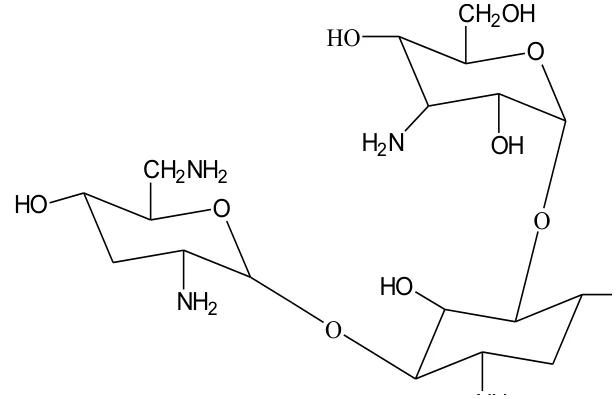
O-3-amino-3-deoxy-α-D-glucopyranosyl-(1→4)-O-[2,6-diamino-2,3,6-trideoxy-α-D-ribo-hexopyranosyl-(1→6)]-2-deoxy-L-streptamine
Molecular formula and molecular mass: C18H37N5O9
467.52
Structure (for biologics)/Structural formula:
Physicochemical properties:
Tobramycin is a white or almost white powder; visually free from any foreign contamination, freely soluble in water, very slightly soluble in ethanol and practically insoluble in chloroform and ether. The pH of a 1 in 10 solution is 9-11. Tobramycin decomposes at approximately 287°C.
Product Characteristics:
Drug Product:
TOBI PODHALER (Tobramycin Inhalation Powder) is a dry-powder formulation of tobramycin manufactured using the novel PULMOSPHERE® technology containing highly dispersible particles. TOBI PODHALER is available as a 28 mg inhalation powder capsule. The delivered dose (the dose that leaves the mouthpiece of the PODHALER inhalation device) is 25.5 milligram tobramycin.
Inhalation Device:
The PODHALER device is a light, discrete and portable inhalation device that requires no internal or external power source. The PODHALER is a plastic inhalation device used for inhaling the content of TOBI PODHALER capsules.
14. Clinical Trials
14.1. Clinical Trials by Indication
Management of Cystic Fibrosis Patients with Pseudomonas aeruginosa
Clinical efficacy of TOBI PODHALER (Tobramycin Inhalation Powder) was assessed in two Phase III studies that randomized and dosed 612 patients aged > 6 years with cystic fibrosis (CF) and P. aeruginosa infection. The trial population received standard of care for CF. The most frequently used concomitant medications included enzyme preparations, mucolytics (especially dornase alfa), and selective β2-adrenoreceptor agonists.
The trial design and patient demographics for studies C2301 and C2302 are summarized in Table 5 below.
Table 5 - Summary of trial design and patient demographics for Phase III clinical trials
| Study # | Study design | Dosage, route of administration and duration | Study subjects (n) | Mean age (Range) | Sex |
| Study # | Study design | Dosage, route of administration and duration | Study subjects (n) | Mean age (Range) | Sex |
| C2301(1) | 6-month multicenter, randomized (1:1), double-blind, placebo-controlled parallel-arm study | Cycle 1: Arm 1: TOBI PODHALER (4 x 28 mg capsules) administered twice a day for 28 days followed by 28 days off-treatment compared with Arm 2: Placebo(5) administered twice a day for 28 days followed by 28 days off-treatment Cycles 2 and 3: Arms 1 and 2: TOBI PODHALER (4 x 28mg capsules) administered twice a day for 28 days followed by 28 days off-treatment, for 2 cycles | Total: n = 95 TOBI PODHALER: n = 46 Placebo: n = 49 Patients with cystic fibrosis; inhaled anti-pseudomonal treatment naive (2); FEV1 (6) at screening ≥ 25% and ≤ 80%; Caucasian (84%) | TOBI PODHALER : 13 years (6-21) Placebo: 13 years (6-21) | Male: 42 (44%) Female: 53 (56%) |
| C2302(3) | 6-month multicenter, randomized (3:2), open- label, active-controlled, parallel-arm study | Cycle 1, 2 and 3: Arm 1: TOBI PODHALER (4 x 28 mg capsules) administered twice a day for 28 days followed by 28 days off-treatment, for 3 cycles compared with Arm 2: TOBI [1 ampoule (300 mg in 5 mL)] administered twice a day for 28 days followed by 28 days off-treatment, for 3 cycles | Total: n = 517 TOBI PODHALER: n = 308 TOBI : n = 209 Patients with cystic fibrosis (4); FEV1 (6) at screening ≥ 25% and ≤ 75%; Caucasian (90%) | TOBI PODHALER : 26 years (6-66) TOBI : 25 years (7-59) | Male: 286 (55%) Female: 231 (45%) |
(1) Participating countries: Argentina, Brazil, Bulgaria, Chile, Lithuania, Mexico, Serbia, and United States.
(2) In Study C2301, patients were required to have been off inhaled anti-pseudomonal antibiotics for at least 4 months prior to screening.
(3) Participating countries: Australia, Canada, Chile, Columbia, France, Germany, Greece, Hungary, Israel, Italy, Mexico, Netherlands, Spain, Switzerland, UK, and United States.
(4) In Study C2302, patients were required to have been off anti-pseudomonal antibiotics for at least 28 days prior to study drug administration.
(5) Containing 1,2-distearoyl-sn-glycero-3-phosphocholine (DSPC) and calcium chloride (CaCl2).
(6) FEV1 % of predicted normal values for age, sex and height based upon Knudson criteria.
- Study results
The results of the two pivotal studies are provided below, by study.
Study C2301
TOBI PODHALER significantly improved lung function compared with placebo, as shown by the relative increase in percent predicted FEV1 after 28 days of treatment (Table 6).
Table 6 - Study C2301: Relative change in percent predicted FEV1 from baseline to end of dosing in Cycle 1(1)
TOBI PODHALER N=29 | Placebo N=32 | Difference (SE) | 95% CI of difference | P-value | |
| n | 27 | 31 | |||
| Mean (2) | 13.21 | -0.57 | 13.79 (3.95) | (5.87, 21.70) | 0.0010 |
| LS Mean (3) | 13.97 | 0.68 | 13.29 (3.98) | (5.31, 21.28) | 0.0016 |
(1) The primary efficacy endpoint was the relative change in FEV1 percent predicted from baseline to the end of cycle 1 dosing of TOBI PODHALER as compared to placebo.
(2) Mean, p-value, mean difference, and its 95% confidence interval are calculated from ANOVA with treatment in the model.
(3) Least square mean, p-value, least square mean difference, and its 95% confidence interval are calculated from ANCOVA with treatment, baseline value, age and region in the model. SE = standard error, N is number of eligible subjects in the final efficacy analysis for the primary endpoint, n is number of subjects with complete FEV1 values at baseline and Day 28. The analysis is based on observed data only, no imputation is performed for missing data.
Figure 1 demonstrates the relative change in percent predicted FEV1 from baseline in Cycles 1-3 for Study C2301. The improvement in lung function for patients who switched from placebo to TOBI PODHALER at the start of the second treatment cycle were comparable to the improvement seen during the first treatment cycle in the TOBI PODHALER treatment group. The improvements in the percent predicted FEV1 were maintained over time during the third treatment cycle.
Figure 1 - Study C2301: Relative change in percent predicted FEV1 from baseline in Cycles 1-3 by treatment group
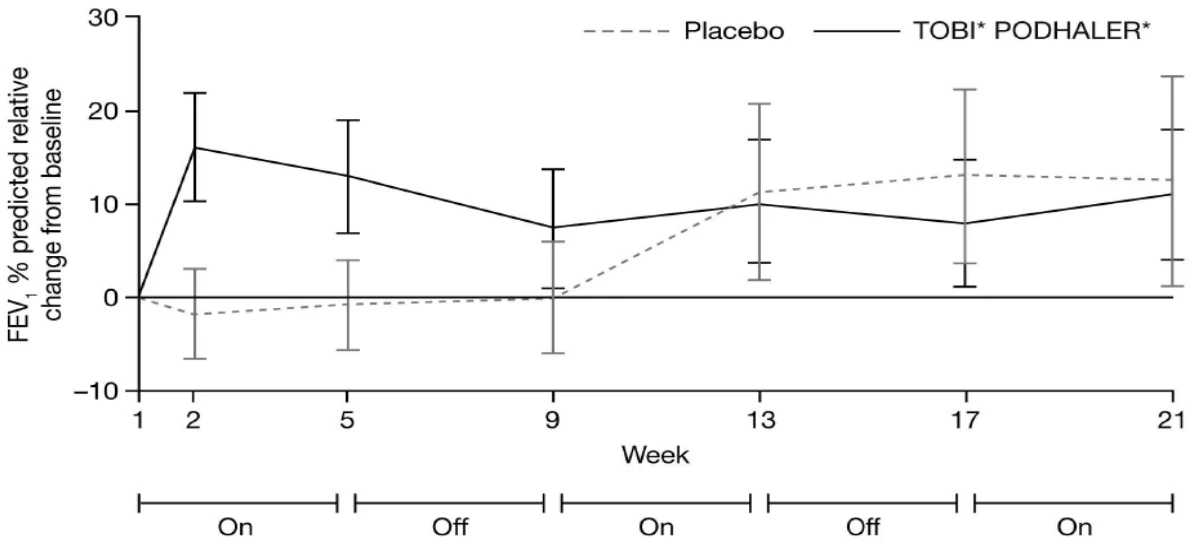
Note: the vertical bar is 95% confidence interval.
Off-treatment phases: from week 5 to 9, week 13 to 17 and week 21 to 25.
X-axis is not linear between 1 to 5 weeks.
Treatment with TOBI PODHALER for 28 days resulted in a reduction in P. aeruginosa sputum density (log10 CFUs) compared with placebo from baseline to end of dosing in cycle 1 (mean reduction of - 2.79 log10 CFUs in the TOBI PODHALER treatment group and - 0.21 log10 CFUs in the placebo group). Density was defined as the sum of bio-types (mucoid, dry and small colony variant).
Study C2302
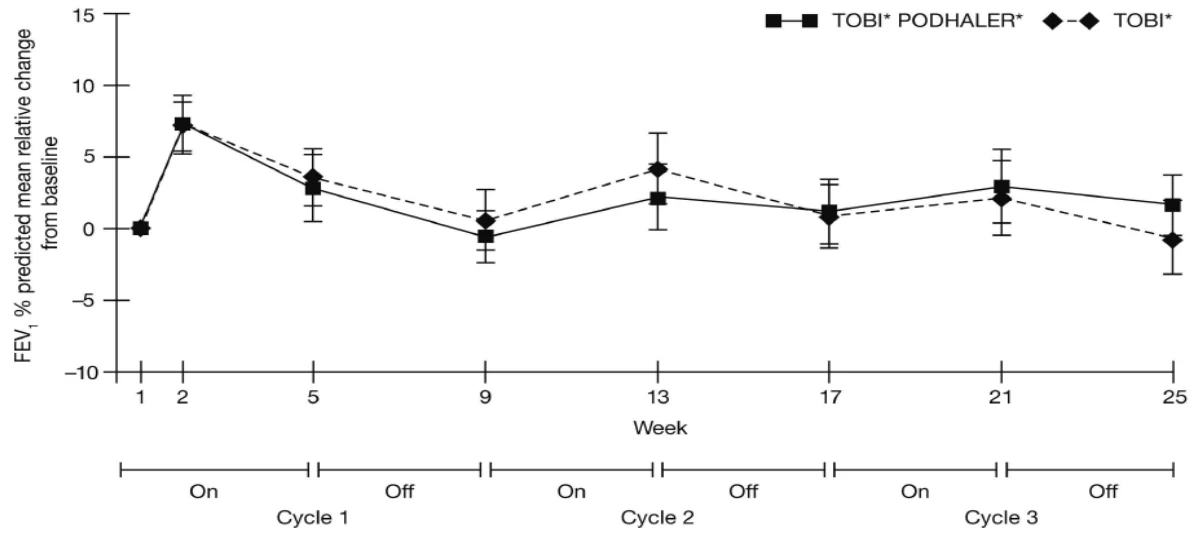
Treatment with both TOBI PODHALER and TOBI resulted in relative increases in percent predicted FEV1 from baseline to Day 28 of the third treatment cycle (Table 7 and Figure 2). The magnitude of improvement in lung function was smaller in this study compared to Study C2301; the differing designs and populations of these studies are described in Table 5.
Table 7 - Study C2302: Relative change in percent predicted FEV1 from baseline to end of dosing in Cycle 3(1)
| TOBI PODHALER N=308 | TOBI N=209 | Difference (SE) | 85% one-sided CI of difference | 95% one-sided CI of difference | |
| n | 227 | 171 | |||
| Mean (2) | 3.1 | 2.3 | 0.8 (1.92) | (-1.22, 2.77) | (-2.39, 3.94) |
| LS Mean (3) | 5.8 | 4.7 | 1.1 (1.75) | (-0.67, 2.96) | (-1.74, 4.03) |
(1) The primary objective of this study was to demonstrate safety of TOBI PODHALER. The main secondary efficacy endpoint was the relative change in FEV1 percent predicted from baseline to the end of Cycle 3 dosing of TOBI PODHALER as compared to TOBI.
(2) Mean, mean difference, and its one-sided 85% and 95% confidence interval are calculated from ANOVA with treatment in the model.
(3) Least square mean, least square mean difference (TOBI PODHALER – TOBI), and its one-sided 85% and 95% confidence interval are calculated from ANCOVA with treatment, baseline % predicted FEV1, age, chronic macrolide use, and region in the model. SE = standard error, N is number of eligible subjects in final analysis population, n is number of subjects with complete FEV1 values at baseline and Day 28 of Cycle 3. The analysis is based on observed data only, no imputation is performed for missing data. Claim of non-inferiority efficacy is based on the one-side 85% confidence interval in the ITT population (lower limit is greater than -6%).
Figure 2 demonstrates the relative change in percent predicted FEV1 from baseline in Cycles 1-3 for Study C2302.
Figure 2 - Study C2302: Relative change in percent predicted FEV1 from baseline in Cycles 1-3
A difference in FEV1 response by age was noted. The relative change in percent predicted FEV1 from baseline to end of dosing for Study C2302 by age group is presented in Table 8.
Table 8 - Study C2302: Relative change in percent predicted FEV1 from baseline to end of dosing by age group
TOBI PODHALER N=308 | TOBI N=209 | |||
| Mean (SD) | Mean (SD) | |||
| 6-< 13 years | 10.4 (25.9) | 9.4 (18.9) | ||
| > 13-< 20 years | 6.8 (18.5) | 3.9 (19.4) | ||
| >20 years | 0.3 (18.6) | 0.9 (16.6) | ||
Treatment with TOBI PODHALER and TOBI resulted in suppression of sputum P. aeruginosa density (log10 CFUs) from baseline to end of dosing in cycle 3 (mean reduction of -1.61 log10 CFUs in the TOBI PODHALER treatment group and -0.77 log10 CFUs in the TOBI treatment group). Suppression of sputum P. aeruginosa density was similar across age groups in both treatment arms. Density was defined as the sum of bio-types (mucoid, dry and small colony variant).
Both clinical studies demonstrated that TOBI PODHALER decreased sputum P. aeruginosa density during on-treatment periods. There was a trend for a recovery of P. aeruginosa density after 28 days off-treatment which was reversed after a further 28 days on-treatment. The susceptibility and resistance of P. aeruginosa strains isolated in the Phase III clinical trials is further presented in the 15 Microbiology section.
Other health outcomes in 3 cycles for Study C2302 are presented in Table 9.
Table 9 - Study C2302: Other health outcomes in 3 cycles, by treatment arms
TOBI PODHALER N=308 | TOBI N=209 | ||||
| Mean | Mean | ||||
| Frequency of new anti-pseudomonal antibiotics use | 64.9 % | 54.5% | |||
| Duration of anti-pseudomonal antibiotics use | 30.9 days | 33.4 days | |||
| Respiratory-related hospitalizations | 24.4 % | 22.0 % | |||
| Duration of Respiratory-related hospitalization | 15.6 days | 15.3 days | |||
| Administration time (1)(2) | 5.6 min | 19.7 min | |||
| Patients reported treatment satisfaction (1)(2)(3)(4): | |||||
| 74.8 | 65.4 | |||
| 92.1 | 92.6 | |||
| 82.7 | 58.4 | |||
| 76.2 | 71.0 | |||
(1) Calculated as LS mean - Least square means are calculated from repeated measures model with treatment, baseline FEV1 % predicted, age, chronic macrolide use, region, visit, visit-by treatment interaction in the model.
(2) Average across all 3 treatment periods.
(3) Assessed by a modified Treatment Satisfaction Questionnaire for Medication (TSQM).
(4) Higher score indicates higher satisfaction for that domain.
15. Microbiology
Tobramycin has in vitro activity against a wide range of gram-negative organisms including P. aeruginosa. It is bactericidal at concentrations equal to or slightly greater than inhibitory concentrations. It acts primarily by disrupting protein synthesis through interaction with 30S ribosomal subunit, leading to altered cell membrane permeability, progressive disruption of the cell envelope, and eventual cell death.
- Susceptibility
A single sputum sample from a cystic fibrosis patient may contain multiple phenotypes of P. aeruginosa, and each phenotype may have a different level of in vitro susceptibility to tobramycin.
The standard in vitro antimicrobial susceptibility test methods used for parenteral tobramycin therapy can be used to monitor the susceptibility of P. aeruginosa isolated from cystic fibrosis patients.
Susceptibility breakpoints established for parenteral administration of tobramycin do not apply to aerosolized administration of TOBI PODHALER. The relationship between in vitro susceptibility test results and clinical outcome with TOBI PODHALER therapy is not clear.
In study C2302, the majority of P. aeruginosa isolates had a tobramycin MIC between 0.5 µg/mL and 8 µg/mL at baseline and over the course of the study. In general, a small numerical increase in the percentage of patients with tobramycin MIC values above 8 µg/mL was observed in both the TOBI PODHALER and TOBI treatment groups at the end of the treatment period of each cycle. However, the overall distribution of tobramycin MIC values over the course of the study remained relatively consistent with those at baseline.
In addition, the vast majority of the isolates remained “susceptible”. In Study C2302, at least 89% of TOBI PODHALER patients had P. aeruginosa isolates with MIC values at least 10 times lower than mean sputum concentrations observed within 0.5 hour of inhalation, both at baseline and at the end of the third active treatment cycle. The clinical significance of changes in MICs for P. aeruginosa has not been clearly established in the treatment of cystic fibrosis patients.
- Sputum density of pathogens other than P. aeruginosa
A range of pathogens other than P. aeruginosa was identified in the sputum of the CF patients in this study, as would be expected, as CF patients have frequently multiple respiratory infections. The majority of pathogens were present in only a small percentage of patients and no clinically significant changes were identified.
Emergence of cross-resistant strains to the following antibiotics were tested: aztreonam ceftazidime, ciprofloxacin, imipenem and meropenem. No significant pattern of emerging cross-resistant strains was evidenced.
16. Non-Clinical Toxicology
General toxicology
- Repeat Dose Inhalation Studies
Repeat dose daily inhalation toxicology studies were performed with TOBI PODHALER (Tobramycin Inhalation Powder) in rats (dose range: 6.4 to 72.9 mg/kg/day estimated total tobramycin inhaled dose; study duration: 4 and 26 weeks) and dogs (dose range: 8.2-38.7 mg/kg/day estimated total tobramycin inhaled dose; study duration: 1 and 4 weeks). Also, a 95 week daily inhalation carcinogenicity study was performed with TOBI (Tobramycin Solution for Inhalation) in rats at doses of: 2.9, 7.6 and 25.7 mg/kg/day estimated total tobramycin inhaled dose. The primary target organs were the respiratory tract (larynx, lung, bronchial lymph nodes, nose, trachea) and the kidney. Table 10 provides a more in depth summary of the observed treatment-related findings from the rat inhalation toxicity studies (see 10.3 Pharmacokinetics, Animal Pharmacology).
Table 10 - Repeated Dose Daily Inhalation Toxicity Studies with TOBI PODHALER and TOBI
| Species strain | Duration weeks | Formulation, Route of administratio n, Exposure Duration (minutes/ day) | No. of animals/ group (M = male, F = female) | Estimated total tobramycin inhaled dose (mg/kg/day)(1) | Study Number GLP status | Treatment Related Findings | |||
|---|---|---|---|---|---|---|---|---|---|
| Species strain | Duration weeks | Formulation, Route of administratio n, Exposure Duration (minutes/ day) | No. of animals/ group (M = male, F = female) | Estimated total tobramycin inhaled dose (mg/kg/day)(1) | Study Number GLP status | Treatment Related Findings | |||
| Species strain | Duration weeks | Formulation, Route of administratio n, Exposure Duration (minutes/ day) | No. of animals/ group (M = male, F = female) | Estimated total tobramycin inhaled dose (mg/kg/day)(1) | Study Number GLP status | Treatment Related Findings | |||
| Species strain | Duration weeks | Formulation, Route of administratio n, Exposure Duration (minutes/ day) | No. of animals/ group (M = male, F = female) | Estimated total tobramycin inhaled dose (mg/kg/day)(1) | Study Number GLP status | Treatment Related Findings | |||
| Species strain | Duration weeks | Formulation, Route of administratio n, Exposure Duration (minutes/ day) | No. of animals/ group (M = male, F = female) | Estimated total tobramycin inhaled dose (mg/kg/day)(1) | Study Number GLP status | Treatment Related Findings | |||
| Species strain | Duration weeks | Formulation, Route of administratio n, Exposure Duration (minutes/ day) | No. of animals/ group (M = male, F = female) | Estimated total tobramycin inhaled dose (mg/kg/day)(1) | Study Number GLP status | Treatment Related Findings | |||
| Rat Sprague -Dawley | Treatment: 4 Recovery: | tobramycin: Tobramycin Inhalation | Treatment: 10M, 10F | air, vehicle, 9.9, 19.7, 72.9 | MN103741 GLP(2) | Daily administration resulted in tobramycin accumulation in the | |||
| 4 | Powder vehicle: Pulmosphere placebo powder Inhalation: Air: 240 Vehicle: 240 Low: 30 Mid: 60 High: 240 | Recovery: 5M, 5F Pharmacokinetic: 36M, 36F | lungs, but not the serum. The target organs identified were respiratory tract (larynx, lung, nose/turbinate, trachea, bronchial lymph node) and kidney. Treatment related findings in the respiratory tract occurred at tobramycin doses ≥ 9.9 mg/kg/day (Low dose: mean exposure levels on Day 28: serum Cmax 8.5 to 16.3 µg/mL; serum AUC 27 µg.h/mL; Day 28 lung Cmax 334 µg/g; Day 1 lung AUC 1120 µg.h/g). Treatment related findings in the kidney occurred at tobramycin doses ≥ 19.7 mg/kg/day (Mid dose: mean exposure levels on Day 28: serum Cmax 18.6 µg/mL; serum AUC 39.5 µg.h/mL; Day 29 lung Cmax 535 µg/g; Day 1 lung AUC 1732 µg.h/g). There was a dose-responsive increase in lung weights at end of treatment that was statistically significant in the high dose groups of both sexes and in the mid dose males | ||||||
compared to the air and vehicle groups. Histopathology End of treatment phase Gross lesions observed included foci in the lungs of one low dose group male and one high dose group male, microscopically determined to be macrophages and were attributed to tobramycin exposure. Treatment-related microscopic lesions were present in the larynx (inflammation, hyperplasia, ulcer/erosion), lungs (macrophage accumulation, hyperplasia, inflammation), nose/turbinates (olfactory epithelial degeneration, inflammation and hyperplasia), trachea (inflammation), bronchial lymph nodes (hyperplasia) and kidneys (nephropathy). End of recovery phase In the mid and low dose groups with the exception of the olfactory changes, all microscopic findings had recovered to | |||||||||
| background levels of incidence and severity. In the high dose group changes in the lung and nose/turbinates were still present (Day 57 tobramycin lung concentration 242 µg/g). | |||||||||
Treatment: 26 Recovery: 4 | tobramycin: Tobramycin Inhalation Powder vehicle: Pulmosphere placebo powder Inhalation: Air: 180 Vehicle: 180 Low: 30 Mid: 60 High: 180 | Toxicology: 10M 10F Recovery: 5M, 5F Pharmacokinetic: 51M, 51F | air, vehicle, 6.4, 11, 38 | N103748 GLP(2) | Daily administration resulted in tobramycin accumulation in the lungs, but not the serum. Minimal treatment related effects were observed in decreased total protein and decreased serum globulin in treated groups as compared to air control or vehicle groups. Increased lung weights were present in females at Day 183 necropsy. The target organs identified were respiratory tract (larynx, lung, and nose) and kidney. Treatment related findings in the respiratory tract occurred at tobramycin doses of ≥ 6.4 mg/kg/day (Low dose: mean exposure levels on Day 176; serum Cmax male, female: 5.9, 12.1 µg/mL; serum AUC male, female: 9.2 ,60 µg.h/mL; lung Cmax 479 µg/g, lung AUC 10285 | ||||
µg.h/g). Treatment related findings in the kidney occurred at tobramycin doses ≥ 11 mg/kg/day (mean exposure levels on Day 176: serum Cmax male, female: 4.7, 13.6 µg/mL; serum AUC male, female: 18, 37 µg.h/mL; lung Cmax 637 µg/g; lung AUC 13131 µg.h/g). Histopathology End of treatment phase Treatment related lesions were present in kidneys (nephropathy), lungs (macrophage accumulation, hyperplasia), nose (inflammation, degeneration, hyperplasia, metaplasia) and larynx (hyperplasia). End of recovery phase Lesions in the kidney, lungs, nose and larynx were still present, but with reduced severity and/or incidence. | |||||||||
Treatment 95 | tobramycin: Tobramycin Inhalation Powder | Carcinogenicity: 50M, 50 F Pharmacokinetic: 50 M, 50F | Air, vehicle, 2.9, 7.6, 25.7 | N002938A GLP(2) | Daily administration resulted in tobramycin accumulation in the lungs, but not the serum. | ||||
vehicle: Pulmosphere placebo powder Inhalation: Air: 90 Vehicle: 90 Low: 10 Mid: 30 High: 90 | The target organs identified were respiratory tract (larynx, lung, nasal mucosa), with treatment related findings at tobramycin doses ≥ 2.9 mg/kg/day (Low dose: range of mean exposure levels: serum Cmax (weeks 1 to 95) male, female: 1.4 to 5.8, 0.5 to 8.9 µg/mL; lung concentration (24 hr post-dose; weeks 4 to 95) male, female: 67 to 358, 81 to 274 µg/g). Lung weights were significantly increased in both males and females in dose responsive fashion. Histopathology Treatment related lesions were increased alveolar macrophage infiltrates, hyperplasia of bronchiolar / alveolar epithelium / nasal respiratory epithelium / mucosal glands of the nasal olfactory epithelium / squamous epithelium in the larynx. | ||||||||
(1) Mean daily inhaled tobramycin dose of male and female animals. Inhaled dose (mg/kg/day) = mean aerosol tobramycin concentration (mg/L) x Accumulated inhaled volume (L/day)/body weight (kg). A pulmonary deposition factor of 10% was used for the rat.
(2) Evaluation criteria: Clinical observations, body weight, food consumption (not in 95 week study), respiratory function, ophthalmic examinations, toxicokinetic evaluation lung/serum, clinical pathology (hematology and serum chemistry), anatomic pathology (necropsy, gross pathology, organ weight, histopathology).
Genotoxicity:
Tobramycin was evaluated for genotoxicity in a battery of in vitro and in vivo tests. The Ames bacterial reversion test, conducted with five tester strains, failed to show a significant increase in revertants with or without metabolic activation in all strains. Tobramycin was negative in the mouse lymphoma forward mutation assay, did not induce chromosomal aberrations in Chinese hamster ovary cells, and was negative in the mouse micronucleus test.
Carcinogenicity
Carcinogenicity studies were not conducted with TOBI PODHALER. A 95 week daily inhalation study in rats to assess carcinogenic potential of TOBI (Tobramycin Solution for Inhalation) has been completed (see Table 10). The analysis of survival and tumor incidence found no treatment related effects on mortality, survival or increases in tumor incidence among the study groups for either males or females at up to 25.7 mg/kg/day estimated total tobramycin inhaled dose (see 10.3 Pharmacokinetics, Animal Pharmacology).
Reproductive and developmental toxicology
No reproduction toxicology studies have been conducted with tobramycin administered by inhalation. However, subcutaneous administration of tobramycin at doses of up to 100 mg/dose (rat) or 20 mg/kg/day (rabbit) during organogenesis was not teratogenic. Doses of tobramycin 40 mg/kg/day were severely maternally toxic to female rabbits (i.e., nephrotoxicity leading to spontaneous abortions and death) and precluded the evaluation of teratogenicity. Subcutaneous administration of up to 100 mg/kg of tobramycin did not affect mating behavior or cause impairment of fertility in male or female rats.
Tobramycin intramuscular doses of a 100 mg/kg/day administered to pregnant guinea pigs in early gestation from the beginning of the second week to the end of the fifth week, resulted in hearing loss and histological damage to the six mothers. The litters born to these mothers, however, showed no hearing loss or damage to the inner ear. In contrast, when tobramycin was administered intramuscularly at 50 to 100 mg/kg daily to females during the terminal four weeks of gestation one of the eighteen newborns had pinna reflex loss at 20,000 Hz and four of the thirty-eight had unilateral, incomplete loss of outer hair cells at the basal end of cochlea.
17. Supporting Product Monographs
TOBI Solution, 300 mg / 5 mL, control 275742, product monograph, BGP Pharma ULC. (2023-12-05)