


Product Monograph - Glatect
Recent Major Label Changes
| 3 Serious Warnings and Precautions Box | 2025-10 |
|---|---|
| 4.2 Recommended Dose and Dosage Adjustment | 2025-10 |
| 7 Warnings and Precautions, Immune | 2025-10 |
Table of Contents
Certain sections or subsections that are not applicable at the time of the preparation of the most recent authorized product monograph are not listed.
Recent Major Label Changes ............................................................................................ 2
Table of Contents ............................................................................................................. 2
Part 1: Healthcare Professional Information ..................................................................... 4
- 1.
Indications .................................................................................................................... 4
1.1 Pediatrics ......................................................................................................................... 4
1.2 Geriatrics ......................................................................................................................... 4
- 2. Contraindications ......................................................................................................... 4
- 3. Serious Warnings and Precautions Box .......................................................................... 4
- 4.
Dosage and Administration ........................................................................................... 5
4.1 Dosing Considerations .................................................................................................... 5
4.2 Recommended Dose and Dosage Adjustment ............................................................... 5
4.4 Administration ................................................................................................................ 5
4.5 Missed Dose .................................................................................................................... 6
- 5. Overdose ...................................................................................................................... 6
- 6. Dosage Forms, Strengths, Composition, and Packaging ................................................. 6
- 7. Warnings and Precautions ............................................................................................ 6
General ...................................................................................................................................... 6
Carcinogenesis and Genotoxicity .............................................................................................. 7
Cardiovascular ........................................................................................................................... 7
Hepatic/Biliary/Pancreatic ........................................................................................................ 7
Immune ..................................................................................................................................... 8
Monitoring and Laboratory Tests ............................................................................................. 9
Skin ............................................................................................................................................ 9
7.1 Special Populations ......................................................................................................... 9
7.1.1 Pregnancy ................................................................................................................. 9
7.1.2 Breastfeeding ......................................................................................................... 10
7.1.3 Pediatrics ................................................................................................................ 10
7.1.4 Geriatrics ................................................................................................................ 10
8 Adverse Reactions ...................................................................................................... 10
8.1 Adverse Reaction Overview .......................................................................................... 10
8.2 Clinical Trial Adverse Reactions .................................................................................... 12
8.3 Less Common Clinical Trial Adverse Reactions ............................................................. 13
8.4 Abnormal Laboratory Findings: Hematologic, Clinical Chemistry, and Other Quantitative Data ......................................................................................................... 18
8.5 Post-Market Adverse Reactions .................................................................................... 18
- 9.
Drug Interactions ........................................................................................................ 20
9.2 Drug Interactions Overview .......................................................................................... 20
9.3 Drug-Behaviour Interactions ......................................................................................... 20
9.4 Drug-Drug Interactions ................................................................................................. 21
9.5 Drug-Food Interactions ................................................................................................. 21
9.6 Drug-Herb Interactions ................................................................................................. 21
9.7 Drug-Laboratory Test Interactions................................................................................ 21
- 10.
Clinical Pharmacology ........................................................................................... 21
10.1 Mechanism of Action .................................................................................................. 21
10.2 Pharmacodynamics ..................................................................................................... 21
10.3 Pharmacokinetics ........................................................................................................ 23
- 11. Storage, Stability, and Disposal ............................................................................. 23
Part 2: Scientific Information .......................................................................................... 24
- 13. Pharmaceutical Information ................................................................................. 24
- 14.
Clinical Trials ........................................................................................................ 25
14.1 Clinical Trials by Indication ......................................................................................... 25
Relapsing Remitting Multiple Sclerosis (RRMS) ................................................................... 25
- 15. Microbiology ........................................................................................................ 30
- 16. Non-Clinical Toxicology ......................................................................................... 30
- 17. Supporting Product Monographs .......................................................................... 32
Patient Medication Information ..................................................................................... 33
Part 1: Healthcare Professional Information
1. Indications
GLATECT (glatiramer acetate injection) is indicated for:
Treatment of ambulatory patients with Relapsing Remitting Multiple Sclerosis (RRMS), including patients who have experienced a single demyelinating event and have lesions typical of multiple sclerosis on brain Magnetic Resonance Imaging (MRI):
- To decrease the frequency of clinical exacerbations
- To reduce the number and volume of active brain lesions identified on MRI scans.
The safety and efficacy of GLATECT in chronic progressive MS have not been established.
1.1 Pediatrics
Pediatrics (under 18 years of age): No data are available to Health Canada; therefore, Health Canada has not authorized an indication for pediatric use.
1.2 Geriatrics
Geriatrics (over 65 years of age): No data are available to Health Canada; therefore, Health Canada has not authorized an indication for geriatric use.
2. Contraindications
GLATECT is contraindicated in patients who are hypersensitive to this drug or to any ingredient in the formulation, including any non-medicinal ingredient, or component of the container. For further information on hypersensitivity, see 3 Serious Warnings and Precautions Box. For a complete listing, see 6 Dosage Forms, Strengths, Composition, and Packaging.
3. Serious Warnings and Precautions Box
WARNING: ANAPHYLACTIC REACTIONS
Cases of life-threatening and fatal anaphylaxis have been reported with glatiramer acetate. Anaphylaxis can occur at any time following initiation of therapy, from as early as after the first dose, up to years following initiation of therapy.
Make patients aware of the symptoms of anaphylaxis, which may overlap with those of an immediate post-injection reaction; instruct them to seek immediate medical care should these symptoms occur. Prompt identification of anaphylaxis is important to
- avoid a delay in treatment (see 7 Warnings and Precautions, Immune).
- GLATECT is contraindicated in patients with a history of hypersensitivity reactions to GLATECT, including anaphylaxis. If an anaphylactic reaction occurs, treatment with GLATECT must be immediately discontinued. Unless a clear alternative etiology is identified, GLATECT must be permanently discontinued (see 2 Contraindications; 7 Warnings and Precautions, Immune).
4. Dosage and Administration
4.1 Dosing Considerations
GLATECT should only be prescribed by (or following consultation with) clinicians who are experienced in the diagnosis and management of Multiple Sclerosis.
The only recommended route of administration of GLATECT (glatiramer acetate) injection is the subcutaneous route. GLATECT should not be administered by the intravenous or intramuscular routes.
Patients should be instructed in aseptic self-injection techniques to assure the safe administration of GLATECT (glatiramer acetate), including a careful review of the Patient Medication Information. The first injection should be performed under the supervision of an appropriately qualified healthcare professional. Patient understanding and use of aseptic self- injection techniques and procedures should be periodically re-evaluated. Patients should be cautioned against the re-use of needles or syringes and instructed in safe disposal procedures. A puncture-resistant container for disposal of used needles and syringes should be used by the patient. Patients should be instructed on the safe disposal of full containers.
4.2 Recommended Dose and Dosage Adjustment
The recommended dose and dosing schedule of GLATECT (glatiramer acetate injection) for the treatment of Relapsing Remitting MS depends on the product strength selected:
- GLATECT 20 mg/mL: Administer once per day
GLATECT 20 mg/mL and glatiramer acetate 40 mg/mL are not interchangeable.
Health Canada has not authorized an indication for pediatric use (see 1.1 Pediatrics).
4.4 Administration
Please see Patient Medication Information (Instructions for Use) for instructions on the preparation and injection of GLATECT pre-filled syringes.
4.5 Missed Dose
If a dose is missed it should be taken as soon as possible. If, however, it is closer to the time of the next dose, skip the missed dose and resume at the usual dosing schedule.
For GLATECT 20 mg/mL, avoid giving 2 injections in the same 12-hour period.
5. Overdose
One patient received two GLATECT injections daily (i.e. a dose of 40 mg/day instead of the recommended 20 mg/day) during approximately one month. The patient did not report any adverse events, nor was there any sign in changed clinical laboratory values.
Cases of overdose with glatiramer acetate (up to 300 mg glatiramer acetate) have been reported. These cases were not associated with any adverse reactions other than those mentioned in 8 Adverse Reactions. In case of overdose, patients should be monitored and the appropriate symptomatic and supportive therapy instituted.
For the most recent information in the management of a suspected drug overdose, contact your regional poison control centre or Health Canada’s toll-free number, 1-844 POISON-X
(1-844-764-7669).
- 6. Dosage Forms, Strengths, Composition, and Packaging
Table 1 – Dosage Forms, Strengths, and Composition
| Route of Administration | Dosage Form / Strength/Composition | Non-Medicinal Ingredients |
|---|---|---|
| Subcutaneous | Solution for injection 20 mg/mL glatiramer acetate 1 mL prefilled syringes | 40 mg mannitol in sterile water for injection |
Description
GLATECT (glatiramer acetate injection) is a single-use 1 mL pre-filled glass syringe containing a clear sterile solution of 20 mg glatiramer acetate and 40 mg mannitol in water for injection. GLATECT is available in packs of 30 single-use 1 mL pre-filled glass syringes.
7. Warnings and Precautions
See 3 Serious Warnings and Precautions Box.
General
The first injection should be performed under the supervision of an appropriately qualified healthcare professional (see 4 Dosage and Administration).
Carcinogenesis and Genotoxicity
Preclinical studies to assess the carcinogenic potential of glatiramer acetate in mice and rats do not suggest any evidence of carcinogenic potential related to glatiramer acetate administered subcutaneously at dose levels of up to 30 mg/kg/day in rats and 60 mg/kg/day in mice (see 16 Non-Clinical Toxicology, Carcinogenicity). The relevance of these findings for humans is unknown (see 7 Warnings and Precautions, Immune).
Cardiovascular
Symptoms of Potentially Cardiac Origin: A few patients in the GATE trial receiving GLATECT experienced what was described as transient chest pain. A number of patients exposed to either glatiramer acetate 20 mg/mL once per day in 4 placebo-controlled trials, or glatiramer acetate 40 mg/mL three times per week in a single placebo-controlled trial, experienced at least one episode of what was described as transient chest pain (see 8 Adverse Reactions). While some of these episodes occurred in the context of the Immediate Post-Injection Reaction (see 8 Adverse Reactions), many did not. The pathogenesis of this symptom is unknown. Patients in controlled clinical trials were free of significant cardiovascular problems (New York Heart Association Class I and II) and thus the risks associated with glatiramer acetate treatment for Multiple Sclerosis patients with comorbid cardiovascular disease are unknown.
Hepatic/Biliary/Pancreatic
Very rare cases of severe liver injury, including liver failure, hepatitis with jaundice, and extremely rare cases of fulminant hepatitis leading to liver transplant, have been reported with glatiramer acetate during post-marketing experience in patients with and without relevant risk factors in their medical history, such as history of drug induced liver events with other disease modifying therapies (DMTs) indicated for the treatment of multiple sclerosis, concomitant treatment with drugs with known Drug Induced Liver Injury (DILI) risk or medical history of liver impairment.
Hepatic adverse events have occurred from days to years after initiating treatment with glatiramer acetate and with a similar profile with both dose regimens (20 mg/mL daily and 40 mg/mL TIW), suggesting idiosyncratic drug induced liver injury in most cases. Some cases, reported in patients who previously experienced liver injury during treatment with other immunomodulatory therapies used to treat multiple sclerosis, were suggestive of autoimmune hepatitis. Most events resolved with discontinuation of treatment and a relationship to glatiramer acetate could not be excluded (see 8.5 Post-Market Adverse Reactions).
Caution is recommended when considering treatment with GLATECT in patients who have pre-existing liver disease or who have experienced liver injury previously during treatment with other drugs, including other disease modifying therapies (DMTs) for treatment of multiple sclerosis or with concomitant (DILI) risk drugs.
Prior to initiating treatment with GLATECT, serum aminotransferase, alkaline phosphatase and total bilirubin levels should be obtained (within 6 months) for all patients. Patients should be monitored during treatment for signs of hepatic injury. Evaluation of transaminases is recommended during treatment, as clinically relevant (see 7 Warnings and Precautions, Monitoring and Laboratory Tests). Patients should be advised to immediately report any signs or symptoms of hepatotoxicity (e.g., jaundice, dark urine, abdominal pain, nausea, vomiting, loss of appetite, weight loss, unusual fatigue). Discontinue treatment if clinically significant liver injury induced by GLATECT is suspected.
Immune
Considerations Involving the Use of a Product Capable of Modifying Immune Responses: Glatiramer acetate is an antigenic substance and thus it is possible that detrimental host responses can occur with its use. Whether glatiramer acetate can alter normal human immune responses, such as the recognition of foreign antigens is unknown. It is therefore possible that treatment with glatiramer acetate may undermine the body's defenses against infections and tumor surveillance. Systematic assessments of these risks have not been done. Continued alteration of cellular immunity due to chronic treatment with glatiramer acetate might result in untoward effects.
Glatiramer acetate-reactive antibodies are formed in practically all patients exposed to daily treatment with the recommended dose. Studies in both the rat and monkey have suggested that immune complexes are deposited in the renal glomeruli. Glatiramer acetate-reactive antibodies were detected in patients’ sera during daily chronic treatment. Maximum titer levels were detected in 91.9% of patients 3 months after initiation of treatment and, thereafter the titers declined but remained detectable up to 24 months of continued GLATECT treatment in 94.7% of patients. IgE type antibodies were not assayed for GLATECT.
Nevertheless, anaphylaxis can be associated with the administration of almost any foreign substance and, therefore, this risk cannot be excluded.
Anaphylactic Reactions GLATECT has not been studied in patients with a history of severe anaphylactic reactions, obstructive pulmonary disease or asthma, nor in patients under treatment for either of these two latter conditions. Particular caution is therefore advised regarding the use of GLATECT in such patients.
Life-threatening and fatal anaphylaxis has been reported with glatiramer acetate (see 8 Adverse Reactions). GLATECT is contraindicated in patients with a history of hypersensitivity reactions to GLATECT, including anaphylaxis (see 2 Contraindications; 3 Serious Warnings and Precautions Box). Anaphylaxis can occur at any time following initiation of GLATECT therapy, from as early as after the first dose, up to years after initiation of treatment. In most of the reported cases, anaphylaxis occurred within an hour of a glatiramer acetate injection. Some signs and symptoms of anaphylactic reactions may overlap with those of immediate post-injection reactions. Some cases required treatment with epinephrine and other appropriate medical treatment. All patients receiving treatment with GLATECT and caregivers should be informed about the signs and symptoms of anaphylactic reactions, and that they must seek immediate emergency medical care in case of experiencing such symptoms. If an anaphylactic reaction occurs, treatment with GLATECT must be immediately discontinued. Unless a clear alternative etiology is identified, GLATECT must be permanently discontinued (see 2 Contraindications; 3 Serious Warnings and Precautions Box).
Immediate Post-Injection Reaction: GLATECT has been associated with a constellation of symptoms appearing immediately after injection that included at least one or more of the following: flushing, chest pain, palpitations, anxiety, dyspnea, constriction of the throat and urticaria (see 8.1 Adverse Reaction Overview, Immediate Post-Injection Reaction).
Monitoring and Laboratory Tests
Renal
The pharmacokinetics of GLATECT in patients with impaired renal function have not been determined. In patients with renal impairment, renal function should be monitored while they are treated with GLATECT. While there is no evidence of glomerular deposition of immune complexes in patients, the possibility cannot be excluded.
Liver Function
Liver transaminases should be checked (within 6 months) before initiating treatment with GLATECT. Evaluation of transaminases is recommended during treatment, as clinically relevant (see 7 Warnings and Precautions, Hepatic/Biliary/Pancreatic; 8.5 Post-Market Adverse Reactions).
Skin
Localized Adverse Reactions Associated with Subcutaneous Use
At injection sites, localized lipoatrophy and, rarely, injection site skin necrosis have been reported during clinical trials and post-marketing experience (see 8 Adverse Reactions). Lipoatrophy may occur after treatment onset (sometimes as early as several months) and may be permanent. There is no known therapy for lipoatrophy. To assist in possibly minimizing these events the patient should be advised to follow proper injection technique and to rotate injection areas and sites on a regular basis (see Patient Medication Information).
7.1 Special Populations
7.1.1 Pregnancy
There are no adequate and well-controlled studies in pregnant women. No evidence of reproductive toxicity was observed in preclinical studies (see 16 Non-Clinical Toxicology, Reproductive and developmental toxicology). The potential risk for humans is not fully known (see Congenital Anomalies). However, since animal reproduction studies are not always predictive of human response and there are no adequate and well controlled studies in pregnant women with MS, GLATECT should be used during pregnancy only when, in the judgment of the physician, the potential benefits outweigh the possible hazards.
During the pivotal clinical trial with GLATECT, 13 women conceived while being treated (8 received GLATECT treatment; 5 received COPAXONE treatment). Of the 13 reported pregnancies, 3 patients discontinued pregnancy, 9 resulted in healthy infants and one in an infant with malformations that was not considered related to GLATECT treatment.
During pre-marketing clinical trials with glatiramer acetate (20 mg/mL once per day), seven women conceived while being treated with the active drug. One case was lost to follow-up. Three of the patients electively discontinued pregnancy. Three patients stopped treatment 1, 1.5 and 2 months after learning they were pregnant; all delivered healthy babies.
7.1.2 Breastfeeding
It is not known whether glatiramer acetate is excreted in human milk. Because many drugs are excreted in human milk, caution should be exercised when GLATECT is administered to a nursing woman. No significant effects on offspring growth and development were observed in preclinical studies (see 16 Non-Clinical Toxicology).
7.1.3 Pediatrics
Pediatrics (under 18 years of age): No data are available to Health Canada; therefore, Health Canada has not authorized an indication for pediatric use.
7.1.4 Geriatrics
Geriatrics (over 65 years of age): No data are available to Health Canada; therefore, Health Canada has not authorized an indication for geriatric use.
8 Adverse Reactions
8.1 Adverse Reaction Overview
The safety of GLATECT was evaluated in 794 RRMS patients who were randomized and treated with GLATECT (n = 353), COPAXONE (n = 357), or placebo (n = 84) for 9 months during the double-blind phase of a clinical equivalence (GATE) trial. An open-label treatment phase followed the placebo-controlled period where 728 patients from all groups continued onto GLATECT treatment for an additional 15 months. The most commonly observed adverse events (AEs) associated with the use of GLATECT during the controlled double-blind part of the trial were injection site reactions and immediate post-injection reaction (IPIR) occurring at an incidence of 16.4% and 6.8% of patients, respectively, compared to 17.4% and 5.0% for COPAXONE treated patients, and 7.1% and 0.0% for placebo-treated patients.
Serious adverse events were observed in 6.3% of all patients during the 24-month trial and of those 1.5% were considered related to treatment. Adverse events that led to discontinuation of treatment and or trial over the total duration of the GATE trial were observed in 3.7% of all patients and these AEs were distributed over multiple System Organ Classes.
Immediate Post-Injection Reaction: An IPIR or IPIR-related symptom was reported by 9.3% of all patients during the 24-month GATE trial. An IPIR was defined as a constellation of symptoms occurring immediately after injection that includes one or more of the following: vasodilatation, chest pain, dyspnea, palpitation or tachycardia. The majority of the events reported were immediate post-injection reactions reported by 5.9% of patients and Tachycardia reported by 1.1% of patients. Approximately 14% of Multiple Sclerosis patients exposed to glatiramer acetate in 4 placebo-controlled studies reported a post-injection reaction immediately following subcutaneous injection of glatiramer acetate compared to 2% for placebo treated patients. An immediate post-injection reaction is a constellation of symptoms occurring immediately after injection that includes at least two of the following: flushing, chest pain, palpitations, anxiety, dyspnea, constriction of the throat and urticaria. These symptoms were invariably transient, self-limited, did not require specific treatment and in general, arose several months after initiation of treatment, although they may occur earlier in the course of treatment. A given patient may experience one or several episodes of these symptoms during treatment with GLATECT. Whether these episodes are mediated by an immunologic or non-immunologic mechanism, and whether several similar episodes seen in a given patient have identical mechanisms is unknown. In fact, whether or not this constellation of symptoms actually represents a specific syndrome is unknown. During the post-marketing period with glatiramer acetate products, there have been reports of patients with similar symptoms who received emergency medical care (see 7 Warnings and Precautions, Cardiovascular).
Chest Pain: Less than 1% of patients receiving GLATECT treatment experienced chest pain during the 2 year GATE trial. Approximately 13% of glatiramer acetate patients in 4 placebo-controlled studies (compared to 5% of placebo patients) experienced at least one episode of what was described as transient chest pain. While some of these episodes occurred in the context of the Immediate Post-Injection Reaction described above, others did not. The temporal relationship of the chest pain to an injection of glatiramer acetate was not always known, although the pain was transient (usually lasting only a few minutes), often unassociated with other symptoms, and appeared to have no important clinical sequelae. Some patients experienced more than one such episode, and episodes usually began at least 1 month after the initiation of treatment. The pathogenesis of this symptom is unknown. Patients enrolled in clinical trials with another glatiramer acetate product were free of significant cardiovascular disease (New York Heart Association Class I or II); therefore, the risks associated with glatiramer acetate treatment for Multiple Sclerosis patients with comorbid cardiovascular disease are unknown (see 7 Warnings and Precautions, Cardiovascular).
Localized Adverse Reactions Associated with Subcutaneous Use: Local injection site reaction (LISR) were recorded over 14-day reporting periods, starting at the Day 1 and Month 3 visits in the double-blind part and at the Month 9 and Month 12 visits in the open-label part. LISRs (Pain, Itchiness, Redness, Swelling and Lumps) were reported with similar incidence in the GLATECT and COPAXONE groups. Pain was the reaction most frequently rated as severe both after GLATECT and COPAXONE treatments. Switching from COPAXONE to GLATECT did not affect the LISR reporting profile.
The safety assessments performed in GATE demonstrate that GLATECT was well-tolerated and had a similar safety and tolerability profile compared to COPAXONE.
8.2 Clinical Trial Adverse Reactions
Clinical trials are conducted under very specific conditions. The adverse reaction rates observed in the clinical trials; therefore, may not reflect the rates observed in practice and should not be compared to the rates in the clinical trials of another drug. Adverse reaction information from clinical trials may be useful in identifying and approximating rates of adverse drug reactions in real-world use.
The safety data in this section are derived from a single pivotal, double-blind, placebo-controlled 9-month equivalence trial with a 15-month open-label part in RRMS patients. In the double-blind part, GLATECT and COPAXONE were administered to 353 and 357 patients respectively, and placebo was administered to 84 patients; 728 patients continued to the open-label part where all patients were switched to GLATECT treatment. All adverse events were recorded by the clinical investigators and were summarized into standardized categories using MedDRA dictionary terminology.
The following table lists treatment-emergent signs and symptoms that occurred in at least 1% of patients treated with GLATECT or COPAXONE, and more frequent than placebo, over the double-blind study period of 9 months in the clinical trial.
Table 2 – Treatment-Emergent Adverse Events for ≥1% of Patients in the GLATECT or COPAXONE Group and More Frequent than Placebo; Double-Blind Part
MedDRA System Organ Class Preferred Term | GLATECT n = 353 (%) | COPAXONE n = 357 (%) | Placebo n = 84 (%) |
|---|---|---|---|
| General disorders and administration site conditions | |||
| Injection site reaction | 16.4% | 17.4% | 7.1% |
| Immediate post-injection reaction | 6.8% | 5.0% | 0.0% |
| Injection site swelling | 4.0% | 3.4% | 3.6% |
| Injection site pain | 3.1% | 3.6% | 1.2% |
| Injection site erythema | 2.3% | 2.0% | 0.0% |
| Injection site pruritus | 2.3% | 1.4% | 0.0% |
| Influenza like illness | 0.3% | 2.2% | 1.2% |
| Infections and Infestations | |||
| Bronchitis | 1.4% | 1.4% | 0.0% |
| Urinary tract infection | 0.6% | 1.1% | 0.0% |
| Nervous System Disorders | |||
| Multiple sclerosis relapse | 1.1% | 1.7% | 0.0% |
| Dizziness | 0.6% | 2.0% | 0.0% |
| Gastrointestinal Disorders | |||
| Nausea | 1.4% | 0.8% | 0.0% |
| Skin and Subcutaneous Tissue Disorders | |||
| Rash | 1.1% | 0.6% | 0.0% |
| Urticaria | 1.1% | 0.6% | 0.0% |
| Psychiatric Disorders | |||
| Depression | 1.7% | 2.0% | 0.0% |
| Anxiety | 0.3% | 1.1% | 0.0% |
| Respiratory, Thoracic, and Mediastinal | |||
| Dyspnoea | 0.8% | 1.1% | 0.0% |
| Cough | 0.6% | 1.1% | 0.0% |
| Blood and Lymphatic System Disorders | |||
| Lymphadenopathy | 0.6% | 1.1% | 0.0% |
| Cardiac Disorders | |||
| Tachycardia | 1.1% | 0.8% | 0.0% |
In the trial noted above, an open-label treatment phase followed the placebo-controlled period. No new safety signals were observed during the open-label follow-up period of up to 15 months.
Reported adverse event incidences were similar between genders. In the GATE clinical trial, 99.9% of patients were Caucasian. This percentage reflects the higher representation of Caucasian in the MS population, even though it does not reflect the exact world racial distribution among MS patients. In addition, the vast majority of patients treated with GLATECT were between the ages of 18 and 45. Consequently, inadequate data are available to perform an analysis of the incidence of adverse events related to clinically relevant age subgroups.
Laboratory analyses were performed on all patients participating in the clinical program for GLATECT. Clinically significant changes in laboratory values for hematology, chemistry, and urinalysis were similar for both GLATECT and COPAXONE in the double-blind part of the clinical trial. No patient receiving GLATECT withdrew from the GATE trial over its total 24-month duration due to abnormal laboratory findings.
8.3 Less Common Clinical Trial Adverse Reactions
The following is a list of adverse events reported by GLATECT or COPAXONE treated patients at an incidence rate of less than 1% and greater than 0.3% of patients and more frequent than placebo in the double-blind part, or ≥ 0.3% of total patients in the open label part of the GATE clinical trial; if the incidence was above 1% in the open-label part the incidence is specified. In addition, potentially important events that occurred at least once in the double-blind phase and open-label extension of the clinical trial are included.
Blood and lymphatic system disorders: Anemia, leukocytosis, leukopenia, neutrophilia
Ear and labyrinth disorders: Vertigo, ear pain
Eye disorders: Vision blurred
Gastrointestinal disorders: Chronic gastritis, diarrhea, vomiting, constipation, abdominal adhesions, dental caries, pancreatitis acute
General disorders and administration site conditions: Hyperthermia, injection site hypoesthesia, injection site edema, chest pain, chills, injection site atrophy, injection site induration, gait disturbance, fatigue, asthenia, pyrexia
Hepatobiliary disorders: Hepatitis toxic, cholecystitis
Immune system disorders: Hypersensitivity, anaphylactoid reaction, anaphylactic reaction, drug hypersensitivity
Infections and infestations: Pneumonia, sinusitis, oral herpes, tonsillitis, varicella, viral infection, respiratory tract infection viral, respiratory tract infection, pharyngitis, acute sinusitis, influenza, rhinitis, vaginal infection, cystitis, laryngitis, upper respiratory tract infection, ear infection, salpingo-oophoritis, genital candidiasis, urea plasma infection, appendicitis
Injury, poisoning and procedural complications: Contusion, face injury, joint injury, brain contusion, joint dislocation, hand fracture, ankle fracture, ligament sprain
Investigations: Alanine aminotransferase increased, blood pressure increased, lymphocyte count decreased, weight increased, weight decreased
Metabolism and nutrition disorders: Vitamin D deficiency, hypercholesterolemia
Musculoskeletal and connective tissue disorders: Back pain (1.4%), arthralgia, sympathetic posterior cervical syndrome, limb discomfort, musculoskeletal pain, osteoporosis, pain in extremity, osteochondrosis, osteoarthritis, patellofemoral pain syndrome
Neoplasms benign, malignant and unspecified (including cysts and polyps): Uterine leiomyoma, metastases to central nervous system, glioblastoma multiforme, fibroadenoma of breast, small intestine carcinoma
Nervous system disorders: Balance disorder, loss of consciousness, hypoesthesia, epilepsy, sciatica, status epilepticus, headache (2.2%), paresthesia, autonomic nervous system imbalance, somnolence, syncope, tremor, radiculitis cervical, radicular pain secondary progressive multiple sclerosis
Psychiatric disorders: Insomnia, anxiety disorder
Renal and urinary disorders: Urinary incontinence, proteinurea, micturition urgency, urinary retention, renal colic, nephrolithiasis
Reproductive system and breast disorders: Erectile dysfunction, menstrual disorder, dysmenorrhoea, ovarian cyst, endometriosis
Respiratory, thoracic and mediastinal disorders: Paranasal sinus mucosal hypertrophy, oropharyngeal pain, rhinitis allergic, paranasal cyst
Skin and subcutaneous tissue disorders: Angioedema, pruritis, psoriasis, erythema
Vascular disorders: Hypotension, flushing, hypertension (1.1%), peripheral artery thrombosis
Safety data from clinical trials with other glatiramer acetate products
Adverse Events Reported in >2% of patients in Placebo-Controlled Clinical Trials with Other Glatiramer Acetate Products and More Frequently than with Placebo
Reports of adverse events not previously noted in the above sections occurring in 4 placebo- controlled clinical trials during treatment with another marketed glatiramer acetate product are listed below. These trials were conducted in a total of 512 patients receiving active treatment and 509 patients treated with placebo for up to 36 months:
Cardiac disorders: Palpitations
Eye disorders: Eye disorder, diplopia
Gastrointestinal disorders: Vomiting, constipation, dyspepsia, dysphagia, faecal incontinence
General disorders and administration site conditions: Asthenia, pain, chest pain, injection site hypersensitivity, edema peripheral, injection site fibrosis
Infections and infestations: Infection, rhinitis, gastroenteritis, vaginal candidiasis, otitis media, herpes simplex
Metabolic and nutritional disorders: Weight increased, anorexia.
Musculoskeletal and connective tissue disorders: Back pain, arthralgia, neck pain.
Nervous system disorders: Hypertonia, tremor, migraine.
Psychiatric disorders: Nervousness
Renal and urinary disorders: Micturition urgency, pollakiuria
Skin and subcutaneous tissue disorders: Hyperhidrosis, ecchymosis, skin disorder
Vascular disorders: Vasodilatation**
** “Vasodilatation” includes the terms “feeling hot”, “flushing”, “hot flush”, “hyperaemia”, and “vasodilation”
Other Adverse Events Observed During Clinical Trials with Other Glatiramer Acetate Products
In the pre-marketing clinical trials with another glatiramer acetate 20 mg / mL product, approximately 900 individuals received at least one dose of glatiramer acetate in controlled and uncontrolled clinical trials. Total patient exposure to glatiramer acetate in these clinical trials ranged from 6 months (693 patients) to 2 years (306 patients), with a subset of patients continuing to 20 years (n=63) in an open-label extension at a daily dose of 20 mg.
During these trials, all adverse events were recorded by clinical investigators using terminology of their own choosing. To provide a meaningful estimate of the proportion of individuals having adverse events, similar types of events were grouped into a smaller number of standardized categories using COSTART II dictionary terminology. All reported events that occurred at least twice and potentially important events occurring once, are included except those already listed in the previous table, those too general to be informative, trivial events, and other events which occurred in at least 2% of treated patients and were present at equal or greater rates in the placebo group.
Events are further classified within body system categories and enumerated in order of decreasing frequency using the following definitions: Frequent adverse events are defined as those occurring in at least 1/100 patients; infrequent adverse events are those occurring in 1/100 to 1/1000 patients.
Body as a whole:
Frequent: Injection site edema, injection site atrophy, abscess and injection site hypersensitivity.
Infrequent: Injection site hematoma, injection site fibrosis, moon face, cellulitis, generalized edema, hernia, injection site abscess, serum sickness, suicide attempt, injection site hypertrophy, injection site melanosis, lipoma, and photosensitivity reaction.
Cardiovascular:
Frequent: Hypertension.
Infrequent: Hypotension, midsystolic click, systolic murmur, atrial fibrillation, bradycardia, fourth heart sound, postural hypotension and varicose veins.
Digestive:
Frequent: Liver function abnormality
Infrequent: Dry mouth, stomatitis, burning sensation on tongue, cholecystitis, colitis, esophageal ulcer, esophagitis, gastrointestinal carcinoma, gum hemorrhage, hepatomegaly, increased appetite, melena, mouth ulceration, pancreas disorder, pancreatitis, rectal hemorrhage, tenesmus, tongue discoloration and duodenal ulcer.
Endocrine:
Infrequent: Goiter, hyperthyroidism, and hypothyroidism.
Gastrointestinal:
Frequent: Bowel urgency, oral moniliasis, salivary gland enlargement, tooth caries, and ulcerative stomatitis.
Hemic and Lymphatic:
Infrequent: Leukopenia, anemia, cyanosis, eosinophilia, hematemesis, lymphedema, pancytopenia, and splenomegaly.
Immune System Disorders:
Infrequent: hypersensitivity reactions (including anaphylactic and anaphylactoid reactions) (see 8.5 Post-Market Adverse Reactions).
Metabolic and Nutritional:
Infrequent: Weight loss, alcohol intolerance, Cushing's syndrome, gout, abnormal healing, and xanthoma.
Musculoskeletal:
Infrequent: Arthritis, muscle atrophy, bone pain, bursitis, kidney pain, muscle disorder, myopathy, osteomyelitis, tendon pain, and tenosynovitis.
Neoplasms Benign, Malignant and Unspecified (Including Cysts and Polyps):
Frequent: Benign skin neoplasm.
Infrequent: skin cancer.
Nervous:
Frequent: Abnormal dreams, emotional lability and stupor.
Infrequent: Aphasia, ataxia, convulsion, circumoral paresthesia, depersonalization, hallucinations, hostility, hypokinesia, coma, concentration disorder, facial paralysis, decreased libido, manic reaction, memory impairment, myoclonus, neuralgia, paranoid reaction, paraplegia, psychotic depression and transient stupor.
Respiratory:
Frequent: Hyperventilation, hay-fever.
Infrequent: Asthma, pneumonia, epistaxis, hypoventilation, and voice alteration.
Skin and Appendages:
Frequent: Eczema, herpes zoster, pustular rash, skin atrophy and warts.
Infrequent: Dry skin, skin hypertrophy, dermatitis, furunculosis, psoriasis, angioedema, contact dermatitis, erythema nodosum, fungal dermatitis, maculopapular rash, pigmentation, skin striae, and vesiculobullous rash.
Special Senses:
Frequent: Visual field defect.
Infrequent: Dry eyes, otitis externa, ptosis, cataract, corneal ulcer, mydriasis, optic neuritis, photophobia, and taste loss.
Urogenital:
Frequent: Amenorrhea, hematuria, impotence, menorrhagia, suspicious Papanicolaou smear, urinary frequency and vaginal hemorrhage.
Infrequent: Vaginitis, flank pain (kidney), abortion, breast engorgement, breast enlargement, breast pain, carcinoma cervix in situ, fibrocystic breast, kidney calculus, nocturia, ovarian cyst, priapism, pyelonephritis, abnormal sexual function, and urethritis.
In the post-marketing clinical trials, more than 5500 individuals were exposed to glatiramer acetate (20 mg/day) as part of the clinical development program. Safety data collected in these trials have shown an adverse event profile similar to that presented above.
8.4 Abnormal Laboratory Findings: Hematologic, Clinical Chemistry, and Other Quantitative Data
Clinical Trial Findings
Laboratory analyses were performed on all patients participating in the clinical program for GLATECT (glatiramer acetate). Clinically significant changes in laboratory values for hematology, chemistry, and urinalysis were similar for both glatiramer acetate and placebo groups in blinded clinical trials. No patient receiving glatiramer acetate withdrew from any placebo-controlled trial due to abnormal laboratory findings which were assessed as possibly related to glatiramer acetate.
8.5 Post-Market Adverse Reactions
Adverse Events Reported Post-Marketing and Not Previously Noted in Clinical Trials
Post-marketing experience has shown an adverse event profile similar to that presented in section 8.2 Clinical Trial Adverse Reactions. Reports of adverse reactions occurring under treatment with glatiramer acetate in clinical trials or from spontaneous reports that have been received since market introduction and that may have or not have causal relationship to the drug, include the following:
Body as a Whole:
Sepsis, SLE syndrome, hydrocephalus, enlarged abdomen, injection site hypersensitivity, allergic reaction, bacterial infection, fever, infection.
Cardiovascular:
Thrombosis, peripheral vascular disease, pericardial effusion, myocardial infarct, deep thrombophlebitis, coronary occlusion, congestive heart failure, cardiomyopathy, cardiomegaly, arrhythmia, angina pectoris.
Digestive:
Tongue edema, stomach ulcer hemorrhage, liver damage, hepatitis, eructation, cirrhosis of the liver, cholelithiasis, diarrhea, gastrointestinal disorder.
Hemic and Lymphatic:
Thrombocytopenia, lymphoma-like reaction, acute leukemia.
Immune System Disorders:
Hypersensitivity reactions (including anaphylactic and anaphylactoid reactions). Anaphylactic reactions may occur shortly following administration of GLATECT, even months up to years after initiation of treatment (see 3 Serious Warnings and Precautions Box; 7 Warnings and Precautions, Immune).
Metabolic and Nutritional:
Hypercholesteremia.
Musculoskeletal:
Rheumatoid arthritis, generalized spasm.
Nervous:
Myelitis, meningitis, CNS neoplasm, cerebrovascular accident, brain edema, abnormal dreams, aphasia, convulsion, neuralgia, foot drop, nervousness, speech disorder, vertigo.
Respiratory:
Pulmonary embolus, pleural effusion, carcinoma of lung, hay fever, laryngismus.
Skin and Appendages:
Herpes simplex, pruritis.
Special Senses:
Glaucoma, blindness, visual field defect.
Urogenital:
Urogenital neoplasm, urine abnormality, ovarian carcinoma, nephrosis, kidney failure, breast carcinoma, bladder carcinoma, urinary frequency.
Localized Adverse Reactions Associated with Subcutaneous Use
At injection sites, localized lipoatrophy and, rarely, injection site skin necrosis have been reported during post-marketing experience. Lipoatrophy may occur after treatment onset (sometimes as early as several months) and may be permanent. There is no known therapy for lipoatrophy. To assist in possibly minimizing these events the patient should be advised to follow proper injection technique and to rotate injection areas and sites on a regular basis (see
Patient Medication Information).
Congenital Anomalies
To date, post-market information was received on more than 2,000 prospectively reported pregnancies with known outcome in patients exposed to conventional dose regimens of glatiramer acetate. In this cohort, the reported rates of fetal loss and congenital anomalies or disorders were found to be within the range found in a normal pregnant population, indicating no malformative or feto/neonatal toxicity of glatiramer acetate. However, since there are no adequate and well controlled studies in pregnant women with MS, GLATECT should be used during pregnancy only if clearly needed.
Severe Liver Injury
Very rare cases of severe liver injury (including liver failure, hepatitis with jaundice, fulminant hepatitis leading to liver transplant) have been reported with glatiramer acetate. Most instances of severe liver injury resolved with discontinuation of treatment and a relationship to glatiramer acetate could not be excluded (see 7 Warnings and Precautions, Hepatic; 7 Warnings and Precautions, Monitoring and Laboratory Tests).
9. Drug Interactions
9.2 Drug Interactions Overview
Interactions between glatiramer acetate and other drugs have not been fully evaluated. Results from existing clinical trials do not suggest any significant interactions of glatiramer acetate with therapies commonly used in MS patients. This includes the concurrent use of corticosteroids for up to 28 days. Glatiramer acetate has not been formally evaluated in combination with Interferon beta. However, 246 patients who failed on or who did not tolerate therapy with Interferon beta and were later treated with glatiramer acetate within the framework of an open clinical trial did not report any serious or unexpected adverse events thought to be related to treatment.
9.3 Drug-Behaviour Interactions
The interaction of GLATECT with individual behavioural risks (e.g. cigarette smoking, cannabis use, and/or alcohol consumption) has not been studied.
9.4 Drug-Drug Interactions
Interactions with other drugs have not been studied.
9.5 Drug-Food Interactions
Interactions with food have not been established.
9.6 Drug-Herb Interactions
Interactions with herbal products have not been established.
9.7 Drug-Laboratory Test Interactions
Interactions with laboratory tests have not been established.
10. Clinical Pharmacology
10.1 Mechanism of Action
GLATECT is a sterile solution of glatiramer acetate which consists of the acetate salts of a mixture of synthetic polypeptides containing the four naturally occurring amino acids L-tyrosine, L-alanine, L-glutamic acid and L-lysine with an average molar fraction of 0.086 to 0.100; 0.392 to 0.462; 0.129 to 0.153 and 0.300 to 0.374, respectively.
The precise mechanism by which glatiramer acetate exerts therapeutic effects in MS patients is not fully elucidated, but may involve immunomodulation by inducing a regulatory phenotype of antigen presenting cells (e.g., dendritic cells, monocytes, and B-cells), which may exert direct effects and/or support regulatory and anti-inflammatory T-cell populations.
Because the immunological profile of glatiramer acetate remains to be fully elucidated, concerns exist about its potential to alter naturally occurring immune responses, but this has not been systematically evaluated (see 7 Warnings and Precautions, Immune).
10.2 Pharmacodynamics
Glatiramer acetate is efficacious in suppressing and/or preventing both the clinical and histological manifestations of the most widely accepted animal model of Multiple Sclerosis, EAE.
This effect of glatiramer acetate has been demonstrated in a wide variety of species including mice, rats, guinea pigs, rabbits, and primates (rhesus monkeys and baboons).
Glatiramer acetate partially cross-reacts with myelin basic protein (MBP) on both the humoral and cellular levels. In addition, it competes with myelin associated peptides including myelin oligodendrocyte glycoprotein (MOG) and proteolipid protein (PLP) for binding to the major histocompatibility complex (MHC) class II molecules. Glatiramer acetate binds with high affinity to MHC Class II molecules on the surface of antigen presenting cells. In vitro studies demonstrate that the affinity of glatiramer acetate is sufficient to competitively displace MBP, MOG and PLP from MHC II. Specificity of glatiramer acetate binding is demonstrated by the observation that anti-MHC II DR antibodies but not anti-MHC I or anti-MHC II DQ antibodies inhibit interaction of glatiramer acetate with MHC II.
Induction of suppressor T-cells has been demonstrated experimentally. T-cell hybridomas established from spleen cells of glatiramer acetate treated animals were shown to adoptively transfer resistance to EAE in untreated animals and to inhibit antigen-specific proliferation and interleukin-2 (IL-2) secretion of an MBP-specific T-cell line. Inhibition of MBP-specific effector T-cells by glatiramer acetate has been demonstrated in several in vitro studies. In the presence of antigen presenting cells, glatiramer acetate competitively inhibits proliferation and IL-2 and interferon gamma secretion by human MBP-specific T-cell lines while having no effect on T-cell lines specific for other antigens. Glatiramer acetate alone does not stimulate proliferation, IL-2 secretion or cytotoxic responses in human MBP-specific T-cells. In addition, glatiramer acetate has been shown to inhibit MBP-specific T-cell cytotoxicity.
Attempts have been made to characterize bioavailability using subcutaneously administered 125I-Glatiramer acetate in animals. Serum samples were qualitatively analyzed by HPLC to estimate the proportion of intact glatiramer acetate and glatiramer acetate related peptide fragments over time. The HPLC elution pattern was consistent with that for glatiramer acetate three minutes after injection. By 15 minutes, the elution pattern shifted to two distinct smaller species and free iodide. It is unclear if the smaller species represented 125I-Glatiramer acetate metabolites or other unrelated species iodinated as a result of iodide exchange. These studies have not been repeated in man.
Other in vitro and in vivo studies in animals demonstrate that 125I-Glatiramer acetate is rapidly degraded at the site of injection. Tissue homogenate studies suggest this may also be true in man. Due to the possibility of de iodination, iodide exchange and incorporation of amino acids from glatiramer acetate into other peptides, results from these studies with 125I-Glatiramer acetate must be cautiously interpreted.
Cardiac Study
In a dog study, a pharmacological effect of intravenous glatiramer acetate, i.e. reduction of blood pressure, was achieved at a dose of 6.0 mg/kg (10 times the human therapeutic dose on a mg/m2 basis) but not at a 2-fold lower dose. This was not associated with a decrease in coronary artery blood flow or ischemic change on ECG.
10.3 Pharmacokinetics
Results obtained in pharmacokinetic studies performed with glatiramer acetate in humans (healthy volunteers) and animals support the assumption that a substantial fraction of the therapeutic dose delivered to patients subcutaneously is hydrolyzed locally. Nevertheless, larger fragments of glatiramer acetate can be recognized by glatiramer acetate reactive antibodies. Some fraction of the injected material, either intact or partially hydrolyzed, is presumed to enter the lymphatic circulation, enabling it to reach regional lymph nodes, and some, may enter the systemic circulation intact.
- 11. Storage, Stability, and Disposal
The pre-filled syringes of GLATECT must be refrigerated immediately upon receipt (2° - 8°C). DO NOT FREEZE.
GLATECT pre-filled syringes contain no preservative. Do not use if the solution contains any particulate matter.
Store in the original package in order to protect from light. If you cannot have refrigerator storage, pre-filled syringes of GLATECT can be stored at room temperature (15° - 25°C) once for up to 1 month. After this one-month period, if the pre-filled syringes have not been used and are still in their original packaging, they must be returned to storage in a refrigerator (2° - 8°C). Each pre-filled syringe is for single use only.
Throw out all used syringes in a hard-walled plastic container.
Part 2: Scientific Information
13. Pharmaceutical Information
Drug Substance
Non-proprietary name of the drug substance: Glatiramer acetate
Chemical name: Poly(L-Alanine-ran-L-glutamic acid-ran-L-lysine-ran-L-Tyrosine) acetate
Description: Glatiramer acetate consists of the acetate salts of a mixture of synthetic polypeptides containing four naturally occurring amino acids in random order but in a defined molar fraction. The amino acids present are L-tyrosine (L-Tyr), L-alanine (L-Ala), L-glutamic acid (L-Glu), and L-lysine (L-Lys) with an average molar fraction of 0.086 to 0.100, 0.392 to 0.462, 0.129 to 0.153 and 0.300 to 0.374, respectively.
Molecular formula: Poly[L-Tyrn, L-Alam, L-Glup, L-Lysk] x C2H4O2
Molecular mass: The average molecular weight of glatiramer acetate is 5,000 to 9,000 daltons.
Structural formula:
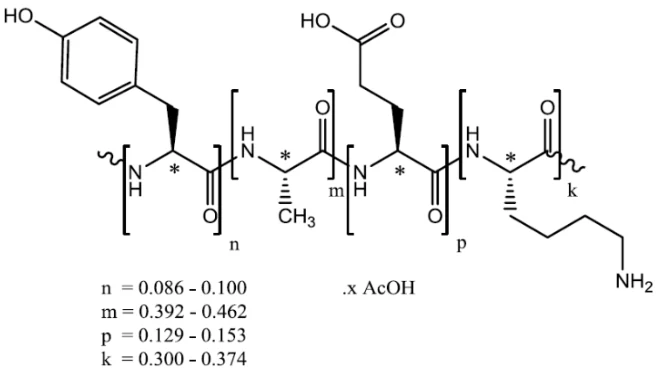
Physicochemical properties: Glatiramer acetate is a white to off white powder and is soluble in water and insoluble in heptane. A solution of 1 % (m/V) in water has a pH value of 5.5 – 7.0.
14. Clinical Trials
14.1 Clinical Trials by Indication
Relapsing Remitting Multiple Sclerosis (RRMS)
Physico-chemical characterization studies and non-clinical pharmacology and toxicology studies have demonstrated similarity between GLATECT and COPAXONE to support the use of surrogate MRI endpoints for evaluation of therapeutic equivalence.
GLATECT was evaluated in a multi-center, pivotal, randomized, double-blind, placebo-controlled, parallel-group, 9-month, equivalence trial (GATE) comparing the efficacy and safety and tolerability of GLATECT to COPAXONE in patients with RRMS. This was followed by 15 months of open-label treatment with GLATECT to evaluate the long-term safety and efficacy. In this study, a dose of 20 mg/day was used. The primary objective in the double-blind phase was to demonstrate that the efficacy of GLATECT is equivalent to COPAXONE as measured by the number of gadolinium-enhancing (GdE) lesions on T1-weighted MRIs during Months 7 to 9.
Study Demographics and Trial Design
Table 4 - Summary of Patient Demographics for Clinical Trials in RRMS
| Study | Study design | Dosage, route of administration and duration | Study subjects (n) | Age (range) | Sex |
| GATE | Double-blind, randomized, placebo and active controlled, equivalence trial - 9 months | 1 ml sc injection once daily: GLATECT 20 mg COPAXONE 20 mg Placebo | GLATECT: 353 COPAXONE: 357 Placebo: 84 | 33.1 (18-56) | Females: 66.5 % Males: 33.5% |
| Uncontrolled open-label safety trial - 15 months | 1 ml sc injection once daily: GLATECT 20 mg | GLATECT/GLATECT: 324 | 33.1 (18-56) | Females: 66.2 % Males: 33.8% | |
COPAXONE / GLATECT: 323 | |||||
| Placebo/GLATECT: 81 | |||||
GLATECT: Glatiramer acetate 20 mg/mL prefilled syringe; s.c.: subcutaneous
The equivalence trial was conducted in a representative RRMS population with clinically and radiographically active disease. The treatment groups were comparable for demographic and other baseline and disease characteristics. Patients were diagnosed with RRMS according to the revised McDonald criteria (2010) and experienced at least one relapse in the year before first screening assessment. Patients also had at least one T1-GdE lesion on routine brain MRI taken within 3 months of screening and had scores of no more than 5.5 on the Kurtzke Expanded Disability Status Scale (EDSS), a standard scale ranging from 0 (normal) to 10 (death due to MS).
Study Results
The primary efficacy analysis consisted of 2 parts: the assay sensitivity to determine whether the combined active treatments GLATECT and COPAXONE were superior to placebo and the equivalence analysis to determine whether GLATECT was equivalent to COPAXONE in the number of T1-GdE lesions at Months 7, 8 and 9. The outcome in the Full Analysis Set (FAS) was considered the primary outcome for the trial; the outcome was also supported from results in the Per Protocol Set.
In the FAS, the upper limit of the 95% CI for the ratio of the number of T1-GdE lesions during Months 7 to 9 of GLATECT and COPAXONE combined over placebo was less than 1 (upper limit 95% CI: 0.651), indicating that the combined active treatments were superior to placebo, hence confirming that the trial was appropriate to assess equivalence.
The least-squares mean of T1-GdE lesions at Months 7 to 9 was 0.447 in the GLATECT group and 0.408 in the COPAXONE group, thus the point estimate of the GLATECT/COPAXONE T1-GdE lesion ratio was 1.095 with a 95% CI of [0.883; 1.360] in the FAS. The 95% CI value was within the pre-defined equivalence interval [0.727; 1.375], indicating that GLATECT was therapeutically equivalent to COPAXONE in reducing the number of active brain lesions in patients with RRMS.
During the double-blind part of the study, formation of glatiramer acetate-reactive antibodies (ADA) was reported for a similar proportion of patients and comparable serum glatiramer ADA titer levels were reported in both groups. Switching from COPAXONE to GLATECT treatment in the open-label part had no impact on the incidence or titer levels of ADA.
Clinical Trials Conducted to Support Approval of Other Glatiramer Acetate Products
The efficacy of another glatiramer acetate product was evaluated in two placebo-controlled trials in patients with Relapsing Remitting MS (RRMS). In a third placebo-controlled study the effects of glatiramer acetate on MRI parameters were assessed.
The first trial was a pilot study (BR-1) which was conducted at a single-center and was a double-blind, randomized, matched-pair, parallel group placebo-controlled trial. Fifty patients with RRMS were randomized to receive 20 mg/day glatiramer acetate (n=25) or placebo (n=25) subcutaneously. The protocol-specified primary outcome measure was the proportion of patients who were relapse free during the 2-year duration of the trial, but two additional relevant outcomes were also specified as endpoints: frequency of attacks during the trial, and the change in the number of attacks compared to the rate of attacks in the 2 years prior to study entry. Results from this study (see Table 5) show that there was a statistically significant effect of glatiramer acetate on number of relapses.
Table 5 – Trial BR-1: Efficacy Results
| Outcomea | Glatiramer acetate n=25 | Placebo n=25 | p-Value |
|---|---|---|---|
| % Relapse Free Patients | 14/25 (56%) | 7/25 (28%) | 0.085 |
| Mean Relapse Frequency | 0.6/2 years | 2.4/2 years | 0.005 |
| Reduction in Relapse Rate compared to pre-study | 3.2 | 1.6 | 0.025 |
| Median Time to First Relapse (days) | >700 | 150 | 0.03 |
| % of Progression-Free* Patients | 20/25 (80%) | 13/25 (52%) | 0.07 |
aThe primary efficacy measure was the proportion of patients who were relapse free during the 2 year duration of the trial (% Relapse Free). Analyses were based on the intent-to-treat population.
* Progression defined as an increase of at least 1 point on the DSS that persists for at least 3 consecutive months.
The second study (01-9001) was a multicenter double-blind, randomized, placebo-controlled trial. Two hundred and fifty-one patients with RRMS were randomized to receive 20 mg/day glatiramer acetate (n=125) or placebo (n=126) subcutaneously. Patients were diagnosed with RRMS by Poser criteria, and had at least 2 exacerbations during the 2 years immediately preceding enrollment. Patients had a score of no more than 5 on the Kurtzke Expanded Disability Scale Score (EDSS), a standard scale ranging from 0 (normal) to 10 (death due to MS). A score of 5 is defined as one at which a patient is still ambulatory but for whom full daily activities are impaired due to disability, a score of 6 is defined as one at which the patient is still ambulatory but requires assistance and a score of 7 on this scale means that the patient requires a wheelchair.
Patients were seen every 3 months for 2 years, as well as within several days of a presumed exacerbation. In order for an exacerbation to be confirmed, a blinded neurologist had to document objective neurologic signs, as well as document the existence of other criteria (e.g., the persistence of the lesion for at least 48 hours).
The protocol-specified primary outcome measure was the mean number of relapses during treatment.
Table 6 shows results of the analysis of primary as well as several secondary outcome measures at two years based on the intent-to-treat population.
Table 6 – Trial 01-9001: Core (24-month) Double-Blind Study: Effect on Relapse Rate
| Outcomea | Glatiramer acetate n=125 | Placebo n=126 | p-Value |
|---|---|---|---|
| Mean No of Relapses/2 yearsb | 1.19 | 1.68 | 0.007* |
| % Relapse Free Patients | 42/125 (34%) | 34/126 (27%) | 0.25 |
| Median Time to First Relapse (days) | 287 | 198 | 0.23 |
| % of Patients Progression Freec | 98/125 (78%) | 95/126 (75%) | 0.48 |
| Mean Change in EDSS | -0.05 | +0.21 | 0.023 |
a The primary efficacy measure was the number of relapses during treatment. Analyses were based on the intent-to-treat population.
b Baseline adjusted mean
c Progression defined as an increase of at least 1 point on the EDSS that persists for at least 3 consecutive months.
* Analysis of Covariance adjusted for baseline EDSS, prior 2-year relapse rate and study centers. ANCOVA or analysis of covariance is a statistical test used to adjust for covariate differences between the treatment and control groups which may confound the true treatment effect when one or more factors are not balanced across treatment groups.
The effects of glatiramer acetate on relapse severity were not evaluated in either trial.
Both studies showed a beneficial effect of glatiramer acetate on relapse rate, and on this basis glatiramer acetate is considered effective.
The third study (9003) was a multi-national, multi-center, MRI-monitored study. A total of 239 patients with RRMS (119 on glatiramer acetate and 120 on placebo) were randomized.
Inclusion criteria were similar to those in Study 01-9001 with the additional criteria that patients had to have at least one Gd-enhancing lesion on the screening MRI. The patients were treated initially in a double-blind manner for nine months, during which they underwent monthly MRI scanning. The primary endpoint for the double-blind phase was the total cumulative number of T1 Gd-enhancing lesions over nine months. Other MRI parameters were assessed as secondary endpoints. Table 7 summarizes the results for the parameters monitored during the nine-month double-blind phase for the intent-to-treat cohort. Because the link between MRI findings and the clinical status of patients is contentious, the prognostic value of the following statistically significant findings is unknown.
Table 7 – Trial 9003: Nine-Month Double-Blind Phase: MRI Endpoints - Results
| No. | Outcome | Glatiramer Acetate (n=113) | Placebo (n=115) | p-value |
|---|---|---|---|---|
| Primary Endpoint | ||||
| 1 | Medians of the Cumulative Number of T1 Gd-Enhancing Lesions | 12 | 17 | 0.0037 |
| Secondary Endpoints | ||||
| 2 | Medians of the Cumulative Number of New T1 Gd-Enhancing Lesions | 9 | 14 | 0.0347 |
| 3 | Medians of the Cumulative Number of New T2 Lesions | 5 | 8 | 0.01 |
| 4 | Medians of the Cumulative Change from Baseline in volumes (mL) of T1 Gd-Enhancing Lesions | -0.309 | 0 | 0.0248 |
| 5 | Medians of the Cumulative Change from Baseline in volumes (mL) of T2 Lesions | 8.852 | 13.566 | 0.0229 |
| 6. | Medians of the Cumulative Change from Baseline in volumes (mL) of T1 Hypointense Lesions | 1.642 | 1.829 | 0.7311 |
| Proportion of T1 Gd-Enhancing Lesion-Free Patients | 46.4% | 32.2% | 0.0653 | |
The mean number of relapses in this 9 month study was 0.50 for the glatiramer acetate group and 0.77 for the placebo group (p = 0.0077).
Patients with early RRMS
A fourth study (GA/9010) was a multicenter, randomized, double-blind, placebo-controlled, parallel group study involving 481 patients for up to three years (glatiramer acetate 20 mg/day: n=243; placebo: n=238). It was performed in patients with a well-defined, single, unifocal neurological presentation and with at least two cerebral lesions on T2-weighted MRI (previously referred to as "clinically isolated syndrome"). The primary outcome measure in the study was the time to development of a second exacerbation according to Poser criteria. Secondary outcomes were brain MRI measures including number of new T2 lesions and T2 lesion volume.
Time to development of a second exacerbation was significantly delayed in the glatiramer acetate group corresponding to a risk reduction of 45% (Hazard Ratio = 0.55; 95% CI [0.40; 0.77], p=0.0005).
Glatiramer acetate prolonged the time to second exacerbation by 386 (115%) days, from 336 days in the placebo group to 722 days in the glatiramer acetate group (based on the 25th percentile; Kaplan-Meier estimates).
A total of 25% of glatiramer acetate patients, and 43% of placebo patients experienced a second exacerbation in an average duration of treatment of 2.4 years.
The benefit of treatment with glatiramer acetate over placebo was also demonstrated in two secondary MRI-based endpoints. The number of new T2 lesions at last observed value (LOV) was significantly lower (p<0.0001) for patients on glatiramer acetate, demonstrating a treatment effect of 58% for glatiramer acetate over placebo (mean number of new T2 lesions at LOV was 0.7 for glatiramer acetate and 1.8 for placebo). Additionally, baseline-adjusted T2 lesion volume at LOV showed a significant reduction (p=0.0013) of 13% for glatiramer acetate over placebo (median change in T2 volume from baseline to LOV was 0.7 mL on glatiramer acetate and 1.3 mL on placebo).
However, the impact of early treatment with glatiramer acetate 20 mg/mL once-daily on the long -term evolution of the disease is unknown as the study was mainly designed to assess the time to the second exacerbation event.
15. Microbiology
No microbiological information is required for this drug product.
16. Non-Clinical Toxicology
General toxicology
Acute Toxicity
Glatiramer acetate was well tolerated following a single subcutaneous injection at a dose of 400 mg/kg in the rat. No toxic effects were noted.
After intravenous administration of 200 mg/kg in the rat, severe morbidities with about 10% mortalities were recorded. At 40 mg/kg, no mortalities occurred and only transient tremor was noted in one animal.
Long-Term Toxicity (Subchronic and Chronic)
Toxicity and reproductive studies were performed with glatiramer acetate involving 560 rats treated for up to 6 months, 68 rabbits treated for up to 2 weeks, 23 dogs treated for up to 3 months and 32 monkeys treated for up to 1 year. The several deaths that occurred (5 rats in the 6-month study, 2 rats in the 4-week study, 1 rat in the segment III reproduction study and 1 monkey in the 1-year study) were judged as incidental and unrelated to treatment.
Chronic and subchronic daily subcutaneous injections were systemically well tolerated at doses of up to 30 mg/kg/day for periods extending for up to 6 months in the rat and up to one year in the monkey.
In aging male rats (at the end of the life-span carcinogenicity study), there was a small increase in the incidence of glomerulonephritis. The NOAEL for this finding was 7.5 mg/kg/day.
At doses of 30 mg/kg and above some findings such as slight reduction in body weight gain, and occasional minor changes in blood chemistry and hematological parameters were noted. These findings were noted in some studies and not in others, and were without any clinical sequelae. No remarkable findings were noted in ophthalmoscopic or in EKG evaluations. In monkeys treated with 30 mg/kg/day there were some evidence for over immune stimulations such as an increase in the titer of antinuclear antibodies, an increase in the incidence of germinal centers in the bone marrow and of minor chronic focal fibrosing arterial lesions. The association of these findings to treatment is uncertain and the NOAEL for these findings was set to 10 mg/kg/day.
Based on these findings, the NOAEL for the systemic effects of glatiramer acetate in chronic studies is considered to be 7.5 mg/kg.
Local lesions at the injection sites were consistently observed in all studies and were dose related. At doses of 30 mg/kg/day and above in the rat and the monkey, injection site reactions were clinically significant and poorly tolerated.
Repeat-dose toxicity studies were performed to demonstrate comparability of the toxicological profiles of GLATECT and COPAXONE. In rats, treatment with 10 or 40 mg/kg/day GLATECT for up to 90 days resulted in effects that were comparable in nature, incidence and severity to those seen with COPAXONE at equivalent dosing levels. The tissue responses at the injection sites represented a normal tissue response to the presence of foreign material, and by the end of the recovery periods had partially or completely resolved. No additional safety issues were identified.
Genotoxicity
Glatiramer acetate showed a marginal and inconsistent effect on structural chromosomal aberrations in cultured human lymphocytes. Chromosomal aberrations or abnormalities did not occur in bone marrow cells of mice given 140 mg/kg glatiramer acetate, equivalent to approximately 60% of the LD50/kg, i.p. Glatiramer acetate, with or without metabolic activation, did not induce point mutations in four strains of Salmonella typhimurium, two strains of Escherichia coli, or mouse lymphoma L5178Y cell cultures.
Carcinogenicity
Two life-span carcinogenicity studies with glatiramer acetate, one in mice and one in rats, were completed. Results from the two carcinogenicity studies do not suggest any evidence of carcinogenic potential related to glatiramer acetate administered subcutaneously to rats and mice, at dose levels of up to 60 mg/kg/day.
In the two-year carcinogenicity study in the mouse, repeated administration of doses up to 60 mg/kg/day, showed no evidence for systemic carcinogenicity. In males of the high dose group (60 mg/kg/day), but not in females, there was an increased incidence of fibrosarcomas at the injection sites. These rapidly growing sarcomas, consisting of spindle or fusiform cells with local invasion but no metastasis, were associated with skin damage precipitated by repetitive injections of an irritant over a limited skin area.
In a two-year carcinogenicity study in rats, subcutaneous administration of glatiramer acetate at a dose of 30 mg/kg/day was associated with an increased incidence of benign adrenal pheochromocytomas in males only. This effect was not seen at 15 mg/kg/day and was within the historical control values for the testing laboratory.
Reproductive and developmental toxicology
In fertility and reproduction studies in rats, glatiramer acetate at doses up to 36 mg/kg/day had no adverse effects on reproductive parameters.
Embryofetal development toxicity studies have been performed in rats and rabbits at doses up to approximately 37.5 mg/kg and have revealed no evidence of impaired development of the fetus due to glatiramer acetate.
Peri- and post-natal development toxicity studies did not reveal any effect on the development and reproductive performances of pups born to female rats that were dosed until weaning of the pups with glatiramer acetate at doses up to 36 mg/kg.
Antigenicity Studies
Studies to assess anaphylaxis in sensitized guinea pigs and mice showed that glatiramer acetate elicited IgG activity but very low or no IgE activity.
17. Supporting Product Monographs
- 1. COPAXONE® solution, 20 mg / mL and 40 mg / mL, control number 292223, product monograph, Teva Canada Innovation. (2025-04-11)