


Product Monograph - Joenja
Recent Major Label Changes
Not applicable.
Table of Contents
Certain sections or subsections that are not applicable at the time of the preparation of the most recent authorized product monograph are not listed.
Recent Major Label Changes ................................................................................................... 2
Table of Contents ................................................................................................................... 2
Part 1: Health Professional Information .................................................................................. 4
1 Indications .................................................................................................................. 4
1.1 Pediatrics .............................................................................................................. 4
1.2 Geriatrics .............................................................................................................. 4
2 Contraindications ........................................................................................................ 4
4 Dosage and Administration ......................................................................................... 4
4.1 Dosing Considerations .......................................................................................... 4
4.2 Recommended Dose and Dosage Adjustment ..................................................... 4
4.4 Administration ...................................................................................................... 5
4.5 Missed Dose ......................................................................................................... 5
5 Overdose..................................................................................................................... 5
6 Dosage Forms, Strengths, Composition, and Packaging ............................................... 5
7 Warnings and Precautions ........................................................................................... 6
7.1 Special Populations ............................................................................................... 6
7.1.1 Pregnancy ......................................................................................................... 6
7.1.2 Breastfeeding ................................................................................................... 6
7.1.3 Pediatrics .......................................................................................................... 7
7.1.4 Geriatrics .......................................................................................................... 7
8 Adverse Reactions ....................................................................................................... 7
8.1 Adverse Reaction Overview .................................................................................. 7
8.2 Clinical Trial Adverse Reactions ............................................................................ 7
8.2.1 Clinical Trial Adverse Reactions – Pediatrics ..................................................... 8
8.3 Less Common Clinical Trial Adverse Reactions ..................................................... 9
8.4 Abnormal Laboratory Findings: Hematologic, Clinical Chemistry and Other
Quantitative Data ............................................................................................................. 9
9 Drug Interactions ...................................................................................................... 10
9.3 Drug-Behavioural Interactions ............................................................................ 10
9.4 Drug-Drug Interactions ....................................................................................... 11
9.5 Drug-Food Interactions ....................................................................................... 13
9.6 Drug-Herb Interactions ....................................................................................... 13
9.7 Drug-Laboratory Test Interactions ...................................................................... 13
10 Clinical Pharmacology ............................................................................................... 13
10.1 Mechanism of Action .......................................................................................... 13
10.2 Pharmacodynamics ............................................................................................ 13
10.3 Pharmacokinetics ............................................................................................... 13
11 Storage, Stability, and Disposal ................................................................................. 15
Part 2: Scientific Information ................................................................................................ 16
13 Pharmaceutical Information ...................................................................................... 16
14 Clinical Trials ............................................................................................................. 16
14.1 Clinical Trials by Indication ................................................................................. 16
15 Microbiology ............................................................................................................. 20
16 Non-Clinical Toxicology ............................................................................................. 20
Patient Medication Information ........................................................................................... 22
Part 1: Health Professional Information
1 Indications
JOENJA (leniolisib) is indicated for:
- the treatment of activated phosphoinositide 3-kinase delta (PI3Kδ) syndrome (APDS) in adults and pediatric patients 12 years of age and older.
1.1 Pediatrics
Pediatrics (≥ 12 years of age): Based on the data submitted and reviewed by Health Canada, the safety and efficacy of JOENJA in pediatric patients ≥ 12 years of age and weighing ≥ 45 kg has been established. Therefore, Health Canada has authorized an indication for pediatric use.
1.2 Geriatrics
Geriatrics (> 65 years of age):
Clinical studies of JOENJA did not include any patients 65 years of age and older, thus it is not known if these patients respond differently from younger adult patients.
2 Contraindications
- Leniolisib is contraindicated in patients who are hypersensitive to this drug or to any ingredient in the formulation, including any non-medicinal ingredient, or component of the container. For a complete listing, see 6 Dosage Forms, Strengths, Composition, and Packaging.
4 Dosage and Administration
4.1 Dosing Considerations
Verify pregnancy status in female patients of reproductive potential prior to initiating treatment with JOENJA.
Due to the potential for drug interactions with JOENJA, a washout period may be required prior to concomitant dosing with certain medications (see 9 Drug Interactions).
The safety of JOENJA has not been established in patients with recent or concurrent use of immunosuppressive medications.
Advise patients that if vomiting occurs within 1 hour after taking JOENJA, take JOENJA as soon as possible. If vomiting occurs more than 1 hour after dosing, wait and take the next dose at the usual time.
4.2 Recommended Dose and Dosage Adjustment
The recommended dosage for JOENJA in adult and pediatric patients 12 years of age and older, and weighing 45 kg or more is 70 mg orally twice daily, approximately 12 hours apart. There is no recommended dosage for patients weighing less than 45 kg.
Geriatrics (> 65 years of age): The safety and efficacy of JOENJA in patients over the age of 65 years have not been established.
Pediatrics (< 12 years of age): The safety and efficacy of JOENJA in pediatric patients less than 12 years of age and/or below the weight of 45 kg have not been established.
Hepatic impairment: JOENJA has not been studied in patients with hepatic impairment. Use of JOENJA in patients with moderate to severe hepatic impairment is not recommended (see 10.3 Pharmacokinetics, Special Populations and Conditions, Hepatic Insufficiency).
4.4 Administration
JOENJA is for oral use only.
The film-coated tablet can be taken with or without food.
4.5 Missed Dose
If a dose is missed by less than 6 hours the patient should take the dose then resume the normal dosing schedule. If a dose is missed by more than 6 hours, the patient should not take the missed dose but resume dosing at the next scheduled time.
5 Overdose
If overdose occurs, the patient must be monitored for evidence of toxicity. Treatment of overdose with JOENJA consists of general supportive measures including monitoring of vital signs as well as observation of the clinical status of the patient.
For the most recent information in the management of a suspected drug overdose, contact your regional poison control centre or Health Canada’s toll-free number, 1-844 POISON-X (1-844-764-7669).
6 Dosage Forms, Strengths, Composition, and Packaging
Table 1 – Dosage Forms, Strengths, and Composition
Description
JOENJA 70 mg is available as a yellow, oval-shaped, biconvex, bevelled edge film-coated tablet debossed with “70” on one side and “LNB” on the other side. The product is supplied in bottles of 60 tablets.
| Route of Administration | Dosage Form/ Strength/Composition | Non-medicinal Ingredients |
| Oral | Tablet/ 70 mg leniolisib (as leniolisib phosphate) | colloidal silicon dioxide, hydroxypropyl methylcellulose, iron oxide red, iron oxide yellow, lactose monohydrate, magnesium stearate, microcrystalline cellulose, polyethylene glycol, sodium starch glycolate (Type A), talc, titanium dioxide |
7 Warnings and Precautions
General
Due to the limited information about APDS, management should be implemented in coordination with health professionals experienced in treating the condition. A registry (the European Society for Immunodeficiencies [ESID]-APDS) has been established to collect data on the natural history of disease, treatment, and outcome of patients with APDS. Information is available at https://esid.org/Working-Parties/Registry-Working-Party/ESID-Registry.
Reproductive Health
Fertility
There are no data on the effects of JOENJA on human fertility.
Results from animal studies indicate that JOENJA may impair male fertility (see 16 Non-Clinical Toxicology).
Verify pregnancy status in females of reproductive potential prior to initiating treatment with JOENJA. Advise pregnant women of the potential risk to a fetus. JOENJA is not recommended in women of childbearing potential not using highly effective methods of contraception. Advise females of reproductive potential to use highly effective methods of contraception during treatment and for 1 week after the last dose.
7.1 Special Populations
7.1.1 Pregnancy
There are no data on the use of JOENJA in pregnant women or on human embryofetal development. JOENJA may cause fetal harm based on findings from animal studies.
In animal reproduction studies, oral administration of leniolisib to pregnant rats and rabbits during the period of organogenesis at exposures approximately 2-6 times the human exposure based on the steady state AUC0-24h total at the recommended dose of 70 mg twice a day produced embryofetal toxicity, including malformations.
JOENJA is not recommended during pregnancy. Advise pregnant women of the potential risk to a fetus (see 16 Non-Clinical Toxicology).
7.1.2 Breastfeeding
There are no data on the use of JOENJA in lactating women. It is unknown whether leniolisib or its metabolites are excreted in human milk, or its effect on milk production or the breastfed child.
Animal studies have shown excretion of leniolisib in milk at higher concentrations than those found in maternal blood samples. During the preweaning period, adverse effects including decreased survival, reduced weight, and delayed growth were observed in rat pups (see 16 Non-Clinical Toxicology).
Due to the potential of serious adverse reactions from leniolisib, a risk to newborns/infants cannot be excluded. Advise women not to breastfeed during treatment with JOENJA and for 1 week after the last dose.
7.1.3 Pediatrics
Pediatrics (< 12 years of age): Safety and efficacy of JOENJA have not been established in pediatric patients less than 12 years of age and/or weighing less than 45 kg.
7.1.4 Geriatrics
Geriatrics (> 65 years of age): The safety and efficacy of JOENJA in patients over the age of 65 years have not been established.
8 Adverse Reactions
8.1 Adverse Reaction Overview
The most commonly reported adverse events (> 15%) during leniolisib treatment in Study 2201 (including the up-titration, dose-finding portion [Part 1]; the randomised portion [Part 2]; and the open-label extension [2201E1]) were COVID-19 (28.9%), headache (28.9%), upper respiratory tract infection (28.9%), sinusitis (23.7%), pyrexia (21.1%), diarrhea, otitis externa, and vomiting (15.8% each).
The most common serious adverse events (> 5%) reported were abdominal pain and pneumonia (2 patients [5.4%] each).
Skin rash is a known class effect of PI3K inhibitors. Leniolisib-associated skin rashes were primarily observed in healthy participants and non-APDS patients in the leniolisib clinical development program.
8.2 Clinical Trial Adverse Reactions
Clinical trials are conducted under very specific conditions. The adverse reaction rates observed in the clinical trials, therefore, may not reflect the rates observed in practice and should not be compared to the rates in the clinical trials of another drug. Adverse reaction information from clinical trials may be useful in identifying and approximating rates of adverse drug reactions in real-world use.
The safety of JOENJA was evaluated in adult and pediatric patients ≥ 12 years of age with APDS in the randomised, phase 3, placebo-controlled portion of Study 2201. All patients were treated with 70 mg leniolisib (N=21) or placebo (N=10) twice daily for 12 weeks. The study enrolled 19 adult and 12 pediatric patients. Additional safety data were collected in the open-label extension portion of the same study.
Table 2 lists the adverse reactions reported in ≥ 5% of patients treated with JOENJA in the randomised portion of Study 2201 (Part 2).
Table 2 – Adverse Reactions Reported by 2 or More Patients Receiving JOENJA in the Randomised Portion of the Pivotal 2201 Study
| System Organ Class / Preferred Term | JOENJA (N = 21) | Placebo (N = 10) |
|---|---|---|
| n (%) | n (%) | |
| Gastrointestinal disorders | ||
| Abdominal pain1 | 2 (10) | 2 (20) |
| Diarrhea | 2 (10) | 0 |
| General disorders and administration site conditions | ||
| Fatigue | 2 (10) | 1 (10) |
| Pyrexia | 2 (10) | 0 |
| Infections and infestations | ||
| Sinusitis | 4 (19) | 0 |
| Musculoskeletal and connective tissue disorders | ||
| Back pain | 2 (10) | 0 |
| Neck pain | 2 (10) | 0 |
| Nervous system disorders | ||
| Headache | 5 (24) | 2 (20) |
| Skin and subcutaneous tissue disorders | ||
| Dermatitis atopic and eczema2 | 3 (10) | 0 |
| Alopecia | 2 (10) | 0 |
1Abdominal pain: including abdominal pain, abdominal discomfort, and abdominal pain upper.
2Treatment with topical corticosteroids (e.g., triamcinolone, betamethasone), non-sedating antihistamines, and systemic corticosteroids (e.g., prednisone <25 mg/day) was allowed for all patients and was based on severity and duration of skin rashes.
Thirty-seven eligible patients enrolled in the open-label long-term extension study (Study 2201E1). Of these, 26 patients had previous exposure to leniolisib in Study 2201 and 11 patients had no previous exposure (9 had received placebo in earlier portions of Study 2201 and 2 had previously used another PI3Kδ inhibitor). At the time of the data extract, 31 (84%) patients were ongoing in the study and six (16%) had discontinued treatment (2 due to adverse events). Thirty-seven patients continued treatment with JOENJA 70 mg twice daily for 60 weeks, and 81% were exposed for 96 weeks or longer, corresponding to approximately 120 patient-exposure years. The median duration of JOENJA treatment was approximately 3 years, and 5 patients had more than 5 years of JOENJA exposure.
The most common adverse events reported in Study 2201E1 (≥ 15%) were COVID-19 (29.7%), upper respiratory tract infection (27.0%), headache (18.9%), and pyrexia (18.9%). The most commonly reported adverse events considered to be related to leniolisib in the extension study (but not previously reported in the same patients in the pivotal portion of the study) were weight increased (8.1%), hyperglycemia, neutrophil count decreased, and arthralgia (2.7% each). The majority of the adverse events reported overall were mild-to-moderate, and no serious adverse events were considered to be related to leniolisib.
8.2.1 Clinical Trial Adverse Reactions – Pediatrics
Thirteen adolescent patients aged 12 to 17 were treated with leniolisib in the clinical trials. Alopecia was reported only in pediatric patients (4/13; 31%) and investigator-reported weight gain was observed more commonly in the pediatric patients (3/13; 23%) than adults. Overall, the frequency, type, and severity of adverse reactions in children are expected to be the same as in adults.
8.3 Less Common Clinical Trial Adverse Reactions
The following adverse reactions, considered by the investigator to be related to leniolisib, were reported in > 2% of patients treated with JOENJA in Studies 2201 Part 2 (N=21) and 2201E1 (N=37):
Gastrointestinal disorders: Aphthous ulcer (Study 2201 Part 2 n=1, 4.8%); vomiting (Study 2201 Part 2 n=1, 4.8%)
Investigations: Weight increased (Study 2201 Part 2 n=1, 4.8%; Study 2201E1 n=3, 8.1%).
Metabolism and nutrition disorders: Hyperglycemia (Study 2201E1 n=1, 2.7%)
Musculoskeletal and connective tissue disorders: Arthralgia (Study 2201E1 n=1, 2.7%)
Nervous system disorders: Taste disorder (Study 2201 Part 2 n=1, 4.8%)
8.4 Abnormal Laboratory Findings: Hematologic, Clinical Chemistry and Other Quantitative Data
Pivotal Study Findings (2201, Part 2)
Table 3 presents select hematological abnormalities that were considered to be clinically relevant to APDS. Other abnormalities were excluded.
Table 3 – Treatment-Emergent Hematological Laboratory Abnormalities After Exclusion of Baseline and Non-Treatment-Related Findings (Safety Population)
| JOENJA N=21 | Placebo N=10 | |||||||||||||
|---|---|---|---|---|---|---|---|---|---|---|---|---|---|---|
| Laboratory abnormalitya | All Grades n (%) | Grade 3 n (%) | All Grades n(%) | Grade 3 n(%) | ||||||||||
| Hematologic parameters | ||||||||||||||
| Hemoglobin decreased | 10 (48) | 0 (0) | 3 (30) | 0 (0) | ||||||||||
| Lymphocyte decreased | 7 (33) | 2 (10) | 1 (10) | 0 (0) | ||||||||||
| Neutrophil decreased | 15 (71) | 4 (19) | 1 (10) | 0 (0) | ||||||||||
| Platelet decreased | 2 (10) | 0 (0) | 1 (10) | 0 (0) | ||||||||||
| Eosinophils increasedb | 13 (61.9) | N/A | 2 (20.0) | N/A | ||||||||||
| Monocytes decreasedb | 14 (66.7) | N/A | 1 (10.0) | N/A | ||||||||||
| Monocytes increasedb | 3 (14.3) | N/A | 0 | N/A | ||||||||||
The analysis was conducted using the safety population (N=31). For each abnormality, captured according to CTCAE grade, n reflects the total number of patients with an abnormality reported at any subsequent visit after Day 1.
a Participants entering the study with hematologic laboratory abnormalities and normal values thereafter were not counted as findings in this analysis.
b Cell counts were reported as abnormally high or low, and not according to CTCAE grade.
Table 4 presents clinical chemistry laboratory abnormalities that were associated with laboratory-related adverse events and considered to be clinically relevant. Other abnormalities were excluded.
Table 4 – Clinically-Relevant Treatment-Emergent Clinical Chemistry Abnormalities (Safety Population)
| Clinical Chemistry parameters | Study 2201 Part 2 leniolisib N=21 | Study 2201 Part 2 placebo (N=10) |
|---|---|---|
| (Preferred terms) | n (%) | n (%) |
| Amylase increased | 1 (4.8) | 0 (0) |
| Aspartate aminotransferase increased | 1 (4.8) | 0 (0) |
| Lipase increased | 1 (4.8) | 0 (0) |
| Pancreatic enzymes increased | 1 (4.8) | 0 (0) |
| Protein urine present | 1 (4.8) | 0 (0) |
Parameters were identified using MedDRA-coded laboratory-related adverse events and corresponding clinical chemistry laboratory values.
Neutrophil count decreased
Seven (33%) patients receiving leniolisib in Study 2201 developed a transient and asymptomatic absolute neutrophil count (ANC) between 500 and 1500 cells/μL. No patients developed an ANC < 500 cells/μL, there were no reports of infection associated with neutropenia, and no intervention was required. The nadir was reached at day 15, after which the neutrophil counts recovered.
Open-label Extension (2201E1) Findings
During the long-term open-label extension (Study 2201E1), 11/37 (30%) patients experienced clinically-relevant Grade 3 or Grade 4 cytopenia-related hematologic laboratory abnormalities. These abnormalities, associated with laboratory-related adverse events, were observed predominantly in the lymphocyte, neutrophil, and hemoglobin parameters. Hemoglobin decreases were the most common finding, and 6/37 (16%) patients reached Grade 3 severity. One patient (3%) experienced recurrent Grade 4 lymphocyte decreases at two time points. Grade 3 neutrophil and lymphocyte decreases were each reported in 3/37 (8%) patients. Other hematologic laboratory abnormalities were excluded from this analysis.
Clinically-relevant treatment-emergent clinical chemistry abnormalities associated with laboratory-related adverse events were generally infrequent. Alanine aminotransferase increased was the most frequently reported clinical chemistry abnormality, occurring in 3/37 (8.1%) patients. Aspartate aminotransferase increased was reported in 2/37 (5.4%) patients. All other clinical chemistry abnormalities were each reported in 1/37 (2.7%) patients. No clinical chemistry abnormality associated with a laboratory-related adverse event occurred in more than 3/37 (8.1%) patients. Other clinical chemistry laboratory abnormalities were excluded from the analysis.
9 Drug Interactions
9.3 Drug-Behavioural Interactions
Leniolisib is metabolized by CYP1A1 and CYP1A2. Tobacco smoke is a moderate inducer of CYP1A2. Patients taking JOENJA are advised to reduce or completely refrain from smoking.
9.4 Drug-Drug Interactions
The drugs listed in Table 5 are based on either drug interaction studies or potential interactions due to expected magnitude and seriousness of the interaction.
Table 5 – Established or Potential Drug-Drug Interactions
| Drug Class | Source of Evidence | Effect | Clinical Comment |
| Drug Class | Source of Evidence | Effect | Clinical Comment |
| Agents that may increase leniolisib plasma concentrations | |||
| Strong CYP3A4 inhibitors | CT | Leniolisib is a CYP3A4 substrate. In a study of healthy adults, co-administration of leniolisib and itraconazole, a strong CYP3A inhibitor, resulted in a 2-fold increase in leniolisib exposure. | Avoid concomitant use of leniolisib with strong CYP3A4 inhibitors (e.g., cobicistat, danoprevir, dasabuvir, elvitegravir, indinavir, ketoconazole, lopinavir, ombitasvir, paritaprevir, posaconazole, ritonavir, saquinavir, telithromycin, tipranavir, troleandomycin, voriconazole). |
| Agents that may decrease leniolisib plasma concentrations | |||
| Strong and moderate CYP3A4 inducers | T | No interaction studies have been conducted with leniolisib and strong and moderate CYP3A4 inducers. Concomitant use may result in reduced leniolisib exposure and efficacy. | Avoid concomitant use of leniolisib with strong and moderate CYP3A4 inducers (e.g., avasimibe, carbamazepine, mitotane, phenobarbital, phenytoin, rifabutin, rifampin, bosentan, efavirenz, etravirine, genistein, modafinil, nafcillin, ritonavir, thioridazine, tipravavir). |
| Locally acting antacids | T | Leniolisib exhibits pH-dependent solubility, with lower solubility at higher pH-values. Co-administration with locally acting antacids may result in reduced leniolisib exposure and efficacy. | Magnesium-, aluminum-, and calcium-based locally acting antacids and sodium bicarbonate should be taken 2 hours before or 2 hours after leniolisib administration. |
| Agents that may have their plasma concentrations altered by leniolisib | |||
| CYP1A2 substrates with a narrow therapeutic index | In vitro | Time-dependent (irreversible) inhibition of CYP1A2 was observed in the presence of leniolisib in vitro. Leniolisib may potentially increase the systemic exposure of co-administered medicinal products primarily cleared by CYP1A2. | Avoid concomitant use with medicinal products that are primarily cleared by CYP1A2 and have a narrow therapeutic index (e.g., alosetron, caffeine, duloxetine, melatonin, ramelteon, tasimelteon, tizanidine). |
| OATP1B1, OATP1B3, and BCRP substrates | In vitro | In vitro, leniolisib is an inhibitor of the hepatic uptake and efflux transporters OATP1B1, OATP1B3, and BCRP. Leniolisib may potentially increase the systemic exposure of co-administered medicinal products that are mainly substrates of these transporters. | Avoid concomitant use with medicinal products that are OATP1B1, OATP1B3 and BCRP substrates (e.g., rosuvastatin, pitavastatin, letermovir). |
| MATE1, MATE2K, and OCT2 substrates | In vitro | In vitro, leniolisib is an inhibitor of the renal transporters MATE1, MATE2K, and OCT2. | Avoid concomitant use with medicinal products that are primarily MATE1, MATE2K, and OCT2 substrates (e.g., metformin). |
Legend: CT = Clinical Trial; T = Theoretical
Proton pump inhibitors: Pharmacokinetic results from APDS patients did not indicate that acid reducing agents (e.g., esomeprazole, lansoprazole, omeprazole, pantoprazole) have a clinically relevant effect on leniolisib systemic exposure.
CYP2D6 and P-gp inhibitors: Co-administration with quinidine (strong P-gp and CYP2D inhibitor) did not affect leniolisib exposure (AUC and Cmax). Leniolisib is not a sensitive substrate of P-gp and CYP2D6.
Oral contraceptives: Administration of leniolisib with a single dose oral contraceptive containing ethinylestradiol and levonorgestrel increased ethinylestradiol exposure by approximately 30% with no effect on levonorgestrel exposure. The increase in ethinylestradiol exposure is not expected to reduce the effectiveness of a combined oral contraceptive composed of ethinylestradiol and levonorgestrel.
Vaccines: No vaccine interaction studies have been performed using leniolisib. Vaccinations may be less effective if administered during leniolisib treatment.
9.5 Drug-Food Interactions
Avoid concomitant use with grapefruit juice and grapefruit, as they contain inhibitors of CYP34A and may increase leniolisib exposure.
JOENJA can be taken with or without food (see 10.3 Pharmacokinetics).
9.6 Drug-Herb Interactions
Avoid concomitant use of St. John’s Wort, as this herb is a strong inducer of CYP3A4 and may decrease leniolisib exposure.
Interactions with other herbal products have not been established.
9.7 Drug-Laboratory Test Interactions
Interactions with laboratory tests have not been established.
10 Clinical Pharmacology
10.1 Mechanism of Action
Leniolisib inhibits PI3K-delta by blocking the active binding site of PI3K-delta. In cell-based assays, leniolisib reduced pAkt pathway activity and inhibited proliferation and activation of B and T cell subsets. Gain-of-function variants in the gene encoding the p110-delta catalytic subunit or loss of function variants in the gene encoding the p85-alpha regulatory subunit each cause hyperactivity of PI3K-delta. Leniolisib inhibits the signalling pathways that lead to increased production of PIP3, hyperactivity of the downstream mTOR/Akt pathway, and to the dysregulation of B and T cells.
10.2 Pharmacodynamics
Ex vivo pharmacodynamics of leniolisib [proportion of phosphorylated Akt (pAkt)-positive B cells] were assessed intra-individually at 10, 30, and 70 mg twice daily for 4 weeks at each dose level in patients with APDS. Within the explored dose range, higher leniolisib plasma concentrations were generally associated with higher reduction of pAkt-positive B cells and higher doses were associated with a slightly higher peak reduction as well as more sustained reduction. Treatment with JOENJA 70 mg twice a day at steady state is estimated to produce time-averaged reduction of pAkt-positive B cells by approximately 80%.
Cardiac Electrophysiology
In a modeling and simulation study in healthy participants receiving leniolisib (N=118) at single doses ranging from 10 to 400 mg or multiple doses of 20 to 140 mg twice daily, no QTc prolongation with increasing leniolisib-concentration was identified. Over the range of concentrations in this study, no large mean increase in the QTc interval (>20 msec) was observed.
10.3 Pharmacokinetics
The systemic drug exposure (AUC and Cmax) of leniolisib increased dose proportionally within the studied range of doses (20 to 140 mg twice a day dosing and single doses of 10 to 400 mg). During twice daily dosing approximately 12 hours apart, leniolisib accumulates approximately 1.4-fold (range of 1.0 to 2.2) in achieving steady-state, consistent with an effective half-life (t1/2) of approximately 7 hours. Steady state drug concentrations can be expected to be reached after approximately 2 to 3 days of JOENJA treatment. The pharmacokinetics of leniolisib are similar between healthy participants and APDS patients.
Table 6 – Summary of JOENJA 70 mg Twice Daily Pharmacokinetic Parameters in Healthy Participants Under Fasted Condition
Cmax (ng/mL) | Tmax (h) | t½ (h) | AUCtau, ss (ng*h/mL) | CLss/F (L/h) | Vd | |
| Steady state | 3790 (1010) | 1.00 (0.50, 2.00) | 10.3 (5.24) | 20400 (7540) | 4.03 (1.85) | 45 L |
Cmax=maximum concentration; Tmax=time to maximum concentration; t1/2=elimination half-life associated with the terminal slope; AUCtau,ss=area under concentration-time curve from time zero to tau (dosing interval) hours at steady-state; CLss/F=total body clearance at steady-state; Vd=volume of distribution.
Values are arithmetic mean (SD) except for Tmax which is median (range).
Absorption
In a placebo controlled, single and multiple ascending dose study in healthy participants, leniolisib median time to maximum plasma concentration (Tmax) occurred at about 1 hour postdose. Tmax appeared independent of dose and was not altered after multiple oral doses.
Food effect
Co-administration of a single 70 mg dose of leniolisib with a high fat meal delayed the rate of absorption (Tmax) by 3 hours (0.64 h [fasting] to 3.51 h [fed]) and decreased Cmax on average by 41% but not the extent of absorption (AUC). The effect of food on leniolisib exposure is not expected to be clinically meaningful. Patients may therefore take leniolisib irrespective of food.
Distribution
The systemic decay in leniolisib plasma concentration over time is biexponential, indicating a distribution delay towards peripheral tissues. The median oral volume of distribution during the terminal phase ranged from 33 L to 57 L, indicating that leniolisib has a moderate to low volume of distribution. Leniolisib was highly (94.5%) bound to human plasma proteins in vitro.
Metabolism
Leniolisib was 60% metabolized by the liver, with CYP3A4 being the most predominant enzyme involved (95.4%) in the primary oxidative metabolism of leniolisib with minor contribution from other enzymes (3.5% CYP3A5, 0.7% CYP1A2 and 0.4% CYP2D6). Intestinal secretion by BCRP as well as extrahepatic CYP1A1 cannot be excluded as excretion routes.
Elimination
The mean recovery of total 14C-radioactivity following a single oral dose of 70 mg 14C-leniolisib was 92.5% (67.0% and 25.5% recovered via feces and urine, respectively) 168 hours postdose. Unchanged leniolisib (7.8%) was the predominant drug-related material recovered in urine.
Special Populations and Conditions
Pediatrics: Following a single 70 mg oral dose of leniolisib in APDS patients, leniolisib systemic exposures were comparable between pediatric patients (12 to 17 years of age) and adults (≥ 18 years of age), with median Tmax (ranging from 1 to 5 hours) reached approximately 3 hours post-dose in patients 12 to 17 years of age. The observed difference in the median Tmax between pediatric patients (12 to 17 years of age) and adults (≥ 18 years of age) is not clinically
- relevant given the PK variability and comparable concentration-time profiles between the two age groups.
- Hepatic Insufficiency: The effect of hepatic impairment on the pharmacokinetics of leniolisib has not been evaluated. As leniolisib is metabolized to a large extent by the liver (60%), use of JOENJA is not recommended in patients with moderate to severe hepatic impairment.
- Renal Insufficiency: No studies have been conducted to investigate the pharmacokinetics of leniolisib in renally impaired patients since renal clearance is a minor elimination pathway.
11 Storage, Stability, and Disposal
Store at room temperature (15°C to 30°C). Do not refrigerate. Keep out of the sight and reach of children.
JOENJA should not be disposed of via wastewater or household waste.
Healthcare professionals should advise their patients to return all unused or expired medications to pharmacy for proper disposal according to local requirements.
Part 2: Scientific Information
13 Pharmaceutical Information
Drug Substance
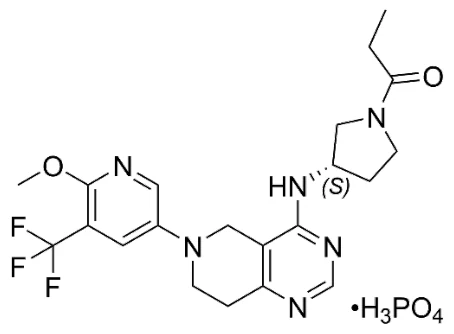
Non-proprietary name of the drug substance: leniolisib phosphate
Chemical name: 1-[(3S)-3-[[5,6,7,8-Tetrahydro-6-[6-methoxy-5-(trifluoromethyl)-3-pyridinyl] pyrido [4,3-d] pyrimidin-4-yl]amino]-1-pyrrolidinyl]-1-propanone phosphate (1:1)
Molecular formula and molecular mass: C21H25F3N6O2•H3PO4, 450.47 g/mol for the free base, 548.46 g/mol for the phosphate salt
Structural formula:
Physicochemical properties: Leniolisib phosphate is a white to yellowish to yellowish-greenish powder. The aqueous solubility of leniolisib phosphate is pH dependent with decreasing solubility observed with increasing pH: water, 29.7 mg/mL; hydrochloric acid, 8.88±0.95 mg/mL; citrate buffer (pH 4.2), 0.70±0.03; citrate buffer (pH 5.2), 0.09±0.01; phosphate buffer (pH 6.2), 0.04±0 mg/mL; phosphate buffer (pH 6.8), 0.04±0 mg/mL.
14 Clinical Trials
14.1 Clinical Trials by Indication
The clinical efficacy of JOENJA was evaluated in a randomised, triple-blinded, placebo-controlled study (Study 2201, Part 2) in patients with a confirmed APDS-associated genetic PI3Kδ mutation with a documented variant in either PIK3CD (APDS1) or PIK3R1 (APDS2). A summary of the pivotal study design is provided in Table 7.
Table 7 – Summary of Patient Demographics for Clinical Trials in APDS
| Study # | Study design | Dosage, route of administration, and duration | Study subjects (n) | Age (Range) | Sex |
| 2201, Part 2 | Randomised, triple-blinded, placebo-controlled | JOENJA 70 mg BID or placebo, orally, for 12 weeks | JOENJA: 21 Placebo: 10 | Mean: 23.7 years (12-75) | M: 15 (48.4%) F: 16 (51.6%) |
Male and female patients aged 12 years to 75 years and weighing at least 45 kg were permitted to enroll in Europe and North America.
Patient demographics and baseline characteristics are shown in Table 7. A total of 31 patients were randomised 2:1 to receive either JOENJA 70 mg (N = 21) or placebo (N = 10) twice daily for 12 weeks. Eligible patients were able to continue in a long-term safety extension study (Study 2201E1).
Overall, the median age was 20.0 years, 51.6% were female, 80.6% were Caucasian, 80.6% had APDS1 (PIK3CD mutation), and 58.1% and 19.4% were using glucocorticoids and intravenous IgG, respectively, at baseline. The study included 12 adolescent patients 12 to < 18 years of age (N=8 in the JOENJA arm and N=4 in the placebo arm). A summary of patient demographics and disease characteristics is reported in Table 8.
Table 8 – Summary of Patient Demographics and Baseline Disease Characteristics for Study 2201
| Demographics and Disease Characteristics | JOENJA (N=21) | Placebo (N=10) |
|---|---|---|
| Demographics and Disease Characteristics | JOENJA (N=21) | Placebo (N=10) |
| Demographics | ||
| Mean Age1 (years) (SD) | 22.2 (10.0) | 26.7 (13.4) |
Age Categories < 18, n (%) (Min, Max) ≥ 18, n (%) (Min, Max) | 8 (38) (12, 17) 13 (62) (18, 54) | 4 (40) (15, 17) 6 (60) (18, 48) |
Sex, n (%) Male Female | 11 (52) 10 (48) | 4 (40) 6 (60) |
Race, n (%) Asian White Other | 1 (5) 1 (5) 18 (86) 1 (5) | 1 (10) 1 (10) 7 (70) 1 (10) |
Ethnicity, n (%) Hispanic or Latino Not Hispanic or Latino Not reported | 0 14 (67) 7 (33) | 1 (10) 7 (70) 2 (20) |
| Disease Characteristics | ||
| APDS 1 (PIK3CD variant), n (%) | 16 (76) | 9 (90) |
| APDS 2 (PIK3R1 variant), n (%) | 5 (24) | 1 (10) |
| Concomitant glucocorticoids, n (%) | 12 (57) | 6 (60) |
| Concomitant immunoglobulin G (IgG), n (%) | 14 (67) | 7 (70) |
| Previous rapamycin/sirolimus use, n (%) | 4 (19) | 3 (30) |
1Patient age from study Day -4 up to initial JOENJA dosing
Patients had nodal and/or extranodal lymphoproliferation, as identified by the Cheson methodology on computed tomography (CT) or magnetic resonance imaging (MRI) as well as clinical findings and manifestations compatible with APDS (e.g., history of repeated oto-sino-pulmonary infections, lung and/or organ dysfunction). Immunosuppressive medications or PI3Kδ inhibitors (selective or non-selective) were prohibited within 6 weeks of baseline (Day -1 and the visit prior to first study drug administration) and throughout the study. In addition, patients using or who had previously used B cell depleters (e.g., rituximab) within 6 months of baseline were excluded from the study, unless absolute B lymphocytes in the blood were normal. B cell depleters were prohibited throughout the study. Use of immunoglobulin replacement therapy, antibiotics, and limited topical or oral steroid use was permitted during the study.
The co-primary efficacy endpoints were (1) improvement in lymphoproliferation as measured by the change from baseline in the log10-transformed sum of product diameters (SPD) of the index lesions (up to six of the largest lymph nodes) as per the Cheson methodology and (2) the normalization of immunophenotype as measured by the percentage of naïve B cells out of total B cells in patients with a baseline percentage of naïve B cells that was < 48% of total B cells. There was no inclusion criterion for participants to have a naïve B cell percentage < 48%. Some participants were, therefore, excluded, thus the analysis set used to assess the second co-primary endpoint included fewer patients (Table 9).
Treatment with JOENJA resulted in statistically significant improvement in both of the co-primary efficacy endpoints in Study 2201 (Table 9).
Table 9 – Results of Co-Primary Endpoints in the Placebo-Controlled Portion of Study 2201 in APDS at Week 12 (Pharmacodynamic Analysis Set*)
JOENJA (N=21) | Placebo (N=10) | ||||||||
|---|---|---|---|---|---|---|---|---|---|
| Log10-Transformed SPD of Index Lesions (Excluding Patients with 0 Lesions at Baseline)a | |||||||||
| nb | 18 | 8 | |||||||
| Baseline Mean (SD) | 3.03 (0.42) | 3.05 (0.39) | |||||||
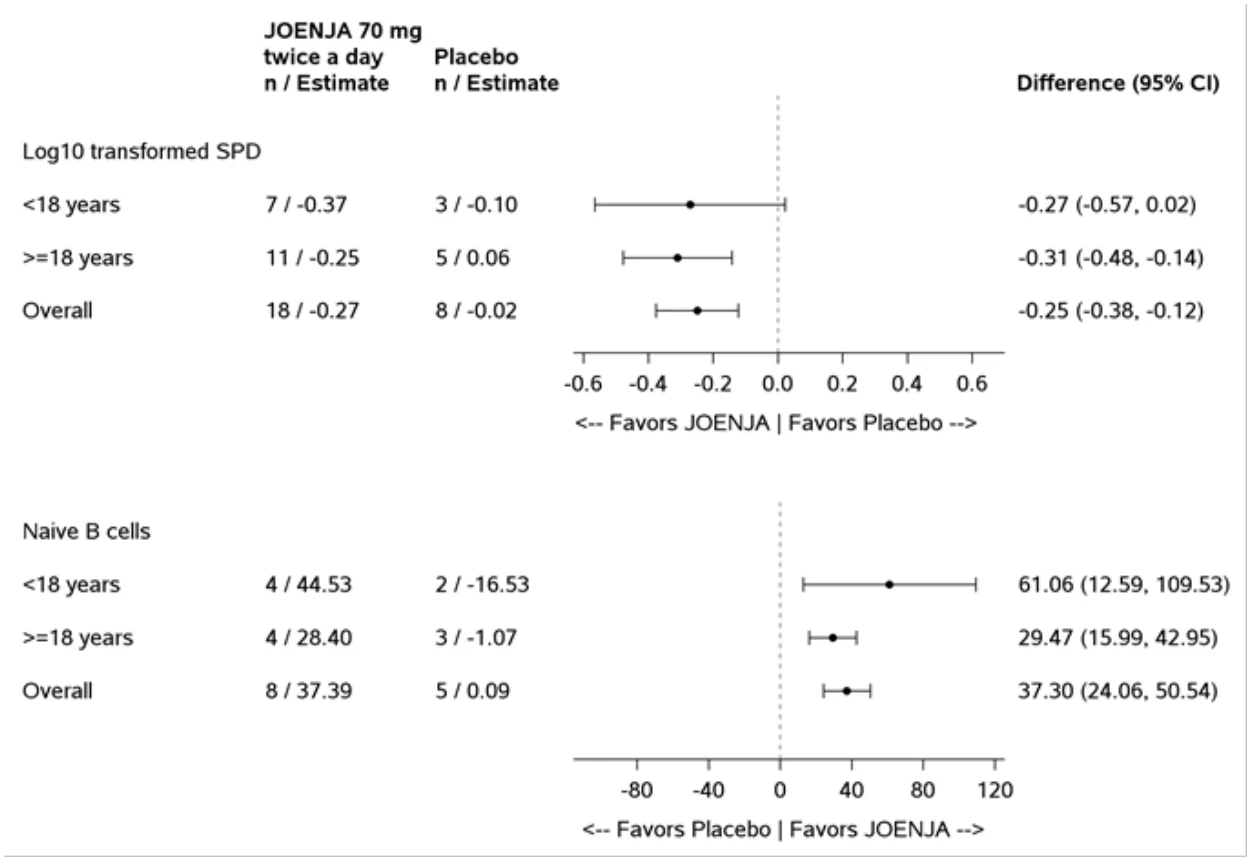
| Change from Baseline, LS Mean (SE) | -0.27 (0.04) | -0.02 (0.06) | |||||||
| Difference vs. Placebo (95% CI) | -0.25 (-0.38, -0.12) | ||||||||
| p-value | 0.0006 | ||||||||
| Percentage of Naïve B Cells out of Total B Cells (Patients with < 48% of Naïve B Cells at Baseline)c | |||||||||
| nd | 8 | 5 | |||||||
| Baselinee Mean (SD) | 27.16 (13.16) | 30.51 (7.97) | |||||||
| Change from Baseline, LS Mean (SE) | 37.39 (5.35) | 0.09 (6.66) | |||||||
| Difference vs. Placebo (95% CI) | 37.30 (24.06, 50.54) | ||||||||
| p-value | 0.0002 | ||||||||
*All patients who received any study drug and experienced no protocol deviations with relevant impact on pharmacodynamic data.
CI=confidence interval; SD= Standard deviation; SE=standard error; SPD=sum of product diameters; vs=versus; LS Mean: Least-squares mean
Note: The LS mean change from baseline, difference in LS mean change from baseline between JOENJA and placebo and its p-value were obtained from an Analysis of Covariance model with treatment, glucocorticoids use and immunoglobulin replacement therapy at baseline, and baseline measurement as covariates.
aChange in index lesion size was measured using the log10 transformed sum of the product of diameters (SPD) of the largest lymph nodes (maximum of 6) identified as per the Cheson criteria on CT/MRI.
bThe analysis excluded 2 patients from each treatment group due to protocol deviations and 1 JOENJA patient having complete resolution of the index lesion identified at baseline.
cCell surface markers used to distinguish naïve B cells on flow cytometry were CD19+ CD27- CD10-.
dThe analysis excluded 2 patients from each treatment group due to protocol deviations, 5 JOENJA patients and 3 placebo patients with more than or equal to 48% naïve B cells at baseline, 5 JOENJA patients with no Day 85 measurement, and 1 JOENJA patient with no baseline measurement.
eBaseline is defined as the arithmetic mean of the Baseline and Day 1 values when both were available, and if either value was missing, the existing value was used.
Figure 1 depicts the co-primary endpoints grouped by age (< 18 years of age vs ≥ 18 years of age).
Figure 1 – Difference from Baseline in Log10 Transformed SPD of Index Lesions and Percentage of Naïve B Cells out of Total B Cells (Patients with < 48% of Naïve B Cells at Baseline) by Age Group
The open-label extension study (Study 2201E1) enrolled 37 patients (26 patients with previous leniolisib exposure and 11 patients with previous exposure to placebo [N=9] or a PI3Kδ inhibitor other than leniolisib [N=2]). All patients were exposed to leniolisib 70 mg twice daily for ≥ 60 weeks and 81% were exposed for ≥ 96 weeks. The median duration of leniolisib treatment was approximately 3 years, and five patients had more than 5 years of leniolisib exposure.
There was a continued reduction of lymphoproliferation within the first 9 months, as measured by mean reductions from baseline of 66% for SPD of index lesions, 37% for spleen volume, and 21% for spleen bi-dimensional size. Immunophenotype also continued to improve within the first 9 months, with an increase from baseline of 65% in naïve to total B cells (naïve B-cell functionality was not assessed), a reduction of 55% in transitional B cells, a reduction of 81% in senescent CD57+ CD4+ T cells, and a reduction of 38% in exhausted PD-1+ CD4+ T cells. Additionally, there were clinically meaningful reductions in infection rates.
15 Microbiology
No microbiological information is required for this drug product.
16 Non-Clinical Toxicology
General Toxicology
The repeat dose toxicity studies identified the haemolymphopoietic system (immunosuppression), male reproductive organs (see Reproductive and Developmental Toxicology section below), and the gastrointestinal tract as target organ systems in mice, rats, and/or monkeys. Specifically, leniolisib caused depletion/decreased activity in lymphoid tissues and inhibited the T cell dependent antibody response (TDAR) in rats. As a result of immunosuppression, an increase in opportunistic skin infections (in rats) and gastrointestinal toxicity (i.e., inflammation/infections in mice and monkeys) were observed, leading to severe diarrhoea and emesis (monkeys only). At the NOAELs of rats and monkeys in the chronic toxicity studies, the combined male/female plasma exposure (AUC0-24h,tot) was half the human exposure at the therapeutic dose.
Genotoxicity
Leniolisib was not genotoxic in the: in vitro Ames assay, in vitro chromosomal aberration assay in human lymphocytes, or micronucleus assays in TK6 cells (in vitro) and rats (in vivo).
Carcinogenicity
No long-term animal studies have been performed to evaluate carcinogenic potential of leniolisib. In a 26-week carcinogenicity study in CByB6F1-Tg(HRAS)2Jic mice, there was no evidence of carcinogenicity at leniolisib doses up to 80 mg/kg/day. The combined male/female plasma exposure (AUC024h,tot) was similar to the human steady state exposure at the therapeutic dose.
Reproductive and Developmental Toxicology
Embryonic and fetal development studies in rats and rabbits showed microphthalmia as well as reduced orbital socket size (rats and rabbits) and anophthalmia (rats only) at the highest dose levels (120 and 100 mg/kg/day, respectively). In rats, the maternal exposure at the NOAEL of 30 mg/kg/day was 1.6 times the human exposure based on steady state AUC0-24h,tot at the recommended dose of 70 mg twice a day.
In lactating rats, leniolisib was detected in all lactation study samples, with leniolisib concentrations increasing in a dose-dependent manner resulting in a concentration that was approximately 2- to 3-fold higher than the maternal plasma concentration at 10 to 30 mg/kg/day, corresponding to an exposure (AUC0-24h,tot) of 0.3 to 1.6-fold of the human steady state exposure at the therapeutic dose.
Fertility
Effects on the male reproductive organs (prostate, testes, and epididymis) were observed in rats. In the 26-week repeat dose rat study, lower prostate weights correlated with a decreased glandular eosinophilic secretion seen microscopically. In this study and the 10-week juvenile rat study, lower testes and epididymis weights and lower sperm counts were linked to decreases in the germinal epithelium and round spermatids and loss of spermatocytes. The minimal histological findings occurred only in occasional males at 90 and 120 mg/kg/day (approximately 2 and 4 times the human exposure, respectively, based on steady state AUC0-24h,tot at the recommended human dose of 70 mg twice a day) with no effects on mating, fertility indices, or pregnancy rates. In the 26-week study, these effects were observed in the high dose group with similar incidence and severity with no progression by increasing the treatment duration. The described histological changes were reversible and limited to studies in rats. These effects were not observed in studies in monkeys with up to 39 weeks of exposure. The clinical relevance of these findings is unknown.
Juvenile Toxicity
In the 10-week juvenile study, rats were dosed from postnatal day (PND) 7 (the equivalent of a human newborn) to PND 77 (the equivalent of a human adult). Death was observed in juvenile rats that received 90 mg/kg/day, 8.8-times the human steady state exposure at the therapeutic dose on an AUC0-24h,tot basis and occurred primarily during the pre-weaning period (PND 9 to PND 15). Changes in the onset of puberty (delays in males and accelerations in females) were observed in juvenile rats at equal to or greater than 30 mg/kg/day leniolisib, which is 0.8-times the human steady state exposure at the therapeutic dose on an AUC0-24h,tot basis. A no effect dose level was identified at an exposure approximately 0.2 times the human steady state exposure at the therapeutic dose on an AUC0-24h,tot basis. Similarly, during the preweaning period of the pre- and postnatal development (PPND) study in rats, a 9% reduction in the lactation index (percentage of pups born that survived 21 days post-partum) at the high dose of 90 mg/kg/day (i.e., 2.9-times the human steady state exposure at the therapeutic dose on an AUC0-24h,tot) was observed.
Special Toxicology
Phototoxicity
Leniolisib is not considered phototoxic.
Ocular
In a topical ocular tolerability study in rabbits, leniolisib was well tolerated. Only minimal and transient conjunctival hyperemia occurred at 2% and 5% leniolisib.