


Patient Medication Information: uses, side effects, how to take - Hemangiol
What is HEMANGIOL used for?
HEMANGIOL is used to treat proliferating infantile hemangioma, a benign (non-cancerous) tumor of the blood vessels often called a “strawberry mark”. It is used if the hemangioma:
- is life-threatening;
- is limiting the child’s normal way of being or acting;
- is an open wound that is painful and not healing, even after wound care treatment was given;
- is a risk to cause permanent scarring or disfigurement.
HEMANGIOL should be started when a child is 5 weeks to 5 months old. If the child was born prematurely they must reach the corrected age of 5 weeks before starting HEMANGIOL.
How does HEMANGIOL work?
HEMANGIOL is a beta-blocker. It is often used in the treatment of various heart and blood vessel diseases. The way HEMANGIOL works in proliferative infantile hemangioma is not fully known.
Serious Warnings and Precautions
|
What are the ingredients in HEMANGIOL?
Medicinal ingredient: Propranolol hydrochloride.
Non-medicinal ingredients: Citric acid monohydrate, hydroxyethylcellulose, purified water, sodium saccharin, strawberry flavour, and vanilla flavour.
HEMANGIOL comes in the following dosage forms:
Oral solution: 3.75 mg/mL of propranolol (as propranolol hydrochloride).
Do not use HEMANGIOL if:
- your child was born prematurely and has not reached the corrected age of 5 weeks.
- your child weighs less than 2.5 kg (5.5 lbs).
- your child is allergic to propranolol or any of the ingredients of this medicine.
- your child has asthma or history of bronchospasm (breathing problems or wheezing).
- your child has a heart problem, or a slow heart rate for his/her age.
- your child has low blood pressure. Please check with your healthcare professional if you are not sure.
- your child has circulation problems which make the toes and fingers numb and pale. This is called Raynaud’s phenomenon.
- your child is at risk for low blood sugar level. For example, when your child is not able to eat their food, or is having feeding problems.
- your child has a high blood pressure caused by a tumour on the adrenal gland. This is called pheochromocytoma or paraganglioma.
- your child is breastfeeding and the mother is taking medications. See the list in the drug interaction section, below.
To help avoid side effects and ensure proper use, talk to your healthcare professional before you give HEMANGIOL to your child. Talk about any health conditions or problems your child may have or has had, including if your child:
- has problems with his/her liver or kidneys.
- has ever had an allergic reaction.
- has psoriasis.
- has fainting, seizure or other central nervous system disorders.
- has diabetes.
- has a PHACES syndrome. This is a condition with many birth defects that may include the brain, heart, eyes, skin and arteries.
Other warnings you should know about:
It is not known if HEMANGIOL will have long-term effects on your child. It is not known if there will be lasting neurologic or psychiatric effects.
If your child has large unhealed wounds they are more likely to get an increased level of potassium in their blood. This is called hyperkalemia.
Bronchospasm: Do NOT give your child a dose of HEMANGIOL if they get a cold with shortness of breath and wheezing. If this happens, tell your healthcare professional right away.
Low Blood Sugar: HEMANGIOL can cause low blood sugar in your child, which can lead to seizures (fits) and coma. Your child is at risk of having low blood sugar throughout their treatment with HEMANGIOL. HEMANGIOL can make low blood sugar worse, especially when your child is not eating enough, they have an infection, they are vomiting, they are cold or under stress, if they have taken a dose that is too high for them (overdose), or if they are taking medicines called corticosteroids.
To avoid low blood sugar while your child is taking HEMANGIOL:
- Your child must be fed sufficiently and regularly during treatment.
- Only the person who feeds your child should give the HEMANGIOL dose. If different people are involved, good communication is essential in order to ensure the safety of the child. Keep a log. This way you will know when each dose of HEMANGIOL and each feeding were given.
- Give HEMANGIOL only during or immediately after a feed. Avoid giving the last dose close to night bedtime.
- If your child is not eating enough, develops an illness or is vomiting, it is recommended to skip the dose. DO NOT GIVE HEMANGIOL TO YOUR CHILD UNTIL HE/SHE IS BEING CORRECTLY FED AGAIN.
- If your child spits up a dose or if you are uncertain whether he/she got all of the medicine, do NOT give another dose. Wait until the next scheduled dose. Do NOT change the dose.
For more information on the symptoms of low blood sugar see the Serious Side Effects And What To Do About Them table, below.
Blood Tests and Monitoring: HEMANGIOL can cause abnormal blood test results. Your healthcare professional will decide when to perform blood tests on your child and will interpret the results. Your healthcare professional will also regularly examine and weigh your child during treatment. This should be done at least monthly. At these appointments, the healthcare professional will decide if the dose needs to be changed. Be sure to keep your appointment. If your child has diabetes you should monitor their blood glucose more often while they are taking HEMANGIOL.
Surgery: If your child should need surgery and must undergo general anesthesia tell your healthcare professional that he/she is taking HEMANGIOL. Your child could get a slow heart rate and low blood pressure. HEMANGIOL might need to be discontinued at least 48 hours before the surgery.
Breastfeeding: If you are breastfeeding your child while they are taking HEMANGIOL, tell your child’s healthcare professional about all the medications you are taking, including if you drink alcohol. Your child’s healthcare professional will tell you if you need to stop breastfeeding your child while they are taking HEMANGIOL. They will also tell you if you need to change the dose of any of your medications. Do not stop or start any medication without talking to your child’s healthcare professional. HEMANGIOL is not for breastfeeding women. It passes into breastmilk.
Tell your healthcare professional about all the medicines your child takes, including any drugs, vitamins, minerals, natural supplements or alternative medicines.
The following may also interact with HEMANGIOL:
Medicines used to treat the following conditions:
- Fast, slow or irregular heartbeat.
- High blood pressure.
- Breathing problems. One is called theophylline.
- Mental health problems.
- Anxiety and depression.
- Epilepsy.
- Diabetes.
- Tuberculosis.
- Pain, headache and inflammation.
- High lipids in the blood.
- Heartburn or stomach ulcer.
- Blood clots.
Drugs called corticosteroids when they are taken by mouth and alcohol can also interact with HEMANGIOL.
HEMANGIOL is broken down in the liver. Some drugs may affect how the child’s liver removes HEMANGIOL from their body. These drugs may increase the side effects with HEMANGIOL or, they may affect how well HEMANGIOL works.
How to give HEMANGIOL to your child:
- Give HEMANGIOL to your child exactly as instructed. Check with your child’s healthcare professional if you are not sure.
- Never change the dose you are giving to your child yourself. Every increase in dose and every dose change based on your child’s weight must be done in a medical setting by your healthcare professional where your child can be monitored.
- Before giving HEMANGIOL to your child you should get training. This will help you identify and
Serious Drug Interactions The drug interactions with HEMANGIOL are based on what is known when the medicinal ingredient, propranolol hydrochloride, is used in adults. Drug interactions can happen between HEMANGIOL given to your child and:
Some serious drug interactions with HEMANGIOL include:
|
- manage side effects. Always have the emergency contact information ready. When you suspect side effects or have concerns about your child’s health, do not give HEMANGIOL. Tell the healthcare professional or take the child to the nearest Emergency Room immediately.
- HEMANGIOL is given directly into your child’s mouth.
Mixing HEMANGIOL:
If necessary, you may mix HEMANGIOL with a small quantity of infant formula, breastmilk or juice.
- For children weighing up to 5 kg: mix the dose with one teaspoon (5 mL).
- For children weighing more than 5 kg: mix the dose with one tablespoon (15 mL).
Give it to your child in a baby bottle. Use the mixture within 2 hours of preparation. Store the mixture at room temperature.
Do NOT:
- Mix the medicine with a full bottle of milk or juice.
- Mix HEMANGIOL with other drugs.
Usual dose:
Starting dose: 0.5 mg/kg twice a day.
This means your child gets 1 mg/kg/day.
Therapeutic dose: 1.5 mg/kg twice a day.
This means your child gets 3 mg/kg/day.
The healthcare professional will tell you how many mL (millilitres) to give your child.
- Always measure the dose using the supplied oral syringe.
- Dosing is based on your child’s weight.
- A daily amount is prescribed.
The total dose per day is divided in two. Give half the total dose in the morning and half in the late afternoon.
- This will ensure the adult is awake to observe the child at the time when low blood sugar is most likely to occur.
- Wait at least 9 hours between the two doses.
- Dose increases are reached gradually under medical supervision.
- Dose changes should occur only in a medical location where they are set up to handle serious or life-threatening side effects.
Weekly increases will be decided by the healthcare professional. They might be:
- Week 1: 0.5 mg/kg twice a day.
- Week 2: 1 mg/kg twice a day.
- Week 3 until the end of the treatment: 1.5 mg/kg twice a day.
End of Treatment
Treatment usually lasts for 6 months.
Treatment should be stopped by the healthcare professional if no improvement is seen in the first 2 months.
Rarely, a relapse can occur. In these cases, the healthcare professional may consider restarting HEMANGIOL.
Dosage and Detailed Instructions for Use
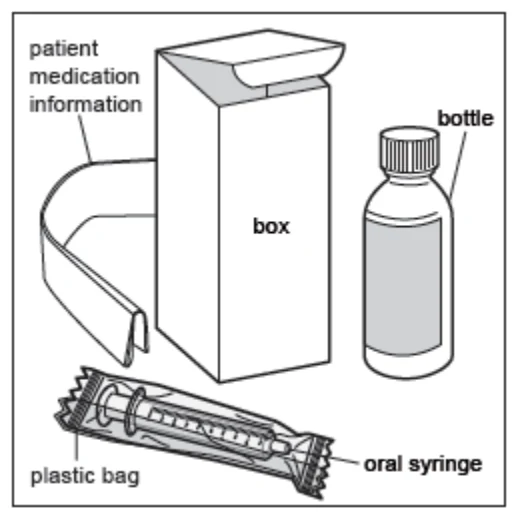
Step 1: Remove the items from the box
The box contains the following items:
- A glass bottle containing HEMANGIOL
- An oral dosing syringe. Only this syringe should be used to give a dose of HEMANGIOL.
- Patient Medication Information (PMI).
Remove the bottle and oral syringe from the box. Remove the syringe from the plastic bag.
If the syringe is missing, contact your pharmacist for a replacement.
Keep the box for storage.
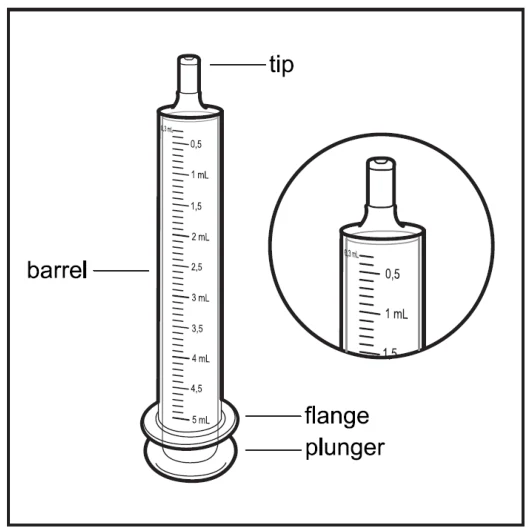
Step 2: Check the dose
The barrel of the oral syringe has markings in milliliters (mL).
Look at the markings on the syringe.
Find the mL marking that matches the HEMANGIOL dose in mL prescribed by your healthcare professional.
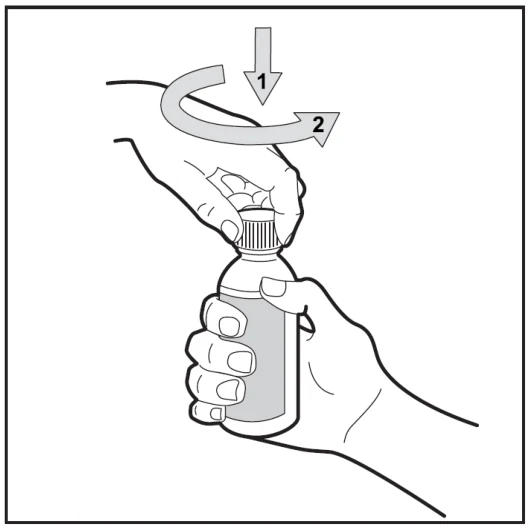
Step 3: Open the bottle
Do not shake the bottle before use.
The bottle comes with a child-resistant cap.
Here is how to open it: push down the plastic cap while turning the cap counter-clockwise (to the left).
Expiry:
Write on the box the date when you first open the bottle. After first opening, discard the product after 2 months.
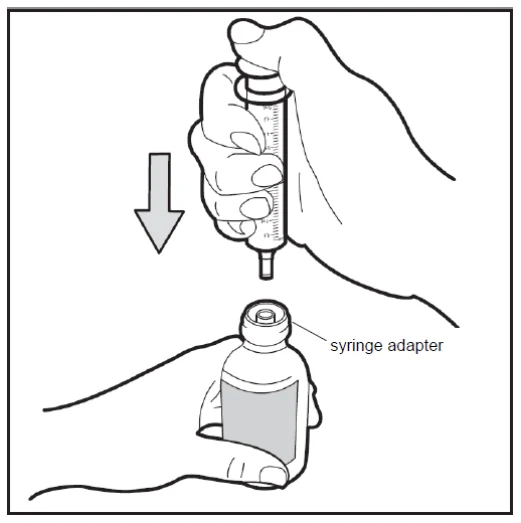
Step 4: Insert the syringe
Before each use check that the syringe is undamaged, clean and the graduation marks are readable.
Insert the tip of the oral syringe into the upright bottle. Push the plunger all the way down.
Do not remove the syringe adapter from the neck of the bottle.
Always measure the dose using the supplied oral syringe.
Step 5: Remove the dose
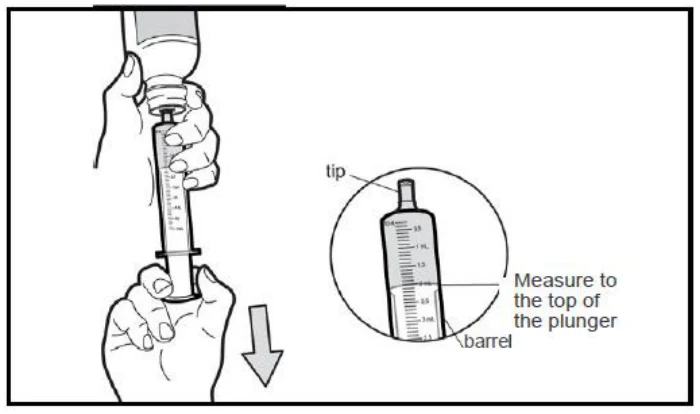
Use one hand to hold the oral dosing syringe in place. With your other hand, turn the bottle upside down. Pull back on the plunger slowly until the top of the plunger lines up with the marking on the barrel of the syringe that matches the dose of HEMANGIOL prescribed by your healthcare professional.
Your child’s dose may be different than the dose shown in the figure.
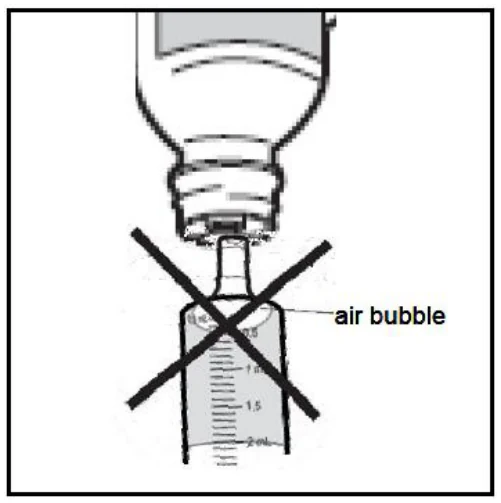
Step 6: Check for air bubbles
If you see air bubbles in the oral syringe, hold the syringe up. Push the plunger upwards just far enough to completely push out any large air bubbles and then readjust to the dose prescribed by your healthcare professional.
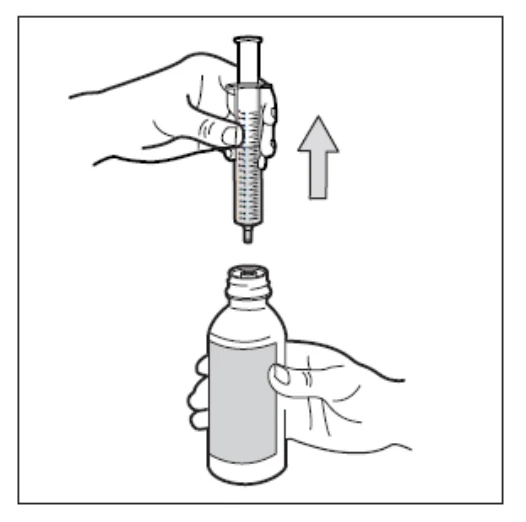
Step 7: Remove the oral syringe
Turn bottle upright and remove the entire oral syringe from the bottle. Be careful, do not push the plunger in during this step.
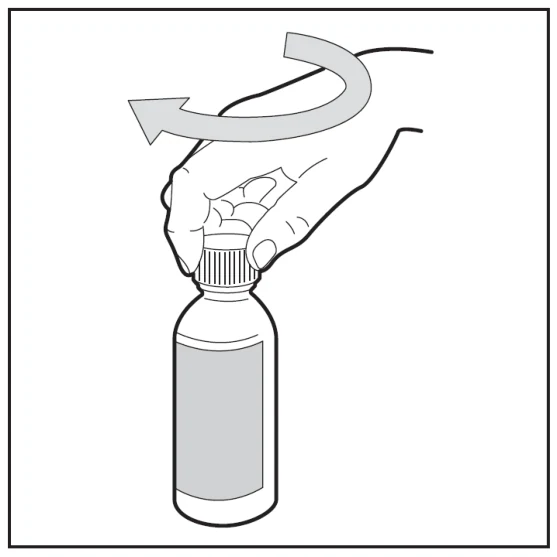
Step 8: Close the bottle
Replace the plastic cap on the bottle by turning it clock-wise (to the right).
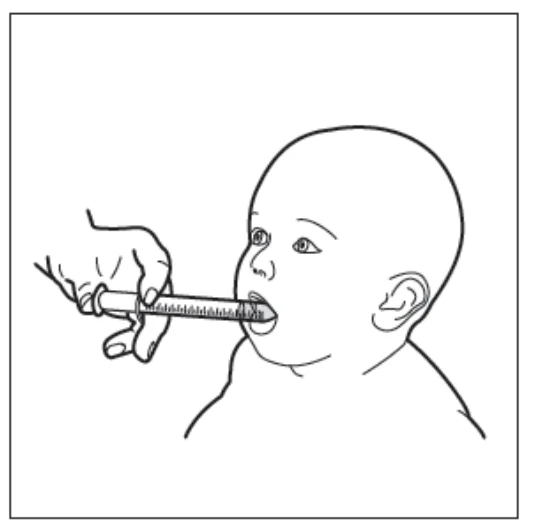
Step 9: Give HEMANGIOL to your child
Hold your baby in a sitting position. Place the oral syringe against the inside of the child’s cheek.
Slowly squirt HEMANGIOL into your child’s mouth, being attentive to swallowing.
Right after giving a dose of HEMANGIOL, keep your child in an upward position for a few minutes. This will help avoid choking as the child swallows.
If necessary, you may mix HEMANGIOL with a small quantity of infant formula, breastmilk or juice. Read how to do this in the previous section called Mixing HEMANGIOL.
Step 10: Clean the oral syringe.
Do NOT take apart the oral dosing syringe.
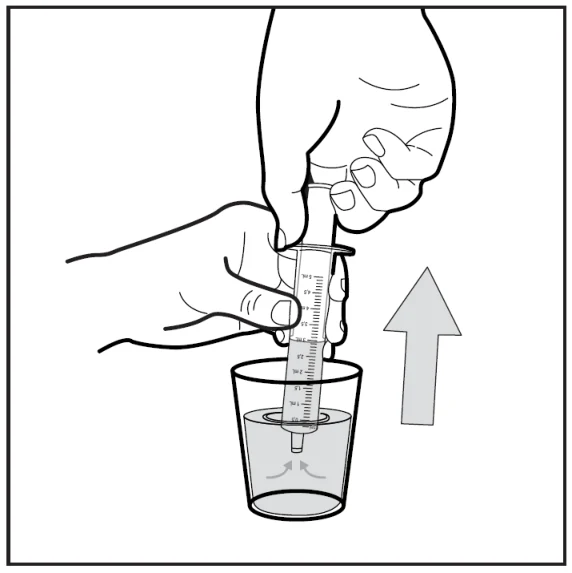
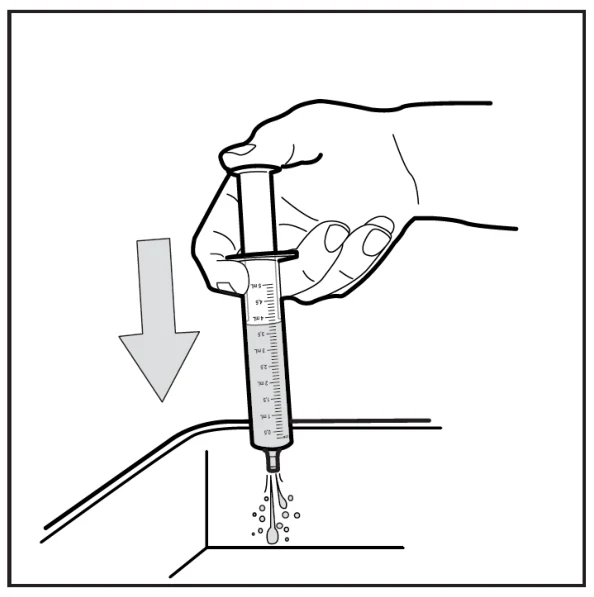
Clean the oral syringe after each use by rinsing it with tap water:
- 1. Take a glass of clean water.
- 2. Insert the syringe into the water.
- 3. Draw up water to fill the syringe up to the 5 mL mark.
- 4. Discard the water from the syringe into your sink.
- 5. Repeat this cleaning process 3 times.
- 6. Dry the syringe with the plunger drawn to the 5 mL mark. 7. Store the syringe with the tip down to allow any water in the syringe to drain.
Do NOT use any soap or alcohol based product to clean the syringe.
Wipe the outside of the syringe dry.
Do NOT put the syringe through a sterilizer or dishwasher.
Step 11: Storage and disposal
Store the bottle and the syringe together in the box. Until next use, store the box in a safe place where your child can’t see or reach it. Discard the syringe once the bottle is empty. Take the empty bottle back to your pharmacy for disposal.
Do not throw away any medicines via wastewater or household waste. Return medicines you no longer use to your pharmacist. These measures will help protect the environment.
Overdose:
| If you think you, or a person you are caring for, have taken too much HEMANGIOL, contact a healthcare professional, hospital emergency department, regional poison control centre, or Health Canada’s toll-free number, 1-844 POISON-X (1-844-764-7669) immediately, even if there are no signs or symptoms. |
|---|
Missed Dose:
If you missed giving a dose of this medication to your child, you do not need to make up the missed dose. Skip the missed dose and continue with your child’s next scheduled dose. Do not give your child two doses at the same time.
If your child spits up some or all of the medicine, do NOT give another dose. Give a regular dose of HEMANGIOL at the next scheduled time.
What are possible side effects from using HEMANGIOL?
These are not all the possible side effects your child may have when taking HEMANGIOL. If your child experiences any side effects not listed here, tell your healthcare professional.
Side effects may include:
- sleep problems, being drowsy, nightmares;
- decreased appetite;
- cold hands and feet;
- skin redness;
- being agitated or irritable;
- constipation, diarrhea, vomiting, abdominal pain;
- loss of hair;
- diaper rash.
After the first dose is given and after each dose increase your child might have a slow heart rate and low blood pressure. They should be monitored closely by their healthcare professional for these side effects at least once an hour for at least 2 hours.
| Serious side effects and what to do about them | |||
|---|---|---|---|
| Serious side effects and what to do about them | |||
| Serious side effects and what to do about them | |||
| Symptom / effect | Talk to your healthcare professional | Stop taking drug and get immediate medical help | |
| Symptom / effect | Talk to your healthcare professional | Stop taking drug and get immediate medical help | |
| Symptom / effect | Talk to your healthcare professional | Stop taking drug and get immediate medical help | |
| Only if severe | In all cases | ||
| Only if severe | In all cases | ||
| Only if severe | In all cases | ||
| COMMON | |||
| Bronchiolitis (inflammation of the smallest air passages of the lungs, usually in children under 2 years old): cough, wheeze, fever, shortness of breath, difficulty feeding, lethargy, grunting, blueness of the skin. | ✓ | ||
| Bronchitis (inflammation of the large and medium sized air passages of the lungs, also known as a chest cold or respiratory tract infection): cough, mucus, wheeze, shortness of breath, and fever. | ✓ | ||
| Bronchospasm, Asthma and Breathing difficulties: cough, quick or difficult breathing or wheezing with or without blue skin, wheeze in the chest with cough, fever, and shortness of breath, asthma. | ✓ | ||
| UNCOMMON | |||
| Bradycardia (abnormally low heart rate): fatigue, coldness, pallor, bluish coloured skin, or fainting. | ✓ | ||
| Heart Block (Heart conduction or rhythm disorders): slow or irregular heartbeats. | ✓ | ||
| Hypotension (low blood pressure): fatigue, coldness, pallor, bluish coloured skin, or fainting. | ✓ | ||
Low Blood Sugar (hypoglycemia): Your child might only show one or a few of the following signs. This is because HEMANGIOL may hide some of the typical signs. sweating, pallor, feeling tired, shaking, palpitations, fast heartbeat, anxiety, irritability/anger, hunger, poor feeding, sleepiness, nightmares/crying out during sleep, excessive sleeping, difficulty to respond. Sometimes symptoms are: brief pauses in breathing, decrease in body temperature, convulsions (fits), seizures, loss of consciousness, and coma. | ✓ If your child has signs of low blood sugar and is conscious, give him/her a drink or liquid that contains sugar and then get immediate medical help | ||
| RARE | |||
| Agranulocytosis (very low levels of white blood cells): fever, infection. | ✓ | ||
| Hallucinations: strange sounds and visions. | ✓ | ||
| Hyperkalemia (high levels of potassium in the blood): irregular heartbeats, muscle weakness and generally feeling unwell | ✓ | ||
| Psoriasis (patches of abnormal skin): red, itchy, scaly skin. | ✓ | ||
| Purpura: purple or red-brown spots visible through the skin. | ✓ | ||
| Raynaud’s Phenomenon: pale, painful, numb, or cold fingers, toes, nose and/or earlobes. | ✓ | ||
If your child has a troublesome symptom or side effect that is not listed here or becomes bad enough to interfere with your child’s daily activities, tell your healthcare professional.
Reporting Side Effects
You can report any suspected side effects associated with the use of health products to Health Canada by:
NOTE: Contact your healthcare professional if you need information about how to manage your child’s side effects. The Canada Vigilance Program does not provide medical advice. |
Storage:
- Store at room temperature (15°C to 30°C).
- Do not freeze. Keep the bottle and the oral syringe in the box to protect from light.
- Use HEMANGIOL before the expiry date printed on the bottle and box. The expiry date refers to the last day of the month.
- After first opening, discard the product after 2 months. To help you remember when this is, write down on the box the date when you first open the bottle.
- Keep in a safe place out of reach and sight of children.
If you want more information about HEMANGIOL:
- Talk to your healthcare professional.
- For more information about HEMANGIOL's use and important risks, read the Caregiver guide available at: https://www.hemangiol.ca/guide/en/ or scan this QR code to access:

Find the full Product Monograph that is prepared for healthcare professionals and includes the Patient Medication Information by visiting the Health Canada Drug Product Database website
- (https://www.canada.ca/en/health-canada/services/drugs-health-products/drug-products/drug-product-database.html); or by calling the manufacturer at 1-877-441-2011.