


Product Monograph - Imovax Rabies
RECENT MAJOR LABEL CHANGES
| 7 Warnings and Precautions |
|---|
TABLE OF CONTENTS
Sections or subsections that are not applicable at the time of authorization are not listed.
RECENT MAJOR LABEL CHANGES ............................................................................................. 2
TABLE OF CONTENTS ............................................................................................................... 2
1 INDICATIONS ................................................................................................................ 4
Pediatrics ........................................................................................................................... 4
Geriatrics ........................................................................................................................... 4
2 CONTRAINDICATIONS .................................................................................................. 4
4 DOSAGE AND ADMINISTRATION .................................................................................. 4
Dosing Considerations ....................................................................................................... 4
Recommended Dose and Dosage Adjustment .................................................................. 7
Reconstitution ................................................................................................................... 9
Administration ................................................................................................................ 11
Missed Dose .................................................................................................................... 11
5 OVERDOSAGE ............................................................................................................. 11
6 DOSAGE FORMS, STRENGTHS, COMPOSITION AND PACKAGING ................................ 11
7 WARNINGS AND PRECAUTIONS ................................................................................. 12
Special Populations ......................................................................................................... 15
8 ADVERSE REACTIONS ................................................................................................. 16
Adverse Reaction Overview ............................................................................................ 16
Clinical Trial Adverse Reactions ....................................................................................... 16
Post-Market Adverse Reactions ...................................................................................... 18
9 DRUG INTERACTIONS ................................................................................................. 18
Drug Interactions Overview ............................................................................................. 18
Drug-Laboratory Test Interactions .................................................................................. 19
10 CLINICAL PHARMACOLOGY ........................................................................................ 19
Mechanism of Action ...................................................................................................... 19
Pharmacodynamics ......................................................................................................... 19
Pharmacokinetics ............................................................................................................ 19
11 STORAGE, STABILITY AND DISPOSAL .......................................................................... 20
12 SPECIAL HANDLING INSTRUCTIONS ............................................................................ 20
13 PHARMACEUTICAL INFORMATION ............................................................................. 21
14 CLINICAL TRIALS ......................................................................................................... 22
Trial Design and Study Demographics ............................................................................. 23
Study Results ................................................................................................................... 24
15 MICROBIOLOGY ......................................................................................................... 26
16 NON-CLINICAL TOXICOLOGY ...................................................................................... 26
PATIENT MEDICATION INFORMATION ................................................................................... 27
PART I: HEALTH PROFESSIONAL INFORMATION
1 INDICATIONS
IMOVAX® Rabies is indicated for the active immunization of individuals of all age groups to prevent disease caused by the rabies virus. It is indicated for both pre-exposure prophylaxis and post-exposure prophylaxis.
IMOVAX® Rabies should be used in accordance with official recommendations.
Pediatrics
Pediatrics (<18 years of age): Safety and effectiveness in children have been established. The indications for infants and children are the same as for adults.
Geriatrics
Geriatrics (≥65 years of age):There are no adequate and well-controlled studies of IMOVAX® Rabies in geriatric population.
2 CONTRAINDICATIONS
- Pre-exposure prophylaxis should not be administered to persons who are hypersensitive to this vaccine or to any ingredient in the formulation or component of the container. For a complete listing, see 6 DOSAGE FORMS, STRENGTHS, COMPOSITION AND PACKAGING. Persons who are at high-risk of contracting rabies disease and who have a hypersensitivity to the vaccine or one of its components may be referred for an evaluation by an allergist.
- There are no definite contraindications to the use of IMOVAX® Rabies in the post-exposure situation; however, care should be taken if the vaccine is to be administered to persons who are hypersensitive to rabies vaccine or to any ingredient in the formulation or component of the container. For a complete listing, see 6 DOSAGE FORMS, STRENGTHS, COMPOSITION AND PACKAGING. Local public health should be consulted if questions arise about the need for post-exposure treatment and expert opinion should be sought in the management of these individuals.
4 DOSAGE AND ADMINISTRATION
Dosing Considerations
Pre-Exposure Immunization (Primary Immunization)
- Pre-exposure rabies immunization is an elective procedure and should be offered to persons potentially exposed to rabid animals, e.g., certain laboratory workers, veterinarians, animal handlers, spelunkers, and hunters and trappers in high-risk areas such as the Far North.
Pre-exposure immunization should be considered for travellers intending to live or work in areas where rabies is enzootic and where rabies control programs for domestic animals are inadequate, or
- -exposure facilities are unavailable. This includes: persons with frequent risk of rabies exposure; children in rabies enzootic areas who are too young to understand the need to avoid animals or to report an animal bite; persons in rabies enzootic areas where there is limited access to tissue culture vaccines and/or immunoglobulin or where ready transportation to an appropriate health-care facility cannot be assured.
- Pre-exposure vaccination does not eliminate the need for prompt prophylaxis following an exposure but it eliminates the need for Rabies Immunoglobulin (RIG) except in immunocompromised persons. Any exposed person should receive appropriate wound treatment (see Management of Persons After Possible Exposure to Rabies) and a vaccine post-exposure treatment regimen.
Post-Exposure Management
- Because it is not possible to determine which exposed individuals will develop rabies if untreated and because the infection is almost always fatal, it is essential that everyone exposed to animals with proven or suspected rabies be given post-exposure prophylaxis. The essential components of rabies post-exposure prophylaxis are local treatment of wounds and vaccination, and, in most cases RIG.
- Post-exposure prophylaxis should be started as soon as possible after exposure and should be offered to exposed individuals regardless of the elapsed interval. When notification of an exposure is delayed, prophylaxis may be started as late as 6 or more months after exposure.
- Rabies prophylaxis must be considered in every incident where potential exposure to rabies virus has occurred. In evaluating each case, local public health officials should be consulted. For further information on the factors to be considered in evaluating exposure consult the current edition of the Canadian Immunization Guide.
- Bite: any penetration of the skin by teeth. Bites inflicted by most animals are readily apparent. However, bites inflicted by bats to a sleeping person may not be felt and may leave no visible bite marks. Hence, when persons are sleeping unattended in a room where a bat is found or when the possibility of a bite cannot be reasonably excluded post-exposure prophylaxis should be initiated.
- Non-bite: including contamination of scratches, abrasions or cuts of the skin or mucous membranes by saliva or other potentially infectious material, such as the brain tissue of a rabid animal. Post-exposure prophylaxis is warranted and recommended in rare instances of non-bite exposure, such as inhalation of aerosolized virus by spelunkers exploring caves inhabited by infected bats or by laboratory technicians homogenizing tissues infected with rabies virus; however, the efficacy of prophylaxis after such exposures is unknown.
- Exposures incurred in the course of caring for humans with rabies could theoretically transmit the infection. No case of rabies acquired in this way has been documented, but post-exposure prophylaxis should be considered for exposed individuals.
Management of Persons After Possible Exposure to Rabies
Table 1 outlines the recommendations for the management of persons after possible exposure to rabies. These recommendations are intended as a guide and may need to be modified in accordance with the specific circumstances of the exposure.
Table 1: Summary of Post-Exposure Prophylaxis for Persons Potentially Exposed to Rabies by Animal Type
| Animal Species | Condition of Animal at Time of Exposure | Management of Exposed Persons Not Previously Immunized Against Rabies | Management of Exposed Persons Previously Immunized Against Rabies |
| Dog, cat or ferret | Healthy and available for a 10 day observation period |
|
|
| Unknown or escaped |
|
| |
| Rabid or suspected to be rabid* |
|
| |
| Skunk, bat, fox, coyote, raccoon and other carnivores. | Regard as rabid* unless geographic area is known to be rabies-free |
|
|
| Livestock, rodents or lagomorphs (hares and rabbits) | Consider individually. Consult appropriate public health and CFIA officials. Bites of squirrels, chipmunks, rats, mice, hamsters, gerbils, guinea pigs, other small rodents, rabbits and hares may warrant post-exposure rabies prophylaxis if the behaviour of the biting animal was highly unusual. Bites from larger rodents (e.g. ground hogs (woodchucks), beavers) require a risk assessment. | ||
| *If possible, the animal should be humanely euthanized and the brain tested for rabies as soon as possible; holding for observation is not recommended. Discontinue the vaccine if rabies testing of the involved animal is negative. | |||
| RIG = (human) rabies immunoglobulin | |||
The course of vaccine may be discontinued after consultation with public health/infectious disease experts if the direct fluorescent antibody test of the brain of an animal killed at the time of attack proves to be negative. However, if suspicion of rabies in the animal remains high even in the presence of a negative test, the immunization series should be continued.
Recommended Dose and Dosage Adjustment
Recommendations for passive and/or active vaccination after exposure to an animal suspected of having rabies have been outlined by the WHO and by the National Advisory Committee on Immunization.
IMOVAX® Rabies is indicated for 3-dose pre-exposure and 5-dose post-exposure series in combination with rabies immunoglobulin for individuals suspected of exposure to rabies, with one exception: persons who have been previously vaccinated with IMOVAX® Rabies Vaccine in a pre-exposure or post-exposure treatment series should receive only vaccine.
Needles should not be recapped and should be disposed of properly.
Pre-Exposure Prophylaxis
Primary Vaccination:
Three doses of IMOVAX® Rabies are required. One dose of 1.0 mL of reconstituted vaccine is to be given intramuscularly on each of days 0, 7 and 21.
Booster Doses:
The booster dose of 1.0 mL of vaccine should be administered intramuscularly.
Post-Exposure Prophylaxis
Post-exposure prophylaxis should be initiated as soon as possible after suspected rabies exposure.
- In all cases, proper wound care (thorough flushing and washing of the wound with soap or detergent and water and/or virucidal agents) must be performed as soon as possible after exposure. It must be performed before administration of rabies vaccine or rabies immunoglobulin, where they are indicated.
- Suturing the wound should be avoided if possible.
- The rabies vaccine administration must be carried out by appropriately trained medical staff. It must be performed strictly in accordance with the patient immune status and the animal status for rabies (see Table 1). In addition, tetanus prophylaxis and a course of antibiotics to prevent superinfections should be given as required.
Post-Exposure Prophylaxis of Previously Unimmunized Individuals
A series of five doses of 1.0 mL of IMOVAX® Rabies should be given. The first 1.0 mL dose on day 0 as soon as possible after exposure, and one 1.0 mL dose on each of days 3, 7, 14 and 28 after the first dose. An appropriate dose of RIG should also be given on day 0 as described below.
RIG: The recommended dose of human RIG is 20 IU/kg body weight. This formula is applicable to all age groups, including children. If anatomically feasible, the full dose of RIG should be thoroughly infiltrated in the area around and into the wounds. When more than one wound exists, each should be locally infiltrated with a portion of the RIG. See RIG package insert for precise information on the administration of RIG. Since vaccine-induced antibody begins to appear within 1 week, there is no value in administering RIG more than 8 days after initiating an approved vaccine course.
IMOVAX® Rabies and immunoglobulin should be used concurrently for optimum post-exposure prophylaxis against rabies, except in certain previously immunized persons, as indicated below.
For severe exposure, rabies immunoglobulin should be given in association with vaccine. In this case, the vaccine should be administered contra-laterally, if possible.
Vaccination should not be discontinued unless the animal is declared not rabid according to a veterinarian assessment (supervision of animal and/or laboratory analysis).
Post-exposure Prophylaxis of Previously Immunized Individuals
Post-exposure prophylaxis for persons who have previously received rabies vaccine differs according to which preparation of vaccine was received.
A. Two doses of 1.0 mL of IMOVAX® Rabies, one injected immediately and the other 3 days later, without RIG, are recommended for exposed individuals with the following rabies immunization history:
(i) Completion of an approved course of pre- or post-exposure prophylaxis with Human Diploid Cell Rabies Vaccine (HDCV), a WHO approved cell-culture rabies vaccine or PCEC (Purified Chick Embryo Culture).
(ii) Completion of immunization with other types of rabies vaccine or with IMOVAX® Rabies according to unapproved schedules so long as neutralizing rabies antibody has been demonstrated in serum.
B. A complete course of IMOVAX® Rabies plus RIG is recommended for those who may have received rabies vaccines but do not fulfill the criteria listed in A. A serum sample may be collected before vaccine is given, and if antibody is demonstrated the course may be discontinued, provided at least two doses of IMOVAX® Rabies have been administered.
Serologic Testing and Booster Doses
Healthy persons immunized with an appropriate regimen will develop rabies antibodies, and therefore routine post-immunization antibody determinations are not recommended.
For more information about serologic testing and booster in persons with high risk of exposure to rabies or with reduced immune response, refer to the Canadian Rabies Immunization guide.
The Canadian national rabies reference laboratory considers an acceptable antibody response to be a titre of ≥0.5 IU/mL by the Rapid Fluorescent-Focus Inhibition Test (RFFIT).
Those with inadequate titres should be given a booster dose of rabies vaccine. Persons previously immunized with other vaccines should be given sufficient doses of IMOVAX® Rabies to produce an adequate antibody response.
Special Populations
Pediatric Population:
There are no specificities to dose or vaccination schedule for pediatric population.
Immunocompromised Individuals:
The following recommendation should be followed for immunocompromised individuals.
Pre-Exposure Prophylaxis
For immunocompromised individuals, serology testing of neutralizing antibodies should be performed 2 to 4 weeks after the vaccination. If the result of the Rapid Fluorescent Focus Inhibition Test (RFFIT) shows an antibody titre below the threshold (defined as 0.5 IU/mL or complete virus neutralization at a 1:5 serum dilution), an additional injection is justified.
Post-exposure prophylaxis
For immunocompromised individuals, only full vaccination schedule should be administered. Rabies immunoglobulin should be given in association with the vaccine for minor and severe exposures.
Reconstitution
Parenteral Products:
Table 2: Reconstitution
| Vial Size | Volume of Diluent to be Added to Vial | Approximate Available Volume | Concentration per mL |
| 3 mL | 1 mL | 1 mL | ≥2.5 IU |
Before administration, parenteral drug products should be checked visually for any deviation from normal appearance including container integrity. The syringe and its package should also be inspected prior to use for evidence of leakage, or a faulty tip seal. If evidence of such defects is observed, the syringe should not be used.
Specific instructions for Luer-lok™ syringe (see Figure A below):
Step 1: Holding the syringe cap in one hand (avoid holding the syringe plunger or barrel), unscrew the tip cap by twisting it counterclockwise. See Figure B below.
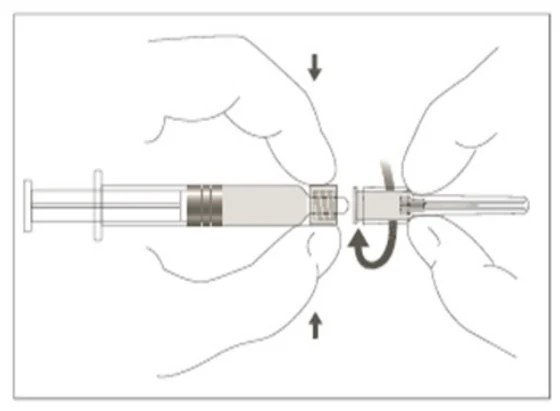
Step 2: To attach the needle to the syringe, gently twist the needle clockwise into the syringe until slight resistance is felt. See Figure C below.
Figure A: Luer-Lok™ syringe
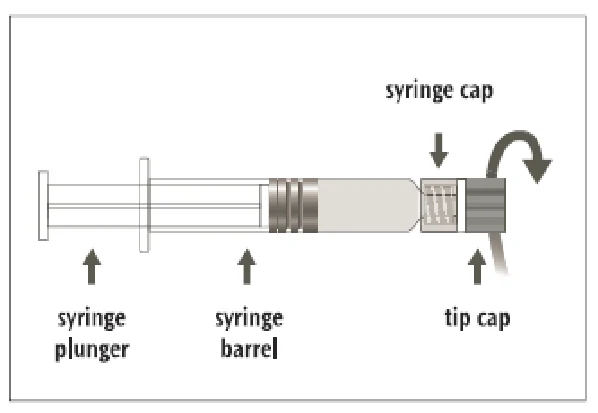
Figure B. Step 1
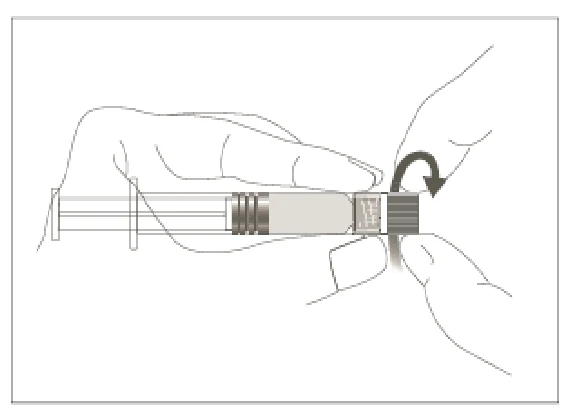
Figure C. Step 2
Other syringes:
Attach the reconstitution needle to the syringe.
Reconstitution of vaccine (all syringes):
Reconstitute the freeze-dried vaccine in its vial by introducing the diluent into the vial of powder. Gently swirl the contents until completely dissolved. The suspension should be clear or slightly opalescent red to purplish red and free from particles.
Without removing the needle from the vial, unscrew the syringe to eliminate negative pressure (as the vial is sealed under vacuum). Reattach the needle remaining in the vial to the syringe (as per step 2).
Withdraw the total contents of the vial into the syringe.
Unscrew the reconstitution needle and replace it with a sterile needle (as per Step 2) of a proper length for intramuscular injection of your patient.
The reconstituted vaccine should be used immediately.
After use, any remaining vaccine and container must be disposed of safely, according to biohazardous waste guidelines.
Administration
Administer the vaccine intramuscularly. For adults and children, the vaccine should always be administered in the deltoid area. In infants and small children, the anterolateral aspect of the thigh is also acceptable. The gluteal area should never be used for injections because administration of rabies vaccine in this area results in lower neutralizing antibody titres. For information on vaccine administration see the current edition of the Canadian Immunization Guide.
Under no circumstances should vaccine be administered in the same syringe or at the same site as RIG.
Missed Dose
It is very important to complete the series of rabies vaccinations on time. Cases of rabies have been reported when the approved schedule was not followed.
5 OVERDOSAGE
| For management of a suspected drug overdose, contact your regional poison control centre. |
|---|
6 DOSAGE FORMS, STRENGTHS, COMPOSITION AND PACKAGING
To help ensure the traceability of vaccines for patient immunization record-keeping as well as safety monitoring, health professionals should record the time and date of administration, quantity of administered dose (if applicable), anatomical site and route of administration, brand name and generic name of the vaccine, the product lot number and expiry date.
Table 3: Dosage Forms, Strengths, Composition and Packaging
IU= International Unit
The powder is homogenous and pinkish beige to orangey yellow. The diluent is a clear colourless liquid. After reconstitution, IMOVAX® Rabies is a clear or slightly opalescent red to purplish red suspension.
Packaging:
IMOVAX® Rabies is available in three presentations:
single dose vials of lyophilized vaccine with 1 mL of diluent (sterile water for injection) contained in a disposable (Luer™-lok) syringe with two needles (1 x 25G x 16 mm and 1 x 25G x 25 mm).
or
single dose vials of lyophilized vaccine with 1 mL of diluent (sterile water for injection) contained in a disposable syringe with two needles (1 x 25G x 16 mm and 1 x 25G x 25 mm).
or
single dose vials of lyophilized vaccine with 1 mL of diluent (sterile water for injection) contained in a disposable syringe with an attached needle.
Not all presentations and pack sizes may be marketed.
The vial stoppers for the vial and plunger stoppers and needle shields for the syringes supplied with this product do not contain dry natural latex rubber.
7 WARNINGS AND PRECAUTIONS
As with any vaccine, immunization with IMOVAX® Rabies may not protect 100% of individuals.
General
Pre-exposure immunization with IMOVAX® Rabies should be deferred in the presence of any acute illness, including febrile illness.
Local and/or mild systemic reactions may occur after vaccine injection but these are usually transient and do not contraindicate continuing immunization.
| Route of Administration | Dosage Form / Strength/Composition | Non-medicinal Ingredients |
| Intramuscular injection | Powder and Diluent for Suspension for injection Each 1 mL dose is formulated to contain: Active Ingredient: ≥2.5 IU Rabies virus (WISTAR Rabies PM/WI 38 1503-3M Strain) | human albumin, neomycin Diluent: sterile water for injection |
Interchanging IMOVAX® Rabies with other rabies vaccines during a pre- or post-exposure series is not recommended because of a lack of data on the safety and efficacy of such a regimen. The immunization series should, whenever possible, be completed with the same product. When this is not feasible, the series may be completed with another WHO-approved cell-culture vaccine.
Although no post-exposure vaccine failures have occurred in Canada or the US since cell culture vaccines have been routinely used, failures have occurred abroad when some deviation was made from the recommended post-exposure treatment protocol or when less than the currently recommended amount of antirabies sera was administered. Specifically, subjects who contracted rabies after post-exposure prophylaxis did not have their wounds cleansed with soap and water, did not receive their rabies vaccine injections in the deltoid area (i.e., vaccine was administered in the gluteal area), or where the wound site was not properly infiltrated with RIG (See 4 DOSAGE AND ADMINISTRATION).
This is a single dose of vaccine. In both pre-exposure and post-exposure immunization, the full 1.0 mL dose should be given intramuscularly (See 4 DOSAGE AND ADMINISTRATION).
In adults and children the vaccine should be injected into the deltoid muscle. In infants and small children the mid-lateral aspect of the thigh may be preferable. There have been reports of possible vaccine failure when the vaccine has been administered in the gluteal area.
This vaccine must not be used subcutaneously or intradermally. Special care should be taken to ensure that the product is not injected into a blood vessel.
A separate, sterile syringe and needle, or a sterile disposable unit, must be used for each individual patient to prevent the transmission of infectious agents. There have been case reports of transmission of HIV and hepatitis by failure to scrupulously observe sterile technique.
Before administration of IMOVAX® Rabies, take all appropriate precautions to prevent adverse reactions. This includes a review of the patient’s history concerning possible hypersensitivity to the vaccine or similar vaccine, previous immunization history, the presence of any contraindications to immunization and current health status. The health-care provider should inform the patient, parent or guardian of the benefits and risks of immunization, inquire about the recent health status of the patient and comply with any local requirements with respect to information to be provided to the patient before immunization and the importance of completing the immunization series.
This product contains albumin, a derivative of human blood. Based on effective donor screening and product manufacturing processes, it carries an extremely remote risk for transmission of viral diseases. A theoretical risk for transmission of variant Creutzfeldt-Jakob disease (vCJD) is also considered extremely remote. No cases of transmission of viral diseases or vCJD have ever been attributed to albumin.
As each dose may contain undetectable traces of neomycin which is used during vaccine production, caution must be exercised when the vaccine is administered to subjects with hypersensitivity to this antibiotic and other antibiotics of the same class.
Driving and Operating Machinery
No studies on the effects on the ability to drive or use machines have been performed.
Hematologic
Intramuscular injections should be given with care in persons with coagulation disorders or on anticoagulant therapy because intramuscular injection can cause injection site hematoma.
Immune
As with other products, Epinephrine Hydrochloride Solution (1:1000) and other appropriate agents should be available for immediate use in case an anaphylactic or acute hypersensitivity reaction occurs. Health-care providers should be familiar with current recommendations for the initial management of anaphylaxis in non-hospital settings, including proper airway management. For instructions on recognition and treatment of anaphylactic reactions, see the current edition of the Canadian Immunization Guide or visit the Health Canada website.
The possibility of allergic reactions in individuals sensitive to components of the vaccine should be evaluated.
Since the vaccine contains traces of neomycin and phenol red, the possibility of allergic reactions in individuals sensitive to these substances should be borne in mind.
Corticosteroids, immunosuppressive agents, and immunosuppressive illnesses can interfere with the development of active immunity after vaccination. Immunosuppressive agents should not be administered during post-exposure therapy unless essential for the treatment of other conditions. When rabies post-exposure prophylaxis is administered to persons receiving steroids or other immunosuppressive therapy, or who are immunosuppressed, it is important that a serum sample be tested for rabies antibody to ensure that an acceptable antibody response has developed.
In immunocompromised individuals with congenital or acquired immunodeficiency, the immune response to the vaccine may be inadequate. Therefore, it is recommended to monitor serologically RVNA (Rabies Virus Neutralizing Antibodies) level in such individuals to ensure that an acceptable immune response has been induced. Additional doses may be given as necessary (see Special Populations 4 DOSAGE AND ADMINISTRATION).
Moreover, if post-exposure vaccination is needed, only full schedule of vaccination should be administered. In addition, rabies immunoglobulin should be given in association with the vaccine for both minor and severe exposures (see Special Populations r4 DOSAGE AND ADMINISTRATION).
In the case of pre-exposure immunization, a significant increase has been noted in “immune complex-like” reactions in persons receiving booster doses of IMOVAX® Rabies (See 8 ADVERSE REACTIONS).
Monitoring and Laboratory Tests
Post-immunization antibody titre determination may be advisable for those anticipating frequent exposure or whose immune response may be reduced by illness, medication or advanced age.
Psychiatric
Syncope
Syncope can occur following, or even before, any vaccination as a psychogenic response to the needle injection. Procedures should be in place to prevent falling and injury and to manage syncope.
Reproductive Health: Female and Male Potential
Fertility
IMOVAX® Rabies has not been evaluated for impairment of male or female fertility.
Respiratory
Apnea
The potential risk of apnea and the need for respiratory monitoring for 48-72 hours should be considered when administering the primary immunization series to very premature infants (born ≤ 28 weeks of gestation) and particularly for those with a previous history of respiratory immaturity.
Skin
Local reactions at injection site such as pain, erythema, swelling, induration and bruising may occur. See 8 ADVERSE REACTIONS.
Special Populations
7.1.1 Pregnant Women
The safety of rabies vaccines in pregnancy has not been established. IMOVAX® Rabies has not been studied in animal teratogenicity studies. It is also not known whether IMOVAX® Rabies can cause fetal harm when administered to a pregnant woman or can affect reproductive capacity. IMOVAX® Rabies should be given to a pregnant woman only if clearly needed.
Pre-exposure Prophylaxis
In the absence of sufficient human data, postponement of pre-exposure vaccination is recommended. If there is a substantial risk of exposure to rabies, pre-exposure prophylaxis may be indicated during pregnancy.
Post-exposure Prophylaxis
Because of the potential consequences of inadequately treated rabies exposure, and because there is no indication that fetal abnormalities have been associated with rabies vaccination, pregnancy is not considered a contraindication to post-exposure prophylaxis.
7.1.2 Breast-feeding
Pre-exposure Prophylaxis
It is not known whether this vaccine is excreted in human milk. Caution must be exercised when pre-exposure vaccine is administered to a nursing mother.
Post-exposure Prophylaxis
Due to the severity of the disease, lactation is not a contraindication.
8 ADVERSE REACTIONS
Adverse Reaction Overview
IMOVAX® Rabies [Inactivated Rabies Virus (PM/WI38 1503-3M) has been studied in randomized controlled trials in both children (N=199) using pre-exposure schedule (3 doses, I.M. plus booster at 1 year) and adults (N=124) using post-exposure schedule (5 doses, I.M.). The most frequent (≥10%) adverse events were injection site pain, headache, malaise and myalgia.
Clinical Trial Adverse Reactions
Clinical trials are conducted under very specific conditions. The adverse reaction rates observed in the clinical trials, therefore, may not reflect the rates observed in practice and should not be compared to the rates in the clinical trials of another drug. Adverse reaction information from clinical trials may be useful in identifying and approximating rates of adverse drug reactions in real-world use.
In clinical studies, more than 1600 subjects (from less than 1 through 72 years of age) received at least one dose of IMOVAX® Rabies.
A pooled analysis has been performed on 4 randomized, controlled, observer-blind clinical studies sharing the same safety standards, integrating data from 401 subjects (113 children and adolescents from 2 through 17 years of age and 288 adults from 18 through 65 years of age). In two studies in adults, the subjects received Human Rabies Immunoglobulin (HRIG) concurrently with the first dose of
IMOVAX® Rabies.
The adverse reactions were generally of mild intensity and appeared within 3 days after vaccination. Most reactions resolved spontaneously within 1 to 3 days after onset. Most frequent adverse reactions in all age groups were injection site pain, headache, malaise and myalgia.
The table below presents the frequencies of solicited adverse reaction (recorded within 7 days) and unsolicited related adverse events (recorded within 28 days), reported following any dose of
IMOVAX® Rabies.
Table 4: Adverse Reactions Information (Clinical Trials)
| Adverse Reactions | Adults 18 years and older | Children and Adolescents up to 17 years old | ||
|---|---|---|---|---|
| SOC: Blood and lymphatic system disorders | ||||
| Lymphadenopathy | 0.3% | - | ||
| SOC: Gastrointestinal disorders | ||||
| Nausea | 1.4% | - | ||
| Abdominal pain | 0.7% | - | ||
| Diarrhea | 0.7% | - | ||
Adverse Reactions
| Adults 18 years and older | Children and Adolescents up to 17 years old | ||||
|---|---|---|---|---|---|
| Vomiting | 0.3% | - | |||
| SOC: General disorders and administration site condition | |||||
| Injection site pain | 58.5% | 39.8% | |||
| Malaise | 36.3% | 20.4% | |||
| Injection site erythema | 4.5% | 6.2% | |||
| Injection site swelling/induration | 3.1% | 5.3% | |||
| Fever | 2.1% | 7.1% | |||
| Injection site pruritus | 1.4% | 0.9% | |||
| Injection site hematoma/ bruising | 1.4% | 0.9% | |||
| Fatigue/ Asthenia | 1.0% | - | |||
| Chills | 0.3% | - | |||
| SOC: Nervous system disorders | |||||
| Headache | 38.1% | 28.3% | |||
| Dizziness | 0.7% | 0.9% | |||
| Paresthesia | 0.3% | - | |||
| SOC: Musculoskeletal and connective tissue disorders | |||||
| Myalgia | 44.3% | 13.3% | |||
| SOC: Immune system disorders | |||||
| Allergic reaction with skin disorders or respiratory manifestations | 0.3% | - | |||
For a comprehensive overview of vaccine safety, additional relevant adverse reactions from studies not eligible for pooled safety analysis have been included. Their frequency is estimated based on total number of subjects from clinical development (N= 1674 subjects, including at least 612 children and adolescents).
| Subjects experiencing at least one: | Adults 18 years and older | Children and Adolescents 2 through 17 years old | |||||
|---|---|---|---|---|---|---|---|
| Adverse Reactions | Frequency | Frequency | |||||
| SOC: Musculoskeletal and connective tissue disorders | |||||||
| Arthralgia | ≥ 0.1 and ˂1 % | ≥ 0.1 and ˂1 % | |||||
| SOC: Immune system disorders | |||||||
| Angioedema | ≥ 0.01 and ˂0.1 % | - | |||||
Post-Market Adverse Reactions
Based on spontaneous reporting, the following additional adverse events have been reported during the commercial use of IMOVAX® Rabies. These events have been very rarely reported, however, as exact incidence rate cannot be precisely calculated, their frequency is qualified as “Not known”.
Immune system disorders
- Anaphylactic reactions
- Serum sickness type reactions
These reactions might be associated with the presence of betapropiolactone-altered human albumin in the Human Diploid Cell Rabies vaccine (HDCV).
Nervous system disorders
- Neuropathy
- Convulsion, encephalitis
Two cases of neurologic illness resembling Guillain-Barré syndrome, a transient neuroparalytic illness, that resolved without sequelae in 12 weeks and a focal subacute central nervous system disorder temporally associated with Human Diploid Cell Rabies vaccine (HDCV), have been reported.
9 DRUG INTERACTIONS
Drug Interactions Overview
Immunosuppressive treatments, including long-term systemic corticosteroid therapy, may interfere with antibody production and cause the failure of the vaccination. It is therefore advisable to perform a serological test (RVNA level using an RFFIT) 2 to 4 weeks after the last injection. (See Immune under WARNINGS AND PRECAUTIONS).
No clinical data are available regarding the concurrent administration of IMOVAX® Rabies with other vaccines.
Separate injection sites and separate syringes must be used in case of concomitant administration with any other medicinal product, including rabies immunoglobulins.
As rabies immunoglobulin interferes with development of immune response to the vaccine, the recommendation of administration of rabies immunoglobulin must be strictly followed.
Drug-Laboratory Test Interactions
Interference of IMOVAX® Rabies with laboratory and/or diagnostic tests has not been studied.
10 CLINICAL PHARMACOLOGY
Mechanism of Action
Human Diploid Cell Rabies Vaccine (HDCV) together with RIG and local treatment are highly effective in preventing rabies in exposed individuals. No post-exposure HDCV failures have occurred in Canada or the United States. The most important immune response to rabies vaccines is antibodies to the G protein of the viral envelope. Pre-exposure vaccination with potent rabies vaccines leads to the development of virus-neutralizing antibodies (VNAs). Vaccination also induces production of cytotoxic T cells, which have been shown to protect vaccinated mice in the absence of neutralizing antibodies.
Protection after vaccination is provided by the induction of rabies neutralizing antibodies. The vaccine also induces memory B-cells that appear to persist for the life span of an individual, as they can be recalled 10 years or more later.
Pharmacodynamics
Clinical studies were conducted to assess the immunogenicity of the vaccine in both pre-exposure and post-exposure situations. A serum antibody titre ≥ 0.5 IU/mL, considered by WHO to confer protection, was used as a proof of protective antibody level.
Pre-Exposure Prophylaxis
The pre-exposure schedule (3 doses on days 0, 7 and 21 by intramuscular route) has been assessed in several clinical studies in both adults and children. After the primary series, almost all vaccinees reached a serum antibody titre ≥ 0.5 IU/mL (see CLINICAL TRIALS).
Post-Exposure Prophylaxis
The post-exposure schedule (5 doses on days 0, 3, 7, 14 and 28 by intramuscular route and immunoglobulin as appropriate) has been assessed in several clinical trials in both adults and children. Almost all vaccines reached a serum antibody titre ≥ 0.5 IU/mL at day 14 and all of them reached serum antibody titre ≥ 0.5 IU/mL at day 42 (see CLINICAL TRIALS).
Pharmacokinetics
No pharmacokinetic studies have been performed.
11 STORAGE, STABILITY AND DISPOSAL
Store at 2° to 8°C (35° to 46°F).
Do not freeze. Product which has been exposed to freezing should not be used.
12 SPECIAL HANDLING INSTRUCTIONS
The vaccine should be used immediately after reconstitution. If the vaccine is not administered promptly, discard contents.
Do not use the vaccine after the expiration date.
PART II: SCIENTIFIC INFORMATION
13 PHARMACEUTICAL INFORMATION
Drug Substance
Proper name: Human Diploid Cell Rabies Vaccine
| Quantity (per 1.0 mL dose) | |
| Rabies virus (WISTAR Rabies PM/WI 38 1503-3M Strain) | ≥2.5 IU |
| Human albumin | <100 mg |
| Neomycin | <150 mcg |
| Phenol red | 20 mcg |
| Diluent | |
| Sterile water for injection |
IU = International Unit
Product Characteristics:
IMOVAX® Rabies [Inactivated Rabies Virus (PM/WI38 1503-3M)produced by Sanofi Pasteur SA is a sterile, stable, freeze-dried suspension of rabies virus prepared from the Pitman Moore strain (PM/WI38 1503-3M) obtained from the Wistar Institute, Philadelphia, PA. The virus is harvested from infected MRC-5 human diploid cells, concentrated by ultrafiltration and is inactivated by beta-propiolactone. The vaccine contains no preservative.
The potency of one dose (1.0 mL) IMOVAX® Rabies is ≥2.5 IU of rabies antigen (potency measured by the NIH test in mice).
One dose of reconstituted vaccine contains less than 100 mg human albumin, less than 150 mcg neomycin sulphate and 20 mcg of phenol red indicator. The 1 mL syringe of diluent provided (Sterile Water for Injection) is used for reconstitution of product supplied in a one-dose vial. IMOVAX® Rabies is a freeze-dried pinkish beige to orangey yellow coloured vaccine. The diluent is a clear, colourless liquid. After reconstitution the vaccine is clear or slightly opalescent red to purplish red suspension.
Human diploid cell rabies vaccine (HDCV) together with Rabies Immunoglobulin (RIG) and local treatment are highly effective in preventing rabies in exposed individuals. No post-exposure HDCV failures have occurred in Canada or the United States. The most important immune response to rabies vaccine is antibodies to the G protein of the viral envelope. Pre-exposure vaccination with rabies vaccine leads to the development of virus-neutralizing antibodies (VNAs). Vaccination also induces production of cytotoxic T cells, which have been shown to protect vaccinated mice in the absence of neutralizing antibodies.
The exact mechanism of protection of humans through post-exposure vaccination is still unknown, although it is certain that VNAs play a major role in this system. Pre-exposure prophylaxis is administered for several reasons. First, although pre-exposure vaccination does not eliminate the need for additional therapy after a rabies exposure, it simplifies therapy by eliminating the need for RIG and decreasing the number of doses of vaccine needed -- a point of particular importance for persons at high-risk for being exposed to rabies in areas where immunizing products might not be available or where they might be at high-risk for adverse reactions. Second, pre-exposure prophylaxis might protect persons whose post-exposure therapy is delayed. Finally, it might provide protection to persons at risk for inapparent exposures to rabies.
Rabies is a vaccine-preventable neurotropic viral disease. In humans there are two clinical presentations, furious (agitated) and paralytic (dumb) rabies. The former is more common and associated with the classical presentation that includes hydrophobia and/or aerophobia. Most patients die within a few days of the onset of symptoms. Paralytic rabies is less distinctive with a more protracted clinical course, associated with local paraesthesia and progressive flaccid paralysis. Regardless of the clinical presentation, once manifest, rabies is almost invariably fatal.
Rabies is transmitted when the virus is inoculated into tissues. This occurs most commonly through bites, although when rabies virus from saliva or infected tissue contaminates cuts or wounds, transmission is possible. Rarely, transmission has been recorded when virus was inhaled, or infected corneal grafts or other organs were transplanted into patients. Thus, two broad categories of exposure are recognized as warranting post-exposure prophylaxis, bite and non-bite (See Dosing Considerations).
After infection, the usual incubation period is 20 to 60 days, although it may vary from several days to years. The rabies virus can infect any mammal. In North America, it occurs mainly in certain wild terrestrial carnivore species and is spread by them to domestic livestock and pets. Over the past few years, the number of animal rabies cases in Canada has been steadily increasing. There remain regional differences in the prevalence of animal rabies across the country, and the specific species infected in each region vary over time. Over the past few years, the incidence of bat strain rabies across the country has increased, and of the last six human rabies cases in Canada, five followed exposure to bats.
World Health Organization (WHO) reports indicate that more deaths occur worldwide from rabies than from other common infections including: dengue fever, polio, meningococcal meningitis or Japanese encephalitis.
14 CLINICAL TRIALS
The definition of a minimally accepted antibody titre varies among laboratories and is influenced by the type of test conducted. The World Health Organization (WHO) currently considers a minimal acceptable antibody titre to be 0.5 IU/mL. The Canadian national rabies reference laboratory considers an acceptable antibody response to be a titre of ≥0.5 IU/mL by the rapid fluorescent-focus inhibition test (RFFIT).
Pre-Exposure Immunization
High titre antibody responses to the IMOVAX® Rabies [Inactivated Rabies Virus (PM/WI38 1503-3M) made in human diploid cells have been demonstrated in trials conducted in England, Germany, France and Belgium. Seroconversion was often obtained with only one dose. With two doses one month apart, 100% of the recipients developed specific antibody and the geometric mean titre of the group was approximately
10 (IU).
The 3 dose pre-exposure schedule administered by the intramuscular route has been evaluated in several clinical studies. After the 3 dose primary series, almost all vaccinees reached the serum antibody titre >0.5 IU/mL.
Trial Design and Study Demographics
Table 5: Summary of Patient Demographics for Clinical Trials in Pre-exposure
| Study # | Trial design | Dosage, route of administration and duration | Study subjects (number) | Mean age (Range) |
| (Study #1) | Randomized open | 1.0 mL I.M. days 0, 7, 28, (365) | 32 | adult |
| (Study #2) | Randomized open | 1.0 mL I.M. days 0, 7, 28 | 19 | adult |
Table 6: Summary of Patient Demographics for Clinical Trials in Post-exposure or Simulated Post-exposure
| Study # | Trial design | Dosage, route of administration and duration | Study subjects (n=number) | Mean age (Range) | Gender M:F | ||
| Study #5 | Open – post-exposure | 1.0 mL SC on days 0, 3, 7, 14, 30 and 90 with antiserum on day 0 | 45 (44 received antiserum) | (3 – 90 years) | |||
| Study #3 | Randomized, modified double-blind, controlled sham post-exposure | 1.0 mL I.M. on days 0, 3, 7, 14, 28; concomitant HRIG* | 124 | 26.5 (20.3-57.1) | 1:1.6 (61.2% F) | ||
| Study #4 | Randomized, double-blind, controlled sham post-exposure | 1.0 mL I.M. on days 0, 3, 7, 14, 28; concomitant HRIG* | 16 | 22.6 (18-28) | 1:3 | ||
| 1.0 mL I.M. on days 0, 3, 7, 14, 28; concomitant HTHRIG┼ | 16 | 21.7 (18-28) | 1:7 | ||||
* Human Rabies Immune Globulin
┼ Heat treated Human Rabies Immune Globulin
Study Results
Pre-exposure Study Results
In a clinical trial conducted in France (Study #1), thirty-two persons at occupational risk for rabies received IMOVAX® Rabies on Days 0, 7 and 28 and a booster one year later. A ten-year follow-up in 17 patients who received the 3-injection protocol followed by a booster dose at 1 year has shown the maintenance of seroconversion up to 5 years in 96.2%.
Serology was done annually and individuals who tested negative received a booster dose of vaccine.
Table 7: Rabies Titres Following Pre-Exposure Series, (Study #1)
| Primary Endpoints | Number of Subjects | % Seroconversion (95% CI) | GMT (95% CI) IU/mL |
| Day 42 | 32 | 100 | 33.6 (26.7-42.3) |
| Day 365 (pre-booster) | 31 | 100 | 2.9 (2.2-3.8) |
| Day 379 | 30 | 100 | 54.1 (41.4-70.6) |
| Year 1 | 100 | 13.9 (9.6-20.0) | |
| Year 2 | 100 | 9.5 (6.2-14.5) | |
| Year 3 | 96.2 (88.8-100) | 15.0 (9.9-22.6) | |
| Year 5 | 19 | 96.2 (88.8-100) | 11.3 (7.4-17.2) |
In a clinical trial conducted in the US (Study #2), adults at occupational risk of rabies were randomized to receive one of 4 regimens of rabies vaccine. One group of 19 received IMOVAX® Rabies, 1.0 mL I.M. on days 0, 7 and 28.
Table 8: Rabies Titres Following Pre-Exposure Series (Study #2)
| Primary Endpoints | GMT (range) IU/mL |
| Day 49 | 12.87 (2.75-54.95) |
| Day 90 | 5.09 (1.84-12.39) |
Post-exposure Study Results
Post-exposure efficacy of IMOVAX® Rabies was successfully proven during clinical experience in Iran. Forty-five persons age 3 to 90 years who had been severely bitten by rabid dogs or wolves received 1.0 mL of IMOVAX® Rabies on each of days 0, 3, 7, 14, 30 and 90 and heterologous rabies antiserum (40 IU/kg) on day 0 (44 persons). Post-exposure prophylaxis was begun within hours of or up to 14 days after the bites. All individuals were fully protected against rabies and all developed rabies antibodies. All persons, with the exception of a 90 year-old who died from unrelated causes, were healthy one year later. No rabies developed in the 27 persons with whom contact was maintained for four years after rabies exposure.
Table 9: Rabies titres following post-exposure series (Study #5)
| Primary Endpoints | Day 0 | Day 3 | Day 7 | Day 14 | Day 30 | Day 90 | Day 100 |
| Mean antibody titres (IU/mL) N=45 | 0 | 0.74 | 1.1 | 10.7 | 48.9 | 46.3 | 320.7 |
In a RAC09295 study (randomized, modified double blind multicenter study) simulating the post exposure regimen, 124 subjects received 5 doses of IMOVAX® Rabies given intramuscularly on days 0, 3, 7, 14 and 28 and human rabies immunoglobulin on day 0. All vaccinees reached a serum antibody titre ≥ 0.5 IU/mL at the third injection between day 7 and day 14. One year later, the protection was maintained in more than 98% of subjects.
Table 10: Rabies Titres Following Sham Post-Exposure Series (Study #3)
| Immunogenicity | |||||||||||||
| Days after first dose | Number of subjects | GMT (IU/mL) (95% CI) | Seroconversion % (95% CI) | ||||||||||
| 0 | 124 | 0.025 (0.025-0.025) | 0 (0-2.9) | ||||||||||
| 7 | 124 | 0.18 (0.16-0.19) | 4.03 (1.3-9.2) | ||||||||||
| 14 | 124 | 10.3 (8.8-12.1) | 100 (97.1-100) | ||||||||||
| 28 | 124 | 20.5 (17.8-23.7) | 100 (97.1-100) | ||||||||||
| 42 | 124 | 29.4 (25.8-33.5) | 100 (97.1-100) | ||||||||||
| 90 | 121 | 15.4 (13.1-18.1) | 100 (97.0-100) | ||||||||||
| 180 | 119 | 7.2 (6.1-8.6) | 99.2 (95.2-100) | ||||||||||
| 365 | 116 | 3.7 (3.1-4.5) | 98.3 (93.9-99.8) | ||||||||||
In a clinical trial (Study #4) conducted to evaluate a new rabies immunoglobulin, 64 healthy adults received either human rabies immunoglobulin or human rabies immunoglobulin and IMOVAX® Rabies to simulate the post-exposure setting. In the vaccine groups, the antibody titres rose markedly from day 7 and reached a maximum value at day 14. All subjects who received RIG and vaccine maintained a protective level through day 42. No significant difference in immunogenicity results between the two groups receiving vaccine was observed.
Table 11: Rabies Titres Following Sham Post-Exposure Series
| Primary Endpoints | Number and % of subjects with protective antibody levels | ||||||||||||||
| IMOVAX® Rabies + HRIG* | IMOVAX® Rabies + HTHRIG┼ | ||||||||||||||
| n | % | 95% CI | n | % | 95% CI | ||||||||||
| Day 0 (before immunization) | 0 | 0 | 0-22 | 0 | 0 | 0-22 | |||||||||
| Day 3 | 1 | 6.7 | 0.2-32 | 0 | 0 | 0-22 | |||||||||
| Day 7 | 3 | 20 | 4.3-48 | 2 | 13.3 | 1.7-41 | |||||||||
| Day 14 | 15 | 100 | 78-100 | 15 | 100 | 78-100 | |||||||||
| Day 28 | 15 | 100 | 78-100 | 15 | 100 | 78-100 | |||||||||
| Day 35 | 15 | 100 | 78-100 | 15 | 100 | 78-100 | |||||||||
| Day 42 | 15 | 100 | 78-100 | 15 | 100 | 78-100 | |||||||||
* Human Rabies Immune Globulin
┼ Heat Treated Human Rabies Immune Globulin
Pediatrics
The pre-exposure schedule (3 doses on days 0, 7 and 28 by intramuscular route) has been assessed in 112 subjects from 2 to 17 years of age included in VRV06 study, and in 194 subjects from 5 to 13 years of age included in RAC03396 study. After the primary series, all vaccinees reached a serum antibody titre ≥ 0.5 IU/mL at D42.
A post-exposure experience in children from Thailand used IMOVAX® Rabies in 50 children aged below 13 years, 27 children were below 6 years of age with the youngest 12 months of age. There were no treatment failures.
No efficacy studies were conducted. Results of immunogenicity studies are described in this section.
15 MICROBIOLOGY
No microbiological information is required for this drug product.
16 NON-CLINICAL TOXICOLOGY
Data in animals, including single dose and repeated dose studies revealed no unexpected findings and no target organ toxicity.