


Product Monograph - Rabavert
Recent Major Label Changes
| 4 Dosage and Administration | 2024-11 |
|---|
Table of Contents
Certain sections or subsections that are not applicable at the time of the preparation of the most recent authorized product monograph are not listed.
Recent Major Label Changes ................................................................................................... 2
Table of Contents ................................................................................................................... 2
Part 1: Healthcare Professional Information ........................................................................... 3
- 1.
Indications ....................................................................................................................... 3
1.1. Pediatrics .................................................................................................................. 4
1.2. Geriatrics .................................................................................................................. 4
- 2. Contraindications ............................................................................................................ 4
- 4.
Dosage and Administration ............................................................................................. 5
4.1. Dosing Considerations .............................................................................................. 5
4.2. Recommended Dose and Dosage Adjustment ......................................................... 5
4.4. Administration .......................................................................................................... 9
- 5. Overdose ....................................................................................................................... 12
- 6. Dosage Forms, Strengths, Composition, and Packaging ................................................. 12
- 7.
Warnings and Precautions ............................................................................................. 13
General ............................................................................................................................... 13
Carcinogenesis and Genotoxicity ........................................................................................ 13
Immune .............................................................................................................................. 14
Monitoring and Laboratory Tests ....................................................................................... 14
Neurologic .......................................................................................................................... 14
7.1. Special Populations ................................................................................................ 15
7.1.1. Pregnancy ...................................................................................................... 15
7.1.2. Breastfeeding ................................................................................................ 15
- 8.
Adverse Reactions ......................................................................................................... 15
8.1. Adverse Reaction Overview .................................................................................... 15
8.2. Clinical Trial Adverse Reactions .............................................................................. 15
8.3. Less Common Clinical Trial Adverse Reactions ....................................................... 17
8.5. Post-Market Adverse Reactions ............................................................................. 17
- 9.
Drug Interactions ........................................................................................................... 18
9.1. Serious Drug Interactions ....................................................................................... 18
9.2. Drug Interactions Overview .................................................................................... 18
9.4. Drug-Drug Interactions ........................................................................................... 19
- 10.
Clinical Pharmacology ................................................................................................... 19
10.1. Mechanism of Action .............................................................................................. 19
10.2. Pharmacodynamics ................................................................................................ 19
10.3. Pharmacokinetics ................................................................................................... 20
- 11. Storage, Stability, and Disposal ...................................................................................... 20
- 12. Special Handling Instructions ......................................................................................... 20
Part 2: Scientific Information ................................................................................................ 21
- 13. Pharmaceutical Information .......................................................................................... 21
- 14.
Clinical Trials .................................................................................................................. 21
14.1. Clinical Trials by Indication ..................................................................................... 21
Pre-Exposure Vaccination ................................................................................................... 21
Post-Exposure Prophylaxis .................................................................................................. 25
- 15. Microbiology ................................................................................................................. 27
- 16. Non-Clinical Toxicology .................................................................................................. 27
Patient Medication Information ........................................................................................... 30
Part 1: Healthcare Professional Information
1. Indications
RabAvert (Rabies Vaccine) is indicated for the active immunization of individuals of all age groups to prevent disease caused by the rabies virus. It is indicated for pre-exposure prophylaxis (both primary series and booster doses) and post-exposure prophylaxis.
Pre-Exposure Vaccination
Primary immunization
Pre-exposure rabies immunization is an elective procedure and should be offered to individuals at potential risk of contact with rabid animals or the rabies virus, e.g., certain laboratory workers, veterinarians, animal control and wildlife workers, spelunkers, and hunters and trappers in high-risk areas. Travellers to endemic areas where there is not likely to be access to adequate and safe post-exposure measures should consider pre-travel immunization. As well, children who are too young to understand either the need to avoid animals or to report a traumatic contact are considered at greater risk of rabid animal exposure and should be offered pre-exposure immunization when travelling to endemic areas.
Booster doses
See section 4.2. Recommended Dose and Dosage Adjustment for pre-exposure primary and booster doses related information.
Post-Exposure Prophylaxis (PEP)
The National Advisory Committee on Immunization (NACI) provides guidance on determining the need for PEP based on a risk assessment conducted after an individual has been exposed to a potentially rabid animal. For additional information, consult the NACI recommendations on Rabies vaccines in the Canadian Immunization Guide.
See section 4.2. Recommended Dose and Dosage Adjustment for information on PEP dosing.
1.1. Pediatrics
Pediatrics (under 18 years): Based on the data submitted and reviewed by Health Canada, the safety and adequate rabies virus-specific antibody response of RabAvert in pediatric individuals has been established. Therefore, the indication for children and infants is the same as for adults (see 10. Clinical Pharmacology).
1.2. Geriatrics
Geriatrics (65 years and over): Clinical studies of RabAvert included limited numbers of individuals aged 65 and older.
2. Contraindications
In view of the almost invariably fatal outcome of rabies, there is no contraindication to post-exposure prophylaxis, including pregnancy.
As with other vaccines, pre-exposure vaccination with RabAvert should be postponed in individuals suffering from an acute severe febrile illness. The presence of a minor infection, such as a cold, should not result in the deferral of vaccination.
Hypersensitivity
History of anaphylaxis to the vaccine or any of the vaccine components, including the container, constitutes a contraindication to pre-exposure vaccination with this vaccine.
In the case of post-exposure prophylaxis, if an alternative product is not available, the individual should be vaccinated with caution with the necessary medical equipment and emergency supplies available and observed carefully after vaccination. An individual’s risk of acquiring rabies must be carefully considered before deciding to discontinue vaccination. Advice and assistance on the management of serious adverse reactions for persons receiving rabies vaccines may be sought from the appropriate health department.
4. Dosage and Administration
4.1. Dosing Considerations
- Pre-exposure vaccination - primary series and booster doses.
- Post-exposure prophylaxis.
4.2. Recommended Dose and Dosage Adjustment
The individual dose for adults, children, and infants is 1.0 mL, given intramuscularly (IM).
In adults and children 2 years of age and above, administer RabAvert by IM injection into the deltoid muscle. In small children and infants (below 2 years of age), administer vaccine into the anterolateral zone of the thigh. The gluteal area should be avoided for vaccine injections, since administration in this area may result in lower neutralizing antibody titres.
Care should be taken to avoid injection into or near blood vessels and nerves. After aspiration, if blood or any suspicious discoloration appears in the syringe, do not inject but discard contents and repeat procedure using a new dose of vaccine, at a different site.
Pre-Exposure Prophylaxis (PrEP)
Primary Immunization
In previously unvaccinated individuals, 1.0 mL doses each should be administered according to the 3-dose conventional immunization regimen or 2-dose regimen (Table 1) depending on the risk categories identified in Table 2. RabAvert should be administered in accordance with official recommendations. Consultation with an infectious disease specialist or an immunologist is advised. NACI provides guidance on rabies vaccination, including vaccination schedules and serologic testing, according to risk category.
Table 1 – Primary immunization regimens
| 3-dose conventional regimen | 2-dose regimen (individuals requiring rapid immunization)* | |
|---|---|---|
| 1st dose | Day 0 | Day 0 |
| 2nd dose | Day 7 | Day 7 |
| 3rd dose | Day 21 (or 28) | N/A |
* 2-dose regimen is not recommended for adults aged >50 years old (see 1.4.1 Clinical Trials by Indication)
Table 2 – RabAvert pre-exposure prophylaxis (PrEP) schedules and serologic testing recommendations by risk group
| Risk groups | Examples | Schedule | Serology |
|---|---|---|---|
| Risk groups | Examples | Schedule | Serology |
| Risk groups | Examples | Schedule | Serology |
| Immunocompetent | |||
Very high risk Potentially unrecognized exposures | People who work with the rabies virus in a research or vaccine production laboratory | 3-dose conventional regimen on days 0, 7 and 21 to 28 | Every 6 months |
High risk Potentially unrecognized exposures | People with regular/frequent bat exposures (e.g., contact with bats, enters high-density bat environments, people who perform necropsies on bats); People who routinely perform necropsies on mammals due to suspected rabies; Rabies diagnostic laboratory workers | 3-dose conventional regimen on days 0, 7 and 21 to 28 | Every 2 years For those who are immunocompromised or 65 years of age and older, routine serologic testing can be performed more frequently (i.e. between every 6 months to 2 years) as per clinical discretion. |
Moderate risk Mainly recognized exposures | Veterinarians; Veterinary staff; Veterinary students; Animal control workers; Animal shelter workers; Wildlife workers; Spelunkers; Travellers to areas where rabies vaccine is recommended; Trappers | Risk expected to be less than 3 years: 2-dose regimen on days 0 and 7 or 3-dose regimen on days 0, 7, 21 or 28. Risk expected to extend 3 or more years, or duration of risk is uncertain: 2-dose regimen on days 0 and 7 or 3-dose regimen on days 0, 7, 21 or 28. A booster dose is recommended 6 to 12 months after 2-dose regimen A booster dose is recommended ideally 12 to 24 months after 3-dose regimen | Generally, not recommended for 3-dose regimen. Every 3 months for 2-dose regimen (see 14. Clinical Trials) Those who may have unrecognized exposures can obtain periodic serology in consultation with their healthcare professional. |
| Immunocompromised | |||
| Individuals who are considered immunocompromised | All risk groups identified above | 3-dose conventional regimen on days 0, 7 and 21 to 28 | Serology at between 2 and 4 weeks after the third dose, and after any subsequent/ booster doses. If results are needed sooner, testing can be performed at 1 week following the completion of the third dose or booster dose. If an immunocompromised person is in the “very high risk” or “high risk” groups (i.e., groups with potentially unrecognized exposures), they should also follow the recommendations for regular periodic serology as outlined by their risk group above. |
The Canadian national rabies reference laboratory considers an acceptable antibody response to be a titre of ≥0.5 IU/mL by the Rapid Fluorescent-Focus Inhibition Test (RFFIT). Serology testing to determine post-immunization antibody titre may be advisable for those anticipating frequent exposure or whose immune response may be reduced by illness, medication, or advanced age (refer Table 2).
Following the 2-dose immunization regimen (days 0, 7), approximately 14% of individuals may experience a decline in RVNA titres below 0.5 IU/mL as early as two months after the primary vaccination (14.1 Clinical Trials by Indication). Therefore, monitoring of RVNA titres in individuals receiving the 2-dose regimen should be considered.
Booster Immunization
The individual booster dose is 1.0 mL, given intramuscularly.
Individuals with RVNA titres less than 0.5 IU/mL (RFFIT) should be given a booster dose of RabAvert. Table 2 provides recommended timing for serological testing in specific situations.
If the situation does not warrant serological control and depending on the level of exposure risk,
- booster doses may be given every 2 to 5 years to healthy individuals who received the 3-dose conventional PrEP regimen
- a booster dose should be given 6 to 12 months after the primary immunization to healthy individuals who received the 2-dose PrEP regimen (14.1 Clinical Trials by Indication)
RabAvert may be used to boost individuals previously immunized with RabAvert or any human diploid cell rabies vaccine.
Post-Exposure Prophylaxis
Post-Exposure Prophylaxis for Previously Unvaccinated Individuals
Immediate thorough washing and flushing and washing of the wound with soap and water, detergent or a virucidal agent is imperative. Suturing the wound should be avoided if possible. Tetanus prophylaxis and antibacterial drugs should be given as required.
Immunization should begin as soon as possible after exposure and should be offered to exposed individuals regardless of the elapsed interval in conjunction with the administration of human rabies-specific immunoglobulin (RIG) on Day 0.
In post-exposure prophylaxis of previously unvaccinated individuals, the vaccine should be administered according to Table 3.
Table 3 – Post-exposure immunization regimens for previously unvaccinated individuals,
| 4-dose regimen | 5-dose regimen | |
|---|---|---|
| 1st dose | Day 0 | Day 0 |
| 2nd dose | Day 3 | Day 3 |
| 3rd dose | Day 7 | Day 7 |
| 4th dose | Day 14 | Day 14 |
| 5th dose | N/A | Day 28 |
The 4-dose immunization regimen can be used as an alternative to the 5-dose immunization regimen for healthy, immunocompetent individuals provided they receive proper wound care plus rabies immunoglobulin.
In addition to the wound cleaning and administration of human rabies-specific immunoglobulin (RIG), for immunocompromised individuals, administer one injection on each of Days 0, 3, 7, 14 and 28.
The incubation period of rabies in humans is usually several weeks to months but can range from days to years. Once neurological signs develop, survival is extremely rare with death usually occurring within a few days. Vaccination is the primary method for prevention of rabies. Post-exposure prophylaxis should be initiated as soon as possible after exposure or suspected exposure to rabies virus regardless of whether the individual has previously received pre-exposure vaccination or has previously exposed to rabies virus. When notification of an exposure is delayed, prophylaxis may be started as late as 6 or more months after exposure.
Begin with the administration of (human) RIG. Give 20 IU/kg body weight. This formula is applicable to all age groups, including infants and children. The recommended dosage of human RIG should not exceed 20 IU/kg body weight as it may otherwise interfere with active antibody production. For both human and non-human RIG administration and dosage, please refer to package information leaflet of respective product.
RIG is not indicated more than 8 days after initiating post-exposure prophylaxis with RabAvert since it may interfere with vaccine-induced antibody response. If anatomically feasible, the full dose of RIG should be thoroughly infiltrated in the area around and into the wounds. Any remaining volume of RIG should be injected IM at a site distant from rabies vaccine administration. RIG should never be administered in the same syringe or in the same anatomical site as the rabies vaccine.
Because the antibody response following the recommended 5-dose post-exposure vaccination regimen (Days 0, 3, 7, 14, 28) with RabAvert has been satisfactory, routine post-immunization serologic testing is not recommended after completion of the vaccination series. Serologic testing is indicated in unusual circumstances, as when the individual is known to be immunosuppressed (RFFIT). When feasible, the rabies virus neutralizing antibody response in immunocompromised individuals should be measured 7 to 14 days after completion of the series to assess the possible need for an additional dose of the vaccine. Immunosuppressive agents should not be administered during post-exposure therapy.
Post-Exposure Dosage for Previously Immunized Individuals
When rabies exposure occurs in a previously vaccinated immunocompetent individual, that individual should receive two IM (deltoid) doses (1.0 mL each) of RabAvert:
One injection on Day 0 (immediately after exposure) and one on Day 3.
For small children and infants, administration into the anterolateral zone of the thigh is preferred.
RIG should not be given in these cases. Individuals considered to have been immunized previously are those a) who received a complete pre-exposure vaccination or post-exposure prophylaxis with RabAvert or other tissue culture vaccines; or b) who have been documented to have had an acceptable antibody response to another rabies vaccine or to unapproved schedules or routes of administration. If the immune status of a previously vaccinated individual is not known, full post-exposure antirabies prophylaxis (RIG plus 5 doses of vaccine) is recommended. In such cases, if acceptable levels of neutralizing antibodies can be demonstrated in a serum sample collected before vaccine is given (RFFIT), treatment can be discontinued after at least two doses of vaccine.
4.4. Administration
| The package contains a vial of lyophilized powder, a syringe containing 1.0 mL of diluent and two identical sterile needles, one for reconstitution and one for intramuscular injection. Affix one of the needles to the syringe containing the sterile diluent for RabAvert. Insert the needle at 45˚ angle and slowly inject the entire contents of the diluent (1.0 mL) into the vaccine vial. Mix gently to avoid foaming. The white, lyophilized powder dissolves to give a cleat to slightly opalescent, colourless to slightly pink solution. RabAvert should be inspected visually for particulate matter and discoloration prior to administration. If either of these conditions exists, RabAvert should not be administered. Withdraw the total amount of dissolved vaccine into the syringe by inverting the vial and pulling the needle back close to the stopper. This will allow the full amount of vaccine solution to be withdrawn from the vial. Replace the needle used for reconstitution with the second needle for IM injection. The reconstituted vaccine should be used immediately. |
|---|
A separate, sterile syringe and needle must be used for each individual. Needles must not be recapped and should be properly disposed of (see 11. Storage, Stability, and Disposal).
Figures 1 to 4 below present the sterile diluent pre-filled syringe components, needle components and instructions for preparing the syringe and attaching the needle to the syringe.
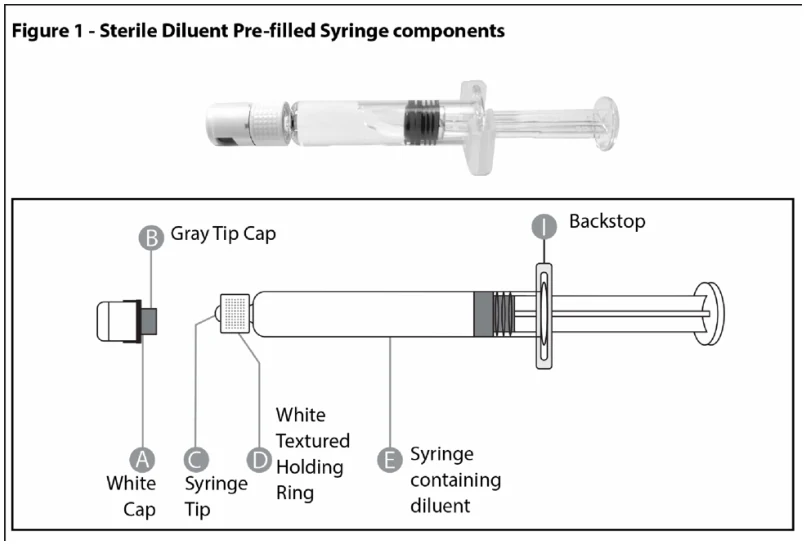
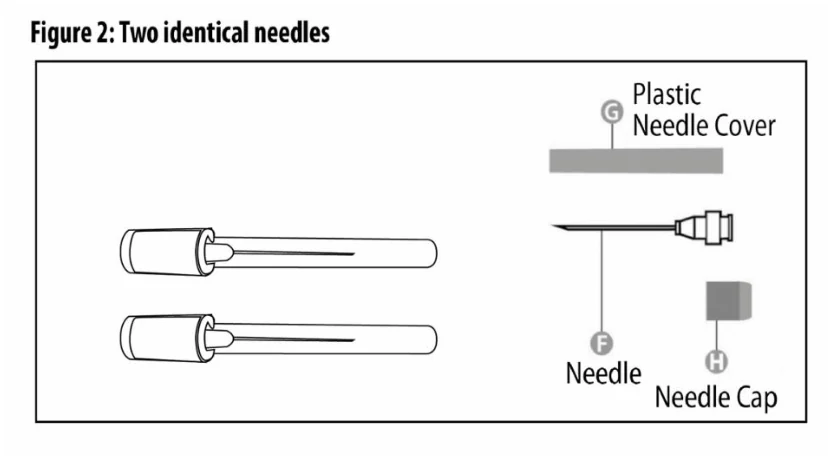
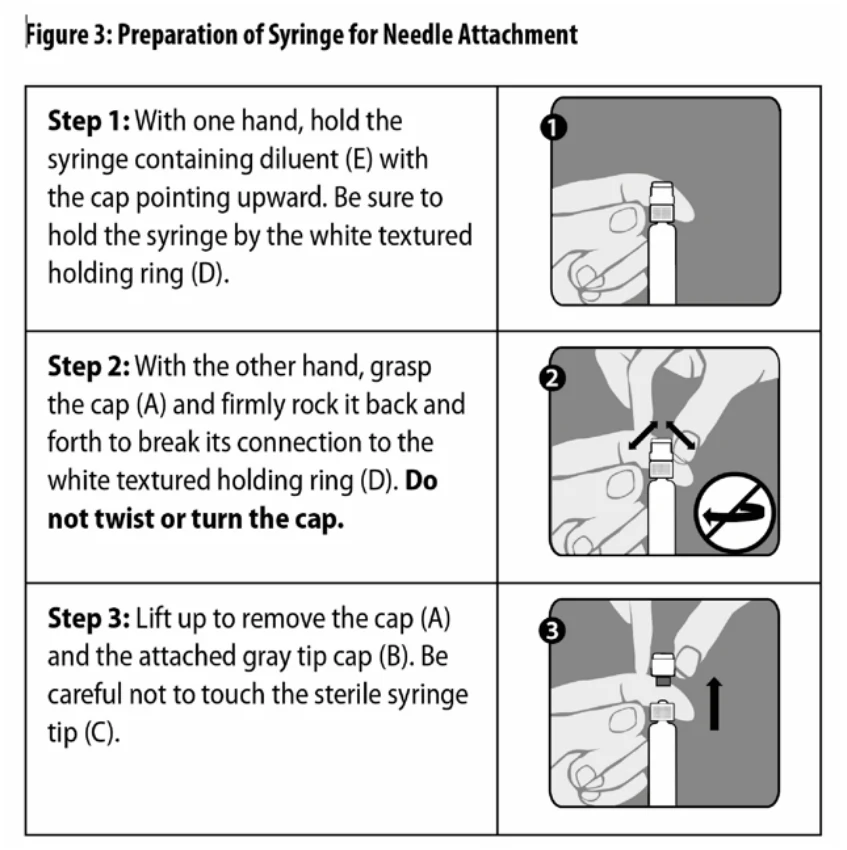
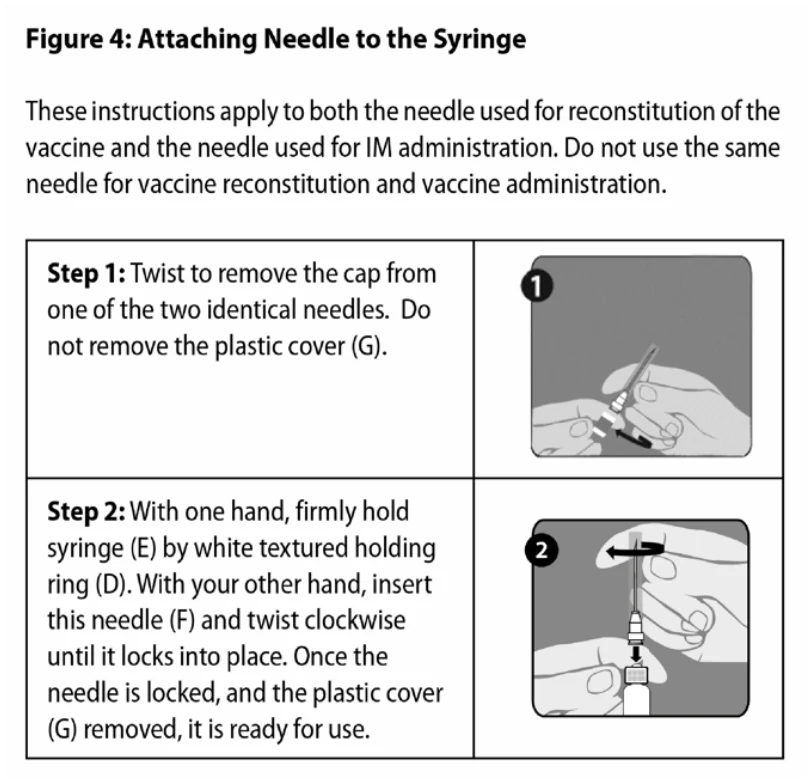
The lyophilization of the vaccine is performed under reduced pressure and the subsequent closure of the vials is done under vacuum. If there is no negative pressure in the vial, injection of sterile diluent for RabAvert would lead to an excess positive pressure in the vial. After reconstitution of the vaccine, it is recommended to unscrew the syringe from the needle to eliminate the negative pressure. After that, the vaccine can be easily withdrawn from the vial. It is not recommended to induce excess pressure, since over-pressurization may prevent withdrawing the proper amount of the vaccine.
5. Overdose
Insufficient data are available.
| For the most recent information in the management of a suspected drug overdose, contact your regional poison control centre or Health Canada’s toll-free number, 1-844 POISON-X (1-844-764-7669). |
|---|
- 6. Dosage Forms, Strengths, Composition, and Packaging
To help ensure the traceability of vaccines for individual immunization record-keeping as well as safety monitoring, healthcare professionals should record the time and date of administration, quantity of administered dose (if applicable), anatomical site and route of RabAvert administration, the product lot number, and expiry date.
Table 4 – Dosage Forms, Strengths, and Composition
*From the manufacturing process
Description
RabAvert is a white, lyophilized powder for reconstitution with the water for injection diluent prior to use; the reconstituted vaccine is a clear to slightly opalescent, colorless to slightly pink solution. The vaccine contains no preservative and should be used immediately after reconstitution with the supplied sterile diluent for RabAvert (Water for Injection).
RabAvert is supplied as:
- 1 vial of lyophilized powder containing a single dose
- 1 disposable pre-filled syringe of sterile diluent for RabAvert (1 mL)
- 2 identical 25 gauge x 1” needles – one for reconstitution and one for administration
| Route of Administration | Dosage Form/ Strength/Composition | Non-Medicinal Ingredients |
| Intramuscular (IM) Injection | Lyophilized powder for reconstitution with a diluent / ≥2.5 IUs of rabies antigen per 1 mL | Disodium edetate, hydrogen chloride, polygeline, potassium-L-glutamate, sodium chloride, sucrose, trometamol, water for injection. Residues*: Amphotericin B, chlortetracycline, human serum albumin, neomycin, and ovalbumin |
7. Warnings and Precautions
Anaphylaxis, neuroparalytic events such as encephalitis, transient paralysis and Guillain-Barré Syndrome have been reported to be temporally associated with the use of RabAvert (Rabies Vaccine).
A patient's risk of developing rabies must be carefully considered, however, before deciding to discontinue immunization.
RabAvert must not be used subcutaneously and should not be used intradermally.
Do not inject intravascularly.
General
Care is to be taken by the health-care provider for the safe and effective use of the product. The health-care provider should also question the individual, parent or guardian about:
- 1) the current health status of the vaccinee; and
- 2) reactions to a previous dose of RabAvert or a similar product.
Pre-exposure vaccination should be postponed in the case of sick and convalescent individuals, and those considered to be in the incubation stage of an infectious disease.
A separate, sterile syringe and needle must be used for each individual to prevent transmission of hepatitis and other infectious agents from individual to individual. Needles must not be recapped and should be properly disposed of.
As with any rabies vaccine, vaccination with RabAvert may not protect 100% of susceptible individuals.
For adults, the deltoid area is the preferred site of immunization; for small children and infants, administration into the anterolateral zone of the thigh is preferred. The use of the gluteal region should be avoided, since administration in this area may result in lower neutralizing antibody titres (see 4. Dosage and Administration).
The vaccine must not be mixed in the same syringe with other medicinal products. If rabies immunoglobulin is indicated in addition to RabAvert vaccine, then it must be administered at an anatomical site distant to the vaccination (see 9. Drug Interactions). Concomitant vaccines should always be administered at separate injection sites and preferably into different limbs.
Unintentional intravascular injection may result in systemic reactions, including shock. Immediate measures include catecholamines, volume replacement, high doses of corticosteroids, and oxygen.
This product contains albumin, a derivative of human blood. It is present in RabAvert at concentrations of ≤ 0.3 mg/dose. Based on effective donor screening and product manufacturing processes, it carries an extremely remote risk for transmission of viral diseases. A theoretical risk for transmission of variant Creutzfeld-Jakob disease (vCJD) also is considered extremely remote. No cases of transmission of viral diseases or vCJD have ever been identified for albumin.
The use of corticosteroids to treat adverse reactions such as those listed in 8. Adverse Reactions may inhibit the development of immunity to rabies.
Carcinogenesis and Genotoxicity
Long-term studies with RabAvert have not been conducted to assess the potential for carcinogenesis or mutagenesis.
Immune
Development of active immunity after vaccination may be impaired in immunocompromised individuals. Please refer to 9. Drug Interactions.
RabAvert contains residues of egg and chicken proteins, such as ovalbumin. In instances where individuals have developed clinical symptoms of anaphylaxis such as generalized urticaria, upper airway (lip, tongue, throat, laryngeal, or epiglottal) edema, laryngeal spasm or bronchospasm, hypotension, or shock, following exposure to egg or chicken protein, the vaccine should only be administered by personnel with the capability and facilities to manage anaphylaxis post vaccination.
A history of allergy to eggs or a positive skin test to ovalbumin does not necessarily indicate that an individual will be allergic to RabAvert. However, individuals who have a history of a severe hypersensitivity reaction to eggs or egg products should not receive the vaccine for pre-exposure vaccination. Such individuals should also not receive the vaccine for post-exposure prophylaxis unless a suitable alternative vaccine is not available, in which case all injections should be administered with close monitoring and with facilities for emergency treatment.
Similarly, individuals with a history of a severe hypersensitivity reaction to any of the other ingredients in RabAvert such as polygeline (stabilizer), or to amphotericin B, chlortetracycline or neomycin (which may be present as trace residues) should not receive the vaccine for pre-exposure vaccination. The vaccine should also not be given to such individuals for post-exposure prophylaxis unless a suitable alternative vaccine is not available, in which case precautions should be taken as above.
As with all injectable vaccines, appropriate medical treatment and supervision should always be readily available in case of a rare anaphylactic event following the administration of the vaccine.
Monitoring and Laboratory Tests
When rabies post-exposure prophylaxis is administered to individuals receiving corticosteroids or other immunosuppressive therapy, or who are immunocompromised, it is important that a serum sample on Day 14 (the day of the fourth vaccination) be tested for rabies antibody to ensure that an acceptable antibody response has been induced (RFFIT).
Neurologic
Anxiety-related reactions, including vasovagal reactions (syncope), hyperventilation or stress-related reactions, may occur in association with vaccination as a psychogenic response to the needle injection (see 8. Adverse Reactions). It is important that procedures are in place to avoid injury from fainting.
Other events that have been reported in post-market surveillance as temporally associated with the use of RabAvert include meningitis, myelitis, retrobulbar neuritis and multiple sclerosis. See 8. Adverse Reactions.
Reproductive Health
Fertility
Long-term studies with RabAvert have not been conducted to assess the potential for impairment of fertility.
7.1. Special Populations
7.1.1. Pregnancy
Animal reproductive studies have not been conducted with RabAvert. It is also not known whether RabAvert can cause fetal harm when administered to a pregnant woman or can affect reproduction capacity. No reports on adverse effects associated with the use of RabAvert in pregnancy have been received.
Because of the potential consequences of inadequately treated rabies exposure, pregnancy is not considered a contraindication to post-exposure prophylaxis. If there is a substantial risk of exposure to rabies, pre-exposure vaccination may also be indicated during pregnancy.
7.1.2. Breastfeeding
It is not known whether RabAvert is excreted in animal or human milk.
Because of the potential consequences of inadequately treated rabies exposure, nursing is not considered a contraindication to post-exposure prophylaxis. If there is a substantial risk of exposure to rabies, pre-exposure vaccination may also be indicated during nursing.
8. Adverse Reactions
8.1. Adverse Reaction Overview
As with all vaccines and as outlined below, RabAvert administration may cause unintended reactions. However, not all events occurring after vaccination are causally related to the vaccine. For any unexpected effects while taking RabAvert, contact your physician or pharmacist.
Adverse reactions reported are listed according to the following frequency:
- Very common ≥1/10
- Common ≥1/100 to <1/10
- Uncommon ≥1/1,000 to <1/100
- Rare ≥1/10,000 to <1/1,000
- Very rare <1/10,000
In very rare cases, neurological and neuroparalytic events and rare cases of hypersensitivity reactions have been reported in temporal association with administration of RabAvert.
The most commonly occurring adverse reactions are injection-site reactions, such as injection-site erythema, induration and pain; flu-like symptoms, such as asthenia, fatigue, fever, headache, myalgia and malaise; arthralgia, dizziness, lymphadenopathy, nausea, and rash.
An individual’s risk of acquiring rabies must be carefully considered before deciding to discontinue vaccination. Advice and assistance on the management of serious adverse reactions for individuals receiving rabies vaccines may be sought from the health department.
8.2. Clinical Trial Adverse Reactions
Clinical trials are conducted under very specific conditions. Therefore, the frequencies of adverse reactions observed in the clinical trials may not reflect frequencies observed in clinical practice and should not be compared to frequencies reported in clinical trials of another vaccine. The adverse reaction information from clinical trials does, however, provide a basis for identifying the adverse events that appear to be related to vaccine use and for approximating rates.
The data from clinical trials described below (Table 5) reflect exposure to RabAvert in 1,307 individuals, including 355 individuals in pre-exposure vaccination settings and 952 individuals, who received RabAvert for post-exposure prophylaxis. RabAvert was studied primarily in single-blind, randomized controlled trials. The population studied was mainly Caucasian and Asian, ranging from healthy infants to healthy adults with an equal gender distribution. Individuals only received IM administration of RabAvert.
Table 5 – Adverse Reactions Information (Clinical Trials)
| System organ class/preferred term | RabAvert n = 1,307 (%) | |
| System organ class/preferred term | RabAvert n = 1,307 (%) | |
| General disorders and administration-site condition | ||
| Injection-site pain | Very common (>10%) | |
| Injection-site reaction | Very common (>10%) | |
| injection-site induration | Very common (>10%) | |
| Asthenia | Very common (>10%) | |
| Malaise | Very common (>10%) | |
| Pyrexia | Very common (>10%) | |
| Fatigue | Very common (>10%) | |
| Influenza-like illness | Common (>1%, <10%) | |
| Injection-site erythema | Common (>1%, <10%) | |
| Blood and lymphatic system disorders | ||
| Lymphadenopathy | Common (>1%, <10%) | |
| Nervous system disorders | ||
| Dizziness | Very Common (>10%) | |
| Headache | Very Common (>10%) | |
| Skin and subcutaneous tissue disorders | ||
| Rash | Very Common (>10%) | |
| Urticaria | Common (>1%, <10%) | |
| Musculoskeletal and connective tissue disorders | ||
| Myalgia | Common (>1%, <10%) | |
| Arthralgia | Common (>1%, <10%) | |
| Gastrointestinal disorders | ||
| Nausea | Common (>1%, <10%) | |
| Vomiting | Common (>1%, <10%) | |
| Diarrhoea | Common (>1%, <10%) | |
| Abdominal pain | Common (>1%, <10%) | |
| Metabolism and Nutrition Disorders | ||
| Decreased appetite | Common (>1%, <10%) | |
The table above presents the adverse reactions observed in clinical trials for the RabAvert vaccine. The most common adverse reactions include injection-site pain, injection-site reaction, injection site induration, asthenia, malaise, pyrexia, fatigue, dizziness, headache, and rash. These reactions are categorized based on their incidence rates, with some being very common and others common. Very common reactions occur in more than 10% of subjects, while common reactions occur in 1% to 10% of subjects. It is important to note that the incidence rates of these reactions may differ from those observed in general clinical practice, as clinical trial conditions can vary from real-world settings.
8.3. Less Common Clinical Trial Adverse Reactions
The rare adverse reactions listed below were reported at a frequency of ≥0.01% and <0.1%:
General disorders and administration-site conditions: Chills
Immune system disorders: Hypersensitivity
Nervous system disorders: Paraesthesia
Skin and subcutaneous tissue disorders: Hyperhidrosis (sweating)
8.5. Post-Market Adverse Reactions
Those adverse reactions identified during post-approval use of RabAvert can be found in Table 6. As these reactions are reported voluntarily from a population of uncertain size, it is not always possible to reliably estimate their frequency or establish a causal relationship to vaccine exposure. Decisions to include these reactions in labelling are typically based on one or more of the following factors: 1) seriousness of the reaction, 2) frequency of reporting, or 3) strength of causal connection to vaccine exposure, or a combination of these factors.
Table 6 – Adverse Reactions Information (Post-Marketing)
| System Organ Class | Adverse Reactions (only observed in post-approval use, n ≥ 10,000,000); frequency <1:1,000 for all events |
| General disorders and administration-site condition | Sweating |
| Cardiac disorders | Circulatory reactions (such as palpitations or hot flush) |
| Ear and labyrinth disorders | Vertigo |
| Eye disorders | Visual disturbance |
| Nervous system disorders | Nervous system disorders (such as presyncope, syncope, encephalitis, transient paralysis or Guillain-Barré Syndrome) |
| Immune system disorders | Allergic reactions (such as anaphylaxis including anaphylactic shock, bronchospasm, oedema, or pruritus) |
| Type III hypersensitivity-like symptoms | |
| Skin and Subcutaneous Tissue Disorders | Angiodema |
| Musculoskeletal and connective tissue disorders | Pain in limbs, limb swelling |
Once initiated, rabies prophylaxis should not be interrupted or discontinued because of local or mild systemic adverse reactions to rabies vaccine. Usually, such reactions can be successfully managed with anti-inflammatory and antipyretic agents (see 7. Warnings and Precautions).
In addition to the reactions outlined above, the following adverse events have been reported very rarely following widespread use of the vaccine. A causal relationship to the vaccine has not been established for any of these events: aphasia, cardiovascular disorder, conversion disorder, convulsion, diabetes mellitus, eye disorder, hearing impairment, meningitis, multiple sclerosis, nephritis, pneumonia, polymyalgia rheumatica, respiratory disorder, somnolence, spontaneous abortion, thrombocytopenia.
In order to minimize risk of rabies disease adherence to treatment guidelines, as outlined below, are of utmost importance. However, in very few cases development of rabies disease despite correct treatment has been reported. Direct inoculation of the rabies virus into nerve endings has been discussed as an explanation for these rare cases.
In very rare cases immediate-type allergic reactions may occur even after the first application of RabAvert, e.g., when pre-sensitization occurred with a different product with similar excipients.
9. Drug Interactions
9.1. Serious Drug Interactions
| Radiation therapy, antimalarials, corticosteroids, other immunosuppressive agents and immunosuppressive illnesses can interfere with the development of active immunity after vaccination and may diminish the efficacy of the vaccine (See 9.4 Drug-Drug Interactions). |
|---|
9.2. Drug Interactions Overview
No clinical trial data are available regarding the concurrent administration of RabAvert with other vaccines. Other essential inactivated vaccines may be given at the same time as RabAvert. Different injectable inactivated vaccines should be administered into separate injection sites and preferably different limbs. The vaccine must not be mixed in the same syringe with other medicinal products.
9.4. Drug-Drug Interactions
Pre-exposure vaccination may be administered to individuals under radiation therapy, antimalarials, corticosteroids, other immunosuppressive agents, and individuals with immunosuppressive illnesses with the awareness that the immune response may be inadequate.
Immunosuppressive agents should not be administered during post-exposure prophylaxis unless essential for the treatment of other conditions. When rabies post-exposure prophylaxis is administered to individuals receiving corticosteroids or other immunosuppressive therapy, or who are immunosuppressed, the rabies virus neutralizing antibody response should be measured 7 to 14 days after completion of the series to assess the possible need for an additional dose of the vaccine.
RIG must not be administered at more than the recommended dose, and not later than eight days after administration of first RabAvert dose since active immunization to the vaccine may be impaired.
10. Clinical Pharmacology
10.1. Mechanism of Action
Intramuscular injection of RabAvert induces lymphocytes to produce virus neutralizing antibodies that provide adequate protection against rabies virus.
10.2. Pharmacodynamics
Pre-Exposure Vaccination
The immunogenicity of RabAvert has been demonstrated in clinical trials conducted in Europe, North America and Asia. When administered according to the 3-dose conventional regimen (Days 0, 7, 21 or 28), 100% of individuals attained an adequate titre of 0.5 IU/mL by Day 28 or earlier. Persistence of antibody titres ≥0.5 IU/mL for up to 2 years after immunization of RabAvert has been measured in clinical trials (14.1. Clinical Trials by Indication).
When administered according to the 2-dose regimen (Days 0, 7) of RabAvert in healthy adults aged ≤ 50 years old, 100% of individuals attained an adequate titre of 0.5 IU/mL by Day 28 or earlier. However, 86% and 66% of individuals had rabies antibody titre ≥0.5 IU/mL by two months and six months after the primary vaccination (14.1. Clinical Trials by Indication).
Pre-Exposure Vaccination in Children
Pre-exposure administration of RabAvert in 11 Thai children from the age of 2 years and older resulted in antibody levels higher than 0.5 IU/mL on Day 14 in all children.
Post-Exposure Prophylaxis
Clinical studies in individuals exposed to rabies virus have demonstrated that RabAvert, when used in the recommended post-exposure World Health Organization (WHO) schedule of 5 to 6 IM injections of 1 mL (on Days 0, 3, 7, 14, 28), provided acceptable titres of neutralizing antibodies >0.5 IU/mL in 98% of individuals within 14 days and in 100% of individuals by Day 30. Similar results were obtained in several studies with healthy individuals who had been given the WHO recommended post-exposure regimen (“simulated” post-exposure immunization).
Failures have occurred, almost always after deviation from the recommended post-exposure prophylaxis protocol. However, in very few cases development of rabies disease despite correct treatment has been reported. Direct inoculation of the rabies virus into nerve endings has been discussed as an explanation for these rare cases.
Post-Exposure Prophylaxis in Children
In a 10-year serosurveillance study, RabAvert has been administered to 91 children aged 1 to 5 years and 436 children and adolescents aged 6 to 20 years. The vaccine was effective in both age groups. None of these individuals developed rabies.
10.3. Pharmacokinetics
ADME (absorption, distribution, metabolism, excretion) studies were not performed because these studies are not required/relevant for this type of vaccine.
Duration of effect
3-dose conventional PrEP regimen (Days 0, 7, 21/28):
Clinical studies showed that neutralizing antibody titres >0.5 IU/mL were present 2 years after completion of the 3-dose regimen in healthy individuals. (Recommended Dose and Dosage Adjustment14.1. Clinical Trials by Indication).
2-dose PrEP regimen (Days 0,7):
When administered in healthy adults aged ≤ 50 years old, 86% and 66% of individuals had RVNA titre ≥0.5 IU/mL by two months and six months, respectively, after completion of the 2-dose vaccination regimen (14.1. Clinical Trials by Indication).
- 11. Storage, Stability, and Disposal
RabAvert should be stored protected from light at 2°C to 8°C. After reconstitution, the vaccine is to be used immediately. The vaccine may not be used after the expiration date given on package and container.
Any unused vaccine or waste material should be disposed of in accordance with local requirements.
12. Special Handling Instructions
RabAvert is a white, lyophilized powder for reconstitution with the water for injection diluent prior to use; the reconstituted vaccine is a clear to slightly opalescent, colorless to slightly pink solution.
RabAvert should be visually inspected both before and after reconstitution for any foreign particulate matter and or change in physical appearance. The vaccine must not be used if any change in the appearance of the vaccine has taken place. For appearance see 6. Dosage Forms, Strengths, Composition, and Packaging.
The powder for solution should be reconstituted using the diluent supplied and carefully agitated prior to injection. The reconstituted vaccine should be used immediately.
Part 2: Scientific Information
13. Pharmaceutical Information
Drug Substance
Non-proprietary name: inactivated rabies virus (Flury LEP)
Product Characteristics:
RabAvert is a sterile lyophilized powder obtained by growing the fixed-virus strain Flury LEP in primary cultures of chicken fibroblasts. The strain Flury LEP was obtained from American Type Culture Collection as the 59th egg passage. The growth medium for propagation of the virus is a synthetic cell culture medium with the addition of human albumin, polygeline (processed bovine gelatin) and antibiotics.
The virus is inactivated with β-propiolactone and further processed by zonal centrifugation in a sucrose density-gradient. The vaccine is lyophilized after addition of a stabilizer solution which consists of buffered polygeline and potassium glutamate.
One dose of reconstituted vaccine contains ≤12 mg polygeline (processed bovine gelatin), ≤0.3 mg human serum albumin, 1 mg potassium-L-glutamate, and 0.3 mg disodium edetate. Small quantities of bovine serum are used in the cell culture process. Bovine components originate only from source countries known to be free of bovine spongiform encephalopathy. Minimal amounts of chicken protein may be present in the final product; ovalbumin content is ≤3 ng/dose (1.0 mL), based on ELISA. Antibiotics (neomycin, chlortetracycline, amphotericin B) added during cell and virus propagation are largely removed during subsequent steps in the manufacturing process. In the final vaccine, neomycin is present at ≤10 mcg, chlortetracycline at ≤200 ng, and amphotericin B at ≤20 ng per dose.
RabAvert is intended for intramuscular (IM) injection. The vaccine contains no preservative and should be used immediately after reconstitution with the supplied sterile diluent for RabAvert (Water for Injection).
The potency of the final product is determined by the US National Institute of Health (NIH) mouse potency test using the US reference standard. The potency of one dose (1.0 mL) RabAvert is at least 2.5 IU of rabies antigen.
RabAvert is a white, lyophilized powder for reconstitution with the diluent prior to use. The reconstituted vaccine is a clear to slightly opalescent, colorless to slightly pink solution.
Viral Inactivation
Only human serum albumin (HSA) approved for sale in Canada is used for the production of RabAvert. Therefore, the HSA complies with the requirements of the USP regarding viral inactivation.
14. Clinical Trials
14.1. Clinical Trials by Indication
Pre-Exposure Vaccination
The immunogenicity of RabAvert has been demonstrated in clinical trials conducted in different countries such as the USA, Croatia, UK, and Thailand.
In the pivotal pre-exposure and booster studies, the study population consisted of healthy adult individuals, mostly between 18 and 30 years of age and balanced gender ratio (see Table ).
Study Demographics and Trial Design
Table 7 – Summary of Patient Demographics for Clinical Trials in Pre-Exposure and Booster Vaccination
| Study # | Study design | Dosage, route of administration and duration | Study subjects (n) | Age (range) | Sex |
| Pre-exposure | |||||
| Dreesen et al. (1989) | Single-blind, randomized, controlled | 0, 7, 28 (IM or ID) | 78 in total 59 ID | (21-37) | 35 (45%) m 43 (55%) f |
| 19 IM (receiving PCECV) | 23.6 (21-32) | 8 (42%) m 11 (58%) f | |||
| Briggs et al. (2001) | Single-blind, randomized, controlled | 0, 7, 28 (IM only) | 165 in total (83 receiving PCECV) | 24.8 (20-49) | 73 (44%) m 92 (56%) f |
| Booster | |||||
| Briggs et al. (2001) | Blinded, randomized, controlled | One or two IM booster doses (Day 0 or Days 0 and 3) | 140 | 25.4 (21-44) | 59 (42%) m 81 (58%) f |
| Dreesen et al. (1989) | Single-blind, randomized, controlled | 0, 7, 28 (IM or ID) | 78 in total 59 ID | (21-37) | 35 (45%) m 43 (55%) f |
| 19 IM (receiving PCECV) | 23.6 (21-32) | 8 (42%) m 11 (58%) f | |||
| Overduin et al (2024) | Randomized, non-inferiority | Two IM booster doses administrated 3 days apart at 6 months after the primary 2-dose IM PrEP (days 0, 7) | 84 | 30 (S.D. 13.7) | 36 (43%) m 48 (57%) f |
Study Results
Clinical studies of conventional 3-dose immunization schedule (Days 0, 7, 21 to 28)
In two single-blind, randomized, controlled studies carried out in the USA in 101 individuals, antibody titres >0.5 IU/mL were obtained by Day 28 in all individuals. In a double-blind, randomized, controlled study carried out in Croatia in 25 individuals, in a randomized, controlled study carried out in the UK in 15 individuals, and in an uncontrolled study in Thailand in 22 individuals, antibody titres of >0.5 IU/mL were obtained by Day 14 (injections on Days 0, 7, 21) in all individuals.
In a U.S. study, one or two booster doses were administered to 140 individuals approximately one year after a three-dose pre-exposure vaccination series. Antibody titres of >0.5 IU/mL were present before the booster dose in all individuals. Titres were enhanced from geometric mean titres (GMT) of 2.33 IU/mL before the booster dose to 51.23 IU/mL on Day 7 after one booster dose. Following two booster doses (Days 0, 3) titres were enhanced from 1.84 IU/mL to 51.67 IU/mL on Day 7.
In another booster study, individuals known to have been immunized with Human Diploid Cell Rabies Vaccine (HDCV) were boosted with RabAvert approximately 4 years after primary immunization. In this study, a booster response was observed on Day 14 for all 22 individuals.
In the two booster trials carried out in the USA and in a booster trial carried out in Croatia, a RabAvert IM booster dose one, two or three years after primary immunization resulted in a more than 10-fold increase in GMTs, regardless of whether the individuals had received RabAvert or HDCV as the primary vaccine.
Persistence of antibody after immunization with RabAvert has been evaluated. In a single-blind, randomized, controlled trial performed in the UK, neutralizing antibody titres >0.5 IU/mL were present 2 years after immunization in all 6 sera tested. In another single-blind, randomized, controlled trial performed in the USA, all vaccinated 19 patients maintained seroprotection at 2 years after immunization. In a follow-up to this study adequate neutralizing antibody titres >1:5, indicative for protection were present 14 years after a booster immunization in all 10 individuals tested. All of these individuals responded with a more than 10-fold increase to a single booster dose.
The immunogenicity of RabAvert, when given intradermally in a pre-exposure regimen has been demonstrated in a clinical trial in Thailand. When intradermal doses of 0.1 mL were administered according to the recommended immunization schedule (Days 0, 7, 21), by day 14 100% (n=24) of the individuals attained adequate titres ≥0.5IU/mL, although significantly higher titers were obtained in the IM group.
Clinical studies of 2-dose immunization schedule (Days 0, 7)
In a study by Overduin et al, (2024) evaluating immunogenicity of a 2-dose PrEP regimen (day 0 and 7) of Rabipur (marketed as RabAvert in Canada), neutralizing antibody titres >0.5 IU/mL were observed in 86% and 66% in a study group of 62 individuals aged 18-50 years at 50-77 days and 180 days, respectively, after vaccination. At 180 days after initiation of PrEP, the GMT was 0.73 IU/mL. The participants received two separate booster doses administrated 3 days apart. Following the 1st booster dose administrated on Day 180, the GMT increased substantially to 32.61 IU/mL and 48.92 IU/mL on 7 and 21 days, respectively. In the subgroup of 11 individuals aged >50 years, neutralizing antibody titres >0.5 IU/mL were observed in only 36% and 27% of participants at 50–77 days and 180 days, respectively, after initiation of PrEP. The booster response was substantially lower in this subgroup than that in younger adults, with GMTs of 9.59 IU/mL and 29.90 IU/mL at 7 and 21 days, respectively, after the first booster dose on Day 180.
In another study by Endy et al. (2020), which evaluated the immunogenicity of a 2-dose PrEP regimen of RabAvert administered on Days 0 and 7 in 12 individuals, all participants had neutralizing antibody titres >0.5 IU/mL by Days 14 and 28 following initiation of the PrEP regimen. At 365 days after initiation of PrEP, neutralizing antibody titres >0.5 IU/mL were observed in 58% (7/12) of participants. Seven days after administration of a single booster dose on Day 365, the GMT increased from 0.43 IU/mL to 14.96 IU/mL which is approximately 30-fold higher than the recognized threshold (0.5 IU/mL) for an adequate immune response.
Pre-Exposure Vaccination in Children
Pre-exposure administration of RabAvert in 11 Thai children from the age of 2 years and older resulted in antibody levels higher than 0.5 IU/mL on Day 14 in all children.
Table 8 – Results of Key Endpoints in Pre-Exposure and Booster Vaccination Studies
| Dreesen et al. (1989) | Briggs et al. (2001) | |||||||||||||
|---|---|---|---|---|---|---|---|---|---|---|---|---|---|---|
| Dreesen et al. (1989) | Briggs et al. (2001) | |||||||||||||
| Primary endpoint | RabAvert | Active Controla | RabAvert | Active Controla | ||||||||||
| Primary endpoint | RabAvert | Active Controla | RabAvert | Active Controla | ||||||||||
| Pre-Exposure | ||||||||||||||
| VNA titers of >0.5 IU/mL | 100% of individuals had VNA titers >0.5 IU/mL by Day 28 | 100% of individuals had VNA titers >0.5 IU/mL | 100% of individuals had VNA titers >0.5 IU/mL | 100% of individuals had VNA titers >0.5 IU/mL | ||||||||||
| Booster | ||||||||||||||
| VNA titers of >0.5 IU/mL | 100% of individuals had VNA titers >0.5 IU/mL by Day 7 after booster | NA | Antibody titers >0.5 IU/mL before the booster in all individuals increase in titers (GMT) from 2.33 IU/mL before booster to 51.23 IU/mL on Day 7 after 1 booster dose and from 1.84 IU/mL to 51.67 IU/mL after two booster doses | NA | ||||||||||
GMT = Geometric Mean Titers; HDCV = Human Diploid Cell Culture Vaccine; VNA = Virus Neutralizing Antibody aHDCV (Mérieux) | ||||||||||||||
Post-Exposure Prophylaxis
Study Demographics and Trial Design
In the pivotal post-exposure studies, the study population consisted of either healthy adult individuals receiving “simulated” post-exposure prophylaxis or individuals exposed to suspect or proven rabid animals (see Table ).
Table 9 – Summary of Patient Demographics for Clinical Trials in Post-Exposure Prophylaxis
| Study # | Study design | Dosage, route of administration and duration | Study subjects (n) | Age (range) | Sex |
| Wasi (1999) | Randomized, controlled, two centers | 0, 3, 7, 14, 30, 90 (IM, 1.0 mL) | 211 in total | 28.9 (2-78) | 78 (37%) m 133 (63%) f |
0-0, 3-3, 7-7, 30, 90 (ID, 0.1 mL) | 57 receiving PCECV intramuscularly | 33.6 (5-66) | 28 (49%) m 29 (51%) f | ||
| Nicholson et al. (1987) | Double-blind, randomized, single-center, controlled | 2 IM doses on Day 0, 1 IM dose on Days 3 and 7 | 185 in total 93 receiving post-exposure regimen | (19-25) | All male |
| Sehgal et al. (1995) | uncontrolled | Days 0, 3, 7, 14, 30 and 90 | 56 individuals after exposure to proven rabid animals | unknown | unknown |
| Haradanahall i et al, 2021 | Non-randomized, comparative control | 4 dose: Days 0, 3, 7, and 14 5 dose control: Days 0, 3, 7, 14, and 28 | 70 in total (35 in 4-dose and 35 in 5-dose) | 4 dose: 37.9 ± 13.3 years 5 dose control: 34.9 ± 12.7 years | unknown |
Study Results
RabAvert, when used in the recommended post-exposure Centers for Disease Control (CDC) regimen of
5 IM injections of 1.0 mL (Days 0, 3, 7, 14 and 28) or WHO regimen of 5 to 6 IM injections of 1.0 mL (Days 0, 3, 7, 14, 30, and one optionally on Day 90) provides acceptable titres of neutralizing antibody. In studies conducted outside of the USA, 158/160 individuals by Day 14 and 215/216 individuals by Day 28-38 produced antibody levels of >0.5 IU/mL.
Of these, 203 were followed for at least 10 months. No case of rabies was observed. Some individuals received Human Rabies Immunoglobulin (HRIG), 20-30 IU per kg body weight, or Equine Rabies Immunoglobulin (ERIG), 40 IU per kg body weight, at the time of the first dose. In two studies, the addition of either HRIG or ERIG caused a slight decrease in GMTs which was neither clinically relevant nor statistically significant. In one study, individuals receiving HRIG had significantly lower (p < 0.05) GMTs on Day 14; however, again this was not clinically relevant. After Day 14 there was no statistically significant difference.
The results of several studies of immunocompetent volunteers receiving the post-exposure WHO regimen, i.e., "simulated" post-exposure, show that with sampling by Day 28-30, 205/208 vaccinees had acceptable titres >0.5 IU/mL.
Failures have occurred abroad, almost always after deviation from the recommended post-exposure prophylaxis protocol. However, in very few cases development of rabies disease despite correct treatment has been reported. Direct inoculation of the rabies virus into nerve endings has been discussed as an explanation for these rare cases.
RabAvert, when used in the WHO recommended intradermal post-exposure regimens (the Thai Red Cross 2-site post-exposure regimen of 2 ID injections of 0.1 mL (Days 0, 3, 7) and 1 ID injection on Days 28 and 90; or the 8-site post-exposure regimen of 8 ID injections of 0.1 mL on Day 0, 4 ID injections of 0.1 mL on Day 7 and 1 ID injection on Days 28 and 90) provides adequate titres of neutralizing antibody, as demonstrated in several clinical trials.
The efficacy of RabAvert when given in the Thai Red Cross 2-site post-exposure regimen was demonstrated in a clinical trial in the Philippines. One hundred and thirteen individuals, bitten by laboratory proven rabid animals and treated with RabAvert in combination with rabies immunoglobulin were followed for one year and all individuals were healthy and alive after one year.
The study by Haradanahalli et al, 2021, compared the proposed 4-IM dose PEP regimen (days 0, 3, 7 and 14) and the currently approved 5-IM dose PEP regimen (days 0, 3, 7, 14 and 28) with use of human rabies immunoglobulin (HRIG). More than 94% of subjects received Rabipur (RabAvert). The study showed that geometric mean titers (GMT) of RVNA on days 14, 90, and 180 in the 5-dose group (n=33) were numerically higher than the corresponding value in the 4-dose group (n=35) (p > 0.05). Seroconversion rate was 100% from day 16 to day 180 in both study groups. The study did not measure of RVNA titers between day 14 and day 90. GMT on day 90 in the 4-dose group was 24.9 IU/ml which is approximately 50-fold higher than the threshold (0.5 IU/mL) for adequate rabies antibody response.
Post-Exposure Prophylaxis in Children
In a 10-year serosurveillance study, RabAvert has been administered to 91 children aged 1 to 5 years and 436 children and adolescents aged 6 to 20 years. The vaccine was effective in both age groups. None of these individuals developed rabies.
One newborn has received RabAvert on an immunization schedule of Days 0, 3, 7, 14 and 30; the antibody concentration on Day 37 was 2.34 IU/mL. There were no clinically significant adverse events.
Table 10 – Results of Key Endpoints in Post-Exposure Vaccination Studies
| Wasi (1999) | Nicholson et al. (1987) | Sehgal et al. (1995) | ||||||||||
|---|---|---|---|---|---|---|---|---|---|---|---|---|
| Primary endpoint | RabAvert | Active Controla | Active Controlb | RabAvert | Active Controlc | RabAvert | ||||||
| Post-Exposure | ||||||||||||
| VNA titers of >0.5 IU/mL | VNA titers >0.5 IU/mL in all individuals by Day 14 | VNA titers >0.5 IU/mL in all individuals by Day 14 | VNA titers >0.5 IU/mL in all individual s by Day 14 | VNA titers >0.5 IU/mL in all individuals by Day 14 | No significant difference of PCECV to HDCV | Mean antibody titer of 4.45 IU/mL after the last dose; 100 % survival after 19 to 24 months follow-up period | ||||||
HDCV = Human Diploid Cell Culture Vaccine; ID = Intradermal; IM = Intramuscular; PCECV = Purified Chick Embro Cell Vaccine; PVRV = Purified Vero Cell Rabies Vaccine; VNA = Virus Neutralizing Antibody aIM administration of PVRV (Aventis Pasteur) bID administration of PCECV cHDCV (Institut Mérieux) | ||||||||||||
15. Microbiology
No microbiological information is required for this drug product.
16. Non-Clinical Toxicology
General Toxicology
Toxicity Studies
Toxicity testing of rabies vaccine was performed with the final preparation of the vaccine. Performance of toxicity testing, including selection of animal models and dose levels/regimens, represent the scientific and regulatory standards of testing vaccines.
Table 11 – Toxicity Studies
| Toxicology study | Animal | N | Dose level | Result summary | ||||
| Single dose toxicity | Mice | 10 m 10 f | 0.25 mL, 0.5 mL, 1.0 mL | All animals survived. Body weight gain was comparable to the control animals. The vaccine was subcutaneously well tolerated up to and including the dose for humans. | ||||
| Rats | 10 m 10 f | 0.25 mL, 0.5 mL, 1.0 mL | All animals survived. Body weight gain was comparable to the control animals. The vaccine was subcutaneously well tolerated up to and including the dose for humans. | |||||
| Rabbits | 4 m 4 f | Placebo 1.0 mL | All animals survived. The vaccine was intramuscularly and systemically well tolerated at the human dose. | |||||
| Repeated dose toxicity | Rabbits | 6 m 6 f | Placebo 1.0 mL | All animals survived. The vaccine was immunogenic and was intramuscularly and systemically well tolerated at the human dose administered 5 times (dosing every 2 weeks). Findings of reversibly elevated fibrinogen and reversible inflammatory infiltrates at the injection sites were consistent with the administration of an immunogenic vaccine. | ||||
| Dogs | 2 m 2 f | 1.0 mL (5.0 IU) | All animals survived. Body weight gain was comparable to the control animals. No adverse effects were noted in general condition or behavior. No evidence of toxicity to the vaccine was seen. | |||||
| Monkeys | 6 m – one dose 6 f – one dose 5 m – repeat dose 7 f – repeat dose | 3.5 IU PCEC vaccine, 3.5 IU HDC vaccine | There was no treatment-related mortality or effects on clinical signs or body weights. In the single-dose part of the study there were sporadic elevations in liver function tests (AST and/or ALT) in individual animals. Because these parameters were not affected by repeat administration, these findings were considered unlikely to be related to the vaccines. The test vaccines demonstrated little, if any, toxicity after either single or repeated injections. | |||||
Local Tolerance
An intramuscular local tolerance study was performed in rabbits. A 0.5 mL quantity (1.25 IU) was injected intramuscularly, and the sites were evaluated histologically and compared to sites in which 0.5 mL of the stabilizing agent had been injected. Microscopically, the vaccine and stabilizer sites were similar. Mild inflammatory changes were seen on the second day and resolution of these changes were evident by the fifth day. It was concluded that the vaccine was locally well tolerated. Local intramuscular tolerability was also assessed in the single and repeated-dose rabbit toxicology studies. The local reactogenicity was also of a low order of magnitude following 5 intramuscular doses.
In addition, an intracutaneous tolerance study was performed in rabbits dosed with 0.1 mL (0.25 IU) of the vaccine. The thickness of vaccine-treated injection sites were compared to the isotonic saline treated (control) injection sites daily until necropsy on Day 8. A slight increase in skin fold thickness was observed between Days 7 and 8. Cellular infiltrations were found at injection sites at a somewhat higher degree in the vaccinated animals. It was concluded that the vaccine provoked local inflammation after intracutaneous injection.
In conclusion, in single- and repeated-dose nonclinical studies with clinically-relevant doses in several small and large animal species, RabAvert was immunogenic and protective and was systemically and locally well tolerated.