


Patient Medication Information: uses, side effects, how to take - Injectable Naloxone Hydrochloride
Serious Warnings and Precautions
|
What is INJECTABLE NALOXONE HYDROCHLORIDE used for?
INJECTABLE NALOXONE HYDROCHLORIDE is used to treat someone who has or may have overdosed on opioids (a type of medication used to treat pain). It can be used by anyone (non-healthcare professional) to reverse the effects of the overdose until medical help arrives. Signs of an opioid overdose include:
- trouble breathing
- extreme drowsiness
- pale and clammy skin
- slow or no heartbeat
- passing out
- unable to be woken up
How does INJECTABLE NALOXONE HYDROCHLORIDE work?
Opioid drugs work by acting on specific receptors found in the brain and in the nervous system. When these drugs attach to those receptors, they reduce the amount of pain you feel. INJECTABLE NALOXONE HYDROCHLORIDE works by blocking these specific receptors. When these receptors are blocked, the opioid drugs can no longer work on them. This helps reduce the effects of the opioid drugs.
What are the ingredients in INJECTABLE NALOXONE HYDROCHLORIDE?
Medicinal ingredients: naloxone hydrochloride
Non-medicinal ingredients: hydrochloric acid, methylparaben, propylparaben, sodium chloride, and water for injection
INJECTABLE NALOXONE HYDROCHLORIDE comes in the following dosage forms:
Solution for injection: 0.4 mg / mL and 1 mg / mL
Do not use INJECTABLE NALOXONE HYDROCHLORIDE only if:
- you are sure that the patient is allergic to naloxone hydrochloride or to any of the ingredients in INJECTABLE NALOXONE HYDROCHLORIDE.
Other warnings you should know about:
Non-opioid overdoses: INJECTABLE NALOXONE HYDROCHLORIDE does not reduce the effects of an overdose caused by other drugs such as:
- barbiturates
- benzodiazepines
- psychostimulants (for example cocaine, amphetamines or methylphenidate)
alcohol
- anesthetics
- sedatives
Giving INJECTABLE NALOXONE HYDROCHLORIDE to a person because of a non-opioid overdose is unlikely to cause more harm.
Reoccurrence Opioid Symptoms: It may be possible that the symptoms of an opioid overdose reoccur even after a dose of INJECTABLE NALOXONE HYDROCHLORIDE has been given. You should:
- monitor the patient
- give repeated doses of INJECTABLE NALOXONE HYDROCHLORIDE to the patient if needed
- wait for emergency medical help to arrive
Opioid Dependant Patients: INJECTABLE NALOXONE HYDROCHLORIDE should be given with caution to patients who may be or are known to be physically dependant on opioids. Giving this drug to these patients may cause them to go into opioid withdrawal and cause opioid withdrawal syndrome.
Caregivers who give of INJECTABLE NALOXONE HYDROCHLORIDE to any patient should always be prepared for symptoms of opioid withdrawal syndrome and should try to help minimize any potential harm to the patient when they experience these reactions.
Some of the signs of opioid syndrome include:
- pain
- fever
- sweating
- runny nose
- sneezing
- yawning
- weakness
- shivering/chills
- tremor/trembling
- convulsions/seizures. Sharp and dangerous objects should be moved away to prevent injury
- vomiting. The patient should be placed on his or her side to prevent choking if they vomit
- increased blood pressure
Patients who have had surgery: INJECTABLE NALOXONE HYDROCHLORIDE should be given with caution to patients who have had a recent surgery. The following have occurred:
- high and low blood pressure
- increased heart rate
- rapid irregular heartbeat
- a build-up of fluid in the lungs
- in rare cases cardiac arrest
Pregnant Women: INJECTABLE NALOXONE HYDROCHLORIDE should only be used in pregnant women when clearly needed.
Pediatrics: An accidental exposure to an opioid drug is possible. INJECTABLE NALOXONE HYDROCHLORIDE should be given only if clearly needed.
The following may interact INJECTABLE NALOXONE HYDROCHLORIDE:
There are no known drug interactions with INJECTABLE NALOXONE HYDROCHLORIDE.
How to administer INJECTABLE NALOXONE HYDROCHLORIDE:
- Call for emergency medical help (911) before you give the injection
- If you are a bystander, a family member or a friend (non–medical healthcare professional): give the injection into the muscle (intramuscularly).
If you are a health care professional: the injection can be given:
- into the vein (intravenously), or
- underneath the skin (subcutaneously) or
- into the muscle (intramuscularly).
Usual Dose:
0.4 mg / mL
- Initial Dose: Inject 1 mL
- Repeat Doses: Inject 1 mL after 2 to 3 minutes if the person does not respond by breathing normally or waking up.
1 mg / mL
- Initial Dose: Inject 0.4 mL
- Repeat Doses: Inject 0.4 mL after 2 to 3 minutes if the person does not respond by breathing normally or waking up.
Four steps overdose response
Step 1: Check for signs of opioid overdose
- Breathing difficulties: Look for signs of breathing by placing your cheek near the nose and mouth of the person to feel their breath. Take only about 10 seconds to check this (Figure 1)
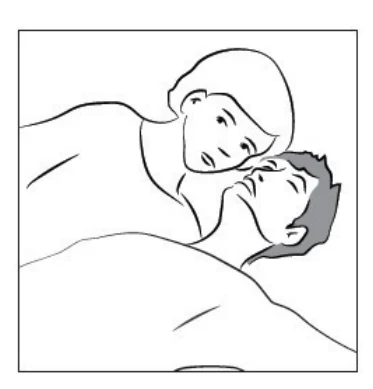
Figure 1
Other signs of overdose include:
- Excessive drowsiness
- Pale and clammy skin
- Slow or no heartbeat
- Passing out (loss of consciousness) or unable to be woken up
Step 2: Call 911
Step 3: Give Naloxone Injection
- Take the glass vial of INJECTABLE NALOXONE HYDROCHLORIDE. Using your fingers, pull off and remove the top of the glass vial (Figure 2)
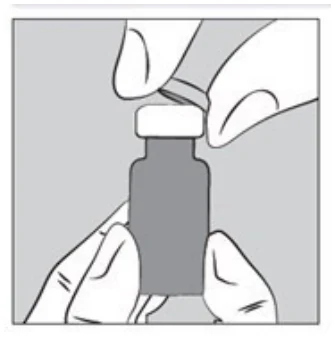
Figure 2
For 0.4 mg / mL:
Use a syringe with long needle (1-1 ½ inch length) to draw up 1 mL of the solution.
For 1 mg / mL:
Use a syringe with long needle (1-1 ½ inch length) to draw up 0.4 mL of the solution.
Inject into either:
- The fleshy part of the outer arm (just below the shoulder)
- Front of the upper thighs
- Upper part of the buttocks (Figure 3)
You can inject through light clothing unless the person is wearing thick clothing (such as a jacket or sweater), you do not need to remove their clothes.
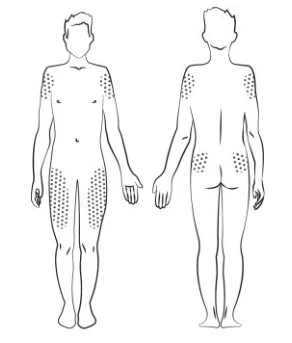
Figure 3
- Hold the syringe at a 90 degree angle to the body, about 10 cm away from the skin.
- Insert the needle into the muscle with a single, quick motion.
- Push down the plunger of the syringe with a slow, steady motion. (Figure 4)
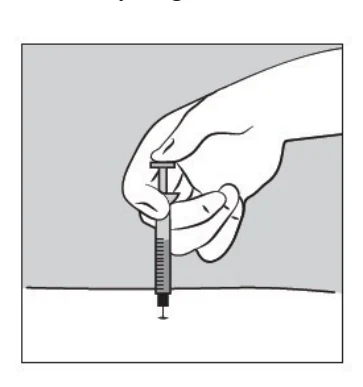
Figure 4
- Remove the needle and carefully put it out of the way, so that you can safely throw it away later.
- Give the opened vial, syringe and needle to the paramedics or bring them to the nearest pharmacy for safe discarding. Do not reuse them.
Step 4: Evaluate and support
Put the person in "the recovery position" by placing them on their side, making sure that they are not able to roll over. You can do this by moving one leg so that the knee is bent
- at a right angle (90 degrees), and also moving one arm so that it is a right angle to the body. Then make sure that their airway is open by gentle tilting the head back and lifting the chin. Make sure that the airway is clear of anything blocking it. (Figure 5)
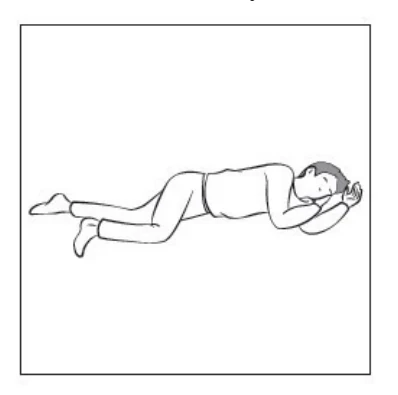
Figure 5
- Wait with the person until the ambulance arrives. Keep checking to make sure that they are still breathing.
- Repeat Step 3 after 2 to 3 minutes if the person does not respond by breathing normally or waking up.
What are possible side effects from using INJECTABLE NALOXONE
HYDROCHLORIDE?
- nausea
- vomiting
- sweating
- rapid heart beat
- increased blood pressure
- feeling shaky
A few people have had a seizure after an injection of INJECTABLE NALOXONE HYDROCHLORIDE. However it is not known if this was caused after receiving the injection.
Reporting Side Effects
You can help improve the safe use of health products for Canadians by reporting serious and unexpected side effects to Health Canada. Your report may help to identify new side effects and change the product safety information. 3 ways to report: Online at MedEffect (http://hc-sc.gc.ca/dhp-mps/medeff/index-eng.php); By calling 1-866-234-2345 (toll-free); By completing a Consumer Side Effect Reporting Form and sending it by:
NOTE: Contact your health professional if you need information about how to manage your side effects. The Canada Vigilance Program does not provide medical advice. |
Storage:
Store unopened vials between 15°C - 30°C. Keep in a dark place (away from light). Keep out of reach and sight of children.
Discard opened vials after intervention. Give opened vials to paramedics or bring them to the nearest pharmacy for safe discarding. Do not reuse them.
If you want more information about INJECTABLE NALOXONE HYDROCHLORIDE:
- Talk to your healthcare professional
- Find the full product monograph that is prepared for healthcare professionals and includes this Patient Medication Information by visiting the Health Canada website (http://hc-sc.gc.ca/index-eng.php); the manufacturer’s website www.omegalaboratory.com, or by calling 1.800.363.0584.