


Patient Medication Information: uses, side effects, how to take - Kloxxado
Serious warnings and precautions box
What KLOXXADO is used for:
KLOXXADO is used in adults to treat an opioid overdose. It can be used to reverse the effects of an overdose until medical help arrives. Signs of an opioid overdose include:
- trouble breathing or not breathing
- extreme drowsiness
- pale and clammy skin
- slow or no heartbeat
- passing out
- unable to be woken up by touch, shaking of shoulders or shouting
- Very small pupils, like a pinpoint
How KLOXXADO works:
Opioid drugs work by acting on specific receptors found in the brain and in the nervous system. When these drugs attach to those receptors, they reduce the amount of pain felt. Taking too many opioids can lead to an overdose and stop someone from breathing. KLOXXADO stops the opioids from being attached to the receptors, which reverses the effects and symptoms of the overdose.
The ingredients in KLOXXADO are:
Medicinal ingredients: Naloxone hydrochloride
Non-medicinal ingredients: Dehydrated Alcohol (Ethanol), Edetate Disodium Hydrate (EDTA), Hydrochloric Acid, Propylene Glycol, Purified Water and Sodium Hydroxide
KLOXXADO comes in the following dosage form(s):
Spray, Metered Dose: 8 mg / 0.1 mL
|
Do not use KLOXXADO if:
- you are allergic to naloxone hydrochloride or to any of the ingredients in KLOXXADO.
To help avoid side effects and ensure proper use, talk to your healthcare professional before you take KLOXXADO. Talk about any health conditions or problems you may have, including if you:
- have heart disease, or any other heart problems
are pregnant or think you are pregnant; use of KLOXXADO may cause distress to your unborn baby. Tell your healthcare professional right away if you use KLOXXADO while pregnant.
- are breast-feeding or plan to breastfeed. It is not known if KLOXXADO passes into breast milk.
Other warnings you should know about:
Opioid Withdrawal: Using naloxone on a person who is opioid-dependent may cause them to go into withdrawal. Always be prepared for potential aggressive behaviour. The person receiving KLOXXADO may experience withdrawal symptoms such as:
- body aches, stomach cramps, weakness
- diarrhea
- rapid heartbeat
- fever
- runny nose, sneezing
- goosebumps, shivering or trembling
- sweating
- yawning
- nausea or vomiting
- nervousness
- restlessness or irritability
- high blood pressure
If the person is shaking or having a seizure, do not try to hold them down. Move away any sharp and dangerous objects to prevent injury. If the person is vomiting, place them on their side to prevent choking.
In an emergency, if KLOXXADO is administered to an infant because no other options are available, they may experience additional withdrawal symptoms such as:
- seizures
- crying more than usual
- overactive reflexes
These symptoms can be life-threatening if not treated the right way. If KLOXXADO is given to an infant, seek immediate medical help.
Non-Opioid Overdoses: KLOXXADO does not reduce the effects of an overdose caused by any non-opioid drugs such as:
- barbiturates
- benzodiazepines
- psychostimulants (for example, cocaine, amphetamines or methylphenidate)
alcohol
However, giving KLOXXADO to a person because of a non-opioid overdose is unlikely to cause more harm. Make sure you get emergency help (call 911) right away.
Tell your healthcare professional about all the medicines you take, including any drugs, vitamins, minerals, natural supplements or alternative medicines.
The following may interact with KLOXXADO:
There are no known interactions for KLOXXADO at this time.
How to administer KLOXXADO:
Important Points:
- KLOXXADO is for use in the nose only.
- Do NOT test the KLOXXADO device. Keep KLOXXADO in the package until it is needed.
- Each KLOXXADO device contains only 1 dose and cannot be reused.
- KLOXXADO is not a substitute for emergency medical care. Always call 911 as soon as possible when administering KLOXXADO.
- KLOXXADO freezes at temperatures below -15°C. If this happens, the device will not spray. Get emergency medical help right away. Do not wait for KLOXXADO to thaw.
- Healthcare professionals may recommend using an alternate form of naloxone in newborns or children under two years of age. This is because smaller doses can be given with other forms of naloxone.
Step 1: Identify Opioid Overdose and Call for Emergency Medical Help
Check for signs of an opioid overdose:
- Person does not wake up after you shout, shake their shoulders, or firmly rub the middle of their chest.
- Breathing is very slow, irregular, or has stopped.
- Centre part of their eye is very small, like a pinpoint.
Call 911 or ask someone to call for you.
Lay the person on their back.
Step 2: Give KLOXXADO
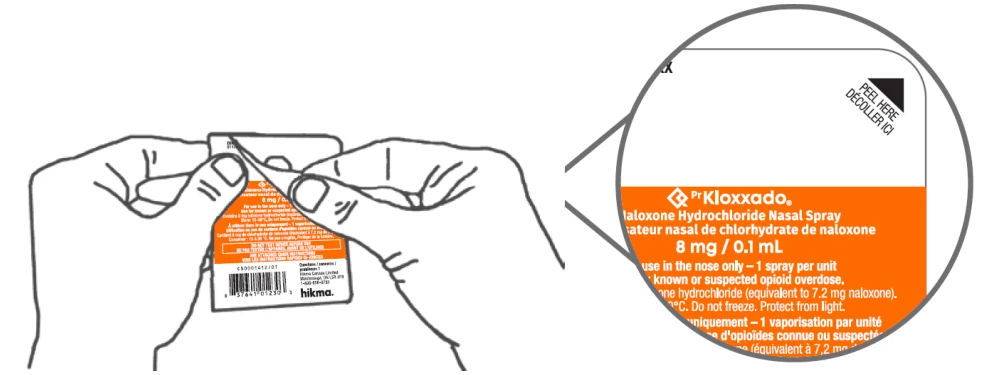
Remove the device from the packaging. DO NOT TEST THE DEVICE. Peel back the tab with the black triangle (▲) to open the KLOXXADO nasal spray blister.
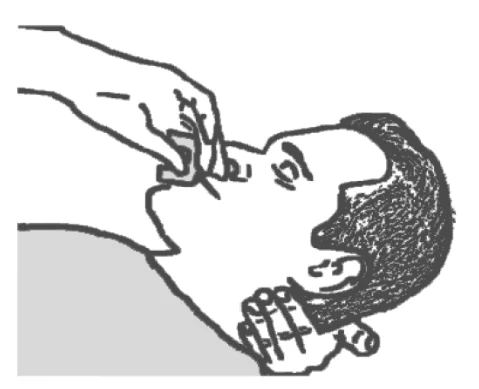
Tilt the person’s head back and provide support under their neck with your hand.
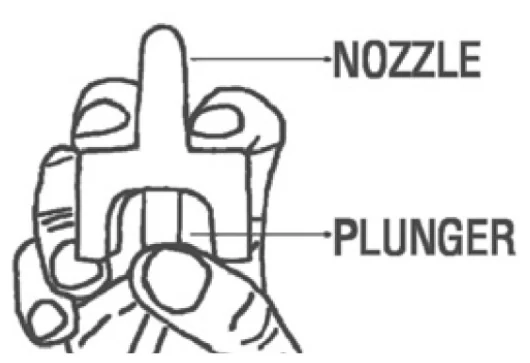
Hold the device with your thumb on the bottom of the plunger and your first and middle fingers on either side of the nozzle. Do not apply any pressure until you are ready to give the dose.
Gently insert the tip of the nozzle into one nostril. Your fingers should be right up against the nose.
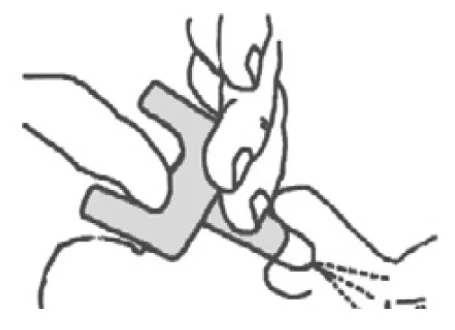
Press the plunger firmly with your thumb to give the dose.
Remove the device from the nostril.
Step 3: Evaluate and Support
Move the person on their side (recovery position) after giving KLOXXADO nasal spray. Watch the person closely.
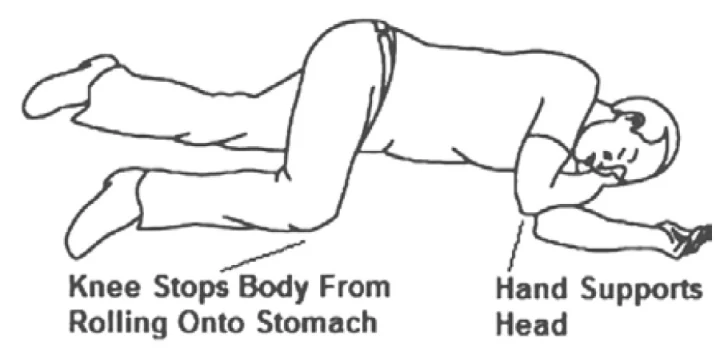
If the person does not wake up or does not start breathing normally within 2 to 3 minutes, another dose may be given. Repeat Step 2 in the other nostril, using a new KLOXXADO nasal spray.
You can give a dose every 2 to 3 minutes if more are available and needed. Alternate nostrils with each dose.
If necessary, perform additional supportive and/or resuscitative measures if you know how to, while awaiting emergency medical assistance.
Put any used KLOXXADO nasal spray back into its box. Throw away (dispose of) the used KLOXXADO nasal spray in a place that is away from children.
Usual dose:
- Administer a single spray of KLOXXADO into one nostril.
- If the person does not respond or responds and then relapses, additional doses of KLOXXADO may be given every 2 to 3 minutes in alternating nostrils until emergency medical assistance arrives.
Overdose:
| If you think you, or a person you are caring for, have taken too much KLOXXADO, contact a healthcare professional, hospital emergency department, regional poison control centre or Health Canada’s toll-free number, 1-844 POISON-X (1-844-764-7669) immediately, even if there are no signs or symptoms. |
|---|
Possible side effects from using KLOXXADO:
These are not all the possible side effects you may have when taking KLOXXADO. If you experience any side effects not listed here, tell your healthcare professional.
- Body aches, stomach cramps
- Diarrhea
- Rapid heartbeat
- Fever
- Runny nose, sneezing
- Goosebumps, shivering or trembling
- Sweating
- Yawning
- Nausea or vomiting
- Nervousness
- Restlessness or irritability
- High blood pressure
In infants under 4 weeks old:
- Seizures
- Crying more than usual
- Overactive reflexes
If you have a troublesome symptom or side effect that is not listed here or becomes bad enough to interfere with your daily activities, tell your healthcare professional.
Reporting side effects
You can report any suspected side effects associated with the use of health products to Health Canada by:
NOTE: Contact your healthcare professional if you need information about how to manage your side effects. The Canada Vigilance Program does not provide medical advice. |
Storage:
- Store between 15°C - 30°C.
- Do not freeze. KLOXXADO freezes at temperatures below -15°C. If this happens, KLOXXADO may be thawed by allowing it to sit at room temperature for 15 minutes. It may still be used if it has been thawed after being frozen.
- Keep KLOXXADO nasal spray in its box until ready to use. Protect from light.
- Replace KLOXXADO nasal spray before the expiration date on the box.
Keep out of reach and sight of children.
If you want more information about KLOXXADO:
- Talk to your healthcare professional
- Find the full product monograph that is prepared for healthcare professionals and includes the Patient Medication Information by visiting the Health Canada Drug Product Database website (https://www.canada.ca/en/health-canada/services/drugs-health-products/drug-products/drug-product-database.html); the manufacturer’s website https://www.hikma.com/canada/en/home/; or by calling 1-800-656-0793.
Date of Authorization: 2025-02-12