


Product Monograph - Kloxxado
Recent Major Label Changes
Not applicable
Table of Contents
Certain sections or subsections that are not applicable at the time of the preparation of the most recent authorized product monograph are not listed.
Recent Major Label Changes ................................................................................................... 2
Table of Contents ................................................................................................................... 2
Part 1: Healthcare Professional Information ........................................................................... 4
- 1.
Indications ....................................................................................................................... 4
1.1. Pediatrics .................................................................................................................. 4
1.2. Geriatrics .................................................................................................................. 4
- 2. Contraindications ............................................................................................................ 4
- 3. Serious Warnings and Precautions Box ............................................................................ 4
- 4.
Dosage and Administration ............................................................................................. 4
4.1. Dosing Considerations .............................................................................................. 4
4.2. Recommended Dose and Dosage Adjustment ......................................................... 6
4.3. Reconstitution .......................................................................................................... 6
4.4. Administration .......................................................................................................... 6
- 5. Overdose ......................................................................................................................... 7
- 6. Dosage Forms, Strengths, Composition, and Packaging ................................................... 7
- 7.
Warnings and Precautions ............................................................................................... 7
General ................................................................................................................................. 7
Dependence, Tolerance and/or Abuse Liability .................................................................... 7
Ear/nose/throat .................................................................................................................... 8
Gastrointestinal .................................................................................................................... 8
Neurologic ........................................................................................................................... 8
Perioperative considerations ................................................................................................ 8
Respiratory ........................................................................................................................... 9
7.1. Special Populations .................................................................................................. 9
7.1.1. Pregnancy ........................................................................................................ 9
7.1.2. Breastfeeding .................................................................................................. 9
7.1.3. Pediatrics ......................................................................................................... 9
7.1.4. Geriatrics ....................................................................................................... 10
- 8.
Adverse Reactions ......................................................................................................... 10
8.1. Adverse Reaction Overview .................................................................................... 10
8.2. Clinical Trial Adverse Reactions .............................................................................. 10
8.5. Post-Market Adverse Reactions ............................................................................. 10
- 9.
Drug Interactions ........................................................................................................... 10
9.3. Drug-Behaviour Interactions .................................................................................. 10
9.4. Drug-Drug Interactions ........................................................................................... 11
9.5. Drug-Food Interactions........................................................................................... 11
9.6. Drug-Herb Interactions ........................................................................................... 11
9.7. Drug-Laboratory Test Interactions ......................................................................... 11
- 10.
Clinical Pharmacology ................................................................................................... 11
10.1. Mechanism of Action .............................................................................................. 11
10.2. Pharmacodynamics ................................................................................................ 11
10.3. Pharmacokinetics ................................................................................................... 11
- 11. Storage, Stability, and Disposal ...................................................................................... 14
- 12. Special Handling Instructions ......................................................................................... 14
Part 2: Scientific Information ................................................................................................ 15
- 13. Pharmaceutical Information .......................................................................................... 15
- 14. Clinical Trials .................................................................................................................. 15
- 15. Microbiology ................................................................................................................. 15
- 16. Non-Clinical Toxicology .................................................................................................. 15
Patient Medication Information ........................................................................................... 17
Part 1: Healthcare Professional Information
1. Indications
KLOXXADO (naloxone hydrochloride) is an opioid antagonist indicated for:
- the treatment of known or suspected opioid overdose, as manifested by respiratory and/or central nervous system depression.
KLOXXADO is intended for immediate administration by healthcare professionals or caregivers of KLOXXADO prescription recipients.
KLOXXADO is not a substitute for emergency medical care.
1.1. Pediatrics
No data are available to Health Canada; therefore, Health Canada has not authorized an indication for pediatric use.
1.2. Geriatrics
- In general, use of drugs in elderly patient should be cautious, reflecting the greater frequency of decreased hepatic, renal, or cardiac function, and of concomitant disease or other drug therapy.
2. Contraindications
KLOXXADO is contraindicated in patients known to be hypersensitive to naloxone hydrochloride or to any ingredient in KLOXXADO. For a complete listing, see 6 Dosage Forms, Strengths, Composition, and Packaging.
3. Serious Warnings and Precautions Box
|
|---|
4. Dosage and Administration
4.1. Dosing Considerations
- Pediatrics: Health Canada has not authorized an indication for pediatric use. High doses of naloxone could trigger an acute opioid withdrawal syndrome in the opioid dependent neonate which may be life-threatening if not recognized and properly treated (see Dependence, Tolerance and/or Abuse Liability and 7.1.3 Pediatrics). If naloxone is prescribed for use in neonates and pediatric patients under two years of age, it is recommended to prescribe multiple lower doses of naloxone in an alternative formulation.
- Pregnant Women: Naloxone should only be used in pregnant women when clearly needed. Naloxone could trigger an acute opioid withdrawal syndrome in the opioid-dependent pregnant woman, potentially precipitating preterm labor or fetal distress (see Dependence, Tolerance and/or Abuse Liability and 7.1.1 Pregnancy).
Opioid dependent individuals: Convulsions, vomiting, and aggressive behavior are among the manifestations of an acute opioid withdrawal syndrome, which may be precipitated when
- Dependence, Tolerance and/or Abuse Liability).
- The capacity of naloxone to revers respiratory depression is in part dependent on the affinity of the opioid ligand. Opioids with a strong affinity for mu opioid receptors such as sufentanil, buprenorphine, hydromorphone, oxymorphone, levorphanol and butorphanol, may require multiple doses of naloxone.
- The efficacy of KLOXXADO has not been assessed in people with nasal conditions such as abnormal nasal anatomy, nasal symptoms or in people having a product sprayed into the nasal cavity prior to naloxone administration. It is unknown if these conditions affect naloxone’s efficacy. If naloxone is prescribed for people presenting these conditions, other routes of administration may be considered.
Since a suspected opioid overdose is typically managed by someone other than the prescription recipient of KLOXXADO, it is important to provide instructions to the recipient, as well as their caregiver, on the following:
- KLOXXADO is for intranasal use only.
- The device is ready to use. Do not prime or test prior to administration.
- Do not attempt to reuse KLOXXADO. Each KLOXXADO contains a single dose of naloxone and cannot be reused.
- Instruct the prescription recipients as well as their caregiver to read the Patient Medication Information leaflet and the Quick Start Guide (both included in the KLOXXADO carton) at the time they receive a prescription for KLOXXADO. Ensure that the leaflet and Quick Start Guide are kept in the carton after reading them.
- Administer KLOXXADO as quickly as possible because prolonged respiratory depression may result in damage to the central nervous system or death.
- KLOXXADO is not a substitute for immediate medical attention. Always seek immediate emergency medical assistance (calling 911) when using KLOXXADO because the duration of action of most opioids exceeds that of naloxone hydrochloride. Keep the patient under continued surveillance and administer repeated doses of KLOXXADO, as necessary, until emergency personnel arrive (see Rebound Opioid Toxicity)
- Mistakenly administering KLOXXADO to a person that is unconscious because of a non-opioid overdose is very unlikely to create more harm. In doubt, do not hesitate to administer KLOXXADO.
- Health Canada has not authorized an indication for pediatric use. High doses of naloxone in opioid-dependent neonates could trigger an acute opioid withdrawal syndrome which may be life-threatening if not properly treated. If other options are not available and KLOXXADO is used in an opioid dependent neonate, immediate medical attention is vital after administration of naloxone.
- Naloxone should only be used in pregnant women when clearly needed. Naloxone could trigger an acute opioid withdrawal syndrome in the opioid-dependent pregnant woman, potentially precipitating preterm labor or fetal distress. If KLOXXADO is administered to a pregnant woman, immediate medical attention is vital after administration of naloxone.
- Use of naloxone in any opioid-dependent individual could trigger an acute opioid withdrawal syndrome which can include, but not limited to, convulsions, vomiting and aggressive behavior. Caregivers should always be prepared for potential aggressive reactions and be ready to assist the patient to minimize harms. For example, a patient should be positioned in lateral decubitus to prevent choking if vomiting occurs. Sharp or dangerous objects should be moved away in case of convulsions to protect the patient from injury, but the patient should not be held down to try to stop their movements. Additionally, nothing should be put in their mouth, including fingers, as this can lead to choking.
- The reversal of respiratory depression caused by some opioids such as sufentanil, buprenorphine, hydromorphone, oxymorphone, levorphanol and butorphanol, may be incomplete and require repeated administration of KLOXXADO, using a new nasal spray each time.
- Replace KLOXXADO nasal spray before the expiration date on the box.
4.2. Recommended Dose and Dosage Adjustment
Initial Dosing: The recommended initial dose of KLOXXADO is one spray delivered by intranasal administration into one nostril, which delivers 8 mg of naloxone hydrochloride.
Repeat Dosing: Seek emergency medical assistance as soon as possible, after administering the first dose of KLOXXADO. If the desired response is not obtained after 2 to 3 minutes, administer an additional dose using a new KLOXXADO in the other nostril. If there is still no response and additional doses are available, administer additional doses of KLOXXADO every 2 to 3 minutes, alternating nostrils and using a new KLOXXADO, until emergency medical assistance arrives. The requirement for repeat doses of KLOXXADO depends upon the amount, type, and route of administration of the opioid being antagonized. If no response is obtained after 3 doses of KLOXXADO, an opioid overdose is unlikely.
If the patient responds to the first dose of KLOXXADO and subsequently relapses back into respiratory depression before emergency assistance arrives, administer an additional dose using a new KLOXXADO, in the opposite nostril, and continue surveillance of the patient.
Additional supportive and/or resuscitative measures may be helpful while awaiting emergency assistance.
Reversal of respiratory depression by some full agonists, partial agonists or mixed agonist/antagonists, with strong affinity for opioid mu receptors may require repeated administration of KLOXXADO using a new nasal spray (see 4.1. Dosing Considerations).
4.3. Reconstitution
Not applicable.
4.4. Administration
Administer KLOXXADO according to the Patient Medication Information or the Quick Start Guide included in the KLOXXADO carton.
- Place the patient in the supine position. Prior to administration, be sure the device nozzle is inserted in either nostril of the patient and provide support to the back of the neck to allow the head to tilt back. Do not prime or test the device prior to administration.
- To administer the dose, press firmly on the device plunger. Remove the device nozzle from the nostril after use. Place the patient in recovery position by turning him/her onto their side as shown in the Patient Medication Information and call for emergency medical assistance immediately after the first dose of KLOXXADO.
- Administer additional doses of KLOXXADO, using a new nasal spray, every 2 to 3 minutes as needed if the patient does not respond or responds and then relapses into respiratory depression. Administer KLOXXADO in alternate nostrils with each dose. (see 4.2 Recommended Dose and Dosage Adjustment).
5. Overdose
| For the most recent information in the management of a suspected drug overdose, contact your regional poison control centre or Health Canada’s toll-free number, 1-844 POISON-X (1-844-764-7669). |
|---|
- 6. Dosage Forms, Strengths, Composition, and Packaging
Table 1 – Dosage Forms, Strengths, and Composition
Description
KLOXXADO (naloxone hydrochloride) 8 mg / 0.1 mL nasal spray is a clear, colorless to yellow solution supplied in a single-dose spray device that consists of a container holder fitted with a spray actuator, cannula, and spray pin. Each nasal spray delivers a single dose of 8 mg of naloxone hydrochloride (equivalent to 7.2 mg naloxone) in 0.1 mL. Each KLOXXADO carton contains a Patient Medication Information leaflet, a Quick Start Guide, and two devices in individual blisters sealed with a paper backing with a “peel off” feature.
7. Warnings and Precautions
Please see 3 Serious Warnings and Precautions Box.
General
Naloxone does not counteract overdoses due to barbiturates, benzodiazepines, psychostimulants (e.g., cocaine, amphetamines, methylphenidate, etc.), alcohol, or any other non-opioid drug such as non-opioid tranquilizers, anesthetics or sedatives. However, mistakenly administering naloxone to a person that is unconscious because of a non-opioid overdose or for other reasons is unlikely to create more harm.
Dependence, Tolerance and/or Abuse Liability
The use of naloxone in any opioid-dependent individual could trigger an acute opioid withdrawal
| Route of Administration | Dosage Form/Strength /Composition | Non-medicinal Ingredients |
| Intranasal | Solution for intranasal administration / 8 mg naloxone hydrochloride | Dehydrated Alcohol (Ethanol), Edetate Disodium Hydrate (EDTA), Hydrochloric Acid, Propylene Glycol, Purified Water and Sodium Hydroxide |
syndrome characterized by convulsions, body aches, diarrhea, tachycardia, fever, runny nose, sneezing, piloerection, sweating, yawning, nausea or vomiting, nervousness, restlessness, irritability, aggressive behavior, shivering or trembling, abdominal cramps, weakness, and increased blood pressure.
Caregivers should always be prepared for potential aggressive reactions and to assist the patient to minimize harms. For example, a patient should be positioned in lateral decubitus to prevent choking if vomiting occurs. Sharp or dangerous objects should be moved away in case of convulsions to protect the patient from injury, but the patient should not be held down to try to stop their movements. Additionally, nothing should be put in their mouth, including fingers, as this can lead to choking.
KLOXXADO is not indicated for pediatric use. High doses of naloxone in opioid-dependent neonates could trigger an acute opioid withdrawal syndrome which may be life-threatening if not properly treated (see 7.1.3 Pediatrics)
Naloxone should only be used in pregnant women when clearly needed. Naloxone could trigger an acute opioid withdrawal syndrome in the opioid-dependent pregnant woman, potentially precipitating preterm labor or fetal distress (see 7.1.1 Pregnancy).
Ear/nose/throat
The efficacy of KLOXXADO has not been evaluated in individuals with intranasal conditions such as abnormal nasal anatomy, nasal symptoms, or those who have had a product sprayed into the nasal cavity prior to naloxone administration. It is unknown whether these conditions affect the efficacy of naloxone. However, the benefits of administering KLOXXADO in these situations outweigh the risks of not administering it.
Gastrointestinal
Naloxone administration could trigger gastrointestinal reactions including diarrhea, nausea, vomiting and abdominal cramps. If vomiting occurs, the patient should be positioned in lateral decubitus to prevent choking.
Neurologic
The duration of action of most opioids may exceed that of KLOXXADO resulting in a return of central nervous system depression after an initial improvement in symptoms (see Rebound Opioid Toxicity). Therefore, it is vital to seek emergency assistance (calling 911) when using KLOXXADO and to keep the patient under continued surveillance. Administer additional doses of KLOXXADO if the patient is not adequately responding to KLOXXADO or regains consciousness and becomes unconscious again, as necessary (see 4.2 Recommended Dose and Dosage Adjustment). Additional supportive and/or resuscitative measure may be helpful while awaiting emergency medical assistance.
Perioperative considerations
Abrupt postoperative reversal of opioid depression after using naloxone hydrochloride may result in convulsions, nausea, vomiting, sweating, tremulousness, tachycardia, hypotension, hypertension, ventricular tachycardia and fibrillation, pulmonary edema, and cardiac arrest. Death, coma, and encephalopathy have been reported as sequelae of these events. These events have primarily occurred in patients who had pre-existing cardiovascular disorders or received other drugs that may have similar adverse cardiovascular effects. Monitor patients with pre-existing cardiac disease or patients who have received medications with potential adverse cardiovascular effects for hypotension, ventricular tachycardia or fibrillation, and pulmonary edema (cardiogenic and non-cardiogenic) in an appropriate healthcare setting. It has been suggested that the pathogenesis of pulmonary edema associated with the use of naloxone hydrochloride is similar to neurogenic pulmonary edema, i.e., a centrally mediated massive catecholamine response leading to a dramatic shift of blood volume into the pulmonary vascular bed resulting in increased hydrostatic pressures.
Respiratory
Rebound Opioid Toxicity
Rebound opioid toxicity is the re-emergence of opioid toxicity manifestation, including respiratory depression, following the temporary reversal of an opioid overdose with naloxone. The duration of action of most opioids may exceed that of KLOXXADO resulting in a return of respiratory depression after an initial improvement in symptoms. Therefore, it is vital to seek emergency assistance (calling 911) when using KLOXXADO and to keep the patient under continued surveillance. Administer additional doses of KLOXXADO if the patient is not adequately responding or responds and then relapses back into respiratory depression, as necessary (see 4.2 Recommended Dose and Dosage Adjustment). Additional supportive and/or resuscitative measure may be helpful while awaiting emergency medical assistance.
7.1. Special Populations
7.1.1. Pregnancy
Naloxone crosses the placenta and may precipitate an acute opioid withdrawal syndrome in the pregnant woman, potentially precipitating preterm labor or fetal distress and fetus. The fetus should be evaluated for signs of distress after KLOXXADO is used. Careful monitoring is needed until the fetus and mother are stabilized. Available data from retrospective cohort studies on naloxone use in pregnant women have not identified a drug-associated risk of major birth defects.
7.1.2. Breastfeeding
There is no information regarding the presence of naloxone in human milk, the effects of naloxone on the breastfed infant or on milk production. Studies in nursing mothers have shown that naloxone does not affect prolactin or oxytocin hormone levels. Naloxone is minimally orally available and is unlikely to affect the breastfed infant.
7.1.3. Pediatrics
KLOXXADO is not indicated for pediatric use. In opioid-dependent pediatric patients, (including neonates), administration of naloxone hydrochloride may result in an abrupt and complete reversal of opioid effects, precipitating an acute opioid withdrawal syndrome. Acute opioid withdrawal syndrome in neonates manifests as convulsions, seizures, excessive crying, and hyperactive reflexes, among many other signs, which may be life-threatening if not recognized and properly treated.
If naloxone is prescribed for use in neonates and pediatric patients under two years of age, it is recommended to prescribe multiple lower doses of naloxone in an alternative formulation that can be dosed according to weight and titrated to effect (see 4.1 Dosing Considerations).
7.1.4. Geriatrics
In general, use of drugs in elderly patient should be cautious reflecting the greater frequency of decreased hepatic, renal, or cardiac function, and of concomitant disease or other drug therapy.
8. Adverse Reactions
8.1. Adverse Reaction Overview
In infants under 4 weeks old who have been receiving opioids regularly, sudden acute opioid withdrawal syndrome may be life threatening if not treated the right way. Signs and symptoms include convulsions, crying more than usual, and increased reflexes.
8.2. Clinical Trial Adverse Reactions
Because clinical studies are conducted under widely varying conditions, adverse reaction rates observed in the clinical studies of a drug cannot be directly compared to the rates in the clinical studies of another drug and may not reflect the rates observed in practice.
In two pharmacokinetic studies a total of 47 healthy adult volunteers were exposed to a single dose of KLOXXADO, one spray in one nostril. The following adverse reactions were reported in two subjects each: abdominal pain, asthenia, dizziness, headache, nasal discomfort, and presyncope. On local tissue assessments for nasal irritation, signs of nasal inflammation and nasal congestion were observed.
8.5. Post-Market Adverse Reactions
The following adverse events have been identified during the post-approval use of naloxone hydrochloride injection in the postoperative setting. Because these reactions are reported voluntarily from a population of uncertain size, it is not always possible to reliably estimate their frequency or establish a causal relationship to drug exposure: hypotension, hypertension, ventricular tachycardia and fibrillation, dyspnea, pulmonary edema, and cardiac arrest. Death, coma, and encephalopathy have been reported as sequelae of these events. Excessive doses of naloxone hydrochloride in postoperative patients have resulted in significant reversal of analgesia and have caused agitation.
Abrupt reversal of opioid effects in persons who were dependent on opioids has precipitated an acute withdrawal syndrome. Signs and symptoms have included: convulsions, aggressive reactions, body aches, fever, sweating, runny nose, sneezing, piloerection, yawning, weakness, shivering or trembling, nervousness, restlessness or irritability, diarrhea, nausea or vomiting, abdominal cramps, increased blood pressure, and tachycardia. In the neonate, opioid withdrawal has included: convulsions, excessive crying, hyperactive reflexes (see 7.1.3 Pediatrics).
The following most frequently reported events (in decreasing frequency) have been identified primarily during post-approval use of naloxone hydrochloride (all routes of administration at any dose): withdrawal syndrome, vomiting, non-responsiveness to stimuli, drug ineffective, agitation, somnolence, and loss of consciousness.
9. Drug Interactions
9.3. Drug-Behaviour Interactions
The interaction of Kloxxado with individual behavioural risks (e.g. cigarette smoking, cannabis use, and/or alcohol consumption) has not been studied.
9.4. Drug-Drug Interactions
Interactions with other drugs have not been established.
9.5. Drug-Food Interactions
Interactions with food have not been established.
9.6. Drug-Herb Interactions
Interactions with herbal products have not been established.
9.7. Drug-Laboratory Test Interactions
Interactions with laboratory tests have not been established.
10. Clinical Pharmacology
10.1. Mechanism of Action
Naloxone hydrochloride is an opioid antagonist that antagonizes opioid effects by competing for the same receptor sites. Administration of naloxone hydrochloride reverses the effects of opioids, including respiratory depression, sedation and hypotension.
10.2. Pharmacodynamics
The time to onset of action and duration of action of KLOXXADO is dependent upon the dose, potency and route of administration of the opioid being antagonized.
10.3. Pharmacokinetics
In two pharmacokinetic studies in up to 24 healthy adult volunteers for each study, the bioavailability (BA) of a single 8 mg dose (one spray) of KLOXXADO was compared to a single 0.4 mg intramuscular dose and a single 2 mg intravenous dose of naloxone. Naloxone plasma concentration versus time profiles are shown in Figure 1. The pharmacokinetic parameters of naloxone are summarized in Table 2.
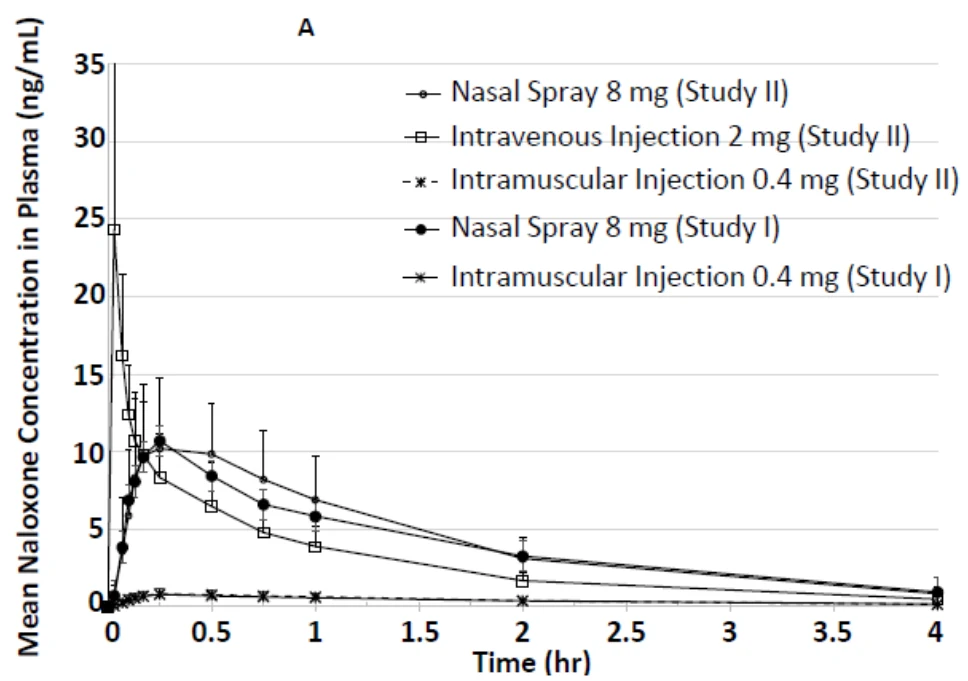
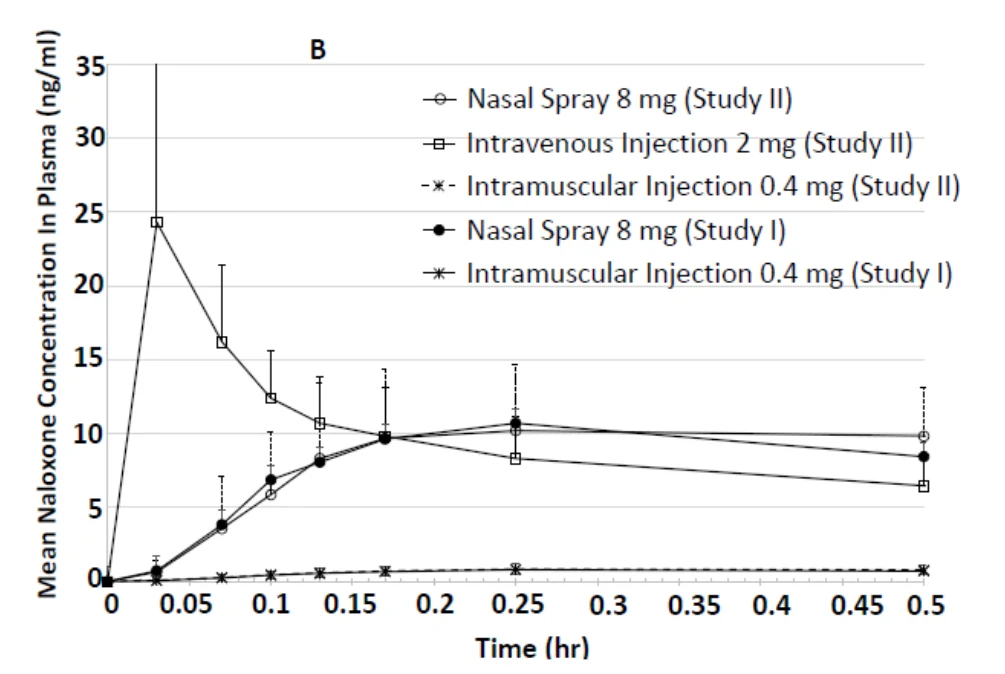
Figure 1: Mean ± SD Plasma Concentration-Time Profiles of Naloxone Following A Single Dose of Intranasal versus Intramuscular/Intravenous Administration in Health Subjects (A: 0-4 h and B: 0-30 min)
Table 2 – Mean (CV%) Plasma Pharmacokinetic Parameters of Naloxone Following a Single Dose of Intranasal and Intramuscular/Intravenous Administration in Healthy Subjects
| Parameter | KLOXXADO 8 mg | Intramuscular Injection 0.4 mg | Intravenous Injection 2 mg | ||
| Study | Study I | Study II | Study I | Study II | Study II |
| N | 24 | 231 | 24 | 231 | 24 |
| Tmax (h)2 | 0.25 (0.10 – 1.00) | 0.25 (0.10 – 1.00) | 0.25 (0.13 – 1.00) | 0.25 (0.10 – 1.00) | NA |
Cmax (ng•h/mL) | 12.3 (55.4) | 12.8 (37.0) | 0.876 (36.7) | 0.910 (36.8) | 26.2 (82.4)6 |
AUClast (ng•h/mL) | 18.0 (29.6) | 18.4 (33.4) | 1.82 (24.0) | 1.87 (24.7) | 12.7 (26.6) |
AUC0-inf (ng•h/mL) | 16.7 (31.9)3 | 19.0 (32.7)4 | 1.94 (20.9)5 | 1.95 (21.9) | 12.8 (27.5) |
| t1/2 (h) | 2.69 (69.9) | 1.76 (39.7)4 | 1.41 (20.0)5 | 1.40 (38.9) | 1.22 (16.4) |
Dose normalized Relative BA (%) vs IM Injection | 41.6 | 47.4 | 100 | 100 | NA |
| Dose normalized absolute BA (%) vs IV injection | NA | 36.6 | NA | 77.2 | 100 |
NA = Not applicable 1 N=23 due to one subject withdrawal.
2 Tmax reported as median (minimum – maximum).
3 N=15
4 N=19
5 N=22 for AUC0-inf and t1/2
6 Cmax of Intravenous Injection 2 mg was observed value from the first sampling time of 2 minutes post-dose.
Absorption
The median Tmax (15 min) for naloxone following administration of a single dose of 8 mg KLOXXADO nasal spray was the same as following administration of single intramuscular dose of 0.4 mg naloxone hydrochloride.
The dose normalized relative bioavailability of naloxone following administration of a single dose of 8 mg KLOXXADO was 42 to 47% as compared to following administration of a single intramuscular dose of 0.4 mg naloxone hydrochloride. The absolute bioavailability of naloxone following administration of a single dose of 8 mg KLOXXADO nasal spray was 37% as compared to following administration of a single intravenous dose of 2 mg naloxone hydrochloride.
Distribution
Following parenteral administration, naloxone is distributed in the body and readily crosses the placenta. Plasma protein binding occurs but is relatively weak. Plasma albumin is the major binding constitute, but significant binding of naloxone also occurs to plasma constituents other than albumin. It is not known whether naloxone is excreted into human milk.
Metabolism
Naloxone hydrochloride is metabolized in the liver, primarily by glucuronide conjugation, with naloxone-3-glucoronide as the major metabolite.
Elimination
Following a single intranasal administration of KLOXXADO, the mean half-life (t1/2) of naloxone in plasma was 1.8 (39.7% CV) to 2.7 (69.6% CV) hours. The mean t1/2 was 1.4 (38.9% CV) to 1.4 (20.0% CV) hours for a 0.4 mg naloxone hydrochloride intramuscular injection and 1.2 (16.4% CV) hours for a 2 mg naloxone hydrochloride intravenous injection. In a neonatal study of naloxone hydrochloride the mean (±SD) plasma half-life was observed to be 3.1 ± 0.5 hours.
After an oral or intravenous dose, about 25 to 40% of naloxone is excreted as metabolites in urine within 6 hours, about 50% in 24 hours, and 60 to 70% in 72 hours.
- 11. Storage, Stability, and Disposal
Store KLOXXADO in the blister and cartons provided.
Store between 15 - 30°C. Do not freeze. Protect from light.
KLOXXADO is not made with natural rubber latex.
12. Special Handling Instructions
KLOXXADO freezes at temperatures below -15°C. If this happens, the device will not spray. If KLOXXADO is frozen and is needed in an emergency, do NOT wait for KLOXXADO to thaw. Get emergency medical help right away. However, KLOXXADO may be thawed by allowing it to sit at room temperature for 15 minutes, and it may still be used if it has been thawed after being previously frozen.
Part 2: Scientific Information
13. Pharmaceutical Information
Drug Substance
Non-proprietary name of the drug substance: naloxone hydrochloride
Chemical name: 4,5α-Epoxy-3,14-dihydroxy-17-(prop-2-enyl) morphinan-6-one hydrochloride
17-Allyl-4,5α-epoxy-3,14-dihydroxymorphinan-6-onehydrochloride
(–)-17-Allyl-6-deoxy-7, 8-dihydro-14-hydroxy-6-oxo-17-normorphine hydrochloride
(–)-(5R, 14S)-9α-Allyl-4,5-epoxy-3,14-dihydroxymorphinan-6-one hydrochloride
1-N-Allyl-14-hydroxynordihydromorphinonehydrochloride
N-Allylnoroxymorphone hydrochloride
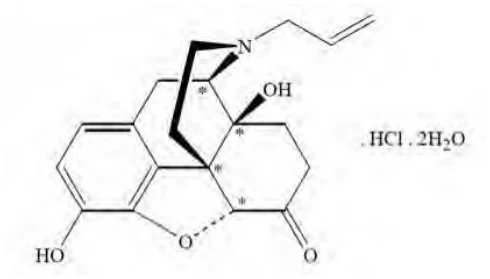
Molecular formula and molecular mass: C19H21NO4·HCl ; 399.9 g/mol
Structural formula:
Physicochemical properties: Naloxone hydrochloride occurs as a white, or almost white, crystalline powder. It is freely soluble in water, soluble in alcohol (96%); practically insoluble in toluene (Ph Eur). Soluble in water, in dilute acids and in strong alkali; slightly soluble in alcohol, practically insoluble in ether and chloroform (USP).
Pharmaceutical standard: USP
14. Clinical Trials
The clinical trial data on which the original indication of naloxone was authorized are not available.
15. Microbiology
No microbiological information is required for this drug product.
16. Non-Clinical Toxicology
Genotoxicity
Naloxone was weakly positive in the Ames mutagenicity and in the in vitro human lymphocyte chromosome aberration test but was negative in the in vitro Chinese hamster V79 cell HGPRT mutagenicity assay and in the in vivo rat bone marrow chromosome aberration study.
Carcinogenicity
Studies in animals to assess the carcinogenic potential of naloxone have not been conducted.
Reproductive and developmental toxicology
Juvenile Animal Study: In a juvenile animal study, male and female juvenile rats were administered a single intranasal dose of saline, vehicle consisting of 20% alcohol and 5% propylene glycol, or naloxone (123 mg/kg, 185 mg/kg, and 246 mg/kg) on postnatal day 7 (PND 7). There were no test article-related findings on sexual maturation, neuroapoptosis, or on a limited number of neurocognitive endpoints which included social interactions as well as learning and memory.