


Product Monograph - Oraverse
SUMMARY PRODUCT INFORMATION
| Route of Administration | Dosage Form/Strength | Non-medicinal Ingredients |
| Intraoral Submucosal Injection | Sterile Solution for Injection Phentolamine Mesylate: 0.4mg/1.7mL (0.235 mg/mL) | Edetate Disodium, Mannitol, Sodium Acetate, Water for Injection, Acetic Acid or Sodium Hydroxide |
INDICATIONS AND CLINICAL USE
Adults: OraVerse (phentolamine mesylate) is indicated for reversal of soft-tissue anesthesia resulting from an intraoral submucosal injection of a local anesthetic containing a vasoconstrictor, following a non-invasive routine dental procedure.
Pediatrics (6 to 18 years of age): OraVerse is indicated for reversal of soft-tissue anesthesia resulting from an intraoral submucosal injection of a local anesthetic containing a vasoconstrictor, following a non-invasive routine dental procedure.
Pediatrics (<6 years of age): Safety and efficacy of OraVerse have not been established in children less than 6 years of age or weighing less than 15 kg (33 lbs). Therefore, OraVerse is not recommended for use in this population (See WARNINGS AND PRECAUTIONS, Special Populations, Pediatrics).
CONTRAINDICATIONS
OraVerse is contraindicated in patients with:
- Hypersensitivity to the active substance or to any ingredients in the formulation
WARNINGS AND PRECAUTIONS
General
Patients should be instructed not to eat or drink until normal oral sensation returns. Patients should be advised that OraVerse will accelerate the return of normal lip sensation and therefore can increase oral pain.
Use of OraVerse is not recommended in patients undergoing complex dental procedures where post-procedural pain or haemorrhage is anticipated. There are limited data on the use of OraVerse in patients at increased risk of bleeding, including patients treated with anticoagulants.
Caution should be exercised when using OraVerse in such patients due to the increased risk of injection site haemorrhage.
Cardiovascular
Myocardial infraction, cerebrovascular spasm, and cerebrovascular occlusion, usually in association with marked hypotensive episodes, have been reported following parenteral administration of phentolamine mesylate.
As hypotension, tachycardia and cardiac arrhythmias may occur with the use of phentolamine and other alpha-adrenergic blocking agents, clinicians should be alert to the signs and symptoms of these events, particularly in patients with a prior history of cardiovascular disease. OraVerse is not recommended in patients with clinically significant cardiovascular disease.
Special Populations
Pregnant Women:
OraVerse is not recommended for use during pregnancy (See TOXICOLOGY).
Nursing Women:
It is not known whether OraVerse is excreted in human milk. Because of the unknown risks for the breastfeeding infant, OraVerse is not recommended in nursing women.
Pediatrics:
Safety and efficacy of OraVerse have not been established in children less than 6 years of age or weighing less than 15 kg (33 lbs). The safety and efficacy of OraVerse have been established in the age group 6-18 years. Dosages in pediatric patients need to be limited based on body weight (see DOSAGE AND ADMINISTRATION).
Geriatrics:
In the clinical studies of OraVerse, 39 patients were 65 -74 years while 16 patients were older than 75 years. No overall differences in safety or efficacy were observed between these patients and younger patients, but greater sensitivity of some older individuals cannot be ruled out.
ADVERSE REACTIONS
Adverse Drug Reaction Overview
In clinical trials, the most common adverse events with OraVerse that were greater than the sham or placebo group included injection site pain and post procedural pain. The majority of adverse events were mild or moderate and resolved within 48 hours. There were no serious adverse events.
Clinical Trial Adverse Drug Reaction
Because clinical trials are conducted under very specific conditions the adverse event rates observed in the clinical trials may not reflect the rates observed in practice and should not be compared to the rates in the clinical trials of another drug. Adverse event information from clinical trials is useful for identifying drug-related adverse events and for approximating rates.
The safety of OraVerse was evaluated in 4 studies where dental patients were enrolled including 387 phentolamine-treated patients and 342 sham or placebo-treated patients. In the OraVerse group, 265 patients (68.5%) were administered a dose of 0.4 mg, 74 (19.1%) received 0.2 mg, and 48 (12.4%) received 0.8 mg. Pediatric patients weighting more than 15 kg and less than 30 kg received 0.2 mg, while patients weighting more than 30 kg received either 0.2 mg or 0.4 mg of OraVerse. Adults were administered either 0.4 mg or 0.8 mg of OraVerse.
The treatment-emergent adverse events (TEAE frequency ≥1% and equal or greater than in the sham or placebo group) are listed in Table 1.
The majority of these AEs were mild to moderate and resolved at the end of the observation or follow-up period. The most frequently reported TEAEs were injection site pain, post-procedural pain, tachycardia, bradycardia, and headache.
Table 1. TEAEs with a frequency ≥1% and equal or greater than in the sham or placebo group
Pediatric Patients (4-18 years of age)
In dental patients between the age of 4 and 17 (OraVerse, N = 135; control, N = 96), the more frequent TEAEs consisted of injection site pain, tachycardia, bradycardia, increased blood pressure, and oral pain. There were 25 children aged between 4 to 6 years.
Less Common Clinical Trial Adverse Drug Reactions (<1%)
The less common adverse events were: abdominal pain upper, aphthous stomatitis, cold sweat, cough increased, diarrhea, dry mouth, facial pain/swelling, haemorrhage, injection site reaction (i.e. blanching, bruising, gingival erythema, hematoma, paranasal soft tissue swelling, swelling, tenderness in cheek), lacrimation increased, mouth ulceration, nasal congestion, nausea, ocular hyperaemia, open wound, paranasal sinus hypersecretion, peripheral edema, petechia, pharyngolaryngeal pain, pruritus, pyrexia, tongue disorder, tremor, and viral infection.
| OraVerse | Sham or placebo | |||||||
0.2 mg (N=74) | 0.4 mg (N=265) | 0.8 mg (N=48) | Total (N=342) | |||||
| N (19.1%) | N (68.5%) | N (12.4%) | N (%) | |||||
| Injection site pain | 5(6.6) | 22(8.3) | 3(6.3) | 15(4.4) | ||||
| Post procedural pain | 3(4.1) | 14(5.3) | 5(10.4) | 23(6.7) | ||||
| Tachycardia | 0 (0.0) | 8(3.0) | 3(6.3) | 8(2.3) | ||||
| Headache | 0 (0.0) | 8(3.0) | 2(4.2) | 8(2.3) | ||||
| Bradycardia | 0 (0.0) | 3(1.1) | 2(4.2) | 2(0.6) | ||||
| Hypertension | 0 (0.0) | 4(1.5) | 0 (0.0) | 1(0.3) | ||||
| Oral pain | 2(2.7) | 0(0.0) | 1(2.1) | 1(0.3) | ||||
| Increased blood pressure | 3(4.1) | 1(0.4) | 0(0.0) | 2(0.6) | ||||
Post Marketing Adverse Reactions
The following more severe adverse events have been identified during post approval parenteral use of phentolamine mesylate: Acute and prolonged hypotensive episodes and cardiac arrhythmias have been reported.
With OraVerse, weakness, dizziness, flushing, orthostatic hypotension, nasal stuffiness, trismus, nerve injury, burning sensation and hematoma have been reported.
Because these reactions are reported voluntarily from a population of uncertain size, it is not always possible to reliably estimate their frequency or establish a causal relationship to drug exposure.
DRUG INTERACTIONS
Overview
OraVerse may augment the hypotensive effect of other antihypertensive agents. Antipsychotics may enhance the hypotensive effect of α-adrenergic blocking agents.
Drug-Drug Interactions
Lidocaine and Epinephrine:
When OraVerse was administered as an intraoral submucosal injection 30 minutes after injection of a local anesthetic, 2% lidocaine HCl with 1:100,000 epinephrine, the lidocaine plasma concentration increased immediately after OraVerse intraoral injection. Lidocaine AUC and Cmax values were not significantly affected by administration of OraVerse.
Drug-Food Interactions
Patients should be advised not to eat or drink until normal oral sensation returns following the administration of OraVerse.
Drug-Herb Interactions
Interactions with herbal products have not been studied.
Drug-Laboratory Tests Interactions
Interactions with laboratory tests have not been studied.
DOSAGE AND ADMINISTRATION
Dosing Considerations
OraVerse may be administered following the administration of the local anesthetic that contains a vasoconstrictor such as epinephrine. Following a routine dental procedure, OraVerse should be administered using the same location(s) and technique(s) (infiltration or block injection) employed for the administration of the local anesthetic.
Note: Do not administer OraVerse if the product is discolored or contains particulate matter.
Recommended Dose and Dosage Adjustment
The recommended dose of OraVerse is based on the number of cartridges of local anesthetic with vasoconstrictor administered:
| Amount of Local Anesthetic Administered | Dose of Phentolamine Mesylate |
| ½ cartridge | 0.2 mg (½ cartridge) |
| 1 cartridge | 0.4 mg (1 cartridge) |
| 2 cartridges | 0.8 mg (2 cartridges) |
Adults:
The maximum recommended dose is 0.8 mg (2 cartridges).
Pediatrics:
In pediatric patients weighing 15-30 kg, the maximum dose of OraVerse recommended is 0.2 mg (1/2 cartridge).
Use in pediatric patients under 6 years of age or weighing less than15 kg (33 lbs) is not recommended. A dose of more than 0.4 mg (1 cartridge) of OraVerse has not been studied in children less than 18 years of age.
Patients with hepatic impairment:
OraVerse has not been studied in patients with hepatic impairment. Since phentolamine is metabolized principally in the liver, OraVerse should be used with caution in patients with hepatic impairment.
Patients with renal impairment:
OraVerse has not been studied in patients with renal impairment. OraVerse should be used with caution in these patients.
Elderly patients:
OraVerse dose adjustment is not required in elderly patients.
Administration
OraVerse should be administered by intraoral submucosal injection following the dental procedure using the same location(s) and technique(s) (infiltration or block injection) employed for the administration of the local anaesthetic.
OVERDOSAGE
Overdosage with parenterally administered phentolamine is characterized chiefly by cardiovascular disturbances, such as arrhythmias, tachycardia, hypotension, and possibly shock. In addition, the following might occur: excitation, headache, sweating, pupillary contraction, visual disturbances, nausea, vomiting, diarrhea, or hypoglycemia.
For management of a suspected drug overdose, contact your regional Poison Control Centre for the latest information.
There is no specific antidote; treatment consists of appropriate monitoring and supportive care. Substantial decreases in blood pressure or other evidence of shock-like conditions should be treated vigorously and promptly.
ACTION AND CLINICAL PHARMACOLOGY
Mechanism of Action
Phentolamine is a competitive non-selective α1 and α2-adrenergic receptor blocker of relatively short duration. When applied to vascular smooth muscle, it produces an α-adrenergic block resulting in vasodilatation.
Pharmacodynamics
The mechanism by which OraVerse accelerates reversal of soft-tissue anaesthesia is not fully understood. Phentolamine is not an antidote to local anaesthetics.
Pharmacokinetics
Following OraVerse administration, phentolamine is 100% available from the submucosal injection site and peak plasma concentrations are achieved 10-20 minutes after injection. Phentolamine systemic exposure increased linearly after 0.8 mg compared to 0.4 mg OraVerse intraoral submucosal injection. The terminal elimination half-life of phentolamine in the blood was approximately 2-3 hours.
Pediatric population:
Following OraVerse administration, the phentolamine Cmax was higher (approximately 3.5-fold) in children who weighed between 15 and 30 kg than in children who weighed more than 30 kg. However, phentolamine AUC was similar between the two groups. It is recommended that in children weighing 15-30 kg, the maximum dose of OraVerse should be limited to 0.2 mg (½ cartridge).
The pharmacokinetics of OraVerse in adults and in children who weighed more than 30 kg (66 lbs) is similar after intraoral submucosal injection.
OraVerse has not been studied in children under 4 years of age or weighing less than 15 kg (33 lbs). The pharmacokinetics of OraVerse after administration of more than 0.4mg (1 cartridge) has not been studied in children.
STORAGE AND STABILITY
Store at controlled room temperature (15-25°C). Protect from direct heat and light. Do not refrigerate or freeze.
SPECIAL HANDLING INSTRUCTIONS
No special requirements.
DOSAGE FORMS, COMPOSITION AND PACKAGING
Dosage Forms
OraVerse is a sterile solution for injection.
Composition
Edetate Disodium,
Mannitol,
Sodium Acetate,
Water for Injection
Acetic Acid or Sodium Hydroxide, for pH adjustment
Packaging
OraVerse (phentolamine mesylate) Injection 0.4 mg/1.7 mL is supplied in a dental cartridge, in cartons of 10 and 50 cartridges. Each cartridge is individually packaged in a separate compartment of a 10 cartridge blister pack.
PART II: SCIENTIFIC INFORMATION
PHARMACEUTICAL INFORMATION
Drug Substance
| Proper Name | Phentolamine Mesylate |
| Chemical Name | m-[N-(2-Imidazolin-2-ylmethyl)-p-toluidino] phenol monomethanesulfonate (salt) Phenol, 3-[[(4,5-dihydro-1H-imidazol-2-yl) methyl] (4-methyl-phenyl)amino]-, methanesulfonate (salt) |
| Structure Formula | 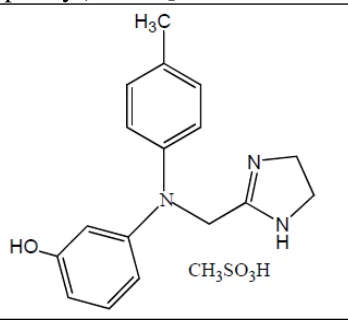 |
| Molecular Formula | C17H19N3O · CH4O3S |
| Molecular Weight | 377.46 |
| Physicochemical Properties | Appearance: White or almost white, crystalline powder, which is slightly hygroscopic Melting Point: 178 - 182°C Solubility: soluble in water and in alcohol, slightly soluble in chloroform and practically insoluble in methylene chloride |
CLINICAL TRIALS
Study Demographics and Trial Design
Table 2. Summary of patient demographics for the pivotal clinical trials
| Study# | Trial design | Dosage, route of administration and duration | Study subjects (n=number) | Mean age (Range) |
Study 1 (NOVA 04-100) | Blinded, randomized, controlled | 0 (sham), 0.4,0.8 mg Submucosal Single dose | 244 (122 drug, 122 sham) | 52 years (12-92 years) |
Study 2 (NOVA 04-200) | Blinded, randomized, controlled | 0 (sham), 0.4,0.8 mg Submucosal Single dose | 240 (120 drug, 120 sham) | 46 years (12-81 years) |
Study 3 (NOVA 05-PEDS) | Blinded, randomized, controlled | 0 (sham), 0.2,0.4 mg Submucosal Single dose | 152 (96 drug, 56 sham) | 8 years (4-11 years) |
The safety and efficacy of OraVerse when used for reversal of soft-tissue anesthesia (STA), i.e., anesthesia of the lips and tongue following a dental procedure that required local anesthesia containing a vasoconstrictor, were evaluated in three clinical studies (Table 2). OraVerse-induced reversal of local anesthetic effects on the teeth, mandible and maxilla has not been assessed. The potential benefit of OraVerse concerning the reduction of self-inflicted injuries has not been studied in clinical trials.
Study 1 enrolled 76% of patients 18 to 64 years of age, and Study 2 had 78% that were 18 to 64 years of age. The remaining patients were almost equally distributed between the categories of 12 to 17 years (10-14%) and ≥65 years (11-12%). Fifty-two percent of the population was female.
In the pediatric Study 3, the treatment groups were balanced for ethnicity, age, grade, height, and weight. Nearly equal numbers of males and females were enrolled. The mean age was approximately 8 years.
Study Results
Two Phase 3, double-blinded, randomized, multi-center, controlled studies were conducted in dental patients who had mandibular (Study 1) or /maxillary (Study 2) restorative or periodontal maintenance procedures (i.e. teeth cleaning, scaling and planing, cavity filling, crowns) and who had received a local anesthetic that contained a vasoconstrictor. The primary endpoint was time to normal lip sensation as measured by patient reported responses to lip palpation for both studies. The secondary endpoints included time to patients' perception of recovered oral motor and sensory functions. In the mandibular study, the time to recovery of tongue sensation was also a secondary endpoint. OraVerse was administered within the hour of administration of local anesthetic in patients experiencing numbness in the lip. The dose of OraVerse was based on a cartridge ratio of 1:1 to local anesthetic. The control was a sham injection.
The median time to recovery of normal sensation in the lower lip was 70 minutes (95% confidence interval: 65 to 80 min) in the OraVerse group and 155 minutes (95% confidence interval: 140 to 165 min) in the sham control group. The median time to recovery of normal sensation in the upper lip was 50 minutes (95% confidence interval: 45 to 60 min) in the OraVerse group and 132.5 minutes (95% confidence interval: 115 to 145 min) in the control group. The differences between treatment groups in both studies were significant (p <0.0001). The results for time to perceived return to normal oral motor and sensory functions were supportive of that of the primary endpoint.
A pediatric, Phase 2, double-blinded, randomized, multi-center, controlled study was conducted in dental patients who had received 2% lidocaine with 1:100,000 epinephrine (Study 3). Dental patients (n = 152, ages 4-11 years) received 1/2 cartridge of local anesthetic if they weighed 15 kg to 30 kg, and one-half or one full cartridge if they weighed more than 30 kg at a cartridge ratio of 1:1 to local anesthetic.
The median time to normal lip sensation in patients 6 to 11 years of age who were trainable in the lip-palpation procedures, for mandibular and maxillary procedures combined, was 60 minutes (95% confidence interval: 45 to 75 minutes) in the OraVerse group and 135 minutes (95% confidence interval: 105 to 165 minutes) in the sham control group. The difference between treatment groups was statistically significant (p <0.0001).
DETAILED PHARMACOLOGY
In a study on local blood flow in gingival/submucosal tissue of beagle dogs, phentolamine mesylate (0.012mg/kg) increased local blood flow when given after an intraoral injection of lidocaine HCl 2% with 1:100,000 epinephrine. The concentrations of phentolamine and lidocaine/epinephrine in the solutions administered in this study were comparable (based on body surface area) to the concentrations of these drugs used in clinical trials of OraVerse.
In an in vitro study conducted to assess the binding affinity to 58 types of human receptors, phentolamine at 377 ng/mL had strong and equal binding affinities at α1- and α2-adrenergic receptors, but had no appreciable binding at the other receptors tested.
TOXICOLOGY
Carcinogenesis and Mutagenesis
Carcinogenicity studies with OraVerse have not been conducted. In a study in rats dosed by oral gavage with 10, 50, and 150 mg/kg/day phentolamine mesylate for up to 101 weeks, hibernomas occurred in 3% of rats. The occurrence of hibernomas was not dose related and thought to be due to chronic adaptive responses secondary to the pharmacodynamic effects of the treatment.
Phentolamine was not mutagenic in the in vitro bacterial reverse mutation (Ames) assay. In the in vitro chromosomal aberration study in Chinese hamster ovary cells, numerical aberrations were slightly increased after a 4-hour exposure to phentolamine without metabolic activation and structural aberrations were slightly increased after a 4-hour exposure to phentolamine with metabolic activation only at the highest concentrations tested, but neither numerical nor structural aberrations were increased after a 20-hour exposure without metabolic activation. Phentolamine was not clastogenic in the in vivo mouse micronucleus assay.
Reproductive toxicity and fertility impairment
Oral administration of phentolamine to pregnant rats and mice at doses at least 24 times the recommended dose (based on a 60 kg human) resulted in slightly decreased growth and slight skeletal immaturity of the fetuses. Immaturity was manifested by increased incidence of incomplete or unossified calcaneal and phalangeal nuclei of the hind limb and of incompletely ossified sternebrae. At oral phentolamine doses at least 60 times the recommended dose (based on a 60 kg human), a slightly lower rate of implantation was found in the rat. Phentolamine did not affect embryonic or fetal development in the rabbit at oral doses at least 20 times the recommended dose (based on a 60 kg human). No teratogenic or embryotoxic effects were observed in the rat, mouse, or rabbit studies.
At doses up to 150 mg/kg (143 times human therapeutic exposure levels at the Cmax), phentolamine mesylate was shown to have no adverse effects on male fertility in the rat.
REFERENCES
Anfossi G, Trovati M, Mularoni E et al. Phenothiazine compounds enhance phentolamine effects on platelet aggregation and thromboxane B2 production. Arch Int Pharmacodyn Ther 1990; 307:142-61.
Bagwell EE, Hilliard CC, Daniell HB et al. Studies on the inotropic mechanism of phentolamine. 1970; American Journal of Cardiology; 25:83.
Bell C. Comparison of the antagonistic effects of phentolamine on vasoconstrictor responses to exogenous and neurally released noradrenaline in vivo. Br J Pharmacol 1985; 85 (1):249-53.
Cunningham JG and Stephenson RB. Influence of phentolamine and propranolol on the length of tonus and clonus in pentylenetetrazol-induced seizures in dogs. Am J Vet Res 1984; 45(4):739-741.
Das PK, Parratt JR. Myocardial and haemodynamic effects of phentolamine. Br J Pharmacol 1971; 41 (3):437-44.
Dumont L, Lamoureux C, Lelorier J et al. Intravenous infusion of phentolamine: effects on cardiovascular dynamics and regional blood flow distribution in conscious dogs. J Cardiovasc Pharmacol 1982; 4 (6):1055-61.
Elmore S, Nusstein J, Drum M, Reader A, Beck M, Fowler S. Reversal of pulpal and soft tissue anesthesia by using phentolamine: a prospective randomized, single-blind study. J Endod. 39(4) 2013:429-434.
Gazelius B and Olgart L. Vasodilatation in the dental pulp produced by electrical stimulation of the inferior alveolar nerve in the cat. Acta Physiol Scand 1980; 108:181-186.
Godbillon J, Carnis G. Determination of the major metabolite of phentolamine in human plasma and urine by high-performance liquid chromatography. J Chromatogr 1981; 222 (3):461-6
Hersh EV, Hermann DG, Lamp CJ, et al. Assessing the duration of mandibular soft tissue anesthesia. J Am Dent Assoc 1995; 126 (11):1531-1536.
Hersh E.V, Moore P.A, et al. Reversal of Soft-Tissue Local Anesthesia with Phentolamine Mesylate in Adolescents and Adults. JADA 2008; 139; 1080-1093.
Ibbotson T, Edwards G, Weston AH. Antagonism of levcromakalim by imidazoline- and guanidine-derivatives in rat portal vein: involvement of the delayed rectifier. Br J Pharmacol 1993; 110 (4):1556-64.
Kerger BD, James RC, Roberts SM. An assay for phentolamine using high performance liquid chromatography with electrochemical detection. Anal Biochem 1988; 170 (1):145-51.
Klassen GA, Armour JA, Garner JB. The effects of propranolol, phentolamine, and atropine on canine coronary vascular gradients. Can J Physiol Pharmacol 1989; 67 (2):140-51.
Koss MC. Differential neural activation of vascular alpha-adrenoceptors in oral tissues of cats. Eur J Pharmacol 2002; 440 (1):53-9.
Laviola M, McGavin S.K, et al. Randomized Study of Phentolamine Mesylate for Reversal of Local Anesthesia. J Dent Res 87(7) 2008: 635-639.
Malamed S.F. Modern Dental Pain Control. Dentistry Today Vol 27 No.11 2008: 72-77.
Malamed S.F. Reversing Local Anesthesia. Inside Dentistry July/August 2008: 100-102.
Moore P.A, Hersh E.V, et al. Pharmacokinetics of Lidocaine with epinephrine Following Local Anesthesia Reversal with Phentolamine Mesylate. Anesth Prog 55 2008:40-48.
Mullen JO, Fouts JR. Prolongation of Hexobarbital Sleeping Time and Inhibition of Hepatic Drug Metabolism by Adrenergic Blocking Agents in Mice. Biochem Pharmacol 1965; 14:305-11.
Pals DT, Orley J. A nonhuman primate model for evaluating the potential of antihypertensive drugs to cause orthostatic hypotension. J Pharmacol Methods 1983; 9 (3):183-92.
Poulet FM, Berardi MR, Halliwell W et al. Development of hibernomas in rats dosed with phentolamine mesylate during the 24-month carcinogenicity study. Toxicol Pathol 2004; 32 (5):558-66.
Proks P, Ashcroft FM. Phentolamine block of KATP channels is mediated by Kir6.2. Proc Natl Acad Sci USA 1997; 94 (21):11716-20.
Raffa RB, Stone DJ and Tallarida RJ. Unexpected and pronounced antinociceptive synergy between spinal acetaminophen (paracetamol) and phentolamine. Eu. J Pharmacol. 2001; 412:R1-R2.
Rustenbeck I, Kopp M, Polzin C et al. No evidence for PKC activation in stimulation of insulin secretion by phentolamine. Naunyn Schmiedebergs Arch Pharmacol 1998; 358 (3):390-3.
Saeed M, Sommer O, Holtz J et al. Alpha-adrenoceptor blockade by phentolamine causes beta-adrenergic vasodilation by increased catecholamine release due to presynaptic alphablockade. J Cardiovasc Pharmacol 1982; 4 (1):44-52.
Tavares M, Goodson J.M, et al. Reversal of Soft-Tissue Local Anesthesia with Phentolamine Mesylate in Pediatric Patients. JADA 2008; 139; 1095-1104.
Waite LC and Lineberry MD. Hypocalcemic effect of phentolamine. Res Com Chem Pathol Pharmacol. 1978; 19(3):403-416.
Wilde AA, Veldkamp MW, van Ginneken AC et al. Phentolamine blocks ATP sensitive potassium channels in cardiac ventricular cells. Cardiovasc Res 1994; 28 (6):847-50.