


Product Monograph - Digifab
RECENT MAJOR LABEL CHANGES
| 7 Warnings and Precautions | 06/2022 |
TABLE OF CONTENTS
Sections or subsections that are not applicable at the time of authorization are not listed.
RECENT MAJOR LABEL CHANGES ............................................................................... 2
TABLE OF CONTENTS...................................................................................................... 2
PART I: HEALTH PROFESSIONAL INFORMATION ...................................................... 4
1 INDICATIONS .......................................................................................................... 4
1.1 Pediatrics ......................................................................................................... 4
1.2 Geriatrics ......................................................................................................... 4
2 CONTRAINDICATIONS .......................................................................................... 4
3 SERIOUS WARNINGS AND PRECAUTIONS BOX ............................................. 5
4 DOSAGE AND ADMINISTRATION ........................................................................ 5
4.1 Dosing Considerations.................................................................................... 5
4.2 Recommended Dose and Dosage Adjustment ............................................. 5
4.3 Reconstitution.................................................................................................. 9
4.4 Administration.................................................................................................. 9
4.5 Missed Dose.................................................................................................... 9
5 OVERDOSAGE ........................................................................................................ 9
6 DOSAGE FORMS, STRENGTHS, COMPOSITION AND PACKAGING ............. 9
7 WARNINGS AND PRECAUTIONS....................................................................... 10
7.1 Special Populations ...................................................................................... 13
7.1.1 Pregnant Women..................................................................................... 13
7.1.2 Breast-feeding ......................................................................................... 13
7.1.3 Pediatrics ................................................................................................. 13
7.1.4 Geriatrics .................................................................................................. 13
8 ADVERSE REACTIONS........................................................................................ 14
8.1 Adverse Reaction Overview ......................................................................... 14
8.2 Clinical Trial Adverse Reactions .................................................................. 14
8.3 Post-Market Adverse Reactions................................................................... 16
9 DRUG INTERACTIONS......................................................................................... 16
9.1 Serious Drug Interactions ............................................................................. 16
9.2 Drug Interactions Overview .......................................................................... 16
9.3 Drug-Behavioural Interactions ...................................................................... 16
9.4 Drug-Drug Interactions ................................................................................. 16
9.5 Drug-Food Interactions ................................................................................. 16
9.6 Drug-Herb Interactions ................................................................................. 16
9.7 Drug-Laboratory Test Interactions ............................................................... 16
10 CLINICAL PHARMACOLOGY.............................................................................. 16
10.1 Mechanism of Action ............................................................................... 16
10.2 Pharmacokinetics .................................................................................... 17
11 STORAGE, STABILITY AND DISPOSAL ........................................................... 17
12 SPECIAL HANDLING INSTRUCTIONS............................................................... 17
PART II: SCIENTIFIC INFORMATION ............................................................................ 18
13 PHARMACEUTICAL INFORMATION .................................................................. 18
14 CLINICAL TRIALS ................................................................................................. 19
14.1 Trial Design and Study Demographics................................................... 19
14.2 Study Results........................................................................................... 20
15 MICROBIOLOGY ................................................................................................... 21
16 NON-CLINICAL TOXICOLOGY ............................................................................ 21
17 SUPPORTING PRODUCT MONOGRAPHS........................................................ 21
PATIENT MEDICATION INFORMATION ........................................................................ 22
PART I: HEALTH PROFESSIONAL INFORMATION
1 INDICATIONS
DigiFab®, digoxin immune Fab (ovine) is indicated for:
the treatment of patients with life-threatening or potentially life-threatening digoxin toxicity or overdose. Although designed specifically to treat digoxin overdose, a product very similar to DigiFab® (Digibind®, manufactured by GlaxoSmithKline) has been used successfully to treat life-threatening digitoxin overdose(1). Since human experience is limited, and the consequences of repeated exposure are unknown, DigiFab® is not indicated for milder cases of digoxin toxicity.
Clinical conditions in which DigiFab® may be used include:
- Known suicidal or accidental consumption of fatal doses of digoxin, including ingestion of 10 mg or more of digoxin in previously healthy adults, 4 mg (or more than 0.1 mg/kg) in previously healthy children, or ingestion causing steady state serum concentrations greater than 10 ng/mL;
- Chronic ingestions causing steady-state serum digoxin concentrations exceeding 6 ng/mL in adults or 4 ng/mL in children; and
- Manifestations of life-threatening toxicity due to digoxin overdose, including severe ventricular arrhythmias (such as ventricular tachycardia or fibrillation), progressive bradycardia, and second or third degree heart block not responsive to atropine, serum potassium levels exceeding 5.5 mEq/L in adults or 6 mEq/L in children with rapidly progressive signs and symptoms of digoxin toxicity.
1.1 Pediatrics
Specific studies in pediatric patients have not been conducted and no pediatric patients were enrolled in the clinical studies of DigiFab®. A similar digoxin ovine Fab product, Digibind®, has been used successfully to treat infants(11). As with all drugs, the use of DigiFab® in infants and children should be based on careful consideration of the benefits compared with the potential risks.
1.2 Geriatrics
Specific studies in elderly patients have not been conducted. The average age of 15 patients given DigiFab® for digoxin toxicity in one clinical study was 64 years and over half of the patients (8 of the 15) were 65 years of age or older. The oldest patient studied was 86 years old. There is no evidence to suggest that the efficacy of DigiFab® would be altered due to advanced age alone, however elderly patients are more likely to have impaired renal function and therefore should be monitored more closely for recurrent toxicity (see WARNINGS AND PRECAUTIONS; Renal section).
2 CONTRAINDICATIONS
There are no known contraindications to the use of DigiFab®.
3 SERIOUS WARNINGS AND PRECAUTIONS BOX
No serious warnings and precautions have been identified.
4 DOSAGE AND ADMINISTRATION
4.1 Dosing Considerations
The dosage of DigiFab® will vary according to the amount of digoxin or digitoxin to be neutralized. The average dose used during clinical testing was 4 vials.
4.2 Recommended Dose and Dosage Adjustment
Dosage for Acute Ingestion of Unknown Amounts of Digoxin or Digitoxin:
If a patient presents with life-threatening digoxin toxicity caused by an acute ingestion and neither a serum digoxin concentration nor an estimate of the amount ingestion is available, 20 vials of DigiFab® may be administered. This amount should be adequate to treat most life threatening overdoses in adults and children. However, in small children it is important to monitor for volume overload. In general, a larger dose of DigiFab® has a faster onset of effect but may enhance the possibility of a febrile reaction. In such cases, 10 vials may be administered first with careful monitoring of the patient’s response followed, at the physician’s discretion, by 10 additional vials and continued monitoring. Failure of the patient to respond to DigiFab® should alert the physician to the possibility that the clinical problem may not be caused by digoxin toxicity.
Dosage for Toxicity During Chronic Therapy:
For adult patients who are in acute distress or for whom a serum digoxin concentration is not available, 6 vials (240 mg) should be adequate to reverse most cases of toxicity. For infants and small children (≤ 20 kg) on chronic therapy with digoxin and showing signs of toxicity a single vial should be sufficient.
Dosage Calculation
Methods for calculating a neutralizing dose of DigiFab®, based on a known or estimated amount of digoxin or digitoxin in the body, are provided below. The following guidelines should be considered when using the dose calculation methods provided:
- Inaccurate estimates of the amount of digoxin ingested or absorbed may occur due to non-steady state serum concentrations or due to digoxin assay limitations. Most serum digoxin assay kits are designed to measure concentrations less than 5 ng/mL, therefore sample dilution is required to accurately measure serum concentrations > 5 ng/mL.
- Dosage calculations are based on a steady state volume of distribution of approximately 5 L/kg for digoxin, which is used to convert serum digoxin concentrations to total body burden of digoxin in milligrams. The volume of distribution is a population average and may vary among individuals. Many patients may require higher doses for complete neutralization and doses should usually be rounded up to the nearest whole vial.
- If toxicity has not adequately reversed after several hours, or appears to recur, re-administration of DigiFab®, at a dose guided by clinical judgment, may be necessary. If a patient is in need of re-administration of DigiFab® due to recurrent toxicity, or to a new toxic episode that occurs soon after the first episode, measurement of free (unbound) serum digoxin concentrations should be considered since Fab may still be present in the body.
- Failure of a patient to respond to DigiFab® treatment may indicate that the clinical problem is not caused by digoxin intoxication. If there is no response to an adequate dose of DigiFab®, the diagnosis of digoxin toxicity should be questioned.
For Ingestion of Known Amount:
Each vial of DigiFab® contains 40 mg of purified digoxin-specific Fab, which will bind approximately 0.5 mg of digoxin. The total number of vials required can be calculated by dividing the total body load of digoxin in milligrams (mg) by 0.5 mg per vial (see Formula 1). Following an acute ingestion, total body load will be approximately equal to the amount ingested in milligrams for either digoxin capsules or digitoxin. If digoxin tablets were ingested, the total body load will be approximately equal to the amount ingested (in mg) multiplied by the bioavailability of the tablet preparation, which is 0.8.
Table 1 gives dosage estimates, in number of vials, for adults and children who have ingested a single large dose of digoxin and for whom the approximate number of tablets or capsules, and their strength, is known. The dose of DigiFab® (in number of vials) represented in Table 2 can be approximated using the following formula:
Formula 1:
Dose (in # vials) = total digoxin body load in mg
0.5mg of digoxin bound/vial
Table 1 Approximate Dose of DigiFab® for Reversal of a Single Large Digoxin Overdose
Number of Digoxin Tablets or Capsules Ingesteda | Dose of DigiFab® | |||
| # of Vials | ||||
25 50 75 100 150 200 | 10 20 30 40 60 80 | |||
a 0.25 mg tablets with 80% bioavailability or 0.2 mg capsules with 100% bioavailability
If, after several hours, toxicity is not adequately reversed, or appears to recur, additional administration of DigiFab® at a dose guided by clinical judgment may be required.
Calculations Based on Steady-State Serum Digoxin Concentrations:
Table 2 gives dosage estimates, in number of vials (v), for adult patients for whom a steady-state serum digoxin concentration is known. The dose of DigiFab® (in number of vials) represented in Table 2 can be approximated using the following formula:
Formula 2 (see Table 2):
Calculation with digoxin in ng/mL:
Dose (in # of vials) = (Serum digoxin concentration in ng/mL) (weight in kg) 100
Calculation with digoxin in nmol/L (S.I. units):
Dose (in # of vials) = (Serum digoxin concentration in nmol/L x 0.781) (weight in kg) 100
Table 2 Adult Dose Estimate of DigiFab® (in # of vials) from Steady-State Serum Digoxin Concentration
| Patient Weight (kg) | Serum Digoxin Concentration (ng/mL) | |||||||||
| 1 | 2 | 4 | 8 | 12 | 16 | 20 | ||||
| 40 | 0.5v | 1v | 2v | 3v | 5v | 7v | 8v | |||
| 60 | 0.5v | 1v | 3v | 5v | 7v | 10v | 12v | |||
| 70 | 1v | 2v | 3v | 6v | 9v | 11v | 14v | |||
| 80 | 1v | 2v | 3v | 7v | 10v | 13v | 16v | |||
| 100 | 1v | 2v | 4v | 8v | 12v | 16v | 20v | |||
v = vials
Table 3 gives dosage estimates in milligrams for infants and small children based on the steady-state serum digoxin concentration. The dose of DigiFab® represented in Table 3 can be estimated by multiplying the dose (in number of vials) calculated from Formula 2 by the amount of DigiFab® contained in a vial (40 mg/vial) (see Formula 3). Since infants and small children can have much smaller dosage requirements, it is recommended that the 40 mg vial be reconstituted as directed and administered with a tuberculin syringe. For very small doses, a reconstituted vial can be diluted with 36 mL of sterile isotonic saline to achieve a concentration of 1 mg/mL.
Formula 3 (see Table 3):
Dose (in mg) = (Dose in # of vials) (40 mg/vial)
Table 3 Infants and Small Children Dose Estimates of DigiFab® (in mg) from Steady-State Serum Digoxin Concentration
| Patient Weight (kg) | Serum Digoxin Concentration (ng/mL) | |||||||||||||||||||
| 1 | 2 | 4 | 8 | 12 | 16 | 20 | ||||||||||||||
| 1 | 0.4 mga | 1 mga | 1.5 mga | 3 mga | 5 mg | 6.5 mg | 8 mg | |||||||||||||
| 3 | 1 mga | 2.5mga | 5 mg | 10 mg | 14 mg | 19 mg | 24 mg | |||||||||||||
| 5 | 2 mga | 4 mg | 8 mg | 16 mg | 24 mg | 32 mg | 40 mg | |||||||||||||
| 10 | 4 mg | 8 mg | 16 mg | 32 mg | 48 mg | 64 mg | 80 mg | |||||||||||||
| 20 | 8 mg | 16 mg | 32 mg | 64 mg | 96 mg | 128 mg | 160 mg | |||||||||||||
a dilution of reconstituted vial to 1 mg/mL may be desirable
Calculation Based on Steady-State Digitoxin Concentrations:
The dose of DigiFab® for digitoxin toxicity can be approximated by using the following formula (which differs from Formula 2 in the denominator due to a 10-fold decrease in the volume of distribution of digitoxin as compared to digoxin).
Formula 4:
Calculation with digitoxin in ng/mL:
Dose (in # of vials) = (Serum digitoxin concentration in ng/mL) (weight in kg)
1000
Calculation with digitoxin in nmol/L (S.I. units):
Dose (in # of vials) = (Serum digitoxin concentration in nmol/L x 0.765) (weight in kg)
1000
If in any case, the dose estimated based on ingested amount (Formula 1) differs substantially from that calculated based on the serum digoxin or digitoxin concentration (Formulas 2 and 4), it may be preferable to use the higher dose estimate.
4.3 Reconstitution
Parenteral Products:
| Vial Size | Volume of Diluent to be Added to Vial | Approximate Available Volume | Concentration per mL |
| 40 mg | 4 mL | 4 mL | 10 mg/mL |
Each vial of DigiFab® should be reconstituted with 4 mL of Sterile Water for Injection USP and gently mixed to provide a solution containing approximately 10 mg/mL of digoxin immune Fab protein. The reconstituted product should be used promptly. If not used immediately, it may be stored under refrigeration (2 - 8°C) for up to 4 hours. The reconstituted product may be added to an appropriate volume of 0.9% sodium chloride for injection.
4.4 Administration
DigiFab® should be administered slowly as an intravenous infusion over at least 30 minutes. If infusion rate-related reactions occur, the infusion should be stopped and re-started at a slower rate. If cardiac arrest is imminent, DigiFab® can be given by bolus injection. With bolus injection, an increased incidence of infusion-related reactions may be expected.
For infants and small children who may require very small doses, it is recommended that the 40-mg vial be reconstituted as directed and administered undiluted using a tuberculin syringe. For very small doses, a reconstituted vial can be diluted with an additional 36 mL of isotonic saline to achieve a concentration of 1 mg/mL.
4.5 Missed Dose
Not applicable
5 OVERDOSAGE
The maximum amount of DigiFab® that can safely be administered in single or multiple doses has not been determined.
| For management of a suspected drug overdose, contact your regional poison control centre. |
6 DOSAGE FORMS, STRENGTHS, COMPOSITION AND PACKAGING
| To help ensure the traceability of biologic products, including biosimilars, health professionals should recognise the importance of recording both the brand name and the non-proprietary (active ingredient) name as well as other product-specific identifiers such as the Drug Identification Number (DIN) and the batch/lot number of the product supplied. |
Table 4: Dosage Forms, Strengths, Composition and Packaging
7 WARNINGS AND PRECAUTIONS
General
Suicidal ingestion may involve more than one drug. Toxic effects of other drugs or poisons should not be overlooked, especially in cases where signs and symptoms of digoxin toxicity are not relieved by administration of DigiFab®.
Standard management of digoxin intoxication includes withdrawal of the intoxicating agent, correction of electrolyte disturbances (especially hyperkalemia), acid-base imbalances, hypoxia and treatment of cardiac arrhythmias.
Carcinogenesis and Mutagenesis
Animal carcinogenicity and reproduction studies have not been conducted with DigiFab®.
Cardiovascular
Patients with intrinsically poor cardiac function may deteriorate from withdrawal of the inotropic action of digoxin. When needed, additional support can be provided by use of intravenous inotropes, such as dopamine or dobutamine, or vasodilators. One must be careful in using catecholamines not to aggravate digoxin-induced toxic rhythm disturbances. Clearly, other types of digitalis glycosides should not be used in this setting. Redigitalization should be postponed, if possible, until the Fab fragments have been eliminated from the body, which may require several days. Patients with impaired renal function may require a week or longer (see WARNINGS AND PRECAUTIONS; Renal section).
Dependence/Tolerance
As DigiFab® is administered acutely in a health care facility, and is not expected to be given more than one time, physical or psychological dependence or tolerance is not expected to occur.
Driving and Operating Machinery
Visual or cognitive impairment has not been reported with the use of DigiFab®.
Ear/Nose/Throat
Swelling of the throat, tongue or face may occur.
| Route of Administration | Dosage Form / Strength/Composition | Non-medicinal Ingredients |
| Intravenous | Powder for injection / 40 mg/vial / Digoxin immune Fab | Mannitol Sodium acetate |
Endocrine and Metabolism
Massive digoxin intoxication can cause hyperkalemia; administration of potassium supplements in the setting of massive intoxication may be hazardous (see WARNINGS AND PRECAUTIONS; Monitoring and Laboratory Tests section). After treatment with DigiFab®, the serum potassium concentration may drop rapidly and must be monitored frequently, especially during the first several hours after DigiFab® is given (see WARNINGS AND PRECAUTIONS; Monitoring and Laboratory Tests section).
Immune
Prior treatment with digoxin-specific ovine immune Fab carries a theoretical risk of sensitization to ovine serum protein (see WARNINGS AND PRECAUTIONS; General section) and possible diminution of the efficacy of the drug due to the presence of human antibodies against ovine Fab. However, to date, there have been no clinical reports of human anti-ovine immunoglobulin antibodies causing a reduction in binding of ovine digoxin immune Fab or neutralization response to ovine digoxin immune Fab. Human antibodies against ovine Fab have been reported in some patients receiving Digibind (see WARNINGS AND PRECAUTIONS; Sensitivity/Resistance section).
Monitoring and Laboratory Tests
DigiFab® will interfere with digoxin immunoassay measurements in the same way that has been reported for Digibind®(12;13). Thus, standard serum digoxin concentration measurements may be clinically misleading until the Fab fragments are eliminated from the body. This may take several days or a week or more in patients with markedly impaired renal function. Therefore, serum samples for digoxin concentration should be obtained before DigiFab® administration, if at all possible. Such measurements would establish the level of serum digoxin at the time of diagnosis of digoxin intoxication. At least 6 to 8 hours are required for equilibration of digoxin between serum and tissue, so absorption of the last dose may continue from the intestine. Therefore, serum measurements may be difficult to interpret if samples are drawn soon after the last digoxin dose. Patients should be closely monitored, including temperature, blood pressure, electrocardiogram, and potassium concentration, during and after administration of DigiFab®. The total serum digoxin concentration may rise precipitously following administration of DigiFab®, but this will be almost entirely bound to the Fab fragment and therefore not able to react with receptors in the body.
Digoxin causes a shift of potassium from inside to outside the cell, such that severe intoxication can cause a life-threatening elevation of serum potassium. This may lead to increased urinary excretion of potassium so that a patient may have hyperkalemia but a whole body deficit of potassium. When the toxic effects of digoxin are reversed by DigiFab®, potassium shifts back into the cell with a resulting decline in serum potassium concentration. This hypokalemia may develop rapidly. For these reasons, serum potassium concentration should be followed closely, especially during the first several hours after DigiFab® administration. Cautious potassium supplementation should then be given when necessary.
Renal
The elimination half-life of DigiFab® in renal failure has not been clearly defined, although patients with renal dysfunction have been successfully treated with Digibind®(6;7). There is no evidence to suggest that the time-course of therapeutic effect is any different in these patients than in patients with normal renal function, but excretion of the Fab fragment-digoxin complex from the body is probably delayed. There is one case report of recurrence of atrioventricular block due to digoxin in a functionally anephric patient 10 days after its initial reversal by Digibind®(7). This clinical event persisted for more than a week. In patients that are functionally anephric, failure to clear the Fab-digoxin complex from the blood by glomerular filtration and renal excretion may be anticipated. It is uncertain whether the failure to eliminate the Fab-digoxin complex in severe renal impairment may lead to re-intoxication with digoxin following the release of previously bound digoxin into the blood. However, patients with severe renal failure who receive DigiFab® for digoxin toxicity should be monitored for a prolonged period for possible recurrence of toxicity. Monitoring of free (unbound) digoxin concentrations after the administration may be appropriate in order to establish recrudescent toxicity in renal failure patients(8).
Reproductive Health: Female and Male Potential
Animal reproduction studies have not been conducted with DigiFab®. It is also not known whether DigiFab® can cause fetal harm when administered to a pregnant woman or can affect reproduction capacity. DigiFab® should be given to a pregnant woman only if clearly needed. There is very limited information on the use of another ovine Fab product, the pit viper antivenom, CroFab, in pregnant women. In two cases reported in the literature, pregnant women were given CroFab with no deleterious effects to the mother or developing fetus(9;10).
Sensitivity/Resistance
Hypersensitivity
The possible adverse reactions produced by the administration of heterologous animal proteins to humans include anaphylactic and anaphylactoid reactions, delayed allergic reactions and a possible febrile response to immune complexes formed by animal antibodies(2). Since the Fab fragment of the antibody lacks the antigenic determinants of the Fc fragment, it should pose a reduced immunogenic threat to patients compared with intact immunoglobulin molecules. Being monovalent, the product is also unlikely to form extended immune complexes with the antigen. Although no patient in the clinical studies of DigiFab® has experienced a severe anaphylactic reaction, the possibility of an anaphylactic reaction should be considered. All patients should be informed of the possibility of an anaphylactic reaction and when receiving DigiFab® should be carefully monitored for signs and symptoms of an acute allergic reaction (e.g., urticaria, pruritus, erythema, angioedema, bronchospasm with wheezing or cough, stridor, laryngeal edema, hypotension, tachycardia) and treated immediately with appropriate emergency medical care (e.g., oxygen, diphenhydramine, corticosteroids, volume expansion and airway management). If an anaphylactic reaction occurs during the infusion, DigiFab® administration should be terminated at once and appropriate treatment administered. The need for epinephrine should be balanced against its potential risk in the setting of digoxin toxicity. Patients with known allergies to sheep protein would be particularly at risk for an anaphylactic reaction, as would individuals who have previously received intact ovine antibodies or ovine Fab (see WARNINGS AND PRECAUTIONS; Immune section).
Papain is used to cleave the whole antibody into Fab and Fc fragments, and trace amounts of papain or inactivated papain residues may be present in DigiFab®. Patients with allergies to papain, chymopapain, other papaya extracts, or the pineapple enzyme bromelain may also be at risk for an allergic reaction to DigiFab®. In addition, it has been noted in the literature that some dust mite allergens and some latex allergens share antigenic structures with papain and patients with these allergies may be allergic to papain(3;4). DigiFab® should not be administered to patients with a known history of hypersensitivity to papaya or papain unless the benefits outweigh the risks and appropriate management for anaphylactic reactions is readily available.
Skin testing has not proved useful in predicting allergic response to Digibind®(5). Because of this, and because it may delay urgently needed therapy, skin testing was not performed during the clinical studies of DigiFab® and is not suggested prior to dosing with this product.
Alpha-gal is a sugar molecule found in most mammals and mammalian derived products. Alpha-gal syndrome is a type of food allergy to red meat and other products made from mammals. Literature reports indicate that tick bites, may be involved in the development of alpha-gal syndrome. The likelihood of an allergic reaction occurring in patients treated with DigiFab® may be higher in patients who are allergic to alpha-gal or have been diagnosed with alpha-gal syndrome.
7.1 Special Populations
7.1.1 Pregnant Women
Animal reproduction studies have not been conducted with DigiFab®. It is also not known whether DigiFab® can cause fetal harm when administered to a pregnant woman or can affect reproduction capacity. DigiFab® should be given to a pregnant woman only if clearly needed. There is very limited information on the use of another ovine Fab product, the pit viper antivenom, CroFab, in pregnant women. In two cases reported in the literature, pregnant women were given CroFab with no deleterious effects to the mother or developing fetus(9;10)
7.1.2 Breast-feeding
It is not known whether DigiFab® is excreted in human breast milk. Because many drugs are excreted in human milk, caution should be exercised when DigiFab® is administered to a nursing woman.
7.1.3 Pediatrics
Specific studies in pediatric patients have not been conducted and no pediatric patients were enrolled in the clinical studies of DigiFab®. A similar digoxin ovine Fab product, Digibind®, has been used successfully to treat infants(11). As with all drugs, the use of DigiFab® in infants and children should be based on careful consideration of the benefits compared with the potential risks.
7.1.4 Geriatrics
Specific studies in elderly patients have not been conducted. The average age of 15 patients given DigiFab® for digoxin toxicity in one clinical study was 64 years and over half of the patients (8 of the 15) were 65 years of age or older. The oldest patient studied was 86 years old. There is no evidence to suggest that the efficacy of DigiFab® would be altered due to advanced age alone, however elderly patients are more likely to have impaired renal function and therefore should be monitored more closely for recurrent toxicity (see WARNINGS AND PRECAUTIONS; Renal section).
8 ADVERSE REACTIONS
8.1 Adverse Reaction Overview
Based on experience with Digibind®, the following adverse reactions could occur with the use of DigiFab®:
- Exacerbation of low cardiac output states and congestive heart failure due to the withdrawal of inotropic effect of digitalis.
- Hypokalemia due to reactivation of the sodium-potassium ATPase (see WARNINGS AND PRECAUTIONS; Monitoring and Laboratory Tests section).
- Rapid ventricular response in patients with atrial fibrillation due to withdrawal of the effects of digitalis on the atrioventricular node.
- Rare allergic reactions (see WARNINGS AND PRECAUTIONS; General section). Patients with a history of allergy, especially to antibiotics, appear to be at particular risk(5).
8.2 Clinical Trial Adverse Reactions
Clinical trials are conducted under very specific conditions. The adverse reaction rates observed in the clinical trials; therefore, may not reflect the rates observed in practice and should not be compared to the rates in the clinical trials of another drug. Adverse reaction information from clinical trials may be useful in identifying and approximating rates of adverse drug reactions in real-world use.
There have been two clinical studies conducted with DigiFab®. A total of 23 subjects received DigiFab® with doses ranging from 1 vial (40 mg) to 20 vials (800 mg). In one study, of patients with digoxin toxicity, 6 of 15 patients had a total of 17 adverse events; most of these adverse events were mild to moderate in nature and all were deemed "remotely associated" with DigiFab®. Three events were deemed “severe”, all occurred in one patient and consisted of the following: pulmonary edema, bilateral pleural effusion and renal failure. After reviewing the case, it was determined that these events were likely due to the loss of digoxin inotropic support in combination with the patient’s underlying medical condition. In a second study where 8 healthy subjects received 76 mg of DigiFab® 2 hours following a 1 mg dose of digoxin, only 2 subjects experienced an adverse event that was considered to be associated with DigiFab®. The adverse events were 1 episode of phlebitis of the infusion vein and 1 episode of moderate postural hypotension, which became mild prior to resolving.
A summary of the adverse events reported in clinical trials TAb007-01 (n=15) and TAb007-02 (n=8) is provided in Table 5.
Table 5 Adverse Events In Clinical Trials
| System Organ Class | Frequencya | Percentage | Undesirable Effect |
| Metabolism and Nutrition Disorders | Common | 8.7% 4.3% | Hypokalaemia Hyperkalaemia |
| Nervous System Disorders | Common | 4.3% | Headache Confusional state |
| Gastrointestinal Disorders | Common | 4.3% | Nausea Vomiting Diarrhoea Constipation Abdominal distension Abdominal Pain |
| Cardiac Disorders | Common | 8.7% 4.3% | Cardiac failure Atrial Fibrillation Chest pain |
| Vascular Disorders | Common | 8.7% 4.3% | Orthostatic Hypotension Hypotension |
Musculoskeletal and connective tissue disorders | Common | 8.7 % | Influenza-like illness |
| Renal and urinary disorders | Common | 4.3% | Renal Failure |
General disorders and administration site conditions | Common | 4.3% | Fatigue Infusion site phlebitis |
a Adverse reactions are presented by system organ class in order of decreasing frequency. Frequencies of patients experiencing an adverse event are defined as follows:
Very Common = >10%.
Common = 1 to 10%
Uncommon = 0.1 to 1%
Rare = 0.01 to 0.1%
Very Rare = 0.001 to 0.01%
8.3 Post-Market Adverse Reactions
Since 2001, there has been one report each of arrhythmia, bradycardia and palpitations and one report each of hyperkalemia, creatinine increased, bone density decreased, and blood urea increased.
9 DRUG INTERACTIONS
9.1 Serious Drug Interactions
Not applicable
9.2 Drug Interactions Overview
Given that DigiFab is administered in a hospital settings, drug interactions are limited.
9.3 Drug-Behavioural Interactions
Drug-behavioural interactions have not been established.
9.4 Drug-Drug Interactions
Interactions with other drugs have not been established.
9.5 Drug-Food Interactions
Interactions with food have not been established.
9.6 Drug-Herb Interactions
Interactions with herbs have not been established.
9.7 Drug-Laboratory Test Interactions
DigiFab® will interfere with digoxin immunoassay measurements in the same way that has been reported for Digibind®(12;13). Thus, standard serum digoxin concentration measurements may be clinically misleading until the Fab fragments are eliminated from the body (see WARNINGS AND PRECAUTIONS; Monitoring and Laboratory Tests section).
10 CLINICAL PHARMACOLOGY
10.1 Mechanism of Action
DigiFab is an affinity purified polyclonal Fab preparation raised to an immunogen comprising digoxin-dicarboxymethoxylamine (DDMA; a digoxin analogue which contains the cyclopentaperhydrophenanthrene:lactone right moiety) coupled to keyhole limpet hemocyanin (KLH). Antibodies produced to DDMA have a greater avidity for digoxin than does digoxin for its sodium pump receptor. When injected into the intoxicated patient, DigiFab binds free digoxin resulting in a shift in the equilibrium away from the tissues, thereby reducing cardiotoxicity. Fab glycoside immune complexes are then cleared by the kidney and reticuloendothelial system.Pharmacodynamics
10.2 Pharmacokinetics
The pharmacokinetics of DigiFab® have been assessed in a randomized and controlled study of DigiFab® and Digibind® (comparator Fab product for treatment of digoxin toxicity) as described in the CLINICAL TRIALS Section above. The volume of distribution (0.3 L/kg) indicates considerable penetration from the circulation into the extracellular space and the volume of distribution and the elimination half-life (15 hours) is consistent with previous reports of ovine Fab distribution and elimination (reported to be between 15 and 23 hours).(6;11;14-17) The elimination half-life in patients with normal renal function appears to be increased up to 10 fold in patients with renal impairment, although volume of distribution remains unaffected(17).
11 STORAGE, STABILITY AND DISPOSAL
The product should be stored at 2 - 8°C. Do not freeze. The product must be used within 4 hours after reconstitution.
12 SPECIAL HANDLING INSTRUCTIONS
Not applicable
PART II: SCIENTIFIC INFORMATION
13 PHARMACEUTICAL INFORMATION
Drug Substance
Proper name: Digoxin Immune Fab (Ovine)
Chemical name: Not applicable
Molecular formula and molecular mass: approximately 46,000 Da
Structural formula: Not applicable
Physicochemical properties: Lyophilised powder]
Pharmaceutical standard: [for biologics]: Not applicable
Product Characteristics:
DigiFab®, Digoxin Immune Fab (Ovine) is a sterile, purified, lyophilized preparation of digoxin-immune ovine Fab (monovalent) immunoglobulin fragments. These fragments are obtained from the blood of healthy sheep immunized with digoxin-dicarboxymethoxylamine (DDMA), a digoxin analogue which contains the functionally essential cyclopentaperhydrophenanthrene-lactone ring moiety coupled to keyhole limpet hemocyanin (KLH). The final product is prepared by isolating the immunoglobulin fraction of the ovine serum, digesting it with papain and isolating the digoxin-specific Fab fragments by affinity chromatography. These antibody fragments have a molecular weight of approximately 46,000 Da.
Each vial of DigiFab®, which will bind approximately 0.5 mg digoxin, contains 40 mg of digoxin immune Fab, 75 mg (approx) of mannitol USP, and 2 mg (approx) sodium acetate USP as a buffering agent. The product contains no preservatives and is intended for intravenous administration after reconstitution with 4 mL of Sterile Water for Injection USP.
Viral Inactivation
Two orthogonal viral inactivation steps are included in the manufacturing process; a low pH hold step that acts as viral inactivation and a viral removal filtration step.
14 CLINICAL TRIALS
14.1 Trial Design and Study Demographics
There have been two clinical studies conducted with DigiFab®, Digoxin Immune Fab (Ovine): a pharmacokinetic and pharmacodynamic study of DigiFab® compared to Digibind® in healthy subjects, and a prospective multi-center study of the efficacy of DigiFab® in patients presenting with life-threatening digoxin toxicity.
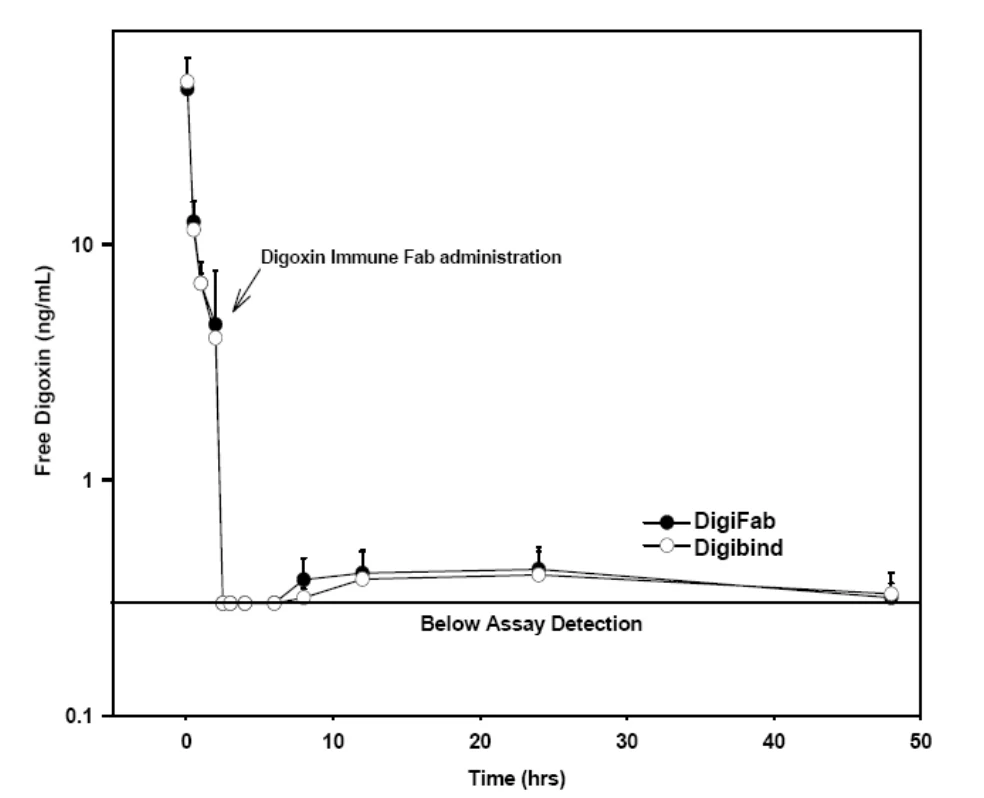
The objective of the pharmacokinetic and pharmacodynamic study was to compare DigiFab® to Digibind®. The study was conducted in healthy subjects (see Table 1 for subject demographics) who were administered a 1 mg intravenous dose of digoxin, followed 2 hours later by an equimolar neutralizing dose of either DigiFab® or Digibind®. The pharmacokinetics of both digoxin and Fab were determined (see DETAILED PHARMACOLOGY). The primary outcome measure was the serum level of free (unbound) digoxin. The results demonstrated that both products reduced the level of free digoxin in the serum to below the limit of assay quantitation (0.3 ng/mL) for several hours after Fab administration (Figure 1). Cumulative urinary excretion of digoxin was comparable for both products and exceeded 40% of the administered dose by 24 hours. These results demonstrate that DigiFab® and Digibind® have equivalent pharmacodynamic effects on the digoxin parameters that are relevant to the treatment of digoxin toxicity.
Figure 1. Serum Concentration Versus Time for Free Digoxin
The objective of the patient study was to demonstrate reduction of serum free digoxin concentrations, safety, pharmacokinetics, and clinical response to DigiFab® in patients with digoxin toxicity (see Table 6 for patient demographics). Results were compared to historical data on another marketed ovine digoxin immune Fab product, Digibind®. Fifteen patients received doses of DigiFab® based on its theoretical binding capacity for digoxin, and based on the known amount of digoxin ingested or on serum concentrations of digoxin at the time of admission. This study was conducted in the U.S. and Finland.
Table 6 Summary of Subject Demographics for Clinical Studies of DigiFab®
| Study # | Study design | Dosage, route of administration and duration | Study subjects | Mean age (Range) | Sex |
| TAb007-01 | Open-label, multicenter, historical control | Dosage of DigiFab® calculated based on estimated body load of digoxin, intravenous, one time dose | n= 15 | 64 (40 – 85) | Male: 6 (40%) Female: 9 (60%) |
| TAb007-02 | Open-label, single center, randomized, parallel active control | 1 mg dose of digoxin, followed 2 hours later by 76 mg of either DigiFab® or Digibind®, intravenous, one time dose | N = 16 (8 subjects per group) | 27 (22 – 33) | Male: 8 (50%) Female: 8 (50%) (4 of each per group) |
14.2 Study Results
The primary outcome of the study was met in that serum free digoxin concentrations in all patients fell to undetectable levels following DigiFab® administration. This was an expected outcome that is consistent with data in the literature showing that free digoxin concentrations fall rapidly following administration of Digibind®(11). In the DigiFab® study, an independent blinded review of each patient’s ECG showed that 10 of the 15 patients studied had ECG abnormalities that improved within 4 hours after the DigiFab® infusion, although 4 of these 10 patients had ECG abnormalities that worsened within 24 hours of their initial improvement, and in one case through the 30-day follow up period. Although the reason for the lack of resolution of ECG abnormalities could not be clearly determined in all cases, it is possible that the ECG abnormalities observed in these patients were not entirely due to digoxin toxicity, but rather to another underlying cardiac problem. Based on an assessment of all manifestations of toxicity, investigators classified 7 out of the 15 patients (47%) studied as having complete resolution of digoxin toxicity within 4 hours of DigiFab® administration, and 14 patients (93%) were classified as having their digoxin toxicity resolved by 20 hours. The data for the proportion of patients who responded to treatment with DigiFab® is similar to, and consistent with, historical data available for Digibind® (Table 7).(6;11)
Table 7 Patient Response to Digoxin Fab Treatment for Digoxin Toxicity
| DigiFab (n=15) | Hickey Study (n=717) | Antman Study (n=148) | |
| Resolved All Signs & Symptoms | 14 (93%) | 357 (50%) | 119 (80%) |
| Partial Improvement of Signs & Symptoms | Not Applicable | 172 (24%) | 14 (10%) |
| Complete or Partial Response | 14 (93%) | 529 (74%) | 133 (90%) |
| No Response | 1 (7%) | 89 (12%) | 15 (10%) |
| Response Uncertain/Not Reported | Not Applicable | 99 (14%) | Not Applicable |
15 MICROBIOLOGY
No microbiological information is required for this drug product.
16 NON-CLINICAL TOXICOLOGY
Not available.
17 SUPPORTING PRODUCT MONOGRAPHS
Not applicable.