


Product Monograph - Ondexxya
RECENT MAJOR LABEL CHANGES
| Not Applicable |
|---|
TABLE OF CONTENTS
Sections or subsections that are not applicable at the time of authorization are not listed.
RECENT MAJOR LABEL CHANGES ........................................................................................ 2
TABLE OF CONTENTS ............................................................................................................. 2
PART I: HEALTH PROFESSIONAL INFORMATION ................................................................. 4
1 INDICATIONS ................................................................................................................. 4
Pediatrics ........................................................................................................................ 4
Geriatrics ......................................................................................................................... 4
2 CONTRAINDICATIONS .................................................................................................. 4
3 SERIOUS WARNINGS AND PRECAUTIONS BOX ........................................................ 4
4 DOSAGE AND ADMINISTRATION ................................................................................ 5
4.1 Dosing Considerations ............................................................................................... 5
4.2 Recommended Dose and Dosage Adjustment .......................................................... 5
4.3 Reconstitution ............................................................................................................ 6
4.4 Administration ............................................................................................................ 8
4.5 Missed Dose .............................................................................................................. 8
5 OVERDOSAGE ............................................................................................................... 8
6 DOSAGE FORMS, STRENGTHS, COMPOSITION AND PACKAGING ......................... 8
7 WARNINGS AND PRECAUTIONS ................................................................................. 9
7.1 Special Populations ................................................................................................. 10
7.1.1 Pregnant Women ...........................................................................................10
7.1.2 Breast-feeding ................................................................................................11
7.1.3 Pediatrics .......................................................................................................11
7.1.4 Geriatrics .......................................................................................................11
8 ADVERSE REACTIONS ............................................................................................... 11
8.1 Adverse Reaction Overview..................................................................................... 11
8.2 Clinical Trial Adverse Reactions .............................................................................. 12
8.2.1 Clinical Trial Adverse Reactions – Pediatrics ........................................................15
8.3 Less Common Clinical Trial Adverse Reactions....................................................... 15
8.5 Post-Market Adverse Reactions .............................................................................. 15
9 DRUG INTERACTIONS ................................................................................................ 15
9.3 Drug-Behavioural Interactions ................................................................................. 15
9.4 Drug-Drug Interactions ............................................................................................ 15
9.5 Drug-Food Interactions ............................................................................................ 16
9.6 Drug-Herb Interactions ............................................................................................ 16
9.7 Drug-Laboratory Test Interactions ........................................................................... 16
10 CLINICAL PHARMACOLOGY ...................................................................................... 16
10.1 Mechanism of Action ............................................................................................. 16
10.2 Pharmacodynamics ............................................................................................... 16
10.3 Pharmacokinetics .................................................................................................. 17
11 STORAGE, STABILITY AND DISPOSAL ..................................................................... 18
12 SPECIAL HANDLING INSTRUCTIONS ........................................................................ 18
PART II: SCIENTIFIC INFORMATION ..................................................................................... 19
13 PHARMACEUTICAL INFORMATION ........................................................................... 19
14 CLINICAL TRIALS ........................................................................................................ 19
14.1 Clinical Trial by Indication ...................................................................................... 19
15 MICROBIOLOGY .......................................................................................................... 27
16 NON-CLINICAL TOXICOLOGY .................................................................................... 27
PATIENT MEDICATION INFORMATION ................................................................................. 29
PART I: HEALTH PROFESSIONAL INFORMATION
1 INDICATIONS
ONDEXXYA (andexanet alfa) is indicated for:
- adult patients treated with FXa inhibitors (rivaroxaban or apixaban) when rapid reversal of anticoagulation is needed due to life-threatening or uncontrolled bleeding.
ONDEXXYA has not been shown to be effective for, and is not indicated for, the treatment of bleeding related to any FXa inhibitors other than apixaban or rivaroxaban.
Pediatrics
Pediatrics (< 18 years of age): The safety and efficacy of ONDEXXYA have not been established in the pediatric population.
Geriatrics
Geriatrics (≥ 65 years of age): Evidence from clinical studies and experience suggests that use in the geriatric population is not associated with differences in safety or effectiveness.
2 CONTRAINDICATIONS
- ONDEXXYA is contraindicated in patients who are hypersensitive to this drug or to any ingredient in the formulation, including any non-medicinal ingredient, or component of the container. For a complete listing, see 6 DOSAGE FORMS, STRENGTHS, COMPOSITION AND PACKAGING.
3 SERIOUS WARNINGS AND PRECAUTIONS BOX
Serious Warnings and Precautions
|
|---|
4 DOSAGE AND ADMINISTRATION
4.1 Dosing Considerations
For intravenous (IV) use only.
Patients being treated with FXa inhibitors have underlying disease states that predispose them to thromboembolic events. Reversing FXa inhibitor therapy exposes patients to the thrombotic risk of their underlying disease. To reduce this risk, resumption of anticoagulant therapy should be considered as soon as medically appropriate (see 7 WARNINGS AND PRECAUTIONS, Hematologic).
4.2 Recommended Dose and Dosage Adjustment
- Select the appropriate dosing regimen following the guidance in Table 1.
- Administer ONDEXXYA as an IV bolus followed by administration of a continuous infusion as per Table 2.
The recommended dosing of ONDEXXYA is based on the specific FXa inhibitor, dose of FXa inhibitor, and time since the patient’s last dose of FXa inhibitor (see Table 1).
Table 1 - ONDEXXYA Dose Based on Rivaroxaban or Apixaban Dose and Timing of Last Dose of FXa Inhibitor before ONDEXXYA Initiation
| FXa Inhibitor | FXa Inhibitor Last Dose | < 8 Hours or Unknown | ≥ 8 Hours | ||
| Rivaroxaban | ≤ 10 mg | Low Dose | Low Dose | ||
| > 10 mg or Unknown | High Dose | ||||
| Apixaban | ≤ 5 mg | Low Dose | |||
| > 5 mg or Unknown | High Dose | ||||
The low- and high-dose regimens are described in Table 2.
Table 2 - ONDEXXYA dosing regimens
| Dose* | Initial IV Bolus | Follow-On IV Infusion** | Total number of 200 mg vials |
|---|---|---|---|
| Low Dose | 400 mg at a target rate of 30 mg/min | 4 mg/min for 120 minutes (480 mg) | 5 (2 vials bolus + 3 vials infusion) |
| High Dose | 800 mg at a target rate of 30 mg/min | 8 mg/min for 120 minutes (960 mg) | 9 (4 vials bolus + 5 vials infusion) |
* The safety and efficacy of more than one dose have not been evaluated.
** Because the recommended infusion doses are lower than the andexanet alfa content of the vials, there will be a small amount of solution remaining in the bag after completion of the infusion.
IV=intravenous infusion
Special Populations
Pediatrics (< 18 years of age): Health Canada has not authorized an indication for pediatric use.
Geriatrics (≥ 65 years of age): No dose adjustment is recommended for elderly patients (≥ 65 years of age) (see 7 WARNINGS AND PRECAUTIONS and 10 CLINICAL PHARMACOLOGY).
Renal Impairment: The effect of renal impairment on ONDEXXYA exposure levels has not been evaluated. Because andexanet alfa is a protein and is given as a one-time treatment, no dose adjustment is recommended.
Hepatic Impairment: The safety and efficacy of ONDEXXYA have not been studied in patients with hepatic impairment. Biliary and/or feces elimination of protein therapeutics is not a known route of protein elimination. Because andexanet alfa is a protein and is given as a one-time treatment, no dose adjustment is recommended.
4.3 Reconstitution
ONDEXXYA does not need to be brought to room temperature before reconstitution or administration to the patient. Aseptic technique during the reconstitution procedure should be used.
Two IV infusion bags will be prepared to deliver the selected ONDEXXYA regimen. One bag containing the bolus dose and one bag containing the follow-on IV infusion.
The reconstituted solution contains andexanet alfa at a concentration of 10 mg/mL.
Chemical and physical in-use stability has been demonstrated over a 24-hour period. The reconstituted solution in the primary packaging vials can be stored for 16 hours at 2°C to 8°C. If necessary, the reconstituted solution can be stored at room temperature for an additional eight hours after being transferred to the IV bag.
To minimize the risk of microbial growth, once reconstituted, it is recommended that the product be used immediately.
IV Bolus Preparation
Determine total number of vials required (see Table 2). 200 mg vials: Reconstitute the 200 mg vial of ONDEXXYA with 20 mL of Sterile Water for Injection (SWFI). Use a 20-mL (or larger) syringe and 20-gauge (or higher) needle. Slowly inject the SWFI, directing the solution onto the inside wall of the vial to minimize foaming. To reduce the total reconstitution time needed during preparation, reconstitute all required vials in succession. | 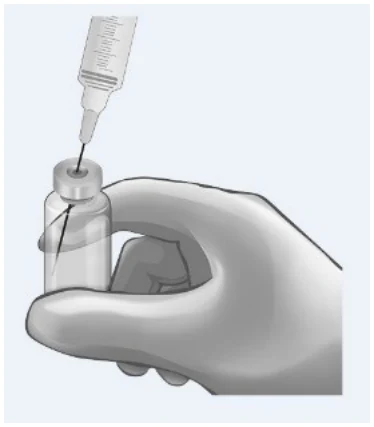 |
To ensure dissolution of the cake or powder, gently swirl each vial until complete dissolution of powder occurs (A). Do not shake (B); shaking could lead to foaming. Typical dissolution time for each vial is approximately three to five minutes. If dissolution is incomplete, discard the vial, and do not use the product. Upon reconstitution, the parenteral drug product should be inspected visually for particulate matter and discoloration prior to administration. | (A) 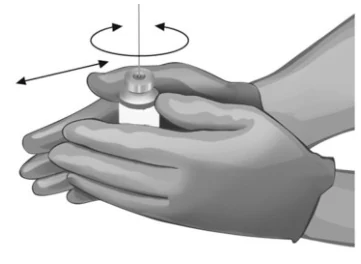 (B) 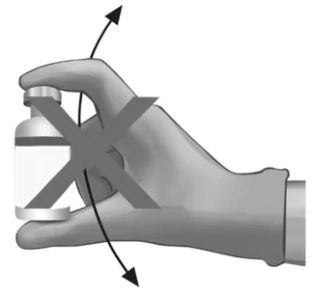 |
Use 60-mL (or larger) syringe with a 20-gauge (or higher) needle to withdraw the reconstituted ONDEXXYA solution from each of the vials until the required dosing volume is achieved. Note the total volume withdrawn into the syringe. Transfer the ONDEXXYA solution from the syringe into an empty polyolefin or polyvinyl chloride IV bag with a volume of 250 mL or less. | 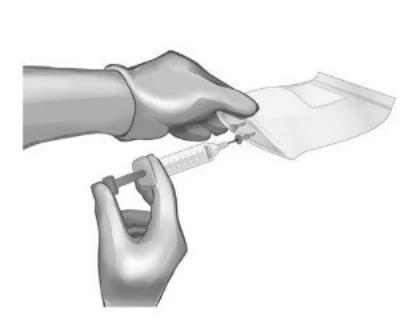 |
Discard the syringe, needle and vials (including any unused product) in accordance with local requirements.
Continuous IV Infusion Preparation
Follow the same procedure outlined above for IV bolus preparation. Reconstitute the total number of vials needed based on the dose requirements (see Table 2). More than one 40 to 60 mL syringe, or an equivalent 100-mL syringe, may be used for transfer of reconstituted solution to the IV bag.
Discard the syringe, needle and vials (including any unused product) in accordance with local requirements.
4.4 Administration
Upon reconstitution, the parenteral drug product should be inspected visually for particulate matter and discoloration prior to administration.
Administer ONDEXXYA intravenously, using a 0.2 or 0.22 micron in-line polyethersulfone or equivalent low protein-binding filter.
Start the bolus at a target rate of approximately 30 mg/min.
Within two minutes following the bolus dose, administer the continuous IV infusion for up to 120 minutes.
4.5 Missed Dose
Not applicable.
5 OVERDOSAGE
There is no clinical experience with overdose of ONDEXXYA. No dose-limiting toxicities have been observed during clinical trials.
| For management of a suspected drug overdose, contact your regional poison control centre. |
|---|
6 DOSAGE FORMS, STRENGTHS, COMPOSITION AND PACKAGING
ONDEXXYA (andexanet alfa) is supplied as a white to off-white lyophilized cake or powder in single-use 20 mL vials. Each vial contains 200 mg andexanet alfa. ONDEXXYA contains no preservatives.
Table 3 – Dosage Forms, Strengths, Composition and Packaging
| Route of Administration | Dosage Form / Strength/Composition | Non-medicinal Ingredients |
| Intravenous (IV) | powder for solution for infusion, 200 mg andexanet alfa, single-use vial | L-arginine hydrochloride Mannitol Polysorbate 80 Sucrose |
7 WARNINGS AND PRECAUTIONS
Please see 3 SERIOUS WARNINGS AND PRECAUTIONS BOX.
General
ONDEXXYA has not been shown to be effective for, and is not indicated for, the treatment of bleeding related to any FXa inhibitors other than apixaban or rivaroxaban.
Driving and Operating Machinery
There is no evidence that ONDEXXYA affects one’s ability to drive or use machines.
Hematologic
Thromboembolic and Ischemic Risks
Thrombotic events (also including serious and/or life-threatening events) have been reported following treatment of patients with ONDEXXYA. Patients being treated with FXa inhibitors have underlying disease states that predispose them to thrombotic events. Reversing FXa inhibitor therapy exposes patients to the thrombotic risk of their underlying disease. In addition, the observed procoagulant effect of ONDEXXYA is its ability to bind to and inhibit the activity of Tissue Factor Pathway Inhibitor (TFPI). Inhibition of TFPI activity can increase tissue factor (TF)-initiated thrombin generation (see 8 ADVERSE REACTIONS).
Monitor subjects treated with ONDEXXYA for signs and symptoms of arterial and venous thromboembolic events, ischemic events, and cardiac arrest. To reduce thromboembolic risk, resume anticoagulant therapy as soon as medically appropriate following treatment with ONDEXXYA.
The safety of ONDEXXYA has not been evaluated in subjects who experienced thromboembolic events or disseminated intravascular coagulation within two weeks prior to the life-threatening bleeding event requiring treatment with ONDEXXYA. Safety of ONDEXXYA also has not been evaluated in subjects who received prothrombin complex concentrates, recombinant factor VIIa, or whole blood products within seven days prior to the bleeding event.
Time Course of Reversal of Anti-FXa Activity
The time course of anti-FXa activity following ONDEXXYA administration was consistent among the healthy volunteer studies and the ANNEXA-4 study in bleeding subjects. Compared to baseline, there was a rapid and substantial decrease in anti-FXa activity corresponding to the ONDEXXYA bolus. This decrease was sustained through the end of the ONDEXXYA continuous infusion. The anti-FXa activity returned to the placebo levels approximately two hours after completion of a bolus or continuous infusion. Subsequently, the anti-FXa activity decreased at a rate similar to the clearance of the FXa inhibitors.
A total of 128 patients from ANNEXA-4 were anticoagulated and had elevated baseline levels of anti-FXa (>150 ng/mL for apixaban, >300 ng/mL for rivaroxaban). After administration of
Tris base (tromethamine) Tris hydrochloride |
ONDEXXYA, these patients experienced decreased anti-FXa activity levels, with median reductions of 96% for rivaroxaban and 92% for apixaban.
Treatment Monitoring
Treatment monitoring should be based mainly on clinical parameters indicative of appropriate response (i.e., achievement of hemostasis), lack of efficacy (i.e., re-bleeding), and adverse events (i.e., thromboembolic events). Treatment monitoring of ONDEXXYA should not be based on anti-FXa activity. Commercial anti-FXa activity assays are unsuitable for measuring anti-FXa activity following administration of ONDEXXYA as these assays result in erroneously elevated anti-FXa activity levels, thereby causing a substantial underestimation of the reversal activity of ONDEXXYA.
ONDEXXYA Use in Conjunction with Other Supportive Measures
ONDEXXYA can be used in conjunction with standard hemostatic supportive measures, which should be considered as medically appropriate. The safety of andexanet alfa has not been evaluated in patients who received prothrombin complex concentrates, recombinant factor VIIa, or whole blood within seven days prior to the bleeding event, as they were excluded from clinical trials. Pro-coagulant factor treatments (e.g., 3- or 4-factor prothrombin complex concentrate (PCC)/activated PCC, recombinant factor VIIa, fresh frozen plasma) and whole blood should be avoided unless absolutely required, due to lack of data in combination with these treatments.
Interaction with Heparin
ONDEXXYA may interfere with the anticoagulant effect of heparin.
Use of ONDEXXYA as an antidote for heparin has not been evaluated and is not recommended. Avoid use of ONDEXXYA for the reversal of FXa inhibitors (apixaban and rivaroxaban) prior to heparinization as ONDEXXYA may cause unresponsiveness to heparin. If anticoagulation is needed, use an alternative anticoagulant to heparin.
Infusion-related reactions
In case of mild or moderate infusion reactions, careful observation may be sufficient. For moderate symptoms, a brief interruption or slowing of the infusion with resumption of the infusion after symptoms subside may be considered. Based on clinical judgement, appropriate medical treatment may be administered.
Immune
As with all therapeutic proteins, there is the potential for immunogenicity (see 8 ADVERSE REACTIONS).
7.1 Special Populations
7.1.1 Pregnant Women
There are insufficient data on the use of ONDEXXYA in pregnant women to determine if ONDEXXYA exposure during pregnancy poses any risk to the mother or fetus. Animal reproductive and developmental studies have not been conducted with ONDEXXYA. ONDEXXYA is not recommended during pregnancy.
7.1.2 Breast-feeding
It is unknown if ONDEXXYA is excreted in human milk. Precaution should be exercised because many drugs can be excreted in human milk. A risk to breastfed newborns/infants cannot be excluded. The pharmacokinetic properties of ONDEXXYA are described in 10.3 Pharmacokinetics.
7.1.3 Pediatrics
Pediatrics (< 18 years of age): No data are available to Health Canada; therefore, Health Canada has not authorized an indication for pediatric use.
7.1.4 Geriatrics
Geriatrics (≥ 65 years of age): Of the 477 subjects in the ANNEXA-4 study of ONDEXXYA, 431 (90%) were 65 years of age or older, and 315 (66%) were older than 75 years of age. No overall differences in safety or efficacy were observed between these patients and younger patients, and other reported clinical experience has not identified differences in responses between elderly and younger patients.
8 ADVERSE REACTIONS
8.1 Adverse Reaction Overview
The safety of ONDEXXYA has been evaluated in clinical trials including 417 healthy subjects administered a FXa inhibitor, as well as in 477 patients in a Phase 3b/4 study (ANNEXA-4), who had acute major bleeding and were under treatment with a FXa inhibitor (mostly apixaban or rivaroxaban).
Healthy Volunteer Pooled Analysis
A total of 417 healthy subjects were included in the pooled ONDEXXYA (all doses) analysis set and 156 subjects were included in the pooled placebo analysis set. Of the 417 healthy subjects, 143 received only bolus doses (ranging from 90 mg to 800 mg) and 274 received bolus doses (ranging from 400 to 800 mg) followed by continuous infusion of 4 mg/min (low dose) or 8 mg/min (high dose) for 120 minutes (ranging from 480 to 960 mg). Treatment emergent adverse events regardless of the relationship to treatment (TEAEs), were experienced by 46.8% of ONDEXXYA-treated subjects compared to 43.6% of subjects who received placebo. One Serious Adverse Event (SAE) (nephrolithiasis) occurred in an ONDEXXYA-treated healthy volunteer and no SAEs occurred in the placebo group. Two ONDEXXYA-treated healthy subjects had TEAEs (infusion-related reactions) that led to premature discontinuation from the study. No premature discontinuation from the study was observed in the placebo group. The most common TEAEs experienced in the pooled healthy volunteer studies are shown in Table 4 (see 8.2 Clinical Trial Adverse Reactions).
Patients with Acute Major Bleeding Under Treatment with FXa Inhibitors
Of the 477 patients in ANNEXA-4, 419 patients were under treatment with the FXa inhibitors apixaban (n= 245) or rivaroxaban (n=174) while 58 were receiving other anti-coagulant medications. TEAEs were experienced by 72.5% of patients and serious adverse events occurred in 41.9% of subjects. The most common TEAEs (≥ 4%) in bleeding subjects were urinary tract infection (n=50; 10.5%) and pneumonia (n=39; 8.2%), delirium (n=21; 4.4%), hypotension (n=19; 4.0%), and pyrexia (n=19, 4.0%). Of the 477 patients, 200 (41.9%) patients had at least 1 SAE. The most common (≥ 2%) SAEs included pneumonia (n=20; 4.2%), respiratory failure (n=12; 2.5%), and ischemic stroke (n=10; 2.1%). The rates of SAEs were similar between patients using apixaban at baseline (n=108; 44.1%) and patients using rivaroxaban at baseline (n=69; 39.7%). Four patients discontinued ONDEXXYA early due to an adverse event. All thromboembolic, embolic, and ischemic events observed in ≥ 1% of patients in study ANNEXA-4 are listed in Table 5.
8.2 Clinical Trial Adverse Reactions
Clinical trials are conducted under very specific conditions. Therefore, the adverse reaction rates observed in the clinical trials may not reflect the rates observed in practice and should not be compared to the rates in the clinical trials of another drug. Adverse reaction information from clinical trials may be useful in identifying and approximating rates of adverse drug reactions in real-world use.
In clinical studies in healthy subjects (Pooled Safety Analysis Population) who were administered a FXa inhibitor and then received ONDEXXYA, the frequency of Treatment Emergent Adverse Events reasonably likely to be related to treatment (adverse reactions), was generally similar between the pooled ONDEXXYA (16.8%) and pooled placebo (12.2%) analysis sets. The most common adverse reactions in the pooled ONDEXXYA and pooled placebo analysis sets were infusion-related hypersensitivity reaction (9.1% and 2.6%, respectively), and infusion-related reaction (2.6% and 1.3%, respectively). TEAEs experienced in the pooled Healthy Volunteer studies are shown in Table 4.
Table 4 – Treatment Emergent Adverse Events* with ONDEXXYA with Incidence of Greater than or Equal to 1% and Greater than Placebo in Healthy Volunteers (pooled analysis)
MedDRA System Order Class Adverse Reaction Category of Term | ONDEXXYA (N=417) n (%) | Placebo (N=156) n (%) | |||
| Infections and infestations | |||||
| Upper respiratory tract infection | 13 (3.1) | 4 (2.6) | |||
| Nervous system disorders | |||||
| Headache | 27 (6.5) | 9 (5.8) | |||
| Presyncope | 9 (2.2) | 3 (1.9) | |||
| Musculoskeletal and connective tissue disorders | |||||
| Arthralgia | 5 (1.2) | 1 (0.6) | |||
| Muscle spasms | 7 (1.7) | 2 (1.3) | |||
| General disorders and administration site conditions | |||||
| Fatigue | 7 (1.7) | 0 | |||
MedDRA System Order Class Adverse Reaction Category of Term | ONDEXXYA (N=417) n (%) | Placebo (N=156) n (%) | ||
| Injury, poisoning and procedural complications | ||||
| Infusion-related hypersensitivity reaction | 38 (9.1) | 4 (2.6) | ||
| Infusion-related reaction | 11 (2.6) | 2 (1.3) | ||
* Adverse events regardless of the relationship to treatment.
Table 5 provides the list of thromboembolic and ischemic TEAEs and other adverse reactions in at least 1% of patients from the Phase 3b/4 ANNEXA-4 study, including 477 patients with acute major bleeding treated with ONDEXXYA.
Table 5 – Treatment-emergent Thromboembolic and Ischemic Events* and Other Adverse Reactions Observed in at Least 1% of Patients in Study ANNEXA-4 (n=477**; Safety Analysis Set).
MedDRA System Order Class Adverse Reaction Category of Term | Frequency (N=477) n (%) |
| Cardiovascular | |
| Myocardial infarctiona | 17 (3.6) |
| General Disorders and Administration Site Conditions | |
| Pyrexia | 19 (4.0) |
| Nervous System Disorders | |
| Strokeb | 33 (6.9) |
| Respiratory, Thoracic Mediastinal Disorders | |
| Pulmonary embolismc | 9 (1.9) |
| Vacular Disorders | |
| Deep vein thrombosisd | 16 (3.4) |
| Atrial thrombosis | 5 (1.0) |
* Treatment-emergent thromboembolic and ischemic events regardless of the relationship to treatment with ONDEXXYA. The events under each group term consists of events reported in the ANNEXA-4 study, regardless of adjudication outcome.
** Patients under treatment with apixaban (n= 245), rivaroxaban (n=174), other (n=58).
a Preferred Terms (PTs) under Group term Myocardial infarction: Acute myocardial infarction, Coronary artery disease, Myocardial infarction, Myocardial ischemia, Troponin I increased, Troponin T increased, and Troponin increased.
b PTs under Group term Stroke: Basilar artery thrombosis, Cerebellar infarction, Cerebellar ischemia, Cerebral infarction, Cerebral ischemia, Cerebrovascular accident, Embolic stroke, and Ischemic stroke.
c PTs under Group term Pulmonary embolism: Jugular vein thrombosis and Pulmonary embolism.
d PTs under Group term Deep vein thrombosis: Deep vein thrombosis, Embolism venous, and Intracranial venous sinus thrombosis.
Deaths
In the ANNEXA-4 study, of the 477 patients in the safety population, there were 81 (17%) deaths. There were 41 cardiovascular deaths related to bleeding, 20 deaths that were cardiovascular and not related to bleeding, 15 that were non-cardiovascular, and 5 deaths had an uncertain or unknown cause. The average time to death was 14.8 days after treatment. All deaths occurred before Day 45. Of the 81 patients who died, the bleeding type at baseline was intracranial bleeding in 60 (74%), gastrointestinal bleeding in 15 (19%), and other bleeding types in 6 (7%) patients. The mortality rates are consistent with expectations in this patient population given the vascular risk factors, overall high morbidity, advanced age, and poor prognosis of patients with acute major bleeding.
Thromboembolic and Ischemic Events
In the ANNEXA-4 study, 50/477 (10.5%) subjects experienced one or more of the following thromboembolic events (These events are based on adjudicated data of thrombotic events as per the Endpoint Adjudication Committee (EAC) criteria, which were pre-defined in the adjudication charter. As such, the frequency of the events presented below differ from those presented in Table 5 which are TEAEs regardless of the relationship to treatment): cerebrovascular accident (22/50; 44%), deep venous thrombosis (12/50; 24%), myocardial infarction (9/50; 18%), pulmonary embolism (5/50; 10%), and transient ischemic attack (2/50; 4%). The median time to event was 10 days. A total of 38% of subjects with thromboembolic events (19/50) experienced the thromboembolic event during the first three days. Of the 477 subjects who received ONDEXXYA, 308 received at least one anticoagulation dose within 30 days after treatment as a prophylactic measure. Of these 308, 15 subjects (4.9%) had a thrombotic event and/or ischemic event after resumption of anticoagulation; while of the 169 subjects who did not receive anticoagulation as a prophylactic, 35 (20.7%) had a thrombotic event (see 7 WARNINGS and PRECAUTIONS).
No thromboembolic events were observed in 417 healthy volunteers who received FXa inhibitors and were treated with ONDEXXYA.
Immunogenicity
573 healthy subjects (417 in the ONDEXXYA-treated group and 156 in the placebo group) were tested for antibodies cross reacting with ONDEXXYA and antibodies to factor X and FXa. Treatment-emergent, non-neutralizing antibodies to ONDEXXYA were detected in approximately 6.4% (21/329). These antibodies were generally low titre, and no clinical consequences were observed. No neutralising antibodies or antibodies to factor X or FXa were detected. The occurrence of positive, non-neutralizing antibodies to ONDEXXYA following treatment in patients in the ANNEXA-4 study (8% or 25/314 patients) has been similar to that observed in healthy subjects.
Detection of antibody formation is highly dependent on the sensitivity and specificity of the assay. Additionally, the observed incidence of antibody (including neutralizing antibody) positivity in an assay may be influenced by several factors, including assay methodology, sample handling, timing of sample collection, concomitant medications, and underlying disease. For these reasons, comparison of the incidence of antibodies to ONDEXXYA with the incidence of antibodies to other products may be misleading.
Infusion-Related Reactions
Infusion-related reactions occurred in 9.8% (41/417) of ONDEXXYA-treated healthy volunteers vs. 3.8% (6/156) of placebo-treated subjects. These reactions were characterized by a range of symptoms, including flushing, feeling hot, cough, dysgeusia, and dyspnea. Symptoms were mild to moderate in severity.
In the ANNEXA-4 study, 0.4% (2/477) of patients (both patients treated with apixaban) experienced an infusion-related reaction, neither of which were assessed as severe (1 moderate; 1 mild).
8.2.1 Clinical Trial Adverse Reactions – Pediatrics
The safety and efficacy of ONDEXXYA in the pediatric population have not been studied.
8.3 Less Common Clinical Trial Adverse Reactions
Treatment-emergent thromboembolic and ischemic events and other adverse reactions reported in < 1% of patients with acute major bleeding treated with ONDEXXYA [ANNEXA-4 study, n=477; Patients under treatment with apixaban (n= 245), rivaroxaban (n=174), other (n=58)] are summarized below.
Cardiovascular: Cardiac arrest
Nervous System Disorders: Carotid artery stenosis, Hemorrhagic stroke, Hemiparesis, and Transient ischemic attack
Vascular disorders: Cardiac ventricular thrombosis, Iliac artery occlusion, Peripheral arterial occlusive disease, Thrombophlebitis, Thrombophlebitis superficial and Venous thrombosis limb
8.5 Post-Market Adverse Reactions
There have been no new identified post-market adverse reactions.
9 DRUG INTERACTIONS
9.3 Drug-Behavioural Interactions
Interactions with behaviour have not been established.
9.4 Drug-Drug Interactions
No drug-drug interaction studies have been performed with ONDEXXYA except for the intended interaction with FXa inhibitors. The pharmacokinetics of ONDEXXYA were not affected by steady state levels of apixaban and rivaroxaban.
In vitro data suggest interaction of andexanet alfa with the heparin anti-thrombin III (ATIII) complex and neutralization of the anticoagulant effect of heparin. Post-marketing data suggest that the use of andexanet alfa before heparinization could cause unresponsiveness to heparin.
9.5 Drug-Food Interactions
Interactions with food have not been established.
9.6 Drug-Herb Interactions
Interactions with herbal products have not been established.
9.7 Drug-Laboratory Test Interactions
Current commercial clinical anti-FXa-activity assays are not suitable for measuring FXa activity following administration of ONDEXXYA. Due to the reversible binding of ONDEXXYA to the FXa inhibitor, the high sample dilution currently used in commercial clinical assays promotes dissociation of the inhibitor from ONDEXXYA, resulting in detection of erroneously elevated anti-FXa activity levels, thereby causing a substantial underestimation of the reversal activity of ONDEXXYA.
10 CLINICAL PHARMACOLOGY
10.1 Mechanism of Action
Andexanet alfa is a recombinant-modified human FXa protein that lacks procoagulant or anticoagulant activity. A mutation in the serine residue disrupting the catalytic triad prevents it from cleaving prothrombin and thereby generating thrombin, whereas a deletion of the membrane binding γ-carboxyglutamic acid domain prevents it from binding to factor Va and acting as a competitive inhibitor of the prothrombinase complex.
Andexanet alfa is an antidote for apixaban and rivaroxaban and binds these FXa inhibitors in the plasma, thereby freeing endogenous FXa to resume its normal function in hemostasis.
Anti-TFPI-effect
In addition to reversing the anticoagulant effect of drugs that target FXa, andexanet alfa binds to tissue factor pathway inhibitor (TFPI), an endogenous naturally occurring anticoagulant that normally circulates in low concentrations in plasma. TFPI binds reversibly to FXa, and the resulting TFPI–FXa complex inhibits the tissue factor–factor VIIa complex, which plays a key role in activation of the tissue factor pathway leading to thrombin generation. When andexanet alfa binds to TFPI, circulating TFPI concentrations are reduced, which may lead to increased thrombin generation and may increase the risk of thrombosis.
10.2 Pharmacodynamics
The effects of andexanet alfa can be measured using assays for its anti-FXa activity, free fraction of FXa inhibitor, and thrombin generation. In addition to its ability to sequester the FXa inhibitors, rivaroxaban and apixaban, andexanet alfa has been shown to inhibit TFPI activity.
The dose and dosing regimen of ONDEXXYA that are required to reverse anti-FXa activity and to restore thrombin generation were determined in dose-ranging studies on healthy volunteers.
Dosing of ONDEXXYA, as a bolus followed by a 2-hour continuous infusion, resulted in a rapid decrease in anti-FXa activity (within 2 minutes after the completion of the bolus administration) followed by reduced anti-FXa activity that was maintained throughout the duration of the continuous infusion. The anti-FXa activity returned to the placebo levels approximately 2 hours after completion of a bolus or continuous infusion whereas TFPI activity in plasma returned to the pre-treatment levels between 72 and 93 hours following ONDEXXYA administration.
Restoration of thrombin generation following administration was dose- and dose-regimen-dependent and did not correlate with anti-FXa activity beyond approximately 4 hours.
Elevation of TF-initiated thrombin generation above the baseline range (prior to anticoagulation) occurred within 2 minutes following a bolus administration of ONDEXXYA and was maintained throughout the duration of the continuous infusion. The TF-initiated thrombin generation was elevated above placebo for at least 22 hours for direct FXa inhibitors rivaroxaban and apixaban. The sustained elevation of thrombin generation over the baseline range and the sustained elevation over placebo were not observed in a contact-activated thrombin generation assay (an assay that is not affected by TF-TFPI interaction).
10.3 Pharmacokinetics
Table 6 - Summary of a Non-Compartmental Analysis (NCA) of ONDEXXYA Pharmacokinetic Parameters in healthy subjects (high and low doses) from Comparative PK Study 19-514
| Cmax (μg/mL) | Tmax (hr) | t½ (hr) | AUC0-∞ (hr*μg/mL) | CL (L/hr) | Vss (L) | |
| Low Dose | 61.0 {21.3} (40.3, 98.5) [49] | 0.03 {53.5} (0.03, 0.13) [49] | 3.78 {24.5} (2.59, 6.39) [42] | 61.3 {21.5} (43.8, 94.9) [42] | 6.52 {21.5} (4.21, 9.13) [42] | 9.47 {25.8} (6.08, 15.3) [42] |
| High Dose | 118.0 {24.9} (50.2, 191) [50] | 0.03 {58.2} (0.03, 0.2) [50] | 4.24 {19.1} (2.47, 6.52) [46] | 127.0 {25.4} (57.5, 209.0) [46] | 6.29 {25.4} (3.83, 13.9) [46] | 8.94 {28.6} (5.36, 23.1) [46] |
Data presented are geometric mean, Geometric Mean {Geometric CV %}, (min, max), [N].
Tmax reported as median, {Geometric CV %}, (min, max), [N].
The exposure of ONDEXXYA at the high and low dose are dose proportional based on assessment of AUC0-∞, AUC0-last, and Cmax.(see Table 7).
Table 7 - Dose proportionality for 30, 90, 210, 300, 420, 600, and 800 mg of ONDEXXYA
| PK Parameter | Slope (90% CI) |
|---|---|
| AUC0-∞ | 0.94 (0.90, 0.99) |
| AUC0-t | 0.95 (0.90, 0.99) |
| Cmax | 0.96 (0.91, 1.01) |
Absorption: ONDEXXYA is administered by IV infusion.
Distribution: The Vss for ONDEXXYA is 9.47 L (low dose) and 8.94 L (high dose).
Elimination: Clearance for ONDEXXYA is 6.52 L/hr (low dose) and 6.29 L/hr (high dose) with low renal elimination. The elimination half-life is 3.78 hr (low dose) and 4.24 hr (high dose). Based on what is known about the disposition kinetics of native FXa, ONDEXXYA is likely rapidly broken down in plasma by endogenous proteases, consistent with its relatively short effective half-life.
Special Populations and Conditions
- Pediatrics (> 18 years of age): The pharmacokinetics of ONDEXXYA have not been studied in pediatric patients.
- Geriatrics (≥ 65 years of age): In a study comparing ONDEXXYA pharmacokinetics in elderly (65-69 years) and younger (26-42 years) healthy subjects who had received apixaban, the pharmacokinetics of ONDEXXYA in the elderly subjects were not statistically different than those in the younger subjects.
- Sex: Based on population pharmacokinetics analysis, non-renal clearance decreased by 21.6% in female subjects compared to that in the male.
Pregnancy and Breast-feeding:
Pregnancy
There are insufficient data on the use of ONDEXXYA in pregnant women to determine if ONDEXXYA exposure during pregnancy poses any risk to the mother or fetus. Animal reproductive and developmental studies have not been conducted with ONDEXXYA. ONDEXXYA is not recommended during pregnancy.
Breastfeeding
It is unknown whether ONDEXXYA is excreted in human milk. A risk to breastfed newborns/infants cannot be excluded.
Hepatic Impairment: No trials have been conducted to investigate the pharmacokinetics of ONDEXXYA in patients with hepatic impairment. Biliary and/or feces elimination of protein therapeutics is not a known route of protein elimination.
Renal Impairment: No trials have been conducted to investigate the pharmacokinetics of ONDEXXYA in patients with renal impairment. Based on the available PK data, ONDEXXYA has little to no renal clearance.
11 STORAGE, STABILITY AND DISPOSAL
Unopened Vial
Stored in a refrigerator at 2°C - 8°C.
DO NOT FREEZE.
Reconstituted Product
For storage conditions after reconstitution of the medicinal product, see 4.3 Reconstitution.
Disposal
For disposal, see 4.3 Reconstitution.
12 SPECIAL HANDLING INSTRUCTIONS
This medicinal product must not be mixed with other medicinal products.
PART II: SCIENTIFIC INFORMATION
13 PHARMACEUTICAL INFORMATION
Drug Substance
Proper name: andexanet alfa
Chemical name: Des-(6-39)-human blood-coagulation factor X light chain (98-108’)- disulfide with [185’-alanine (S>A)] human activated factor X heavy chain, produced in Chinese hamster ovary (CHO) cells (glycoform alfa).
Molecular formula and molecular mass: C1750H2727N489O539S27, 41.097 kDa
Structural formula: Andexanet alfa is a recombinant modified version of a human FXa protein expressed in Chinese hamster ovary (CHO) cells. The protein is a two-chain molecule comprised of a 105 amino acid light chain (approximately 12 kDa) and a 254 amino acid heavy chain (approximately 28 kDa). The chains are connected by a single inter-chain disulphide bond. Andexanet alfa has a total of 359 amino acid residues and an approximate molecular weight of 41 kDa.
Physicochemical properties: Andexanet alfa is a white to off-white lyophilized powder. The calculated molar extinction coefficient (UV 280 nm) for andexanet alfa is 1.166 (mg/mL)-1cm-1 and the theoretical isoelectric point (pI) is 7.10.
Pharmaceutical standard: Professed
Product Characteristics: Andexanet alfa is a recombinant form of human FXa protein that has been modified to lack procoagulant or anticoagulant activity. ONDEXXYA exerts its procoagulant effect by binding and sequestering the direct FXa inhibitors rivaroxaban and apixaban. Another observed procoagulant effect of ONDEXXYA is its ability to bind to and inhibit the activity of Tissue Factor Pathway Inhibitor (TFPI). Inhibition of TFPI activity can increase tissue factor (TF)-initiated thrombin generation.
14 CLINICAL TRIALS
14.1 Clinical Trial by Indication
Reversal of FXa inhibitor anticoagulation activity in patients treated with Apixaban or Rivaroxaban
Table 8 - Summary of patient demographics for clinical trials in reversal of Fxa inhibitors anticoagulation activity
| Study # | Study design | Dosage, route of administration and duration | Study subjects (n) | Mean age (Range) | Sex |
1 (ANNEXA-A 14-503) | A Phase 3, Randomized, Double-Blind, Placebo-Controlled Study in Older Healthy Subjects to Assess Safety and the Reversal of Apixaban Anticoagulation with Intravenously Administered Andexanet Alfa | apixaban 5 mg orally BID for 3.5 days. Part 1: ONDEXXYA 400 mg IV bolus Part 2: ONDEXXYA 400 mg IV bolus + 4 mg/min infusion for 120 minutes (480 mg) | Part 1: 33 (24 ONDEXXYA, 9 placebo) Part 2: 32 (24 ONDEXXYA, 8 placebo) | Part 1: 60 (50 to 73 yo) Part 2: 59 (50 to 73 yo) | Part 1: 57.6% M Part 2: 68.8% M |
2 (ANNEXA-R 14-504) | A Phase 3, Randomized, Double-Blind, Placebo-Controlled Study in Older Healthy Subjects to Assess Safety and the Reversal of Rivaroxaban Anticoagulation with Intravenously Administered Andexanet Alfa | rivaroxaban 20 mg orally qd for 4 days. Part 1: ONDEXXYA 800 mg IV bolus Part 2: ONDEXXYA 800 mg IV bolus + 8 mg/min infusion for 120 minutes (960 mg) | Part 1: 41 (27 ONDEXXYA, 14 placebo) Part 2: 39 (26 ONDEXXYA, 13 placebo) | Part 1: 55 (50 to 65 yo) Part 2: 57 (50 to 68 yo) | Part 1: 63.4% M Part 2: 43.6% M |
| Study # | Study design | Dosage, route of administration and duration | Study subjects (n) | Mean age (Range) | Sex |
3 (ANNEXA-4 14-505) | A Phase 3b/4, Prospective, Multi-centre, Open-Label Study of Andexanet Alfa in Patients Receiving a Factor Xa Inhibitor who have Acute Major Bleeding | FXa inhibitors (including apixaban, rivaroxaban) as prescribed Low dose ONDEXXYA: 400 mg IV bolus + 4 mg/min infusion for 120 minutes (480 mg) High dose ONDEXXYA: 800 mg IV bolus + 8 mg/min infusion for 120 minutes (960 mg) | 477 (419 were receiving apixaban or rivaroxaban prior to treatment with ONDEXXYA) Evaluable for efficacy: Apixaban: n=172 Rivaroxaban: n=130 | 78 (20 to 97 yo) | 54% M |
Note: Andexanet alfa = ONDEXXYA
The efficacy of ONDEXXYA was evaluated in 2 prospective, double-blind, randomized, placebo-controlled healthy volunteer studies (Study 1 - ANNEXA-A 14-503 and Study 2 - ANNEXA-R 14-504). The primary endpoint in both studies was the percent change in anti-FXa activity, from baseline to nadir, for the low-dose (Study 1) and high-dose (Study 2) regimens of bolus followed by continuous infusion (nadir was defined as the lowest anti-FXa activity observed at 10 minutes prior to, 2 minutes prior to, or 5 minutes after, the end of continuous infusion). The dosing of FXa inhibitors and ONDEXXYA is described below for each of the two studies.
Study 1 - ANNEXA-A 14-503 (Apixaban)
In Study 1, healthy subjects (mean age: 60 years; range: 50 to 73 years) received apixaban 5 mg twice daily for 3.5 days to achieve steady state. At 3 hours after the last apixaban dose (~Cmax), ONDEXXYA or placebo was administered. Eight subjects received placebo, and 24 received ONDEXXYA administered as low dose IV bolus plus infusion.
Low-dose ONDEXXYA was administered as a 400 mg IV bolus followed by a 4 mg/min continuous infusion for 120 minutes (infusion total 480 mg; total bolus plus continuous infusion 880 mg).
Study 2 - ANNEXA-R 14-504 (Rivaroxaban)
In Study 2, healthy subjects (mean age: 56 years; range: 50 to 68 years) received rivaroxaban 20 mg once per day for 4 days to achieve steady state. At 4 hours after the last rivaroxaban dose (~Cmax), ONDEXXYA or placebo was administered. Thirteen subjects received placebo, and 26 received ONDEXXYA administered as high dose IV bolus plus infusion.
High-dose ONDEXXYA was administered as an 800 mg IV bolus followed by an 8 mg/min continuous infusion for 120 minutes (infusion total 960 mg; total bolus plus continuous infusion 1760 mg).
Study 3 - ANNEXA-4 14-505 (Apixaban, Rivaroxaban)
In a multinational, prospective, single-arm, open-label study, ONDEXXYA was administered to 477 patients taking FXa inhibitors, 419 of whom were on apixaban or rivaroxaban, who presented with acute major bleeding.
To meet the eligibility criteria, the patient must have had an acute overt major bleeding episode requiring urgent reversal of anticoagulation. Acute major bleeding requiring urgent reversal of anticoagulation was defined by at least ONE of the following: (1) acute overt bleeding that is potentially life-threatening, e.g., with signs or symptoms of hemodynamic compromise, such as severe hypotension, poor skin perfusion, mental confusion, low urine output that cannot be otherwise explained, (2) acute overt bleeding associated with a fall in hemoglobin level by ≥ 2 g/dL, OR a hemoglobin level of ≤ 8 g/dL if no baseline hemoglobin is available, and (3) acute bleeding in a critical area or organ, such as intraspinal, pericardial, or intracranial.
Approximately half of the patients were male, and the mean age was 78 years. Most patients had previously received either apixaban (245/477; 51.4%) or rivaroxaban (174/477; 36.5%) and experienced either an ICH (329/477; 69%) or a gastrointestinal (GI) bleed (109/477; 22.9 %). 381/477 (79.9%) received the low-dose regimen of ONDEXXYA, while 96/477 patients (20.1%) received the high-dose regimen.
The efficacy of ONDEXXYA was evaluated among the subset of patients who had anti-FXa activity levels of ≥75 ng/mL for apixaban (n=172) or rivaroxaban (n=130). The primary endpoints were the median percent change in anti-FXa activity from baseline to the on-treatment nadir between end of the bolus and end of the infusion (measured at pre-defined times), and the proportion of patients achieving effective hemostasis at 12 hours after treatment (defined as a rating of good or excellent), as rated by an independent endpoint adjudication committee blinded to anti-FXa activity levels.
Study Results
Studies 1 [ANNEXA-A 14-503 (Apixaban)] and 2 [ANNEXA-R 14-504 (Rivaroxaban)]
The primary endpoint evaluating the percent change from baseline in anti-FXa activity at its nadir was statistically significant (p < 0.0001) in favor of the ONDEXXYA groups compared to placebo in both Studies 1 and 2. The results of Study 1 and Study 2 are provided in Table 9 and Table 10, respectively.
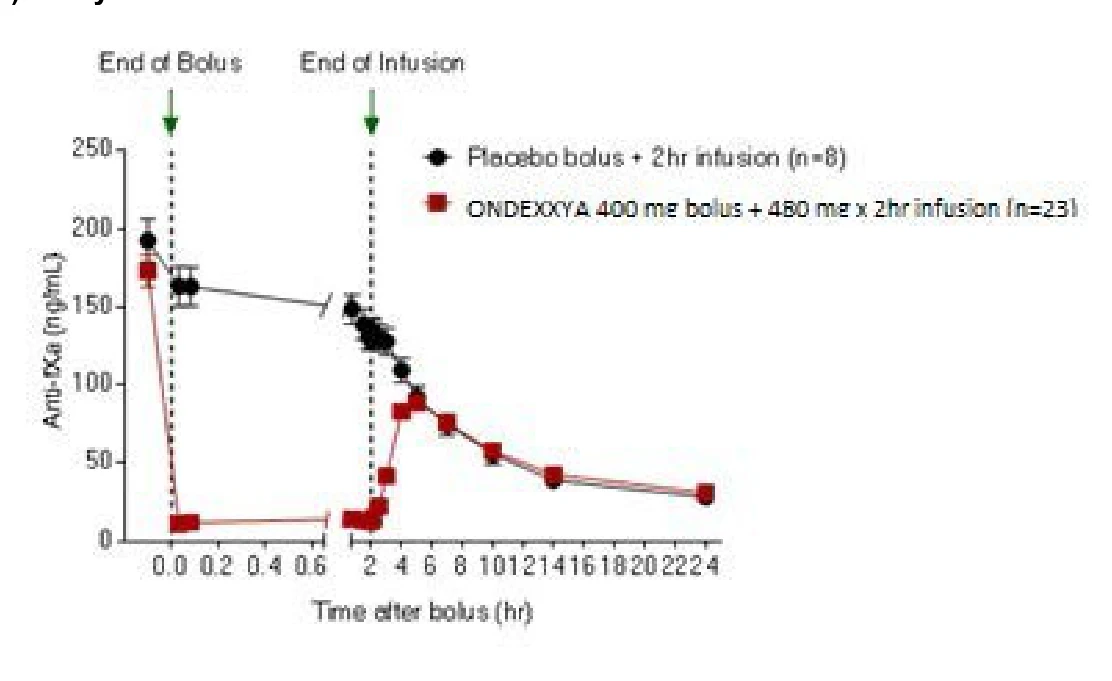
The time courses of anti-FXa activity before and after ONDEXXYA administration in healthy subjects anticoagulated with apixaban and rivaroxaban are shown in Figure 1(A) and (B), respectively.
Table 9 – Change in Anti-FXa Activity (Study 1- ANNEXA-A 14-503)
| Anti-FXa Activity - Apixaban | Low Dose ONDEXXYA N=23 | Placebo N=8 |
| Mean (± SD) at baseline, ng/mL | 173.0 (50.5) | 191.7 (34.4) |
| Mean (± SD) change from baseline to nadir a, ng/mL | -160.6 (49.3) | -63.2 (18.1) |
| Mean % (± SD) change from baseline to nadir a | -92.3 (2.8) | -32.7 (5.6) |
| Median difference and associated 95% confidence interval (CI) b | -59.5 (-64.1; -55.2) | |
| p-value | < 0.0001 c | |
Note: Baseline is the last assessment obtained prior to the first dose of ONDEXXYA or placebo.
a Nadir is the smallest value for anti-FXa activity at the 110-minute (10 minutes prior to the end of the infusion) time point, 2-minute time point before completion of the infusion, or the 5-minute time point after the completion of the infusion for each subject.
b The CI is for the Hodges-Lehman estimate of shift.
c p-value obtained from a 2-sided exact Wilcoxon rank-sum test.
Abbreviations: FXa = activated factor X; SD = standard deviation
Table 10 – Change in Anti-FXa Activity (Study 2 - ANNEXA-R 14-504)
| Anti-FXa Activity - Rivaroxaban | High Dose ONDEXXYA N=26 | Placebo N=13 |
| Mean (± SD) at baseline, ng/mL | 335.3 (91.0) | 317.2 (91.0) |
| Mean (± SD) change from baseline to nadir a, ng/mL | -324.5 (89.2) | -143.4 (58.8) |
| Mean % (± SD) change from baseline to nadir a | -96.7 (1.8) | -44.6 (11.8) |
| Median difference and associated 95% confidence interval (CI) b | -51.9 (-58.0; -47.0) | |
| p-value | < 0.0001 c | |
Note: Baseline is the last assessment obtained prior to the first dose of ONDEXXYA or placebo.
a Nadir is the smallest value for anti-FXa activity at the 110-minute (10 minutes prior to the end of the infusion) time point, 2-minute time point before completion of the infusion, or the 5-minute time point after the completion of the infusion for each subject.
b The CI is for the Hodges-Lehman estimate of shift.
c p-value obtained from a 2-sided exact Wilcoxon rank-sum test.
Abbreviations: FXa = activated factor X; SD = standard deviation
Figure 1: Change in Anti FXa Activity (ng/mL) in Healthy Subjects Anticoagulated with Apixaban (A) and Rivaroxaban (B)
- (A) Study 1 - ANNEXA-A 14-503
- (B) Study 2 - ANNEXA-R 14-504
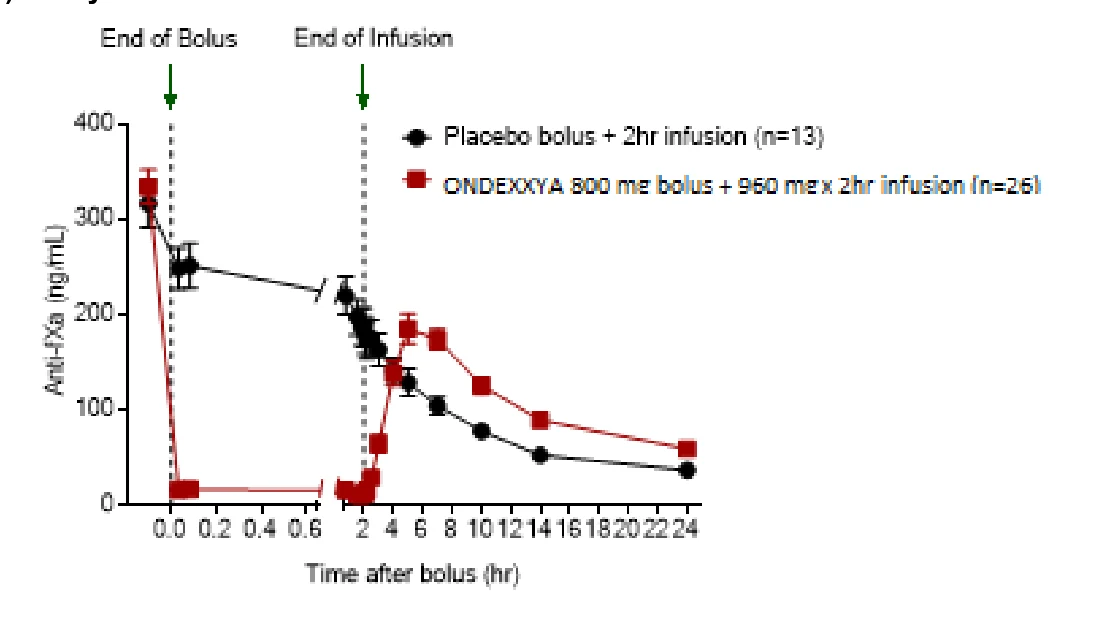
Note: Anti-FXa activity was measured prior to and after ONDEXXYA or placebo administration.
Dashed lines indicate the end of the bolus or infusion. A break in the x-axis is added to better visualize the immediate, short-term dynamics of anti-FXa activity following ONDEXXYA treatment. The points on the graph represent the mean anti-FXa activity level; error bars illustrate standard error. There was a statistically significant difference (p < 0.05) in the percent change of anti-FXa activity normalized to pre-bolus between ONDEXXYA and placebo until 2 hours after administration of infusion.
(A) Apixaban with ONDEXXYA 400 mg IV bolus plus 4 mg/min infusion for 120 minutes.
(B) Rivaroxaban with ONDEXXYA 800 mg IV bolus plus 8 mg/min infusion for 120 minutes.
Abbreviations: FXa = activated factor X; IV = intravenous
Study 3 (ANNEXA-4 14-505)
Of 477 enrolled patients in Study 3, 172 apixaban-treated patients and 130 rivaroxaban-treated patients were evaluable for efficacy as they were dosed with ONDEXXYA for a confirmed major bleeding and had baseline anti-FXa activity of at least 75 ng/mL. For these patients, the median anti-FXa activity at baseline was 146.9 ng/mL for patients taking apixaban (n=172), and 213.5 ng/mL for patients taking rivaroxaban (n=130). The difference in baseline anti-FXa activities between apixaban and rivaroxaban is consistent with higher peak levels achieved with rivaroxaban qd compared with apixaban bid. For anti-FXa activity, the median (95% confidence interval [CI]) decrease from baseline to nadir in anti-FXa activity for apixaban was -93% (-94%, -92%) and for rivaroxaban was -94% (-95%, -93%) (Table 11).
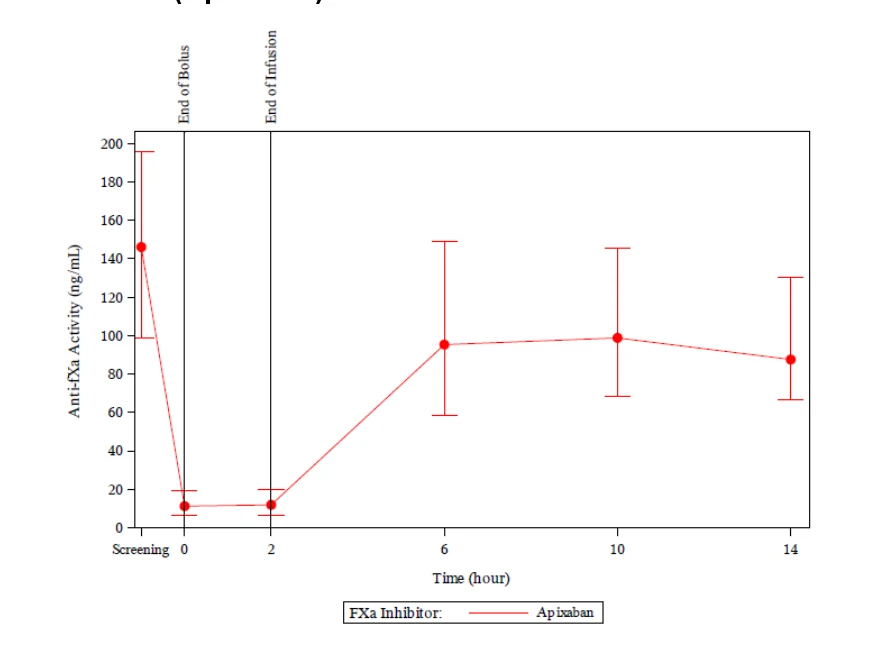
ONDEXXYA resulted in a rapid decrease in anti-FXa activity (within 2 minutes after the completion of the bolus administration) followed by reduced anti-FXa activity that was maintained throughout the duration of the continuous infusion and up to 2 hours after stopping the drug. The time courses of anti-FXa activity in patients with acute major bleeding anticoagulated with apixaban or rivaroxaban before and after ONDEXXYA administration are shown in Figure 2 (A) and (B), respectively.
Table 11 - Change in Anti-FXa Activity (ng/mL) for Patients with Acute Major Bleeding Anticoagulated with Apixaban or Rivaroxaban (Efficacy Population, Study 14-505)
| FXa Inhibitor | N | Median Baseline Anti-FXa Activity (min, max) | Mean Baseline Anti-FXa Activity (SD) | Percent Change in Anti-FXa Activity | |
|---|---|---|---|---|---|
| Mean (SD) | Median (95% CI) | ||||
| Apixaban | 172 | 146.9 (76.5, 950.0) | 173.1 (115.64) | -90.9 (10.24) | -93.3 (-94.2, -92.5) |
| Rivaroxaban | 130 | 213.5 (75.0, 862.4) | 243.2 (139.13) | -86.3 (20.56) | -94.1 (-95.1, -93.0) |
Notes: The Efficacy Population includes all patients who received any amount of ONDEXXYA, met clinical bleeding criteria, and had an anti-FXa level of ≥ 75 ng/mL for apixaban or rivaroxaban. Values > 950 ng/mL were replaced with 950 ng/mL (the upper limit of quantitation).
The on-treatment nadir is the minimum value observed from start of ONDEXXYA administration (30 minutes after bolus) to 30 minutes before EOI.
Abbreviations: CI = confidence interval; EOI = end of infusion; FXa = factor Xa; N = number; SD = standard deviation
Figure 2: Change in Anti FXa Activity (ng/mL) for Patients with Acute Major Bleeding Anticoagulated with Apixaban (A) or Rivaroxaban (B) (Efficacy Population, Study 14-505)
- (A) ANNEXA-4 14-505 (Apixaban)
- (B) ANNEXA-4 14-505 (Rivaroxaban)
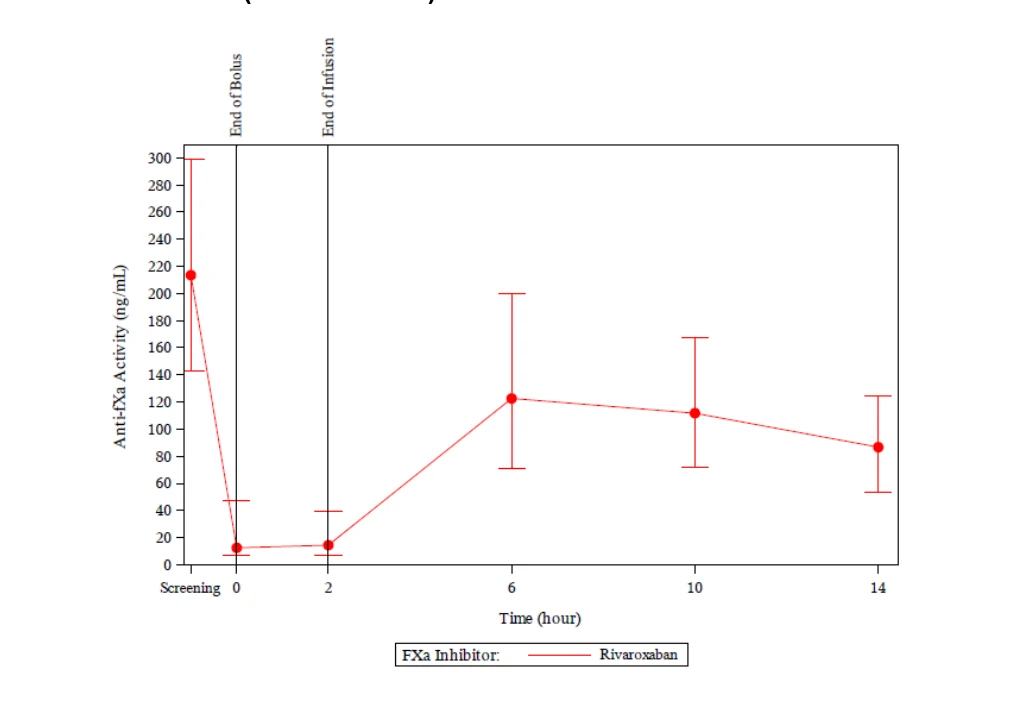
Notes: The Efficacy Population includes all patients who received any amount of ONDEXXYA, met clinical bleeding criteria, and had a baseline anti-FXa level of ≥ 75 ng/mL for both apixaban and rivaroxaban.
Values > 950 ng/mL were replaced with 950 ng/mL (the upper limit of quantitation).
Time course of anti-FXa activity is shown as [median, 25th, 75th percentiles] at each time.
The Screening time point is the baseline for the anti-FXa activity.
Abbreviation: FXa = Factor Xa
For patients treated with apixaban and rivaroxaban, the percent reduction in anti-FXa activity was comparable across bleed types. Median anti-FXa activity percent reductions for apixaban across GI, ICH and other bleeds were 91.5%, 93.7% and 93.0%, respectively and for rivaroxaban, 94.1%, 94.7% and 89.1%, respectively.
Of the 302 apixaban or rivaroxaban-treated patients in the efficacy population, 296 were determined by the endpoint adjudication committee to be evaluable for effective hemostasis. Overall, effective hemostasis was reported for 79.7% of patients on treatment with apixaban or rivaroxaban. Hemostatic efficacy was good or excellent in 79% of 169 patients taking apixaban and in 80% of 127 patients taking rivaroxaban. Rates of effective hemostasis were generally similar in patients with different bleed types: 83.1% (54 of 65) for GI bleeding, 78.8% (167 of 212) for ICH, and 78.9% (15 of 19) for others, and across other pre-specified subgroups.
Of the 477 patients in the safety population, 326 patients received at least one anticoagulation dose within 30 days after treatment with ONDEXXYA, 18 received anticoagulation in response to a thrombotic event, while 308 received the anticoagulation as a prophylactic prior to any thrombotic event. Of the 308 subjects, 15 (4.9%) had an adjudicated thrombotic event after resumption of anticoagulation; while of the 169 subjects who did not receive anticoagulation as a prophylactic, 35 (20.7%) had an adjudicated thrombotic event.
An improvement in hemostasis has not been established in a controlled trial. ONDEXXYA has not been shown to be effective for bleeding related to any FXa inhibitors other than apixaban or rivaroxaban.
15 MICROBIOLOGY
No microbiological information is required for this drug product.
16 NON-CLINICAL TOXICOLOGY
General Toxicology:
The non-clinical safety of andexanet alfa was evaluated in one repeat-dose study in rats and two single and three repeat-dose studies in monkeys. Three different daily dose levels of andexanet alfa were evaluated: 6, 20, and 60 mg/kg/day administered as two equal bolus IV injections separated by 4 hours. Andexanet alfa was well-tolerated in both rats and monkeys in these studies. Testing at the maximum feasible dose did not elicit any serious adverse effects in the presence or absence of FXa inhibitors.
In rats, prothrombin times (PT) were increased by less than 1 second, which was dose-dependent and statistically significant. However, the small increase in PT would not be expected to increase the risk of bleeding if PT prolongation of 1 sec occurred in humans.
Coagulation parameters showed increased levels of D-dimer and TAT in monkeys, both of which were attenuated by co-administration with FXa inhibitors. The increase in these biomarkers of coagulation activity did not correlate with any increase in histopathologically observed intravascular thrombi after andexanet alfa treatment compared to vehicle-treated animals. Cardiovascular evaluation did not elucidate any adverse observation in either of the 2-week monkey studies. Overall, andexanet alfa appears to be well-tolerated at an exposure that is 2-3-fold higher than that achieved with the highest dose intended for human clinical use.
ADA were observed in both rats and monkeys after multiple dose administration. The incidence of ADA formation was dose-related, with a higher incidence at increasing doses of andexanet alfa. The antibodies did not affect the pharmacokinetics of andexanet alfa in rats or monkeys. The formation of ADA in animals is expected and not considered an adverse effect or predictive of human immunogenicity.
Carcinogenicity: No long-term animal studies have been performed to evaluate carcinogenic or mutagenic potential.
Genotoxicity: Genotoxicity studies have not been conducted with andexanet alfa.
Reproductive and Developmental Toxicology: Animal reproductive and developmental studies have not been conducted with andexanet alfa. No animal studies were performed to evaluate the effects of andexanet alfa on impairment of fertility.