


Product Monograph - Inomax (Ino Therapeutics, 800 Ppm, 4880 Ppm)
Recent Major Label Changes
| Section 7 Warnings and Precautions, Cardiovascular, Pulmonary Veno-Occlusive Disease | 2026-04 |
|---|---|
| Section 7 Warnings and Precautions, General | 2026-10 |
Table of Contents
Certain sections or subsections that are not applicable at the time of the preparation of the most recent authorized product monograph are not listed.
Recent Major Label Changes ................................................................................................... 2
Table of Contents ................................................................................................................... 2
Part 1: Healthcare Professional Information ........................................................................... 4
- 1.
Indications ....................................................................................................................... 4
1.1. Pediatrics (term and late-preterm ≥ 34 weeks) ........................................................ 4
1.2. Geriatrics (≥ 65 years of age) .................................................................................... 4
- 2. Contraindications ............................................................................................................ 4
- 4.
Dosage and Administration ............................................................................................. 4
4.2. Recommended Dose and Dosage Adjustment ......................................................... 4
4.2.1. Discontinuing Treatment ...................................................................................... 5
4.4. Administration .......................................................................................................... 5
- 5. Overdose ......................................................................................................................... 7
- 6. Dosage Forms, Strengths, Composition, and Packaging ................................................... 7
- 7.
Warnings and Precautions ............................................................................................... 7
General ................................................................................................................................. 7
Cardiovascular ...................................................................................................................... 8
Hematologic ......................................................................................................................... 9
Respiratory ........................................................................................................................... 9
Laboratory Tests ................................................................................................................. 10
7.1. Special Populations ................................................................................................ 10
7.1.1. Pregnancy ...................................................................................................... 10
7.1.2. Breastfeeding ................................................................................................ 10
7.1.3. Pediatrics ....................................................................................................... 10
- 8.
Adverse Reactions ......................................................................................................... 10
8.2. Clinical Trial Adverse Reactions .............................................................................. 10
8.2.1. Clinical Trial Adverse Reactions – Pediatrics .................................................. 10
8.5. Post-Market Adverse Reactions ............................................................................. 13
- 9.
Drug Interactions ........................................................................................................... 13
9.2. Drug Interactions Overview .................................................................................... 13
9.3. Drug-Behaviour Interactions .................................................................................. 13
9.4. Drug-Drug Interactions ........................................................................................... 13
9.5. Drug-Food Interactions........................................................................................... 13
9.6. Drug-Herb Interactions ........................................................................................... 13
9.7. Drug-Laboratory Test Interactions ......................................................................... 13
- 10.
Clinical Pharmacology ................................................................................................... 14
10.1. Mechanism of Action .............................................................................................. 14
10.2. Pharmacodynamics ................................................................................................ 14
10.3. Pharmacokinetics ................................................................................................... 15
- 11. Storage, Stability, and Disposal ...................................................................................... 17
- 12. Special Handling Instructions ......................................................................................... 17
Part 2: Scientific Information ................................................................................................ 19
- 13. Pharmaceutical Information .......................................................................................... 19
- 14.
Clinical Trials .................................................................................................................. 19
14.1. Clinical Trials by Indication ..................................................................................... 19
- 16. Non-Clinical Toxicology .................................................................................................. 22
Patient Medication Information ........................................................................................... 26
Part 1: Healthcare Professional Information
1. Indications
INOmax, in conjunction with ventilatory support and other appropriate agents, is indicated for:
- the treatment of term and late-pre-term (≥ 34 weeks) neonates with hypoxic respiratory failure associated with clinical or echocardiographic evidence of pulmonary hypertension, where it improves oxygenation and reduces the need for extracorporeal membrane oxygenation.
The safety and effectiveness of INOmax have been established in a population receiving other therapies for hypoxic respiratory failure, including vasodilators, intravenous fluids, bicarbonate therapy, and mechanical ventilation.
In clinical trials, no efficacy has been demonstrated with the use of INOmax in patients with congenital diaphragmatic hernia.
1.1. Pediatrics (term and late-preterm ≥ 34 weeks)
Based on the data submitted and reviewed by Health Canada, the safety and efficacy of INOmax in pediatric patients has been established. Therefore, health Canada has authorized an indication for pediatric use (see 1 Indications).
1.2. Geriatrics (≥ 65 years of age)
No data are available to Health Canada; therefore Health Canada has not authorized an indication for geriatric use.
2. Contraindications
In patients with the rare cardiovascular defect in which the systemic oxygenation is wholly dependent on extra-pulmonary right-to-left shunting, the use of INOmax has the potential to decrease right-to-left blood flow, which, in this condition, is potentially fatal.
4. Dosage and Administration
4.2. Recommended Dose and Dosage Adjustment
The minimum effective dose for the indication has not been optimally identified in randomized clinical trials. The initial dose of INOmax should be as low as possible and in no cases higher than 20 ppm for no more than 4 hours. In cases of failure to respond to INOmax at 4 - 6 hours after starting therapy, further steps should be considered. Between 4 - 24 hours attempts should be made to decrease the dose as quickly as possible to 5 ppm. Treatment with aggressive attempts to lower the dose to 5 ppm, should be maintained until underlying oxygen saturation has resolved but for no more than 96 hours of therapy at which time the neonate should be weaned from INOmax therapy (see 7 Warnings and Precautions, General).
Efficacy and safety of INOmax have not been established beyond 96 hours of use. The duration of therapy is variable, but typically less than four days.
An initial dose of 20 ppm was used in the NINOS and CINRGI trials. In CINRGI, patients whose oxygenation improved with 20 ppm were dose-reduced to 5 ppm as tolerated at the end of 4 hours of treatment. In the NINOS trial, patients whose oxygenation failed to improve on 20 ppm could be increased to 80 ppm, but those patients did not then increase their PaO2 on the higher dose. The risk of methemoglobinemia and elevated NO2 levels increases significantly when INOmax is administered at doses > 20 ppm.
4.2.1. Discontinuing Treatment
The INOmax dose should not be discontinued abruptly as it may result in an increase in pulmonary artery pressure (PAP) and/or worsening of blood oxygenation (PaO2). Deterioration in oxygenation and elevation in PAP may also occur in neonates with no apparent response to INOmax.
Starting as soon as possible and within 4 - 24 hours of therapy, the dose should be weaned to 5 ppm provided that arterial oxygenation is adequate at this lower dose. INOmax therapy should be maintained at 5 ppm until there is improvement in the neonate’s oxygenation such that the FiO2 (fraction of inspired oxygen) < 0.60.
When the decision is made to discontinue INOmax therapy, the dose should be lowered and steps taken to minimize the frequently encountered transient drop in PaO2 noted for 10 to 60 minutes after discontinuation of INOmax. One regimen that accomplished this is to reduce the dose to 1 ppm for 30 to 60 minutes. If there is no change in oxygenation during administration of INOmax at 1 ppm, the FiO2 should be increased by 10%, the INOmax is discontinued, and the neonates monitored closely for signs of hypoxemia. If oxygenation falls > 20%, INOmax therapy should be resumed at 5 ppm and discontinuation of INOmax therapy should be reconsidered after 12 to 24 hours. Infants who cannot be weaned off INOmax by 4 days should undergo careful diagnostic work-up for other diseases.
4.4. Administration
Healthcare professionals involved in the care of patients on INOmax therapy need to be trained by the manufacturer of the nitric oxide delivery system or have support from personnel trained by the manufacturer in the following key elements of nitric oxide delivery:
- 1. theory of device operation.
- 2. delivery system setup including connections to gas cylinders and the breathing circuit.
- 3. pre-use procedures (series of steps and tests to verify that the delivery system is fully functional and ready for safe use).
- 4. gas sensor calibration.
- 5. setting or changing of therapeutic nitric oxide concentration.
- 6. use of backup nitric oxide delivery mode (independent of the main delivery system) to ensure un-interrupted delivery of nitric oxide for inhalation.
- 7. changing gas cylinders and purging the system.
- 8. checking and adjusting alarm settings.
- 9. troubleshooting procedures.
- 10. delivery system maintenance schedule and procedures according to manufacturer specifications.
Prescription and administration of INOmax should be supervised by a physician experienced in neonatal intensive care. Prescription and administration should be limited to those neonatal units that have received adequate training in the use of a nitric oxide delivery system. INOmax should only be delivered according to a neonatologist’s prescription.
INOmax is delivered to the patient via mechanical ventilation after dilution with an oxygen / air mixture using an approved nitric oxide delivery system. The delivery system must provide a constant inhaled INOmax concentration irrespective of the ventilator. With a continuous flow neonatal ventilator, this may be achieved by infusing a low flow of INOmax into the inspiratory limb of the ventilator circuit. Intermittent flow neonatal ventilation may be associated with spikes in nitric oxide concentration. The nitric oxide delivery system for intermittent flow ventilation should be adequate to avoid spikes in nitric oxide concentration.
The inspired INOmax concentration must be measured continuously in the inspiratory limb of the circuit near the patient. The nitrogen dioxide (NO2) concentration and FiO2 must also be measured at the same site using calibrated and approved monitoring equipment. For patient safety, appropriate alerts must be set for INOmax (± 2 ppm of the prescribed dose), NO2 (0.5 ppm), and FiO2 (± 0.05). The INOmax cylinder pressure must be displayed to allow timely cylinder replacement without inadvertent loss of therapy and backup cylinders must be available to provide timely replacement. INOmax therapy must be available for manual ventilation such as suctioning, patient transport, and resuscitation.
In the event of a system failure or a wall-outlet power failure, a backup battery power supply and reserve nitric oxide delivery system should be available. The availability of these back ups will minimize the risk of loss of nitric oxide therapy resulting from failure of the primary nitric oxide administration apparatus. The power supply for the monitoring equipment should be independent of the delivery device function.
In order to minimize the risks of hypoxemia associated with acute interruption of drug therapy and accidental exposure, the device should include provision for attachment of two nitric oxide cylinders which can be used alternately via a manifold, or other means to assure a continuous supply of nitric oxide for normal operation of a primary administration system during replacement of cylinders.
INOmax should be administered with monitoring for PaO2, methemoglobin, and NO2.
INOmax 800 ppm may be administered during magnetic resonance imaging (MRI) if the INOmax DSIR Plus MRI with INOmax MR conditional cylinders are used at 100 gauss or less in a 1.5T or 3.0T magnetic resonance scanner room (see 7 Warnings and Precautions, General).
Monitoring Methemoglobin
Neonates are known to have diminished methemoglobin reductase activity compared to adults. Methemoglobin level should be measured within one hour after initiation of INOmax therapy using an analyzer, which can reliably distinguish between fetal hemoglobin and methemoglobin. Although it is unusual for the methemoglobin level to increase significantly if the first level is low, it is prudent to repeat methemoglobin measurements periodically throughout the treatment period. Methemoglobinemia increases with the dose of nitric oxide. If methemoglobin is > 2.5%, the INOmax dose should be decreased and the administration of reducing agent such as methylene blue may be considered.
Monitoring Nitrogen Dioxide
Immediately prior to each patient initiation, proper procedure must be applied to purge the nitric oxide delivery system of NO2. The NO2 concentration should be maintained as low as possible and always < 0.5 ppm. If the NO2 is > 0.5 ppm, the delivery system should be assessed for malfunction, the NO2 analyzer should be recalibrated, and the INOmax and / or FiO2 should be reduced if possible. If there is an unexpected change in INOmax concentration, the delivery system should be assessed for malfunction and the analyzer should be recalibrated.
5. Overdose
Overdosage with INOmax will be manifest by elevations in methemoglobin and NO2. Elevated NO2 may cause acute lung injury. Elevations in methemoglobinemia reduce the oxygen delivery capacity of the circulation.
Methemoglobinemia that does not resolve after reduction or discontinuation of therapy can be treated with intravenous vitamin C, intravenous methylene blue, or blood transfusion, based upon the clinical situation.
| For the most recent information in the management of a suspected drug overdose, contact your regional poison control centre or Health Canada’s toll-free number, 1-844 POISON-X (1-844-764-7669). |
|---|
- 6. Dosage Forms, Strengths, Composition, and Packaging
Table 1 Dosage Forms, Strengths, and Composition
INOmax (nitric oxide) for inhalation is supplied in aluminum cylinders as a compressed gas under high pressure and is available in the following sizes:
800 ppm
Pressure: 2000 pounds per square inch (psi)
- Size D portable aluminum cylinders containing 353 liters at STP of nitric oxide gas in 800 ppm concentration in nitrogen (delivered volume 344 liters).
- Size 88 aluminum cylinders containing 1963 liters at STP in nitric oxide gas in 800 ppm concentration in nitrogen (delivered volume 1918 liters).
4880™ ppm
Pressure: 3000 psi
- Size 0.4 liter cylinders containing 78 liters at STP of nitric oxide gas in a 4880 ppm concentration in nitrogen (delivered volume 70 liters).
7. Warnings and Precautions
General
Initiate any alternative therapies as soon the infant's condition demands, regardless of the response or lack of response to INOmax (see 4.2 Recommended Dose and Dosage Adjustment).
If it is judged that clinical response is inadequate at 4 - 6 hours after starting INOmax, the following
| Route of Administration | Dosage Form/ Strength/Composition | Non-Medicinal Ingredients |
| inhalation | gas / 800 ppm / nitric oxide (0.08%) | nitrogen (99.92%) |
| inhalation | gas / 4880 ppm / nitric oxide (0.488%) | nitrogen (99.512%) |
should be considered. For patients who are to be referred to another hospital, to prevent worsening of their condition on acute discontinuation of INOmax, the availability of nitric oxide during transport should be assured. Rescue, such as ECMO where available, should be considered based on continued deterioration or failure to improve, defined by local hospital criteria.
The 18 - 24 months follow-up study of NINOS subjects was based on a relatively small number of patients treated with placebo (n = 84) and inhaled nitric oxide (n = 88), and the one-year follow-up data of CINRGI subjects was based on 71 patients in the placebo and 74 patients in the inhaled nitric oxide groups. In view of the potential long-term sequelae associated with the underlying condition, persistent pulmonary hypertension of the newborn, and the unknown long-term effects of INOmax, it is recommended that these babies be monitored long-term regarding pulmonary, neurodevelopmental, growth and auditory outcomes.
Health professionals at neonatal units that administer INOmax should be properly trained (see 4.4 Administration) and familiar with the instructions for use of the nitric oxide delivery system. They should have access to supplier-provided 24 hour / 365 days per year technical support on the delivery and administration of inhaled nitric oxide.
In order to avoid errors in the delivery of nitric oxide, health professionals that administer nitric oxide should ensure that the mode and make of mechanical ventilation being utilized are compatible with the nitric oxide delivery system.
INOmax treatment may be administered during magnetic resonance imaging (MRI). The INOmax DSIR Plus MRI with INOmax MR conditional cylinders may be used at 100 gauss or less in a 1.5 T or 3.0 T magnetic resonance scanner room. Use of any cylinder other than the size 88 aluminum cylinder may create a projectile hazard. The INOmax DSIR Plus MRI is indicated for use only with MR conditional ventilators validated to be compatible as identified in the INOmax DSIR Plus MRI Operations Manual. Consult the INOmax DSIR Plus MRI Operations Manual prior to administering INOmax during MRI testing.
INOmax 4880™ ppm can only be used with the INOmax EVOLVE Delivery System.
Cardiovascular
Left to Right Shunting
Treatment with INOmax might aggravate cardiac insufficiency in a situation with left-to-right shunting. This is due to unwanted pulmonary vasodilation caused by inhaled nitric oxide, resulting in a further increase of already existing pulmonary hyperperfusion. It, therefore, is recommended that prior to the administration of nitric oxide, pulmonary artery catheterization or echocardiographic examination of central hemodynamics be performed.
Rebound Pulmonary Hypertension Syndrome following Abrupt Discontinuation
INOmax should not be discontinued abruptly as it may result in rebound pulmonary hypertension (increase in pulmonary artery pressure and worsening of blood oxygenation). If rebound pulmonary hypertension occurs, reinstate therapy immediately.
Rapid rebound reactions have been described and can precipitate cardiopulmonary collapse, even in patients without substantial oxygenation improvement. The patients should be treated with increased FiO2 and re-installment of therapy with inhaled nitric oxide. When possible, inhaled nitric oxide should be continued until the underlying disease has resolved. Weaning from inhaled nitric oxide should be performed with caution (see 4.2 Recommended Dose and Dosage Adjustment, Discontinuation from Treatment).
Deterioration in oxygenation and elevation in pulmonary artery pressure may also occur in neonate with no apparent response to INOmax. Again, weaning from INOmax should be performed with caution (see 4.2 Recommended Dose and Dosage Adjustment, Discontinuation from Treatment).
Heart Failure
Patients with left ventricular dysfunction treated with inhaled nitric oxide, even for short durations, experienced serious adverse events (e.g., pulmonary edema, increased pulmonary capillary wedge pressure, worsening of left ventricular dysfunction, systemic hypotension, bradycardia and cardiac arrest). Discontinue INOmax while providing symptomatic care.
Pulmonary Veno-Occlusive Disease
Cases of pulmonary edema have been reported with vasodilators, including nitric oxide, when used in patients with pulmonary veno-occlusive disease. Consequently, if signs of pulmonary edema occur when INOmax is administered in patients with pulmonary arterial hypertension, the possibility of pulmonary veno-occlusive disease should be considered.
Hematologic
Methemoglobinemia
Neonates are known to have diminished methemoglobin reductase activity compared to adults and could therefore be at greater risk of developing methemoglobinemia. The concentrations of methemoglobin in the blood should be monitored as nitric oxide for inhalation is absorbed systemically and the end products of nitric oxide that enter the systemic circulation are predominantly methemoglobin and nitrate (see 4.4 Administration, Monitoring, Methemoglobin).
Methemoglobinemia increases with the dose of nitric oxide. If methemoglobin is > 2.5%, the INOmax dose should be decreased and the administration of reducing agent such as methylene blue may be considered. Following discontinuation or reduction of nitric oxide methemoglobin levels should return to baseline over a period of hours. If methemoglobin levels do not resolve after discontinuation or reduction of therapy additional measures may be warranted (see 5 Overdose).
Bleeding Time
Animal models have shown that nitric oxide may interact with homeostasis, resulting in an increased bleeding time. Data in adult humans are conflicting. Inhaled nitric oxide has been found to approximately double bleeding time in a limited study in rabbits and humans. However, there has been no statistically significant increase in bleeding complications in randomized controlled trials in term and late pre-term neonates with hypoxic respiratory failure.
Respiratory
Airway Injury from NO2
NO2 rapidly forms in gas mixtures containing nitric oxide and O2, and nitric oxide may in this way cause airway inflammation and damage. The dose of nitric oxide should be reduced if the concentration of nitrogen dioxide exceeds 0.5 ppm (see 4.4 Administration, Monitoring Nitrogen Dioxide).
In one study, NO2 levels were < 0.5 ppm when neonates were treated with placebo, 5 ppm, and 20 ppm nitric oxide over the first 48 hours. The 80-ppm group had a mean peak NO2 level of 2.6 ppm.
Laboratory Tests
INOmax should be administered with monitoring for PaO2, methemoglobin, and NO2. Methemoglobin levels should be measured within one hour after initiation of INOmax therapy and periodically throughout the treatment period using an analyzer, which can reliably distinguish between fetal hemoglobin and methemoglobin (see 4.4 Administration, Monitoring, Methemoglobin; 4.4 Administration, Monitoring Nitrogen Dioxide).
7.1. Special Populations
7.1.1. Pregnancy
Animal reproduction studies have not been conducted with inhaled nitric oxide. It is not known if INOmax can cause fetal harm when administered to a pregnant woman or can affect reproductive capacity.
Passive exposure to nitric oxide during pregnancy and lactation should be avoided. INOmax is not intended for use in adults.
7.1.2. Breastfeeding
INOmax is not indicated for use in the adult population, including nursing mothers. It is not known whether nitric oxide is excreted in human milk.
7.1.3. Pediatrics
Nitric oxide for inhalation has been studied in a neonatal population up to 14 days of age who were ≥34 weeks gestational age. No information about its effectiveness in other age populations is available. The efficacy and safety of INOmax for neonates less than 34 weeks gestational age has not been established. INOmax is not indicated for neonates less than 34 weeks gestational age.
- 8. Adverse Reactions
8.2. Clinical Trial Adverse Reactions
Clinical trials are conducted under very specific conditions. Therefore, the frequencies of adverse reactions observed in the clinical trials may not reflect frequencies observed in clinical practice and should not be compared to frequencies reported in clinical trials of another drug.
8.2.1. Clinical Trial Adverse Reactions – Pediatrics
The NINOS and CINRGI studies were not powered to detect statistically significant differences with regards to adverse events between the placebo and inhaled nitric oxide treatment groups.
In the NINOS trial, treatment groups were similar with respect to the incidence and severity of intracranial hemorrhage, Grade IV hemorrhage, periventricular leukomalacia, cerebral infarction, seizures requiring anticonvulsant therapy, pulmonary hemorrhage, or gastrointestinal hemorrhage. Table 2 provides a post-hoc analysis of the distribution of selected adverse events in the NINOS trial for the actual-drug-received population (n = 235).
Table 2 Selected adverse events in the NINOS trial*, Actual-Gas-Received Population
Adverse Events
Placebo (n = 116) | iNO (all doses)** (n = 119) | |
|---|---|---|
| Air Leak | 14 (12.1%) | 18 (15.1%) |
| Cerebral or Intracranial Infarct*** | 21 (18.1%) | 21 (17.6%) |
| Seizures Requiring Treatment | 22 (19.0%) | 18 (15.1%) |
| Periventricular Leukomalacia (PVL)*** | 3 (2.6%) | 6 (5.0%) |
| Other CNS Insult | 15 (12.9%) | 11 (9.2%) |
| Pulmonary Hemorrhage*** | 5 (4.3%) | 5 (4.2%) |
| Prolonged Oozing from Heel stick | 9 (7.8%) | 8 (6.7%) |
| GI Bleeding | 1 (0.9%) | 1 (0.8%) |
| New Intraventricular Hemorrhage (IVH)*** | 6 (5.2%) | 5 (4.2%) |
*The NINOS study prospectively planned to collect only adverse events of particular interest; all adverse events were not systematically collected.
**Patients received maximum 20 ppm, or 80 ppm inhaled nitric oxide (iNO) as per the study protocol.
***In a post-hoc analysis, among patients who did not receive ECMO and considering only the 20-ppm dose, there were numerical increases in the following outcomes: cerebral / intracranial infarct, periventricular leukomalacia, pulmonary hemorrhage, and new intraventricular hemorrhage although there are limitations to such post-hoc analyses.
The Table 3 below shows adverse events with an incidence of at least 5% on INOmax in the CINRGI study, and that were more common on INOmax than on placebo.
Table 3 Adverse Events in the CINRGI trial
| Adverse Event | Placebo (n = 89) | iNO (n = 97) |
|---|---|---|
| Hypotension | 9 (10%) | 13 (13%) |
| Withdrawal | 9 (10%) | 12 (12%) |
| Atelectasis | 8 (9%) | 9 (9%) |
| Hematuria | 5 (6%) | 8 (8%) |
| Hyperglycemia | 6 (7%) | 8 (8%) |
| Sepsis | 2 (2%) | 7 (7%) |
| Infection | 3 (3%) | 6 (6%) |
| Stridor | 3 (3%) | 5 (5%) |
| Cellulitis | 0 (0%) | 5 (5%) |
Data from a post-hoc analysis among patients in the CINRGI study who did not receive ECMO (not randomized sample) showed that inhaled nitric oxide patients had numerical increases in the following adverse events: tachycardia, hypokalemia, infection, fever, cellulitis, coagulation disorder, hemorrhage, deafness, and hematuria.
In the NINOS study, doses of inhaled nitric oxide up to 80 ppm and duration of therapy up to 14 days were permitted. Also the delivery devices used in the NINOS study were not able to provide a consistent dose of inhaled nitric oxide, on the other hand, the standardized delivery devices were used in CINRGI study to provide a consistent dose of inhaled nitric oxide. Consequently, 42.9% of patients in the NINOS study (at maximum dose of 20 ppm) exceeded the proposed 0.5 ppm threshold for NO2 while only 9.7% of patients exceeded this threshold in the CINRGI study. Similarly, 26.4% patients in the NINOS study and 3.6% in the CINRGI study exceeded the proposed 2.5% threshold for methemoglobin level. These results indicate the importance of using standard delivery devices for the safe administration of inhaled nitric oxide therapy.
Long-Term Safety
Long-term effects of INOmax were evaluated in a population of preterm neonates for up to 7 years, where 153 subjects received placebo, and 152 subjects received INOmax. No significant treatment differences were observed between the placebo and INOmax groups with respect to survival, growth assessments, physical examination and vital sign measurements, behavioral and neurodevelopmental assessments, hospitalizations, and home oxygen use.
Follow-up exams were performed at 18 - 24 months for the infants enrolled in the NINOS study. In the infants with available follow-up, there were no statistically significant differences between the two treatment groups with respect to their mental, motor, audiologic, visual or neurologic evaluations. Seventy-four and one-half percent (74.5%) of infants in inhaled nitric oxide group and 76.1% in placebo group were classified as neurologically normal. Mental development of the infants, as assessed by the Bayley scale of mental developmental index (MDI) was similar between the treatment groups. However, a post-hoc analysis of adverse events for the actual-gas-received population showed some numerical differences between treatment groups (see Table 4 below).
Table 4 Adverse Events at 18-24 months of follow-up in NINOS subjects, Actual-gas-received population
| Adverse Events | Placebo | iNO (all doses)* |
|---|---|---|
| Gait Disturbance (gait functional, gait device required, and no independent walking) | 15 / 84 (17.9%) | 22 / 88 (25.0%) |
| Cerebral Palsy Present | 8 / 84 (9.5%) | 11 / 88 (12.5%) |
| At Least One Seizure Since Discharge | 12 / 85 (14.1%) | 5 / 88 (5.7%) |
| Sensorineural Loss | 6 / 75 (8.0%) | 8 / 73 (11.0%) |
| Mean Bayley PDI ± STD | 94.4 ± 17.9 | 85.0 ± 21.3 |
| PDI < 50 | 3 / 76 (3.9%) | 11 / 83 (13.3%) |
*Patients received maximum 20 ppm or 80 ppm iNO as per the study protocol
Data from the one-year follow-up of CINRGI study subjects (85% follow-up rate) showed that patients in the inhaled nitric oxide group had a higher percentage of hearing loss (4%) than those in the placebo group (0%). Additionally, patients treated with inhaled nitric oxide had higher percentages of cerebral palsy (4%) than those treated with placebo (1%).
Data from the one-year follow-up of 145 patients of the original 155 infants in the non-pivotal study INO-01/02 showed that 23% of patients in the inhaled nitric oxide group and 14% in placebo group had severe impairment of overall assessment of neurologic status at one year. The patients in this study were treated with three doses of inhaled nitric oxide (5 ppm, 20 ppm, and 80 ppm). However, there was no clear dose-response relationship between the adverse event and the inhaled nitric oxide dose.
The overall 5-year follow-up rate of NINOs and CINRGI study subjects was only 25%. The 5-year follow-up data were based on 43 patients in the placebo group and 55 patients in the inhaled nitric oxide group. Patients treated with inhaled nitric oxide had a significantly higher incidence of gait disturbance at 5-year follow-up (16% in inhaled nitric oxide group versus 2% in placebo group, p = 0.04). Additionally, the percentage of vision problems, recurrent non-febrile seizures was numerically higher among inhaled nitric oxide patients. Due to the 25% follow-up rate, valid conclusions cannot be made.
8.5. Post-Market Adverse Reactions
In addition to adverse events reported from clinical trials, the following adverse drug reactions have been identified in neonates (≤ 1 month of age):
Cardiac Disorders: Bradycardia following abrupt discontinuation of therapy.
Respiratory, Thoracic and Mediastinal Disorders: Hypoxia following abrupt discontinuation of therapy.
Vascular Disorders: Hypotension following abrupt discontinuation of therapy.
Accidental Exposure: Chest discomfort, dizziness, dry throat, dyspnea, and headache have been reported in hospital staff after accidental exposure.
9. Drug Interactions
9.2. Drug Interactions Overview
Experimental studies have suggested that nitric oxide and nitrogen dioxide may react chemically with surfactant and / or surfactant proteins. No formal drug-interaction studies have been performed, and a clinically significant interaction with other medications used in the treatment of hypoxic respiratory failure cannot be excluded based on the available data. In particular, although there are no data to evaluate the possibility nitric oxide donor compounds, including sodium nitroprusside and nitroglycerin, may have an additive effect with INOmax on the risk of developing methemoglobinemia. INOmax has been administered with tolazoline, dopamine, dobutamine, steroids, surfactant, and high-frequency ventilation. INOmax should be used with caution in patients receiving NO donor compounds (e.g., nitroprusside, nitroglycerine, prilocaine, and substances known to increase methemoglobin) because of the potential of methemoglobinemia.
9.3. Drug-Behaviour Interactions
The interaction of INOmax with individual behavioural risks (e.g., cigarette smoking, cannabis use, and / or alcohol consumption) has not been studied.
9.4. Drug-Drug Interactions
No formal interactions with other drugs have been established.
9.5. Drug-Food Interactions
Interactions with food have not been established.
9.6. Drug-Herb Interactions
Interactions with herbal products have not been established.
9.7. Drug-Laboratory Test Interactions
Interactions with laboratory tests have not been established.
10. Clinical Pharmacology
10.1. Mechanism of Action
Nitric oxide is a compound produced by many cells of the body. It relaxes vascular smooth muscle by binding to the heme moiety of cytosolic guanylate cyclase, activating guanylate cyclase and increasing intracellular levels of cyclic guanosine 3’,5’-monophosphate, which then leads to vasodilation. When inhaled, nitric oxide produces selective pulmonary vasodilation. Nitric oxide is very rapidly inactivated by binding to hemoglobin. Thus, delivered via inhalation, nitric oxide improves V / Q matching and is a selective pulmonary vasodilation agent.
10.2. Pharmacodynamics
Inhaled nitric oxide appears to increase the partial pressure of arterial oxygen (PaO2) by dilating pulmonary vessels in better ventilated areas of the lung, redistributing pulmonary blood flow away from lung regions with low ventilation/perfusion (V / Q) ratios toward regions with normal ratios.
Effects on Pulmonary Vascular Tone in PPHN: Persistent pulmonary hypertension of the newborn (PPHN) occurs as a primary developmental defect or as a condition secondary to other diseases such as meconium aspiration syndrome (MAS), pneumonia, sepsis, hyaline membrane disease, congenital diaphragmatic hernia (CDH), and pulmonary hypoplasia. In these states, pulmonary vascular resistance (PVR) is high, which results in hypoxemia secondary to right-to-left shunting of blood through the patent ductus arteriosus and foramen ovale. Inhalation of nitric oxide reduces the oxygenation index (OI = mean airway pressure in cm H2O x fraction of inspired oxygen concentration [FiO2] x 100 divided by systemic arterial concentration in mm Hg [PaO2]) and increases PaO2.
In patients who are ‘responders’ to this therapy in terms of improved arterial oxygen tension during mechanical ventilation, the main pharmacodynamic response to inhaled nitric oxide is typically seen within a few minutes from the start of treatment.
The main effect of inhaled nitric oxide is to relax lung vascular smooth muscle, causing dilation of blood vessels and consequently increased blood flow in the region reached by the compound.
Pharmacodynamics in Neonates
The improvement of arterial oxygen tension in hypoxemic newborns during administration of inhaled nitric oxide is often due to the combined reduction of both extra-pulmonary and intra-pulmonary shunting. The impairment of gas exchange is traditionally estimated by repeated calculations of oxygenation index (OI) in neonates with OI = 100 x (FiO2 x MAP) / PaO2, with MAP = mean airway pressure, FiO2 = fraction of inspired oxygen, PaO2 = post ductal arterial oxygen tension. Historical control suggests that OI > 40 is correlated to 80% mortality and is often used as the threshold value for rescue with ECMO.
Any therapy with a clinically meaningful impact on hypoxemic respiratory failure should thus cause a significant reduction of OI, preferably a sustained reduction below 40, which would indicate establishment of acceptable oxygenation requiring less aggressive ventilator settings. The sponsor conducted a dose finding study in neonatal patients (CTN-NO-93-003), which demonstrated a rapid (within 10 minutes) improvement in arterial oxygenation already at dose at or below 10 ppm in a majority of neonates.
Hemostasis Modifying Agents
Endogenous NO is thought to regulate the platelet cGMP and to have antiaggregatory activity. There is also controversy whether the combination of inhaled NO and other pharmaceutical compounds that have anti-coagulative properties may influence hemostasis synergistically or additively.
In study ICR 013402 randomized volunteers received either placebo inhalation, or 80 ppm inhaled NO, with or without heparin 5 000 E given i.v. at the start of inhalation procedure. In no instance did the combination of inhaled NO + heparin cause a prolonged bleeding time, thus ruling out additive / synergistic effects between inhaled NO and an anti-coagulative agent (heparin).
10.3. Pharmacokinetics
The safety of short-term inhalation of nitric oxide (NO) (40 ppm for 2 hours) in 12 healthy volunteers demonstrated no notable effects on systolic and diastolic blood pressures, heart rate, respiratory rate, or peripheral oxygen saturation. Nor were significant effects on hematologic and chemistry laboratory assessments noted (CTN-NO-93-006). Normal, healthy adult volunteer studies of inhaled nitric oxide at doses of up to 128 ppm, that is greater than any dose used clinically, demonstrate no clinically significant methemoglobinemia. Maximum levels of methemoglobin are achieved after 3 to 5 hours on NO inhalation and pharmacokinetic modeling was performed on the raw data by Ohmeda (RDR 0076). In both healthy subjects and patients with severe heart failure, the metabolism of NO was found to be dependent on the oxygenation of red cell hemoglobin (CTN-NO-93-008). The data indicate that the inactivation of NO occurred in the red blood cells and suggested that oxyhemoglobin acted as an oxygen donor to the NO molecule in its conversion to nitrate. The fraction of NO inactivated vial stoichiometric conversion to nitrate and methemoglobin seemed to be determined by the oxyhemoglobin / hemoglobin ratio in the red blood cells. A study of healthy adult volunteers found that not all the absorbed NO initially forms methemoglobin, but up to approximately 14% of absorbed NO may be converted directly to nitrogen oxides, which have a volume of distribution equal to about one third of body weight and a clearance similar to the glomerular filtration rate. Data for another study in healthy adult men indicated that the conversion of NO into NO3- is a major metabolic pathway for inhaled NO in humans and that over 70% of inhaled NO is excreted as NO3 in the urine.
Pharmacokinetics in Neonates
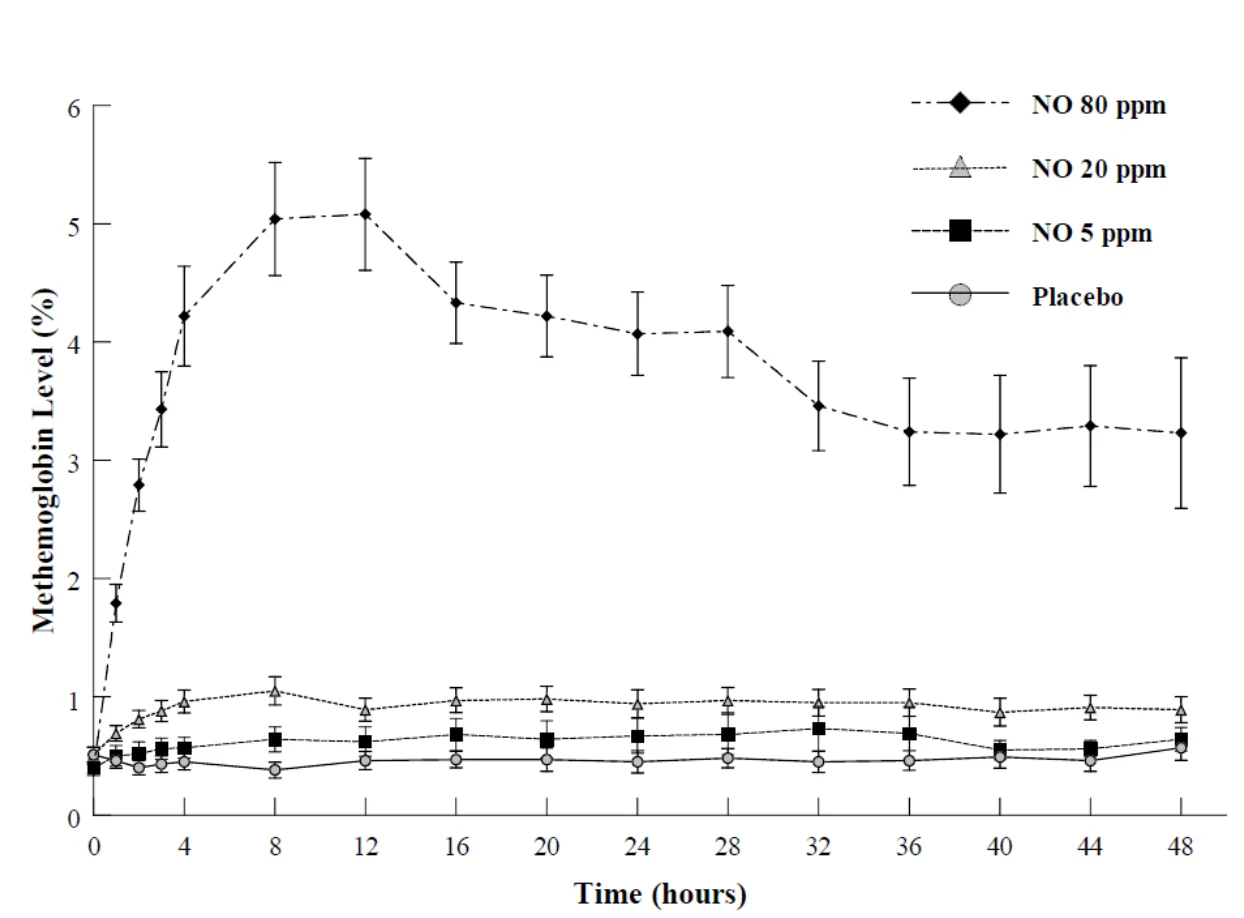
Methemoglobin formation is expected during treatment with inhaled nitric oxide in the proposed dose range and should be dose dependent. Patients not receiving inhaled nitric oxide typically have methemoglobin levels of 0.2 to 1%. The primary problem with elevated methemoglobin is that it reduces the total oxygen-carrying capacity of blood. The acceptable levels for methemoglobin are controversial. Most investigators have used 5 to 10% methemoglobin as the maximum acceptable level.
The mean methemoglobin levels for the Ohmeda INO 01/02 trial are shown in Figure 1. As seen, there is a dose-dependent increase in methemoglobin levels with maximal levels of approximately 5% (the predefined level of methemoglobin at which the inhaled nitric oxide dose was to be reduced) in the 80-ppm inhaled nitric oxide dose group. Doses of 20-ppm or less of inhaled nitric oxide, however, had average values for methemoglobin of approximately 1% or less.
Figure 1 Methemoglobin Levels - Ohmeda INO 01/02 Trial (Mean ± Standard Deviation)
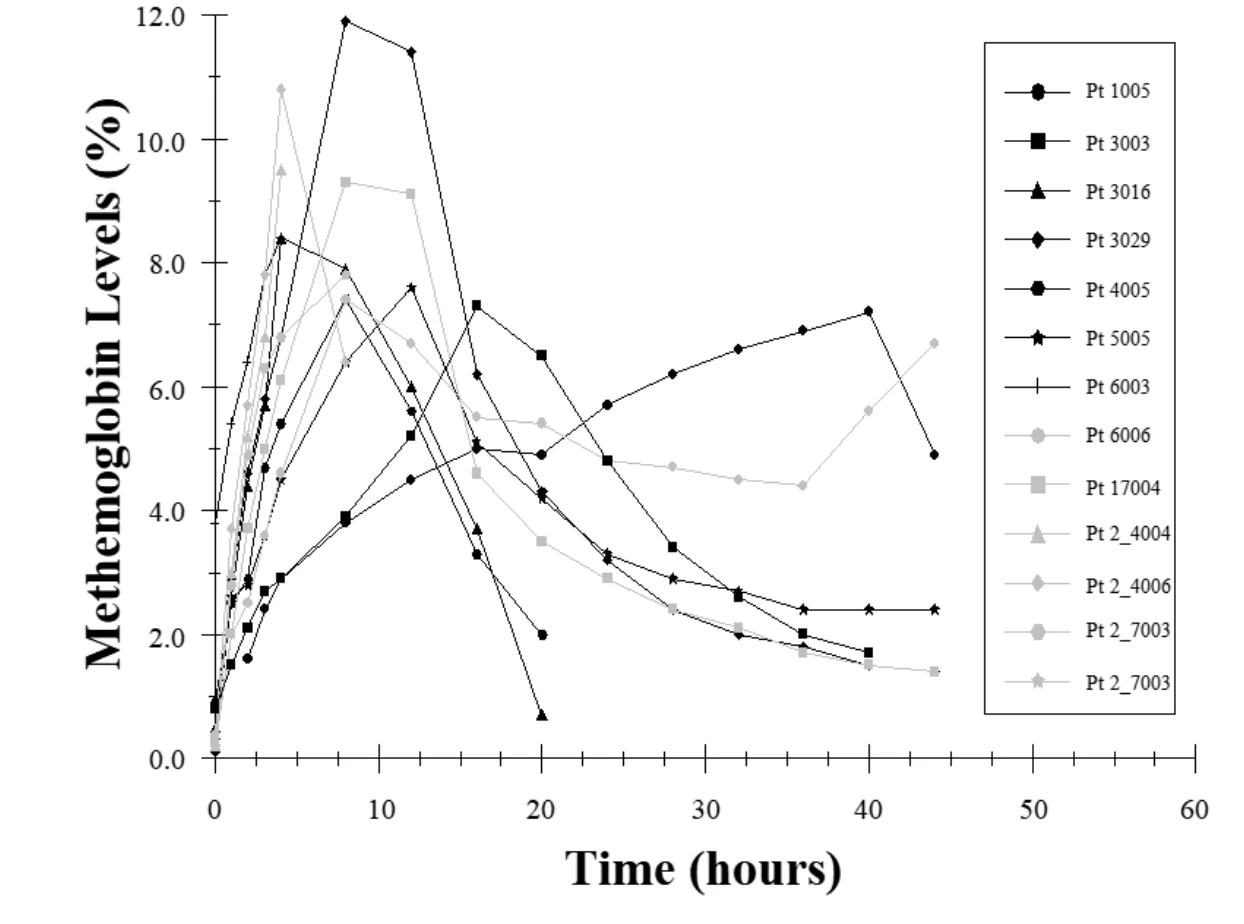
Thirteen of the 37 patients receiving 80-ppm inhaled nitric oxide (35%) in this study developed methemoglobin levels above 7%. The time course for these patients is seen in Figure 2. The mean time to reach their peak level of methemoglobin was 10.5 ± 9.5 hours. Most patients reached this level within the first 18 hours of therapy although one patient did not until 40 hours on inhaled nitric oxide thus emphasizing the need to continue to monitor levels over 48 hours of initiation of therapy. No patient receiving 20-ppm or 5-ppm inhaled nitric oxide in this trial had methemoglobin levels above 7%.
Figure 2 Methemoglobin Levels - Ohmeda INO 01/02 Trial, Patients with Methemoglobinemia
- 11. Storage, Stability, and Disposal
The shelf life of INOmax is 36 months.
Cylinders should be stored at 25°C (77°F) with excursions permitted between 15 - 30°C (59 - 86°F) [see USP controlled room temperature].
Used INOmax cylinders are returned to a pharmaceutical facility authorized by INO Therapeutics.
12. Special Handling Instructions
All regulations concerning handling of pressure vessels must be followed.
Protect the cylinders from shocks, falls, oxidizing and flammable materials, moisture, and sources of heat or ignition.
The installation of a nitric oxide pipeline system with supply station of cylinders, fixed network and terminal units substantially increases the risk of NO2 formation and delivery to patients and is strongly discouraged.
The cylinders should be transported with appropriate material to protect them from risks of shocks and falls.
Use in the magnetic resonance scanner room: INOmax MR conditional cylinders may be used with the INOmax DSIR Plus MRI at 100 gauss or less in a 1.5T or 3.0T magnetic resonance scanner room. Use of any cylinder other than the size 88 aluminum cylinder may create a projectile hazard (see 7 Warnings and Precautions, General).
Occupational Exposure
The upper limit of exposure (mean exposure) to nitric oxide for personnel defined by worker’s legislation is 25 ppm for 8 hours (30 mg / m3) in most countries and the corresponding limit for NO2 is 2 - 3 ppm (4 - 6 mg / m3).
Part 2: Scientific Information
13. Pharmaceutical Information
Drug Substance
Non-proprietary name of the drug substance(s): nitric oxide
Chemical name: nitric oxide, nitrogen II oxide
Molecular formula and molecular mass: NO, 30.01 grams/mol
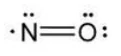
Structural formula:
Physicochemical properties: gas
Product Characteristics:
INOmax is a gaseous blend of nitric oxide and nitrogen.
14. Clinical Trials
14.1. Clinical Trials by Indication
The efficacy of INOmax has been investigated in term and late pre-term newborns with hypoxic respiratory failure, resulting from a variety of aetiologies, who had oxygenation index (OI) measurements of ≥ 25 cm H2O / mm Hg.
In a post-hoc subgroup analysis of data from the NINOS and CINRGI studies, the clinical benefit measured by the receipt of extracorporeal membrane oxygenation (ECMO) was greater for the subgroups of patients who did not meet the study ECMO criteria at study entry (NINOS) or whose baseline OI was less than 40 cm H2O / mm Hg (CINRGI).
NINOS study
The Neonatal Inhaled Nitric Oxide Study (NINOS) group conducted a double-blind, randomized, placebo-controlled, multicenter trial in 235 neonates (≥ 34 weeks gestational age) with hypoxic respiratory failure and OI values of ≥ 25 cm H2O / mm Hg.
The objective of the study was to determine whether inhaled nitric oxide would reduce the occurrence of death and / or initiation of ECMO in a prospectively defined cohort of term or late pre-term neonates with hypoxic respiratory failure unresponsive to conventional therapy. Hypoxic respiratory failure was caused by meconium aspiration syndrome (MAS; 49%), pneumonia / sepsis (21%), idiopathic primary pulmonary hypertension of the newborn (PPHN; 17%), or respiratory distress syndrome (RDS; 11%). Infants up to 14 days of age (mean, 1.7 days) with a mean PaO2 of 46 mm Hg and a mean OI of 43 cm H2O / mm Hg were initially randomized to receive 100% O2 with (n = 114) or without (n = 121) 20 ppm nitric oxide for up to 14 days. Response to study drug was defined as a change from baseline in PaO2 30 minutes after starting treatment (full response = > to 20 mm Hg, partial = 10 - 20 mm Hg, no response = < 10 mm Hg). Neonates with a less than full response were evaluated for a response to 80 ppm nitric oxide or control gas. The primary results for the intent-to treat (ITT) population are presented in Table 5.
Table 5 Summary of Clinical Results from NINOS Study, ITT Population
Control (n = 121) | NO (n = 114) | P value | Absolute rate reduction (%) | Relative rate reduction (%) | |
|---|---|---|---|---|---|
| Death or ECMOa,b | 77 (64%) | 52 (46%) | 0.006 | -18.0 | -28.3 |
| Death | 20 (17%) | 16 (14%) | 0.60 | Not applicable | Not applicable |
| ECMO | 66 (55%) | 44 (39%) | 0.014 | -15.9 | -29.2 |
a Extracorporeal membrane oxygenation
b Death or need for ECMO was the study’s primary endpoint
Although the incidence of death by 120 days of age was similar in both groups (NO, 14%; control, 17%), significantly fewer infants in the nitric oxide group required ECMO compared with controls (39% vs. 55%, p = 0.014). The combined incidence of death and / or initiation of ECMO showed a significant advantage for the nitric oxide treated group (46% vs. 64%, P = 0.006).
The primary efficacy endpoint assessed by the actual gas received was evaluated in a post-hoc analysis and is presented in Table 6.
Table 6 Summary of Clinical Results from NINOS study, Actual-Gas Received Population
Control (n = 116) | NO (n = 119) | P value | Absolute rate reduction (%) | Relative rate reduction (%) | |
|---|---|---|---|---|---|
| Death or ECMOa,b | 72 (62%) | 57 (48%) | 0.036 | -14.2 | -22.8 |
| Death | 18 (16%) | 18 (15%) | 1.000 | Not applicable | Not applicable |
| ECMO | 62 (53%) | 48 (40%) | 0.050 | -13.1 | -24.5 |
a Extracorporeal membrane oxygenation
b Death or need for ECMO was the study’s primary endpoint
The response rate (full response, partial response, no response) to 20 ppm of inhaled nitric oxide for the actual gas received population was also determined in a post-hoc analysis and is presented in Table 7.
Table 7 Response Rate to Study Gas, Actual-Gas Received Population
| Response | Placebo (n = 112) | NO (n = 117) |
|---|---|---|
| Full (>20 torr increase in PaO2 30 minutes) | 16 (14.3%) | 58 (49.6%) |
| Partial (10-20 torr increase in PaO2 30 minutes) | 13 (11.6%) | 17 (14.5%) |
| No (< 10 torr increase in PaO2 30 minutes) | 83 (74.1%) | 42 (35.9%) |
Data also showed that only 5.5% of neonates who did not respond or partially responded to the inhaled nitric oxide therapy at a 20 ppm dose were converted to full response with 80 ppm inhaled nitric oxide, indicating no additional benefit of inhaled nitric oxide at 80 ppm. These findings are consistent with conclusions from the original ITT population.
The rate of death or receipt of ECMO was assessed in a post-hoc analysis of the actual-gas-received population by initial response to 20 ppm inhaled nitric oxide, and is presented in Table 8.
Table 8 ECMO Receipt by Initial Response Status, Actual-Gas-Received Population
| Response | Rate of Death or ECMO | |||||||||||
|---|---|---|---|---|---|---|---|---|---|---|---|---|
Placebo (n = 112) | NO (n = 117) | P Value* | Absolute rate reduction (%) | Relative rate reduction (%) | ||||||||
| Fully responded in the first 30 minutes** | 8 / 16 (50%) | 15 / 58 (25.9%) | 0.076 | -24.1 | -48.2 | |||||||
| Partial or no response in the first 30 minutes | 63 / 96 (65.6%) | 40 / 59 (67.8%) | 0.862 | 2.2 | 3.4 | |||||||
* p-value from Fisher’s 2-tailed exact test
** full response was defined at ≥ 20 mm Hg increase in PaO2 after 30 minutes of gas treatment
These results showed that the rate of death or receipt of ECMO between treatment groups differed according to the initial response to 20 ppm inhaled nitric oxide, indicating that patients who initially did not fully respond to inhaled nitric oxide therapy in the first 30 minutes of treatment did not benefit significantly from the therapy.
The nitric oxide group had significantly greater increases in PaO2 and greater decreases in the OI and the alveolar-arterial oxygen gradient than the control group (p < 0.001 for all parameters).
No infant had study drug discontinued for toxicity. Inhaled nitric oxide had no detectable effect on mortality. The adverse events collected in the NINOS trial occurred at similar incidence rates in both treatment groups (see 8 Adverse Reactions).
CINRGI study
This study was a double-blind, randomized, placebo-controlled, multicenter trial of 186 term and late pre-term neonates (≥ 34 weeks gestational age) with pulmonary hypertension and hypoxic respiratory failure, with OI values of ≥ 25 cm H2O / mm Hg. The primary objective of the study was to determine whether INOmax would reduce the receipt of ECMO in these patients. Hypoxic respiratory failure was caused by MAS (35%), idiopathic PPHN (30%), pneumonia / sepsis (24%), or RDS (8%). Patients with a mean PaO2 of 54 mm Hg and a mean OI of 44 cm H2O / mm Hg were randomly assigned to receive either 20 ppm INOmax (n = 97) or nitrogen gas (placebo; n = 89) in addition to their ventilatory support. Patients who exhibited a PaO2 > 60 mm Hg and a pH < 7.55 were weaned to 5 ppm INOmax or placebo. The maximum duration of INOmax therapy was 96 hours. The primary results from the CINRGI study are presented in Table 9.
Table 9 Summary of Clinical Results from CINRGI Study
| Placebo | INOmax | P value | Absolute rate reduction (%) | Relative rate reduction (%) | |
|---|---|---|---|---|---|
| ECMO a,b | 51 / 89 (57%) | 30 / 97 (31%) | < 0.001 | -26.4 | -46.0 |
| Death | 5 / 89 (6%) | 3 / 97 (3%) | 0.48 | Not applicable | Not applicable |
a Extracorporeal membrane oxygenation
b ECMO was the primary endpoint of the study
Significantly fewer neonates in the INOmax group required ECMO compared to the control group (31% vs. 57%, p < 0.001). While the number of deaths were similar in both groups (INOmax, 3%; placebo, 6%), the combined incidence of death and / or receipt of ECMO was decreased in the INOmax group (33% vs. 58%, p < 0.001).
In addition, the INOmax group had significantly improved oxygenation as measured by PaO2, OI, and alveolar-arterial gradient (p < 0.001 for all parameters). Of the 97 patients treated with INOmax, 2 (2%) were withdrawn from study drug due to methemoglobin levels > 4%. The frequency and number of adverse events reported were similar in the two study groups (see 8 Adverse Reactions).
16. Non-Clinical Toxicology
General Toxicity
The preclinical safety profile of nitric oxide was assessed in rats in repeat dose inhalation studies up to 2 years in duration. Table 10 provides details of Repeated Dose Toxicology.
Inhalation exposures of F344 rats to 20, 10, or 5 ppm NO for 20 hr / day for up to 2 years were examined. The results of this study indicate that there was no evidence of a toxic effect on the respiratory tract or other organs as determined using clinical and ophthalmoscopic observations, examination of tissues at necropsy, organ and body weight changes, clinical pathology, and histopathologic examination of tissues.
From a study in dogs, it can be deduced that the lethal concentration is around 640 ppm nitric oxide for 4 hours, whereas exposures of 320 ppm nitric oxide are non-lethal (Study SC940065).
Table 10 Repeat Dose (Long-Term) Toxicology
| Reports | Species & Test System | Dose / Concentratio n | Study Type & Duration | Comments |
| Reports | Species & Test System | Dose / Concentratio n | Study Type & Duration | Comments |
SC940063 Seven-day range-finding study of Nitric Oxide (NO) in the rat via inhalation. | Sprague-Dawley rats | 0, 80, 200, 300, 400, 500 ppm NO in air | Nose-only inhalation exposures for 6 hrs / day for up to 7 days | No adverse effects below 200 ppm; dose-related increases in metheme above 200 ppm. Histotoxic anoxia due to metheme leading to lethality above 200 ppm. |
RDR-0149 DS Seven-day range-finding study of Nitric Oxide (NO) in the rat via inhalation Supplement Report | Sprague-Dawley rats | 0, 200, NO in air, with 2.2 ppm NO2 in 200 ppm NO group | Report of evaluation of respiratory tract at the level of electron- microscopy from animals exposed for 1 or 7 days | Moderate increase of interstitial edema after 1-day, Slight increase after 7 days. Findings consistent with NO2 exposure |
SC940064 28-day exposure with recovery of nitric oxide (NO) in the rat via inhalation. | Sprague-Dawley rats | 0, 40, 80, 160, 200, 250 ppm NO in air with up to 3.5 ppm NO2 in 250 ppm NO group | Nose-only inhalation exposures for 6 hrs / day for 28 days, with 28-day recovery groups | Exposure-system related elevated dosing excursion (32% on day 14 to 15); lethality at 200 ppm (n = 1) and 250 (n = 17); dose-related increase in metheme from 160 ppm; metheme levels consistent at 7, 14, 21, 28 days; no systemic histopathologic nor hematologic changes |
RDR-0150-DS 28-day exposure with recovery of nitric oxide (NO) in the rat via inhalation. Supplement report: | Sprague-Dawley rats | 0, 200, NO in air, with 2.6 ppm NO2 in 200 ppm NO group | Report of evaluation of respiratory tract at the level of electron- microscopy from animals exposed for 28 days | Slight ultrastructural changes of ciliated respiratory, type 2 alveolar, and clara cells consistent with NO2 exposure. |
Genotoxicity
Nitric oxide has demonstrated genotoxicity in some bacterial strains used in the Salmonella (Ames Test), the mouse lymphoma test, Chinese hamster ovary cell test, in vivo exposure in rats, and human lymphocytes.
Table 11 Mutagenicity studies
| Reports | Category and Test System | Dose / Concentration | Study Type & Duration | Comments |
| Reports | Category and Test System | Dose / Concentration | Study Type & Duration | Comments |
1303/001-1052: Nitric Oxide: Reverse mutation in histidine-requiring strains of Salmonella typhimurium and tryptophan-requiring strains of Escherichia coli. | In vitro / Salmonella typhimurium (TA 98, TA 00, TA 1535, TA 1537) and E. coli (WP2plcM 101, WP2uvrApKM101); with and without S-9 activation | Up to 5,000 ppm NO under continuous flow; ~1 ppm NO2 | Reverse mutation in bacteria | No toxicity |
1303/007-1052 Nitrogen dioxide: Reverse mutation in two histidine-requiring strains of Salmonella typhimurium. | In vitro / Salmonella typhimurium (TA 100, TA 1535) with and w / out S-9 activation | Up to 40 ppm NO2 | Reverse mutation in bacteria | Mutagenic with and without S-9 activation from 10 ppm NO2 |
1303/002-1052 Nitric oxide: Mutation at the thymidine kinase (tk) locus of mouse lymphoma L5178Y cells using the microtitre- fluctuation technique. | In vitro mammalian cell culture (mouse lymphoma- L5178Y cells) using a liquid medium exposure | Up to 2450 ppm NO in nitrogen | Mutation of thymidine kinase locus in cultured mouse cells | Mutagenic above 125 ppm |
1303/5-1052 Nitric oxide: Induction of chromosome aberrations in cultured Chinese hamster ovary (CHO) cells. | In vitro chromosome aberration in cultured Chinese hamster ovary cells (CHO) | Flow thru system with up to 1800 ppm NO in nitrogen | Mitotic inhibition and chromosomal aberration | 1650 ppm NO yielded mitotic inhibition of 52% and increase in structural damage to chromosomes. |
1303/4-1052 Nitric oxide: Induction of chromosome aberrations in the peripheral blood lymphocytes of human volunteers after exposure in vivo. | In vivo human exposures | 40 ppm NO in 30% O2 for 2 hrs | Metaphase analysis | No evidence of chromosomal damage |
| Nguyen et al, 1992. DNA damage and mutation in human cells exposed to nitric oxide in vitro. Proc Natl Acad Sci USA 1992;89:3030-3034. | TK6 human lymphoblasts | 0.125, 0.25, 0.375 ml NO gas/ml culture medium for 1 h | Mutation at HPRT and TK locus | Positive mutagenesis and single-strand DNA breaks |
Carcinogenicity
Table 12 Chronic Toxicity and Carcinogenicity Study
| Reports | Species & Test System | Dose/ Concentration | Study Type & Duration | Comments |
N005243 Chronic Toxicity and Carcinogenicity Study of Nitric Oxide in Male and Female Rats | F344 Rats | 0, 5, 20, and 20 ppm NO in air | Whole-body inhalation exposures for 20 hr / day for up to 2 years | Not carcinogenic |
Reproductive and developmental toxicology
There are no reproductive animal studies or human studies to evaluate nitric oxide for effects on fertility or harm to the developing fetus.
Juvenile toxicity
Age-specific nitric oxide-induced toxicity-induced toxicity has not been determined, as juvenile animal toxicity studies were not conducted.