


Product Monograph - Inpefa
Recent Major Label Changes
| None at time of the most recent authorization |
|---|
Table of Contents
Sections or subsections that are not applicable at the time of authorization are not listed.
Recent Major Label Changes ................................................................................................... 2
Table of Contents ................................................................................................................... 2
Part 1: Healthcare Professional Information ........................................................................... 5
- 1.
Indications ....................................................................................................................... 5
1.1. Pediatrics .................................................................................................................. 5
1.2. Geriatrics .................................................................................................................. 5
- 2. Contraindications ............................................................................................................ 5
- 3. Serious Warnings and Precautions Box ............................................................................ 6
- 4.
Dosage and Administration ............................................................................................. 6
4.1. Dosing Considerations .............................................................................................. 6
4.2. Recommended Dose and Dosage Adjustment ......................................................... 7
4.4. Administration .......................................................................................................... 7
4.5. Missed Dose ............................................................................................................. 8
- 5. Overdose ......................................................................................................................... 8
- 6. Dosage Forms, Strengths, Composition, and Packaging ................................................... 8
- 7.
Warnings and Precautions ............................................................................................... 9
Cardiovascular ...................................................................................................................... 9
Driving and Operating Machinery ......................................................................................... 9
Endocrine and Metabolism ................................................................................................... 9
Hypoglycemia ..................................................................................................................... 10
Genitourinary ..................................................................................................................... 10
Hepatic/Biliary/Pancreatic .................................................................................................. 11
Immune .............................................................................................................................. 11
Monitoring and Laboratory Tests ....................................................................................... 11
Peri-Operative Considerations ............................................................................................ 12
Renal ................................................................................................................................... 12
Reproductive Health ........................................................................................................... 12
7.1. Special Populations ................................................................................................ 13
7.1.1. Pregnancy ...................................................................................................... 13
7.1.2. Breastfeeding ...................................................................................................... 13
7.1.3. Pediatrics ............................................................................................................. 13
7.1.4. Geriatrics ............................................................................................................. 13
- 8.
Adverse Reactions ......................................................................................................... 14
8.1. Adverse Reaction Overview .................................................................................... 14
8.2. Clinical Trial Adverse Reactions .............................................................................. 14
8.3. Less Common Clinical Trial Adverse Reactions ....................................................... 18
8.4. Abnormal Laboratory Findings: Hematologic, Clinical Chemistry, and Other Quantitative Data ............................................................................................................... 18
8.5. Post-Market Adverse Reactions ............................................................................. 19
- 9.
Drug Interactions ........................................................................................................... 19
9.2. Drug Interactions Overview .................................................................................... 19
9.3. Drug-Behaviour Interactions .................................................................................. 20
9.4. Drug-Drug Interactions ........................................................................................... 20
9.5. Drug-Food Interactions........................................................................................... 23
9.6. Drug-Herb Interactions ........................................................................................... 23
9.7. Drug-Laboratory Test Interactions ......................................................................... 23
- 10.
Clinical Pharmacology ................................................................................................... 23
10.1. Mechanism of Action .............................................................................................. 23
10.2. Pharmacodynamics ................................................................................................ 24
10.3. Pharmacokinetics ................................................................................................... 24
- 11. Storage, Stability, and Disposal ...................................................................................... 27
Part 2: Scientific Information ................................................................................................ 28
- 13. Pharmaceutical Information .......................................................................................... 28
- 14.
Clinical Trials .................................................................................................................. 28
14.1. Clinical Trials by Indication ..................................................................................... 28
Heart Failure.................................................................................................................. 28
- 15. Microbiology ................................................................................................................. 39
- 16. Non-Clinical Toxicology .................................................................................................. 39
Patient Medication Information ........................................................................................... 41
Part 1: Healthcare Professional Information
1. Indications
INPEFA (sotagliflozin) is indicated for the treatment of heart failure with other standard of care therapies in adults with type 2 diabetes and decompensated heart failure who have been clinically stabilized.
INPEFA is indicated as an adjunct to standard of care therapy to reduce total heart failure events (cardiovascular death, heart failure hospitalization, urgent heart failure visits) in adults with type 2 diabetes mellitus, chronic kidney disease and at least one additional cardiovascular risk factor.
Limitations of Use: INPEFA is not recommended for the emergency treatment of acute heart failure prior to hemodynamic stabilization. INPEFA is not indicated for glycemic control.
1.1. Pediatrics
Pediatrics (< 18 Years of age): The safety and efficacy of INPEFA in pediatric patients has not been established; therefore, Health Canada has not authorized an indication for pediatric use.
1.2. Geriatrics
Geriatrics (> 65 years of age): No dosage adjustment is recommended in elderly patients.
In patients 65 years and older, an increased risk for volume depletion should be taken into account (see 7 Warnings and Precautions and 8 Adverse Reactions).
In the SOLOIST study, a total of 241 (40%) patients treated with INPEFA were between 65 and < 75 years of age, and 174 (29%) were ≥ 75 years of age. In the SCORED study, a total of 2470 (47%) patients treated with INPEFA were between 65 and < 75 years of age, and 1240 (23%) were ≥ 75 years of age.
No overall differences in efficacy were detected between these patients and younger patients but greater sensitivity of some older individuals cannot be ruled out.
2. Contraindications
- INPEFA is contraindicated in patients who are hypersensitive to this drug or to any ingredient in the formulation, including any non-medicinal ingredient, or component of the container. For a complete listing, see 6 Dosage Forms, Strengths, Composition and Packaging.
3. Serious Warnings and Precautions Box
Ketoacidosis
|
|---|
4. Dosage and Administration
4.1. Dosing Considerations
Prior to Initiation of INPEFA:
- Assess volume status and, if necessary, correct volume depletion (see 7 Warnings and Precautions).
- Assess renal function prior to initiation and periodically thereafter, as clinically indicated, to limit the risk of volume depletion (see 7 Warnings and Precautions).
- For patients with decompensated heart failure, dosing may begin as soon as the patient is hemodynamically stable, including during hospitalization or urgent outpatient treatment or immediately upon discharge.
- Advise patients taking insulin or a sulfonylurea to monitor symptoms of hypoglycemia, especially when initiating, up-titrating or re-initiating INPEFA after a temporary interruption. Adjust co-medications as necessary to limit severe hypoglycemia.
Temporary Interruption for Surgery: Withhold INPEFA at least 3 days, if possible, prior to major surgery or procedures associated with prolonged fasting. Resume INPEFA treatment when the patient is clinically stable and has resumed oral intake (see 7 Warnings and Precautions).
Temporary Interruption during Intercurrent Events: Consider temporarily stopping or advising the patient to temporarily stop INPEFA during episodes of acute volume depletion, severe gastrointestinal illness, acute deterioration of renal function, or fasting.
4.2. Recommended Dose and Dosage Adjustment
The recommended starting dose of INPEFA is 200 mg orally once daily not more than one hour before the first meal of the day.
Up-titrate after at least 4 weeks to a maximum of 400 mg orally once daily as tolerated (see 14 Clinical Trials ).
Down-titrate to 200 mg as necessary based on patient’s tolerability (see 8 Adverse Reactions, 14 Clinical Trials ).
Special Populations
Pediatric patients
The safety and efficacy of sotagliflozin in children and adolescents has not yet been established. Health Canada has not authorized an indication for pediatric use.
Geriatric patients
No dosage adjustment is recommended in elderly patients. However, in patients 65 years and older, the increased risk for volume depletion should be considered, particularly during treatment initiation and dose titration. Monitoring of volume status and review of concomitant medications may be warranted, and dose titration should be guided by individual tolerability (see 7 Warnings and Precautions and 8 Adverse Reactions).
Renal impairment
Assessment of renal function is recommended prior to initiation of INPEFA and as clinically indicated.
Volume depletion should be assessed and corrected prior to initiation. Concomitant diuretic therapy, particularly loop diuretics, should be reviewed before initiation and concomitant therapy, blood pressure, renal function and electrolytes should be monitored during INPEFA titration and as clinically appropriate thereafter (see 7 Warnings and Precautions, 8 Adverse Reactions).
Available safety and efficacy data in patients with eGFR < 25 mL/min/1.73m² are generally consistent with those in patients with higher eGFR, although patient numbers are limited. Closer monitoring of renal function, volume status, and tolerability is recommended, particularly during treatment initiation and dose titration (see 7 Warnings and Precautions).
Hepatic impairment
No dosage adjustment is recommended in patients with mild hepatic impairment. The safety and efficacy has not been established in patients with moderate or severe hepatic impairment. INPEFA is not recommended in patients with moderate or severe hepatic impairment (see 10.3 Pharmacokinetics, Special populations – Hepatic Insufficiency).
4.4. Administration
INPEFA should be taken once daily not more than one hour before the first meal of the day.
Swallow tablets whole. Do not cut, crush, or chew tablets.
4.5. Missed Dose
If a dose of INPEFA is missed by more than 6 hours, take the next dose as prescribed the next day. Advise patient not to take two doses of INPEFA on the same day.
5. Overdose
There were no confirmed reports of symptomatic overdose with sotagliflozin during the clinical development program of INPEFA. In the event of an overdose, contact the poison control center. Employ the usual supportive measures dictated by the patient's clinical status.
The effective removal of sotagliflozin by hemodialysis to manage overdose is unknown. In participants with end-stage renal disease receiving hemodialysis, administration of 400 mg sotagliflozin 2 hours before the start of hemodialysis resulted in 38% higher sotagliflozin exposure compared with administration 1 hour after completion of hemodialysis, suggesting that sotagliflozin may not be dialysable to a clinically meaningful extent.
| For the most recent information in the management of a suspected drug overdose, contact your regional poison control centre or Health Canada’s toll-free number, 1-844 POISON-X (1-844-764-7669). |
|---|
- 6. Dosage Forms, Strengths, Composition, and Packaging
Table 1 – Dosage Forms, Strengths, and Composition
| Route of Administration | Dosage Form/ Strength/Composition | Non-Medicinal Ingredients |
| Oral | Film coated Tablet, 200 mg sotagliflozin | Tablet core: colloidal silicon dioxide, croscarmellose sodium, magnesium stearate, microcrystalline cellulose, talc. Film-coating: FD&C Blue #2 indigo carmine aluminum lake (E132), macrogol 4000, polyvinyl alcohol (partly hydrolyzed), talc, titanium dioxide (E 171) |
| Oral | Film coated Tablet, 400 mg sotagliflozin | Tablet core: colloidal silicon dioxide, croscarmellose sodium, magnesium stearate, microcrystalline cellulose, talc. Film-coating: Hypromellose, Lactose Monohydrate, titanium dioxide (E 171), triacetin, Yellow Iron Oxide |
Description
INPEFA 200 mg is available as an oval, blue, film-coated, oval shaped tablet, debossed with “LEX” on one side, and “200” on the other side.
INPEFA 400 mg is available as an oval, yellow, film-coated, oval shaped tablet, debossed with “LEX” on one side, and “400” on the other side.
Packaging
INPEFA 200 mg: Bottles of 30; blisters of 30 (10x3); Physician’s blister pack of 7
INPEFA 400 mg: Bottles of 30; blisters of 30 (10x3); Physician’s blister pack of 7
7. Warnings and Precautions
See 3 Serious Warnings and Precautions Box.
Cardiovascular
Hypotension and Volume Depletion
INPEFA can cause intravascular volume depletion which may sometimes manifest as symptomatic hypotension or acute transient changes in creatinine. Cases of acute kidney injury, some requiring hospitalization and dialysis, have been reported in patients with type 2 diabetes mellitus receiving SGLT2 inhibitors. Patients with impaired renal function (eGFR < 60 mL/min/1.73m2), elderly patients, or patients on loop diuretics may be at increased risk for volume depletion or hypotension. Before initiating INPEFA in patients with one or more of these characteristics, assess volume status and renal function. Monitor for signs and symptoms of hypotension, and renal function after initiating therapy.
Driving and Operating Machinery
INPEFA may cause hypoglycemia and dizziness. While taking INPEFA, patients should be cautioned not to drive, operate dangerous machinery or engage in activities that require alertness or physical coordination until they know how INPEFA affects them.
Endocrine and Metabolism
Diabetic and Other Ketoacidosis
In patients with type 1 diabetes mellitus, INPEFA significantly increases the risk of diabetic ketoacidosis, a life-threatening event, beyond the background rate. In placebo-controlled trials of patients with type 1 diabetes mellitus, the risk of ketoacidosis was markedly increased in patients who received SGLT2 inhibitors compared to patients who received placebo; this risk may be greater with higher doses of INPEFA. INPEFA is not indicated for glycemic control.
Type 2 diabetes mellitus (T2DM) and pancreatic disorders (e.g., history of pancreatitis or pancreatic surgery) are also risk factors for ketoacidosis. There have been postmarketing reports of fatal events of ketoacidosis in patients with T2DM using SGLT2 inhibitors.
Precipitating conditions for diabetic ketoacidosis or other ketoacidosis include acute febrile illness, reduced caloric intake, ketogenic diet, surgery, insulin dose reduction, volume depletion, and alcohol abuse.
Signs and symptoms are consistent with dehydration and severe metabolic acidosis and include nausea, vomiting, abdominal pain, generalized malaise, and shortness of breath. Blood glucose levels at presentation may be below those typically expected for diabetic ketoacidosis (e.g., less than 13.9 mmol/L). Ketoacidosis and glucosuria may persist longer than typically expected.
Urinary glucose excretion persists for 3 days after discontinuing INPEFA; however, there have been postmarketing reports of ketoacidosis and glucosuria lasting greater than 6 days and some up to 2 weeks after discontinuation of SGLT2 inhibitors.
Consider ketone monitoring in patients at risk for ketoacidosis if indicated by the clinical situation. Assess for ketoacidosis regardless of presenting blood glucose levels in patients who present with signs and symptoms consistent with severe metabolic acidosis. Blood ketone testing is preferred over urine testing. If ketoacidosis is suspected, discontinue INPEFA, promptly evaluate, and treat ketoacidosis, if confirmed. Monitor patients for resolution of ketoacidosis before restarting INPEFA.
Withhold INPEFA, if possible, in temporary clinical situations that could predispose patients to ketoacidosis (e.g., prolonged fasting due to acute illness or prior to and following surgery). Resume INPEFA when the patient is clinically stable and has resumed oral intake (see 4 Dosage and Administration).
Educate all patients on the signs and symptoms of ketoacidosis and instruct patients to discontinue INPEFA and seek medical attention immediately if signs and symptoms occur.
Hypoglycemia
Treatment with INPEFA may increase the risk of hypoglycemia (see 8 Adverse Reactions), particularly when used in combination with insulin or an insulin secretagogue. Consider reducing the dose of insulin or the insulin secretagogue to minimize the risk of hypoglycemia when administered concomitantly with INPEFA (see 4 Dosage and Administration). Advise patients of the signs and symptoms of hypoglycemia and monitor as clinically appropriate.
Genitourinary
Genital mycotic infections
Treatment with INPEFA increases the risk of genital mycotic infections, particularly for patients with a history of genital mycotic infections (see 8 Adverse Reactions). Monitor patients for signs and symptoms of genital mycotic infections and initiate treatment as clinically indicated.
Urosepsis and Pyelonephritis
Treatment with SGLT2 inhibitors, including INPEFA, increases the risk for urinary tract infections. Serious urinary tract infections including urosepsis and pyelonephritis requiring hospitalization have been reported. Evaluate patients for signs and symptoms of urinary tract infections and treat promptly, if indicated (see 8 Adverse Reactions).
Necrotizing Fasciitis of the Perineum (Fournier’s Gangrene)
Reports of necrotizing fasciitis of the perineum (Fournier’s Gangrene), a rare but serious and life-threatening necrotizing infection requiring urgent surgical intervention, have been reported in patients with diabetes mellitus receiving SGLT2 inhibitors. Cases have been reported in both females and males. Serious outcomes have included hospitalization, multiple surgeries, and death (see 8.3. Less Common Clinical Trial Adverse Reactions).
Patients treated with INPEFA presenting with pain, tenderness, erythema, or swelling in the genital or perineal area, along with fever or malaise, should be assessed for necrotizing fasciitis. If suspected, start treatment immediately with broad-spectrum antibiotics and, if necessary, surgical debridement. Discontinue INPEFA, closely monitor blood glucose levels, and provide appropriate alternative therapy for heart failure.
Hepatic/Biliary/Pancreatic
Hepatic Impairment
In a clinical pharmacology study in patients with hepatic impairment, the exposure in mild hepatic impairment was not increased, but was approximately 3-fold as high in moderate and approximately 6-fold as high in severely hepatic-impaired subjects compared to subjects with normal hepatic function (see 10 Clinical Pharmacology).
No dosage adjustment is necessary in patients with mild hepatic impairment.
The safety and efficacy of INPEFA have not been established in patients with moderate or severe hepatic impairment (see 10 Clinical Pharmacology). INPEFA is not recommended in patients with moderate or severe hepatic impairment.
Immune
Hypersensitivity Reactions
INPEFA is contraindicated in patients with a history of hypersensitivity reaction to the active substance or to any of the excipients (see 2 Contraindications).
Hypersensitivity reactions (e.g., urticaria, anaphylactic reactions, and angioedema) have been reported with SGLT2 inhibitors. Patients should immediately report any signs or symptoms suggesting allergic reaction or angioedema and discontinue the drug until they have consulted their prescribing physician.
Monitoring and Laboratory Tests
Due to its mechanism of action, patients taking INPEFA will test positive for glucose in their urine (see 9.7 Drug-Laboratory Test Interactions).
Monitoring glucose levels with urine glucose tests is not recommended as SGLT2 inhibition increases urinary glucose excretion and will lead to positive urine glucose tests. Use alternative methods to monitor glucose levels.
Renal Function
Renal function should be assessed prior to initiation of INPEFA and regularly thereafter, with more frequent monitoring in patients whose eGFR is less than 60 mL/min/1.73m2. (see 7 Warnings and Precautions, Renal).
Monitoring of renal function is recommended prior to and following initiation of any concomitant drug which might have an impact on renal function.
Reduced Intravascular Volume
INPEFA is not recommended for use in patients who are volume depleted. Before initiating INPEFA, assess volume status, particularly in patients at risk (e.g. patients with impaired renal function [eGFR < 60 mL/min/1.73m2], elderly patients, or patients on loop diuretics). Any observed volume depletion should be corrected prior to initiation, up-titration, or re-initiation of INPEFA after a temporary interruption (see 7 Warnings and Precautions, Cardiovascular, and 4.1 Dosing Considerations).
For patients with risk factors for volume depletion or in case of intercurrent conditions that may lead to volume depletion (such as a gastrointestinal illness), careful monitoring of volume status (e.g., physical examination, blood pressure measurements, laboratory tests including renal function tests), and serum electrolytes is recommended during treatment with INPEFA. Temporary interruption of treatment with INPEFA should be considered until volume depletion is corrected.
Digoxin
There is an increase in the exposure of digoxin when co-administered with INPEFA 400 mg (see drug drug interaction). Patients taking sotagliflozin with concomitant digoxin and other drugs metabolized by P-gp such as colchicine, should be monitored appropriately (see 9.4 Drug-Drug Interactions).
Peri-Operative Considerations
Temporarily discontinue treatment with INPEFA in T2DM patients who are hospitalized for major surgical procedures, or will undergo scheduled surgery. Ensure risk factors for ketoacidosis are resolved and that the patient is clinically stable and has resumed oral intake before considering INPEFA treatment re-initiation. Monitoring for DKA is recommended in these patients (see 7 Warnings and Precautions, Endocrine and Metabolism and 4.1 Dosing Considerations).
Renal
INPEFA was evaluated in 5292 patients with chronic kidney disease (eGFR 25 to 60 mL/min/1.73m2) in the SCORED study and in 426 patients with heart failure and eGFR < 60 mL/min/1.73m2 in the SOLOIST study. The safety profile of INPEFA across eGFR subgroups in these studies was consistent with the overall known safety profile. There was an increase in volume-related adverse events (e.g., hypotension, dizziness) in patients with eGFR < 30 mL/min/1.73m2 relative to the overall safety population (see 14.1 Clinical Trials by Indication).
The number of randomized patients with an eGFR less than 25 mL/min/1.73m2 was limited and none were on dialysis. After starting therapy in these studies, patients were discontinued if eGFR fell below 15 mL/min/1.73m2 or if they were initiated on chronic dialysis.
Reproductive Health
Fertility
No human fertility studies have been conducted with INPEFA. Animal studies indicated that sotagliflozin had no effects on mating, fertility, or early embryonic development in treated rats at doses up to 300 mg/kg/day, which represents an exposure multiple of 55 and 138-fold the human exposure at the MRHD in male and female rats, respectively (see 16 Non-Clinical Toxicology).
7.1. Special Populations
7.1.1. Pregnancy
INPEFA must not be used in pregnancy. There are no adequate and well-controlled human studies of INPEFA in pregnancy. When pregnancy is detected, INPEFA should be discontinued. Across the broader clinical program, 30 pregnancy events were reported. The available data on use in pregnancy are insufficient to evaluate a drug-associated risk of major birth defects, miscarriage, or other adverse maternal or fetal outcomes. In rats, sotagliflozin crosses the placenta and in a pre- and post-natal development study affected renal development in progeny when administered during a period corresponding to the second and third trimesters of pregnancy (see 16 Non-Clinical Toxicology).
7.1.2. Breastfeeding
There is no data regarding the presence of INPEFA in human milk, the effects of INPEFA on the breastfed infant or the effects on milk production. Since human kidney maturation occurs in utero and during the first 2 years of life when lactational exposure may occur, there may be risk to the developing human kidney. Sotagliflozin and/or its metabolites are present in the milk of lactating rats. Available pharmacokinetics and toxicological data in animals have shown excretion of sotagliflozin in the milk of lactating rats reaching levels which are approximately 1.3 times higher than plasma systemic exposure. Data in juvenile rats directly exposed to sotagliflozin showed risk to the developing kidney (renal pelvic and tubular dilatations) during maturation and prostate inflammation (see 16 Non-Clinical Toxicology).
Because of the potential for serious adverse reactions in a breastfed infant, the use of INPEFA is not recommended during breastfeeding.
7.1.3. Pediatrics
Pediatrics (<18 years of age)
No data are available to Health Canada; therefore, Health Canada has not authorized an indication for pediatric use.
7.1.4. Geriatrics
Geriatrics (> 65 years of age)
No dosage adjustment is recommended in elderly patients. In patients 65 years and older, an increased risk for volume depletion should be taken into account (see 7 Warnings and Precautions and 8 Adverse Reactions).
In the SOLOIST study, a total of 241 (40%) patients treated with sotagliflozin were between 65 and < 75 years of age, and 174 (29%) were ≥ 75 years of age. In the SCORED study, a total of 2470 (47%) patients treated with sotagliflozin were between 65 and < 75 years of age, and 1240 (23%) were ≥ 75 years of age.
No overall differences in safety or efficacy were detected between these patients and younger patients, but greater sensitivity of some older individuals cannot be ruled out.
Elderly patients may be at increased risk for volume depletion adverse reactions, including hypotension. In patients ≥ 65 years of age, a higher proportion of patients treated with sotagliflozin had adverse reactions of volume depletion (see 8 Adverse Reactions).
8. Adverse Reactions
8.1. Adverse Reaction Overview
A total of 5896 subjects received sotagliflozin in the SOLOIST and SCORED trials. The SOLOIST and SCORED studies were conducted in two distinct high CV risk patient populations with different treatment paradigms for each study.
In both studies, the most commonly reported adverse reactions associated with sotagliflozin were urinary tract infections, volume depletion, diarrhea, and genital mycotic infections (see 8.2 Clinical Trial Adverse Reactions). An increased incidence of hypoglycemia reactions with sotagliflozin treatment was observed only in the SOLOIST trial.
Treatment with INPEFA increases the risk of important adverse reactions which are discussed elsewhere in the labelling:
- Diabetic and other Ketoacidosis (see 7 Warnings and Precautions).
- Volume Depletion (see 7 Warnings and Precautions).
- Urosepsis and Pyelonephritis (see 7 Warnings and Precautions).
- Hypoglycemia (see 7 Warnings and Precautions).
- Necrotizing Fasciitis of the Perineum (Fournier’s Gangrene) (see 7 Warnings and Precautions).
- Genital Mycotic Infections (see 7 Warnings and Precautions).
8.2. Clinical Trial Adverse Reactions
Clinical trials are conducted under very specific conditions. Therefore, the frequencies of adverse reactions observed in the clinical trials may not reflect frequencies observed in clinical practice and should not be compared to frequencies reported in clinical trials of another drug.
Among the 5896 subjects who received the sotagliflozin in the SOLOIST and SCORED trials, over half of the patients in the SOLOIST study (336 subjects, 56%) and approximately three-quarters of patients in the SCORED study (3934 subjects, 74%) reached the 400 mg dose.
In the SOLOIST study, 5.6% patients receiving sotagliflozin and 5.4% of patients receiving placebo discontinued therapy due to adverse events (AEs). In the SCORED study, 5.0% of patients receiving sotagliflozin and 4.5% patients receiving placebo discontinued therapy due to AEs.
Table 2 shows common adverse reactions associated with the use of sotagliflozin. The adverse reactions were not present at baseline, occurred more commonly in sotagliflozin than in placebo group and occurred in ≥ 2% of patients treated with sotagliflozin. The adverse reactions that were reported in ≥ 5% of patients included urinary tract infection, volume depletion, diarrhea, and hypoglycemia.
Table 2: Adverse Reactions Reported in ≥ 2% of Patients Treated with Sotagliflozin and Greater than Placebo in Either SOLOIST or SCORED Placebo‑controlled Clinical Trials of Sotagliflozin
| Adverse Reaction | SOLOIST N=1216 | SCORED N=10 577 | ||||||||
|---|---|---|---|---|---|---|---|---|---|---|
Placebo(%) N=611 | Sotagliflozin(%) N=605 | Placebo(%) N=5286 | Sotagliflozin(%) N= 5291 | |||||||
| Urinary tract infectiona | 7.2 | 8.6 | 11.0 | 11.5 | ||||||
| Volume depletionb | 8.8 | 9.3 | 4.0 | 5.2 | ||||||
| Diarrheac | 4.1 | 6.9 | 6.0 | 8.4 | ||||||
| Hypoglycemia | 2.8 | 4.3 | 7.9 | 7.7 | ||||||
| Dizziness | 2.5 | 2.6 | 2.8 | 3.3 | ||||||
| Genital Mycotic Infectiond | 0.2 | 0.8 | 0.9 | 2.4 | ||||||
a Urinary tract infections include the following adverse events, listed in order of frequency reported: cystitis bacterial, UTI bacterial, urinary tract infection, cystitis, urosepsis, chronic pyelonephritis, pyelonephritis.
b Volume depletion include the following adverse events, listed in order of frequency reported: hypotension, syncope, dehydration, orthostatic hypotension, presyncope, dizziness postural.
c Diarrhea include the following adverse events, listed in order of frequency reported: diarrhea, gastroenteritis, diarrhea hemorrhagic, defecation urgency, frequent bowel movements.
d Genital Mycotic infections include the following adverse events, listed in order of frequency reported: vulvovaginal candidiasis, vulvovaginal mycotic infection, genital infection fungal, fungal balanitis, balanitis candida.
Urinary Tract Infections
In the SCORED trial, urinary tract infections events occurred in 11.5% (611 patients) and 11.0% (584 patients) of the sotagliflozin and placebo groups, respectively. Most events were mild or moderate in severity. Most events were non-serious; serious events including events of urosepsis and pyelonephritis were infrequent (overall 1.2% in the sotagliflozin group). Events that led to permanent treatment discontinuation were uncommon (0.2% in the sotagliflozin group). These events occurred more frequently in females than in males (18.7% vs 5.8% in the sotagliflozin group, respectively).
In the SOLOIST trial, urinary tract infections occurred in 8.6% (52 patients) and 7.2% (44 patients) of the sotagliflozin and placebo groups, respectively and more frequently in females. Most events were mild or moderate in severity. Serious events (1.3% in both groups) and events leading to permanent treatment discontinuation (0.2% in both groups) were uncommon. In both sotagliflozin and placebo groups, urinary tract infections were reported more frequently in female patients and the elderly.
Volume depletion
Overall adverse reactions related to volume depletion (including reports of dehydration, hypovolemia, and hypotension) were reported more frequently in patients treated with sotagliflozin than in patients receiving placebo in both the SOLOIST and SCORED studies. These events predominantly occurred early after treatment initiation (approximately 30-60 days after treatment initiation).
In the SCORED trial, volume depletion events occurred in 5.2% (277 patients) and 4.0% (213 patients) of the sotagliflozin and placebo groups, respectively. Most events were mild or moderate in severity. Most events were non-serious. Serious events and events leading to permanent treatment discontinuation were uncommon in both sotagliflozin and placebo patients. Volume depletion events occurred more frequently in patients ≥65 years old (5.9% and 4.3%) in both sotagliflozin and placebo groups. Patients with a baseline eGFR < 30 mL/min/1.73m2 experienced the events more frequently (7.7% and 4.6%) in both sotagliflozin and placebo groups, respectively as compared to patients with a baseline eGFR ≥ 30 to < 45 (5.7% and 4.5%) and ≥ 45 (4.4% and 3.5%) mL/min/1.73m2.
In the SOLOIST trial, volume depletions events occurred in 9.3% (56 patients) and 8.8% (54 patients) of the sotagliflozin and placebo groups. Most events were mild or moderate in severity. Serious events (2.1 and 3.1%, respectively) and events leading to permanent treatment discontinuation (0% and 0.2%, respectively) were uncommon in both sotagliflozin and placebo patients. The incidence of volume depletion events appeared to be increased in both treatment groups with Baseline eGFR < 60 mL/min/1.73m2 compared to those with Baseline eGFR ≥ 60 mL/min/1.73m2 and in older patients.
Diarrhea
In the SCORED trial, diarrhea events occurred in 8.4% (447 patients) and 6.0% (367 patients) of the sotagliflozin and placebo groups, respectively. Most events were mild or moderate in severity. Most events were non-serious, serious events were infrequent (1.2% in the sotagliflozin group). Serious events and events leading to permanent treatment discontinuation (0.4% and 0.2%, respectively) were uncommon in both sotagliflozin and placebo patients.
In the SOLOIST trial, diarrhea occurred in 6.9% (42 patients) and 4.1% (25 patients) of the sotagliflozin and placebo groups, respectively and more frequently in females and elderly patients. Most events were mild or moderate in severity. Serious events were uncommon in the sotagliflozin group and common in the placebo group. No event led to permanent discontinuation in sotagliflozin-treated patients, while such events were uncommon in the placebo group.
Hypoglycemia
In the SCORED trial, hypoglycemia events occurred in 7.7% (406 patients) and 7.9% (416 patients) of the sotagliflozin and placebo groups, respectively. Most events were mild or moderate in severity. Serious events were uncommon and events leading to permanent treatment discontinuation were rare in both sotagliflozin and placebo patients.
In the SOLOIST trial, hypoglycemia events occurred in 4.3% (26 patients) and 2.8% (17 patients) of the sotagliflozin and placebo groups. Most events were mild or moderate in severity. Serious events were common in sotagliflozin patients and uncommon in placebo patients. No events leading to permanent treatment discontinuation were reported in sotagliflozin-treated patients, while such events were uncommon in the placebo group. Hypoglycemia was most frequently reported in patients who had diabetes for 10 years or more in both groups (5.5% and 3.8%, sotagliflozin and placebo respectively) and for patients on insulin at baseline (7.0% vs 6.5%, sotagliflozin and placebo respectively).
Severe hypoglycemia
In the SCORED trial, severe hypoglycemia events were reported at similar rates (around 1.2%) across both sotagliflozin and placebo groups. Serious events were uncommon in each group. One sotagliflozin patient had an event of severe hypoglycemia that led to permanent treatment discontinuation (<0.1%).
In the SOLOIST trial, severe hypoglycemia events occurred in 1.7% (10 patients) and 1.0% (6 patients) of the sotagliflozin and placebo groups. Serious events were reported in 1.2% and 0.5% of patients, respectively. There were no events of severe hypoglycemia leading to permanent treatment discontinuation in either group. Severe hypoglycemia was most frequently reported in patients who had diabetes for 10 years or more in both sotagliflozin patients (1.9%) and placebo patients (1.3%) and for patients on insulin (2.8% and 2.3%, sotagliflozin and placebo, respectively).
Dizziness
In the SCORED trial, dizziness events occurred in 3.3% (173 patients) and 2.8% (146 patients) of the sotagliflozin and placebo groups, respectively. Most events were mild or moderate in severity and non-serious. Serious events were rare in both treatment groups. Event rates were comparable between male and female participants receiving sotagliflozin (3.2% vs. 3.3%, respectively).
In the SOLOIST trial, dizziness events occurred in 2.6% (15 patients) and 2.5% (16 patients) of the sotagliflozin and placebo groups, respectively. All events were non serious and most of them were mild in severity. One case in the sotagliflozin group led to permanent treatment discontinuation.
Genital Mycotic Infections
In the SCORED trial, genital mycotic infections events were reported in 2.4% (125 patients) and 0.9% (45 patients) of the sotagliflozin and placebo groups, respectively. These events occurred more frequently in females than in males (3.7% vs 1.3% in the sotagliflozin group, respectively). Most events were mild or moderate in severity. There was only one serious event reported in the sotagliflozin group. Events that led to permanent treatment discontinuation were uncommon.
In the SOLOIST trial, genital mycotic infections events occurred in 0.8% (5 patients) and 0.2% (1 patient) of the sotagliflozin and placebo groups, respectively and more frequently in females. Most events were mild in severity. No cases were serious or led to permanent treatment discontinuation.
Diabetic Ketoacidosis
In the SOLOIST trial, diabetic ketoacidosis events were reported in 0.7% (4 patients) and 1.1% (7 patients) of the sotagliflozin and placebo groups, respectively. Serious events were reported at similar rates (0.3%) in both groups.
In the SCORED trial, diabetic ketoacidosis events were reported in 0.9% (47 patients) and 0.6% (30 patients) of the sotagliflozin and placebo groups, respectively. Most events were mild or moderate in severity. Serious events were reported for 0.5% of sotagliflozin patients and 0.2% of placebo patients. No events of diabetic ketoacidosis led to permanent treatment discontinuation. In both treatment groups, diabetic ketoacidosis occurred more frequently in patients who had diabetes for 5 or more years.
Hypersensitivity reactions
In both the SOLOIST and SCORED trials, hypersensitivity reactions were generally mild to moderate in severity, and most commonly manifested as rash, allergic dermatitis, and urticaria. Drug-related events were considered infrequent, however their incidence was higher in the sotagliflozin group than in the placebo group, including rare cases of angioedema and dermatitis allergic (see 8.3 Less Common Clinical Trial Adverse Reactions). No drug-related anaphylactic reactions were observed.
8.3. Less Common Clinical Trial Adverse Reactions
Less common (< 2%) clinical trial adverse drug reactions
Endocrine disorders: Diabetic Ketoacidosis
Immune: Hypersensitivity Reactions (angioedema, pharyngeal swelling, rash, dermatitis, dermatitis allergic and urticaria)
Renal Disorders: Acute Kidney Injury
Infections: Fournier’s gangrene
8.4. Abnormal Laboratory Findings: Hematologic, Clinical Chemistry, and Other Quantitative Data
Increase in Serum Creatinine and Decrease in eGFR
Initiation of SGLT2 inhibitors, including INPEFA causes a small increase in serum creatinine and decrease in eGFR. These changes in serum creatinine and eGFR generally occur within 4 weeks of starting therapy and then stabilise regardless of baseline kidney function.
Table 3: Mean Changes in Creatinine and GFR Values from Baseline in SOLOIST study
| Parameter (Unit) | Baseline Value | Change from Baseline to Last On-Treatment Visit | ||
|---|---|---|---|---|
| Placebo (N=611) | Sota (N=605) | Placebo (N=611) | Sota (N=605) | |
| Creatinine (mg/dL) | ||||
| Mean (SD) | 1.173 | 1.201 | 0.050 | 0.042 |
| (0.356) | (0.351) | (0.352) | (0.357) | |
| GFR adjusted for BSA (mL/ min/1.73m2) | ||||
| Mean (SD) | 53.99 | 52.47 | -1.20 | -0.35 |
| (18.683) | (18.644) | (13.720) | (13.607) | |
BSA: Body surface area; GFR: glomerular filtration rate; Sota: sotagliflozin
Table 4: Mean Changes in Creatinine and GFR Values from Baseline in SCORED study
| Parameter (Unit) | Baseline Value | Change from Baseline to Last On-Treatment Visit | ||
|---|---|---|---|---|
| Placebo (N=5286) | Sota (N=5291) | Placebo (N=5292) | Sota (N=5292) | |
| Creatinine (mg/dL) | ||||
| Mean (SD) | 1.334 | 1.339 | 0.103 | 0.108 |
| (0.367) | (0.364) | (0.381) | (0.368) | |
| GFR adjusted for BSA (mL/ min/1.73m2) | ||||
| Mean (SD) | 44.642 | 44.586 | -2.111 | -2.648 |
| (11.242) | (11.364) | (9.921) | (10.021) | |
BSA: Body surface area; GFR: glomerular filtration rate; Sota: sotagliflozin
Changes that do not fit this pattern should prompt further evaluation to exclude the possibility of acute kidney injury. In studies that included patients with type 2 diabetes mellitus with moderate renal impairment, the acute effect on eGFR reversed after treatment discontinuation, suggesting acute haemodynamic changes may play a role in the renal function changes observed with INPEFA.
8.5. Post-Market Adverse Reactions
No additional adverse reactions to those already listed in the Clinical Trial Adverse Reactions section with a reasonable possibility of a causal relationship to INPEFA have been identified through post-marketing.
9. Drug Interactions
9.2. Drug Interactions Overview
The major human metabolite of sotagliflozin, sotagliflozin 3-O-glucuronide, was shown to have an in vitro potential to inhibit CYP3A4 and CYP2D6 and to induce CYP3A4. In in vitro studies, sotagliflozin did not inhibit CYP 1A2, 2C9, 2C19, 2D6, or 3A4, nor did it induce CYP 1A2, 2B6, or 3A4.
Sotagliflozin was shown to have inhibitory effects on P-glycoprotein (P-gp) and breast cancer resistance protein (BCRP). Sotagliflozin could be a substrate of BCRP. Sotagliflozin does not inhibit the human uptake transporters organic anion transporter (OAT)3, organic-anion-transporting polypeptides (OATP)1B1, and OATP1B3 at clinically relevant plasma concentrations. Sotagliflozin 3-O-glucuronide is a substrate of the human uptake transporters OAT3 and OATP1B3.
9.3. Drug-Behaviour Interactions
Based on the data from 4757 randomized cigarette smokers in the SCORED study, smoking was not associated with a reduction in sotagliflozin efficacy nor an increase in risk. No change in conditions of use is warranted based on smoking status.
The interaction of INPEFA with individual behavioural risks (e.g. cannabis use, and/or alcohol consumption) has not been studied. INPEFA-related ketoacidosis could be precipitated by alcohol binging, chronic alcohol intake beyond recommended maximal intake, ketogenic diets, prolonged fasting, or other activities that promote ketogenesis. Patients should be informed of this risk and of appropriate mitigation measures if these behaviours were to occur due to the serious risk of ketoacidosis while taking INPEFA.
9.4. Drug-Drug Interactions
The drugs listed below are based on either drug interaction case reports or studies, or potential interactions due to the expected magnitude and seriousness of the interaction (i.e., those identified as contraindicated).
Effects of other medicinal products on INPEFA
Interaction studies in healthy volunteers showed that oral contraceptives and hydrochlorothiazide had no effect on the pharmacokinetics of sotagliflozin.
Given that UGT1A9 is the principal enzyme responsible for sotagliflozin metabolism, concomitant use of UGT inducers, especially UGT1A9 inducers such as rifampicin, may result in decreased sotagliflozin exposure and loss of efficacy.
The table below summarizes the positive drug interactions resulting in changes to sotagliflozin pharmacokinetic parameters.
Table 5 - Established or Potential effects of other drugs on INPEFA
Legend: C = Case Study; CT = Clinical Trial; T = Theoretical; PBPK = Physiologically based pharmacokinetic modeling; popPK = Population pharmacokinetic modeling
Effects of INPEFA on other medicinal products
Concomitant use of an SGLT2 inhibitor with lithium may decrease serum lithium concentrations. Monitor serum lithium concentration more frequently during INPEFA initiation and dosage changes.
Interaction studies conducted in healthy volunteers showed an absence of pharmacokinetic interaction between sotagliflozin and metformin and oral contraceptives.
| Co-administered drug | Source of evidence | Effect | Clinical comment | ||||||||
|---|---|---|---|---|---|---|---|---|---|---|---|
| Dose of Sotagliflozin | Dose of drug | Geometric Mean ratio relative to sotagliflozin alone, % (90% CI) | |||||||||
| Cmax | AUC0-last | ||||||||||
Mefenamic acid (strong UGT1A9 inhibitor) | CT | 400 mg (single dose) | 250 mg (multiple dose) | 155 (128, 187) | 177 (158, 199) | Increased exposure to sotagliflozin may increase the risk for adverse reactions (see 7. Warnings and Precautions and 8. Adverse Reactions) | |||||
| Metformin | CT | 400 mg (single dose) | 1,000 mg (single dose) | 107(86, 133) | 114 (103, 126) | No dose adjustment of INPEFA is required. | |||||
Ramipril (ACE inhibitor) | CT | 400 mg (multiple dose) | 5 mg (multiple dose) | 87 (73, 103) | 100 (91, 111) | No dose adjustment of INPEFA is required. | |||||
Rifampicin (UGT inducer) | CT | 400 mg (single dose) | 600 mg (multiple dose) | 60 (49, 74) | 45 (39, 53) | This decrease in exposure may result in a decrease in efficacy. Consider up-titrating to 400 mg patients currently receiving 200 mg if co-administration of rifampicin is necessary. | |||||
Table 6 - Established or Potential effects of INPEFA on other drugs
Legend: C = Case Study; CT = Clinical Trial; T = Theoretical; PBPK = Physiologically based pharmacokinetic modeling; popPK = Population pharmacokinetic modeling
| Co-administered drug | Source of evidence | Effect | Clinical comment | |||
|---|---|---|---|---|---|---|
| Dose of Sotagliflozin | Dose of drug | Geometric Mean ratio relative to sotagliflozin alone, % (90% CI) | ||||
| Cmax | AUC0-last | |||||
Digoxin (P-gp substrate) | CT | 400 mg (steady state) | 0.5 mg (single dose) | 152 (134, 173) | 131 (122, 141) | Close monitoring of digoxin serum concentration and digoxin toxicity is recommended |
| Hydrochlorothiazide | CT | 400 mg | 25 mg (multiple dose) | 64 (57, 72) | 75 (69, 81) | Monitor for potential loss of diuretic and antihypertensive effects. Dosage adjustment of thiazides might be required. |
Metoprolol (CYP2D6 substrate) | CT | 400 mg (steady state) | 100 mg (single dose) | 132 (110, 158) | 120 (106, 136) | No dosage adjustment required. |
Midazolam (CYP3A4 substrate) | CT | 400 mg (steady state) | 2 mg (single dose) | 98 (86, 110) | 79 (71, 88) | No dosage adjustment required. |
Ramipril (ACE-inhibitor) ramiprilat | CT | 400 mg (steady state) | 5 mg (steady state) | 132 (98, 178) 109 (92, 129) | 188 (146, 243) 119 (108, 130) | Patients taking sotagliflozin with concomitant ramipril or other ACE inhibitors may be at higher risk for ramipril-related adverse events |
Rosuvastatin (BCRP substrate) | CT | 400 mg (steady state) | 10 mg (steady state) | 138 (120, 158) | 121 (112, 130) | No dosage adjustment required. |
Pharmacodynamic interactions
Diuretics: INPEFA may add to the diuretic effect of loop diuretics and may increase the risk of dehydration and hypotension. Caution is recommended when INPEFA is co-administered with diuretics; particularly loop diuretics.
9.5. Drug-Food Interactions
When sotagliflozin tablets were administered with a high-caloric breakfast compared to fasting conditions, plasma exposure to sotagliflozin as measured by Cmax and AUC0-inf increased by
149% and 50%, respectively. Multiple doses of sotagliflozin 400 mg given immediately before breakfast, 30 minutes prior to breakfast, and 1-hour before breakfast in healthy subjects showed a consistent effect of sotagliflozin on urine glucose excretion (UGE), insulin, and postprandial glucose (PPG) across all dose schedules. It is recommended that INPEFA be taken not more than one hour before the first meal of the day.
9.6. Drug-Herb Interactions
Interactions with herbal products have not been established.
9.7. Drug-Laboratory Test Interactions
Interference with Urine Glucose test
Monitoring glycemic control with urine glucose tests is not recommended in patients taking sotagliflozin as all drugs inhibiting SGLT2 increase urinary glucose excretion and will lead to positive urine glucose tests. Use alternative methods to monitor glucose levels.
Interference with 1,5-anhydroglucitol (1,5-AG) Assay
Monitoring glycemic control with 1,5-AG assay is not recommended as measurements of 1,5-AG are unreliable in assessing glycemic control in patients taking drugs that inhibit SGLT2 inhibitors. Use alternative methods to monitor glycemic control.
10. Clinical Pharmacology
10.1. Mechanism of Action
Sotagliflozin is a dual inhibitor of SGLT1 and SGLT2. Inhibition of SGLT1 reduces glucose and sodium absorption in the intestine, which likely contributes to diarrhea. SGLT2 is the predominant transporter responsible for reabsorption of glucose from the glomerular filtrate back into the circulation. Inhibition of SGLT2 reduces renal reabsorption of filtered glucose and lowers the renal threshold for glucose and thereby increases urinary glucose excretion. In addition, SGLT2 inhibition reduces sodium reabsorption and increases the delivery of sodium to the distal tubule. This may influence several physiological functions including lowering both pre-load and after-load of the heart and decreasing intraglomerular pressure which is believed to be mediated by increased tubuloglomerular feedback.
The mechanism for sotagliflozin’s cardiovascular benefits has not been established.
Animal Pharmacology
In vitro binding studies have shown that sotagliflozin is a potent inhibitor of both human SGLT2 (IC50 of 1.8nM) and human SGLT1 (IC50 of 36.3 nM). As sotagliflozin showed only approximately a 20-fold selectivity for SGLT2 over SGLT1, the compound can be considered a dual inhibitor. Sotagliflozin showed significant binding to SGLT2 and SGLT1 from species (mouse, rat, dog, and monkey). SGLT2 potency ranged from 0.4 to 1.4 nM, while SGLT1 potency ranged from 40.2 to 85.6 nM; selectivity ratios for SGLT2 over SGLT1 ranged from 47- to 202-fold.
10.2. Pharmacodynamics
Cardiac Electrophysiology
In a randomized, placebo-, active-comparator-controlled, crossover study, 58 healthy participants (53 male and 5 female) were administered a single oral dose of sotagliflozin 800 mg or sotagliflozin 2000 mg (5 times the maximum recommended dose and equivalent to 2.4 times the exposure (Cmax) at steady state following a 400 mg dose), moxifloxacin, and placebo. No increase in QT corrected for heart rate (QTc) was observed with either 800 mg or 2000 mg sotagliflozin.
10.3. Pharmacokinetics
Plasma Cmax and AUC of sotagliflozin increased in a dose-proportional manner in the therapeutic dose range of 200 mg to 400 mg once daily. Accumulation of sotagliflozin was observed with an approximate 50-100% increase in both Cmax and area under the concentration-time curve from 0 to 24 hours (AUC0-24h) at steady state versus the first day of dosing.
The summary of the pharmacokinetic parameters in healthy participants is presented in the table below.
Table 7– Summary of mean ± SD (geometric mean) [COV*%] sotagliflozin pharmacokinetic parameters in healthy adult male and female participants
| Cmax | Tmaxa | t½ (h) | AUC0-∞ | CL/Fb | VdFc | |
| Cmax | Tmaxa | t½ (h) | AUC0-∞ | CL/Fb | VdFc | |
| (ng/mL) | (hr) | (hr) | (ng•hr/mL) | L/hr | L | |
| 400 mg | 50.8 ± 43.8 (39.8) [86] | 3.00 (0.50-48.00) | 24.7 ± 13.0d (22.1) [52] | 1230 ± 765e (1050) [62] | 442 ± 240 (382) [54] | 13 826 ± 8301 (11 757) [60] |
400 mg multiple dose (2x200 mg steady state) | 129 ± 45.1 (120) [35] | 4 (2.00-12.00) | 20.9 ± 7.6 (9.8) [36] | 1627 ± 639 (1499) [39] | 293 ± 141 (267) [48] | 8379 ± 3767 (7641) [45] |
a Median (Min-Max)
b Cl/F = apparent clearance
c apparent volume of distribution
d N=124; t1/2z was not calculable for 5 profiles due to poor linear regression fit (R2 adjusted <0.7) or because there were fewer than 3 quantifiable concentrations following Cmax.
e N=120; of the 124 profiles for which regression-based parameters (t1/2z and AUC) were calculable, 4 profiles had an AUCext exceeding 20%, resulting in AUC being excluded from statistics.
* ·COV= coefficient of variation
Based on population PK modeling, the steady-state exposures in T2DM patients receiving 400 mg sotagliflozin are comparable to the steady-state exposures observed in healthy participants.
Absorption
The absolute bioavailability of oral sotagliflozin 400 mg dose was approximately 25% (90% confidence interval [CI] 16% to 39%) for area under the concentration-time curve from time 0 to last measurable concentration (AUC0-last). The contribution of enterohepatic circulation to the overall exposure is estimated to be approximately 50%. The median time to maximum plasma concentration (Tmax) ranged from 1.25 to 3 hours, over a single-dose range of 200 mg to 2000 mg. Following administration of multiple doses of 400 mg, the Tmax values ranged from 2 to 12 hours.
Distribution
Both sotagliflozin and its major human metabolite sotagliflozin 3-O-glucuronide exhibited high binding to human plasma proteins in vitro (> 93% bound), which was not dependent on the concentration of sotagliflozin and sotagliflozin 3-O-glucuronide and was not influenced by the degree of renal or hepatic function. Following administration of a single 400 mg dose of [14C]-sotagliflozin, the mean blood/plasma ratios for total radioactivity were 0.5 and 0.4 for Cmax and AUC0-last, respectively, and the mean whole blood to plasma concentration ratio of sotagliflozin ranged from 0.5 to 0.6. The mean apparent volume of distribution of sotagliflozin following administration of a single 400 mg oral dose of [14C]-sotagliflozin was 9000 L.
Metabolism
Following the administration of a single dose of 400 mg [14C]-sotagliflozin in healthy subjects, sotagliflozin was extensively metabolized predominantly to sotagliflozin 3-O-glucuronide and it represented 94.3% of the radioactivity in plasma. The key enzymes responsible for the metabolism of sotagliflozin were UGT1A9 and, to a lesser extent, CYP3A4. Following incubation of sotagliflozin with UGT1A9, the 3-O-glucuronide metabolite of sotagliflozin was the main conjugate observed. No acyl glucuronides of sotagliflozin were identified.
Elimination
Following the administration of a single dose of 400 mg [14C]-sotagliflozin, 57% and 37% of the radioactivity was recovered in the urine and feces, respectively. These results indicate that the main route of elimination was renal. The predominant metabolite detected in urine was sotagliflozin 3-O-glucuronide, representing a mean of 33% of the administered radioactive dose. Unchanged [14C]-sotagliflozin was the predominant radioactive peak detected in fecal extracts representing a mean of 23% of the total administered radioactive dose. Sotagliflozin undergoes enterohepatic circulation. Following administration of 200 mg and 400 mg, mean terminal half-life (T1/2) ranged from 21 to 35 hours for sotagliflozin and from 19 to 26 hours for sotagliflozin 3-O-glucuronide. Effective half-life of sotagliflozin ranged from 5 to 10 hours. Steady state was generally achieved after 5 days of once daily dosing with sotagliflozin 200 mg and 400 mg. In healthy volunteers, mean oral clearance (CL/F) of sotagliflozin ranged from 260 to 370 L/hr following administration of 200 mg and 400 mg sotagliflozin. The median population PK model predicted CL/F in 644 patients with type 2 diabetes mellitus and normal renal function was 291 L/hr.
The median population PK model predicted CL/F in 5 patients with heart failure and normal renal function was 152 L/hr.
Special populations and conditions
Geriatrics
Based on population PK analysis, age did not have a clinically meaningful effect on the PK of sotagliflozin.
Sex
Based on population PK analysis, sex did not have a clinically meaningful effect on the PK of sotagliflozin.
Ethnic origin
Based on population PK analysis, race (non-white versus primarily whites) did not have a clinically meaningful effect on the PK of sotagliflozin.
Hepatic Insufficiency
In a study with subjects with reduced hepatic function, AUC of sotagliflozin was not increased in mild (Child Pugh A) hepatic impaired subjects but was increased by approximately 3-fold in moderate (Child Pugh B) and approximately 6-fold in severe (Child Pugh C) hepatic impaired subjects compared to subjects with normal hepatic function. No dosage adjustment is necessary in patients with mild hepatic impairment.
The safety and efficacy of sotagliflozin have not been established in patients with moderate or severe hepatic impairment. Sotagliflozin is not recommended in patients with moderate or severe hepatic impairment.
Renal Insufficiency
Exposure of sotagliflozin was evaluated in a dedicated PK study in subjects with mild (eGFR 60 to < 90 mL/min/1.73m²) and moderate (eGFR 30 to < 60 mL/min/1.73m²) renal impairment and with normal renal function (eGFR ≥ 90 mL/min/1.73m²). Exposure to sotagliflozin following a single dose of 400 mg was approximately 70% higher in subjects with mild and up to 170% higher in subjects with moderate renal impairment compared to subjects with normal renal function.
The number of randomized patients with an eGFR less than 25 mL/min/1.73m2 was limited and none were on dialysis. After starting therapy in these studies, patients were discontinued if eGFR fell below 15 mL/min/1.73m2 or if they were initiated on chronic dialysis.
Body Weight
Based on population PK analysis, body weight (44 to 216 kg) did not have a clinically meaningful effect on the PK of sotagliflozin.
- Storage, Stability, and Disposal
Store at 20°C to 25°C; excursions permitted between 15°C and 30°C.
Store INPEFA out of the reach and sight of children.
Part 2: Scientific Information
13. Pharmaceutical Information
Drug Substance
Non-proprietary name of the drug substance(s): Sotagliflozin
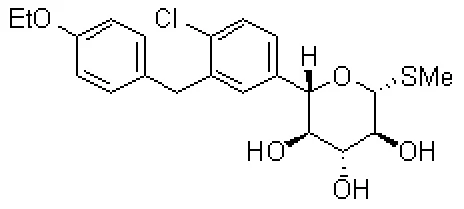
Chemical name: (2S,3R,4R,5S,6R)-2-(4-chloro-3-(4-ethoxybenzyl)phenyl)-6-
(methylthio)tetrahydro-2H-pyran-3,4,5-triol.
Molecular formula and molecular mass: C21H25ClO5S; 424.94.
Structural formula:
Physicochemical properties: white to off-white solid, practically insoluble in water, polymorphic form II.
14. Clinical Trials
14.1. Clinical Trials by Indication
Heart Failure
The efficacy and safety of INPEFA (sotagliflozin) was evaluated in two randomized, double-blind, placebo-controlled Phase 3 multicenter trials, SOLOIST-WHF and SCORED (Table 8). SOLOIST-WHF recruited primarily patients with T2DM and heart failure, whereas SCORED recruited primarily patients with T2DM, chronic kidney disease and at least one other cardiovascular risk factor. Both trials had the same endpoint of the total occurrences of cardiovascular death, HF hospitalization and urgent HF visits.
Table 8: Summary of Patient Demographics of Heart Failure Outcomes Trials
| Study Number | Study Design | Dosage, route of administration and duration | Number of Subjects | Mean Age (Range) | Sex (% M/F) |
|---|---|---|---|---|---|
| Study Number | Study Design | Dosage, route of administration and duration | Number of Subjects | Mean Age (Range) | Sex (% M/F) |
| CVOTs | |||||
EFC15156 (SOLOIST WHF) | Randomized, double blind, placebo controlled, parallel group, multicenter study | 200 mg, 400 mg, placebo Oral, QD before the first meal Initiation 200 mg: 2 weeks, Up-titration as tolerated: between week 2 and week 32, Maintenance: Up to 18 months | 1222 Sotagliflozin – 608 Placebo – 614 | 68.9 years (range: 36 to 85) | 66% M/ 34% F |
| EFC14875 (SCORED) | Randomized, double blind, placebo controlled, parallel group, multicenter study | 200 mg, 400 mg, placebo Oral, QD before the first meal Initiation 200 mg: 4 weeks, Up-titration as tolerated: between week 4 and week 26, Maintenance: Up to 24 months | 10 584 Sotagliflozin - 5292 Placebo - 5292 | 68.3 years (range: 20 to 93) | 55% M/ 45% F |
F: Female; M: Male
SOLOIST-WHF study
The SOLOIST (Effects of Sotagliflozin on Clinical Outcomes in Hemodynamically Stable Patients with Type 2 Diabetes Post Worsening Heart Failure) study was a randomized, double blind, placebo controlled, parallel-group, multicenter study in patients with T2DM who had been admitted to the hospital, a heart failure unit, infusion center, or emergency department for worsening HF with intravascular volume overload.
Of the 1222 randomized patients, 608 were randomized to sotagliflozin and 614 to placebo; they were followed for a median of 9 months. The mean age was 70 years old (30% of patients were ≥75 years old), 66% were male, 93% were white, 4% were Black and 1 % were Asian.
At screening, 45% of patients were classified as New York Heart Association (NYHA) class II, 46% as class III and 4% as class IV; median left ventricular ejection fraction (LVEF) was 35% (range: 10%-79%); 21% of patients had a LVEF≥50%. Patients were eligible only if their N-terminal pro-B-type natriuretic peptide (NT-proBNP) was ≥600 pg/mL (or ≥1800 pg/mL for patients with atrial fibrillation) before randomization. Mean HbA1C was 7.6% with a standard deviation of 1.2%. Median eGFR at baseline was 50 mL/min/1.73m2 and 68% of participants had eGFR < 60 mL/min/1.73m2.
At baseline, 91% of patients were treated with at least one inhibitor of the renin-angiotensin-aldosterone system, 91% with a beta blocker, 18% with a calcium channel blocker, 95% with a loop diuretic and 10% with non-loop, non-mineralocorticoid antagonist diuretic. Most patients (85%) used at least one antihyperglycemic medication with 52% treated with a biguanide, 35% with insulin, 19% with a sulfonylurea, 16% with a dipeptidyl peptidase-4 inhibitor, and 3% with a glucagon-like peptide-1 receptor agonist. Approximately 20% of patients had an intra-cardiac device or a cardiac resynchronization therapy device.
Assigned treatment was initiated in the hospital or within a median of three days following hospital discharge, after confirmation that the patient was hemodynamically stable off intravenous therapy. Unless there were safety concerns, the dose of sotagliflozin or matching placebo was to be up titrated from 200 mg to 400 mg as soon as 2 weeks or up until 8 months after initiation of treatment. At study closure, 52% of participants were stabilised on 400 mg QD. Concomitant antihyperglycemic and CV therapies were adjusted, at the discretion of the investigators, to ensure participants were treated according to the standard care of these diseases.
The primary endpoint was the composite of the total occurrences of CV death, HF hospitalization, and UHFV. An UHFV was defined as an urgent, unplanned, assessment by a physician, e.g., in an emergency department or outpatient clinic, with signs and symptoms for HF and requiring initiation or intensification of treatment (other than oral diuretic) for worsening HF, but not requiring hospitalization.
Sotagliflozin was superior to placebo in reducing the cumulative incidence of the primary composite endpoint over a period of 18 months [Hazard Ratio (HR) 0.67 (95% confidence interval (CI) 0.53, 0.85); p=0.001], with all components positively contributing to the endpoint. The rate of primary endpoint events was 51.3 and 76.4 events per 100 patient-years in the sotagliflozin and placebo groups respectively (Table 9:).
In a cumulative events plot of the primary endpoint, the sotagliflozin and placebo event curves separated within one month and continued to diverge over the study period (Figure ).
Table 9: Treatment Effect for the Primary Composite Endpoint, Related Secondary Endpoints, and their Components in the SOLOIST Study
| Investigator reported Endpoints | Sotagliflozin N=608 | Placebo N=614 | Hazard Ratio (95% CI) | p-value | |||||||
|---|---|---|---|---|---|---|---|---|---|---|---|
| Total No. of Events | No. Patients with Events | Events per 100 PY | Total No. of Events | No. Patients with Events | Events per 100 PY | ||||||
| Total Occurrences of CV Death, HHF or UVHFb | 245 | 142 | 51.3 | 355 | 194 | 76.4 | 0.67 (0.53, 0.85) | 0.001 | |||
| HHF | 161 | 99 | 33.7 | 241 | 137 | 51.9 | 0.65 (0.49, 0.87) | ||||
| UVHF | 33 | 24 | 6.9 | 56 | 41 | 12.1 | 0.60 (0.34, 1.06) | ||||
| CV Death a, c, d | 51 | 51 | 8.4 | 58 | 58 | 9.4 | 0.84 (0.58, 1.23) | ||||
CI = confidence interval; CV = cardiovascular; HHF = hospitalization for heart failure; No. = number; PY = patient-years; UVHF = urgent visit for heart failure. a Time-to-Event Analysis; results are number of patients with an event (percentage of patients with an event). b Predefined primary endpoint. c Predefined secondary endpoint. d Time-to-event analysis was performed; event rates are percentages of patients with events. | |||||||||||
Figure 1: Total Number of Occurrences of CV Death, HHF, and UVHF versus Time (Investigator Reported) – ITT Population -SOLOIST
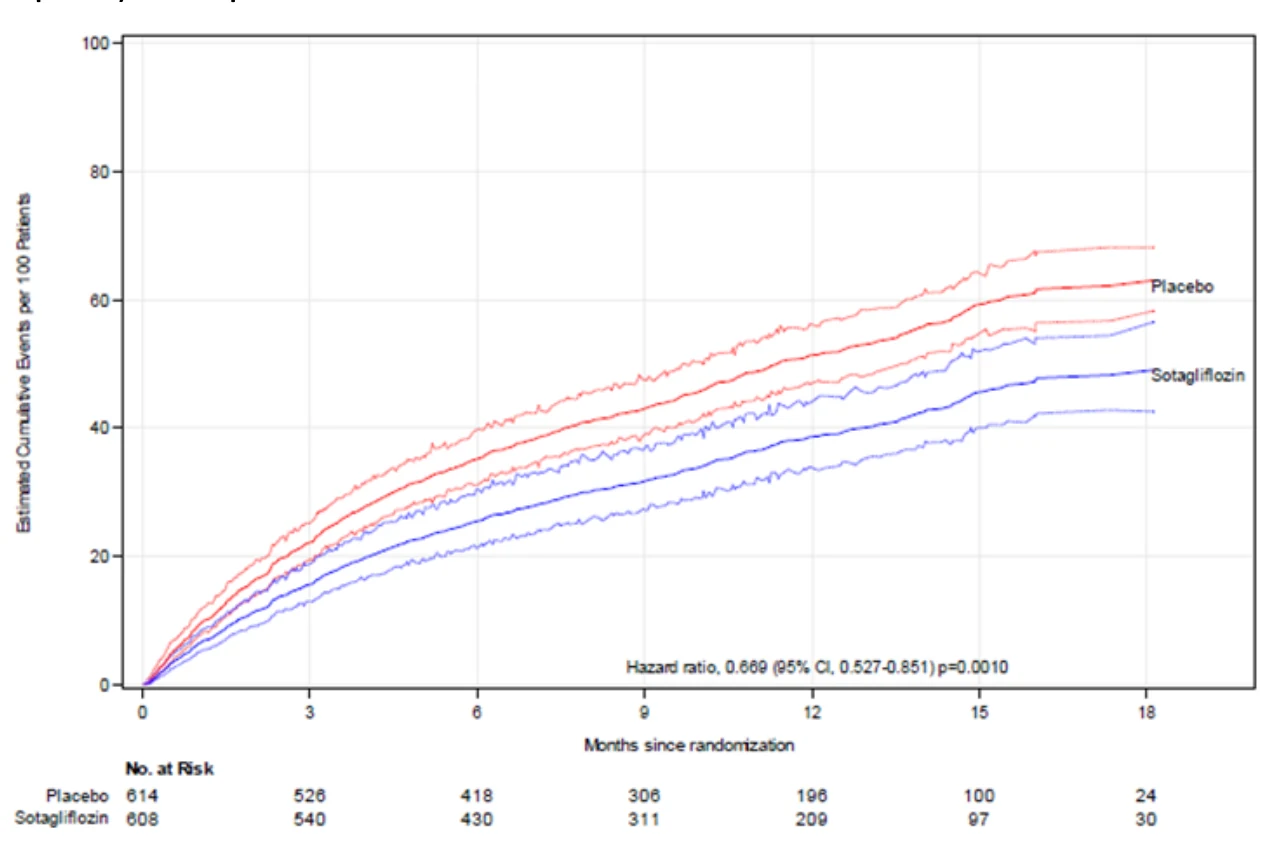
CV = cardiovascular; CI = confidence interval; HR = hazard ratio; LVEF = left ventricular ejection fraction.
Notes: HR is from a marginal Cox proportional hazards model with constant treatment HR over time assumed, stratified by region and Baseline LVEF (<50%, ≥50%), with non-CV death treated as a competing event. A robust sandwich covariance matrix estimate is utilized to allow for multiple events per patient. HR is the ratio of sotagliflozin compared to placebo, therefore a HR less than 1 indicates a lower rate with sotagliflozin than with placebo. Time to occurrence = date of event / date of censoring – treatment start date + 1. Patients without event are censored as applicable based upon their last study visit date, date of death, or study discontinuation date, whichever is later. Two-sided Wald test p-value is also presented.
The benefit of sotagliflozin towards recurring events was shown among patients randomized to sotagliflozin versus placebo, respectively, 88 (14.5%) versus 110 (17.9%) experienced only one event, 30 (4.9%) versus 49 (8.0%) experienced two events, and 24 (3.9%) versus 35 (5.7%) experienced three or more events.
Subgroup Analysis of Primary Endpoint:
The treatment effect of sotagliflozin versus placebo on total occurrences of primary endpoint events was generally consistent across prespecified subgroups defined by demographic and baseline characteristics including region, age, sex, body mass index, eGFR, NYHA class, implantable cardioverter defibrillator/cardiac resynchronization therapy use, history of atrial fibrillation, screening LVEF < 50 or ≥ 50%, median NT-proBNP, mineralocorticoid antagonist use, and timing of first dose (post discharge versus prior to or at hospital/urgent treatment facility discharge) (Figure ).
Figure 2: Treatment Effect for Primary Composite Endpoint (Total Occurrences of Cardiovascular Death, Hospitalization for Heart Failure, and Urgent Heart Failure Visit) by Subgroups in the SOLOIST Study
a Treatment-by-subgroup interaction p value
HF = heart failure; LVEF = left ventricular ejection fraction; MRA-mineralocorticoid receptor antagonist; NTproBNP=N-terminal pro B-type natriuretic peptide; PY=patient years, med=median
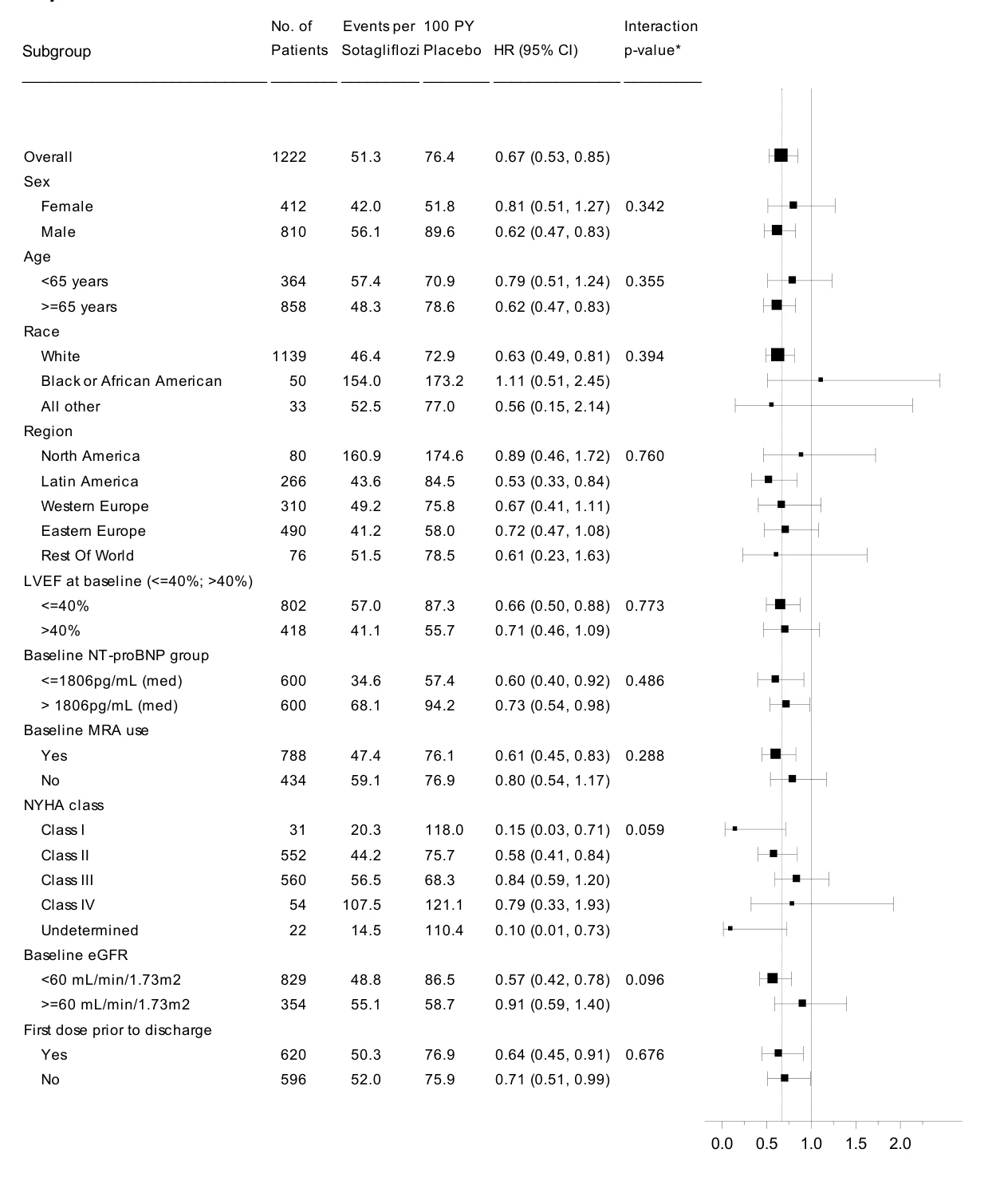
Primary composite endpoint was based on Investigator reported events in all randomized patients, analyzed according to the treatment group allocated by randomization.
Discharge may have been from hospital or urgent treatment facility where urgent heart failure visit occurred.
Sensitivity analyses of the primary efficacy endpoint, including use of adjudicated results or time-to-first-event analyses, showed generally similar results supporting the overall robustness of the findings.
The SOLOIST study allowed for patients to be admitted to the hospital for their index event and to also initiate randomized therapy while still hospitalized. Of the 1222 randomized patients, 86% were admitted to the hospital for their index worsening HF event. Of those who were hospitalized, 46% (n=563) started sotagliflozin prior to or at hospital discharge. The safety profile of sotagliflozin in the 30- and 90-day post randomization windows was generally consistent with that observed for the overall study duration.
Secondary Endpoints:
The results of preplanned statistical testing hierarchy of secondary endpoints demonstrated that sotagliflozin was superior to placebo in reducing the composite endpoint of HF hospitalization and urgent HF visit with a hazard ratio of 0.64 (95% CI: 0.50, 0.83; p=0.0009). However, analysis of the subsequent endpoint, CV death, failed to achieve statistical significance and as a result, formal hypothesis testing from that endpoint onward was stopped.
SCORED Study
The SCORED (Effects of Sotagliflozin on Cardiovascular and Renal Events in Patients with T2DM, CV Risk Factors and Moderately Impaired Renal Function) study was a randomized, double-blind, placebo-controlled, parallel-group, multicenter study in patients with T2DM (HbA1c >7%), chronic kidney disease (eGFR 25 to 60 mL/minute/1.73m2), and additional CV risk factors such as a history of HF, obesity, dyslipidemia, hypertension, and elevated cardiac and inflammatory biomarkers. Enrollment was restricted to those patients who had not used an SGLT2 inhibitor from one month prior to the screening visit through the randomization visit, and to those patients for whom SGLT2 inhibitor therapy was not planned, nor likely to be instituted during the duration of the study (in the opinion of the investigator).
Of the 10 584 randomized patients, 5292 were randomized to sotagliflozin and 5292 to placebo; they were followed for a median of 16 months. Mean age was 69 years (23% of patients were ≥75 years old), 55% were male, 82% were white, 6% were Asian, 4% were American Indian or Alaska Native, and 3% were Black. About 45% of patients were active tobacco smokers.
At screening, median eGFR was 45 ml/min/1.73m2; approximately 48% of patients had an eGFR between 60 and ≥ 45 ml/min/1.73m2, 44% had an eGFR between 30 and 45 ml/min/1.73m2, and 8% had an eGFR < 30 ml/min/1.73m2. Mean HbA1c was 8.7% with a standard deviation of 1.5%. Among those who had HF at baseline (n=3281), 51% had a LVEF ≥50%.
Baseline therapy included at least one inhibitor of the renin-angiotensin-aldosterone system for 88% of patients, calcium channel blockers for 42% of patients, loop diuretics for 35% of patients and non-loop, non-mineralocorticoid antagonist diuretics for 30% of patients. Most patients (97%) used at least one antihyperglycemic medication with 64% treated with insulin, 55% with a biguanide, 27% with a sulfonylurea, 20% with a dipeptidyl peptidase-4 inhibitor, and 6% with a glucagon-like peptide-1 receptor agonist.
Unless there were safety concerns, the dose was to be up titrated from 200 mg to 400 mg sotagliflozin or matching placebo as soon as 4 weeks, or up until 6 months after initiation of treatment. At study closure, 71% of patients were taking at least 400 mg QD. Concomitant antihyperglycemic and cardiorenal therapies were adjusted, at the discretion of the investigators, to ensure participants were treated according to the standard of care for these diseases.
The primary endpoint was the composite of the total occurrences of CV death, HF hospitalization, and UHFV. An UHFV was defined as an urgent, unplanned, assessment by a physician, e.g., in an emergency department or outpatient clinic, with signs and symptoms for HF and requiring initiation or intensification of treatment (other than oral diuretic) for worsening HF, but not requiring hospitalization.
Sotagliflozin was superior to placebo in reducing the cumulative incidence of the primary composite endpoint over a period of 24 months (HR 0.75 [95% CI 0.63, 0.88]; p < 0.001), with all components positively contributing to the endpoint. The rate of primary endpoint events was 5.6 events per 100 patient-years in the sotagliflozin group and 7.5 events per 100 patient-years in the placebo group (Table 10). In a cumulative events plot of the primary endpoint, the sotagliflozin and placebo event curves had separated by one month and continued to diverge over the study period (Figure 3).
Table 10: Treatment Effect for the Primary Composite Endpoint, Related Secondary Endpoints and their Components, in the SCORED study
| Investigator- Reported Endpoints | Sotagliflozin N=5292 | Placebo N=5292 | Hazard Ratio (95% CI) | p value | |||||
|---|---|---|---|---|---|---|---|---|---|
| Total No. of Events | No. Patients with Events | Events per 100 PY | Total No. of Events | No. Patients with Events | Events per 100 PY | ||||
| Total Occurrences of CV Death, HHF or UVHF | 400 | 310 | 5.6 | 530 | 391 | 7.5 | 0.75 (0.63,0.88) | 0.0004 | |
| HHF | 198 | 158 | 2.8 | 296 | 225 | 4.2 | 0.66 (0.53, 0.82) | ||
| UVHF | 47 | 43 | 0.6 | 64 | 54 | 0.9 | 0.73 (0.48, 1.11) | ||
| CV Death a | 155 | 155 | 2.9a | 170 | 170 | 3.2a | 0.90 (0.73, 1.12) | ||
| CI = confidence interval; CV = cardiovascular; HHF = hospitalization for heart failure; ITT = intent-to-treat; No = number; PY = patient-years; UVHF = urgent visit for heart failure. a Time-to-event analysis; results are number of patients with an event (percentage of patients with an event) | |||||||||
Figure 3: Total Number of Occurrences of CV Death, HHF, and UVHF Versus Time (Investigator-Reported) -ITT Population- SCORED
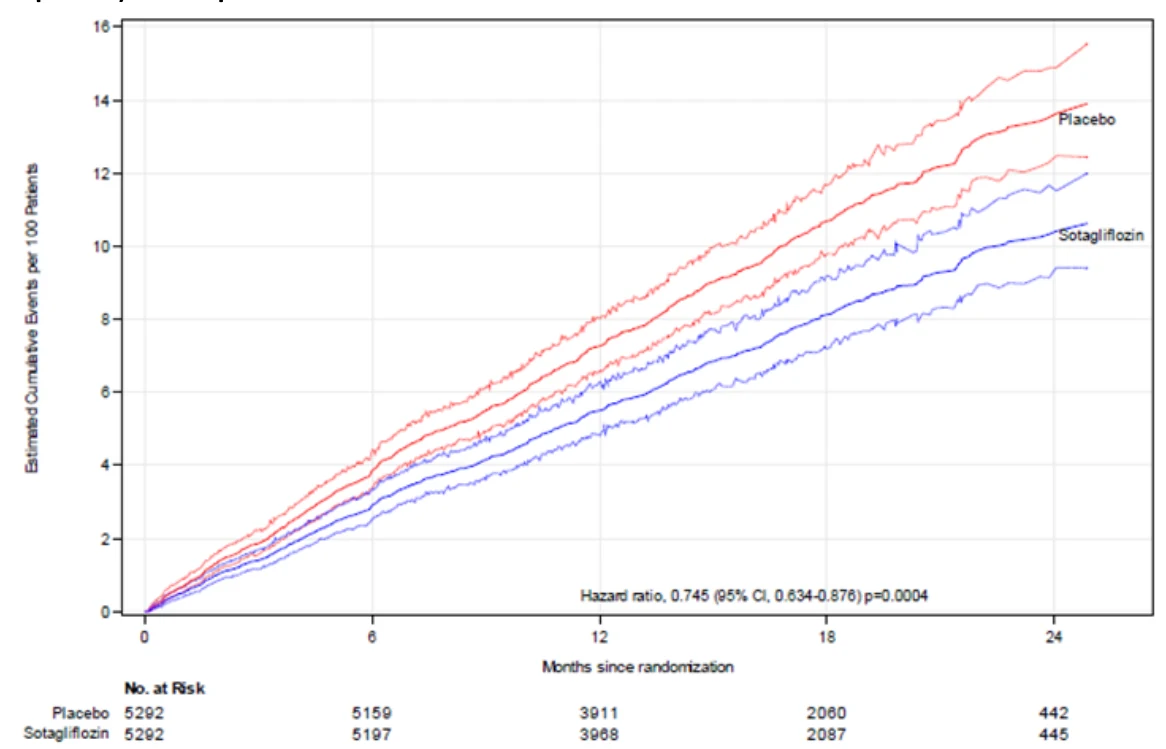
CV = cardiovascular; CI = confidence interval; HF = heart failure; HHF = hospitalization for heart failure; HR = hazard ratio; No = number; UVHF = urgent visit for heart failure.
Notes: HR is from a marginal Cox proportional hazards model with constant treatment HR over time assumed, stratified by region and HF-related criteria, with non-CV death treated as a competing event. A robust sandwich covariance matrix estimate is utilized to allow for multiple events per patient. HR is the ratio of sotagliflozin compared to placebo, therefore a HR less than 1 indicates a lower rate with sotagliflozin than with placebo. Time to occurrence = date of event / date of censoring – treatment start date + 1. Patients without event are censored as applicable based upon their last study visit date, date of death, or study discontinuation date, whichever is later. Twosided Wald test p-value is also presented.
The benefit of sotagliflozin towards recurring events was shown among patients randomized to sotagliflozin versus placebo, respectively, 242 (4.6%) versus 290 (5.5%) experienced only one event, 51 (1.0%) versus 77 (1.5%) experienced two events, and 17 (0.3%) versus 24 (0.5%) experienced three or more events.
Subgroup Analysis of Primary Endpoint:
The treatment effect of sotagliflozin versus placebo on total occurrences of primary endpoint events was generally consistent across prespecified subgroups including race, region, history of HF, screening LVEF <50% or ≥50%, and baseline eGFR <30, ≥30 to <45, or ≥45 mL/min/1.73m2 (Figure ).
Figure 4: SCORED Treatment Effect for Total Occurrences of Investigator Reported Cardiovascular Death, Hospitalization for Heart Failure, and Urgent Heart Failure Visit Shown by Selected Subgroups
Abbreviations: CI: confidence interval, CV: cardiovascular, CVD: cardiovascular disease, eGFR: estimated glomerular filtration rate, HF: heart failure, HR: hazard ratio, LVEF: left ventricular ejection fraction, PY: patient years.
For each factor, a marginal Cox proportional hazards model stratified by region and baseline LVEF (<50%, ≥50%) (strata excluded when strata were factors) with non-CV death treated as a competing event was performed, including treatment, factor, and the treatment by factor interaction terms.
a Treatment by subgroup interaction p value
An urgent heart failure visit was defined as an urgent, unplanned assessment by a physician, e.g., in an Emergency Department or outpatient clinic, with signs and symptoms for heart failure and requiring initiation or intensification of treatment (other than oral diuretic) for worsening HF, but not requiring hospitalization.
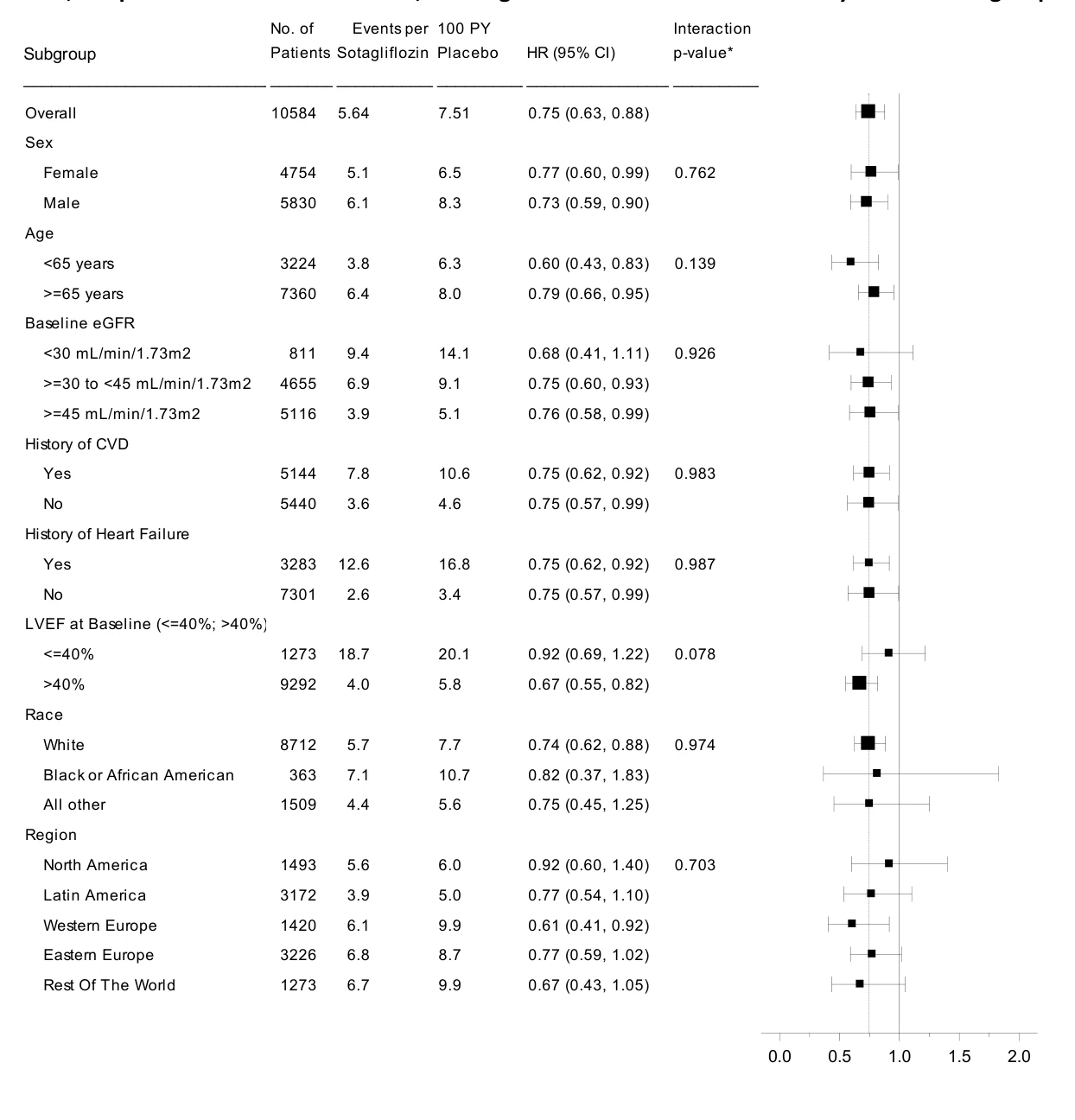
Secondary Endpoints:
In the preplanned statistical hierarchy testing of secondary endpoints, sotagliflozin was superior to placebo in reducing the composite endpoint of HF hospitalization and urgent HF visit with a hazard ratio of 0.67 (95% CI: 0.55, 0.82; p=0.0001) in the SCORED ITT population.
Pooled Analyses (SOLOIST and SCORED Studies)
A pooled analysis focused on the effect of sotagliflozin on reducing the incidence of the composite primary endpoint (total occurrences of CV death, HF hospitalization, and urgent HF visit) in patients with a prior history of HF in SCORED combined with the HF patients in SOLOIST WHF. This analysis was performed for the pooled cohort overall and by subgroups based on screening LVEF. Another analysis evaluated the relationship between screening LVEF and HF-related outcomes in this pooled HF cohort. Efficacy endpoints and subgroup analyses were analyzed using the same statistical methodology as for the primary endpoint in SOLOIST WHF and SCORED.
Primary Composite Endpoint in Pooled Patients with HF:
The pooled analysis of patients with T2DM and history of HF included 4505 patients (1222 with worsening HF from SOLOIST and 3283 patients with a history of HF from SCORED). Of these patients, 1986 had HFrEF (LVEF ≤40%), and 2515 had HFnrEF (>40%).
The incidence of the primary endpoint events was 19.6 and 27.4 events per 100 patient-years in the sotagliflozin and placebo groups respectively. The absolute risk reduction was 7.8 events per 100 patient-years favoring sotagliflozin. Sotagliflozin was superior to placebo in reducing the incidence of the primary endpoint by 28% (HR [95% CI]: 0.72 [0.61, 0.84]); with all three endpoints positively contributing to the results.
The efficacy was observed across the range of LVEF analysed as a categorical variable ≤40% and >40% (Table 11) and as a continuous variable (Figure 5).
Table 11: Total Occurrences (Event Rate per 100-Patient Years) of CV Death, HHF, and UVHF in Patients with a History of HF Overall and in LVEF subgroups (Investigator Reported Events) – Pooled Analysis of SOLOIST and SCORED (ITT Analysis Set)
| Placebo | Sotagliflozin | HR (95% CI) | |
|---|---|---|---|
| Overall | N = 2257 | N = 2248 | |
| 27.4 | 19.6 | 0.72 (0.61, 0.84) p <0.0001 | |
| LVEF ≤40% | n = 1003 | n = 983 | |
| 40.1 | 30.2 | 0.76 (0.62, 0.93) p = 0.0068 | |
| LVEF >40% | n = 1252 | n = 1263 | |
| 18.5 | 12.5 | 0.65 (0.51, 0.82) p = 0.0003 |
CV = cardiovascular; HF = heart failure; HHF = hospitalization for heart failure; HR = hazard ratio, ITT = intent-to-treat; LVEF = left ventricular ejection fraction; N = number of patients in analysis set; n = number of patients for each number of event occurrences; UVHF = urgent visit for heart failure.
Figure 5: Hazard Ratio of Treatment Effect against Screening LVEF for Total Occurrences of CV Death, HHF, and UVHF in Patients with a History of HF – Pooled Analysis of SOLOIST and SCORED (Investigator Reported Events) (ITT Analysis Set)
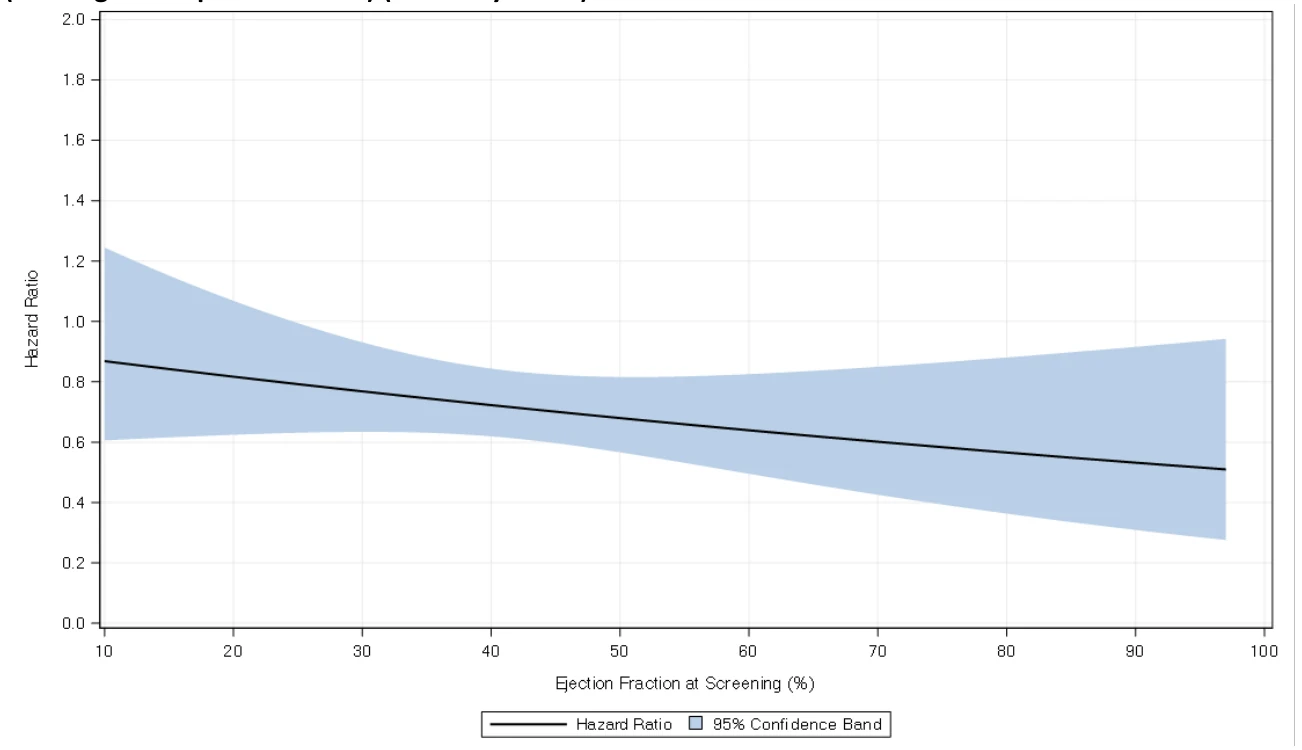
CV = cardiovascular; HF = heart failure; HHF = hospitalization for heart failure = HR: hazard ratio; ITT = intent-to-treat; LVEF = left ventricular ejection fraction; UVHF = urgent visit for heart failure.
Notes: HR is from a Marginal Cox proportional hazards model with constant treatment HR over time assumed, stratified by study and region, with ejection fraction at screening as a covariate and treatment by ejection fraction at screening as an interaction term.
Non-CV death is treated as a competing event. A robust sandwich covariance matrix estimate is utilized to allow for multiple events per patient.
HR is the ratio of sotagliflozin compared to placebo, therefore a HR less than 1 indicates a lower rate with sotagliflozin than with placebo.
Patients without event are censored as applicable based upon their last study visit date, date of death, or study discontinuation date, whichever is later
Major Adverse Cardiovascular Events (MACE) Outcomes
Sotagliflozin was assessed for major adverse cardiovascular events (MACE) in adults with T2DM over a treatment period of up to 18 or 24 months. In SOLOIST-WHF, the incidence of 3-point MACE (CV death, non-fatal myocardial infarction, non-fatal stroke) was 17.4 events per 100 patient-years in the sotagliflozin group and 17.2 events per 100 patient-years in the placebo group (HR 0.99, 95% CI 0.72, 1.37). In SCORED, the incidence of 3-point MACE was 4.3 events per 100 patient-years for sotagliflozin and 5.4 events per 100 patient-years for placebo (HR 0.79, 95% CI 0.67, 0.93). The incidence of 4-point MACE (including unstable angina leading to hospitalization) was 5.3 events per 100 patient-years for sotagliflozin and 6.5 events per 100 patient-years for placebo (HR 0.80, 95% CI 0.69, 0.94).
15. Microbiology
No microbiological information is required for this drug product.
16. Non-Clinical Toxicology
General toxicology
The safety of sotagliflozin has been evaluated in rats and dogs dosed up to 6 and 9 months, respectively. In rats, the expected sotagliflozin-related pharmacologic effect of marked glucosuria was observed in the repeat-dose studies. Glucosuria was considered a predisposing factor for infection and inflammation of the urogenital system. In the 26-week repeat-dose study in rats, sotagliflozin-related changes were observed at ≥30 mg/kg/day males and ≥75 mg/kg/day in females. Sotagliflozin-related targets included the prostate, trabecular bone of the sternum, renal pelvis (females), and urinary bladder (females). The 30 mg/kg/day was considered to be the no-observed-adverse-effect level (NOAEL) in female rats and the low-observed-adverse-effect level (LOAEL) in male rats. On an AUC basis, systemic exposures at the female NOAEL and male LOAEL were approximately 15.5- and 8-fold higher than those achieved at the MRHD, respectively.
In the 39-week repeat-dose study in dogs, sotagliflozin-related reduction on 1,25-dihydroxyvitamin D was observed at doses ≥60 mg/kg/day. The NOAEL was considered to be 20 mg/kg/day, the lowest dose tested. The exposure multiples at the NOAEL on an AUC basis were approximately 20- and 22-fold that of the MRHD for males and females, respectively.
Genotoxicity
Sotagliflozin was not mutagenic or clastogenic with or without metabolic activation in the in vitro Ames bacterial mutagenicity assay, in vitro chromosomal assay in Chinese hamster ovary cells, and in vivo micronucleus assay in rats.
Carcinogenicity
In the 6-month carcinogenicity study in RasH2 transgenic mouse, no sotagliflozin-related proliferative changes (neoplasia and hyperplasia) were observed at doses up to 100 mg/kg/day. The exposure multiples on an AUC basis at 100 mg/kg/day were approximately 45- and 107-fold that of the maximum recommended human dose (MRHD; 400 mg/day) for males and females, respectively.
In the 2-year rat carcinogenicity study, a statistically significant increase in thyroid follicular cell carcinoma was observed in males at 75 mg/kg/day the highest dose evaluated. Sotagliflozin was not considered to cause carcinogenicity in rats at ≤30 mg/kg/day. The exposure multiples on an AUC basis at 30 mg/kg/day were approximately 8- and 21-fold that of the MRHD for males and females, respectively. In a 4-week repeat-dose study sotagliflozin at 300 mg/kg/day (the only dose tested) increased thyroid stimulating hormone (TSH). Although this effect is associated with carcinogenicity in rodents it was not considered relevant to humans as TSH is not carcinogenic in humans.
Reproductive and developmental toxicology
Sotagliflozin had no effects on mating, fertility or early embryonic development in treated male or female rats at doses up to 300 mg/kg/day, which represents an exposure multiple of 55- and 138-fold the human exposure at 400 mg/day, the MRHD, in male and female rats, respectively.
In embryo-fetal development sotagliflozin was orally administered for intervals coinciding with the first trimester period of organogenesis in humans at doses up to 350 mg/kg/day in rats and 200 mg/kg/day in rabbits. In the rat study, embryo-lethality, effects on fetal growth along with cardiovascular and skeletal abnormalities were observed at 350 mg/kg/day dose corresponding to an exposure multiple of 161-times the human exposure at 400 mg/day, the MRHD. The adverse effects on embryo-fetal development at 350 mg/kg/day were associated with maternal toxicity (body weight loss/decreased body weight gain and decreased food consumption during gestation day (GD) 6 to 8). Exposure at the NOAEL of 100 mg/kg in rat was 40-fold higher than the exposure at the human dose of 400 mg/day, the MRHD. No developmental toxicity was observed at doses up to 200 mg/kg/day in the rabbit, which was up to 9-times the human exposure at a dose of 400 mg/day, the MRHD.
In a pre- and post-natal development study pregnant rats orally administered sotagliflozin at 10, 30 and 100 mg/kg/day throughout pregnancy and lactation (from GD6 to lactation day (LD) 20). No sotagliflozin-related adverse effects in pregnant and lactating females were observed in doses up to 100 mg/kg/day an exposure multiple of 40-fold the human exposure at 400 mg/day, the MRHD. The offspring (F1 generation) examined between LD0 and LD21 and during an 8-week maturation/growth phase beginning on postnatal day (PND) 28. No sotagliflozin-related effect observed on sexual maturation, neurobehavioral development, or reproductive performance of the F1 generation at doses up to 100 mg/kg/day, corresponding to 19- and 25-fold the MRHD in female and male rats, respectively. F1 generation exposed to ≥30 mg/kg/day of sotagliflozin exhibited treatment-related renal (dilated pelvis and discolored kidney) and ureteral (dilated ureter) macroscopic findings both in utero and during lactation, corresponding to 4- and 7-fold the MRHD in female and male rats, respectively.
Juvenile toxicity
In juvenile toxicity studies in rats, sotagliflozin was administered orally to young rats from PND 21 until PND 90 at oral doses of 3, 10, 30 and 75 mg/kg/day. Sotagliflozin increased urinary glucose excretion at all dose levels, demonstrating pharmacodynamic activity in juvenile animals. Increases in kidney weight were observed at ≥10 mg/kg/day in males and ≥30 mg/kg/day in females, corresponding to 1.7- and 11-fold the MRHD, respectively. The increase in kidney weight correlated microscopically with tubular dilatation of the kidney of rats administered ≥30 mg/kg/day (5- and 11-fold the MRHD in males and females, respectively). Also, dose-related decreases in serum 1,25-dihydroxyvitamin D and N-terminal propeptide of Type 1 Collagen in males at ≥10 mg/kg/day and females at ≥30 mg/kg/day were observed. Sotagliflozin-related minimal to moderate prostate inflammation was observed in males at 75 mg/kg/day, corresponding to 18-fold the MRHD. All sotagliflozin-related changes demonstrated full or partial reversibility following the 4-week recovery period.