


Product Monograph - Invirase
SUMMARY PRODUCT INFORMATION
| Route of Administration | Dosage Form / Strength | Clinically Relevant Non-medicinal Ingredients |
| Oral | 200 mg saquinavir capsule (as saquinavir mesylate) | lactose (see WARNINGS AND PRECAUTIONS) |
| Oral | 500 mg saquinavir film- coated tablet (as saquinavir mesylate) | lactose (see WARNINGS AND PRECAUTIONS) |
| For a complete listing of non-medicinal ingredients see DOSAGE FORMS, COMPOSITION AND PACKAGING section. | ||
INDICATIONS AND CLINICAL USE
INVIRASE (saquinavir mesylate) is indicated for:
- The treatment of HIV-1 infected adult patients. INVIRASE must be given in combination with ritonavir, and other antiretroviral medicinal products.
This indication is based on pharmacokinetic data and safety data from the MaxCmin 1 and MaxCmin 2 studies. Low dose ritonavir significantly inhibits saquinavir’s metabolism and provides increased plasma saquinavir levels.
Geriatrics (> 65 years of age):
Only limited experience is available in elderly patients. No data are available to establish a dose recommendation in elderly patients.
Pediatrics (< 16 years of age):
The safety and efficacy of saquinavir in HIV-infected children has not been established.
CONTRAINDICATIONS
- INVIRASE (saquinavir mesylate) is contraindicated in patients with clinically significant hypersensitivity to saquinavir or to any other component contained in the hard gelatin capsule or film coated tablet (see DOSAGE FORMS, COMPOSITION AND PACKAGING).
- INVIRASE/ritonavir is contraindicated with drugs that have both pharmacokinetic interactions and prolong the QT and/or PR interval and in patients with congenital or documented acquired QT prolongation, and/or with electrolyte disturbances particularly uncorrected hypokalemia (see WARNINGS AND PRECAUTIONS: Cardiovascular and DRUG INTERACTIONS). Familial history of sudden death at a young age may be suggestive of congenital QT prolongation.
- INVIRASE/ritonavir is contraindicated in patients with severe hepatic impairment (see WARNINGS AND PRECAUTIONS: Hepatic/Biliary/Pancreatic).
Inhibition of CYP3A4 by INVIRASE/ritonavir could result in elevated plasma concentrations of drugs known to be CYP3A4 substrates, potentially causing serious or life-threatening reactions, such as cardiac arrhythmias or prolonged sedation. Drugs which are contraindicated with INVIRASE/ritonavir are listed in Table 1.
Table 1: Drugs that are Contraindicated with INVIRASE/ritonavir
| Drug Class | Drugs within Class that are Contraindicated with INVIRASE/ritonavir | Clinical Comment |
|---|---|---|
| Alpha 1-adrenoreceptor antagonist | Alfuzosin | Potential increase in alfuzosin concentration which can result in hypotension and potentially life-threatening cardiac arrhythmia. |
| Antiarrhythmics | Class IA: (e.g. Quinidine, procainamide) Class IB (e.g. Lidocaine (systemic)). Class IC (e.g. Flecainide Propafenone, Bepridil). Class III (e.g. Amiodarone, Dofetilide, sotalol ) | Potential for serious and/or life-threatening reactions, including cardiac arrhythmia. |
| Antihistamines | Astemizole*, terfenadine*, mizolastine | Potential for serious and/or life-threatening cardiac arrhythmias. |
| Antiinfectives | Clarithromycin Erythromycin Halofantrine | Potentially life- threatening cardiac arrhythmia. |
| Antimycobacterial Agents | Rifampin | Potential for severe hepatocellular toxicity. |
| Antidepressants | Trazodone | Trazodone is contraindicated in combination with ritonavir-boosted INVIRASE due to potentially life threatening cardiac arrhythmia. Concomitant use of trazodone and INVIRASE/ritonavir may increase plasma concentrations of trazodone. Adverse events of nausea, dizziness, hypotension and syncope have been observed following coadministration of trazodone and ritonavir. |
| Antipsychotics | Lurasidone | Potentially serious and/or life-threatening reactions |
Pimozide, Clozapine, Haloperidol, Chlorpromazine, Sertindole Thioridazine, Ziprasidone | Potential for serious and/or life-threatening reactions such as cardiac arrhythmias. | |
| Quetiapine | Increased quetiapine-related toxicity and potential severity of resulting adverse reactions. | |
| Ergot Derivatives | Dihydroergotamine, ergonovine, ergotamine, methylergonovine | Potential for serious and life-threatening reactions such as acute ergot toxicity characterized by peripheral vasospasm and ischemia of the extremities and other tissues. |
| GI Motility Agents | Cisapride* | Potential for serious and/or life-threatening reactions such as cardiac arrhythmias. |
| HIV protease inhibitors (PIs) | Atazanavir | Potential life-threatening cardiac arrhythmia. |
| NNRTI | Rilpivirine | Switching from rilpivirine to INVIRASE; as well as concomitant use is associated with potentially life- threatening cardiac arrhythmia. |
| HMG-CoA Reductase Inhibitors (Statins) | Simvastatin, Lovastatin | Potential for serious reactions such as risk of myopathy including rhabdomyolysis. See Table 3 for information on interactions with other HMG-CoA Reductase Inhibitors (atorvastatin, pravastatin, and fluvastatin). |
| Immunosuppressant | Tacrolimus | Potential life-threatening cardiac arrhythmia. |
* No longer marketed in Canada.
Because ritonavir is coadministered with INVIRASE, prescribers should refer to the full prescribing information for ritonavir for additional contraindicated drugs.
WARNINGS AND PRECAUTIONS
Serious Warnings and Precautions
|
General
INVIRASE must be given in combination with ritonavir. Please refer to the ritonavir full prescribing information for additional precautionary measures. Invirase is not recommended for use in combination with any other pharmacoenhancer (e.g. cobicistat), as dosing recommendations have not been established.
When INVIRASE is prescribed in combination with other antiretroviral therapies, physicians should refer to the appropriate Product Monographs for safety and prescribing information.
| PDE5 Inhibitors | Sildenafil (for pulmonary arterial hypertension) | Increased potential for sildenafil-associated adverse events (which include visual disturbances, hypotension, prolonged erection, and syncope). A safe and effective dose has not been established when used with INVIRASE/ritonavir. |
| Sedative / Hypnotics | Triazolam, midazolam (oral) | Potential for serious and/or life-threatening reactions such as prolonged or increased sedation or respiratory depression. |
| Tyrosine kinase inhibitors | Dasatinib, Sunitinib | Potentially life- threatening cardiac arrhythmia. |
| Other medicinal products that are substrate of CYP3A4 | Disopyramide Quinine | Potential life-threatening cardiac arrhythmia. |
If a serious or severe toxicity occurs during treatment with INVIRASE, treatment with the drug should be interrupted until the etiology of the event is identified or the toxicity resolves. At that time, resumption of treatment with full dose may be considered.
Lactose Intolerance: Each capsule contains lactose (anhydrous) 63.3 mg and each film-coated tablet contains lactose (monohydrate) 38.5 mg. Patients with rare hereditary problems of galactose intolerance, the Lapp lactase deficiency or glucose-galactose malabsorption (autosomal recessive disorder) should not take this medicine.
Body as a Whole
Fat Redistribution: Redistribution/accumulation of body fat including central obesity, dorsocervical fat enlargement (buffalo hump), peripheral wasting, facial wasting, breast enlargement, and “Cushingoid appearance” have been observed in patients receiving antiretroviral therapy. The mechanism and long-term consequences of these events are currently unknown. A causal relationship has not been established.
Carcinogenesis and Mutagenesis
No human data is available. For animal data see TOXICOLOGY.
Cardiovascular
Cardiac conduction and repolarisation abnormalities (Prolongation of QT interval): Dose-dependent prolongations of QT and PR intervals were observed in healthy volunteers receiving ritonavir-boosted INVIRASE (see ACTION AND CLINICAL PHARMACOLOGY: Special Populations and Conditions, Effects on Electrocardiogram).
Ritonavir-boosted INVIRASE is contraindicated with drugs that have both pharmacokinetic interactions and prolong the QT and/or PR interval and in patients with congenital or documented acquired QT prolongation and electrolyte disturbances particularly uncorrected hypokalemia (see CONTRAINDICATIONS). Familial history of sudden death at a young age may be suggestive of congenital QT prolongation. It is not recommended to administer ritonavir-boosted INVIRASE with any medication which can significantly increase either the QT or PR interval. Caution is advised if concomitant use is considered necessary and an ECG should be performed if signs of cardiac arrhythmias occur. Caution is also warranted when administering ritonavir-boosted INVIRASE to patients with underlying structural heart disease, with pre-existing conduction system disease (e.g. first-degree AV block or second- or third degree AV block), and ischemic heart disease or cardiomyopathies as they may be at increased risk for developing abnormalities.
Ritonavir-boosted INVIRASE should be discontinued if significant arrhythmias, QT or PR prolongation occur. Generally, women and elderly patients may be more susceptible to drug-associated effects on the QT interval. The magnitude of QT and PR prolongation may increase with increasing concentrations of saquinavir. Therefore, the recommended dose of ritonavir-boosted INVIRASE should not be exceeded. Ritonavir-boosted INVIRASE at a dose of 2000 mg once daily with ritonavir 100 mg once daily has not been studied with regard to the risk of QT prolongation and is not recommended.
Patients initiating therapy with ritonavir-boosted INVIRASE: An ECG should be performed prior to initiation of treatment. Patients with a QT interval ≥ 450 msec should not initiate treatment with ritonavir-boosted INVIRASE. For patients with a QT interval < 450 msec, an on-treatment ECG is recommended.
For treatment-naïve patients who are initiating treatment with INVIRASE 500 mg and ritonavir100 mg two times daily for the first 7 days of treatment followed by INVIRASE 1000 mg and ritonavir 100 mg two times daily is recommended (see DOSING AND ADMINISTRATION). Patients with a baseline QT interval < 450 msec, an on-treatment ECG is suggested after approximately 10 days of initiation of therapy.
Patients with a QT interval increased to > 480 msec or prolongation over pre-treatment by > 20 msec should discontinue ritonavir-boosted INVIRASE (see ACTION AND CLINICAL PHARMACOLOGY: Pharmacokinetics and Special Populations and Conditions, Effects on Electrocardiogram).
Patients stable on ritonavir-boosted INVIRASE and requiring concomitant medication with potential to increase the QT interval or patients on medication with potential to increase the QT interval and requiring concomitant ritonavir-boosted INVIRASE where no alternative therapy is available and the benefits outweigh the risks: An ECG should be performed prior to initiation of the concomitant therapy, and patients with a QT interval ≥ 450 msec should not initiate the concomitant therapy (see DRUG INTERACTIONS and CONTRAINDICATIONS). If baseline QT interval < 450 msec, an on-treatment ECGs should be performed. For patients demonstrating a subsequent increase in QT interval to > 480 msec or increase by > 20 msec after commencing concomitant therapy, the physician should use best clinical judgment to discontinue either ritonavir-boosted INVIRASE or the concomitant therapy or both.
Endocrine and Metabolism
Diabetes Mellitus and Hyperglycemia: New onset diabetes mellitus, exacerbation of pre-existing diabetes mellitus and hyperglycemia have been reported during post-marketing surveillance in HIV-infected patients receiving protease inhibitor therapy. Some patients required either initiation or dose adjustments of insulin or oral hypoglycemic agents for treatment of these events. In some cases, diabetic ketoacidosis has occurred. In those patients who discontinued protease inhibitor therapy, hyperglycemia persisted in some cases. Because these events have been reported voluntarily during clinical practice, estimates of frequency cannot be made and a causal relationship between protease inhibitor therapy and these events has not been established.
Hyperlipidemia: Elevated cholesterol and/or triglyceride levels have been observed in some patients taking saquinavir in combination with ritonavir. Cholesterol and triglyceride levels should be monitored prior to initiating combination therapy with INVIRASE/ritonavir, and at periodic intervals while on such therapy. In these patients, lipid disorders should be managed as clinically appropriate.
Glucocorticoids
Corticosteroid (nasal use): Systemic corticosteroid effects including Cushing’s syndrome and adrenal suppression have been reported during postmarketing use in patients receiving ritonavir and inhaled or intranasally administered fluticasone propionate. Therefore, coadministration of fluticasone propionate and INVIRASE/ritonavir is not recommended unless the potential benefit to the patient outweighs the risk of systemic corticosteroid side effects (see DRUG INTERACTIONS: Drug-Drug Interactions, Table 3).
Hematologic
Hemophiliac Patients: There have been reports of increased bleeding including spontaneous skin hematomas and hemarthrosis in patients with Hemophilia Type A and Type B treated with protease inhibitors. In some patients, additional Factor VIII was given. In more than half of the reported cases, treatment with protease inhibitors was continued or re-introduced. There is no proven relationship between protease inhibitors and such bleeding, however, the frequency of bleeding episodes should be closely monitored in patients on saquinavir.
Hepatic/Biliary/Pancreatic
Patients with Hepatic Impairment: In cases of mild impairment no initial dosage adjustment is necessary at the recommended dose. Limited data is available for dosing in HIV-infected subjects with moderate hepatic impairment; caution should be exercised when administering ritonavir-boosted saquinavir in this patient population.
In patients with underlying hepatitis B or C, cirrhosis, chronic alcoholism and/or other underlying liver abnormalities there have been reports of worsening liver disease and development of portal hypertension after starting INVIRASE. Associated symptoms include jaundice, ascites, edema and, in some cases esophageal varices. Several of these patients died. A causal relationship between INVIRASE and development of portal hypertension has not been established. Increased monitoring for signs and symptoms of liver toxicity should be considered. INVIRASE/ritonavir is contraindicated in patients with severe hepatic impairment (see CONTRAINDICATIONS).
Pancreatitis: Elevated cholesterol and/or triglyceride levels have been observed in some patients taking saquinavir in combination with ritonavir. Marked elevation in triglyceride levels is a risk factor for development of pancreatitis (see WARNINGS AND PRECAUTIONS: Cardiovascular).
Immune
Immune Reconstitution Inflammatory Syndrome: Immune reconstitution inflammatory syndrome has been reported in patients treated with combination antiretroviral therapy, including INVIRASE. During the initial phase of treatment, patients responding to antiretroviral therapy may develop an inflammatory response to indolent or residual opportunistic infections [such as
Mycobacterium avium complex (MAC), cytomegalovirus (CMV), Pneumocystis jirovecil pneumonia (PCP), and tuberculosis (TB)], which may necessitate further evaluation and treatment.
Autoimmune disorders (such as Graves' disease, polymyositis, and Guillain-Barré syndrome) have also been reported to occur in the setting of immune reconstitution, however, the time to onset is more variable, and can occur many months after initiation of treatment.
Renal
Patients with Renal Impairment: Renal clearance is only a minor elimination pathway, the principal route of metabolism and excretion for saquinavir is via the liver. Therefore, no initial dose adjustment is necessary for patients with renal impairment. However, patients with severe renal impairment have not been studied and caution should be exercised when prescribing INVIRASE in this population.
Resistance/Cross-resistance
Varying degrees of cross-resistance among protease inhibitors have been observed. Continued administration of INVIRASE therapy following loss of viral suppression may increase the likelihood of cross-resistance to other protease inhibitors (see also ACTION AND CLINICAL PHARMACOLOGY: Mechanism of Action, Resistance).
Special Populations
Pregnant Women: There are no studies of INVIRASE in pregnant women. Reproduction studies with saquinavir in rats and rabbits have shown no embryotoxicity or teratogenicity at plasma exposures (AUC values) up to 38% and 27%, respectively, those achieved with human use at the recommended clinical dose of INVIRASE (1000 mg BID) boosted with ritonavir (100 mg BID). Because animal reproduction studies are not always predictive of human response, INVIRASE should be used during pregnancy only if the potential benefits are considered to outweigh the potential risks to the fetus.
Antiretroviral Pregnancy Registry
To monitor maternal-fetal outcomes of pregnant women exposed to antiretroviral drugs, an Antiretroviral Pregnancy Registry has been established. Physicians are encouraged to register patients by calling 1-800-258-4263.
Nursing Women: It is not known whether saquinavir is excreted in human milk. Because many drugs are excreted in human milk, it is advisable to caution mothers against breast feeding while taking INVIRASE. Animal studies indicate that administration of saquinavir to rats through the lactation period at plasma concentrations (AUC values) up to 38% those achieved at the recommended clinical dose of INVIRASE (1000 mg BID) boosted with ritonavir (100 mg BID) had no effect on the survival, growth or development of offspring to weaning. However, the potential for adverse reactions to saquinavir in nursing infants cannot be assessed. Current medical practice advises against breast-feeding by HIV-infected women, due to the possibility of post-natal transmission.
Pediatrics (< 16 years of age): As the safety and efficacy of saquinavir in HIV-infected children have not been established, saquinavir/ritonavir is not recommended for use in this patient population.
Geriatrics (> 65 years of age): There were insufficient numbers of subjects aged 65 and over in the clinical studies to determine whether they respond differently from younger subjects. In general, caution should be exercised when administering INVIRASE in elderly patients, also reflecting the greater frequency of decreased hepatic and renal function, of concomitant disease and other drug therapy.
Monitoring and Laboratory Tests
Clinical chemistry tests, viral load and CD4 count should be performed prior to initiating therapy and at appropriate intervals thereafter. Elevated nonfasting triglyceride levels have been observed in patients in saquinavir trials. Triglyceride levels should be periodically monitored during therapy. Increases in cholesterol have also been observed and should be monitored. For comprehensive information concerning laboratory test alterations associated with the use of other antiretroviral therapies, physicians should refer to the complete product information for these drugs.
Drug Interactions
Saquinavir could interact and modify the pharmacokinetics of other drugs that are substrates for CYP3A4 and/or P-gp and should be used with caution. Several drugs are known and/or have potential to interact with saquinavir (see CONTRAINIDCIATION and DRUG INTERACTIONS).
ADVERSE REACTIONS
Clinical Trial Adverse Drug Reactions
Because clinical trials are conducted under very specific conditions the adverse reaction rates observed in the clinical trials may not reflect the rates observed in practice and should not be compared to the rates in the clinical trials of another drug. Adverse drug reaction information from clinical trials is useful for identifying drug-related adverse events and for approximating rates.
The most frequently reported adverse events with at least a possible relationship to saquinavir in combination with low dose ritonavir (i.e. adverse reactions) were nausea, diarrhea, fatigue, vomiting, flatulence, and abdominal pain.
Concomitant Therapy with Ritonavir Adverse Reactions
There have been no large controlled clinical trials with INVIRASE in combination with low dose ritonavir. The safety database is therefore based on trials with saquinavir soft gel capsules in combination with low dose ritonavir. The limited data available are from two studies where the safety of saquinavir soft capsule (1000 mg twice daily) used in combination with low dose ritonavir (100 mg twice daily) for at least 48 weeks was studied in 311 patients. Adverse reactions in these pivotal studies are summarized in Table 2, which also includes marked laboratory abnormalities that have been observed with the saquinavir soft capsule in combination with ritonavir (at 48 weeks).
Table 2: Clinical Adverse Events Considered at Least Possibly Related to Saquinavir Soft
Gel Capsules and of Moderate, Severe or Life-Threatening Intensity, Occurring in ≥ 1% of Patients in MaxCmin 1 and MaxCmin 2
MaxCmin 1 (N=148) No. (%) | MaxCmin 2 (N=163) No. (%) | |
All Body Systems Patients having at least one adverse event | 56 (38) | 63 (39) |
Blood and Lymphatic System Disorders Anemia | 3 (2) | 2 (1) |
Congenital, Familial and Genetic Disorders Lipodystrophy congenital | 6 (4) | 5 (3) |
Gastrointestinal Disorders Nausea Diarrhea Vomiting Abdominal pain upper Abdominal pain Flatulence Dyspepsia | 11 (7) 8 (5) 6 (4) - 4 (3) 4 (3) - | 11 (7) 13 (8) 4 (3) 6 (4) 4 (3) - 2 (1) |
General Disorders and Administration Site Conditions Fatigue Asthenia Fat tissue increased | 7 (5) 2 (1) - | 3 (2) 2 (1) 2 (1) |
Immune System Disorders Hypersensitivity | 2 (1) | - |
Investigations Alanine aminotransferase increased Aspartate aminotransferase increased Blood triglycerides Blood triglycerides increased Weight decreased | 4 (3) 3 (2) 2 (1) 2 (1) 2 (1) | 3 (2) 2 (1) - 4 (3) - |
Metabolism and Nutrition Disorders Anorexia Diabetes mellitus Hypertriglyceridemia | 2 (1) 2 (1) - | - - 2 (1) |
Nervous System Disorders Headache Dizziness (excl. vertigo) | - - | 4 (3) 2 (1) |
| Peripheral neuropathy | 2 (1) | - |
Skin and Subcutaneous Tissue Disorders Dry skin Pruritus Rash | 2 (1) 2 (1) 2 (1) | - - - |
The clinical trial database for INVIRASE consists of >6000 patients, with over 100 patients followed for >2 years. Limited experience is available from three single-dose studies investigating the pharmacokinetics of the INVIRASE 500 mg film coated tablet compared to the INVIRASE 200 mg capsule in healthy volunteers (n=140). In two of these studies saquinavir was boosted with ritonavir; in the other study, saquinavir was administered as single drug. The INVIRASE tablet and the capsule formulations were similarly tolerated. The most common adverse events were gastrointestinal disorders (such as diarrhea). Since bioequivalence was demonstrated, no difference in safety profile is expected between the two formulations of INVIRASE.
Less Common Clinical Trial Adverse Drug Reactions:
Additionally, the following adverse experiences of any intensity, at least remotely related to saquinavir, reported in clinical trials using INVIRASE or saquinavir soft gel capsules with or without ritonavir, and not mentioned in the table above are provided for completeness and are listed below by body system:
Blood and lymphatic system disorders: Hemolytic anemia, neutropenia, thrombocytopenia, bleeding dermal, leucopenia, microhemorrhages, pancytopenia, splenomegaly, lymphadenopathy;
Cardiac disorders: hypertension, cyanosis, heart murmur, heart valve disorder, hypotension, syncope;
Gastrointestinal disorders: Ascites, intestinal obstruction, constipation, eructation, stomatitis, discoloured feces, glossitis, frequent bowel movements, gastralgia, gastritis, gastrointestinal inflammation, pancreatitis, pancreatitis leading to death, tooth disorder, cheilitis, colic abdominal, dysphagia, esophagitis, feces bloodstained, gingivitis, hemorrhage rectum, hemorrhoids, infectious diarrhea, melena, pain pelvic, painful defecation, parotid disorder, salivary glands disorder, stomach upset, toothache, abdominal distention;
General disorders and administration site conditions: mucosal ulceration, fever, wasting syndrome, allergic reaction, chest pain, shivering, edema, intoxication, parasites external, retrosternal pain and drug fever; abdominal pain;
Hepatobiliary disorders: Jaundice, portal hypertension, and exacerbation of chronic liver disease with Grade 4 elevated liver function test, hepatomegaly, hepatosplenomegaly, hyperbilirubinemia, liver enzyme disorder;
Infections and Infestations: staphylococcal infection, abscess, angina tonsillaris, candidiasis, cellulitis, herpes simplex, herpes zoster, infection bacterial, infection mycotic, influenza, moniliasis;
Investigations: blood glucose increased, and blood glucose decreased, increased alkaline phosphatase, increased creatine phosphokinase, increased gamma GT, raised amylase, raised LDH, TSH increase, hyperglycemia, hypercalcemia, hyperkalemia, hypernatremia, hyperphosphatemia, hypocalcemia, hypokalemia, hyponatremia, hypophosphatemia; hyperbilirubinemia;
Metabolism and nutrition disorders: Appetite decreased, weight increase, dehydration, appetite increased;
Musculoskeletal and connective tissue disorder: Muscular weakness, polyarthritis, stiffness, arthralgia, arthritis, back pain, cramps leg, cramps muscle, musculoskeletal disorders, tissue changes, trauma, myalgia and musculoskeletal pain;
Neoplasms benign, malignant and unspecified (including cysts and polyps): Skin papilloma, acute myeloid leukaemia, tumor;
Nervous system disorders: Hypoaesthesia, coordination abnormal, intracranial hemorrhage, ataxia, confusion, dry mouth, convulsions, dysesthesia, tremor, dysarthria, heart rate disorder, hyperesthesia, hyperreflexia, hyporeflexia, light-headed feeling, myelopolyradiculoneuritis, numbness face, pain facial, paresis, poliomyelitis, prickly sensation, progressive multifocal leukoencephalopathy, spasms, unconsciousness, and extremity numbness;
Psychiatric disorders: Confusional state, suicide attempt, insomnia, euphoria, anxiety, reduced intellectual ability, irritability, agitation, hallucination, somnolence, depression, amnesia, anxiety attack, dreaming excessive, lethargy, libido disorder, overdose effect, psychic disorder, psychosis, speech disorder;
Renal and urinary disorders: micturition disorder, renal calculus, urinary tract bleeding, urinary tract infection;
Reproductive System disorders: impotence, prostate enlarged, vaginal discharge;
Respiratory, thoracic and mediastinal disorders: pharyngitis, dyspnea, laryngitis, rhinitis, bronchitis, cough, epistaxis, hemoptysis, pneumonia, pulmonary disease, respiratory disorder, sinusitis, upper respiratory tract infection;
Skin and subcutaneous tissue disorders: Stevens-Johnson syndrome, dermatitis bullous, drug eruption, severe cutaneous reaction associated with increased liver function tests, sweating increased, hot flushes, skin pigment changes, acne, dermatitis, folliculitis, alopecia, and polyarthritis, chalazion, dermatitis seborrheic, eczema, erythema, furunculosis, hair changes, nail disorder, night sweats, photosensitivity reaction, rash maculopapular, skin disorder, skin nodule, skin ulceration, uticaria, verruca;
Special Senses: visual disturbances, taste alteration, xerophthalmia, blepharitis, earache, ear pressure, eye irritation, hearing decreased, otitis, tinnitus, dry eye syndrome;
Vascular disorders: Vasoconstriction and vein distended.
Post-Market Adverse Drug Reactions
Serious and non-serious adverse events from post-marketing spontaneous reports (where saquinavir was taken as the sole protease inhibitor or in combination with ritonavir), for which a causal relationship to saquinavir cannot be excluded are listed below. As these data come from the spontaneous reporting system, the frequency of adverse reactions is unknown.
- Immune system disorders: allergic reactions and hypersensitivity.
Metabolism and nutrition disorders:
- Diabetes mellitus or hyperglycemia sometimes associated with ketoacidosis (see WARNINGS AND PRECAUTIONS: Endocrine and Metabolism, Diabetes Mellitus and Hyperglycemia).
- Lipodystrophy: Combination antiretroviral therapy has been associated with redistribution of body fat (lipodystrophy) in HIV infected patients including the loss of peripheral and facial subcutaneous fat, increased intra-abdominal and visceral fat, breast hypertrophy and dorsicervical fat accumulation (buffalo hump) (see WARNINGS AND PRECAUTIONS: Body as a Whole, Fat Redistribution).
- Combination antiretroviral therapy has been associated with metabolic abnormalities such as hypertriglyceridemia, hypercholesterolemia, insulin resistance, hyperglycemia and hyperlactatemia (see WARNINGS AND PRECAUTIONS).
- Nervous system disorders: Somnolence, convulsions.
Vascular disorders:
- thrombophlebitis
- There have been reports of increased bleeding, including spontaneous skin hematomas and hemarthroses, in hemophilic patients type A and B treated with protease inhibitors (see WARNINGS AND PRECAUTIONS: Hematologic, Hemophilliac patients).
- Hepatobiliary disorders: isolated elevation of transaminases and Hepatitis.
Additional adverse events that have been observed during the postmarketing period are similar to those seen in clinical trials with INVIRASE and saquinavir soft gel capsules alone or in combination with ritonavir.
DRUG INTERACTIONS
Serious Drug Interactions
|
Overview
Several drug interaction studies have been completed with both INVIRASE and saquinavir soft gel capsules. Observations from drug interaction studies with saquinavir soft gel capsules may not be predictive for INVIRASE. Because ritonavir is coadministered, prescribers should refer to the prescribing information for ritonavir regarding drug interactions associated with this drug.
The metabolism of saquinavir is mediated by cytochrome P450, with the specific isoenzyme CYP3A4 responsible for 90% of the hepatic metabolism. Additionally, saquinavir is a substrate for P-Glycoprotein (Pgp). Therefore, drugs that affect CYP3A4 and/or Pgp, may modify the pharmacokinetics of saquinavir. Similarly, saquinavir might also modify the pharmacokinetics of other drugs that are substrates for CYP3A4 or Pgp.
Drugs that are Mainly Metabolized by CYP3A4: Compounds that are substrates of CYP3A4 (e.g., alprazolam, amiodarone, calcium channel blockers, clindamycin, carbamazepine, cyclosporine, dapsone, warfarin) may have elevated plasma concentrations when coadministered with INVIRASE; therefore, these combinations should be used with caution and patients should be monitored for toxicities associated with such drugs.
Since INVIRASE is coadministered with ritonavir, the ritonavir product monograph should be reviewed for additional drugs that should not be coadministered.
Drugs with additive effects on QT and PR interval prolongation: Based on the finding of dose-dependent prolongations of QT and PR intervals in healthy volunteers receiving ritonavir-boosted INVIRASE (see CONTRAINDICATIONS, WARNINGS AND PRECAUTIONS: Cardiovascular, Cardiac conduction and repolarisation abnormalities (Prolongation of QT interval), and ACTION AND CLINICAL PHARMACOLOGY: Special Populations and Conditions, Effects on Electrocardiogram), additive effects on QT and PR interval prolongation may occur with the following drug classes: Antiarrhythmics class IA (e.g., quinidine, procainamide) or class III (e.g., amiodarone, sotalol), neuroleptics, tricyclic antidepressive agents, PDE5 inhibitors, certain antimicrobials, certain antihistaminics and others (see below for the individual drugs). This effect might lead to an increased risk of ventricular arrhythmias, notably torsade de pointes. Therefore, concurrent administration of these agents with ritonavir-boosted INVIRASE should be avoided when alternative treatment options are available. Medical products showing both pharmacokinetic interactions with ritonavir-boosted INVIRASE and additive effects on QT and PR interval prolongation are strictly contraindicated. The combination of ritonavir-boosted INVIRASE with other drugs known to prolong the QT and PR interval is not recommended and should be used with caution if concomitant use is deemed necessary.
Inhibitors of CYP3A4: An increase in plasma concentrations of saquinavir could occur when used with other compounds that are inhibitors of the CYP3A4 isoenzyme. In a clinical study, ketoconazole (a potent CYP 3A4 inhibitor) did not increase PK exposure of saquinavir when it was co-administered with ritonavir-boosted Invirase, suggesting that a second CYP3A4 inhibitor in a therapy may not further elevate the plasma levels of saquinavir. However, clinical monitoring of patients is recommended when Invirase is coadministered with CYP 3A4 inibitors.
Ritonavir can affect the pharmacokinetics of other drugs because it is a potent inhibitor of CYP3A4 and P-gp and is also an enzyme inducer of several cytochrome P450 isozymes.
Substrates of P-gp: Concomitant use of INVIRASE with drugs that are substrates of P-gp may lead to elevated plasma concentrations of the concomitant drugs. Monitoring for toxicity is therefore recommended. Compounds that are substrates of P-gp include cyclosporine, paclitaxel, and vinblastine.
Inducers of CYP3A4: Coadministration with compounds that are potent inducers of CYP3A4 (e.g., phenobarbital, phenytoin, dexamethasone, carbamazepine) may result in decreased plasma levels of saquinavir.
Ritonavir-Boosted INVIRASE and Rifampin: In a study investigating the drug-drug interaction of rifampin 600 mg/day daily and INVIRASE 1000 mg/ritonavir 100 mg twice daily (ritonavir-boosted INVIRASE) involving 28 healthy volunteers, 11 of 17 healthy volunteers (65%) exposed concomitantly to rifampin and ritonavir-boosted INVIRASE developed severe hepatocellular toxicity presented as increased hepatic transaminases. In some subjects, transaminases increased up to >20-fold the upper limit of normal and were associated with gastrointestinal symptoms including abdominal pain, gastritis, nausea, and vomiting. Following discontinuation of all three drugs, clinical symptoms abated and the increased hepatic transaminases normalized (see CONTRAINDICATIONS).
Drugs reducing gastrointestinal transit time: It is unknown, whether drugs which reduce the gastrointestinal transit time could lead to lower saquinavir plasma concentrations.
Drug-Drug Interactions
Information on the kinetics of specific drug combinations are presented in DETAILED PHARMACOLOGY (see Table 11 and Table 12).
Drugs that are contraindicated for coadministration with saquinavir are included in Table 1 (see CONTRAINDICATIONS). Drugs with established and other potentially significant drug interactions are included in Table 3. These recommendations are based on either drug interaction studies or predicted interactions due to the expected magnitude of interaction and potential for serious events or loss of efficacy.
Table 3: Established and Other Potentially Significant Drug Interactions: Alteration in
Dose or Regimen May Be Recommended Based on Drug Interaction Studies or
Predicted Interaction (Information in the table applies to INVIRASE/ritonavir unless otherwise specified)
Concomitant Drug Class: Drug Name | Effect on Concentration of Saquinavir and/or Concomitant Drug | Clinical Comment |
|---|---|---|
| HIV-Antiviral Agents | ||
| Nucleoside reverse transcriptase inhibitors (NRTIs): Zalcitabine and/or Zidovudine | Interaction with Invirase/ritonavir not studied. Use of unboosted saquinavir with zalcitabine and/or zidovudine has been studied in adults. Absorption, distribution and elimination of each of the drugs are unchanged when they are used together Interaction with zalcitabine is unlikely due to different routes of metabolism and excretion. | No dose adjustment required. |
Concomitant Drug Class: Drug Name | Effect on Concentration of Saquinavir and/or Concomitant Drug | Clinical Comment |
|---|---|---|
| Nucleoside reverse transcriptase inhibitors (NRTIs): Didanosine 400 mg single dose (saquinavir soft gel capsules /ritonavir 1600/100 mg qd for 2 weeks, in eight healthy subjects | Saquinavir AUC ↓ 30 % Saquinavir Cmax ↓ 25 % Saquinavir Cmin ↔ | Clinical significance not known No dose adjustment required. |
| Nucleoside reverse transcriptase inhibitors (NRTIs): Tenofovir disoproxil fumarate 300 mg qd (saquinavir/ritonavir 1000/100 mg bid) 18 HIV-infected patients | Saquinavir AUC ↓ 1 % Saquinavir Cmax ↓ 7 % Saquinavir Cmin ↔ | No clinical significant effect on saquinavir exposure. No dose adjustment required. |
Fusion inhibitor: Enfuvirtide | Saquinavir soft gel capsules/ritonavir ↔ Enfuvirtidea | No clinically significant interaction was noted from a study in 12 HIV patients who received enfuvirtide concomitantly with saquinavir soft gel capsules/ritonavir 1000/100 mg bid. No dose adjustments are required. |
Non-nucleoside reverse transcriptase inhibitor: Delavirdine | Saquinavir AUC↑ 348% in unboosted condition. Interaction with Invirase/ritonavir has not been studied. Delavirdinea (not well established) There are limited safety and no efficacy data available from the use of this combination. | The safety and efficacy of this combination have not been established. In a small, preliminary study, hepatocellular enzyme elevations occurred in 13% of subjects during the first several weeks of treatment with the delavirdine and saquinavir combination (6% Grade 3 or 4). Hepatocellular changes should be monitored frequently if this combination is prescribed. INVIRASE/ritonavir and delavirdine interaction not evaluated. Concomitant use only if the benefit outweighs the risk |
Non-nucleoside reverse transcriptase inhibitor: Efavirenz | INVIRASE/ritonavir ↔ Saquinavir ↔ Efavirenz | No clinically relevant alterations of either saquinavir or efavirenz concentrations were noted in a study in twenty-four healthy subjects who received saquinavir soft gel capsules/ritonavir/efavirenz 1600 mg/200 mg/600 mg qd. In the additional studies performed in HIV patients with ritonavir boosted regimens, no clinically significant alterations of either saquinavir or efavirenz concentrations were noted. |
Concomitant Drug Class: Drug Name | Effect on Concentration of Saquinavir and/or Concomitant Drug | Clinical Comment |
|---|---|---|
Non-nucleoside reverse transcriptase inhibitor: Nevirapine | Interaction with Invirase/ritonavir not studied. Unboosted saquinavir ↓ Saquinavir ↔ Nevirapinea | Coadministration of nevirapine with saquinavir showed a decrease in saquinavir exposures (AUC, Cmax) and no change in nevirapine exposures (see DETAILED PHARMACOLOGY, Tables 11, 12). This decrease is not thought to be clinically significant and no dose adjustments of saquinavir or nevirapine are recommended. The safety and efficacy of the combination of nevirapine and INVIRASE/ritonavir have not been established. INVIRASE/ritonavir and nevirapine interaction not evaluated. |
Protease Inhibitors: Fosamprenavir 700 mg bid (saquinavir/ritonavir 1000/100 mg bid, in 18 HIV-infected patients) | Saquinavir AUC ↓ 15 % Saquinavir Cmax ↓ 9 % Saquinavir Cmin ↓ 24 % remained above the target threshold for effective therapy. | No dose adjustment required for Invirase/ritonavir. |
Protease inhibitor: Indinavir | Unboosted saquinavir ↑ Saquinavir ↔ Indinavira Currently, no safety and efficacy data are available from the use of this combination. INVIRASE/ritonavir ↑ Indinavira | Co-administration of indinavir (800 mg tid) and a single dose of Invirase or saquinavir soft gel capsules (600-1200 mg) in six healthy volunteers resulted in an increase in plasma saquinavir AUC0-24 (see DETAILED PHARMACOLOGY, Table 12). Indinavir plasma concentrations remained unchanged. Appropriate doses of the combination have not been established The administration of low dose ritonavir-boosted saquinavir increases the concentrations of indinavir, which may result in nephrolithiasis. Combination to be considered when benefit outweighs the risk. |
Protease inhibitor: Lopinavir/ritonavir (coformulated capsule) | ↔ Saquinavir ↔ Lopinavir a ↓ Ritonavir a (effectiveness as boosting agent not modified) | Evidence from several clinical trials indicates that saquinavir concentrations achieved with the saquinavir and lopinavir/ritonavir combination are similar to those achieved following saquinavir/ritonavir 1000/100 mg. The recommended dose for this combination is saquinavir 1000 mg plus lopinavir/ritonavir 400/100 mg bid (no additional ritonavir, see DOSAGE AND ADMINISTRATION). Use lopinavir/ritonavir with caution as additive effects on QT and/or PR interval |
Concomitant Drug Class: Drug Name | Effect on Concentration of Saquinavir and/or Concomitant Drug | Clinical Comment |
|---|---|---|
| prolongation may occur with ritonavir-boosted INVIRASE (see CONTRAINDICATIONS and WARNINGS AND PRECAUTIONS: Cardiovascular, Cardiac conduction and repolarisation abnormalities (Prolongation of QT interval)). | ||
Protease inhibitor: Nelfinavir 1250 mg bid (saquinavir/ritonavir 1000/100 mg bid) Multiple dose saquinavir/ ritonavir 1000 mg / 100mg bid) nelfinavir (1250 mg bid) in 12 HIVinfected patients | Saquinavir AUC ↑ 13 % (90 % CI: 27↓ - 74↑) Saquinavir Cmax ↑ 9 % (90 % CI: 27↓ - 61↑) | Combination not recommended. |
Protease inhibitor: Ritonavir | ↑ Saquinavir ↔ Ritonavira When used in combination therapy, doses greater than 400 mg BID of either ritonavir or saquinavir were associated with an increase in adverse events. In some cases, coadministration of SQV and RTV has led to severe adverse events, mainly diabetic ketoacidosis and liver disorders, especially in patients with pre-existing liver disease. | The recommended dose regimen when ritonavir is given to increase saquinavir concentrations is 1000 mg saquinavir plus ritonavir 100 mg twice daily. Therefore, combination therapy should be used with caution. |
Protease inhibitor: Tipranavir/ritonavir | ↓ Saquinavir | Combining saquinavir with tipranavir/ritonavir is not recommended. If the combination is nevertheless considered necessary, monitoring of the saquinavir plasma levels is strongly encouraged. |
HIV-1 CCR5 antagonist: Maraviroc | ↑ Maraviroc | Maraviroc dose should be 150 mg twice daily when coadministered with INVIRASE/ritonavir. For further details, see Product Monograph for maraviroc. |
| Other Agents | ||
| Ibutilide | Interaction with Invirase/ritonavir not studied. No interaction is expected. | Use with caution. Additive effects on QT and/or PR interval prolongation may occur with ritonavir-boosted INVIRASE (see CONTRAINDICATIONS and WARNINGS |
Concomitant Drug Class: Drug Name | Effect on Concentration of Saquinavir and/or Concomitant Drug | Clinical Comment |
|---|---|---|
| AND PRECAUTIONS: Cardiovascular, Cardiac conduction and repolarisation abnormalities (Prolongation of QT interval)). | ||
Anticoagulant: Warfarin | ↑ Warfarin | Concentrations of warfarin may be affected. It is recommended that INR (international normalized ratio) be monitored. |
Anticonvulsants: Carbamazepine, phenobarbital, phenytoin | ↓ Saquinavir in unboosted condition. Carbamazepine, phenobarbital, phenytoin (not well established) | Use with caution, saquinavir may be less effective due to decreased saquinavir plasma concentrations in patients taking these agents concomitantly. INVIRASE/ritonavir and carbamazepine, phenobarbital, and phenytoin interaction not evaluated. Monitoring of saquinavir plasma concentration is recommended. |
Anti-Gout Colchicine | ↑ Colchicine | Exposure to colchicine, a CYP3A4 substrate, may be increased when coadministered with INVIRASE/ritonavir. Recommended dosage of colchicine when administed with INVIRASE/ritonavir: Treatment of gout flares: 0.6 mg (1 tablet) for 1 dose, followed by 0.3 mg (half tablet) 1 hour later. Not to be repeated before 3 days. Prophylaxis of gout flares: If the original colchicine regimen was 0.6 mg twice a day, the regimen should be adjusted to 0.3 mg once daily If the original colchicine regimen was 0.6 mg once daily, the regimen should be adjusted to 0.3 mg once every other day. Treatment of familial Mediterranean fever (FMF): Maximum daily dose of 0.6 mg (may be given as 0.3 mg twice daily). INVIRASE/ritonavir should not be coadministered with colchicine to patients with renal or hepatic impairment. |
Antidepressants (tricyclic): Amitriptyline, imipramine, Clomipramine | ↑ Tricyclics | Therapeutic concentration monitoring is recommended for tricyclic antidepressants when coadministered with |
Concomitant Drug Class: Drug Name | Effect on Concentration of Saquinavir and/or Concomitant Drug | Clinical Comment |
|---|---|---|
| Maprotiline | INVIRASE/ritonavir. | |
| Nefazodone | Interaction with Invirase/ritonavir not studied. Nefazodone inhibits CYP3A4. Saquinavir concentrations may be increased. | Use with caution due to possible cardiac arrhythmias. Clinical monitoring for saquinavir toxicity is recommended. |
Antifungal: Ketoconazole Itraconazole | ↑ Ketoconazolea ↔ Saquinavir ↔ Ritonavir Itraconazole is a moderately potent inhibitor of CYP3A4. An interaction is possible | No dose adjustment for either saquinavir or ritonavir is required when co-administered with ≤ 200 mg ketoconazole. High doses of ketoconazole (> 200 mg/day) are not recommended (see DETAILED PHARMACOLOGY, Tables 11, 12). Interactions bewtween itraconazole and INVIRASE/ritonavir not studied. INVIRASE/ritonavir and itraconazole interaction not evaluated. Clinical monitoring for saquinavir toxicity recommended. |
| Fluconazole/miconazole |
| Use with caution due to possible cardiac arrhythmias Clinical monitoring for saquinavir toxicity recommended. |
Anti-infective: Fusidic acid Streptogramin antibiotics (quinupristin/dalfopristin) | ↑ Fusidic acid ↑ Saquinavir ↑ Ritonavir Interaction with Invirase/ritonavir not | Interactions between ritonavir-boosted INVIRASE and fusidic acid not studied. Co-administration of fusidic acid and saquinavir/ritonavir can cause increased plasma concentration of fusidic acid and saquinavir/ritonavir, which may result in hepatotoxicity. Fusidic acid should not be used in combination with saquinavir/ritonavir. Clinical monitoring for saquinavir toxicity recommended. |
Concomitant Drug Class: Drug Name | Effect on Concentration of Saquinavir and/or Concomitant Drug | Clinical Comment |
|---|---|---|
Pentamidine Sparfloxacin | studied. Streptogramin antibiotics such as quinupristin/dalfopristin will inhibit CYP3A4 and may increase saquinavir concentrations. Interaction with Invirase/ritonavir not studied | Use with caution due to possible cardiac arrhythmias. |
Antimycobacterial: Rifabutin Dapsone | ↓ Saquinavir/ ↑ Rifabutina ↔ ritonavir ↑ Dapsone (not studied) | No dose adjustment of saquinavir/ritonavir 1000/100 mg bid is required if ritonavir-boosted INVIRASE is administered in combination with rifabutin. Calculations and predictions of ritonavir-boosted protease inhibitors including saquinavir/ritonavir 1000/100 mg bid in combination with rifabutin 150 mg q3d or 150 mg q4d were adjusted to a rifabutin dose of 150 mg every other day (qod). Blood level predictions for saquinavir/ritonavir were approximately the same as the other ritonavir-boosted protease inhibitors (darunavir, lopinavir, fosamprenavir). Hence, to avoid rifabutin resistence in HIV-infected patients, the recommended dose of rifabutin is 150 mg every other day (qod) when used in combination with ritonavir-boosted INVIRASE (1000/100 mg bid). Monitoring of neutropenia and the liver enzyme levels is recommended for patients receiving rifabutin (150 mg qod) and ritonavir-boosted INVIRASE (1000/100 mg bid) treatment. Consider monitoring rifabutin concentrations to ensure adequate plasma exposure. Interaction with INVIRASE/ritonavir not studied. Co-administration of saquinavir/ritonavir with medicinal products that are mainly metaboliszed by CYP3A4 pathway may result in elevated plasma |
Concomitant Drug Class: Drug Name | Effect on Concentration of Saquinavir and/or Concomitant Drug | Clinical Comment |
|---|---|---|
| concentrations of these medicinal products. Combinations should be given with caution. | ||
Benzodiazepines: Alprazolam, clorazepate, diazepam, flurazepam Midazolam parenteral | ↑ Benzodiazepines ↑ Midazolam | No drug interactions studies have been done with these benzodiazepines. Careful monitoring of patients with regard to the benzodiazepam effects is warranted. A decrease in benzodiazepine dose may be needed. Midazolam is extensively metabolized by CYP3A4. Increases in the concentration of midazolam are expected to be significantly higher with oral than parenteral administration (see DETAILED PHARMACOLOGY, Table 11). INVIRASE/ritonavir should not be coadministered with oral midazolam (see CONTRAINDICATIONS). If INVIRASE/ritonavir is co-administered with parenteral midazolam it should be done in an intensive care unit (ICU) or similar setting which ensures close clinical monitoring and appropriate medical management in case of respiratory depression and/or prolonged sedation. Dosage adjustment should be considered especially if more than a single dose of midazolam is administered. |
Calcium channel blockers: Diltiazem, felodipine, nifedipine, nicardipine, nimodipine, verapamil, amlodipine, nisoldipine, isradipine | ↑ Calcium channel blockers | Caution is warranted and clinical monitoring of patients is recommended. |
Concomitant Drug Class: Drug Name | Effect on Concentration of Saquinavir and/or Concomitant Drug | Clinical Comment |
|---|---|---|
Corticosteroids: Systemic Dexamethasone Inhaled (nasal) Fluticasone | ↓ Saquinavir Dexamethasone (not determined) ↑ Fluticasone Saquinavir (not determined) | Use with caution, saquinavir may be less effective due to decreased saquinavir plasma concentrations in patients taking these agents concomitantly. INVIRASE/ritonavir and systemic dexamethasone interaction not evaluated. Ritonavir significantly increases plasma fluticasone propionate exposures, resulting in significantly decreased serum cortisol concentrations. Concomitant use of INVIRASE/ritonavir and fluticasone propionate is expected to produce the same effects. Systemic corticosteroid effects including Cushing’s syndrome and adrenal suppression have been reported during postmarketing use in patients receiving ritonavir and inhaled or intranasally administered fluticasone propionate. Therefore, coadministration of fluticasone propionate and INVIRASE/ritonavir is not recommended unless the potential benefit to the patient outweighs the risk of systemic corticosteroid side effects. Dose reduction of the glucocorticoid should be considered with close monitoring of local and systemic effects or a switch to a glucocorticoid, which is not a substrate for CYP3A4 (e.g. beclomethasone). In case of withdrawal of glucocorticoids progressive dose reduction may have to be performed over a longer period. |
Digitalis Glycosides: Digoxin | ↑ Digoxin | Concomitant use of INVIRASE/ritonavir with digoxin results in a significant increase in serum concentrations of digoxin. Caution should be exercised when INVIRASE/ritonavir and digoxin are coadministered; the serum concentration of digoxin should be monitored and the dose of digoxin may need to be reduced. |
Endothelial receptor antagonist Bosentan | ↑ Bosentan ↓ Saquinavir | Coadministration of bosentan in patients on INVIRASE/ritonavir: In patients who have been receiving INVIRASE/ritonavir for at least 10 days, start bosentan at 62.5 mg once daily or every other day based upon individual tolerability. |
Concomitant Drug Class: Drug Name | Effect on Concentration of Saquinavir and/or Concomitant Drug | Clinical Comment |
|---|---|---|
Coadministration of INVIRASE/ritonavir in patients on bosentan: Discontinue use of bosentan at least 36 hours prior to initiation of INVIRASE/ritonavir. After at least 10 days following the initiation of INVIRASE/ritonavir, resume bosentan at 62.5 mg once daily or every other day based upon individual tolerability. Monitoring the plasma levels of Invirase and concomitant HIV medications is recommended. | ||
Histamine H2-receptor antagonist: Ranitidine | ↑ Saquinavir | The increase is not thought to be clinically relevant. The safety and efficacy of the combination of ranitidine and INVIRASE/ritonavir have not been established. INVIRASE/ritonavir and ranitidine interaction not evaluated. No dose adjustment of Invirase is recommended. |
HMG-CoA reductase inhibitors (statins): Atorvastatin, Pravastatin, fluvastatin | ↑ atorvastatin, cerivastatin pravastatin (not known) fluvastatin (not known) | Plasma concentration of atorvastatin is less dependent on CYP3A4 for metabolism. When used with INVIRASE/ritonavir, use the lowest possible dose of atorvastatin and cerivastatin with careful monitoring of myopathy (muscle weakness, muscle pain, rising plasma creatinine kinase), or consider other HMG-CoA reductase inhibitors such as pravastatin or fluvastatin with INVIRASE/ritonavir. The metabolism of pravastatin and fluvastatin are not dependent on CYP3A4. Interaction via effects on transport proteins cannot be excluded for pravastatin and fluvastatin, if no alternative treatment is available, use with careful monitoring. |
Immunosuppressants: Cyclosporine, rapamycin | ↑ Immunosuppressants | Therapeutic concentration monitoring is recommended for immunosuppressant agents when coadministered with INVIRASE/ritonavir. |
Inhaled beta agonist Salmeterol | ↑ Salmeterol | Concurrent administration of salmeterol and INVIRASE/ritonavir is not recommended. The combination may result in increased risk of cardiovascular adverse events associated |
Concomitant Drug Class: Drug Name | Effect on Concentration of Saquinavir and/or Concomitant Drug | Clinical Comment |
|---|---|---|
| with salmeterol, including QT prolongation, palpitations, and sinus tachycardia. | ||
Narcotic analgesic: Methadone | ↓ Methadone | No dose adjustment is recommended when INVIRASE/ritonavir is combined with methadone. Use with caution as additive effects on QT and/or PR interval prolongation may occur with ritonavir-boosted INVIRASE (see CONTRAINDICATIONS and WARNINGS AND PRECAUTIONS: Cardiovascular, Cardiac conduction and repolarisation abnormalities (Prolongation of QT interval)). |
Neuroleptic: Quetiapine | ↑ Quetiapine | The interaction between ritonavir-boosted INVIRASE and quetiapine has not been evaluated. Concomitant use of INVIRASE with quetiapine is contraindicated due to the specific risk of a drug-drug interaction leading to increased quetiapine-related toxicity and the potential severity of the resulting adverse reactions (see CONTRAINDICATIONS). |
Oral contraceptives: Ethinyl estradiol | ↓ Ethinyl estradiol | Alternative or additional contraceptive measures should be used when estrogen-based oral contraceptives and INVIRASE/ritonavir are coadministered. |
PDE5 inhibitors (phosphodiesterase type 5 inhibitors): Sildenafil, vardenafil, tadalafil | ↑ Sildenafila ↑ Vardenafil ↑ Tadalafil ↔ Saquinavir | Co-administration with INVIRASE/ritonavir may result in an increase in PDE5 inhibitor-associated adverse events, including hypotension, syncope, visual disturbances, and priapism. Use of PDE-5 inhibitors for pulmonary arterial hypertension (PAH): Coadministration with sildenafil: Use of sildenafil is contraindicated (see CONTRAINDICATIONS). The following dose adjustments are recommended for use of tadalafil with INVIRASE/ritonavir: Coadministration of tadalafil in patients on INVIRASE/ritonavir: In patients receiving INVIRASE/ritonavir for at least one week, start tadalafil at 20 mg once daily. Increase to 40 mg once daily based upon individual tolerability. |
Concomitant Drug Class: Drug Name | Effect on Concentration of Saquinavir and/or Concomitant Drug | Clinical Comment |
|---|---|---|
Coadministration of INVIRASE/ritonavir in patients on tadalafil: Avoid use of tadalafil during the initiation of INVIRASE/ritonavir. Stop tadalafil at least 24 hours prior to starting INVIRASE/ritonavir. After at least one week following the initiation of INVIRASE/ritonavir, resume tadalafil at 20 mg once daily. Increase to 40 mg once daily based upon individual tolerability. Use of PDE5 inhibitors for erectile dysfunction: Only the combination of sildenafil with saquinavir soft gelatin capsules has been studied at doses used for treatment of erectile dysfunction. Concomitant use of PDE5 inhibitors, when used for treatment of erectile dysfunction, should be done with caution. If concomitant use of INVIRASE/ritonavir with sildenafil is required, sildenafil at a single dose not exceeding 25 mg in 48 hours or tadalafil at a single dose not exceeding 10 mg in 72 hours is recommended. Vardenafil should not be used with INVIRASE/ritonavir. | ||
| Proton pump inhibitors: Omeprazole | ↑ Saquinavir ↔ Ritonavir | No data are available on the concomitant administration of INVIRASE/ritonavir and other proton pump inhibitors. If omeprazole or other proton pump inhibitors are taken concomitantly with INVIRASE/ritonavir, caution is advised and monitoring for potential saquinavir toxicities is recommended, particularly gastrointestinal symptoms, increased triglycerides, and deep vein thrombosis. Use with caution due to possible cardiac arrhythmias. |
Concomitant Drug Class: Drug Name | Effect on Concentration of Saquinavir and/or Concomitant Drug | Clinical Comment |
|---|---|---|
Opiod analgesic: fentanyl, and alfentanyl | ↑ Opiods (not studied) | Although specific studies have not been performed, co-administration of INVIRASE/ritonavir with medicinal products that are mainly metabolised by CYP3A4 pathway may result in elevated plasma concentrations of these medicinal products. Combinations should be given with caution |
Gastroenterological medicinal products: Metoclopramide | ↓ Saquinavir/ ritonavir/ metoclopramide (not studied) | Interactions of INVIRASE gastrointestinal products has not been studied. It is unknown whether medicinal products which reduce the gastrointestinal transit time could lead to lower saquinavir plasma concentrations. |
| Vasodilators (peripheral): Vincamine i.v. | Use with caution due to potential cardiac arrhythmias |
a For magnitude of interactions see DETAILED PHARMACOLOGY: Drug-Drug Interactions, Tables 11 and 12.
Drug-Food Interactions
Absorption and absolute bioavailability of INVIRASE are improved when the drug is taken after a meal. The effect of food has been shown to be present for up to 2 hours. Therefore, INVIRASE should be taken within 2 hours after a meal (see ACTION AND CLINICAL PHARMACOLOGY: Pharmacokinetics, Absorption).
Coadministration of 600 mg of saquinavir soft gel capsules and quadruple strength grapefruit juice as a single administration in healthy volunteers resulted in a 54% increase in exposure to saquinavir (see DETAILED PHARMACOLOGY, Table 12).
No food effect data are available for INVIRASE in combination with ritonavir (see ACTION AND CLINICAL PHARMACOLOGY: Pharmacokinetics, Absorption).
Drug-Herb Interactions
Garlic Capsules: No data are available for the coadministration of INVIRASE/ritonavir and garlic capsules.
St. John's wort (hypericum perforatum): Concomitant use of INVIRASE and St John’s wort or products containing St. John’s wort is not recommended due to risk of decreased plasma concentrations of saquinavir which may lead to loss of virologic response and possible resistance to saquinavir or to the class of protease inhibitors.
DOSAGE AND ADMINISTRATION
Dosing Considerations
INVIRASE (saquinavir mesylate) must be given in combination with ritonavir (ritonavir-boosted INVIRASE), because it significantly inhibits saquinavir’s metabolism to provide increased plasma saquinavir levels. Please also see the complete prescribing information for ritonavir for additional precautionary measures. Invirase is not recommended for use in combination with any other pharmacoenhancer (e.g. cobicistat), as dosing recommendations have not been established.
Ritonavir should be taken at the same time as INVIRASE, and within 2 hours after a meal.
Recommended Dose and Dosage Adjustment
For adults or adolescents over the age of 16 years unable to take INVIRASE 500 mg Film-Coated Tablets, INVIRASE should be given in the form of 200 mg capsules.
Adults and adolescents over the age of 16 years: INVIRASE should only be used in combination with ritonavir. The standard recommended dosage regimen is INVIRASE 1000 mg (5 x 200 mg capsules or 2 x 500 mg tablets) two times daily with ritonavir 100 mg two times daily, in combination with other antiretroviral agents.
Treatment-naïve: For treatment-naïve patients initiating treatment with INVIRASE/ritonavir, the recommended starting dose of INVIRASE is 500 mg two times daily with ritonavir 100 mg two times daily for the first 7 days of treatment. After 7 days, the recommended dose of INVIRASE is 1000 mg two times daily with ritonavir 100 mg two times daily.
Switching from another treatment to Invirase/ritonavir: Patients who had recent exposure (without washout) to a ritonavir based regimen or a non-nucleoside reverse transcriptase inhibitor (NNRTI) based regimen, except rilpivirine, may use the standard dose. See alsoCONTRAINDICATIONS, ACTION AND CLINICAL PHARMACOLOGY: Pharmacokinetics and Special Populations and Conditions, Effects on Electrocardiogram).
Concomitant Therapy: INVIRASE with Lopinavir/Ritonavir: When administered with lopinavir/ritonavir 400/100 mg bid, the appropriate dose of INVIRASE is 1000 mg bid. For patients already taking ritonavir as part of their antiretroviral regimen, no additional ritonavir is needed.
Dose Adjustments for Combination Therapy with INVIRASE: For serious toxicities that may be associated with saquinavir, the drug should be interrupted. INVIRASE at doses less than 1000 mg with 100 mg ritonavir bid are not recommended since lower doses have not shown antiviral activity. For recipients of combination therapy with INVIRASE and ritonavir, dose adjustments may be necessary. These adjustments should be based on the known toxicity profile of the individual agent and the pharmacokinetic interaction between saquinavir and the coadministered drug (see DRUG INTERACTIONS and DETAILED PHARMACOLOGY). Physicians should refer to the Product Monographs of these drugs for comprehensive dose adjustment recommendations and drug-associated adverse reactions.
Missed Dose
The missed dose should be taken as soon as it is remembered, then the regular dosing schedule should be continued. Two doses should not be taken at the same time.
Administration
Ritonavir should be taken at the same time as INVIRASE, and within 2 hours after a meal. INVIRASE capsules and tablets should be swallowed unchewed, with water or some other non-alcoholic drink. You should avoid excessive consumption of alcohol during your treatment with INVIRASE.
OVERDOSAGE
There is limited experience of overdose with saquinavir.
Whereas acute or chronic overdose of saquinavir alone did not result in major complications, in combination with other protease inhibitors, overdose symptoms and signs such as general weakness, fatigue, diarrhea, nausea, vomiting, hair loss, dry mouth, hyponatremia, weight loss and orthostatic hypotension have been observed.
There is no specific antidote for overdose with saquinavir. Treatment of overdose with saquinavir, should consist of general supportive measures, including monitoring of vital signs and ECG, and observations of the patient’s clinical status. If warranted, patients should be treated with activated charcoal. Since saquinavir is highly protein bound, dialysis is unlikely to be beneficial in significant removal of the active substance.
ACTION AND CLINICAL PHARMACOLOGY
Mechanism of Action
Saquinavir is a selective and reversible inhibitor of HIV protease, an essential viral enzyme which is required for specific cleavage of viral gag and gag-pol polyproteins and ultimately, for the release of mature, infectious virus.
Antiviral activity in vitro: Saquinavir demonstrates antiviral activity against a panel of laboratory strains and clinical isolates of HIV-1 with typical EC50 and EC90 values in the range 1-10 nM and 5-50 nM. In the presence of 50% human serum or alpha-1 glycoprotein (1 mg/ml), the antiviral activity of saquinavir decreases by an average factor of 25-fold and 14-fold, respectively. There is no apparent difference in the antiviral activity of saquinavir between subtype B and non-B clades whereas EC50 values are in the range of 0.3-2.4 nM with clinical isolates of HIV-2.
| For management of a suspected drug overdose, contact your regional Poison Control Centre. |
Resistance
In vitro resistance: In vitro selection of resistance from wild-type HIV-1 virus: The most commonly reported mutations, G48V and L90M, were observed to develop during in vitro passage of HIV-1 wild-type virus in the presence of increasing concentrations of saquinavir. Recombinant virus harboring the G48V and L90M mutations exhibited 7.9-fold and 3.3-fold reductions in viral susceptibility to saquinavir, respectively. Protease mutations such as M36I, I54V, K57R, and L63V developed less frequently in the presence of saquinavir.
In vivo resistance: Treatment naïve patients: Four studies have investigated ritonavir-boosted saquinavir regimens in ART naïve patients [(saquinavir/ritonavir 1600 mg/100 mg qd (n=349); 1000 mg/100 mg bid (n=92)]. Baseline resistance analyses were conducted on 26 patients experiencing virological rebound. Data from two patients was excluded either because PI mutations were present at baseline or a signature protease mutation (D30N) associated with another PI subsequently developed. Virus from two patients (2/24) developed protease mutations (M36I and M46i/m, respectively). These mutations are not typically associated with saquinavir resistance. No specific saquinavir-associated protease mutations were observed to develop following virological failure.
Treatment experienced patients: Baseline and on-therapy genotype was evaluated for 22 previously PI-experienced patients who experienced virological failure after receiving a ritonavir-boosted saquinavir regimen (MaxCmin 1 and 2 studies; 1000/100 mg bid, n=171). Virus from eight patients (8/22; 36%) developed additional protease mutations following virological failure. The relative incidence of each mutation was: I84V (n=4, 18%); F53L, A71V or G73S (n=2, 9%); L10V, M46I, I54V, V82A or L90M (n=1, 4.5%).
Pharmacokinetics
The pharmacokinetic properties of saquinavir have been evaluated in healthy volunteers and in HIV-infected patients after single and multiple oral doses of 25, 75, 200 and 600 mg TID; and in healthy volunteers after intravenous infusion doses of 12 mg administered over 1 hour, and 6, 36 and 72 mg administered over 3 hours.
Absorption: Absorption and absolute bioavailability are improved when the drug is taken after a meal. Similarly, the presence of food increases the time required to achieve maximum concentration.
In a cross-over study in 22 HIV-infected patients treated with Invirase/ritonavir 1000 mg/100 mg twice daily and receiving three consecutive dosings under fasting conditions or after a high-fat, high-calorie meal (46 g fat, 1091 Kcal), the AUC0-12 of saquinavir was 10320 ng·h/ml and 34926 ng·h/ml, respectively. All but one of the patients achieved Ctrough above the therapeutic threshold in the fasted state. Nevertheless, Invirase/ritonavir should be administered within 2 hours following a meal.
Additionally, exposure to saquinavir was doubled (AUC(0-12) increased from 183.2 ng⋅h/mL to 374.4 ng⋅h/mL) when INVIRASE was coadministered with “double-strength” grapefruit juice;
and increased by 30% (AUC(0-12) from 183.2 ng⋅h/mL to 238.1 ng⋅h/mL) when taken with normal strength grapefruit juice in a single dose study.
HIV-infected patients administered saquinavir 600 mg TID, with the instructions to take their doses after a meal or substantial snack, had AUC and Cmax which were about twice those observed in healthy volunteers receiving the same treatment regimen (AUC = 757.2 vs. 359.0 ng⋅h/mL; Cmax = 253.3 vs. 90.39 ng/mL).
Following administration of a 600 mg (3 x 200 mg) oral dose to 8 healthy volunteers in the presence of food (heavy breakfast,48g protein, 60g carbohydrate, 57g fat; 1006 kcal), the mean absolute bioavailability is 4% (range: 1% to 9%). This low bioavailability is thought to be due to a combination of incomplete absorption (30%) and extensive first pass metabolism. Gastric pH has been shown not to play a major role in this increased bioavailability which is associated with food.
No food effect data are available for INVIRASE in combination with ritonavir. Saquinavir exposure was similar when saquinavir soft gel capsules plus ritonavir (1000 mg/100 mg bid) were administered following a high-fat (45 g fat) or moderate-fat (20 g fat) breakfast.
Table 4: Pharmacokinetic Parameters of Saquinavir at Steady-State After Administration of Different Regimens in HIV-Infected Patients
Arithmetic Mean ± Standard Deviation
| Dosing Regimen | N | AUCτ (ng.h/mL) | AUC24h (ng.h/mL) | Cmin (ng/mL) |
| INVIRASE 600 mg tid | 10 | 866 ± 533 | 2598 | 75 ± 62 |
| Saquinavir soft gel capsules 1200 mg tid | 31 | 7249 ± 6174 | 21747 | 216 ± 182 |
| INVIRASE 400 mg bid + ritonavir 400 mg bid | 7 | 16000 ± 8000 | 32000 | 480 ± 360 |
INVIRASE 1000 mg bid + ritonavir 100 mg bid | 24 | 19513 ± 14424 | 39026 | 571 ± 580 |
| Saquinavir soft gel capsules 1000 mg bid + ritonavir 100 mg bid | 24 | 23852 ± 15580 | 47704 | 605 ± 551 |
Invirase 1000 mg bid + ritonavir 100 mg bid Fasting conditions | 22 | 10320 | 20640 | 313 |
Invirase 1000 mg bid + ritonavir 100 mg bid High fat meal | 22 | 34926 | 69852 | 1179 |
τ is the dosing interval (ie, 8h if tid and 12h if bid)
In treatment-naïve HIV-1 infected patients initiating INVIRASE/ritonavir treatment with a modified INVIRASE/ritonavir dosing regimen of INVIRASE 500 mg two times daily with ritonavir 100 mg two times daily for the first 7 days of treatment and increased to INVIRASE 1000 mg two times daily with ritonavir 100 mg two times daily in the subsequent 7 days, INVIRASE systemic exposures generally approached or exceeded the range of historical steady-state values with the standard INVIRASE/ritonavir 1000 mg/100 mg BID dosing regimen across study days (see Tables 4 and 5).
Following the modified INVIRASE/ritonavir regimen, saquinavir exposure during the first week peaked on Day 3 and declined to the lowest exposure on Day 7 with ritonavir induction effects, while Day 14 saquinavir PK parameters (following full doses of INVIRASE/ritonavir in the second week) approached the range of historical mean values for saquinavir steady-state values in HIV-1 infected patients (Table 5). Mean INVIRASE Cmax with the modified INVIRASE/ritonavir regimen was approximately 53-83% lower across study days in the HIV-1 infected patients relative to the mean Cmax achieved in healthy volunteers in the TQT study on Day 3.
Table 5 Mean (CV%) PK Parameters following administration of the Modified INVIRASE/ritonavir Regimen in Treatment-Naïve HIV-1 infected Patients initiating treatment with INVIRASE/ritonavir
| Parameter | Day 3 500/100 mg (n=22) | Day 4 500/100 mg (n=21) | Day 7 500/100 mg (n=21) | Day 10 1000/100 mg (n=21) | Day 14 1000/100 mg (n=21) |
| AUCτ (ng.hr/mL) | 27100 (35.7) | 20300 (39.9) | 12600 (54.5) | 34200 (48.4) | 31100 (49.6) |
| Cmax (ng/mL) | 4030 (29.1) | 2960 (40.2) | 1960 (53.3) | 5300 (36.0) | 4860 (46.8) |
| C12 (ng/mL) | 899 (64.9) | 782 (62.4) | 416 (98.5) | 1220 (91.6) | 1120 (80.9) |
Distribution: The mean steady-state volume of distribution following intravenous administration of a 12 mg dose of saquinavir is 700 L (CV 39%), indicating extensive partitioning into tissues. Saquinavir shows a high degree of protein binding (~98%), which is independent of concentration over the range 15-700 ng/mL.
In two patients treated with saquinavir (600 mg TID), cerebrospinal fluid concentrations were negligible when compared to concentrations from matching plasma samples.
Metabolism: Greater than 96% of a radiolabelled I.V. dose appears in the feces within 48 hours, indicating extensive hepatic clearance. Hepatic metabolism is P450-mediated, of which >90% is the work of one isozyme (CYP3A4). The metabolic profile of saquinavir has been investigated in bile, plasma and microsomes in rats and in microsomes from other species, including man. Saquinavir is rapidly metabolized to a range of mono- and di-hydroxylated inactive compounds. Following intravenous administration, 66% of circulating saquinavir is present as unchanged drug and the remainder as metabolites, suggesting that saquinavir undergoes extensive first-pass metabolism.
Excretion: Renal excretion is a very minor route of elimination for saquinavir (<4%). Systemic clearance is rapid, 80 L/h, which is close to hepatic plasma flow. Systemic clearance was constant after intravenous doses of 6, 36 and 72 mg infused over 3 hours. The mean residence time of the drug was found to be 7 hours.
In a mass balance study using 14C-saquinavir (n=8), 88% and 1% of the orally administered radioactivity was recovered in feces and urine, respectively, within 4 days of dosing. In an additional four subjects administered 10.5 mg 14C-saquinavir intravenously, 81% and 3% of the intravenously administered radioactivity was recovered in the feces and urine, respectively, within 4 days of dosing. In mass-balance studies, 13% of circulating saquinavir in plasma was present as unchanged drug after oral administration and the remainder present as metabolites.
Special Populations and Conditions
Pediatrics: The pharmacokinetics of saquinavir when administered as INVIRASE have not been sufficiently investigated in pediatric patients (see WARNINGS AND PRECAUTIONS: Special Populations, Pediatrics).
Geriatrics: The pharmacokinetics of saquinavir when administered as INVIRASE have not been sufficiently investigated in patients >65 years of age.
Gender: A gender difference was observed, with females showing a higher saquinavir exposure than males (mean AUC increase of 56%, mean Cmax increase of 26%), in the bioequivalence study comparing INVIRASE 500 mg film coated tablets to the INVIRASE 200 mg capsules in combination with ritonavir (see CLINICAL TRIALS, Comparative Bioavailability Studies). There was no evidence that age and body weight explained the gender difference in this study. A clinically significant difference in safety and efficacy between men and women has not been reported with the 1000 mg INVIRASE / 100 mg ritonavir b.i.d. dosage regimen.
Race: The influence of race on the pharmacokinetics of INVIRASE has not been determined.
Hepatic Insufficiency: In cases of mild impairment no initial dosage adjustment is necessary at the recommended dose. Limited data is available for dosing in HIV-infected subjects with moderate hepatic impairment; caution should be exercised when administering ritonavir-boosted saquinavir in this patient population. Due to increased variability of exposure in this population, close monitoring of safety and virological response is recommended.
The effect of hepatic impairment on the steady state pharmacokinetics of saquinavir/ritonavir (1000 mg/100 mg bid for 14 days) was investigated in 7 HIV-infected patients with moderate liver impairment (Child Pugh Grade B score 7 to 9). The study included a control group consisting of 7 HIV-infected patients with normal hepatic function matched with the hepatically impaired patients for age, gender, weight and tobacco use. The mean (% coefficient of variation in parentheses) values for saquinavir AUC0-12 and Cmax were 24.3 (102%) µg·hr/mL and 3.6 (83%) µg/mL, respectively, for HIV-infected patients with moderate hepatic impairment. The corresponding values in the control group were 28.5 (71%) µg·hr/mL and 4.3 (68%) µg/mL. The geometric mean ratio (ratio of pharmacokinetic parameters in hepatically impaired patients to patients with normal liver function) (90% confidence interval) was 0.7 (0.3 to 1.6) for both AUC0-12 and Cmax, which suggests approximately 30% reduction in the pharmacokinetic exposure in patients with moderate hepatic impairment.
In patients with underlying hepatitis B or C, cirrhosis, chronic alcoholism and/or other underlying liver abnormalities there have been reports of worsening liver disease and development of portal hypertension after starting saquinavir. Associated symptoms include jaundice, ascites, edema and, in some cases esophageal varices. Several of these patients died. A causal relationship between saquinavir therapy and development of portal hypertension has not been established. Increased monitoring for signs and symptoms of liver toxicity should be considered (see CONTRAINDICATIONS).
Renal Insufficiency: Renal clearance is only a minor elimination pathway, the principal route of metabolism and excretion for saquinavir is via the liver. Therefore, no initial dose adjustment is necessary for patients with renal impairment. However, patients with severe renal impairment have not been studied and caution should be exercised when prescribing saquinavir in this population.
Effects on Electrocardiogram: The effect of 1000/100 mg bid (therapeutic dose) and 1500/100 mg bid (supra-therapeutic dose) of INVIRASE/ritonavir on the QT interval was evaluated over 20 hours on Day 3 of dosing in a 4-way crossover, double-blind, placebo- and active-controlled (moxifloxacin 400 mg) study in healthy male and female volunteers aged 18 to 55 years old (N=59) (see Table 6 below.). The Day 3 timepoint was chosen since the pharmacokinetic exposure was maximum on that day in a previous 14-day multiple dose pharmacokinetic study.
Table 6 Maximum Mean of ddQTcS† (msec) on Day 3 for Therapeutic Dose of INVIRASE/ritonavir, Supra-Therapeutic Dose of INVIRASE/ritonavir and Active Control Moxifloxacin in Healthy Volunteers (Please see reference 1 pages 24-26 and 74-76 in section 1.2.8)
| Treatment | Post-Dose Time Point | Maximum Mean ddQTcS (msec) | Standard Error | Upper 95%-CI of ddQTcS (msec) |
INVIRASE/ritonavir 1000/100 mg bid | 12 hours | 18.86 | 1.91 | 22.01 |
INVIRASE/ritonavir 1500/100 mg bid | 20 hours | 30.22 | 1.91 | 33.36 |
| Moxifloxacin^ | 4 hours | 12.18 | 1.93 | 15.36 |
†Derived difference of pre-dose baseline corrected QTcS between active treatment and placebo arms
^400 mg was administered only on Day 3
Note: QTcS in this study was QT/RR0.319 for males and QT/RR0.337 for females, which are similar to Fridericia’s correction (QTcF=QT/RR0.333).
In this study, PR interval prolongation of > 200 msec was also observed in 40% and 47% of subjects receiving INVIRASE/ritonavir 1000/100 mg bid and 1500/100 mg bid, respectively, on Day 3 compared to 3 % of subjects in the active control moxifloxacin arm and 5% in the placebo arm. The maximum mean PR interval changes relative to the pre-dose baseline value were 25 msec and 34 msec in the two ritonavir-boosted INVIRASE treatment groups, 1000/100 mg bid and 1500/100 mg bid, respectively and remained relatively unchanged in the placebo and moxifloxacin arms (see WARNINGS AND PRECAUTIONS: Cardiovascular, Cardiac conduction and repolarisation abnormalities (Prolongation of QT interval)).
Maximum mean QT prolongations (QTcS; study-specific QTc interval correction) of 18.9 msec, 30.2 msec. and 12.2 msec were observed in the 1000/100 mg, 1500/100 mg, and moxifloxacin (positive control) groups, respectively. The majority of subjects (89% and 80% in the therapeutic dose and supra-therapeutic dose groups, respectively) had a QTcS of < 450 msec and none had a QTc interval of > 500 msec (see WARNINGS AND PRECAUTIONS: Cardiovascular, Cardiac conduction and repolarisation abnormalities (Prolongation of QT interval)). In several subjects, association of syncope or presyncope with PR prolongation could not be ruled out. The clinical significance of these findings from this study in healthy volunteers to the use of INVIRASE/ritonavir in HIV-infected patients is unclear, but doses exceeding INVIRASE/ritonavir 1000/100 mg BID should be avoided.
The effect of treatment initiation with a dosing regimen of INVIRASE/ritonavir 500/100 mg BID in combination with two nucleoside reverse transcriptase inhibitors (NRTIs) for the first 7 days of treatment followed by INVIRASE/ritonavir 1000/100 mg BID in combination with two NRTIs in the subsequent 7 days on QTc interval, PK, and viral load was evaluated in an open-label 2-week observational study in 23 HIV-1 infected, treatment-naïve patients initiating INVIRASE/ritonavir therapy. ECG and PK measurements were collected on Days 3, 4, 7, 10, and 14 of treatment with the modified INVIRASE/ritonavir treatment. The primary study variable was maximal change from dense pre-dose baseline in QTcF (ΔQTcFdense). The modified INVIRASE/ritonavir regimen reduced mean maximum ΔQTcFdense in the first week of treatment compared with the same value in healthy volunteers receiving the standard INVIRASE/ritonavir dosing regimen in the TQT study on Day 3, based on cross-study comparison in a different population (Table 7). Only 2/21 (9%) patients across all study days had maximum QTcF change from dense pre-dose baseline ≥ 30 ms following administration of the modified INVIRASE/ritonavir regimen in the treatment-naïve HIV-1 infected patient population and the maximum mean change from dense pre-dose baseline in QTcF was < 10 ms across all study days. These results suggest that the QTc liability is reduced with the modified INVIRASE/ritonavir dosing regimen, based on a cross-study comparison in a different population (Table 7). The proportion of patients with a reported PR interval prolongation > 200 ms in this study ranged from 3/22 (14%) (Day 3) to 8/21 (38%) (Day 14).
Table 7 Summary of Electrocardiogram Parameters Following Administration of the Modified INVIRASE/ritonavir Regimen in Treatment Naïve HIV-1 Infected Patients Initiating Ireatment with INVIRASE/ritonavir
| Parameter | Day 3 500/100 mg (n=22) | Day 4 500/100 mg (n=21) | Day 7 500/100 mg (n=21) | Day 10 1000/100 mg (n=21) | Day 14 1000/100 mg (n=21) | TQT Study Day 3* (n=57) |
| Mean Maximal ΔQTcFdense ms (SD) | 3.26 ± 7.01 | 0.52 ± 9.25 | 7.13 ± 7.36 | 11.97 ± 11.55 | 7.48 ± 8.46 | 32.2 ± 13.4 |
| Patients with maximal ΔQTcFdense ≥ 30 ms (%) | 0 | 0 | 0 | 2/21 (9%) | 0 | 29/57 (51%) |
*Historical data from the thorough QT study conducted in healthy volunteers (see ACTION AND CLINICAL PHARMACOLOGY: Pharmacokinetics and Special Populations and Conditions, Effects on Electrocardiogram).
ΔQTcFdense = maximal change from dense pre-dose baseline in QTcF
SD = Standard Deviation
STORAGE AND STABILITY
INVIRASE (saquinavir mesylate) tablets and capsules should be kept in a tightly closed container and stored between 15 and 30ºC.
DOSAGE FORMS, COMPOSITION AND PACKAGING
Hard Gelatin Capsule
Composition: Each hard gelatin capsule contains 200 mg saquinavir, present as saquinavir mesylate; the light brown and green, opaque shells are imprinted with "Roche" and "0245". The non-medicinal ingredients are lactose, magnesium stearate, microcrystalline cellulose, povidone, sodium starch glycolate, and talc. The capsule shells contain gelatin, indigotine, iron oxide, and titanium dioxide.
Availability: INVIRASE (saquinavir mesylate) hard gelatin capsules are available in either glass or plastic (HDPE) bottles, each containing 270 capsules.
Film Coated Tablet
Composition: INVIRASE 500 mg film coated tablets are light orange to greyish- or brownish-orange, oval cylindrical, biconvex tablets with ROCHE and SQV 500 imprinted on the tablet face. Each film coated tablet contains 500 mg saquinavir, present as saquinavir mesylate. Each tablet also contains the inactive ingredients croscarmellose sodium, lactose, magnesium stearate, microcrystalline cellulose, and povidone K30. Each film coat contains hypromellose, iron oxide red, iron oxide yellow, talc, titanium dioxide, and triacetin.
Availability: INVIRASE film coated tablets are available in plastic (HDPE) bottles, each containing 120 tablets.
PART II: SCIENTIFIC INFORMATION
PHARMACEUTICAL INFORMATION
Drug Substance
Proper name: saquinavir mesylate
Chemical name:
cis-N-tert-butyl-decahydro-2-[2(R)-hydroxy-4-phenyl-3(S)-[[N-2-quinolylcarbonyl-L-asparaginyl]amino]butyl]-(4aS,8aS)-isoquinoline-3(S)-carboxamide methanesulphonate
Molecular formula: C38H50N6O5 1:1 CH4O3S
Molecular mass: 766.96 (free base 670.86)
Structural formula:
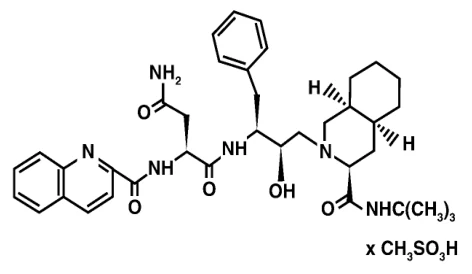
Physicochemical properties:
Description: Saquinavir mesylate is a white crystalline solid
Melting Point: 245-249ºC
Solubility: Solubility in water at 25ºC is 0.22 g/100 mL
pH: Approximately 5 in 1% aqueous suspension
CLINICAL TRIALS
In a randomized, double-blind clinical study (NV14256) in ZDV-experienced, HIV-infected patients, INVIRASE (saquinavir mesylate) in combination with zalcitabine was shown to be superior to either INVIRASE or zalcitabine monotherapy in decreasing the cumulative incidence of clinical disease progression to AIDS-defining events or death. Furthermore, in a randomized study (ACTG229/NV14255), patients with advanced HIV infection with history of prolonged ZDV treatment and who were given INVIRASE 600 mg tid + ZDV + zalcitabine experienced greater increases in CD4 cell counts as compared to those who received INVIRASE + ZDV or zalcitabine + ZDV. It should be noted that HIV treatment regimens that were used in these initial clinical studies of INVIRASE are no longer considered standard of care.
No large, controlled clinical trial has been performed with the INVIRASE/ritonavir 1000mg /100mg dosage regimen. INVIRASE in combination with low dose ritonavir, provides increased saquinavir plasma levels (see ACTION AND CLINICAL PHARMACOLOGY: Pharmacokinetics).
Study Demographics and Trial Design
Table 8: Summary of Patient Demographics for the MaxCmin 2 Clinical Trial
| Study # | Trial design | Dosage, route of administration and duration | Study subjects (n) | Mean age (Range) | Gender |
| MaxCmin 2 | Phase IV Randomized Open label Parallel group Multicentred | saquinavir soft gel capsule/ritonavir 1000mg/100mg BID + 2 NRTIs/NNRTIs Versus lopinavir/ritonavir 400mg/100mg BID + 2 NRTIs/NNRTIs 48 weeks | 161 163 | 40 (35-50) 40 (35-47) | 81% male 76% males |
Study Results
MaxCmin 2 Study: Saquinavir soft gel capsule/ritonavir versus lopinavir/ritonavir
In the MaxCmin 2 study, the safety and efficacy of saquinavir soft gel capsules/ritonavir 1000/100 mg bid plus 2 NRTIs/NNRTIs was compared with lopinavir/ritonavir 400/100 mg bid plus 2 NRTIs/NNRTIs in over 324 subjects. Values for median baseline CD4 count and median baseline plasma HIV RNA were 241 cells/mm3 and 4.4 log10 copies/ml in the saquinavir/ritonavir arm, and 239 cells/mm3 and 4.6 log10 copies/ml in the lopinavir/ritonavir arm, respectively. In the primary efficacy analysis, incidence of virologic failure, including all subjects that took at least one dose of the study medication (ITT/exposed population), fewer failures were observed in the lopinavir/ritonavir arm compared to the saquinavir/ritonavir arm (hazard ratio (HR) of lopinavir/ritonavir versus saquinavir/ritonavir: 0.5 (95% confidence intervals (CI): 0.3 – 0.8). This better outcome in the lopinavir/ritonavir arm was associated with lower failure rate among subjects no longer taking their assigned treatment and better compliance with the protocols intention to use antiretroviral treatment strategies aimed at suppressing viral replication at all times.
At 48 weeks, the proportion of subjects with HIV RNA below the limit of detection (< 50 copies/ml) was 53% (N=161) for the saquinavir arm versus 60% (N=163) for the lopinavir arm in the intent-to-treat, switch equals failure analysis, and 74% (N=114) for the saquinavir arm versus 70% (N=141) for the lopinavir arm in the on-treatment analysis (p = ns for both comparisons). The combination of saquinavir and ritonavir exhibited comparable virological activity with the lopinavir and ritonavir arm when switch from the assigned treatment was counted as virological failure. Over 48 weeks a similar strong immunological response was seen in both arms with median increases in CD4 count of 106 cells/mm3 for the lopinavir/ritonavir arm, and 110 cells/mm3 for the saquinavir/ritonavir arm. No difference in the incidence of adverse events of grade 3 and/or 4 was seen between the two arms.
Comparative Bioavailability Studies
Study BP17359 was a two-center, open-label, randomized, two-treatment, two-sequence, four period, replicated crossover study conducted in healthy male and female subjects (87 males, 7 females) to establish bioequivalence between INVIRASE Film-Coated Tablet (FCT) 500 mg and INVIRASE HC 200 mg, administered at a single dose of 1000 mg of saquinavir combined with multiple dose ritonavir 100 mg bid under fed conditions. Study BP17359 results are summarized in the table below.
Saquinavir (1000 mg dose) From measured data Geometric Mean Arithmetic Mean (CV %) |
|---|
| Parameter | Test* | Reference† | % Ratio of Geometric Means | 90% Confidence Interval |
|---|---|---|---|---|
AUCT (ng⋅h/mL) | 25042 27578 (43%) | 22567 25336 (47%) | 111.03 | [105.62, 116.71] |
AUCI (ng⋅h/mL) | 26826 29734 (45%) | 24430 27805 (51%) | 109.86 | [104.41, 115.59] |
Cmax (ng/mL) | 3644 3911 (36%) | 3064 3322 (39%) | 119.07 | [113.67, 124.72] |
Tmax§ (h) | 4 (2-8) | 5 (2-14) | ||
T½0 (h) | 6.43 (21%) | 6.21 (25%) |
* INVIRASE 500 mg Film Coated Tablet administered as a 1000 mg dose (2 x 500 mg).
† INVIRASE 200 mg Hard Gelatin Capsules [F. Hoffmann-La Roche, Basle, Switzerland] is identical to INVIRASE 200 mg Hard Gelatin Capsules commercially available in Canada and was administered as a 1000 mg dose (5 x 200 mg).
§ Expressed as the median (range) only.
0 Expressed as the arithmetic mean (CV%) only.
The following table presents the pharmacokinetic data split for gender and treatment in study BP17359. While tmax was in the same range for male and female subjects, t1/2,β was increased in female subjects following both treatments. Moreover, AUC0-∞ and Cmax were higher in female subjects than in male subjects.
| Parameter | A: INVIRASE HC/r | B: INVIRASE FCT/r | ||||||||||||
| Male | Female | Male | Female | |||||||||||
| Number of observations | 174 | 14 | 174 | 14 | ||||||||||
| AUC0-∞ (h*ng/mL) | 26384 (49%) 23343 (54%) | 45459 (35%) 43014 (36%) | 28407 (43%) 25786 (48%) | 46224 (35%) 43852 (34%) | ||||||||||
| Cmax (ng/mL) | 3267 (40%) 3008 (44%) | 4005 (28%) 3835 (30%) | 3808 (36%) 3548 (40%) | 5201 (22%) 5074 (24%) | ||||||||||
| tmax (h) | 5 (2-8) | 5 (3-14) | 4 (2-8) | 4 (2-8) | ||||||||||
| T1/2,ß (h) | 6.08 (22%) 5.94 (23%) | 7.85 (34%) 7.48 (33%) | 6.38 (22%) 6.24 (21%) | 7.12 (16%) 7.04 (16%) | ||||||||||
| CL/F (mL/h) | 48803 (55%) 42839 (54%) | 24579 (35%) 23248 (36%) | 43251 (52%) 38781 (48%) | 23947 (32%) 22804 (34%) | ||||||||||
Arithmatic means (arithmatic CV%) followed by geometric means (geometric CV%) are reported for AUC0-∞, Cmax, t1/2,ß, and CL/F. Median values (min-max) are reported for tmax.
A similar gender difference was observed in Study BP17653 when INVIRASE 500 mg Film-Coated Tablets were administered at a single dose of 1000 mg of saquinavir (without ritonavir) under fed conditions.
DETAILED PHARMACOLOGY
Animal Pharmacology
Saquinavir produced only minor effects in general pharmacology studies when administered orally at a dose level of 30 mg/kg either as a single dose or daily for five days. No pharmacodynamic effects were seen in the test models used when a single intravenous dose of the drug was given at a dose level of 1 mg/kg.
A transient reduction in response to a painful stimulus, and an acute anti-convulsant effect to leptazol were observed in mice after oral administration of saquinavir. These effects however, were not confirmed in either the same models following IV dosing, or after oral dosing in other models used to investigate neuropharmacological or analgesic properties of the drug.
A stimulation of respiration was seen in two of four anesthetized cats following intraduodenal administration of saquinavir. However, this effect was seen neither in anesthetized cats when the drug was given IV, nor in conscious cats following either IV or oral administration of saquinavir. Furthermore, no gross changes in respiration were seen during preclinical toxicity testing of saquinavir.
Table 9: Single-Dose General Pharmacology
| Test Model | Species #/sex/dose | Route Dose | Observations |
| gross behaviour | mouse 6 males cat: 4/sex | IV: 1 mg/kg IV: 1 mg/kg | no effects on gross behaviour or rectal temperature were seen no effects on gross behaviour were seen |
| leptazol-induced convulsions | mouse 10 females/dose | oral: 30 mg/kg IV: 1 mg/kg | anti-convulsant activity against tonic/ clonic convulsions (oral dosing only) |
| electroshock-induced convulsions | mouse 10 females/dose | oral: 30 mg/kg IV: 1 mg/kg | no anti-convulsant effect was seen |
| acetylcholine-induced writhing | mouse 10 males/dose | oral: 30 mg/kg IV: 1 mg/kg | no analgesic effect was seen |
| autonomic response | anesthetized cat 2/sex/dose | i.d.: 30 mg/kg IV: 1 mg/kg | small incr. in respiration rate in response to acetylcholine administration; no effect on autonomic response was seen |
| interaction on ouabain arrhythmias | mouse 10 females/dose | oral: 30 mg/kg IV: 1 mg/kg | no anti-arrhythmic effect was seen |
| cardiovascular and respiratory effects | anesthetized cat 2/sex/dose | i.d.: 30 mg/kg IV: 1 mg/kg | slight incr. in respiration rate and minute volume with decr. pCO2; no effects on cardiovascular or respiratory parameters |
| blood pressure, heart rate & respiratory rate | conscious cat 4/sex | IV: 1 mg/kg | no effects on systolic blood pressure, heart rate or respiration rate |
| urine excretion | rat 8 males | IV: 1 mg/kg | no effect was seen on diuresis |
| gut motility | mouse 15/sex | IV: 1 mg/kg | no effect on GI motility was seen |
| sheep red blood cell antibody test | rat 10 males | IV: 1 mg/kg | no effect was seen on antibody formation |
platelet aggregation (in vitro) | human plasma (2 M; 3 F) | concentration in plasma of 60 μM | no effect was observed on aggregation: alone or on aden. diphos.-induced aggregation |
Table 10: Five-Day Multiple Dose General Pharmacology
| Test Model | Species #/sex/dose | Route Daily Dose | Observations |
| gross behaviour | mouse 6 males cat 4/sex | oral: 30 mg/kg oral: 30 mg/kg | transient depression of pain response was seen Days 1 & 5; transient reduction in body temp. recorded on Day 5; no effects on gross behaviour were seen |
| leptazol-induced convulsions | mouse 10 females | oral: 30 mg/kg | no anti-convulsant activity was seen |
| electroshock-induced convulsions | mouse 10 females | oral: 30 mg/kg | no anti-convulsant effect was seen |
| acetylcholine-induced writhing | mouse 10 males | oral: 30 mg/kg | no analgesic effect was seen |
| interaction on ouabain arrhythmias | mouse 10 females | oral: 30 mg/kg | no anti-arrhythmic effect was seen |
| blood pressure, heart rate & respiratory rate | conscious cat 4/sex | oral: 30 mg/kg | no effects on systolic blood pressure, heart rate or respiration rate |
| urine excretion | rat 8 males | oral: 30 mg/kg | marginal incr. in sodium excretion on Day 5 |
| gut motility | mouse 30 females | oral: 30 mg/kg | no effect on GI motility was seen |
| sheep red blood cell antibody test | mouse 10 males | oral: 30 mg/kg | no effect on antibody formation was seen |
| effects on developing adjuvant arthritis | rat 5 females | oral: 30 mg/kg | no effects on adjuvant arthritis, secondary response, edema secondary lesions, or joint mobility were observed |
Drug-Drug Interactions
Table 11 summarizes the effects of saquinavir on the geometric mean AUC and Cmax of coadministered drugs, and Table 12 summarizes the effect of coadministered drugs on the geometric mean AUC and Cmax of saquinavir.
Table 11: Effects of Saquinavir on the Pharmacokinetics of Coadministered Drugs
| Coadministered Drug | Saquinavir Dose | N | % Change for Coadministered Drug | ||||||||||||
| AUC (95% CI) | Cmax (95% CI) | ||||||||||||||
| Saquinavir soft gelatin capsule: | |||||||||||||||
Clarithromycin 500 mg bid x 7 days
| 1200 mg tid x 7 days | 12V | ↑ 45% (17-81%) ↓ 24% (5-40%) | ↑ 39% (10-76%) ↓ 34% (14-50%) | |||||||||||
| Digoxin 0.5 mg single dose | 1000/100 mg bid x 16 days | 16V | ↑ 49% (32-69%)∧ | ↑ 27% (5-54%)∧ | |||||||||||
| Efavirenz 600 mg x 10 days | 1200 mg q8h x 10 days | 13V | ↓ 12% | ↓ 13% | |||||||||||
| Enfuvirtide 90 mg SC q12h (bid) for 7 days | 1000/100 mg (bid) saquinavir soft gel capsules/ ritonavir | 12P | ↔ | ↔ | |||||||||||
| **Midazolam 7.5 mg single oral dose | 1000/100 mg bid x 15 days | 16V | ↑ 1144% (975-1339%)∧ | ↑ 327% (264-402%)∧ | |||||||||||
| Rifabutin 300 mg daily x 10 days | 1200 mg tid x 10 days | 14P | ↑ 44% (17-78%) | ↑ 45% (14-85%) | |||||||||||
| Ritonavir 400 mg bid x 14 days | 400 mg bid x 14 days | 8V | ↔ | ↔ | |||||||||||
| R-Methadone 60-120 mg once daily | 1000/100 mg bid x 14 days | 12M | ↓ 19% (9-29 %)∧ | NA | |||||||||||
| Sildenafil 100 mg single dose | 1200 mg tid steady state | 27V | ↑ 210% (150-300%) | ↑ 140% (80-230%) | |||||||||||
**Terfenadine # 60 mg bid x 11 days
| 1200 mg tid x 4 days | 12V | ↑ 368% (257-514%) ↑ 120% (89-156%) | ↑ 253% (164-373%) ↑ 93% (59-133%) | |||||||||||
| Coadministered Drug | Saquinavir Dose | N | % Change for Coadministered Drug | |||||||||
| AUC (95% CI) | Cmax (95% CI) | |||||||||||
| INVIRASE (saquinavir mesylate hard gelatin capsules/tablets): | ||||||||||||
| Delavirdine 400 mg tid x 28 days | 600 mg tid x 14 days | 7V | ↓ 15% ± 16% | ↓ 5% | ||||||||
| Ketoconazole 200 mg daily x 6 days | 600 mg tid x 6 days | 12 V | ↔ | ↓ 18% (7-28%) | ||||||||
| Ketoconazole 200 mg daily | 1000/100 mg bid | 12 V | ↑168% (146-193%)^ | ↑45% (32-59%)^ | ||||||||
| Nevirapine 200 mg bid x 21 days | 600 mg tid x 7 days | 23 P | ↔ | ↔ | ||||||||
| #Zalcitabine (ddC) 0.75 mg tid x 7 days | 600 mg tid x 7 days | 27 P | ↔ | ↔ | ||||||||
Zidovudine 200 mg tid x >7 days
| 600 mg tid x >7 days | 18 P | ↔ ↔ | ↔ ↔ | ||||||||
| Nelfinavir 1250 mg bid | 1000/100 mg bid | 12 P | ↓ 6%§ ( 28%↓ - 22%↑ ) ^ | ↓ 5%§ ( 23%↓ - 16%↑)^ | ||||||||
Rifabutin 150 mg every 3 days x 22 days
| 1000 mg bid + 100 mg ritonavir bid | 14 V | ↑134% (109- 162%) ∧ ↑53% (36- 73%) ∧ | ↑130% (98- 167%) ∧ ↑86% (57- 119%) ∧ | ||||||||
Rifabutin 150 mg every 4 days x 21 days
| 1000 mg bid + 100 mg ritonavir bid | 13 V | ↑60% (43- 79%) ∧ ↔ (-10 - 13% )∧ | ↑111% (75- 153%) ∧ ↑68% (38 - 105% )∧ | ||||||||
↔ Denotes no statistically significant change in exposure
↑ Denotes an average increase in exposure by percentage indicated
↓ Denotes an average decrease in exposure by percentage indicated
∧ 90% Confidence Interval
§ Did not reach statistical significance
** INVIRASE should not be coadministered (see CONTRAINDICATIONS)
# No longer marketed in Canada
P Patient
V Healthy Volunteers
M Methadone-dependent, HIV negative patients
NA Not Available
Table 12: Effect of Coadministered Drugs on Saquinavir Pharmacokinetics
| Coadministered Drug | Saquinavir Dose | N | % Change for Saquinavir | ||||||||
| AUC (95% CI) | Cmax (95% CI) | ||||||||||
| Saquinavir soft gelatin capsules: | |||||||||||
| Clarithromycin 500 mg bid x 7 days | 1200 mg tid x 7 days | 12V | ↑ 177% (108-269%) | ↑ 187% (105-300%) | |||||||
| Efavirenz 600 mg x 10 days | 1200 mg q8h x 10 days | 13V | ↓ 62% | ↓ 50% | |||||||
| Erythromycin 250 mg qid x 7 days | 1200 mg tid x 7 days | 22P | ↑ 99% | ↑ 106% | |||||||
| Garlic Capsules bid | 1200mg tid x 3 days | 9V | ↓ 51% | ↓ 54% | |||||||
| Grapefruit Juice quadruple strength single dose | 600 mg single dose | 12V | ↑ 54% | ↑ 18% | |||||||
| Indinavir 800 mg q8h x 2 days | 800 mg single dose 1200 mg single dose | 6V 6V | ↑ 620% (273-1288%) ↑ 364% (190-644%) | ↑ 551% (320-908%) ↑ 299% (138-568%) | |||||||
| Lopinavir/ritonavir | Evidence from several clinical trials indicates that saquinavir concentrations achieved with saquinavir 1000 mg bid + lopinavir/ritonavir 400/100 mg bid are similar to those achieved following saquinavir/ritonavir 1000/100 mg bid. | ||||||||||
| Rifabutin 300 mg daily x 10 days | 1200 mg tid x 10 days | 14P | ↓ 47% | ↓ 39% | |||||||
| Rifampin 600 mg od x 14 days | 1200 mg tid x 14 days | 14V | ↓ 70% | ↓ 65% | |||||||
Ritonavir: 200 mg bid x 14 days 300 mg bid x 14 days 400 mg bid x 14 days | 800 mg bid x 14 days 800 mg bid x 14 days 800 mg bid x 14 days | 8V 8V 8V | ↑ 1589% (862-2867%) ↑ 1981% (1098-3513%) ↑ 2158% (1193-3842%) | ↑ 757% (416-1325%) ↑ 989% (562-1690%) ↑ 857% (479-1481%) | |||||||
| Ritonavir 400 mg bid x 14 days | 400 mg bid x 14 days† | 8V | ↑ 121% (7-359%) | ↑ 64%§ | |||||||
| Ritonavir 100 mg bid | 1000 mg bid† | 24P | ↑ 176% | ↑ 153% | |||||||
| Sildenafil 100 mg single dose | 1200 mg tid steady state | 27V | ↔ | ↔ | |||||||
| Coadministered Drug | Saquinavir Dose | N | % Change for Saquinavir | |||||||||||||
| AUC (95% CI) | Cmax (95% CI) | |||||||||||||||
| INVIRASE (saquinavir mesylate hard gelatin capsules/tablets): | ||||||||||||||||
| Atazanavir 300 mg once daily | 1600 mg daily + 100 mg ritonavir daily | 18P | ↑ 60% (16-122%) | ↑ 42% (10-84%) | ||||||||||||
| Delavirdine 400 mg tid x 14 days | 600 mg tid x 21 days | 13V | ↑ 448% (292-687%) | ↑ 417% (265-656%) | ||||||||||||
| Fosamprenavir 700 mg bid | 1000 mg bid + 100 mg ritonavir bid | 18P | ↓ 15% (-33% to 9%) | ↔ | ||||||||||||
| Indinavir 800 mg q8h | 600 mg or 1200 mg single doses | 6V | ↑ 6-fold | Not available | ||||||||||||
| Ketoconazole 200 mg daily x 6 days | 600 mg tid x 6 days | 12V | ↑ 130% (58-235%) | ↑ 147% (53-298%) | ||||||||||||
| Ketoconazole 200 mg daily | 1000/100 mg bid | 20V | ↔ | ↔ | ||||||||||||
| Nevirapine 200 mg bid x 21 days | 600 mg tid x 7 days | 23P | ↓ 24% (1-42%) | ↓ 28% (1-47%) | ||||||||||||
| Ranitidine 150 mg x two doses | 600 mg single dose | 12V | ↑ 67%§ | ↑ 74% (16-161%) | ||||||||||||
| Rifabutin 300 mg daily x 14 days | 600 mg tid x 14 days | 12P | ↓ 43% (29-53%) | ↓ 30%§ | ||||||||||||
| Rifabutin 150 mg every 3 days x 22 days | 1000 mg bid + 100 mg ritonavir bid | 25V | ↓13% (-31 to 9%)^ | ↓ 15% (-32 to 7%)^ | ||||||||||||
| Rifampin 600 mg daily x 7 days | 600 mg tid x 14 days | 12V | ↓ 84% (79-88%) | ↓ 79% (68-86%) | ||||||||||||
| Ritonavir 400 mg bid steady state | 400 mg bid steady state‡ | 7P | ↑ 1587% (808-3034%) | ↑ 1277% (577-2702%) | ||||||||||||
| Ritonavir 100 mg bid | 1000 mg bid‡ | 24P | ↑ 1124% | ↑ 1325% | ||||||||||||
| Tenofovir 300 mg once daily | 1000 mg bid + 100 mg ritonavir bid | 18P | ↔ | ↔ | ||||||||||||
| Tipranavir 500 mg + ritonavir 200 mg bid | 600 mg bid + 100 mg ritonavir bid | 20P | ↓ 76% (68-81%)^ | ↓ 70% (60-77%)^ | ||||||||||||
#Zalcitabine (ddC) 0.75 mg tid x 7 days | 600 mg tid x 7 days | 27P | ↔ | ↔ | ||||||||||||
| Zidovudine 200 mg tid x >7 days | 600 mg tid x >7 days | 20P | ↔ | ↔ | ||||||||||||
| Nelfinavir 1250 mg bid | 1000/100 mg bid | 12P | ↑ 13%§ (27%↓ - 74%↑)^ | ↑9%§ (27%↓ - 61%↑)^ | ||||||||||||
| Omeprazole 40 mg QD x 5 days | 1000 mg/ritonavir 100 mg BID x 15 days | 18V | ↑82% (44-131%)^ | ↑ 75% (38-123%)^ | ||||||||||||
↔ Mean change < 10%
↑ Denotes an average increase in exposure by percentage indicated
↓ Denotes an average decrease in exposure by percentage indicated
† % change for described regimen versus historical data for standard saquinavir soft gel capsule 1200 mg tid regimen
‡ % change for described regimen versus historical data for standard INVIRASE 600 mg tid regimen
§ Did not reach statistical significance
^ 90% Confidence Interval
# No longer marketed in Canada
P Patient
V Healthy Volunteers
MICROBIOLOGY
The relationship between the in vitro susceptibility of HIV infection to saquinavir and the inhibition of HIV in humans or the clinical response to therapy has not been established.
Western blot analysis has shown that saquinavir can block viral protein cleavage in infected cells at concentrations as low as 3.0 nM. Its mode of action has been confirmed by direct observation of virus maturation by electron microscopy: mature virus particles are replaced by immature forms within 24 h of treatment of chronically-infected CEM cells with 10 nM saquinavir. Viral yields from such treated cultures proved, as predicted, non-infectious on further passage on to fresh cells in the absence of drug, although there may be some late breakthrough on continued culture.
Saquinavir has shown consistently potent antiviral activity in primary monocytes and monocytic lung cell lines, and in lymphocytes or lymphoblastoid cells. Unlike nucleoside analogues (zidovudine, etc., which act only in early infection), saquinavir acts directly on its viral target enzyme. As a consequence of this direct action and because it does not require metabolic activation, the antiviral potential of saquinavir is retained against resting (non-dividing), chronically infected cultures (as well as acutely infected cultures).
In vitro antiviral activity of saquinavir was assessed in lymphoblastoid and monocytic cell lines and in peripheral blood lymphocytes. Saquinavir inhibited HIV activity in both acutely and chronically infected cells. IC50 and IC90 values (50% and 90% inhibitory concentrations) were in the range of 1 to 10 nM and 5 to 50 nM, respectively. In the presence of 50% human serum or alpha-1 glycoprotein (1 mg/ml), the antiviral activity of saquinavir decreases by an average factor of 25-fold and 14-fold, respectively. In cell culture, saquinavir demonstrated additive to synergistic effects against HIV-1 in combination with reverse transcriptase inhibitors (didanosine, lamivudine, nevirapine, stavudine, zalcitabine and zidovudine) without enhanced cytotoxicity. Saquinavir in combination with the protease inhibitors amprenavir, atazanavir, or lopinavir resulted in synergistic antiviral activity. Saquinavir displayed antiviral activity in vitro against HIV-1 clades A-H (IC50 ranged from 0.9 to 2.5 nM). The IC50 values of saquinavir against HIV-2 isolates in vitro ranged from 0.25 nM to 2.4 nM.
Evidence of saquinavir cytotoxicity has been found only at μM concentrations (typically 5-100 μM), affording a high in vitro therapeutic index of >1000. This lack of cytotoxicity has allowed long-term administration of the compound without detriment to host cells, in consequence of which studies have indicated the disappearance of HIV-1 (infectivity and DNA) from infected MT-2 cell cultures after some 80 days of drug treatment at 100 nM, and without rebound infection after 35 days from drug removal; this has been explained by outgrowth of healthy cells following the progressive death of the infected component.
TOXICOLOGY
Oral toxicity and toxicokinetic studies in the rat and marmoset of up to six months duration have demonstrated excellent tolerance to high plasma levels of saquinavir. Increased susceptibility to saquinavir, as a result of gastrointestinal irritancy, was seen in neonatal rats. After weaning, juvenile animals tolerated the drug with no indications of toxicity. No reproductive, teratogenic, developmental or mutagenic effects have been seen with saquinavir.
A four-week oral combination study of saquinavir and zidovudine was conducted in mice; no toxic or toxicokinetic interactions were observed between these two drugs. A small toxicity and toxicokinetic program was also conducted to evaluate the intravenous use of saquinavir. Administration to rats and marmosets for up to four weeks produced mild to severe effects at the injection site. Only minor systemic findings were observed that were considered related to treatment with saquinavir.
Carcinogenesis: In the rat and mouse carcinogenicity studies with saquinavir, animals were administered Ro 31-8959/008 which is the mesylate salt. Carcinogenicity studies found no indication of carcinogenic activity in rats and mice administered saquinavir for approximately 2 years. The plasma exposures (AUC values) in the respective species were up to approximately 37% of (using rat) and 85% of (using mouse) those obtained in humans at the recommended clinical dose boosted with ritonavir.
Mutagenesis: Mutagenicity and genotoxicity studies, with and without metabolic activation where appropriate, have shown that saquinavir has no mutagenic activity in vitro in either bacterial (Ames test) or mammalian cells (Chinese hamster lung V79/HPRT test). Saquinavir does not induce chromosomal damage in vivo in the mouse micronucleus assay or in vitro in human peripheral blood lymphocytes and does not induce primary DNA damage in vitro in the unscheduled DNA synthesis test.
Impairment of Fertility: Fertility and reproductive performance were not affected in rats at plasma exposures (AUC values) up to 33% of those obtained in humans at the recommended clinical dose boosted with ritonavir.
Teratogenicity: Embryotoxic/teratogenic effects were not observed in rats or rabbits at plasma exposures (AUC values) approximately 38% and 27%, respectively, of those achieved in humans at the recommended clinical dose of INVIRASE (1000 mg BID) boosted with ritonavir (100 mg BID).
REFERENCES
- 1. Ananworanich J, et al. Absence of resistance mutations in antiretroviral naïve patients treated with ritonavir-boosted saquinavir. Antiviral Therapy 2006; 11:631-635.
- 2. Bittner B, et al. Saquinavir 500 mg film-coated tablets demonstrate bioequivalence to saquinavir 200 mg hard capsules when boosted with twice-daily ritonavir in healthy volunteers. Antiviral Therapy 2005;10(7):803-10.
- 3. Boffito M. et al. Pharmocokinetics of saquinavir hard gel/ritonavir (1000/100 mg twice daily) when administered with tenofovir diproxail fumarate in HIV-1 infected subjects. British Journal of Clinical Pharmacology 2004; 59:38-42.
- 4. Boffitto M et al. Pharmacokinetics of once daily saquinavir/ritonavir in HIV-infected subjects: comparison with standard twice-daily regimen. Antiviral Therapy 2004; 9:423-429.
- 5. Cameron DW, Japour AJ, Xu Y, et al. Ritonavir and saquinavir combination therapy for the treatment of HIV infection. AIDS 1999;13(2):213-24.
- 6. Craig JC, Duncan IB, Hockley D et al. Antiviral properties of Ro 31-8959, an inhibitor of human immunodeficiency virus (HIV) proteinase. Antiviral Res 1991;16:295-305.
- 7. Dragsted UB, et al. Randomized trial to evaluate indinavir/ritonavir versus saquinavir/ritonavir in human immunodeficiency virus type 1 infected patients: The MaxCmin1 Trial. J Infect Dis 2003;188:635-642.
- 8. Dragsted UB, et al. Randomized trial to evaluate lopinavir/ritonavir versus saquinavir/ritonavir in human immunodeficiency virus type 1 infected patients: The MaxCmin2 Trial. Antiviral Therapy, 2005;10:735-743.
- 9. Hill A, et al. Analysis of genotypic and phenotypic cut-off levels for ritonavir-boosted saquinavir. HIV Medicine 2006;7:67-74.
- 10. Hsu A, Granneman GR, Cao G, et al. Pharmacokinetic interactions between two human immunodeficiency virus protease inhibitors, ritonavir and saquinavir. Clin Pharmacol Therapeutics 1998;63(4):453-464.
- 11. Johnson VA, Merrill DP, Chou TC et al. Human immunodeficiency virus type 1 (HIV-1) inhibitory interactions between protease inhibitor Ro 31-8959 and zidovudine, 2,3-dideoxycytidine, or recombinant interferon-a-A against zidovudine-sensitive or -resistant HIV-1 in vitro. J Infect Dis 1992;166:1143-6.
- 12. Kitchen V, Skinner C, Ariyoshi K et al. Safety and activity of saquinavir in HIV infection. Lancet 1995;345:952-5.
- 13. Kurowski M, et al. Pharmacokinetic and tolerability profile of twice-daily saquinavir hard gelatin capsules and saquinavir soft gelatin capsules boosted with ritonavir in healthy volunteers. HIV Medicine 2003;4:94-100.
- 14. Moyle G. Saquinavir: a review of its development, pharmacological properties and clinical use. Exp Opin Invest Drugs 1996;5(2):1-13.
- 15. Roberts N. Drug resistance patterns of saquinavir and other proteinase inhibitors. AIDS 1995; 9(suppl 2):S27-S32.
- 16. Roberts NA, Redshaw S. Discovery and development of the HIV proteinase inhibitor Ro 31-8959. In: Adams J and Merluzzi J, eds. The Search for Antiviral Drugs. Boston, Basel, Berlin. Birkhauser 1993:129-151.
- 17. Valer L, et al. Predictive value of drug levels, HIV Genotyping, and genotypic inhibitory quotient (GIQ) on response to saquinavir/ritonavir in antiretroviral experienced HIV-infected patients. Journal of Medical Virology 2005; 77:460-464.
- 18. Vella S. Clinical experience with saquinavir. AIDS 1995; 9(suppl 2):S21-S25.
- 19. Vella S, Butto S, Franco M et al. Viral load and CD4 responses during combination therapy with zidovudine and saquinavir: correlation with the emergence of viral isolates with reduced sensitivity. J AIDS & Human Retrov 1995;10(suppl 3):S21.
- 20. Winston A, et al. Effect of omeprazole on the pharmacokinetics of saquinavir-500 mg formulation with ritonavir in healthy male and female volunteers. AIDS 2006; 20(10):1401-1406