


Product Monograph - Iopidine
SUMMARY PRODUCT INFORMATION
| Route of Administration | Dosage Form / Strength | Clinically Relevant Nonmedicinal Ingredients |
| Ophthalmic (topical) | Ophthalmic solution/ apraclonidine 0.5% w/v and 1% w/v (as apraclonidine hydrochloride) | Benzalkonium chloride as preservative. For a complete listing see Dosage Forms, Composition and Packaging section. |
INDICATIONS AND CLINICAL USE
IOPIDINE® 1%
IOPIDINE 1% (apraclonidine ophthalmic solution) is indicated for the control or prevention of postsurgical elevations in intraocular pressure (IOP) that occur in patients after anterior segment laser ophthalmic surgery including argon laser trabeculoplasty, argon laser iridotomy and neodymium:yttrium aluminum garnet (Nd:YAG) laser posterior capsulotomy.
IOPIDINE® 0.5%
IOPIDINE 0.5% (apraclonidine ophthalmic solution) is indicated for adjunctive use in lowering intraocular pressure (IOP) and may be used as a short-term therapy in glaucoma patients on maximally tolerated medical therapy who require an additional IOP reduction.
The largest body of clinical data regarding the efficacy of apraclonidine as an adjunctive drug has been obtained in patients using timolol as the primary therapy. Apraclonidine has also been found to be effective in combination with topical betaxolol, carbachol, dipivefrin, echothiophate, epinephrine, levobunolol and pilocarpine and systemic acetazolamide and methazolamide.
The addition of IOPIDINE 0.5% to patients already using two aqueous suppressing drugs (i.e. beta-blocker plus carbonic anhydrase inhibitor) as part of their maximally tolerated medical therapy may not provide much additional benefit. Since IOPIDINE 0.5% is an aqueous suppressing drug, the addition of a third aqueous suppressant may not significantly reduce IOP.
Geriatrics (> 65 years of age):
IOPIDINE, 1% and 0.5%, is not recommended for use in the elderly as the safety and efficacy of IOPIDINE, 1% or 0.5%, have not been established in this population (see WARNINGS AND PRECAUTIONS, Special Populations, Geriatrics).
Pediatrics (< 18 years of age):
IOPIDINE, 1% and 0.5%, is contraindicated for use in children as the safety and efficacy of IOPIDINE, 1% or 0.5%, have not been established in this population (see WARNINGS AND PRECAUTIONS, Special Populations, Pediatrics).
CONTRAINDICATIONS
IOPIDINE, 1% and 0.5%, is contraindicated in patients who are:
- Hypersensitive to this drug or to any ingredient in the formulation or component of the container. For a complete listing, see the DOSAGE FORMS, COMPOSITION AND PACKAGING section of the product monograph.
- Hypersensitive to clonidine.
- Receiving monoamine oxidase inhibitors (MAOIs).
IOPIDINE, 1% and 0.5%, is contraindicated in children (see WARNINGS AND PRECAUTIONS, Special Populations, Pediatrics).
WARNINGS AND PRECAUTIONS
General
NOT FOR INJECTION. Topical ophthalmic use only.
IOPIDINE, 1% and 0.5%, is a potent depressor of intraocular pressure (IOP); therefore, patients may develop exaggerated reductions in IOP and should be closely monitored.
IOPIDINE 0.5%:
In most patients, a loss of effect occurs over time. This appears to be an individual occurrence with a variable time of onset and should be closely monitored.
Use of IOPIDINE 0.5% can lead to an allergic-like reaction characterized wholly or in part by the symptoms of hyperemia, pruritus, discomfort, tearing, foreign body sensation, and edema of the lids and conjunctiva. If ocular allergic-like symptoms occur, IOPIDINE 0.5% therapy should be discontinued. The allergic-like reaction associated with apraclonidine use may be masked by seasonal allergic conjunctivitis.
Effects on ability to drive and use machinery:
IOPIDINE, 1% and 0.5%, can cause dizziness and somnolence. Patients who engage in mental activities requiring mental alertness should be warned of the potential for a decrease in mental
alertness, especially when using IOPIDINE 0.5%. Patients should be advised not to drive or operate machinery.
Cardiovascular
Caution should be exercised in patients with severe cardiovascular disease, including hypertension. The possibility of a vasovagal attack should be considered and caution should be exercised in patients with a history of such episodes.
Caution should also be exercised in patients with coronary insufficiency, recent myocardial infarction, cerebrovascular disease, Raynaud’s disease or thromboanginitis obliterans.
Hepatic
IOPIDINE 0.5%:
Close monitoring of patients with impaired liver function is advised as the systemic dosage form of clonidine is partly metabolized in the liver.
Ophthalmologic
IOPIDINE 0.5%:
Contact with soft contact lenses should be avoided. IOPIDINE 0.5% contains the preservative benzalkonium chloride, which may cause eye irritation and is known to discolour soft contact lenses. Patients must be instructed to remove contact lenses prior to application of IOPIDINE 0.5% and wait at least 15 minutes before re-insertion.
Psychiatric
IOPIDINE 0.5%:
Caution and monitoring of depressed patients are advised since apraclonidine has been associated with depression.
Renal
IOPIDINE 0.5%:
Close monitoring of patients with impaired renal function is advised if they are candidates for topical IOPIDINE 0.5% therapy. While systemic absorption of apraclonidine following topical administration is low (see DETAILED PHARMACOLOGY, Pharmacokinetics), structurally-related clonidine does undergo a significant increase in half-life in patients with severe renal impairment.
Sexual Function/Reproduction
Human clinical studies have not been performed to evaluate the effect of topical ocular administration of IOPIDINE, 1% or 0.5%, on fertility. Reproduction and fertility studies in rats showed no adverse effect on male or female fertility at doses 5 to 10 times the maximum recommended human dose.
Special Populations
Pregnant Women: IOPIDINE, 1% and 0.5%, is not recommended for use during pregnancy. The safety of IOPIDINE, 1% and 0.5%, has not been evaluated in adequate and well controlled studies in pregnant women. Animal studies have shown that apraclonidine can have direct embryocidal effects in rabbits (see TOXICOLOGY, Reproduction and Teratology).
Nursing Women: Breastfeeding should be discontinued while using IOPIDINE, 1% and 0.5%. It is not known if topically applied IOPIDINE, 1% or 0.5%, is excreted in human milk. However, systemic clonidine can be found in mother's milk.
Geriatrics (> 65 years of age): IOPIDINE, 1% and 0.5%, is not recommended for use in the elderly as the safety and efficacy of IOPIDINE, 1% or 0.5%, have not been established in this population.
Pediatrics (< 18 years of age): IOPIDINE, 1% and 0.5%, is contraindicated for use in children (see CONTRAINDICATIONS). Adverse reactions including lethargy, bradycardia and decreased oxygen saturation have been reported in neonates and infants under 1 year of age even when a single dose of IOPIDINE, 1% or 0.5%, was administered (see ADVERSE REACTIONS, Pediatric Population).
ADVERSE REACTIONS
Adverse Drug Reaction Overview
The most commonly reported adverse events for IOPIDINE 1% in the use of laser surgery are upper lid elevation (1.3%), conjunctival blanching (0.4%) and mydriasis (0.4%).
The most commonly reported adverse events for IOPIDINE 0.5% leading to discontinuation include hyperemia, pruritus, discomfort, tearing, dry mouth, lid edema and foreign body sensation.
Clinical Trial Adverse Drug Reactions
Because clinical trials are conducted under very specific conditions the adverse reaction rates observed in the clinical trials may not reflect the rates observed in practice and should not be compared to the rates in the clinical trials of another drug. Adverse drug reaction information from clinical trials is useful for identifying drug-related adverse events and for approximating rates.
IOPIDINE 1%:
The following adverse events were reported in association with the use of IOPIDINE 1% in laser surgery: upper lid elevation (1.3%), conjunctival blanching (0.4%) and mydriasis (0.4%).
The following adverse events were observed in investigational non-laser surgery studies in which IOPIDINE 1% was administered once or twice daily for up to 28 days
Cardiovascular disorders: bradycardia, orthostatic episode, palpitations, vasovagal attack;
Central nervous system disorders: decreased libido, dream disturbances, insomnia, irritability;
Eye disorders: allergic response, blurred or dimmed vision, burning, conjunctival blanching, conjunctival microhemorrhage, discomfort, dryness, foreign body sensation, hypotony, itching, mydriasis, upper lid elevation;
Gastrointestinal disorders: abdominal pain, diarrhea, discomfort, emesis stomach;
Other disorders: body heat sensation, chest heaviness or burning, clammy or sweaty palms, dry mouth, extremity pain or numbness, fatigue, headache, head cold sensation, increased pharyngeal secretion, nasal burning or dryness, paresthesia, pruritus not associated with rash, shortness of breath, taste abnormalities.
IOPIDINE 0.5%:
Table 1 - Treatment-related adverse reactions (incidence rate ≥ 2.0%) in placebo-controlled clinical studies of IOPIDINE 0.5%
| Coded Adverse Event | SINGLE THERAPY N=183 | ADJUNCTIVE + MAXIMAL THERAPY N=152 | PLACEBO N=160 | |||
| N | % | N | % | N | % | |
| Ocular | ||||||
| Pruritus | 24 | 13.1 | 14 | 9.2 | 1 | 0.6 |
| Discomfort | 19 | 10.4 | 5 | 3.3 | 7 | 4.4 |
| Hyperemia | 15 | 8.2 | 25 | 16.4 | 5 | 3.1 |
| Tearing | 11 | 6.0 | 5 | 3.3 | 1 | 0.6 |
| Dry Eye | 6 | 3.3 | 1 | 0.7 | 1 | 0.6 |
| Foreign Body Sensation | 5 | 2.7 | 4 | 2.6 | 1 | 0.6 |
| Lid Edema | 5 | 2.7 | 3 | 2.0 | 0 | - |
| Blanching | 5 | 2.7 | 0 | - | 1 | 0.6 |
| Blurred Vision | 2 | 1.1 | 4 | 2.6 | 1 | 0.6 |
| Conjunctivitis | 2 | 1.1 | 3 | 2.0 | 0 | - |
| Nonocular | ||||||
| Body as a Whole Headache | 8 | 4.4 | 1 | 0.7 | 0 | - |
| Asthenia | 7 | 3.8 | 0 | - | 3 | 1.9 |
Central Nervous System Somnolence | 4 | 2.2 | 0 | - | 1 | 0.6 |
| Dizziness | 1 | 0.5 | 3 | 2.0 | 0 | - |
| Digestive Dry Mouth | 39 | 21.3 | 4 | 2.6 | 16 | 10.0 |
| Constipation | 5 | 2.7 | 0 | - | 0 | - |
| Respiratory Dry Nose | 11 | 6.0 | 0 | - | 1 | 0.6 |
| Rhinitis | 4 | 2.2 | 0 | - | 0 | - |
| Special Senses Taste Perversion | 10 | 5.5 | 2 | 1.3 | 2 | 1.3 |
N = sample size
Use of IOPIDINE 0.5% can lead to an allergic-like reaction characterized wholly or in part by the symptoms of hyperemia, pruritus, discomfort, tearing, foreign body sensation, and edema of the lids and conjunctiva.
The overall discontinuation rate in clinical studies with IOPIDINE 0.5% was 16%. The most commonly reported events leading to discontinuation included (in decreasing order of frequency) hyperemia, pruritus, discomfort, tearing, dry mouth, lid edema, and foreign body sensation.
The following adverse reactions (incidence) were reported in clinical studies of IOPIDINE 0.5% as being related to therapy:
Ocular: Hyperemia (11.9%), pruritus (11.3%), discomfort (7.2%), tearing (4.8%), foreign body sensation (2.7%), lid edema (2.4%), dry eye (2.1%), blurred vision (1.8%), blanching (1.5%), conjunctivitis (1.5%), lid margin crusting (1.2%).
Body as a whole: Headache (2.7%), asthenia (2.1%).
Central nervous system: Somnolence (1.2%), dizziness (1.2%).
Digestive system: Dry mouth (12.8%), constipation (1.5%).
Respiratory system: Dry nose (3.3%), rhinitis (1.2%).
Special senses: Taste perversion (3.6%).
Less Common Clinical Trial Adverse Drug Reactions (<1%)
Ocular: Conjunctival edema (0.9%), discharge (0.9%), abnormal vision (0.9%), pain (0.6%), lid disorder (0.6%), edema (0.6%), lid erythema (0.6%), irritation (0.3%), keratitis (0.3%), blepharitis (0.3%), blepharoconjunctivitis (0.3%), photophobia (0.3%), conjunctival follicles (0.3%), scleritis (0.3%), keratopathy (0.3%), lid scales (0.3%), corneal infiltrate (0.3%), corneal staining (0.3%).
Body as a whole: Chest pain (0.6%), abnormal coordination (0.3%), malaise (0.3%).
Cardiovascular: Peripheral edema (0.3%), arrhythmia. Although no reports of bradycardia related to 0.5% Apraclonidine Hydrochloride Ophthalmic Solution were available from clinical studies, the possibility of its occurrence based on apraclonidine's alpha 2 agonist effect should be considered.
Central nervous system: Depression (0.6%), nervousness (0.6%), insomnia (0.3%), paresthesia (0.3%).
Digestive system: Nausea (0.6%).
Musculoskeletal system: Myalgia (0.3%).
Respiratory system: Dyspnea (0.3%), pharyngitis (0.3%).
Skin: Contact dermatitis (0.3%), dermatitis (0.3%).
Special senses: Parosmia (0.3%).
Post-Market Adverse Drug Reactions
IOPIDINE 1%:
The following adverse reactions were seen either in subsequent clinical trials or via spontaneous post-market reporting:
Eye disorders: conjunctival vascular disorder, eyelid retraction, ocular hyperemia, punctate keratitis;
Gastrointestinal disorders: nausea;
Nervous system disorders: dizziness postural, presyncope, syncope;
Vascular disorders: hypertension, hypotension.
Immune system disorders: hypersensitivity
IOPIDINE 0.5%:
The following adverse reactions were seen either in subsequent clinical trials or via spontaneous post-market reporting:
Eye disorders: blepharospasm, conjunctival vascular disorders, eyelid ptosis, mydriasis, visual acuity reduced;
General disorders and administration site conditions: fatigue, irritability; Respiratory, thoracic and mediastinal disorders: rhinorrhea, throat irritation; Vascular disorders: vasodilation.
Immune system disorders: hypersensitivity
Pediatric Population
IOPIDINE, 1% and 0.5%, is contraindicated for use in children. Adverse reactions including lethargy, bradycardia and decreased oxygen saturation have been reported in neonates and infants under 1 year of age even when a single dose of apraclonidine was administered.
DRUG INTERACTIONS
Overview
IOPIDINE, 1% and 0.5%, is contraindicated in patients receiving monoamine oxidase inhibitors (MAOIs).
There is the potential for interactions with CNS depressants, tricyclic antidepressants, beta-blockets, antihypertensives and cardiac glycosides.
Drug-Drug Interactions
IOPIDINE, 1% and 0.5%, is contraindicated in patients receiving monoamine oxidase inhibitors (MAOIs). Alpha-antagonists, including apraclonidine, could potentiate the centrally mediated effects of MAOIs, in particular the side effects of orthostatic hypotension. Concomitant use of alpha-antagonists and MAOIs could produce a profound synergistic hypotensive effect and cause cardiovascular collapse in sensitive patients.
The possibility of an additive or potentiating effect with CNS depressants (alcohol, barbiturates, opiates, sedatives, anesthetics) should be borne in mind.
Tricyclic antidepressants have been reported to blunt the hypotensive effect of systemic clonidine. It is not known whether the concurrent use of these agents with apraclonidine can lead to a reduction in IOP lowering effect. No data on the level of circulating catecholamines after apraclonidine withdrawal are available. Caution, however, is advised in patients taking tricyclic antidepressants which can affect the metabolism and uptake of circulating amines.
Since apraclonidine may reduce pulse and blood pressure, caution in using drugs such as beta-blockers (ophthalmic and systemic), antihypertensives, and cardiac glycosides is advised. Patients using cardiovascular drugs concurrently with apraclonidine should have pulse and blood pressures frequently monitored. Caution should be exercised with simultaneous use of clonidine and other similar pharmacologic agents.
IOPIDINE 0.5%:
No specific drug interactions with topical glaucoma drugs (betaxolol, carbachol, dipivefrin, echothiopate, epinephrine, levobunolol, pilocarpine, timolol) or systemic medications (acetazolamide, methazolamide) were identified in clinical studies with IOPIDINE 0.5%.
DOSAGE AND ADMINISTRATION
Recommended Dose and Dose Adjustment
IOPIDINE 1%:
One drop of IOPIDINE 1% should be instilled in the scheduled operative eye one hour before initiating anterior segment laser surgery and a second drop should be instilled in the same eye immediately upon completion of the laser surgical procedure. Use a separate container for each single drop dose and discard each container after use.
IOPIDINE 0.5%:
One to two drops of IOPIDINE 0.5% should be instilled in the affected eye(s) two or three times daily. Since IOPIDINE 0.5% will be used with other ocular glaucoma therapies, an approximate 5 minute interval between instillation of each medication should be practised to prevent washout of the previous dose.
Missed Dose
IOPIDINE 0.5%:
If a dose is missed, a single drop should be applied as soon as possible before reverting to the regular dose. Do not use a double dose to make up for a missed dose.
OVERDOSAGE
Overdose is unlikely with topical ocular instillation, as the volume of exposure is limited by the capacity of the cul-de-sac. The small volume packaging and unique design of the DROP-TAINER® limit the potential for accidental overdosage by ingestion.
Signs of toxicity of apraclonidine in animals include lethargy, decreased activity, loss of appetite, hypothermia, decreased GI motility and constipation. Following oral administration of apraclonidine to monkeys, plasma levels 100 times greater than those seen in human plasma level studies were associated with moderate signs of toxicity, including lethargy, hypoactivity, and loss of appetite; no significant target organ toxicities were found. Acute oral toxicity studies in rats and mice resulted in LD50 values of 64 and 5 mg/kg, respectively. While higher doses usually caused deaths within 24 hours, lower doses often resulted in delayed deaths.
While no instances of human ingestion of IOPIDINE, 1% and 0.5%, are known, overdose with the oral form of clonidine has been reported to cause hypotension, transient hypertension, asthenia, vomiting, irritability, diminished or absent reflexes, lethargy, somnolence, sedation or coma, pallor, hypothermia, bradycardia, conduction defects, arrhythmias, dryness of the mouth, miosis, apnea, respiratory depression, hypoventilation, and seizure, particularly in children.
Treatment of an oral overdose includes supportive and symptomatic therapy; a patent airway should be maintained. Gastric lavage, IV fluids, atropine, dopamine, tolazoline, furosemide and diazoxide have been reported to be useful in treating the systemic symptoms associated with oral clonidine overdose. Hemodialysis is of limited value, since a maximum of 5% of circulating drug is removed.
An ocular overdose can be flushed from the eye(s) with lukewarm water.
For management of a suspected drug overdose, contact your regional Poison Control Centre.
ACTION AND CLINICAL PHARMACOLOGY
Apraclonidine is a relatively selective alpha adrenergic agonist and does not have significant membrane stabilizing (local anaesthetic) activity. When instilled into the eye, apraclonidine has the action of reducing intraocular pressure (IOP). Aqueous fluorophotometry studies in humans demonstrate that apraclonidine's predominant mechanism of action is reduction of aqueous flow via stimulation of the alpha-adrenergic system.
Apraclonidine is a partial agonist for alpha 1 and alpha 2 adrenergic receptors. The affinity of apraclonidine for alpha 2 receptors, as measured by competitive radioligand binding studies, is much higher than its affinity toward alpha 1 receptors.
The onset of action of apraclonidine can usually be noted within one hour following administration. The maximum IOP reduction usually occurs three to five hours after application of a single dose.
STORAGE AND STABILITY
Store between 2-30oC (36 – 86oF). Do not freeze. Protect from light. Keep out of the reach and sight of children.
DOSAGE FORMS, COMPOSITION AND PACKAGING
IOPIDINE 1%:
IOPIDINE 1% is a sterile isotonic aqueous solution containing:
Medicinal ingredient: apraclonidine hydrochloride 1.15% equivalent to 1% apraclonidine base Preservative: benzalkonium chloride 0.01%
Non-medicinal ingredients: sodium chloride, sodium acetate, sodium hydroxide and/or hydrochloric acid (to adjust pH) and purified water.
IOPIDINE 1% is supplied as follows: 0.1 mL in plastic ophthalmic dispensers, packaged two per pouch. These dispensers are enclosed in a foil overwrap as an added barrier to evaporation.
IOPIDINE 0.5%:
IOPIDINE 0.5% is a sterile isotonic aqueous solution containing:
Medicinal ingredient: apraclonidine hydrochloride 0.575% equivalent to 0.5% apraclonidine base
Preservative: benzalkonium chloride 0.01%
Non-medicinal ingredients: sodium chloride, sodium acetate, sodium hydroxide and/or hydrochloric acid (to adjust pH) and purified water.
IOPIDINE 0.5% is supplied in a 5 mL plastic DROP-TAINER® dispenser.
Tamper evidence is provided by a closure with an extended skirt that locks to the bottle finish on application and breaks away from the closure on opening. After cap is removed: if tamper evident snap collar is loose, remove before using product.
PART II: SCIENTIFIC INFORMATION
PHARMACEUTICAL INFORMATION
Drug Substance
Proper name: Apraclonidine hydrochloride
Chemical name: 2-[(4-Amino-2,6-dichlorophenyl)imino]imidazolidine
monohydrochloride
Molecular formula and molecular mass: C9H10Cl2N4•HCl; 281.6
Structural formula:
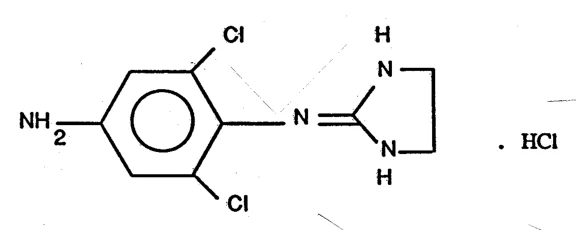
Physicochemical properties: Apraclonidine hydrochloride is a white to off-white powder and is highly soluble in water.
CLINICAL TRIALS
Laser Surgery Therapy
Optic nerve head damage and visual field loss may result from an acute elevation in intraocular pressure (IOP) that can occur after surgical procedures. Elevated IOP, whether acute or chronic in duration, is a major risk factor in the pathogenesis of visual field loss. The higher the peak or spike of IOP, the greater the likelihood of visual field loss and optic nerve damage especially in patients with previously compromised optic nerves.
Placebo-controlled clinical studies in patients requiring argon laser trabeculoplasty, argon laser iridotomy or Nd:YAG laser posterior capsulotomy showed that IOPIDINE® 1% apraclonidine ophthalmic solution) controlled or prevented the postsurgical IOP rise typically observed in patients after undergoing those procedures. After surgery, the mean IOP was 1.9 to 4.0 mmHg below the corresponding pre-surgical baseline pressure before IOPIDINE 1% treatment.
With placebo treatment, postsurgical pressures were 2.5 to 8.4 mmHg higher than their corresponding pre-surgical baselines. Overall, only 2% of patients treated with IOPIDINE 1% had severe IOP elevations (spikes ≥ 10 mm Hg) during the first three hours after laser surgery, whereas 23% of placebo-treated patients responded with severe pressure spikes (Table 2). Of the patients that experienced a pressure spike after surgery, the peak IOP was above the 30 mmHg in most patients (Table 3) and was above 50 mmHg in seven placebo-treated patients and one IOPIDINE 1% -treated patient.
Table 2: Incidence of Postsurgical Intraocular Pressure Spikes ≥ 10 mmHg Following Laser Surgery Therapy
| Study | Laser Procedure | Treatment | |||
| Apraclonidine | Placebo | ||||
| N | % | N | % | ||
| 1 | Overall | 0/76 | 0 | 22/79 | 27 |
| 2 | Overall | 3/84 | 4 | 15/84 | 18 |
| 1 | Trabeculoplasty | 0/50 | 0 | 12/51 | 24 |
| 2 | Trabeculoplasty | 2/41 | 5 | 8/42 | 19 |
| 1 | Iridotomy | 0/13 | 0 | 8/19 | 42 |
| 2 | Iridotomy | 0/18 | 0 | 4/19 | 21 |
| 1 | Posterior Capsulotomy | 0/8 | 0 | 2/9 | 22 |
| 2 | Posterior Capsulotomy | 1/25 | 4 | 3/23 | 13 |
N = Number Spikes/Number Eyes
Table 3: Magnitude of Postsurgical Intraocular Pressure in Patients with Severe Pressure Spikes ≥ 10 mmHg Following Laser Surgery Therapy
| Treatment | Total Spikes | Maximum Postsurgical Intraocular Pressure (mmHg) | |||
| 20-29 mmHg | 30-39 mmHg | 40-49 mmHg | > 50 mmHg | ||
| Apraclonidine | 3 | 0 | 0 | 2 | 1 |
| Placebo | 37 | 3 | 21 | 6 | 7 |
Glaucoma Therapy:
Dose-response and comparative studies (0.125% - 1.0% apraclonidine) demonstrate that 0.5% apraclonidine is at the top of the dose/response IOP reduction curve. Based upon the dose response and efficacy studies, and the incidence of ocular allergic and systemic side effects (see WARNINGS AND PRECAUTIONS), IOPIDINE 0.5% is recommended for short term use in glaucoma patients on maximally tolerated medical therapy who require an additional IOP reduction.
The utility of IOPIDINE 0.5% is most apparent for those glaucoma patients on maximally tolerated medical therapy. In such patients, IOPIDINE 0.5% provided further IOP reductions of 2.1 to 3.2 mmHg for three months, even when patients were using a beta-blocker, epinephrine, pilocarpine, and oral carbonic anhydrase inhibitors, and had undergone laser trabeculoplasty. Among those patients on maximally tolerated medical therapy whose IOP remained uncontrolled at 22 mmHg or greater, IOPIDINE 0.5% was particularly effective, providing an additional IOP reduction of 3.7 to 5.0 mmHg. Filtration surgery was performed in about 15% of patients due to treatment failure; the average therapy time before surgery was 4.3 months. An additional 19.8% of patients were discontinued due to adverse events, primarily allergic-like reactions. Thus, in approximately 67% of the patients, IOPIDINE 0.5% provided substantial control of glaucoma.
Adjunctive therapy studies in glaucoma patients demonstrated that IOPIDINE 0.5% dosed BID for 90 days in patients receiving 0.5% timolol, effectively lowered IOP by an additional 2.5 to 5.0 mmHg. The additional IOP reduction with apraclonidine is more pronounced shortly (3 hrs) after instillation. IOPIDINE 0.5% as a single therapy dosed TID for 90 days effectively lowered IOP by 3.9 to 7.9 mmHg in glaucoma patients. Although afternoon IOP reduction is comparable between a beta-blocker and IOPIDINE 0.5%, a beta-blocker is more effective in reducing morning IOP than IOPIDINE 0.5%.
The IOP lowering efficacy of IOPIDINE 0.5% is diminished over time in some patients. This loss of control, or tachyphylaxis, appears to be an individual occurrence with an unpredictable onset.
Approximately 20% of patients treated with IOPIDINE 0.5% experienced apparent ocular allergic responses (mean onset time 38.6 days, with a range of 1 to 158 days), which resolved upon discontinuation of drug therapy.
The overall discontinuation rates in clinical studies with IOPIDINE 0.5% ranged from 14.8% in single therapy studies to 21.5% in adjunctive therapy studies.
The unpredictable loss of IOP control in some patients and incidence of ocular allergic responses and systemic side effects may limit the length of use of IOPIDINE 0.5% as a single, or adjunctive, medication in long term use. However, patients on maximally tolerated medical therapy still benefit from the additional IOP reduction provided by the short term use of IOPIDINE 0.5%.
DETAILED PHARMACOLOGY
Pharmacodynamics
Human Studies:
Mechanism of Action: Apraclonidine is a relatively selective alpha-2 adrenergic agonist and does not have significant membrane stabilizing (local anaesthetic) activity. When instilled in the eye, apraclonidine has the action of reducing elevated, as well as normal, intraocular pressure (IOP), whether or not accompanied by glaucoma.
Aqueous fluorophotometry studies in humans demonstrate that apraclonidine's predominant mechanism of action is reduction of aqueous flow via stimulation of the alpha-adrenergic system. Unlike beta-blockers and epinephrine, apraclonidine reduces aqueous flow during the day and also at night during sleep. Apraclonidine's mechanism of action may account for the additional IOP reductions observed after instillation of Apraclonidine Ophthalmic Solution in patients receiving a beta-blocker or receiving maximally tolerated medical therapy.
Cardiovascular: In a safety study involving 21 healthy volunteers administered 1 drop of 1% apraclonidine hydrochloride ophthalmic solution twice daily for 28 consecutive days, no clinically significant effects attributable to the drug could be found when blood pressure and heart rate were measured.
Central Nervous System Effects: A statistically significant decreased IOP was observed in the contralateral eye of normal volunteers treated unilaterally with 1% apraclonidine hydrochloride ophthalmic solution. During the seven hour period following treatment, there was a mean maximum decrease of 6.5 ± 4.3 mmHg in the treated eye (a 37.3% ± 20.4% decrease from pre-treatment baseline) and a mean maximum decrease of 2.7 ± 3.4 mmHg in the contralateral eye (a 14.9% ± 19% decrease from pre-treatment baseline).
Ocular Effects: IOPIDINE 0.5% does not produce miosis or myopia commonly associated with cholinergic agents. The blurred vision and night blindness often observed with standard miotic therapy are not associated with IOPIDINE 0.5%. Thus patients with central lenticular opacities avoid the visual impairment caused by a constricted pupil.
Animal Studies:
Blood Flow Effects: Apraclonidine Ophthalmic Solution, because of its alpha adrenergic activity, is a vasoconstrictor. Single dose ocular blood flow studies in monkeys, using the microsphere technique, demonstrated a reduced blood flow for the anterior segment; however, no reduction in blood flow was observed in the posterior segment of the eye after a topical dose of 0.5% Apraclonidine Ophthalmic Solution. Chronic treatment of primates with 1.5% Apraclonidine Ophthalmic Solution three times a day for one year did not result in morphologic effects which would be indicative of vasoconstriction of the anterior or posterior segments of the eye. Ocular blood flow studies have not been conducted in humans.
Pharmacokinetics:
Human Studies:
The onset of action of apraclonidine can usually be noted within one hour, and the maximum IOP reduction occurs three to five hours after application. Significant IOP reduction can be maintained with 0.5% Apraclonidine Ophthalmic Solution; the duration of action in some patients is less than 12 hours.
Topically administered apraclonidine is absorbed systematically and is present at low concentrations in the plasma. Studies of 0.5% Apraclonidine Ophthalmic Solution dosed one drop three times a day in both eyes for 10 days in normal volunteers yielded mean peak and trough apraclonidine plasma concentrations of 0.9 ng/mL and 0.5 ng/mL, respectively. The half-life of apraclonidine was calculated to be 8 hours. Protein binding has been measured in human plasma by ultrafiltration and equilibrium dialysis (3). Both methods indicated the extent of binding to be low (22-29%). These data are consistent with the low frequency of systemic side effects observed with apraclonidine in controlled clinical studies.
Animal Studies:
Studies in rabbits with radiolabeled apraclonidine have demonstrated absorption into the eye after topical ocular administration. In the iris-ciliary body, aqueous humor and lens, maximal concentrations were reached at approximately 2 hours after dosing (1.4, 0.5, and 0.2 ug equivalents/gm, respectively). The half-life of apraclonidine in the aqueous humor was approximately 2 hours. Concentrations of 4.7 ug equivalents/gm were measured in the cornea at 20 minutes post-dose.
Following IV administration, the plasma half-life of parent apraclonidine was 9 hours in the Cynomolgus monkey and 3 hours in the rat. In both species the half-life of radioactivity from 3H-apraclonidine was longer than that of the parent drug. Approximately 10 metabolites were identified in rat urine and plasma. In both rats and Cynomolgus monkeys, urinary excretion was the primary route of elimination (65-75% of dose) with the balance eliminated in the feces.
TOXICOLOGY
Acute Toxicity
The oral LD50 of the drug ranged from 3 to 8 mg/kg in mice and 38 to 107 mg/kg in rats. The intravenous LD50 of the drug ranged from 6 to 9 mg/kg in mice and 9 to 21 mg/kg in rats. LD50 values in these ranges are indicative of a drug with a high degree of toxicity. Mortalities occurred one (1) to nine (9) days after administration, with systemic signs of toxicity including lethargy, impaired motor co-ordination and partial loss of consciousness. Bloody tears and/or urine and hypothermia were observed at extremely high doses (≥ 80 mg/kg).
Long Term Toxicity
Topical ocular administration of two drops of 0.5, 1.0 and 1.5% Apraclonidine Hydrochloride Ophthalmic Solution to New Zealand albino rabbits three times daily for one month resulted in sporadic and transient instances of minimal corneal edema in the 1.5% group only. No histopathological changes were noted in the affected eyes.
Topical ocular administration of 1.5% Apraclonidine Hydrochloride Ophthalmic Solution three times daily for one year to Cynomolgus monkeys elicited minimal conjunctival congestion and single instances of transient and sporadic fluorescein staining. No corneal cloudiness, iritis or lenticular changes were observed.
Reproduction and Teratology
Reproduction and fertility studies in rats showed no adverse effect on male or female fertility at doses 5 to 10 times the maximum recommended human dose.
Teratogenicity studies with apraclonidine HCl in rabbits and rats at doses up to 3.0 mg/kg/day in rabbits (60 times the maximum recommended human dose) and 0.3 mg/kg/day in rats (6 times the maximum recommended human dose) showed no evidence of fetal malformations. Embryotoxicity, however, was evident at the high dose level in the rabbit study. Dose-related maternal toxicity was evident in both the rat and rabbit studies.
Mutagenicity
No evidence of apraclonidine-induced mutagenicity was observed in in vitro microbial (Ames test), mammalian (mouse lymphoma), chromosome aberration, sister chromatid exchange, or malignant transformation test assays or in an in vivo micronucleus assay.
Carcinogenicity
There was no significant increase in tumour incidence or type following two years of oral administration of apraclonidine HCl to rats at dose levels 20 times the maximum recommended human dose or in mice at dose levels 12 times the maximum recommended human dose.
Other Studies
Two sensitization assays were performed in animals: the Buehler occlusive patch test in guinea pigs and the guinea pig maximization test (GPMT). While the Buehler test suggested little or no potential for sensitization, the GPMT revealed a moderate sensitization potential, indicating that there may be patients who develop a contact sensitization response with repeated use of this drug.
REFERENCES
- 1.
Abrams DA, Robin AL, Pollack IP et al. The safety and efficacy of topical 1%
ALO2145 (p-aminoclonidine hydrochloride) in normal volunteers. Arch Ophthalmol 1987;105:1205-1207.
- 2. Gharagozloo NZ, Relf SJ, Brubaker RF. Aqueous flow is reduced by the alpha-adrenergic agonist, apraclonidine hydrochloride (ALO 2145). Ophthalmology 1988;95:1217-1220.
- 3. Koskela T, Brubaker RF. Apraclonidine and timolol. Combined effects in previously untreated normal subjects. Arch Ophthalmol 1991;109:804-806.
- 4. Lish AJ, Camras CB, Podos SM. The effect of apraclonidine on intraocular pressure in glaucoma patients on maximally tolerated medications. J of Glaucoma, 1992, in press
- 5. Morrison JC, Robin AL. Adjunctive glaucoma therapy. A comparison of apraclonidine to dipivefrin when added to timolol maleate. Ophthalmology 1989;96:3-7.
- 6. Robin AL, Pollack IP, House B, Enger C. Effects of ALO2145 on intraocular pressure following argon laser trabeculoplasty. Arch Ophthalmol 1987;105:646-650.
- 7. Robin AL, Pollack IP, deFaller JM. Effects of topical ALO2145 (p-aminoclonidine hydrochloride) on the acute intraocular pressure rise after argon laser iridotomy. Arch Ophthalmol 1987;105:1208-1211.
- 8.
Robin AL. Short-term effects of unilateral 1% apraclonidine therapy. Arch Ophthalmol
1988;106:912-915.