


Product Monograph - Irinotecan Hydrochloride Injection USP (Pfizer Canada)
RECENT MAJOR LABEL CHANGES
| 7 Warnings and Precautions, 7.1.1 Pregnant Women | 07/2021 |
| 7 Warnings and Precautions, 7.1.2 Breast-feeding | 07/2021 |
| 7 Warnings and Precautions, General, Patients with reduced UGT1A1 activity | 09/2022 |
TABLE OF CONTENTS
Sections or subsections that are not applicable at the time of authorization are not listed.
RECENT MAJOR LABEL CHANGES .......................................................................................... 2
TABLE OF CONTENTS ............................................................................................................ 2
PART I: HEALTH PROFESSIONAL INFORMATION .................................................................... 4
1 INDICATIONS ............................................................................................................. 4
1.1 Pediatrics .................................................................................................................. 4
1.2 Geriatrics .................................................................................................................. 4
2 CONTRAINDICATIONS ................................................................................................ 4
3 SERIOUS WARNINGS AND PRECAUTIONS BOX ........................................................... 5
4 DOSAGE AND ADMINISTRATION ................................................................................ 5
4.1 Dosing Considerations ............................................................................................. 5
4.2 Recommended Dose and Dosage Adjustment ........................................................ 6
4.3 Reconstitution ........................................................................................................ 12
4.4 Administration ....................................................................................................... 13
5 OVERDOSAGE .......................................................................................................... 13
6 DOSAGE FORMS, STRENGTHS, COMPOSITION AND PACKAGING .............................. 13
7 WARNINGS AND PRECAUTIONS ............................................................................... 14
7.1 Special Populations ................................................................................................ 19
7.1.1 Pregnant Women ............................................................................................. 19
7.1.2 Breast-feeding .................................................................................................. 20
7.1.3 Pediatrics .......................................................................................................... 20
7.1.4 Geriatrics .......................................................................................................... 20
8 ADVERSE REACTIONS............................................................................................... 20
8.1 Adverse Reaction Overview ................................................................................... 20
8.2 Clinical Trial Adverse Reactions ............................................................................. 23
8.2.1 Clinical Trial Adverse Reactions – Pediatrics.................................................... 34
8.3 Less Common Clinical Trial Adverse Reactions ...................................................... 34
8.3.1 Less Common Clinical Trial Adverse Reactions – Pediatrics ............................ 34
8.4 Abnormal Laboratory Findings: Hematologic, Clinical Chemistry and Other Quantitative Data ............................................................................................................. 34
8.5 Post-Market Adverse Reactions ............................................................................. 35
9 DRUG INTERACTIONS .............................................................................................. 35
9.2 Drug Interactions Overview ................................................................................... 35
9.3 Drug-Behavioural Interactions ............................................................................... 36
9.4 Drug-Drug Interactions .......................................................................................... 36
9.5 Drug-Food Interactions .......................................................................................... 38
9.6 Drug-Herb Interactions .......................................................................................... 39
9.7 Drug-Laboratory Test Interactions......................................................................... 39
10 CLINICAL PHARMACOLOGY ...................................................................................... 39
10.1 Mechanism of Action ....................................................................................... 39
10.2 Pharmacodynamics .......................................................................................... 39
10.3 Pharmacokinetics ............................................................................................. 39
11 STORAGE, STABILITY AND DISPOSAL ........................................................................ 42
12 SPECIAL HANDLING INSTRUCTIONS .......................................................................... 42
PART II: SCIENTIFIC INFORMATION ..................................................................................... 43
13 PHARMACEUTICAL INFORMATION .......................................................................... 43
14 CLINICAL TRIALS ...................................................................................................... 44
14.1 Trial Design and Study Demographics ............................................................. 44
14.2 Study Results .................................................................................................... 47
15 MICROBIOLOGY ...................................................................................................... 56
16 NON-CLINICAL TOXICOLOGY .................................................................................... 56
PATIENT MEDICATION INFORMATION ................................................................................ 62
PART I: HEALTH PROFESSIONAL INFORMATION
1 INDICATIONS
Irinotecan Hydrochloride Injection USP is indicated as :
- a component of first-line therapy for patients with metastatic carcinoma of the colon or rectum.
- a single agent for the treatment of patients with metastatic carcinoma of the colon or rectum whose disease has recurred or progressed following 5-fluorouracil-based therapy.
Irinotecan Hydrochloride Injection USP should be administered only under the supervision of a physician who is experienced in the use of cancer chemotherapeutic agents. Appropriate management of complications is possible only when adequate diagnostic and treatment facilities are readily available.
1.1 Pediatrics
Pediatrics: The safety and effectiveness of Irinotecan Hydrochloride Injection USP in the pediatric population have not been established (see 7 WARNINGS AND PRECAUTIONS).
1.2 Geriatrics
Geriatrics: Evidence from clinical and pharmacokinetic studies suggests that patients 65 years of age or older should be closely monitored because of a greater risk of late diarrhea in this population. Specific dosing recommendations may apply to this population depending upon the regimen used (see 7 WARNINGS AND PRECAUTIONS, General, Geriatrics; 4 DOSAGE AND ADMINISTRATION and 14 CLINICAL TRIALS).
2 CONTRAINDICATIONS
Irinotecan Hydrochloride Injection USP is contraindicated in patients who are hypersensitive to this drug or to any ingredient in the formulation or component of the container. For a complete listing, see 6 DOSAGE FORMS, STRENGTHS, COMPOSITION AND PACKAGING.
Co-administration of Irinotecan Hydrochloride Injection USP with azole antifungals (ketoconazole, fluconazole, itraconazole), known CYP3A4 inhibitors, is contraindicated because this can lead to an increase in the relative exposure to the active metabolite SN-38 and can therefore possibly lead to increased toxicity.
In patients receiving concomitant irinotecan hydrochloride trihydrate and ketoconazole, exposure to SN-38 was increased by approximately 110%. Patients should discontinue ketoconazole at least 1 week prior to starting irinotecan therapy. See 7 WARNINGS AND PRECAUTIONS regarding potential drug-drug interactions with other CYP3A4 inhibitors and inducers.
Patients with hereditary fructose intolerance should not be given Irinotecan Hydrochloride Injection USP, as this product contains sorbitol, see 6 DOSAGE FORMS, STRENGTHS, COMPOSITION AND PACKAGING.
3 SERIOUS WARNINGS AND PRECAUTIONS BOX
Serious Warnings and Precautions
|
4 DOSAGE AND ADMINISTRATION
4.1 Dosing Considerations
Recommendations common to combination and single agent Irinotecan Hydrochloride Injection USP schedules
Dosing of patients is not recommended with (see 7 WARNINGS AND PRECAUTIONS)
- serum bilirubin > 35 µmol/L, transaminase > 3 times ULN if no liver metastases, or transaminase > 5 times ULN with liver metastases
- ECOG performance status 3 or 4
Recommended laboratory tests (see 7 WARNINGS AND PRECAUTIONS) before/during therapy
- white blood cell count with differential, hemoglobin and platelet count before each dose
- liver function before initiation of treatment and monthly or as clinically indicated
Dose reduction may be considered for patients (see 7 WARNINGS AND PRECAUTIONS)
- aged ≥ 70 years
- with prior pelvic/abdominal radiotherapy
- with performance status of 2
- with moderately elevated bilirubin levels (17-35 µmol/L)
- with Gilbert’s syndrome
Dose schedules, dose modifications and dose delay
- patients should be carefully monitored for toxicity and assessed prior to each treatment
- dosage schedule and dose modifications for combination therapy are summarized in Tables 1 and 2 and for single agent therapy in Tables 3 and 4
dose modifications should be based on the worst preceding toxicity. Patients should return to pre-treatment bowel function without requiring antidiarrhea medications for at least 24 hours
- before the next chemotherapy administration. Patients experiencing clinically significant (defined as grade ≥2) diarrhea, abdominal cramping, or neutropenia on the day of treatment administration should have treatment delayed until they recover and subsequent doses should be decreased.
- a new cycle of therapy should not begin until the toxicity has recovered to NCI grade 1 or less. Treatment may be delayed 1 to 2 weeks to allow for recovery from treatment-related toxicity. If the patient has not recovered, consideration should be given to discontinuing therapy.
- provided intolerable toxicity does not develop, treatment with additional cycles may be continued indefinitely as long as patients continue to experience clinical benefit.
It is recommended that patients receive premedication with antiemetic agents. Prophylactic or therapeutic administration of atropine should be considered in patients experiencing cholinergic symptoms. Besides the dosage modification, prompt use of oral loperamide is recommended in order to control and treat the diarrhea (see 7 WARNINGS AND PRECAUTIONS, Gastrointestinal).
4.2 Recommended Dose and Dosage Adjustment
Dosage in Patients with Reduced UGT1A1 Activity
When administered in combination with other agents, or as a single-agent, a reduction in the starting dose should be considered for patients known to be homozygous for UGT1A1*28 or *6 allele, as well as for those who have experienced prior hematologic toxicity with previous treatment. The exact reduction in starting dose in this patient population has not been established and any subsequent dose modifications should be based on individual patient tolerance to treatment (see 7 WARNINGS AND PRECAUTIONS, Hematologic).
Irinotecan Hydrochloride Injection USP Combination-Agent Therapy - Dosage Schedules:
Irinotecan Hydrochloride Injection USP should be administered as an intravenous infusion over 90 minutes. For all regimens, the dose of Leucovorin (LV) should be administered immediately after Irinotecan Hydrochloride Injection USP, with the administration of 5-Fluorouracil (5-FU) to occur immediately after receipt of LV. The recommended regimens are shown in Table 1.
| Table 1. Combination-Agent Dosage Schedules & Dose Modificationsa | |||
Regimen 1 6-wk cycle | Irinotecan Hydrochloride Injection USP | 125 mg/m2 IV over 90 min once-weekly (days 1,8,15,22) then 2-week rest | |
| LV Bolus | 20 mg/m2 IV bolus once-weekly (days 1,8,15,22) then 2-week rest | ||
| 5-FU Bolus | 500 mg/m2 IV bolus once-weekly (days 1,8,15,22) then 2-week rest | ||
| Starting Dose & Modified Dose Levels (mg/m2) | |||
| Starting Dose | Dose Level -1 | Dose Level -2 | |
| Irinotecan Hydrochloride Injection USP | 125 | 100 | 75 |
| LV Bolus | 20 | 20 | 20 |
| 5-FU Bolus | 500 | 400 | 300 |
Regimen 2 6-wk cycle | Irinotecan Hydrochloride Injection USP | 180 mg/m2 IV over 90 min once every 2-weeks (days 1,15,29) then 1-week rest | |
| LV Infusion | 200 mg/m2 IV over 2 h on days 1,2 every 2-weeks (days 1,2,15,16,29,30) then 1-week rest | ||
5-FU Bolus Infusionb | 400 mg/m2 IV bolus immediately followed by 600 mg/m2 IV over 22 h on days 1,2 every 2-weeks (days 1,2,15,16,29,30) then 1-week rest | ||
| Starting Dose & Modified Dose Levels (mg/m2) | |||
| Starting Dose | Dose Level -1 | Dose Level -2 | |
| Irinotecan Hydrochloride Injection USP | 180 | 150 | 120 |
| LV Infusion | 200 | 200 | 200 |
| 5-FU Bolus | 400 | 320 | 240 |
| 5-FU Infusionb | 600 | 480 | 360 |
a Dose reductions beyond dose level –2 by decrements of ~20% may be warranted for patients continuing to experience toxicity. b Infusion follows bolus administration. | |||
Irinotecan Hydrochloride Injection USP Combination-Agent Therapy - Dose Modifications:
Patients should be carefully monitored for toxicity and assessed prior to each treatment, especially during the first cycle of therapy. Doses of Irinotecan Hydrochloride Injection USP and 5-FU should be modified as necessary to accommodate individual patient tolerance to treatment. Based on the recommended dose-levels described in Table 1, subsequent doses should be adjusted as suggested in Table 2.
| Table 2. Recommended Dose Modifications for Irinotecan Hydrochloride Injection USP/5-Fluorouracil(5-FU)/Leucovorin (LV) Combination Schedule | ||
| Patients should return to pre-treatment bowel function without requiring antidiarrhea medications for at least 24 hours before the next chemotherapy administration. A new cycle of therapy should not begin until the granulocyte count has recovered to >1.5 x 10⁹/L, and the platelet count has recovered to >100 x 109/L, and treatment-related diarrhea is fully resolved. Treatment should be delayed 1 to 2 weeks to allow for recovery from treatment-related toxicities. If the patient has not recovered after a 2-week delay, consideration should be given to discontinuing therapy. | ||
Toxicity NCI CTC gradea (Value) | During a Cycle of Therapy | At the Start of Subsequent Cycles of Therapyb |
| No toxicity | Maintain dose level | Maintain dose level |
| Neutropenia | ||
| 1 (1500 to 1999/mm3) | Maintain dose level | Maintain dose level |
| 2 (1000 to 1499/mm3) | ↓ 1 dose level | Maintain dose level |
| 3 (500 to 999/mm3) | Omit dose until resolved to < grade 2 then ↓ 1 dose level | ↓ 1 dose level |
| 4 (< 500/mm3) | Omit dose until resolved to < grade 2 then ↓ 2 dose levels | ↓ 2 dose levels |
| Neutropenic fever (grade 4 neutropenia & ≥ grade 2 fever) | Omit dose until resolved then ↓2 dose levels | ↓ 2 dose levels |
| Other hematologic toxicities | Dose modifications for leukopenia or thrombocytopenia during a cycle of therapy and at the start of subsequent cycles of therapy are also based on NCI toxicity criteria and are the same as recommended for neutropenia above. | |
| Diarrhea | ||
| 1 (2-3 stools/day > pretxc) | Delay dose until resolved to baseline then give same dose | Maintain dose level |
| 2 (4-6 stools/day > pretx) | Omit dose until resolved to baseline then ↓ 1 dose level | Maintain dose level |
| 3 (7-9 stools/day > pretx) | Omit dose until resolved to baseline then ↓ 1 dose level | ↓ 1 dose level |
| 4 (>10 stools/day > pretx) | Omit dose until resolved to baseline then ↓ 2 dose levels | ↓ 2 dose levels |
| Other nonhematologic Toxicitiesd | ||
| 1 | Maintain dose level | Maintain dose level |
| 2 | Omit dose, then ↓ 1 dose level when resolved to < grade 1 | Maintain dose level |
| 3 | Omit dose, then ↓ 1 dose level when resolved to < grade 2 | ↓ 1 dose level |
| 4 | Omit dose, then ↓ 2 dose levels when resolved to < grade 2 | ↓ 2 dose levels |
| For mucositis/stomatitis decrease only 5-FU, not Irinotecan Hydrochloride Injection USP | For mucositis/stomatitis decrease only 5-FU, not Irinotecan Hydrochloride Injection USP. | |
a National Cancer Institute Common Toxicity Criteria b Relative to the starting dose used in the previous cycle. c Pretreatment d Excludes alopecia, anorexia, asthenia | ||
Irinotecan Hydrochloride Injection USP Single-Agent Therapy - Dosage Schedules:
Irinotecan Hydrochloride Injection USP should be administered as an intravenous infusion over 90 minutes for both the weekly and once-every-3-week dosage schedules. Single-agent dosage regimens are shown in Table 3.
| Table 3. Single-Agent Regimens of Irinotecan Hydrochloride Injection USP and Dose Modifications | ||
| Weekly Regimena | 125 mg/m2 IV over 90 min once weekly (days 1,8,15,22) followed by a 2-week rest | |
| Starting Dose & Modified Dose Levels (mg/m2) | ||
| Starting Dose | Dose Level -1 | Dose Level –2 |
| 125 | 100 | 75 |
| Once-Every-3-Week Regimenb | 350 mg/m2 IV over 90 min, once weekly every 3 weeks | |
| Starting Dose & Modified Dose Levels (mg/m2) | ||
| Starting Dose | Dose Level -1 | Dose Level –2 |
| 350 | 300 | 250 |
a Subsequent doses may be adjusted as high as 150 mg/m2 or to as low as 50 mg/m2 in 25 to 50 mg/m2 decrements depending upon individual patient tolerance. b Subsequent doses may be adjusted as low as 200 mg/m2 in 50 mg/m2 decrements depending upon individual patient tolerance. |
Irinotecan Hydrochloride Injection USP Single-Agent Therapy - Dose Modifications:
Patients should be carefully monitored for toxicity and doses of Irinotecan Hydrochloride Injection USP should be modified as necessary to accommodate individual patient tolerance to treatment. Based on recommended dose-levels described in Table 3, subsequent doses should be adjusted as suggested in Table 4. The 350 mg/m2 dose has not been evaluated in patients who are 70 years and older (see 14 CLINICAL TRIALS) and the recommended starting dose is therefore 300 mg/m2.
| Table 4. Recommended Dose Modifications for Single-Agent Schedules a | |||
| Patients should return to pre-treatment bowel function without requiring antidiarrhea medications for at least 24 hours before the next chemotherapy administration. A new cycle of therapy should not begin until the granulocyte count has recovered to > 1.5 x 10⁹/L, and the platelet count has recovered to >100 x 109/L, and treatment-related diarrhea is fully resolved. Treatment should be delayed 1 to 2 weeks to allow for recovery from treatment-related toxicities. If the patient has not recovered after a 2-week delay, consideration should be given to discontinuing therapy. | |||
Toxicity NCI Grade b (value) | During a Cycle of Therapy | At the Start of Subsequent Cycles of Therapy (After Adequate Recovery), Compared with the Starting Dose in the Previous Cyclec | |
| Weekly | Weekly | Once Every 3 Week | |
| No toxicity | Maintain dose level | ↑ 25 mg/m2 up to a maximum dose of 150 mg/m2 | Maintain dose level |
| Neutropenia | |||
| 1 (1500 to 1999/mm3) | Maintain dose level | Maintain dose level | Maintain dose level |
| 2 (1000 to 1499/mm3) | ↓25 mg/m2 | Maintain dose level | Maintain dose level |
| 3 (500 to 999/mm3) | Omit dose, then ↓ 25 mg/m2 when resolved to < grade 2 | ↓25 mg/m2 | ↓ 50 mg/m2 |
| 4 (< 500/mm3) | Omit dose, then ↓ 50 mg/m2 when resolved to < grade 2 | ↓ 50 mg/m2 | ↓ 50 mg/m2 |
| Neutropenic fever (grade 4 neutropenia & > grade 2 fever) | Omit dose, then ↓ 50 mg/m2 when resolved | ↓ 50 mg/m2 | ↓ 50 mg/m2 |
| Other hematologic toxicities | Dose modifications for leukopenia, thrombocytopenia and anemia during a cycle of therapy and at the start of subsequent cycles of therapy are also based on NCI toxicity criteria and are the same as recommended for neutropenia above. | ||
| Diarrhea | |||
| 1 (2-3 stools/day > pretxc) | Maintain dose level | Maintain dose level | Maintain dose level |
| 2 (4-6 stools/day > pretxc) | ↓ 25 mg/m2 | Maintain, if the only grade 2 toxicity | Maintain dose level |
| 3 (7-9 stools/day > pretxc) | Omit dose, then ↓ 25 mg/m2 when resolved to < grade 2 | ↓ 25 mg/m2, if the only grade 3 toxicity | ↓ 50 mg/m2 |
| 4 (> 10 stools/day > pretxc) | Omit dose, then ↓ 50 mg/m2 when resolved to < grade 2 | ↓ 50 mg/m2 | ↓ 50 mg/m2 |
| Other non-hematologic toxicitiesd | |||
| grade 1 | Maintain dose level | Maintain dose level | Maintain dose level |
| grade 2 | ↓ 25 mg/m2 | ↓ 25 mg/m2 | ↓ 50 mg/m2 |
| grade 3 | Omit dose, then ↓ 25 mg/m2 when resolved to < grade 2 | ↓ 25 mg/m2 | ↓ 50 mg/m2 |
| grade 4 | Omit dose, then ↓ 50 mg/m2 when resolved to < grade 2 | ↓ 50 mg/m2 | ↓ 50 mg/m2 |
a National Cancer Institute Common Toxicity Criteria b All dose modifications should be based on the worst preceding toxicity c Pretreatment d Excludes alopecia, anorexia, asthenia | |||
4.3 Reconstitution
Parenteral Products:
The Irinotecan Hydrochloride Injection USP vial is for single use only. Unused portions must be discarded. Irinotecan Hydrochloride Injection USP must be diluted prior to infusion, using 5% Dextrose Injection (preferred) or 0.9% Sodium Chloride Injection to a final concentration range of 0.12 to 3 mg / mL. Other drugs should not be added to the infusion solution.
The infusion solutions, when packaged in low-density polyethylene (LDPE) or polyvinyl chloride (PVC) containers, are physically and chemically stable for up to 28 days at controlled room temperature (15 to 30oC) or at refrigerated temperatures (2 to 8oC), if protected from light. If stored at room temperature (15 to 30oC) but exposed to light, the infusion solutions are physically and chemically stable for 72 hours (3 days). Freezing Irinotecan Hydrochloride Injection USP and admixtures of Irinotecan Hydrochloride Injection USP may result in precipitation of the drug and should be avoided. See 11 STORAGE, STABILITY AND DISPOSAL.
4.4 Administration
Because of possible microbial contamination during dilution, it is recommended that the admixture be prepared immediately prior to use and infusion commenced as soon as practicable after preparation. If not used immediately, in-use storage times and conditions prior to use are the responsibility of the user and would normally not be longer than 24 hours at 2 to 8oC, or 6 hours at 15 to 30oC, unless reconstitution/dilution has taken place in controlled and validated aseptic conditions.
Parenteral drug products should be inspected visually for particulate matter and discolouration prior to administration whenever solution and container permit.
5 OVERDOSAGE
Single doses of up to 750 mg/m2 of irinotecan hydrochloride trihydrate have been given in some trials and there have been reports of overdosage at doses up to approximately twice the recommended therapeutic dose, which may be fatal. The most significant adverse reactions reported were severe neutropenia and severe diarrhea. There is no known antidote for overdosage of irinotecan hydrochloride trihydrate. Maximum supportive care should be instituted to prevent dehydration due to diarrhea and to treat any infectious complications. Complete blood count (CBC), platelets, electrolytes, liver and renal function should be monitored in cases of overdosage and patients should be monitored for signs and symptoms of respiratory distress.
6 DOSAGE FORMS, STRENGTHS, COMPOSITION AND PACKAGING
Table 5 – Dosage Forms, Strengths, Composition and Packaging
Irinotecan Hydrochloride Injection USP is supplied as a sterile, clear, colourless to pale yellow solution. Each mL of Irinotecan Hydrochloride Injection USP contains 20 mg irinotecan hydrochloride trihydrate, 45 mg sorbitol, 0.9 mg lactic acid and water for injection. Sodium hydroxide and/or hydrochloric acid may be used to adjust the pH between 3 and 3.8.
Irinotecan Hydrochloride Injection USP is available in single use amber glass ONCO-TAIN®1 vials in 40 mg/2 mL, 100 mg/5 mL and 500 mg/25 mL formats (single packs). Each mL of solution contains 20 mg of irinotecan hydrochloride trihydrate.
1 ONCO-TAIN® is a trademark of Pfizer Canada ULC
| For management of a suspected drug overdose, contact your regional poison control centre. |
| Route of Administration | Dosage Form / Strength/Composition | Non-medicinal Ingredients |
| Intravenous | Solution / 20 mg / mL | Lactic acid, sodium hydroxide and/or hydrochloric acid, sorbitol, water for injection. |
7 WARNINGS AND PRECAUTIONS
General
Patients at Particular Risk:
Physicians should exercise particular caution in monitoring the effects of Irinotecan Hydrochloride Injection USP in patients with poor performance status. Patients with performance status of 3 or 4 should not receive Irinotecan Hydrochloride Injection USP. In patients receiving either irinotecan hydrochloride trihydrate/5-FU/LV or 5-FU/LV in clinical trials comparing these agents, higher rates of hospitalization, neutropenic fever, thromboembolism, first-cycle treatment discontinuation, and early deaths were observed in patients with a baseline performance status of 2, than in patients with a baseline performance status of 0 or 1. Close monitoring is recommended in patients who have previously received pelvic/abdominal irradiation and in the elderly as these patients may be less tolerant of the toxic effects of the drug. The use of irinotecan hydrochloride trihydrate has not been established in patients with significant hepatic dysfunction (see 7 WARNINGS AND PRECAUTIONS, Hepatic). There are known and suspected drug-drug interactions (see 2 CONTRAINDICATIONS, Drug interactions below and 9 DRUG INTERACTIONS).
Patients with reduced UGT1A1 activity
Patients with UGT1A1*28 or *6 variants (especially if homozygous) are at increased risk of experiencing adverse events such as neutropenia and diarrhea. A reduced irinotecan starting dose should be considered for homozygous patients (see 4 DOSAGE AND ADMINISTRATION, 4.2 Recommended Dose and Dosage Adjustment). In addition, *28 and *6 homozygous and heterozygous patients should be closely monitored for neutropenia and diarrhea. In order to identify patients at increased risk of experiencing neutropenia and diarrhea, UGT1A1 genotyping can be useful (see 7 WARNINGS AND PRECAUTIONS, Hematologic). More in detail, UGT1A1*28 genotyping can be useful in Caucasians, Africans and Latinos, UGT1A1*6 in East-Asians and combined UGT1A1*28 and *6 in Chinese and Japanese, since these are the populations in which these variants are more prevalent.
Drug Interactions:
CYP3A4 Inhibitors
- Co-administration of Irinotecan Hydrochloride Injection USP with azole antifungals (ketoconazole, fluconazole, itraconazole) is contraindicated (see 2 CONTRAINDICATIONS).
- Co-administration of Irinotecan Hydrochloride Injection USP with other CYP3A4 inhibitors (e.g., cimetidine, fluoroquinolone antibiotics [ciprofloxacin and norfloxacin in patients with compromised renal function], macrolide antibiotics (azithromycin, clarithromycin, erythromycin), atazanavir sulfate, grapefruit juice, and CYP3A4-inhibitory calcium channel blockers (verapamil, diltiazem, and nifedipine) could lead to an increase in the relative exposure to the active metabolite SN-38 and therefore possibly increased toxicity (see 9 DRUG INTERACTIONS and 4 DOSAGE AND ADMINISTRATION).
The appropriate starting dose of Irinotecan Hydrochloride Injection USP when co-administered with CYP3A4 inhibitors has not been determined.
CYP3A4 Inducers
The co-administration of Irinotecan Hydrochloride Injection USP with CYP3A4 inducers (e.g. St. John’s Wort, phenytoin, phenobarbital, carbamazepine, glucocorticoids, rifampin) leads to a
- reduction in the plasma concentration of the active metabolite SN-38, which could potentially lead to a reduction of efficacy (see 9 DRUG INTERACTIONS).
The appropriate starting dose of Irinotecan Hydrochloride Injection USP when co-administered with CYP3A4 inducers has not been determined.
UGT1A1 Inhibitors
- The co-administration of atazanavir sulfate, a UGT1A1 inhibitor, has the potential to increase systemic exposure to SN-38, the active metabolite of irinotecan. Physicians should take this into consideration when coadministering irinotecan with a UGT1A1 inhibitor.
Irradiation Therapy:
The concurrent administration of Irinotecan Hydrochloride Injection USP with irradiation is not recommended.
Extravasation:
Irinotecan Hydrochloride Injection USP is administered by intravenous infusion. Care should be taken to avoid extravasation. The infusion site should be monitored for signs of inflammation or other adverse effects. If extravasation occurs, flushing the site with sterile water and/or applying ice to the area are recommended.
Carcinogenesis and Mutagenesis
Carcinogenicity studies have not been conducted. Rats administered 2 mg/kg or 25 mg/kg irinotecan intravenously once weekly for 13 weeks and allowed to recover for 91 weeks had a significant linear trend with dose for the incidence of combined uterine horn endometrial stromal polyps and endometrial stromal sarcomas. Irinotecan and SN-38 were not mutagenic in bacterial in vitro assays (Ames assay). Irinotecan was clastogenic both in vitro (chromosome aberrations in Chinese hamster ovary cells) and in vivo (micronucleus test in mice) (see 16 NON CLINICAL TOXICOLOGY). Therefore, irinotecan may be able to induce chromosomal damage in human spermatozoa. For this reason, males undergoing Irinotecan Hydrochloride Injection USP treatment should discuss effective contraceptive methods with their doctors.
Cardiovascular
All thromboembolic events (includes angina pectoris, arterial thrombosis, cerebral infarct, cerebrovascular accident, deep thrombophlebitis, embolus lower extremity, heart arrest, myocardial infarct, myocardial ischemia, peripheral vascular disorder, pulmonary embolus, sudden death, thrombophlebitis, thrombosis and vascular disorder) when considered together have been commonly observed in patients receiving irinotecan hydrochloride trihydrate. The specific cause of these events has not been determined. See also 8 ADVERSE REACTIONS, 8.2 Clinical Trial Adverse Drug Reactions.
Myocardial ischemic events have been uncommonly observed in patients receiving irinotecan hydrochloride trihydrate. In some cases, a causal association with administration of irinotecan hydrochloride trihydrate could not be excluded. See 8 ADVERSE REACTIONS, 8.5 Post-Market Adverse Drug Reactions.
Driving and Operating Machinery
Patients should be warned about the potential for fatigue, dizziness or visual disturbances which may occur following the administration of irinotecan and advised not to drive or operate machinery if these symptoms occur.
Endocrine and Metabolism
Hyperglycemia has been reported in patients receiving irinotecan hydrochloride trihydrate. This has usually been observed in patients with a history of diabetes or evidence of glucose intolerance prior to administration of irinotecan hydrochloride trihydrate (see also 9 DRUG INTERACTIONS, 9.4 Drug-Drug Interactions, Dexamethasone).
Gastrointestinal
Diarrhea:
Irinotecan Hydrochloride Injection USP can induce both an early (occurring during or shortly after infusion of Irinotecan Hydrochloride Injection USP) and a late (generally occurring more than 24 hours after Irinotecan Hydrochloride Injection USP administration) form of diarrhea that appear to be mediated by different mechanisms.
Early onset diarrhea is cholinergic in nature. It is usually transient and only infrequently is severe. It may be accompanied by symptoms of rhinitis, increased salivation, miosis, lacrimation, diaphoresis, flushing, and intestinal hyperperistalsis that can cause abdominal cramping. Early diarrhea may be alleviated by the use of atropine. Prophylactic or therapeutic administration of 0.25 to 1 mg of intravenous or subcutaneous atropine should be considered (unless contraindicated) (see 4 DOSAGE AND ADMINISTRATION).
Late onset diarrhea can be prolonged, may lead to dehydration, electrolyte imbalance, or infection, and can be life-threatening. The mechanism of action of late onset diarrhea is unknown. All grade late onset diarrhea occurred in 80% of patients and late diarrhea should be treated promptly with loperamide. Patients with diarrhea should be carefully monitored and given fluid and electrolyte replacement if they become dehydrated. Patients should be given antibiotic support (see 9 DRUG INTERACTIONS) if they develop ileus, fever, or severe neutropenia. After the first treatment, subsequent chemotherapy should be delayed until patients return to pre-treatment bowel function for at least 24 hours without need for antidiarrhea medication. Patients experiencing clinically significant (grade ≥ 2) late diarrhea, should have subsequent doses of Irinotecan Hydrochloride Injection USP decreased (see 4 DOSAGE AND ADMINISTRATION).
Management of late onset diarrhea: At the initiation of chemotherapy, patients should be given a sufficient supply of loperamide and instructed on its appropriate use. The prompt use of oral loperamide for controlling and treating the diarrhea is recommended and is higher than the usual dosage recommendation. Pre-treatment with loperamide before the onset of late diarrhea is not recommended. Instead, at the first episode of late-onset diarrhea (i.e. poorly formed stools or more frequent bowel movement), patients are to take 4 mg loperamide, followed by 2 mg loperamide every two hours until they are free of diarrhea for at least 12 hours. During the night, the dose of loperamide may be 4 mg administered every 4 hours. Loperamide is not recommended to be used for more than 48 consecutive hours at these doses, because of the risk of paralytic ileus.
Inflammatory Bowel Disease and/or Bowel Obstruction:
Cases of colitis complicated by ulceration, bleeding, ileus, and infection have been observed. Cases of ileus without preceding colitis have also been reported. Patients experiencing ileus should receive prompt antibiotic support (see 9 DRUG INTERACTIONS) and must not be treated with irinotecan until resolution of the bowel obstruction.
Nausea and Vomiting:
Irinotecan Hydrochloride Injection USP is emetogenic (see 8 ADVERSE REACTIONS). Pre-medication with anti-emetic agents is recommended for patients receiving Irinotecan Hydrochloride Injection USP. In clinical studies with the weekly dosage schedule, this pre-medication has mostly consisted of 10 mg dexamethasone given in conjunction with another type of anti-emetic agent. Anti-emetic agents should be given on the day of treatment, starting at least 30 minutes before administration of Irinotecan Hydrochloride Injection USP. Physicians should also consider providing patients with an anti-emetic regimen for subsequent use as needed.
Hematologic
Irinotecan Hydrochloride Injection USP commonly causes neutropenia, leukopenia, and anemia, any of which may be severe and therefore should not be used in patients with severe bone marrow failure. Therapy with Irinotecan Hydrochloride Injection USP should be temporarily omitted if neutropenic fever occurs or if the absolute neutrophil count drops below 1.5 x 10⁹/L. After the patient recovers to an absolute neutrophil count >1.5 x 10⁹/L, subsequent doses of Irinotecan Hydrochloride Injection USP should be reduced depending upon the level of neutropenia observed (see 4 DOSAGE AND ADMINISTRATION). Severe neutropenia resulting in deaths due to sepsis have been reported in patients treated with irinotecan hydrochloride trihydrate. Neutropenic complications should be managed promptly with antibiotic support (see 9 DRUG INTERACTIONS). Routine administration of colony stimulating factor is not necessary; however, physicians should consider the use of colony-stimulating factors in patients experiencing clinically significant neutropenia (>grade 2).
In one study an increased risk of neutropenia was observed in patients homozygous for the UGT1A1*28 allele, who received single-agent irinotecan hydrochloride trihydrate at a dose of 350 mg/m2. Individuals with certain genetic polymorphisms in the UGT1A1 gene (e.g. UGT1A1 *28/*28 genotype) have reduced UGT1A1 activity, which in turn increases the concentration of SN-38, the active metabolite of irinotecan (see 10 CLINICAL PHARMACOLOGY, 10.3 Pharmacokinetics).
Patients with the UGT1A1*28 allele, treated with combination regimens that deliver doses of irinotecan hydrochloride trihydrate in the range of 100-180 mg/m2, in combination with 5-FU/LV, the risk of grade 4 neutropenia was lower than in studies where irinotecan hydrochloride trihydrate was administered at doses of 300-350 mg/m2 as a single agent (see 8 ADVERSE REACTIONS, Hematology).
Another specific polymorphism of UGT1A1 gene (that reduces the activity of this enzyme) is a missense mutation known as UGT1A1*6 variant.
A reduced irinotecan starting dose should be considered for patients known to be homozygous for UGT1A1*28 or *6 allele, as well as for those who have experienced prior hematologic toxicity with previous treatment. The exact reduction in starting dose in this patient population has not been established and any subsequent dose modifications should be based on individual patient tolerance to treatment (see 4 DOSAGE AND ADMINISTRATION).
Hepatic/Biliary/Pancreatic
Increases in serum levels of liver enzymes and bilirubin have been reported in clinical trials and in the post-market period (see 8 ADVERSE REACTIONS).
The use of irinotecan hydrochloride trihydrate in patients with significant hepatic dysfunction has not been established. Irinotecan hydrochloride trihydrate was not administered to patients with serum bilirubin > 35 μmol/L, or transaminase > 3 times the upper limit of normal if no liver metastases, or transaminase > 5 times the upper limit of normal with liver metastases (see 4 DOSAGE AND ADMINISTRATION).
In clinical trials of weekly dosage schedule, patients with modestly elevated baseline serum total bilirubin levels (17-35 μmol/L) had a significantly greater likelihood of experiencing first-cycle grade 3 or 4 hematologic toxicities including neutropenia than those with bilirubin levels that were less than 17 μmol/L. Patients with deficient glucuronidation of bilirubin, such as those with Gilbert’s syndrome, may also be at greater risk of myelosuppression when receiving therapy with Irinotecan Hydrochloride Injection USP. An association between baseline bilirubin elevations and an increased risk of late diarrhea has not been observed in studies of the weekly dosage schedule (see 4 DOSAGE AND ADMINISTRATION).
Immune
Hypersensitivity reactions including severe anaphylactic or anaphylactoid reactions have been reported (see 8 ADVERSE REACTIONS).
Administration of live or live attenuated vaccines in patients immunocompromised by chemotherapeutic agents including irinotecan, may result in serious or fatal infections. Vaccination with a live vaccine should be avoided in patients receiving irinotecan. Killed or inactivated vaccines may be administered; however, the response to such vaccines may be diminished.
Monitoring and Laboratory Tests
Careful monitoring of white blood cell count with differential, hemoglobin and platelet count is recommended before each dose of Irinotecan Hydrochloride Injection USP. Liver function should be monitored before initiation of treatment and monthly, or as clinically indicated (see 8 ADVERSE REACTIONS).
Neurologic
Speech disorders
There have been post-market reports of speech disorders (e.g. dysarthria, stuttering, change in voice, garbled or slurred speech, difficulty speaking) in patients treated with irinotecan. In some cases, the speech disorder occurred in the context of other symptoms such as numbness or tingling of the tongue or mouth or symptoms attributed to cholinergic syndrome, hypersensitivity/allergy, cerebrovascular events, or intracranial neoplasia. In some cases, however, the speech disorder occurred in the absence of other symptoms and recurred with subsequent infusions of irinotecan. In most of these cases, the speech disorders occurred during or shortly after infusion of irinotecan and resolved spontaneously within minutes to hours following discontinuation of the irinotecan infusion. The cause of speech disorders in patients treated with irinotecan has not been determined.
Renal
Increases in serum creatinine or blood urea nitrogen have been observed. Rare cases of renal impairment and acute renal failure have been identified. These events have generally been attributed to complications of infection or to dehydration related to nausea, vomiting and/or diarrhea, which are common and sometimes severe adverse events following irinotecan hydrochloride trihydrate treatment. Rare instances of renal dysfunction due to tumour lysis syndrome have also been reported.
The influence of renal insufficiency on the pharmacokinetics of irinotecan hydrochloride trihydrate has not been evaluated.
Respiratory
Interstitial pulmonary disease presenting as pulmonary infiltrates is uncommon during irinotecan hydrochloride trihydrate therapy (see 8 ADVERSE REACTIONS). Interstitial pulmonary disease can be fatal. Risk factors possibly associated with the development of interstitial pulmonary disease include pre-existing lung disease, use of pneumotoxic drugs, radiation therapy, and colony stimulating factors. Patients with risk factors should be closely monitored for respiratory symptoms before and during irinotecan therapy.
7.1 Special Populations
7.1.1 Pregnant Women
- There are no adequate and well-controlled studies of irinotecan in pregnant women. Irinotecan hydrochloride trihydrate has been shown to be embryotoxic in rats and rabbits at a dose of 6 mg/kg/day. It is teratogenic in rats at doses greater than 1.2 mg/kg/day, and in rabbits at 6 mg/kg/day. Treatment-related changes in the fetuses included external and visceral abnormalities, skeletal variations and abnormalities. Irinotecan Hydrochloride Injection USP may cause fetal harm when administered to a pregnant woman.
- Women of childbearing potential should not be started on irinotecan until pregnancy is excluded. Women should undergo pregnancy tests before, during and one month after the last irinotecan dose. Pregnancy should be avoided if either partner is receiving irinotecan.
- Due to the potential for genotoxicity, advise female patients of reproductive potential to use highly effective contraception during treatment and for 6 months after the last dose of irinotecan.
- Due to the potential for genotoxicity, advise male patients with female partners of reproductive potential to use effective contraception during treatment and for 3 months after the last dose of irinotecan.
7.1.2 Breast-feeding
Irinotecan and its active metabolite SN-38 are present in human breast milk. Because of the potential for serious adverse reactions in nursing infants, it is recommended not to breastfeed when receiving therapy with irinotecan and for 7 days after the final dose.
In rats, radioactivity appeared in the milk within 5 minutes of intravenous administration of radiolabeled irinotecan and was concentrated up to 65-fold at 4 hours after administration relative to plasma concentrations.
7.1.3 Pediatrics
The safety and effectiveness of Irinotecan Hydrochloride Injection USP in the pediatric population have not been established.
7.1.4 Geriatrics
Patients greater than 65 years of age should be closely monitored because of a greater risk of late diarrhea in this population (see 14 CLINICAL TRIALS and 8 ADVERSE REACTIONS). The starting dose of Irinotecan Hydrochloride Injection USP in patients 70 years and older for the once-every-3-week-dosage schedule should be 300 mg/m2 (see 4 DOSAGE AND ADMINISTRATION).
8 ADVERSE REACTIONS
8.1 Adverse Reaction Overview
Gastrointestinal
Nausea, vomiting and diarrhea are common adverse events following treatment with irinotecan hydrochloride trihydrate and can be severe. When observed, nausea and vomiting usually occur during or shortly after infusion of irinotecan hydrochloride trihydrate. In the clinical studies testing the every 3-week-dosage schedule, the median time to the onset of late diarrhea was 5 days after irinotecan hydrochloride trihydrate infusion. In the clinical studies evaluating the weekly dosage schedule, the median time to onset of late diarrhea was 11 days following administration of irinotecan hydrochloride trihydrate. All grade late diarrhea occurred in approximately 80% in this patient population. For patients on the 125 mg/m2 weekly dose, the median duration of any grade late diarrhea was 3 days. The median duration was 7 days for those patients reporting grades 3 or 4 late diarrhea on this same weekly dose.
Results from a retrospective analysis have shown that the frequency of grade 3 and 4 late diarrhea by age was significantly greater in patients ≥ 65 years than in patients < 65 years of age. However, results from a prospective study treating patients with metastatic colorectal cancer refractory to one 5-FU-based chemotherapeutic regimen, on a 125 mg/m2 weekly dosage schedule (4 weeks on, 2 weeks off) did not demonstrate any statistically significant difference in the rate of treatment-emergent grade 3-4 late diarrhea in patients >65 years of age versus patients <65 years of age. It should be noted however, that a statistically significant increase in the incidence of treatment-emergent early diarrhea in patients >65 years of age versus patients <65 years of age was found. Furthermore, a 10% reduction in median relative weekly dose intensity was required in patients >65 years versus patients <65 years in order to achieve tolerability. In the early Japanese trials, there is some information that patients with considerable ascites or pleural effusions were at increased risk for neutropenia or diarrhea.
Hematology
Typical adverse hematologic events of irinotecan hydrochloride trihydrate included neutropenia, leukopenia (including lymphocytopenia), and anemia. Serious thrombocytopenia is uncommon. When evaluated in the trials of weekly administration, the frequency of grade 3 or 4 neutropenia was significantly increased in patients who had prior pelvic or abdominal irradiation. In the clinical studies evaluating the weekly dosage schedule, neutropenic fever (concurrent NCI grade 4 neutropenia and fever of grade 2 or greater) occurred in 3% of the patients. Only 5.6% of patients received G-CSF for the treatment of neutropenia. NCI grade 3 or 4 anemia was noted in 6.9% of the patients. Blood transfusions were given to 9.9% of the patients. There were no significant differences in the frequency of grade 3 and 4 neutropenia by age or gender (see 7 WARNINGS AND PRECAUTIONS and 4 DOSAGE AND ADMINISTRATION, 4.2 Recommended Dose and Dosage Adjustment for Single-agent and Combination Dosage Schedules). In the early Japanese trials, there is some information that patients with considerable ascites or pleural effusions were at increased risk for neutropenia or diarrhea.
Individuals with certain polymorphs of UGT1A1, such as UGT1A1*28, may have reduced activity of this enzyme. Approximately 10% of the North American population is homozygous for the UGT1A1*28 allele (also referred to as UGT1A1 7/7 genotype).
In a single arm study of 66 patients with solid tumors or lymphomas who received irinotecan hydrochloride trihydrate as a single-agent at a dose of 350 mg/m2 on a once every 3 weeks schedule, 3 out of 6 patients with UGT1A1 *28/*28 genotype had grade 4 neutropenia versus 3 out of 24 patients with the UGT1A1 *1/*28 genotype, and 0 out of 29 patients with the UGT1A1 *1/*1 genotype (see 7 WARNINGS AND PRECAUTIONS).
In a study which compared irinotecan hydrochloride trihydrate (100-125 mg/m2) in combination with bolus 5-FU/LV (IFL regimen), oxaliplatin (85 mg/m2) in combination with infusional 5-FU/LV (FOLFOX4 regimen) and a combination of oxaliplatin (85 mg/m2) plus irinotecan hydrochloride trihydrate (200 mg/m2) (IROX regimen), the incidence of grade 4 neutropenia is shown in the table below.
Rates of Grade 4 Neutropenia for UGT1A1*28 Genotype by Treatment
| UGT1A1 Genotype | IFLa n=109 | FOLFOX4b n=285 | IROXc n=103 |
| 6/6 | 6.8% (3/44) | 19.4% (26/134) | 9.6% (5/52) |
| 6/7 | 11.1% (6/54) | 22.2% (28/126) | 15% (6/40) |
| 7/7 | 18.2% (2/11) | 36% (9/25) | 54.5% (6/11) |
a IFL: irinotecan 100-125 mg/m2 followed by leucovorin 20 mg/m2 and 5-FU 400 mg/m2 given as a bolus on days 1, 8, 15, and 22 followed by a 2-week rest in repeated 6-week cycles. b FOLFOX4: oxaliplatin 85 mg/m2 on day 1, leucovorin 200 mg/m2 on days 1 and 2, and 5-FU 400 mg/m2 given as a bolus followed by 600 mg/m2 given as a 22 hr continuous infusion on days 1 and 2 administered in repeated 2-week cycles. c oxaliplatin 85 mg/m2 followed by irinotecan 200 mg/m2 administered on day 1 of repeated 3-week cycles. | |||
In a study to investigate the role of UGT1A1*28 polymorphism in the development of toxicity in patients treated with irinotecan hydrochloride trihydrate and infusional 5-FU/LV at doses of 180 mg/m2, 1 out of 22 patients with the UGT1A1 *28/*28 genotype had grade 4 neutropenia, versus 6 out of 114 patients with the UGT1A1 *1/*28 and 2 out of 114 for patients with the UGT1A1 *1/*1 genotype.
Whole Body
Asthenia, fever, and abdominal pain are generally the most common events of this type.
Cholinergic Symptoms
Patients may have cholinergic symptoms of rhinitis, increased salivation, miosis, lacrimation, diaphoresis, flushing, and intestinal hyperperistalsis that can cause abdominal cramping and early diarrhea. If these symptoms occur, they manifest during or shortly after drug infusion. They are thought to be related to the anticholinesterase activity of the irinotecan parent compound and are more likely to occur at higher irinotecan dose levels. The timing of the symptoms is most consistent with the occurrence of peak irinotecan serum levels during parenteral administration.
Hepatic
In the clinical studies evaluating the weekly dosage schedule, NCI grade 3 or 4 liver enzyme abnormalities were observed in less than 10% of patients. These events typically occur in patients with known hepatic metastases.
Dermatologic
Alopecia has been reported during treatment with irinotecan hydrochloride trihydrate. Rashes have also been reported but did not result in discontinuation of treatment.
Respiratory
Severe pulmonary events are infrequent. Early effects such as dyspnea have been reported (see 7 WARNINGS AND PRECAUTIONS). In the clinical studies evaluating the weekly dosage schedule, over half the patients with dyspnea had lung metastases. The extent to which malignant pulmonary involvement or other pre-existing lung disease may have contributed to dyspnea in these patients is unknown.
Potentially life-threatening interstitial disease presenting with dyspnea, fever and pulmonary infiltrates (reticulonodular pattern on chest x-ray) is uncommon during irinotecan hydrochloride trihydrate therapy. Usually seen in Japanese studies the contribution of irinotecan hydrochloride trihydrate to these events was difficult to assess because these patients also had lung tumours and some had pre-existing non-malignant pulmonary disease.
Neurologic
Insomnia and dizziness can occur but are not usually considered to be directly related to the administration of irinotecan hydrochloride trihydrate. Dizziness may sometimes represent symptomatic evidence of orthostatic hypotension in patients with dehydration (see 7 WARNINGS AND PRECAUTIONS).
Cardiovascular
Vasodilation (flushing) may occur during administration of irinotecan hydrochloride trihydrate. Bradycardia may also occur but has not required intervention. These effects have been attributed to the cholinergic syndrome sometimes observed during or shortly after infusion of irinotecan hydrochloride trihydrate. All thromboembolic events, when considered together, have commonly been observed in patients receiving irinotecan hydrochloride trihydrate (see 7 WARNINGS AND PRECAUTIONS, Cardiovascular). The specific cause of these events has not been determined.
Hypersensitivity
Hypersensitivity reactions including severe anaphylactic or anaphylactoid reactions have been observed (see 7 WARNINGS AND PRECAUTIONS).
8.2 Clinical Trial Adverse Reactions
Clinical trials are conducted under very specific conditions. The adverse reaction rates observed in the clinical trials; therefore, may not reflect the rates observed in practice and should not be compared to the rates in the clinical trials of another drug. Adverse reaction information from clinical trials may be useful in identifying and approximating rates of adverse drug reactions in real-world use.
Combination-Agent (Irinotecan/5-FU/LV) Therapy:
A total of 955 patients with metastatic colorectal cancer received regimens of irinotecan hydrochloride trihydrate in combination with 5-FU/LV, 5-FU/LV alone, or irinotecan hydrochloride trihydrate alone. In the two phase 3 studies, 370 patients received irinotecan hydrochloride trihydrate in combination with 5-FU/LV, 362 patients received 5-FU/LV alone, and 223 patients received irinotecan hydrochloride trihydrate alone (see Table 1 in 4 DOSAGE AND ADMINISTRATION for recommended combination regimens).
In Study 1, 49 (7.3%) patients died within 30 days of last study treatment: 21 (9.3%) received irinotecan hydrochloride trihydrate in combination with 5-FU/LV, 15 (6.8%) received 5-FU/LV alone, and 13 (5.8%) received irinotecan hydrochloride trihydrate alone. Deaths potentially related to treatment occurred in 2 (0.9%) patients who received irinotecan hydrochloride trihydrate in combination with 5-FU/LV (2 neutropenic fever/sepsis), 3 (1.4%) patients who received 5-FU/LV alone (1 neutropenic fever/sepsis, 1 CNS bleeding during thrombocytopenia, 1 unknown) and 2 (0.9%) patients who received irinotecan hydrochloride trihydrate alone (2 neutropenic fever). Deaths from any cause within 60 days of first study treatment were reported for 15 (6.7%) patients who received irinotecan hydrochloride trihydrate in combination with 5FU/LV, 16 (7.3%) patients who received 5FU/LV alone and 15 (6.7%) patients who received irinotecan hydrochloride trihydrate alone. Discontinuations due to adverse events were reported for 17 (7.6%) patients who received irinotecan hydrochloride trihydrate in combination with 5-FU/LV, 14 (6.4%) patients who received 5-FU/LV alone, and 26 (11.7%) patients who received irinotecan hydrochloride trihydrate alone.
In Study 1, data on hospitalization included hospitalization required as a consequence of chemotherapy-induced adverse events and hospitalizations that may have resulted from complications due to cancer or intercurrent illnesses. One hundred and thirteen (50.2%) patients of 225 who received irinotecan hydrochloride trihydrate in combination with 5FU/LV were hospitalized. Sixty-eight (30.2%) patients were hospitalized once, 28 (12.4%) patients were hospitalized twice and 17 (7.6%) patients were hospitalized more than two times. Ninety-nine (44.4%) patients of 223 treated with irinotecan hydrochloride trihydrate alone were hospitalized. Seventy-one (31.8%) patients were hospitalized once, 21 (9.4%) were hospitalized twice and 7 (3.1%) were hospitalized more than two times. Eighty-six (39.3%) patients of 219 treated with 5 FU/LV were hospitalized. Sixty (27.4%) patients were hospitalized once, 20 (9.1%) patients were hospitalized twice and 6 (2.7%) were hospitalized more than two times.
In Study 2, 10 (3.5%) patients died within 30 days of last study treatment: 6 (4.1%) received irinotecan hydrochloride trihydrate in combination with 5-FU/LV and 4 (2.8%) received 5-FU/LV alone. There was one potentially treatment-related death, which occurred in a patient who received irinotecan hydrochloride trihydrate in combination with 5-FU/LV (0.7%, neutropenic sepsis). Deaths from any cause within 60 days of first study treatment were reported for 3 (2.1%) patients who received irinotecan hydrochloride trihydrate in combination with 5FU/LV and 2 (1.4%) patients who received 5FU/LV alone. Discontinuations due to adverse events were reported for 9 (6.2%) patients who received irinotecan hydrochloride trihydrate in combination with 5-FU/LV and 1 (0.7%) patients who received 5-FU/LV alone.
In Study 2, data on hospitalization included hospitalization required as a consequence of chemotherapy-induced adverse events. Fifty (34.5%) patients of 145 who received irinotecan hydrochloride trihydrate in combination with 5FU/LV were hospitalized. Thirty-five (24.1%) patients were hospitalized once, 8 (5.5%) patients were hospitalized twice and 7 (4.8%) patients were hospitalized more than two times. Twenty-nine (20.3%) patients of 143 treated with 5FU/LV were hospitalized. Twenty-one (14.7%) patients were hospitalized once, 6 (4.2%) patients were hospitalized twice and 2 (1.4%) patients were hospitalized more than two times.
The most clinically significant adverse events (all grades 1 - 4) for patients receiving irinotecan hydrochloride trihydrate -based therapy were diarrhea, nausea, vomiting, neutropenia, and alopecia. The most clinically significant adverse events for patients receiving 5-FU/LV therapy were diarrhea, neutropenia, neutropenic fever, and mucositis. In Study 1, grade 4 neutropenia, neutropenic fever (defined as grade 2 fever and grade 4 neutropenia), and mucositis were observed less often with weekly irinotecan hydrochloride trihydrate /5-FU/LV than with monthly administration of 5-FU/LV.
Table 6 and Table 7 list the clinically relevant adverse events reported in Studies 1 and 2, respectively.
Table 6. Study 1: Percent (%) of Patients Experiencing Clinically Relevant Adverse Events in Combination Therapiesa | ||||||
|---|---|---|---|---|---|---|
| Adverse Event | Study 1 | |||||
Irinotecan hydrochloride trihydrate +Bolus 5-FU/LV weekly x 4 q 6 weeks N=225 | Bolus 5-FU/LV daily x 5 q 4 weeks N=219 | Irinotecan hydrochloride trihydrate weekly x 4 q 6 weeks N=223 | ||||
| Grade 1-4 | Grade 3&4 | Grade 1-4 | Grade 3&4 | Grade 1-4 | Grade 3&4 | |
| TOTAL Adverse Events | 100 | 53.3 | 100 | 45.7 | 99.6 | 45.7 |
GASTROINTESTINAL Diarrhea late grade 3 grade 4 early | 84.9 -- -- 45.8 | 22.7 15.1 7.6 4.9 | 69.4 -- -- 31.5 | 13.2 5.9 7.3 1.4 | 83 -- -- 43 | 31 18.4 12.6 6.7 |
| Nausea | 79.1 | 15.6 | 67.6 | 8.2 | 81.6 | 16.1 |
| Abdominal pain | 63.1 | 14.6 | 50.2 | 11.5 | 67.7 | 13 |
| Vomiting | 60.4 | 9.7 | 46.1 | 4.1 | 62.8 | 12.1 |
| Anorexia | 34.2 | 5.8 | 4 | 3.7 | 43.9 | 7.2 |
| Constipation | 41.3 | 3.1 | 31.5 | 1.8 | 32.3 | 0.4 |
| Mucositis | 32.4 | 2.2 | 76.3 | 16.9 | 29.6 | 2.2 |
HEMATOLOGIC Neutropenia grade 3 grade 4 | 96.9 -- -- | 53.8 29.8 24 | 98.6 -- -- | 66.7 23.7 42.5 | 96.4 -- -- | 31.4 19.3 12.1 |
| Leukopenia | 96.9 | 37.8 | 98.6 | 23.3 | 96.4 | 21.5 |
| Anemia | 96.9 | 8.4 | 98.6 | 5.5 | 96.9 | 4.5 |
| Neutropenic fever | -- | 7.1 | -- | 14.6 | -- | 5.8 |
| Thrombocytopenia | 96 | 2.6 | 98.6 | 2.7 | 9 | 1.7 |
| Neutropenic infection | -- | 1.8 | -- | 0 | -- | 2.2 |
BODY AS A WHOLE Asthenia | 70.2 | 19.5 | 64.4 | 11.9 | 69.1 | 13.9 | ||
|---|---|---|---|---|---|---|---|---|
| Pain | 30.7 | 3.1 | 26.9 | 3.6 | 22.9 | 2.2 | ||
| Fever | 42.2 | 1.7 | 32.4 | 3.6 | 43.5 | 0.4 | ||
| Infection | 22.2 | 0 | 16 | 1.4 | 13.9 | 0.4 | ||
METABOLIC & NUTRITIONAL ↑ Bilirubin | 87.6 | 7.1 | 92.2 | 8.2 | 83.9 | 7.2 | ||
DERMATOLOGIC Exfoliative dermatitis Rash Alopeciab | 0.9 19.1 43.1 | 0 0 -- | 3.2 26.5 26.5 | 0.5 0.9 -- | 0 14.3 46.1 | 0 0.4 -- | ||
RESPIRATORY Dyspnea Cough Pneumonia | 27.6 26.7 6.2 | 6.3 1.3 2.7 | 16 18.3 1.4 | 0.5 0 1 | 22 20.2 3.6 | 2.2 0.4 1.3 | ||
NEUROLOGIC Dizziness Somnolence Confusion | 23.1 12.4 7.1 | 1.3 1.8 1.8 | 16.4 4.6 4.1 | 0 1.8 0 | 21.1 9.4 2.7 | 1.8 1.3 0 | ||
CARDIOVASCULAR Vasodilatation Hypotension Thromboembolic Events c | 9.3 5.8 9.3 | 0.9 1.3 - | 5 2.3 11.4 | 0 0.5 - | 9 5.8 5.4 | 0 1.7 - | ||
a Severity of adverse events based on NCI CTC (version 1.0) b Complete hair loss = Grade 2 c Includes angina pectoris, arterial thrombosis, cerebral infarct, cerebrovascular accident, deep thrombophlebitis, embolus lower extremity, heart arrest, myocardial infarct, myocardial ischemia, peripheral vascular disorder, pulmonary embolus, sudden death, thrombophlebitis, thrombosis, vascular disorder Note: Combination toxicities (gastrointestinal and cardiovascular syndromes) may occur simultaneously and both contribute to the toxicity profile | ||||||||
Table 7. Study 2: Percent (%) of Patients Experiencing Clinically Relevant Adverse Events in Combination Therapiesa | ||||
| Adverse Event | Study 2 | |||
Irinotecan hydrochloride trihydrate +5-FU/LV infusional D 1&2 q 2 weeks N= 145 | 5-FU/LV infusional d1&2 q 2 weeks N=143 | |||
| Grade 1-4 | Grade 3&4 | Grade 1-4 | Grade 3&4 | |
| TOTAL Adverse Events | 100 | 72.4 | 100 | 39.2 |
GASTROINTESTINAL Diarrhea late grade 3 grade 4 Cholinergic syndromeb | 72.4 -- -- 28.3 | 14.4 10.3 4.1 1.4 | 44.8 -- -- 0.7 | 6.3 4.2 2.1 0 |
| Nausea | 66.9 | 2.1 | 55.2 | 3.5 |
| Abdominal pain | 17.2 | 2.1 | 16.8 | 0.7 |
| Vomiting | 44.8 | 3.5 | 32.2 | 2.8 |
| Anorexia | 35.2 | 2.1 | 18.9 | 0.7 |
| Constipation | 30.3 | 0.7 | 25.2 | 1.4 |
| Mucositis | 40 | 4.1 | 28.7 | 2.8 |
HEMATOLOGIC Neutropenia grade 3 grade 4 | 82.5 -- -- | 46.2 36.4 9.8 | 47.9 -- -- | 13.4 12.7 0.7 |
| Leukopenia | 81.3 | 17.4 | 42 | 3.5 |
| Anemia | 97.2 | 2.1 | 90.9 | 2.1 |
| Neutropenic fever | -- | 3.4 | -- | 0.7 |
| Thrombocytopenia | 32.6 | 0 | 32.2 | 0 |
| Neutropenic infection | -- | 2.1 | -- | 0 |
BODY AS A WHOLE Asthenia | 57.9 | 9 | 48.3 | 4.2 |
| Pain | 64.1 | 9.7 | 61.5 | 8.4 | |
| Fever | 22.1 | 0.7 | 25.9 | 0.7 | |
| Infection | 35.9 | 7.6 | 33.6 | 3.5 | |
METABOLIC & NUTRITIONAL ↑ Bilirubin | 19.1 | 3.5 | 35.9 | 10.6 | |
DERMATOLOGIC Hand & foot syndrome Cutaneous signs Alopeciac | 10.3 17.2 56.6 | 0.7 0.7 -- | 12.6 20.3 16.8 | 0.7 0 -- | |
RESPIRATORY Dyspnea | 9.7 | 1.4 | 4.9 | 0 | |
CARDIOVASCULAR Hypotension Thromboembolic Eventsd | 3.4 11.7 | 1.4 - | 0.7 5.6 | 0 - | |
a Severity of adverse events based on NCI CTC (version 1.0) b Includes rhinitis, increased salivation, miosis, lacrimation, diaphoresis, flushing, abdominal cramping or diarrhea (occurring during or shortly after infusion of irinotecan hydrochloride trihydrate) c Complete hair loss = Grade 2 d Includes angina pectoris, arterial thrombosis, cerebral infarct, cerebrovascular accident, deep thrombophlebitis, embolus lower extremity, heart arrest, myocardial infarct, myocardial ischemia, peripheral vascular disorder, pulmonary embolus, sudden death, thrombophlebitis, thrombosis, vascular disorder Note: Combination toxicities (gastrointestinal and cardiovascular syndromes) may occur simultaneously and both contribute to the toxicity profile | |||||
Single - Agent Therapy:
Weekly Dosage Schedule
In three clinical studies evaluating the weekly dosage schedule, 304 patients with metastatic carcinoma of the colon or rectum that had recurred or progressed following 5-FU-based therapy were treated with irinotecan hydrochloride trihydrate.
Seventeen of the patients died within 30 days of the administration of irinotecan hydrochloride trihydrate. In five cases (1.6%, 5/304), the deaths were potentially drug-related. These five patients experienced a constellation of medical events that included known effects of irinotecan hydrochloride trihydrate. One of these patients died of neutropenic sepsis without fever. Neutropenic fever, defined as NCI grade 4 neutropenia and grade 2 or greater fever, occurred in nine (3%) other patients. These patients recovered with supportive care. Thirteen (4.3%) patients discontinued irinotecan hydrochloride trihydrate treatment because of medical events.
One hundred and nineteen (39.1%) of the 304 patients were hospitalized a total of 156 times because of adverse events; 81 (26.6%) patients were hospitalized for events judged to be related to administration of irinotecan hydrochloride trihydrate. The primary reasons for drug-related hospitalization were diarrhea, with or without nausea and/or vomiting (18.4%); neutropenia/leukopenia, with or without diarrhea and/or fever (8.2%); and nausea and/or vomiting (4.9%).
Adjustments in the dose of irinotecan hydrochloride trihydrate were made during the cycle of treatment and for subsequent cycles based on individual patient tolerance. The first dose of at least one cycle of irinotecan hydrochloride trihydrate was reduced for 67% of patients who began the studies at the 125 mg/m2 starting dose. Within-cycle dose reductions were required for 32% of the cycles initiated at the 125 mg/m2 dose level. The most common reasons for dose reduction were late diarrhea, neutropenia, and leucopenia.
The adverse events in Table 8 are based on the experience of the 304 patients enrolled in the three studies.
Table 8. Adverse Events Occurring in >10% of 304 Patients with Previously Treated Metastatic Carcinoma of the Colon or Rectuma | ||
| Body System & Event | % of Patients Reporting | |
| NCI Grades 1-4 | NCI Grades 3 & 4 | |
GASTROINTESTINAL Diarrhea (late)* 7-9 stools/day (grade 3) >10 stools/day/ (grade 4) Nausea Vomiting Anorexia Diarrhea (early) ⊥ Constipation Flatulence Stomatitis Dyspepsia | 87.8 -- -- 86.2 66.8 54.9 50.7 29.9 12.2 11.8 10.5 | 30.6 (16.4) (14.1) 16.8 12.5 5.9 7.9 2 0 0.7 0 |
HEMATOLOGIC Leukopenia Anemia Neutropenia 0.5 to < 1.0 x 10⁹/L (grade 3) < 0.5 x 10⁹/L (grade 4) | 63.2 60.5 53.9 -- -- | 28 6.9 26.3 (14.8) (11.5) |
WHOLE BODY Asthenia Abdominal Cramping/Pain Fever Pain Headache Back Pain Chills Minor Infection‡ Edema Abdominal Enlargement | 75.7 56.9 45.4 23.7 16.8 14.5 13.8 14.5 10.2 10.2 | 12.2 16.4 0.7 2.3 0.7 1.6 0.3 0 1.3 0.3 |
METABOLIC & NUTRITIONAL ↓Body Weight Dehydration ↑Alkaline Phosphatase ↑SGOT | 30.3 14.8 13.2 10.5 | 0.7 4.3 3.9 1.3 |
DERMATOLOGIC Alopecia Sweating Rash | 60.5 16.4 12.8 | NA§ 0 0.7 |
RESPIRATORY Dyspnea ↑ Coughing Rhinitis | 22 17.4 15.5 | 3.6 0.3 0 |
NEUROLOGIC Insomnia Dizziness | 19.4 14.8 | 0 |
CARDIOVASCULAR Vasodilation (Flushing) | 11.2 | 0 |
a Severity of adverse events based on NCI CTC (version 1.0) *Occurring > 24 hours after administration of irinotecan hydrochloride trihydrate ⊥ Occurring <24 hours after administration of irinotecan hydrochloride trihydrate ‡ Primarily upper respiratory infections § Not applicable; complete hair loss = NCI grade 2 |
Once-Every-3-Week Dosage Schedule
A total of 535 patients with metastatic colorectal cancer whose disease had progressed following prior 5-FU therapy participated in the two phase 3 studies: 316 received irinotecan hydrochloride trihydrate, 129 received 5-FU, and 90 received best supportive care.
Eleven (3.5%) patients treated with irinotecan hydrochloride trihydrate died within 30 days of treatment. In three cases (1%, 3/316), the deaths were potentially related to irinotecan hydrochloride trihydrate treatment and were attributed to neutropenic infection, grade 4 diarrhea and asthenia, respectively. One (0.8%, 1/129) patient treated with 5-FU died within 30 days of treatment; this death was attributed to grade 4 diarrhea.
Fifty-five percent (295/535) of patients were hospitalized at least once due to serious adverse events: 60% (188/316) of patients received irinotecan hydrochloride trihydrate, 63% (57/90) received best supportive care, and 39% (50/129) received 5-FU- based therapy. Eight percent (25/316) of patients treated with irinotecan hydrochloride trihydrate and 7% (9/129) treated with 5-FU-based therapy discontinued treatment due to adverse events.
Table 9 lists the grade 3 and 4 adverse events reported in the 535 patients enrolled in the two studies (V301 and V302) evaluating the once-every-3-week dosage schedule.
| Table 9. Percent of Patients experiencing Grade 3 & 4 Adverse Events in Comparative Studies of Once-Every-3-Week Irinotecan Hydrochloride Trihydrate Therapya | ||||
| Adverse Event | Study V301 | Study V302 | ||
Irinotecan Hydrochloride Trihydrate n=189 | BSC* n=90 | Irinotecan Hydrochloride Trihydrate n=127 | 5-FU† n=129 | |
| TOTAL Grade 3/4 Adverse Events | 79.4 | 66.7 | 69.3 | 54.3 |
GASTROINTESTINAL Diarrhea Vomiting Nausea Abdominal Pain Constipation Anorexia Mucositis | 21.7 13.8 13.8 13.8 9.5 5.3 1.6 | 5.6 7.8 3.3 15.6 7.8 6.7 1.1 | 22 14.2 11 8.7 7.9 5.5 2.4 | 10.9 4.7 3.9 7.8 6.2 3.9 5.4 |
HEMATOLOGIC Leukopenia/Neutropenia Anemia Hemorrhage Thrombocytopenia | 22.2 7.4 5.3 1.1 | 0 6.7 3.3 0 | 14.2 6.3 0.8 3.9 | 2.3 3.1 3.1 1.6 |
Infection without grade 3/4 neutropenia with grade 3/4 neutropenia Fever without grade 3/4 neutropenia with grade 3/4 neutropenia | 8.5 1.1 2.1 2.1 | 3.3 0 1.1 0 | 0.8 1.6 1.6 3.9 | 3.9 0 0 1.6 |
BODY AS A WHOLE Pain Asthenia | 18.5 14.8 | 22.2 18.9 | 16.5 13.4 | 13.2 11.6 |
| CHOLINERGIC SYNDROME | 12.2 | 0 | 1.6 | 0 |
METABOLIC & NUTRITIONAL Hepatic‡ | 8.5 | 6.7 | 8.7 | 6.2 | ||
DERMATOLOGIC Hand & Foot syndrome Cutaneous signs§ | 1.6 | 0 | 0.8 | 4.7 3.1 | ||
| RESPIRATORY¶ | 10.1 | 7.8 | 4.7 | 7 | ||
| NEUROLOGIC** | 12.2 | 13.3 | 8.7 | 3.9 | ||
| CARDIOVASCULAR†† | 8.5 | 3.3 | 3.9 | 1.6 | ||
| OTHER‡‡ | 31.7 | 27.8 | 11.8 | 14 | ||
a Severity of adverse events based on NCI CTC (version 1.0) * BSC = best supportive care † One of the following 5-FU regimens were used: (1) Leucovorin, 200 mg/m2 iv over 2 hr; followed by 5-FU, 400 mg/m2 iv bolus; followed by 5-FU, 600 mg/m2 continuous iv infusion over 22 hr on days 1 and 2 every 2 wk. (2) 5-FU, 250 to 300 mg/m2/day protracted continuous iv infusion until toxicity. (3) 5-FU, 2 to 3 g/m2/day iv over 24 hr every wk for 6 wk with or without leucovorin, 20 to 500 mg/m2/day every wk iv for 6 wk with 2-wk rest between cycles. ‡ Hepatic includes events such as ascites and jaundice. § Cutaneous signs include events such as rash. ¶ Respiratory includes events such as dyspnea and cough. ** Neurologic includes events such as somnolence. †† Cardiovascular includes events such as dysrhythmias, ischemia, and mechanical cardiac dysfunction. ‡‡ Other includes events such as accidental injury, hepatomegaly, syncope, vertigo, and weight loss. | ||||||
8.2.1 Clinical Trial Adverse Reactions – Pediatrics
The clinical trial adverse reaction pediatric data is not available.
8.3 Less Common Clinical Trial Adverse Reactions
The less common clinical trial adverse reaction data is not available.
8.3.1 Less Common Clinical Trial Adverse Reactions – Pediatrics
The less common clinical trial adverse reaction pediatric data is not available.
8.4 Abnormal Laboratory Findings: Hematologic, Clinical Chemistry and Other Quantitative Data
Clinical Trial Findings
The clinical trial abnormal laboratory findings data is not available.
Post-Market Findings
The post-market abnormal laboratory findings data is not available.
8.5 Post-Market Adverse Reactions
The following events have been identified during postmarketing use of irinotecan hydrochloride trihydrate in clinical practice.
Infrequent cases of colitis, including typhlitis, ulcerative and ischemic colitis, have been observed. This can be complicated by ileus or what was described as toxic megacolon, ulceration, bleeding, obstruction, and infection. Rare cases of intestinal perforation have been reported. Cases of ileus without preceding colitis have also been observed. Patients experiencing ileus should receive prompt antibiotic support (see 7 WARNINGS AND PRECAUTIONS). Hiccups have also been reported.
Rare cases of hyponatremia mostly related to diarrhea and vomiting have been reported.
Increases in serum levels of transaminases (i.e., AST and ALT), GGT and bilirubin in the absence of progressive liver metastasis have been observed; rare cases of symptomatic pancreatitis or asymptomatic elevated pancreatic enzymes have been observed.
Infrequent cases of renal insufficiency, hypotension or circulatory failure have been observed in patients who experienced episodes of dehydration associated with diarrhea and/or vomiting, or sepsis (see 7 WARNINGS AND PRECAUTIONS).
Early effects such as muscular contraction or cramps and paresthesia have been reported.
Severe pulmonary events are infrequent. Interstitial pulmonary disease presenting as pulmonary infiltrates is uncommon during irinotecan therapy. Early effects such as dyspnea have been reported (see 7 WARNINGS AND PRECAUTIONS).
Myocardial ischemic events, with some cases resulting in fatality, have been observed in patients treated with irinotecan hydrochloride trihydrate, the majority of whom had underlying cardiac disease, other known risk factors for cardiac disease and/or were treated with other concomitant cytotoxic chemotherapy (see 7 WARNINGS AND PRECAUTIONS).
Speech disorders have been reported in patients treated with irinotecan. (see 7 WARNINGS AND PRECAUTIONS, Neurologic).
Cases of bacterial, fungal and viral infections, sometimes fatal and/or life-threatening, have been reported with the use of Irinotecan hydrochloride trihydrate, mostly in combination with other chemotherapeutic and/or immunosuppressant agents.
9 DRUG INTERACTIONS
9.2 Drug Interactions Overview
Irinotecan hydrochloride trihydrate is metabolized by carboxyl esterase to an active metabolite, SN-38, and oxidized by CYP3A4 to two relatively inactive metabolites (APC and NPC). SN-38 is glucuronidated to an inactive conjugate (see 10 CLINICAL PHARMACOLOGY, 10.3 Pharmacokinetics). Pharmacokinetic drug-drug and drug-herbal interactions have been shown (Table 10). These have most often been attributed to inhibition or induction of CYP3A4, though multiple mechanisms have been suggested to contribute to the interactions (induction/inhibition of carboxyl esterase, UDP-glucuronyl transferase 1A1, and drug transporters).
In vitro drug interaction studies reveal that the metabolism of irinotecan to its active metabolite SN-38 by carboxylesterase enzymes is not inhibited by 5-fluorouracil (5-FU). Data from a phase 1 clinical study involving irinotecan hydrochloride trihydrate, 5-FU, and leucovorin (LV) in 26 patients with solid tumours indicate that the disposition of irinotecan and its active metabolite SN-38 are not substantially altered when the drugs are co-administered. In vivo or in vitro drug interaction studies to evaluate the influence of irinotecan on the disposition of 5-FU and LV have not been conducted.
Irinotecan and active metabolite SN-38 are metabolized via the human cytochrome P450 3A4 isoenzyme (CYP3A4) and uridine diphosphate-glucuronosyl transferase 1A1 (UGT1A1).
Coadministration of irinotecan with inhibitors of CYP3A4 (e.g. cimetidine, macrolide antibiotics [azithromycin, clarithromycin, erythromycin], azole antifungals [fluconazole, ketoconazole, itraconazole], grapefruit juice, CYP3A4-inhibitory calcium channel blockers such as verapamil, diltiazem, and nifedipine) and/or UGT1A1 may result in significantly increased systemic exposure to irinotecan and the active metabolite SN-38 and potential toxicity.
This interaction has been documented in cancer patients with the co-administration of irinotecan hydrochloride trihydrate and ketoconazole, a potent enzyme inhibitor, where the relative exposure to the CYP3A4-mediated metabolite APC was reduced by 87%, whereas the relative exposure to the active metabolite SN-38 increased by 100%.
Physicians should take this into consideration when administering irinotecan with these drugs.
Exposure to fluoroquinolones such as ciprofloxacin or norfloxacin may be increased in patients with compromised renal function due to dehydration or colorectal cancer complications. In these circumstances, co-administration of Irinotecan Hydrochloride Injection USP and CYP3A4-inhibitory fluoroquinolone antibiotics could potentially lead to increased SN-38 exposure and enhanced toxicity.
Similarly, co-administration of irinotecan hydrochloride trihydrate with CYP3A4 inducers (e.g. carbamazepine, phenobarbital, phenytoin, glucocorticoids, St. John’s Wort) leads to reduction in plasma levels of the active metabolite SN-38, which may have a deleterious impact on treatment outcome. This interaction has been documented in cancer patients with the co-administration of irinotecan hydrochloride trihydrate with St. John’s Wort and with the co-administration of irinotecan hydrochloride trihydrate with phenytoin.
The prescribing information of concomitant medications should also be consulted to identify potential interactions.
9.3 Drug-Behavioural Interactions
Drug-Behavioural interactions have not been established.
9.4 Drug-Drug Interactions
Table 10 - Established or Potential Drug-Drug Interactions
| [Proper/Common name] | Source of Evidence | Effect | Clinical comment |
|---|---|---|---|
CYP3A4 inhibitors Azole antifungals Ketoconazole Fluconazole, itraconazole | CT T | SN-38 ~ 110% increased, APC ~ 90% decreased | Potential for increased toxicity See 2 CONTRAINDICATIONS |
| [Proper/Common name] | Source of Evidence | Effect | Clinical comment |
|---|---|---|---|
Cimetidine Fluoroquinolone antibiotics Ciprofloxacin, norfloxacin Macrolide antibiotics Azithromycin, clarithromycin, erythromycin Calcium channel blockers Diltiazem, verapamil, nifedipine Grapefruit juice Atazanavir sulfate | T T T T T T | See Atazanavir Product Monograph and below | See 7 WARNINGS AND PRECAUTIONS |
CYP3A4 inducers Anticonvulsants Carbamazepine, phenobarbital, phenytoin St John’s Wort Glucocorticoids Dexamethasone Rifampin | CT, C C T T | Irinotecan decreased ~ 60%, SN-38 decreased ~ 75% SN-38 decreased ~ 40% | Potential for decreased efficacy See 7 WARNINGS AND PRECAUTIONS and 9 DRUG INTERACTIONS, 9.6 Drug – Herb Interactions |
| Legend: C = Case Study; CT = Clinical Trial; T = Theoretical | |||
Appropriate starting dose for patients taking drugs shown or anticipated to alter the kinetics of irinotecan hydrochloride trihydrate has not been formally defined. Co-administration of azole antifungals and irinotecan is contraindicated and patients should discontinue ketoconazole at least 1 week prior to starting Irinotecan Hydrochloride Injection USP therapy (see 2 CONTRAINDICATIONS). Patients should not drink grapefruit juice during treatment. Consideration should be given to starting or substituting to non-enzyme-inducing anticonvulsants at least one week prior to initiation of Irinotecan Hydrochloride Injection USP therapy in patients requiring anticonvulsant treatment. Coadministration of atazanavir sulfate, a CYP3A4 and UGT1A1 inhibitor has the potential to increase systemic exposure to SN-38, the active metabolite of irinotecan. Physicians should take this into consideration when co-administering these drugs (see 7 WARNINGS AND PRECAUTIONS).
Pharmacodynamic Interactions
Antineoplastic agents: Adverse events due to irinotecan hydrochloride trihydrate, such as myelosuppression and diarrhea, would be expected to be enhanced by combination with other anti-neoplastic agents having similar adverse effects.
Laxatives: It would be expected that laxative use during Irinotecan Hydrochloride Injection USP therapy may worsen the incidence or severity of diarrhea.
Diuretics: The use of diuretics should be carefully monitored because of the potential risk of dehydration secondary to vomiting and/or diarrhea induced by irinotecan hydrochloride trihydrate. The physician may wish to withhold diuretics during Irinotecan Hydrochloride Injection USP dosing, and certainly during periods of active vomiting or diarrhea.
Dexamethasone: Lymphocytopenia has been reported in patients receiving irinotecan hydrochloride trihydrate. It is possible that the administration of dexamethasone as an anti-emetic prophylaxis may have enhanced the likelihood of this effect. However, in these reports, serious opportunistic infections were not observed and no complications were specifically attributed to lymphocytopenia.
Hyperglycemia has been reported in patients receiving irinotecan hydrochloride trihydrate. This has usually been observed in patients with a history of diabetes mellitus or evidence of glucose intolerance prior to administration of irinotecan hydrochloride trihydrate. It is probable that dexamethasone, given as anti-emetic prophylaxis, contributed to hyperglycemia in some patients.
Prochlorperazine: The incidence of akathisia in clinical trials of the weekly dosage schedule was greater (8.5%, 4 of 47 patients) when prochlorperazine was administered on the same day as irinotecan hydrochloride trihydrate than when these drugs were given on separate days (1.3%, 1 of 80 patients). However, the 8.5% incidence of akathisia is within the range reported for use of prochlorperazine when given as premedication for other chemotherapies.
Neuromuscular blocking agents: Interaction between irinotecan hydrochloride trihydrate and neuromuscular blocking agents cannot be ruled out, since irinotecan has anticholinesterase activity. Drugs with anticholinesterase activity may prolong the neuromuscular blocking effects of suxamethonium and the neuromuscular blockade of non-depolarizing drugs may be antagonized.
Bevacizumab: Results from a dedicated drug-drug interaction trial demonstrated no significant effect of bevacizumab on the AUC0-last of irinotecan and its active metabolite SN-38. Results from a phase III clinical trial reported a small increase in diarrhea and leukopenia adverse events in the patients treated with IFL + AVASTIN when compared to patients treated with IFL alone. Patients who develop severe diarrhea, leukopenia or neutropenia with AVASTIN and irinotecan combination therapy should have irinotecan dose modifications as specified.
9.5 Drug-Food Interactions
Interactions with food have not been established.
9.6 Drug-Herb Interactions
St. John’s Wort: Exposure to the active metabolite SN-38 is reduced by approximately 40% in patients taking concomitant St. John’s Wort and irinotecan hydrochloride trihydrate. St. John’s Wort should be discontinued at least 1 week prior to the first cycle of Irinotecan Hydrochloride Injection USP (see 7 WARNINGS AND PRECAUTIONS).
9.7 Drug-Laboratory Test Interactions
There are no known interactions between irinotecan hydrochloride trihydrate and laboratory tests.
10 CLINICAL PHARMACOLOGY
10.1 Mechanism of Action
Irinotecan hydrochloride trihydrate is an antineoplastic agent of the topoisomerase I inhibitor class. Irinotecan is a semi-synthetic derivative of camptothecin, an alkaloid extract from plants such as Camptotheca acuminata. Camptothecins interact specifically with the enzyme topoisomerase I, which relieves torsional strain in DNA by inducing reversible single-strand breaks. Irinotecan and its active metabolite SN-38 bind to the topoisomerase I - DNA complex and prevent relegation of these single-strand breaks.
Irinotecan serves as a water-soluble precursor of the lipophilic metabolite SN-38, which is formed from irinotecan primarily by liver carboxylesterase enzymes. The SN-38 metabolite is approximately 1000 times more potent than irinotecan as an inhibitor of topoisomerase I purified from human and rodent tumour cell lines. The precise contribution of SN-38 to the activity of irinotecan hydrochloride trihydrate in humans has not been completely defined. Both irinotecan and SN-38 exist in an active lactone form and an inactive hydroxy acid anion form. An acidic pH promotes the formation of the lactone whereas a basic pH favours the hydroxy acid anion form.
10.2 Pharmacodynamics
This information is not available.
10.3 Pharmacokinetics
After intravenous infusion of irinotecan hydrochloride trihydrate in humans, irinotecan plasma levels decline in a multiexponential manner. A summary of mean irinotecan and SN-38 pharmacokinetic parameters in patients with metastatic carcinoma of the colon and rectum (dosed at 125 or 340 mg/m2) is shown in Table 11.
| Table 11. Summary of Mean (±Standard Deviation) Irinotecan and SN-38 Pharmacokinetic Parameters in Patients With Solid Tumours | ||||
| 125 mg/m2 (n=64) | 340 mg/m2 (n=6) | |||
| Irinotecan | SN-38 | Irinotecan | SN-38 | |
| Cmax (ng/mL) | 1,660 ± 797 | 26.3 ± 11.9 | 3,392 ± 874 | 56 ± 28.2 |
| AUC0-24 (ng•hr/mL) | 10,200 ± 3,270 | 229 ± 108 | 20,604 ± 6,027 | 474 ± 245 | |||||||
| t1/2 (hr) | 5.8* ± 0.7 | 10.4* ± 3.1 | 11.7† ± 1 | 21† ± 4.3 | |||||||
| Varea (L/m2) | 110 ± 48.5 | - | 234 ± 69.6 | - | |||||||
| CL (L/hr/m2) | 13.3 ± 6.01 | - | 13.9 ± 4 | - | |||||||
Cmax : Maximum plasma concentration AUC0-24: Area under plasma concentration-time curve from 0 to 24 hours after end of infusion t1/2 : Terminal elimination half-life Varea: Volume of distribution of terminal elimination phase CL: Total systemic clearance *: Plasma specimens collected for 24 hours following the end of the 90-minute infusion †: Plasma specimens collected for 48 hours following the end of the 90-minute infusion. Because of the longer collection period, these values provide a more accurate reflection of the terminal elimination half-lives of irinotecan and SN-38. | |||||||||||
Over the recommended dose range of 50 to 350 mg/m2, the AUC of irinotecan increases linearly with dose. The AUC of SN-38 increases less than proportionally with dose. Irinotecan exhibits moderate plasma protein binding (30 to 68% bound). SN-38 is approximately 95% bound to human plasma proteins, mainly albumin.
The complete disposition of irinotecan in humans has not been fully elucidated. Irinotecan (CPT-11) is subject to extensive metabolic conversion by various enzyme systems, including esterases to form the active metabolite SN-38, and UGT1A1 mediating glucuronidation of SN-38 to form the inactive glucuronide metabolite SN-38G. Irinotecan (CPT-11) can also undergo CYP3A4-mediated oxidative metabolism to several pharmacologically inactive oxidation products, one of which can be hydrolyzed by carboxylesterase to release SN-38. UGT1A1 enzyme activity is reduced in individuals with certain genetic polymorphisms, such as UGT1A1*28. Approximately 10% of the North American population is homozygous for the UGT1A1*28 allele (also known as UGT1A1 7/7).
In a prospective study, in which irinotecan was administered as a single-agent (350 mg/m2) on a once every 3 week schedule, patients homozygous for the UGT1A1*28 allele (UGT1A1 7/7) had higher systemic exposures to SN-38 than those who were homozygous for the wild-type UGT1A1 allele (UGT1A1 *1/*1) (see 7 WARNINGS AND PRECAUTIONS – Hematologic and 8 ADVERSE REACTIONS – Hematology). The urinary excretion of irinotecan (11 to 20%), SN-38 (< 1%), and SN-38 glucuronide (3%) is low.
Irinotecan is oxidized by cytochrome P450 isozyme 3A4 (CYP3A4) to yield two relatively inactive metabolites, APC (7-ethyl-l0-[4-N-(5-aminopentanoic acid)-l-piperidino]carbonyloxycamptothecin) and the minor metabolite, NPC (7-ethyl-l0-(4 amino-1-piperidino)carbonyloxycamptothecin). See diagram below.
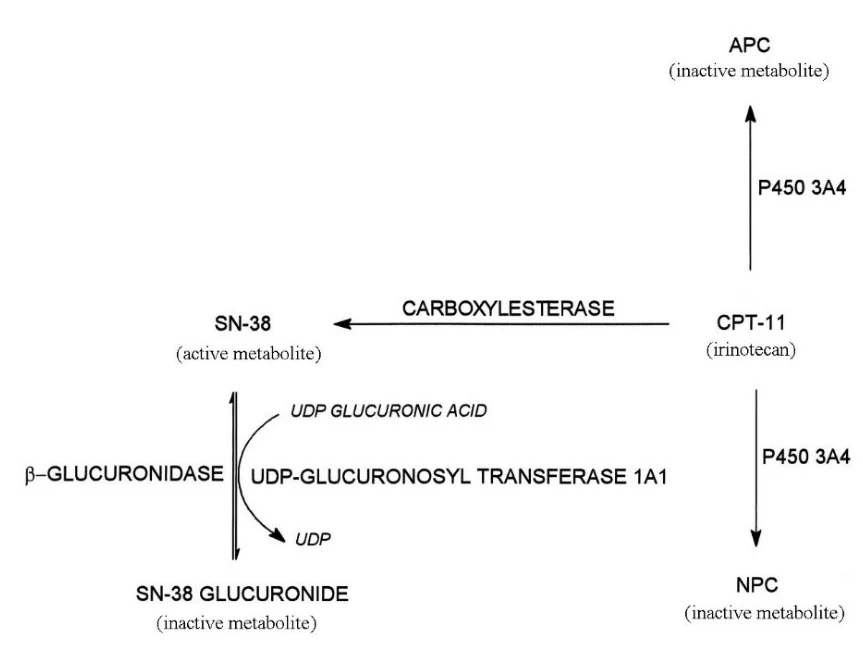
In one pharmacokinetic study of patients administered a starting dose of irinotecan 125mg/m2, the terminal half-life of irinotecan was statistically significantly longer in patients who were 65 years or older compared to patients younger than 65 years (6 hours versus 5.5 hours, respectively). Dose-normalized AUC0-24 was 14.8% higher, Cmax was 11.3% higher and clearance was 17.5% lower in patients 65 years and older compared with patients younger than 65 years. Also, dose normalized AUC0-24 of SN-38 was 11.2% higher in subjects age 65 years and over compared to subjects less than 65 years, but this result was not statistically significant.
In a different pharmacokinetic study that was prospectively designed to investigate the effect of age on irinotecan toxicity, no statistically significant differences in irinotecan pharmacokinetics were seen in patients >65 years compared to those <65 years administered a single 125 mg/m2 irinotecan dose. Irinotecan Cmax and AUC0-24 were, respectively, 0.7% and 0.3% lower in patients >65 years compared to patients who were <65 years. Values for SN-38 Cmax and AUC0-24 were, respectively, 1.8% lower and 0.8% higher in patients >65 years compared to patients <65 years and values for SN-38 glucuronide Cmax and AUC0-24 were, respectively, 1% and 3.1% lower in patients >65 years compared to patients who were <65 years.
The reason for the conflicting results between the two pharmacokinetic results is not known. Clinically, however, particular caution should be exercised when administering irinotecan to elderly patients as these patients may be less tolerant of the toxic effects of the drug (see 7 WARNINGS AND PRECAUTIONS and 8 ADVERSE REACTIONS).
Special Populations and Conditions
- Sex: There is no clinically important gender influence on the pharmacokinetics of irinotecan.
- Ethnic Origin: The influence of race has not been studied.
Hepatic Insufficiency: Irinotecan clearance is diminished in patients with hepatic dysfunction while relative exposure to the active metabolite SN-38 is increased. The magnitude of these
- effects is proportional to the degree of liver impairment as measured by elevations in serum total bilirubin and transaminase concentrations (see 4 DOSAGE AND ADMINISTRATION and 7 WARNINGS AND PRECAUTIONS).
- Renal Insufficiency: The influence of renal insufficiency on the pharmacokinetics of irinotecan has not been formally studied.
11 STORAGE, STABILITY AND DISPOSAL
Store at controlled room temperature (15°C to 30°C). Protect from light and freezing. Avoid excessive heat. The product is available in a Type I amber glass vial that is packaged in an ONCO-TAIN® (clear plastic oriented polystyrene) sleeve to protect from breakage. It is recommended that the vial remains in the carton until time of use. The Irinotecan Hydrochloride Injection USP vial should be inspected for damage and visible signs of leaks. If there are signs of breakage or leakage from the vial, incinerate the unopened package.
12 SPECIAL HANDLING INSTRUCTIONS
As with other potentially toxic anti-cancer agents, care should be exercised in the handling and preparation of infusion solutions containing Irinotecan Hydrochloride Injection USP. Preparation of Irinotecan Hydrochloride Injection USP should be done in a vertical laminar flow hood. The use of gloves, safety glasses and protective clothing is recommended. If Irinotecan Hydrochloride Injection USP solution contacts the skin, wash the skin immediately and thoroughly with soap and water. If Irinotecan Hydrochloride Injection USP contacts the mucous membranes, flush thoroughly with water. All waste material that has come in contact with Irinotecan Hydrochloride Injection USP should be properly segregated, sealed and incinerated.
PART II: SCIENTIFIC INFORMATION
13 PHARMACEUTICAL INFORMATION
Drug Substance
Proper name: Irinotecan hydrochloride trihydrate
Chemical name: [1,4'-Bipiperidine]-1'-carboxylic acid, 4,11-diethyl-3,4,12,14-tetrahydro-4-hydroxy-3,14-dioxo-1H-pyrano[3',4:6,7]-indolizino[1,2-b]quinolin-9-yl ester, monohydrochloride, trihydrate, (S)-
Molecular formula and molecular mass: C33H38N4O6⋅HCl⋅3H2O; 677.19 g /mol
Structural formula:
Physicochemical properties:
Description: Yellow or pale yellow powder, needles or crystalline powder, which melts at 256.5°C with decomposition. The pH of a 2% aqueous solution is 4.
Solubility: 1 mL of water at 65°C dissolves 22 mg of irinotecan hydrochloride trihydrate.
14 CLINICAL TRIALS
14.1 Trial Design and Study Demographics
Irinotecan hydrochloride trihydrate has been studied in clinical trials as a combination therapy with 5-FU and LV and as a single agent (see 4 DOSAGE AND ADMINISTRATION). Weekly and once-every-2-week dosage schedules were used for the combination-agent treatment. Weekly and once-every-3-week dosage schedules were used for the single-agent studies. Clinical studies of combination and single-agent uses are described below.
First-line Treatment of Metastatic Colorectal Cancer:
Two phase 3, randomized, controlled, multicentre, multinational clinical trials support the use of Irinotecan hydrochloride trihydrate in combination with 5-FU/LV as a first-line treatment for patients with metastatic carcinoma of the colon or rectum. In both studies, these combinations of irinotecan hydrochloride trihydrate with 5-FU and LV were compared with 5-FU/LV alone.
- Study 1 compared combination irinotecan hydrochloride trihydrate /bolus 5-FU/LV therapy given weekly with a standard bolus regimen of 5-FU/LV alone given daily for 5 days every 4 weeks; a irinotecan hydrochloride trihydrate -alone treatment arm given on a weekly schedule was also included.
- Study 2 evaluated two different methods of administering infusional 5-FU/LV, with or without irinotecan hydrochloride trihydrate. A 7-day course of fluoroquinolone antibiotic prophylaxis was given in patients whose diarrhea persisted for greater than 24 hours despite loperamide or if they developed a fever in addition to diarrhea. Treatment with oral fluoroquinolone was also initiated in patients who developed an absolute neutrophil count (ANC) < 500/mm3, even in the absence of fever or diarrhea.
In both studies, concomitant medications such as antiemetics, atropine, and loperamide were given to patients for prophylaxis and/or management of symptoms from treatment. Patients in both studies also received treatment with intravenous antibiotics if they had persistent diarrhea or fever, or if ileus developed.
Table 12 - Summary of patient demographics for clinical trials in First-line Treatment of Metastatic Colorectal Cancer
| Study # | Study design | Dosage, route of administration and duration | Study subjects (n) | Mean age (Range) | Sex (Female / Male (%)) | |||||
|---|---|---|---|---|---|---|---|---|---|---|
| 1 | Phase 3, randomized, controlled, multicentre, multinational | Irinotecan hydrochloride trihydrate + Bolus 5-FU/LV weekly x 4 q 6 weeks | 231 | 62 (25-85) | 34/65 | |||||
Bolus 5-FU/LV daily x 5 q 4 weeks | 226 | 61 (19-85) | 45/54 | |||||||
Irinotecan hydrochloride trihydrate weekly x 4 q 6 weeks | 226 | 61 (30-87) | 35/64 | |||||||
| 2 | Phase 3, randomized, controlled, multicentre, multinational | Irinotecan hydrochloride trihydrate + Infusional 5-FU/LV | 198 | 62 (27-75) | 33/67 | |||||
Infusional 5-FU/LV | 187 | 59 (24-75) | 47/53 | |||||||
Recurrent or Progressive Metastatic Colorectal Cancer:
Weekly Dosage Schedule:
Data from three single-agent studies, involving a total of 304 patients support the use of irinotecan hydrochloride trihydrate in the treatment of patients with metastatic cancer of the colon or rectum that has recurred or progressed following treatment with 5-FU-based therapy. In each study, irinotecan hydrochloride trihydrate was administered in repeated 6-week cycles as a once weekly dose for 4 weeks, followed by a 2-week rest period. In these trials, the starting doses of irinotecan hydrochloride trihydrate were 100, 125 or 150 mg/m2.
Across all three studies, 193 of the 304 patients began therapy at the recommended starting dose of 125 mg/m2. Among these 193 patients, 2 complete and 27 partial responses were observed for an overall response rate of 15% (95% confidence interval (CI), 10 to 20.1%).
Table 13 - Summary of patient demographics for clinical trials in Recurrent or Progressive Metastatic Colorectal Cancer - Weekly Dosage Schedule
| Study # | Study design | Dosage, route of administration and duration | Study subjects (n)1 | Mean age (Range) | Sex | ||||
|---|---|---|---|---|---|---|---|---|---|
| 1 | Single agent study | Irinotecan hydrochloride trihydrate – administered intravenously as a once weekly dose of 100 mg/m2 for 4 weeks, followed by a 2-week rest period. | Unknown | Unknown | Female and male patients (respective percentage unknown) | ||||
| 2 | Single agent study | irinotecan hydrochloride trihydrate – administered intravenously as a once weekly dose of 125 mg/m2 for 4 weeks, followed by a 2-week rest period. | 193 | Unknown | Female and male patients (respective percentage unknown) | ||||
| 3 | Single agent study | Irinotecan hydrochloride trihydrate – administered intravenously as a once weekly dose of 150 mg/m2 for 4 weeks, followed by a 2-week rest period. | Unknown | Unknown) | Female and male patients (respective percentage unknown) | ||||
| 1 Total subjects across all three studies: 304 | |||||||||
Once-Every-3-Week Dosage Schedule:
Two phase 3, multicentre, randomized, clinical studies support the use of irinotecan hydrochloride trihydrate in patients with metastatic colorectal cancer whose disease has progressed following prior 5-FU therapy. Second-line irinotecan hydrochloride trihydrate plus best supportive care was compared with best supportive care alone in the first study (V301) and with infusional 5-FU-based therapy in the second study (V302). The primary endpoint in both studies was survival. A total of 535 patients were randomized in 94 centres in Europe, the Middle East, and South Africa. irinotecan hydrochloride trihydrate was administered intravenously at a starting dose of 350 mg/m2 over 90 minutes once every 3 weeks. The starting dose was 300 mg/m2 for patients who were 70 years and older, or who had a WHO performance status of 2. The highest total dose permitted was 700 mg.
Dose reductions and/or administration delays were permitted in the event of severe hematologic and/or nonhematologic toxicities while on treatment. Antiemetics, atropine, and loperamide were provided as needed. If late diarrhea persisted for greater than 24 hours despite loperamide, a 7-day course of fluoroquinolone antibiotic prophylaxis was given. Patients were to be followed every 3 to 6 weeks for 1 year.
Table 14 - Summary of patient demographics for clinical trials in Recurrent or Progressive Metastatic Colorectal Cancer - Once-Every-3-Week Dosage Schedule
| Study # | Study design | Dosage, route of administration and duration | Study subjects (n) | Mean age (Range) |
|---|---|---|---|---|
| V301 | Phase 3, multicentre, randomized | Second-line irinotecan hydrochloride trihydrate plus best supportive care compared with best supportive care alone: Irinotecan hydrochloride trihydrate administered intravenously at a starting dose of 350 mg/m2 over 90 minutes once every 3 weeks. Irinotecan hydrochloride trihydrate administered intravenously at a starting dose of 300 mg/m2 over 90 minutes once every 3 weeks. | 535 | Unknown 70 and older |
| V302 | Phase 3, multicentre, randomized | Second-line Irinotecan hydrochloride trihydrate plus best supportive care compared with infusional 5-FU-based therapy: Irinotecan hydrochloride trihydrate administered intravenously at a starting dose of 350 mg/m2 over 90 minutes once every 3 weeks. Irinotecan hydrochloride trihydrate administered intravenously at a starting dose of 300 mg/m2 over 90 minutes once every 3 weeks. | 535 | Unknown 70 and older |
14.2 Study Results
First-line Treatment of Metastatic Colorectal Cancer
In both studies, the combination of irinotecan hydrochloride trihydrate/5-FU/LV therapy resulted in significant improvement in objective tumour response rates, time to tumour progression (TTP) and survival when compared with 5-FU/LV alone. These differences in survival were observed in spite of second-line therapy in a majority of patients on both arms, including crossover to irinotecan hydrochloride trihydrate -containing regimens in the control arms. Fifty six percent (56%) of patients in Study 1 who received 5FU/LV therapy were treated with irinotecan hydrochloride trihydrate as second-line therapy and thirty four percent (34%) of patients in Study 2 who received 5FU/LV were treated with irinotecan hydrochloride trihydrate as second-line therapy. Patient characteristics and major efficacy results are shown in Table 15.
| Table 15. Combination Dosage Schedule: Study Results | |||||
| Study 1 | Study 2 | ||||
Irinotecan hydrochloride trihydrate + Bolus 5-FU/LV weekly x 4 q 6 weeks | Bolus 5-FU/LV daily x 5 q 4 weeks | Irinotecan hydrochloride trihydrate weekly x 4 q 6 weeks | Irinotecan hydrochloride trihydrate + Infusional 5-FU/LV | Infusional 5-FU/LV | |
| Performance Status (%) | |||||
| 0 | 39 | 41 | 46 | 51 | 51 |
| 1 | 46 | 45 | 46 | 42 | 41 |
| 2 | 15 | 13 | 8 | 7 | 8 |
| Primary Tumour (%) | |||||
| Colon | 81 | 85 | 84 | 55 | 65 |
| Rectum | 17 | 14 | 15 | 45 | 35 |
| Median Time from Diagnosis to Randomization | 1.9 | 1.7 | 1.8 | 4.5 | 2.7 |
| (months, range) | (0-161) | (0-203) | (0.1-185) | (0-88) | (0-104) |
| Prior Adjuvant 5-FU Therapy (%) | |||||
| No | 89 | 92 | 90 | 74 | 76 |
| Yes | 11 | 8 | 10 | 26 | 24 |
| Median Duration of Study Treatmenta (months) | 5.5 | 4.1 | 3.9 | 5.6 | 4.5 |
| Median Relative Dose Intensity (%)a | |||||
| Irinotecan | 72 | -- | 75 | 87 | -- |
| 5-FU | 71 | 86 | -- | 86 | 93 |
| Efficacy Results | |||||
| Confirmed Objective Tumour | 39 | 21 | 18 | 35 | 22 |
| Response Rateb (%) | (p<0.0001)c | (p<0.005 )c | |||
| Median Time to Tumour Progressiond | 7 | 4.3 | 4.2 | 6.7 | 4.4 | |||
| (months) | (p=0.004)d | (p<0.001)d | ||||||
| Median Survival | 14.8 | 12.6 | 12 | 17.4 | 14.1 | |||
| (months) | (p <0.05)d | (p<0.05)d | ||||||
a Study 1: N=225 (Irinotecan hydrochloride trihydrate/5-FU/LV), N=219 (5-FU/LV), N=223 (Irinotecan hydrochloride trihydrate) Study 2: N=199 (Irinotecan hydrochloride trihydrate/5-FU/LV), N=186 (5-FU/LV) b Confirmed > 4 to 6 weeks after first evidence of objective response c Chi-square test d Log-rank test | ||||||||
Improvement was noted with irinotecan hydrochloride trihydrate-based combination therapy relative to 5-FU/LV when response rates and time to tumour progression were examined across the following demographic and disease-related subgroups (age, gender, ethnic origin, performance status, extent of organ involvement with cancer, time from diagnosis of cancer, prior adjuvant therapy, and baseline laboratory abnormalities).
Figure 1 and Figure 2 illustrate the Kaplan-Meier survival curves for the comparison of irinotecan/5-FU/LV versus 5-FU/LV in Studies 1 and 2, respectively.
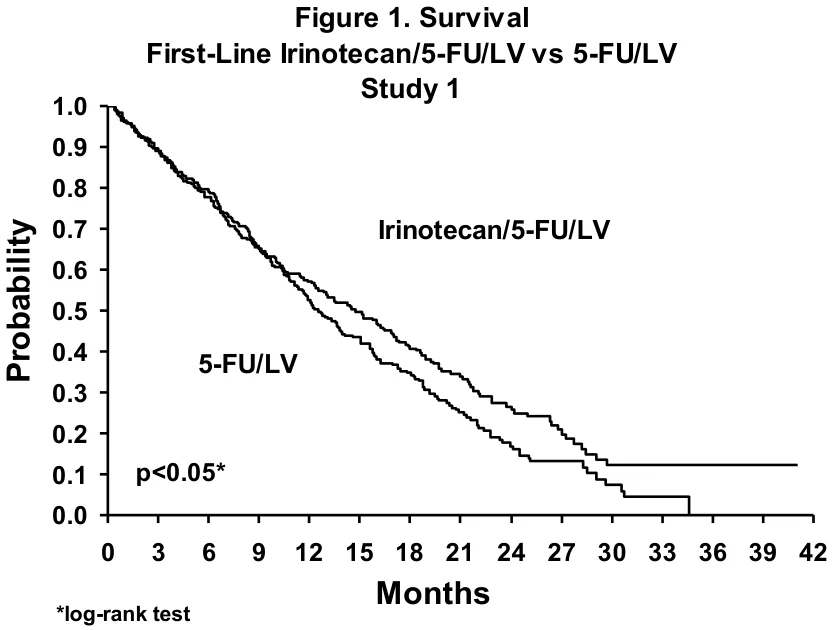
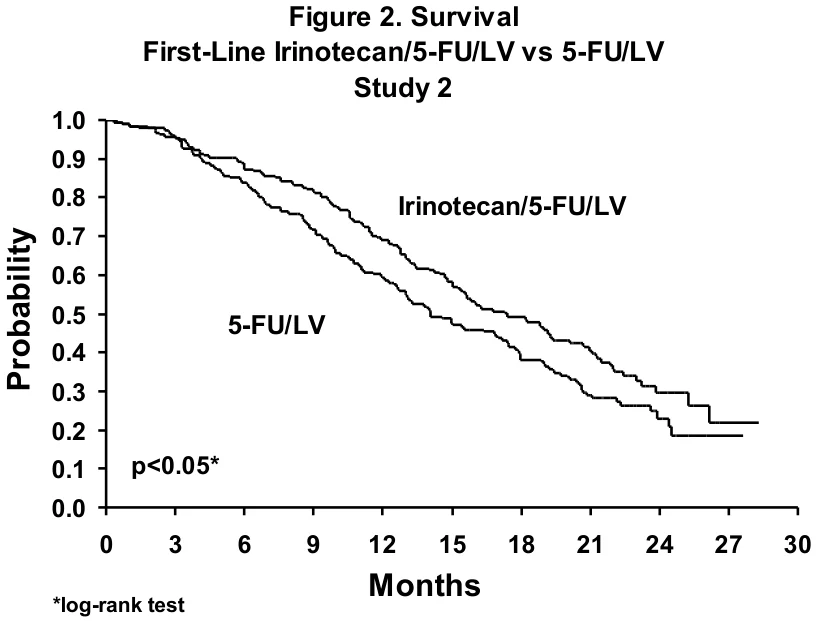
Figure 3 and Figure 4 illustrate the Kaplan-Meier Time to Tumour Progression curves for comparison of irinotecan /5-FU/LV versus 5-FU/LV in Studies 1 and 2, respectively.
Figure 3 Time to Tumour Progression (Study 1)
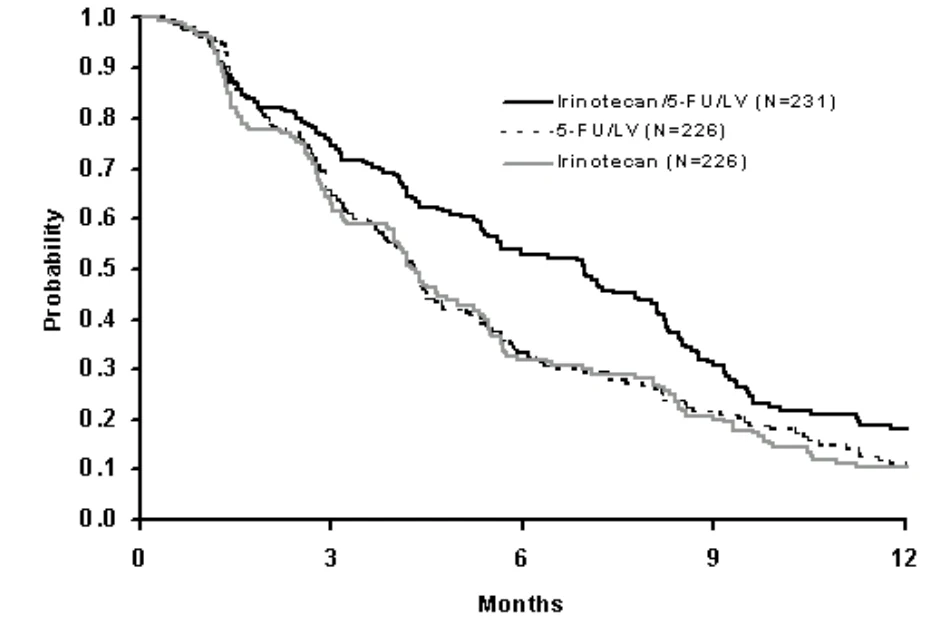
Figure 4 Time to Tumour Progression (Study 2)
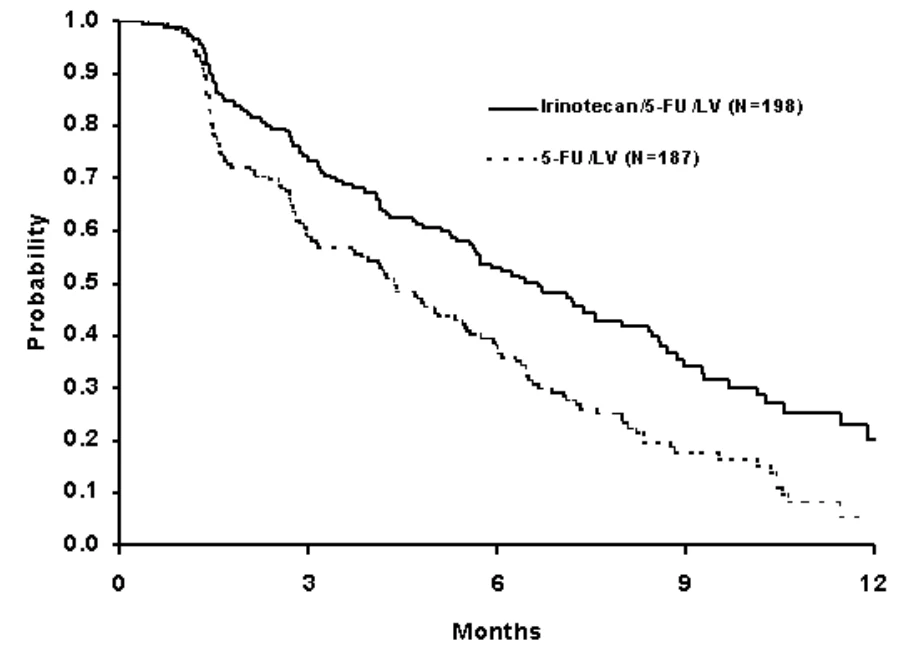
Cox regression modeling was used to evaluate the effect of treatment with irinotecan hydrochloride trihydrate/5-FU/LV versus 5-FU/LV alone on time to tumour progression and survival in the context of prespecified patient baseline characteristics. The most predictive factors for improved survival with the irinotecan hydrochloride trihydrate/5-FU/LV combination therapy were: normal serum lactate dehydrogenase (LDH) and better performance status.
In Study 1, treatment with combination irinotecan hydrochloride trihydrate /5-FU/LV was associated with a 36% lower risk of tumour progression and a 20% lower risk of death relative to treatment with 5-FU/LV. In Study 2, treatment with irinotecan hydrochloride trihydrate /5-FU/LV was associated with 42% lower risk of tumour progression and a 23% lower risk of death relative to treatment with 5-FU/LV.
The European Organization of Research and Treatment of Cancer Quality of Life Questionnaire (EORTC QLQ-C30) was used in both first-line therapy studies. At the beginning of the treatment in Study 1, there was close to one hundred percent (99%) return of the filled questionnaires. Over the first 30 -32 weeks of treatment, the return of questionnaires at the scheduled assessments was 76 -82% for irinotecan hydrochloride trihydrate/5-FU/LV, and 77 -97% for those treated with 5-FU/LV alone. In Study 2, there was an 83% return of the questionnaires at baseline whereas during the first 28 weeks the return was 46 -61% for irinotecan hydrochloride trihydrate /5-FU/LV and 46 -60% for 5-FU/LV alone.
In Study 1, the pain, role functioning, and global health status/QOL scales were prospectively selected to test treatment effect by the analysis of variance for repeated measurements. Data imputation method as suggested by Zwinderman was adopted in the presence of missing data during follow-up, which was due to withdrawal of patients. On the basis of the performed analysis, there were no significant differences between the group treated with irinotecan hydrochloride trihydrate /5-FU/LV and the group given 5-FU/LV in any of the three items analyzed. However, when analyzing worst scores, mean changes in pain and role functioning were significantly better for patients receiving irinotecan hydrochloride trihydrate /5-FU/LV than those treated with 5-FU/LV. It was also observed that increases in mean scores for appetite loss were less prominent with irinotecan hydrochloride trihydrate /5-FU/LV relative to 5-FU/LV alone. Similar findings were apparent in Study 2.
The repeated - measurement analysis conducted on global health status/QOL showed no statistically significant treatment effect although the evolution of the global health status scale tended to be better with irinotecan-containing combination treatment. In the presence of missing data due to patient withdrawal, both last observations carried forward (LOCF) and the mean of the worst scores of progressive patients were used as imputation methods.
A difference was found in favour of irinotecan hydrochloride trihydrate /5-FU/LV therapy in assessment of time to definitive deterioration of global health status scale from baseline. In this analysis, times to either 5% or a 20% decrement in global health status were statistically improved with irinotecan hydrochloride trihydrate /5-FU/LV (log rank p = 0.03 and 0.04, respectively). When similarly analyzing the time to 10% or 30% declines in global health status, the differences were close to significant (log rank p = 0.06 in both cases). The median time to performance status deterioration was significantly longer with patients treated with irinotecan hydrochloride trihydrate /5-FU/LV than those treated with 5-FU/LV alone (11.2 months versus 9.9 months; log rank p = 0.046). The impact of the side effects of irinotecan hydrochloride trihydrate with/without in combination of 5-FU/LV on the quality of life of patients were not addressed in this questionnaire.
Recurrent or Progressive Metastatic Colorectal Cancer:
Weekly Dosage Schedule:
All of the patients had a performance status (PS) of 0 to 2, with the majority at 0 or 1. The majority of responses were observed within the first two cycles of therapy. The median duration of response for patients beginning therapy at 125 mg/m2 was 5.8 months (range, 2.6 to 15.1 months). An additional 53.4% (103/193) of the patients treated at a starting dose of 125 mg/m2 achieved a best response of stable disease by formal response criteria.
Response to irinotecan hydrochloride trihydrate was seen in both males and females of all ages. These patients responded to irinotecan hydrochloride trihydrate regardless of whether prior 5-FU had been given as adjuvant therapy or for metastatic disease. Patients with cancer of the colon or rectum responded to the drug, and these responses occurred both in patients with single and multiple metastatic sites.
The Kaplan-Meier estimate of median survival time for patients on the 125 mg/m2 starting dose was 8.9 months (range, 0.3 to 33.4 months). The majority of patients treated with irinotecan hydrochloride trihydrate had an increase in, or stabilization of body weight, and an improvement or maintenance of performance status. Among responding patients with tumour-related symptoms, the majority experienced amelioration of these symptoms during irinotecan hydrochloride trihydrate treatment.
Once-Every-3-Week Dosage Schedule:
The data indicate a statistically significant survival advantage for irinotecan hydrochloride trihydrate over best supportive care or infusional 5-FU-based therapy (p = 0.001 and p = 0.035, respectively). The benefit appears early and is sustained during follow up. One-year survivals are 36% vs 14% (Irinotecan hydrochloride trihydrate vs supportive care) and 45% vs 32% (irinotecan hydrochloride trihydrate vs infusional 5-FU). Median survivals are 9.2 months vs 6.5 months (irinotecan hydrochloride trihydrate vs supportive care) and 10.8 months vs 8.5 months (irinotecan hydrochloride trihydrate vs infusional 5-FU). Median survival and 1-year survival for the patients receiving the once-every-3-week dosage regimen of irinotecan hydrochloride trihydrate in these phase 3 studies were similar to those seen in phase 2 studies of patients on the weekly regimen of second-line irinotecan hydrochloride trihydrate therapy developed in North America.
Multiple regression analyses were performed to assess the influence of baseline patient characteristics (e.g. performance status) on survival. When adjusted for these characteristics, survival among patients treated with irinotecan hydrochloride trihydrate remained significantly longer than in the control populations (p=0.001 for V301 and p = 0.017 for V302).
Surrogate efficacy endpoints are summarized in Table 16 below:
| Table 16: Once- Every 3- Week Dosage Schedule Study Results | ||||
| V301 | V302 | |||
| Irinotecan hydrochloride trihydrate | Supportive care | Irinotecan hydrochloride trihydrate | 5-FU | |
| Median survival without PS deterioration (months) | 5.71 | 3.31 | 6.4 | 5.1 |
| Median survival without weight loss > 5% (months) | 6.42 | 4.22 | 8.9 | 7.4 |
| Median symptom-free survival (months) | 5.9 | 4.1 | 8.1 | 7 |
| Median pain-free survival (months) | 6.93 | 23 | 10.3 | 8.5 |
| Median progression free survival (months) | - | - | 4.24 | 2.94 |
| Tumour response CR+PR+SD / PD | - | - | 64% / 36% 5 | 44% / 56% 5 |
1 p = 0.0001; 2 p = 0.018; 3 p = 0.003 4 p = 0.03; 5 p = 0.002 PS: performance status; CR: complete response; PR: partial responses; SD: stable diseases; PD: progressive diseases | ||||
All surrogate endpoints show an advantage for irinotecan hydrochloride trihydrate groups. In Study V301, these differences were statistically significant for: survival without PS deterioration, survival without weight loss, and pain-free survival. In Study V302, these differences were significant for progression free survival and tumour response.
In the two randomized studies of second line therapy for metastatic colorectal cancer, the European Organization of Research and Treatment of Cancer Quality of Life Questionnaire (EORTC QLQ-C-30) instrument was utilized. At each visit, patients completed a questionnaire consisting of 30 questions, such as "Did pain interfere with daily activities?" ( 1 = Not at All, to 4 = Very Much) and "Do you have trouble taking a long walk?" (Yes or No). The answers from 30 questions were converted into 15 subscales, that were scored 0 to 100. The global health status was derived from two questions about the patient's sense of general well being in the past week. The results are summarized in Table 17 based on patients' worst post-baseline scores.
| Table 17: EORTC QLQ-C30: Mean Worst Post-Baseline Score* (Data from Two Randomized Studies for Second Line Therapy) | ||||||
| QLQ- C30 Subscale | Study 1 | Study 2 | ||||
| Irinotecan hydrochloride trihydrate | BSC⊥ | p-value | Irinotecan hydrochloride trihydrate | 5-FU | p-value | |
| Global Health Status | 47 | 37 | 0.03 | 53 | 52 | 0.9 |
| Functional Scales | ||||||
| Cognitive | 77 | 68 | 0.07 | 79 | 83 | 0.9 |
| Emotional | 68 | 64 | 0.4 | 64 | 68 | 0.9 |
| Social | 58 | 47 | 0.06 | 65 | 67 | 0.9 |
| Physical | 60 | 40 | 0 | 66 | 66 | 0.9 |
| Role | 53 | 35 | 0.02 | 54 | 57 | 0.9 |
| Symptom Scales | ||||||
| Fatigue | 51 | 63 | 0.03 | 47 | 46 | 0.9 |
| Appetite Loss | 37 | 57 | 0.001 | 35 | 38 | 0.9 |
| Pain Assessment | 41 | 56 | 0.009 | 38 | 34 | 0.9 |
| Insomnia | 39 | 47 | 0.3 | 39 | 33 | 0.9 |
| Constipation | 28 | 41 | 0.03 | 25 | 19 | 0.9 |
| Dyspnea | 31 | 40 | 0.2 | 25 | 24 | 0.9 |
| Nausea/Vomiting | 27 | 29 | 0.5 | 25 | 16 | 0.09 |
| Financial Impact | 22 | 26 | 0.5 | 24 | 15 | 0.3 |
| Diarrhea | 32 | 19 | 0.01 | 32 | 22 | 0.2 |
⊥ Best supportive care * For the five functional subscales and global health status subscale, higher scores imply better functioning, whereas, on the nine symptom subscales, higher scores imply more severe symptoms. The subscale scores of each patient were collected at each visit until the patient dropped out of the study. | ||||||
15 MICROBIOLOGY
No microbiological information is required for this drug product.
16 NON-CLINICAL TOXICOLOGY
General Toxicology:
| Acute Toxicity | ||||
| Species/ Strain | No./Sex | Route | LD50 (mg/kg) | |
| Male | Female | |||
| Mouse/Slc:ddY | 70M, 70F 80M, 80F | IV PO | 134.1 1044.7 | 132.4 1212.6 |
| Rat/Crj:CD | 60M, 60F 80M, 80F | IV PO | 83.6 866.9 | 85.1 1026.5 |
| Dog/beagle | 4M, 4F | IV | 40-80 | 40-80 |
Acute toxicity in rodents consists of tremors, convulsions, respiratory distress, and death. The acute toxicity of irinotecan after a single oral dose was 8- to 10-fold less than for a single intravenous dose.
Repeated-dose toxicity studies showed that irinotecan caused vomiting, anorexia, alopecia, diarrhea, soft stools, anemia, leukopenia, and thrombocytopenia. Irinotecan has an effect on tissues with high proliferative activity such as bone marrow, thymus gland, spleen, lymph nodes and testes.
| Long-Term Toxicity | ||||||
|---|---|---|---|---|---|---|
Species/ Strain | No./Sex | Dose (mg/kg/day) | Route | Duration | Recovery Period | Results/Observations |
| Rat / strain unspecified | 70M 70F | 0, 0.032, 0.16, 0.8, 4, 20 Adriacin = 0.8 | IV | 1 mo | -- | Toxic changes observed in bone marrow, thymus, spleen & lymph nodes. Toxic effects of Adriacin (0.8 mg/kg/day) were more potent than with 20 mg/kg/day irinotecan. The safety of irinotecan was at least 25X higher than for Adriacin. No-effect dose was estimated to be 0.8 mg/kg/day. |
| Long-Term Toxicity |
|---|
Species/ Strain | No./Sex | Dose (mg/kg/day) | Route | Duration | Recovery Period | Results/Observations |
|---|---|---|---|---|---|---|
| Rat/Crj:CD | 54M | 0, 20 Adriacin = 0.4 | IV | 28 day | 0, 2, and 4 wks | Toxic signs included salivation, ↑ body wt gain, ↑ food consumption, anemia, ↑ lymphocytes and serum protein. Toxicity also seen in stomach, kidney and testes. Most of the changes induced by irinotecan were reversible during the 4 wk recovery period. Recovery from toxicity was poorer with Adriacin, and was irreversible in the kidney and testes. |
| Rat/Crj:CD (SD) | 150M 150F | 0, 0.0064, 0.032, 0.16, 0.8, 4 | IV | 6 mo | 1 mo | At doses of 4 mg/kg day similar changes were noted as in the 28 day studies. No-effect dose was 0.16 mg/kg/day for males and 0.8 mg/kg/day for females. |
| Rat/Crj:CD (SD)BR | 90M 90F | 0, 20 SN-38 = 0.019, 0.093, 0.464, 2.32, 11.6 | IV | 4 wks | 4 wks for SN-38 at 11.6 only | SN-38 at 11.6 mg/kg/day resulted in unequivocal toxicologic changes that were similar to, but generally less marked than for rats given 20 mg/kg/day of irinotecan. The no-effect level for SN-38 was considered to be 2.32 mg/kg/day. |
| Long-Term Toxicity |
|---|
Species/ Strain | No./Sex | Dose (mg/kg/day) | Route | Duration | Recovery Period | Results/Observations |
|---|---|---|---|---|---|---|
Dog / beagle | 12M | 0.6, 2.5, 10 CPT = 2.5 | IV | 14 day | -- | Toxic changes observed in tissues & organs which are active in division and proliferation. The safety of irinotecan was about 4X greater than that of CPT. The no-effect dose of irinotecan was estimated to be 0.6 mg/kg/day. |
| Dog / beagle | 18F | Oral = 0, 6.25, 18.75, 25 IV = 2.5, 7.5 | Oral IV | 5 day | 8 day | Comparable toxicity with either route of administration. No indication that oral route was irritating to the GI tract. Absorption by the oral route was rapid with significant plasma levels at the lowest dose. Toxicity (either route) correlated with AUCs. Lethality/severe toxicity occurred at doses of 7.5 mg/kg/day IV and 18.75 and 25 mg/kg/day oral. Primary target tissues were bone marrow, intestinal tract and lymphoid tissues. |
Dog/ beagle | 12M 12F | 0, 0.1, 0.4, 1.6 | IV | 28 day | -- | Toxic changes were more prominent in the male dogs. Organs affected included spleen, thymus, liver, mesenteric lymph nodes and testes. Also noted were decreases in white cells, lymphocytes, and total protein. No-effect dose was estimated to be 0.1 mg/kg/day. |
| Long-Term Toxicity |
|---|
Species/ Strain | No./Sex | Dose (mg/kg/day) | Route | Duration | Recovery Period | Results/Observations |
|---|---|---|---|---|---|---|
Dog/ beagle | 12M 12F | 0, 0.1, 0.4, 1.6 | IV | 13 wks | -- | Histopathological changes seen in thymus, lymph nodes, spleen, trachea, lungs, intestinal tract and skin. No-effect level was less than 0.1 mg/kg/day. |
Dog/ beagle | 12M 12F | 0, 0.01, 0.1, 1 | IV | 26 wks | -- | Treatment-related changes for both sexes included skin discolouration, alopecia, atrophy of the thymus, soft stools, anemia and ↑ in total serum protein. No-effect level considered to be 0.01 mg/kg/day. |
Dog/ beagle | 12F | A: 20 mg/kg once every 2 wks B: 10 mg/kg/day, 1 day/wk for 2 wks C: 4 mg/kg/day for 5 consecutive days for 2 wks | IV | 6 wk-dose regimen | -- | Vomiting, soft stools, diarrhea and anorexia noted in each dose regimen. Hematological changes included ↑ in leukocytes and platelets. Severity of toxic changes greatest with consecutive daily dosing (Grp C), followed by Grp A and then by Grp B. |
Carcinogenicity: Long-term carcinogenicity studies with irinotecan were not conducted. However, rats were administered intravenous doses of 2 mg/kg or 25 mg/kg once per week for 13 weeks, followed by a 91-week observation period. There was a significant linear dose-related incidence in combined uterine horn endometrial stromal polyps and endometrial stromal sarcomas.
Genotoxicity:
| Mutagenicity | |||
| Type of Study | Species | Concentration Range | Results |
| Reverse Mutation Assay (in vitro) | S. typhimurium, E. coli | 156-5000 µg/plate, U-101503: 31- 1000 µg/plate | Irinotecan and SN-38 were not mutagenic in the Ames assay with or without metabolic activation up to the maximum concentrations. |
| Chromosomal Aberration Test (in vitro) | Chinese hamster cell line D-6 | 1.56-200 µg/mL, U-101503 = 0.0016- 20 µg/mL | Irinotecan and SN-38 produced significant increases in the number of chromosomal aberrations both with and without metabolic activation. |
| Micronucleus Test (in vivo) | Mouse | IP, 2.5-200 mg/kg | Irinotecan produced a significant and dose-dependent increase in the incidence of micronucleated polychromatic erythrocytes and a decrease in the reticulocyte/erythrocyte ratio in bone marrow cells. |
Reproductive and Developmental Toxicology:
| Reproduction and Teratology | ||||
| Type of Study | Species/ Strain | Number/Sex | IV Doses (mg/kg/day) | Results/Observations |
Fertility (Segment I) | Rat/Slc:SD | 100M/100F | 0, 0.24, 1.2, 6 | No significant effects on fertility or general reproductive performance observed in doses up to 6 mg/kg/day. Conclude that no-effect dose for general toxicity to male and female rats is 0.24 mg/kg/day; for fertility of males and females is 1.2 mg/kg/day; & for development of fetuses is 6 mg/kg/day. |
Embryotoxic ity (Segment II) | Rat/Slc:SD Rabbit/JW -NIBS | 96F 64F | 0, 0.24, 1.2, 6 0, 0.06, 0.6, 6 | Teratogenic at 6 mg/kg/day in rats and rabbits. In the rat, no-effect doses were 1.2 and 0.24 mg/kg/day for maternal toxicity and fetal development toxicity respectively. In the rabbit, no-effect doses were 0.6 and 0.06 mg/kg/day for maternal toxicity and fetal development toxicity respectively. |
| Peri-, Postnatal (Segment III) | Rat/Slc:SD | 100F | 0, 0.24, 1.20, 6 | No significant differences in morphological changes observed between control and irinotecan groups in F2 fetuses. No-effect dose for maternal animals and offspring was 1.2 mg/kg/day. |
Local Tolerance: Local tolerance of irinotecan was satisfactory when given to rabbits by the intramuscular route, instilled in the eye, or applied to intact and abraded skin. The intramuscular irritation of irinotecan in the rabbit at a dose of 20 mg/site was less than that for 5 mg/site of doxorubicin.
Antigenicity Potential: Irinotecan did not demonstrate antigenicity in mice but had antigenic potential in guinea pigs and rabbits. SN-38 did not demonstrate antigenicity in either mice or guinea pigs. The active systemic anaphylactic assay (ASA), enzyme-linked immunosorbent assay (ELISA) and passive cutaneous anaphylaxis (PCA) showed positive reactions to the piperidinopiperidine side-chain.
17 SUPPORTING PRODUCT MONOGRAPHS
- 1. CAMPTOSAR® (solution, 20 mg / mL), Submission Control No 257414, Product Monograph, Pfizer Canada ULC, FEB 17, 2022