


Product Monograph - Onivyde
RECENT MAJOR LABEL CHANGES
| 4 DOSAGE AND ADMINISTRATION, 4.3 Reconstitution | 08/2023 |
|---|---|
| 4 DOSAGE AND ADMINISTRATION, 4.2 Recommended Dose and Dosage Adjustment | 07/2025 |
| 7 WARNINGS AND PRECAUTIONS, 7.1.10 Acute Infusion and related reactions | 08/2023 |
| 7 WARNINGS AND PRECAUTIONS, 7.1.13 Females and Males of Reproductive Potential | 08/2023 |
| 7 WARNINGS AND PRECAUTIONS, Respiratory | 07/2025 |
| 8 ADVERSE REACTIONS, 8.5 Post-Market Adverse Reactions | 07/2025 |
TABLE OF CONTENTS
Sections or subsections that are not applicable at the time of authorization are not listed.
RECENT MAJOR LABEL CHANGES ............................................................................ 2
TABLE OF CONTENTS ................................................................................................. 2
PART I: HEALTH PROFESSIONAL INFORMATION ..................................................... 4
1 INDICATIONS ......................................................................................................... 4
1.1 Pediatrics (˂ 18 years of age) ........................................................................ 4
1.2 Geriatrics (≥ 65 years of age) ........................................................................ 4
2 CONTRAINDICATIONS ......................................................................................... 4
3 SERIOUS WARNINGS AND PRECAUTIONS BOX .............................................. 5
4 DOSAGE AND ADMINISTRATION ....................................................................... 5
4.1 Dosing Considerations .................................................................................. 5
4.2 Recommended Dose and Dosage Adjustment .............................................. 6
4.3 Reconstitution ............................................................................................... 7
4.4 Administration ............................................................................................... 8
5 OVERDOSAGE ..................................................................................................... 8
6 DOSAGE FORMS, STRENGTHS, COMPOSITION AND PACKAGING ................ 8
7 WARNINGS AND PRECAUTIONS ........................................................................ 8
7.1 Special Populations ..................................................................................... 11
7.1.1 Pregnant Women ........................................................................................ 11
7.1.2 Breast-feeding ............................................................................................. 11
7.1.3 Pediatrics .................................................................................................... 11
7.1.4 Geriatrics ..................................................................................................... 11
7.1.5 Immunosuppressive effects and vaccines ................................................... 11
7.1.6 Interactions with strong CYP3A4 inducers................................................... 12
7.1.7 Interactions with strong and moderate CYP3A4 inhibitors or strong UGT1A1 inhibitors ...................................................................................................... 12
7.1.8 Patients with hepatic impairment ................................................................. 12
7.1.9 Patients with renal impairment ..................................................................... 12
7.1.10 Acute infusion and related reactions ........................................................... 13
7.1.11 Underweight patients (body mass index < 18.5 kg/m2) ............................... 13
7.1.12 Prior Whipple procedure ............................................................................. 13
7.1.13 Females and Males of Reproductive Potential ............................................ 13
7.1.14 Monitoring and Laboratory Tests ................................................................ 13
8 ADVERSE REACTIONS ....................................................................................... 14
8.2 Clinical Trial Adverse Reactions ................................................................... 14
8.4 Abnormal Laboratory Findings: Hematologic, Clinical Chemistry and Other Quantitative Data ......................................................................................... 16
8.5 Post-Market Adverse Reactions ................................................................... 17
9 DRUG INTERACTIONS ....................................................................................... 18
9.2 Drug Interactions Overview .......................................................................... 18
9.3 Drug-Behavioural Interactions ...................................................................... 18
9.4 Drug-Drug Interactions ................................................................................. 18
9.5 Drug-Food Interactions................................................................................. 19
9.6 Drug-Herb Interactions ................................................................................. 19
9.7 Drug-Laboratory Test Interactions ................................................................ 19
10 CLINICAL PHARMACOLOGY ............................................................................ 19
10.1 Mechanism of Action .................................................................................... 19
10.2 Detailed Pharmacology ................................................................................ 20
10.3 Pharmacokinetics ......................................................................................... 20
11 STORAGE, STABILITY AND DISPOSAL ............................................................ 22
12 SPECIAL HANDLING INSTRUCTIONS ............................................................... 22
PART II: SCIENTIFIC INFORMATION ......................................................................... 23
13 PHARMACEUTICAL INFORMATION ................................................................. 23
14 CLINICAL TRIALS .............................................................................................. 24
14.1 Clinical Trials by Indication ........................................................................... 24
15 MICROBIOLOGY .................................................................................................. 26
16 NON-CLINICAL TOXICOLOGY ........................................................................... 26
PATIENT MEDICATION INFORMATION ..................................................................... 28
PART I: HEALTH PROFESSIONAL INFORMATION
1 INDICATIONS
ONIVYDE (irinotecan liposome for injection) is indicated for the treatment of metastatic adenocarcinoma of the pancreas, in combination with 5-fluorouracil (5-FU) and leucovorin (LV), in adult patients who have disease progression following gemcitabine-based therapy.
DO NOT SUBSTITUTE ONIVYDE for or with other drug products containing irinotecan (see 3 SERIOUS WARNINGS AND PRECAUTIONS BOX, 4 DOSAGE AND ADMINISTRATION, and 7 WARNINGS AND PRECAUTIONS, General, Other formulations of irinotecan).
ONIVYDE is not indicated as a single agent for the treatment of patients with metastatic adenocarcinoma of the pancreas.
ONIVYDE should be administered only under the supervision of a physician who is experienced in the use of cancer chemotherapeutic agents.
1.1 Pediatrics (˂ 18 years of age)
Onivyde is not indicated in pediatric patients ˂18 years of age. Safety and effectiveness of ONIVYDE have not been established in this population.
1.2 Geriatrics (≥ 65 years of age)
Overall, no major clinical differences in safety or efficacy were reported between patients ≥ 65 years and patients < 65 years in the NAPOLI-1 study. However, a higher frequency of discontinuation (14.8% vs 7.9%) was noted in patients ≥ 65 years treated with ONIVYDE+5-FU/LV and in some cases the adverse reactions did not resolve.
Patients > 75 years experienced more frequent serious adverse reactions, dose delay, dose reduction and discontinuation compared to patients ≤ 75 years when treated with ONIVYDE + 5-FU/LV.
2 CONTRAINDICATIONS
- ONIVYDE is contraindicated in patients who have experienced a severe hypersensitivity reaction to ONIVYDE or non-liposomal irinotecan, and patients who are hypersensitive to ONIVYDE, irinotecan or to any other ingredients in the formulation or component of the container. For a complete listing, see 6 DOSAGE FORMS, STRENGTHS, COMPOSITION AND PACKAGING.
- ONIVYDE is contraindicated during breast-feeding (see 7 WARNINGS AND PRECAUTIONS, Special Populations, Breast-feeding).
3 SERIOUS WARNINGS AND PRECAUTIONS BOX
4 DOSAGE AND ADMINISTRATION
4.1 Dosing Considerations
- ONIVYDE (irinotecan liposome for injection) is indicated for the treatment of metastatic adenocarcinoma of the pancreas, in combination with 5-FU and LV, in adult patients with disease progression following gemcitabine-based therapy.
- DO NOT SUBSTITUTE ONIVYDE for or with other drug products containing irinotecan.
- Dilute ONIVYDE prior to administration.
- Do not use any in-line filters.
- Discard any unused portion.
- Each single use 10 mL vial of ONIVYDE (irinotecan liposome for injection) contains the equivalent of 43 mg irinotecan free base at a concentration of 4.3 mg/mL.
- Although irinotecan is present in the form of the sucrose octasulfate salt within ONIVYDE, the following information is based upon the dose of irinotecan free base that is recommended for administration.
Serious Warnings and Precautions
Early diarrhea may be accompanied by cholinergic symptoms which may be prevented or ameliorated by atropine. Late diarrhea can be life threatening and should be treated promptly with loperamide (or equivalent). Monitor patients with diarrhea and give fluid and electrolytes as needed. Institute antibiotic therapy if patients develop ileus, fever, or severe neutropenia (see 7 WARNINGS AND PRECAUTIONS, Gastrointestinal and 8 ADVERSE REACTIONS).
Interrupt and reduce subsequent doses if severe diarrhea occurs (see 4 DOSAGE AND ADMINISTRATION, Dosage Modifications for Adverse Reactions, Table 1).
Severe myelosuppression may occur (see 7 WARNINGS AND PRECAUTIONS, Hematologic).
ONIVYDE (irinotecan liposome for injection) is not equivalent to non-liposomal irinotecan formulations and should not be interchanged (see 7 WARNINGS AND PRECAUTIONS, General, Other Formulations of Irinotecan).
DO NOT SUBSTITUTE ONIVYDE FOR OR WITH OTHER IRINOTECAN FORMULATIONS.
ONIVYDE (irinotecan liposome for injection) should be administered only under the supervision of a qualified physician experienced in the use of cancer chemotherapeutic agents.
4.2 Recommended Dose and Dosage Adjustment
Recommended Dose
Administer ONIVYDE 70 mg/m2 by intravenous infusion over 90 minutes, followed by LV 400 mg/m2 intravenously over 30 minutes, followed by 5-FU 2400 mg/m2 intravenously over 46 hours, every 2 weeks.
A reduced starting dose of ONIVYDE of 50 mg/m2 for patients known to be homozygous for the UGT1A1*28 allele is recommended. Patients without drug related toxicities during the first 2 weeks of therapy may have their dose increased to 70 mg/m2 based on individual patient tolerance.
Pediatrics (< 18 years old)
Health Canada has not authorized an indication for pediatric use.
Hepatic Impairment
No dedicated hepatic impairment study has been conducted with ONIVYDE. The use of ONIVYDE should be avoided in patients with bilirubin > 2.0 mg/dl, or aspartate aminotransferase (AST) and alanine aminotransferase (ALT) > 2.5 times upper limit of normal (ULN) or > 5 times ULN if liver metastasis is present.
Renal Impairment
No dedicated renal impairment study has been conducted with ONIVYDE. No dose adjustment is recommended in patients with mild to moderate renal impairment. ONIVYDE is not recommended for use in patients with severe renal impairment (CLcr <30 mL/min).
Premedication
Premedicate at least 30 minutes prior to each dose of ONIVYDE infusion with the following:
- Corticosteroid (dexamethasone or equivalent) with standard doses
- 5-HT3 receptor antagonist (or other anti-emetic) at standard dose
Dose Modifications for Adverse Reactions
For detailed dose and schedule modifications of 5-FU or LV, refer to the current relevant Product Monograph.
Table 1. Recommended Dose Modifications for ONIVYDE + 5-FU/LV*
Toxicity NCI CTC Grade† (Value) | Occurrence | ONIVYDE/5-FU Adjustment‡ |
|---|---|---|
| Neutropenia | A new cycle of therapy should not begin until the absolute neutrophil count is ≥1500/mm3 | |
Grade 3 or 4 (<1000/mm3) or neutropenic fever | First | Reduce ONIVYDE dose to 50 mg/m2 Reduce 5-FU dose by 25%. |
| Second | Reduce ONIVYDE dose to 43 mg/m2 Reduce 5-FU dose by an additional 25% | |
| Third | Discontinue treatment | |
| Other hematological toxicities (thrombocytopenia and leukopenia) | A new cycle of therapy should not begin until the platelet count is ≥100,000/mm3 Dose modifications for leukopenia and thrombocytopenia are based on NCI toxicity grading and are the same as recommended for neutropenia above. | |
| Diarrhea | A new cycle of therapy should not begin until diarrhea resolves to ≤ Grade 1 (2-3 stools/day more than pre-treatment frequency). | |
Grade 3 or 4 (7-9 stools/day > pretreatment) or (>10 stools/day > pretreatment) | First | Reduce ONIVYDE dose to 50 mg/m2 Reduce 5-FU dose by 25% |
| Second | Reduce ONIVYDE dose to 43 mg/m2 Reduce 5-FU dose by an additional 25% | |
| Third | Discontinue treatment | |
| Nausea/vomiting | A new cycle of therapy should not begin until nausea/vomiting resolves to ≤ Grade 1 or baseline | |
Grade 3 or 4 despite antiemetic therapy | First | Optimize antiemetic therapy Reduce ONIVYDE dose to 50 mg/m2 |
| Second | Optimize antiemetic therapy Reduce ONIVYDE dose to 43 mg/m2 | |
| Third | Discontinue treatment | |
| Interstitial lung disease** | First | Discontinue treatment |
Other nonhematological toxicities‡ Grade 3 or 4 | First | Reduce ONIVYDE dose to 50 mg/m2 Reduce 5-FU dose by 25% |
| Second | Reduce ONIVYDE dose to 43 mg/m2 Reduce 5-FU dose by an additional 25% | |
| Third | Discontinue treatment | |
* For patients who start treatment with 50 mg/m2 ONIVYDE and do not dose escalate to 70 mg/m2, the recommended first dose reduction is to 43 mg/m2 and the second dose reduction is to 35 mg/m2. Patients who require further dose reduction should discontinue treatment. ** Including pneumonitis † National Cancer Institute Common Terminology Criteria for Adverse Events (NCI CTCAE) version 4.0 ‡ Excludes asthenia and anorexia. Asthenia and Grade 3 anorexia do not require dose adjustment. | ||
4.3 Reconstitution
ONIVYDE is a cytotoxic drug. Follow applicable special handing and disposable procedures.
Preparation
Dilute using a needle not larger than 21 gauge with 5% Dextrose Injection, USP or 0.9% Sodium Chloride Injection, USP, to prepare a suspension of the appropriate dose of ONIVYDE diluted to a final volume of 500mL. Mix diluted suspension by gentle inversion.
Storage of Diluted Suspensions
Room temperature: Diluted suspension should be used immediately, but may be stored at ambient temperature (approximately 25ºC) for up to 4 hours prior to infusion when protected from light.
Refrigeration: Diluted suspension can be stored in the refrigerator at 2ºC to 8ºC (36ºF to 46ºF) for no more than 24 hours prior to use. Allow diluted suspension to come to room temperature (approximately 25ºC) prior to administration. Protect from light. Do NOT freeze. See 11 STORAGE, STABILITY AND DISPOSAL.
Table 2 – Reconstitution
| Vial Size | Volume of Diluent to be Added to Vial | Approximate Available Volume | Concentration per mL |
| 10 mL | 490 mL | 500 mL | 0.086 mg/mL |
4.4 Administration
Do not use any in-line filters. Discard any unused portion.
5 OVERDOSAGE
There is no known antidote for overdosage of ONIVYDE. Interrupt ONIVYDE and institute supportive care to prevent dehydration due to diarrhea and to treat any infectious complications.
| For management of a suspected drug overdose, contact your regional poison control centre. |
|---|
6 DOSAGE FORMS, STRENGTHS, COMPOSITION AND PACKAGING
Table 3 – Dosage Forms, Strengths, Composition and Packaging
ONIVYDE is a sterile, white to slightly yellow opaque isotonic liposomal dispersion concentrate. Each 10 mL vial contains the equivalent of 43 mg irinotecan at a concentration of 4.3 mg/mL (as sucrose octasulfate salt).
7 WARNINGS AND PRECAUTIONS
Please see 3 SERIOUS WARNINGS AND PRECAUTIONS BOX.
General
Other Formulations of Irinotecan
ONIVYDE is a liposomal formulation of irinotecan with different pharmacokinetic properties compared to non-liposomal irinotecan. The dose concentration and strength are different in comparison to non-liposomal irinotecan formulations.
Prior Irinotecan Exposure
Due to the limited number of patients with prior exposure to non-liposomal irinotecan, the benefit of ONIVYDE has not been established.
| Route of Administration | Dosage Form / Strength/Composition | Non-medicinal Ingredients |
| Intravenous | Suspension for Injection / 43 mg/10 mL (4.3 mg per mL) | 1,2-distearoyl-sn-glycero-3-phosphocholine (DSPC), 2-[4-(2-hydroxyethyl)piperazin-1-yl]ethanesulfonic acid (HEPES), cholesterol, N-(carbonyl-methoxypolyethlyene glycol-2000)-1,2-distearoyl-sn-glycero-3-phosphoethanolamine sodium salt (MPEG-2000-DSPE), sodium chloride, sucrose octasulfate, water for injection |
Cardiovascular
Onivyde has been associated with thromboembolic events such as pulmonary embolism, venous thrombosis and arterial thromboembolism. A thorough medical history should be obtained in order to identify patients with multiple risk factors in addition to the underlying neoplasm. Patients should be informed about the signs and symptoms of thromboembolism and advised to contact their physician or nurse immediately if any such signs or symptoms should occur.
Gastrointestinal
Diarrhea
Diarrhea can occur with ONIVYDE treatment. In the NAPOLI-1 study, Grade 3 or 4 diarrhea occurred in 15 out of 117 patients (12.8%) receiving ONIVYDE + 5-FU/LV. The frequency was higher in Caucasian patients than in Asian patients (Grade 3 or higher diarrhea 19% vs 3%, respectively) when treated with ONIVYDE + 5-FU/LV.
Early Onset
Early onset diarrhea, typically appearing during or shortly after treatment, can occur but is infrequent and usually transient.
Administer intravenous or subcutaneous atropine 0.25 to 1 mg (unless clinically contraindicated) for early onset diarrhea. Interrupt and reduce, as appropriate, subsequent doses if severe diarrhea occurs (see 4 DOSAGE AND ADMINISTRATION, Dose Modifications for Adverse Reactions, Table 1. Recommended Dose Modifications for ONIVYDE + 5-FU/LV).
Late Onset
Late onset diarrhea, typically appearing more than 24 hours after treatment, can be debilitating and, on rare occasions, life threatening since persistent loose or watery stools can result in dehydration, electrolyte imbalance or sepsis. Diarrhea may be complicated by colitis, ulceration, bleeding ileus, colon obstruction, and infection. For patients experiencing late diarrhea, the median time to late diarrhea onset was 8 days from the previous dose of ONIVYDE.
Initiate loperamide at first occurrence of poorly formed or loose stools or at the earliest onset of bowel movements more frequent than normal and give until patient is without diarrhea for at least 12 hours. Loperamide should not be used for more than 48 consecutive hours due to risk of paralytic ileus. If diarrhea persists more than 48 hours, stop loperamide, monitor and replace fluid electrolytes and continue antibiotic support until resolution for accompanying symptoms. If diarrhea persists while patient is on loperamide for more than 24 hours, consider adding oral antibiotic support (fluoroquinolone for 7 days). There is theoretical potential of fluroquinolone-ONYVIDE drug-drug interaction (See 9 DRUG INTERACTIONS, Drug-Drug Interactions, Table 6. Established or Potential Drug-Drug Interactions for Non-Liposomal Irinotecan).
Withhold ONIVYDE for Grade 2-4 diarrhea. Delay ONIVYDE treatment until diarrhea resolves to ≤ Grade 1 (2-3 stools/day more than pre-treatment frequency). Do not administer ONIVYDE to patients with bowel obstruction, until it is resolved. Following Grade 3 or 4 diarrhea, the subsequent dose of ONIVYDE and 5-FU should be reduced (see 4 DOSAGE AND ADMINISTRATION, Dose Modifications for Adverse Reactions, Table 1. Recommended Dose Modifications for ONIVYDE + 5-FU/LV).
Hematologic
Myelosuppression / Neutropenia
Death due to sepsis following neutropenia has been reported in patients treated with ONIVYDE. In the pivotal Phase 3 study – NAPOLI-1, neutropenic fever/sepsis (defined as febrile neutropenia or neutropenic sepsis) occurred in 4 out of 117 patients (3.4%) receiving ONIVYDE plus 5-FU/LV (ONIVYDE + 5-FU/LV). Withhold treatment if neutropenic fever occurs or the absolute neutrophil count drops below 1500/mm3. Manage neutropenic fever promptly with antibiotic support. Resume treatment after recovery to an absolute neutrophil count ≥ 1500/mm3 at reduced doses.
The frequency of Grade 3 or 4 neutropenia was higher in Asian patients (18 out of 33 [55%]) than in Caucasian patients (13 out of 73 [18%]) when treated with ONIVYDE + 5-FU/ LV. Neutropenic fever/sepsis was reported in 2 of 33 (6.1%) Asian patients versus 1 of 73 (1.4%) Caucasian patients.
Patients with baseline serum total bilirubin levels of greater than 2 mg/dL were excluded from ONIVYDE clinical trials. Patients with deficient glucuronidation of bilirubin, such as those with Gilbert’s syndrome, may be at greater risk of myelosuppression when receiving therapy with ONIVYDE. Any consideration of a dose reduction is at the discretion of the treating physician (see 4 DOSAGE AND ADMINISTRATION, Dose Modifications for Adverse Reactions, Table 1. Recommended Dose Modifications for ONIVYDE + 5-FU/LV).
Risk of Neutropenia in Patients with Homozygous UGT1A1 Activity
Individuals who are homozygous for the UGT1A1*28 allele (UGT1A1 7 / 7 genotype) have an increased risk for developing neutropenia following non-liposomal irinotecan therapy. Consider a reduced starting dose of ONIVYDE of 50 mg/m2 for patients known to be homozygous for the UGT1A1*28 allele. For patients who start treatment with 50 mg/m2 ONIVYDE and do not have their dose escalated to 70 mg/m2, the recommended first dose reduction is to 43 mg/m2 and the second dose reduction is to 35 mg/m2. Patients who require further dose reduction should discontinue treatment. Patients without drug related toxicities during the first 2 weeks of therapy may have their dose of ONIVYDE increased to 70 mg/m2 based on individual patient tolerance.
In NAPOLI-1 Study, patients homozygous for the UGT1A1*28 allele did not experience a greater incidence of Grade 3 or 4 neutropenia than those not homozygous (2 out of 7 patients [28.6%] vs 30 of 110 patients [27.3%], respectively) (see 4 DOSAGE AND ADMINISTRATION, Recommended Dose and Dosage Adjustment).
Neurologic
Cholinergic Reactions
Early onset diarrhea may also be accompanied by cholinergic symptoms that can include rhinitis, increased salivation, flushing, bradycardia, miosis, lacrimation, diaphoresis and intestinal hyperperistalsis that can induce abdominal cramping. In NAPOLI-1 study, early onset diarrhea (diarrhea onset within 24 hours of ONIVYDE administration) occurred in 35 patients (30%) and cholinergic events occurred in 4 patients (3.4%) receiving ONIVYDE + 5-FU/LV. Consider prophylactic or therapeutic treatment with atropine in patients experiencing cholinergic symptoms (0.25 mg to 1 mg, administered intravenously or subcutaneously), unless contraindicated. No late onset cholinergic events were observed.
Respiratory
Interstitial Lung Disease
Interstitial Lung Disease (ILD)-like events leading to fatalities have occurred in patients receiving non-liposomal irinotecan. Post-market cases and clinical trial cases of ILD and pneumonitis have been reported in patients receiving ONIVYDE. Risk factors include pre-existing lung disease, use of pneumotoxic medicinal products, colony stimulating factors or having previously received radiation therapy. Patients with risk factors should be closely monitored for respiratory symptoms before and during ONIVYDE therapy. A reticulo-nodular pattern on chest X-ray was observed in a small percentage of patients enrolled in a clinical study with non-liposomal irinotecan. New or progressive dyspnea, cough, and fever should prompt interruption of ONIVYDE treatment, pending diagnostic evaluation. ONIVYDE should be discontinued in patients with a confirmed diagnosis of ILD (see Table 1 Dose Modifications).
- 7.1 Special Populations
7.1.1 Pregnant Women
There are no human data on the use of ONIVYDE in pregnant women. ONIVYDE can cause harm to the fetus when administered to a pregnant woman based on its mechanism of action and findings in animals, where non-liposomal irinotecan was teratogenic and caused embryo-fetal toxicity in rats and rabbits. ONIVYDE is therefore not recommended during pregnancy (see 16 NON-CLINICAL TOXICOLOGY, Reproductive and Developmental Toxicity).
If ONIVYDE is used during pregnancy, or if a patient becomes pregnant while receiving therapy, inform the patient of the potential hazard to the fetus and the potential risk for loss of the pregnancy.
7.1.2 Breast-feeding
It is unknown whether ONIVYDE or its metabolites are excreted into human milk. Because of the potential for serious adverse reactions of ONIVYDE in breast-feeding infants, ONIVYDE is contraindicated during breast-feeding. Patients should not breast-feed until one month after the last dose (See 10 CLINICAL PHARMACOLOGY, Detailed Pharmacology).
7.1.3 Pediatrics
Onivyde is not indicated in pediatric patients ˂18 years of age. Safety and effectiveness of ONIVYDE have not been established in this population.
7.1.4 Geriatrics
Overall, no major clinical differences in safety or efficacy were reported between patients ≥ 65 years and patients < 65 years in the NAPOLI-1 study. However, a higher frequency of discontinuation (14.8% vs 7.9%) was noted in patients ≥ 65 years treated with ONIVYDE+5-FU/LV and in some cases the adverse reactions did not resolve.
Patients > 75 years experienced more frequent serious adverse reactions, dose delay, dose reduction and discontinuation compared to patients ≤ 75 years when treated with ONIVYDE + 5-FU/LV.
7.1.5 Immunosuppressive effects and vaccines
Administration of live or live-attenuated vaccines in patients immunocompromised by cancer chemotherapeutic medicinal products including ONIVYDE may result in serious or fatal infections; therefore vaccination with a live vaccine should be avoided. Killed or inactivated vaccines may be administered; however, the response to such vaccines may be diminished (see 8 ADVERSE REACTIONS, Clinical Trial Adverse Drug Reactions, Table 4).
7.1.6 Interactions with strong CYP3A4 inducers
ONIVYDE should not be administered with strong CYP3A4 inducers such as anticonvulsants (phenytoin, phenobarbital or carbamazepine), rifampin, rifabutin and St. John’s Wort unless there are no therapeutic alternatives. The appropriate starting dose for patients taking these anticonvulsants or other strong inducers has not been defined. Consideration should be given to substituting with non-enzyme inducing therapies at least 2 weeks prior to initiation of ONIVYDE therapy (See 9 DRUG INTERACTIONS, Drug-Drug Interactions, Strong CYP3A4 Inducers and Table 6. Established or Potential Drug-Drug Interactions for Non-Liposomal Irinotecan).
7.1.7 Interactions with strong and moderate CYP3A4 inhibitors or strong UGT1A1 inhibitors
ONIVYDE should not be administered with strong CYP3A4 inhibitors (e.g. clarithromycin, indinavir, itraconazole, lopinavir, nefazodone, nelfinavir, ritonavir, saquinavir, telaprevir, voriconazole, grapefruit juice). Strong CYP3A4 inhibitors should be discontinued at least 1 week prior to starting ONIVYDE therapy (see 9 DRUG INTERACTIONS, Drug-Drug Interactions, Strong CYP3A4 or UGT1A1 Inhibitors and Table 6. Established or Potential Drug-Drug Interactions for Non-Liposomal Irinotecan).
Although no dedicated drug interaction studies have been conducted, the established or potential drug-drug interactions should be similar to those seen with non-liposomal irinotecan. Fluoroquinolone antibiotics (ciprofloxacin, norfloxacin) and macrolide antibiotics (azithromycin, clarithromycin, erythromycin) are moderate CYP3A4 inhibitors. For the indicated patient population, the risk and benefit of using concomitant medicines that are moderate CYP3A4 inhibitors should be evaluated and monitored (see 9 DRUG INTERACTIONS, Drug-Drug Interactions, Table 6 Established or Potential Drug-Drug Interactions for Non-Liposomal Irinotecan).
ONIVYDE should not be administered with strong UGT1A1 inhibitors (e.g. atazanavir, gemfibrozil, indinavir) unless there are no therapeutic alternatives (See 9 DRUG INTERACTIONS, Drug-Drug Interactions, Strong CYP3A4 or UGT1A1 Inhibitors and Table 6 Established or Potential Drug-Drug Interactions for Non-Liposomal Irinotecan).
7.1.8 Patients with hepatic impairment
No dedicated hepatic impairment study has been conducted with ONIVYDE. The use of ONIVYDE should be avoided in patients with bilirubin > 2.0 mg/dl, or aspartate aminotransferase (AST) and alanine aminotransferase (ALT) > 2.5 times upper limit of normal (ULN) or > 5 times ULN if liver metastasis is present (see 10 CLINICAL PHARMACOLOGY, Special Populations and Conditions, Hepatic Insufficiency).
7.1.9 Patients with renal impairment
No dedicated renal impairment study has been conducted with ONIVYDE. No dose adjustment is recommended in patients with mild to moderate renal impairment. ONIVYDE is not recommended for use in patients with severe renal impairment (CLcr <30 mL/min) (see 10 ACTION AND CLINICAL PHARMACOLOGY, Special Populations and Conditions, Renal Insufficiency).
7.1.10 Acute infusion and related reactions
Infusion reactions primarily consisting of rash, urticaria, periorbital edema or pruritus were reported in patients receiving ONIVYDE treatment. New events (all grade 1 or grade 2) occurred generally early during ONIVYDE treatment, with only 2 out of 10 patients noted with events after the fifth dose. Hypersensitivity reactions, including anaphylactic/anaphylactoid reaction and angioedema may occur. ONIVYDE should be discontinued in case of severe hypersensitivity reactions (See 8 ADVERSE REACTIONS, Clinical Trial Adverse Reactions, Infusion Reaction).
7.1.11 Underweight patients (body mass index < 18.5 kg/m2)
In the clinical study evaluating ONIVYDE + 5-FU/LV, 5 of 8 underweight patients experienced a Grade 3 or 4 adverse reactions, mostly myelosuppression, while 7 of the 8 patients required dose modification such as dose delay, dose reduction or dose discontinuation. Caution should be exercised when using ONIVYDE in patients with body mass index < 18.5 kg/m2.
7.1.12 Prior Whipple procedure
Patients with a history of a Whipple procedure have a higher risk of serious infections following ONIVYDE in combination with 5-FU and LV. Patients should be monitored for signs of infections.
7.1.13 Females and Males of Reproductive Potential
Prior to starting the administration of ONIVYDE pegylated liposomal consider advising patients on the preservation of gametes.
Pregnancy Testing
Perform pregnancy testing in women of childbearing potential prior to starting treatment with ONIVYDE and intermittently during treatment with ONIVYDE.
Contraception
Females
ONIVYDE can cause fetal harm. Advise females of reproductive potential to avoid becoming pregnant while taking ONIVYDE. Advise sexually active females of reproductive potential to use effective contraception while taking ONIVYDE and for 7 months after the last dose of ONIVYDE. Advise patients to contact their healthcare professional if they become pregnant, or if pregnancy is suspected, while taking ONIVYDE.
Males
Advise sexually active men to use condoms while on treatment and for at least four months after their last dose of ONIVYDE.
7.1.14 Monitoring and Laboratory Tests
There are risks of neutropenia leading to severe and life-threatening infections and need periodic monitoring of blood counts. Hematologic evaluation of patients must be performed at baseline and prior to every dose of ONIVYDE. Before the first administration of ONIVYDE, the absolute neutrophil count (ANC) should be ≥ 1.5 x 10⁹/L, the platelet count ≥ 100 x 109 /L and hemoglobin ≥ 10 g/dL. Before subsequent administrations of ONIVYDE, the ANC should be ≥ 1 x 10⁹ /L and the platelet count ≥ 50 x 109/L. Patients with evidence of compromised bone marrow depletion should be monitored closely and provided with supportive care measures when clinically indicated. Discontinue ONIVYDE in patients who experience life-threatening complications despite supportive care for bone marrow failure.
8 ADVERSE REACTIONS
8.2 Clinical Trial Adverse Reactions
Clinical trials are conducted under very specific conditions. The adverse reaction rates observed in the clinical trials, therefore, may not reflect the rates observed in practice and should not be compared to the rates in the clinical trials of another drug. Adverse reaction information from clinical trials may be useful in identifying and approximating rates of adverse drug reactions in real-world use.
NAPOLI-1 STUDY
The safety data described below are derived from NAPOLI-1 Study. Patients with metastatic pancreatic cancer who had been previously treated with gemcitabine-based therapy were randomized to receive intravenous ONIVYDE 70 mg/m2 with LV 400 mg/m2 and 5-FU 2,400 mg/m2 over 46 hours every 2 weeks (n=117) or to intravenous ONIVYDE 100 mg/m2 every 3 weeks (n=147) or to intravenous LV 200 mg/m2 and 5-FU 2,000 mg/m2 over 24 hours weekly for 4 weeks followed by 2 week rest (n=134) [See 14 CLINICAL TRIALS]. The median duration of exposure was 8.7 weeks in the ONIVYDE+5-FU/LV arm, 8.9 weeks in the ONIVYDE monotherapy arm and 6 weeks in the 5-FU/LV arm. Among patients who received study treatment, the median age was 64 years, 56% were male, 61% identified themselves as White, 32% as Asian, 3% as Black, and 4% as Other race. Most patients (99.5%) enrolled in the NAPOLI-1 study were with Karnofsky performance status (KPS) of ≥ 70.
In NAPOLI-1 Study, the most common adverse reactions observed in ONIVYDE-treated patients (incidence ≥ 20 %) were, in order of decreasing frequency, diarrhea, nausea, vomiting, decreased appetite, neutropenia, fatigue, anemia, stomatitis, alopecia, hypokalemia, weight decreased and pyrexia. The most common serious adverse reactions (incidence ≥ 2 %) were vomiting, diarrhea, neutropenia, neutropenic fever/sepsis, nausea, pyrexia, anemia, device related infection, pneumonia, sepsis, dehydration, septic shock, acute renal failure, thrombocytopenia, thrombotic events, ileus and decreased appetite.
Adverse reactions led to permanent discontinuation of all study therapy in 11% of patients receiving ONIVYDE + 5-FU/LV, 12% of patients receiving ONIVYDE monotherapy and 8% of patients receiving 5-FU/LV. The most common reasons (more than 1 patient in the ONIVYDE containing arms) for treatment discontinuation was diarrhea, vomiting, ascites and sepsis. One death was considered treatment related (neutropenic sepsis) in the ONIVYDE + 5-FU/LV arm and four deaths were considered treatment related in the ONIVYDE monotherapy arm (gastrointestinal toxicity, disseminated intravascular coagulation/pulmonary emboli, septic shock and infectious enterocolitis). No treatment related deaths were reported in the 5-FU/LV arm.
Table 4 presents the percentage of ONIVYDE-treated patients by arm in NAPOLI-1 study experiencing an adverse reaction at a higher rate than in the 5-FU/ LV arm.
Table 4. Adverse Reactions Occurring at a Higher Incidence in either the ONIVYDE + 5-FU/LV or ONIVYDE Arm than in the 5-FU/LV Arm
(Between Arm Difference of ≥ 5% [Grade 1-4]* or ≥ 2% [Grade 3 and 4]):
| Adverse Reaction | ONIVYDE + 5-FU/LV N=117 | ONIVYDE N=147 | 5-FU/LV N=134 | |||
|---|---|---|---|---|---|---|
Grades 1-4 (%) | Grades 3 / 4 (%) | Grades 1-4 (%) | Grades 3 / 4 (%) | Grades 1-4 (%) | Grades 3 / 4 (%) | |
| Gastrointestinal disorders | ||||||
| Diarrhea | 59 | 13 | 70 | 21 | 26 | 5 |
| Diarrhea, early† | 30 | 3 | 15 | 1 | 15 | 0 |
| Diarrhea, late‡ | 43 | 9 | 65 | 13 | 17 | 5 |
| Vomiting | 52 | 11 | 54 | 14 | 26 | 3 |
| Nausea | 51 | 8 | 61 | 5 | 34 | 3 |
| Stomatitis§ | 32 | 4 | 12 | 0 | 12 | 1 |
| Alanine aminotransferase increased | 7 | 1 | 3 | 1 | 2 | 0 |
| Blood and lymphatic system disorders | ||||||
| Neutropenia¶ | 39 | 27 | 25 | 15 | 5 | 2 |
| Anemia | 38 | 9 | 33 | 11 | 23 | 7 |
| Thrombocytopenia # | 13 | 3 | 5 | 1 | 7 | 0 |
| Thrombotic events^ | 5 | 3 | 13 | 7 | 8 | 6 |
| Infections and infestations | ||||||
| Sepsis | 4 | 3 | 1 | 1 | 2 | 1 |
| Neutropenic fever/sepsis♠ | 3 | 3 | 5 | 4 | 1 | 0 |
| Gastroenteritis | 3 | 3 | 2 | 1 | 0 | 0 |
| Device related infection | 3 | 3 | 2 | 2 | 0 | 0 |
| General disorders and administration site conditions | ||||||
| Fatigue | 40 | 14 | 37 | 6 | 28 | 4 |
| Pyrexia | 23 | 2 | 20 | 1 | 11 | 1 |
| Metabolism and nutrition disorders | ||||||
| Decreased appetite | 44 | 4 | 49 | 9 | 32 | 2 |
| Weight decreased | 17 | 2 | 20 | 1 | 7 | 0 |
| Hypokalemia | 12 | 3 | 22 | 11 | 9 | 2 |
| Dehydration | 8 | 4 | 10 | 3 | 7 | 2 |
| Hypomagnesemia | 6 | 0 | 14 | 3 | 4 | 1 |
| Skin and subcutaneous tissue disorders | ||||||
| Alopecia | 14 | 1 | 22 | 0 | 5 | 0 |
* NCI CTCAE version 4.0 used for grading
† Early diarrhea: onset of ≤ 1 day after drug administration
‡ Late diarrhea: onset of > 1 day after drug administration
§ Includes stomatitis, aphthous stomatitis, mouth ulceration, mucosal inflammation
¶ Includes agranulocytosis, febrile neutropenia, granulocytopenia, neutropenia, neutropenic sepsis, neutrophil count decreased, pancytopenia
# Includes pancytopenia, platelet count decreased, thrombocytopenia
♠ Includes febrile neutropenia, neutropenic sepsis
^ Includes acute coronary syndrome, cerebral artery occlusion, cerebrovascular accident, deep vein thrombosis, myocardial infarction, portal vein thrombosis, pulmonary embolism, splenic vein thrombosis, sudden death, thrombophlebitis
In NAPOLI-1 Study, compared to Caucasians, Asian patients were observed with a lower incidence of diarrhea [14 (19.2%) out of 73 Caucasians had ≥ Grade 3 diarrhea, and 1 out of 33 (3.3%) Asians had ≥ Grade 3 diarrhea]. In patients receiving ONIVYDE +
5-FU/LV, the incidence of ≥ Grade 3 neutropenia was higher among Asian patients [18 of 33 (55%)] compared to Caucasian patients [13 of 73 (18%)]. Neutropenic fever/neutropenic sepsis was reported in 6% of Asian patients and 1% of Caucasian patients. This is consistent with the population pharmacokinetic analysis that showed a lower exposure to irinotecan and a higher exposure to its active metabolite SN-38 in Asians than in Caucasians (See 10 CLINICAL PHARMACOLOGY, Special Populations and Conditions, Ethnic Origin).
Renal Impairment / Renal Failure: Renal impairment and acute renal failure have been identified, usually in patients who became volume depleted from severe vomiting and/or diarrhea. Acute renal failure was reported in 6 of 117 patients (5%) in the ONIVYDE + 5-FU/LV arm, 10 of 147 (7%) in the ONIVYDE monotherapy arm and 6 of 134 patients (5%) in the plus 5-FU/LV arm.
Infusion Reaction: Acute infusion reaction (allergic reaction, rash/desquamation, urticaria, periorbital edema, infusion site extravasation, pruritus) was reported in 2% of patients with advanced solid tumors who received ONIVYDE as a single agent or in combination with other therapies.
8.4 Abnormal Laboratory Findings: Hematologic, Clinical Chemistry and Other Quantitative Data
Clinical Trial Findings
As presented in Table 5, the following laboratory abnormalities (all Grades) occurred in ≥ 10% of ONIVYDE-treated patients.
Table 5. Any Laboratory Abnormalities Occurring at ≥ 10% and at a Higher Incidence in either the ONIVYDE + 5-FU/LV or ONIVYDE Arm than in the 5-FU/LV Arm
(Between Arm Difference of ≥ 5% [Grade 1-4]* or ≥ 2% [Grade 3 and 4])*
| Laboratory abnormality | ONIVYDE + 5-FU/LV# N=117 | ONIVYDE# N=147 | 5-FU/LV# N=134 | |||
|---|---|---|---|---|---|---|
Grades 1-4 (%) | Grades 3/4 (%) | Grades 1-4 (%) | Grades 3/4 (%) | Grades 1-4 (%) | Grades 3/4 (%) | |
| Hematology | ||||||
| Hemoglobin, decreased | 97 | 6 | 95 | 7 | 86 | 5 |
| Lymphocyte count, decreased | 81 | 27 | 77 | 29 | 75 | 17 |
| Leucocyte count, decreased | 67 | 16 | 50 | 15 | 20 | 0 |
| Neutrophil count, decreased | 52 | 20 | 36 | 16 | 6 | 2 |
| Platelet count, decreased | 41 | 2 | 26 | 1 | 33 | 0 |
| Chemistry | ||||||
| Alkaline phosphatase, increased | 70 | 9 | 80 | 7 | 66 | 7 |
| Alanine aminotransferase (ALT), increased | 51 | 6 | 50 | 1 | 37 | 1 |
| Albumin, decreased | 43 | 2 | 55 | 1 | 30 | 0 |
| Aspartate aminotransferase (AST), increased | 39 | 3 | 43 | 2 | 38 | 2 |
| Magnesium, decreased | 35 | 0 | 49 | 3 | 21 | 0 |
| Potassium, decreased | 32 | 2 | 39 | 8 | 19 | 2 |
| Calcium, decreased | 32 | 1 | 23 | 0 | 20 | 0 |
| Phosphate, decreased | 29 | 4 | 22 | 3 | 18 | 1 |
| Sodium, decreased | 27 | 5 | 27 | 11 | 12 | 3 |
| Creatinine, increased | 18 | 0 | 12 | 0 | 13 | 0 |
| Urate, increased | 15 | 1 | 8 | 0 | 6 | 2 |
* grading of laboratory abnormalities was based on NCI CTCAE version 4.0, worst Grade shown
# Percentages are based on the number of patients with a baseline and at least one post-baseline measurement
8.5 Post-Market Adverse Reactions
The most frequently reported events have been diarrhea, infusion reactions, vomiting, nausea, abdominal pain, fatigue, and neutropenia.
Other adverse drug reactions reported during post-marketing experience with ONIVYDE are listed below:
Immune system disorders: anaphylactic/anaphylactoid reaction, angioedema
Skin and subcutaneous tissue disorders: erythema
Respiratory, thoracic and mediastinal disorders: Interstitial lung disease, pneumonitis
9 DRUG INTERACTIONS
9.2 Drug Interactions Overview
No formal drug interaction studies have been conducted with ONIVYDE. ONIVYDE may interact with drugs known to interact with the conventional formulation of non-liposomal irinotecan.
9.3 Drug-Behavioural Interactions
ONIVYDE may influence a person’s ability to drive and handle machines. During treatment patients should observe caution when driving or using machines.
9.4 Drug-Drug Interactions
Fluorouracil (5-FU) and Leucovorin (LV)
Based on the population pharmacokinetic analysis of ONIVYDE, the pharmacokinetics of total irinotecan and total SN-38 were not altered by the co-administration of 5-FU/LV.
Strong CYP3A4 Inducers
Following administration of non-liposomal irinotecan, exposure to irinotecan or its active metabolite, SN-38, is substantially reduced in adult and pediatric patients concomitantly receiving the CYP3A4 enzyme-inducing anticonvulsants phenytoin and strong CYP3A4 inducers. Avoid the use of strong CYP3A4 inducers (e.g., rifampin, phenytoin, carbamazepine, rifabutin, phenobarbital, St. John's Wort) if possible. Substitute non-enzyme inducing therapies at least 2 weeks prior to initiation of ONIVYDE therapy.
Strong CYP3A4 or UGT1A1 Inhibitors
Following administration of non-liposomal irinotecan, patients receiving concomitant ketoconazole, a CYP3A4 and UGT1A1 inhibitor, have increased exposure to irinotecan and its active metabolite SN-38. Co-administration of ONIVYDE with other inhibitors of CYP3A4 (e.g., clarithromycin, indinavir, itraconazole, lopinavir, nefazodone, nelfinavir, ritonavir, saquinavir, telaprevir, voriconazole, grapefruit juice) or UGT1A1 (e.g., atazanavir, gemfibrozil, indinavir) may increase systemic exposure to irinotecan or SN-38. Avoid the use of strong CYP3A4 or UGT1A1 inhibitors if possible. Discontinue strong CYP3A4 inhibitors at least 1 week prior to starting ONIVYDE therapy.
Table 6. Established or Potential Drug-Drug Interactions for Non-LiposomalIrinotecan
| Refa | Effect | Clinical Comment | |||||
CYP3A4 inhibitors Azole antifungals ketoconazole fluconazole, itraconazole | CT T | Strong CYP3A4 inhibitors increased SN-38 exposure (AUC and Cmax) by 109% | Increased systemic exposure causing toxicity. Avoid co-administration of strong CYP3A4 inhibitors. | ||||
Cimetidine Fluoroquinolone antibiotics ciprofloxacin, norfloxacin Macrolide antibiotics azithromycin, clarithromycin, erythromycin Calcium channel blockers diltiazem, verapamil, nifedipine Grapefruit juice | T T T T T | Moderate CYP3A4 inhibitors potentially increase both irinotecan and SN-38 exposure | Monitor periodically for toxicity when co-administering moderate CYP3A4 inhibitors | ||||
| atazanavir sulfate | T | See atazanavir Product Monograph | |||||
UGT1A1 inhibitors Antiretroviral HIV atazanavir, indinavir Lipid regulating agent gemfibrozil | T T | Strong UGT1A1 inhibitors significantly increase both irinotecan and SN-38 exposure | Potential for increased systemic exposure causing toxicity. Avoid co-administration of strong UGT1A1 inhibitors. | ||||
CYP3A4 inducers Anticonvulsants carbamazepine, phenobarbital, phenytoin St John’s Wort Glucocorticoids dexamethasone Anti-tuberculosis rifampin | CT T T T | SN-38 exposure (AUC and Cmax) significantly decreased by 42% | Potential for decreased efficacy due to decreased systemic exposure. Avoid co-administration of strong CYP3A4 inducers, if possible. | ||||
a Level of Evidence; C = Case Study, CT = Clinical Trial, T= Theoretical
Source: Camptosar Product Monograph, December 9, 2014
9.5 Drug-Food Interactions
ONIVYDE should not be administered with grapefruit juice, a strong CYP3A4 inhibitor.
9.6 Drug-Herb Interactions
ONIVYDE interactions with herbal products have not been established. St John's Wort has been well recognized as a regulator of CYP3A4. The concomitant use of ONIVYDE with St John's Wort should therefore be monitored closely.
9.7 Drug-Laboratory Test Interactions
ONIVYDE interactions with laboratory tests have not been established.
10 CLINICAL PHARMACOLOGY
10.1 Mechanism of Action
ONIVYDE is an irinotecan liposomal formulation for injection. Irinotecan, a topoisomerase 1 inhibitor, is a derivative of camptothecin that relieves torsional strain in DNA by inducing single-strand breaks, rotating the cleaved strand around the double helix axis and re-ligating the cleaved strand to re-establish intact duplex DNA. Both irinotecan and its active metabolite SN-38 bind reversibly to the topoisomerase I-DNA complex and prevent re-ligation of these single-strand breaks. The liposome is a unilamellar lipid bilayer vesicle, approximately 110 nm in diameter, which encapsulates an aqueous space containing irinotecan.
10.2 Detailed Pharmacology
The active ingredient in ONIVYDE is non-liposomal irinotecan, a topoisomerase 1 inhibitor, which is encapsulated in a long-circulating liposome. In animal models, ONIVYDE has been shown to extend plasma levels of irinotecan and prolong the exposure to the active metabolite SN-38 at the site of the tumor. In mice, bearing human colorectal carcinoma xenografts, longer durations of SN-38 concentrations in tumors above a minimum inhibitory concentration were associated with increased anti-tumor activity; when ONIVYDE and non-liposomal irinotecan were administered at the same dosage (35 mg/kg), ONIVYDE resulted in tumor SN-38 durations above a threshold exposure at least five times longer than non-liposomal irinotecan.
Radioactivity related to 14C-irinotecan HCl crosses the placenta of rats following intravenous administration of 10 mg/kg, which in separate studies produced an irinotecan Cmax and AUC about 3 and 0.5 times, respectively, the corresponding values in patients administered 108 mg/m2 (as anhydrous free base).
Radioactivity appeared in rat milk within 5 minutes of intravenous administration of radiolabeled non-liposomal irinotecan and was concentrated up to 65-fold at 4 hours after administration relative to plasma concentrations.
10.3 Pharmacokinetics
The plasma pharmacokinetics of ONIVYDE were evaluated from pooled data of 95 patients using non-compartmental analysis, and from 353 patients using population pharmacokinetic analysis. Patients received ONIVYDE as monotherapy or as part of combination therapy at doses between 50 and 150 mg/m2. The pharmacokinetic parameters of total irinotecan and SN-38, following the administration of ONIVYDE at 70 mg/m2 are presented in Table 7.
Table 7. Summary of Mean (±Standard Deviation) Total Irinotecan and SN-38 Pharmacokinetic Parameters in Patients with Solid Tumors
Dose (mg/m2) (n=25) | Total Irinotecan | SN-38 | |||||||||||||
|---|---|---|---|---|---|---|---|---|---|---|---|---|---|---|---|
Cmax [µg/mL] (n=25) | t1/2 [h] (n=23) | AUC0-∞ [h∙µg/mL] (n=23) | Vd [L] (n=23) | CL [L/h] (n=23) | Cmax [ng/mL] (n=25) | t1/2 [h] (n=13) | AUC0-∞ [h∙ng/mL] (n=13) | ||||||||
| 70 | 37.2 (8.8) | 25.8 (15.7) | 1364 (1048) | 4.1 (1.5) | 0.20 (0.17) | 5.4 (3.4) | 67.8 (44.5) | 620 (329) | |||||||
Cmax: Maximum plasma concentration t½: Terminal elimination half-life AUC0-∞: Area under the plasma concentration curve extrapolated to time infinity Vd: Volume of distribution | |||||||||||||||
Over the dose range of 50 to 150 mg/m2, the maximum concentrations of both total irinotecan and SN-38 increase linearly with dose. The AUC’s of total irinotecan increase linearly with dose; the AUC’s of SN-38 increase less than proportionally with dose. The half-lives of both total irinotecan and SN-38 do not change with dose.
Distribution
Direct measurement of liposomal irinotecan shows that 95% of irinotecan remains liposome-encapsulated during circulation and the ratios between total and encapsulated forms did not change with time from 0 to 169.5 hours post-dose. The volume of distribution of ONIVYDE 70 mg/m2 is 4.1 L.
The plasma protein binding of ONIVYDE is <0.44% of the total irinotecan in ONIVYDE.
Metabolism
The metabolism of ONIVYDE has not been evaluated. UGT1A1 activity is reduced in individuals with genetic polymorphisms that lead to reduced enzyme activity such as the UGT1A1*28 polymorphism. Approximately 10% of the North American population is homozygous for the UGT1A1*28 allele (also referred to as UGT1A1 7/7 genotype). Based on the results of the population pharmacokinetic analysis, patients homozygous and non-homozygous for the UGT1A1*28 allele (UGT1A1 7 / 7 genotype) have similar SN-38 exposure. Caucasians who were homozygous had numerically higher SN-38 average concentrations than non-homozygous, but these are not statistically significant (0.81 [95%CI: 0.72-0.92; n= 23] and 0.68 [95%CI: 0.65-0.72; n= 220] ng/mL.
Elimination
The disposition of ONIVYDE has not been fully elucidated in humans.
The plasma clearance of total irinotecan from ONIVYDE 70 mg/m2 is 0.077 L/h/m2 with a terminal half life of 26.8 h. Following administration of irinotecan 110 mg/m2, the plasma clearance is 13.3 L/h/m2 with a terminal half life of 10.4 h.
Special Populations and Conditions
- Pediatrics (<18 years of age) No pharmacokinetic data are available in the pediatric population.
- Age The population pharmacokinetic analysis shows that age (28-87 yr) has no clinically meaningful effect on the exposure of ONIVYDE and SN-38
- Sex The population pharmacokinetic analysis shows that gender (196 [56%] males and 157 [44%] females) has no clinically meaningful effect on the exposure of ONIVYDE and SN-38 (Cavg: 0.85 [95%CI: 0.80-0.90] ng/mL in females and 0.73 [95%CI: 0.70-0.77] ng/mL in males) after adjusting for body surface area (BSA).
- Genetic Polymorphism Pharmacokinetics differences due to genetic polymorphism have not been studied.
- Ethnic Origin The population pharmacokinetic analysis shows that Asians had the strongest association to total irinotecan and SN-38 pharmacokinetics. Compared to Caucasians (N=182, 52%), Asians (N=150, 42%) were observed to have lower concentrations of total irinotecan (Cavg: 1.74 mg/L for Asians v. 3.93 mg/L for Caucasians; Cmax of 27.03 vs. 29.76 mg/L); and higher concentrations of SN-38 (Cmax: 2.76 [95%CI: 2.62-2.90] ng/mL and 1.78 [95%CI: 1.70-1.87] ng/mL; Cavg: 0.87 [95%CI: 0.82-0.92] and 0.72 [95%CI: 0.68-0.77]).
Hepatic Insufficiency The pharmacokinetics of ONIVYDE have not been studied in patients with hepatic impairment. Based on the population pharmacokinetic analysis, higher baseline bilirubin is associated with higher SN-38 concentration following the administration of ONIVYDE. Patients with bilirubin 1.0-2.0 mg/dl (n=19) have approximately 45% higher SN-38 exposure than patients with bilirubin < 1 mg/dl.
In clinical studies of non-liposomal irinotecan administered on a weekly dosage schedule, patients with modestly elevated baseline serum total bilirubin levels (1.0 to 2.0 mg/dL) had a significantly greater likelihood of experiencing first-cycle Grade 3 or 4 neutropenia than those with bilirubin levels that were less than 1.0 mg/dL. Use caution in patients with hepatic impairment, particularly in those with bilirubin > 1 mg/dL.
Renal Insufficiency No dedicated pharmacokinetic study has been conducted in patients with renal impairment. In a population pharmacokinetic analysis, mild (CLcr 60 - 89 mL/min) to moderate (CLcr 30 - 59 mL/min) renal impairment had no effect on the exposure of total SN-38 after adjusting for BSA. There was insufficient data in patients with severe renal impairment (CLcr < 30 mL/min) to assess its effect on pharmacokinetics.
The use of ONIVYDE in patients with significant renal impairment has not been established. In the NAPOLI-1 clinical study no large differences in the safety profile based on mild (CLcr 60 - 89 mL/min) to moderate (CLcr 30 - 59 mL/min) renal impairment were observed. ONIVYDE is not recommended for use in patients with severe renal impairment (CLcr < 30 mL/min).
- Drug Interactions No formal pharmacokinetic drug interaction study with ONIVYDE has been conducted. In a population pharmacokinetic analysis, the pharmacokinetics of total irinotecan and total SN-38 were not altered by the co-administration of 5-FU/LV. In vitro studies indicate that irinotecan, SN-38 and another metabolite, aminopentane carboxylic acid (APC), do not inhibit cytochrome P-450 isozymes.
11 STORAGE, STABILITY AND DISPOSAL
Refrigerate ONIVYDE at 2ºC to 8ºC (36°F to 46°F). Do NOT freeze. Protect from light.
Room temperature
Diluted suspension should be used immediately, but may be stored at ambient temperature (approximately 25ºC) for up to 4 hours prior to infusion when protected from light.
Refrigeration
Diluted suspension can be stored in the refrigerator at 2ºC to 8ºC (36ºF to 46ºF) for no more than 24 hours prior to use. Allow diluted suspension to come to room temperature (approximately 25ºC) prior to administration. Protect from light. Do NOT freeze.
12 SPECIAL HANDLING INSTRUCTIONS
Do not use any in-line filters. Discard any unused portion.
PART II: SCIENTIFIC INFORMATION
13 PHARMACEUTICAL INFORMATION
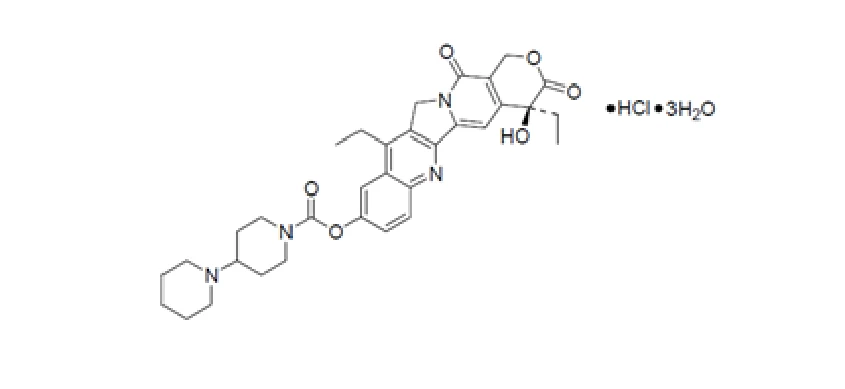
Drug Substance
Proper name: Irinotecan hydrochloride, USP
Chemical name: (S) 4,11-diethyl-3,4,12,14-tetrahydro-4-hydroxy-3,14-dioxo1H- pyrano[3’,4’:6,7]-indolizino[1,2 b]quinolin-9-yl-[1,4’bipiperidine]-
1’-carboxylate, monohydrochloride, trihydrate
Molecular formula C33H38N4O6∙HCL∙3H2O (salt hydrate), 677.19
and molecular mass: C33H38N4O6 (anhydrous free base), 586.68
Structural formula:
Physicochemical properties: Irinotecan hydrochloride trihydrate is a pale yellow to yellow crystalline powder, with a melting range of 250-256 °C.
Irinotecan hydrochloride is hygroscopic. X-ray powder diffraction supports that irinotecan hydrochloride trihydrate exist in one consistent single crystalline form.
The pH of irinotecan hydrochloride trihydrate in a 1% wt/volume solution in water is 3.5-5.0. Irinotecan hydrochloride trihydrate is freely soluble in DMSO and anhydrous acetic acid, and is slightly soluble in ethanol.
Product Characteristics
ONIVYDE (irinotecan liposome for injection) is a topoisomerase inhibitor formulated with irinotecan hydrochloride trihydrate, which is transformed in situ to its sucrosofate salt derivative upon its inclusion within the liposomes.
The drug product liposome is a small unilamellar lipid bilayer vesicle, approximately 110 nm in diameter, which encapsulates an aqueous space which contains irinotecan in a gelated or precipitated state, as the sucrose octasulfate salt. The liposome carriers are composed of
1,2-distearoyl-sn-glycero-3-phosphocholine (DSPC), 6.81 mg/mL; cholesterol, 2.22 mg/mL; N-(carbonyl-methoxypolyethlyene glycol-2000)-1,2-distearoyl-sn-glycero-3-phosphoethanolamine sodium salt (MPEG-2000-DSPE), 0.12 mg/mL. Each mL also contains 2-[4-(2-hydroxyethyl)piperazin-1-yl]ethanesulfonic acid (HEPES) as a buffer, 4.05 mg/mL; sodium chloride as isotonicity reagent, 8.42 mg/mL. The suspension is buffered at pH 7.25.
14 CLINICAL TRIALS
14.1 Clinical Trials by Indication
Metastatic pancreatic adenocarcinoma
Table 8 - Summary of patient demographics for clinical trials in metastatic pancreatic adenocarcinoma
| Study # | Study design | Dosage, route of administration and duration | Study subjects (n) | Median age (Range) | Sex |
| NAPOLI-1 | 3-arm, randomized, open-label trial | Intravenous administration, | 417 | 63 years (range 31-87 years) | 57% men 43% women |
Table 9 Efficacy Results of NAPOLI-1 Study
ONIVYDE + 5-FU/LV (N=117) | 5-FU/LV (N=119) | |||||||||||
|---|---|---|---|---|---|---|---|---|---|---|---|---|
ONIVYDE + 5-FU/LV (N=117) | 5-FU/LV (N=119) | |||||||||||
| Overall Survival* | ||||||||||||
| Number of Deaths, n (%) | 75 (64) | 80 (67) | ||||||||||
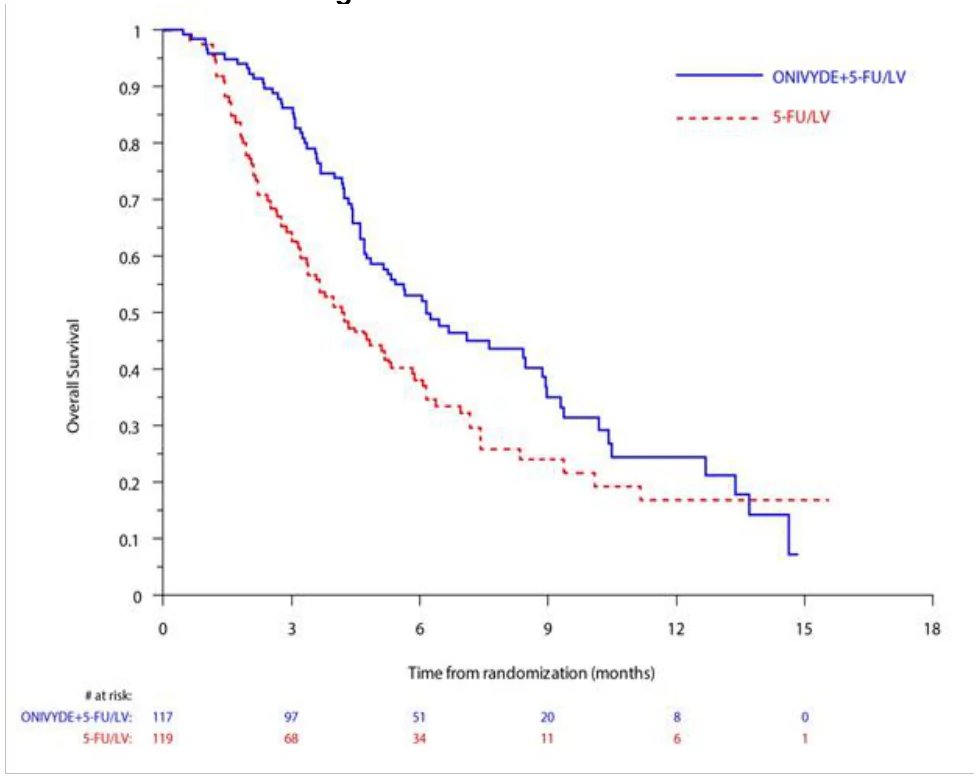
| Median Overall Survival (months) | 6.1 | 4.2 | ||||||||||
| (95% CI) | (4.8, 8.9) | (3.3, 5.3) | ||||||||||
| Hazard Ratio (95% CI)§ | 0.67 (0.49 – 0.92) | |||||||||||
| p-value¶ | 0.0122 | |||||||||||
| Progression-Free Survival*,† | ||||||||||||
| Death or Progression, n (%) | 83 (71) | 92 (77) | ||||||||||
| Median Progression-Free Survival (months) | 3.1 | 1.5 | ||||||||||
| (95% CI) | (2.7, 4.2) | (1.4, 1.8) | ||||||||||
| Hazard Ratio (95% CI) § | 0.56 (0.41 – 0.75) | |||||||||||
| p-value¶ | 0.0001 | |||||||||||
| Objective Response Rate† | ||||||||||||
| Responder, n | 19 | 1 | ||||||||||
| Rate (%) | 16.2 | 0.8 | ||||||||||
| 95% CI of Rate# | 9.6, 22.9 | 0.0, 2.5 | ||||||||||
| p-value♠ | <0.0001 | |||||||||||
* Median is the Kaplan-Meier estimate of the median survival time § Cox model analysis # Based on Normal approximation † Per RECIST guidelines, v1.1 ¶ Unstratified log-rank test ♠ Fisher’s exact test Abbreviations: 5-FU/LV=5-fluorouracil/leucovorin; CI=confidence interval; PFS=progression free survival; HR=hazard ratio of ONIVYDE+5-FU/LV compared with 5-FU/LV | ||||||||||||
The efficacy of ONIVYDE was evaluated in the NAPOLI-1 study, a three-arm, randomized, open-label trial in patients with metastatic pancreatic adenocarcinoma with documented disease progression, after gemcitabine or gemcitabine-based therapy. A total of 417 patients were randomised to the ONIVYDE + 5-FU/LV arm (N=117), ONIVYDE monotherapy arm (N=151) and 5-FU/LV arm (N=149). In the intent to treat (all randomised) population, the median age was 63 years (range 31-87 years), 57% were men, 61% were White and 33% were Asian. Mean baseline albumin level was 3.6 g/dL, and baseline Karnofsky Performance Status (KPS) was 90-100 in 55% of patients.
Key eligibility criteria included KPS ≥ 70, serum bilirubin within institution limits of normal, and albumin ≥ 3.0 g/dL. Patients were randomized to receive ONIVYDE+5-FU/LV, ONIVYDE, or 5-FU/LV. Randomization was stratified by ethnicity (White vs. Asian vs. other), KPS (70-80 vs. 90-100), and baseline albumin level (≥ 4 g/dL vs. 3.0-3.9 g/dL). Patients randomized to ONIVYDE + 5-FU/LV received ONIVYDE 70 mg/m2 as an intravenous infusion over 90 minutes, followed by LV 400 mg/m2 intravenously over 30 minutes, followed by 5-FU 2400 mg/m2 intravenously over 46 hours, every 2 weeks. The ONIVYDE dose of 70 mg/m2 is based on irinotecan anhydrous free base (equivalent to 80 mg/m2 of irinotecan as the hydrochloride trihydrate). Patients randomized to ONIVYDE as a single agent received ONIVYDE 100 mg/m2 as an intravenous infusion over 90 minutes every 3 weeks. Patients randomized to 5-FU/LV received LV 200 mg/m2 intravenously over 30 minutes, followed by 5-FU 2000 mg/m2 intravenously over 24 hours, administered on Days 1, 8, 15 and 22 of a 6-week cycle. Patients homozygous for the UGT1A1*28 allele initiated ONIVYDE at a reduced dose (50 mg/m2 ONIVYDE, if given with 5-FU/LV or 70 mg/m2 ONIVYDE as a single agent). When ONIVYDE was withheld or discontinued for adverse reactions, 5-FU was also withheld or discontinued. When the dose of ONIVYDE was reduced for adverse reactions, the dose of 5-FU was reduced by 25%. Treatment continued until disease progression or unacceptable toxicity.
Patients received treatment until disease progression or unacceptable toxicity. The primary outcome measure was overall survival (OS). Additional outcome measures included Progression Free Survival (PFS) and Objective Response Rate (ORR). Assessments were conducted at baseline and every 6 weeks thereafter. Results are shown in Table 9. Overall survival is illustrated in Figure 1.
Figure 1. Overall Survival
There was consistency in benefit across the formal stratification factors (performance status, albumin and race).
ONIVYDE monotherapy did not demonstrate a statistically significant benefit in overall survival compared to the 5-FU/LV control arm.
15 MICROBIOLOGY
No microbiological information is required for this drug product.
16 NON-CLINICAL TOXICOLOGY
General Toxicology
In single and repeated dose toxicity studies in mice, rats and dogs, the target organs of toxicity were the gastrointestinal tract and the hematologic system. The severity of effects was dose-related and reversible. The no-observed-adverse-effect level (NOAEL) in rats and dogs following 90 min intravenous infusion of ONIVYDE once every 3 weeks for 18 weeks was at least 156 mg/m2. No findings indicative of CNS related toxicity were observed in the repeated dose toxicity studies in rats.
In safety pharmacology studies in dogs, ONIVYDE had no effect on cardiovascular, hemodynamic, electrocardiographic, or respiratory parameters at doses of irinotecan (as anhydrous free base) up to 18 mg/kg (364 mg/m2).
Carcinogenicity
Studies to evaluate the mutagenesis and carcinogenicity of ONIVYDE were not conducted. Non-liposomal irinotecan has been studied in experimental models and was shown to be clastogenic both in vitro (chromosome aberrations in Chinese hamster ovary cells) and in vivo (micronucleus test in mice). In rats, there was a significant linear trend between non-liposomal irinotecan (as anhydrous free base) dosage (1.7 and 22 mg/kg, IV, once weekly for 13 weeks followed by a 91 week treatment-free period) and the incidence of combined uterine horn endometrial stromal polyps and endometrial stromal sarcomas. Neither non-liposomal irinotecan nor its active metabolite, SN-38, were mutagenic in the in vitro Ames test.
Reproductive and Developmental Toxicology
No fertility studies were performed with ONIVYDE. However, in dogs receiving ONIVYDE at doses equal to or greater than 18 mg/kg (364 mg/m2) once every 3 weeks for 6 cycles, findings included minimal to moderate effects on various cell types and organs of the reproductive tract in males and females, similar to effects seen with non-liposomal irinotecan. No significant adverse effects on fertility and general reproductive performance were observed after intravenous administration of non-liposomal irinotecan in doses of up to 5 mg/kg/day (as anhydrous free base) to rats and rabbits; however, atrophy of male reproductive organs was observed after multiple daily non-liposomal irinotecan doses both in rodents at 17 mg/kg and in dogs at 0.3 mg/kg (as anhydrous free base).
Special Toxicology
There are no animal data on teratogenic/embryotoxic effects for ONIVYDE. Intravenous administration of irinotecan 5 mg/kg/day to rats and rabbits during the period of organogenesis resulted in increased post-implantation loss and decreased numbers of live fetuses. In separate studies in rats, this dose produced an irinotecan Cmax and AUC of about 2 and 0.2 times, respectively, the corresponding values in patients administered 108 mg/m2 (as anhydrous free base). In rabbits, the embryotoxic dose was about one-half the recommended human weekly starting dose on a mg/m2 basis. Non-liposomal irinotecan was teratogenic in rats at doses greater than 1 mg/kg/day and in rabbits at 5 mg/kg/day (as anhydrous free base). In separate studies in rats, this dose produced an irinotecan Cmax and AUC about 2/3 and 1/40th, respectively, of the corresponding values in patients administered 108 mg/m2 (as anhydrous free base). In rabbits, the teratogenic dose was about one-half the recommended human weekly starting dose on a mg/m2 basis. Teratogenic effects included a variety of external, visceral, and skeletal abnormalities. Non-liposomal irinotecan administered to rat dams for the period following organogenesis through weaning at doses of 5 mg/kg/day (as anhydrous free base) caused decreased learning ability and decreased female body weights in the offspring.