


Product Monograph - Isoflurane USP (Abbvie)
SUMMARY PRODUCT INFORMATION
| Route of Administration | Dosage Form/Strength | Non-medicinal Ingredients |
|---|---|---|
| Inhalation | volatile liquid / > 99.9% v/v | none |
INDICATIONS AND CLINICAL USE
ISOFLURANE (isoflurane) is indicated for:
- induction and maintenance of general anesthesia. Adequate data have not been developed to establish its application in obstetrical anesthesia.
Geriatrics (> 65 years of age):
The minimum alveolar concentration (MAC) of isoflurane decreases with increasing patient age. The dose should be adjusted accordingly. For details, see DOSAGE AND ADMINISTRATION, Recommended Dose and Dosage Adjustment.
Pediatrics (< 18 years of age):
ISOFLURANE is not indicated in children.
CONTRAINDICATIONS
- Patients with known sensitivity to ISOFLURANE (isoflurane) or the other halogenated agents.
- Patients in whom liver dysfunction, jaundice or unexplained fever, leucocytosis, or eosinophilia has occurred after a previous halogenated anesthetic administration (see WARNINGS AND PRECAUTIONS).
- Patients with known or suspected genetic susceptibility to malignant hyperthermia, or in patients with a known or suspected history of malignant hyperthermia.
- Patients when general anesthesia is contraindicated.
WARNINGS AND PRECAUTIONS
Serious Warnings and Precautions ISOFLURANE (isoflurane) should be administered only by persons trained in the administration of general anesthesia. Facilities for maintenance of a patent airway, artificial ventilation, oxygen enrichment, and circulatory resuscitation must be immediately available. ISOFLURANE may trigger Malignant Hyperthermia in susceptible individuals and fatal outcomes have been reported (see WARNINGS AND PRECAUTIONS, Endocrine and Metabolism, Malignant Hyperthermia). ISOFLURANE may lead to Perioperative Hyperkalemia in patients with neuromuscular disorders (see WARNINGS AND PRECAUTIONS, Endocrine and Metabolism, Perioperative Hyperkalemia). |
General
Deliver ISOFLURANE from a vaporizer specifically designed and designated for use with ISOFLURANE. Monitoring of end-tidal concentration may be considered.
Safe Use of CO2 Absorbents
Rare cases of extreme heat, smoke and/or spontaneous fire in the anesthesia machine have been reported during administration of general anesthesia with drugs in this class when used in conjunction with desiccated CO2 absorbents, specifically those containing potassium hydroxide (e.g., Baralyme®). When a clinician suspects that the CO2 absorbent may be desiccated, it should be replaced before administration of ISOFLURANE. The colour indicator of most CO2 absorbents does not necessarily change as a result of desiccation. Therefore, the lack of significant colour change should not be taken as an assurance of adequate hydration. CO2 absorbents should be replaced routinely regardless of the state of the colour indicator.
Cardiovascular
ISOFLURANE causes a dose-dependent reduction in systemic vascular resistance and blood pressure. Particular care must be taken when selecting the dosage for patients who are hypovolemic, hypotensive, or otherwise hemodynamically compromised, for example due to concomitant medications. Excessive decreases in blood pressure may be related to depth of anesthesia and respond to reducing the inspired concentration of ISOFLURANE.
In patients with coronary artery disease, maintenance of normal hemodynamics is important in order to avoid myocardial ischemia. ISOFLURANE can cause dose-dependent coronary vasodilation and has been shown to divert blood from collateral-dependent myocardium to normally perfused areas in an animal model (“coronary steal”). The extent to which coronary steal occurs in patients with steal-prone coronary anatomy is unclear. ISOFLURANE should be used with caution in such patients.
Caution should be exercised when administering ISOFLURANE to patients at risk for QT prolongation. ISOFLURANE can prolong the QT interval. This effect is exacerbated by some of the patient’s disease conditions or concomitant peri-operative medications. Reports of QT prolongation, associated with torsades de pointes (in exceptional cases, fatal), have been received.
Endocrine and Metabolism
Malignant Hyperthermia
In susceptible individuals, ISOFLURANE anesthesia may trigger a skeletal muscle hypermetabolic state leading to high oxygen demand and the clinical syndrome known as malignant hyperthermia. The syndrome includes features such as high core body temperature, muscle rigidity, tachycardia, tachypnea, cyanosis, arrhythmias, and unstable blood pressure. An increase in overall metabolism may be reflected in an elevated temperature (which may rise rapidly early or late in the case, but usually is not the first sign of augmented metabolism) and an increased usage of the CO2 absorption system (hot canister). PaO2 and pH may decrease, and hyperkalemia and a base deficit may appear. See CONTRAINDICATIONS.
Treatment includes discontinuance of ISOFLURANE, administration of intravenous dantrolene sodium, and application of supportive therapy. Such therapy includes vigorous efforts to restore body temperature to normal, respiratory and circulatory support as indicated, and management of electrolyte-fluid-acid-base derangement. Renal failure may appear later, and urine flow should be sustained if possible.
Perioperative Hyperkalemia
Use of inhaled anesthetic agents has been associated with rare increases in serum potassium levels that have resulted in cardiac arrhythmias and death in pediatric patients during the postoperative period. Patients with latent as well as overt neuromuscular disease, particularly Duchenne muscular dystrophy, appear to be most vulnerable. Concomitant use of succinylcholine has been associated with most, but not all, of these cases. These patients also experienced significant elevations in serum creatine kinase levels and, in some cases, changes in urine consistent with myoglobinuria. Despite the similarity in presentation to malignant hyperthermia, none of these patients exhibited signs or symptoms of muscle rigidity or hypermetabolic state. Early and aggressive intervention to treat the hyperkalemia and resistant arrhythmias is recommended, as is subsequent evaluation for latent neuromuscular disease.
Mitochondrial Disorders
Caution should be exercised in administering general anesthesia, including ISOFLURANE, to patients with mitochondrial disorders.
Hepatic/Biliary/Pancreatic
ISOFLURANE is contraindicated in patients in whom liver dysfunction, jaundice or unexplained fever, leucocytosis, or eosinophilia has occurred after a previous halogenated anesthetic administration.
Cases of mild, moderate, and severe postoperative hepatic dysfunction or hepatitis with or without jaundice, including fatal hepatic necrosis and hepatic failure, have been reported with Isoflurane. As with other halogenated anesthetics, ISOFLURANE may cause sensitivity hepatitis in patients who have been sensitized by previous exposure to halogenated anesthetics (see CONTRAINDICATIONS and ADVERSE REACTIONS). Therefore, appropriate alternative anesthetic agent(s) should be considered, this is especially important in patients with pre-existing hepatic conditions.
Although the mechanism by which this occurs is still unclear, data from studies on halothane suggests that metabolism by cytochrome P450 2E1 (CYP2E1) catalyzes formation of trifluoroacetylated haptens, which may be implicated as target antigens in the mechanism of halothane-induced hepatitis. Although other halogenated anesthetics are believed to be metabolized to a much lesser degree by the CYP2E1 system (20% by halothane compared to 0.2% isoflurane), the reported hepatic injuries share similarities with that associated with halothane.
In patients with pre-existing hepatic abnormalities or under treatment with drugs known to cause hepatic abnormalities, clinical judgment should be exercised and appropriate alternative general anesthesia should be considered. Specialized care is recommended when a patient presents with any postoperative hepatic dysfunction after receiving a halogenated inhalational anesthetic.
Neurologic
ISOFLURANE may increase cerebral blood flow and hence cerebrospinal fluid pressure (ICP) and, therefore, should be used with special care in patients with elevated cerebrospinal fluid pressure. In patients with or at risk for elevations of ICP, ISOFLURANE should be administered cautiously and in conjunction with ICP-reducing measures (e.g. optimized hyperventilation).
Respiratory
ISOFLURANE inhibits spontaneous respiration, which is enhanced with concurrent use of other inhalational and intravenous anesthetics. Respiration must be closely monitored and supported by assisted or controlled ventilation when necessary. Excessive respiratory depression may be related to depth of anesthesia and responds to decreasing the inspired concentration of ISOFLURANE.
Psychiatric
ISOFLURANE, as well as other general anesthetics, may cause a slight decrease in cognitive function for two to four days following anesthesia. As with other anesthetics, small changes moods and symptoms may persist for up to six days after administration.
Patients should be advised that performance of activities requiring mental alertness, such as operating a motor vehicle or hazardous machinery, may be impaired for some time after general anesthesia. See DRUG INTERACTIONS, Drug-Lifestyle Interactions, Effects on Ability to Drive and Use Machines.
Sensitivity/Resistance
Allergic-type hypersensitivity reactions, including anaphylaxis, have been reported with ISOFLURANE. Manifestations of such reactions have included hypotension, rash, difficulty breathing and cardiovascular collapse. Symptomatic management, as appropriate, is recommended as per standard of care.
Sexual Function/Reproduction
ISOFLURANE exerts a relaxant effect on uterine smooth muscle. Blood loss during intrauterine procedures is increased when halogenated agents such as ISOFLURANE are used for anesthesia.
Special Populations
ISOFLURANE should only be used in pregnant women, including women in labour and delivery, when its benefits outweigh potential risks. Patients should be followed up post-operatively after exposure to ISOFLURANE as appropriate to identify potential adverse effects. See DETAILED PHARMACOLOGY, Reproduction and Teratology.
Pregnant Women
Safe use in pregnancy has not been established.
Women in Labour and Delivery
Safety and efficacy of ISOFLURANE administration during labour and vaginal delivery have not been adequately studied.
Cesarean Section
The use of ISOFLURANE as part of general anesthesia for elective cesarean section has been described in the literature. ISOFLURANE should be used only if the potential benefit justifies the potential risk.
ISOFLURANE exerts a relaxant effect on uterine smooth muscle. This can lead to increased blood loss in situations where uterine muscle contraction aids hemostasis, such as in obstetric surgery and in patients undergoing intrauterine procedures.
Nursing Women
It is not known whether this drug is excreted in human milk. Because many drugs are excreted in human milk, caution should be exercised when ISOFLURANE is administered to a nursing woman.
Pediatrics (< 18 of age)
ISOFLURANE is not indicated in children.
Geriatrics (> 65 years of age)
As with other agents, lesser concentrations of ISOFLURANE are normally required to maintain surgical anesthesia in elderly patients. See (DOSAGE AND ADMINISTRATION, Recommended Dose and Dosage Adjustment, Geriatrics).
Monitoring and Laboratory Tests
Blood bilirubin is mildly elevated postoperatively in some cases. Elevated glucose and white blood cell counts have been observed intraoperatively. In diabetic patients, the possible exacerbation of hyperglycemia should be considered.
Transient increases in serum creatinine with decrease in BUN, serum cholesterol and alkaline phosphatase have been observed.
ADVERSE REACTIONS
Adverse Drug Reaction Overview
Adverse reactions encountered in the administration of ISOFLURANE are in general dose dependent extensions of pharmacophysiologic effects and include respiratory depression, hypotension and arrhythmias. Potential serious undesirable effects include malignant hyperthermia, anaphylactic reactions, hyperkalemia, elevated serum creatine kinase, myoglobinuria and liver adverse reactions (please refer to Post-Market Adverse Drug Reactions). Shivering, nausea, vomiting ileus, agitation and delirium have been observed in the postoperative period.
Cardiac arrest has been observed with general inhalation anesthetic drugs including ISOFLURANE.
Clinical Trial Adverse Drug Reactions
Because clinical trials are conducted under very specific conditions the adverse reaction rates observed in the clinical trials may not reflect the rates observed in practice and should not be compared to the rates in the clinical trials of another drug. Adverse drug reaction information from clinical trials is useful for identifying drug-related adverse events and for approximating rates.
Induction of anesthesia with ISOFLURANE in 20 unpremedicated patients was associated with salivation (5), excitement (11), coughing or breath-holding (12), and laryngospasm (3).
The most common adverse events observed during the recovery from anesthesia in a clinical trial (N=100) are presented in Table 1.
Table 1. Adverse Events During Recovery from Anesthesia
ISOFLURANE n= 100 (% ) | |
| Gastrointestinal | |
| Nausea | 5% |
| Vomiting | 3% |
| Body as a Whole | |
| Shivering | 62% |
| Musculoskeletal | |
| Muscle rigidity | 26% |
| Nervous System | |
| Excitement and delirium | 6% |
In one pivotal clinical trial (including 204 patients), shivering was seen in only 4 patients (2%) following surgery. Nausea and/or vomiting occurred in 12 of 71 males (17%) and in 37 of 133 females (28%). The overall incidence during the first 24 hours was 24% and, of these, one-third had recurrent symptoms.
Abnormal Hematologic and Clinical Chemistry Findings
Transient increases in blood bilirubin, blood glucose and serum creatinine with decrease in BUN, serum cholesterol and alkaline phosphatase have been observed.
Elevation of SGOT, LDH and bilirubin with or without jaundice have been reported in the post-operative period following ISOFLURANE anesthesia in some patients.
Elevated glucose and white blood cell counts have been observed intraoperatively. In diabetic patients, the possible exacerbation of hyperglycemia should be considered.
Minimally raised levels of serum inorganic fluoride occur during and after ISOFLURANE anesthesia, due to biodegradation of the agent. It is unlikely that the low levels of serum inorganic fluoride observed could cause renal toxicity, as these are well below the proposed threshold levels for kidney toxicity.
Post-Market Adverse Drug Reactions
The following adverse reactions have been observed during ISOFLURANE (isoflurane) administration:
- Malignant hyperthermia (see WARNINGS AND PRECAUTIONS), including fatalities
- Hyperkalemia, elevated serum creatine kinase, and myoglobinuria (see WARNING AND PRECAUTIONS)
- Hypotension and respiratory depression
- Arrhythmias
- Postoperative ileus, shivering, nausea and vomiting
- Elevation of the white blood cell count (even in the absence of surgical stress)
- Delirium, hallucinations, agitation and hiccups
- Electroencephalographic changes and convulsions
Cardiac arrest, bradycardia and tachycardia have been observed with general inhalation anesthetic drugs including ISOFLURANE.
Reports of QT prolongation, associated with torsades de pointes (in exceptional cases, fatal), have been received.
Bronchospasm and laryngospasm due to airway irritation have been reported with volatile anesthetics during inhalation.
ISOFLURANE, like other inhalation agents, has relaxant effects on the uterus with the potential for uterine bleeding.
Reports demonstrate that ISOFLURANE can produce hepatic injury ranging from mild transient increases of liver enzymes to fatal hepatic necrosis in very rare instances.
Rare reports of hypersensitivity (including dermatitis contact, rash, dyspnoea, wheezing, chest discomfort, swelling face, or anaphylactic reaction) have been received, especially in association with long-term occupational exposure to inhaled anesthetic agents, including ISOFLURANE. These reactions have been confirmed by clinical testing (e.g., methacholine challenge). The etiology of anaphylactic reactions experienced during inhalational anesthetic exposure is, however, unclear because of the exposure to multiple concomitant drugs, many of which are known to cause such reactions.
The following reactions have been reported following occupational exposure to isoflurane: dyspnea, bronchospasm, stridor, cough, dizziness, paresthesia, hepatic reactions, flushing, rash, contact dermatitis, erythema, periorbital edema, eye irritation, conjunctival hyperemia, and headache.
DRUG INTERACTIONS
Serious Drug Interactions In patients with latent as well as overt muscular dystrophies, particularly Duchenne Muscular Dystrophy, concomitant use with succinylcholine is associated with hyperkalemia and cardiac arrhythmias (see WARNINGS AND PRECAUTIONS). |
ISOFLURANE potentiates all commonly used muscle relaxants; the effect being most profound with the non-depolarizing type. Therefore, less than the usual amounts of such agents should be used.
Drug-Drug Interactions
Table 2. Established or Potential Drug-Drug Interactions
| Drug | Effect | Clinical comment |
| Benzodiazepines | ↓ MAC of ISOFLURANE | Benzodiazepines would be expected to decrease the MAC of ISOFLURANE in the same manner as with other inhalational anesthetics. |
| Calcium antagonists | ISOFLURANE may lead to marked hypotension in patients treated with calcium antagonists, in particular dihydropyridine derivatives. Caution should be exercised when calcium antagonists are used concomitantly with inhalation anesthetics due to the risk of additive negative inotropic effect. | |
| Inducers of CYP2E1 | Concomitant use of ISOFLURANE and isoniazid can increase the risk of potentiation of the hepatotoxic effects. Medicinal products and compounds that increase the activity of cytochrome P450 isoenzyme CYP2E1, such as isoniazid and alcohol, may increase the metabolism of ISOFLURANE and lead to significant increases in plasma fluoride concentrations. Moreover, CYP2E1 metabolic pathways may be involved in the rare hepatotoxic effects observed with halogenated anesthetics, therefore, a concomitant use of CYP2E1 inducers may potentiate this risk in susceptible patients. | |
| Neuromuscular Blocking Agents | ↑ neuromuscular effect | As is the case with other volatile anesthetics, ISOFLURANE increases both the intensity and duration of neuromuscular blockade induced by non-depolarizing muscle relaxants. |
| Nitrous Oxide | ↓ MAC of ISOFLURANE | As with other halogenated volatile anesthetics, the anesthetic requirement for ISOFLURANE is decreased when administered in combination with nitrous oxide (see DOSAGE AND ADMINISTRATION). |
| Nondepolarizing relaxants | ↑ action of nondepolarizing relaxants | The action of nondepolarizing relaxants is augmented by ISOFLURANE. Less than the usual amounts of these drugs should be used. If the usual amounts of nondepolarizing relaxants are given, the time for recovery from neuromuscular blockade will be longer in the presence of ISOFLURANE than during anesthesia with halothane or a balanced technique. |
| Non-selective MAO-inhibitors | Risk of crisis during the operation. It is generally recommended that treatment should be stopped two weeks prior to surgery. | |
| Opioids | ↓ MAC of ISOFLURANE | Opioids would be expected to decrease the MAC of ISOFLURANE in the same manner as with other inhalational anesthetics. Opioids are associated with respiratory depression. Caution should be exercised when these agents are concomitantly administered with ISOFLURANE. |
| Other sedative agents | Sedative agents are associated with respiratory depression. Caution should be exercised when these agents are concomitantly administered with ISOFLURANE. | |
| Succinylcholine | In patients with latent as well as overt muscular dystrophies, particularly Duchenne Muscular Dystrophy, concomitant use with succinylcholine is associated with hyperkalemia and cardiac arrhythmias (see WARNINGS AND PRECAUTIONS). | |
| Sympathomimetic Agents | Alpha- and beta-sympathomimetic agents like adrenaline and noradrenaline should be used with caution during ISOFLURANE narcosis, due to a potential risk of ventricular arrhythmia. |
Drug-Food Interactions
Increased blood solubility and uptake of the soluble anesthetics after eating prolong the rate of induction of anesthesia by slowing the rate of rise of the end-tidal (alveolar) concentration.
In a study of 12 healthy male volunteers, the isoflurane blood solubility was increased significantly (p < 0.01) 30 to 45 minutes after eating. This increase was not statistically significant 1 hour after eating.
Drug-Herb Interactions
Interactions with herbal products have not been established.
Drug-Lifestyle Interactions
Effects on Ability to Drive and Use Machines
Patients should be advised that performance activities requiring mental alertness, such as operating a motor vehicle or hazardous machinery, may be impaired for two to four days after anesthesia with ISOFLURANE. As with other anesthetics, small changes in moods and symptoms may persist for up to six days after administration. See WARNINGS AND PRECAUTIONS, Neurologic.
DOSAGE AND ADMINISTRATION
Dosing Considerations
Preanesthetic Medication
Preanesthetic medication should be selected according to the need of the individual patient, taking into account that secretions are weakly stimulated by ISOFLURANE (isoflurane) and that the heart rate tends to be increased. The use of anticholinergic drugs is a matter of choice.
Induction: Adult Patients
Induction may be achieved using ISOFLURANE alone, with oxygen or in combination with oxygen-nitrous oxide mixtures. Under these conditions coughing, breath-holding or laryngospasm may be encountered. If these difficulties are to be avoided, a hypnotic dose of an ultra-short-acting barbiturate should be used to induce unconsciousness, followed by the isoflurane mixture. It is recommended that once anesthesia has been induced with a short-acting barbiturate or other intravenous induction agent, administration of ISOFLURANE may be initiated at a concentration of 0.5%.
In general, inspired concentrations of 1.5 to 3.0% ISOFLURANE with 50 to 70% nitrous oxide usually produce surgical anesthesia in 7 to 10 minutes. If nitrous oxide is not used, an additional 1.0 to 1.5% ISOFLURANE may be required for induction of anesthesia.
The administration of general anesthesia must be individualized based on the patient's response.
Maintenance
Surgical levels of anesthesia may be maintained with 1.0 to 2.5% ISOFLURANE when 50 to 70% nitrous oxide is used concomitantly. An additional 0.5-1.0% ISOFLURANE may be required when given with oxygen alone. If added relaxation is required, supplemental doses of muscle relaxants may be used.
The level of blood pressure during maintenance is an inverse function of ISOFLURANE concentration in the absence of other complicating problems. Excessive decreases may be due to depth of anesthesia and in such instances should be corrected by lightening the level of anesthesia.
Recommended Dose and Dosage Adjustment
See Table 3 below for MAC values relative to age.
Table 3. MAC Values According to Age
| Age of Patient | With 100% Oxygen | With 70% N20 |
| 26 ± 4 years | 1.28% | 0.56% |
| 44 ± 7 years | 1.15% | 0.50% |
| 64 ± 5 years | 1.05% | 0.37% |
Geriatrics (> 65 years of age)
As with other agents, lesser concentrations of ISOFLURANE are normally required to maintain surgical anesthesia in elderly patients.
Administration
Administration Equipment
ISOFLURANE should be administered only by persons trained in the administration of general anesthesia (see WARNINGS AND PRECAUTIONS).
The concentration of ISOFLURANE being delivered from a vaporizer during anesthesia should be known. This may be accomplished by using a) flow-through vaporizers calibrated specifically for ISOFLURANE b) vaporizers from which delivered flows can easily and readily be calculated.
The delivered concentration from such a vaporizer may be calculated:
% isoflurane = 100 PVFV
──────
FT(PA-PV)
PA = Pressure of atmosphere
PV = Vapour pressure of isoflurane
FV = Flow of gas through vaporizer (mL/min)
FT = Total flow gas used (mL/min)
OVERDOSAGE
| For management of a suspected drug overdose, contact your regional Poison Control Centre for the most current information. |
Overdosage with ISOFLURANE (isoflurane) will generally produce marked hypotension and apnea. In the event of overdosage, or what may appear to be overdosage:
- 1. Stop drug administration.
- 2. Establish that the airway is clear.
- 3. Instigate assisted or controlled ventilation with pure oxygen as the circumstances dictate.
Hypotension and respiratory depression have been observed. Close monitoring of blood pressure and respiration is recommended. Supportive measures may be necessary to correct hypotension and respiratory depression resulting from excessively deep levels of anesthesia.
ACTION AND CLINICAL PHARMACOLOGY
Mechanism of Action
ISOFLURANE (isoflurane), a halogenated methyl ethyl ether, is an inhalation anesthetic used in induction and maintenance of general anesthesia.
Pharmacodynamics
Induction and recovery from isoflurane anesthesia are rapid due to its low solubility (blood/gas coefficient; 1:4). Isoflurane does not appear to stimulate excessive salivation or tracheo-bronchial secretions even though the pungency of isoflurane may limit the rate of induction. Pharyngeal and laryngeal reflexes are diminished quickly. The level of anesthesia with isoflurane changes rapidly, which would be predicted based upon its Oswald partition coefficients.
Isoflurane is a profound respiratory depressant. Isoflurane reduces ventilation as depth of anesthesia increases. This is a result of a decrease in tidal volume with rate of respiration remaining essentially constant. The respiratory depression is partially reversed by surgical stimulation, even at deeper levels of anesthesia. Isoflurane provokes a sigh response reminiscent of that seen with diethyl ether and enflurane.
There is a blood pressure decrease with induction of anesthesia, followed by a return to near normal with surgical stimulation. Increasing the depth of anesthesia correspondingly decreases blood pressure. Furthermore, nitrous oxide diminishes the inspired concentration of isoflurane required to reach a desired level of anesthesia and also has a favorable effect on the parameters of the anesthetic process.
With controlled ventilation and normal PaCO2, cardiac output tends to be maintained despite increasing depth of anesthesia, primarily through an increase in heart rate, which compensates for a reduction in stroke volume.
With spontaneous respiration, the resulting hypercapnea may further increase heart rate and raise cardiac output above awake levels.
The cardiac rhythm during isoflurane anesthesia is stable. Isoflurane has not been shown to sensitize the myocardial conduction system to epinephrine and does not produce serious arrhythmias in animals.
Limited data from studies in man indicates that injection subcutaneously of 0.25 mg of epinephrine (50 mL of 1:200,000 solution) does not cause ventricular arrhythmias in patients anaesthetized with isoflurane. It should be noted that doubling this dose will produce ventricular extrasystoles in about half of patients anesthetized with 1.25 MAC (Minimum Alveolar Concentration) isoflurane.
Muscle relaxation in man is adequate for intra-abdominal operations at normal levels of anesthesia. All commonly used muscle relaxants are compatible with isoflurane.
Should greater relaxation or complete paralysis be necessary, small doses of muscle relaxants may be used. Isoflurane potentiates all commonly used muscle relaxants, the effect being most profound with nondepolarizing relaxants.
Neostigmine reverses the effects of non-depolarizing muscle relaxants in the presence of isoflurane but has no effect on the relaxant properties of isoflurane itself.
The systemic metabolism of isoflurane in humans was studied in 189 patients. The fluoride levels observed indicated that isoflurane given at 0.7% concentration for 178 minutes is not subject to enzymatic degradation processes that release fluoride into the blood.
In other studies, relatively little metabolism of isoflurane occurred in the human body. The low fluoride levels are not considered likely to produce impairment of renal function.
Isolated cases of convulsions have been reported in patients receiving isoflurane. In general, isoflurane produces an EEG pattern similar to that seen with other volatile anesthetics.
Pharmacokinetics
A clinical trial evaluating the pharmacokinetics of inhaled anesthetics on 48 patients (16 patients received isoflurane) demonstrated that the median steady state volume of distribution of isoflurane is in average 4285 (range of 1509 to 9640) mLvapour kgbw-1. The median transport clearance from the central to the peripheral compartment for isoflurane is 30.7 (range of 15.9 to 38.7) mLvapour kg bw –1 min –1.
Solubility
Partition coefficients for isoflurane at 37°C are presented in Table 3.
Table 3. Partition coefficients for isoflurane at 37°C
| Water/ gas | 0.61 |
| Blood/ gas | 1.43 |
| Oil/ gas | 90.80 |
Metabolism
Relatively little metabolism of isoflurane occurs in the human body. In the postoperative period, of the isoflurane taken up, only 0.2 to 1% can be recovered as urinary metabolites. Peak serum inorganic fluoride values usually average less than 5 micromole/litre and occur about four hours after anesthesia, returning to normal levels within 24 hours. No signs of renal injury have been reported after isoflurane administration.
Special Populations and Conditions
Geriatrics
For details, see DOSAGE AND ADMINISTRATION, Recommended Dose and Dosage Adjustment, Geriatrics (> 65 years of age).
Hepatic Insufficiency
For details, see WARNINGS AND PRECAUTIONS, Hepatic/Biliary/Pancreatic.
STORAGE AND STABILITY
Store between 15 to 25°C. ISOFLURANE (isoflurane) contains no additives.
DOSAGE FORMS, COMPOSITION AND PACKAGING
ISOFLURANE (isoflurane) is packaged in 100 and 250 mL amber-colored bottles.
ISOFLURANE is a non-flammable inhalation anesthetic agent that is a clear, colourless, stable liquid whose purity exceeds 99.9%. The finished product is comprised only of the active drug substance, isoflurane.
PART II: SCIENTIFIC INFORMATION
PHARMACEUTICAL INFORMATION
Drug Substance
| Proper name: | isoflurane | |
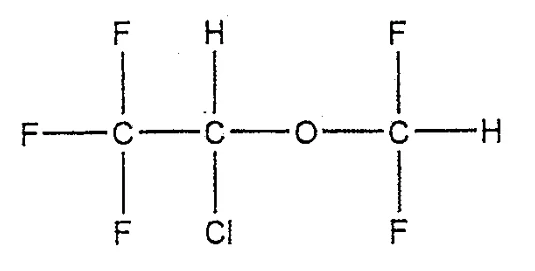
| Chemical name: | 1-chloro-2,2,2-trifluoroethyl difluoromethyl ether | |
| Molecular formula and molecular mass: | C3H2ClF5O | 184.50 |
| Structural formula: | ||
| Physicochemical properties: | Isoflurane is a nonflammable inhalation anesthetic agent. Isoflurane is a clear, colorless, stable liquid whose purity exceeds 99.9%. No stabilizers are added as these have been found, through controlled laboratory tests, to be unnecessary. Isoflurane has the following physical and chemical properties: |
| Boiling at point 760 mmHg | 47 to 50°C |
| Specific gravity at 25°C | 1.496 |
| Refractive Index at 20°C | 1.2990-1.3005 |
| Vapor Pressure* | 238 mm Hg at 20°C 295 mm Hg at 25°C 367 mm Hg at 30°C 450 mm Hg at 35°C. |
| Distribution Partition Coefficients at 37°C: | |
| Blood/gas | 1.43 |
| Oil/Gas | 97.8 |
| * Vapor pressure (mmHg) is calculated using the equation:Log10Pvap =A+B/T, where A = 8.056, B = -1664.58, T = °C + 273.16 °K (Kelvin) | |
| Mean Component/Gas Partition Coefficients at 23ºC for Polymers Used Commonly in Medical Applications: |
| Conductive rubber | 62.0 |
| Polyvinyl chloride | 110 |
DETAILED PHARMACOLOGY
Animal
General
As shown by the studies in mouse, rat, dog and rabbit, isoflurane produced a state of general anesthesia on inhalation. Anesthesia of varying depths was produced depending on the dose administered. In general, the anesthesia was characterized by rapid induction with very little salivation, good maintenance and rapid recovery. Recovery was readily affected by discontinuation of isoflurane administration. Relaxation was good, some analgesia was present. The recovery time was dependent on the dose, duration of anesthesia, and the individual animal or animal species. Nausea or vomiting was rare if not absent in dog and rabbits after single or repeated anesthesia.
The minimum alveolar concentration (MAC) of anesthetic preventing movement in 50% of the animals in response to a painful stimulus was determined in ten dogs and the value was found to be 1.46%.
In several studies, dogs anaesthetized with isoflurane at varying exposure times showed physiologically similar effects to halothane and enflurane, but markedly fewer arrhythmias occurred with isoflurane.
Compatibility of isoflurane with epinephrine was assessed by intravenous injection of 10 microg/kg of epinephrine to dogs. The heart was much less sensitive to the arrhythmic effect of epinephrine under isoflurane anesthesia than under halothane. If ventricular fibrillation occurred, the heart was defibrillated and the ability of the beta-adrenergic blocking agent, propranolol, to protect the myocardium against further epinephrine challenge, was assessed by the intravenous injection of 0.5 mg/kg. Propranolol was effective during anesthesia with isoflurane in protecting the myocardium against epinephrine.
Isoflurane produced a negative inotropic effect on the isolated papillary muscle of the cat, causing a work dependent decrease in maximal velocity, peak force, power, and work. Isoflurane altered the contractile state, affecting the cardiac muscle's ability to develop force and shorten. As a result of the study, it was judged that isoflurane was the least myocardial depressant of the group - halothane and isoflurane.
In a final study on cardiovascular effects, halothane and isoflurane inhibited phenylephrine induced contraction of isolated rat aorta in a dose-dependent manner, confirming their cardio-depressive action on smooth muscle.
Isoflurane was administered to thirteen healthy cats with implanted recording electrodes in the brain. Anesthetic concentration was varied and depths to create synchronous spike discharges were reached. Rarely was there motor activity.
Recovery was smooth and uneventful. It was concluded that isoflurane was a fast acting, potent anesthetic with desirable attributes for anesthesia. The electroencephalographic pattern was distinct.
Studies in dogs indicated that isoflurane does not cause EEG spiking or convulsive activity either at high, normal or low levels of arterial PCO2. Twitching or other muscular movement suggesting increased central nervous system hyperactivity is not provoked by isoflurane.
The metabolism of isoflurane by the enzymatic system has been studied in rat and miniature swine.
Metabolic studies have shown that isoflurane is only minimally metabolized when compared with other common anesthetic agents. The amount of isoflurane extracted or metabolized by the liver of three miniature swine exposed to this product over periods of from 20 hours to one week was found to be less than 2% confirming the very low biotransformation of this agent. Other studies, in rats with repeated exposure to sub-anesthetic levels of the agent, suggest that isoflurane is less toxic than other halogenated agents (methoxyflurane).
Acute Toxicity
Mouse
The LD50 in mice by intraperitoneal injection of isoflurane in olive oil was found to be 6.74 g/kg at 24 hours. The animals showed disorientation and hypnosis. Convulsions occurred at higher doses.
Long-Term Toxicity
Long-term effects on various organ systems were studied in dogs, monkeys, rats, mice, rabbits and guinea pigs.
Mouse
A group of 48 mice were anesthetized with 0.015 to 0.15% isoflurane for a total of 35-day. Slower weight gains, and some small liver lesions were the only effects. In a similar study, 31 mice receiving 0.15 to 0.30% isoflurane for 21 days showed no auto- or cross-tolerance build-up to isoflurane anesthesia.
Rat/Guinea Pig
The animals were placed in large plastic bags containing 0.015, 0.05 and 0.15% isoflurane for a 35-day total exposure. Slower weight gains and small liver lesions were the only effects; no other histopathological effects were noted.
Dog
In four separate studies, Beagle dogs were exposed to isoflurane 1.0 to 3.0% concentration for 2 to 3 hours per days for 4 days. With the exception of one study where kidney and liver exhibited slight fatty deposits, all other studies showed normal blood, urine, kidney and liver results.
Monkey
Two groups of 5 Rhesus monkeys each were anaesthetized with 1.0 to 2.5% isoflurane for 4 hours per day for 4 days. Blood results were within normal limits; in some cases, kidney, liver and lung exhibited minute traces of fatty deposits. The minimal changes found in liver and kidney tissues did not indicate that isoflurane was nephrotoxic or hepatotoxic.
Rabbit
Five New Zealand white rabbits were anaesthetized with 0.75% isoflurane for 3 hours for 5 con-secutive days. Histopathological studies revealed fatty infiltration of the kidneys but no liver or lung tissue abnormalities.
Other Toxicity
Hepatic/Renal toxicity studies were performed on dogs receiving a maximum of 2.25% isoflurane for 4 to 6 hours. Blood and liver results were normal but fatty deposits were seen in kidney histological sections.
Mutagenicity and Carcinogenicity
Mutagenicity studies using rat and hamster tissue were performed by the Ames test and the sister-chromatid exchange test. Results indicate that isoflurane is not mutagenic.
In carcinogenicity studies with 432 Swiss ICR mice and 330 CDBR rats, no tumourigenicity was evident with long-term exposure.
Reproduction and Teratology
A study designed to evaluate the effects of isoflurane upon reproduction performance in rats was conducted. Test animals were subjected to inhalation of test material vapor at a concentration of 0.15 or 0.60% for 2 hours daily on each of 14 days prior to mating. Control animals were subjected to chamber air.
Isoflurane exhibited no deleterious effects upon pre-implantation development or implantation itself. Fertility indices, litter sizes and early resorptions - all measures of possible early problems - were comparable to control values.
Teratogenicity studies on 60 rats and 30 mice (gestation day 6 to 15) with isoflurane exposure of 2 hours per day for 10 days showed no major abnormalities. Fetuses were normal. No visceral or skeletal defects due to exposure were detected. At higher doses, depression of growth rate was noted (0.4% isoflurane in rats) and resorption rates increased (0.3% isoflurane in mice).
Peri-post-natal studies on 20 rats (gestation day 15 to 20) were conducted using 0.1 to 0.4% isoflurane for 2 hours per day for 6 days. No female rats showed any ill-effects.
No treatment related effects were observed on litter numbers, pup weights, appearance, growth rates or survival to weaning.
Studies in rodents demonstrate that the use of anesthetic agents during the period of rapid brain growth or synaptogenesis results in widespread neuronal and oligodendrocyte cell loss in the developing brain and alterations in synaptic morphology and neurogenesis. Based on comparisons across species, the window of vulnerability to these changes is believed to correlate with exposures in the third trimester through the first several months of life, but may extend out to approximately 3 years of age in humans.
In primates, three hours exposure to an anesthetic regimen that produced a light surgical plane of anesthesia did not increase neuronal cell loss; however, treatment regimens of five hours or longer increased neuronal cell loss.
Data in rodents and in primates suggest that the neuronal and oligodendrocyte cell losses are associated with subtle but prolonged cognitive deficits in learning and memory. See WARNINGS AND PRECAUTIONS, Special Populations.
REFERENCES
- 1. Baden JM, Kelly M, Wharton RS, Hitt BA, Simmon VF, Mazze RI. Mutagenicity of halogenated ether anesthetics. Anesthesiology 1977; 46:346-350.
- 2. Byles PH, Dobkin AB, Jones DB. Forane* (Compound 469): comparative effects of prolonged anesthesia on mature beagle dogs and young rhesus monkeys. Canad Anesth Soc J 1971; 18:397-407.
- 3. Cousins MJ, Mazze RI, Barr GA, Kosek JC. A comparison of the renal effects of isoflurane and methoxyflurane in Fischer 344 rats. Anesthesiology 1973; 38: 557-563.
- 4. Dobkin AB, Byles PH, Ghanooni S, Valbuena DA. Clinical and laboratory evaluation of a new inhalation anesthetic: Forane* (compound 469) CHF2-O-CHCLCF3. Canad Anaesth Soc J 1971; 18: 264-271.
- 5. Dobkin AB, Kim D, Choi JK, Levy AA. Blood serum fluoride levels with enflurane (Ethrane*) and isoflurane (Forane*) anesthesia during and following major abdominal surgery. Canad Anaesth Soc J 1973; 20: 494-498.
- 6. Dolan WM, Eger II EI, Margolis AJ. Forane* increases bleeding in therapeutic suction abortion. Anaesthesiology 1972; 36: 96-97.
- 7. Gambling DR, Sharma SK, White PF et al. Use of Sevoflurane during elective caesarean birth: A comparison with isoflurane and spinal anesthesia. Anesth Analg 1995; 81:90-5.
- 8. Halsey MJ, Sawyer DC, Eger II EI, Bahlman SH, Impelman DMK. Hepatic metabolism of halothane, methoxyflurane, cyclopropane, Ethane and Forane* in minature swine. Anesthesiology 1971; 35: 43-47.
- 9. Homi J, Kinchigeri HN, Eckenhoff JE, Linde HW. A new anesthetic agent - forane*: preliminary observations in man. Anaesth Analg 1972; 51: 439-447.
- 10. Joas TA, Stevens WC. Comparison of the arrythmic doses of epinephrine during Forane*, halothane and fluroxene anesthesia in dogs. Anaesthesiology 1971; 35: 48-53.
- 11. Joas TA, Stevens WC, Eger II EI. Electroencephalographic seizure activity in dogs during anesthesia. Brit J Anaesth 1971; 43: 739-745.
- 12. Kemmotsu O, Hashimoto Y, Shimosato S. Inotropic effects of Isoflurane on mechanics of contraction in isolated cat papillary muscles from normal and failing hearts. Anesthesiology 1973; 39: 470-477.
- 13. Miller RD, Way WL, Dolan WM, Stevens WC, Eger II EI. Comparative neuromuscular effects of pancuronium, gallamine, and succinylcholine during Forane* and halothane anesthesia in man. Anaesthesiology 1971; 35: 509-514.
- 14. Oyama T, Latto P, Holaday DA. Effect of isoflurane anesthesia and surgery on carbohydrate metabolism and plasma cortisol levels in man. Canad Anaesth Soc J 1973; 22: 696-702.
- 15. Pauca AL, Dripps RD. Clinical experience with isoflurane (Forane*). Brit J Anaesth 1973; 45: 697-703.
- 16. Smith RA, Dripps RD. Clinical experience with isoflurane (Forane*). Brit J Anaesth 1973; 45: 697-703.
- 17. Sprague DH, Yang JC, Ngai SH. Effects of Isoflurane and halothane on contractility and the cyclic 3', 5'-adenosine monophosphate system in the rat aorta. Anesthesiology 1974; 40: 162-167.
- 18. Stevens WC, Eger II EI, Joas TA. Comparative toxicity of isoflurane, halothane, fluroxene and diethyl ether in human volunteers. Canad Anaesth Soc J 1973; 20: 357-368.
- 19. Stevens WC, Eger II EI, White A, Halsen MJ, Munger W, Gibbons RD, Dolan W, Shargel R. Comparative toxicities of halothane, Isoflurane, and diethyl ether at subanesthetic concentrations in laboratory animals. Anesthesiology 1975; 42: 408-419.
- 20. Waskell L. A study of the mutagenicity of anesthetics and their metabolites. Mutation Research 1978; 57: 141-153.
- 21. White AE, Takehisa S, Eger II EI, Wolff S, Stevens WC. Sister chromatid exchanges induced by inhaled anesthetics. Anesthesiology 1979; 50: 425-431.